(Adds comment from officials, detail on record cullings)
By Yuka Obayashi and Aaron Sheldrick
TOKYO, Dec 10 (Reuters) – A bird flu outbreak in Japan worsened on Thursday with farms in two more prefectures slaughtering chicken in a record cull of poultry as the government ordered the disinfection of all chicken farms.
Highly pathogenic bird flu, a H5 subtype most likely brought by migrating birds from the Asian/European continent, has spread to eight of Japan’s 47 prefectures.
While officials say it is not possible for people to catch avian influenza from eggs or meat of infected chickens, they are concerned about the virus making a “species jump” to humans and causing a pandemic like the novel coronavirus.
All farms in Japan have been ordered to carry out disinfection and check hygiene regimes as well as ensure that nets to keep out wild birds are installed properly, agriculture ministry officials told Reuters.
The number of birds culled, at 2.36 million before the latest two outbreaks, exceeded the previous record of 1.83 million slaughtered in the year beginning in April 2010.
The government is calling for extra vigilance due to the growing number of infections at home and in Europe, which is in the grip of an outbreak.
Japan’s worst outbreak since at least 2016 started last month in Kagawa prefecture on Shikoku island.
In the latest cases, the virus was confirmed at an egg-laying farm in Kinokawa city in Wakayama prefecture, the agriculture ministry said on its website.
Three broiler farms in Oita prefecture on Kyushu island also reported outbreaks, it said.
More than 130,000 chickens at the farms in Oita and Wakayama will be slaughtered and buried.
The latest cullings mean nearly 2.5 million chickens will have been slaughtered since the outbreak began. Japan has suspended poultry imports from seven countries including Germany.
Japan had a broiler chicken population amounting to 138 million head last year, according to the U.S. Department of Agriculture.
(Reporting by Aaron Sheldrick Editing by Grant McCool, Robert Birsel)
PETA Will Praise Shoppers Who Save Animals and Protect Slaughterhouse Workers by Buying Vegan Foods
For Immediate Release: July 15, 2020
Contact: Brooke Rossi 202-483-7382
Seattle – Slaughterhouse Shame Month continues on Thursday with a PETA protest outside QFC, where the group’s supporters will stand with paper bags over their heads that read, “Meat Shame,” and shirts that say, “I Bought Meat and a Slaughterhouse Worker Died From COVID-19” or “I Bought Meat and an Animal Was Killed for It.”
When: Thursday, July 16, 12 noon
Where: QFC, 1401 Broadway, Seattle
Other PETA supporters will offer shoppers a choice of two bags: a nice tote sporting the words “I Care About Animals and Workers. I Buy Vegan Foods” or a paper bag that states, “I Don’t Care About Animals or Workers. I Buy Meat.” The group notes that confining and killing animals for food has been linked to SARS, swine flu, bird flu, and COVID-19—and a new strain of swine flu with “pandemic potential” is now spreading from pigs to humans in China.
“Anyone who is still supporting slaughterhouses, where animals’ throats are slit and more than 35,000 workers have tested positive for COVID-19, should be ashamed,” says PETA Executive Vice President Tracy Reiman. “PETA is urging everyone to practice compassion by choosing only delicious, healthy, and versatile vegan foods that never caused a pandemic.”
PETA—whose motto reads, in part, that “animals are not ours to eat”—opposes speciesism, which is a human-supremacist worldview. For more information, please visit PETA.org.
Chen Yu used to walk a short distance to a nearby market to get fresh poultry. Now, to stew a pot of chicken soup or cook a whole duck for family gatherings, she has to take two buses downtown to buy the meat.
“Live poultry cannot be sold in my neighborhood market now,” said Chen, a housewife in her 50s who lives in China’s Jingdezhen city. In the bigger market about 40 minutes away, there’s a special containment room for live birds. “You can see them, point at one of them, then the owner will have it slaughtered. Picking the duck yourself is not what matters. The key is you see them live.”
China will gradually close all live poultry markets to cut public health risks and step up supervision of farmers’ markets amid the Covid-19 outbreaks, Chen Xu, an official with the State Administration for Market Regulation, said this month. Live animal sales are still taking place in markets with containment rooms in some cities, but they will also eventually stop operating.
The pandemic has put China’s farmers’ markets under global scrutiny as the virus is thought to have originated from a wet market in Wuhan where exotic animals were suspected of being sold. In some provinces, fresh seafood and equipment like chopping boards are being tested. Scientists are still probing the origins of the virus.
China consumed more than 19 million tons of poultry in 2018, becoming the largest consumer by volume after the U.S., according to the USDA. The number surged to almost 23 million tons in 2019 following the African swine fever outbreak in the Asian nation, the U.S. agency said, citing China’s farm ministry data.
Bird Flu
China has been temporarily closing live poultry markets because of bird flu outbreaks for years. In 2017, officials in some affected areas ordered the markets to shut, and culled more than 1 million infected or susceptible fowl. Consumers were advised to buy chilled or frozen chicken instead of freshly prepared products from markets, and to thoroughly cook the meat.
In 2006, China’s State Council announced it will gradually ban the trading and killing of live poultry in big cities, encouraging killing to be undertaken at professional slaughterhouses instead. In Chen’s city, however, changes slowly started taking place in the second half of 2019 and now her neighborhood market has stopped selling them.
A fresh Covid-19 attack in Beijing after it largely controlled the outbreak has again triggered concerns about biosecurity. The capital shuttered its largest fruit and vegetable supply center last month and locked down nearby housing districts as dozens of people associated with the wholesale market tested positive for the coronavirus.
Despite risks related to live animal slaughter, many meat consumers don’t seem to worry about live birds. Generally, customers don’t feel assured when they buy poultry from shelves of a shop, said Wang Xiaoying, a poultry dealer in Jingdezhen city of the Jiangxi province. “They say it’s not fresh.”
Quest for Fresh
Fresh poultry means so much to some Chinese people that Wang uses her WeChat not only as an online messaging tool, but also as a platform to promote fresh poultry delivery. Posting pictures of fresh, clean and feather-plucked birds from time to time, she emphasizes in the caption that the poultry she offers are “freshly killed upon ordering.”
Wang does not worry about the avian flu, saying that she has been in the business for more than two decades. Whenever the city government orders a ban on live poultry trading amid occasional bird flu outbreaks, her family business comes to a halt. The longest halt, Wang said, was as long as six months.
For Wang, however, the full ban initiative is bad news. As of now, she’s still able to operate as the new policy will be implemented in phases. If the birds are to be processed only at centralized slaughterhouses, she fears her business could halve. She also sells processed poultry meat, but their sales have been much lower than that of live birds.
The new Chinese policy may disappoint many customers, like housewife Chen. “We might find it hard at first, but we’ll get used to it,” she said.
(Updates to add USDA data in fifth paragraph)
For more articles like this, please visit us at bloomberg.com
Subscribe now to stay ahead with the most trusted business news source.
Chen Yu used to walk a short distance to a nearby market to get fresh poultry. Now, to stew a pot of chicken soup or cook a whole duck for family gatherings, she has to take two buses downtown to buy the meat.
“Live poultry cannot be sold in my neighborhood market now,” said Chen, a housewife in her 50s who lives in China’s Jingdezhen city. In the bigger market about 40 minutes away, there’s a special containment room for live birds. “You can see them, point at one of them, then the owner will have it slaughtered. Picking the duck yourself is not what matters. The key is you see them live.”
China will gradually close all live poultry markets to cut public health risks and step up supervision of farmers’ markets amid the Covid-19 outbreaks, Chen Xu, an official with the State Administration for Market Regulation, said this month. Live animal sales are still taking place in markets with containment rooms in some cities, but they will also eventually stop operating.
The pandemic has put China’s farmers’ markets under global scrutiny as the virus is thought to have originated from a wet market in Wuhan where exotic animals were suspected of being sold. In some provinces, fresh seafood and equipment like chopping boards are being tested. Scientists are still probing the origins of the virus.
China consumed more than 19 million tons of poultry in 2018, becoming the largest consumer by volume after the U.S., according to the USDA. The number surged to almost 23 million tons in 2019 following the African swine fever outbreak in the Asian nation, the U.S. agency said, citing China’s farm ministry data.
Bird Flu
China has been temporarily closing live poultry markets because of bird flu outbreaks for years. In 2017, officials in some affected areas ordered the markets to shut, and culled more than 1 million infected or susceptible fowl. Consumers were advised to buy chilled or frozen chicken instead of freshly prepared products from markets, and to thoroughly cook the meat.
In 2006, China’s State Council announced it will gradually ban the trading and killing of live poultry in big cities, encouraging killing to be undertaken at professional slaughterhouses instead. In Chen’s city, however, changes slowly started taking place in the second half of 2019 and now her neighborhood market has stopped selling them.
A fresh Covid-19 attack in Beijing after it largely controlled the outbreak has again triggered concerns about biosecurity. The capital shuttered its largest fruit and vegetable supply center last month and locked down nearby housing districts as dozens of people associated with the wholesale market tested positive for the coronavirus.
Despite risks related to live animal slaughter, many meat consumers don’t seem to worry about live birds. Generally, customers don’t feel assured when they buy poultry from shelves of a shop, said Wang Xiaoying, a poultry dealer in Jingdezhen city of the Jiangxi province. “They say it’s not fresh.”
Quest for Fresh
Fresh poultry means so much to some Chinese people that Wang uses her WeChat not only as an online messaging tool, but also as a platform to promote fresh poultry delivery. Posting pictures of fresh, clean and feather-plucked birds from time to time, she emphasizes in the caption that the poultry she offers are “freshly killed upon ordering.”
Wang does not worry about the avian flu, saying that she has been in the business for more than two decades. Whenever the city government orders a ban on live poultry trading amid occasional bird flu outbreaks, her family business comes to a halt. The longest halt, Wang said, was as long as six months.
For Wang, however, the full ban initiative is bad news. As of now, she’s still able to operate as the new policy will be implemented in phases. If the birds are to be processed only at centralized slaughterhouses, she fears her business could halve. She also sells processed poultry meat, but their sales have been much lower than that of live birds.
The new Chinese policy may disappoint many customers, like housewife Chen. “We might find it hard at first, but we’ll get used to it,” she said.
(Updates to add USDA data in fifth paragraph)
For more articles like this, please visit us at bloomberg.com
Subscribe now to stay ahead with the most trusted business news source.
Even those of us who have avoided falling ill are feeling the impact of the COVID-19 pandemic — social distancing, wearing masks, and staying home have come to define most aspects of our lives.Meanwhile, across the country, communities are grappling with how to slow the spread of the disease, care for the sick, and mitigate its severe impact on the economy. But, now that we have seen the destruction that can be wrought by a pandemic disease, we must also understand its cause and source. Because we have an opportunity to use that knowledge to prevent the next pandemic.Virtually all pandemics, and most infectious diseases, are zoonotic, meaning they originate in animals. COVID-19 likely originated in wildlife, as did AIDS, SARS, and Ebola. But other diseases, notably influenza, including the deadlier pandemic versions that have swept the world periodically, typically come from chickens, turkeys, and pigs. The common denominator is animal exploitation, confinement, and cruelty. Changing the way we treat animals is essential to preventing pandemics.The Animal Legal Defense Fund, as experts in animal law and policy, has published the first in a series of white papers providing background and recommendations to lawmakers to reduce our risk of zoonotic diseases. The paper — COVID-19 and Animals — documents the alarming rate of zoonotic disease produced by industrial animal agriculture in the U.S. Some of these diseases have already caused outbreaks in people, including the 1997 Bird Flu (H5N1) and the 2009 Swine Flu (H1N1). In April 2020, a highly pathogenic strain of Bird Flu (H7N3) — a strain which has caused illness in humans — was discovered in a turkey farm in South Carolina. Unless we bring an end to factory farming, it is simply a matter of time before another one of these diseases makes the jump to people, potentially with results far worse than COVID-19.COVID-19 and Animals identifies and quantifies the risks from specific industries. Further white papers, already in development, will offer in-depth legal analysis and policy recommendations for each industry. Ultimately, we will all need to lobby our elected officials to pass laws that prevent the conditions for animals that not only lead to horrific cruelty, but also put us all at unacceptable risk for pandemic diseases. Perhaps the most important lesson of COVID-19 is: An ounce of prevention is worth a pound of cure.You can read the full white paper here
The way we farm animals is likely to lead to further pandemics, says Dr. Greger
The COVID-19 pandemic may just be a ‘dress rehearsal for the coming plague’, according to acclaimed plant-based doctor Dr. Michael Greger.
Dr. Michael Greger, who has a background in infectious disease, is an internationally recognized speaker on nutrition, food safety, and public health issues. He is the author of Bird Flu: A Virus Of Our Own Hatching, which looks at infectious diseases and human’s role in them – as well as how we can protect ourselves.
Now his new book How To Survive A Pandemic* looks at the pathogens that cause pandemics and how to face them – and the role chicken farming is playing in the risk of future pandemics.
‘Just a dress rehearsal’
In a promotional video for the book, Dr. Greger says: “The current COVID-19 pandemic, as deadly as it may be, may just be a dress rehearsal for the coming plague.
“Decades ago, a flu virus was discovered in chickens that would forever change our understanding on how bad pandemics could potentially get. It was named H5N1 and appeared capable of killing more than half the people it infected. Half. Imagine if a virus like that started spreading explosively human to human. Consider a pandemic 100-times worse than COVID-19, not the fatality rate of two in 100, but more like one in two. A coin toss.
“Thankfully, H5N1 has so far remained more poultry than people, but it – and other new deadly animal viruses like H7N9 are still out there, still mutating, with an eye on that eight billion-strong buffet of human hosts. With pandemics, it’s always a matter of when not if. A universal outbreak with more than just a few percent mortality wouldn’t just threaten financial markets, but civilization itself as we know it.”
How To Survive A Pandemic
Dr. Greger goes on to discuss how the new book contains ‘everything you need to help protect yourself and your family from the current threat’ as well as tackling the question of what can we do to stop the emergence of pandemic viruses in the first place.
According to Dr. Greger, many infectious diseases including tuberculosis, measles, AIDS, and COVID-19 ‘share a common origin story: human interaction with animals’. So when it comes to limiting the risk of H5N1, Dr. Greger’s proposals including changing the farm system.
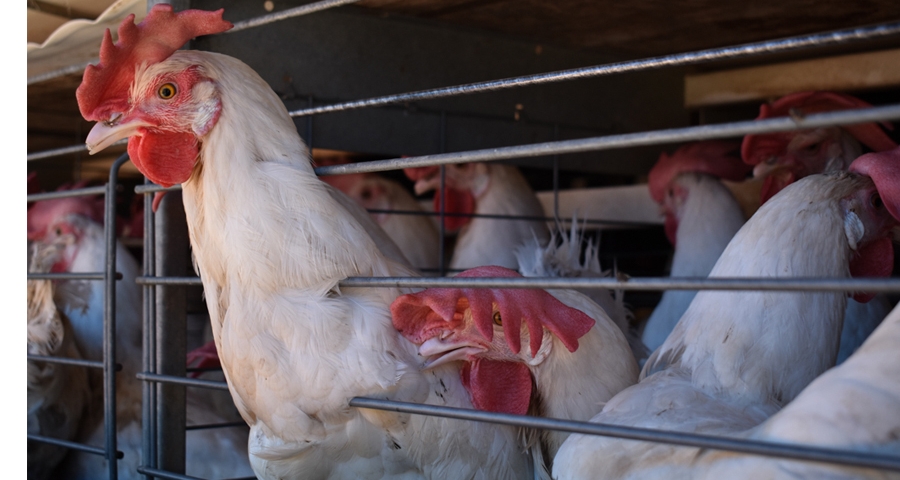
He says first we should move away from factory farms, where stressed chickens are kept in cramped, dirty conditions, and fed antibiotics to smaller free-range operations, and then stop eating birds completely.
He said: “The pandemic cycle could theoretically be broken for good. Bird flu could be grounded…[but] as long as there is poultry, there will be pandemics. In the end, it may be us or them.”
*How To Survive A Pandemic is available on Kindle and in audiobook format, and in paperback from August 20.
The coronavirus has killed over 365,000 people worldwide in just five months — but that’s nothing compared to what could be coming if humans don’t clean up their act when it comes to chickens.
In his new book, “How to Survive a Pandemic,” Dr. Michael Gregor, a scientist and physician who once testified for Oprah Winfrey in her “meat defamation” trial, warns that an apocalyptic virus emanating from overcrowded and unsanitary chicken farms has the potential to wipe out half of humanity.
Greger, a vegan, writes that “In the ‘hurricane scale’ of epidemics, COVID-19, with a death rate of around half of one percent, rates a measly Category Two, possibly a Three. … The Big One, the typhoon to end all typhoons, will be 100 times worse when it comes, a Category Five producing a fatality rate of one in two. … Civilization as we know it would cease.”
While environmentalists warned earlier this month that the world would face another stronger epidemic if we continue to have contact with wildlife, Gregor places the blame squarely on chickens.
“With pandemics explosively spreading a virus from human to human, it’s never a matter of if, but when,” Greger writes.
Citing the bird-based Spanish Flu outbreak of 1920, and the H5N1 outbreak in Hong Kong in 1997, Gregor writes, “the worry is that the virus never stands still but is always mutating. … This is the monster lurking in the undergrowth, the one that makes epidemiologists shudder.”
SEE ALSO
Scientists warn of deadlier future pandemics if we don’t stop this now
The Hong Kong outbreak, which originated in a bird market, “started with a three-year-old boy in Hong Kong, whose sore throat and tummy ache turned into a disease that curdled his blood and killed him within a week from acute respiratory and organ failure.” While only 18 people contracted that flu – a third of them died.
During that pandemic, the government killed 1.3 million chickens in an attempt to eliminate the virus – but there have since been two more outbreaks between 2003 and 2009 outside of China.
But with over 24 billion chickens on earth feeding the world, what can be done?
Gregor writes we have to change the entire system – away from large scale farms where chickens are fed antibiotics and are crammed together and pass diseases from one to another easily to smaller, free-range farms … and eventually not eating chickens or ducks at all.
“The pandemic cycle could theoretically be broken for good,” he writes. “Bird flu could be grounded.”
But until then, he warns, “as long as there is poultry, there will be pandemics. In the end, it may be us or them.”
According to Kathy Kuletz, the seabird section coordinator for Fish & Wildlife Service in Alaska, 26 carcasses from the 2018 die-off were sent to them for sampling. Those seabirds were then transferred to the USGS National Wildlife Health Center in Madison, Wisconsin.
“Some of them were not in real good shape when they (United States Geological Society) got them, but they were able to determine that 14 died of starvation, they were highly emaciated. One died from some kind of trauma and two they couldn’t determine. All of those were tested for avian influenza. Two of those came back positive.”
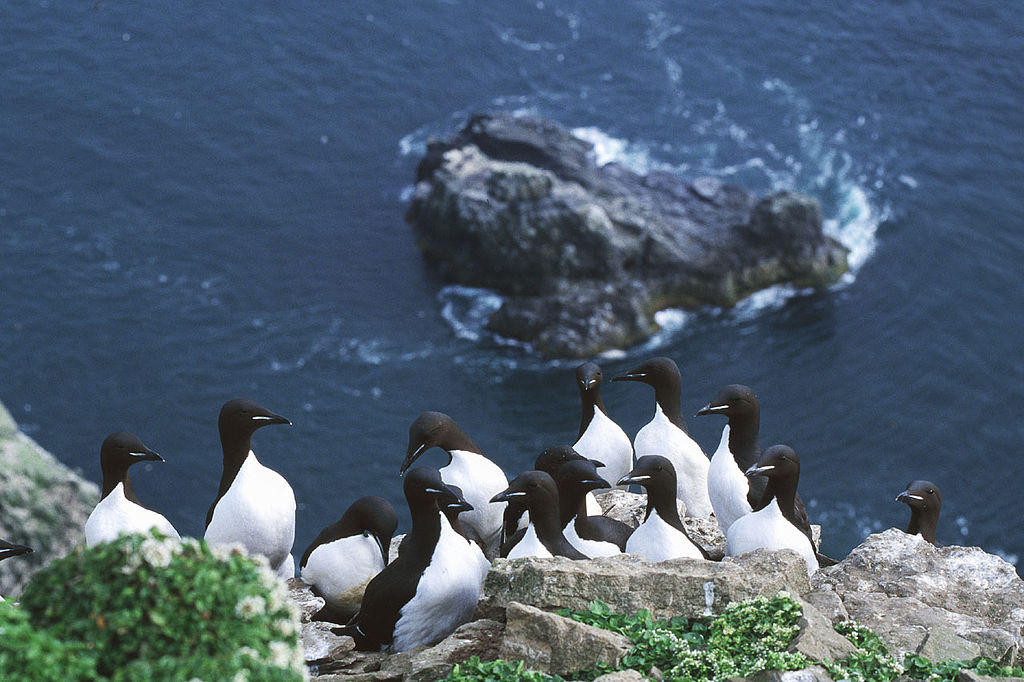
The two birds that tested positive for avian influenza were a kittiwake from Wales and a thick-billed murre from Savoonga. That thick-billed murre was the exact same bird a University of Alaska Fairbanks researcher came across during her studies on St. Lawrence Island in 2018.
“Of course, birds were starving, so that may have been poor foraging ability, that may have been a result. But we’re looking a little bit more at ‘maybe they were sick,’” said Alexis Will, a researcher with UAF’s Institute of Arctic Biology. Will recently explained how she and her fellow researchers found no evidence thick-billed murres experienced food shortages in 2018.
“Both H10N6 viruses and H16N3 viruses (or avian flu) have previously been detected in apparently healthy birds,” said Andy Ramey, a research geneticist with USGS’ Alaska Science Center. “And again, none of these previous detections have been associated with die-off events.”
Based on his more than ten years of studying avian influenza, and previous scientific findings, Ramey is skeptical that the bird disease caused the 2018 die-off. Fish & Wildlife Service is doing more tests and studies to confirm that disease like the avian flu did not cause this large-scale event to happen.
Meanwhile, Ramey, Kuletz and fellow Fish & Wildlife Service seabird biologist Robb Kaler, believe there are other factors contributing to hundreds of birds starving and dying in the Bering Strait region. Those include record warm ocean temperatures, lack of sea ice, and the absence of a cold-water barrier in the Bering Sea from 2018.
“So with the warm water and the lack of sea ice, that’s going to affect the metabolism of both the predator, in this case the seabird, and the prey, whether it’s krill, euphasids or forage fish,” Kaler said. “But that warm water could also affect the abundance and distribution of that prey.”
Although the scientists acknowledge there is still food available for seabirds to eat near St. Lawrence Island, and in the Bering Sea, their prey base is changing and may not be as nutritious as normal. Kaler refers to these types of fish as “junk food.”
“Capelin are very rich in nutrients versus pollock or cod, juvenile cod or pollock, being brought to the nests of a thick-billed murre. Capelin are king and there’s a junk food hypothesis about less nutritional…so the parent has to work harder to provision the nest if they’ve got junk food that they’re bringing back to their chick.”
The agency is, however, emphasizing that the 2018 seabird die-off in the Bering Strait region was most likely not associated with avian influenza. Ramey also points out that emaciation is not a clinical sign of influenza in birds, and many of the seabirds they sampled were found to be emaciated.
According to Kaler, they anticipate another seabird die-off will be seen in the Bering Sea this summer while Fish & Wildlife Service works to solve the mystery of the 2018 event. If the Bering Strait region experiences another large-scale dieoff this year, that would be the sixth year in a row featuring mass seabird deaths.
FILE- In this Aug. 10, 2015, file photo, turkeys stand in a barn on turkey farm near Manson, Iowa. The nation’s first case of highly pathogenic bird flu since 2017 has been found in a South Carolina turkey operation, leading to the killing of more than 30,000 birds. Even a single case of bird flu causes alarm in the poultry industry, which was devastated by a large outbreak in 2015 that led to the killing of millions of chickens and turkeys.
Charlie Neibergall
FILE- In this Aug. 10, 2015, file photo, a turkey stands in a barn on turkey farm near Manson, Iowa. The nation’s first case of highly pathogenic bird flu since 2017 has been found in a South Carolina turkey operation, leading to the killing of more than 30,000 birds. Even a single case of bird flu causes alarm in the poultry industry, which was devastated by a large outbreak in 2015 that led to the killing of millions of chickens and turkeys.
Charlie Neibergall
FILE- In this Aug. 10, 2015, file photo, turkeys stand in a barn on turkey farm near Manson, Iowa. The nation’s first case of highly pathogenic bird flu since 2017 has been found in a South Carolina turkey operation, leading to the killing of more than 30,000 birds. Even a single case of bird flu causes alarm in the poultry industry, which was devastated by a large outbreak in 2015 that led to the killing of millions of chickens and turkeys.
Charlie Neibergall
DES MOINES, Iowa (AP) — An infectious and fatal strain of bird flu has been confirmed in a commercial turkey flock in South Carolina, the first case of the more serious strain of the disease in the United States since 2017 and a worrisome development for an industry that was devastated by previous outbreaks.
The high pathogenic case was found at an operation in Chesterfield County, South Carolina, marking the first case of the more dangerous strain since one found in a Tennessee chicken flock in 2017. In 2015, an estimated 50 million poultry had to be killed at operations mainly in the Upper Midwest after infections spread throughout the region.
“Yes, it’s concerning when we see cases, but we are prepared to respond very quickly and that was done in this case,” said Lyndsay Cole, a spokeswoman for the U.S. Department of Agriculture’s Animal and Plant Health Inspection Service.
The USDA has been working in recent months with scientists and farmers in North Carolina and South Carolina, where a low pathogenic — or less severe — strain of bird flu had been detected.
Low pathogenic bird flu causes few clinical signs in infected birds. However, two strains of low pathogenic bird flu — the H5 and H7 strains — can mutate into highly pathogenic forms, which are frequently fatal to birds and easily transmissible between susceptible species.
Low pathogenic cases were already in an area near the South Carolina and North Carolina state line and USDA was closely monitoring and testing. The case in Chesterfield County, South Carolina was expected to be another low pathogenic case, but it came back from the laboratory high pathogenic which means the less severe virus mutated into the more severe version, Cole said.
“Our scientists at the National Veterinary Services Laboratory had looked at the virus characteristics of the low path virus and they had previously indicated that this was one that was probably likely to mutate so they were watching it very closely,” Cole said.
A laboratory in Ames, Iowa, confirmed the virus with that had been killing turkeys was a high pathogenic H7N3 strain of avian influenza.
A report on the outbreak indicates in was discovered on April 6. It has killed 1,583 turkeys and the remainder of the 32,577 birds in the flock were euthanized.
State officials quarantined the farm, movement controls were implemented and enhanced surveillance was already in place in the area.
“The flock was quickly depopulated and will not enter the marketplace,” said Joel Brandenberger, president of the National Turkey Federation, an industry trade group. “Thorough disinfecting and cleaning procedures have already been initiated on premises as well as surveillance of commercial flocks in the surrounding area. This occurrence poses no threat to public health. Turkey products remain safe and nutritious.”
He said poultry farmers implement strict biosecurity measures year-round and routinely test flocks for avian influenza.
These measures were implemented after an H5N2 avian influenza outbreak that began in December 2014 swept commercial chicken, egg laying and turkey populations throughout much of 2015 killing 50 million birds and causing as much as $3 billion in economic damage. That outbreak is believed to have originated in wild birds.
Nearly 90 percent of the bird losses were on egg-laying chicken farms in Iowa and turkey farms in Minnesota. The bulk of other cases occurred in the adjacent states of Nebraska, Wisconsin, and South Dakota.
Cole said since 2015 significant planning, exercises and coordination has occurred between the federal government, state agencies and the industry.
Cole said the coronavirus pandemic has not affected the ability of the government to respond to the bird flu.
A highly pathogenic H7N9 bird flu strain was detected in Lincoln County, Tennessee, in a chicken flock of 73,500 birds in early March 2017. Ten days later samples from a commercial flock less than two miles away also tested positive for the same strain. The birds were euthanized and buried and the virus didn’t spread further indicating immediate mitigation action can stop spread.
50 million Chinese locked down. 15 countries affected. Five confirmed cases in the U.S. These dramatic headlines announce one more pandemic caused by our abuse of animals.
Indeed, 61 percent of the 1,415 pathogens known to infect humans originate with animals. These so-called zoonetic diseases claiming millions of human lives include Asian flu, Hong Kong flu, West Nile flu, bird flu, swine flu, dengue fever, Ebola, HIV, SARS, and yellow fever. The pandemic “Spanish” flu of 1918 may have killed as many as 50 million people worldwide.
Western factory farms and Asian street markets are virtual breeding grounds for infectious diseases. Sick, crowded, highly stressed animals in close contact with raw flesh, feces, and urine provide ideal incubation media for viruses. As these microbes reach humans, they mutate to defeat the new host’s immune system, then propagate on contact.
Each of us can help end these deadly pandemics by replacing animal products in our diet with vegetables, fruits, and whole grains. These foods don’t carry flu viruses, or government warning labels, are touted by every major health advocacy organization, and were the recommended fare in the Garden of Eden. The internet offers ample recipes and transition hints.
After the deadly coronavirus, China is now reporting an outbreak of a dangerous strain of H5N1 bird flu. The outbreak was reported at Shaoyang city in Hunan province and has already killed 4000+ chickens. And, in the wake of the outbreak, Chinese authorities have culled over 17,000 chickens.
People can get infected by coming in to close contact with infected live or dead chickens or through H5N1-contaminated environments and the rate of mortality is about 60%, according to the WHO. They also added that spread of the virus from person to person is unusual.
The farm that saw the outbreak is just south of Wuhan, the epicentre of the coronavirus which has now claimed hundreds of lives and spread to other countries, including India, Thailand, South Korea, Japan, Singapore, France, the United States and Canada. Experts say that meat from wildlife trade may be where the virus originated and a temporary ban has been placed on wild animal trade.
The epidemics also highlight the root of the problem: industrialized animal agriculture. Chickens, cows, pigs and other animals are bred in close quarters with little or no ventilation, living in their own filth, all to cater to our appetite for meat. Now, more than ever, governments and citizens need to take note of how and what we eat is affecting the planet in more ways than one. By simply choosing to go plant-based, one can help reduce the demand for farmed meat worldwide.
*Feature image courtesy Moving Animals Archive
Like this?
Read: What Is Animal Farming And How Does It Affect Us?






 Exposing the Big Game