Donald Trump Jr. will be in Iowa next month to join U.S. Rep. Steve King for the congressman’s annual pheasant hunt. “Happy to announce @DonaldJTrumpJr will be hunting with us this year at my annual Col. Bud Day Pheasant hunt on opening weekend of Oct. 28th,” King posted to Twitter on Monday. A campaign spokesperson confirmed Trump’s attendance at the event, which marks the start of Iowa’s pheasant season. Trump Jr. is President Donald Trump’s eldest son. He has been a prominent campaign surrogate for his father and took over management of the Trump Organization following his father’s inauguration. Trump Jr. has come under fire after it was revealed he met with a Kremlin-linked attorney during
Tag Archives: bird hunting
Hunting-store owner accused of shooting at turkey hunters east of Greeley
By Tommy Simmons, Greeley Tribune
Jim Arnold, 38, the owner of Waterfowl Haven Outfitters in Greeley, faces two counts of felony menacing after Colorado Parks and Wildlife officers say he fired a gun at two hunters and yelled racial slurs at them.
Arnold owns property on the South Platte River just east of Kersey. A few years ago, the report states, Kevin Dunnigan bought property next to Arnold’s. Dunnigan often let Arnold use the property for hunting as well as business, since Arnold also worked as a hunting guide.
Problems began when the Dunnigans began to hunt turkey on the property themselves, along with a few friends, the report says.
The report states Arnold would “harass” the Dunnigans and their friends from time to time, and the situation was tense enough for Dunnigan’s son, Taylor, to expect trouble when he was out hunting with a friend. But things escalated on April 22 when two family friends of the Dunnigans were using the property to hunt turkeys, the report states. Arnold “came out and harassed them by screaming…and shooting his guns,” the report states.
Arnold reappeared the next day, when Taylor was on his family’s property hunting with a friend. They had set up a hunting blind — a camouflaged tent with holes through which to shoot — in the bottom of a riverbed and were waiting for turkeys. Taylor later told officers he was about 70-80 yards from the border of Arnold’s property.
The two were in the tent when they saw Arnold’s 2000 Ford Excursion appear on the property line, the report stated. The driver’s side window was rolled down, and Arnold was looking at them through binoculars, according to the report.
The two recorded a video of what happened next, which served as evidence for police. In the video, Arnold, in front of his truck, fired a round into the air, flushing a group of turkeys from nearby trees. He then reloaded his shotgun.
The report states Arnold fired multiple shots at the small tent where Taylor and his friend remained huddled. Taylor later told officers the shots were hitting bushes between 5 and 20 yards from the tent, and said he was afraid for his life.
Animal Protection Group Shuts Down US Senator Inhofe’s Pigeon Shoot
– Pigeon Supplier Leaves with Crates of Live Pigeons
LONE WOLF, OK – SHowing Animals Respect and Kindness (SHARK) shut down a live pigeon shoot fundraiser held Friday afternoon by US Senator Jim Inhofe (R-OK), the international animal protection group reported. SHARK said it will also monitor an Inhofe Dove Hunt Saturday if it goes on as scheduled.
According to SHARK, the story begins at the Quartz Mountain Lodge in Lone Wolf, OK, which was the sign-in location for Senator Inhofe’s pigeon shoot. Activists followed the procession of vehicles when they left the lodge to go to the shooting area. The Inhofe party went through extreme measures to lose SHARK, including driving the rear cars at extremely slow speeds on the highway to block the activists.
Inhofe’s team successfully lost the activists – except for one car, which eventually led the rest of the activists to the shoot, which was located down 10 miles of washboard dirt roads. The shoot site was located off of N2113 road in Lone Wolf.
Once SHARK launched its Angel drone, the shooting of birds stopped. Almost immediately vehicles started leaving. A trickle quickly became a flood, as was video documented. This included the person who supplied the pigeons. He left with many still living birds in his vehicle. The entire pigeon shoot was over.
“This a major victory,” said SHARK President Steve Hindi. “In 2014, when our investigator was at the event undercover, the shoot lasted more than an hour and forty-five minutes and there were ten shooting stations. This year there were only six shooting stations and the shoot was only about forty-five minutes long. All of this represents a dramatic reduction in shooters and time spent killing since SHARK first exposed Inhofe’s cruel fundraiser. Clearly the pressure is on Inhofe and we will not be letting up.”
Hunting of migratory birds banned this year
http://www.arabnews.com/news/575456

RIYADH: RASHID HASSAN
Friday 23 May 2014
Saudi Arabia recently announced a ban on hunting migratory birds, expressing concern regarding the transmission of bird flu into the country.
The Ministry of Interior, which is the authority responsible for regulating hunting activities, has in cooperation with the Saudi Wildlife Authority (SWA), specified the periods and locations for hunting this year. The year has been divided into eight hunting seasons.
In a statement released Wednesday, the ministry said: “The government of Custodian of the Two Holy Mosques King Abdullah, which is keen on preserving the country’s wildlife, has banned the hunting of all migratory birds in the Empty Quarter. The decision has been made due to fears of transmitting bird flu to human beings.”
The ministry urged residents and citizens to adhere to the ban, stressing the fact that hunting is only permissible for individuals who have obtained a license from regional governorates.
Meanwhile, an official of the SWA asserted Thursday that the Kingdom is free of bird flu virus. However, the government is taking precautionary measures against the spread of the virus during hunting season.
He added that according to health experts there are chances that the birds could carry the virus and spread the disease in the temporary nests they build.
Hunting the infected birds, he noted, would aggravate matters and spread bird flu.
The Kingdom hosts several thousand migratory birds, which begin their return journey in the spring to their summer homes.
The migratory birds, mostly originate from East and North Europe as well as the Levant region. They include houbara bustards, passerines, flamingos, pelicans, cranes and turtledoves.
Migratory birds halt temporarily mainly at Al-Hair in Riyadh, Al-Asfar Lake, Jubail Marine Protected Area, Domat Al-Jandal in Al-Jouf, Farasan Islands and Wadi Aljizan.
In accordance with the Kingdom’s wildlife preservation rules, hunters have been warned not to kill endangered species such as the oryx, gazelle, ibex, the Arabian leopard and the ostrich. Hunters are also forbidden to hunt in 16 protected areas in the Kingdom, which include the Empty Quarter and areas close to urban settlements.
Swan hunting among controversial issues before Wisconsin Conservation Congress
A proposal to allow the hunting of tundra swans, along with a rule to allow hunters to retrieve hound dogs on private property without landowner permission, are shaping up as two of the most controversial questions before state outdoors users Monday.
The annual meetings of the Wisconsin Conservation Congress (WCC) — held simultaneously in all 72 counties — will also ask attendees about creating a hunting season for the white deer and eliminating all trapping hours restrictions.
In total, 58 questions are on the WCC spring questionnaire and results will be used to advise the Department of Natural Resources and the Natural Resources Board on policy changes. State law mandates that WCC resolutions must be considered when new legislation is written.
Many conversation groups are already raising red flags about the tundra swan hunt. The issue there is that hunters may mistake the large birds for the once endangered trumpeter swans.
Earlier this month, the Madison Audubon Society Board voted unanimously against a swan hunt because of the “high probability that trumpeter swans will be mistaken for tundra swans and killed, after Wisconsin conservationists successfully worked for many years to re-introduce trumpeters.” They are now breeding in Wisconsin and were removed from the state endangered list in 2009.
The hunt would also disrupt the spring bird-watching season and the tourism dollars it provides, Audubon warns.
The hunting dog question is causing worries for those who say it’s a trampling of property rights in the name of a limited number of bear hunters and wolf hunters who rely on dogs to track prey. Dog owners are already compensated if their animals are killed during a hunt, a controversial issue in its own right.
“Allowing hound hunters unencumbered access to private lands just because they can’t control their dogs seems to me like it would raise the ire of the citizenry at large,” says Brook Waalen, a WCC delegate from Luck in Polk County.
Waalen is among a growing number of WCC delegates representing silent sports advocates and so-called “non-consumptive” outdoor enthusiasts.
Each county gets five delegates, who are elected at the meetings and serve two-year terms on a staggered basis.
Long dominated by the “hook and bullet” crowd, the WCC is now feeling pressure from a wider outdoors constituency that wants more of a say in DNR policy. A proposal to expand hunting and trapping in state parks, along with establishing a wolf hunting season, were flashpoint issues last year that brought many to the hearings for the first time.
Last year, more than 100 environmental advocates showed up at the Polk County meeting to help elect Waalen.
Dane County and Milwaukee County in the past have elected anti-hunting activists as delegates to the Conservation Congress. Last year, wolf defender Melissa Smith was elected as a Dane County delegate.
Jason Dorgan of Blue Mounds will be seeking election Monday night as a delegate at the meeting at Middleton High School’s Performing Arts Center at 7 p.m. Dorgan enjoys running on the trails in the state parks and was upset by the proposal to expand hunting in those public areas.
“This state has 6 million acres of land for hunters and trappers to use even before the recent expansion into the state park system,” he says. “There has always been limited hunting in state parks and that has always seemed reasonable to me. “
Dorgan says as he learned more about the WCC and its interests he became more disappointed in the direction it was leading the state.
“Whether it is some of the cruel practices they condone or the lack of true land stewardship, I would like to bring another perspective to the Congress,” he says.
The swan hunting issue is a particularly tricky one.
According to the WCC ballot question, tundra swan population numbers are rising, even with hunting in other states. Tens of thousands of them migrate through Wisconsin with population counts over 30,000 on the Mississippi River.
“Wisconsin could benefit from allowing a hunt unique to very few other states,” the WCC ballot says.
The WCC maintains there is little chance of mixing up the two birds because tundra swans tend to gather in big groups on large bodies of water whereas trumpeter swans gather in smaller groups and prefer ponds or marshes.
But the Sun Prairie-based Wisconsin Wildlife Public Trust says the push to expand hunting to more and more species runs counter to the ethic of famed conservationist Aldo Leopold.
“If Aldo were to look at the ballot questions today, our guess is that he would be greatly disappointed with the current trend of the WCC in wanting to ‘take’ from land & water resources versus ‘give’ or ‘restore’ ” the group says in a posting on its website.
Republicans Push Lead Poisoning of Wildlife Disguised as “Sportsmen’s Heritage Act”
For Immediate Release, February 3, 2014
Contact: Bill Snape, (202) 536-9351 or bsnape@biologicaldiversity.orgRepublicans Push Lead Poisoning of Wildlife Disguised as “Sportsmen’s Heritage Act”
Legislation Would Also Roll Back Public-lands Protection, Promote Polar Bear Trophy Hunting
WASHINGTON— The U.S. House of Representatives will vote Tuesday on H.R.
3590, the misnamed “Sportsmen’s Heritage and Recreational Enhancement Act.” Under the guise of expanding hunting and fishing access on public lands, the Republican-supported bill aims to prevent the Environmental Protection Agency from protecting millions of birds and other animals from lead poisoning. The extremist legislation also contains provisions to undermine the Wilderness Act, dispense with environmental review for projects on national wildlife refuges, and promote polar bear hunting.
“Another cynical assault by House Republicans to roll back protections for public lands and wildlife,” said Bill Snape, senior counsel at the Center for Biological Diversity. “This supposed ‘sportsmen’s legislation’ would actually jeopardize the health of hunters, promote needless lead poisoning of our wildlife, and prevent hunters, anglers and other members of the public from weighing in on decisions about how to manage 150 million acres of federal land and water.”
H.R. 3590 seeks to exempt toxic lead in ammunition and fishing equipment from regulation under the Toxic Substances Control Act, the federal law that regulates toxic substances. The EPA is currently allowed to regulate or ban any chemical substance for a particular use, including the lead used in shot and bullets. Affordable, effective nontoxic alternatives exist for lead ammunition and lead sinkers for all hunting and fishing activities.
Spent lead from hunting is a widespread killer of more than 75 species of birds such as bald eagles, endangered condors, loons and swans, and nearly 50 mammals. More than 265 organizations in 40 states have been pressuring the EPA to enact federal rules requiring use of nontoxic bullets and shot for hunting and shooting sports.
“There are powerful reasons we banned toxic lead from gasoline, plumbing and paint — lead is a known neurotoxin that endangers the health of hunters and their families and painfully kills bald eagles and other wildlife,” said Snape.
H.R. 3590 would also exempt all national wildlife refuge management decisions from review and public disclosure under the National Environmental Policy Act and allow the import of polar bear “trophies” from Canada. The Republican-controlled House approved similar “Sportsmen’s Act” legislation in 2012 by a vote of 274-146, but the bill was stopped in the Senate.
Background
Despite being banned in 1992 for hunting waterfowl, spent lead shotgun pellets from other hunting uses continue to be frequently ingested by waterfowl. Many birds also consume lead-based fishing tackle lost in lakes and rivers, often with deadly consequences. Birds and animals are also poisoned when scavenging on carcasses containing lead-bullet fragments. More than 500 scientific papers have documented the dangers to wildlife from lead exposure. The U.S. Fish and Wildlife Service calculates that more than 14,000 tons of toxic lead shot is deposited in the environment each year in the United States by upland bird hunting alone.
Lead ammunition leaves fragments and numerous imperceptible, dust-sized particles that contaminate game meat far from a bullet track, causing significant health risks to people eating wild game. Recent scientific studies show that hunters have higher lead levels in their bloodstream, and more associated health problems, than the public at large. Some state health agencies have recalled venison donated to feed the hungry because of dangerous lead contamination from bullet fragments.
There are many alternatives to lead rifle bullets and shotgun pellets. More than a dozen manufacturers market hundreds of varieties and calibers of nonlead bullets and shot made of steel, copper and alloys of other metals, with satisfactory-to-superior ballistics. A recent study debunks claims that price and availability of nonlead ammunition could preclude switching to nontoxic rounds for hunting. Researchers found no major difference in the retail price of equivalent lead-free and lead-core ammunition for most popular calibers.
Hunters in areas with lead ammunition restrictions have transitioned to hunting with nontoxic bullets. There has been no decrease in game tags or hunting activity since state requirements for nonlead hunting went into effect in significant portions of Southern California in 2008 to protect condors from lead poisoning. California recently passed legislation to transition to lead-free hunting statewide by 2019.
Learn more about the Center’s Get the Lead Out campaign.
http://www.biologicaldiversity.org/news/press_releases/2014/lead-02-03-2014.html
Cormorant hunt in South Carolina Must Be Stopped
[This cormorant cull is just the kind of thing that the infamous Time Magazine piece on the resurgence of hunting was meant to prepare us for. As with so many articles from the mainstream media, this one saves the real story for the end (where they know many readers won’t see it).
Here, then, are the last lines first: …The cormorant population went into serious decline with the use of the now-banned DDT. The increase of birds on the lakes means the population is re-establishing itself.
“We should be celebrating that, it seems to me,” he said. The removal “is a sad thing.”
Cormorant hunt in Marion-Moultrie lakes rouses controversy
by Bo Petersen
Saturday, January 25, 2014
Cormorants aren’t a favorite bird for very many people. They are snaky necked, ravenous fish eaters that can kill a tree with their acidic feces if they roost there thickly enough.
Cormorant facts
The double-crested cormorant
One of 38 species worldwide, one of 6 in the U.S.
Found in waterways from Alaska to Florida.
Long-lived waterbird, nests in colonies that can be as large as a few thousand.
An estimated 2 million in North America. Population increased rapidly 1970s-1990, slowed in the 1990s.
States permitted to conduct cormorant depredation removals include Alabama, Arkansas, Florida, Georgia, Kentucky, Louisiana, Minnesota, Mississippi, North Carolina, Oklahoma, South Carolina, Tennessee, and Texas.
Sources: U.S. Fish and Wildlife Service, U.S. Department of Agriculture.
And this time of year they descend on the Marion-Moultrie lakes by the “thousands and thousands and thousands,” according to one fishing guide, ready to feast on the shad and herring runs that provide food for the lakes’ trophy game fish.
That’s why anglers and state legislators have been pushing for a cormorant removal hunt scheduled to start Feb. 2 on the lakes. Avian conservationists oppose it. As a migratory bird, the cormorant, craw and all, is a protected species, meaning federal regulations restrict harassment or taking of the birds.
“These are native birds. They have always been here. Someone now perceives that to be a problem,” said Norman Brunswig, Audubon South Carolina state director. The S.C. Department of Natural Resources has no credible scientific evidence that the onslaught of winter migrating birds does any substantive damage to the fishery, he said. “To kill a bird without a really, really good reason to do it is kind of barbaric.”
‘Look at the flocks’
DNR is holding the removal “event” after years of angling groups seeking it, and after a proviso was tacked onto the 2013-2014 budget directing the agency “through the use of existing funds” to manage public participation in “cormorant control activities.”
Truman Lyon, the South Carolina Guides Association representative for Berkeley County, makes no bones about it.
“We definitely need to have this hunt,” he said. “Look at the roosts. Look at the banks. Look at the flocks and flocks of (cormorants) on the lakes. There are many, many more than there ever were. There’s nothing to kill them,” he said.
Studies have shown that the birds eat a tremendous amount of fish. But that’s alongside other birds and, of course, the fish themselves.
How much the feasting might be depleting the game fish isn’t clear. The lakes – relatively shallow, stagnant and heavily fished – have long been a problematic fishery to manage. Previous declines in game fish species have been blamed on factors such as overfishing, aquatic cover removal and drought, as well as competition for food. The recent cold snap killed bait fish.
Striped bass, or stripers, were the trophy fish that turned the lakes into what has been touted as a $300 million-per-year tourism destination. In the early 2000s the striper numbers went into a precipitous decline, but aggressive stocking and tighter catch restrictions, among other measures, brought them back.
“There’s loads of stripers,” Lyon said, but crappie and bream numbers are not where they should be, he said, and catfish have depleted to the point where DNR is now imposing a limit of 20 fish per day per person in the boat.
Cormorants increasing
How many cormorants there actually are around the lakes isn’t clear, although observers generally agree there are a lot, and they are increasing.
The removal hunt was given a depredation permit “to protect public resources” by the U.S. Fish and Wildlife Service, the federal agency in charge of managing protected species. The permit doesn’t require population numbers to be reported, just the harvest, said Tom McKenzie, Southeast region media relations chief.
Santee Cooper, the quasi-state utility that manages the lakes, officially is staying hands-off.
DNR manages the fish and game for Lake Marion and Lake Moultrie, said Santee Cooper spokeswoman Nicole Aiello; it is the agency’s role to make decisions such as this one.
DNR staff have concerns about the “event.” Staff will fly over the lakes before and afterward to do counts of cormorants, along with other protected bird species such as bald eagles, anhingas and wood storks. That data will be reviewed to decide – among other things – whether to hold the hunt again.
800 hunters qualified
“We’re not concerned about the future of the migrating cormorant population, because it has grown so much,” said Derrell Shipes, DNR Wildlife Statewide Projects, Research and Survey chief. The birds are now so numerous they routinely are caught in the lakes’ fish passage, he said.
More than 800 people have qualified to hunt the birds, making the “public removal” so labor-intensive that the agency doesn’t have the staff to enforce bag limits. The hunters each have taken part in a training session that includes warnings not to mistakenly shoot other similar-looking, protected species such as anhingas and wood ducks or face arrest.
The scheduled two-month “event” can be stopped at any time by DNR, Shipes said.
“All of us should pay attention to what we’re doing,” he said. “When we have the harvest information, we’ll step back, look at the problems and issues and go from there.”
Brunswig isn’t buying it. DNR wouldn’t hold this hunt if it wasn’t being pressured to, he said. The cormorant population went into serious decline with the use of the now-banned DDT. The increase of birds on the lakes means the population is re-establishing itself.
“We should be celebrating that, it seems to me,” he said. The removal “is a sad thing.”
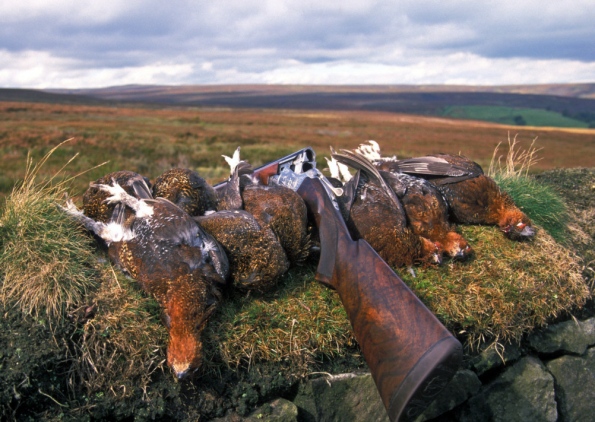
POLL: Should the Slaughter of Grouse be allowed to continue?
Please vote (No) here and circulate widely:
http://focusingonwildlife.com/news/poll-should-the-slaughter-of-grouse-be-allowed-to-continue/
Aug12, 2013
Today is the “Glorious Twelth”, a day when according to tradition hunting enthusiasts gather on moors in Scotland and the north of England to shoot Grouse. Proponents will tell you that that this is an important British tradition. They will also argue that it is good for Britain’s economy by attracting tourists, providing jobs for thousands of people and generating several £100 millions annually .
Eight Reasons to Oppose Grouse Shooting:
1.Killing birds for sport is cruel and uncivilised. [Say no more!]
2.A large number of native birds and mammals who interfere with grouse shooting are trapped, poisoned or snared. Victims include stoats, weasels, and even iconic raptors such as hen harriers, red kites and golden eagles.
3.An unnatural, heather-rich environment is created because the grouse thrive on young heather shoots. To create fresh young shoots, the heather is burned, which can harm wildlife and damage the environment.
4.The burning of heather, reports an expert, ‘threatens to release millions of tonnes of carbon locked into the peat bogs underpinning the moors. Where burning occurs, the hydrology changes and the peat is open to decomposition and erosion. This strips the moor of carbon as surely as setting fire to the Amazon Forest.’ (Adrian Yallop,New Scientist magazine, 12 August 2006)
5.The harsh ‘management’ of moorlands causes grouse numbers to boom. But as they overburden the landscape, they become weakened and fall prey to a lethal parasite – Strongylosis. This attacks the gut and leads to a collapse in the population.
6.A cycle of population boom and bust is the norm on Britain’s grouse moors.
7.Large quantities of lead shot are discharged, which is toxic to wildlife.
8.Grouse shooting estates use the Countryside and Rights of Way Act to restrict public access to mountain and moorland.