Wildlife officials have raised alarm over the continued threat of illegal bird trapping to the island’s avian population, with over 150 species known to have been caught in nets and limesticks.
Nikos Kasinis, a senior official at the Game and Fauna Service, told philenews that the term “collateral damage” aptly describes the unintended capture of non-target species in these indiscriminate trapping methods.
According to Kasinis, more than one-third of the affected species (58) are of conservation concern.
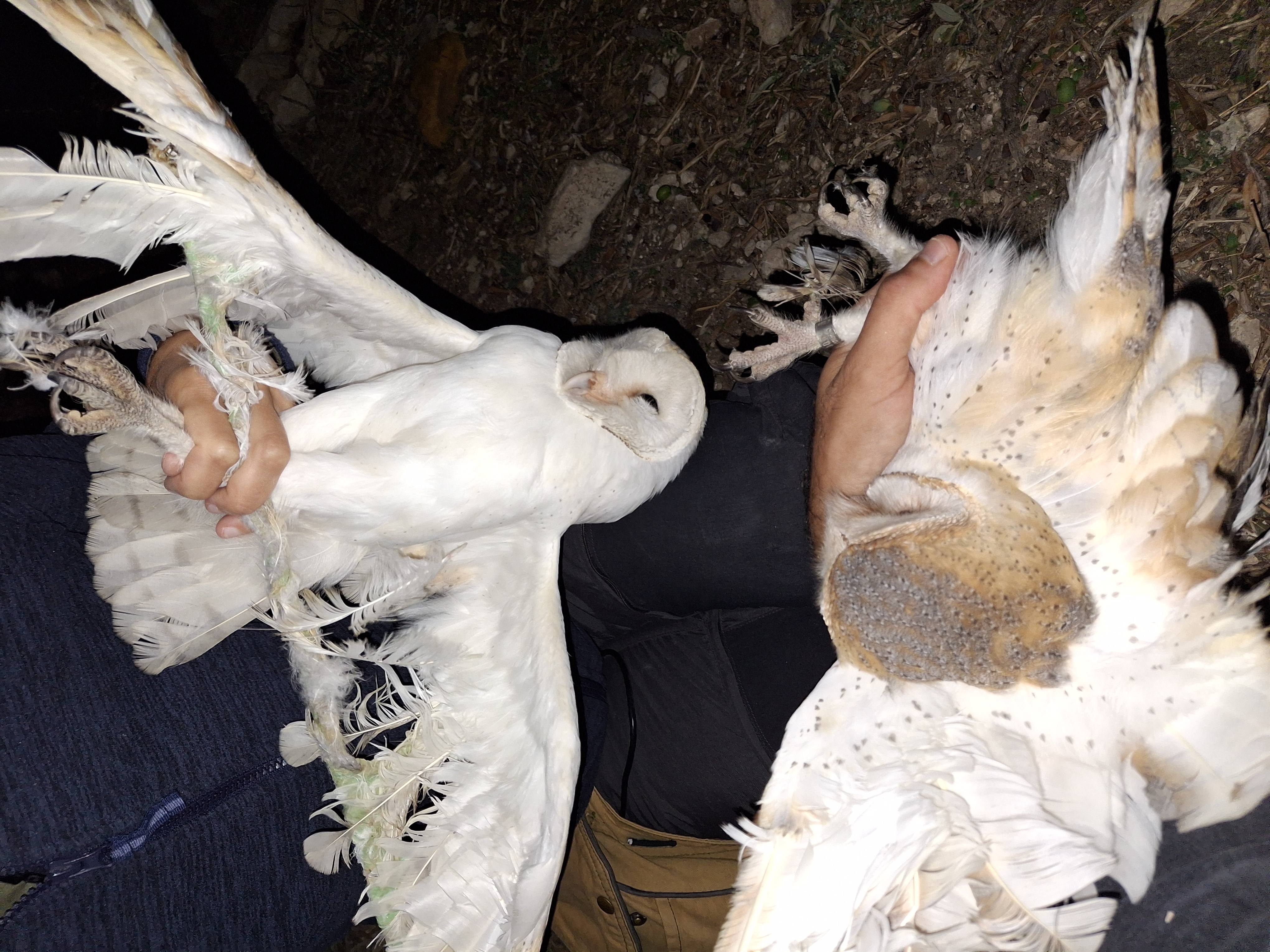
He cited a recent incident where two barn owls (Tyto alba) were found caught in limesticks in the Larnaca district. The birds were rescued, cleaned of the sticky substance, and released.
Kasinis highlighted the irony of the situation, noting that one of the rescued barn owls had been ringed by the Game and Fauna Service as part of conservation efforts.
These efforts include installing artificial nests across Cyprus to boost owl populations for natural rodent control.
The official revealed that all owl species nesting in Cyprus have fallen victim to these trapping methods.
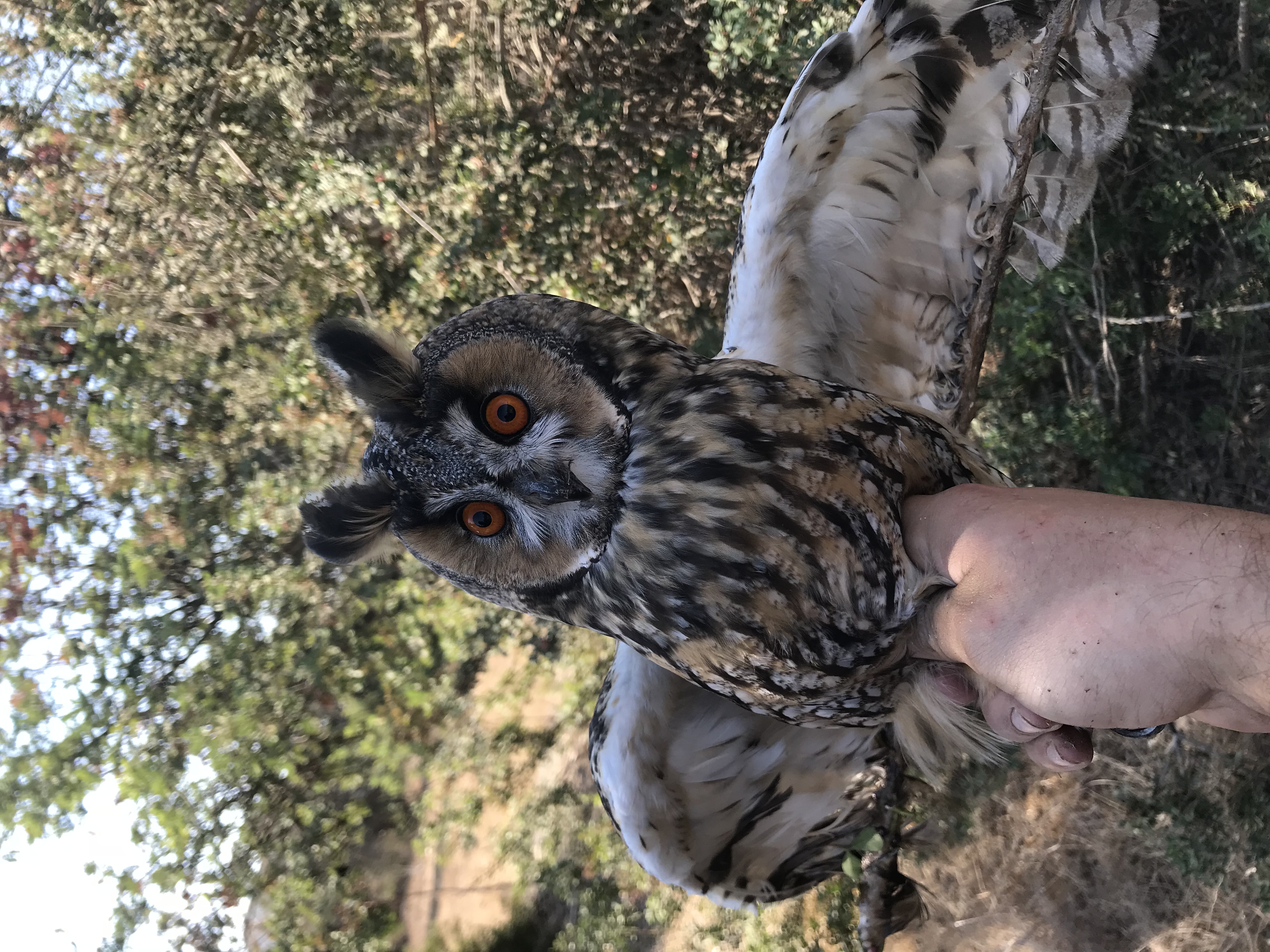
This includes the endemic Cyprus scops owl (Otus cyprius), the little owl (Athene noctua) – associated with the goddess Athena, and the long-eared owl (Asio otus).
Kasinis emphasised that this activity is not a “tradition” but an illegal practice driven by profit. He stressed that it poses a significant threat to Cyprus’s natural heritage and should be treated as such.
The most severe case reported was that of a young Bonelli’s eagle (Aquila fasciata) caught in a limestick in Larnaca. Despite care efforts, the bird did not survive due to stress and exhaustion.
Three men were arrested in the Dhekelia area on Monday morning after a Sovereign Base Area Police anti-bird trapping raid discovered them in an orchard using active mist nets.
During the raid, between the villages of Ormidhia and Xylophagou, the dedicated Bird Trapping Action Team working alongside the Committee Against Bird Slaughter, released 69 live Ambelopoulia (Black Caps) which had been snared in three mist nets.
The police have also confirmed that a bird imitating device used to attract migrating Ambelopoulia was seized, along with three loudspeakers, 100 metres of electric cabling, one car battery and a vehicle used by the men.
All three are from the Xylophagou area and police are now in the process of tracing the owner of the orchard used for the crime.
Sergeant Yiannis Louca, who ran the operation, said the men are now all facing prosecution for their crimes.
He explained: “Firstly, this is a really good result and sends out a very strong message that despite our success in heavily reducing this crime over the years, we remain committed.
“We are still investigating this crime but the men will face prosecution in the SBA Court as we operate a zero-tolerance policy on bird trapping.”
Inspector Fanos Christodoulou, who oversees the team, warned trappers his officers were now better resourced and more prepared than ever before.
He said: “We have assembled a team of 10, full of experience with officers that are keen to make a difference in tackling this crime.
“We will have the capacity to call on up to 10 members of the military to assist us in our operations when working on military land and on top of that, we will once again work very closely with Bird Life Cyprus and CABS to combat bird trapping.
“As always, we will continue to develop our technology, with drones, hidden cameras and any other modern means of detection.”
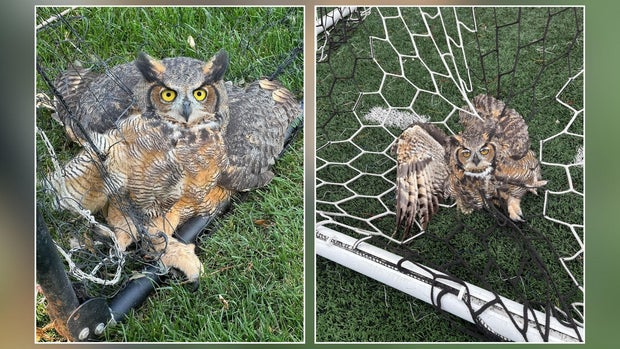
ST. PAUL, Minn. — We’re “owl” all in this together — that’s the message experts at the Raptor Center are pushing after five raptors got caught in soccer nets while on the hunt.
One red-tailed hawk and four great horned owls got themselves into a tight situation after getting caught in nets.
“Five in the month of September is a lot in one short period of time,” said Dr. Dana Franzen-Klein of the Raptor Center.
Franzen-Klein said entanglement admissions are higher than usual this year and a major problem for younger birds.
“This time of year, young great horned owls are separating from parents and learning how to hunt on their own,” Franzen-Klein said. “(They are) less experienced and so focused on hunting that they don’t see the soccer net at night.”
Raptor Center
Experts say entanglement injuries can be the most difficult to treat even leading to death.
“It restricts blood flow to their wings can cause them to get really swollen and get muscle strains that are really painful, and they may fly away but they are uncomfortable and can’t fly well enough to survive,” Franzen-Klein said.
She believes the best way people can help our feathered friends is to remove the nets or tip down the net.
“That’s a real easy thing you can do so it’s flat against the ground so birds will not get tangled in it,” Franzen-Klein said.
She also recommends regularly checking soccer nets and any landscape netting around your home.
A weekly newsletter featuring the biggest ideas from the smartest people
Fields marked with an * are required
Crows and ravens, which belong to the corvid family, are known for their high intelligence, playful natures, and strong personalities. They hold grudges against each other, do basic statistics, perform acrobatics, and even host funerals for deceased family members. But we keep learning new things about the savvy of these birds, and how widespread that savvy is among the corvid family.
Featured VideosThe video player is currently playing an ad. You can skip the ad in 5 sec with a mouse or keyboard
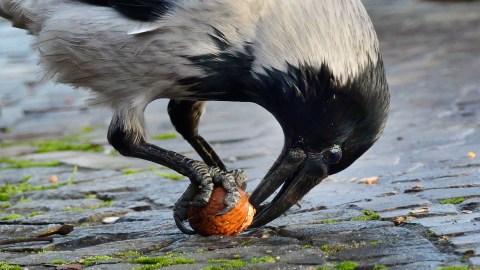
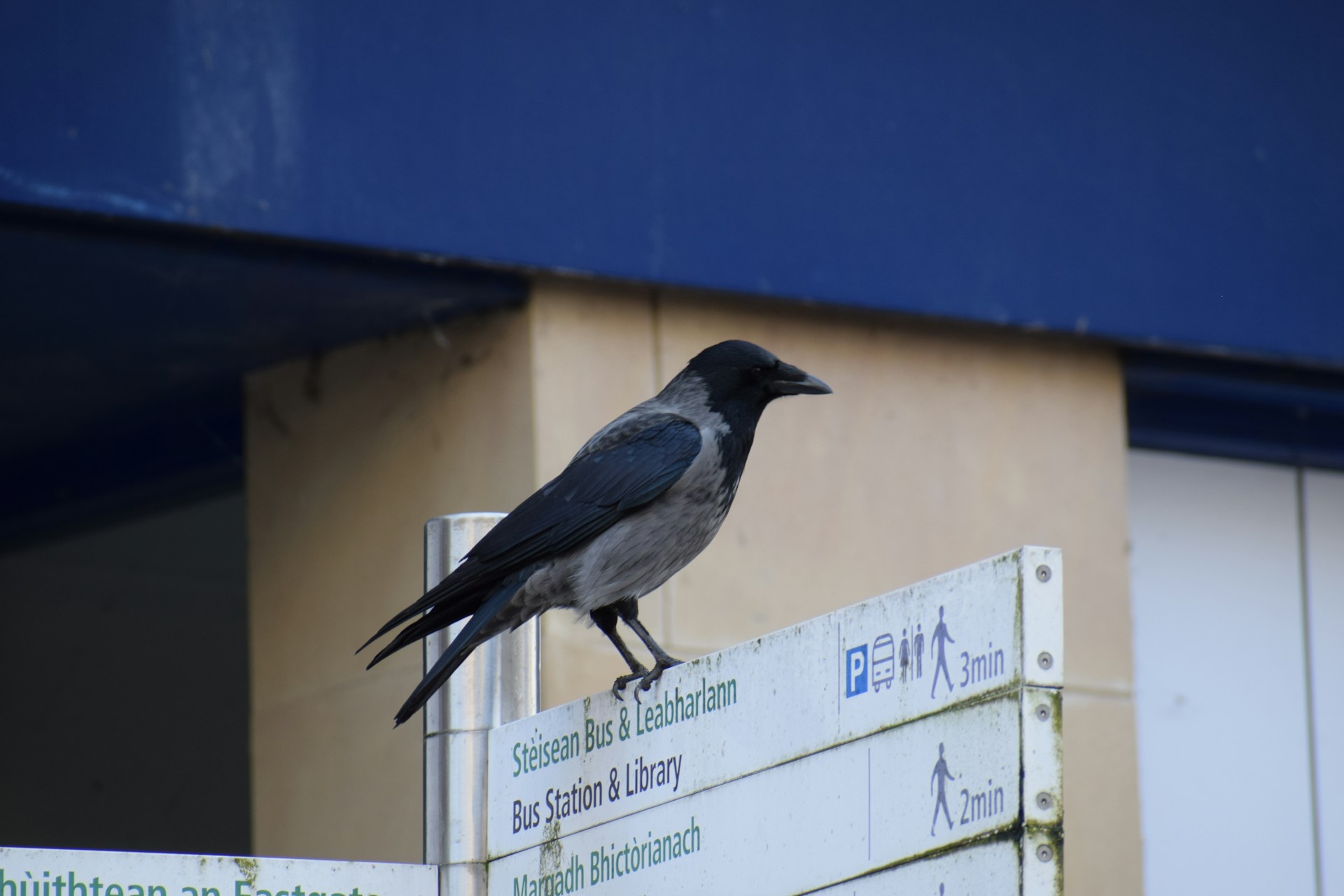
Earlier this year, a team of researchers from Lomonosov Moscow State University in Russia and the University of Bristol found that a species of crow called the hooded crow—which has a gray bust and black tail and head feathers, making it look like it is wearing a “hood”—is able to manage a mental feat we once thought was unique to humans: to memorize the shape and size of an object after it is taken away—in this case a small piece of colored paper—and to reproduce one like it.
This kind of feat, according to animal behavior researchers, requires the ability to form “mental templates.”Essentially, a mental template is an image in the mind of what a particular object looks like, even when that object is not present. Mental templates allow animals to create tools, which can be used to get food or make a stronger nest, both ultimately leading to a better chance of survival. They might also make it possible for individuals to learn about tool making from other members of their species—and to pass along improvements in tool making over time, often called “cumulative culture,” which so far seems rare among non-human animals.
We have been looking for evidence that different corvid and other bird species can create mental templates since at least 2002. That year, researchers published findings showing that Betty, a captive New Caledonian crow, was able to spontaneously bend a piece of wire to create a hook that she could use to grab a hard-to-reach treat. Betty had successfully used a pre-made hook to obtain the treat in earlier trials but in follow-up tasks didn’t seem to fully understand how hooks work. The researchers decided she must have formed a mental template of the hook, which she then reproduced. So far, researchers have found that Goffin cockatoos, a kind of parrot, can also create tools spontaneously, which could indicate similar mental agility.
But the new hooded crow findings suggest that the ability to learn this way could be more widespread than we thought, says Sarah Jelbert, a comparative psychologist who studies animal behavior at the University of Bristol and is one of the authors of the study. Creating and using mental templates might be a skill that evolved in the ancestor of all corvids, the “Corvida” branch of songbirds, or perhaps it is even shared more broadly across the animal kingdom, she says.
For their study, Jelbert and her colleagues first trained three hooded crows—Glaz (15 years old), Rodya (4 years old), and Joe (3 years old)—to recognize pieces of paper of different sizes and colors. To do this, they exposed the birds to “template” pieces of paper in different colors and sizes for several minutes before removing them—and then rewarded the birds for dropping scraps that matched these templates into a small slit.
The crows were next given the opportunity to manufacture versions of these objects in exchange for a reward. The researchers found that all three crows manufactured objects that matched the original template object they had been rewarded for in both color and size—even though the treats in this second stage of the experiment were awarded at random. The researchers also observed that Glaz, the oldest of the three hooded crows, seemed to be the most proficient at making scraps that looked like the ones the bird was trained on. This finding suggested to them that mental templates may be linked to experience garnered with age.
“Unlike humans, who regularly copy each other’s behavior … we don’t have much evidence that crows will watch each other and deliberately copy what another crow is doing,” Jelbert says. However, they will steal each other’s tools—in particular, juvenile crows often steal their parents’ tools when they are young. So it’s possible that young crows learn how to make different types of tools from experience stealing their parent’s tools, using them, remembering what these tools look like, and then trying to create something similar, Jelbert says.
What qualifies as a mental template, and how flexible these templates are, seems to be up for some debate. Research suggests birdsong and mating practices may rely on certain kinds of mental templates, which can backfire if a bird memorizes behavior from the wrong species. “For example, if a song sparrow gets imprinted on the song of a swamp sparrow and sings a song from a different species rather than its own, it will have difficulty finding mating partners,” explains Andreas Nieder, a professor of animal psychology at the University of Tübingen and a lead researcher on corvid neuroscience, who was not involved in this study. “Similarly, if one finch species gets sexually imprinted on another, it may show courtship displays to the wrong species in adulthood.”
Nieder says this kind of imprinting can become fixed in the bird’s brain, and is not changeable even in new environments. “In this case, templates may no longer represent intelligence but rather the opposite,” he adds. Researchers have not yet determined whether mental templates related to tool making remain flexible, though there is some evidence in New Caledonian crows that they may evolve.
For biologists and comparative psychologists, understanding the ways corvids use mental templates can help to illuminate not just the nature of bird intelligence, but of intelligence across the animal kingdom and evolutionary time.
A dozen eggs in August cost $3.20, compared to $2 the same time last year. But these prices are still lower than January 2023, when they peaked at $4.82.
Egg prices are on the rise again, rising more than 28% in August compared to the same month last year.
A dozen eggs were priced at $3.20 this past August, compared to $2.00 in August 2023. The price of eggs has also increased compared to July, as egg prices were $3.08, according to data from the Bureau of Labor Statistics.
Although inflation is largely blamed for much of the rising prices of everyday items, the avian, or bird flu is the main factor making egg prices spike.
Millions of birds are becoming sick across the U.S., causing egg production to drop which leads to higher prices of eggs at the supermarket. As of September, more than one hundred million birds have been affected by bird flu since January 2022, according to the Centers for Disease Control and Prevention.
The cases are spread throughout 48 different states across the country.
Even still, the prices for eggs in August are nothing compared to prices seen at the end of 2022 and the beginning of 2023. In December 2022, a dozen eggs were $4.25, and in January 2023 they peaked at $4.82.
Fernando Cervantes Jr. is a trending news reporter for USA TODAY. Reach him at fernando.cervantes@gannett.com and follow him on X @fern_cerv_.
A flock of 5 short-toed eagles came under fire along the Victoria lines on Tuesday as members of BirdLife Malta followed the prized birds in an attempt to prevent them from being killed.
The organisation said in a statement the shots at these birds were fired as they attempted to find a resting place for the night, with one bird being filmed as it was shot down at Bingemma, while volleys of shots at these birds were fired along Tas-Santi, Dwejra and Mtarfa into the evening.
Video footage of the Bingemma incident was passed on to police with a hunter identified as being the same person involved in a separate illegal hunting incident during the closed season last August.
Information about a second, separate incident was also shared with police for further investigation.
The following morning, only two eagles were seen flying out of the northern part of the island, while searches undertaken by police are believed to have been futile.
“Despite peak migration, only two EPU units are currently operative around the island, with occasionally a single unit struggling to keep up with reports of illegal hunting by NGOs,” Birdlife said.
BirdLife Malta said such incidents are a direct consequence of the lack of proper governance of hunting whereby thousands of birds listed in taxidermy collections have gone unchecked for years, with recent allowances in transfers rekindling demand for such birds to become taxidermy specimens.
The organisation added that it was holding Minister Clint Camilleri politically responsible for allowing the opening of a hunting season without the necessary police resources and for allowing a system where a hunter who was caught red-handed hunting illegally is, a month later, persisting in more wildlife crime.
It also remarked on the continuing situation with hunting federations taking no responsibility for their members’ actions.
Short-toed Eagles only appear annually in few numbers between September and November, and they are highly prized for taxidermy.
“As was the case yesterday, hunters do not hesitate to use the opportunity of an open hunting season for game birds to target protected species. A 3pm hunting curfew to protect such birds of prey on arrival was changed to 7pm in 2015, effectively allowing hunting to coincide with the arrival of these highly protected species,” Birdlife said.
A flock of 5 short-toed eagles came under fire along the Victoria lines on Tuesday, as members of BirdLife Malta chased the birds in an attempt to prevent them being killed.
Shots at these birds were fired as they attempted to find a resting place for the night with one bird being filmed as it was shot down at Bingemma, while volleys of shots at these birds were fired along Tas-Santi, Dwejra and Mtarfa into the evening.
The bird conservation group said video footage of the Bingemma incident were passed on to police with a hunter identified as being the same person involved in a separate illegal hunting incident during closed season last August.
Information pertaining to a second separate incident was also shared with police for further investigations.
Earlier this morning only two eagles were seen flying out of the northern part of the island, while searches undertaken by police are believed to so far have proven futile.
Despite peak migration, only two Environmental Protection Units within the Police Force are currently operative around the island, with occasionally a single unit struggling to keep up with reports of illegal hunting made by NGOs.
In a statement on Wednesday, BirdLife Malta said such incidents were a direct consequence of the lack of proper governance of hunting whereby thousands of birds listed in taxidermy collections have gone unchecked for years, with recent allowances in transfers rekindling a demand for such birds to become taxidermy specimens.
It also said it held Minister Clint Camilleri, an avid hunter himself, politically responsible for allowing the opening of a hunting season without the necessary police resources, and for allowing a system where a hunter who was caught red-handed hunting illegally, is a month after, persisting in more wildlife crime decimating highly protected species. It also remarked on the continuing situation with hunting federations taking no responsibility for such acts by their members.
Short-toed Eagles only appear annually in few numbers between September and November, and they are highly prized on taxidermy lists by hunters.
A 3pm hunting curfew to protect such birds of prey on arrival had been changed to 7pm in 2015, effectively allowing hunting to coincide with the arrival of these highly protected species.
A man from Guyana — Kevin Andre McKenzie, 36 — is accused of smuggling the birds that are prized in singing contests, authorities said.
Matt Troutman, Patch StaffPosted Tue, Apr 27, 2021 at 4:45 pm ET|Updated Tue, Apr 27, 2021 at 5:02 pm ET
Reply
One of 35 finches found stuff in hair curlers that customs officials said they found on a man accused of smuggling the birds through JFK Airport. (United States District Court Eastern District Of New York)
NEW YORK CITY — A passenger flying into John F. Kennedy International Airport tried to smuggle a flock of finches into the country, authorities said.
Customs officials found 35 live finches stuffed in hair curlers concealed on the passenger — Kevin Andre McKenzie, 36 — Monday, according to a federal criminal complaint.
“In such contests, often conducted in public areas like parks, two finches sing and a judge selects the bird determined to have the best voice,” the complaint states. “Many who attend the singing contests wager on the birds. A finch who wins these competitions becomes valuable and can sell for more than $10,000. Although certain species of finch are available in the United States, species from Guyana are believed to sing better and are therefore more valuable.”
McKenzie is a resident of Guyana, authorities said. He flew from the South American country and arrived at JFK, where customs agents searched him, the complaint states. Subscribe
They found the birds stuffed in hair rollers concealed beneath his pants legs and jacket, the complaint states.
A criminal complaint shows bird-stuffed hair curlers authorities said they found Monday on a man they accused of smuggling. (United States District Court Eastern District of New York)
“The defendant told agents that he had been offered $3,000 to smuggle the birds into the United States,” the complaint states. “He was paid $500 before the flight, and he expected to receive the remaining $2,500 when he exited Customs.”
United States law prohibits importing wildlife and specifies commercial birds must be quarantined for 30 days to prevent the spread of diseases such as bird flu.
McKenzie faces a charge of intentionally and unlawfully importing and bringing into the United States merchandise contrary to law. He was released on a $25,000 bond.
With enough training, pigeons can distinguish between the works of Picasso and Monet. Ravens can identify themselves in a mirror. And on a university campus in Japan, crows are known to intentionally leave walnuts in a crosswalk and let passing traffic do their nut cracking. Many bird species are incredibly smart. Yet among intelligent animals, the “bird brain” often doesn’t get much respect.
Two papers published today in Science find birds actually have a brain that is much more similar to our complex primate organ than previously thought. For years it was assumed that the avian brain was limited in function because it lacked a neocortex. In mammals, the neocortex is the hulking, evolutionarily modern outer layer of the brain that allows for complex cognition and creativity and that makes up most of what, in vertebrates as a whole, is called the pallium. The new findings show that birds’ do, in fact, have a brain structure that is comparable to the neocortex despite taking a different shape. It turns out that at a cellular level, the brain region is laid out much like the mammal cortex,explaining why many birds exhibit advanced behaviors and abilities that have long befuddled scientists. The new work even suggests that certain birds demonstrate some degree of consciousness.
The mammalian cortex is organized into six layers containing vertical columns of neurons that communicate with one another both horizontally and vertically. The avian brain, on the other hand, was thought to be arranged into discrete collections of neurons called nuclei, including a region called the dorsal ventricular ridge, or DVR, and a single nucleus named the wulst.https://e80c6291491128d9c5bbe61cb3987e4e.safeframe.googlesyndication.com/safeframe/1-0-38/html/container.htmlADVERTISEMENT
In one of the new papers, senior author Onur Güntürkün, a neuroscientist at Ruhr University Bochum in Germany, and his colleagues analyzed regions of the DVR and wulst involved in sound and vision processing. To do so, they used a technology called three-dimensional polarized light imaging, or 3D-PLI—a light-based microscopytechnique that can be employed to visualize nerve fibers in brain samples. The researchers found that in both pigeons and barn owls, these brain regions are constructed much like our neocortex, with both layerlike and columnar organization—and with both horizontal and vertical circuitry. They confirmed the 3D-PLI findings using biocytin tracing, a technique for staining nerve cells.
“We can now claim that this layered, corticallike organization is indeed a feature of the whole sensory forebrain in most, if not all, birds,” says Martin Stacho, co-lead author of the study and Güntürkün’s colleague at Ruhr University Bochum.
“It’s not that the DVR is the neocortex,” says Vanderbilt University neuroscientist Suzana Herculano-Houzel, who wrote a commentary accompanying the two new papers and was not involved in either of them, “but rather that the whole of the pallium in mammals and in birds has similar developmental origins and connectivity, and therefore [the pallia of both classes] should be considered equivalent structures. Stacho shows that settling for what the naked eye sees can be misleading.”
The idea that the DVR was somehow related to the neocortex was proposed in the 1960s by neuroscientist Harvey Karten. Yet it didn’t stick. Others subsequently claimed the DVR actually corresponded with other mammalian brain regions, including the amygdala, which, among other tasks, carries out the processing of emotion. “The theory about a DVR [correlation] has been possibly one of the biggest disputes in the field of comparative neurobiology,” Stacho says. But his new work lends credibility to Karten’s original hypothesis.https://e80c6291491128d9c5bbe61cb3987e4e.safeframe.googlesyndication.com/safeframe/1-0-38/html/container.htmlADVERTISEMENT
Stacho and his colleagues think the findings also represent a glimpse into ancient animal brain evolution. The last common ancestor of birds and mammals was a reptile that roamed the earth around 320 million years ago. And its brain, the team believes, was probably a precursor to that of the two lineages that diverged through evolution. “Nobody knows how exactly the brain of the last common ancestor looked like,” Stacho says. “Most likely, it wasn’t like the neocortex or the DVR. It was probably something in between that, in mammals, developed to a six-layered neocortex and, in birds, to the wulst and DVR.”
The other new paper, by a group at the University of Tübingen in Germany, lends still more insight into the avian brain, suggesting that birds have some ability for sensory consciousness—subjective experiences in which they recall sensory experiences. Consciousness has long been thought to be localized in the cerebral cortex of smart primates—namely, chimps, bonobos and us humans. Yet crows appear to have at least a rudimentary form of sensory consciousness.
In the Tübingen group’s experiment, two carrion crows were trained to recall a previous experience to guide their behavior. When their training was completed, they went through a testing phase in which a gray square might appear followed by either a red or blue square 2.5 seconds later. In this exercise, the crows were trained to move their head if they saw a gray square and then a red one. And they learned to keep their head still if they saw a gray square and then a blue one. When the birds saw no stimulus followed by the appearance of a colored square,the sequence was reversed: blue signaled them to move their head, and red told them not to. So to correctly respond to the colored squares, the crows had to recall whether or not they had seen a gray one first—equating to a past subjective experience.
It was crucial to the experiment to present the gray square in six different intensities, including at the threshold of the birds’ perception. This way, lead author and neurobiologist Andreas Nieder and his colleagues could confirm that the crows were not simply carrying out conditioned responses to stimuli but instead drawing on a subjective experience.
Further, by implanting electrodes in an avian brain region called the nidopallium caudolaterale (NCL), the researchers were able to monitor activity of individual neurons in response to the stimuli. When the crows viewed a dim gray square at their perceptual threshold, NCL neurons became active in the period between that stimulus and the presentation of a colored square—but only if the crows reported seeing the gray one. If they could not detect that square, the neurons remained silent. This result suggests a unique subjective experience was being manifested through neuronal activity.https://e80c6291491128d9c5bbe61cb3987e4e.safeframe.googlesyndication.com/safeframe/1-0-38/html/container.htmlADVERTISEMENT
Nieder does not claim crows have the self-conscious existence and self-awareness of apes but simply that the birds can partake in a unique, multipart sensory experience in response to a stimulus. “I am generally not a big fan of ascribing complex humanlike cognitive states to animals and prefer to maintain a conservative attitude,” he says. “Humans easily start to project their own mental states to other living (or even nonliving) beings. But in terms of sensory consciousness in other species, it is probably fair to assume that advanced vertebrates, such as mammals and birds, possess it.”
Nieder’s team’s findings suggest that the neural underpinnings of sensory consciousness either were in place before mammals evolved or developed independently in both lineages—with the avian line showing that being conscious does not necessarily depend on a bulky cerebral cortex.
Work by Herculano-Houzel demonstrates that the brains of corvids—members of a family of so-called “smart birds” such as crows, ravens and magpies—are very densely populated with interconnected neurons. Her studies jibe with the new Science papers. “With Güntürkün’s findings that pallium connectivity is indeed very similar between birds and mammals…, it all comes together very nicely,” she says, pointing out that the corvid pallium holds about as many neurons as you’d find in primates with a much larger brain.
This latest research also undercuts primate exceptionalism. “I hope that more people will be tempted to drop the notion that there is something very unique and exclusive about the human brain,” Herculano-Houzel says.
by: Molly Jirasek, Nexstar Media WirePosted: Apr 1, 2021 / 06:42 AM EDT / Updated: Apr 1, 2021 / 06:42 AM EDT
Photo provided by: U.S. Customs and Border Protection
NEW YORK (NewsNation Now) — A man from Guyana did not make it past John F. Kennedy (JFK) International Airport Sunday after 29 live finches were found in his baggage. The birds were hidden inside some colorful hair rollers.
Photo provided by: U.S. Customs and Border Protection
The 26-year-old was traveling from Georgetown, Guyana to New Jersey when U.S. Customs and Border Protection (CBP) discovered the finches during a secondary baggage examination. In a news release, CBP said he was not criminally charged, but will have to pay a $300 civil penalty. He was put on a plane back to Guyana, Monday.
The finches were quarantined and put in the care of the U.S. Department of Agriculture Veterinary Services.
Photo provided by: U.S. Customs and Border Protection
The reason federal agencies take swift action in situations like this is because of the risk of introducing the bird flu into the U.S. poultry industry.
The industry was dealt a big blow during a 2015 outbreak of Highly Pathogenic Avian Influenza (HPAI). According to the United States Department of Agriculture, more than 50 million chickens and turkeys in the U.S. died or were intentionally killed to stop the spread of the disease. They said that is about 12% of the country’s egg-laying population and 8% of the estimated turkeys raised for meat. As for the economic impact, losses were estimated at more than $1 billion.
CBP said during a regular day in 2020, they seized 3,091 prohibited plant, meat, animal byproducts, and soil, and intercepted 250 insect pests at U.S. ports of entry nationwide.
NewsNation reached out to CBP to ask why the man attempted to sneak the birds into the U.S. CBP could not say why the birds were being brought into the country, but previous news reports indicate finches have been smuggled and sold for bird singing competitions.
Photo provided by: U.S. Customs and Border Protection










 Posted Tue, Apr 27, 2021 at 4:45 pm ET|Updated Tue, Apr 27, 2021 at 5:02 pm ET



 Exposing the Big Game