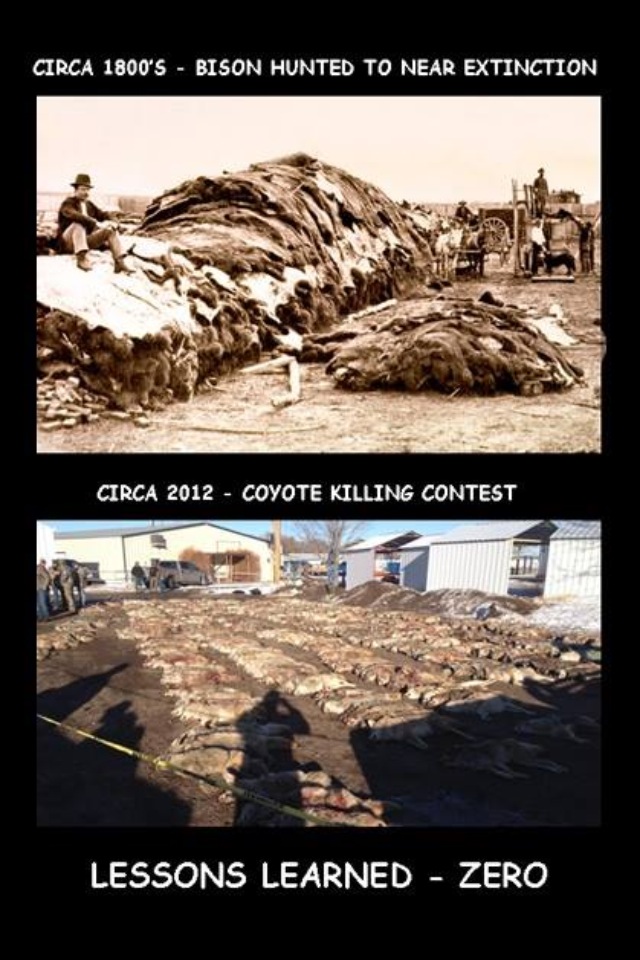
Lessons Learned: 0
Image
3

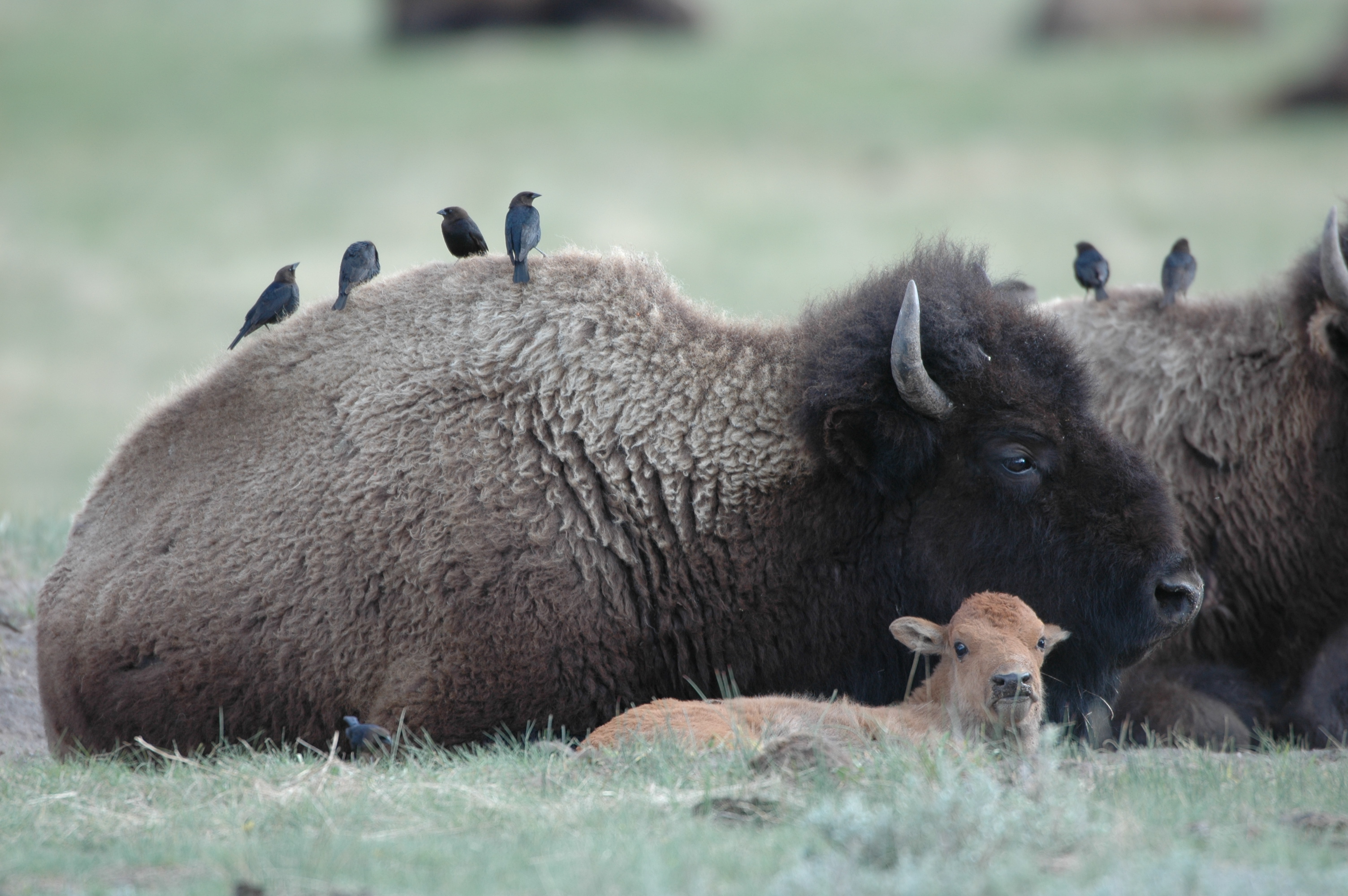
Photo Copyright Jim Robertson
http://www.reuters.com/article/2014/03/07/us-usa-yellowstone-bison-idUSBREA261U520140307
By Laura Zuckerman SALMON, Idaho Fri Mar 7, 2014
(Reuters) – Angered by the killing of pregnant bison outside Yellowstone National Park, a Native American tribal member tried to deliver a bloody bison heart to Montana’s governor this week, the latest skirmish over the management of the iconic animal.
James St. Goddard, a member of the Blackfeet Nation in Montana and former member of the tribe’s governing council, said he found the heart where hunters from another tribe discarded it after gutting a bison killed when many females are well along in their pregnancies. At another location, he said, he found several fully formed fetuses cut out of bison cows.
“These are atrocities. Why are they killing these babies? Are we all ignorant of our own Indian culture?” said St. Goddard, who was prevented by authorities from presenting the bison heart to Montana Governor Steve Bullock at his office in Helena.
St. Goddard’s protest, which was not sanctioned by the Blackfeet Nation, highlighted controversy over practices – which have divided some tribal members – in which bison that stray out of Yellowstone have been killed in extended tribal hunting seasons.
The protest against the actions of other tribes came amid broader tensions about the management of the nation’s last band of wild, purebred bison, or buffalo, over concerns by Montana ranchers that the animals could transmit the cattle disease brucellosis to cows that graze near Yellowstone.
The buffalo at Yellowstone, which cuts through parts of Wyoming, Montana and Idaho, are all that remain of the herds that roamed vast grasslands west of the Mississippi until systematic hunting drove them to the edge of extinction in the 19th century. There are more than 4,000 bison at the park, Yellowstone figures show.
Yellowstone’s bison are prized by visitors as a symbol of the American West and by tribes whose religious, cultural and dietary traditions are centered on the animals.
Tribes have asserted hunting rights granted in 19th century treaties for animals that migrate to traditional hunting grounds, and they largely set their own rules on the timing of their seasons. Some tribal hunting seasons extend into March, ahead of a birthing season that can begin in April.
Yet within the tribes, some members have taken issue with the hunts.
The Nez Perce Tribe in Idaho defended its late season hunting as an ancient custom halted over a century ago by the U.S. government amid Western settlement, near-elimination of the herds and forced relocation of tribes to reservations.
Nez Perce Chairman Silas Whitman faulted St. Goddard, whose own tribal government has not opposed the hunts, for criticizing the exercise of off-reservation hunting rights gained by treaty.
“He’s creating controversy where there is no cause. He’s talking as an old enemy, and we’re not going to bend to the will of our enemies,” he said.
Ervin Carlson, the Blackfeet’s buffalo project manager and a member of a federal, state and tribal team that oversees Yellowstone bison, said St. Goddard’s sentiment did not represent the tribe.
“Those tribes have their treaty hunting rights. We wouldn’t step into their concerns,” he said.
FEARS OF CATTLE DISEASE
Licensed hunting of bison that leave Yellowstone’s snow-covered high country to seek food in lower Montana elevations was sanctioned in 1985, then banned after public outcry as hunters lined up outside the park to shoot bison.
Regulated hunts were reinstituted with “fair chase” provisions in 2005 to help keep a burgeoning buffalo population in check. Four tribes have since asserted their own independent hunting rights spelled out in historic treaties.
Montana currently offers limited licenses, decided by lottery, in a season that ends in mid-February, partly to protect heavily pregnant bison, said Pat Flowers, a regional supervisor at Montana Fish, Wildlife and Parks.
The hunts and a program that sends wandering buffalo to slaughter are in part a response to worries by Montana ranchers that bison will infect nearby cattle with brucellosis, which can cause stillbirths in cows.
About half of Yellowstone’s bison have been exposed to brucellosis, and roughly 300 animals that strayed from the park this winter were sent to slaughterhouses or to the U.S. Department of Agriculture for reproductive experiments. An additional 263 animals have been killed by hunters, most of them tribal hunters, in Montana.
Conflicts over the way bison are managed escalated further on Thursday with the arrest of a man who protested their killing by blocking a road to a park facility where wayward bison are penned, Yellowstone spokesman Al Nash said.
The protest by a man who anchored himself to a 55-gallon drum was celebrated by Buffalo Field Campaign, which opposes the hunts and slaughter, and sends members into Yellowstone to monitor the wintering herd.
In a sign that not all tribal members agree with their governments, James Holt, a Nez Perce member who sits on the Buffalo Field Campaign board, said it was disheartening to see tribes support the activities.
“Buffalo were made wild and free and should remain so. It is painful to watch these tribal entities take such an approach to what should be the strongest advocacy and voice of protection,” Holt said in a statement.
Among tribes with hunting rights, the Confederated Salish and Kootenai Tribes of Montana restricts its season to the end of January to avoid killing pregnant bison cows, which calve in spring, Tom McDonald, the tribes’ wildlife agency manager, said.
“Our regulation is based on the votes of the people, who don’t want big-game animals harvested past the end of January because they’re pregnant. But we don’t point fingers at other tribes for their regulations,” he said.
Carl Scheeler, wildlife program manager for the Confederated Tribes of the Umatilla Indian Reservation in Oregon, said the reality of gutting a two-ton animal means fetuses may be discarded from pregnant bison killed in a tribal hunting season that stretches to mid-March.
“There’s a certain level of public sensitivity to viewing large and persistent gut piles, and hunters are directed to move them out of view to the extent that’s possible,” he said.
(Editing by Cynthia Johnston and Douglas Royalty)

What a tragedy – Yellowstone National Park plans to slaughter 800 bison!
According to Yellowstone National Park’s spokesman Al Nash, the park is seeking “opportunities to capture any animals that move outside the park’s boundaries.” This means hundreds of America’s last wild bison are being brutally hazed into traps and sent to slaughter.
This atrocity has already started. It began in the early morning hours of February 7, when Yellowstone officials captured 20 bison and shipped the terrified animals to a slaughterhouse in Ronan, Montana. Other bison are currently being held in traps inside the park; forced to await their tragic fate.
This bison slaughter is happening because of an Interagency Bison Management Plan (IBMP) developed by the US Forest Service, USDA-Animal & Plant Health Inspection Service, Montana Department of Livestock, Montana Fish Wildlife & Parks, and the National Park Service/Yellowstone National Park.
Yellowstone’s bison are being murdered because of Montana’s livestock industry.
The IBMP plan is archaic, politically motivated, and represents only the interests of the Montana livestock industry, which has zero tolerance for wild animals like wolves and bison, who occasionally leave the park. They use false threats of bison allegedly posing a risk of brucellosis transfer to cattle as justification for the murders of hundreds of bison, although this has never been documented
 Please speak up for America’s last wild bison population. Tell Montana’s Governor, Steve Bullock, and the agencies involved in the bison massacre that you will not visit Yellowstone National Park, so long as the park’s bison are being killed at the request of the livestock industry. Demand a new Bison Management Plan.
Personalize and submit the form below to email your comments to:
Please Sign Petition Here:
https://secure2.convio.net/ida/site/Advocacy?cmd=display&page=UserAction&id=2573&autologin=true

http://ecowatch.com/2014/02/13/yellowstone-wild-bison-slaughter/
Yellowstone National Park shipped 20 of America’s last wild bison to slaughter yesterday morning. Twenty-five bison were captured Friday in the Stephens Creek bison trap, located inside the world’s first national park. After being confined in the trap for five days, 20 of the bison were handed over to the Confederated Salish and Kootenai Tribes, who are required to slaughter them under a controversial agreement between the tribes and the Park. Five bison remain locked in the trap as of Wednesday afternoon.

Nearly three hundred wild bison were rounded up at Wind Cave National Park, SD, for the annual cull in 2005. Photo credit: National Parks Service
Yellowstone plans to slaughter between 600 and 800 bison this winter, according to park spokesman Al Nash. “We’re going to seek opportunities to capture any animals that move outside the park’s boundaries,” he said. Yellowstone has set a “population target,” or objective, of 3,000 to 3,500 animals.
The current buffalo population numbers approximately 4,400 (1,300 in the Central Interior and 3,100 in the Northern range). The Central Interior subpopulation also migrates north into the Gardiner basin and has not recovered from the last Park-led slaughter in 2008 that killed over half of the Central Interior buffalo. The government’s “population target” makes no distinction for conserving subpopulations in this unique buffalo herd.

Each year, officials execute the Interagency Bison Management Plan that forcibly prevents wild bison’s natural migration with hazing, capture, slaughter, quarantine and hunting. Photo credit: Buffalo Field Campaign
According to Dan Brister, Executive Director of Buffalo Field Campaign (BFC), “This number was politically derived to limit the range of wild buffalo and has no scientific basis. It does not reflect the carrying capacity of the buffalo’s habitat in and around Yellowstone National Park.”
This is the first time Yellowstone has turned bison over to the tribes under the slaughter agreements. According to James Holt, a Nez Perce Tribal Member and a member of BFC’s board, “It is disheartening to see tribes support these activities.”
“Buffalo were made free, and should remain so,” Holt said. “It is painful to watch these tribal entities take such an approach to what should be the strongest advocacy and voice of protection.”
“It is one thing to treat their own fenced herds in this manner, it is quite another to push that philosophy onto the last free-roaming herd in existence,” Holt continued. “Slaughter Agreements are not the answer.”

Buffalo fall through ice during a hazing operation in 2006. Photo credit: Buffalo Field Campaign
Brucellosis is the reason used by Yellowstone to justify the slaughter of wild bison. There has never been a documented case of wild bison transmitting the livestock disease to cattle. Other wildlife, such as elk, also carry brucellosis and are known to have transmitted it, yet they are free to migrate, and even commingle with cattle with no consequence.
Year after year, Yellowstone and Montana officials executing the ill-conceived Interagency Bison Management Plan forcibly prevent wild bison’s natural migration with hazing, capture, slaughter, quarantine and hunting. Millions of U.S. tax dollars are wasted annually under activities carried out under the IBMP.
The wild bison of the Yellowstone region are America’s last continuously wild population. Like other migratory wildlife, bison cross Yellowstone’s ecologically insignificant boundaries in order to access the habitat they need for survival. During 2007-2008 more than 1,300 wild bison were captured in Yellowstone National Park and shipped to slaughter.

A dead bison is lifted off the ground near Gardiner, MT, April, 2011. Photo credit: Stephany Seay/ Buffalo Field Campaign
Nearly 7,200 wild bison have been eliminated from America’s last wild population since 1985. Bison once spanned the North American continent, but today, fewer than 4,400 wild bison exist, confined to the man-made boundaries of Yellowstone National Park and consequently are ecologically extinct throughout their native range.
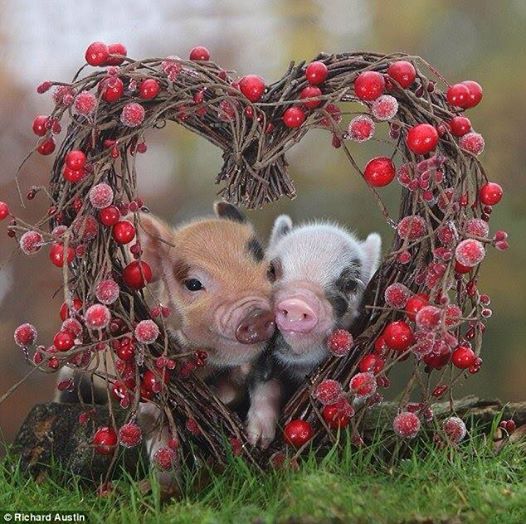
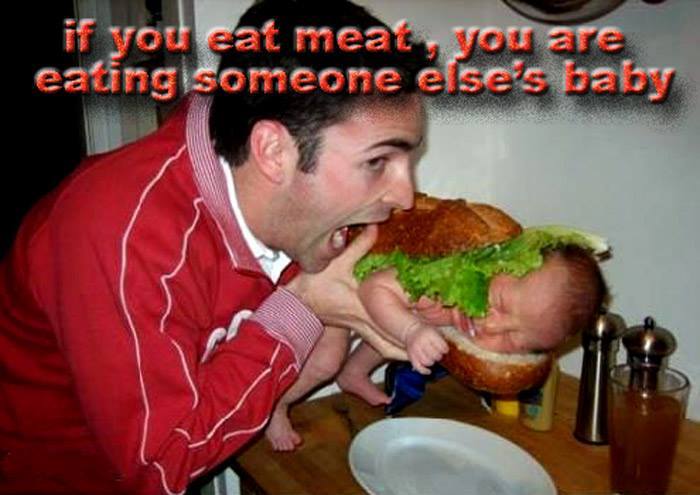
If you eat chicken or pork, you’re supporting extreme animal abuse on factory farms;
If you eat beef, you’re supporting the livestock industry that kills bison, elk and wolves;
If you eat fish, you’re supporting the demise of our living oceans;
If you hunt, your selfish food choice robs a life and cheats a natural predator;
If you eat meat, you’re part of the problem instead of the solution;
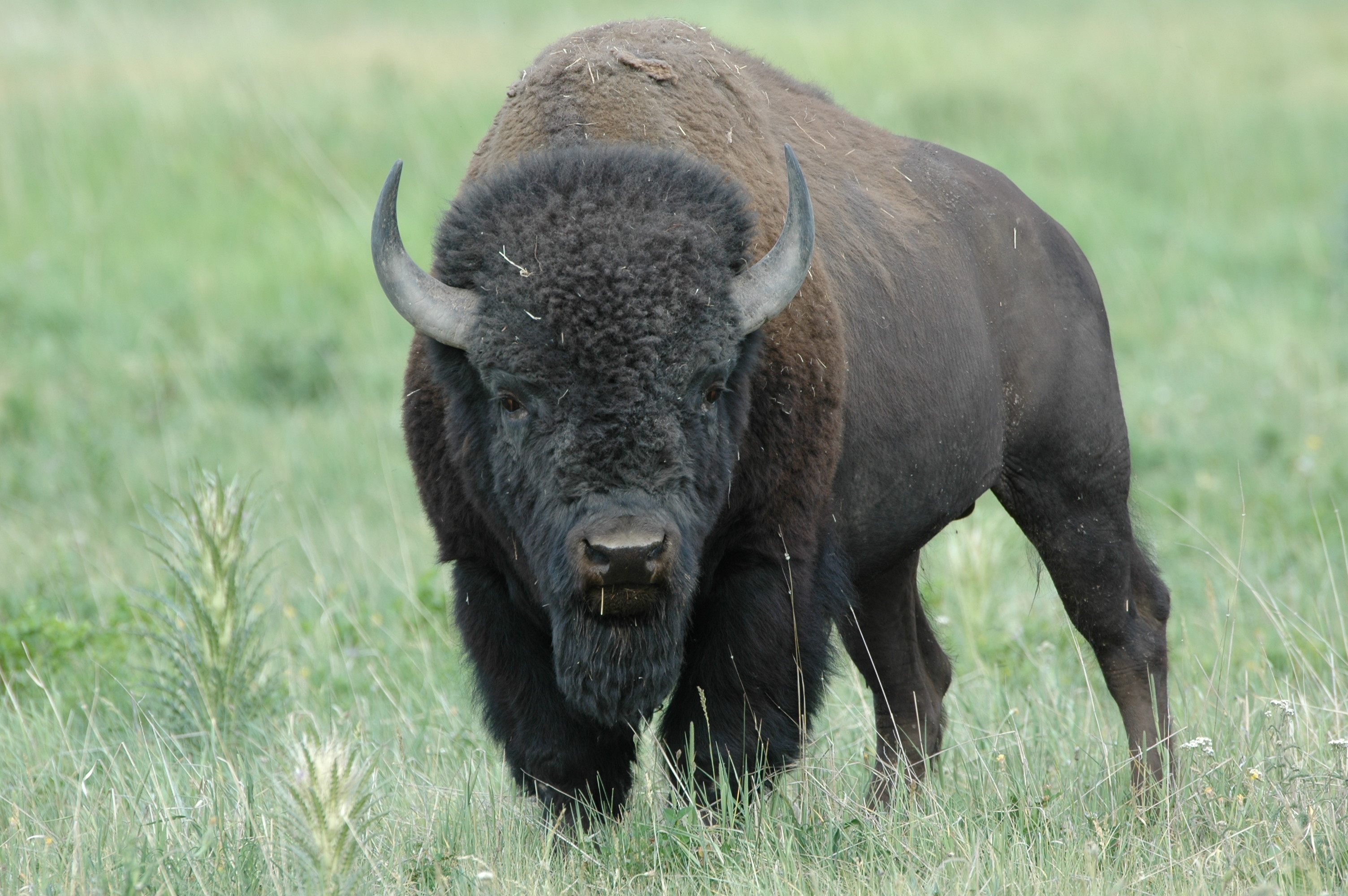
Wildlife Photography ©Jim Robertson, All Rights Reserved
Article by Brett French The Billings Gazette
As large numbers of bison begin moving toward Yellowstone National Park’s northern border, park officials are making plans to truck 300 to 600 of the animals to slaughterhouses, with the processed meat, hides and heads being distributed to American Indian tribes.
“We do have some agreements with tribal entities to take those animals this year,” said Al Nash, Yellowstone’s chief of public affairs. “But everything is very dependent on the bison migrating in significant numbers.”
The last count by Montana Fish, Wildlife and Parks put the number of bison outside the park’s northern boundary near Gardiner at 60 to 70, with most staying close to private property and away from hunters on nearby public land. Hunting is not allowed inside Yellowstone.
Growing herd
This summer, Yellowstone’s bison population was estimated at 4,600, close to the park’s peak bison population of 5,000 that was recorded in 2005. The bison are divided into two herds, with about 3,200 in the northern herd and 1,400 in the central herd, which migrates out of the park near West Yellowstone along the Madison River.
By agreement with the state of Montana, the park is required to keep the bison population at 3,000 to 3,500 animals.
“Our biologists are saying that if we were to look at a removal of about 600 bison each winter for several winters, then we would have a chance to move that population figure down to 3,000 or 3,300,” Nash said. “If we had no other management action, we could see 6,000 bison by the end of the winter 2016.”
The last and largest removal of bison was in 2008, when more than 1,600 bison were killed. Since 1985, more than 7,200 Yellowstone bison have been killed, according to the bison advocacy group Buffalo Field Campaign.
The park’s winter carrying capacity for bison has been estimated at 5,500 to 7,500. The cost of shipping bison to slaughter and having the meat processed was estimated at $50,000 to $100,000 a year.
Bison slaughter
Jim Stone, chairman of the Inter Tribal Buffalo Council, based in Rapid City, S.D., said his group is preparing to line up trailers, drivers and nearby slaughterhouses to process any Yellowstone bison that are captured and held at the park’s Stephens Creek corrals. The council is composed of 58 tribes in 19 states, 50 of which have their own tribal bison herds.
Although they’ll benefit from the park’s removal of bison with possibly thousands of pounds of meat being distributed, “the tribes have been opposed to a lot of what the park has done,” Stone said.
He said the group would prefer to see disease-free young bison quarantined —adding that he didn’t like that term — and then shipped to tribes with existing bison herds.
Such a shipment of 60 quarantined bison to the Fort Peck Tribe two years ago caused an uproar among surrounding ranchers and their legislators, despite the animals’ disease-free status.
Ranchers in Eastern Montana are nervous that conservation groups may succeed in their push to restore bison to public lands on the prairie. Stone said tribes should not be lumped in with such groups.
“A couple of things you’ll never hear from us is ‘free-ranging bison,’” he said. “That’s a state issue, not a tribal issue. We’re realists when it comes to managing buffalo.”
Stone said his group supports giving Yellowstone bison more room to roam on public land outside the park where they could be killed by hunters, in keeping with tradition. He said only older bulls and cows should be selected for slaughter.
The current ship-to-slaughter process may be necessary and the meat will be appreciated by tribal members, but Stone said the procedure is not respectful to the animals.
“The problem isn’t with killing buffalo, it’s with indiscriminate killing of buffalo,” he said.
______________________
Here’s a couple of appropriate comments from the people who sent me this article:
“Can’t someone stop this senseless killing. Who says the NPS has to agree to Montana’s absurd requirements. This is all driven by the ranchers and livestock department. Doesn’t anyone in Montana have the courage to stand up to these bullies. I think the tribes are enablers. They give the state livestock department cover by accepting these dead bison and prevent the bison from reoccupying its native habitat outside of the park. If they were really respectful of the bison, these tribes would be protesting the slaughter and lining up to keep the Dept of Livestock from killing the animals. They would refuse to cooperate with the state’s slaughter. This is a disgrace.”
“What a freak show… YNP has to be stopped from slaughtering bison! … what will stop these bastards?”
Please call and complain about this nonsense and imminent tragedy:
1. Governor Steve Bullock – (406) 444 –3111
2. Policy Advisor for Natural Resources, Tim Baker – (406) 444 – 7857
There are several action alerts from Buffalo Field Campaign here:
http://org.salsalabs.com/o/2426/t/0/blastContent.jsp?email_blast_KEY=1288358
TAKE ACTION to Stop Government Plans to Vaccinate & Slaughter Wild Buffalo!
 A bull bison roars to be heard among the herd. Photo by Kim Kaiser. Click image for larger view.
No buffalo have been killed by hunters since our last Update. Temperatures have dropped into the negatives, snow has fallen, Hebgen Lake is now frozen, and the few wild buffalo that are in Montana are keeping themselves safe from hunters for now. As we promised last week, we have some very important Take Action items for you on two major threats to wild buffalo. Visit the links below to take action and to learn more. BFC has also just produced a new video from our footage of the recent Interagency Bison Management Plan meetings. See and hear for yourself what the agencies are saying. Please do what you can to share our alerts and video widely!
1. Montana Department of Livestock Plans to Capture, Vaccinate & Slaughter Wild Buffalo
 Urge Congress to Stop the DOL’s Plans by Cutting Off Funding for the Interagency Bison Management Plan
Contact Montana Governor Steve Bullock to Stop the Department of Livestock Before they Start!
2. Yellowstone National Park Enlists Tribes to Slaughter Wild Buffalo Urge the National Park Service to Rescind Buffalo Slaughter Contracts and to Pull Yellowstone Out of the IBMP
Thank you so much for taking the time to raise your voice for America’s last wild buffalo! Please spread the word to save these herds!
Wild is the Way ~ Roam Free!
 * NEW BFC Video: DOL Reveals Intent to Capture Wild Buffalo in the Hebgen Basin
The last wild buffalo populations are currently estimated at fewer than 4,600 individual animals, living in and around Yellowstone National Park. Wild bison are ecologically extinct throughout their native range in North America.
2013-2014
Total Buffalo Killed: 54
Government Capture:
Buffalo Released from Capture:
Government Slaughter:
Held for Government Experiment:
Died In Government Trap:
Miscarriage in Government Trap:
State Hunt: 3
Treaty Hunts: 51
Unknown Hunts:
Quarantine:
Shot by Agents:
Highway Mortality:
Cause of Death Unknown:
Total Killed in Previous Years
2012-2013: 261
2011-2012: 33
2010-2011: 227
2009-2010: 7
2008-2009: 22
2007-2008: 1,631
Total Killed Since 2000: 4,310
*includes lethal government action, trap-related fatalities, quarantine/experiments, hunts, and highway deaths
Dear Interested Citizen: July 2013
Montana Fish, Wildlife and Parks and the Montana Department of Livestock have extended the public comment period on a draft environmental assessment (EA) reviewing the potential for bison to occupy public lands adjacent to Yellowstone National Park on a year-round basis.
Public comments on the EA will now be accepted until 5 p.m. September 13, 2013; the original deadline was August 13, 2013.
Copies of the draft EA can be obtained at the FWP regional headquarters in Bozeman and FWP’s headquarters in Helena or at http://fwp.mt.gov/news/publicNotices/environmentalassessments/
plans/pn_0014.html. Comments can be emailed to YearRoundBison-EA@mt.gov, or mailed to Bison Year-Round Habitat EA, Montana Fish, Wildlife & Parks, 1400 S. 19th Ave. Bozeman, MT 59718.
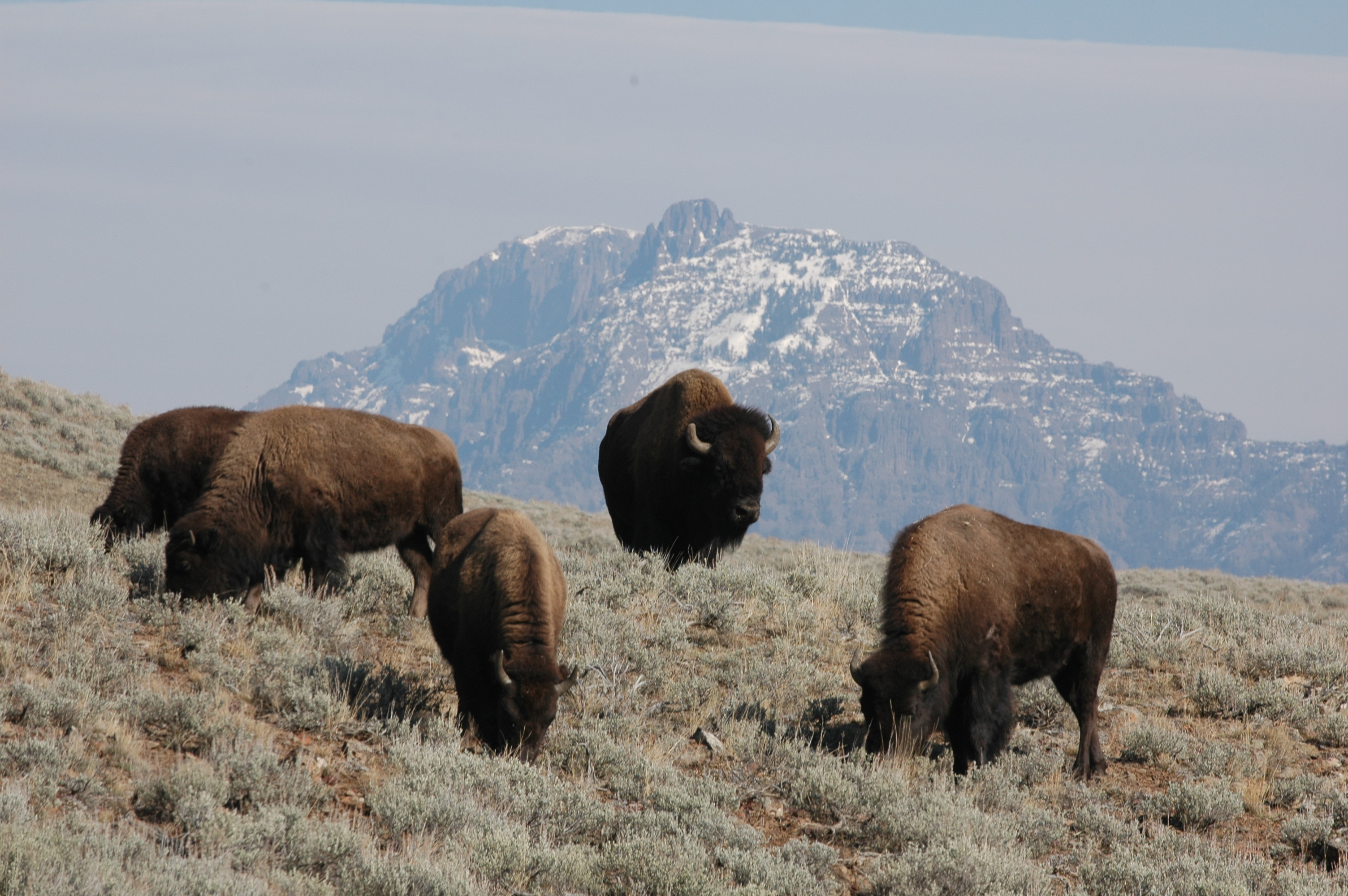
Photo copyright Jim Robertson
This article includes a good overview of the kind of anthropogenic threats that the wildlife face outside of Yellowstone National Park…
Worry over dead bison found north of Yellowstone Park
By Ralph Maughan On May 19, 2013
Montana is said to be investigating-
Gardiner, MT. Given the frequent stories of wildlife killing and hate that emanate from the Gardiner, Montana area, the latest find of 2 to 4 bison carcasses north of Yellowstone Park is raising worry about more illegal and legal wildlife killing in the area and/or the spread of domestic or wildlife disease.
The bison were found in areas frequented by people, not in any remote backcountry.
The area recently had an unpleasant incident of wolf killing following the placement of domestic sheep almost next to the Park that wildlife supporters said was deliberately done to cause controversy or provoke a wolf attack. Non-park wolves were soon credited with attacking the sheep.
For years the area has been scene of Yellowstone Park wildlife poaching, bison slaughters, heated controversy over elk numbers (too high or too low), Yellowstone Park wildlife migration routes, and what some see as excessive wolf hunting so as to decimate the population of Park wolves.
The winter just past also saw the first evidence of controversy over a growing Native American bison hunt that left a large number of bison entrails (8000 pounds) that would attract grizzly bears. They were cleaned up by Montana Fish, Wildlife and Parks.
The complete story on the recent find of bison carcasses is by Eve Byron of the Independent Record (here reproduced in the Missoulian).
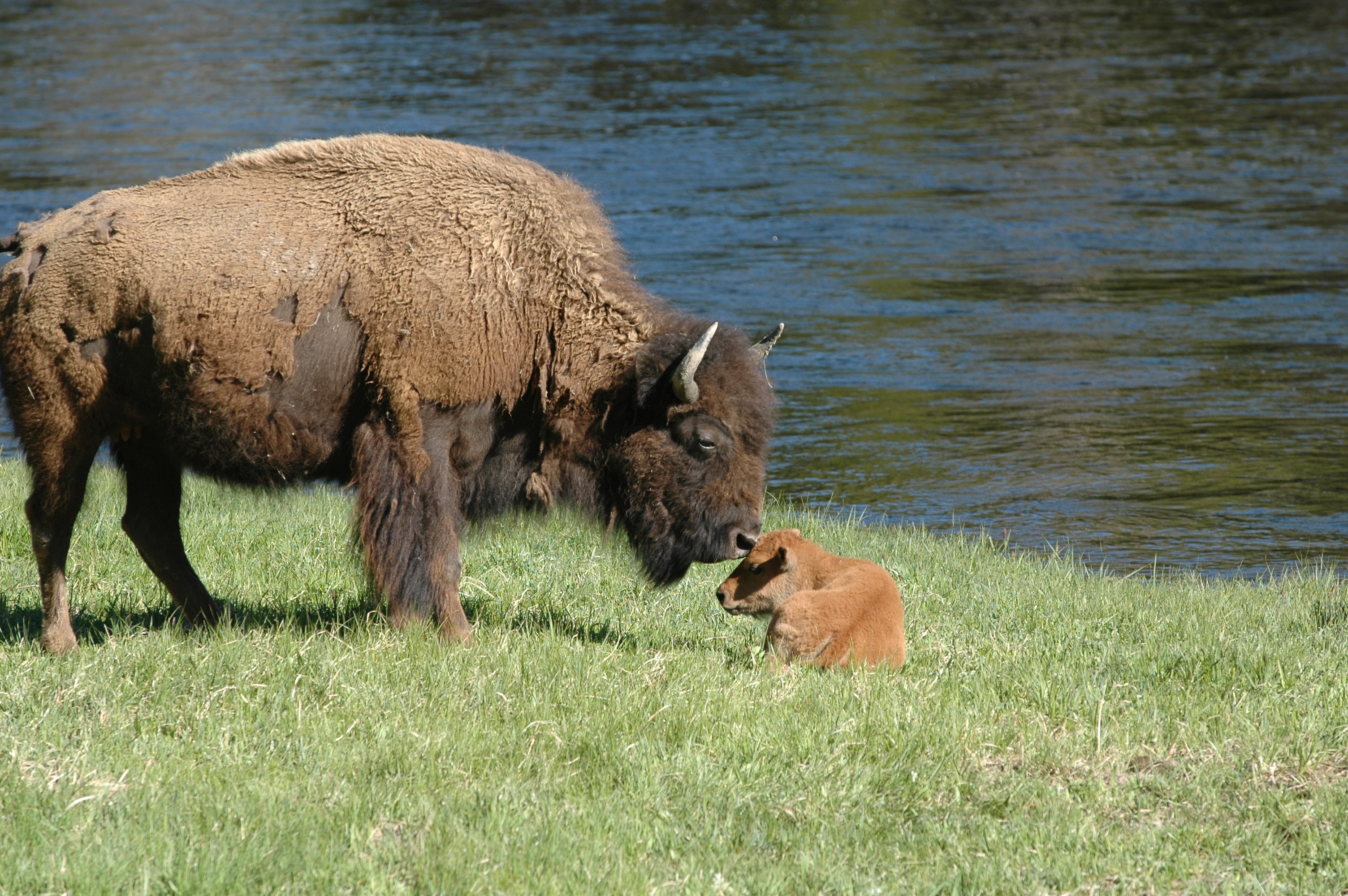
Wildlife Photography ©Jim Robertson, 2013. All Rights Reserved
 Exposing the Big Game