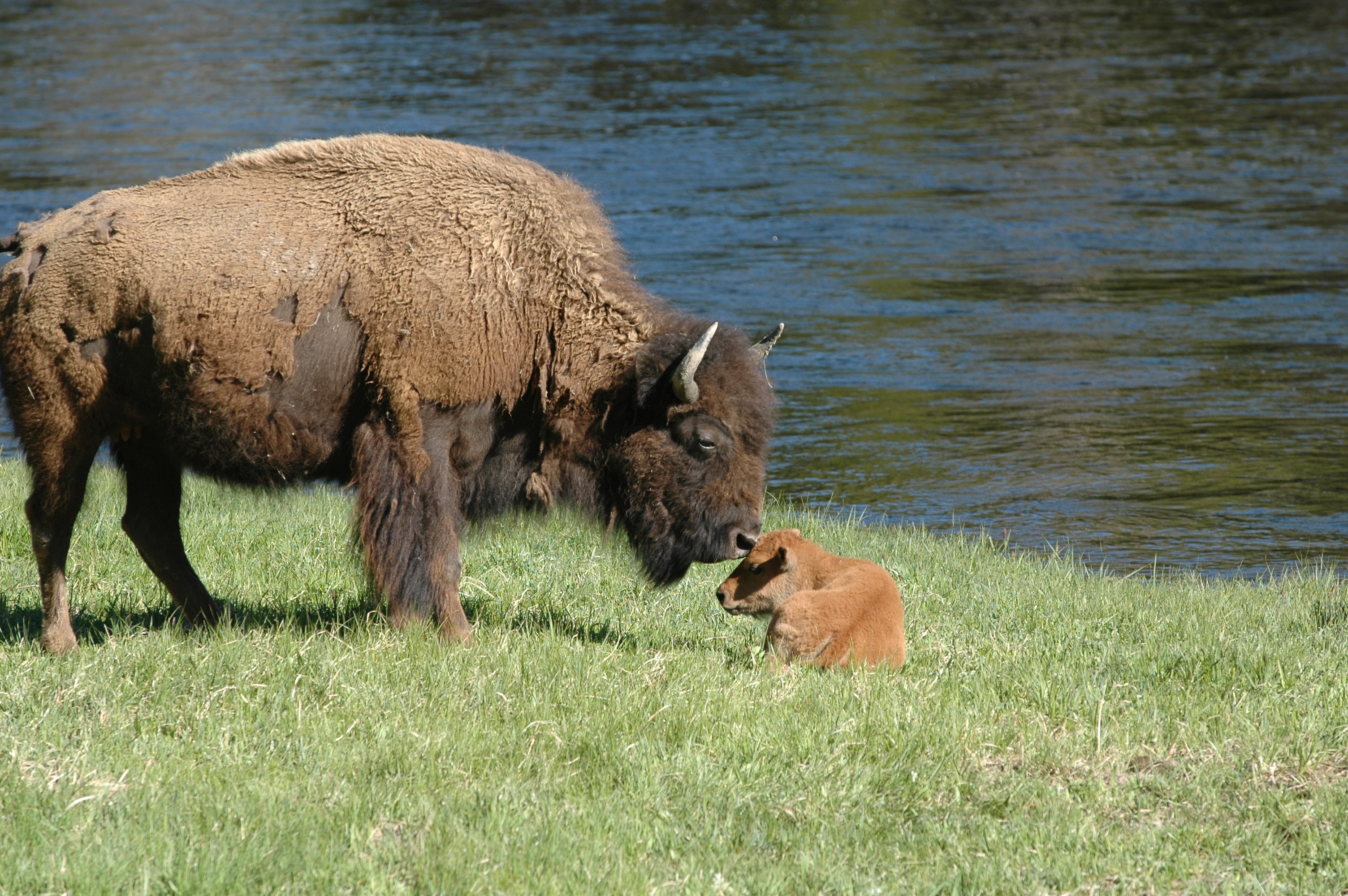
Wildlife Photography ©Jim Robertson, 2013. All Rights Reserved
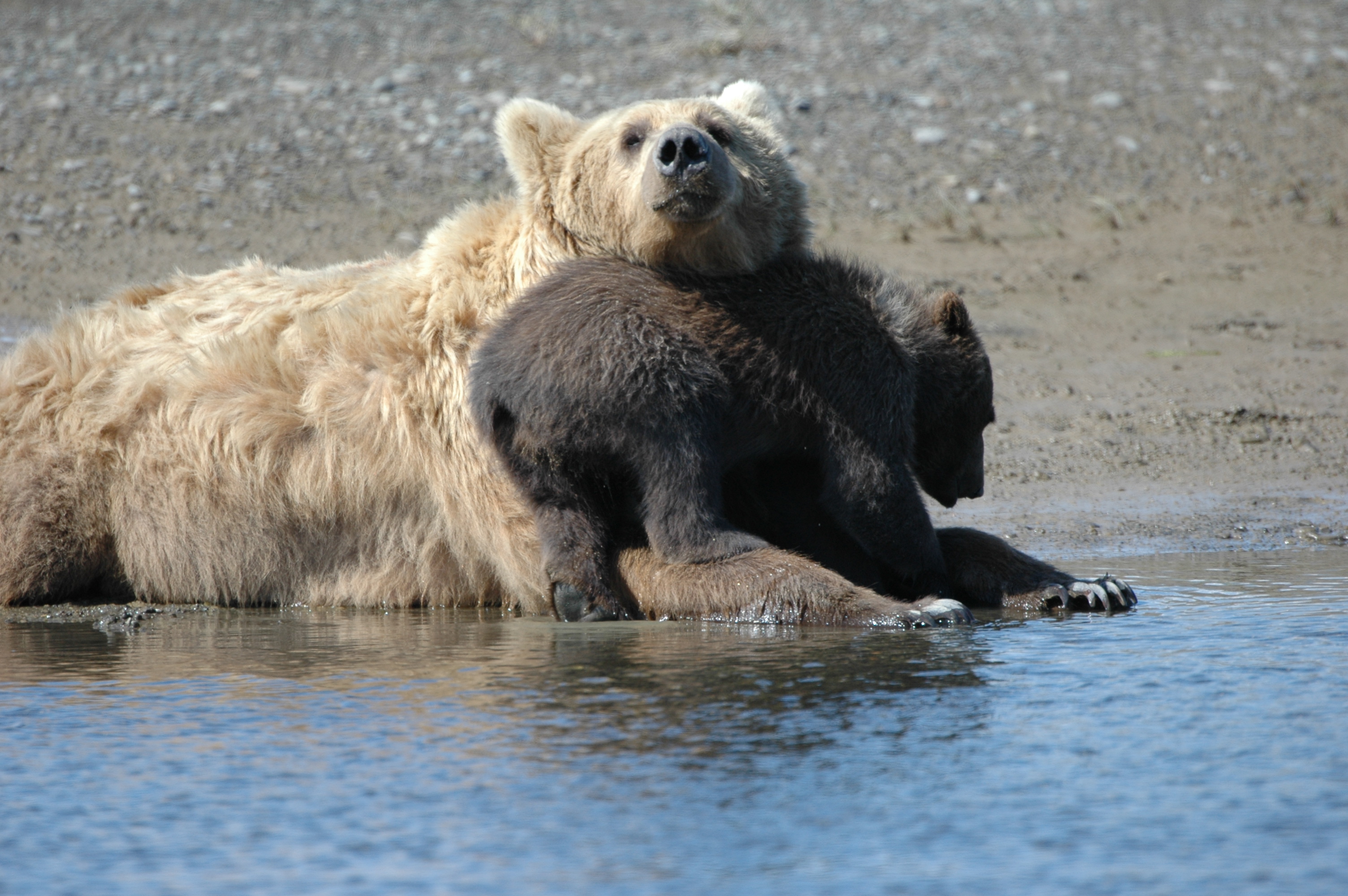
Wildlife Photography ©Jim Robertson, 2013. All Rights Reserved

Wildlife Photography ©Jim Robertson, 2013. All Rights Reserved
Wildlife Photography ©Jim Robertson, 2013. All Rights Reserved
Montana governor vetoes the last of the anti-bison bills sent to him by 2013 legislature
By Ralph Maughan On May 9, 2013 The Wildlife News
… .
Anti-bison mania seizes legislature, Governor Bullock helps beat off the attack on a national symbol-
Helena, MT. Montana’s new legislature, elected in 2012, was a hotbed of anti-bison activity. Ten or so bills to hurt the bison in one way or another were introduced and a number passed and were sent to Montana’s new governor Steve Bullock.
Governor Bullock has saved the limited number of free roaming bison, and maybe bison as something other than livestock, with his veto pen. This week he vetoed the last two bills that would harm the bison, SB 256 and SB 305.
It is difficult to understand why the majority party of legislature is so hostile to the bison except it seems to have become a partisan issue as over the years all the standard anti-bison arguments have been knocked down by management and regulatory changes made by the U.S. agency APHIS (Animal and Plant Health Inspection Service) and Montana Department of Livestock and by scientific studies.
The Wildlife News has, over the years generally argued that anti-bison sentiment is basically a cultural response from the state’s cattle ranchers now angry that anyone would dare challenge their cultural hegemony — it has little to do with a threat of brucellosis spreading, bison knocking down fences, chasing people, etc. The trouble with cultural animosity is that science, economics, compromise cannot calm “a party with a chip on their shoulder.”
Those who want rational bison management and a degree of free roaming bison in the state outside of the limited boundary of Yellowstone National Park should contact the governor and thank him. governor@mt.gov
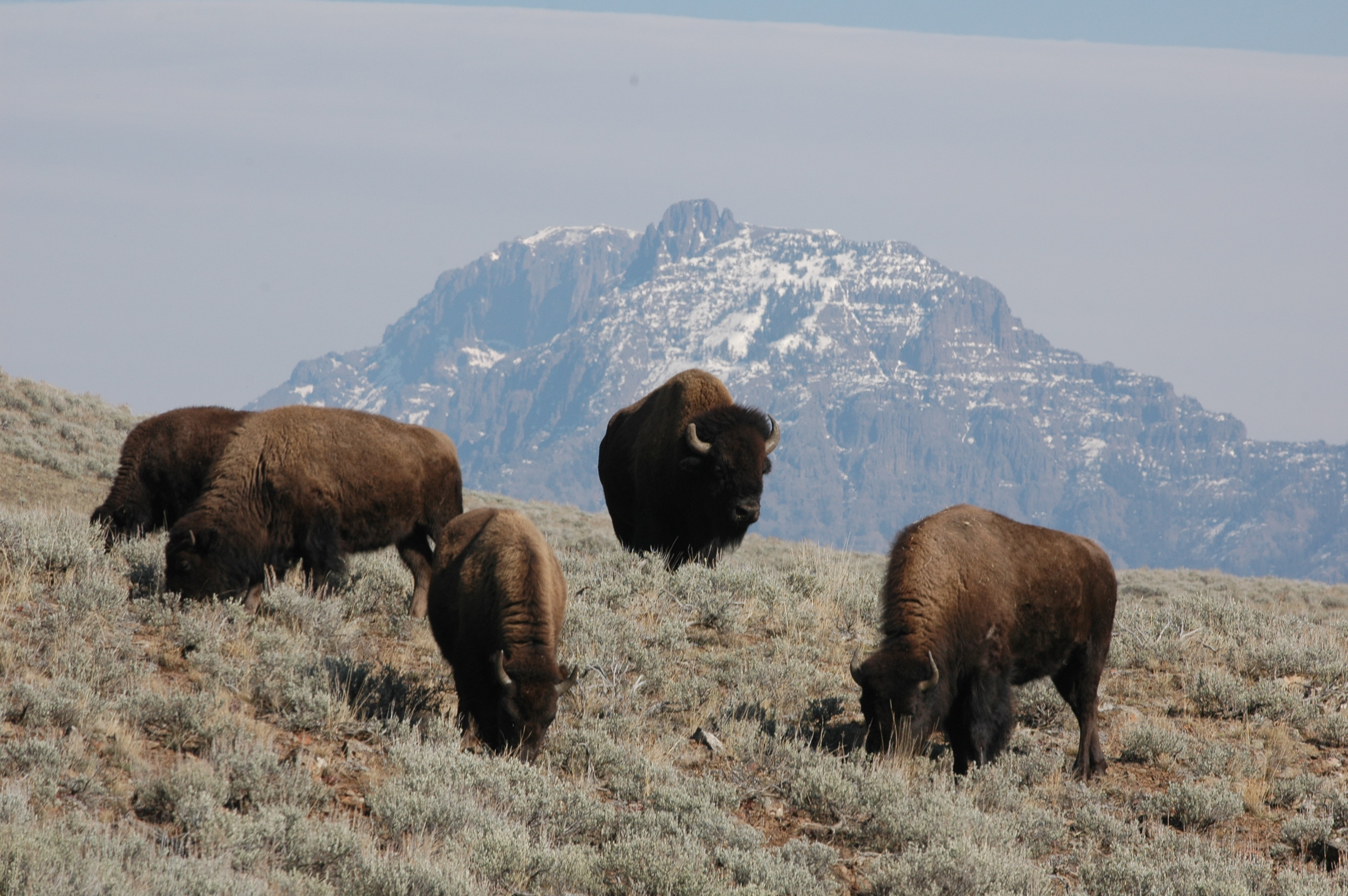
Photo Copyright Jim Robertson
Yellowstone’s high plateaus are on average well over 5,000 feet in elevation; during the harsh winter months it can hardly be considered prime habitat for the wild grazers. Much of the park actually sits within the caldera of one the world’s largest active volcanoes.
Though Yellowstone is synonymous with the shaggy bovines, bison would prefer to spend their winters further downriver, outside the park, on lands now usurped and fenced-in by cowboys to fatten-up their cattle before shipping them off to slaughter.
The following excerpt from my book, Exposing the Big Game: Living Targets of a Dying Sport, ties in with the report by Stephany of Buffalo Field Campaign, below the photo…
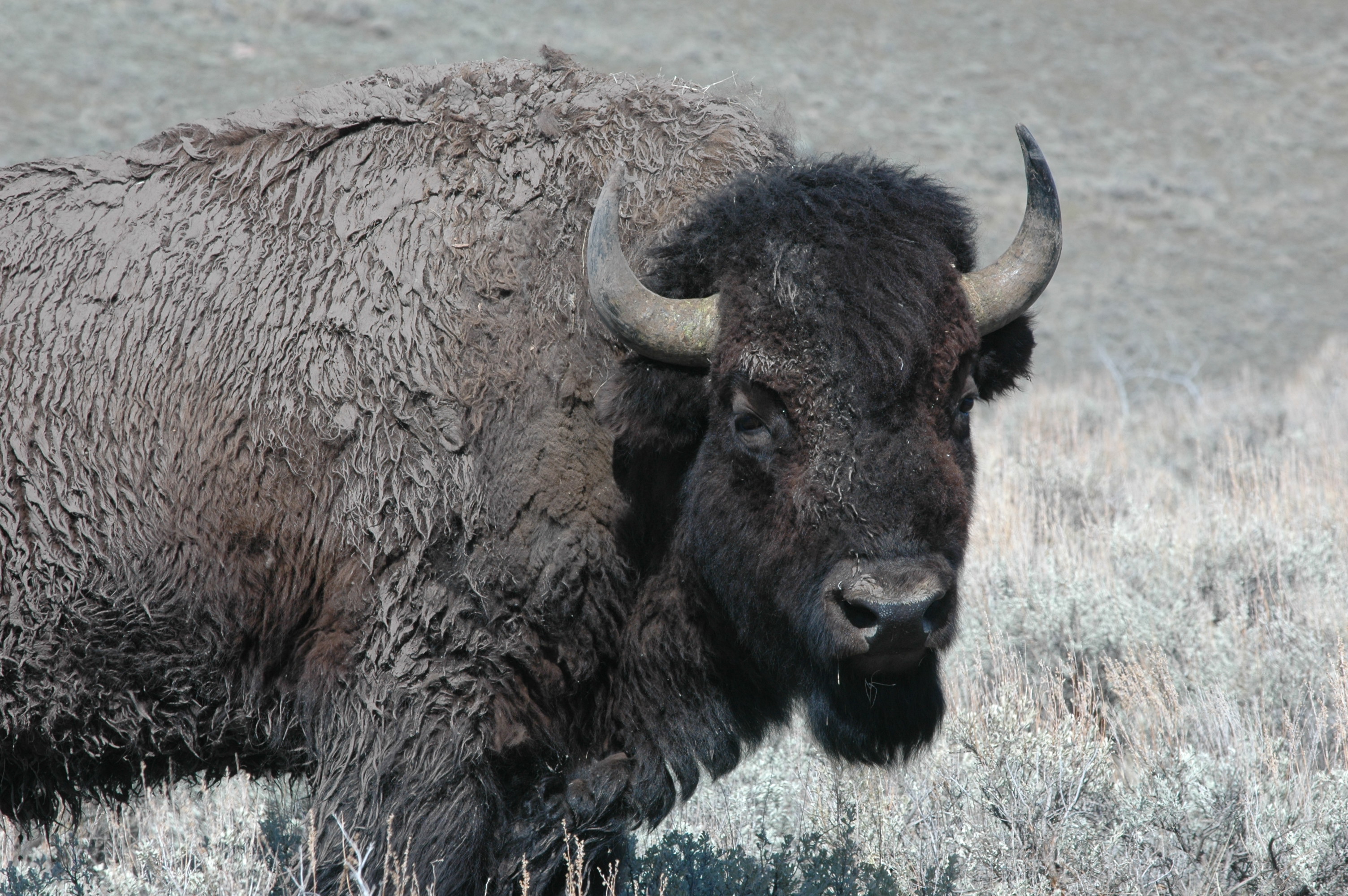
Selfless and protective, bison develop lasting bonds in and outside the family, not only between cows, calves and siblings but also between unrelated individuals who grew up, traveled and learned about life together. Juveniles help mothers look after the youngsters and will gladly lend a horn to keep potential predators away from the calves. I have witnessed cooperation among bison families often in the years I’ve spent observing and photographing them. I’ve also seen them put themselves in harm’s way to defend elk from hungry wolves, and even mourn over the bones of their dead.

Wildlife Photography ©Jim Robertson
Report from Buffalo Field Campaign:
Between Thursday and Sunday, forty-four of America’s last wild buffalo were killed in the Gardiner Basin by hunters with the Nez Perce and Umatilla tribes. Most of these buffalo were shot less than 300 yards from the north boundary of Yellowstone National Park, on a small area of Gallatin National Forest land called Beattie Gulch.
Three of the buffalo that were shot here did not immediately fall but walked into Yellowstone, where they were not allowed to be retrieved by the Nez Perce hunters who shot them; their bodies left to the ecosystem. According to state and tribal officials, the hunters who shot these buffalo are being allowed to keep their tags to kill other buffalo. In another incident, three other buffalo were illegally shot and killed by two non-tribal members.
Two days later we watched as more than a hundred buffalo
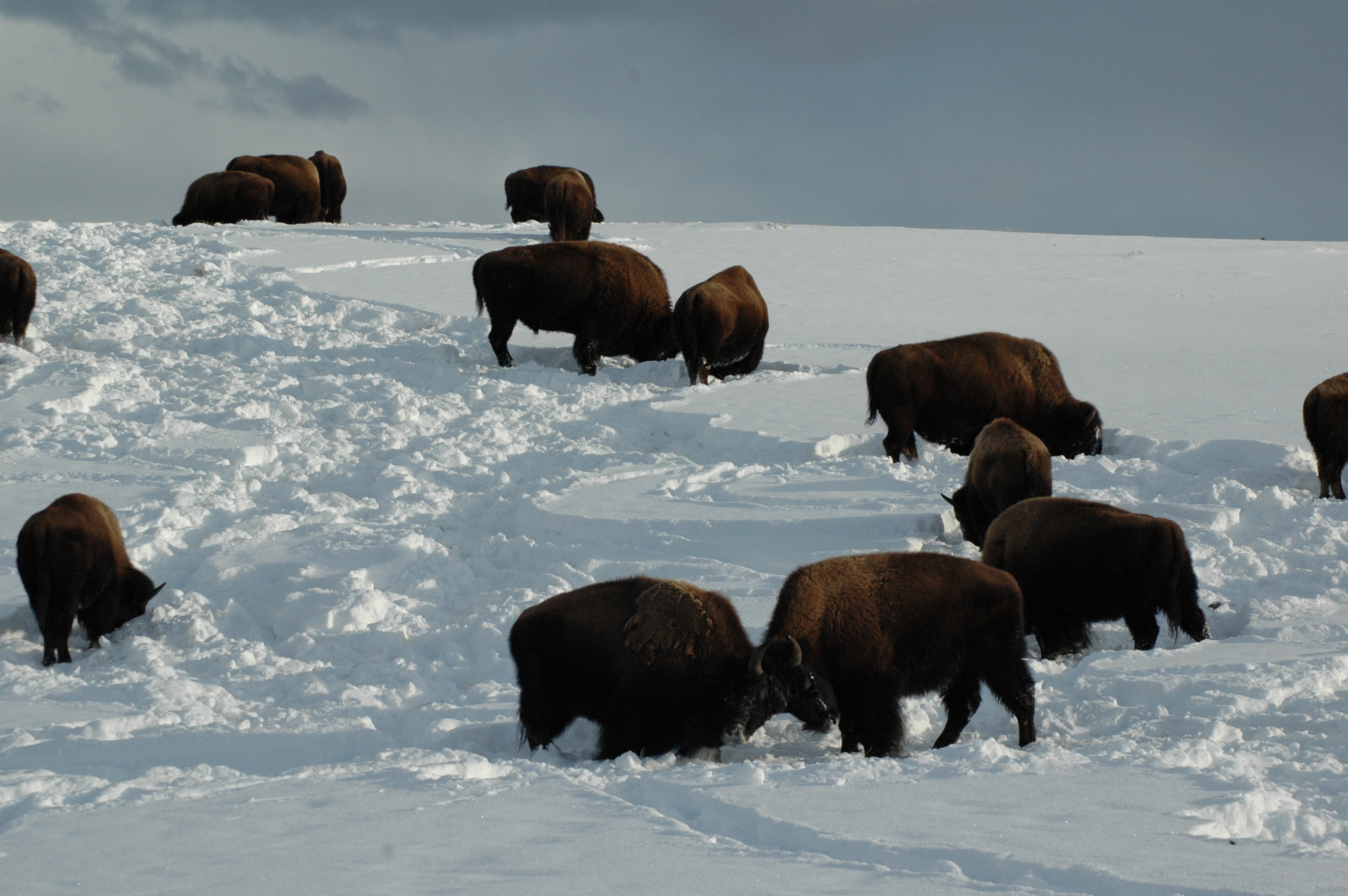
approached these killing fields. They found the remains of their relatives strewn across the land like fleshy boulders left behind by glaciers. We watched in sorrowful awe as the buffalo approached the gut piles. Their tails shot up in the air as they ran from remain to remain, discovering what was left. Enormous bulls bellowed like roaring dragons, mouths agape, bodies arched, and pawing the ground. The buffalo placed their faces close to the flesh left behind, nuzzling their muzzles into the earth where the buffalo had fallen.
They sniffed at fetuses still sheltered in their mother’s flesh whose lives were ended before they were born. The buffalo circled and scattered, ran to each other and away again.
Sparring, bumping, running, pawing and crying out in their deep emotion of their discovery.
Watching, we could only think of it as a wake, a mighty wailing of the buffalo. Back and forth they ran, frantic, between the gut piles that had been their friends, their family. Like chieftains in their own right, fathers of their clans, the mature bulls lingered the longest, as the mothers and grandmothers lead the young ones on in an ancient procession, their deliberate footsteps slower in their sorrow.
The depth of relationship the buffalo share is timeless,
intense, and far beyond most people’s willingness or ability to accept or understand. Indeed, it is easier, more convenient, to ignore or pretend that it doesn’t mean anything. In that blindness we deny not only to other creatures, but to ourselves, the honest power of love,
the gift of respect, and the aid of wisdom. The buffalo already encompass these things, and they are patiently waiting on the brink for us to catch up…
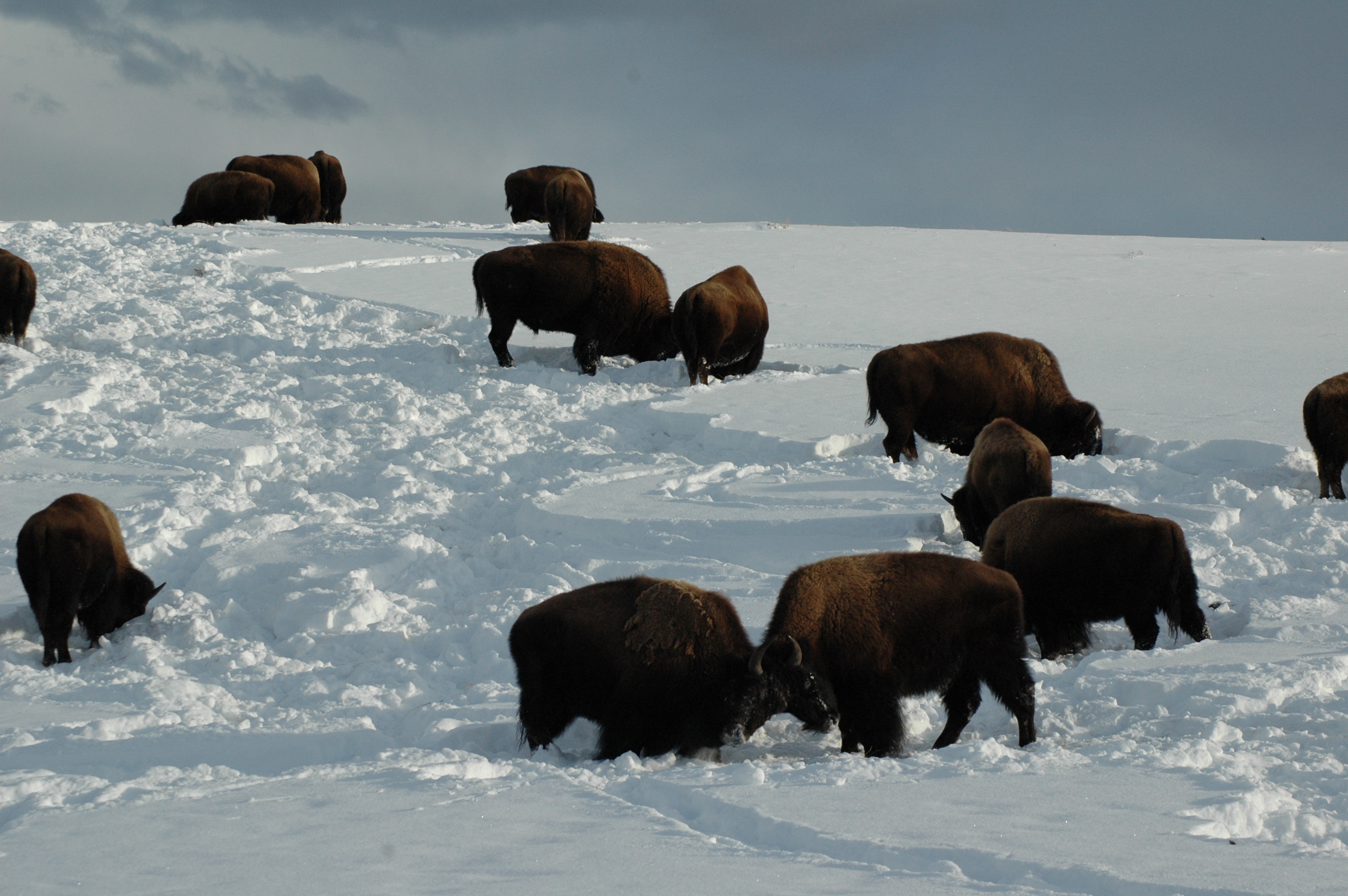
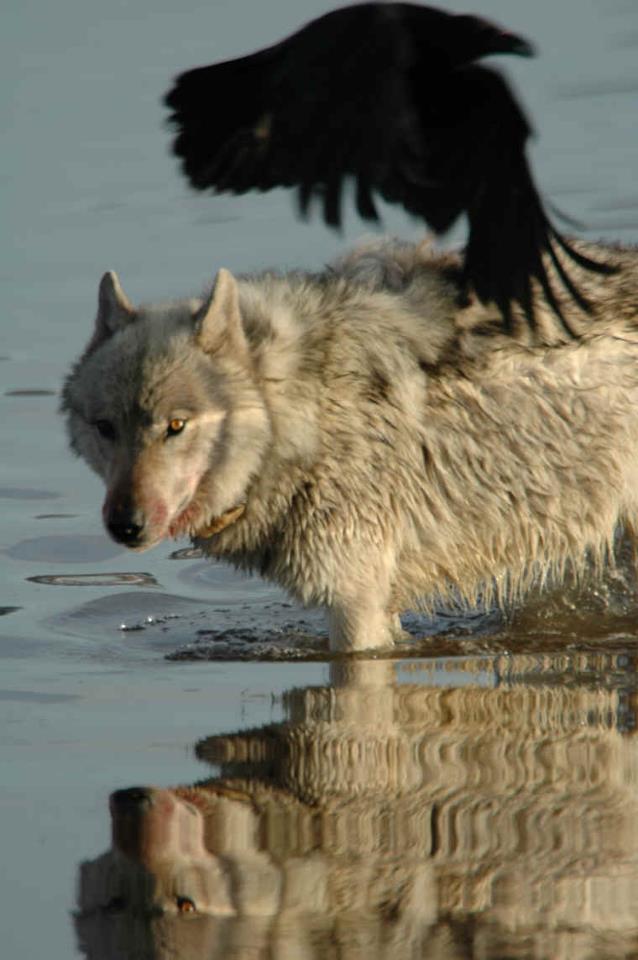
Beef cattle are the number one predator on wolves and bison in Montana.
Of course, the cows themselves are not directly to blame for the deaths of others; they too are victims of the same exploiters who are waging a war of extermination on wolves, bison and other native species, unparalleled since the ecologically reckless 1800s.
The government of Montana’s attitude toward wildlife is a disgrace—nothing short of reprehensible—for any state who calls themselves a gateway to Yellowstone National Park. Wildlife watchers should not have to concede to the will of hostile states; they have as much right to visit Montana as any beef buyer or trophy hunter.
Recently the state of Montana has turned up the heat on any wild species who might in any way be perceived as a threat to one of their biggest cash crops: cows. Don’t fall prey to the feel-good lure of “sustainable” grass-fed Montana beef. In order to sustain cattle, the livestock industry demands that wildlife be controlled by any and every lethal means imaginable.
It’s time to hit where it hurts. For the sake of wolves and bison and biodiversity, boycott Montana beef!
Text and Wildlife Photography ©Jim Robertson, 2013. All Rights Reserved
To the casual observer, it would surely seem that Montana hates its wildlife.
Not only does the state continue to escalate its attack on wolves by prolonging its hunting and trapping season and increasing the per hunter quota even as the number of wolves there drops, but now their state legislature is proposing to eliminate free-roaming wild bison altogether, outside the confines of Yellowstone National Park.
The same Montana politicians who just rushed through a bill to expand the state’s ongoing wolf hunting and trapping are now considering new lethal bills to:
•prohibit reintroduction of wild bison into Montana;
•establish a year-round hunting season for bison, with virtually no limitations;
•authorize private landowners to shoot on sight any bison that wandered onto their property;
•order state officials to exterminate or move any wild bison that migrate into Montana.
The grizzly bear is soon to come off the federal Threatened Species list, and thereby lose federal protection. You can bet that states like Montana, Idaho and Wyoming—those few places fortunate enough to still support the bears in their wilderness areas—are planning to add trophy hunting of grizzlies to their long hit list of “big game” species as soon as (in)humanly possible.
But to hear them tell it, Montanans don’t hate all wildlife. They love having out of control populations of ungulates around to “harvest” between shopping trips to WalMart. As long as their Fish, Wildlife and Parks department provides them with huntable populations of “surplus” elk, deer and pronghorn, those token other species—the wolves, grizzly bears and bison—can stay in the national parks, “where they belong.”

Photos Copyright Jim Robertson
Yesterday I asked the question, “Who is the creeping cancer?” The choice was between the bison—a species nearly hunted off the face of the Earth that is still extinct over practically all its former range—or humans.
The answer is so ridiculously obvious it’s hardly worth asking; while the human species increases by over one million infants a day (1,000 were born just in the past minute), almost every other life form is on its way out of existence.
Thus, when the Seattle Times recently ran a piece by one of their columnists, Sharon Pian Chan, titled “Why I am not having kids,” I felt it was my duty to share the link here. Chan brings up many good reasons not to breed, but the benefit to the environment was only mentioned once: “…not having a child is the most important thing I could do to reduce my carbon footprint, according to a 2009 study by Oregon State University statisticians. (Of course, like all parents, I believe my theoretical child would have grown up to become a brilliant physicist and saved the world from global warming, so this is a moot point.)”
Possibly…on the other hand it could have grown up to become the next Sarah Palin, Dick Cheney, Ted Bundy or terrible Ted Nugent.
Chan goes on to point out that by not having kids… “I will have a lot more attention and money to shower on real-life nieces, nephews, mentees and philanthropic causes.” Causes like educating the masses on just how many ways human overpopulation is ruining the planet, perhaps?
Those contemplating childbirth could always benefit from a bit of trivia, such as the fact that though it’s taken all of human history to until around the year 1800 for the world human population to reach one billion, the second billion was achieved in only 130 years (1930), the third billion in less than 30 years (1959), the fourth billion in 15 years (1974), and the fifth billion in only 13 years (1987). During the 20th century alone, the population in the world has grown from 1.65 billion to 6 billion.
The world population clock estimates that by 2025 the eight-billionth will be born and in 2045 the planet will be expected to feed and provide for nine billion hungry human beings. All the while the world will continue to see its biodiversity vanish.
Paul R. Ehrlich, author of the 1960s bestseller, The Population Bomb, foresaw peril in the ongoing disappearance of all other life forms except ours: “It isn’t a question of people or animals–it’s got to be both of us or we’re finished. We can’t get along without them. They could get along without us.”

Text and Wildlife Photography ©Jim Robertson, 2013. All Rights Reserved
Amazingly enough, despite their wrongheaded policies toward wolves and wolverine (which I covered in the post, “WTF’s Up w/MFWP?”), the Montana WDFW actually came up with a good idea regarding bison. According to an article in the New York Times:
Montana’s Fish, Wildlife and Parks department is considering allowing bison year-round access to cattle-free pockets of public land on Yellowstone’s northwest side. Officials are also working on a statewide bison management plan that could allow the reintroduction of a few disease-free bison to some of the most remote parts of the state, possibly including the million-acre Charles M. Russell National Wildlife Refuge in northeastern Montana.
Public polls show that most Montanans support reintroducing wild bison that could be watched by wildlife enthusiasts and harvested by hunters. That approach would parallel established management plans that allowed elk, deer, antelope and bighorn sheep to return after they were hunted to near-extinction around the time bison vanished. …
Because of attitudes held by ranchers like John Youngberg, vice president for government affairs for the Montana Farm Bureau Federation, Montana has traditionally held to a policy of intolerence toward free-roaming bison.
Youngberg said that since wild bison were exterminated by the time Montana became a state in 1889, landowners should have the right to live without them.
“They got their property with the expectation that there were no buffalo,” he said. “And these are not white-tailed deer you’re talking about, they’re 2,000-pound animals”
Now, two new bills introduced in the Montana legislature would usher in a zero-tolerance policy for wild bison, potentially opening the way for a return to the shoot-on-sight practices of years past.
Under a bill proposed in the state Senate, Department of Livestock officials would have the leeway to exterminate all wild bison. And a different bill in the state House of Representatives would allow landowners to kill any bison that sets foot on private property.
“Why do you want to spread this creeping cancer, these woolly tanks, around the state of Montana? We’ve got zero tolerance left in our bones,” said John Brenden, a state senator from Scobey, Mont., who is chairman of the Senate Fish and Game Committee and authored that chamber’s bill.
My response to Mr. Brenden: If you want to see a creeping cancer whose destructive behavior can be compared to a tank, look in the mirror.
Over the last three decades, around 7,000 bison from Yellowstone National Park, descendants of the less than two dozen free-range bison in America known to have survived the great slaughter of the Nineteenth Century, were killed for migrating from federal parkland into the states of Montana, Idaho and Wyoming.
Yet in Montana, where most Yellowstone bison have been shot or shipped to slaughterhouses, the state agreed last year for the first time to allow bison access to 75,000 acres of public land north of the park for a few months each year.
How generous.
For more on the plight of bison, past and present, read Chaper 1, “Hide Hunting Holocaust Survivors Still Under Fire,” in the book, Exposing the Big Game: Living Targets of a Dying Sport.
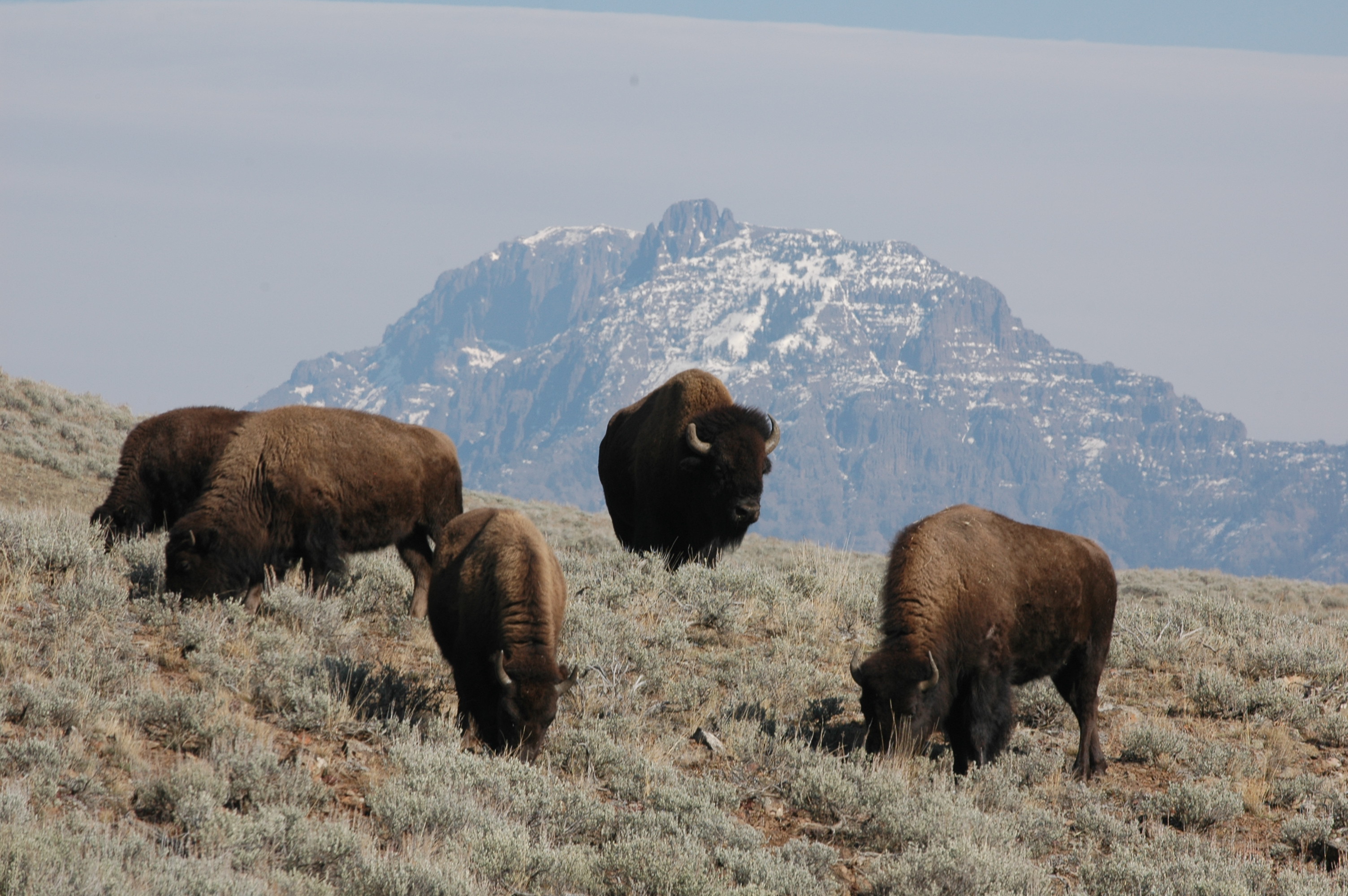
Photo Copyright Jim Robertson
Ignorance must be such sweet bliss for anyone who visits Yellowstone National Park and thinks the wildlife they see there represents fully recovered populations of some of North America’s most endangered species. Sorry to say, one park does not a recovered species make. For all its size, spectacularity and relative biodiversity, Yellowstone is little more than an island in an anthropogenic wasteland to much of its megafauna.
If ranchers and hunters had their way, wolves and grizzlies would be restricted to the confines of the park. Ranchers already have such a death-grip on Montana’s wildlife that bison are essentially marooned and forced to stay within park borders, battling snow drifts no matter how harsh the winter, despite an instinctual urge to migrate out of the high country during heavy snow winters.
Though Yellowstone is synonymous with the shaggy bovines, bison would prefer to spend their winters much further downriver, on lands now usurped and fenced-in by cowboys to fatten-up their cattle before shipping them off to slaughter.
Yellowstone’s high plateaus are on average well over 5,000 feet in elevation and can hardly be considered prime habitat for the wild grazers. Much of the park actually sits within the caldera of one the world’s largest active volcanoes. Any sizable eruption could release enough toxic gasses to kill off all of Yellowstone’s bison—the last genetically pure strain of the species now left on the continent.
People driving through cattle country on their way to Yellowstone often have no idea just how sterile the open plains they’re seeing really are. Gone are the vast bison herds that once blackened them for miles on end—killed off by hide-hunters, market meat-hunters or by “sportsmen” shooting them from trains just for a bit of fun. Gone are the wolves and plains grizzlies adapted to that arid habitat. And nearly gone are the prairie dogs as well as the ferrets, kit fox, plovers, burrowing owls and a host of others who depended on them for food or shelter.
Part of the reason I wrote Exposing the Big Game: Living Targets of a Dying Sport was to remind people about the wild species who once called so much of this continent home. No one’s going be able to claim ignorance on my watch; if I can’t go through life blissfully then neither can anyone else.
The following is an excerpt from one of the book’s two chapters on bison:
Selfless and protective, bison develop lasting bonds in and outside the family, not only between cows, calves and siblings but also between unrelated individuals who grew up, traveled and learned about life together. Juveniles help mothers look after the youngsters and will gladly lend a horn to keep potential predators away from the calves. I have witnessed cooperation among bison families often in the years I’ve spent observing and photographing them. I’ve also seen them put themselves in harm’s way to defend elk from hungry wolves, and even mourn over the bones of their dead.
But in a ruthless act of rabid backstabbing, 1600 bison—who had never known confinement or any reason to fear people—were slain to appease Montana ranchers during the winter of 2008. More than half of Yellowstone’s bison were killed in what was the highest body count since the nineteenth century. 1438 were needlessly and heartlessly shipped in cattle trucks to slaughterhouses (those nightmarish death camps where so many forcibly domesticated cattle meet their ends), while 166 were blasted, as they stood grazing, by sport and tribal hunters. Two winters prior, 947 bison were sent to slaughter and 50 were shot by hunters.
Instead of making amends for the historic mistreatment of these sociable, benevolent souls, twenty-first-century Montanans are still laying waste to them. Spurred on by industry-driven greed for grazing land (veiled under the guise of concern about brucellosis, a disease with a negligible risk of transmission that has never actually been passed from wild bison to cattle), the state of Montana sued to seize control of bison ranging outside Yellowstone. Now their department of livestock has implemented a lethal policy and the US National Park Service is facilitating it. Since the dawn of the new millennium, nearly 4000 Yellowstone bison have been put to death.
Text and Wildlife Photography ©Jim Robertson, 2012. All Rights Reserved
Never before in the history of mammals have seven billion large, terrestrial, meat-eating members of one species ever single-handedly laid waste to so much of the Earth’s biodiversity. Human carnivorousness is killing the planet one species at a time, one ecosystem after another; one bison at a time, one wolf after another.
Every time you order a steak or grill a hamburger, you legitimize bison and wolf culling for the sake of livestock growers. If you really want to save the wolves and the bison, go vegan! And urge your friends and family and neighbors and co-workers to do the same.
Tell it to the world—it’s time to leave the predating to the predators!
Human beings can live much healthier on a plant-based diet, as their primate cousins always have. True carnivores, such as wolves, coyotes, cougars, marine mammals or members of the weasel family have to eat meat to survive. If you’re not willing to go vegan for your own health perhaps you could do it for the health of the planet; if not for the sake of the animals you eat, maybe for all the other species affected by your bill of fare.

Text and Wildlife Photography© Jim Robertson
Wolves aren’t the only once endangered species being targeted right outside of Yellowstone National Park. Bison, the symbol of our National Park system, have been killed by the thousands in recently imposed state and tribal hunting seasons and by the Montana Department of Livestock, who, with the full blessing of the National Park Service, have rounded up over 5000 migratory park bison since 2008 and shipped them to slaughterhouses (those nightmarish death camps where so many forcibly domesticated bovines meet their ends).
In a ruthless act of rabid backstabbing, 1600 bison—who had never known confinement or any reason to fear people—were slain to appease Montana ranchers during the winter of ‘08. More than half of Yellowstone’s bison were killed in what was the highest body count since the nineteenth century.
Instead of making amends for the historic mistreatment of these sociable, benevolent souls, twenty-first-century Montanans are still laying waste to them. Spurred on by industry-driven greed for grazing land (veiled under the guise of concern about brucellosis, a disease with a negligible risk of transmission that has never actually been passed from wild bison to cattle), the state of Montana sued to seize control of bison ranging outside Yellowstone. Now their department of livestock has implemented a lethal policy and the US National Park Service is facilitating it. Since the dawn of the new millennium, over 5000 Yellowstone bison have been put to death.
The following action alert from the Buffalo Field Campaign includes contact info…
Before wild bison have even begun their annual migration to their winter habitat in Montana, State, federal, and tribal governments — including Yellowstone National Park –are aiming to kill hundreds of wild buffalo this winter through hunting, slaughter, or both. The agencies state that they want to “even the sex ratio” and have placed a heavy target on female buffalo, wanting to kill at least 400 female buffalo that migrate north of the Park into the Gardiner Basin. The herds that migrate north include buffalo from both the Northern and Central herds, which also means that the Central herds (which also migrate west) will be doubly impacted by hunting and slaughter.
Yellowstone National Park states that a “skewed sex ratio” has resulted from years of capture and slaughter operations, which have removed more bulls than cows from the population. In other words the government is saying they will slaughter more buffalo to mitigate the impact of slaughtering so many buffalo. Talk about playing God in Yellowstone.
With these plans aimed to placate Montana’s livestock interests, Yellowstone National Park threatens the buffalo’s immediate survival and evolutionary potential. Yellowstone’s plans to capture and slaughter wild bison are absolutely contrary to their mission to preserve and protect plant and animal species unimpaired for present and future generations. The wild bison of the Yellowstone ecosystem make up America’s last continuously wild population. Wild bison are ecologically extinct throughout their native, historic range, and currently number fewer than 4,300 individuals. Wild bison once teemed across the North American continent in the tens of millions, but today the last remnant herds only exist in and around Yellowstone and are in dire need of protection.
TAKE ACTION! Tell Yellowstone Superintendent Dan Wenk that you absolutely oppose any capture or slaughter of wild buffalo. Yellowstone is mandated by law to protect wild bison, not cater to Montana’s cattle politics. Tell Superintendent Wenk to stop being a puppet for Montana livestock interests, pull out of the draconian Interagency Bison Management Plan, and to stand up for the wildlife that the American people have placed in his care. Wild bison are a natural, national treasure, the prehistoric and rightful roamers of North America, and we will not stand by and allow Yellowstone or Montana’s cattle industry to jeopardize their future for any reason.
Daniel Wenk, Superintendent
Yellowstone National Park
P.O. Box 168
Yellowstone National Park, WY 82190-0168
(307) 344-2002 phone
(307) 344-2014 fax
Dan_Wenk@nps.gov
 Exposing the Big Game