Exposing the Big Game

Forget Hunters' Feeble Rationalizations and Trust Your Gut Feelings: Making Sport of Killing Is Not Healthy Human Behavior

Exposing the Big Game

Maine voters to be asked about bear hunting

The November ballot will include a measure that would ban the use of bait, dogs or traps in bear hunting.

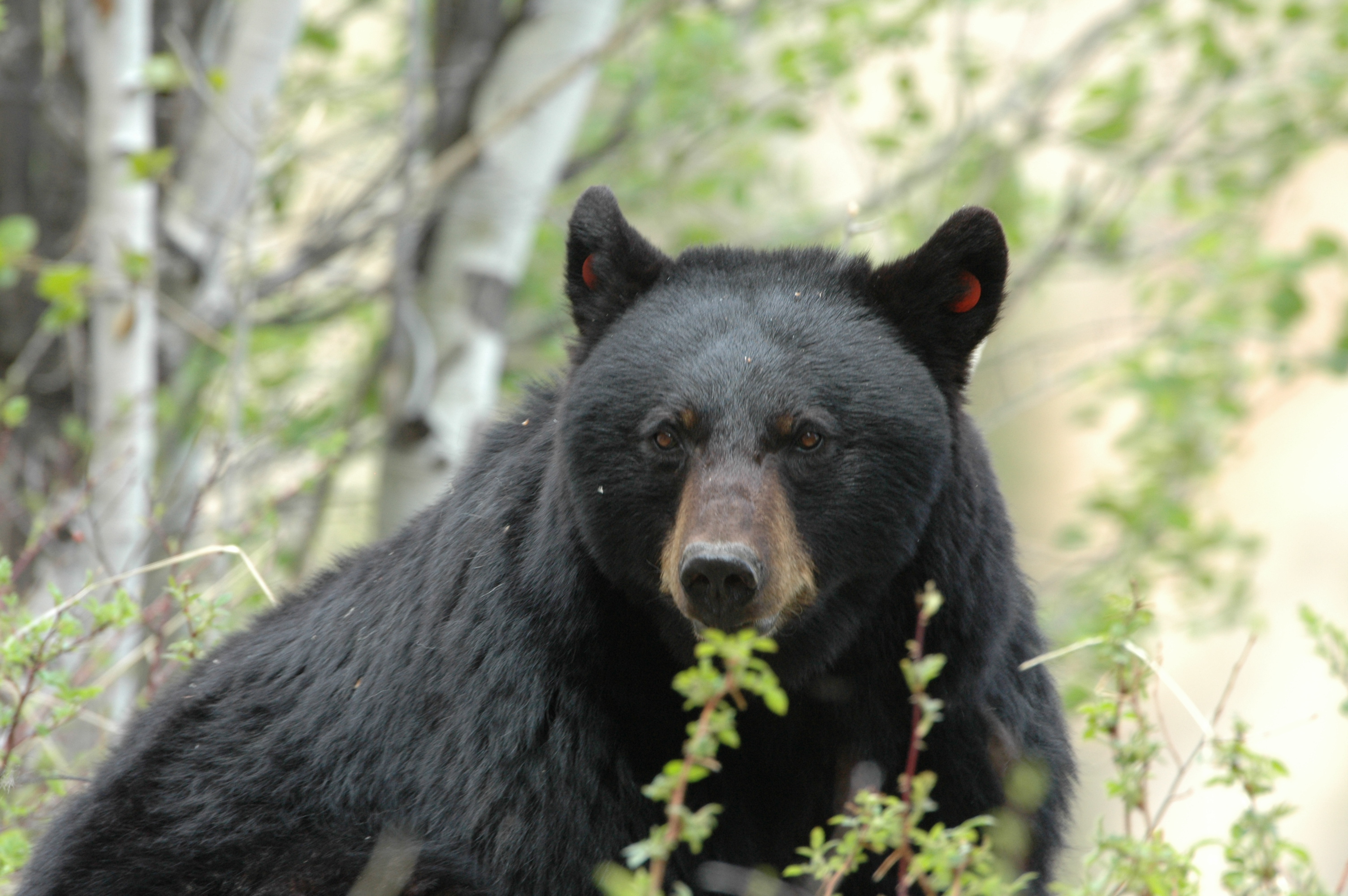
Photo Copyright Jim Robertson

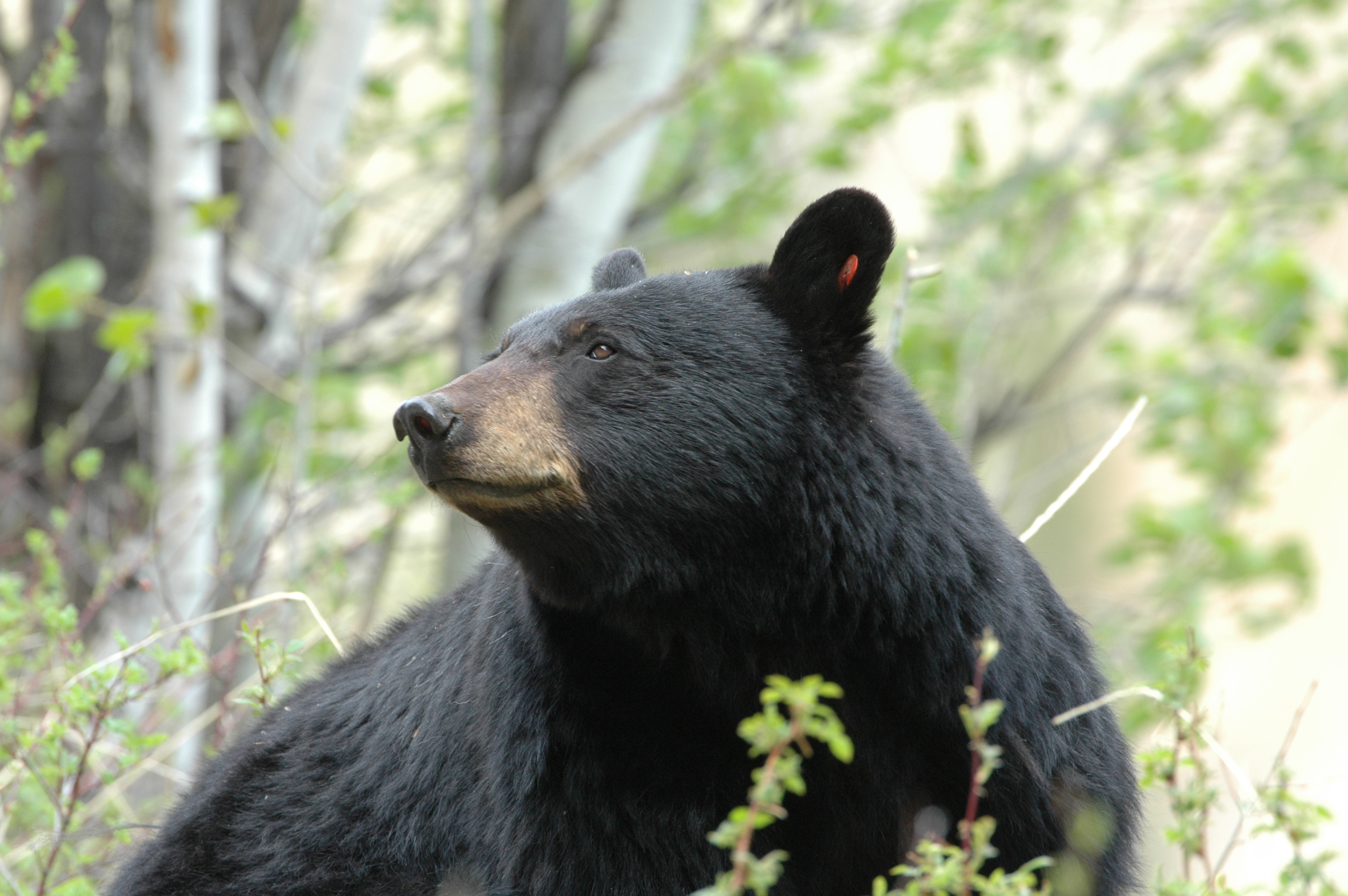
Photo Copyright Jim Robertson

Maine officials say a November ballot question will ask Maine voters if they oppose three methods of bear hunting except under certain circumstances.

State officials released the ballot language on Thursday. It asks: “Do you want to ban the use of bait, dogs or traps in bear hunting except to protect property, public safety, or for research?”

Supporters of the restrictions passed the threshold months ago necessary to put the initiative on the fall ballot. The vote comes 10 years after Maine voters narrowly rejected a similar ballot initiative.

Opponents of restrictions say the rules would hurt Maine’s tourism and economy. Proponents say baiting bears with human food habituates them to human smells and lessens their instinctive fear of people.

Baiting accounts for 80 percent of the state bear hunt.

Maine voters to be asked about bear hunting

Controversial bear hunt reinstated in Ontario

WBFO’s Dan Karpenchuk reports1467382_575553635851437_268599181_n

After 15 years, Ontario’s spring bear hunt is on again, on an experimental basis. It began on May 1, despite an 11th hour legal bid by animal rights groups to prevent it.

The case to bring back the hunt was based on years of complaints from organizations and residents who say there have been more dangerous human-bear encounters since the hunt was canceled in 1999.

The case against the hunt was made by the Animal Alliance of Canada and Zoocheck Canada. Lawyers for the groups argued that an early hunt violates animal cruelty laws; cubs could be orphaned and then die of starvation or be killed by predators.

They went to court arguing for a judicial review, but just a day before it was to begin, an Ontario judge dismissed that legal attempt to block or delay the hunt.

Ontario’s natural resources minister says he is pleased with the decision, saying the priority from the start was for the public safety of people in the north. Fish and Game groups also praised the decision, saying the hunt is the only one tool for managing the bear population and without it, the number of dangerous encounters will increase.

The animal rights groups say they are disappointed but will continue to fight against the hunt by careful monitoring and perhaps even having members out observing the hunting.

The pilot project to reinstate the hunt will run for six weeks in eight regions known for having the most public safety incidents involving bears.

Arrow removed from NJ bear shot in face, mouth

http://www.nj.com/news/index.ssf/2014/05/nj_vet_removes_arrow_from_bear_that_was_shot_in_face_mouth.html

By Jeff Goldman/The Star-Ledger The Star-Ledger

MINE HILL — A New Jersey black bear that remarkably survived the winter with an arrow in its face and mouth has a new lease on life.

With assistance from the state Division of Fish and Wildlife and several technicians, a Mine Hill veterinarian removed the projectile from the approximately 3-year-old bear on Thursday evening, hours after it was caught by officials.

“We’ve never seen anything quite like that,” said Dr. Steven Hodes, who performed the surgery at about 7 p.m. in the parking lot of the Hodes Veterinary Group on Route 46. “Normally when they get shot in the face or head you expect them to die in during the winter. He was fortunate in that he got shot in an area that allowed him to eat and drink.”

The arrow was wedged from the top of the bear’s nose, through its tongue to the bottom portion of its jaw, Department of Environmental Protections spokesman Bob Considine said. The arrow didn’t come out the bottom of the animal’s jaw, though. Officials still aren’t sure how the bear was able to drink because of the way the arrow was positioned.

Fish and Wildlife officials located the bear Thursday afternoon after receiving calls from concerned people who saw it in the area of New Egypt Raceway.

arrow.jpgThe arrow that was lodged in the face and mouth of a black bear.

When technician Kim Tinnes and her team arrived, the bear was gone, though. It was spotted a short time later running across Route 539, at which time officials were able to capture it by shooting it with a tranquilizer dart.

The bear was then brought to Mine Hill and within an hour the arrow had been removed. The bear weighs about 220 pounds, 50 to 70 pounds less than a normal bear of its age.

The man who shot the bear reported it to the Division of Fish and Wildlife. He was issued a summons for attempting to take a bear illegally.

The bear was released this morning into the Colliers Mills Wildlife Management Area in Jackson, Considine said.

“It’s very gratifying for us to be able to help,” said Hodes, who has been working with Fish and Wildlife for about three years and performed the surgery for free.

Vote NO on FL Bear Hunting Poll

Black Bear photo

Black Bear

Do you think a bear hunting season is warranted?

Yes

No

Apparently the 7 bears they already killed weren’t sacrifice enough. Please go here and vote NO on the poll in the left hand column: http://www.wftv.com/news/news/local/lawmakers-propose-bear-hunting-reduce-population/nfgTD/

SEMINOLE COUNTY, Fla. —

There have been two bear attacks in Seminole County in the past four months and now some state lawmakers want to allow hunters to help reduce the bear population.

Recently Terri Frana spoke with Channel 9 about being mauled by a bear at her home in Lake Mary.

In December, several bears were killed after Susan Chalfant was attacked while walking her dog in Longwood.

New signs in the area warn residents to be “bear aware,” but some lawmakers and homeowners believe it’s not enough.

Wildlife officials said many of the bears in the area are used to humans and used to finding food in the neighborhoods.

State Rep. Jason Broeder from Sanford sent a letter signed by a dozen lawmakers proposing select bear hunts in specific areas to reduce the growing population and to reduce the number of dangerous encounters with neighbors.

Some of those living along Markham Road said that it may be time for a hunt.

“Outside of trying to secure my garbage, I don’t know how else to keep the separation,” said resident Fran Kipp. “I think controlling the population would help too.”

Broeder is also calling on waste management companies to provide bear-proof trash cans and is working to find the funding to teach homeowners how to co-exist with the bears, without making them feel so at home.

Representative Mike Clelland said he doesn’t believe bear hunting season is the best plan.

“I think it’s a little bit of a knee jerk reaction,” Clelland said.

Clelland said the state should make the penalties tougher on people feeding bears and not be quick to pull out guns.

“I can’t imagine us with rifles hunting bears between neighborhoods. It could only add to the public safety issue that I think is an issue now,” Clelland said.

Resident  Debbie Gunther agreed with Clelland.

“Do not kill the bears. Relocate them. Do not kill the bears. Can’t we trap the people who are feeding them? Can we have open season for that?” Gunther said.

An FWC spokeman said there can be a controlled hunt without putting the bears back on the threatened species list.

Ontario spring bear hunt to face court challenge from animal rights groups

http://kitchener.ctvnews.ca/ontario-spring-bear-hunt-to-face-court-challenge-from-animal-rights-groups-1.1780350

A black bear roams the forest A black bear roams the forest near Timmins, Ont., on Sunday, May 27, 2012. (THE CANADIAN PRESS/ Nathan Denette)

Allison Jones, The Canadian Press
Thursday, April 17, 2014

TORONTO — Two animal rights groups are taking the Ontario government to court in an attempt to stop a spring bear hunt pilot program before it begins, alleging it amounts to animal cruelty.

Animal Alliance of Canada and Zoocheck Canada say mother bears will be killed during the hunt, leaving their orphaned cubs to starve or be killed by predators.

“The babies at this time are very small,” said Julie Woodyer of Zoocheck Canada.

“This is the only large game species that are hunted when the young are still dependent on their mothers and it is inevitable that cubs will be orphaned.”

The animal rights groups have filed an application for judicial review and a notice of constitutional question, which are set to be heard in court on April 29, just days before the start of the program. They hope the court will at least delay the start of the hunt until it can rule on their legal actions.

The regulation would be contrary to animal cruelty laws in the Criminal Code, said the groups’ lawyer David Estrin.

“In our view, reinstituting this program would be tantamount to the minister and the Ministry of Natural Resources either wilfully permitting bear cubs to suffer or failing to exercise reasonable care or supervision of the bear cub population,” he said.

“The Criminal Code prohibits causing or allowing animals to suffer. This program of the Ontario Ministry of Natural Resources will cause black bears to suffer.”

The pilot project to reinstate the spring bear hunt will start May 1 and run for six weeks in eight wildlife areas known for having the most public safety incidents involving bears.

“In northern Ontario it is not responsible for a provincial government to ignore the concerns of thousands of residents who are concerned about their public safety,” said Natural Resources Minister David Orazietti.

“We have young children who can’t go out for recess at their schools, teachers wearing bear whistles because their children are threatened.”

Nearly 50 mayors and city councils across northern Ontario have passed resolutions calling for their participation in the program, Orazietti said. Out of 95 wildlife management units in Ontario, the pilot program will be in eight, he said.

“Some people who are completely unaffected by this issue and whose children may be perfectly safe in the schools that they attend have no understanding of the implications and the safety challenges in communities in northern Ontario,” Orazietti said.

The hunt was cancelled in 1999 and then-natural resources minister John Snobelen said it had left thousands of cubs orphaned since hunters too often mistakenly shoot mother bears.

“Really, the only answer we came up with was to end the spring bear hunt,” he said at the time. “It’s the only acceptable way.”

Orazietti said the government has learned over the past 15 years that other strategies to reduce human-bear incidents have met “fairly limited success.”

“This has been a very, very thoughtful and strategic approach,” he said Thursday. “We’re not suggesting a return of the spring bear hunt of yesteryear.”

The animal rights groups say the ministry’s own scientists have found no link between the end of the spring bear hunt and human-bear incidents. Orazietti said “that’s not completely true.”

“Our scientists do recognize that there are other scientists and other groups that have indicated that bear hunts do in fact have an impact on population,” he said.

Terry Quinney, the provincial manager of fish and wildlife services for the Ontario Federation of Anglers and Hunters, said the spring bear hunt was for decades a valuable wildlife population management tool.

“In reducing the density and distribution of bears in the spring, particularly those older male bears, it is absolutely reducing the probability of dangerous encounters with people,” he said.

Hunters target the male bears, Quinney said, and there are ways they can distinguish male and female bears, especially using suspended bait.

“It’s not hard to imagine that if a food source is placed, for example, hanging from a tree, a bear in order to reach that food source is going to stand on its hind legs, making its genitalia very visible to a hunter,” he said.

Quinney also said there would be economic and social benefits to re-establishing the spring bear hunt in northern communities.

“Prior to the cancellation of the spring bear hunt in Ontario there were approximately 600 family-based businesses in northern and central Ontario that were involved in the spring bear hunt, for example providing guiding services for hunters,” he said.

“Revenues to northern and central Ontario on an annual basis were in excess of $40 million a year. All of those economic benefits have disappeared from Ontario.”

Read more: http://kitchener.ctvnews.ca/ontario-spring-bear-hunt-to-face-court-challenge-from-animal-rights-groups-1.1780350#ixzz2zGxETLtP

VERY IMPORTANT! Please vote in the on line poll in the Toronto Sun to say NO to reviving the spring bear hunt in Ontario. The poll is on the bottom right of the home page here: http://www.torontosun.com/

7th Bear–Including An Adult Female Bear–Killed After Woman Bitten in Florida

Photo Copyright Jim Robertson

Photo Copyright Jim Robertson

[Never mind that the subdivision backs up against a wildlife sanctuary. When a non-human animal dares to threaten a human, it’s not just an eye for an eye, but SEVEN pairs of eyes for an injury.]

http://www.clickorlando.com/news/bears-tested-after-woman-attacked-in-lake-mary-garage/25464444

7th bear killed after woman attacked in Lake Mary garage

Author: Sheli Muniz, Reporter, smuniz@wkmg.com

Apr 14 2014

LAKE MARY, Fla. –

Florida wildlife officials said on Tuesday they killed a seventh bear, an adult female bear, hours after announcing the capturing and euthanization of a 250-pound male bear overnight.

Florida Fish and Wildlife Conservation Commission officials didn’t say that they have identified the bear that attacked Terri Frana Saturday night at her home at 1900 Brackenhurst Place in the Carisbrooke subdivision, which backs up to the Wekiva Wildlife preserve.

She received 30 staples and 10 stitches in her head after a 200-pound bear mauled her.

Authorities on Tuesday also released the 911 calls from the attack on Frana.

“She came in screaming, she said a bear attacked her,” the caller told dispatchers.

FWC said although they are testing the bears for DNA, the tests may come back inconclusive and they may never find the exact bear that attacked Frana.

FWC said that the seven bears appeared dangerous and threatening and didn’t appear to be afraid of humans.

FWC said as with the other bears, the FWC removed the bear from the neighborhood and it showed signs of being highly habituated to people.

“We yelled at him, clapped our hands at them, and yelled bad bear- they kept approaching us,” said Greg Workman of Florida Fish and Wildlife.

Sunday evening, an FWC officer shot a bear after they say it showed dangerous behavior toward officers at the scene.  The FWC says the bear approached biologists at close range and showed no fear even after an officer yelled at it. Because of its behavior, the officer determined that the bear was dangerous.

Wildlife officials say other bears appear to be accustomed to people in the area, including four that were captured and put down. The fifth bear was captured Monday morning.

The FWC says officers spotted two other bears in the area that ran away at the sight of humans. This is typical wild bear behavior and no action was necessary with those bears, officials said.

“The fact that we have come across so many bears with so little fear of humans indicates that these bears are highly habituated and are regularly receiving food from people,” said Dave Telesco, the FWC’s Bear Program coordinator. “Our staff is dedicated to wildlife conservation. Having to put down these bears is a very difficult decision, but it’s the right decision to ensure public safety. Unfortunately, the saying is true: ‘a fed bear is a dead bear.’”

Frana’s husband, Frank Frana, said his wife suffered bite wounds to her head, arms, shoulder and upper thigh and had lacerations all over her body.

“But she’s fine,” Frank Frana said.  “She’s still pretty traumatized from it all, but it’s unbelievable she’s fine.”

Frank Frana said his wife encountered the bears, which had pulled some trash cans out of the family’s garage, while she was checking on her children, who were playing at a neighbor’s home.

He said there were five bears rummaging through the trash when one of them stood up and attacked her.

“(My wife) was able to eventually break away and run into the house.  She collapsed on the floor and my oldest son … called 911,” Frank Frana said.  “It was a close call.”

The FWC on Monday will continue to check traps in the area and warning families nearby.

FWC said if you encounter a bear at close range speak to the bear in a calm, assertive voice while backing up slowly toward a secure area. Be sure you are leaving the bear a clear escape route. Stop and hold your ground if your movement away seems to irritate instead of calm the bear. Do not run or play dead. If a black bear attacks you, fight back aggressively.

The FWC also reminded residents to be aware of their surroundings and always supervise pets and children while outdoors.  Residents should contact the FWC Wildlife Alert Hotline at 888-404-FWCC to report any threatening bear activity.

Help STOP Bear Hunt in NJ For Good!

HELP STOP BEAR HUNT IN NJ FOR GOOD!!!!!!!!!!


Last year hunters in their “Rambo wannabe” get up, face painted psychopath massacred 600 Bears and this year again more bears will be killed. Will there ever be an end to this. According to bear in NJ expert NJ Fish and Games are full of corruption and there is likely never end to it. I remember 4 years ago there was a petition to stop bear hunting and all the petition and writing did not help. Bear like deer has a physiology to feel pain, they fear death and most of the killings are done by bows and arrow. According to a Veterinarian they have quoted that animals such as deer, bear and Elk suffers as we do.

“Consider the physiology of the deer (and bear) who dies by suffocation, choking on its own blood, or the deer who dies after an arrow penetrates the diaphragm. The presence of a highlysophisticated nervous system in deer certainly suggests that their nervous systems perform the same functions as human nervous systems. The presence of the same neurochemicals in deer as in humans similarly shows that they feel pain as we do.

In recent years there has been a major shift in the way the scientific community understands the mental life of animals, particularly mammals. Presently, researchers in a variety of animal-related disciplines generally agree that in addition to being sentient, mammals are consciously aware and have feelings and emotions.

Petition:http://www.thepetitionsite.com/151/762/110/help-stop-bear-hunt-in-nj/

BOYCOTT South Carolina until they Outlaw Bear Baiting

In order for the legislatures to do something regarding this barbaric act. People who want to visit South Carolina or hold a convention should boycott this state until this is outlawed.

To:KsVvuVxqZrOKzuz-556x313-noPad
South Carolina state legislatures
Outlaw Bear Baiting

In order for the legislatures to do something regarding this barbaric act. People who want to visit South Carolina or hold a convention should boycott this state until this is outlawed.

The bear facts; What’s a bunch of starving cubs when there are votes to be had?

Bear

http://www.chroniclejournal.com/content/news/local/2014/02/22/bear-facts-what%E2%80%99s-bunch-starving-cubs-when-there-are-votes-be-had

Saturday, February 22, 2014 – 08:00
in Columns

Commentary
By Barry Kent MacKay
Re Bear Hunt Needs An Economic Angle — editorial, Feb. 11:
Because Kathleen Wynne was a bit of an outsider — Ontario’s first female and openly gay premier — I had hoped that transparency and citizen democracy would benefit, and policy would derive from logic and compassion. I was wrong.
Prior to 1999, in addition to a fall hunt, it was legal in Ontario to hunt black bears in the spring. Bait, often sweet pastry and fats, would be placed in front of blinds or tree stands — and the bears, ravenous from months in their dens without food, would approach. They were easy targets. Although many local hunters opposed the practice, they usually remained silent because it did bring money into the more remote, northern areas.
Hunters were only supposed to shoot males, but too often they shot females.
The Ministry of Natural Resources (MNR) estimated, from the number of females shot, that more than 270 cubs were orphaned each spring. Cubs are dependent on their mothers; so, when orphaned, they tend to die from predation or slowly starve to death. The few who survived were brought to wildlife rehabbers — but most simply died, lost in the bush.
Concerned citizens were able to convince the Ontario government to end the spring hunt. But, the fall hunt was extended, and the overall number of bears killed by hunters was nearly the same as before.
The Ontario Federation of Anglers and Hunters (OFAH) was outraged, and started a massive campaign of bear reporting. In 2003, a Nuisance Bear Review Committee recommended that the MNR take a lead role in responding to “nuisance” bear reports, including threats to human safety. Thus, the MNR’s Bear Wise program was born.
Although the program was successful, OFAH continues to claim it was not. And while there was, on average, no increase in conflicts between humans and bears, attacks on humans by bears, or the size of the bear population, OFAH and others somehow argued that all three increased. The campaign also pushed a very emotive button among people in Northern and central Ontario, suggesting that the government was more responsive to the concerns of the larger population living in the more urbanized south (where bears are rare or absent, but votes are numerous).
In 2008, then-Minister of Natural Resources, Donna Cansfield, wisely ordered an assessment of Bear Wise. Published in January 2009, the assessment presented dozens of suggestions on how it could improve. The next year, then Premier McGuinty removed Cansfield as the minister.
In May 2012, McGuinty quietly, and without consultation, conducted a massive scale-back of the Bear Wise program. Then, in October, he abruptly quit, handing leadership of the party, thus the province, to Kathleen Wynne.
And what did she do? We were promised a better, more open, and transparent government. But instead, the premier began the onerous task of dismantling many of Ontario’s environmental protection laws including the Endangered Species Act, the Planning Act, the Bear Wise Program and re-introducing the spring bear hunt.
Apart from the sad fact that people seem to believe there are more bears and more conflicts (neither contentions supported by the MNR’s own research), there is simply no way that shooting bears attracted to baits in the bush will mean that the same bear that might concern humans later on is the one shot. Shooting, itself, creates the risk of wounding bears, who can become aggressive. Bears tend to avoid humans, and the moms will not attack if their cubs are approached. But, availability of human food conditions bears to search for such foods — ironically exacerbating the problems that concern people.
Now, in the winter, female black bears are in their dens. They are not truly hibernating, but their metabolism has slowed, and they will soon give birth to tiny cubs. Smelling bait, the females will move in, but will tell their cubs to hide. If a mother bear is lucky, she’ll be recognized as a female, and spared; but she may well be shot, and then her cubs are doomed.
And why? Kathleen Wynne may think that, by making it a “test” and restricting the spring hunt to several communities, she will not arouse too much criticism from compassionate voters (while placating those northerners angry at cancellation of the spring hunt back in 1999). What are a few hundred starving baby cubs when there are votes to be had?

Barry Kent MacKay is a founding director of Animal Alliance of Canada and Canadian senior program associate with Born Free U.S.A., a non-profit animal advocacy based in Washington, D.C.