Wolf or Coyote, Which Should You Shoot?

At the bottom of this post is a photo quiz to test your skill at species identification and/or differentiation to go along with this action alert from WildEarth Guardian…..

Poachers [hunters] are shooting Mexican wolves in cold blood and the government is doing almost nothing about it.

Why? Because the Department of Justice has a policy that basically allows the killers to make the excuse that they thought they were shooting at a coyote.

And so anti-wolf forces are just laughing it off.

Sound outrageous?  Well it is.  What’s worse is that it’s now happened dozens of times. With the body count mounting, we said enough is enough. So last week we filed a landmark lawsuit to stop the practice of letting killers get off scot free. Now we urgently need your help!

We need to raise $20,000 in the next 21 days to ensure we can defend wolves in court – thanks to a fellow outraged Guardian, the first 50 gifts will be matched dollar for dollar, up to $10,000! With less than 75 Mexican wolves in the wild we need to act urgently. Please contribute to our Mexican Wolf Protection Fund.

The Department of Justice has decided to simply walk away from enforcing the Endangered Species Act, which strictly prohibits killing of endangered species—no matter the excuse. As a result it’s not only killers of Mexican wolves that have not been prosecuted, but also killers of other endangered species, including Grizzly bears, whooping cranes and California Condors.

Because of its so-called “McKittrick Policy,” the Department of Justice is loathe to charge or prosecute individuals who kill “endangered” species if they claim that they mistook the identity of the animal as their defense.

Since 1998, at least 48 endangered Mexican wolves have been shot, but the government has only pursued two cases! WildEarth Guardians believes it’s time the wildlife poachers are brought to justice, but we need your financial support.

________________

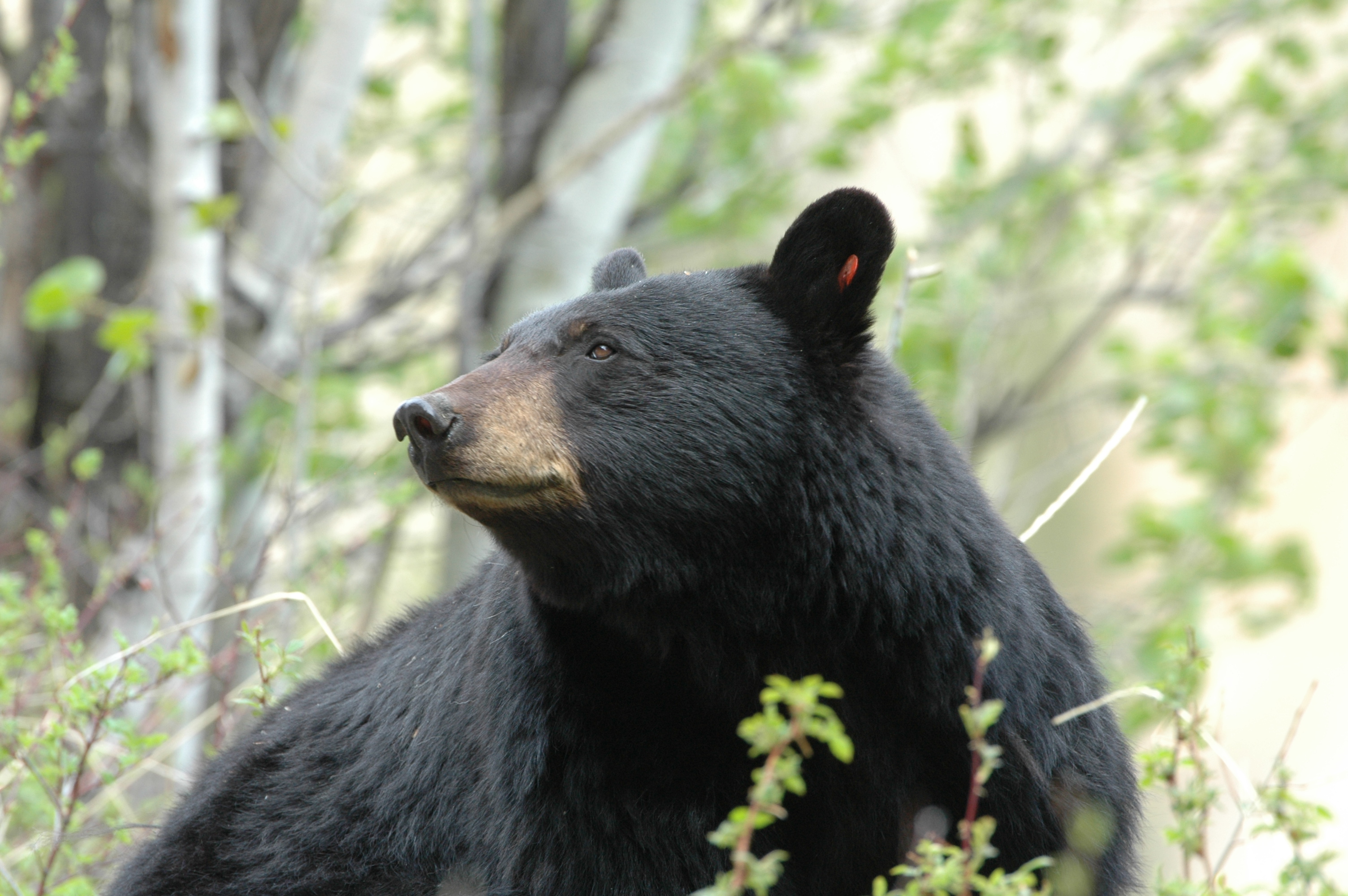
…So, just how hard is it to tell a wolf from a coyote? A black bear from a grizzly? Should hunters be trusted to make that call?

I’ve posted some of my photos below so you can decide for yourself whether coyote hunting should be legal in an area where only 75 individuals of a critically endangered subspecies of wolves exist; or if black bears should be hunted in a grizzly recovery zone.

(Answers at bottom of post.)

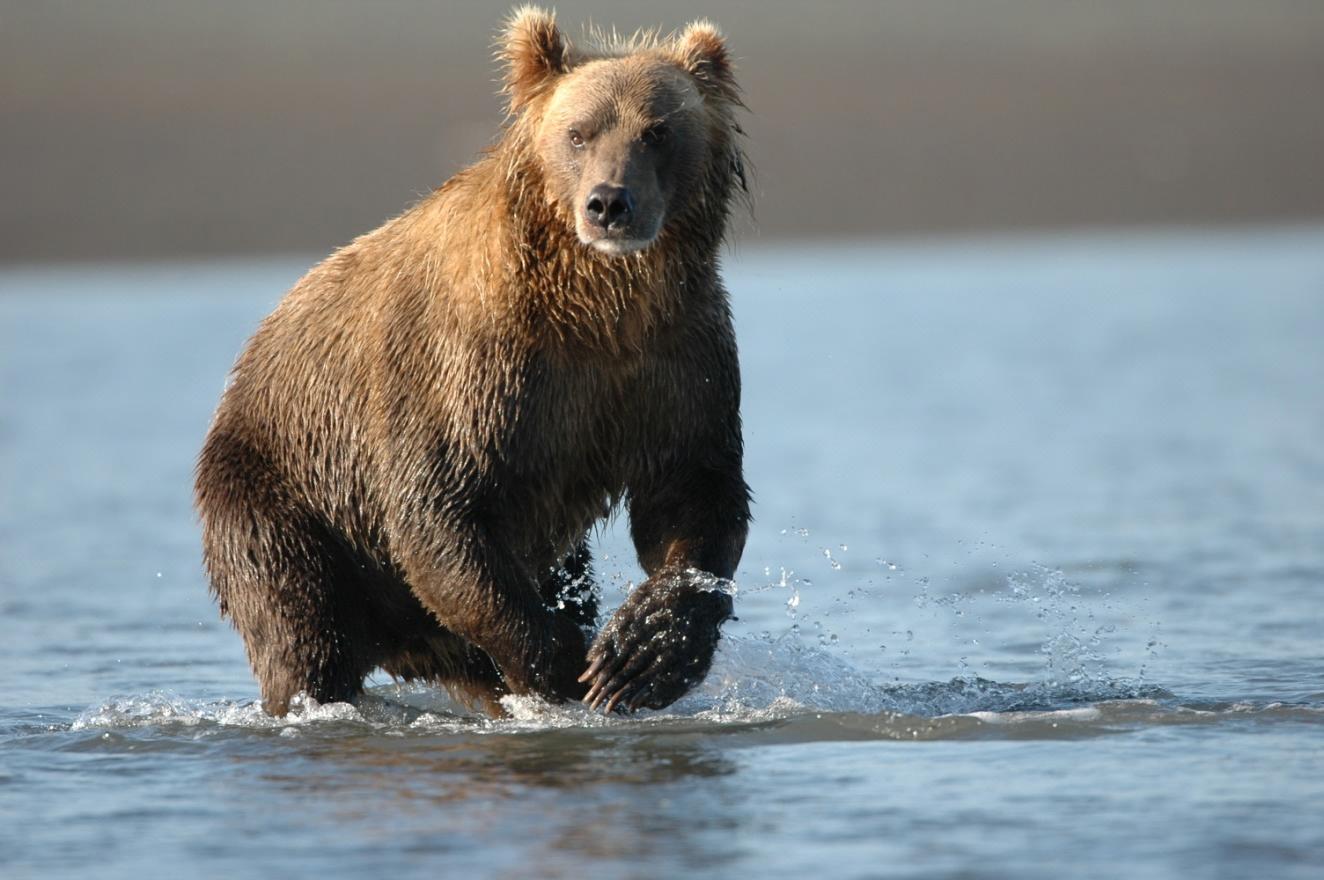
Let’s start with an easy one. Choose which is the grizzly bear from the following two photos:

1.
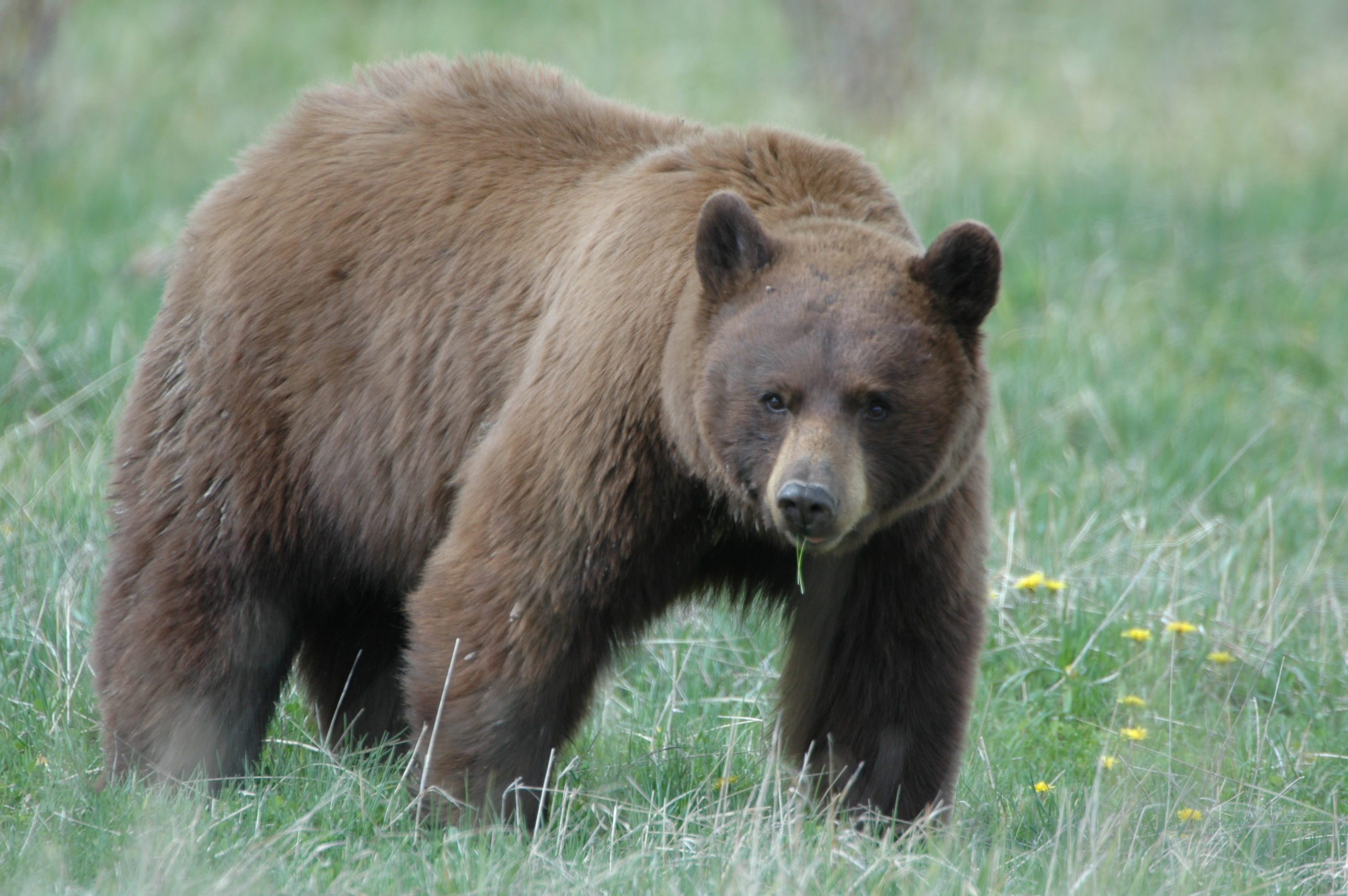
Wildlife Photography Copyright Jim Robertson

Wildlife Photography Copyright Jim Robertson

2.
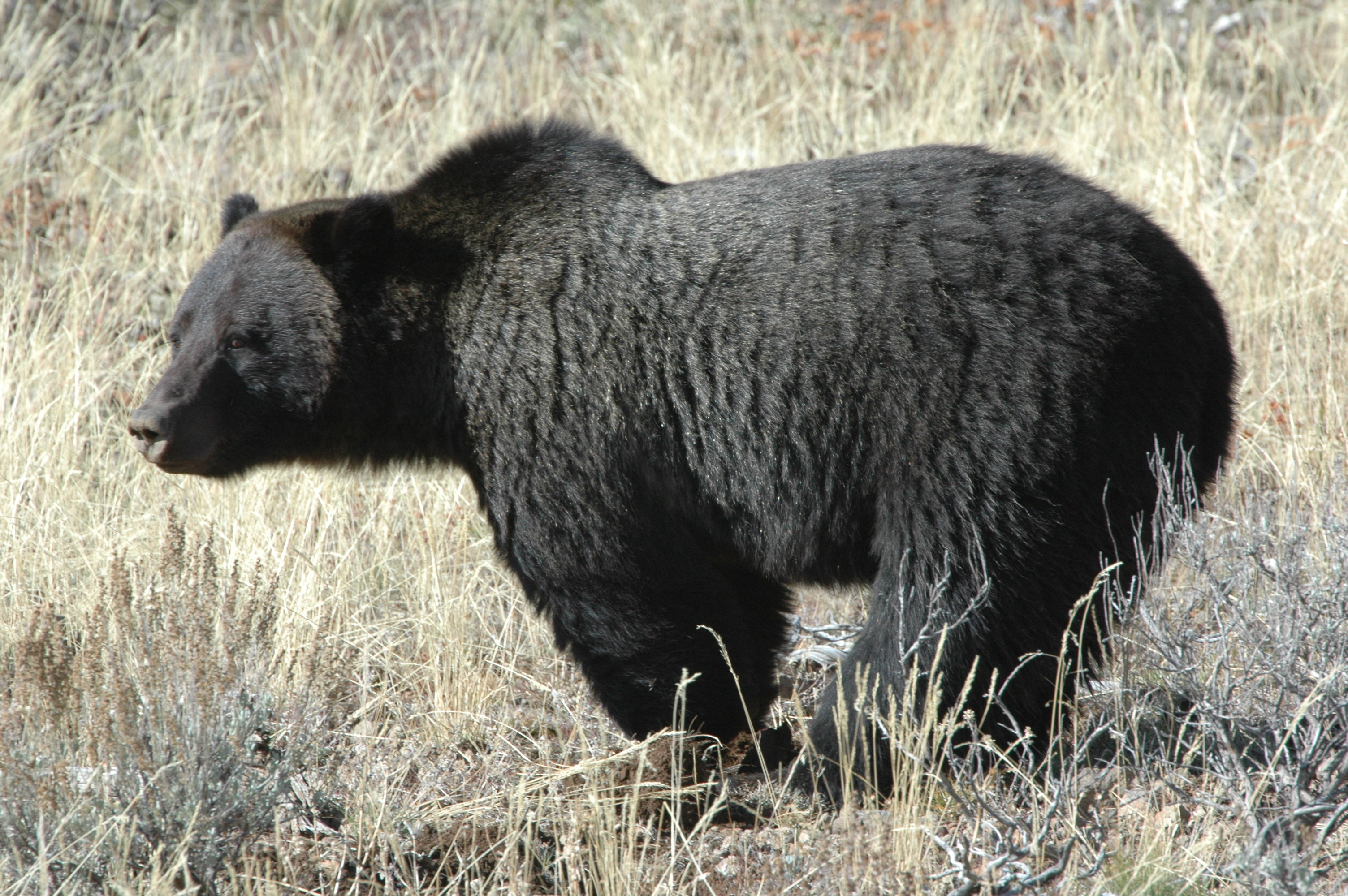
DSC_0262

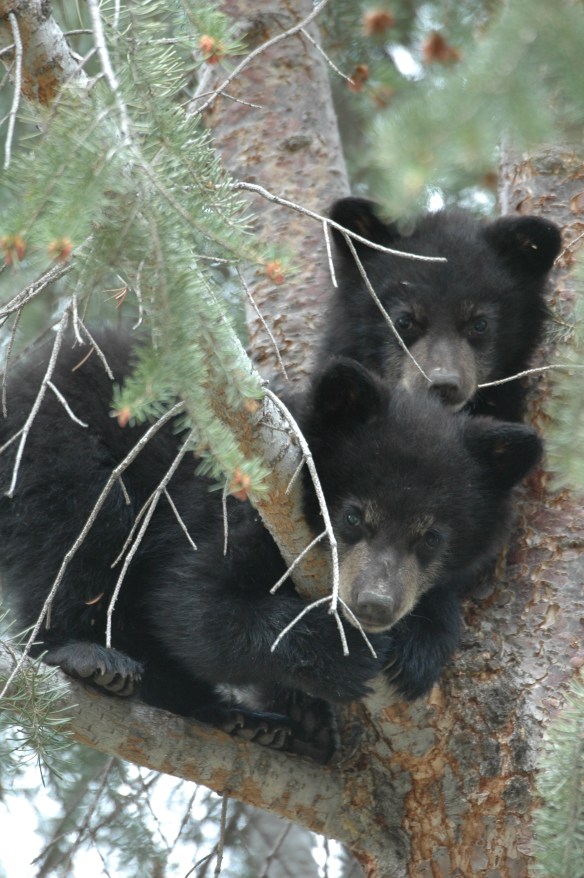
So how about these two; same question, (left or right)?
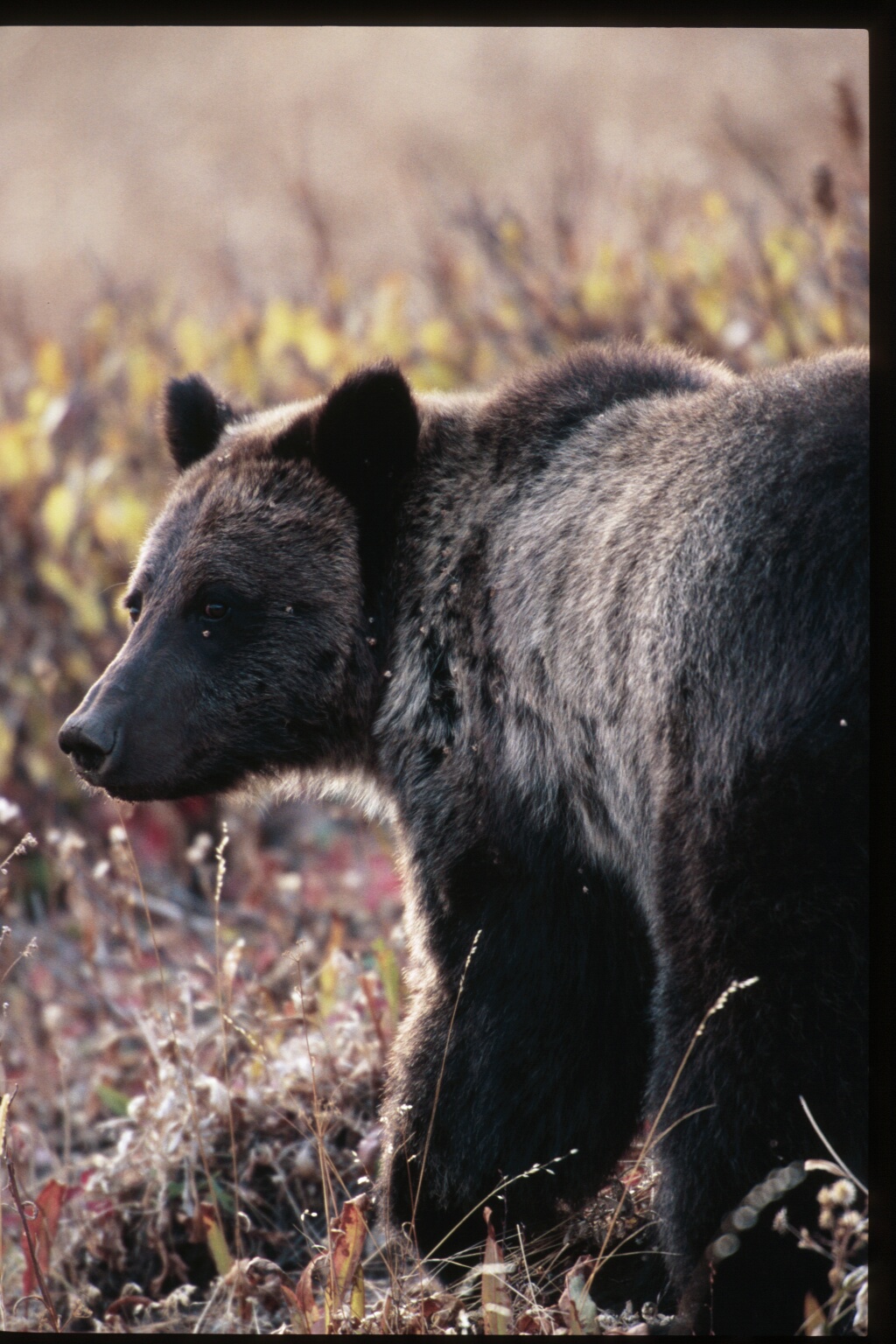
82236aa124e9099856c9b595bcea598c  blue eyed black bear

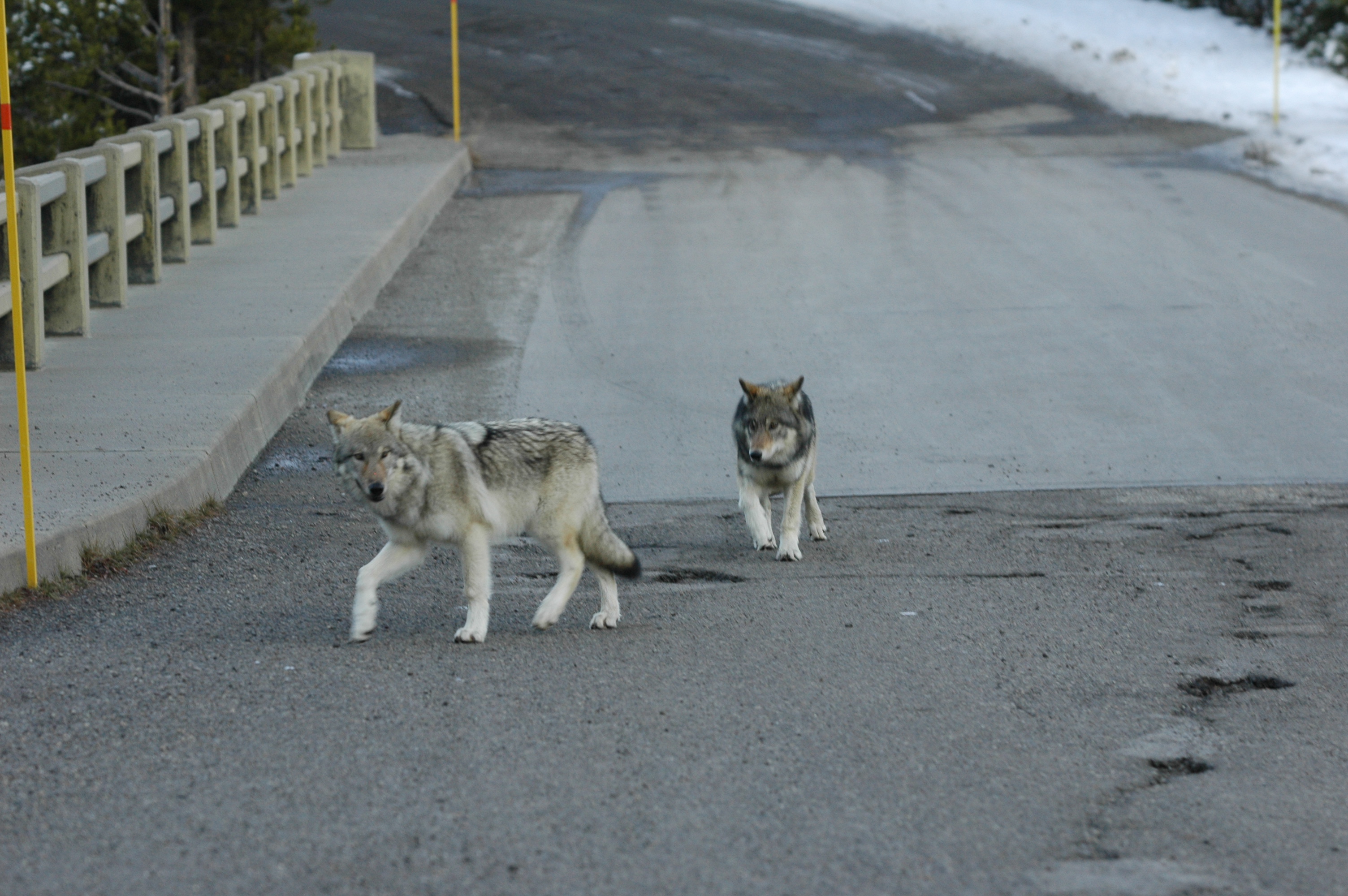
Now, which of these is the wolf?

DSC_0054

DSC_0298

Ok, this last one was a trick question; the two crossing the bridge are young wolves. But you get the point, it’s sometimes hard to tell.

Number 2. is the grizzly, as is the photo on the left below it.

Part of the credo of the alleged “ethical” hunter is, don’t pull the trigger unless you’re dead sure of your target. Better yet, don’t pull it at all; none of these animals deserve to die for your sporting pleasure.


Last Blast From the Past

Here is the last in the blast from the past series for now…

First, here’s a photo from my trail clearing days. This was actually one of around 100 trees that blew down over a trail in the Goat Rocks Wilderness Area, after the US Forest Service had the hill below it clear cut. A heavy wind whipped up the freshly-cleared slope (outside the wilderness area) and, since the trees on the ridge had nothing to help them absorb the force, the old growth trees blew over. Ironically, although the clear cut (1/2 mile away) was logged with chain saws, we had to use a cross cut hand saw to clear the blow-downs (since chain saws aren’t allowed in wilderness areas).

more housepix 164

Anyway, the following is something I found that I’d written down on some notepaper while on a solo hike nearly 28 years ago…

July 8, 1985

The mid-day heat was upon me as I hiked along the shore of Ross Lake for six miles to Big Beaver Creek. On the way the vegetation went from cool fir, cedar, birch and alder forest to hot, dry lodge pole pine thickets. It was in one of these that I came across a mother grouse and her chicks.

By the time I reached the Ross Lake/Big Beaver Creek junction, I was ready for a bath. I waded into the semi-warm water by an empty horse camp and was greeted by a horde of persistent horse flies. After the bath numerous boaters and hikers passed by in route to their camps on the lake. One group who had just come down from Big Beaver valley said the mosquitos up there were terrible. As they said this, I was almost nuts slapping horse flies, but the mosquitos up there were supposed to be worse? That made me think: do I want to keep going today at 4:00, alone, just me and the mosquitos to the dark forest, or do I stay here in the sunshine and put up with the power boats and the crowds?

Well, I came here knowing I’d be alone in the dark forest with mosquitos; and besides, I wanted more adventure than watching speed boats could supply me with. So I said goodbye to the sun and views of Pumpkin Seed and Jack Mountain and followed Big Beaver Creek, past old cedars and Douglas firs.

About three miles further, I came across a fresh bear scat full of huckleberries (I noticed all the huckleberries gone from the plants I’d passed on the trail). About 75 feet further was a flat spot and an access to the creek (sort of). Here was the adventure; this would be my camp tonight. I set up my mosquito-proof hammock and spread out my food to decide what to have for supper. The thought crossed my mind that if an animal were nearby, there were more than enough smells to attract it. A few minutes later I looked up with a start to see a black bear 15 away, coming into my camp. I said, “Hey there!” which surprised him, since I don’t think he knew anyone was in camp. I told him, “It’s okay to be here, just don’t try to steal my food.” I guess he didn’t feel like staying and stepped quietly back onto the trail. As he slowly moseyed on, I felt bad about scaring him off, so I said to him, “No hard feelings…” So he sat down on the trail and scratched for a while before meandering out of sight. It was a great way to end the first day.

Day 2:

I woke to a short sprinkling of rain which lasted less than five minutes. That cloud passed and the sky was clear from then on. As I sat by the river under tall mossy cedars, a striped snake passed by. Odd place for a snake (the second one I’ve seen here) but the vegetation is so diverse it was probably just headed for another dry spot. There were also a number of bumble bees attending my breakfast party (in addition to the usual uninvited biting guests). The bumble bees seemed to be more interested in their own business than sucking my blood. Turns out they had a ground nest right in my camp (of course).

Back on the trail I passed more huge cedars and some beaver ponds, one of which I stopped at for the night. I felt that if there was wildlife anywhere, it would be here. Indeed, I’ve been hearing the snapping of twigs and footfalls all evening.

As I was having dinner a yard from the pond, there was an enormous “SPLASH!” close by. Then I saw one of the big beavers eyeing me as she swam 20 feet from my camp…followed by another SPLASH of her tail; she didn’t like my intrusion at all. No one had ever spent the night here before and she did not want it to start happening now. I told her, “It’s okay, Ms. Beaver, but “SPLASH” was her only reply. I got a good look at her fleshy tail close-up as she struck the pond in threat.

As I lay in my hammock that night, I heard her several more times. Whenever I made so much as a peep, she would come back with a “SPLASH.” I hoped she wouldn’t come and chew down the trees my hammock was tied to. (Fortunately I hadn’t read about the guy in “Beware the Beaver,” or I might be more nervous;)

Day 3:

Just as I awoke and remembered the events from the night before, ”SPLASH!” She was still on guard. The sun is half up, but the clouds are starting to move in. It’s time to follow an unexplored valley in search of friendlier wildlife…

Text and Wildlife Photography ©Jim Robertson, 2013. All Rights Reserved

Text and Wildlife Photography ©Jim Robertson, 2013. All Rights Reserved

The True Nature of the Grizzly Bear

Here’s another older letter to the editor (this time to small, local paper in Northeast Washington), that I found in my archives…

A couple of months ago I may have sided with the attitude that if grizzly bears come back to the North Cascades on their own, fine, but there’s no need to reintroduce them. But now, after a rash of anti-grizzly letters have appeared in this paper, I’m ready to become one of the champions of their full recovery here. I hope your readers are laughing off the letters from these misguided, close-minded fanatics and will learn for themselves the true nature of the grizzly bear, instead of jumping on the fear bandwagon and turning their backs on this vanishing species.

One of the common misconceptions frequently stated is that these bears are fearless and have no respect for man. This would lead you to believe that grizzlies would soon be wandering the streets of Winthrop. The fact is, grizzlies will avoid man if at all possible and will choose to inhabit the most rugged and remote areas. I worked for years in known grizzly country in Montana and the Selkirk Mountains of Washington and only sighted a grizzly in those areas once (although I saw numerous black bears).

On the other hand I’ve seen scores of grizzlies and have had numerous positive encounters with them in Yellowstone and national parks in Alaska where bear hunting is not allowed. In one case, I came face to face with a large grizzly on a narrow, brushy trail. I rounded the corner and nearly prodded him with my fishing pole before seeing him. The grizzly did not charge, but merely waited until I moved off the trail before he continued on. As John Crawford put it in an article entitled, “Getting along with grizzlies,” “…Confidence devoid of cockiness and a deep basic respect and fondness for grizzlies” should be our attitude if we meet up with Ursus arctos. Crawford goes on to describe other typical bear encounters. In one case, two B.C. trail workers met a grizzly who was running toward them in pursuit of a grouse. The bear did not see the men, but when he got a scent of them, “he reacted as though he’d run into a wall. His front legs stiffened; and mud splattered as his paws pushed out to break.” Then, “the bear turned and walked slowly, sullenly away. As soon as he was out of sight…he broke into a gallop…”

To those people who can’t appreciate living near one of the last wild areas in the lower 48, there are plenty of place to live where you won’t have to face the remote possibility of encountering a wild animal. If we are not willing to allow grizzly bears to exist in the rugged Cascade Mountains, what can we say if elephants are wiped off the African continent, or pandas have joined the dinosaurs?

Text and Wildlife Photography ©Jim Robertson, 2013. All Rights Reserved

Text and Wildlife Photography ©Jim Robertson, 2013. All Rights Reserved

Don’t Be an Ursiphobe

The first half of this post was excerpted from the chapter “Bears Show More Restraint than Ursiphobic Elmers” in my book, Exposing the Big Game: Living Targets of a Dying Sport

An irrational fear of bears dates back to the earliest days of American history and is customarily accompanied by obtuse thinking and quirky spelling. The most famous inscription (carved into a tree, naturally) attributable to Daniel Boone (that guy who went around with a dead raccoon on his head) bragged how he “…cilled a bar…in the year 1760.” The bears Boone killed (and there were many) in North Carolina and Tennessee were black bears, a uniquely American species that, like coyotes, evolved on the Western Hemisphere.

Greatly fearing the grizzly bears they discovered on their voyage up the Missouri River to the Pacific, Lewis and Clark were among the first frontiersmen responsible for leading them down the path to near-extinction. In a May 5, 1805, entry in their journals, Lewis quilled of the “turrible” grizzly, “It was a most tremendous looking anamal and extreemly hard to kill.” Clark and another member of their party pumped the unarmed bear with ten shots of lead before he finally succumbed.

Between 50,000 and 100,000 grizzlies once inhabited the western continental US before incoming settlers shot, poisoned and trapped them out, quickly snatching up prime valley bottoms (the preferred habitat of grizzly bears) for themselves and their livestock. Thus driven into desolate high country, the rare grizzlies who hold on in the lower 48 are allowed only two percent of their historic domain. The current population of 500 is essentially marooned on islands of insufficient wilderness, cut off from one another by freeways, urban sprawl and a network of barbed wire fences that spell “keep out” to any grizzly who knows what’s good for ’em.

In the vein of fables handed down for generations, bear tales have been told, embellished upon, amplified and retold by sportsmen wanting to justify hounding, baiting and just plain killing. As Charlie Russell, author of Grizzly Heart: Living without Fear among the Brown Bears of Kamchatka, tells it:

“Hunting guides describe bears as ferocious, unpredictable and savage predators. They tell one horrifying story after another about people being torn apart. The victims are always those who approached the encounter poorly armed. Then the guides move on to recount countless acts of sportsman bravery: tales of real men stopping huge angry bears just short of the barrel of their guns. They keep it up until their clients are shaking in their boots, barely able to muster the courage to face the dreadful foe.”

Slowly but surely, hyperbolic bear tales are being replaced by the honest truth about bears and folks are waking up to the reality that bears aren’t really out to get them, as evidenced in this recent article from the Calgary Herald:

http://www.calgaryherald.com/Overcoming+fear+grizzlies+survival+species+says+author/8323704/story.html

Overcoming fear of grizzlies key to survival of species, says author

Albertans need to stop being afraid of grizzly bears and learn to live with the animals to protect the threatened species in the province, says the former superintendent of Banff National Park.

Kevin Van Tighem, a fourth-generation Calgarian who worked with Parks Canada for three decades, said it’s time to reconsider how bears are managed in the province.

“If we really want bears to have a future, we need to manage them without fear,” he said in an interview with the Herald about his new book, Bears Without Fear. “We are primarily managing around a risk averse, keep-bears-scared-of-people paradigm.

“I don’t support bear hazing, I don’t support the Karelian bear dog program or the long-distance relocations.”

The strategies are all part of Alberta’s Grizzly Bear Recovery Plan 2008-2013, which was implemented after studies found there were fewer than 700 grizzly bears in the province — a number that led to their status as a threatened species.

All but one of the 15 grizzly bear deaths on provincial land (another two bears were hit and killed by a train in Banff National Park) in 2012 were caused by humans.

In addition, a total of 31 grizzly bears have been relocated by the province after threatening public safety, attacking livestock or damaging property — up from last year’s 24 “problem” bears.

Research shows relocation can triple the mortality of grizzly bears, which has raised concerns among conservationists.

Van Tighem said moving bears out of their habitat is part of the problem, pointing to the relocation of a mother grizzly bear and her three cubs out of Canmore last spring as an example.

“These were totally harmless bears,” he said. “They weren’t scared of people and because they weren’t scared of people, whenever they were surprised by a bicyclist or a dog walker, nothing bad happened. The mother would basically look and say, ‘Well, that’s people. They aren’t scary, so I don’t have to react in a scary way.’

As a result, he said the province took the best possible bears to live around and relocated them because they were worried about what could go wrong.

“We just can’t do that anymore,” said Van Tighem.

Text and Wildlife Photography ©Jim Robertson, 2013. All Rights Reserved

Text and Wildlife Photography ©Jim Robertson, 2013. All Rights Reserved

Snaring’s About the Sickest

In Alaska, bears—in addition to wolves—are routinely hunted, trapped and shot from planes under the deathly ill-advised notion that eliminating those animals leaves more moose or caribou for more hunters to slay. What the Alaska state Board of “Game” can’t seem to figure out is, as the number of hunters goes up, the quantity of moose goes down, simple as that. Will we have to see an Alaska devoid of bears and wolves before the game players finally figure out who’s to blame?

But if anything could be sicker than aerial gunning for bears, it’s snaring them. Bear snaring is a recent addition to Alaska’s long history of animal abuse and exploitation; this new act of depravity was allowed “experimentally” for the first time in 2008.

In the following excerpt from an article, posted January 12, 2012 in the Anchorage Press, Bill Sherwonit dared to imagine just what snaring is really like for its victims:

Picture this: An adult female grizzly bear is roaming forested lowlands on the western side of Cook Inlet when she gets a whiff of ripe, decaying flesh. Sensing an easy meal, the bear follows her nose to a large tree. Several feet above the ground, a bucket partly filled with rotting guts and skin has been attached to the tree; placed on its side, the open-lidded container faces outward, inviting inspection. The grizzly stands and sniffs around the cavity, then sticks her right paw into it. When the paw hits the bottom of the pail, it triggers a metal snare that closes around the animal’s foot. Feeling the pinch of the trap, the grizzly pulls back. As she does, the metal loop tightens.

Two cubs have followed her to the bait. Now, sensing their mother’s agitation, they too become upset. One begins to bawl. This only deepens the adult bear’s determination to free herself. With her free paw she swats and tears at the bucket and tree and she pulls even harder against the snare, which begins to cut through the animal’s thick fur and into her flesh. Now the embodiment of rage, the adult grizzly roars and snaps her jaws, thrashes about. The cubs wail louder.

Eventually exhausted by her struggles, the grizzly mom slumps against the tree, while the whimpering cubs huddle together nearby. More time passes and the trapped grizzly resumes her fight for freedom. The cubs again cry in panic.

It goes like this for hours. A day might pass before the trapper-called a “snare permittee” by state wildlife officials-comes to check the snare, even longer if he’s delayed for some reason. When he does show up, the grizzly mom goes berserk. Depending on their age and personalities, the cubs might charge the person, run off, or huddle in fear. These two retreat into nearby bushes.

The trapper could legally shoot the cubs, now in their second year, but he chooses to ignore the small, frightened bears and heads for their mom. He takes aim, fires his gun, and kills her…

The cubs remain in hiding. Without their mother, it’s more likely they will starve than survive the summer.

Even five years ago, the idea was unimaginable: trap and shoot Alaska’s bears so that human hunters might kill more moose.

Okay, that’s not entirely true. Always trying to come up with new ways to rid Alaska’s landscape of competitors for moose and caribou meat, at least a few predator-control proponents, Ted Spraker among them, were looking toward Maine, then the only state to allow the snaring of bears. The retired Department of Fish and Game biologist worked nearly three decades to increase kills of wolves and bears, primarily to benefit sport hunters.…

Stomach churning stuff—those “snare permitees” must be as callous as they come. I’m just glad Sherwinot saved me the heartache of making the imaginary journey myself this time.

The late, Canadian naturalist and author, R D Lawrence, wrote:

“Killing for sport, for fur, or to increase a hunter’s success by slaughtering predators is totally abhorrent to me. I deem such behavior to be barbaric, a symptom of the social sickness that causes our species to make war against itself at regular intervals with weapons whose killing capacities have increased horrendously since man first made use of the club—weapons that today are continuing to be ‘improved’.”

Contact in for the Alaska Board of Game can be found here: https://exposingthebiggame.wordpress.com/2013/01/31/stop-bear-snaring-and-wolf-trapping-adjacent-to-denali/

Wildlife Photography ©Jim Robertson, 2013. All Rights Reserved

Wildlife Photography ©Jim Robertson, 2013. All Rights Reserved

Be of Good Cheer

I get the feeling some people won’t be satisfied until I’ve plumbed the deepest, darkest depths of hunter/trapper depravity. I’ve had people ask me to write blog posts on issues as nauseating to cover as Wyoming’s new bounty on coyotes, and the glib manner in which some Wyomingites brag about cutting off coyotes ears in the parking lot of the “Sportsmen’s” Warehouse to claim their $20.00 bounty (following the same ugly tradition of  their forbearers who claimed cash at the fort for Indian scalps); incidents as horrible as the black bear (pictured here) who got caught in a 217855_388677001217027_1495584697_ntrap that some sick, twisted asshole set for pine marten; or report on how poachers are killing off the last of the world’s big cats; or go into how vacuous bowhunters sound when they praise one another for impaling animals for sport, or the malevolent tone used by wolf hunters or trappers when they get away with murdering beings far superior to them in every way.

The problem is, whenever I go there I get so irate I could end up saying something like, “They should all be lined up and shot, their bodies stacked like cordwood and set ablaze to rid the world of every last speck of their psychopathic evil once and for all.”

Well I’m not going to do that…at least not during the holiday season…

December should be a time for being of good cheer and spreading hopeful news, such as the pleasantly surprising announcement that, thanks to a lawsuit filed by Footloose Montana, along with several other litigants, the state of Montana put on hold its annual trapping season on wolverine this year, just 24 hours before that particular brand of butchery was set to begin! Of course, nearly every other “fur-bearing” animal in the state—from beavers and muskrats, to marten, fisher and mink; from otters and bobcat, to wolves, foxes and coyotes—is fair game for any sick fuck who feels the sadistic urge to set out a trapline in the wilderness…or just out of town.

But at least the wolverines—critically endangered from years of falling prey to a “celebrated” historic tradition, now down to only 35 successfully breeding individuals in the western United States—are illegal to trap right now.

Hallelujah! Thank goodness there’s some happy news to share with you this time of year!

Text and Wildlife Photography© Jim Robertson

Text and Wildlife Photography© Jim Robertson

Somebody Definitely Needs a New Heart

Normally I would feel sorry for a girl born with a rare heart disease that requires her to get both a heart and liver transplant. But when 11 year old Kaitlynn Bessette of Stetsonville, Wisconsin, shot a 335 pound black bear through the heart, she lost all my sympathy.

Why is it that when some people suffer adversity they feel the need to take it out on others? And what is going on in the mind of a pre-teenaged girl that makes her want to kill a magnificent animal like a bear anyway? How can a person who knows all too well what it’s like to be the target of undeserved misfortune say, “I felt thankful, like really thankful I shot a bear”? Are kids today reading or watching too many stories, such as “The Hunger Games,” where the heroin is a huntress? Or maybe they’re playing too many violent video games, like “Cabela’s Big Game Hunter 2012” (available for only $79.99 in Xbox or Wii).

Of course, Kaitlynn wasn’t out there on her own; she had the help of the Wisconsin-based “United Special Sportsman Alliance,” a hunting group that grants wishes for children (most of which no doubt involve killing animals). They must have lured the bear in with bait and had Kaitlynn safely stationed in a tree-stand close enough for an easy kill, since she wasn’t even looking when she pulled the trigger: “…I held the gun as steady as I could, I turned my head and then I shot.”

After learning that her daughter had killed a bear, her mother said, “I started instantly crying.” Crying would be an appropriate reaction to hearing that a bear’s life was just unnecessarily ended or learning that your youngster was a murderer, but Mrs. Bessette was crying tears of joy instead of sorrow, “…it was amazing.” Kaitlynn’s father was equally pleased with the carnage, “She’s a good kid. I’m really proud of her.”

The family plans to mount the bear’s remains on their wall to keep the memory alive. Had the child been satisfied with taking only a photograph of the animal, both the memory—and the bear—could live on.

Text and Wildlife Photography ©Jim Robertson

In the Name of Sport

It’s Monday morning, August 20th, and although autumn—the traditional season for hunting—is over a month away, I’m already hearing the echo of gunfire emanating from the hills around my place. If I weren’t so damned informed, I’d be thinking, “What the hell is someone shooting at this time of year?” But unfortunately I know all too well…

Judging by the intensity of the rifle report, it is not the sound of a kid with a .22 blasting at bottles or pigeons this time. Considering that the noise originated in an area where black bears and blackberries are numerous, there’s no doubt in my mind that the shooter is a bear hunter. The wild berries are just now ripening and, since bear hunting season begins on August 1st here in Washington, the loathsome scum who enjoy making sport of animal murder are out trying to end the life of a humble being whose only focus these days is filling up on fresh fruit.

Adding to my frustration, there’s no way I can hike up there and check out the situation. My right foot has been out of commission for about a week now, ever since a log rolled onto it while I was cutting firewood. Every time I try to walk on it, the pain and swelling gets worse so I’m stuck having to sit with my foot elevated, wondering whether one of my neighborhood bears has been shot to death or is now suffering from a painful gunshot wound.

Misfortune and misery are already all too common. The last thing this world needs is for a few selfish people to thoughtlessly cause suffering in the name of sport.

Text and Wildlife Photography ©Jim Robertson


Answer to an Elmer “Enjoying a bear hunt in Alaska”

The following is a letter in response to an article in the “sports” section of the Albany, NY Times Union:

Dear Editor,

A friend of mine sent me the article, “Enjoying a bear hunt in Alaska,” by your Outdoors writer, Rob Streeter (June 15, 2012). With friends like that, who needs enemies? I don’t normally have acid reflux, but reading how casually Mr. Streeter prattled about his desire to impale a black bear with an arrow made me burp up enough burning bile to fill a golf cart battery.

Bears are not play toys put here for our sporting pleasure; they are intelligent, autonomous, highly evolved sentient beings. But each year, ursiphobic “Elmers,” as I un-lovingly refer to bear hunters in my book, Exposing the Big Game: Living Targets of a Dying Sport, are responsible for the deaths of 30,000 black bears in the US alone.

I’ll never understand how a New Yorker can feel justified in flying clear to Alaska to savagely snuff out an innocent bear peacefully grazing on spring grass.

Rachel Carson, author of Silent Spring, saw the brutality of hunting as a detriment to civilized society:

“Until we have the courage to recognize cruelty for what it is—whether its victim is human or animal—we cannot expect things to be much better in this world. We cannot have peace among men whose hearts delight in killing any living creature. By every act that glorifies or even tolerates such moronic delight in killing we set back the progress of humanity.”

On the rare instance that bears resort to violence, at least they don’t take moronic delight in it.

Wildlife Photography Copyright Jim Robertson