Local OKC weekend hunting news:
Oklahoma’s deer muzzleloader season opened Sat. and will run thru Nov. 3rd statewide.
Archery deer season remains open thru Jan. 15th. Up to now, more than 12,000 deer have been harvested by bow hunters and youth gun hunters this season a/w state wildlife officials.
A big game biologist for the Okla. Dept. of Wildlife Conservation states “With the recent onset of cooler weather, deer will be moving longer in the mornings and earlier in the evenings. Hunters need to find natural food sources (for deer) like oak trees that are dropping acorns or persimmon trees.”
The bear muzzleloader season also opened Saturday and runs thru Nov. 3rd in some SE Okla. counties. Bear archery season ended Oct. 20th with a total of 27 bears taken by bow hunters.
Almost all of these bears were killed during the first few days of the three-week season.
[Note that this article, from pro-hunting news source, actually used the word “Killed” for once, instead of the traditional hunter favorite for murdered, “harvested.” Yet the article below, about elk hunting “prospects” uses the word “harvest” 6 times and never mentions even once that successfully hunted animals are “killed.” Of course, “murdered” is right out. Never do they say, “dispatch,” “assassinate,” “slay” or “snuff out.” How about, shoot? That’s a relatively benign-sounding word for what they do. How many times do you suppose they resort to that word? I counted exactly 0. How often did they resort to the word, “bombard”? 0. “Open fire”? 0. “Lay waste to”? 0. What about something humane, like say, “euthanize” or “finish off”? 0. They speak of hunting “opportunities” 4 times, but they never use the words “liquidate,” “eliminate,” “gun down,” “execute” or “do away with” once. Surprisingly, the even the word “destroy” is never used. But “Harvest” appears six times. .
I hate to break it to hunters and their apologists, but the word “harvest” is not considered a synonym of “kill” in any English dictionary.]
From the Washington State Department of Wildlife:
Elk hunting prospects good statewide,
2012 harvest best in years
OLYMPIA – After a strong harvest in 2012, Washington Department of Fish and Wildlife (WDFW) game managers are again forecasting good elk hunting opportunities statewide when the 2013 modern-firearm general season opens Saturday (Oct. 26) in Eastern Washington and next Saturday (Nov. 2) in the western part of the state.
Dave Ware, game manager for WDFW, said last year’s elk harvest was the best since at least 1997.
“Our elk harvest has consistently been between roughly 7,000 and 8,800 animals,” said Ware. “But last year, Washington hunters took 9,162 elk, both bulls and cows. It was definitely our best season since at least 1997 when we moved to our current and more reliable method for determining harvest numbers.”
Ware said the last few years have been good statewide for calf recruitment and adult survival, adding that all of the state’s major herds are at or above population management objectives. As such, he predicts good opportunities throughout Washington’s elk country.
“News across the state is pretty good, especially for Eastern Washington elk tag holders,” said Ware. “The Yakima Elk Herd’s productivity began declining several years ago, so we backed off our antlerless tags. Productivity has since increased, and, based on last year’s calf survival, I think hunters can expect to see good numbers of spikes in 2013.”
News is similar in the Blue Mountains, if not better.
“Our surveys indicate we’re seeing 40 percent survival on spike elk in the Blues, which is excellent,” said Ware. “A more typical number we expect to see is 20 percent post-hunt survival. This means there are plenty of elk escaping hunters, due in part to steep terrain. It looks like we should have very good numbers of spike bulls available in the Blue Mountains again this year.”
The Colockum Elk Herd is also above WDFW’s management objective and increasing. That should mean increased antlerless tag opportunities in the future, especially with the temporary decline in habitat conditions resulting from this summer’s catastrophic wildfires that swept across the Colockum and L.T. Murray wildlife areas, as well as surrounding lands.
“The effects of the fire shouldn’t affect the 2013 season much,” said Ware. “The new, green grass growing on burned landscapes is like candy to elk, so hunters might want to look in and around burned areas close to timbered cover. As always, scouting is important, and so is the ability to adapt to different access options and/or elk distribution and behavior caused by fires and post-fire flooding. Hunters should also be mindful of the true-spike regulation in place in these GMUs.”
Ware also mentioned the Selkirk Elk Herd, which is comprised of many small bands of elk spread out throughout the state’s northeastern corner. Numbers appear to be stable, said Ware, but scouting is especially key to success in this part of the state due to vast habitat and small, roaming bands of elk.
“Hunter success has held strong over the last several years in Northeast Washington,” Ware said.
In Western Washington, the St. Helens Elk Herd continues to be the state’s largest, despite hoof disease affecting an undetermined minority of the total population.
“Hunters should be aware that if they follow basic techniques for caring for game, animals infected with hoof disease appear to pose no threat to human health based on all of those examined so far,” said Ware.
WDFW is investigating potential causes and solutions to address elk hoof disease in Southwest Washington and is asking hunters to report any hoof deformities they encounter via the department’s website. http://wdfw.wa.gov/conservation/health/hoof_disease/.
“Elk numbers remain very high, and we expect good hunter success,” said Ware. “With some private timber lands going into fee access, it will become increasingly important to plan ahead, scout, and develop alternatives going forward. Still, there is plenty of access available.”
Ware said WDFW is continuing to seek a range of solutions to maintain free or inexpensive access on private timberlands in Western Washington.
Meanwhile, Southwestern Washington’s Willapa Hills Elk Herd is at objective and should offer good opportunities for three-point or better Roosevelt elk bulls, Ware said. Some hunters may be frustrated by a lack of drive-in access in places, but Ware said those willing to walk behind closed gates – where legal – stand the best chances of encountering and harvesting elk…
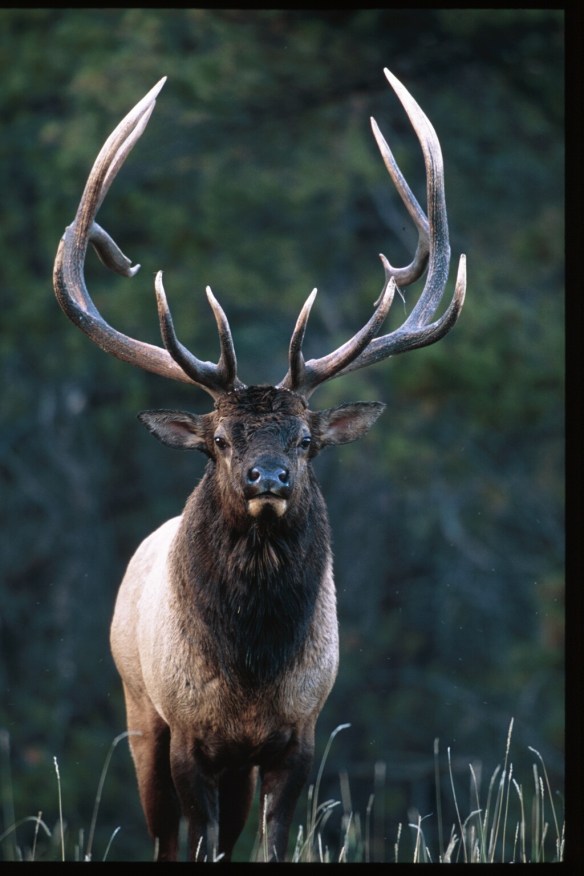
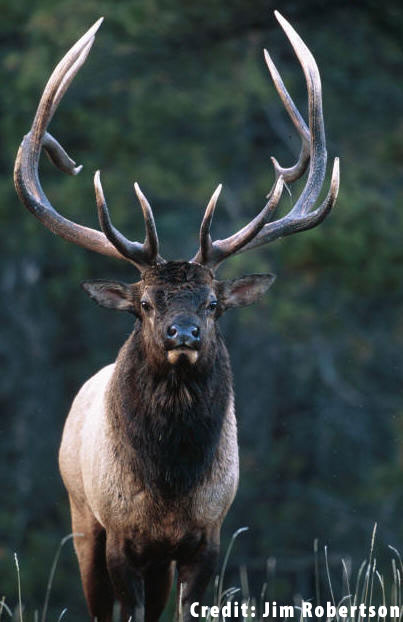
Text and Wildlife Photography ©Jim Robertson

 Alex Arias, 51, just after 9:30 a.m., after Arias shot an elk decoy several times near milepost 17.



 Exposing the Big Game