Exposing the Big Game

Forget Hunters' Feeble Rationalizations and Trust Your Gut Feelings: Making Sport of Killing Is Not Healthy Human Behavior

Exposing the Big Game

“The biggest environmental story that no one knows about”: The recovery of groundfish off the West Coast

https://www.cbsnews.com/news/the-biggest-environmental-story-that-no-one-knows-about-the-recovery-of-groundfish-off-the-west-coast/

Warrenton, Oregon —  A rare environmental success story is unfolding in waters off the U.S. West Coast.

The ban devastated fishermen, but on January 1, regulators will reopen an area roughly three times the size of Rhode Island off Oregon and California to groundfish bottom trawling — all with the approval of environmental groups that were once the industry’s biggest foes.
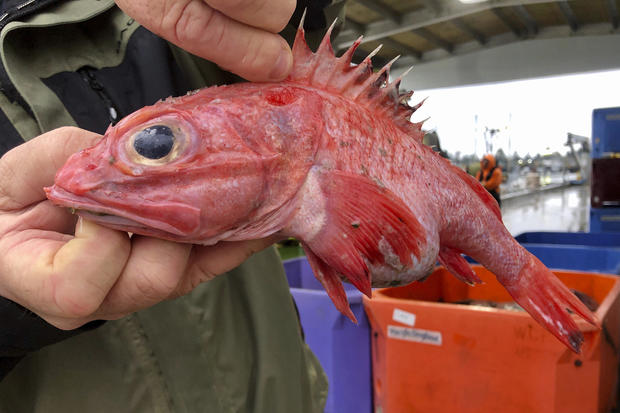
Rockfish Rebound
This December 2019 photo shows an aurora rockfish at a processing facility in Warrenton, Oregon. GILLIAN FLACCUS / AP

The rapid turnaround is made even more unique by the collaboration between the fishermen and environmentalists who spent years refining a long-term fishing plan that will continue to resuscitate the groundfish industry while permanently protecting thousands of square miles of reefs and coral beds that benefit the overfished species.

Now, the fishermen who see their livelihood returning must solve another piece of the puzzle: drumming up consumer demand for fish that haven’t been in grocery stores or on menus for a generation.

“It’s really a conservation home run,” said Shems Jud, regional director for the Environmental Defense Fund’s ocean program. “The recovery is decades ahead of schedule. It’s the biggest environmental story that no one knows about.”

The process also netted a win for conservationists concerned about the future of extreme deepwater habitats where bottom trawlers currently don’t go. A tract of ocean the size of New Mexico with waters up to 2.1 miles deep will be off-limits to bottom-trawling to protect deep-sea corals and sponges just now being discovered.

“Not all fishermen are rapers of the environment. When you hear the word ‘trawler,’ very often that’s associated with destruction of the sea and pillaging,” said Kevin Dunn, whose trawler Iron Lady was featured in a Whole Foods television commercial about sustainable fishing.

A unique history

Groundfish is a catch-all term that refers to dozens of species that live or on, or near, the bottom of the Pacific off the West Coast. Trawling vessels drag weighted nets to scoop up as many fish as possible, but that can also damage critical rocky underwater habitat.

The groundfish fishery hasn’t always struggled. Starting in 1976, the federal government subsidized the construction of domestic fishing vessels to lock down U.S. interests in West Coast waters, and by the 1980s, that investment paid off. Bottom trawling was booming, with 500 vessels in California, Oregon and Washington hauling in 200 million pounds of non-whiting groundfish a year. Unlike Dungeness crab and salmon, groundfish could be harvested year-round, providing an economic backbone for ports.

But in the late 1990s, scientists began to sound the alarm about dwindling fish stocks.
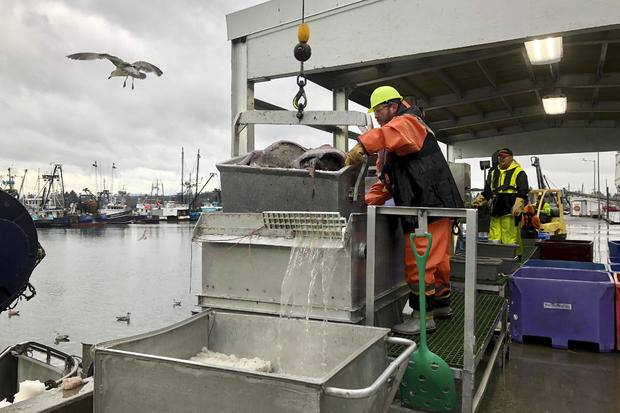
Rockfish Rebound
A worker prepares to dump a bucket of fish onto a conveyor belt for sorting after the fish were unloaded from a bottom trawler containing rockfish and other groundfish species in Warrenton, Oregon.GILLIAN FLACCUS / AP

Just nine of the more than 90 groundfish species were in trouble, but because of the way bottom trawlers fished – indiscriminately hauling up millions of pounds of whatever their nets encountered – regulators began focus on bottom trawling. Multiple species of rockfish, slow-growing creatures with spiny fins and colorful names like canary, darksplotched and yellow eye, were the hardest hit.

“We really wiped out the industry for a number of years,” Pettinger said. “To get those things up and going again is not easy.”

In 2011, trawlers were assigned quotas for how many of each species they could catch. If they went over, they had to buy quota from other fishermen in a system reminiscent of a carbon cap-and-trade model. Mandatory independent observers, paid by the trawlers, accompanied the vessels and hand-counted their haul.

Fishermen quickly learned to avoid areas heavy in off-limits species and began innovating to net fewer banned fish.

Collaboration pays off

Surveys soon showed groundfish rebounding – in some cases, 50 years faster than predicted – and accidental trawling of overfished species fell by 80%. The Marine Stewardship Council certified 13 species in the fishery as sustainable in 2014, and five more followed last year.

As the quota system’s success became apparent, environmentalists and trawlers began to talk. Regulators would soon revisit the trawling rules, and the two sides wanted a voice.

They met more than 30 times, slowly building trust as they crafted a proposal. Trawlers brought maps developed over generations, alerted environmentalists to reefs they didn’t know about, and even shared proprietary tow paths.

Last year, regulators approved a plan to reopen the 17-year-old Rockfish Conservation Area off Oregon and California, while banning future trawling in extreme-depth waters and making off-limits some habitat dubbed essential to fish reproduction, including a large area off Southern California.

“A fair number of fishermen thought it was a good deal and if it was going to happen, it was better for them to participate than not,” said Tom Libby, a fish processor who was instrumental in crafting the agreement. “It’s right up there with the best and most rewarding things in my career — and I’ve been at it 50 years.”

Some groups, like Oceana, wanted even more protections from bottom trawling, which it calls the “most damaging fishing method to seafloor habitats off the West Coast.” In a news release, the group emphasized that the agreement it did get safeguards 90 percent of the seafloor in U.S. waters off the West Coast.

Now, efforts to revive demand

Even so, with fragile species rebounding, trawlers could harvest as much as 120 million pounds a year, but there’s only demand for about half that much. That’s because groundfish have been replaced in stores by farmed, foreign species like tilapia.

A trade association called Positively Groundfish is trying to change that by touring food festivals and culinary trade shows, evangelizing to chefs and seafood buyers about the industry’s rebound and newfound sustainability. They give out samples, too.

“We are treating this almost like a new product for which you have to build awareness — but we do have a great story,” said Jana Hennig, the association’s executive director. “People are so surprised to hear that not everything is lost, that not everything is doom and gloom, but that it’s possible that you can manage a fishery so well that it actually bounces back to abundance.
Children’s Pool in La Jolla Closed for Pupping Season

Violators face misdemeanor charges that carry fines of up to $1,000.

Childrens-Pool-Pupping-Season-KNSD-2
NBC 7 San Diego

https://www.nbcsandiego.com/news/local/childrens-pool-in-la-jolla-closed-for-pupping-season/2231118/

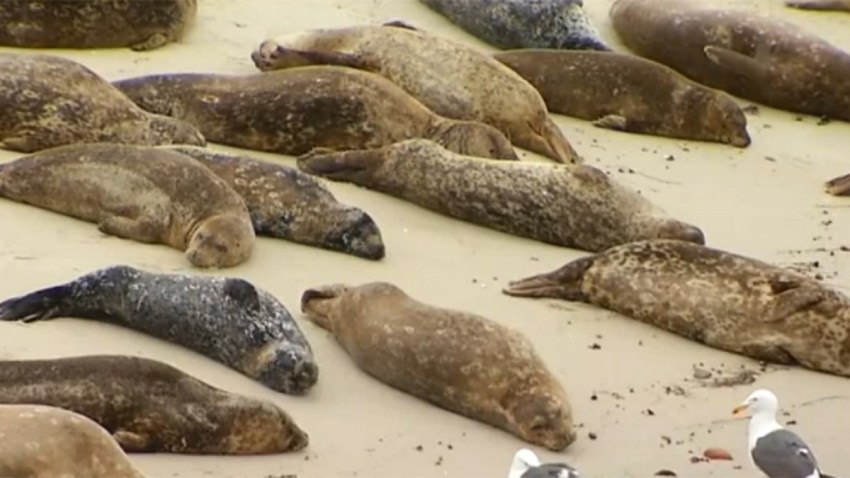
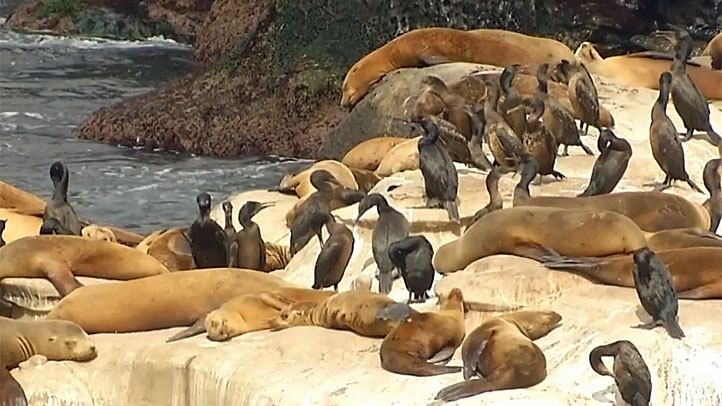
The annual closure of the Children’s Pool for harbor seal pupping season started on Sunday.

The beach area will remain closed through May 15, 2020.

Pupping Season Underway in La Jolla

NBC 7 San Diego

Children’s Pool in La Jolla now closed to the public for Pupping Season

The Children’s Pool was opened in 1932 after Ellen Browning Scripps paid for a seawall to built so that inexperienced swimmers can enjoy the beach. Seals started to use the relatively calm water of the beach to rear their pups in the 1990s.

The city started closing the beach in 2014 after environmentalists complained that people were disturbing the marine mammals. The California Coastal Commission issued a permit allowing the beach to close to protect the seals.

A group advocating for beach access called Friends of the Children’s Pool sued the city arguing that the closure violated the California Coastal Act and Marine Mammal Protection Act.

A lower court sided with the group but the issued was resolved in the city’s favor last year when an appeals court reversed the decision, allowing the city to close the beach for 5 1/2 months each year.

Shelter Animals Displaced By California’s Wildfires Are In Desperate Need Of Safe Homes

The state of California is currently on fire in several locations. As a result, residents are having to deal with blackouts and evacuations. The wildfires are a result of high winds – and they’ve already ravaged hundreds of acres of land, destroyed dozens of structures, and injured at least two firefighters. Of course, the human residents aren’t the state’s only affected victims. As reported by ABC 10, displaced cats and dogs rescued from the blaze are desperately in need of safety and homes.

Over the weekend, the Kincade Fire blazed through Sonoma County located in northern California. As a result, the local animal shelters had to evacuate. The Sacramento Society for the Prevention of Cruelty to Animals (SPCA) stepped in and took in the 20 dogs and 22 cats who were in need of shelter. Now, the SPCA is asking people to adopt pets.

“These animals were all in [the Humane Society of Sonoma County’s] care or already available for adoption prior to the fires, so there is no risk these animals were originally displaced by the fires,” the Sacramento SPCA posted to a Facebook post.

The pets looking for homes range in age, from little kittens to a 19-year-old cattle dog mix named Ace. The SPCA will be updating more information on their website about each animal, they’re just waiting for all of them to receive their medical check-ups. For now, you can visit the nonprofit’s adoption page and see what information is there.

Adopting vulnerable pets rescued from natural disasters is always one way of helping a community deal with the aftermath. However, the animals in California aren’t the only ones needing loving forever homes.

Also, please note that because of volume , we are unable to respond to individual comments, although we do watch them in order to learn what issues and questions are most common so that we can produce content that fulfills your needs. You are welcome to share your own dog tips and behavior solutions among yourselves, however Thank you for reading our articles and sharing your thoughts with the pack!

California to become the first state to ban the sale and manufacture of fur

Gov. Gavin Newsom also signed a bill barring most animals from circus performances.

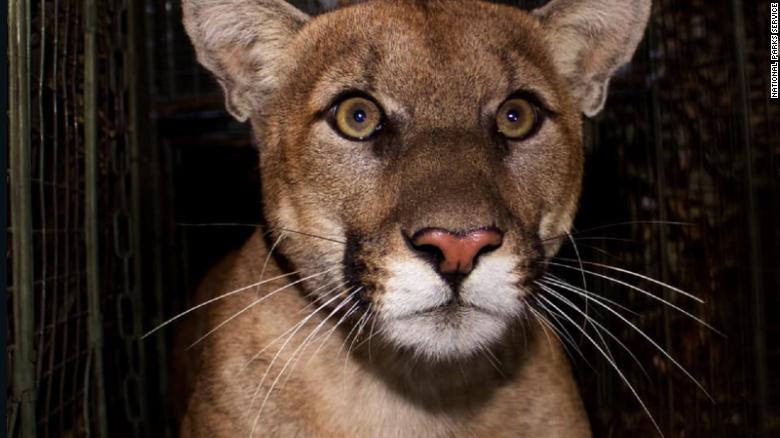
Mountain lion known for crossing 405 killed on the same Los Angeles freeway

The mountain lion, known as P-61 to researchers, was struck and killed on the 405 freeway.

(CNN)A mountain lion known for crossing the Los Angeles 405 freeway was struck and killed by a vehicle early Saturday morning, according to National Park Service (NPS) Ranger Ana Beatriz.

The mountain lion known as P-61 lived in the Santa Monica mountains near the Sepulveda Pass, Beatriz said in a statement. He wore a radio collar around his neck so researchers could track his movements.
The 405 freeway through the Sepulveda pass

The 4-year-old cat’s final GPS point showed him between Bel Air Crest Road and the Sepulveda Boulevard underpass.
City of Los Angeles Animal Control officer retrieved his body, the Santa Monica Mountains National Recreation Area said on Facebook.
It appears he was trying to cross the 405 freeway, Beatriz said.
Just months ago, he had successfully crossed that same freeway, the first time a GPS-collared mountain lion had done so over the course of the NPS’s 17-year study of mountain lions in and around the Santa Monica Mountains, Beatriz said.

More than 40 wild burros slaughtered in the Southern California desert; reward offered

Wild burros on a dry lake bed in the Silurian Valley in October 2014. Since May 2019, a total of 42 wild burro carcasses with gunshot wounds have been found along the Interstate 15 corridor between Halloran Springs, Calif., and Primm, Nev., in various states of decomposition.

Wild burros on a dry lake bed in the Silurian Valley in October 2014. Since May 2019, a total of 42 wild burro carcasses with gunshot wounds have been found along Interstate 15 near the California-Nevada state line.
(Gina Ferazzi / Los Angeles Times)

More than 40 wild burros have been found shot and killed along the Interstate 15 near the Nevada state line, Federal officials said on Friday, and they’ve offered a reward of up to $18,000 for information leading to the arrest and conviction of those responsible.

It is one of the largest killings of its kind on public land managed by the U.S. Bureau of Land Management in Southern California, officials said.

A total of 42 wild burro carcasses with gunshot wounds have been found in various states of decomposition near the freeway corridor through the Clark Mountain Herd Area managed by the Needles field office of the BLM.

“We will pursue every lead until we’ve arrested and prosecuted those responsible for these cruel, savage deaths,” said William Perry Pendley, the BLM’s Deputy Director for policy and programs, “and we welcome the public’s help to bring the perpetrator or perpetrators to justice.”

Details about the ongoing investigation were scarce. However, BLM officials said the burros, including several juveniles, were shot in the neck with a rifle.

Some were brought down while drinking water in the Halloran Springs area.

Animal protection organizations said they were outraged by the slaughter and have contributed thousands of dollars to the reward.

“It’s a travesty that these animals would be gunned down,” said Grace Kuhn, spokeswoman for the nonprofit American Wild Horse Campaign. “There’ve been isolated incidents before over the years, but nothing on this scale in memory.”

Neda DeMayo, president of the nonprofit Return to Freedom, said, “I’ve been told that at least one of the burros was still alive when it was discovered by a passerby. But it succumbed to its injuries by the time BLM investigators arrived on the scene.”

“It’s all so unbelievable,” she added. “Crazy. Hostile. Cruel.”

Burros are not native to the West’s deserts, but they became some its most valued resources: sure-footed in rugged terrain, capable of carrying heavy loads long distances, and withstanding extremes in temperatures of cold and heat.

In the 1920s and 30s, they were turned loose and replaced by Model-A Fords and other vehicles. Since then, they have multiplied without restraint with few predators to check their numbers.

With populations that doubled every four to five years, they’ve managed to survive by feeding on the sage and wild growth of the Mojave Desert.

By the 1950s, wanton slaughter of wild burros in California’s desert and mountains had reached such proportions that the Society for the Prevention of Cruelty to Animals pressed for legislation to protect the creatures from trigger-happy hunters.

One killing ground was Homewood Canyon, near Trona, about 240 miles northeast of Los Angeles, where the SPCA officials in 1953 reported a shocking scene: Over an area of 50 acres, they found 50 burro carcasses. Only a few had bullet holes in the head, indicating that most had been left wounded where they fell.

Today, the animals are protected from capture, branding, harassment or death under the Wild Free-Roaming Horses and Burros Act of 1971, which considers them an integral part of the natural system of public lands managed by the BLM.

Violations of the act are subject to a fine of up to $2,000, or imprisonment for up to one year, or both, for each count charged.

Anyone with information about this incident is asked to call the WeTip hotline at (800) 782-7463 or visit http://wetip.com.

Reward offered after 42 wild burros shot, killed in California desert

 – A reward of more than $50,000 is being offered, after dozens of protected wild burros have been found shot and killed in California’s Mojave Desert.

The Bureau of Land Management (BLM) said since May, 42 wild burro carcasses have been found along a 60 mile stretch of Interstate 15 from Halloran Springs, California to Primm, Nevada.

BLM officials said the donkeys had been shot in the neck. Some were killed near watering holes, where they were drinking.

“In many instances, the person or persons appear to be shooting at the burros from a distance,” said BLM spokeswoman Sarah Webster. “The weapon is believed to be a rifle.”

The burros being targeted are from the Clark Mountain Herd Area of the Mojave Desert, which before the shootings, had a population of about 120 burros, according to Webster, who added that these animals were and are in good health.

The BLM is offering a $10,000 reward for information leading to the arrest and conviction of the person or persons responsible for the deaths.

Others have come forward to contribute to the reward fund.

On Monday, the Humane Society said an anonymous donor from its burro protection initiative, the Platero Project, donated $32,500.

The American Wild Horse Campaign, Return to Freedom, and The Cloud Foundation have also joined in the efforts to stop the killings, offering $2,500, $5,000 and $1,000 respectively.

“We’re very glad the BLM is taking this sick crime seriously,” said The Cloud Foundation’s director, Ginger Kathrens. “The burros belong to the American people and are beloved symbols of our nation’s history and pioneer spirit. They deserve to be protected.”

Killing a protected burro is punishable by a $2,000 fine and a year in jail.

The animals are federally protected under the Wild Free-Roaming Horses and Burros Act of 1971. The law designates wild, free-roaming horses and burros as integral parts of the natural system of public lands and aims to protect the animals from capture, branding, harassment and death, according to the BLM.

“America’s public lands belong to all of us,” said Neda DeMayo, president of Return to Freedom, adding, “These cruel and hostile acts against federally protected animals strike at the heart of everyone working so hard for their protection and for humane, non-lethal solutions to management concerns.”

Anyone with information about the killings is urged to call the federal WeTip hotline at 800-782-7463 (800-78CRIME), or visit ​​​​the crime reporting website here.

Lawsuit Targets Trump Wildlife-killing Program in 10 California Counties

FOR IMMEDIATE RELEASE – August 27, 2019


Wildlife Groups Seek Environmental Review of Program That Kills Thousands of Animals in California 

SAN FRANCISCO, Calif.— The Center for Biological Diversity, Animal Legal Defense Fund and Project Coyote today sued the U.S. Department of Agriculture’s Wildlife Services program over its outdated wildlife-killing plan for 10 counties in Northern California.

The lawsuit, filed in San Francisco federal court, seeks an updated environmental analysis of the program, which kills thousands of the state’s native animals. The program targets carnivores like coyotes and foxes that are important for balanced ecosystems.

“Wildlife Services’ cruel killing practices are ineffective, inhumane and totally out of touch with science,” said Collette Adkins, a Center for Biological Diversity attorney representing the conservation groups involved in the lawsuit. “Nonlethal methods of addressing wildlife conflicts are proven to work. We’re suing the agency to force a closer look at alternatives to its damaging mass-extermination program.”

Today’s lawsuit targets Wildlife Services’ Sacramento District program. The district includes Colusa, El Dorado, Lake, Marin, Napa, Placer, Sacramento, Solano, Sonoma and Yolo counties.

Wildlife Services is a multimillion-dollar federal program that uses painful leghold traps, strangulation snares, poisons, aerial gunning, killing pups in their dens and other inhumane practices to kill wild animals including wolves, coyotes, bears, cougars and birds. Most of the killing is done in response to requests from the agriculture industry.

In 2018 Wildlife Services reported killing nearly 1.5 million native animals nationwide. That year in California, the program reported killing 26,441 native animals, including 3,826 coyotes, 859 beavers, 170 foxes, 83 mountain lions and 105 black bears. The 5,675 birds killed in 2018 in California included ducks, egrets, hawks, owls and doves.

Pets and protected wildlife like gray wolves, San Joaquin kit foxes, California condors and eagles are also at risk of being killed accidentally due to the program’s indiscriminate methods.

“Wild animals in California are entitled to legal protection from cruel, indiscriminate killing methods that fail to meaningfully reduce conflicts between wild and domestic animals,” said Stephen Wells, executive director for the Animal Legal Defense Fund. “Wildlife Services must update its practices to reflect current science that supports non-lethal approaches to minimizing conflicts.”

“For far too long Wildlife Services has been running roughshod over our nation’s wildlife with almost no accountability and with very little transparency,” said Camilla Fox, founder and executive director of Project Coyote. “It’s time for a full accounting of this agency’s impact on the environment and on target and non-target animals. Slaughtering thousands of wild animals at the behest of ranchers when there are more effective and humane methods of protecting livestock is irresponsible and reprehensible.”

The National Environmental Policy Act requires Wildlife Services to rigorously examine the environmental effects of killing wildlife and to consider alternatives, such as those that rely on proven nonlethal methods to avoid wildlife conflicts.

The Sacramento District’s existing environmental analysis is more than 20 years old. The complaint filed today says Wildlife Services must use recent information to analyze its impacts on the environment and California’s unique wild places.

Background

In response to a 2017 lawsuit filed by wildlife advocacy groups, Wildlife Services agreed to implement numerous protections for wildlife in its North District, including a ban on traps and aerial gunning in designated wilderness areas.

That successful lawsuit covered Butte, Del Norte, Glenn, Humboldt, Lassen, Mendocino, Modoc, Nevada, Plumas, Shasta, Sierra, Siskiyou, Sutter, Tehama, Trinity and Yuba counties.

Last year Siskiyou County agreed to reexamine its contract with Wildlife Services amid pressure from the animal-protection and conservation coalition, while Shasta County cancelled its contract with Wildlife Services. In 2017 a California court ruled in favor of the coalition, finding that Monterey County must conduct an environmental review before renewing its contract with Wildlife Services. In 2000 Marin County severed its contract with Wildlife Services after public outcry over the use of deadly poisons.

Read the complaint here.


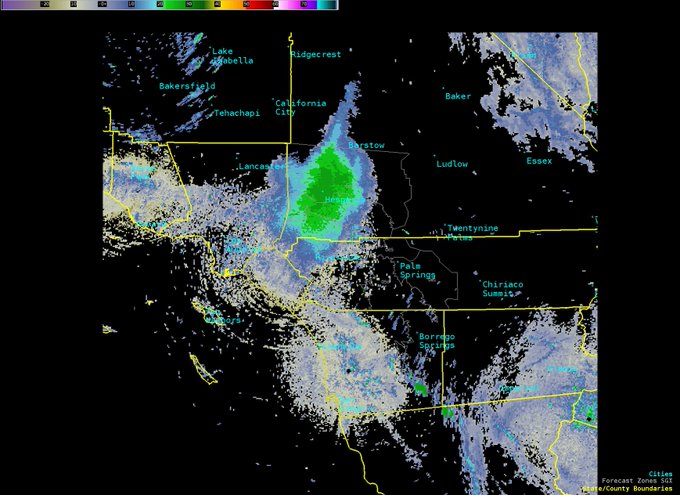
Swarm of ladybugs so large it registers on National Weather Service radar in California

A swarm of ladybugs moving through San Diego County was so large it registered on the National Weather Service’s (NWS) weather radar Tuesday night, CBS Los Angeles reports. The NWS office in San Diego tweeted out a video of the radar that looked to be showing precipitation but was in fact what they called a ladybug “bloom.”

Embedded video

NWS San Diego

@NWSSanDiego

The large echo showing up on SoCal radar this evening is not precipitation, but actually a cloud of lady bugs termed a “bloom”

1,163 people are talking about this

NWS Meteorologist Miguel Miller told local news radio station KNX-AM the 80-mile-long and 80-mile-wide blob was heading toward San Diego County from the San Gabriel Mountains.

Newport Beach enlists plastic coyotes to scare off sea lions

Finding a reliable and cost-effective way to humanely repel sea lions isn’t easy. Never mind if the solutions are ridiculous looking, which they sometimes are. As long as it works and keeps working, that’s what matters.

Take for example, the ongoing sea lion-deterring efforts of Astoria, Oregon. In 2015, a desperate ploy to scare away an unruly colony of sea lions with a parade float-turned-boat painted like an orca literally went belly up in front of the impervious marine mammals. (They were obviously not amused by the high jinks.) A year later, officials enlisted a quartet of wacky waving inflatable arm-flailing tube men to frighten the pinnipeds away. Although only a temporary fix, it seemed to do the trick.

Dennis Durgan, the harbormaster of Newport Beach, California, opted not to go the Astoria route and instead look locally for inspiration. As city spokeswoman Mary Locey tells the Orange County Register, Durgan’s idea came straight from the Newport Harbor Yacht Club.

The brilliant, absurd and apparently effective solution?

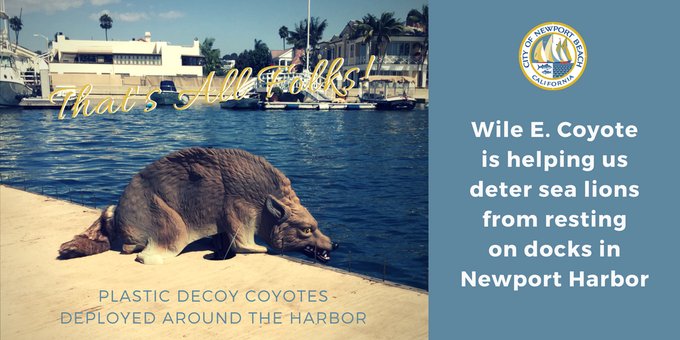
Forty dollar plastic coyotes.

While unclear how often coyotes and sea lions actually encounter each other in the wild (uh, never?), the fearsome-looking decoys — available at a Walmart near you — proved successful at warding off sea lions at the yacht club. And so far, they’ve done a decent job on the public docks in Newport Beach’s scenic, semi-artificial harbor, too.

CityofNewportBeach

@newportbeachgov

Wile E. Coyote has been put to work around Newport Harbor to deter sea lions from hauling out on boats and docks to prevent property damage and late night noisy parties.

See CityofNewportBeach’s other Tweets

“We’re getting less complaints with the coyotes but we’re still getting plenty to make it a number one priority,” Newport Harbor dockmaster Ryan Sandford tells the Register. “This is probably the most affordable way to take care of this issue.

A meeting not common in nature

Newport Beach has long struggled with managing marauding sea lions that no doubt descend on the protected harbor because of its enviable real estate: spacious, well-maintained docks and hundreds of large yachts and expensive pleasure craft, all with glistening white bows perfect for basking under the bright Southern California sun. It’s all rather deluxe.

But when sea lions manage to waddle up swim stairs and make their way onto the boats, they can cause significant damage. If enough of the blubbery interlopers decide to congregate aboard a single boat, they can sink it. And while fun to look at and photograph, these highly intelligent beasts can be rowdy, surly and aggressive toward humans. They love being the life of the party, but when you ask them to leave, they trash the place and then chase you away.

Sea lions lounging on a yacht in Newport Beach, CADon’t mind if we do: Sea lions lounge in sunny Newport Beach, California (Photo: Tracie Hall/flickr)

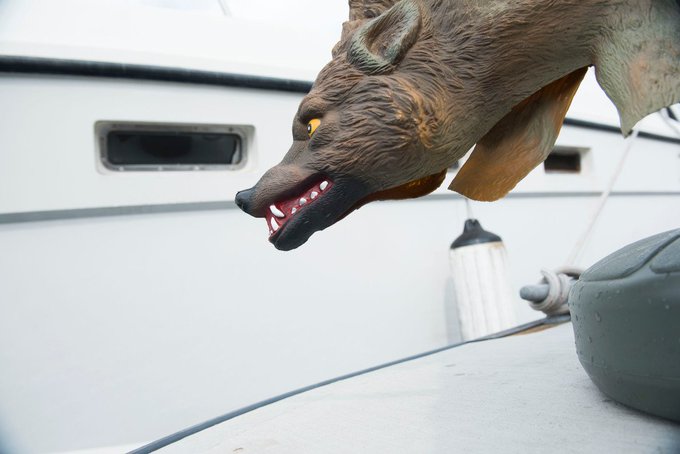
And so, the city is banking on a band of eight ersatz coyotes to help prevent further property damage. Normally, coyote decoys are used to spook Canadian geese (the clever and highly adaptable wild canines are a natural predator) as well as small animals like rabbits and skunks. The natural habitat of faux coyote tends to be golf courses, not upscale marinas. This particularly versatile model, with its comically giant yellow eyes and exposed fangs, is crouched in a ready-to-pounce stance. For added realism, it swivels and “wags furry tail with breeze.”

In order to better track the city’s newest unpaid employees, each coyote has been given a name. There’s Wile E., of course. As for the rest of them, the city decided to stick with the Loony Toons theme: Bugs, Taz, Elmer, Sylvester, Babs, Marvin and Yosemite round out the pack.

The Los Angeles Times notes that these unusual maritime scarecrows have been installed at “known sea lion magnets” around the harbor. One would hope that boat owners near these hotspots have been alerted to the presence of the somewhat startling decoys. Southern Californians may be used to interacting with normally shy coyotes, most are decidedly not used to encountering a creature that looks like the cartoon version of a rapid dog on a marina dock.

O.C. Register

@ocregister

Teeth-baring plastic coyotes are Newport Beach’s latest sea lion scare tactic http://dlvr.it/Pwc3ry 

See O.C. Register’s other Tweets

While Newport Beach officials are glad to lend assistance and protect property while maintaining public safety, individual boat owners are also required by the city to employ their own humane anti-sea lion techniques. It’s written right into the city’s municipal code. Popular approved methods include blocking swim stairs, installing snow fencing and setting out motion-activated sprinklers, which startle the resting animals and usually prompt them to hop back in the water.

It’s unclear how long the eight coyotes will be on the job even though the early results are positive. After a while, they’ll no doubt become less fearsome, more familiar. Their deterrent power will fade. “You have to constantly be creative with coming up with ideas,” Locey tells the Register. “The chances of them probably becoming used to these and realizing that they’re fake and not real is probably pretty high.”

If this does ever happen, it might be worth Newport Beach’s time looking into other decoys of predators that sea lions would never interact with in the wild. (After all, the Astoria killer whale ruse was a dud.) Perhaps a stern-looking owl might also prove successful.