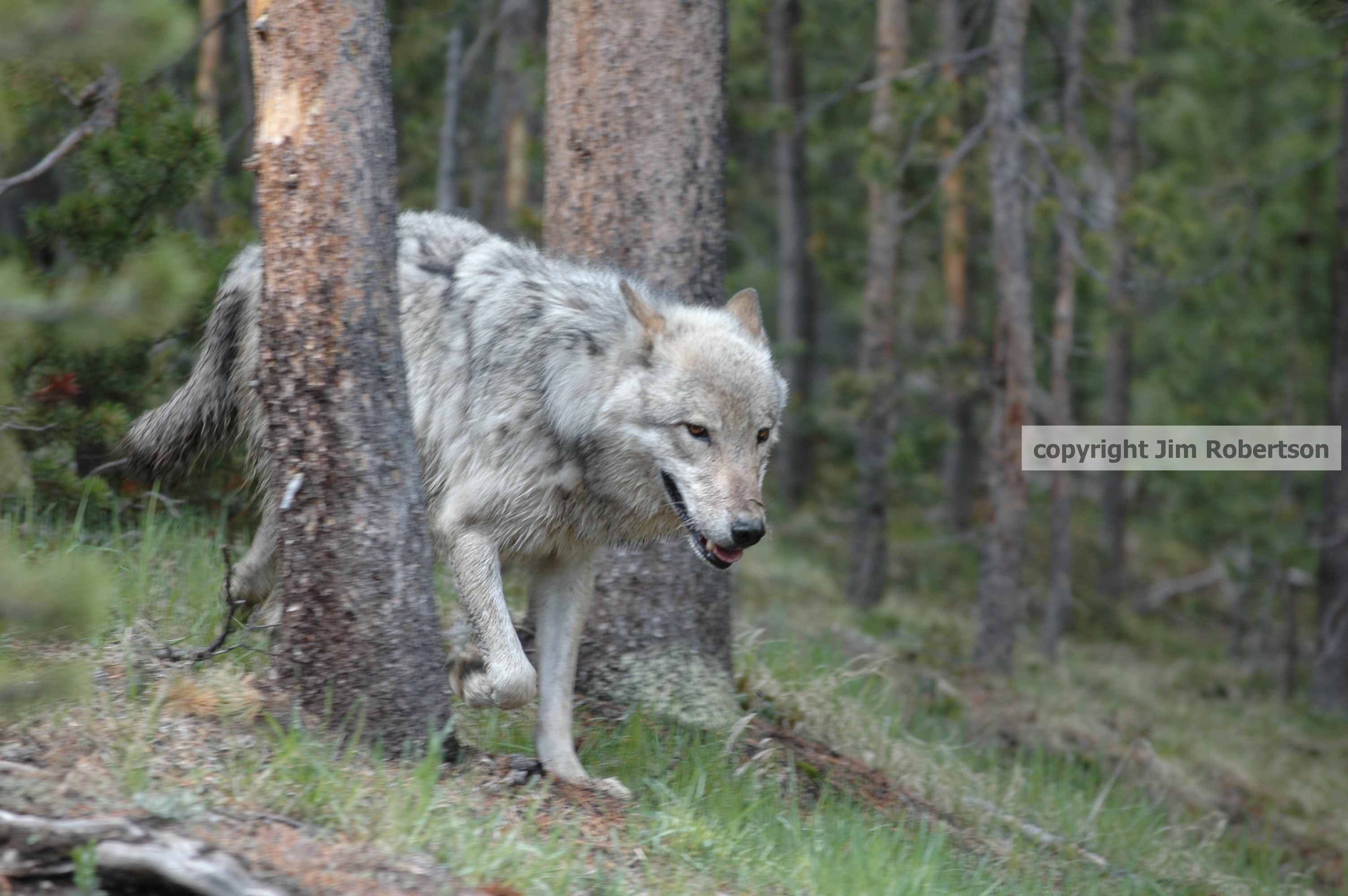
Meanwhile in CA, Gray wolf doesn’t warrant endangered status, official says

http://www.sfgate.com/bayarea/article/Gray-wolf-doesn-t-warrant-endangered-status-5208673.php

by Melody Gutierrez Wednesday, February 5, 2014copyrighted wolf in water

Sacramento —

The gray wolf should not be listed as an endangered species in California, according to staff at the state Department of Fish and Wildlife, much to the chagrin of wildlife conservation advocates who petitioned for the designation.

Following a yearlong review, the department’s director, Chuck Bonham, told the California Fish and Game Commission on Wednesday that there is scientific evidence to support some protections for the gray wolf, but not for listing the animal on the endangered species list. The commission will consider his recommendation and may act on it this spring.

“Look, this decision has been weighing on me for weeks,” Bonham said. “It’s possible I may lose friends over this, which is why I ask everyone to read the documents before passing judgment.”

The recommendation was in response to a petition filed by conservationists in 2012 seeking protections for the species after a gray wolf from Oregon, known as OR-7, entered California. It was the first wild gray wolf in the state in almost 90 years. The wolf has since gone back to Oregon but has made some short excursions to the Golden State.

Bonham said his department’s recommendation is to designate the gray wolf as a species of special concern, prohibit the killing of OR-7 or other gray wolves and consider recommendations for placing the gray wolf on the state’s endangered species list at a later date.

Bonham said the recommendation documents will be posted on the department’s website by Thursday. Bonham’s announcement comes as the U.S. Fish and Wildlife Service proposed removing the gray wolf from the federal list of threatened and endangered species.

Nearly all of the public comments at Wednesday’s meeting in Sacramento on the gray wolf petition favored listing the animal as endangered.

“Wolves deserve a chance to recover in California, so it’s disappointing to see the Department of Fish and Wildlife’s recommendation against protections,” said Amaroq Weiss, West Coast wolf organizer at the Center for Biological Diversity, one of the groups that petitioned the state to have the gray wolf listed as an endangered.

In other developments at the Fish and Game Commission meeting, commissioners agreed to take up a possible ban on killing contests, a response to a controversial annual coyote killing contest held in Modoc County.

The annual event, scheduled for this weekend, triggered outrage last year after Project Coyote and several other conservation groups started a statewide campaign to stop the killings.

Camilla Fox, executive director of Project Coyote, said wildlife killing contests are more common than the public realizes. Organizers of the event have attempted to hide the contest from public view due to criticism and media attention.

One supporter of the event, Perry St. John, said the coyote hunt is held this time of year to help reduce the coyote population before spring calf births.

“It’s not killing for fun,” St. John told the commission during public comments. “It’s a chance for people to come together.”

State May Ban Hunting Contests For Coyotes And Other Wildlife

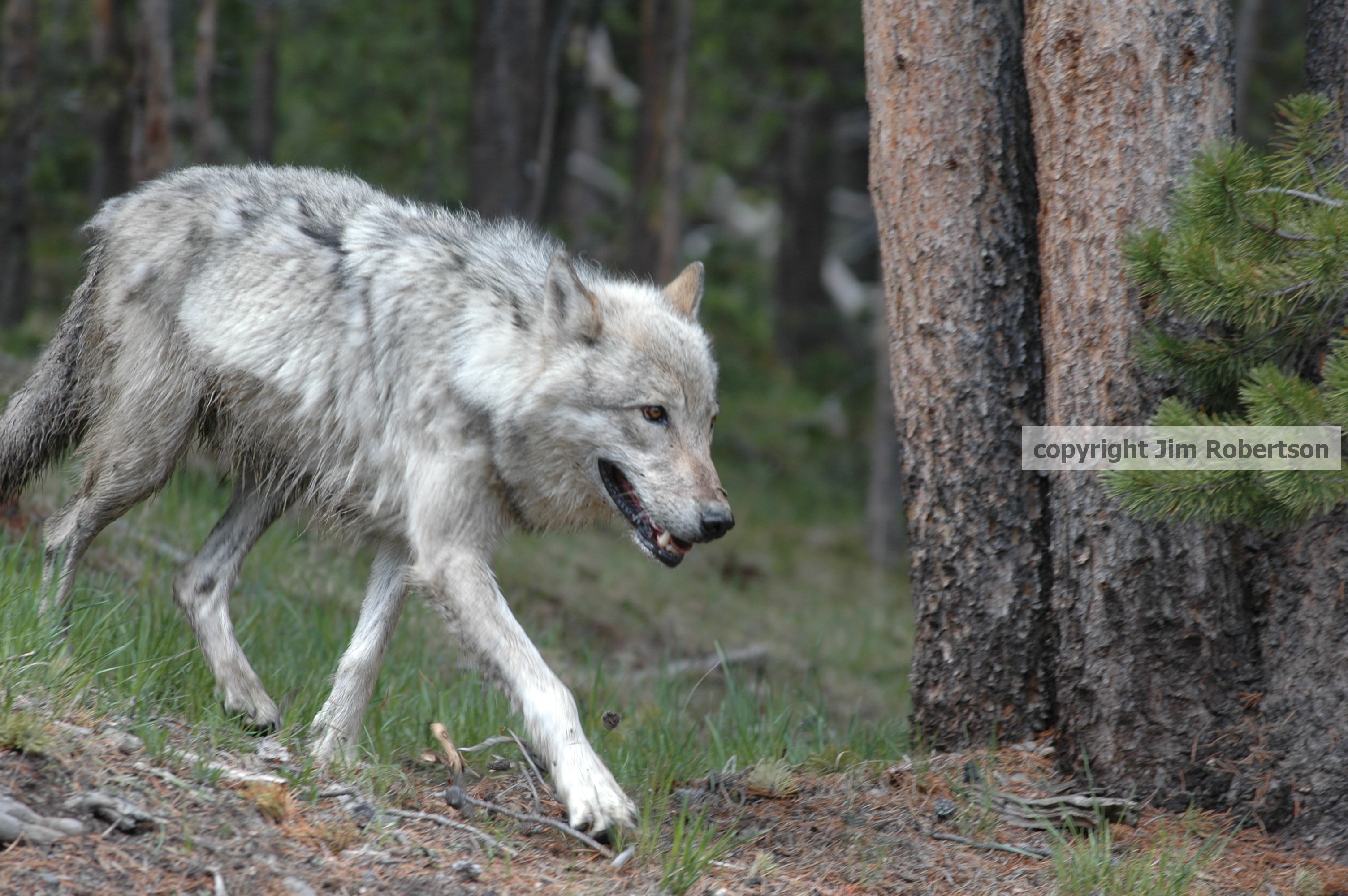
Jim Robertson-wolf-copyright

http://www.kcet.org/news/redefine/rewild/hunting/state-may-ban-hunting-contests-for-coyotes-and-other-wildlife.html

by Chris Clarke on February 5, 2014

California’s Fish and Game Commission voted unanimously Wednesday to consider a ban on hunting contests such as this weekend’s secretive coyote drive in Modoc County, with one Commissioner suggesting such contests are unethical.

The 4-0 vote launches a formal rule-making process, during which public comment will be solicited as the Commission considers a ban on such contests in California.

“This is obviously not about sport or fair-chase,” said Camilla Fox, whose wildlife group Project Coyote proposed the ban to the Commission on Wednesday. “Wildlife killing contests are conducted for profit, entertainment, prizes and, simply, for the ‘fun’ of killing. No evidence exists showing that such indiscriminate killing contests control problem animals or serve any beneficial management function.”

Fish and Game Commission President Michael Sutton spoke in favor of the motion before the vote. “I’ve been concerned about these killing contests for some time,” said Sutton. They seem inconsistent both with ethical standards of hunting and our current understanding of the important role predators play in ecosystems.”

Though the focus of the discussion was on coyotes, given the looming Modoc County contest, a broad ban on wildlife hunting contests would conceivably bar events where other species are the targets as well.

Advocates contend that contests such as Modoc County’s or the others we described last month are important to keep predator populations under control.

But research into the dynamics of coyote reproduction and lifestyles over the last several decades undermines such claims. Though there will likely always be a role for direct culls in management of problem coyotes, the science indicates that more indiscriminate hunting serves only to disrupt coyote family groups in which only the “alpha” adults breed. Killing one or both of the alphas in a mid-sized family group may mean two or three times as many pairs of coyotes will be actively breeding shortly thereafter.

“Killing random predators is about as effective at protecting livestock as bailing harder is at saving a sinking boat,” said Sonoma County rancher Keli Hendricks, who testified in support of a ban before the Commission. “It might help for a short time, but the only real solution is to fix the hole in the boat. The way to fix that hole is to implement one or more of the many non-lethal livestock protection methods available to ranchers today.”

The possibility of banning wildlife hunting contests will now be placed on the agenda for a Fish and Game Commission meeting, at which public comment will be solicited. That won’t happen before Modoc County’s coyote drive this weekend, but it will almost certainly happen before next year’s.

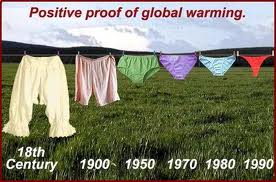
In Case You Haven’t Noticed Yet, Global Warming Is Real

If you’re one of the lucky few who live somewhere as yet relatively unaffected by climateunderwear change, or you spend all your time indoors listening to Rush Limbaugh and watching Donald Trump on Fox News, I’m here to tell you, global warming is real.

It may be hard to accept that the Earth’s overall temperature is rapidly warming up if your state has just experienced a polar vortex, but if you live in California or the Pacific Northwest you know all too well the drastic effect climate change is having on winter weather—especially if you’re a skier like me.

As an avid powder skier I’ve been closely following the snow reports for the mountains in the western United States and I’m seeing a depressing trend toward shallower snow packs and away from our normal winter wonderland.

Why is this happening? As the San Jose Mercury News reported it, “Meteorologists have fixed their attention on the scientific phenomenon they say is to blame for the emerging drought: a vast zone of high pressure in the atmosphere off the West Coast, nearly four miles high and 2,000 miles long, so stubborn that one researcher [Swain] has dubbed it the ‘Ridiculously Resilient Ridge.’ Like a brick wall, the mass of high pressure air has been blocking Pacific winter storms from coming ashore in California, deflecting them up into Alaska and British Columbia, even delivering rain and cold weather to the East Coast.” Much to the dismay of skiers, this stubborn high pressure ridge is pushing the jet stream, and our winter moisture, along a much more northerly track.

Ok, but what does this, and the lack of winter storms (for us here in the West) have to do with global warming? In an article in ThinkProgress.org, “Leading Scientists Explain How Climate Change Is Worsening California’s Epic Drought,” we learn that “Beyond the expansion and drying of the subtropics predicted by climate models, some climatologists have found in their research evidence that the stunning decline in Arctic sea ice would also drive western drought — by shifting storm tracks…Scientists say this anomaly looks very much like what the models predicted as sea ice declined. The storm track response also looks very similar with correspondingly similar impacts on precipitation (reduced rainfall in CA, increased precipitation in SE Alaska).”

In addition to California’s record-breaking drought and water rationing, you probably heard on the national news about their destructive January brush fires. But even more shocking than those unseasonable fires are a recent pair of 300 acre wildfires on the normally soggy North Oregon Coast, which burned nearly to the beach. January fires in the Pacific Northwest rain forest are almost unheard of, as anyone who has tried to light a campfire in winter there will attest. In an article about the forest fires, The Daily Astorian (North Oregon Coast ’s local paper) reported that the National Weather Service in Portland issued a “red flag” warning in response to conditions (strong dry east winds and humidity as low as 25%) that can contribute to wildfires burning out of control. Instead of the 25% humidity, coastal Oregon humidity on a winter’s day should be more like 125%.

Whether you choose to “believe in” global warming or not, I urge any of you enjoying this mild, dry winter weather to please think snow!

DSC_0098

Rodeo man killed in hunting accident in Mendocino National Forest

[Any resemblance the victim might have had to a wild pig was purely coincidental, yet that’s exactly what he was mistaken for by another hunter who shot him from 70 yards away]…

Friday, 18 October 2013 23:56 Lake County News reports524958_3325028303604_654533903_n

NORTH COAST, Calif. – A Rodeo man died on Thursday when he was shot while hunting in the Mendocino National Forest.

Edgardo A. Godoy, 52, was hunting near Covelo when another hunter shot and mortally wounded him, according to a report from the Mendocino County Sheriff’s Office.

At around 3:30 p.m. Thursday the Mendocino County Sheriff’s Office was dispatched to mile post marker 11.2 on Road M1, located in the Mendocino National Forest, near Covelo, regarding the hunting accident, officials said.

Upon arrival sheriff’s personnel learned from a witness that a member of a hunting party saw a wild pig approximately 70 yards uphill and across a ravine from his location. Not seeing Godoy, the hunter shot at the pig.

When the hunter went to the area where he last saw the wild pig, he located Godoy, who had suffered a single gunshot wound, officials said.

The witness – whose name is being withheld as the investigation is continuing – immediately rendered aid to Godoy and called for help on his handheld radio. Other hunters quickly arrived at which time they assisted in rendering first aid as well, according to the report.

Godoy was moved to the M1 Road where first aid was continued until medical personnel from Cal Fire US Forest Service arrived. Sheriff’s officials said medical personnel from Cal Fire and the US Forest Service rendered aid to Godoy for at least 10 minutes, at which time a medical team from CalStar landed to assist.

When the medical flight team arrived, Godoy was pronounced dead, the sheriff’s office reported.

Upon further investigation it was determined that Godoy received a single gunshot wound to the lower abdomen, officials said.

The agency said the names of the witnesses and other involved parties to this incident are currently being withheld as the investigation into the shooting continues.

Poll Shows Strong Support for Wolf Recovery in Pacific Northwest

More than two-thirds in OR, WA, CA favor continued protections for wolves

19 Sep 2013 10:05

SACRAMENTO, Calif.–(ENEWSPF)–September 19, 2013. Most residents of California, Oregon and Washington believe wolves should continue to be protected under the Endangered Species Act, according to a new poll released by Defenders of Wildlife. The poll comes as the U.S. Fish and Wildlife Service takes public comment on its proposal to strip federal protections for gray wolves across most of the lower 48. This includes northern California and the western halves of Oregon and Washington, where there is still excellent, unoccupied wolf habitat.

The poll, conducted in early September for Defenders by Tulchin Research, shows that most Californians, Oregonians and Washingtonians want wolf recovery efforts to continue:

More than two-thirds in each state agree that wolves are a vital part of the America’s wilderness and natural heritage and should be protected in their state (OR – 68%; WA – 75%; CA – 83%)

More than two-thirds in each state agree that wolves play an important role in maintaining deer and elk populations, bringing a healthier balance to ecosystems (OR – 69%; WA – 74%; CA – 73%)

At least two-thirds in each state support restoring wolves to suitable habitat in their states (OR – 66%; WA – 71%; CA – 69%)

Large majorities in each state agree that wolves should continue to be protected under the Endangered Species Act until they are fully recovered (OR – 63%; WA – 72%; CA – 80%)

The following is a statement from Suzanne Stone, Northern Rockies representative for Defenders of Wildlife:

“These poll results confirm what we already know – that most people in the Pacific Northwest want to see wolves fully recovered. Over the years, I’ve met countless wolf supporters in the region who are excited for these iconic animals to return to wilderness areas in their states. They understand the essential ecological role that wolves play in maintaining nature’s healthy balance, and they think the species ought to be protected.

“With only about 100 wolves split between Oregon and Washington and none in California, we’re still a long ways from fully restoring wolves to the Pacific Northwest. It’s disappointing to see the U.S. Fish and Wildlife Service giving up prematurely when so much great wolf habitat remains unoccupied in the region. Only the Endangered Species Act can provide safe passage for wolves between neighboring states by ensuring there are adequate protective measures in place to allow for dispersal into more suitable habitat.

“Our primary hope now is that the U.S. Fish and Wildlife Service will listen to the millions of wolf supporters in California, Oregon and Washington who want to see wolves fully recovered in their states. Sadly, the administration has been turning a deaf ear so far to the many voices asking it to abandon the Service’s short-sighted and premature delisting proposal instead of abandoning America’s wolves.”

Background:
The U.S. Fish and Wildlife Service will host public hearings on its delisting proposal in Washington, D.C. on Sept. 30 and in Sacramento, Calif. on Oct. 2. Written comments can be submitted until Oct. 28. Details here.

Links: http://www.enewspf.com/latest-news/science/science-a-environmental/46347-poll-shows-strong-support-for-wolf-recovery-in-pacific-northwest.html

Read Defenders’ response to FWS’ announcement about the public hearings

Learn more about the national gray wolf delisting proposal

Read the latest wolf news on Defenders blog

Defenders of Wildlife is dedicated to the protection of all native animals and plants in their natural communities. With more than 1 million members and activists, Defenders of Wildlife is a leading advocate for innovative solutions to safeguard our wildlife heritage for generations to come. For more information, visit http://www.defenders.org/newsroomand follow us on Twitter @DefendersNews.

Source: defenders.org

copyrighted wolf in water

Hunter Started 237,000 Acre Yosemite Fire

Firefighters Gain Ground on Rim Fire as Cause is Discovered

By Jillian MacMath, AccuWeather.com Staff Writer
September 06, 2013; 9:42 AM

Thick smoke from the Rim Fire blaze has begun drifting into the Yosemite Valley, a popular scenic destination for visitors to the Yosemite National Park.

Nearly 4,000 firefighters continue to battle the massive blaze that has consumed more than 237,000 acres since its start on Aug. 17.

On Thursday, the Incident Information System confirmed in a news release that the fire began on Aug. 17 after a hunter allowed an illegal fire to escape.

[Hunters are responsible for dozens of forest fires each year, contrary to the claim that they’re the “best environmentalists.”]

Investigators from the U.S. Forest Service Law Enforcement and the Tuolumne County District Attorney’s Office are withholding the hunter’s name pending further investigation.

No arrests have been made at this time. Additionally, there have been no indications that the hunter was involved with any illegal marijuana cultivation.

The fire, now 80 percent contained, has resulted in poor air quality for many surrounding areas.

“Visitors to Yosemite should expect periods of smoky conditions, depending on winds and fire behavior,” the National Park’s Air Quality and Smoke Monitoring page read on Wednesday.

A webcam in Yosemite National Park captures a shot of smoke from the Rim Fire in the distance on Aug. 29.

On Tuesday, the fire grew a total of 1,700 acres as southwest transport winds pushed smoke into communities northeast of the fire, including Pinecrest, Bear Valley, Markleeville, Minden, Carson City and the Lake Tahoe Basin.

Sea otter return boosts ailing seagrass in California

[Proof that nature can take care of her own, if only we’d step aside and let her…]

Sea otter return boosts ailing seagrass in California

By Suzi Gage BBC News

sea otter ecology A sea otter enjoys a crab in California, and helps seagrass in the process.

The return of sea otters to an estuary on the central Californian coast has significantly improved the health of seagrass, new research has found.

Seagrass was deemed to be heading for extinction in this region before the otters returned.

But scientists found that the animals triggered a chain reaction of events that boosted the water-dwelling plants.

The research is published in the journal, PNAS.

The urbanisation of California has led to a huge increase in nutrient pollution in coastal waters, from increasing use of nitrogen-rich fertilizers.

Continue reading the main story

“Start Quote

It’s almost like these sea otters are fighting the effects of poor water quality”

End Quote Brent Hughes University of California

This is said to be the reason for the dieback of seagrass, which has also been declining worldwide.

This research suggests that the hunting to near-extinction of sea otters in the late 19th and early 20th Century may have exacerbated the problem, and conversely that their reintroduction is helping revive ailing seagrass populations, even in the face of hugely nutrient-rich water.

Links in the chain

The researchers assessed seagrass levels over the past 50 years in the Elkhorn Slough in Monterey Bay, and mapped their increases and declines.

They looked at a variety of changes that may have affected the grass, but the only factor that really matched the changes in seagrass was sea otter numbers.

They theorised that sea otters were eating the crabs which prey upon small invertebrates in the water.

These invertebrates eat a type of algae which blooms when there are more nutrients in the soil. It grows on the leaves of the seagrass, shading them from sunlight and causing them to die back.

This is quite a complex cascade of effects, so the researchers tested out their theory by comparing similar estuaries with and without sea otters, and by doing experiments in the lab, and in the field.

These experiments, which included putting cages that sea otters either could or couldn’t access, down on the seagrass, confirmed their hypothesis.

otters Sea otters have been responsible for improving the health of the seagrass in these estuaries.
Brent Hughes, lead author of the study, said: “This estuary is part of one of the most polluted systems in the entire world, but you can still get this healthy thriving habitat, and it’s all because of the sea otters.

“So it’s almost like these sea otters are fighting the effects of poor water quality.”

Hughes described seagrass as “the canary in the coalmine” in terms of predicting levels of nutrient pollution in the water.

Foundation species

It also acts as a nursery habitat for many species of fish and it uses CO2 from sea water and the atmosphere, thus potentially helping with climate change.

Not only that, but it acts as protection to the stability of the shoreline.

Hughes said: “It’s what we call a foundation species, like kelp forest, salt marsh or coral reef. The major problem from a global perspective is that seagrass is declining worldwide. And one of the major drivers of this decline has been nutrient inputs from anthropogenic sources, via agriculture or urban runoff.”

These findings are of particular interest at the moment, as a ban on sea otters moving along the coast to southern California was lifted last year. The ban was in place as there was a fear the sea otters would impinge on fisheries in the area.

Hughes told BBC news: “That’s important because there’s a lot of these kind of degraded estuaries in southern California because of all the urban runoff from places like Los Angeles and San Diego.

“Coastal managers will now have a better sense of what’s going to happen when sea otters move in to their systems.

“There’s a huge potential benefit to sea otters returning to these estuaries, and in to these seagrass beds that might be threatened.”

Lone Wolf OR7

copyrighted Hayden wolf walking

http://www.orionmagazine.org/index.php/articles/article/7690

Lone Wolf

A forsaken predator reappears

By Joe Donnelly

Published in the September/October 2013 issue of Orion magazine

Here’s an excerpt from the article…

Except for a few stubborn holdouts, the era of man seems just about done in Plumas County. It’s an eerie, forgotten landscape, and there’s a certain poetic justice in OR7’s arrival. Bounty hunters killed OR7’s last remaining California cousin near here in 1924, back when wolves were considered to be an enemy of manifest destiny. OR7, though, doesn’t seem to have revenge in mind. He has yet to take sheep or cow from the descendants of those who shot, trapped, poisoned, and burned his kind to extinction in the West.

But this hasn’t stopped some locals from greeting his arrival as if the devil himself were paying a visit. As soon as his epic trek signaled a wolf with Golden State aspirations, the hysteria began. To calm local fears of pending doom, the California Department of Fish and Wildlife conducted public meetings featuring wildlife officials, celebrity wolf experts, government resources managers, and a highly agitated public—all awaiting the imminent arrival of a solitary, thirty-month-old Canis lupus.

After one meeting, Marcia Armstrong, a supervisor for Siskiyou County, where OR7 dallied briefly before moving on, told the Los Angeles Times that she would like to see all encroaching wolves “shot on sight.” Adding to the tinder were ranchers warning that a wolf repopulation would be “catastrophic.” Other folks spread rumors of conspiratorial wolf smuggling by federal agencies, and of a government out to trample rights and make it harder to log, mine, and dam the rural West.

Never Trust a Hunter Named “Killer”

It’s nice to hear that the hunter who died in a shooting accident in Tomales, CA had so many friends. However, one of them, going by the name “Killer,” may not have been such a good friend after all. He did the deceased a disservice by trying to post the following comment with details about his alleged friend’s death:

“He already killed a deer before he jumped in his Jeep and ran it over (just to make sure it was dead). The ‘accident’ occurred when he backed up over the (slightly smashed) deer and the firearm slid from the gun rack and discharged, striking the valiant hunter in the hand and throat.”

Now “killer” is back, now cleverly posting under a new handle, “Animal Lover.” This time his comment is just a retraction of his last (unwelcome) comment:

“I am amazed that you people actually believe Mr. Weller drove a vehicle over the deer. I put that non-fact in my comment because the Moderator would not post my original comment. I knew that it would not probably not help the “hunting cause”, but it did provoke the desired result” [Which was what? To make us think hunters have so little regard for the animals they shoot that they’d drive over them afterwards; or to draw out a lot of outraged comments from us for some reason?

How are we supposed to believe him this time? If I believed him that his friend drove over the deer he shot, it’s because I never had the pleasure to make that particular hunter’s acquaintance. But I’ve known plenty of other hunters who routinely pulled similar stunts. When asked if he’d seen any deer that day, one unabashedly announced, “No, but I got off a couple of good ‘sound shots’!” [Meaning, he shot blindly at a sound he heard in the bushes].

I’ve seen hunters standing up in the back of pickup beds, loaded rifles at the ready, in hopes of shooting deer from the road. Working in the woods, I’ve been in the rig while the driver tried to run a deer down. And of course, the truck cab with three cammo-clad, orange-vested hunters sitting abreast, each with a can of malt liquor on their lap, is as common a site as falling yellow leaves in Autumn.

So, do I believe “Killer’s” original story, or his new retraction? Maybe neither; maybe this is something the local Sherriff and county coroner should look into. Who knows, maybe “Killer” himself is responsible for the killing. He sure likes to blow smoke like someone with a guilty conscience.

Anyway, it doesn’t really matter to us; we’re here for the animals. We don’t have time to dwell on the hunters or their apologists (although some sure seem to crave any attention they can get).

Text and Wildlife Photography © Jim Robertson

Text and Wildlife Photography © Jim Robertson

Protections still needed for wolves

http://www.utsandiego.com/news/2013/jul/27/protections-still-needed-for-wolves/

By Patrick C. Valentino July 27, 2013

In June, the U.S. Fish and Wildlife Service proposed to remove gray wolves from the endangered species list despite wolves occupying only about 5 percent of their historic range. The service reminds us that the Endangered Species Act was not intended to provide indefinite life support. This is certainly true, and there might have been a compelling case for delisting today had the science supported it and had wolves reached a fuller stage of recovery.

But that hasn’t happened. In fact, three states in our Northern Rockies, already charged with wolf management, have unleashed an intense and partisan desire to reduce wolf numbers to the barest minimum allowable. Montana, Idaho, and Wyoming now have recreational hunting and trapping seasons, and in the past two years nearly 1,200 wolves have been killed. Well-known and well-loved wolves from Yellowstone National Park were killed, including the cherished Lamar Canyon pack’s alpha female. This degree of backlash questions whether our society has advanced past treating predators as a disposable commodity, a mindset that nearly wiped out wolves by the early 1900s.

There is an alternative path: one that recognizes that the majority of Americans support wolves as part of our wilderness and heritage, looks beyond managing wolves on the basis of population numbers along, recognizes the inherent value of wolves to exist in the wild as nature intended, and focuses on solutions to conflicts with livestock, such as nonlethal predator deterrents.

California is currently developing a wolf management plan and reviewing whether to protect wolves under state law in preparation for a future wolf population. Californians have a chance to lead the way and demonstrate how to afford the wolf the value it deserves, work together to reduce conflicts, and hopefully one day celebrate the recovery of wolves in our state.

The mission is far from accomplished. Delisting now is a political decision defying the majority’s desire for a more complete, science-based recovery of gray wolves. We owe it to ourselves and future generations to protect gray wolves and maintain their rightful place on our wild landscape.

Valentino is director of California Wolf Recovery.

copyrighted Hayden wolf in lodgepoles