Trump win threatens Porcupine caribou herd, says Yukon MP

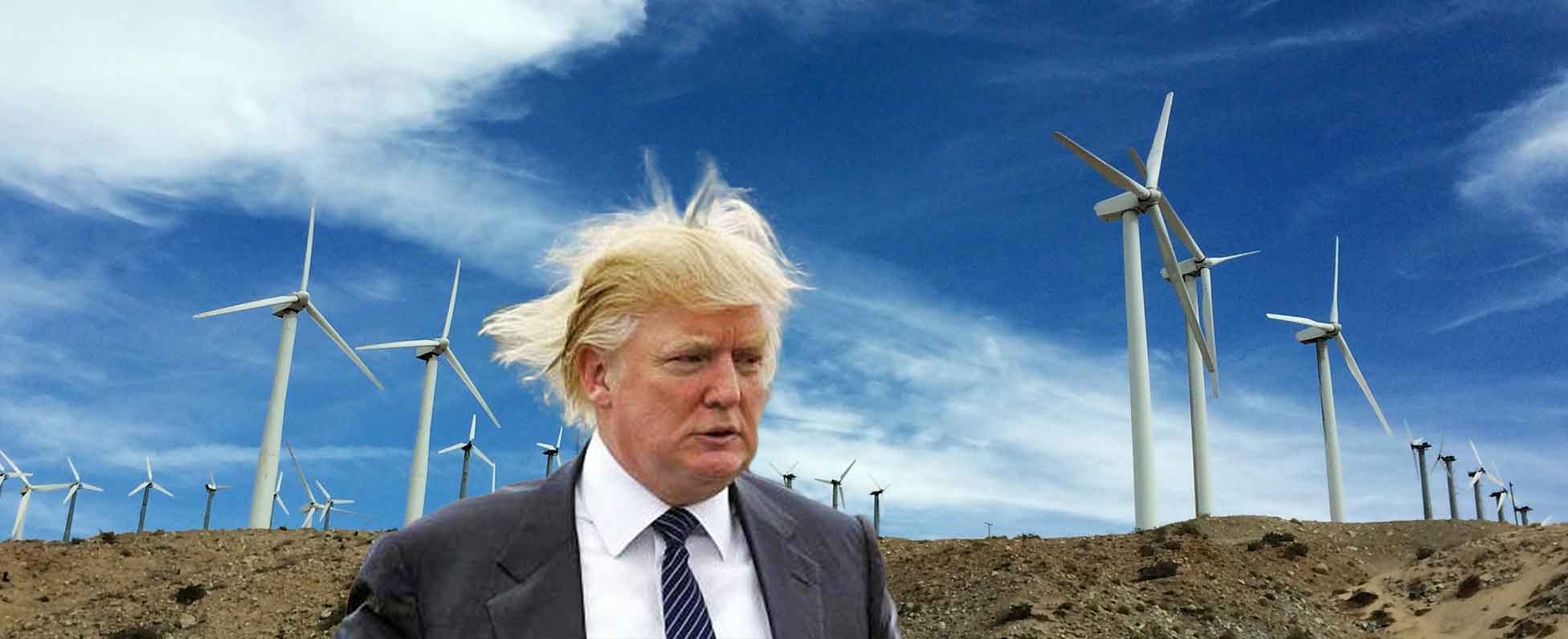
BLOG-Trump-Probably-Hates-This-News-About-Wind-Energy-0722-2015

‘The Republicans have always wanted to have drilling’ in calving grounds, Larry Bagnell says

CBC News <http://www.cbc.ca/news/cbc-news-online-news-staff-list-1.1294364> Posted: Nov 10, 2016 1:42 PM CT Last Updated: Nov 10, 2016 1:52 PM CT

The Porcupine herd is one of the largest migratory barren ground caribou herds in North America. Its range stretches from Alaska to Yukon. <http://i.cbc.ca/1.3320779.1447685936%21/fileImage/httpImage/image.jpg_gen/derivatives/16x9_620/porcupine-caribou.jpg>

The Porcupine herd is one of the largest migratory barren ground caribou herds in North America. Its range stretches from Alaska to Yukon. (Meagan Deuling/CBC)

Yukon MP Larry Bagnell believes Donald Trump’s victory does not bode well for one of the last thriving caribou herds in the North — the Porcupine caribou.

Bagnell says Trump’s winning the U.S. presidency, along with Republican victories in the Senate and Congress, will make protecting the herd’s calving grounds in Alaska from oil drilling “difficult.”

“The Republicans have always wanted to have drilling there, which would upset the life cycle of the herd,” Bagnell said.

The Porcupine herd is one of the largest migratory barren ground caribou herds in North America. Its range stretches from Alaska’s North Slope into northern Yukon. The size of the herd fluctuates but the last population estimate, from 2013, put the herd at about 197,000 animals.

Larry Bagnell <http://i.cbc.ca/1.3844691.1478742946%21/fileImage/httpImage/image.JPG_gen/derivatives/original_300/larry-bagnell.JPG>

Yukon MP Larry Bagnell says the new U.S. administration is going to make efforts to protect the Porcupine herd ‘difficult.’ (Cheryl Kawaja/CBC)

Many Indigenous people in Alaska and Yukon rely on the herd for food, and have lobbied for decades to ensure the herd’s calving grounds in the Arctic National Wildlife Refuge (ANWR) are protected from development. The area is rich in untapped oil.

President George W. Bush pushed to open the area to development, and Alaskan senator Lisa Murkowski introduced a bill last year that would have permitted oil production in the refuge.

President Barack Obama, however, sought to expand the protected area <http://www.cbc.ca/news/world/barack-obama-to-seek-protecting-alaska-arctic-refuge-from-drilling-1.2931246> .

Bagnell says now that Republicans will control the agenda in Washington, “it’s going to make that more challenging.”

Conserving Moose… or Not

http://www.bornfreeusa.org/weblog_canada.php?

Canadian Blog

by Barry Kent MacKay,
Senior Program Associate

Conserving Moose… or Not 11/10/16

Moose© Henry Schimke

North America’s moose population extends from Alaska to the East Coast, through boreal and mountain forests. Throughout much of that range, the species is in decline. Where I live, in Ontario, the population has declined by 20% in just the past 10 years.

There are now about 92,000 moose spread over a vast region. In Minnesota, moose are nearly gone from the northwest and are less than half of their earlier numbers in the northeast. In other places, they are either in decline, holding steady, or—in a few instances—increasing.

98,000 people want to hunt moose in Ontario… which outnumbers the moose!

The threats to moose are vast, including a suite of problems associated with global climate change—which is increasingly evident as you move north. Pressure from all manner of incursions, including forestry practices, mining, roads, recreational use, and so on, can reduce the ability of moose to survive.

But, most of these threats to moose directly benefit human short-term interests. So does hunting, for a vocal minority. And, hunters don’t want to stop hunting (although, of all of the immediate threats to moose, not shooting them is the easiest step that could be taken).

I understand that hunters don’t care, but not that they still claim to be “conservationists.” Of course, if they want to keep killing a species that’s in decline, they are no such thing.

That includes First Nations hunters who, exercising treaty rights, can kill any moose they wish to, without even having to report the numbers. However, when Ontario Environment Commissioner Diane Saxe recently published her first annual report with a section entitled “Ontario’s Moose Population Under Threat,” it was too much for moose hunter Rob Learn. He points to the number of collisions between moose and cars to explain that there are plenty of moose, and that the limit placed on how many can be killed by non-First Nations’ hunters guarantees species survival. He makes the valid point that the determination of how many moose there “should” be, as decided by the Ontario Ministry of Natural Resources and Forestry, is not entirely objective.

And then, there are the natural predators—mainly wolves and bears—who are scapegoated as a cause for moose declines. Killing, as always, becomes the solution.

Here’s a thought; don’t kill them. There’s a long list of North American wildlife species, from northern cod, to passenger pigeons, to bison, to Carolina parakeets, that plummeted from numerous to suddenly rare—even extinct—because the killing didn’t stop in time. We have time.

There are three times more Ontario government employees in Ontario than there are moose. Within their ranks lies the means to save these animals. Let’s start by stopping the killing. It might not happen… but it should.

David Suzuki: It’s time to end the grizzly bear trophy hunt

null

by David Suzuki on March 10th, 2015

Watching grizzly bears catch and eat salmon as they swim upstream to spawn is an unforgettable experience. Many people love to view the wild drama. Some record it with photos or video. But a few want to kill the iconic animals—not to eat, just to put their heads on a wall or coats on a floor.

The spring grizzly kill starts April 1 and extends for several weeks, followed by a second fall season. By year’s end, several hundred will have died at the hands of humans, close to 90 percent shot by trophy hunters—many of them foreign licence-holders, as the B.C. government plans to enact new regulations to allow hunters from outside B.C. to take 40 percent of grizzlies slated for killing. The government also plans to allow foreign interests and corporations to buy and run guide-outfitting territories previously run only by B.C. residents. Local hunting organizations say the new rules put them at a disadvantage.

According to the Vancouver Observer, hunting guide associations donated $84,800 to B.C. political parties from 2005 to 2013, 84 percent to the B.C. Liberals.

In the controversy over regulatory changes, we’ve lost touch with the fact that the grizzly trophy hunt is horrific, regardless of whether bears are killed by resident hunters or big-game hunters who pay thousands of dollars for the chance to kill a bear here—often because it’s illegal in their home countries.

Grizzlies once roamed much of North America, from Mexico to the Yukon and from the West Coast through the prairies. Habitat loss and overhunting have since shrunk their range by more than half. In Canada, 16 subgroups are on the brink of extinction, including nine in south-central B.C. and Alberta’s entire grizzly population.

Just how many bears reside in B.C. is in dispute. The government claims more than 15,000 grizzlies live here, but Raincoast Conservation Foundation science director Chris Darimont, a University of Victoria conservation biologist, puts the number closer to the government’s earlier estimate of 6,600—before it doubled that in 1990 based on a single study in southeastern B.C.’s Flathead area.

According to a Maclean’s article, in 2000, the government “suppressed the work of one of its own biologists, Dionys de Leeuw, for suggesting the hunt was excessive and could be pushing the bears to extinction. De Leeuw was later suspended without pay for having pursued the line of inquiry.” The government then pursued a five-year legal battle with groups including Raincoast Conservation and Ecojustice to keep its grizzly kill data sealed.

Allan Thornton, president of the British Environmental Investigation Agency, which has studied B.C. grizzly management since the late 1990s, is blunt about the government’s justification. “The British Columbia wildlife department does not use rigorous science,” he told the Vancouver Observer. In 2004, the European Union banned imports of all B.C. grizzly parts into member countries after its analysis found the hunt to be unsustainable.

Even the economic case is shaky. Studies by the Centre for Responsible Travel and Raincoast Conservation conclude revenue from bear-viewing is far higher than revenue from grizzly hunting.

Grizzly population health is an indicator of overall ecosystem health, and bears are important to functioning ecosystems. They help regulate prey such as deer and elk, maintain forest health by dispersing seeds and aerating soil as they dig for food, and fertilize coastal forests by dragging salmon carcasses into the woods. Hunting isn’t the only threat. Habitat loss, decreasing salmon runs, collisions with vehicles and other conflicts with humans also endanger grizzlies. Because they have low reproduction rates, they’re highly susceptible to population decline. Hunting is one threat we can easily control.

According to polls, almost 90 per cent of B.C. residents oppose hunting grizzlies for trophies, including many Frist Nations and food hunters. Scientists say it’s unsustainable. The Coastal First Nations coalition has banned grizzly hunting in its territories, but the government doesn’t recognize the ban. The Raincoast Conservation Foundation has bought hunting licences in an attempt to reduce bear kills on the coast.

Simply put, most British Columbians—and Canadians—are against the grizzly trophy hunt. It’s time for the government to listen to the majority rather than industry donors and ban this barbaric and unsustainable practice.

Written with contributions from David Suzuki Foundation Senior Editor Ian Hanington. Learn more at www.davidsuzuki.org.

Showing Mercy to Suffering Animals Is Not ‘Criminal Mischief’

Anita Krajnc gives water to pigs in Toronto on their way to slaughter.
13509120_1489667357723390_1046634769482457799_n
by Matthew Scully November 7, 2016, Issue
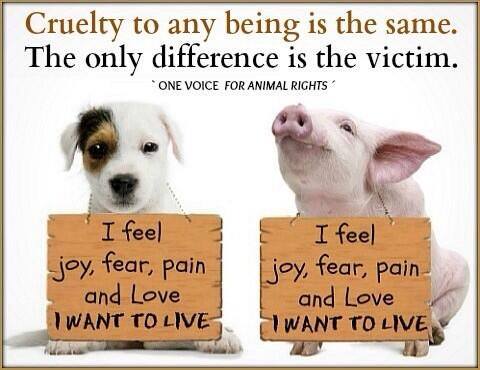
A Canadian woman finds herself in court for giving water to thirsty pigs bound for a slaughterhouse. Depressed about large and momentous events beyond our control, perhaps we had best think of humbler matters in which, at least, the decisions are ours alone to make. If that’s your state of mind in the fall of 2016, I’ve got just the news story for you. A morality tale out of Ontario, Canada, it’s known locally as the “thirsty pigs” case and presents choices that are, in their way, momentous enough. In a court of justice, a 49-year-old woman named Anita Krajnc stands accused of criminal mischief. Her offense, as alleged by complainants and provincial authorities, was to give water to pigs bound for a nearby abattoir. It was a hot day in June of last year. A trailer hauling 180 or so of the animals had stopped at an intersection. Seeing the pigs looking out through the vents, panting and foaming at the mouth, the defendant let them lap water from a plastic bottle, provoking this videotaped confrontation related by the Washington Post: At that moment, the truck driver emerged in protest. “Don’t give them anything!” he shouted, his own camera phone in hand. “Do not put anything in there!” “Jesus said, ‘If they are thirsty, give them water,’” she yelled back. “No, you know what?” he shouted. “These are not humans, you dumb frickin’ broad! Hello!” The driver, Jeffrey Veldjesgraaf, called police and eventually continued on with his doomed cargo down Harvester Road to the suitably named Fearmans slaughterhouse (what pig shouldn’t fear man’s slaughterhouse?). The next day Eric Van Boekel, owner of Van Boekel Hog Farms, pressed charges for what he regards as an interference with his livelihood and property: a case of tampering with the food supply and nothing more. Anita Krajnc, moreover, didn’t just happen to be at that intersection. She leads a group called Toronto Pig Save. Part of its mission is to offer water to pigs and other farm animals in their final moments. In the way of mass-confinement farming these days, that ride to Fearmans affords their very first glimpse of the world and their very last. Often these journeys are hundreds of miles, the pigs crowded into trucks for as long as 36 hours with no food, water, or rest. Krajnc is there to “bear witness,” that they might go to their deaths having encountered at least one human face that wasn’t glaring indifferently at them, felt one touch of human kindness. Viewing the woman as incorrigible, Van Boeckel decided this was his chance to put an end to it. Meanwhile, the Ontario Federation of Agriculture, representing hog farmers, informs members that “our coordinated action plan has been established” in case the controversy gets out of hand. “Developments in the case and associated actions by interested parties are being monitored very closely,” and “we sincerely hope the court continues to focus on the specific issue at hand.” They are understandably wary of any inquiry extending beyond the property-interference question, wishing to steer as far clear as possible of a public moral debate, to say nothing of a religious debate, about the mistreatment of farm animals in general and about Krajnc’s last-hour benefactions in particular. Allow the spirit of the Comforter and Good Shepherd at the end of the creatures’ lives, and attentive men and women will start to wonder where it was all along. Not good for business when people get too unearthly about these things. Save your prayers for grace over the meal. For her part, the dumb frickin’ broad with the water says that she was “just following the Golden Rule,” understood as applying wherever human empathy can reach. She explained in court that she prefers the word “intervening” to “interfering,” since whatever the law says about Van Boekel’s property, she was simply living out her Christian obligation of compassion for animals, thereby serving the public good. It was an act of mercy, and in what kind of enterprise is it forbidden to be merciful? I was thirsty and you gave me drink. Nothing in the ring of those words to encourage help for an afflicted fellow creature? Do humans alone know thirst? The reputations of revered saints instruct us in gentleness toward animals, along with firm admonitions in Scripture and felony-level penalties recognizing, toward some creatures, anyway, an obligation of justice. So to Krajnc’s supporters it seems unfair that she should be the one compelled to explain herself, facing imprisonment for being merciful, while Van Boekel, who shows nothing of that quality, steps into court like some aggrieved pillar of the community. Change.org, petitioning for Prime Minister Justin Trudeau’s attention to the case before a verdict comes next month, frames the matter this way: “What is wrong with our legal system, when attempting to alleviate the suffering of another being is seen as criminal, and those who are inflicting the pain and cruelty are left unchallenged?” A satisfactory answer from the prime minister would top his viral-video performance back in April, when he explained quantum computing to a dazzled audience of reporters and academics. Merely addressing the problem of factory farming at all would show a truly searching mind at work. How often do liberals who lay blame for the world’s ills on the greed of other people, or conservatives on the weak will of other people, ever question their own habits and appetites, or consider how a change in these might help to avoid vast animal suffering? In neither case do we see the moral idealism of serious people at their best, and liberals in particular receive far more credit than is merited for thinking and caring about animal causes. So it would be nice if Canada’s progressive prime minister set a helpful example. Should he answer the question put to him by Change.org, it is a challenge of mental prowess less theoretical than quantum theory, and the test of truth is consistency. For instance, it was pointed out in Krajnc’s trial that if the court had the same basic set of facts, replacing only the word “pig” with “dog,” the weight of law would shift instantly in favor of the defendant, even though dogs also fall rather uneasily into the category of legal property. A conscientious person, seeing a trapped, desperate, overheated dog, would be expected to offer relief, and in some places, parts of Canada included, the law encourages exactly that. What would we do? And why should we care in the least what the owner thinks, when the creature is clearly suffering from deliberate or reckless neglect? Social norms basically say that dogs are awesome and pigs are worthless. Provably, however, pigs are every bit the equals of dogs in their intelligence, emotional depth, and capacities for suffering and happiness alike. Though badly maligned, pigs are really quite impressive and endearing when they are not being tortured, terrified, scalded alive (as often happens), and dismembered amid the bedlam of places like Van Boekel’s factory farm and Fearmans’s abattoir. In countries where dogs are mostly appreciated, admired, and loved, while unseen pigs are killed by the hundreds of thousands every day, people need to pretend there’s some subtle yet all-important moral difference between abusing one and abusing the other, or eating one and eating the other. And it falls to guileless souls like Anita Krajnc to remind them it’s all just made up. Charge her with a lack of sophistication, being too naïve to play along with convenient cultural distinctions that have no basis in reality. Indeed, we can easily imagine a Chinese or Korean version of the story, a “thirsty dogs case” in which some Golden Rule do-gooder dares to offer a merciful bit of water to one of the millions of dogs ensnared in the canine meat trade — complete with a driver shouting “These are not humans! Hello!” and a seller insisting that she take her damn hands off his food animals. Dogs in China, South Korea, and elsewhere are subjected to devilish torments; as with our farm animals, thirst is the least of their miseries. Call up a few pictures on the Internet if you can bear reminding of how utterly depraved some people are toward animals. And then try explaining why that meat trade is needless, selfish, and hard-hearted but ours is not. If anything, the dog butchers and their customers may be credited with greater consistency, being unselective in their inhumanity toward animals. Wait on the day when all such scenes are in our past, finally left behind in what Wayne Pacelle calls the “humane economy” (in a powerful book by that name). For every product of human cruelty, human creativity will offer something better, as it does already with an abundance of far healthier substitutes for meat. We will need no witnesses like Anita Krajnc to gentler, saner ways, because the slaughterhouses will be gone. The little acts of mercy will lead to great ones; the ruthless instead of the kindly will be counted disturbers of the peace. You can take that on the authority, as well, of Charles Krauthammer, a man educated in Canada, who observed recently on Fox News that “in a hundred years people are going to judge us as a civilization that killed wantonly and ate animals. There’s going to be a time when we’re not going to need to do that. And they’re going to end up judging their ancestors, meaning us, harshly for having been that wanton and that cruel.” Or, you can take it from Anita, this gracious person whose real offense is to see what we are not supposed to notice, and to say what the world both dismisses as foolish and knows to be true. “When someone is suffering,” she told the Post, “it’s actually wrong to look away. We all have a duty to be present and try to help. In the history of the world, that’s how social movements progress.” – Mr. Scully, a former literary editor of National Review and senior speechwriter to President George W. Bush, is the author of Dominion: The Power of Man, the Suffering of Animals, and the Call to Mercy. Read more at: https://www.nationalreview.com/magazine/2016-11-07-0000/

Read more at: https://www.nationalreview.com/magazine/2016-11-07-0000/

In Canada, mountain caribou recovery falters

In Canada, mountain caribou recovery falters

A decade of conservation efforts has done little to stop the decline of the endangered ungulates or their rainforest home.

Yukon hunters attacked by angry moose fined for wasting meat

http://www.cbc.ca/news/canada/north/moose-mcquesten-keenan-yukon-hunting-1.
3814779>

http://www.cbc.ca

A Whitehorse father and son must pay $5,000 to the Yukon Turn In Poachers
fund after they were sentenced for wasting the entire carcass of a cow moose
that attacked them.

By Vic Istchenko,
< http://www.cbc.ca/news/cbc-news-online-news-staff-list-1.1294364> CBC News
Posted: Oct 21, 2016 7:55 AM CT Last Updated: Oct 21, 2016 7:55 AM CT

A Whitehorse father and son must pay $5,000 to the Yukon Turn In Poachers
fund after they were sentenced for wasting the entire carcass of a cow moose
that attacked them.
< http://i.cbc.ca/1.3228145.1473372958!/fileImage/httpImage/image.jpg_gen/der
ivatives/16x9_620/whitehorse-courthouse-autumn.jpg>
382304_10150410245381489_1896442457_n

Alberta announces tree planting will be part of caribou protection plan

By: Staff The Canadian Press Published on Sat Oct 01 2016

EDMONTON – The Alberta government says it’s moving ahead with the oil and
gas industry to restore habitat for dwindling caribou herds.

The province announced Saturday that work is beginning that will eventually
see trees planted along thousands of kilometres of land that were cleared
for seismic lines in the Little Smoky and A La Peche caribou rangelands.

The work starts with compiling a restoration guide, as well as setting up a
pilot project along 70 kilometres of seismic lines in the spring.

A $200,000 contract will be issued to source and grow the trees for the
pilot project, and $800,000 will be earmarked for an operational plan to
restore 3,900 kilometres of lines.

The federal government has given provinces until 2017 to come up with range
plans and recovery strategies for caribou herds, which are in danger across
the country.

The Alberta government released a draft plan for caribou protection in its
northern and central regions in June, where one particularly threatened herd
has declined to only a few dozen.

“We are pleased with the leadership role taken by the oil and gas industry
in working to ensure we have a made-in-Alberta plan that provides an
economic certainty for industry and workers who make their living in the
north and do what’s right to protect this iconic animal,” Alberta’s
environment minister, Shannon Phillips, said in a media release.

Agriculture and Forestry Minister Oneil Carlier noted the tree-planting
efforts will provide jobs and strengthen local economies.

The clean energy think tank the Pembina Institute says on its website that
oil companies that create the seismic lines to get information about
underground rock formations must remove trees and other obstacles in order
to make room for their vehicles and equipment.

The seismic lines and roads into forests and wetlands provide wolves with
easy access to caribou, which results in more predators than the herds can
tolerate.

In Alberta, decades of development have left herds clinging to a few scraps
of old-growth forest. Numbers have declined by about 60 per cent and some
ranges are more than 80 per cent disturbed.

Portions of the Alberta draft plan released in June called for energy
development to be “rescheduled” and logging old-growth forest on caribou
range to be blocked. It said wolves would continue to be shot to try to
manage the population, although bears also eat caribou calves.

The draft also suggested fencing off a 100-square-kilometre habitat for
female caribou during the calving season to protect them from predators.

The fence proposal drew fire from some environmental groups who argued the
major issue that needed to be addressed was the loss of natural habitat to
industrial expansion.

There were also suggestions that caribou coming out of a predator-free
enclosure would not know how to handle themselves in the wild.

Too many grizzly bears seeking berries dying in British Columbia: study

 http://www.chroniclejournal.com/news/national/too-many-grizzly-bears-seeking-berries-dying-in-british-columbia/article_3d4a7f91-3fe0-50cf-8c6d-22116a752d8c.html

Fruit, too many people bad pairing for grizzlies

  •  Wed Sep 28, 2016.

EDMONTON – A study suggests hungry grizzly bears drawn to bountiful berry crops in southeastern British Columbia are dying in disturbing numbers.

The fruit the grizzlies want to eat is in the same Elk Valley area where lots of people live and work, so bears end up being hit by vehicles and trains or being killed by hunters and poachers.

Clayton Lamb, a University of Alberta researcher, said the combination of great habitat and human activity has captured the grizzlies in what amounts to an ecological trap.

“In the last eight years, we’ve lost 40 per cent of our grizzly bears in that area — that’s not normal,” said Lamb, whose findings are being published Tuesday in the Journal of Animal Ecology.

Years of data shows more bears keep moving from the rugged backcountry to the Elk Valley area to find a rich supply of huckleberries and buffalo berries.

A high death rate in turn prompts more migration because the reduced population makes the area more appealing to other bears, since there is less competition for berries and space.

Once tempted to the region, bears tend to stick around. They prey on livestock, eat apples from orchards or nose through garbage.

That in turn can lead to conflicts with people, including bear attacks.

“We have a number of attacks in this region annually,” Lamb said from Fernie, B.C. “We had more than one last year within the span of a couple of weeks.”

He estimates that over an eight-year period the population of grizzlies in the larger South Rockies research region declined to 163 from 271 — a loss of 108 bears.

The survival rate in the “ecological trap” is even lower.

The study notes that about 12,000 people live in the Elk Valley region year-round, but each summer there is a major influx of tourists. Four highways and one major rail line either run through or near the area.

Just over half the grizzly deaths are caused by collisions. About one-third are from hunting, which is legal in B.C., and the remainder are due to poaching and other causes.

Lamb said the provincial government can control how many bears are killed by hunters, but more research is needed on how to reduce collisions with vehicles and trains, and how to decrease conflicts with people.

Research shows the need to provide the grizzlies with a refuge from human development by maintaining critical habitat.

The end of grizzly trophy hunting in B.C. in 2017? 

431125_10150547334526188_1114807436_n

by 

September 1st marks a dark day in British Columbia – the start of the province’s controversial fall grizzly bear hunt. This widely opposed slaughter sees greed-driven trophy hunters setting out into BC’s wild places every spring and fall in search of a bear they can shoot and kill for nothing more than a trophy – a head to put on the wall, a rug for their floor and paws to prove their supposed prowess.

We have the BC Liberal government to thank for the continuation of this archaic and senseless slaughter. In 2001, the NDP government announced a three-year moratorium on grizzly bear hunting in BC. Sadly, this victory was short-lived. When the Liberals came into office a few months later, that moratorium was lifted and grizzlies were once again in the sights of sport hunters. Today, this Liberal Party legacy continues despite the lack of social license, science, economics and ethics.

The BC Liberals argue the hunt is sustainable, yet the very science behind this hunt is questioned by independent scientists, who state the province’s grizzly population numbers on which hunt quotas are based are flawed and overinflated. It’s also troubling to see the hunt described as sustainable given that a study published earlier this year by a government scientist found that a hunted population in the South Rockies has declined by about 40 per cent between 2006-2013, under the government’s watchful eye.

Economically, there is the logical argument that a live bear is worth more to the province than a dead one – that same bear can be “shot” with a tourist’s camera, time and time again. Meanwhile, it’s been suggested that the revenue generated by grizzly trophy hunting fees and licences fails to even cover the province’s management costs for the hunt, making it a poor economic decision as well.

Ultimately, what it comes down to is whether or not the practice of killing for sport aligns with our values as British Columbians. Polling over the years has reflected clear opposition to the trophy hunt, with the latest indicating that 91 per cent of British Columbians, both rural and urban dwelling, condemn the practice.

This iconic species, the same one featured in the province’s “Super, Natural” tourism ads, has been the victim of government inaction for far too long. September 1st marks the start of the fall trophy hunt.

May 9th, 2017 is our opportunity to end it. BC’s next premier needs to be a strong advocate for local economies and ethical, effective wildlife management. I urge all British Columbians to join me in contacting their current MLAs to tell them they will be voting for the party that commits to ending the trophy hunting of grizzly bears once and for all.

More: http://www.vancouverobserver.com/opinion/end-grizzly-trophy-hunting-bc-2017

Video of hunter killing Alberta bear with spear draws death threats

Video of hunter killing Alberta bear with spear draws death threats; provincial ban coming

Alberta to Ban Spear Hunting After Bear Video Sparks Outrage

http://abcnews.go.com/International/wireStory/alberta-ban-spear-hunting-bear-video-sparks-outrage-41424241

The Alberta provincial government plans to ban the practice of spearing wildlife after a video posted online showing an American killing a black bear with a spear sparked outrage.

The video was posted in June on the YouTube account of Josh Bowmar, who runs an Ohio-based fitness company, and shows him killing the bear on a hunt in northern Alberta. By the time it was removed from public view on Monday it had garnered more than 208,000 views.

The 13-minute video shows Bowmar launching a massive spear — with a camera attached — at a bear from 11 to 14 meters (36 to 46 feet) away and captures his jubilant reaction when the animal is hit.

“I just speared a bear!” Bowmar says on the video. “He’s going down. I drilled him perfect … I smoked him.”

He later says he got “mad penetration. That’s a dead bear.”

Commenters on YouTube were livid. At least one comment threatened to do to the hunter what he did to the bear. Twitter users called the bear’s killing sick, inhumane, shameful and disgusting.

Alberta’s Environment and Parks department issued a statement, calling the spear hunting an “archaic” practice. Spear hunting is already illegal in Ontario, Canada’s most populous province.

“Work is well underway to update Alberta’s hunting regulations. We will introduce a ban on spear hunting this fall as part of those updated regulations,” a spokesman said in an emailed statement. “‘In the meantime, we have asked Fish and Wildlife officers to investigate this incident to determine if charges are warranted under existing laws.”

Wayne Pacelle, CEO of The Humane Society of the United States, welcomed Alberta’s plans to strengthen the law to ban spear hunting.

“Our attitudes toward animals evolve for the better, and there is more antipathy for acts of cruelty like the one from Alberta,” said Pacelle. “At one time, cockfighting and dogfighting were legal. Then we got our act together as a society and forbade these practices as depraved, archaic and inhumane.”

more: http://abcnews.go.com/International/wireStory/alberta-ban-spear-hunting-bear-video-sparks-outrage-41424241

DSC_0081