As ice melts, Polar bears could find last refuge in Canada’s High Arctic

http://www.cbc.ca/news/technology/polar-bears-could-find-last-refuge-in-canada-s-high-arctic-as-ice-melts-1.3136025

Canada’s High Arctic could become the last stable refuge for polar bears as climate change melts away their hunting grounds, a U.S. government report says.

Populations elsewhere — in Alaska, Russia, Norway and around Hudson Bay, northern Quebec and Newfoundland and Labrador — are likely to decrease or greatly decrease by the year 2050 as global temperatures rise, the report projects.

But under a moderate scenario for greenhouse gas emissions, with enough reductions worldwide to keep the average global temperature hike to no more than two degrees, the polar bear population in northern Nunavut is most likely to remain stable and even has a decent chance of increasing, researchers say.

The 124-page research report comes from the U.S. Geological Survey, an entity of the U.S. Department of the Interior, and was published this week.

It looks at polar bear populations in four “eco regions,” including an area known as the Canadian Arctic Archipelago, home to perhaps 5,000 or more of the animals — about a quarter of the global total.

The archipelago has the best “potential to serve as a long-term refugium” for polar bears, the authors say.

But even then, if countries continue with “business as usual” and nothing is done to curb the world’s greenhouse gas emissions, the long-term viability of polar bears would be in doubt.

Sea ice essential

Polar bear populations are thought to be sensitive to global warming mainly because the animals spend the winter and spring on sea ice hunting for fatty seals as well as mating and giving birth.

When the ice retreats in the summer, the bears are forced onto land. But land-based food can’t satisfy their dietary needs.

“The terrestrial resources are just not sufficient. It’s the difference between eating fat and eating a few berries,” said Andrew Derocher, a polar bear expert and professor at the University of Alberta, who wasn’t involved in the U.S. government report.

Polar bear with dead seal

A polar bear drags a seal along a floe in Baffin Bay, above the Arctic Circle in Canada’s North. The bears need sea ice to hunt seals, their main source of food. (Jonathan Hayward/Canadian Press)

“The whole fate of polar bears depends on how fast the sea ice disappears.”

Scientists have warned for years that climate change threatens polar bear populations. The U.S. Geological Survey study compares that risk against others like oil and gas shipping through the North, pollution and hunting of the bears, which is legal in Canada, the U.S. and Greenland.

It concludes that sea ice loss is the greatest menace to their survival, by a significant margin.

And it says about a third of the world’s polar bears — those in Alaska, Russia and Norway — could be in imminent danger from greenhouse gas emissions in as soon as a decade. Those areas of the Arctic have suffered some of the most dramatic declines in sea ice.

The scientists saw no rebound in overall population numbers in the projections that stretched to the year 2100 under either of the two scenarios they looked at: one in which greenhouse gas emissions stabilized, and the other in which they continued unabated.

“Polar bears are in big trouble,” said Rebecca Noblin, Alaska director for the Center for Biological Diversity. “There are other steps we can take to slow the decline of polar bears, but in the long run, the only way to save polar bears in the Arctic is to reduce greenhouse gas emissions.”

Other marine animals at risk

Polar bears aren’t the only marine species at risk from climate change.

In separate research released this week, an international team of scientists looked at the effects on sea creatures, concluding that under the “business as usual” scenario of unchecked greenhouse gas emissions, “most marine organisms evaluated will have very high risk of impacts.”

The effects will be felt “across all latitudes,” the authors write, “making this a global concern beyond the north/south divide.”

As more greenhouse gases enter the atmosphere, oceans will warm and become more acidic, says the study, published in the journal Science.

Fish will have to find new habitats in cooler waters. Warm-water corals and sea grasses at mid-latitudes are already being affected.

Even if the world commits and sticks to the most stringent of the proposed emissions targets, creatures like mussels, oysters, clams and scallops “will be at high risk” by the year 2100, the scientists say.

“All the species and services we get from the ocean will be impacted and everyone, including Canadians, who benefit from these goods and services are vulnerable,” said William Cheung, a co-author of the paper and an associate professor at the University of British Columbia’s fisheries centre.

With files from The Associated Press

Canada, Aphrodisiacs, and Seals: Is There No Shame?

http://www.bornfreeusa.org/weblog_canada.php?p=4929&more=1

Canadian Blog

by Barry Kent MacKay,
Senior Program Associate

Born Free USA’s Canadian Representative

Barry is an artist, both with words and with paint. He has been associated with our organization for nearly three decades and is our go-to guy for any wildlife question. He knows his animals — especially birds — and the issues that affect them. His blogs will give you just the tip of his wildlife-knowledge iceberg, so be sure to stay and delve deeper into his Canadian Project articles. If you like wildlife and reading, Barry’s your man. (And we’re happy to have him as part of our team, too!)

Canada, Aphrodisiacs, and Seals: Is There No Shame?

Published 06/10/15

Grey Seals

The Fur Institute of Canada has reached what could be a new low. According to recent news reports, last year, it presented the federal Department of Fisheries and Oceans (DFO) with a plan to sell penises of grey seals to be used by predominantly Asian buyers as aphrodisiacs.

According to news reports, the DFO is thinking about it.

Why am I not surprised? Disgusted, yes—but not surprised.

The current government of Canada, under the authoritarian rule of Prime Minister Stephen Harper, is the worst I can recall. I believe this is certainly the most divisive, secretive, and downright destructive government in this country’s once positive and respected image within the international community.

Some background: The species of seal targeted is the grey seal, found on both sides of the north Atlantic, on our side from northern Labrador south into the New England states.

The grey seal was once so rare that it was thought to have been extirpated from Canadian waters. But, its numbers have recovered.

No, it’s not a fish—but DFO also manages marine mammals. Its management of fish, under well-documented political pressure trumping science from a time well predating Mr. Harper, has led to some disastrous collapses in various fisheries.

And seals, being consummate consumers of seafood, are scapegoated for human greed and ineptitude. The simplistic view of DFO is that the fish seals eat would otherwise be available for commercial fisheries.

To see what we’re up against, read this account of a seal biologist trying to explain basic seal and fish ecology to a federal Senate committee charged with recommending what to do about grey seals. Or, if that’s too long or technical, check this out.

The bottom line is that there is no true science behind the contention that grey seals are responsible for the catastrophic decline in certain fisheries, especially the northern cod—and no consideration is given to the positive role seals could be playing in the slow recovery of cod stocks. Grey seals were at their most abundant when cod were, as well.

But, none of the destructive forces want to admit culpability when there are seals (or other fish-eating wildlife) to be blamed and killed. Both the industry and the government want to kill them in large numbers.

But, to do so with any hope of making a significant decline in grey seals would cost too much… unless, of course, they could be sold.

However, there is no market for grey seals. For the last several decades, the federal government has tried to placate East Coast voters by developing markets for seal products, including meat, leather, fur, heart valves for human surgery patients, oils, and, yes—genitals.

But now, the harp seals are not to be killed until they are about two weeks old (no longer “babies” in the eyes of the government and industry) and even then, most former markets have rejected the product and the major buyer has stopped buying.

The very different grey seal has never been marketable, however. And, of a quota of 60,000 last year, DFO admits that only 82 were killed.
They all know, of course, that the product does not work. Unfortunately, that doesn’t stop those desperate to try whatever holds the promise of enhanced virility.

And, apparently that’s just fine with Mr. Harper, his government, and the Fur Institute of Canada—the latter having made the proposal, in the interest of killing 140,000 grey seals over a five year period in the southern Gulf of St. Lawrence.

The plan, secretly tabled in March 2014, promotes use of “every part” of the dead seal. “The penises of juvenile and adult animals may be dried and sold as sexual enhance products, particularly to Asian buyers,” says the institute, according to reporters who obtained the report.
“Asian consumers, particularly athletes, also consume a beverage called Dalishen Oral Liquid that is made from seal penis and testicles, which they believe to be energizing and performance enhancing.” They aren’t, of course, but honesty is not a hallmark of the fur industry.

The sad fact is that trade in animal products used for various medicinal properties they either lack, or that are available from other sources, are driving many wildlife species toward extinction. Encouraging such nonsense is clearly antithetical to protecting endangered species, making a mockery of the fur industry’s claim that it is concerned about conservation.

It’s not a new idea. There was a market for the long-established and very commercially driven slaughter of harp and hooded seal pups, mostly, and some adults for many years, and it did include seal penises sold for hundreds of dollars each. But, the widespread use of male aphrodisiacs, such as Viagra, pretty well destroyed demand. The Fur Institute is suggesting sending out five boats and 40 hunters to use nine mm. semi-automatic rifles with silencers, currently banned in Canada, at an investment cost of around $9 million Canadian (currently about $7.4 million U.S.).

That the DFO would even consider all of this is a sad commentary on a country poorly served by its government. I am ashamed of what’s being done with my country’s once stellar reputation, but live in hope that, come the fall federal election, we can start a new chapter with a government that cares about conservation.

Keep Wildlife in the Wild,
Barry

Graphic Video Of Annual Canadian Seal Hunt Released By Animal Rights Group

I can’t watch, it just makes me want to club someone…
http://www.huffingtonpost.com/2015/04/20/canada-baby-seals-killed_n_7087092.html

WARNING: This post contains graphic content that may upset some readers.10264634_10152337495904586_9174164310757903244_n

The Canadian government in early March announced this year’s quota for its annual, and highly controversial, seal hunt. The allocation for 2015? 468,000 harp, hooded and grey seals.

In an effort to minimize inhumane treatment, the Canadian government mandates that seals can only be killed using a high-powered rifle or shotgun, a club or a hunting tool called a hakapik. Yet with the hunt in full swing, last week Humane Society International released shocking footage of baby seals being shot, clubbed and dragged aboard hunting vessels — footage that, the group alleges, shows the hunt is anything but humane

Rebecca Aldworth, executive director of HSI’s Canada chapter, told The Huffington Post that despite the legal protections, “what happens to these baby seals is some of the worst suffering I’ve ever witnessed.” She spent last week in a helicopter off the northeast coast of Newfoundland getting a firsthand look at the seal hunt — her 17th year doing so.

Click to reveal graphic photo

cull2

“Ever year we go out there, we see the same kind of cruelty,” Aldworth said. “The seal is moving on the ice, the ice is moving on the ocean and the boat is rocking on the waves, so you often see a seal that’s just wounded because it’s incredibly difficult to make that shot.”

The hunt takes place in northeastern Canada between November and June, with the majority of the seal hunting happening in March and April. The animals are killed mainly for their furs, and young harp seals tend to be in the highest demand because they have the most valuable pelts.

The Canadian government maintains that safeguards are in place to ensure animals are killed quickly and humanely. When asked about the scientific rationale for the hunt, a spokesperson for the country’s Fisheries and Oceans Portfolio directed HuffPost to an online FAQ page about the seal hunt.

Click to reveal graphic photo

cull

The huge annual quota is all the more surprising given that the number of seals harvested each year has fallen dramatically over the past decade, thanks to a shrinking market. Around 94,000 animals were hunted in 2013, down from about 366,000 in 2004. Harp seal populations in Canada are nearly three times what they were in the 1970s, currently numbering close to 7.3 million animals.

The Canadian Sealers Association recently announced that it will scale back operations in light of the difficult financial situation caused by a constricted commercial market. Carino, the top buyer of sealskins in Canada, said it wouldn’t be purchasing any pelts this year because it already has a stockpile that didn’t sell in 2014.

The lower demand is partially a result of growing international concern for animal welfare. The entirety of the European Union banned the trade in 2009 due to worries about the inhumane nature of seal hunts in Canada, Greenland, Namibia and other countries. Canada appealed the decision to the World Trade Organization, but the agency upheld the EU ban in 2014, noting it was “necessary to protect public morals” related to animal rights.

In the U.S., trade in seal products is banned and all species of seal are protected under the Marine Mammal Protection Act of 1972.

Captain Paul Watson, founder of the marine wildlife conservation group Sea Shepherd, told HuffPost that while his organization supports the work of HSI, it no longer actively opposes to the hunt due to the “collapse” of the market.

“There simply is no market today,” he said. “Sea Shepherd’s role has been to oppose the sealing ships, and there are no more ships on the water and in the ice killing seals.”

Watson noted that despite the large number of seals designated for hunting through the government’s quota, it’s likely that fewer than 60,000 will be killed this year because of the lack of demand.

Aldworth told HuffPost that HSI is hoping to help broker a deal between the sealers and the Canadian government that would bring about an end to the hunt through a federal buyout of sealing contracts. She said the plan would be similar to the shift that took place when whaling was ended in the country in the 1970s. Parts of Canada now have a burgeoning whale-watching industry.

But for now, her group believes a single seal killed is one too many.

“HSI’s concern is that the seal hunt is inherently inhumane. Because it’s inhumane, it must be shut down,” Aldworth said. “The only progressive thing to do, the only acceptable solution is to shut down the slaughter forever.”

Click to reveal graphic photo

cull23

Also on HuffPost:

Close

Canadian Seal Hunt

1 of 19

WARNING

Alberta Wolf Kill and “Collateral Damage”‏

Besides the 1000 wolves at least 163 cougars have been killed, along with 38 wolverine, etc. It also demonstrates what happpens when you allow habitat degradation to occur.

http://www.raincoast.org/2015/01/alberta-wolf-slaughter/

Alberta slaughters more than 1,000 wolves and hundreds of other animals

WARNING:  THIS A DISTURBING ACCOUNT OF ANIMAL SUFFERING AND SLAUGHTER

Killing wolves for

Published on 2015 · 01 · 10 by Raincoast
Raincoast scientists Dr. Paul Paquet and Dr. Chris Darimont, along with colleagues at the University of Saskatchewan, have published the paper “Maintaining Ethical Standards during Conservation Crises” in the journal Canadian Wildlife Biology and Management.  It  addresses the ethics and science of the  Alberta wolf cull as published in Canadian Journal of Zoology, November 2014.
Download this paper: Brook et al 2015 CWBM
Download the press release
The wolf kill
For the last few years, Raincoast has been sounding the alarm about the slaughter of wolves at the hands of the Alberta government.  This slaughter is a consequence of Alberta oil and gas development, and other industrial activities, that have endangered caribou.  The Alberta government and its resource industries have transformed the caribou’s boreal habitat into a landscape that can no longer provide the food, cover and security that these animals need to survive.  Rather than address this problem, Alberta has chosen to scapegoat wolves that are using a huge network of new roads and corridors to reach dwindling numbers of caribou.
For a decade now, the Alberta government has hired hitmen and biologists to kill wolves, more than 1,000 of them, through aerial gunning from helicopters, poisoning with strychnine, and allowing them to be strangled with neck snares.  They also trap and collar wolves that become “Judas wolves,” leading the gunners to the pack.  After shooting all but the collared wolf, the collared wolf then leads the gunners to more wolves and then watches as they too are slaughtered.
Not just wolves
In addition to aerial gunning, strychnine is set out to poison wolves.  Many other species that incidentally eat the poison also die. We do not have a death toll for the additional animals that died from poisoning. Neck snares, another form of torture and suffering, are also permitted.  Internal Alberta government documents show that up until 2012, neck snares were the primary cause of death for 676 animals, in addition to the wolves, around the Little Smokey region in Alberta. Note caribou, the reason for the wolf cull in the first place, are dying as incidental deaths in neck snares.
Number of animals/species that have died incidentally in Alberta’s wolf kill (up to 2012) near the Little Smokey region, primarily in neck snares.  Numbers obtained from internal Alberta government documents.
Black bear 12
Caribou 2
Cougar 163
Deer 62
Eagle (bald and golden) 40
Fisher 173
Fox 3
Grizzly bear 3
Goshawk 1
Lynx 70
Moose 12
Otter 73
Owls 12
Small mammals (marten, mink, skunk, squirrel, weasel) 12
Wolverine 38
TOTAL 676
Calling it science
In 2014, 5 authors (3 from Alberta government, 1 from University of Montana, 1 from University of Alberta) published a paper in the Canadian Journal of Zoology (CJZ) called Managing wolves to recover threatened caribou in Alberta.  This paper describes, condones, and implements the use of aerial gunning and strychnine poisoning as acceptable methods to undertake their study on caribou survival. Neck snares are not included in the journal study methods, despite their known use for killing wolves in the Little Smokey Region.
A response to this paper was published in the journal of Canadian Wildlife Biology and Management in February 2015  by Raincoast scientists and colleagues called “Maintaining Ethical Standards during Conservation Crises“.
The above response addresses the issue of ethics and animal welfare in science. Research on animals in Canadian universities and papers published in the CJZ must meet ethical standards from an animal care committee (nationally, the Canadian Council on Animal Care). Poisoning and aerial gunning (using Judas wolves)  do not meet these criteria.  Below is the call for proposal from the beginning of the study with the statement that the lethal methods being employed were approved according to protocols 008 and 009.  Also below are protocols 008 and 009 that show such activities are not permitted.  The objective of these protocols (specifically 9) is to enforce the humane treatment of animals and ensure minimal stress. In the event that a wolf is injured during a study it describes how euthanasia must occur.  A gun shot is explicit to extreme cases in close range where a single shot to the head causes instant death.  To imply such permits allow a wildlife slaughter is dishonest, at best.
Huffington Post Articles
Additional files for download

Experimental wolf cull in Alberta ignites scientific criticism over inhumane research

“The caribou are endangered because extensive and unabated industrial development of [obscenely omnipotent] oil, [goddamn] gas and [fucking] forestry operations has destroyed and degraded the habitat that provides life sustaining food, shelter, and security.” [NOT because of the wolf!!]

http://www.raincoast.org/2015/02/wolf-cull-ignites-critisim/

Experimental wolf cull in Alberta ignites scientific criticism over inhumane research

Scientists highlight the failure to abide by ethical standards of animal research and welfare.

3 running wolves-PCP

In a scathing commentary published today in the peer-reviewed journal, Canadian Wildlife Biology and Management, scientists from the Raincoast Conservation Foundation and the Universities of Saskatchewan and Victoria denounce the failure of researchers, government agencies, research institutions, and the scientific publishing process to abide by recognized ethical standards of animal research and welfare.

Download  the journal paper Maintaining ethical standards during conservation crises

In the November issue of the Canadian Journal of Zoology, a team of researchers described a gruesome wolf culling experiment and last-minute bid to halt the decline of the Little Smoky caribou herd in Alberta. The caribou are endangered because extensive and unabated industrial development of oil, gas and forestry operations has destroyed and degraded the habitat that provides life sustaining food, shelter, and security.

The researchers oversaw a study in which at least 733 wolves and hundreds of other animals suffered and died by methods considered inhumane by the Canadian Council of Animal Care (CCAC). The CCAC provides ethical guidelines that scientists in Canada normally comply with to ensure that animals used in research are treated humanely. Bypassing CCAC standards, managers from Alberta Environment and Sustainable Resource Development administered the killing. Cooperative university investigators assessed the outcome of the cull. Most wolves died violent deaths via aerial gunning from helicopters. Others succumbed to poisoning after ingesting baits laced with strychnine. These methods of killing do not conform to CCAC’s recognized and acceptable standards of euthanasia, owing to the extended pain and suffering they often cause.

“Expedient but inadequate emergency ‘fixes’ have been experimentally implemented to arrest the impending loss of caribou”, said co-author Dr. Ryan Brook of the University of Saskatchewan, “but no context can justify methods that impose such suffering”.

Co-author Dr. Gilbert Proulx, Director of Science at Alpha Wildlife Research & Management Ltd, agreed. “There is a need to improve checks and balances that would normally prevent the approval, execution, and publication of unethical animal research”, he said. Despite questionably modest improvements to caribou declines, the researchers advocated for the continued killing of wolves. “Such short-sighted recommendations add fuel to the fire regarding the growing controversy and scrutiny of the unethical and unscientific Alberta wolf cull”, stated Chris Genovali, Executive Director of the Raincoast Conservation Foundation.

The study also troubled co-author Dr. Chris Darimont, Hakai-Raincoast Professor at the University of Victoria and science director for the Raincoast Conservation Foundation. “Proponents of resource extraction can now announce that a ‘solution’ to the caribou crisis is in hand, enabling additional habitat destruction that harms caribou and wolves. So despite intentions otherwise, wolf control creates greater long-term harm than good to animals and ecosystems, failing a simple test of ethics.”

“In this case, the intended but very uncertain ends cannot justify the means”, said co-author Dr. Paul Paquet, senior scientist at the Raincoast Conservation Foundation and Adjunct Professor at the University of Victoria and. “Experiments that involve the intentional inhumane killing of animals violate the fundamental principles of ethical science and rightfully endanger the reputation of science and scientists, as well as the journals willing to publish them”.

Citation: Brook, Ryan, Marc. Cattet, Chris T. Darimont, Paul C. Paquet, & Gilbert Proulx. 2015. Maintaining ethical standards during conservation crises. Canadian Wildlife Biology and Management Issue 4, pages 72-79.

Available in Open Access format here or download the pdf

Killing Canadian Wolves Violated Accepted Welfare Guidelines

Wed 2/11/15 6:15 PM

Killing Canadian Wolves Violated Accepted Welfare Guidelines

Killing Canadian Wolves Violated Accepted Welfare Guidelines

By Marc Bekoff Ph.D. on February 11, 2015 in Animal Emotions
A team of scientists has published an essay, just released today, that clearly shows that the killing spree by the Canadian government that resulted in the slaughter of 890 wolves should never have been conducted nor published because it violated clearly stated welfare guidelines. This new essay is a much-needed response to the horrific slaughter of the wolves.

Taxpayers Fund Mass Killing of Wolves in British Columbia

http://panampost.com/rebeca-morla/2015/02/04/taxpayers-fund-mass-killing-of-wolves-in-british-columbia/

As many as 184 wolves must be shot in British Columbia, Canada, in order to save the caribou, according to a statement from the provincial government. The Ministry of Forests, Lands and Natural Resource Operations announced plans on January 15 to address what they consider the threat of wolf predation in the areas of the South Selkirk Mountains and the South Peace, along the border of US states Washington and Idaho.

The caribou, one of Canada’s most recognized national symbols, “is at high risk of local extinction,” according to the ministry’s statement.

The government claims the South Selkirk caribou population declined from 46 in 2009 to just 18 as of March 2014, adding that “evidence points to wolves being the leading cause of mortality.”

The ministry further cites a joint-research project between officials from British Colombia, Washington and Idaho states, First Nations, the US Forest Service, and the US Fish and Wildlife Service, which found wolves killed two of the remaining caribou in the past 10 months.

Authorities also claim that in the area of South Pearce, inhabited by four caribou herds, at least 37 percent of all “adult [caribou] mortalities have been documented as wolf predation.”

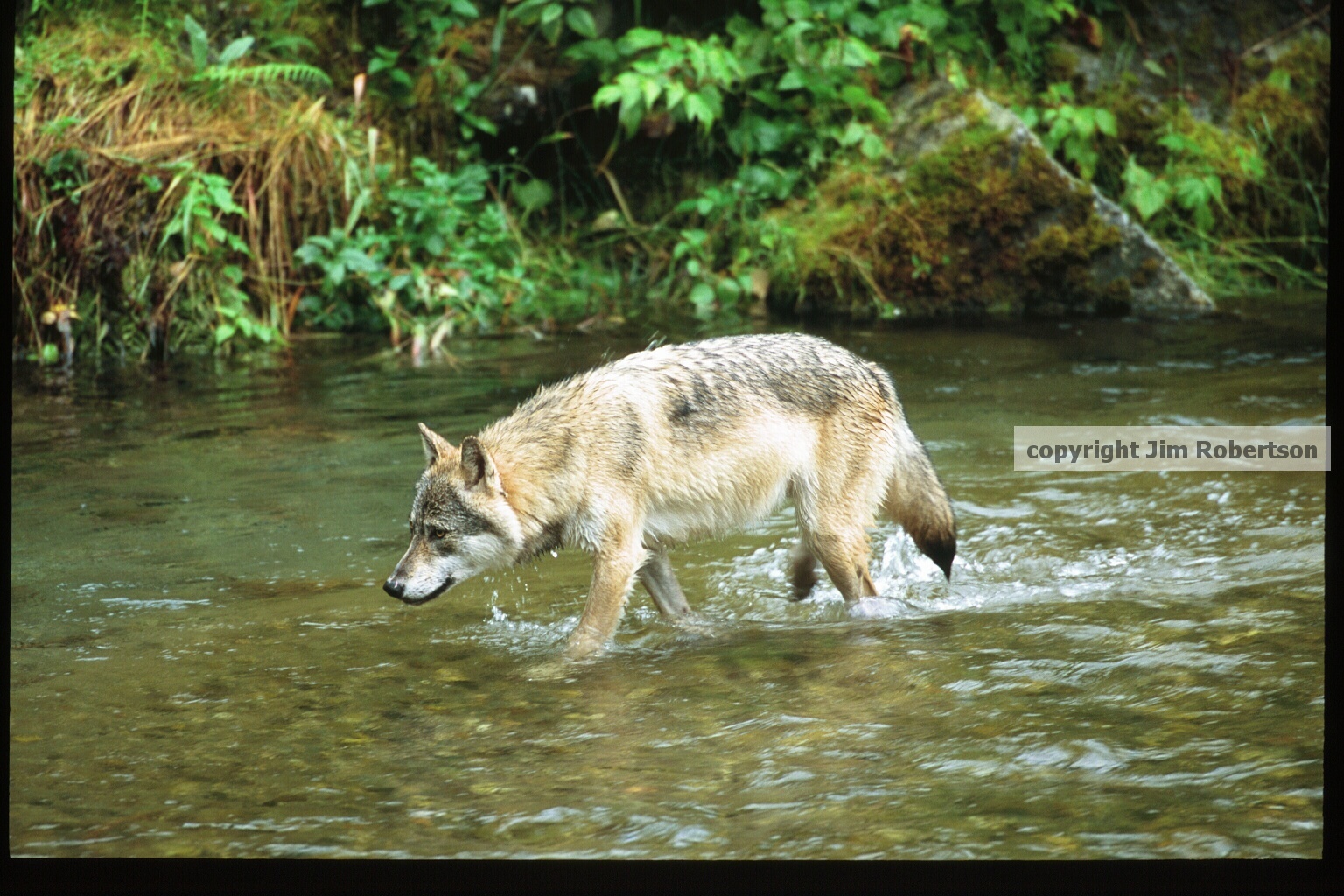
In order to “remove” the wolves from these areas, the government will deploy “trained sharpshooters” to shoot the animals from a helicopter. The operation will cost overcopyrighted wolf in water US$500,000.

This latest wolf cull follows the killing of more than 1,000 wolves in the forests of Alberta, between 2005 and 2012, in an attempt to protect 100 caribou living there.

However, while the wolf hunt in Alberta stabilized caribou numbers in the region, it did not result in a population increase, according to a study published in November 2014 in the Canadian Journal of Zoology

The War on Wolves

Ian McAllister, conservation director for Pacific Wild, believes the government’s focus on wolves ignores the real issue concerning the caribou’s habitat.

“While the government is not moving forward to protect adequate amounts of habitat to save the caribou, they’re instead using wolves as a scapegoat and planning just a horrific level of aerial killing in the coming months,” McAllister said. “This is truly a war on wolves in British Columbia.”

McAllister, who started an online petition against the cull, told local newspaper the Province that the fundamental threat to caribou is human encroachment and the destruction of their natural environment.

“Killing every single wolf in this province will not save those caribou. But they’re killing wolves anyway. The wolves are being used as scapegoats.”

Moreover, McAllister argues that the government’s wolf cull violates the guidelines set forth by the Canadian Council on Animal Care regarding wild animal euthanasia.

According to the guidelines, the only “acceptable methods” for animal euthanasia produce “death with minimal pain and distress when used on conscious or sedated animals.”

“There’s no way they can kill that many wolves without missing shots and injuring animals,” McAllister told the Province. “You will have wounded wolves returning to ripped-apart family units … their suffering will be extreme.”

“Foolish and Inhumane”

David Shellenberger, a self-described advocate of international liberty and animal welfare, told the PanAm Post that the mass killing of wolves in British Columbia is typical of the government’s treatment of wolves and other predators.

“States almost always serve themselves and their cronies,” said Shellenberger. “When it comes to wolves, this means doing the bidding of the hunting and livestock industries. Governments also fear monger regarding wolves, exploiting ignorance and prejudice.”

Shellenberger further explained that wolves benefit prey species, including caribou, and argued that they are “essential to the general ecological health of habitats.”

“The decline of caribou,” he states, “is the result of government’s mismanagement of land; it is not the fault of wolves. Killing wolves is foolish and inhumane. Wolves are not only ecologically essential, but also intrinsically and economically valuable.”

There are more efficient ways to preserve caribou herds, says Shellenberger, without sacrificing other species. “The long-range answer for the health of the caribou population is better stewardship of land, ideally through the government giving ownership to conservation organizations or creating a trust structure.”

“An immediate possible answer,” he added, “is the farming of caribou.”

Edited by Guillermo Jimenez.

Wolf Murder Canadian Style Continues as if it’s Conservation

https://www.psychologytoday.com/blog/animal-emotions/201501/wolf-murder-canadian-style-continues-if-its-conservation

By Marc Bekoff Ph.D. on January 28, 2015 in Animal Emotions
The Canadian government plans to kill wolves once again to save caribou. An earlier murder escapade in Alberta didn’t work and there’s no reason to assume this one will. They even use collared “Judas” wolves to lead shooters to more wolves. The real problem is loss of habitat due to oil and gas development and logging. Some people just like to kill other animals for fun.

Captain Paul Watson on B.C. Wolf Kill

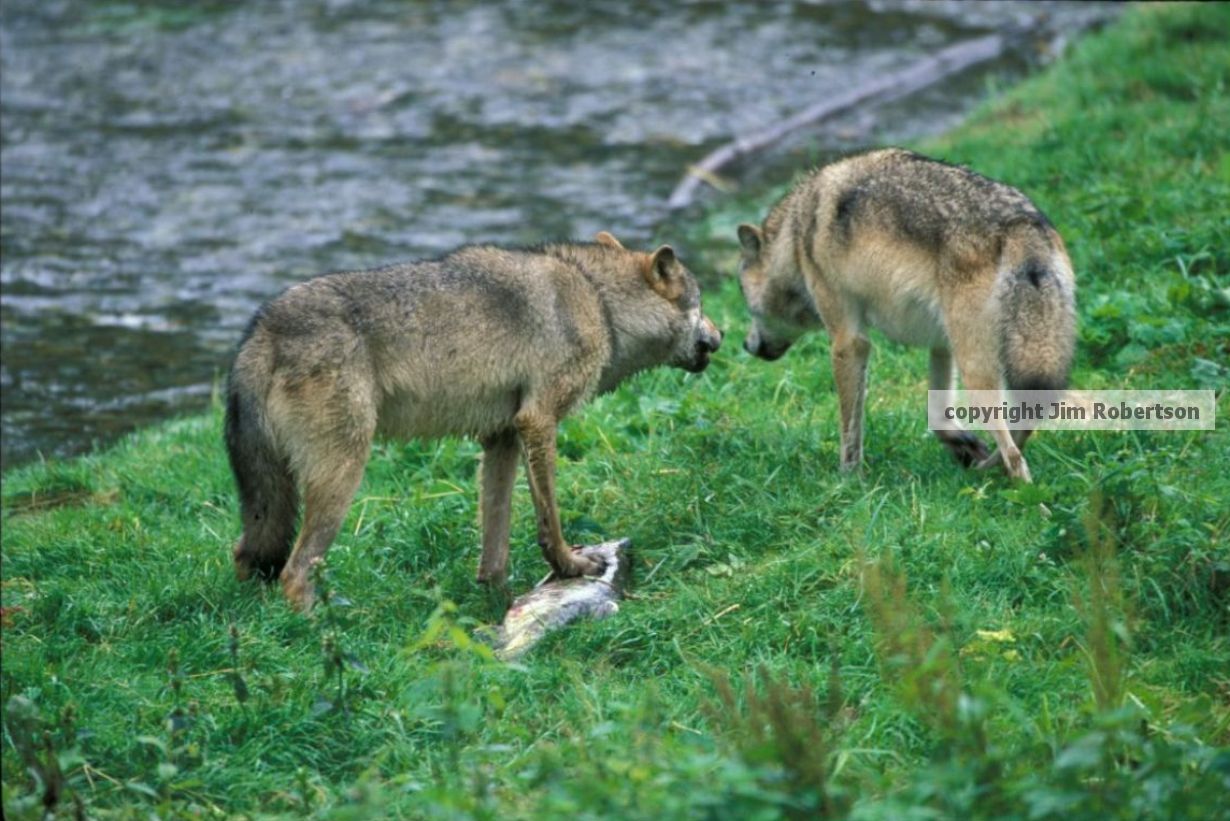
copyrighted wolf argument settled

http://www.theglobeandmail.com/news/british-columbia/bc-sparks-controversy-by-bringing-back-wolf-hunt/article22547547/

Critics of the helicopter hunt say endangered caribou herds are in decline because of habitat loss, not wolf predation, and that shooting wolves in a pack can traumatize the rest of the family group.

B.C. sparks controversy by bringing back wolf hunt

The British Columbia government is back in the air shooting wolves nearly 30 years after it abandoned a controversial aerial hunt that triggered rallies in several U.S. cities and saw activists parachuting into the wilderness in an attempt to stop the kill.

The government is refusing to divulge how many animals it has shot during the first week of the helicopter hunt, but its plan to protect endangered caribou by eliminating nearly 200 wolves in the South Selkirks and South Peace regions is once again threatening to stir protests from activists, including Paul Watson.

Mr. Watson, perhaps the world’s most famous wildlife campaigner, said B.C.’s justification for the hunt is no more acceptable now than it was in the 1980s, when he first drew international attention to it.

“There are a lot of activists in British Columbia. I’m going to talk to them about reviving Friends of the Wolf,” Mr. Watson, head of the Sea Shepherd Conservation Society, said on Tuesday in an interview from Paris.

Mr. Watson founded Friends of the Wolf in 1984 to campaign against the hunt, which stopped in 1985, only to be revived briefly in 1987. Over four years, about 1,000 wolves were killed to reduce predation of moose, caribou and mountain sheep.

“Maybe we’ll have to make a big deal of it, like we did in 1984, ’85,” Mr. Watson said.

“I think it’s a complete disgrace,” he said of the hunt. “There’s no scientific evidence behind this. Wolves and their prey are very important and essential part of the ecosystem and we are constantly disrupting it.”

Ian McAllister, a wildlife photographer and head of Pacific Wild, said opposition to the wolf hunt is growing rapidly.

“I can say that in 20 years of wildlife work, I’ve never seen a reaction like what we are seeing right now. We’ve had one-and-a-half million people go through our website, we got something like 40,000 signatures [on a petition] urging government to reconsider this,” he said. “All our phone lines were jammed with people calling. They are just outraged about this.”

Mr. McAllister has spent years photographing wolf packs at close quarters. He said wolves are highly social, and shooting even one in a pack can traumatize the rest of the family group.

“To start killing and wounding numerous ones, day after day, it’s horrendous. It’s one of the most inhumane things humans could commit in the natural world. It’s unthinkable,” he said.

Sadie Parr of Wolf Awareness Inc., a B.C.-based non-profit foundation dedicated to public education, said the endangered caribou herds are in decline because of habitat loss, not wolf predation.

“This certainly is a conservation dilemma,” she said of the declining caribou herds. “It’s a very complicated problem. But we have to recognize we are in this situation because of us [humans], not because of anything wolves have done.”

Ms. Parr said she has been bombarded with requests for information since the hunt was announced last week.

“People are really, really upset, and rightfully so. This is barbaric and the world is paying attention,” she said.

The B.C. Ministry of Lands did not have a spokesperson available on Tuesday, but e-mailed a statement from Stan Boutin of the University of Alberta, who conducted an independent review of the wolf management plan.

“I support the B.C. government decision to use wolf control in an attempt to recover the herds,” he wrote. “Wolf control appears to be part of a broader recovery plan that also includes important measures to protect and recover habitat.”

But Green MLA Andrew Weaver said the government cannot verify its claim that wolves are the leading cause of caribou mortality.

“I am supportive of science-based initiatives that promote conservation but in this particular case, I cannot find the ‘evidence’ the government is apparently relying on,” he wrote in a letter to Lands Minister Steve Thomson.

Researchers Kill 890 Wolves to Learn About Them: There’s Something Very Wrong

Back by special request:

 12/09/2014    Professor emeritus of Ecology and Evolutionary Biology, University of Colorado

 copyrighted wolf in water

I’ve written a number of essays that have centered on the question, “Should animals be killed in the name of, or under the guise of, conservation?” The basic foundation of the rapidly growing field of compassionate conservation, “First do no harm,” maintains that the lives of individual animals matter and that killing in the name of conservation should not be done (see here).

Just recently this question arose once again when the Canadian Journal of Zoology (CJZ) published a research article by Dave Hervieux, Mark Hebblewhite, Dave Stepnisky, Michelle Bacon and Stan Boutin titled “Managing wolves (Canis lupus) to recover threatened woodland caribou (Rangifer tarandus caribou) in Alberta” that presented the outcome of an “experiment” in mass killing in which 890 Canadian wolves suffered and died using aerial gunning, trapping and poisoning with strychnine. The strychnine also killed other animals who were not part of the study. Minimum “collateral damage” that was deemed acceptable by the researchers and the CJZ included 91 ravens, 36 coyotes, 31 foxes, 8 marten, 6 lynx, 4 weasels and 4 fisher. (For more on how wolves are highly stressed when hunted please see “Wolves: Hunting Affects Stress, Reproduction and Sociality.”)

Part of the methods section of this paper reads as follows (references can be found in the link above):

Wolf packs were located from a helicopter and one or more wolves per pack were captured using net-gunning techniques and fit with a VHF radio collar. Using a helicopter, we then subsequently attempted to lethally remove all remaining members of each pack through aerial-shooting throughout the winter (sensu Courchamp et al. 2003; Hayes et al. 2003), with the radio-collared wolves removed at the end of winter. Wolf captures were conducted according to Alberta Wildlife Animal Care Committee class protocol No. 009 (Alberta Sustainable Resource Development 2005)

Furthermore,

We also established toxicant bait stations, using strychnine, to augment aerial shooting and to target wolves that could not be found or removed using aerial-shooting. Strychnine is permitted for use in Alberta for the purpose of predator control (authorized by Government of Canada Pest Management Regulatory Agency following specific provisions outlined in Alberta Fish and Wildlife Division’s ‘Standards’.

It’s important also to note that this mass killing did not work — not that it would even be remotely justified if it did. As stated in the abstract of the research paper, “Although the wolf population reduction program appeared to stabilize the Little Smoky population, it did not lead to population increase.”

When I told some colleagues and friends about this study they were incredulous and aghast. Cloaked in a lab coat and under the guise of conservation biology, this egregious study raises serious questions about oversight and approval of lethal research involving wild animals. It is hard to imagine any other scientific investigation of a wild mammal being organized around the principle of mass killing. The inhumane methods used to experimentally “euthanize” the wolves are of the type used years ago and widely abandoned as unethical because of their inhumaneness. And, of course, the wolves were not euthanized, which suggests they were killed to end interminable pain and suffering.

The approach demonstrated in this paper reflects exactly why animal care committees were created to provide oversight on research methods and to avoid research being conducted and published that clearly fails to meet even minimum ethical standards. This research and publication represents the systematic moral failure of the Alberta government, participating universities, the Canadian Journal of Zoology, and individual scientists who carried out the study.

Of course, the main question at hand is, “How did this study ever get approved and conducted?” This question must be aired and discussed openly and widely. One colleague asked me, “How can these researchers sleep at night?” Frankly, I have no idea. I also pondered why a study like this can be approved, conducted and published in a peer-reviewed journal, yet people get furious, as they should, when a dog is shot, trapped or poisoned.

I was sickened when I learned about this so-called study, and remain incredulous that it was conducted. Simply put, this reprehensible study sets an unethical, inhumane and horrific precedent that must be universally opposed.

This essay was written with Dr. Paul Paquet who works with the Raincoast Conservation Foundation.