Grizzly bear kill quota increases in Canada

http://www.wildlifeextra.com/go/news/Grizzly-kill-014.html#cr

27/03/2014
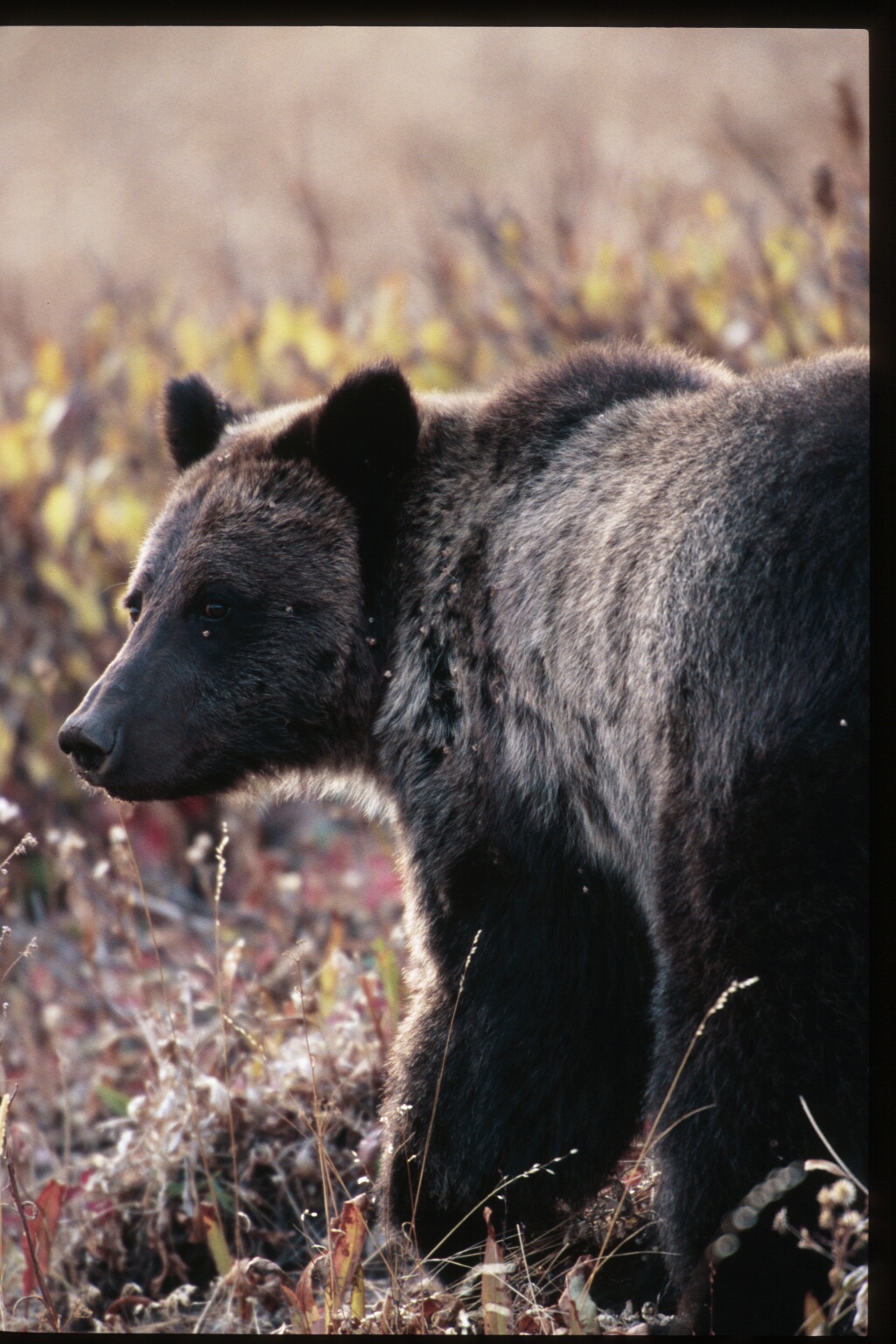
Photo Copyright Jim Robertson

Photo Copyright Jim Robertson

March 2014: As British Columbia prepares for its annual spring grizzly bear hunting season, researchers are protesting that the hunting quotas put in place by the province are too high.

The British Columbia Government has cited that some sub-populations of bears have recovered, and therefore has opened up areas that have been closed to hunting, increasing the grizzly bear kill quota from 1,700 to 1,800. This is based on estimations by the Government of a population of around 13,000 to 14,000 grizzlies.

However, biologist at the Raincoast Conservation Foundation and the University of Victoria Paul Paquet argues that the data that has informed these estimates is inaccurate, as the methods used to collect it are outdated. Bear numbers are calculated by various techniques such as aerial surveys and traps that snag hairs of passing bears. “In many cases [the population estimate] will be based on assumptions that are maybe 10 years old,” explains Paquet, “None of this is easy, obviously. But we need to take account of the uncertainties.” Due to the way in which the data is collected, Paquet believes that the bear population could be as low as 8,000, or higher than 15,000.

Based on their findings the British Columbia Government has set a ‘maximum allowable mortality rate’ of 6 per cent of the grizzly population per year. However this mortality rate, put forward researchers, doesn’t take into account deaths by unnatural causes, such as road accidents and hunting, meaning that more bears die than the 6 per cent quoted by the Government, leading to ‘overkills’. In order to reduce the risk of overkills to a safe level, the researchers conclude that there needs to be an 81 per cent reduction of the target. “Because these are long-lived, slow-reproducing populations, they don’t necessarily recover from overkill,” Paquet explains.

Paquet along with Kyle Artelle – a conservation ecologist at Simon Fraser University in Burnaby, Canada – co-authored a letter sent to Science last week. A total of four leading scientific researchers, including Artelle and Paquet, have signed a letter questioning the province’s estimates and expanded killing zones. The concerned researchers also spoke to the journal Nature in an attempt to open the quota to debate and raise awareness of the issue.

Although the grizzly bear is listed as ‘threatened’ under the Endangered Species Act in the United States, it is not listed under Canada’s Species at Risk Act, and is not protected by the Canadian Government. British Columbia boasts a quarter of the population of all North American grizzlies, however the bear’s habitat in certain areas may be under threat. The province does have protected areas, including the Khutzeymateen Grizzly Bear Sanctuary, but this area is under pressure from firms exploring the possibility of implementing a pipeline here. In the Purcell Mountains, there are plans to build a giant ski resort near the Jumbo Pass, which would threaten the north-south migration of the grizzlies.

Read our Field guide to grizzlies here, which has details on their habitat, threats, diet, and where to see them in the wild.
Teen Responsible for Hunting Accident Avoids Criminal Charges

http://www.simcoe.com/news-story/4425403-essa-teen-responsible-for-hunting-accident-avoids-criminal-charges/

Alliston Herald

BARRIE – A 16-year-old Essa boy who accidentally shot his father and brother in a hunting accident last year has been discharged of criminal charges following a ruling Thursday at the Barrie courthouse.

In January, the court heard how the teen thought he was shooting a wild animal near their Baxter home Nov. 5

According to the testimony, he mistook the carcass of a deer being pushed by his dad and brother in a wheelbarrow along

Photo Copyright Jim Robertson

Photo Copyright Jim Robertson

the train tracks as a bear or a cougar.

The shooting happened at 6 p.m. when it was dark outside.

A slug from a single shotgun blast went through his father’s leg and entered his brother’s hip, requiring surgery.

At the hearing in January, he pleaded guilty to careless use of a firearm.

During the presentencing, the court also heard how the boy had an impeccable record prior to this incident and held top marks at school.

The boy cannot be named under the provisions of the Youth Criminal Justice Act.

Judges can issue an absolute discharge if it’s in the person’s best interest and if there is no threat to the public. As such, the teen will not have a criminal record.

The bear facts; What’s a bunch of starving cubs when there are votes to be had?

Bear

http://www.chroniclejournal.com/content/news/local/2014/02/22/bear-facts-what%E2%80%99s-bunch-starving-cubs-when-there-are-votes-be-had

Saturday, February 22, 2014 – 08:00
in Columns

Commentary
By Barry Kent MacKay
Re Bear Hunt Needs An Economic Angle — editorial, Feb. 11:
Because Kathleen Wynne was a bit of an outsider — Ontario’s first female and openly gay premier — I had hoped that transparency and citizen democracy would benefit, and policy would derive from logic and compassion. I was wrong.
Prior to 1999, in addition to a fall hunt, it was legal in Ontario to hunt black bears in the spring. Bait, often sweet pastry and fats, would be placed in front of blinds or tree stands — and the bears, ravenous from months in their dens without food, would approach. They were easy targets. Although many local hunters opposed the practice, they usually remained silent because it did bring money into the more remote, northern areas.
Hunters were only supposed to shoot males, but too often they shot females.
The Ministry of Natural Resources (MNR) estimated, from the number of females shot, that more than 270 cubs were orphaned each spring. Cubs are dependent on their mothers; so, when orphaned, they tend to die from predation or slowly starve to death. The few who survived were brought to wildlife rehabbers — but most simply died, lost in the bush.
Concerned citizens were able to convince the Ontario government to end the spring hunt. But, the fall hunt was extended, and the overall number of bears killed by hunters was nearly the same as before.
The Ontario Federation of Anglers and Hunters (OFAH) was outraged, and started a massive campaign of bear reporting. In 2003, a Nuisance Bear Review Committee recommended that the MNR take a lead role in responding to “nuisance” bear reports, including threats to human safety. Thus, the MNR’s Bear Wise program was born.
Although the program was successful, OFAH continues to claim it was not. And while there was, on average, no increase in conflicts between humans and bears, attacks on humans by bears, or the size of the bear population, OFAH and others somehow argued that all three increased. The campaign also pushed a very emotive button among people in Northern and central Ontario, suggesting that the government was more responsive to the concerns of the larger population living in the more urbanized south (where bears are rare or absent, but votes are numerous).
In 2008, then-Minister of Natural Resources, Donna Cansfield, wisely ordered an assessment of Bear Wise. Published in January 2009, the assessment presented dozens of suggestions on how it could improve. The next year, then Premier McGuinty removed Cansfield as the minister.
In May 2012, McGuinty quietly, and without consultation, conducted a massive scale-back of the Bear Wise program. Then, in October, he abruptly quit, handing leadership of the party, thus the province, to Kathleen Wynne.
And what did she do? We were promised a better, more open, and transparent government. But instead, the premier began the onerous task of dismantling many of Ontario’s environmental protection laws including the Endangered Species Act, the Planning Act, the Bear Wise Program and re-introducing the spring bear hunt.
Apart from the sad fact that people seem to believe there are more bears and more conflicts (neither contentions supported by the MNR’s own research), there is simply no way that shooting bears attracted to baits in the bush will mean that the same bear that might concern humans later on is the one shot. Shooting, itself, creates the risk of wounding bears, who can become aggressive. Bears tend to avoid humans, and the moms will not attack if their cubs are approached. But, availability of human food conditions bears to search for such foods — ironically exacerbating the problems that concern people.
Now, in the winter, female black bears are in their dens. They are not truly hibernating, but their metabolism has slowed, and they will soon give birth to tiny cubs. Smelling bait, the females will move in, but will tell their cubs to hide. If a mother bear is lucky, she’ll be recognized as a female, and spared; but she may well be shot, and then her cubs are doomed.
And why? Kathleen Wynne may think that, by making it a “test” and restricting the spring hunt to several communities, she will not arouse too much criticism from compassionate voters (while placating those northerners angry at cancellation of the spring hunt back in 1999). What are a few hundred starving baby cubs when there are votes to be had?

Barry Kent MacKay is a founding director of Animal Alliance of Canada and Canadian senior program associate with Born Free U.S.A., a non-profit animal advocacy based in Washington, D.C.

The economics and ethics of trophy hunting

BY JUDITH LAVOIE, MARCH 2014, FOCUS ONLINE
Studies call into question BC Liberals’ plans to expand bear hunting.
The magic of watching black bears overturning rocks and scooping up crabs on a Tofino beach, the once-in-a-lifetime excitement of seeing a Spirit Bear near Klemtu or witnessing the awe-inspiring power of grizzlies feeding on salmon in the Great Bear Rainforest are vignettes of BC that both tourists and residents carry close to their hearts.
So it is not surprising that a study by the Center for Responsible Travel at Stanford University in Washington concludes that live bears are worth more in cold, hard cash than dead bears. Not surprising, that is, to anyone except BC’s provincial government.
Instead of boosting the profitable business of bear viewing, the government is looking at extending the length of the spring black bear hunt and is re-opening the grizzly hunt in three areas of the Kootenays and one in the Cariboo—all formerly closed because of over-hunting.
Another indication of where provincial sympathies lie came during the first week of the spring sitting of the Legislature, when government introduced changes to the Wildlife Act—changes that will allow corporations, not just individuals, to hold guide outfitting areas, making it easier for a group of people to jointly purchase territories and reducing liability for individual owners. Assistant guides will no longer have to be licensed, allowing guide outfitters more flexibility during peak periods, something the industry says will reduce red tape.
Forests, Lands and Natural Resource Operations Minister Steve Thomson said in the Legislature, “Proposed amendments to the Wildlife Act will help provide the guide outfitting industry, an industry that generates $116 million in economic activity each year, with additional business certainty.”
What he didn’t note is that bear viewing is far more lucrative for BC. In 2012, the Center for Responsible Travel found that bear viewing in the Great Bear Rainforest generated 12 times more in visitor spending than bear hunting and 11 times more in direct revenue for the BC government than bear hunting by guide outfitters—$7.3 million for bear viewing and $660,500 for non-resident and resident hunting combined. As for jobs, bear-viewing companies in the Great Bear are estimated to seasonally employ 510 people while guide outfitters generate only 11 jobs.
Despite such statistics and a growing antipathy to allowing well-heeled hunters to slaughter top predators for the sake of a rug on the floor or head on the wall (a 2013 poll found 88 per cent of BC residents opposed trophy hunting, up from 73 per cent in 2008), the government seems determined to expand the hunt.
Russ Markel of Outer Shores Expeditions, a company that takes tourists to wild areas of BC’s coast on a wooden schooner, feels trophy hunting adversely affects bear tourism, so expanding hunting could adversely affect his—and government—revenues. Markel can’t keep up with the demand for trips now, but an incident near Bella Coola last May left tourists shaken. “It was a horrible situation. People used the area for bear viewing and so the bears got used to it and then some random guy with a rifle turned up and a bear was killed,” he said.
The Guide Outfitters Association of BC, however, states: “Guide outfitting and wildlife viewing have co-existed for two decades and can continue to do so…It is important we separate the emotion from the science.”
But the science is not settled and there is long-standing controversy over the accuracy of population estimates and veracity of kill numbers.
Grizzly bears are listed federally as a species of special concern. Yet in BC, between 2001 and 2011, out of an estimated population of 15,000 bears, more than 3500 animals were killed, including 1200 females, according to a Raincoast Conservation Foundation study. More than 2800 of those animals, including 900 females, were killed by trophy hunters. Others were killed by poachers, accidents or conservation officers.
A Ministry of Forests, Lands and Natural Resource Operations spokesman said in an email that the decision to re-open hunts is based on the best available science and is focused on areas where increasing grizzly populations can sustain a conservative hunt. A recent peer-reviewed study, co-authored by two provincial wildlife biologists, re-affirmed that grizzly populations are being sustainably managed.
But Raincoast Conservation senior scientist Paul Paquet scoffs at such claims. “Regional kill rates for sub-populations that are being hunted are much higher and not sustainable,” said Paquet, who co-authored a paper showing that, over the last decade, kills frequently exceeded targets.
As for black bears, the province estimates there are 120,000 to 160,000 black bears in BC and the harvest in 2012 was 3876—a number based on a sample survey of hunters—which is well below the sustainability level, said the ministry spokesman.
Raincoast Conservation executive director Chris Genovali questions the numbers and said kill numbers could be much higher. “They shouldn’t be considering extending the season when they have no reliable or accurate estimate of the number of black bears in BC. That’s disturbing,” he said.
NDP environment critic Spencer Chandra Herbert is also uncomfortable with government numbers. “Government does not have the evidence to back up what it’s doing because it has cut about 25 percent of the folks who would be out counting bears, looking at habitat issues, and enforcing poaching laws,” he said. But Chandra Herbert stopped short of committing the NDP to ending the trophy hunt. “We would actually do the science,” he said.
Growing awareness of the trophy hunt is fuelled by media pictures of slain bears and anyone picking up a hunting magazine is bombarded by images of jubilant hunters trying to make the animal they have just blown out of existence appear lifelike.
Barb Murray of Bears Matter, a group spearheading a petition asking the province to end the hunt, said, “We have wealthy people from the US and China coming to BC to kill our biggest and best.”
As pressure mounts for a close look at the ethics and rationale of trophy hunting, many question government’s insistence on continuing and expanding the hunt. Is it a leftover from the Liberal’s 2001 decision to immediately scrap an NDP-imposed moratorium on grizzly hunting or pressure from interest groups?
“Given widespread public disapproval for this ethically and culturally unacceptable trophy hunt, current provincial management of grizzlies seems to be driven more by bad political science than good biological science,” said Genovali.
Change may lie in the hands of First Nations. In 2012, Coastal First Nations banned trophy hunting in the territories of nine member nations—an area covering most of the Great Bear Rainforest—but the province continues to claim jurisdiction.
Heiltsuk tribal councillor Jess Housty hopes the recent economic study will bring change. “Last fall we learned the science used to justify the bear hunt is deeply flawed. Now we see the economics are completely backwards,” she said.
Coastal First Nations are trying to educate hunters, including approaching them in the field. “If the Coastal First Nations’ Bears Forever campaign has taught trophy hunters anything, I hope it’s that 9 out of 10 British Columbians support the Nations on the front line and that their unethical and unsustainable practice of killing bears for sport will no longer happen in the shadows,” Housty said.
The First Nations campaign complements Raincoast Conservation’s effort to buy up guide-outfitting licences, which, so far, has eliminated trophy hunting in about 30,000 square kilometres of the BC coast.
Another tactic is pressure on other countries. In 2004, after intense lobbying from NGOs, the European Union banned importation of grizzly bear parts and the ban stands today, despite challenges by the federal and provincial governments.
Meanwhile, Barb Murray of Bears Matter is pinning her hopes on local pressure. “The senseless killing of grizzly bears is morally indefensible and has no place in modern wildlife management practices and policies. Killing these magnificent creatures for sport and bragging rights does not, in any way, contribute to the conservation of the species or increased safety for humans,” says the petition going to Premier Christy Clark.
http://www.focusonline.ca/?q=node/691

Photo Copyright Jim Robertson

Photo Copyright Jim Robertson

Stop Ontario’s Spring Bear Hunt

Stop Ontario’s Spring Bear Hunt – Action Needed!
URGENT!  Please send Sign-On letter!
Orphaned bear cub
Take action now!

Dear Friends of Wildlife

Premier Kathleen Wynne’s decision to allow a Spring Bear Hunt in Ontario will result in the death of hundreds of small bear cubs just like this one.

Attracting hungry adult bears with food bait when they are coming out of a long hibernation and easily shot by a hunter hiding in a nearby tree blind is a cowardly act made worse by the small dependent cubs that are left to die a slow death of starvation.  Sometimes hounds are used to track and tree bears for hunters to shoot. Wounded bears fall to the ground where the hounds attack them. Hounds may also attack cubs that are stranded on the ground without their mothers.

You and I can make a difference in stopping this morally-indefensible hunt. If you live in Ontario:    

  • Add your name to the Sign-On letter. Even if you have signed other petitions or sent a letter, please send this one as it will go to all Ontario MPP’s, sending a strong message that there is province-wide opposition to a Spring Bear Hunt.
  • Make the letter your own by changing the subject line, first paragraph or adjusting the order of others.
  • Second, send a response to the Environmental Bill of Rights (EBR) consultation. The comment can be as brief as saying you are ‘strongly opposed on moral grounds to hunting bears in the spring when they are caring for very young dependent cubs’ or you can add a different point or two taken from the Sign-On letter. Click here to view the EBR posting or go directly to the comment page.

Please forward this to family and friends who share your love of wildlife and use social media to get the word out, particularly among young people, because we know they care.

Ontario Wildlife Coalition

Conservationists worried about impending bear hunt

VANCOUVER — The Globe and Mail, Sunday, Feb. 23 2014, 10:20 PM EST

The way professional wildlife photographer John Marriott sees it, the British Columbia government has just hung a target on Big Momma, a grizzly bear so huge – and so photogenic – that he calls her “a photo tour superstar.”

The female grizzly, who has silver-tipped dark brown fur and a perpetual pout that almost got her named Sad Face, lives in one of four wildlife management units the B.C.

Photo of bears in the wild Copyright Jim Robertson

Photo of bears in the wild Copyright Jim Robertson

government is planning to reopen to bear hunting this year. Mr. Marriott fears the big bear – a top attraction for the photography safaris he leads in the Chilcotin Mountains in the Cariboo – will be tracked down by a trophy hunter once the area is reopened.

More Related to this Story

· Mark Hume Ecogroups hope to oust bear-hunting guides from rainforest

http://www.theglobeandmail.com/news/british-columbia/grizzly-bear-kill-limits-being-broken-across-bc-study-says/article15301716/

Grizzly bear kill limits being broken across B.C., study says

MARK HUME

VANCOUVER — The Globe and Mail

Published Wednesday, Nov. 06 2013

The B.C. government has long justified its controversial grizzly bear hunt by saying it’s based on sound science.

But new research by a team of biologists from three universities has found the kill limits are being exceeded in many areas of B.C. – up to 70 per cent of the time – because of unpredictable factors, such as bears getting killed in collisions with vehicles, or being shot by ranchers who don’t report the incidents.

“The bottom line is human-caused mortality from all sources, 85 per cent of which is hunting, is consistently over target. These overkills are frequent and they are geographically widespread,” said Chris Darimont, a conservation scientist at the University of Victoria, one of several authors on the study.

He said by allowing too many bears to be killed, the government is “playing Russian roulette” with B.C.’s vulnerable grizzly bears, because the population in some regions could easily get knocked down to a level from which it couldn’t recover.

“If I was managing bears I wouldn’t manage them this way if I wanted to have them here in the future,” said Dr. Darimont, who called for a more precautionary approach.

The B.C. government’s support for a trophy grizzly bear hunt has been under attack from environmental groups, and in 2004 the European Union banned the import of grizzly bear trophies from B.C., saying the hunt was not environmentally sound.

But the government has worked with an independent panel of grizzly bear scientists to set harvest limits intended to ensure the sustainability of bear populations. Under the strategy, the province is divided into more than 50 sub-zones, or grizzly bear population units, where the harvest levels vary, depending on the number of bears in the area, the estimated productivity of the population and the known number of bear mortalities.

“It’s very complex but we noted they didn’t incorporate all the dimensions of uncertainty in setting those limits,” Dr. Darimont said.

“You need to know a few things if you want to allocate how many bears will be killed,” he said. “You need to know how many bears there are … and for most of the province there are no on-the-ground estimates … you also need to know … how fast do bear populations grow and therefore how much can we skim off the top?”

To further complicate the picture, he said, the government needs to know the level of unreported mortalities, where bears are shot by people who don’t report the kills.

“Those are the three pieces of information the ministry needs to calculate the [harvest] limits,” Dr. Darimont said. “But any one of those things has tremendous uncertainty around them. How many bears are there? Who knows? How fast can they reproduce? Who knows? What’s the true level of unreported mortality? Who knows?”

By studying all the grizzly bear data available over about an eight-year period, the researchers from UVic, Simon Fraser University and the University of British Columbia developed simulations based on a range of population and mortality estimates. Using the provincial estimates, they found overkills in 19 per cent of the population units. But that number climbed when they factored in the range of uncertainty.

“We did the audit again and found that not in 19 per cent of cases, but closer to 70 per cent of cases, there were likely overkills,” Dr. Darimont said.

Kyle Artelle, a PhD student at SFU and lead author on the paper, said if the government wants to keep the level of risk of overkilling fairly low, it will have to eliminate hunting in about one-third of the population units.

In addition to their university affiliations, Dr. Darimont and Mr. Artelle both work for the Raincoast Conservation Foundation, a non-profit which 10 years ago took the provincial government to court to get grizzly bear mortality data released. That data was the basis for the study.

Ontario rejects Barker call on spring bear hunt

By Keith Leslie, The Canadian Press
TORONTO – TV personality and animal rights activist Bob Barker tried but failed Tuesday to convince the Ontario government not to bring back the spring bear hunt, which the province cancelled in 1999.

                                “I feel deep concern about any animal mistreatment any place in the world, and this is in one of my favourite places, Canada, and I want to try to do something about it to protect these bear cubs,” Barker said in an interview from his home in Hollywood, Calif.

Barker, who last year helped fund the transportation of several elephants from the Toronto Zoo to a refuge in the United States, said it’s “barbaric” to let cubs starve to death after their mothers are lured from the den by bait and then killed by hunters.

“You don’t have to be a rocket scientist to realize you’re murdering every cub,” he said. “I urge every Canadian who knows anything about this to step up to the plate and take a swing for the cubs.”

Ontario Natural Resources Minister David Orazietti disputed Barker’s claims about cubs being left to starve to death during a spring bear hunt.

“I have a ton of respect for Mr. Bob Barker, but I’m not sure where he’s getting his facts on this issue, and that’s not in fact the case at all,” he said.

Ontario plans a pilot project with a limited hunt in eight of 95 wildlife areas this spring to see if it will reduce the number of emergency calls and instances where police are forced to shoot nuisance bears, added Orazietti.

“I’m not sure if Mr. Barker is aware that eight other provinces in Canada and all territories have full provincewide or territory-wide spring bear hunts,” he said. “This is a much smaller, targeted approach to deal with really what’s become a public safety issue.”

The Ontario hunt will be non-profit and limited to local hunters.

Barker called the spring bear hunt “unethical” and “legislated cruelty” that has nothing to do with science, and said it doesn’t matter that Ontario is trying only a small scale pilot project.

“Whether it’s an experiment or it’s going to last for 30 years, it is just totally unacceptable in today’s society,” he said. “I just can’t understand how they can possibly do this.”

Zoocheck Canada said there was no scientific rationale for the return of the spring bear hunt, and called the public safety argument “flawed.” The animal protection charity said research shows that bear-human interactions are closely linked to variation in natural food sources, not to actual bear population numbers.

The Ontario Federation of Anglers and Hunters urged the public to make sure “big city animal rights extremists” don’t derail the pilot project for a spring bear hunt.

“While the partial reinstatement of a hunt is a positive step, we believe that all of bear country deserves to experience the benefits of a spring hunt,” the group said in a statement.

Barker urged the province to explore other options such as laws to stop people from leaving food or garbage where bears can get at it, but Orazietti said Ontario had spent $35 million on alternative approaches to nuisance bears without great success.

“We’ve had over 50 resolutions from municipalities wanting to opt in to this pilot program, and that certainly speaks to the sense of urgency that communities have in northern Ontario in terms of dealing with this,” he said.

Orazietti said public safety was his main concern, and gave alarming examples like one northern community where a 400-pound brown bear wandered the streets on Halloween as kids walked about with bags full of candy.

“We have young kids in schools who can’t go out for recess because bears are in their playground,” he said. “Teachers are wearing bear whistles to call the students back into the safety of the school.”

Orazietti said it’s “too early to say” if the spring bear hunt in Ontario would be expanded next year, and will depend on the results of the pilot project.

“I think the most important thing we need to do now is to ensure that the proposed pilot project has the desired effect, including a reduced number of 911 calls,” he said.

http://www.northumberlandnews.com/news-story/4383746-ont-rejects-barker-call-on-spring-bear-hunt/

Banff bears use highway crossings to find mates


Photo copyright Jim Robertson

Photo copyright Jim Robertson


METRONEWS, By Staff The Canadian Press, February 18, 2014

BANFF, Alta. – Why did the bear cross the road?

A new study suggests that at least one reason bears in Banff National Park are crossing the Trans-Canada Highway is to find mates — vindication for a series of wildlife crossings installed by Parks Canada on the busy route to try to keep bears on either side of it genetically linked.

“It is clear that male and female individuals using crossings structures are successfully migrating, breeding and moving genes across the roadway,” says the paper published Tuesday in the Proceedings of the Royal Society, Britain’s national science academy.

The Trans-Canada Highway cuts through the heart of Banff National Park. For decades, scientists have been concerned that Canada’s busiest east-west road link was isolating grizzly and black bear populations on either side of it — especially after high wire fences were built along the road to reduce wildlife traffic deaths. So between 1982 and 1997, more than two dozen underground and overhead crossings were built to allow wildlife to move north-south.

In 2006, University of Montana ecologist Mike Sawaya began a three-year research project to see if the crossings were working. After analyzing DNA from nearly 10,000 hair samples collected from strategically placed strips of barbed wire, Sawaya has concluded that they are. Last summer, he published research proving that bears were using the crossings. His latest paper suggests they’re crossing for more than a patch of tasty berries. “We found enough movement and migration across the highway to infer that, yes, the crossing structures are allowing the transfer of genes.”

Sawaya said that grizzlies on either side of the road had been slowly becoming more genetically distinct from each other, although the effect wasn’t pronounced in black bears. DNA analysis of the hair samples shows that the two ursine neighbourhoods are gradually coming back together again. “The grizzly bear population was fragmented and we’re starting to see it be restored,” said Sawaya. “If the crossings continue to work the way they are, I think we’re going to see the dissolution of that genetic structure over time.”

The research team even documented how individual bears — both black and grizzly — were able to mate with a number of different females and wound up with offspring on both sides of the highway. Previous research conducted in California had suggested the only animals that use crossings are juveniles too young to breed. Sawaya found that wasn’t true. Almost half the black bears and more than one-quarter of the grizzlies that crossed were successful breeders. In fact, males who crossed most often seemed to be the ones with the most offspring.

And Sawaya said it’s probable that the crossings are being used by other animals such as wolves, lynx or cougars for the same purposes. “Certainly, you can draw more conclusions about other carnivores and other species that have similar characteristics. This is very indicative of how these crossing structures would perform for other large mammals.”

It’s good news for wildlife managers looking for ways to mitigate the effects of roads through wilderness.

Parks Canada now has a total of 44 Trans-Canada crossings in Banff, almost one every two kilometres. The solution was expensive — the overpasses cost about $1 million each — but Parks Canada carnivore specialist Jesse Whittington said they were worth it. “For the first couple years, they didn’t look like they worked very well,” he said. “Over time, grizzly bears have learned to use them on a regular basis.”

Whittington said the model has already been used in the U.S. for pronghorn antelope. “There are people looking to Banff from all over the globe to see how well these crossings are performing,” Sawaya said. “At the time, no one really knew they worked. They just assumed intuitively that they would … and it’s comforting to find that, yes, they are working as they were originally intended.”

— By Bob Weber in Edmonton

http://metronews.ca/news/canada/945896/banff-bears-use-highway-crossings-to-find-mates/

Ted Nugent pushes bear hunting in N.B.

Outspoken, gun-toting American rocker Ted Nugent is promoting the spring bear hunt in New Brunswick with his Sunrize Safaris.

The website tednugent.com offers hunters a chance to go to New Brunswick and shoot a trophy black bear

Nugent has hunted bear in New Brunswick before.

Ted Nugent

Ted Nugent has hunted black bear in New Brunswick in the past. (CBC)

He chronicles one such trip on the archerytalk.com blog in 2010 in a post titled: “Hi Spirit: New Brunswick Bruins. For a rockin’ good time, try for a far-North spring blackie.”

On that occasion, Nugent arranged for a bear hunting trip in New Brunswick after his band “rocked the house royal with Lynayrd Skynyrd (sic) in Barrie, Ontario, outside Toronto, Canada’s number one cosmopolitan megacity,” the blog post says,

Nugent was hunting with Slipp Brothers Ltd. Hunting and Outfitting in Hoyt, south of Fredericton. On the third day of hunting, with daylight running short, Nugent encountered a bear.

“Right then a big black blob appeared 60 yards out in the dense boreal scrub,” wrote Nugent. “My heart pounded like a double live gonzo big bass drum gone Motor city Mad Man full-tilt boogie. I love when that happens.”

Now Nugent is offering others the chance to experience that feeling with a Sunrize Safari to New Brunswick from June 1-7 for “the bear hunt of a lifetime,” with Toby Nugent — Ted’s son — and Paul Wilson of Sunrize Safaris in camp.

The cost of the outing in $3,550 per hunter plus $184.19 for a licence.

A similar outing for bear hunting in Quebec near Malartic is also offered by the company at a cost of $3,500.

Bear hunting has been on the decline in New Brunswick in recent years.

In 2004, more than 3,600 non-residents purchased bear licences. Last year, that number had fallen to below 2,000.

68439_10151399495155861_1116657731_n

US government could drive grey wolf to extinction

http://www.salon.com/2014/02/14/outrageous_the_u_s_may_take_the_grey_wolf_off_the_endangered_species_list_paper/

Friday, Feb 14, 2014

OnEarth About 300 wolves live in the nearly 2-million-acre swath of central Ontario forest known as Algonquin Provincial Park. These wolves are bigger and broader than coyotes, but noticeably smaller than the gray wolves of Yellowstone. So how do they fit into the wolf family tree? Scientists don’t agree on the answer—yet it could now affect the fate of every wolf in the United States.

That’s because last June, the U.S. Fish and Wildlife Service proposed removing gray wolves across most of the country from the endangered species list, a move that would leave the animals vulnerable to hunting. To support its proposal, the agency used a contested scientific paper—published, despite critical peer review, in the agency’s own journal—to argue that gray wolves never existed in the eastern United States, so they shouldn’t have been protected there in the first place.

Instead of the gray wolf, the service said, an entirely different species of wolf—the so-called “eastern wolf,” a species whose remnants perhaps survive in Algonquin Park—once inhabited the forests of eastern North America. Canid biologists have argued over the existence of this “lost species” for years. Yet researchers on all sides say that even if the Algonquin wolves are a separate species, that shouldn’t preclude continuing protections for the gray wolf.

On Friday, an independent panel of five leading geneticists and taxonomists came down hard on the agency’s proposal to delist gray wolves, unanimously concluding that the service had not relied on the “best available science.” Individual panel members described “glaring insufficiencies” in the supporting research and said the agency’s conclusions had fundamental flaws.

“What’s most significant,” says Andrew Wetzler, director of land and wildlife programs for the Natural Resources Defense Council (which publishes OnEarth), “is that this is coming from a group of eminent biologists who disagree with each other about the eastern wolf—and even so, they agree that the agency hasn’t properly understood the scientific issues at hand.”

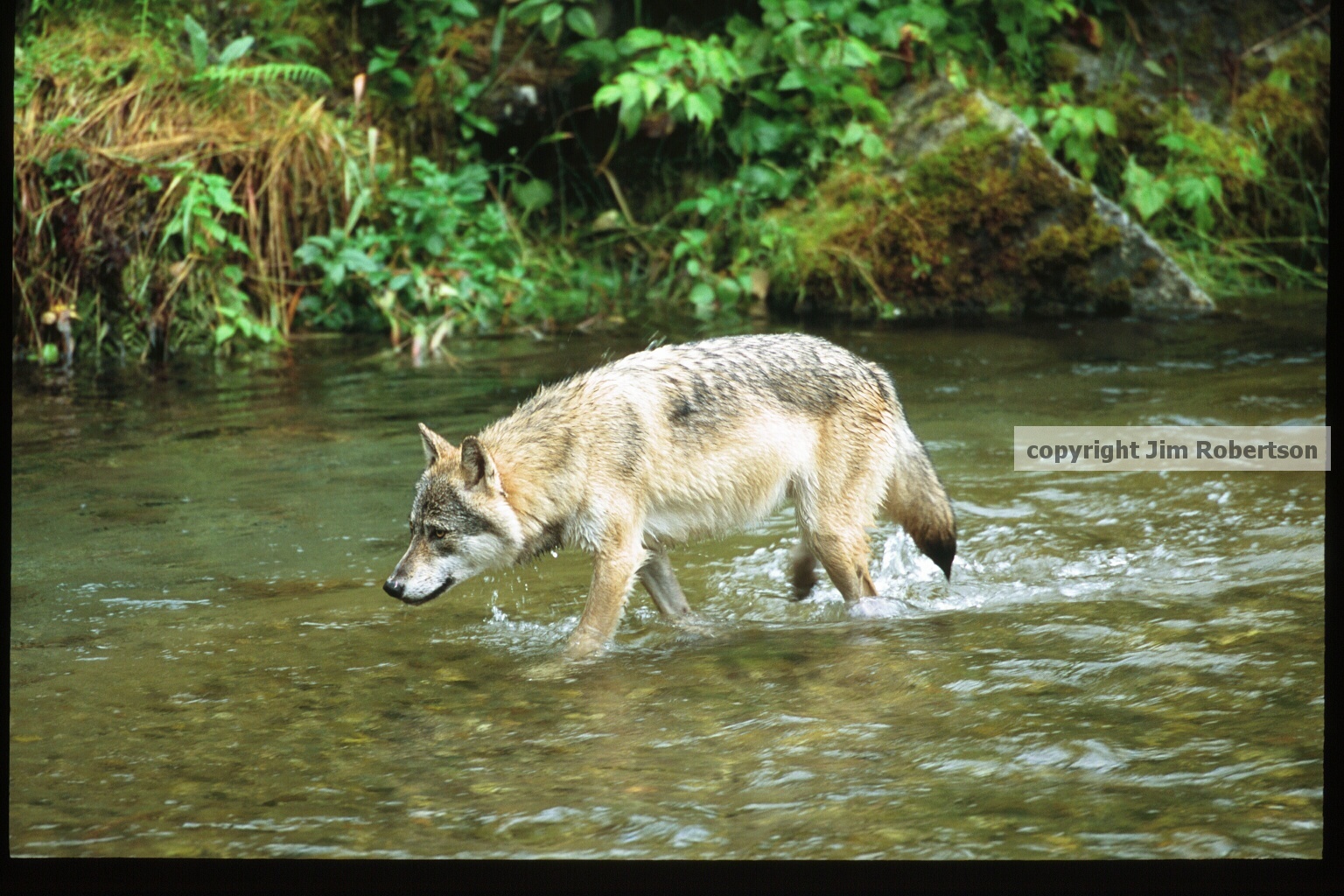
copyrighted wolf in water