If wolves could manage humans it might look like this:

DRAFT Management Plan for Humans (Homo sapiens) in British Columbia

By Ken S. Lupus et al., B.C. Ministry of Wild Wolves

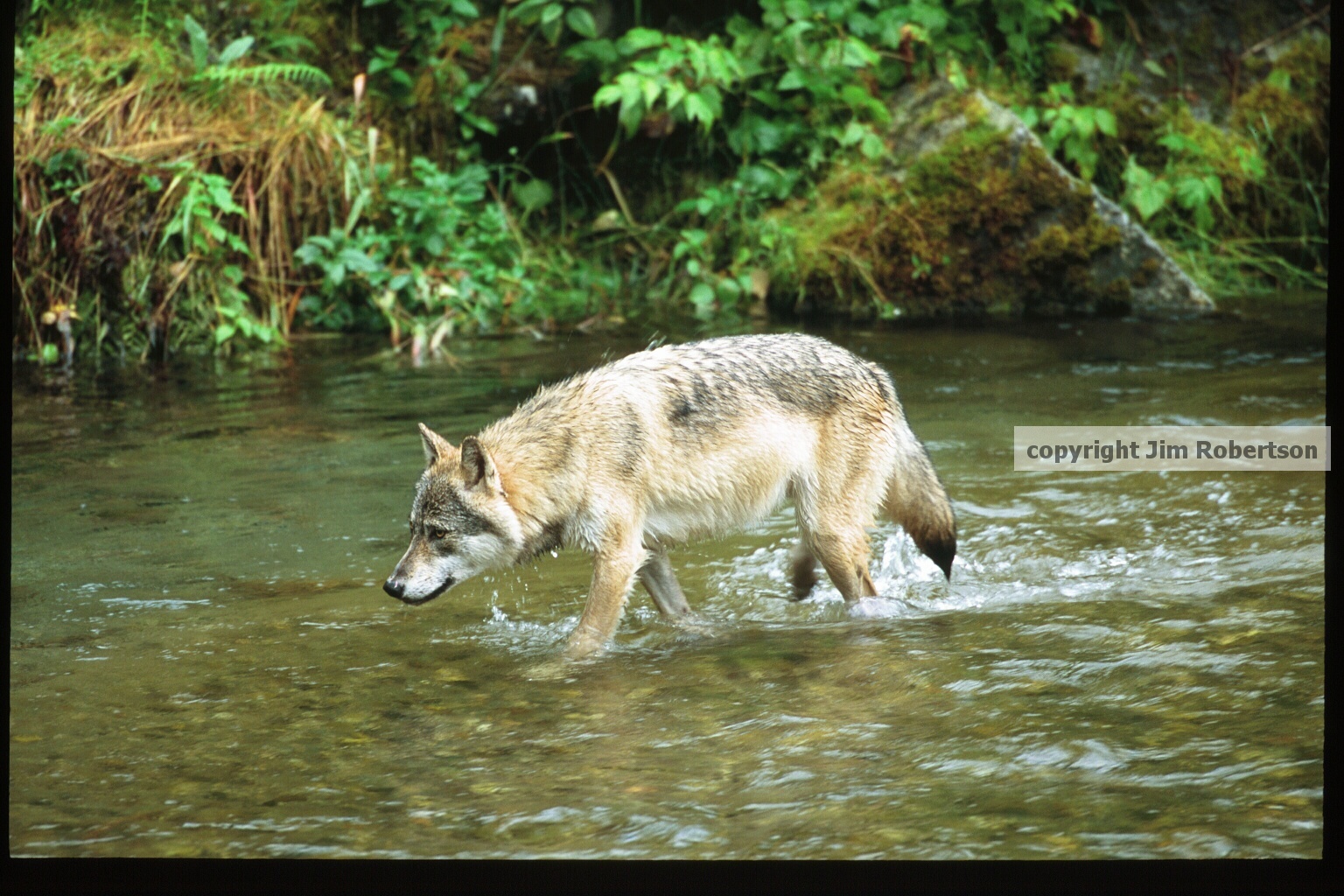
(EXECUTIVE SUMMARY)copyrighted wolf in water

We model the structure of our plan after the B.C. government’s “Draft Management Plan For The Grey Wolf In British Columbia.” Although our plans are fundamentally different in how we decide to treat one another, we similarly assert that this document is premised on the best available scientific information. (Note: we consulted with Raincoast biologists and
large carnivore experts Drs. Chris Darimont and Paul Paquet).

Notably, however, our management plan for humans draws upon an additional and important dimension that shapes policy in advanced civilizations: commonly held ethical values.

As the province did, we begin with some straightforward conservation context. Based on their rapidly increasing numbers and range, humans have been categorized as not at risk by the Lupine Committee of Categorizing Other Animals We Have Never Harmed. We note, however, on the other hand-
and despite thousands of management plans by humans -global biodiversity is severely threatened as a result of human activities.

According to information shared by human sources, Homo sapiens play a very important role in maintaining so-called “game” populations, raising livestock among us wolves in formerly wild landscapes, and saving animals like caribou from rapid extinction due to resource extraction activities. On the other hand, some hunters, livestock groups and government-industrial complexes behind these ostensibly noble acts also comprise a significant threat to wolf safety and welfare. Accordingly, our plan must strike a balance to manage humans for conservation while minimizing conflicts with wolves.

We likewise adopt the same four management objectives stated by our simian colleagues, though with modified details. Topping this list is to ensure a self-sustaining population of humans throughout the species’ range. We suppose that we will have to accept this inevitability. We suspect, however, that this spells trouble for us. If human behaviour remains unaltered – and caribou continue to dwindle and ranchers continue to believe that some god created landscapes with only their cows in mind – we expect a future of increasing conflicts.

Our plan’s second objective is to provide for non-consumptive use of humans. Why not? No harm in setting up some eco-tourism by us wolves to partake in some human-watching. We need not look further than Yellowstone National Park, and Algonquin Park to know that humans can make a mint with sustainable wolf-based eco-tourism.

Unlike the province’s anachronistic seat-of-the pants wolf management plan, however, which was designed by more wanton predators, we have no plans for so-called “consumptive” use of humans. Although humans would be easy pickings, we are just not known to do this. And really, why would anyone kill something for any other reason than to eat?

For sport or for trophy? No thanks. Surely no advanced society would ever condone or endorse that sort of behaviour. Nor
would any real hunter. That just leaves a bad taste in our mouths (and to put how awful that is in perspective, we often eat poop).

Perhaps the most important part of our “Draft Management Plan For Humans In British Columbia” is to minimize the threat to wolf safety caused by humans. Whereas wolves pose a very limited threat to humans, the opposite is certainly not true. For instance, the B.C. government says that approximately 1,200 of us wolves were killed deliberately in 2010 by hunters and trappers for sport, trophy or profit.

While human “wildlife managers” are quick to point out that we wolves can replenish our numbers, even amidst such persecution, our concern is the suffering imposed on us. Imagine the pain when the hot metal of bullets shreds our viscera (or worse, our limbs) or the agony inflicted when one of
us is tormented by a leg-hold trap. Clearly, any management plan should address suffering among highly sentient animals.

Unfortunately, our plan to minimize threats to wolf safety has no details. Given all the technological advantages humans have acquired to use against wolves like high-powered rifles, helicopters, deadly poisons, traps, snares and explosive devices, predator calls to lure us and more, they simply have
the upper hand.

Finally, and again mirroring the B.C. government’s wolf management plan, our fourth objective is to control specific populations of humans where their activities are likely preventing the recovery of a species at risk (e.g.,
endangered populations of caribou). Whereas humans have hatched some vicious scapegoating campaigns and lethal plans for us as last ditch efforts to save caribou from logging or oil and gas extraction, we have yet to find successful methods to control these industries. We therefore appeal to our human friends within B.C. for help.

To conclude, we turn to history to muse about the future. It has taken decades to expunge, in part, the nonsense about wolves portrayed in human generated fairy tales (and not just children’s stories, but also adult constructs such as the perversely and ironically named “North American Model of Wildlife Conservation”). How many more decades will it take to do the same in provincial management plans for wolves?

This article was co-authored with Raincoast Conservation Foundation science director Dr. Chris Darimont and Raincoast senior scientist Dr. Paul Paquet.

Petition: Protect Grizzly Bears By Banning the BC Trophy Hunt

Protect grizzly bears by banning the trophy hunt

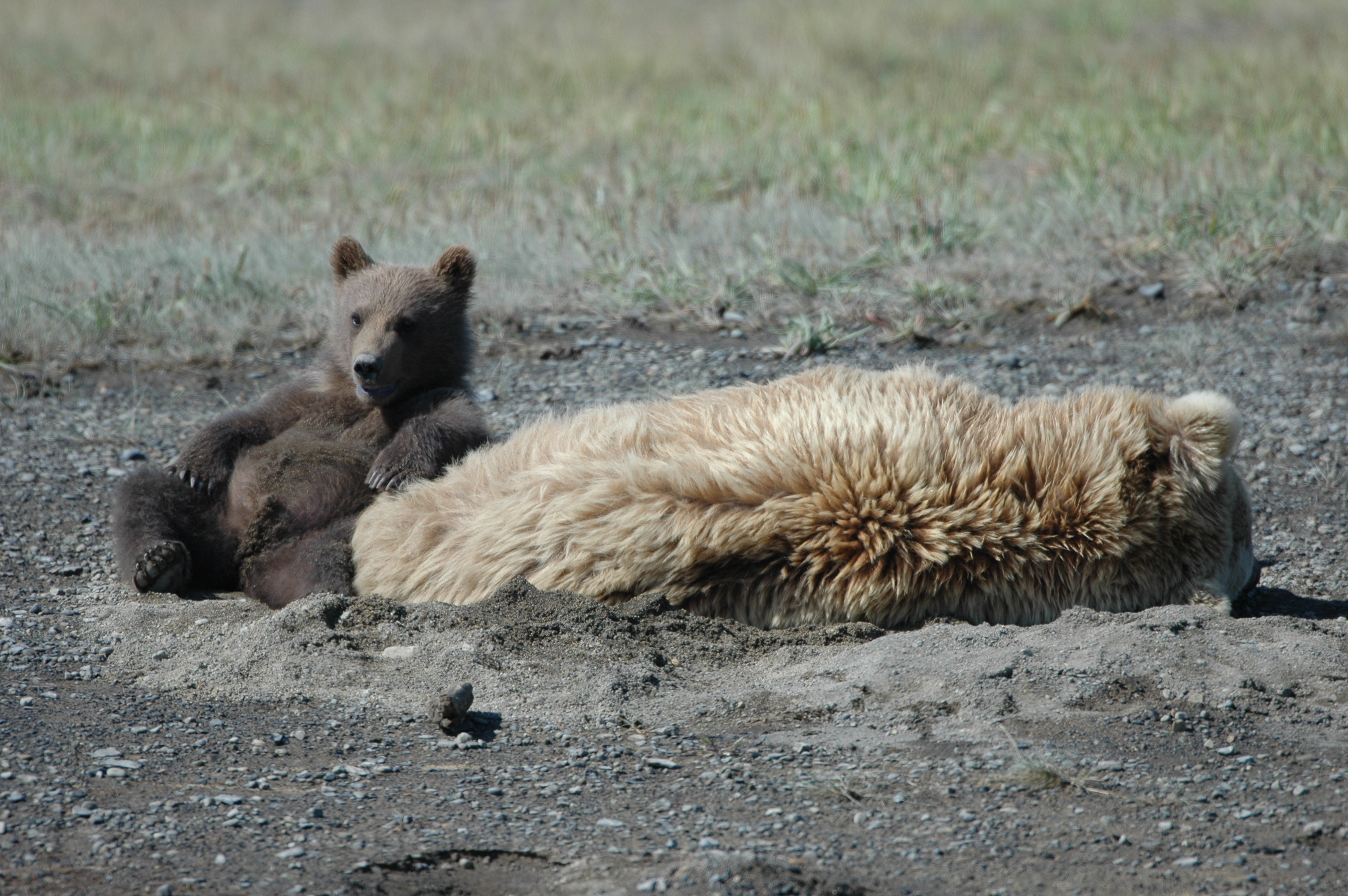
Photo Copyright Jim Robertson

Photo Copyright Jim Robertson

Petition by Bears Matter Ltd.

Over 10,000 grizzly bears have been killed by trophy hunters between 1976 and 2012. More than one third (1/3) of grizzly bears killed by trophy hunters are female. In the Spring hunt female bears may be shot due to mistaken identity leaving their tiny 2-3 month old cubs to perish.

A recent report by the Centre for Responsible Tourism (CREST) in collaboration with Stanford University highlighted that bear viewing produces far more jobs and revenue than the grizzly bear trophy hunt, which costs more for the government to manage than it generates back in revenue. There is simply no scientific, ethical or economic rationale for the trophy hunt.

To:
Honourable Premier Christy Clark, Provincial Government of British Columbia
Honourable Minister Steve Thomson, Minister of Forests, Lands and Natural Resources
Honourable Minister Shirley Bond, Minister of Jobs, Tourism and Skills Training
Honourable Minster Mary Polak, Minister of Environment

As British Columbians, we live in a democracy where the government is duty-bound to heed the voices of the majority and not to pander to a small, vocal segment of the hunting community. As you are aware, opinion polls have consistently shown that the overwhelming majority of British Columbians oppose the trophy hunt of grizzly bears. We urge your government to issue a province-wide ban on the…

Read More and sign the petition: http://www.change.org/petitions/honourable-premier-christy-clark-protect-grizzly-bears-by-banning-the-trophy-hunt?share_id=vFAKCBJnMB&utm_campaign=friend_inviter_chat&utm_medium=facebook&utm_source=share_petition&utm_term=permissions_dialog_true

Biologists warn against proposal to expand grizzly bear hunt

by WENDY STUECK

VANCOUVER — The Globe and Mail

Published Friday, Dec. 06 2013

The B.C. government is proposing to open up grizzly hunting next season in two areas where it’s now banned, despite a recent study that concluded the government is underestimating the number of bears killed each year and recommended a more cautious approach.

Two proposals, posted on the Ministry of Forests website in November, suggest opening grizzly bear management units, or MUs, in the Kootenay and Cariboo regions for limited grizzly bear hunting next spring.

Read More: http://www.theglobeandmail.com/news/british-columbia/biologists-warn-against-proposal-to-expand-grizzly-hunt/article15798712/

Photo Copyright Jim Robertson

Photo Copyright Jim Robertson

Salmon shortages stressing grizzlies

http://www.theglobeandmail.com/news/british-columbia/salmon-shortages-stressing-grizzlies/article15647451/

MARK HUME

VANCOUVER — The Globe and Mail

Published Thursday, Nov. 28 2013

When salmon runs dwindle on the B.C. coast, the stress levels in grizzlies climb, say researchers who examined hair samples collected from more than 70 bears.

And the bears, which gather along rivers in the fall to feed on spawning salmon, take those high stress levels with them into hibernation, perhaps affecting their long-term health, according to a science paper published Wednesday.

The study is expected to add weight to a growing argument that commercial salmon harvests on the West Coast should be managed not just for people, but also to reflect the needs of bears and other wildlife.

“Part of the reason bears might be experiencing stress is the fact we compete with them for food. And we really need to think about our fisheries not only in terms of our needs as humans but also of the needs of other species,” said lead author, Heather Bryan, a Hakai postdoctoral researcher at University of Victoria and a biologist with Raincoast Conservation Foundation.

In 2010, federal department of Fisheries and Oceans scientists John Ford and Graeme Ellis linked killer-whale survival to the abundance of Chinook salmon, and called on the government to consider setting aside allocations of salmon for whales.

Chris Darimont, who co-authored the grizzly-bear study, said it’s clear bears also need a share.

“Our findings highlight the importance of managing fisheries in a way that ensures enough salmon are allowed past fish nets to meet the needs of bears and other wildlife,” said Dr. Darimont, a UVic professor and the science director at Raincoast.

Dr. Bryan said the research showed the stress hormone, cortisol, was higher in bears that ate less salmon.

“That’s not surprising if you think about how stressful it would be to be going into a winter without enough food,” she said.

The long-term health implications for grizzlies haven’t been studied yet by Dr. Bryan, but other wildlife studies have shown that animals with high cortisol levels can have shortened life spans.

Dr. Bryan’s research was possible because of a network of 71 “hair snags” researchers have been monitoring for several years on a grid that covers 5,000 square kilometres on B.C.’s mainland coast. The area stretches from near northern Vancouver Island to around Prince Rupert.

“We were interested in looking at the health effects of long-term salmon declines on bears. And how we did it is we took a few milligrams of bear hair [from each grizzly] and we used that to gain insights into the health of these several-hundred-kilogram animals,” said Dr. Bryan.

She said some of the hair came from the B.C. archives, where samples from bears killed by hunters are kept. But much of it came from the hair snags – barbed wire wrapped around trees marked with fermented fish oil.

“It’s a delicious odour for bears … they come and check it out … they usually only stay a few seconds but it’s usually long enough to leave behind a strand of hair,” said Dr. Bryan.

She said none of the field workers has ever had a dangerous encounter with the bears, despite spending weeks gathering hair samples in prime grizzly habitat.

Working with only a few strands of hair from each animal, Dr. Bryan said she was able to to both measure the level of cortisol and to determine how rich a bear’s salmon diet was. The data showed that when salmon runs declined on B.C.’s Central Coast, in 2008 and 2009, stress levels increased. And when salmon runs increased, as they did in 2010, the stress levels declined.

In 2009, conservationists and ecotourism guides along the B.C. coast reported a huge drop in the number of bears they were seeing along rivers and they blamed the decline on two successive poor salmon runs. Bear watchers speculated many animals had died during hibernation and that others had stopped breeding because they were starving.

Grizzly photo Copyright Jim Robertson

Grizzly photo Copyright Jim Robertson

Former USFWS Whistleblower Says Wolves Illegally Introduced

Just FYI, so you know this is out there…

Non Native Wolves Illegally
Introduced, Says Whistleblower
Former USFWS Official Speaks of Malfeasance, Misappropriated Funds, and Transplanting Wrong Subspecies to Yellowstone

11/04/13

BY QUINCY ORHAI

Half a century after the last native Northern Rocky Mountain Timber Wolf, Canis lupus irremotus, was said to be hunted to extinction locally by public and private efforts, the U.S. Fish & Wildlife Service, in 1995, under then Director Mollie Beattie, presided over the introduction of the Canadian Gray Wolf, Canis lupus occidentalis, into the Northern Rocky Mountain eco-system.

According to whistleblower Jim Beers (former USFWS Chief of National Wildlife Refuge Operations), after Congress denied funding for his agency to carry out the Northern Rockies Wolf Recovery Project, the agency acted illegally as it brought the Canadian wolves into the Yellowstone ecosystem.

Speaking in Bozeman in May 2010, at the Gran Tree Inn, before Congress on wolf recovery issues in 1998 and 1999, and in October 2013 to the Montana Pioneer, Beers insisted that, after Congress denied USFWS funding for wolf recovery, the agency illegally expropriated Pitman-Robertson funds (federal excise taxes required by law to be distributed to the states as reimburse-ments), helping themselves to tens of millions of dollars.

When contacted by the Montana Pioneer for this article, Beers further stated, “The General Accoun-ting Office verified that at least $45 to $60 million was taken, diverted, by USFWS from P-R funds.”

Beers went on to say that the Pittman-Robertson excise taxes, by law, could only be used by State wildlife agencies for their wildlife restoration projects. “These funds were then used primarily…to pay bonuses to top USFWS managers that had no right to such funds [and] to trap wolves in Canada, import them, and release them into Yellowstone National Park.”

Beers, a 32-year veteran USFWS biologist, whose job included overseeing the Pitman-Robertson funds, alleges that the agency misapprori-ated monies for the trapping and transportation of Canadian wolves into the U.S. To conceal its misuse of the funds spent on the project, the true number of wolves imported, and the subspecies brought in, USFWS intentionally did not file mandatory paperwork, according to Beers, that would have established a paper trail. Or, he speculates, somehow that paperwork mysteriously disappeared.

Beers also alleges USFWS failed to file an appropriate and accurate Environmental Impact Statement. In recent comments to the Montana Pioneer, he elaborated, saying, “The EIS was and remains a document of lies, misinformation and woefully incomplete coverage of the matter.”

In print and in public speaking engagements, Beers has claimed the Wolf Recovery Project deliberately dismissed established wolf science and research, including known wolf depredation impacts on livestock and wildlife, and ignored the dangers parasites and diseases carried by wolves present to wildlife, livestock, pets, and humans.

The Canadian Gray Wolf, introduced into Yellowstone Park by USFWS 18 years ago, is widely described in scientific literature as thirty to fifty percent larger than the said-to-be extinct local native timber wolf. The initial 14 and subsequent transplanted wolves were captured in Canada, although wolves that were more genetically similar were available from surplus populations in Minnesota, as reveal-ed by the Smithsonian Institution, in a scholarly work titled: Physiological Basis for Establishing a Northern Rocky Mountain DPS [Distinct Population Segment Area].

The importation of Canadian Gray Wolves was criticized at the time by American biologists who believed the larger wolves would kill more elk, a position many now say has proved correct, and that the introduction of a non-native sub-species was of questionable legality when the smaller-sized native populations were beginning to recover naturally, on their own, positions similar to those advanced by the Farm Bureau’s of Idaho, Wyoming and Montana.

Although the official position of the government is that native wolves were locally extinct, according to Dr. Ralph Maughan, professor emeritus of political science at Idaho State University, with specialties in natural resource politics and public opinion, USFWS reported 48 native wild wolves in Montana in 1994, the year before the controversial introduction of the Canadian Gray Wolf into Yellowstone National Park—mostly timber wolves traveling down from Canada.

On his website, The Wildlife News, Maughan writes: “It’s reasonable to assume that without reintroduction, wolves would have naturally reestablished themselves in most of Montana [under the protection of the Endangered Species Act], but migration would have been slow with a lot of wolves up north before they made it to Yellowstone and Wyoming. Because these wolves were fully ‘endangered,’ rules governing them would have been a lot more strict than with those finally reintroduced in 1995.”

However, the larger and more aggressive central and northern Alberta, Canada wolves USFWS introduced here eliminated any survival chance of native wolves [as a result of competition or elimination], as USFWS knowingly violated the Endangered Species Act, according to Maughnan.
It was and is common scientific knowledge that the native male wolf (Canis lupus irremotus) of the Northern Rockies averaged 90 to 95 pounds at maturity. The wolf USFWS brought in as a replace-ment was a noticeably larger wolf (Canis lupus occidentalis) from north-central Alberta, with mature males topping 140 pounds, and some specimens weighing up to 175 pounds.

According to the Smithsonian study, the native wolf, which local residents claimed existed in small pockets in wilderness areas in the 1990s, generally roamed an area of about 100 square miles, hunting alone or in small groups of 4 or 5 at most. The non-native Canadian gray wolves USFWS introduced to the region typically hunted 300 or more square miles back in their home range, with packs often numbering 20 or more.

Under the direction of Mollie Beattie, USFWS developed the Environmental Impact Statement for the reintroduction of wolves. That EIS made a number of assumptions about bringing wolves back to Yellowstone and the Northern Rockies. Almost none of those assumptions has proven to be correct, according to Toby Bridges of the Montana Chapter of Sportsmen for Fish and Wildlife. Writing in 2010, on the group’s website, Bridges says: “Instead of getting just the 150 wolves Montanans agreed to back in the mid 1990s, the state is now home to likely 1,000 to 1,200 wolves… This year a minimum of 43,500 elk will be eaten alive or killed and left behind by wolves in the Northern Rockies…”

Bridges also states that “The U.S. Fish and Wildlife Service manipulated science, and replaced the native wolf of this region with a totally non-native…larger…and more aggressive wolf, and has consistently underestimated wolf numbers by half or one third of actual numbers.”

According to USFWS, “As of December 31, 2012, the most recent minimum wolf population size determined for Montana was 625 wolves in 147 packs, 37 of which were confirmed breeding pairs.”

Those numbers are inaccurate, says Bridges, because for the annual wolf count USFWS typically ignores wolf sightings by anyone except agency biologists, who are understaffed. Also, wolves typically are active in timbered areas where they are impossible to count from the air, says Bridges. Thus, the deceptive wording of the report: “minimum wolf population size determined.”

Norm Colbert, a veteran wildlife tracker who lives near Nye, Mont., in the area of the Rosebud wolf pack, told the Pioneer in February 2012 that at least several wolves comprised the nearby local pack, based on his repeated sightings of tracks and wolf related activity, while the official count listed the Rosebud pack as having consisted of only two wolves, a discrepancy, accoridng to Colbert’s estimates, that may fall 300 percent short of the actual number of wolves in the pack.
According to Bridges, writing on LoboWatch, in an article titled Voodoo Math Still Haunts Montana Wolf Control: “Other well respected wolf biologists have claimed that ‘real wolf biology’ and ‘real wolf reproductive rates,’ and allowing for natural and man induced mortality, puts the current wolf population somewhere much closer to the 2,000 mark. The sportsmen of this state, based on the degree of damage done to elk and other big game populations, say it’s even higher—perhaps as many as 3,000 wolves.”

One thing is clear to local ranchers losing livestock, and to local big game guides losing elk-hunting clients—the northern Yellowstone elk herd has declined by 80 percent from the 19,000 elk of 1995 (according to a Feb. 2013 aerial survey by the Montana Department of Fish, Wildlife and Parks and the National Park Service), that 1995 number of elk having been part of the justification for bringing wolves to Yellowstone in the first place.

What was not made clear at the time of the Canadian Wolf introduction, according to wolf critic Bridges, writing on Lobo Watch, was that “The reality of living with wolves is that wolves are extremely non-discriminating predators, killing just about anything that gets in front of them—the young, the healthy, the pregnant and the prime…the sick and weak.”
Bridges charges that “agenda driven biologists” within wildlife agencies avoid acknowledging that each “average” wolf accounts for the loss of some 25, or so, big game animals (or head of livestock) annually, just for sustenance, that each “average” wolf also kills just about as much game, known as “surplus killing,” without eating the kill, and that wolves are the primary carrier of the Echinococcus granulosus tapeworm, a parasite that infects game, pets, and humans with Hydatid cysts “that in turn makes these living things sick and weak.”

In the recent documentary film Crying Wolf, Exposing the Wolf Reintroduction to Yellowstone National Park, David Allen, President of the Rocky Mountain Elk Foundation, takes the issue a step further, stating, “The Northern Yellowstone elk herd was the showcase herd in the world…I believe that the reintroduction of wolves is, in many ways, an assault on the sportsmen and hunting culture. The North American model of wildlife conservation is built around the sportsman, since the days of Teddy Roosevelt. We have the most bountiful, successful wildlife resources in the world.”

With Crying Wolf, filmmaker Jeffrey King depicts the introduction of non-native Canadian gray wolves into the Northern Rockies ecosystem as destroying the livelihood of back-country residents by deva-stating free range ranching. According to the ranchers interviewed in the documentary, it is fast becoming uneconomical to raise livestock in areas where wolf packs range, and big game hunting and guiding opportunities and occupations are quickly disappearing from the rural Northern Rockies.

Veteran wolf biologist, John Gunson, formerly with the Alberta Fish and Wildlife Division, and also featured in Crying Wolf, echoed the concerns of sportsmen regarding elk hunting, saying, pointedly, “Really, there isn’t any room for harvest by man if you have a healthy wolf population.”

Regarding the introduction of wolves to the Northern Rockies, Ed Bangs, former Northern Rockies Wolf Recovery Coordinator for the U.S. Fish and Wildlife Service, is quoted as saying the following on the Montana Fish, Wildlife and Parks website, separating wolf science from wolf ideology: “Wolves and wolf management have nothing to do with wolves. I think the folks who didn’t like them still don’t like them, and the folks who did like them still do. Wolves are mainly a symbolic issue that relates to core human values…I think the only reason wolf reintroduction finally happened was that people with different values moved to Montana and diluted the strong agricultural influence. Plus, the economy changed from straight agriculture and natural resource consumption to areas such as tourism.”

Saving the Deer of Invermere

Canadian Blog

by Barry Kent MacKay,
Senior Program Associate

Born Free USA’s Canadian Representative

<http://www.bornfreeusa.org/weblog_canada.php?p=3936&more=1&gt;

Saving the Deer of Invermere

Photo Co Jim Robertson

Photo Co Jim Robertson

Part 1: There’s No Paradise on Earth, but…

Published 11/13/13

When I drove into Invermere, population near 4,000, in the Columbia River
Valley of the interior of British Columbia, I was both enchanted and
worried. Animals totally fascinate me (and that includes human animals, as
I’ll discuss in a future blog) and I greatly enjoy seeing them, drawing and
painting them (I am a wildlife artist, too), photographing them, interacting
with them, and being in their presence. It’s just the way I am; not everyone
is like that. We’re all different. Diversity itself is as natural as a
beaver’s dam, a robin’s song, or the wide-eyed, innocent expression of a
baby screech-owl.

But, of course, the beaver’s dam may flood a roadway; the robin’s song may
awaken an exhausted shift-worker; and there could be a trace of blood and
fur or feathers on the beak of the baby owl. I get that.

Still, what I saw in Invermere was a community that I could envy, where a
dusky grouse strode boldly up to us, where a pileated woodpecker met us near
the door of a home we visited, and where mule deer wandered on lawns, in
parks, and on sidewalks, even crossing roads.

We tend to think that wild animals “should” be afraid of us-should flee-and
deer usually do, unless left alone. These deer were different (although not
unlike mule deer I’ve seen in California). Indeed, I met my first mule deer
when I was six years of age. She walked up to me at Mount Wilson Observatory
near Los Angeles, reached down, and chomped off the top half of the banana I
was eating. Was I terrified? Nope. I ate the second half. But that’s me. I
have touched a wild beluga whale, have had chickadees alight on my shoulder,
and have had foxes, who have never met a human, trot up to give me a sniff.
Animals fear us, but not necessarily instinctively; we give them ample
reason.

I was in Invermere with my Toronto-based colleague, Liz White, to help
support a “no” vote in a referendum that asked Invermere’s residents if the
town’s deer should be baited to enter a large, square frame, where they
would be trapped until men arrived to collapse the trap around them, holding
the panicked, struggling animals down. Then, a metal bolt would be driven
into their brains, sometimes after many botched tries-ultimately rendering
them unconscious so that they could be bled from the back of a truck into a
pail, until dead. (That’s not how the ballet was worded; it just asked if
the deer should be culled.) Doing that would, citizens were told, prevent
the things about deer that concerned them.

We tried to expose the truth, which is hard to do with a population that’s
unaware of wildlife population dynamics, with both real and imagined
concerns about the deer. With our colleagues, local citizens banded together
as the Invermere Deer Protection Society (IDPS). We methodically canvased
every part of town (about 1,000 houses), speaking to approximately 300
people about why culling does not work. It seemed that the majority of
people supported us. But, when the vote was held on November 2, only 26%
agreed with us and voted “no.”

Do we stop there? No. As I will explain in a future blog, the canvasing
reinforced formal studies in why people act illogically. Based on figures
from the cull in Cranbrook (see
<http://www.bornfreeusa.org/weblog_canada.php?p=3833&more=1&gt; here and
<http://www.bornfreeusa.org/weblog_canada.php?p=3487&more=1&gt; here), it’ll
cost the good folks of Invermere more than $600 per deer removed, with, as I
suspect they will discover, no significant improvement.

Luckily, the referendum is not binding. So, we have something to build on: a
means to show a less costly and more effective suite of options. The night
of the poll, we were already planning for the work ahead-and, by the next
morning, we had already met with IDPS members to strategize.

Also see: http://www.timescolonist.com/news/local/oak-bay-oks-plan-to-kill-25-deer-animals-regarded-as-a-nuisance-1.695869

Is Hunting Grizzlies Really Sporting?

Wildlife Photography ©Jim Robertson, 2013. All Rights Reserved

Wildlife Photography ©Jim Robertson, 2013. All Rights Reserved

A professional hockey player killed Cheeky.

By Jude Isabella

In Bella Bella, British Columbia, a First Nations community about 700 kilometers north of Vancouver, I met Larry Jorgensen, founder of the Qqs Projects Society, a program for Heiltsuk First Nation youth.

“Are you here about the kill?” he asked.

Someone shot a grizzly bear in Heiltsuk Territory, in Kwatna Inlet, part of the Great Bear Rainforest. The killer? Clayton Stoner, an NHL defenseman for the Minnesota Wild. The victim? A 5-year-old male named Cheeky.

Stoner’s kill outraged the indigenous community. It outraged many other British Columbia residents. At the same time, hunters united around the hockey player’s right to hunt. Hunting is big business. But so is bear viewing, especially in an area stung by economic hardship and stripped of one natural resource after another—except bears. Living bears. Parts of the Great Bear Rainforest, 32,000 square kilometers of habitat along the B.C. coast, are protected and closed to hunting. Some parts are not—residents can still hunt grizzlies here, and in most of the other grizzly habitats in the province. It’s legal. So far it looks like Stoner is a legal resident who killed the bear in a non-restricted area, and therefore he didn’t break the law.

But he did violate the First Nations’ hunting policy. Last year, the Coastal First Nations, an alliance on B.C.’s central and north coasts and the islands of Haida Gwaii, announced a ban on hunting bears in their territories. The ban is for a number of reasons, including distaste for the practice, ecological considerations, and a growing bear viewing industry.

The province of British Columbia, however, did not ban hunting and has no plans to, and its laws govern where hunting is allowed in the Great Bear Rainforest. Hunters kill about 300 grizzlies a year in the province, harvesting the skin and paws, leaving the rest to rot in the bush.

Canadian opposition to the grizzly hunt centers here, in the Great Bear Rainforest, an ecotouring powerhouse where bears are shot with high-priced cameras wielded by ecotourists, some wealthy, some splurging their savings on the trip of a lifetime. The Raincoast Conservation Foundation, which is against hunting, came up with a clever strategy to limit the practice: It purchased two guided hunting territories, including Kwatna, where Stoner shot Cheeky. To hunt in British Columbia as a nonresident, hunters must hire a guide or accompany a resident with a special license. Raincoast’s purchase put the brakes on hunting by nonresidents, but not residents.

It took one professional hockey player to do in one day what Canadian scientists and the First Nations have struggled to do for the past decade: put British Columbia’s grizzly bear hunt in a media spotlight.

The attention should grow this month with a new study led by Kyle Artelle, a biologist with the Raincoast Conservation Foundation. It provides evidence that too little is known about the grizzly population to call the current hunt sustainable. The fate of grizzly bears in British Columbia, Artelle writes, is being determined by a management game of Russian roulette.

“By ignoring what they don’t know about British Columbia’s grizzly bears—their actual population sizes, how many are poached, and so on—managers are taking a considerable gamble with their current hunt management approach,” Artelle told me shortly after Stoner shot the bear.

Sifting through hunting data from between 2001 and 2011, Artelle and his co-authors found evidence of “overmortality”—more bear fatalities than a population could endure—in 26 of the 50 bear populations open to the hunt. Overmortality ranged from one to 24 bears. “Almost all, 94 percent, of total overmortalities could have been avoided by reducing or eliminating the hunt,” Artelle says.

To count bears is no simple task. Rugged terrain and their natural wariness usually cloak bears in invisibility. The best way to interpret bear populations is through DNA analysis of bear hair caught on barbed-wire hair traps. Analysis of the hairs can reveal population levels, health, and the movements of individual bears.

More: http://www.slate.com/articles/health_and_science/wild_things/2013/11/hockey_player_clayton_stoner_is_grizzly_hunting_sporting.html

B.C. Promotes Their Grizzly Bear Hunt

http://www.vancouversun.com/opinion/columnists/Stephen+Hume+promotion+grizzly+hunt+ideological/9140392/story.html

Stephen Hume: B.C.’s promotion of grizzly hunt is ideological, not scientific

Killing of a threatened species to satisfy a marginal industry makes no sense

By Stephen Hume, Vancouver SunNovember 7, 2013

A new scientific study reports that grizzly bear mortalities exceed government targets in half the areas where hunting is permitted. This earns another “ho hum” from provincial wildlife authorities.

So what’s new? When the province’s own habitat specialist first raised concerns with methodology in estimating grizzly populations and mortality rates, his bosses suppressed the study.

The province estimates 15,000 grizzlies inhabit British Columbia. Mind you, grizzly estimates seem to be whatever it takes to justify trophy hunting. In 1979, there were 6,600 grizzlies. Then, when trophy hunting was on the agenda, there were almost 17,000.

The debate over grizzlies is not a discussion of scientific evidence that contradicts hunting policy, it’s an emotional argument over lifestyle choices by trophy hunting proponents who are not really interested in science.

Presumably this why the government is comfortable saying wildlife managers don’t share the new study’s conclusions before they’ve even analyzed its evidence — although, of course, they promise to review it.

The study by six biologists from Simon Fraser University, the University of Victoria and the Raincoast Conservation Foundation reported by Larry Pynn is only the latest that will wind up gathering dust on the shelf where the provincial government puts documents it wants to forget. It has been preceded by reports from some of the world’s leading grizzly experts.

These studies gather dust not because the evidence is unconvincing but because provincial politicians are not interested in evidence-based decisions. They want justification for providing feedstock for a hunting industry that’s in steep decline.

Thirty years ago, there were almost 175,000 licensed hunters in B.C. Today, hunters’ numbers have fallen by more than half.

Clearly social values are changing.

Once, people would kill everything they could. Archival photographs record orgies of killing that most of us today — even the most ardent hunters — would find repugnant and slightly mystifying.

But values do change. Today serious anglers embrace the catch-and-release ethos, hunters accept limited-entry lotteries and poachers are reviled.

Those original values have changed, in part, because of increasing scarcity. On Vancouver Island, for example, the black-tailed deer population is less than 20 per cent of what it once was — not because of overhunting but because of habitat loss and alteration. Steelhead runs are in trouble. So are native cutthroat trout. Moose are scarce in some regions.

So as hunting effort must increase with growing scarcity, and opportunity for success decreases, fewer hunters opt to buy licenses.

Finally, a growing sense that animals have rights, too, informs changing attitudes toward the killing of wildlife, particularly among young citizens. The idea of killing large animals like grizzly bears for pleasure or personal vanity rather than for food is perceived as abusive.

The response of provincial fish and game management has not been to adapt to change, but to promote hunting in the face of falling numbers. Its service plan calls for the selling of an additional 20,000 hunting licences by 2014.

The grizzly bear trophy hunt, which the province doggedly supports in the face of overwhelming public approbation, represents ideology, not wildlife science or public will.

Industrial strategy is presented as an exercise in sustainable management based on science, even though the managers acknowledge they have already reached their own conclusions before they examine unwelcome scientific evidence to the contrary.

But let’s be clear, the opposition to trophy hunting of grizzly bears is not an issue with hunting, it’s an issue with purpose.

Most British Columbians don’t oppose sustainable harvesting of wildlife for food. Most support, for example, the goals of the B.C. Wildlife Federation, which advocates for habitat that will sustain healthy populations available for harvesting by hunters and anglers.

The opposition is to the killing, for purposes of personal vanity, of a threatened species that has already been extirpated from most of its North American range in the interests of a marginal industry dominated by a few businesses.

Write about this and one immediately is subjected to scurrilous comments from trophy hunters who don’t want “their” bears taken away. But B.C.’s wildlife doesn’t belong exclusively to hunters or outfitters. Fish and game belong to everyone, including the almost 90 per cent of British Columbians who want grizzly bears protected, not slaughtered in the service of narcissists and egomaniacs.

We live in a democracy. In democracies, majorities rule — or should rule. So if you care about grizzly bears, you know what to do. Start telling your elected representatives that if they won’t act on your behalf on this file, you’ll elect somebody who will.

Photo of bears in the wild co Jim Robertson

Photo of bears in the wild co Jim Robertson

Sign-on Letter – To Kill A Mourning Dove

From Barry Kent MacKay,  Born Free USA’s Canadian Representative  http://www.bornfreeusa.org/

Please circulate widely

Below is a sign-on letter to encourage individuals to send comments opposing the recreational hunting of Mourning Dives and Barrow’s Golden-eye – listed ‘at risk’.

Even if you are skeptical as to whether the letter will make any difference in reversing a ‘political’ decision, please sign-on. If enough of us send the letter, it will likely guarantee that these sorts of political decisions regarding wildlife will not be made easily in the future.

Please free feel to change the letter as necessary.

Detailed background information is below.

To: Stephen Harper; Prime Minister

<mailto:pm@pm.gc.ca> pm@pm.gc.ca

CC. Jack Hughes, Canadian Wildlife Service : <mailto:jack.hughes@ec.gc.ca> jack.hughes@ec.gc.ca

Environment critics: Megan Leslie (NDP) megan.leslie@parl.gc.ca and Micheal Harris (PC) michael.harris@pc.ola.org

Kathleen Wynne Ontario Premier premier@ontario.ca

Dear Prime Minister,

I wish to express my strong opposition to the decision by the Conservative government to allow Mourning Doves and Barrow’s Goldeneye – a species at risk – to be hunted in Ontario. It has been reported that this decision was made very quietly, so as to restrict public input.

Hunters form a very small minority of Canadians, yet the wildlife they are permitted to kill are part of our shared natural heritage. Therefore it is shameful to deny the majority of us

a chance to respond before the final decision was made. We are the people who enjoy the environment in a peaceful and non-destructive way, and wish to continue doing so.

Mourning doves are part of our everyday environment and a symbol of peace, and do not appear to be a migratory species in southern Ontario. Are other small, sociable birds
to be the next target?

This appears to be a purely political decision aimed at throwing a “bone” to the sport hunting lobby as you shop for voters.

Most Canadians are not hunters and do not want to see sport hunting promoted to our youth.

The recreational killing of wildlife in no way reflects my/our history, traditions or future.
This is not subsistence hunting, which I can respect, or an economic driver and never was.

In any case, these small birds provide at best a minor source of food delicacies, but are primarily useful for target shooting – a total waste of life.

I am asking that you act quickly to prohibit entirely the killing of Barrow’s Goldeneye in all jurisdictions, and also cancel the Mourning Dove hunt in Ontario. I shall also request that the provincial government take appropriate action to bring this to a speedy end.

I look forward to your reply.

Name

Address

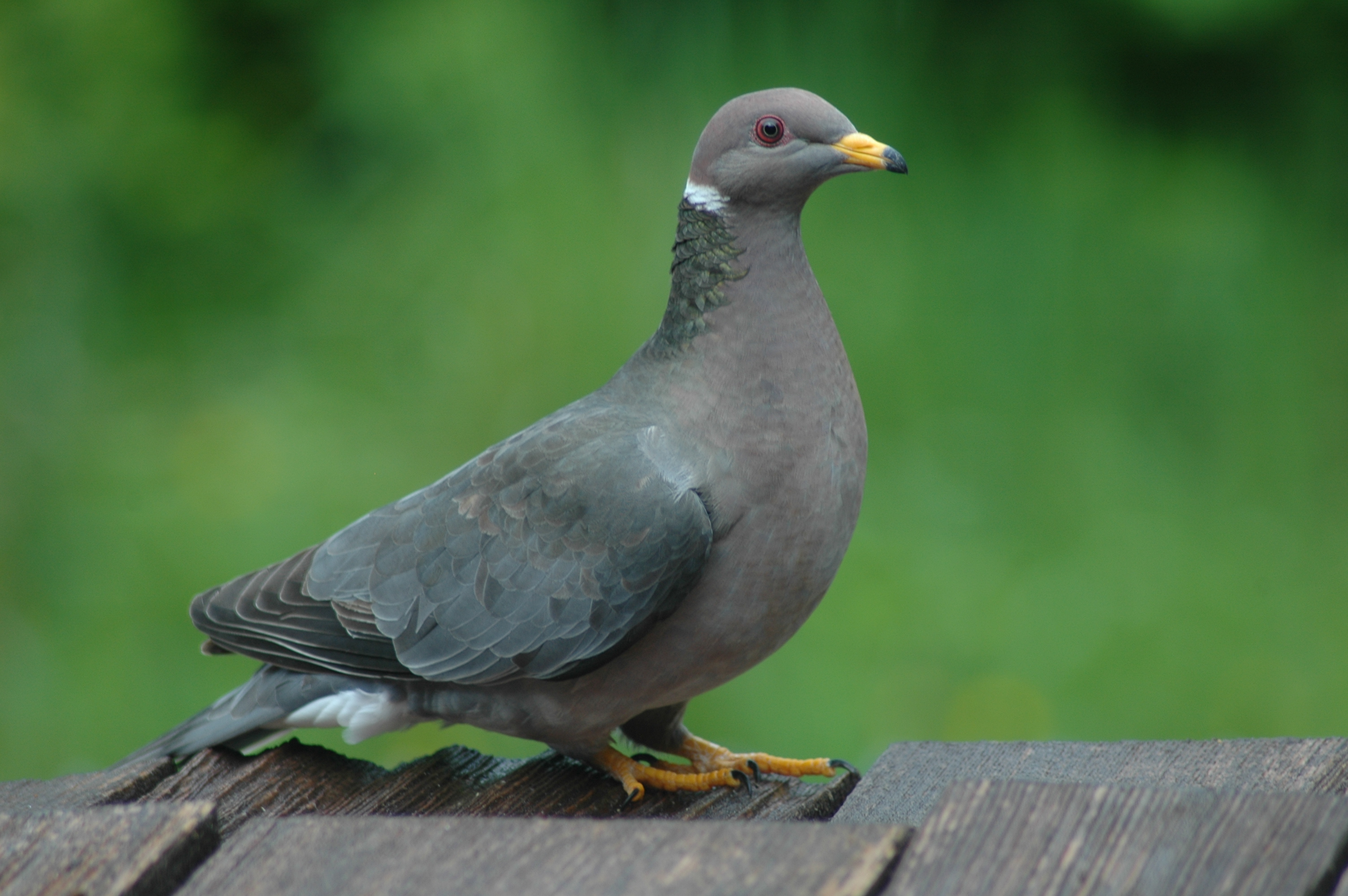
Band-tailed pigeon photo©Jim Robertson

Band-tailed pigeon photo©Jim Robertson

Ontario Adopts a Great American Tradition: Dove Killing

Ontario Opens Season on Mourning Doves, Quietly… Very, Very Quietly

Canadian Blog

by Barry Kent MacKay, Senior Program Associate

Born Free USA’s Canadian Representative

10/01/13

Rachel Carson, inspirational writer, biologist, and ecologist, said, “We cannot have peace among men whose hearts delight in killing any living creature. By every act that glorifies or even tolerates such moronic delight in killing, we set back the progress of humanity.” Agreed—but, such men tend to be disproportionately in charge of deciding such things, and therein lies a very big problem for wildlife.

Here in Ontario, there was an open hunting season for mourning doves in 1955. People were absolutely outraged, so it was closed, never to be considered again—until, quietly, with a minimum of public awareness, this year, the government of Prime Minister Stephen Harper opened a hunting season in southwestern Ontario. It is the 99th anniversary since the only other native species of dove, the passenger pigeon, went extinct (notwithstanding it had been far more abundant than mourning doves).

Back in 1955, most mourning doves migrated out of Ontario each fall, where they were then shot, by the millions, in various U.S. states. Since there was “selection” against migrating birds, the few that wintered in Ontario may have had, on average, better survival potential. (Although, in those days, such birds often had toes frozen off.) Decade by decade, several factors undoubtedly contributed to changes in migratory behavior: non-migrant survival, warming winter temperatures, increased dependence on mechanical harvesting that left plenty of waste grain for the birds to eat, the shift to absentee farming for tax purposes while speculators waited for land values to ripen, plus the popularity of doves with people who increasingly put out winter bird feeders in their gardens. Now, the mourning dove is a common winter bird here in southern Ontario. Ontario’s hunters can’t stand that… Why should Americans (and a few hunters in British Columbia, the only other Canadian province where mourning doves are hunted) have all the fun of killing these small, gentle birds?

Why can’t Ontarians kill doves, too? Because most Ontarians would be appalled at the thought. No matter. As one proponent of the hunt put it, “Because we have so many [doves], it’s a good opportunity for [young hunters] to get out and shoot and practice their skills.” Right… We need more people shooting guns… This, in the same week as the mass shooting at the Navy Yard in Washington, D.C., followed by the 3-year-old and a dozen others shot in Chicago (not counting twice as many shot the same weekend in separate “incidents”)… All as we move toward the first anniversary of the shooting at Sandy Hook. As I write, people are being shot in a Nairobi, Kenya shopping mall for what, I can only assume, the shooters believe are good reasons. Society very rightly condemns such totally senseless acts of terror, or horror—and nothing, no cause, justifies any of it in any way. And, what of killing a dove? Is it really only justified because their fast flying makes them “sporting,” while they are tame and common enough to easily find?

Fellow bird artist and colleague, Julie Zickefoose, who lives in neighboring Ohio, wrote an excellent blog (http://www.juliezickefoose.com/writing/dove.php) in which she made the point, “Since the dove’s drumstick is less than an inch long, the breast meat is all that’s used. Each breast fillet is about as long as my thumb, and weighs one ounce or less before cooking.” She compared it to half of a hot-dog wiener.

We Ontarians must use steel, not lead, bullets, which could enhance wounding, but reduce toxicity. Or, even better; not shooting at all would eliminate both concerns.

Hunters are in decline, and that means the funding for “wildlife managers” is imperiled—and, as I said, they are disproportionately found in government wildlife agencies. And so, the push is on to recruit more people to part company with the majority of us who enjoy shooting nothing more lethal than a camera. There has been a weak attempt to try a favored tactic of demonizing their victims: too many doves can result in disease, they say (though there is no proof that they do, of course, or that it justifies killing healthy animals, be they doves, robins, or cardinals) and they claim that doves may spread weed seeds around (as do sparrows and larks, buntings and bobolinks… Who is next?)—but , again, with no proof or even likelihood that this is really an issue. It’s all quite silly, but cruelly lethal to a species that the vast majority of us simply enjoy.

We Ontarians—now that we know—will fight back, but we can use the help of our American neighbors. A brief note to the Prime Minister of Canada couldn’t hurt, and might help: The Honorable Stephen Harper, Office of the Prime Minister, 80 Wellington Street, Ottawa, ON K1A 0A2, Phone: 1-800-622- 6232 , TTY: 1-800-465-7735, Fax: 613-941-6900, E-Mail: pm@pm.gc.ca. Tell him, politely and in your own words, not to kill the mourning doves. Let them continue to have Ontario as a place of refuge. Ontario has room for them and we want to welcome them with bird seed, not bird shot.

Band-tailed pigeon photo©Jim Robertson

Band-tailed pigeon photo©Jim Robertson