NHLer’s B.C. Grizzly Kill Offside?

Huffpost 09/30/2013

by Chris Genovali, Executive Director, Raincoast Conservation Foundation
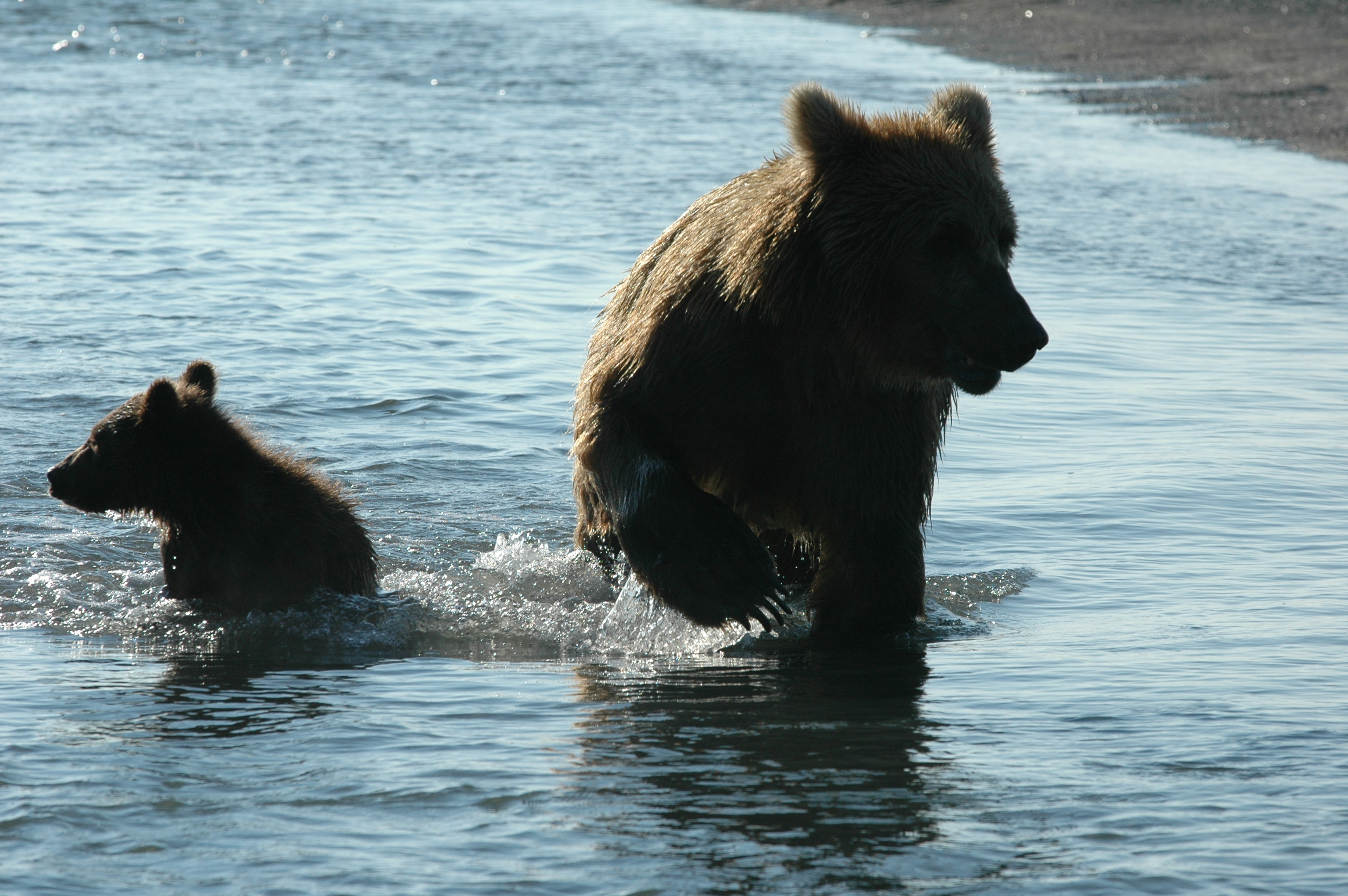
photo copyright Jim Robertson

photo copyright Jim Robertson

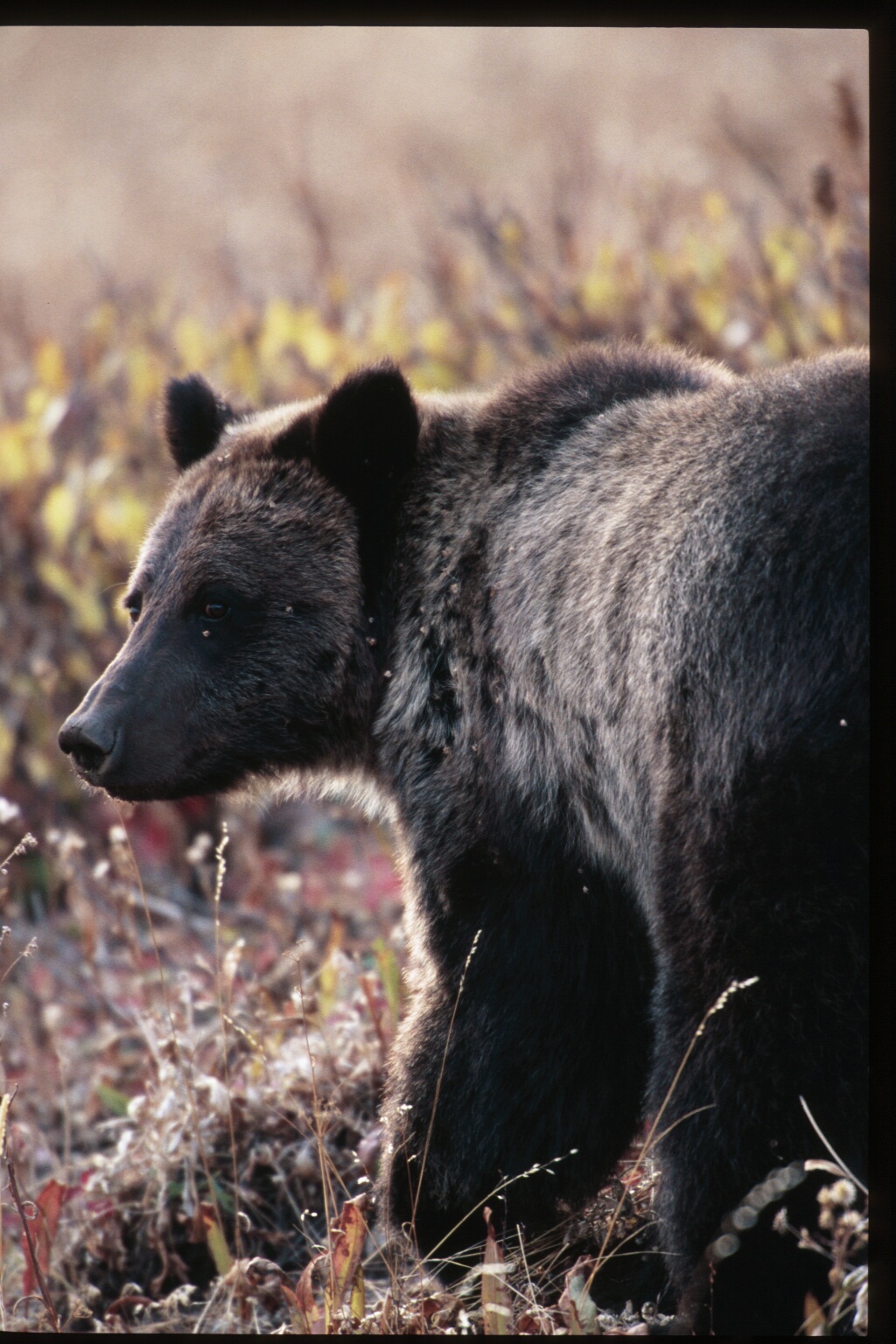
Raincoast Conservation Foundation has asked the B.C. Ministry of Forests, Lands and Natural Resource Operations, the entity responsible for managing the trophy hunting of bears in the province, to investigate the killing of a grizzly on the central coast by National Hockey League player Clayton Stoner. As a result, the BC Conservation Officer Service is investigating Stoner’s trophy killing of the grizzly bear in question.

There is widespread concern regarding the circumstances surrounding this particular hunt, including uncertainty as to whether Stoner is technically a B.C. resident. If he is not, then he shouldn’t have been issued a B.C. Resident Hunter Number card nor should he have been allowed to enter the Limited Entry Hunt (LEH) lottery to kill a grizzly.

As the ministry website states, “Participation in the LEH draw is available to any resident of B.C. who legally possesses a B.C. Resident Hunter Number.” To obtain a B.C. Resident Hunter Number and Resident Hunter Number card an individual must provide evidence that he is a resident. The legal definition of a B.C. resident is a person who “is a Canadian citizen or a permanent resident of Canada, whose only or primary residence is in British Columbia, and has been physically present in British Columbia for the greater portion of each of six calendar months out of the 12 calendar months immediately preceding the date of making an application under this Act or doing another thing relevant to the operation of this Act.”

Stoner plays for the Minnesota Wild, a U.S.-based team in the NHL. As such, he is required to live and work in Minnesota the majority of the year. The NHL regular season runs from October through mid-April. That doesn’t count time spent at training camp prior to the regular season or potential participation in the playoffs. Given the length of the NHL season and the fact Stoner plays for a U.S. based team (and has played for U.S. based teams in the NHL, AHL and WHL since 2002), it would seem implausible that he could have been physically present in B.C. for the time required to qualify as a resident.

The investigation by the province raises several troubling questions. Big picture, this event could very well end up calling into question the integrity of the LEH, as well as the B.C. government’s ability to monitor the hunt and enforce their own regulations.

The Conservation Officer Service office in Bella Coola has been closed and moved to Williams Lake. Bella Coola is the only central coast community accessible by road and is the community nearest to where the grizzly bear was killed.  “It’s fortunate that First Nations research technicians were there to observe and record this incident. Stoner’s party, or any hunters conducting potentially illegal activities, would be more likely to encounter aliens from another planet than a Conservation Officer in these remote coastal areas,” said Brian Falconer, guide outfitting coordinator for Raincoast.

In the 2002 Raincoast report “Losing Ground: The decline in fish and wildlife law enforcement capability in B.C. and Alaska,” author and wildlife scientist Dr. Brian Horejsi concluded the following:

Wildlife populations and biological diversity are endangered by chronic underfunding and marginalization of wildlife conservation-oriented enforcement programs in British Columbia and, to a lesser degree, in Alaska. This period of measurable political disinterest and low and declining priority now approaches 20 years in duration. There is little evidence available to the British Columbia or Alaska public to indicate that current enforcement capabilities are sufficient to provide effective compliance with fish and wildlife regulations, a problem being aggravated by escalating and uncoordinated land use activities. In every capability measure examined, capability today is significantly lower than it has been previously. Enforcement and protection staff are presently unable to effect widespread and long-lasting changes in resource user behavior in either Alaska or B.C. While fish and wildlife protection capability in Alaska has slipped…the evidence indicates that B.C. has now crossed the threshold at which protection of fish and wildlife populations and their habitat by enforcement services has effectively and materially been abandoned.

We stand with Coastal First Nations in their call to end the trophy hunting of bears in B.C.’s Great Bear Rainforest. Coastal grizzly bears, in particular, face numerous threats to their survival, including habitat loss and a declining supply of salmon; the additive pressure from trophy hunting exists throughout much of the Great Bear Rainforest, even in many legislated protected areas. This is more than just a “management” issue. It’s also an ethical issue. Bottom line, killing these magnificent animals for recreation and entertainment is a barbaric and anachronistic practice that should be ended on the coast of British Columbia.

NHL Player’s Grizzly Shootout

September 5, 2013 Elana Pisani

(WILDLIFE/ANIMAL CRUELTY) CANADA — Another celebrity joins the likes of GoDaddy CEO Bob Parsons, the Trump sons, and musician Ted Nugent in their lack of civility and sense of entitlement when it comes to wildlife. Hockey player Clayton Stoner is in the news after pictures of him with a grizzly bear corpse he had hunted and killed was posted on social media sites. Stoner held the grizzly bear’s severed head and paws while smiling and posing for the camera. Although Stoner, who plays for the Minnesota Wild, had a legal permit for hunting, his actions and his attitude toward wildlife is appalling to animal rights activists and he makes no apologies. Read the full article for Stoner’s statement and sign the petition to ban grizzly bear hunting in British Columbia. — Global Animal

photo copyright Jim Robertson

photo copyright Jim Robertson

Saving deer, one step at a time

The tedious trail of animal activism

Photo Jim Robertson

Photo Jim Robertson

Canadian Blog

by Barry Kent MacKay,
Senior Program Associate

Born Free USA’s Canadian Representative

Published 08/16/13

Make no mistake; I have been part of many successful efforts to stop, or prevent, lethal culling of deer and other wildlife species. From time to time, self-styled animal activists ask, “How did you do it?,” with the “you” being plural. It is always a co-operative, multi-faceted process. But I – we – have had our share of failures, and long ago learned that “being right” is, while essential, not enough. The deck is stacked against us because legal culls of native wildlife are government-sanctioned, and the government—federal, provincial, or municipal—has more power and resources than do we. And, if they don’t play fair, we have to try other tactics, such as garnering media and subsequent public support for our positions.

But at the provincial level, there is also the Ombudsman, or Ombudsperson: a politically independent “third party” charged by the legislature to assure “fair, reasonable, appropriate and equitable” administrative practices and services by public agencies.

The issue is the culling of deer in Cranbrook, British Columbia (see: http://www.bornfreeusa.org/weblog_canada.php?p=3449&more=1 and http://www.bornfreeusa.org/weblog_canada.php?p=3487&more=1). We had already lost an appeal to British Columbia’s Ombudsperson, Kim Carter, when we documented our concern that the contract to award the grisly job of live-trapping and then killing deer violated conflict-of-interest guidelines. The contractor sat on the committee that made the decision and bid within a few percentage points of the allocated amount. But it was ruled that the information was, if not exactly widely-known, still in the public domain. We lost.

On July 17, we submitted a second concern to the Ombudsperson. This time, our concern was that the residents of Cranbrook had been denied the ability to democratically participate in decisions that concerned them. Again, the issue was that the contract to catch and kill deer in Cranbrook was all done behind closed doors, which seems to violate the rules of the Community Charter. The Charter does allow for a degree of secrecy, and on January 9, 2013, a city administrator wrote, “…I am concerned for the safety of staff, contractor and public in general with respect to this project. Thus I plan to carry out the selection of the contractor and the cull in a confidential matter. Staff will work with the RCMP. We may be criticized by some for not being open with the cull but I believe we have a reasonable position that public safety is more important.”

But that makes as much sense as holding meetings concerning placement of road signs because some hunters shoot holes in them or teens spray-paint them. In fact, there is no indication of this concern in any of the minutes of meetings preceding the private decision-making meetings. As one councillor put it, “The argument that swayed us to retreat in-camera was because of alleged vandalism and public safety incidents during the Invermere deer cull and the possibility of similar incidents occurring here. There is some merit in this argument, but I have since come to the conclusion that, whether the argument is meritorious or not, vandalism and public safety is an RCMP issue, not a council issue, and it shouldn’t have swayed our judgment in taking the public’s business behind closed doors. Once we retreated into our locked chamber, we lost control of the issue and the rest is history.” Invermere is a separate town where unknown people found and damaged one or more deer traps.

It gets worse. Colleen Bailey, the one citizen on the Urban Deer Management Advisory Committee (UDMAC) opposed to culling in favour of more effective and humane resolution of conflicts with urban deer, was summarily kicked off of the committee: the only member so shabbily treated. Yes, she was a strong advocate for the deer—but she never spoke against culling on behalf of UDMAC. On the other hand, at least one staunch deer cull advocate, Angus Davis—who even placed a trap on his property—remained on the committee, voting in secrecy and getting his way. Apparently, Cranbrook’s idea of “democracy” precludes debate, openness, and dissent. Sad.

So, we were pleased last week that both Bailey’s own submission to the Ombudsperson (concerning her treatment by Council) and our own (concerning the inappropriateness of secrecy in what should be public affairs) will be considered, and it will be determined whether they merit an investigation. It’s not easy. We could lose again. But, we have to try. We have to jump through the hoops. We have to play their game, their way.

Here is the timeline of events:

•In April 2012, Council voted to conduct a cull of up to 50 deer.

•In September 2012, UDMAC members, including Ms. Bailey, were told that Cranbrook would seek the cull permit—but that the 2012 cull was put on hold pending the outcome of a court case in the town of Invermere that challenged the cull in that community (also in south-central British Columbia).

•In October 2012, UDMAC members were reminded to reapply because their membership on the Committee would expire on December 10, 2012.

•On December 6, 2012, the province issued the cull permit.

•At the December 10, 2012 Council meeting, all members who reapplied, with the exception of Ms. Bailey, were reappointed. Bailey was replaced with a non-opponent to the cull.

•On December 12, 2012, the municipal staff notified the “new” UDMAC Committee that Council sought its advice on a “time-sensitive matter.”

•On December 18, 2012, UDMAC recommended that the city implement a cull of up to 30 mule deer.

•On January 7, 2013, Council voted “in camera” to go forward with the cull.

•On January 8, 2013, municipal staff sent out a Quote for Service.

•On January 9, 2013, Councillor Warner expressed a real concern about moving forward with the cull because of the way the decision was reached. He did not oppose culling, per se.

•On February 6, 2013, the contract was signed with CP Trapping.

•On February 14, 2013, the BC Deer Protection Coalition, made up of a fully open and transparent group of provincial citizens working to stop or prevent deer culling in favour of more humane and effective ways to resolve conflicts between deer and people, exposed Cranbrook Council’s decision to move forward with the cull.

•On the same day, that Council finally acknowledged the decision, but only after the Coalition’s ad raised the issue.

•On February 14, 2013, the cull began.

•On February 23, 2013, Councillor Warner published his letter in e-know.

______________

Barry McKay is an artist, both with words and with paint. He has been associated with our organization for nearly three decades and is our go-to guy for any wildlife question. He knows his animals — especially birds — and the issues that affect them. His blogs will give you just the tip of his wildlife-knowledge iceberg, so be sure to stay and delve deeper into his Canadian Project articles. If you like wildlife and reading, Barry’s your man. (And we’re happy to have him as part of our team, too!)

Note to Hunters: Moose Have Antlers, Humans Don’t

At least one Canadian moose hunter needs to be reminded: Moose are huge, heavy animals, sometimes sporting huge heavy antlers; Little old ladies, on the other hand…not so much.

An article on CBC News tells us:

Man Convicted of 2011 Hunting Accident

A Notre Dame Bay man has been convicted for shooting a woman he mistook for a moose.

Corey Blake, 36, of Embree was in provincial court in Gander on Thursday morning for a sentencing hearing.

In November 2011, 68-year-old Joan Primer was out for a boil-up with her family near Lewisporte when someone shot her in the shoulder. The bullet tore through Primer’s right shoulder and exited through her back.

In an agreed statement of facts, Blake said he saw what he thought was a moose, steadied his rifle on the box of his pickup and fired. Then he heard Primer scream.

Blake had initially told police his rifle went off accidentally.

In March, he pleaded guilty to criminal negligence causing bodily harm, hunting without a licence and breaching probation.

In her victim impact statement on Thursday, the court learned that after several surgeries, Primer still does not have complete use of her arm.

Blake, choking back tears, said he’d just like to say that he’s sorry and wanted to apologize in person to Primer and her family.

The Crown is asking that Blake serve nine months in jail and spend two years on probation. Blake’s lawyer is recommending probation, but said if the court must sentence him to jail time, it should only be a month or two.

He will be sentenced in August.

Wildlife Photography Copyright Jim Robertson

Wildlife Photography Copyright Jim Robertson

All Meat Is the Product of Cruelty and Exploitation

A German serial killer, Fritz Haarmann, known as the “Butcher of Hanover,” cut his victims’ bodies into strips of flesh and sold them as pork. Here in North America, third-generation Canadian pig farmer and serial killer of 49 women, Robert Pickton, ground the bodies of his victims into sausage and sold it in packages or gave it out to friends.

While it’s appalling that folks who acquired meat from Pickton may have ingested human flesh, it is equally unsettling that they didn’t notice. To the taste buds it seems meat is meat. This tragedy was just one of many recent incidents that should make people rethink their carnivorous ways.

On a related note, according to an article by Cindi Avila with NBC News, Whole Foods admitted to accidentally reversing labels on two salads sold at its stores, a curried chicken salad and a vegan version called curried “chick’n” salad, last Tuesday and Wednesday at some 15 of its locations in the Northeast (including Connecticut, Maine, Massachusetts, New Jersey and New York). “The switched labels means it is highly likely someone who made a conscious choice not to eat animal products wound up doing so, through no fault of their own.”

To the ethical vegetarians who inadvertently ingested chicken flesh, the stomach-churning physical response of revulsion was on par with those of the pork-eaters who learned they’d cannibalized. Now, you might be asking yourself, “How can anyone compare eating chicken or pork to cannibalizing human flesh?”

The NBC article makes the clarifying point, “It may be hard for meat-eaters to understand, but this is a way of life that simply doesn’t involve compromise or mistakes. That’s especially the case for those of us who are vegetarian or vegan because of animal-welfare reasons or those who choose this for religious reasons.”

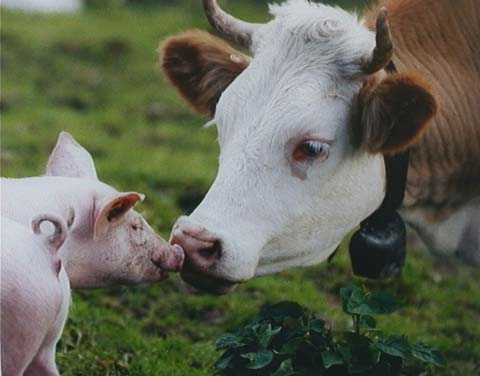
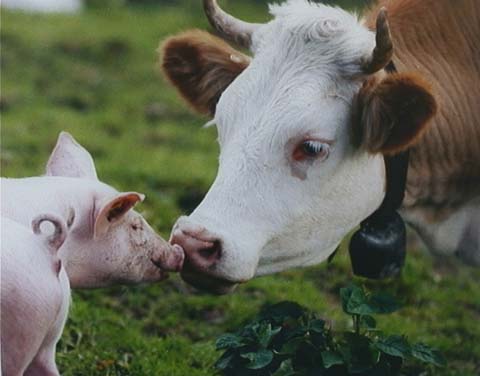
Pigs, like humans, cows and chickens, are capable of experiencing joy, affection, and pleasure. However, on hog farms, they are treated like unfeeling machines, confined in tiny stalls and fed growth-accelerating drugs that often cause lameness. Their teeth are cut with pliers, and their tails are cut off-without anesthetic. At the slaughterhouse, they are hung upside down and bled to death-often while they are fully conscious. Whether flesh comes from the victim of a serial killer or from a pig, a cow, or a chicken, it is the product of cruelty toward a thinking, feeling being who experiences pain and fear and wants to live free of exploitation.

In light of all this, why are people still eating meat? One common answer goes something like this: “I’m a human—superior to other beings—I’m entitled.” But a sense of entitlement is one of the trademark rationalizations that serial killers use to justify their wrongdoings, and grandiosity is also symptomatic of psychopathy, according to Canadian psychologist and author of Without Conscience: The Disturbing World of the Psychopaths Among Us, Robert D. Hare, Ph.D. Other symptoms outlined on Dr. Hare’s “psychopathy checklist,” such as shallow emotions and a lack of empathy or remorse, aid the killer—or meat-eater—in disregarding the suffering of his or her victims.

Psychopathic serial killers objectify their victims and consider their victims’ self-interests insignificant. The same rationale is called into play when one thinks of pigs only as “pork,” cows as “beef,” or chickens as “poultry,” without thought of the individuals or their suffering.

Both Canada and the U.S. have had recent cases of mad cow disease. As a result, we saw news footage of downer cows, too sick to walk, being dragged by chains into slaughterhouses. Press coverage of avian flu outbreaks reveal the intensely overcrowded conditions of chickens on factory farms-tens of thousands of animals cooped up in their own filth, each with less space than a standard sheet of typing paper. Besides being warned of health risks, consumers are finally learning about some of the cruelties endured by the animals they know only as “roasts” or “drumsticks.”

It is never too late to examine our actions and re-evaluate our food choices accordingly. By respecting the interests of all sentient beings, we are not akin to the conscienceless killers that plague our society. The only way to ensure that you are not supporting grotesque violence and cruelty against animals, or benefiting from their suffering, is to adopt a plant-based diet.

524958_3325028303604_654533903_n

Petition to Stop the British Columbia Wolf Hunt!

Stop the British Columbia Wolf Hunt!

 Petition Background (Preamble):
Wolves are being indiscriminately killed in British Columbia, and under the pretext of “Wildlife Management”!

So-called “conservationists” are killing wolves, even machine-gunning entire packs from helicopters, based on the claim that they are reducing caribou herds; however, loss of habitat is a far more probable cause. Natural ecosystems are self regulating and wolves play a vital role in them.

There is also an increase in the slaughter of wolves to protect livestock on private and public land with insufficient attention to alternative measures such as improved farming practices and animal husbandry.

Wolves are killed for sport and their body parts used as trophies; this is an abhorrent activity and wasteful use of wildlife.

Wolves deserve wilderness habitat in which to live a natural pack life, unmolested.

Humans are the greatest threat to healthy wolf populations, and it’s our responsibility to be a voice for these wild animals and the wilderness in which they live.
Petition:
The Petition- The Government of British Columbia.

Stop the indiscriminate killing of wolves in British Columbia!

Sincerely, the undersigned petitioners.
Sign the petition:

http://www.gopetition.com/petitions/stop-the-british-columbia-wolf-hunt.html

The Stop the British Columbia Wolf Hunt! petition to The Government of British Columbia was written by Neil Shearar and is in the category Animal Rights at GoPetition

copyrighted-wolf-argument-settled

Tell the Calgary Herald NO grizzly bear hunting

According to the Calgary Herald, a “debate” is surfacing (concocted and spurred on by the Herald itself) over whether to resume a hunt on grizzly bears in southwestern Alberta.

The grizzly recovery plan was put in place after studies found there were  fewer than 700 grizzlies left in Alberta, leading the government to declare the  species threatened.

Please vote NO in their poll and share your thoughts with the editorial board Here.

Photo Copyright Jim Robertson

Photo Copyright Jim Robertson

Remember, Tuesday Is Soylent Green Day

As with Christmas, Thanksgiving has become a rather hedonistic holiday these days. You’d have to pin your ears back, with empty cornucopias held tightly against them, to hear even a faint reference to the giving of thanks through the din of loud chatter about seemingly more important things like football, where to get the best deals on Black Friday, or how to deep fry a turkey. But any thanks you heard would be to “the lord above,” rather than to the victims of the decadent feast.

Completely lost in the hype of “tradition” and “Turkey-day” is any mention of giving even a passing “thank you” to the birds who suffered more indignities than space would allow me to mention here. Indignities that include the fact that turkeys on factory farms receive less than three square feet of personal space. And after they hatch, their beaks are cut off—a standard practice for chickens as well. No anesthesia or painkiller is used for either species. This process, which is known as “debeaking”, has been compared to having the ends of your fingers sliced off. It deprives birds of one of their most important sources of sensory input.

A debeaked bird cannot eat properly or explore his or her environment fully, nor can they preen themselves or their flockmates.  They may also experience acute and chronic pain in their beak, head, and face. In addition to being debeaked, turkeys also have the ends of their toes and their snoods cut off, often with nothing more than a pair of scissors (and as with debeaking, performed without anesthesia).

According to Liberation BC, both chickens and turkeys on modern factory farms have been genetically engineered and pumped with antibiotics; as a result they grow much faster than ever before. For example, in the 1960’s, it took a turkey 32 weeks to reach slaughter size, but now it takes only 13-16 weeks. In the 1950’s, it took a chicken 84 days to reach five pounds. Today, it takes 45 days, meaning that they are not even old enough to cluck yet when they die.

And PETA adds, their unnaturally large size also causes many turkeys to die from organ failure or heart attacks before they are even 6 months old. According to an investigative report in the Wall Street Journal on the miserable conditions on turkey farms, “It’s common in a rearing house to find a dead bird surrounded by four others whose hearts failed after they watched the first one ‘fall back and go into convulsions, with its wings flapping wildly.

Factory farm operators walk through the shed to kill the slow-growing turkeys (so that they don’t eat any more food), such as those who fall ill because of the filthy conditions or become crippled under their own weight.

In Canada, turkeys and chickens can legally be transported for up to 36 hours without food, water, or rest, and there are no limits as to the length of the journey. They are transported in open-air crates, resulting in high mortality as the birds are exposed to all sorts of weather.  Each bird is worth so little, however, that it is cheaper overall for the industry to use open-air crates.  Every year in Canada, 2 million broiler chickens and 20,000 turkeys are already dead when they arrive at slaughterhouses.  An additional 8 million broiler chickens and 200,000 turkeys arrive so diseased or injured that they are considered “unfit for human consumption”.

The surviving birds are handled roughly at the slaughterhouse, where they are unloaded by forklift and dropped onto a conveyor belt. With thousands of birds to be processed every hour, there is no reason for employees to stop and pick up the individual birds who miss the belt and fall to the ground.

When it comes time to slaughter the birds, they are hung by their feet on a moving rail and dragged through the stunning tank, an electrified water bath meant to stun and immobilize them. These are often set lower than is necessary to truly render the birds unconscious out of concerns that high voltage might damage the carcass and therefore diminish its value.

They are then carried past the tank to have their throats cut either by a mechanical blade or a plant employee. Often, struggling birds are cut improperly. As a result they are moved, fully conscious, to the scalding tank, where they are boiled alive.  Estimates place the number of affected birds at about one in twenty; at any rate, this occurrence is so common that the industry has a term for it: “redskins.”   …

Clearly, nobody gives much in the way of thanks to the “most important guest” at the table (as a recent Safeway ad described the turkey carcasses they were selling). You’d be damned lucky to overhear even a cursory mention of the miserable existence their edible “guest” underwent prior to the killing and plucking process. There is scarcely a sign that the hundreds of millions of Americans who gorge on the bodies of 45 million turkeys each year give a whit about whether these amazing and impressive birds had—prior to “harvest”—a life that allowed even a modicum of the freedom they would have experienced before the grossly over-populated human world made them their food-slaves.

Appropriately, I watched the timeless 1970s movie Soylent Green last night. Set in 2022, the film opens with a slide show of earlier eras, back when the Earth was covered with forests and open fields, and there were only a few scattered settlements of people who travelled in horse-drawn wagons.

As the images pass quickly by, we see the first automobiles (tail pipes spewing toxic carbon gases), followed by a massive blacktop parking lot jam packed with Model Ts. The pictures begin to flash almost more rapidly than we can focus, but we catch glimpses of factories with smokestacks billowing and crowds of people barely able to

move without trampling one another. (Come to think of it, what we are witnessing looks a lot like the inside of an average modern-day poultry barn, where Thanksgiving turkeys are forced to live out their lives in intense confinement.)

The first scene of action takes place in a cramped little New York City apartment, the dwelling of the film’s two main characters, Thorn, a semi-corrupt detective, and his elderly room-mate and research partner, Sol, who is constantly going on about the good old days—a world that Thorn can’t possibly envision or relate to.

They are among the lucky few; most people sleep on the stairways or in the hallways or anywhere they can find shelter from the oppressive heat caused by an out of control greenhouse effect. We overhear a program on their worn out old TV which is an interview with the governor of New York, touting a new food product called “Soylent Green,” ostensibly made from the ocean’s plankton. (Everyone in that day and age knows that the land is used up, but they’re told the oceans can still provide for them).

Food in this depressing, human-ravaged world comes in the form of color-coded wafers, distributed under strict government supervision. Hordes of people stand in line for their ration of Soylent yellow or blue made from soy, or other high protein plants grown behind the fortress-walls of heavily guarded farms.

Signs remind the throng that “Tuesday is Soylent Green day.”

The multitudes are exceptionally unruly on Tuesday. Brimming with anticipation, they can’t wait to obtain a ration of the special new product. When they get out of hand, “scoops” (garbage trucks fitted with backhoe-like buckets on the front) are called in to scoop them up and haul them off…

Spoiler Alert:

To make a long story short, by the end of the film, Thorn learns that the oceans are dead and the actual ingredients of Soylent Green are something a bit harder to stomach than plankton. In the final scene, a mortally-wounded Thorn is carried away on a stretcher as he desperately tries to tell skeptical onlookers, “Soylent Green is People!” “They’re making our food out of people. Next thing, they’ll be breeding us like cattle for food!”

Could it ever happen? Could the human race ever stoop so low? If the scenario seems too hard to swallow­, consider this: the conditions animals are forced to endure on today’s factory farms would have seemed unimaginable to people living a hundred years ago.

­­

Correction: Contest Hunts on WOLVES Are a New Moral Low Point

In addendum to my earlier post, “Contest Hunts Are a New Moral Low Point”: the truth is, contest hunts on wolves—like the one scheduled to take place in northeastern British Columbia, Canada—are the lowest of low points.

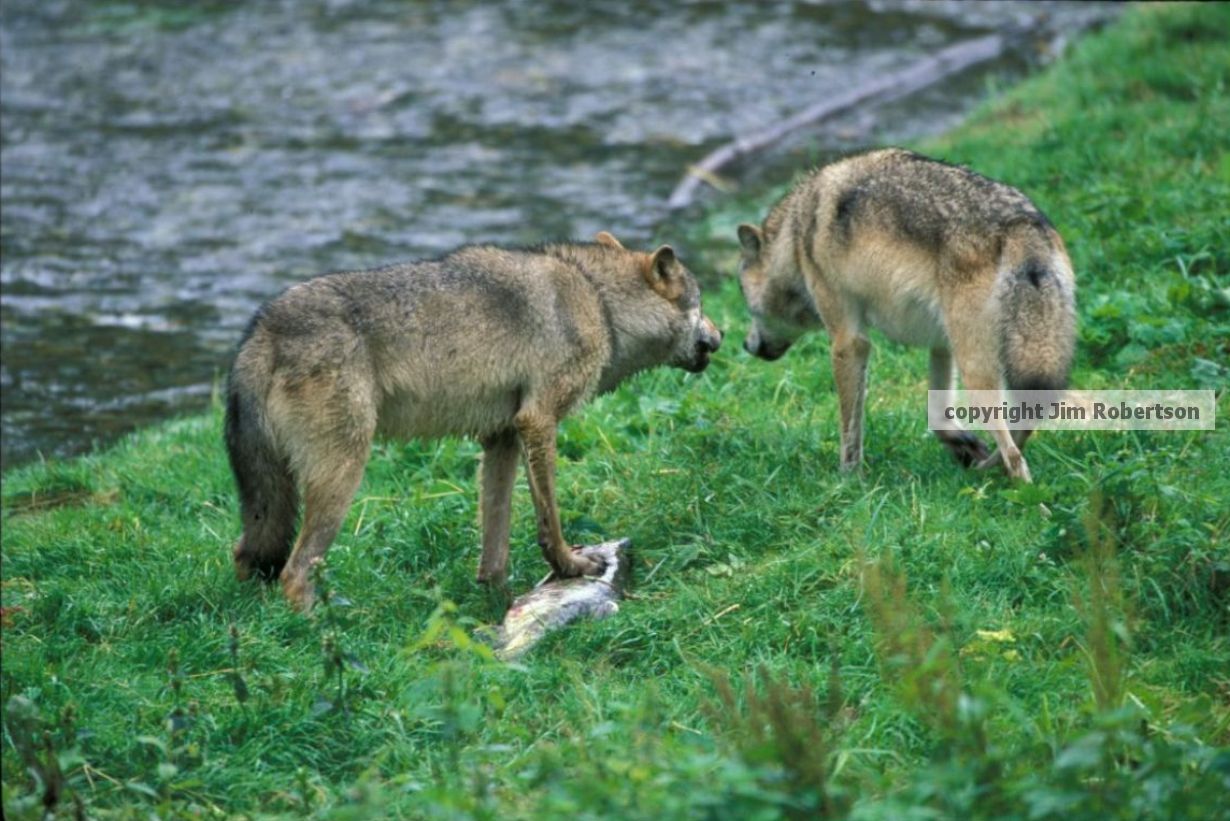
Not because coyotes (the species typically targeting by modern day contest hunts) are any more deserving of being killed en masse for the sake of some sick sporting event reminiscent of Buffalo Bill’s reckless era or something out of the bloody Roman Games. And granted, coyotes are no less sentient than wolves—or the family dog for that matter. All canines are highly evolved and capable of suffering intense stress and fear when pursued, and pain when hit by bullets or arrows. These physical and emotional capacities are even shared by such “lowly” creatures as fish, snakes or salamanders. But in addition, birds and mammals—notably canines—experience profound sadness (perhaps more than most human beings) when their mates or another of their kind are killed.

No, the reason a contest hunt on wolves is one step lower of a low point is because wolves, as a species, have been completely annihilated from so much of their former range. It’s like those calling for a wolf contest hunt are thumbing their noses at the extinction of wolves across so much of North America (not to mention Eurasia), while giving the thumbs up to those who massacred them. Many Canadians practically put on airs about not being as backwards and barbaric as we “Yanks” here in the States, but obviously some of their countrymen are every bit as philistine and morally vacant as any American redneck.

As with the coyote contests held in the U.S., the B.C. wolf contest hunt does not violate any wildlife regulations, according to an article in the Vancouver Sun—a point that does not address the morality of the action, but speaks volumes about the psychopathic behaviors that are still perfectly legal, even in presumably progressive Canada. There is no closed hunting season on wolves below 1,100 meters elevation in that region of the province, which is also considering a no “bag-limit” on wolves in the area.

The contest event claims to support “fair hunt” methods, which include, in addition to high-powered weapons, pickup trucks and snowmobiles to access wolves. It is set to run through March 31 and allows each hunter to submit three wolves. It costs $50 to enter, with winners receiving prizes (for the largest animal killed) of $150 to $1,000. Sponsors of the wolf-kill contest include Raven Oilfield Rentals; “Backcountry” (a fishing and hunting store) and T & C Taxidermy.

“It’s just kind of a social thing…” said Rich Petersen, a hunter and realtor in Fort St. John who is co-sponsoring the event. Well, you won’t find a more social species than wolves. Wolves may not spend their leisure time drinking excessively, listening to Celine Dion or watching hockey on the boob tube, but as far as showing concern for their extended family, I’ll lay down odds they’ve got the hunters beat.

Text and Wildlife Photography ©Jim Robertson, 2012. All Rights Reserved

Love the Country, Hate the People

“Love the country, hate the people.” I heard that thought first put into words by Sea Shepherd’s Captain Paul Watson and I’ve never forgotten it—no doubt because I’ve so often shared that sentiment myself.

Captain Watson was referring to coastal New Brunswick, Canada (where he grew up) and the type of people who club seals to death without a second thought. I have had the same kind of reaction many times over the years I’ve spent living in rural America, especially this time of year when camo-clad, orange-vested A-holes troll up and down the roads hoping some hapless deer or elk will step out of the lush, verdant forest and into their kill zone.

I had another kind of love-the-country, hate-the-people moment just yesterday during a walk with my wife and our dog on a dike that doubles as a narrow road bordering a river when a small, rattletrap freight truck pulled out of the driveway at a neighbor’s property. Unaware of the insidious, horrific evil the occupants of the vehicle had just been involved in, I raised my hand in friendly greeting (hoping they might stop so I could tell them their rig was leaking oil profusely).

Never again will I give someone driving by the benefit of the doubt. They waved back exaggeratedly and wore overstated smirks that bordered on malevolent. As it turns out, I’m glad they kept on going. When they passed by we noticed the cartoon drawings of a happy cow and pig and the name of their business, “Patriot Packing,” that were hand-painted on the back of the truck.

We knew instantly what kind of vehicle it was—a mobile slaughter service. Travelling abattoirs are an increasingly popular method among ruralites for killing the cows they supposedly took great care in raising. My wife then remembered she had heard cows bellowing (like they do when their young are taken away) and the sound of a power saw, but hadn’t put two and two together.

Touted as a more humane alternative to factory farming and conventional slaughterhouses, the down-home practice of “growing” your own cows is deceitful and in its own way horrendously cruel—especially when herd mates are forced to bear witness to such butchery right in front of them in their own pasture.

Though it’s an accepted part of country living for people to embrace or personally partake in the butchering of animals, it can hardly be called a “way of life;” it’s more a way of death—a culture based on killing.

Holocaust survivor and founder of Farm Animal Rights Movement (FARM), Alex Hershaft, made this recent fitting statement:

“I see a striking parallel between the deceptive bucolic images of pigs cavorting in green meadows on Farmer John’s murals and the cynical inscription ‘Work makes you free’ over the gate to Auschwitz.

“And, I do see a striking parallel in the mindsets of both sets of oppressors: their self-image as upstanding members of their communities, their abject objectification of their victims, their callous use of cattle cars for transport, their continuous refinement of killing line technology, their preoccupation with record keeping and cost-effectiveness, their eagerness to hide and masquerade their horrendous deeds.”

Author Farley Mowat, another selfless Canadian animal advocate in league with Captain Paul Watson, ultimately came around to the “love the country, hate the people” sentiment in A Whale for the Killing. The 1972 book is an autobiographical account of Mowat’s moving to Newfoundland because of his love for the land and the sea, only to find himself at odds with herring fishermen who made sport of shooting at an 80-ton fin whale trapped in a lagoon by the tide. Although he had started off thinking folks around there were a quaint and pleasant lot, he grew increasingly bitter over the attitudes of so many of the locals who, in turn, resented him for “interfering” by trying to save the stranded leviathan.

Mowat writes, “My journal notes reflect my sense of bewilderment and loss. ‘…they’re essentially good people. I know that, but what sickens me is their simple failure to resist the impulse of savagery…they seem to be just as capable of being utterly loathsome as the bastards from the cities with their high-powered rifles and telescopic sights and their mindless compulsion to slaughter everything alive, from squirrels to elephants…I admired them so much because I saw them as a natural people, living in at least some degree of harmony with the natural world. Now they seem nauseatingly anxious to renounce all that and throw themselves into the stinking quagmire of our society which has perverted everything natural within itself, and is now busy destroying everything natural outside itself. How can they be so bloody stupid? How could I have been so bloody stupid?’”

Farley Mowat ends the chapter with another line I can well relate to: “I had withdrawn my compassion from them…now I bestowed it all upon the whale.”