Exposing the Big Game

Forget Hunters' Feeble Rationalizations and Trust Your Gut Feelings: Making Sport of Killing Is Not Healthy Human Behavior

Exposing the Big Game

Whale watching tour disentangles humpback off Nova Scotia

‘They get stuff wrapped around them, it’s like one of us in a straitjacket’

Kevin Dares, a first mate with Lunenburg Whale Watching Tours, fastened line to a grappling hook and used it to snag gear attached to a humpback whale. (Lunenburg Whale & Seabird Tours/Facebook)
23
comments

Flower called for help and reached the Marine Animal Response Society, which in turn contacted the Department of Fisheries and Oceans.

“They were going to see if they could scramble a boat or some people to come out and help this thing out,” he said.

But Flower was worried there was only a few hours of daylight left and he didn’t think help would arrive before dusk.

He said the waters were calm so he brought the boat alongside the whale, which he estimates was about nine metres long.

Some of the 42 passengers helped pull the tangle of gear that had been attached to the whale onto the boat. (Submitted by Walter Flower)

Flower and his first mate, Kevin Dares, scoured the boat for something to hook onto the buoy. They ended up fastening a line to the boat’s bow and tossed a mooring hook into the water to try to snag the clump attached to the whale. On the 10th try, it worked.

“The whale was swimming ahead at a couple of knots. It was calm, but you’re always get moving around a little bit the boat and just try to get the throw perfect, you know. And then Kevin nailed it. It was fish on,” Flower said.

“We kind of pulled its head around, it turned towards us on the surface, and then I gave a little more throttle back. And then we started pulling it, dragging it a little bit and the line just came out of its mouth, and a whole big clump of stuff came out to a lot of cheers from our passengers in the boat. It was a happy ending.”

Walter Flower said his boat was south of Cross Island when it came upon the humpback whale tangled in gear. (Submitted by Walter Flower)

The rescue was all over in about 20 minutes. The passengers helped pull the fishing gear onto the boat.

Flower said the humpback swam off much happier once it was freed.

“It just kind of made a little splash kick with his tail and just headed due south,” he said.

2019 Calgary Stampede ties as 2nd deadliest year for chuckwagon horses

Total animal deaths at rodeo and chuckwagon races have topped 100 since 1986

Chuckwagon driver Chad Harden was disqualified from the Calgary Stampede after causing an accident on July 11, 2019, that led to a horse being put down. Chuckwagon horses make up more than two-thirds of the animal deaths at the Stampede. (CBC Sports)
94
comments

The 2019 Calgary Stampede is now tied for second place as the deadliest year for chuckwagon horses in more than three decades — with the total tally of animal deaths surpassing 100.

Three horses had to be put down at Sunday night’s chuckwagon races, as the 10-day Stampede wrapped.

The latest deaths bring the total number of animals that have died during the rodeo and chuckwagon races at the Stampede since 1986 — when the most detailed records are available — to 102.

The Calgary Stampede declined requests to provide the organization’s own details on deaths through the years.

The most complete records available publicly are from the Vancouver Humane Society, which has added up the tally since 1986 using data from the Calgary Humane Society and media reports.

CBC News validated the numbers wherever possible.

In total over the 10-day event in 2019, six chuckwagon horses died — four of them from the same driver’s team.

That gives it the unfortunate honour of tying with 2010 as having the second highest toll on chuckwagon horses. Chuckwagon horses make up more than two-thirds of the animal deaths at the Stampede.

The top of the list is 1986, when 12 horses died.

Two humans have also died in the competition since 1986: outrider Eugene Jackson in 1996 and wagon driver Bill McEwen in 1999. Both died of head injuries.

Here’s an overall roundup of animal deaths at the Stampede since 1986:

The Vancouver Humane Society says the total tally includes:

  • 72 chuckwagon horses.
  • Nine calves.
  • Five steers.
  • Four bucking horses.
  • One wild ride horse.
  • One show horse.
  • One bull.

Outside of the Stampede itself, nine horses died in 2005 while being herded over a bridge on their way to the grounds.

The latest deaths prompted renewed calls from animal rights advocates and others for the Stampede to end chuckwagon races and the rodeo.

This graph tallies animal deaths, by year, at the Stampede. Use the drop-down menu to see the data by animal type:

The Calgary Stampede has launched a review in response to Sunday’s deaths. Last week, a chuckwagon driver who caused an accident that led to a horse being put down was fined $10,000 and banned from competing at future Stampedes.

The Stampede says it has made many changes over the years to increase the safety of animals and humans.

The Stampede’s roots can be traced to 1886, when the Calgary and District Agricultural Society held its first fair.

The  2019 Calgary Stampede ran July 5-July 14.

A tarp covers the scene of the accident that led to three horses being euthanized after a chuckwagon race at the Calgary Stampede on June 14, 2019. (Anis Heydari/CBC)

Tradition versus technology: Northerners debate use of drones in caribou hunting

BY THE CANADIAN PRESS

https://www.citynews1130.com/2019/07/07/tradition-versus-technology-northerners-debate-use-of-drones-in-caribou-hunting/

Posted Jul 7, 2019 7:00 am PDT


Wild caribou roam the tundra near the Meadowbank Gold Mine in Nunavut on Wednesday, March 25, 2009. Tradition and technology are clashing on the tundra, where Indigenous groups are debating the use of drones to help hunt caribou. THE CANADIAN PRESS/Nathan Denette

YELLOWKNIFE — Tradition and technology are clashing on the tundra where Indigenous groups are debating the use of drones to hunt caribou.

The issue arose during public consultations on new wildlife regulations in the Northwest Territories, where First Nations and Metis depend on caribou for food.

Drones are not widely used to hunt, but the N.W.T. government says they have been utilized to find caribou and sometimes to herd them to a hunter. That’s caused fears of increased pressure on populations that are already struggling.

The Bathurst herd, nearly half a million strong in the 1980s, has dwindled to 8,500. The Bluenose-East herd has declined almost 50 per cent in the last three years to about 19,000 animals.

“We heard significant concern about the use of drones for hunting and broad support for a ban on their use,” Joslyn Oosenbrug, an Environment Department spokeswoman, said in an email.

“A ban on drones will help address conservation concerns for some species and help prevent new conservation concerns for others.”

The territory has proposed banning drones for hunting except for Indigenous harvesters.

Some Indigenous groups argue the ban should go further. The board that co-manages wildlife between Great Slave and Great Bear lakes wants a ban on drones to apply universally.

“The Wek’èezhìi Renewable Resources Board would prefer that drones not be used for harvesting purposes,” said board biologist Aimee Guile in an email.

The Northwest Territory Metis Association also wants to see drones banned for everyone.

Others argue that banning drones for Aboriginals would violate treaty rights.

An N.W.T. report into consultations on the proposed ban says both the Inuvialuit Game Council and the Wildlife Management Advisory Council stated that rights holders should be exempt from the proposed ban, “because of the potential infringement to Aboriginal harvesters exercising their rights.”

The Tli Cho government, which has jurisdiction in communities west of Great Slave Lake, also wants Indigenous harvesters exempted.

“It’s a matter of leaving it with us,” said spokesman Michael Birlea. “We want to be able to make our own decisions rather than somebody else.”

Tli Cho residents are uneasy with the technology.

“(Tli Cho leaders) also acknowledged the discomfort heard from many of their citizens,” the consultation report said. “Many citizens expressed that all harvesters should be prohibited from using drones.”

Members of the Fort Chipewyan Metis local in Alberta hunt in the N.W.T. and are concerned about the impact drones could have on the health of caribou herds and on Metis culture.

“Drones could undermine the transmission of traditional knowledge to younger hunters about how to hunt and what to look for,” the local said in its submission.

It suggested that restrictions on drones should come from Indigenous governments, not the territory.

Others have made similar points.

Summarizing what the government heard during consultations, Oosenbrug said: “Using drones is bad because it is another loss of the Indigenous culture of NWT people as it does not represent a traditional way of hunting.

“(It) shows a lack of respect for Indigenous culture and the wildlife, and it should be considered cheating.”

The N.W.T.’s new wildlife regulations came into effect July 1, but the territory chose to defer a decision on drones until there are further talks.

More discussion is planned for the fall, said Oosenbrug.

“(The wildlife council) looks forward to continued discussions with the (territory) on the potential conservation issues for wildlife and implications to harvesters with Indigenous rights,” said council resource co-ordinator Jodie Maring in an email.

Indigenous hunters have already accepted restrictions on the number of animals they can take. In some areas, no hunting is allowed at all.

Canada becomes the first G20 country to ban shark fin trade

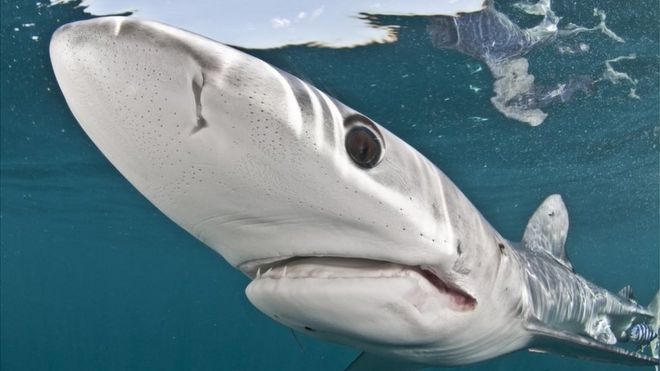
A shark seen in a close up imageImage copyrightOCEANA/TERRY GOSS
Image captionCanada imported some 170,000 kg of shark fins in 2017

Canada has become the first G20 nation to ban the import and export of shark fins, in an effort help preserve a predator under threat.

The country is the largest importer of shark fins outside Asia, though shark finning in the domestic fishery has been illegal since 1994.

The shark fin trade is believed to have contributed to the precarious status of many shark species worldwide.

An estimated one-third of fins sold come from species that are at risk.

Critics say the way many of the fins are collected is inhumane and unsustainable and has had a devastating impact on global shark populations.

Shark finning involves cutting off the valuable fin while the shark is alive, and discarding the rest of the body.

Canada’s bill bans the import and export, to and from Canada, of shark fins that are not attached to the shark.

It was passed by parliament this week after years of effort by legislators and campaigners, and received Royal Assent on Friday.

Fins are some of the most expensive seafood items in the world, as the meat is considered a delicacy.

In 2018, Canada imported over 148,000 kg (326,000 lbs) of shark fins.

“We’re not the biggest player but we’re a player,” executive director Josh Laugren, with Oceana Canada, which lobbied for the legislation, told the BBC.

“[The bill] is both meaningful in its own right in terms of the trade of shark fins but also hopefully leads the way for other countries to follow suit.”

The UN estimates that 73 million sharks are killed for their fins every year.

Like in Canada, conservation concerns have led to a push to limit the trade of shark fins in other countries.

In the US, there are trade bans in place in states like Washington, Oregon, California, and Texas. Congress is also considering legislation on the matter.

There is also evidence that public awareness campaigns can have an impact on shark fin consumption.

In China shark fin soup has been eaten for centuries, but it has lost its popularity in recent years following conservation efforts, including by former NBA star Yao Ming, who worked for years to stem demand in his home country.

As of 2013, no shark fin dishes are served at official Chinese government functions.

Presentational grey line

A political gimmick?

Zhaoyin Feng, US Correspondent, BBC News Chinese

“The shark fin ban is just a gimmick to gain political capital,” says Ben Leung, who is active in the Chinese immigrant community in Canada.

He criticises the ban, arguing it targets Asian culinary culture, while providing little actual help to protecting sharks.

Mr Leung expects the ban’s impact on Asian restaurants in Canada to be “limited”, as it had been long expected.

In some Asian cuisines, shark fin is considered a luxurious ingredient and a status symbol, often served at wedding banquets, but uncommon in daily diet.

It has been gradually disappearing from the modern wedding menu as well. Fewer young Chinese couples now include shark fin soup in their wedding banquets, Mr Leung says.

Presentational grey line

While there are ways to sustainably fish sharks, Mr Laugren compares fin trade bans to efforts to stem the ivory trade.

The international trade in ivory was banned in 1990, with bans in countries like China put in place more recently.

Media captionShark fins are a status symbol in China

“It was so out of control that a ban really was the only effective way to halt the huge decline in ivory-bearing animals,” said Mr Laugren.

Sharks still face other environmental pressures, and he says further steps – like a crackdown on illegal fishing and the management the high shark bycatch, a term for when non-target species are unintentionally caught in fishery – are necessary.

Canada must do much better on animal rights

Canada’s so-called Free Willy bill was finally passed by Parliament this past week. And finally is the operative word.

Bill S-203, introduced by now-retired Liberal Sen. Wilfred Moore, took four long years from start to finish to clear Parliament — even though it should not have been the slightest bit controversial.

It will ban the importation of whales and dolphins into Canada, as well as breeding them here for the purpose of putting these creatures on display to do tricks for tourists.

That’s surely something everyone can agree on. Marineland in Niagara Falls is the only facility in the country that still believes it’s OK to keep such intelligent mammals penned up in pools.

If not for some Conservative senators who used every procedural tactic imaginable to stall it in the Upper Chamber for more than three years, the bill would have been quickly passed.

Still, the bigger problem isn’t partisanship. Canada already had a reputation for dragging its feet on animal rights long before Bill S-203 was introduced back in 2015. While the Free Willy bill passed by the skin of its teeth on Monday, too many other attempts to strengthen protections for animals have been left to die on the order paper or are defeated in the House of Commons.

Consider, for example, three other bills aimed at curbing cruelty to animals that have been introduced since the last election. One was defeated and the other two are destined to die when the House rises on June 21.

What’s at play? Partisanship is only part of it. Intense lobbying efforts by powerful foes of any animal rights bills comes into play. And then there’s sheer ignorance on the part of some MPs and senators.

For example, the Senate held up a bill by Conservative Sen. Carolyn Stewart Olsen, known as S-214, aimed at banning cruel and often unnecessary animal tests in the development of cosmetics, for three long years, although it too should not have been controversial.

Indeed, many leading cosmetic brands — such as the Body Shop, which backed the bill — already ban animal testing. Nor is the notion of banning the sale of animal-tested cosmetics new. It’s been in place in the European Union since 2013.

No ‘Free Willy’ moment: captive whales, dolphins exempted under Canada ban

WATCH: The Vancouver Aquarium started planning for a future without whales and dolphins in early 2018.

– A A +

Canada’s ban on captive whales and dolphins will not affect those already in captivity, meaning nearly 60 animals will likely live out their natural lives at Marineland and the Vancouver Aquarium.

The so-called ‘Free Willy’ bill passed in the Senate Monday will make it illegal to possess whales or dolphins — collectively known as cetaceans — for anything other than research or rehabilitation purposes. Offenders can be fined up to $200,000 under the Criminal Code of Canada, although whales and dolphins currently held in captivity are exempt. The bill also outlaws breeding cetaceans in captivity.

READ MORE: Whale and dolphin captivity banned by law in Canada

The bill’s grandfather clause will allow Marineland in Niagara Falls, Ont., to keep its nearly five dozen cetaceans until they all die. Among those cetaceans are five young beluga whales that could live up to 50 years — the expected lifespan of a beluga in the wild.

WATCH: Feds introduce measures to save endangered orcas

Marineland owns the vast majority of living whales and dolphins in Canada, according to the whale-tracking site Cetabase. The park has an estimated 51 beluga whales, five bottlenose dolphins and a 40-year-old killer whale at its facility in Niagara Falls, according to Cetabase data and media reports. The park has not confirmed those exact numbers.

Marineland says it remains confident that it complies with all aspects of the new bill, which is awaiting royal assent. The park claims the exemption for its whales “acknowledged Marineland’s role as a custodian for the cetacean populations that call Marineland home, and specifically acknowledged that Marineland Canada’s actions are not inherently animal cruelty.”

The bill passed by the Senate does not explicitly mention Marineland or animal cruelty.

WATCH: Crown drops animal cruelty charges against Marineland in 2017

“Marineland Canada continues to be a facility where children can learn about and be inspired by cetaceans without invading their natural habitats or disturbing cetacean populations that live in the ocean,” the park said in a statement on Monday. Marineland says it started evolving its operations “some time ago,” and it’s confident that evolution will keep it compliant with all aspects of the new bill.

Marineland did not provide Global News with the exact number of whales and dolphins in its care, nor did it say whether it will release any into the wild.

“Marineland will continue to provide world-class care to all marine mammals that call Marineland home,” the park said in a statement to Global News.

“With our current mammal population, we will be able to operate decades into the future uninterrupted.”

READ MORE: Ships must keep 400 metres away as part of new rules to protect killer whales on B.C. coast

Many aquariums around the world have faced intense criticism for housing cetaceans since 2013, when the documentary film Blackfish depicted the allegedly poor treatment of killer whales in captivity at SeaWorld in Florida. SeaWorld has described the film as inaccurate, misleading and exploitative.

Activists have been pushing for aquariums to divest themselves of their whales and dolphins ever since the film’s release.

The federal Green Party and its leader, MP Elizabeth May, applauded the ban as a ‘Free Willy’ law on Monday.

“These intelligent, social mammals will now get to live where they belong — in the ocean,” the party wrote on Twitter.

May sponsored the bill in the House of Commons, while Sen. Murray Sinclair sponsored it in the Senate.

The bill also leaves room for the Vancouver Aquarium to hold onto its only cetacean, a Pacific white-sided dolphin named Helen.

The Vancouver Aquarium started phasing out its whale and dolphin displays last year following public pressure over the deaths of two belugas. It sent another pair of its belugas to Spain in May, one month before the bill was passed. Those belugas had been living at Marineland Canada.

WATCH: Vancouver Aquarium says ‘toxin’ killed belugas in 2017

“The decision to move them was made in their best interest, not because of politics,” the Vancouver Aquarium said in a statement at the time.

Activists celebrated the law on Monday under the hashtag #EmptytheTanks.

The bill will come into effect once it receives royal assent.

Ottawa passes legislation that bans whale and dolphin captivity in Canada

Keeping whales and dolphins in captivity will no longer be allowed across Canada under legislation that passed Monday, drawing celebrations from activists and politicians who called it a significant development for animal rights.

The federal bill, which now only requires royal assent to become law, will phase out the practice of holding cetaceans — such as whales, dolphins and porpoises — in captivity, but grandfathers in those that are already being kept at two facilities in the country.

article continues below

“Today’s a really good day for animals in Canada,” said Green Party Leader Elizabeth May, who sponsored the private member’s bill that began its journey in the Senate in 2015 before moving on to the House of Commons.

“Many scientists testified to why it was critical that we stop keeping cetaceans in captivity. We understand why because they are obviously not akin to other animals, for instance, livestock. Cetaceans require the ocean, they require the space, they require acoustic communication over long distances.”

Gord Johns, the NDP critic for fisheries and oceans said the bill’s passage marked “a celebration for cetaeans, for animals rights, the planet and our oceans.”

The legislation, which had its third and final reading Monday, received support from the Liberals, NDP and Bloc Quebecois, with some Conservatives opposed.

It bans the capture of wild cetaceans, but does allow for the rehabilitation and rescue of the aquatic mammals. The bill also changes the Criminal Code, creating new animal cruelty offences related to the captivity of cetaceans. Breeding is also banned.

Imports and exports of cetaceans will also be banned under the bill, with exceptions only for scientific research or “if it is in the best interest” of the animal, with discretion left up to the minister, thereby clamping down on the marine mammal trade.

“This is a watershed moment for whales and dolphins, and powerful recognition that our country no longer accepts imprisoning smart, sensitive animals in tiny tanks for entertainment,” said Camille Labchuk, executive director of advocacy group Animal Justice.

Animal rights group PETA said it was “popping the champagne corks today as Canada makes history.”

“We look forward to a day when confining sensitive, complex marine mammals to tiny tanks is outlawed in every country around the world,” Tracy Reiman, the group’s executive vice-president, said in a statement.

Marineland in Niagara Falls, Ont., and the Vancouver Aquarium in British Columbia are the only two facilities in Canada that currently keep captive cetaceans.

The Vancouver Aquarium announced last year that it would no longer house cetaceans and has one dolphin left at its facility. That came after Vancouver’s board of parks and recreation passed a bylaw amendment in 2017 banning cetaceans being brought to or kept in city parks after two beluga whales held at the aquarium died.

Marineland, meanwhile, has told the government it has more than 50 belugas at its facility.

It recently received approval to export two belugas, both owned by the Vancouver Aquarium, to a park in Spain. It also applied to move five more belugas to facilities in the United States, but hasn’t received those approvals yet, a Fisheries spokeswoman said late last week.

The facility told the government it had problems with the way the whale and dolphin captivity bill was written, noting that it would be in violation of the Criminal Code when the law comes into effect since some of its belugas are pregnant and set to give birth this summer.

On Monday, it said it will comply with “all animal welfare legislation in Canada.”

“Marineland began an evolution in our operation some time ago, and as that evolution continues we are confident that our operations remain compliant with all aspects of (the bill),” it said in a statement.

The head of Humane Canada, an animal welfare group, said the legislation was needed.

“If the bill didn’t do something to end captive breeding, we could have ended up with a beluga farm in Marineland,” said Barbara Cartwright.

Phil Demers, a former whale trainer at Marineland who testified at hearings on the bill, said he was “elated” at it passing.

“Marineland could never be again, if it wanted to start today,” said Demers, a longtime critic of Marieland who is engaged in a legal battle with the facility.

Marineland, for its part, has long said it treats its animals well.

“Marineland Canada continues to be a facility where children can learn about and be inspired by cetaceans without invading their natural habitats or disturbing cetacean populations that live in the ocean,” it said Monday. “We’re proud of our work, and our contribution to research, education, and conservation.”

UPDATE: Three bears killed in Maple Ridge this spring

(files) People are reminded, to not leave out food that can attract bears.

https://www.mapleridgenews.com/news/two-bears-killed-in-maple-ridge-this-spring/

Fourth one shot, but ran off into forested area in Silver Valley on Wednesday.

The latter two were shot in the Silver Valley area for public and officer safety reasons, said Sgt. Todd Hunter, with the Conservation Officer Service.

Only one from Wednesday was confirmed dead, however.

Veronica Clark, in the Silver Valley Neighbourhoods Facebook group, shared a video of conservation officers dragging what appears to be a dead bear onto a truck.

Andrea Ross said in an email that she witnessed a bear shot by conservation officers on Foreman Drive in Silver Valley.

“But the bear was not fatally shot and ran off into the bushes. Very, very sad.”

Nicole Caithness, a conservation officer based in Maple Ridge, said a brown-coloured black bear was shot in the early afternoon on Wednesday on Foreman Drive.

It had been reported going into Silver Valley garages, approaching people, and was not “hazed off” even when a resident activated a car alarm to try and scare it away.

Once shot with a high-powered rifle, she said the bear ran into the wooded area north of Foreman Drive.

Conservation officers tracked the bear, but were not successful in locating it.

Caithness believes the injury will prove fatal, but said a large animal can cover ground even after sustaining a killing wound.

“All the signs point to that he was fatally shot,” she said.

Approximately two hours after the first bear was shot, a second large adult black bear was killed. He approached an unarmed wildlife safety officer, and the decision was made to euthanize the bear.

“He was extremely habituated to people, and frequenting the area in broad daylight,” Caithness said.

She added that residents of Silver Valley must be more vigilant in removing attractants, and noted even recycling put out the night before pickup attracts bears.

She warned that a 500-pound black bear is still an excellent climber, and residents who are putting bird feeders on their second-storey decks are not keeping them away from bears.

“It’s definitely our busy time of the year,” Hunter said earlier.

Hunter said as bears emerge from “torpor” – a period of inactivity that allows them to survive with little food – there’s not a lot of natural food available to them. He added they start looking for high-calorie food sources, such as beehives, chicken feed, household garbage, pet food and bird feeders.

Two other bears have been killed in Maple Ridge since April because they had become habituated to food sources that brought them into conflict with humans and were deemed a danger.

In the North Fraser Zone, which stretches from Anmore, west of the Tri-Cities, to Deroche, which is east of Mission, there have now been eight bears shot – seven confirmed as killed – since April 1.

Both the Conservation Officer Service and Maple Ridge Wildsafe community coordinator Dan Mikolay are campaigning to get people to keep their garbage secured, making it less of an attractant to bears.

Mikolay said that is critical to do so in May and June, as bears become more active.

READ ALSO: Study shows black bears need a variety of salmon species to be healthy

Mikolay urges people to:

• take garbage to the trash the morning of pickup, not the night before;

• wrap and freeze bones, waste meat or other highly attractive garbage before putting it out;

• don’t leave pet food outside;

• fill bird feeders only during harsh winter weather as seed attracts bears, as well as deer and rats, and therefore the animals that prey on them – coyotes and cougars.

“You’re going to have the whole food chain showing up,” Hunter said.

READ ALSO: Can’t kill bears for eating honey

• The Ministry of Environment Report All Poachers and Polluters line is 1-877-952-RAPP to report wildlife conflicts.

Old-growth logging leaves black bears without dens: biologist

B.C. protects beaver lodges and occupied migratory bird nests, but there are no regulations protecting black bear dens in most parts of the province. On Vancouver Island, dens are vanishing along with old-growth forests. Meet biologist Helen Davis, who is on a mission to make sure female bears and their cubs have homes

Wildlife biologist Helen Davis has been fond of bears for as long as she can remember. She’s radio-collared black bears and tracked them on foot, squeezed into empty dens riddled with fleas and laughed at remote camera footage of bears sliding down plastic tubes in the forest, like children in a playground.

These days she hammers plywood roofs onto hollow stumps and builds plastic dens for black bears on Vancouver Island, where extensive clear-cutting of old-growth forests and the absence of rules to protect dens has left females with a severe housing shortage when it comes time to birth and nurture their cubs.

Eagle and osprey nests are protected in B.C. It’s illegal to cut down forests where songbirds are nesting before their young fledge. It’s also against the law to trash a beaver lodge or muskrat house.

But there are no such protections for black bears — denning trees can be logged even when cubs inside are tiny. It’s up to individual forestry companies and landowners to decide whether or not to leave a bear den standing.

In April, Davis filed a complaint with B.C.’s Forest Practices Board, hoping the board would launch a special investigation that would lead to the protection of bear denning trees — mainly large-diameter yellow and red cedar trees in vanishing old-growth forests — and save some old-growth stands for future dens.

A ‘dwindling supply’ of black bear dens

“Bears are still denning in stumps of trees that were cut down 80 plus years ago,” Davis told The Narwhal. “Those stumps are still sound, but they are rotting and they won’t be there forever. We aren’t allowing new forests to become large enough to become new dens. So there’s this dwindling supply.”

Female bears can fold into a cavity whose entrance is no bigger than 30 centimetres across and their dens are “like nests,” Davis said. The females carry moss, ferns, fireweed, tree boughs and shrubbery into their den, which can be used by different bears for decades, sometimes skipping years to avoid pestering fleas that wait inside.

One female bear caught on remote camera piles up fireweed outside her ground level den, squeezes in and “keeps reaching out the entrance and pulling the bedding inside” to make what Davis describes as a “very, very delicate” home for her cubs.

“Some of the nests are just incredible. It looks like a bird’s nest. They curl up into a little tiny ball. They’re so well insulated with their fat and hair.”

Biologist Helen Davis measures a bear den. Bear den cavities often contain a lot of bedding such as tree boughs, shrubs, ferns and mosses. They look like a big bird’s nest. Photo: Artemis Wildlife Consultants

Stumps now cut too low to the ground for bear dens

Sitka spruce and balsam fir stumps are also sometimes used for denning, along with the “root bowls” — the place where the roots and stem of the tree meet — of trees blown over in storms.

“When they cut old-growth now they generally cut trees very close to the ground,” Davis said.

“And in the old days a lot of the stumps were over my head — six foot to the ground from the top of the stump. They don’t waste that kind of wood any more so any old-growth that is being cut right now doesn’t generally leave stumps that can be used as dens.”

B.C. is home to one-quarter of Canada’s black bears and has more sub-species of black bear than anywhere else in the country. Black bears, still found throughout Canada, have been extirpated from much of their historic range in the U.S. and Mexico, largely due to persecution and habitat destruction.

Ten-thousand-year-old black bear skeletons have been found in caves on Vancouver Island, suggesting the black bears that arrived soon after glaciation were larger than modern-day black bears. According to the B.C. environment ministry, “scientists believe that bears on Vancouver Island and the Queen Charlottes have retained more of their ice-age characteristics than mainland bears because of a long period of isolation from continental populations.”

The sub-species of black bear on Vancouver Island is known as Ursus americanus vancouveri. Restricted to Vancouver Island and larger adjacent islands, this sub-species is similar to the subspecies found in Haida Gwaii — primarily black in colour and with a large skull — but the Vancouver Island black bears have smaller teeth.

B.C. currently protects black bear dens only on Haida Gwaii and in the Great Bear Rainforest.

“Dens are no less important to bears in the rest of coastal B.C.,” Davis wrote to the board in her notice of complaint, “but they continued to be removed and destroyed on Vancouver Island and other parts of the mainland coast where the supply is even lower due to extensive old-growth harvesting.”

About 80 per cent of Vancouver Island’s productive old-growth forests have been logged. Only eight per cent of the island’s original old-growth trees have some sort of protection, either in parks or because they are within a designated old-growth management area.

B.C. Forest Practices Board investigating complaint

The board rejected Davis’ request for a special investigation but agreed to look into her complaint.

Forest Practices Board spokesperson Darlene Oman told The Narwhal the board’s investigation is still on-going and it has not yet issued a report.

“I wanted to have the issue looked at as a whole and have the provincial government held accountable for more regulation to protect dens, as well as increased landscape level planning to allow some trees to grow large enough to become new dens,” Davis says of her complaint, which points out that black bears need secure and warm den sites for up to six months in order to survive winter on the coast.

She also started a petition asking the B.C. government to protect black bear dens and ensure that forest planners protect trees large enough for new dens.

Biologists examine a bear den in a balsam fir stump. When this stump rots, there are no trees large enough to replace it in this second-growth forest. Photo: Artemis Wildlife Consultants

Since 2014, Davis has had support from two forestry companies that operate in the Jordan River watershed — TimberWest and Queesto, a partnership between the Pacheedaht First Nation and Canadian Overseas Log and Lumber Ltd. — to put roofs on open old-growth stumps and build experimental black bear dens on logged land.

With funding from BC Hydro’s fish and wildlife compensation program, the wildlife biologist created artificial dens made of plastic culverts. Then, with help from an industrial designer, she built den pods, a molded form secured to the ground that mimics a natural den. “It’s kind of like an upside down plastic boat, with an entrance and a chamber.”

Molly Hudson, manager of stewardship and outreach for Mosaic Forest Management, which manages land for TimberWest, said the company was intrigued by the idea of taking a second-growth landscape and adding den structures to see if bears would use them.

The company gave Davis permission to access its private land holdings in the upper Jordan River watershed, donating about $25,000 during the past five years to help with the project.

“There are no regulatory requirements that we have to manage bear dens in any certain way,” Hudson said in an interview. “Neither the Crown land requirements nor the private land requirements specify that.”

“But we have had a long-standing internal commitment to identify those dens and retain them wherever we possibly can.”

Hudson said the company – the largest private forest landowner on Vancouver Island  – has maintained a bear den inventory for decades, taking measurements and photos of every bear den it finds. Hundreds of bear dens have been catalogued, she said.

“Certainly we realize the importance of these features long-term on our land-base…. How that would look in regulation is an interesting question. We believe as a company that these structures are worthy of protecting.”

‘I had no idea how goofy they are’: bears play on artificial dens

The dens are designed for female bears, who are most vulnerable when they are with their cubs, sometimes preyed upon by wolves, cougars and other bears. “They’re kind of sitting ducks in the dens. So we wanted it to be a small defensible entrance,” Davis said.

There are now about 20 den pods in the Jordan River watershed, including open hollow stumps with plywood roofs. Davis has also installed four den pods and covered a hollow stump in the Campbell River area on B.C. Timber Sales land where much of the forest was destroyed by wildfire in the 1960s.

“It was completely experimental,” Davis said. “You put the thing out in the middle of the forest. How do you know a bear’s going to find it, let alone consider using it as a den?”

Subsequent monitoring showed that bears look for dens year-round and will find “anything you put in the forest,” Davis said. She’s amassed hundreds of 15-second video clips from different den pods, including footage of bears who play on top of the pods and slide down the plastic tubing.

“It’s absolutely hysterical. They seem to find them quite entertaining … I thought I really knew black bears. And I had no idea how goofy they were.”

To make sure the bears spotted the artificial dens, Davis placed “horrifically stinky” weasel lure — a mix of skunk essence, anise oil and glycerine — on branches and roots near the dens to create an interesting smell.

She also tried putting bear hair — taken from a dead bear she found in the forest — inside the dens. Only two weeks later, she returned to the pod to find that a bear had crawled in. From then on, bear hair went into all the artificial structures.

Helen Davis standing near a black bear den. Photo: Artemis Wildlife Consultants

Black bear populations reported as declining, hunting licences up 45 per cent

Davis said no one knows how swiftly black bear populations are declining because the B.C. government doesn’t do any population census work on black bears.

“Loggers and First Nations tell me that they think there’s fewer black bears but there’s no data to base that on, at least on Vancouver Island.”

‘Namgis First Nation chief Don Svanvik told The Narwhal he and other nation members have seen a marked decline of black bears in their traditional territory on northern Vancouver Island.

Svanvik, who spent 15 years working on the nation’s culturally modified trees survey crew before he was elected as chief in 2017, said black bears were a “common sight” up to about seven years ago, easily spotted because there aren’t very many things in the forest that dark in colour.

“It started to get rarer to see a bear,” he said. “It became really noticeable. It just came to mind: ‘you know, we haven’t seen a bear.’ ”

Hudson said it would help Mosaic Forest Management, which also manages land for Island Timberlands, to know the status of black bear populations.

“Some work on the population status and trends would be really helpful for us as habitat managers.”

A recent 10-year period saw a 45 per cent increase in the sale of black bear hunting licences province-wide. In 2007, about 20,000 licences were issued, rising to 29,000 black bear hunting licences in 2017, according to Davis.

“It’s not on people’s radar,” Davis said.  “People don’t care about black bears. They think they’re all over the place and they’re fine.”

Marineland confirms walrus death, two deer killed in opening day stampede

Marineland has confirmed the death of walrus Apollo and said the 18-year-old animal had a heart attack.

Cillian O’BrienCTVNews.ca writer

@cillian_obrien

Published Wednesday, May 22, 2019 12:33PM EDT 

Controversial Canadian waterpark Marineland has announced the death of one of its walruses, days after “demonstrators” were blamed for causing a stampede that led to the deaths of two deer.

The tourist attraction in Niagara Falls, Ont. announced Apollo’s death on Tuesday, confirming the 18-year-old animal died of a heart attack in late April.

“Even with the immediate intervention of multiple medical marine mammal experts, we are sad to report that Apollo passed away,” a Marineworld release said.

“While the loss of Apollo is truly devastating for all of us who knew him, we are comforted in knowing he passed very quickly and without obvious pain.”

The park is now keeping a close eye on its last remaining walrus, Smooshi, which has been subject to “extensive additional checkups to confirm the status of her health.”

“Our team is providing her with additional enrichment and care while plans for her future at the park are finalized,” the park said.

“Smooshi continues to show her love and adoration for her favourite marine mammal trainers and appeared to be in good spirits when taking to the stage at Marineland’s educational presentation on Saturday’s opening day.”

Apollo is the fourth walrus to die at Marineland in two years.

Zeus died of natural causes on Boxing Day last year. Another walrus, Buttercup, died in the winter of 2017/18.

Female walrus Sonja died suddenly in May 2017 from a rare abdominal aneurysm, the park said.

Two deer killed in stampede

Meanwhile, Marineland said it had its busiest opening day in a decade, despite protests from animal rights groups.

The park claims two men deliberately started a deer stampede Saturday, resulting in the deaths of two of the animals.

“These individuals laughed in the face of staff as they tried to get them to stop,” a Marineland statement said.

“They refused all instruction by staff and resisted efforts to remove them from the Deer Park. We are all upset by this terrible act against innocent animals.

“In order to protect our animals, we are closing the Deer Park to make modifications to prevent this type of incident from ever happening again.”

Ontario SPCA and Humane Society has called for an overhaul to provincial animal welfare legislation, which it says is failing animals kept in captivity for commercial gain.

“The Ontario SPCA and Humane Society has formed a task force dedicated to developing ‎new provincial animal welfare legislation that reflects the need for both greater protection and social justice for animals,” the charity said in a statement.

“The task force is reviewing the need for animals to be recognized under law as sentient beings to acknowledge their ability to feel, to have subjective experiences and to be treated accordingly, rather than as property.”