Buck Fever

Robert Scheer/The Star

This is X-Factor, an Indiana deer that in his prime was worth an estimated $1 million.

His value as a stud comes not from research and not from the quality of his venison. Instead, his value is in those freakish antlers, the product of more than three decades of selective breeding.

In less than 40 years, a relatively small group of farmers has created something the world has never seen before — a billion-dollar industry primarily devoted to breeding deer that are trucked to fenced hunting preserves to be shot by patrons willing to pay thousands for the trophies.

An Indianapolis Star investigation has discovered the industry costs taxpayers millions of dollars, compromises long-standing wildlife laws, endangers wild deer and undermines the government’s multibillion-dollar effort to protect livestock and the food supply.

To feed the burgeoning captive-deer industry, breeders are shipping an unprecedented number of deer and elk across state lines. With them go the diseases they carry. Captive-deer facilities have spread tuberculosis to cattle and are suspected in the spread of deadly foreign deer lice in the West. More important, The Star’s investigation uncovered compelling circumstantial evidence that the industry also has helped accelerate the spread of chronic wasting disease, an always-fatal deer disease similar to mad cow. CWD now has been found in 22 states.

CWD’s spread roughly coincides with the captive-deer industry’s growth. In half of the states where CWD was found, it first appeared in a commercial deer operation. Officials in Missouri, Nebraska, New York and Canada think captive deer or elk introduced the disease to the wild.

So far, government programs have failed to halt CWD’s spread, largely because there is no reliable way to test live animals for the disease. So infected deer may be shipped into disease-free states, where they can infect other animals, captive or wild. The Star’s investigation uncovered examples of deer escaping from farms, shoddy record keeping and meager penalties for those caught breaking the rules, which further undermine state and federal efforts to contain the disease. Plus, in less than a decade, more than a dozen people have been charged with smuggling live deer across state lines.

More: http://www.indystar.com/longform/news/investigations/2014/03/27/buck-fever-intro/6865031/
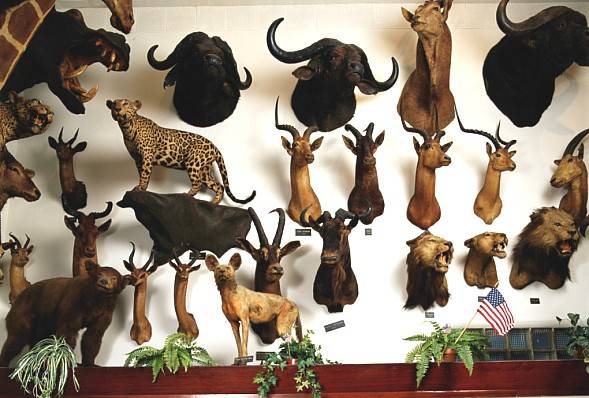
 

FoA challenges Congress’ betrayal of endangered antelope

Today international animal protection organization Friends of Animals filed
a Complaint challenging the constitutionality of a provision that was buried
in the 2014 Federal Budget by Congressman John Carter of Texas that seeks to
eliminate Endangered Species Act protection for three species of African
antelope held captive on U.S. sport-hunting ranches.

“After the better part of a decade on the losing end of Friends of Animals’
efforts to protect these amazing antelope, private hunting ranch operators
that profit on the killing of these animals chose to show their disrespect
for our justice system by turning to their Congressional pawn,
Representative John Carter,” said Priscilla Feral, president of Friends of
Animals. “Fortunately for the antelope, Friends of Animals won’t let them be
killed so easily and will continue to fight on their behalf in the
courtroom.”

Mike Harris, director of Friends of Animals’ Wildlife Law Program, explains
that the provision in the Federal Budget, Section 127, purports to undo
Friends of Animals’ 2009 victory in which a federal judge told the U.S. Fish
and Wildlife Service that it could not exempt these hunting ranches from theHuntingTrophiesJamieKripke600
permitting requirements in Section 10 of the Endangered Species Act. Section
127 also seeks to interfere with Friends of Animals’ 2013 lawsuit
challenging whether USFWS’s permitting of more than 100 of these hunting
ranches violated the Endangered Species Act’s conservation purposes.

“Representative Carter’s attempt to strip legal protections for these
endangered animals reeks of special interest favoritism,” Harris said. “His
budget rider is not only harmful to the antelope, but also to American
democracy. It is now up to the court to stop this misuse of Congressional
power.”

Today, addax and dama gazelles are nearly wiped out in Northern Africa due
to hunting, war, desertification of habitat, human settlement and
agribusiness. FoA has facilitated the reintroduction of the antelope within
Ferlo National Park in northwest Senegal. Through member support, FoA funds
habitat restoration efforts at Ferlo National Park. For example, in fiscal
year 2013, $66,000 went toward expanding the Oryx Fence Project, which
includes dama gazelles. One hundred and 20 oryx and 20 dama gazelles
benefitted, along with other animals, from these funds. FoA has also
collaborated with European and Middle Eastern specialists in captive
breeding of arid ecosystem gazelle species to restore these animals to the
wild.

The full Complaint can be viewed on the Friends of Animals’ website:

http://friendsofanimals.org/sites/default/files/kcfinder/files/Antelope_Ride
r_Complaint%20FINAL.pdf

Indiana Senate OKs Fenced-in Deer Hunting

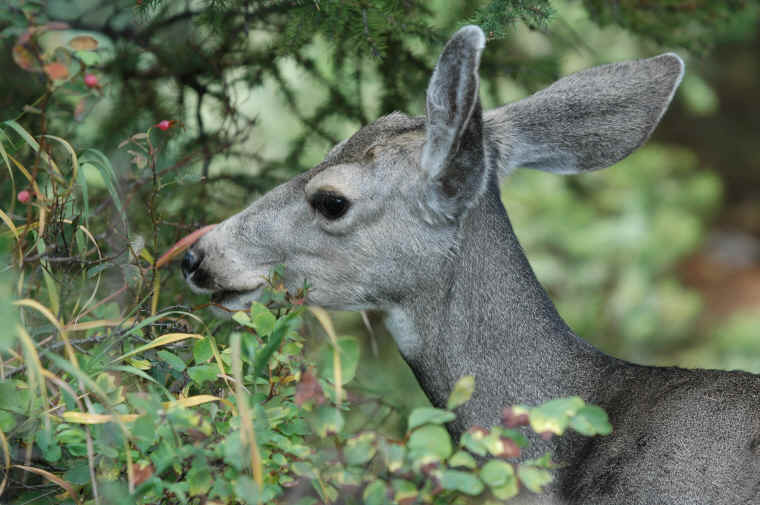
Photo by Jim Robertson

Photo by Jim Robertson

http://www.tmnews.com/senate-panel-oks-fenced-deer-hunting/article_91daaa9e-903f-541a-a12b-2fcbbfe5e130.html

Tuesday, January 28, 2014 BY ALLIE NASH TheStatehouseFile.com

INDIANAPOLIS — A Senate committee passed legislation Monday to legalize the state’s existing fenced deer hunting preserves — and allow new ones to open.

Senate Bill 404 now moves to the full Senate for consideration.

The vote comes four months after a Harrison Circuit Court judge ruled that the Indiana Department of Natural Resources didn’t have the authority to regulate a Southern Indiana fenced deer hunting operation. In previous years the Senate postponed action on similar bills while the lawsuit had been pending.

Another court ruling sided with the DNR, which had moved to shutter the operations.

Sen. Carlin Yoder, the bill’s author and chairman of the Agriculture and Natural Resources Committee, said with conflicting lawsuits, the General Assembly needs to step in.

“It’s the Wild West out there,” said Sen. Brent Steele, R-Bedford.

But opponents of the bill say they are concerned about the ethics of hunting deer in fenced-in areas. And they are worry about Chronic Wasting Disease, which is found in deer and elk and causes small lesions on their brains. The disease can only be detected postmortem.

The committee sought to resolve some of the ethical issues with an amendment that passed 6-1. It imposes a number of restrictions, including a 160-acre minimum for new preserves, a prohibition on the hunting of game birds within the preserves, and a requirement for a 50 percent escape cover for a released animal. It also would prohibit hunting an animal within 150 yards of a feeding station.

“Indiana residents don’t want this unsporting mockery in our state,” said Erin Huang, Indiana director of the Humane Society of the United States.

And opponents also said that an infected deer population could mean a big cost for the state.

“Wisconsin spent over $50 million just trying to manage Chronic Wasting Disease to protect their wild deer hunting business,” said Barbara Simpson, executive director of the Indiana Wildlife Foundation. “So this is an economic concern that we don’t often think about.”

Simpson said deer and elk hunting brings in $50 million annually to Indiana and wild deer hunting brings in $314 million. And, she said the sport employs 1,600 people.

Rodney Bruce, who owns one of Indiana’s four shooting preserves, said he has the same concerns.

“No one is more concerned about disease than we are,” Bruce said. We “totally believe in fair chase ethics and oppose canned hunting. We want to help start a dialogue so that we can coexist.”

Supporters say that fenced preserves could also be an economic boon. Since Indiana law does not allow deer to be imported from states with CWD – and that includes most states around Indiana – shooting preserves could be a boost for Hoosier deer farming businesses.

Myron Miller, a deer farmer, also believes that everyone can work together. “If we do this the right way we can complement each other.”

Feral Pigs Trapped and Sold to Canned Hunts

[As usual, no mention that the feral pigs situation is the result of humans introducing them onto game farms for hunting to begin with. Instead they blame the pigs.]…

Oklahoma weekend hunting news:

Feral hog hunting is becoming big business in Okla. The hogs continue
to overrun Okla. and they can be found in all 77 counties.
An Okla. hunter states that he would feel uncomfortable about shooting
a whitetail deer behind a high fence. But he has no ethical dilemma about
feral hogs. “All of them should be blindfolded and executed for crimes
against nature.”

The feral hogs have caused millions of dollars in property damage across
the state and can spread disease. The Okla. state Dept. of Agriculture
has cautioned hunters to wear gloves when cleaning feral hogs and to
cook the meat thoroughly.

There have been pastures uprooted by wild hogs and they frequently
destroy golf courses and ravage corn and hay fields. A pack of wild pigs
have even toppled the headstones of a rural cemetery. [Oh my.]

They have become such a menace that Okla. has even legalized hog
hunting from helicopters.

Wild pigs are good for one thing. They are fun to hunt a/w the owners
of a wild hog hunting company. The Okla. residents, both avid big game bow hunters, were looking to satisfy their hunting appetite when the big game season closed and so
they started hog hunting in Okla.
One of the co-owners states “What we enjoyed most about it was you
can do it year-round.”

They had so much fun hunting hogs that they decided to open their
hog hunting business.
The co-owner states “We were looking for ways to get involved in
the hunting business for several years because that is what we love to
do. It is our passion.”

They bought 120 acres in Okla. and put a fence around it. They are
now building a clubhouse so their customers will have something to do
between morning and evening hunts.

They buy feral hogs from Okla. trappers and keep around 300 on the
grounds. This number insures a good chance of success, but still feels
like a hunt. The co-owner of the business added “There are so many pigs in the
southern half of our state, we literally have people beating our door down
trying to sell pigs.”

They persuaded a friend, who used to chase hogs with them on his
visits to Okla., to give up guiding for bear, elk, and mountain lions in
Idaho and move to Okla. to manage the business.
The guide added that wild hogs are not the most difficult animal he has
ever hunted, but they are more challenging than most people think because
they are a lot smarter than people think they are.

He added “They are a lot harder to kill, especially for a bow hunter.
It is just the way God made them. They are a tough animal.” [Meaning, they suffer longer than most animals these psychos like to kill…]524958_3325028303604_654533903_n

NY bans boar hunting

By Associated Press

October 23, 2013

ALBANY — New York wants to head off a potential rampage by wild, Eurasian boar by banning their import and use in so-called “canned hunts.”

Gov. Cuomo signed a bill on Tuesday that outlaws hunting Eurasian boars, now done in fewer than 20 commercial hunting facilities statewide.

The new law prohibits not just hunting, but importing and breeding the animals and releasing them into the wild. They can weigh up to 300 pounds. By 2015, possession of a Eurasian boar will be a crime.

The effort is intended to end the destruction of farmland by boars and their threat to pets. They’re considered an invasive species and have created havoc in Southern states, where they go by the names razorbacks, Russian boars, and feral swine.

The Buffalo News reported the wild boar populations are growingimagesCALYDLG2 mostly because of hunting preserves that attract hunters with a guarantee of getting their game in a fenced-in area.

Also see:  http://en.wikipedia.org/wiki/Monster_Pig

The HSUS has more on canned hunting here: http://www.humanesociety.org/issues/captive_hunts/ and here: http://www.humanesociety.org/news/press_releases/2013/10/ny-gov-signs-wild-pigs-legislation-102213.html


Action Alert on baby Bears, Tigers and Bears

Baby Lions, Tigers, and Bears Are Not Stuffed Toys

Across the country, the public can pet, feed, pose with, and play with wild animals at malls, fairs, and roadside zoos for fees ranging from $10 to $500. To facilitate such unsafe handling, baby tigers, lions, bears, and primates are pulled from the care of their protective mothers shortly after birth.

When the baby animals can no longer be used as play props, or for photographs — sometimes after just a few months — they are often discarded at shoddy roadside zoos, sold into the pet trade, or killed for their meat. This cycle of breeding, exploiting, and then dumping baby animals puts animals at risk and endangers the public.

In response to a legal petition from a coalition of animal protection and conservation organizations — including The HSUS — the U.S. Department of Agriculture (USDA) is requesting comments on whether to prohibit public contact and close encounters with big cats, bears, and primates.

TAKE ACTION
Please personalize and submit the letter linked below to urge the USDA to act quickly and ban this cruel and dangerous practice:

https://secure.humanesociety.org/site/Advocacy?cmd=display&page=UserAction&id=6251

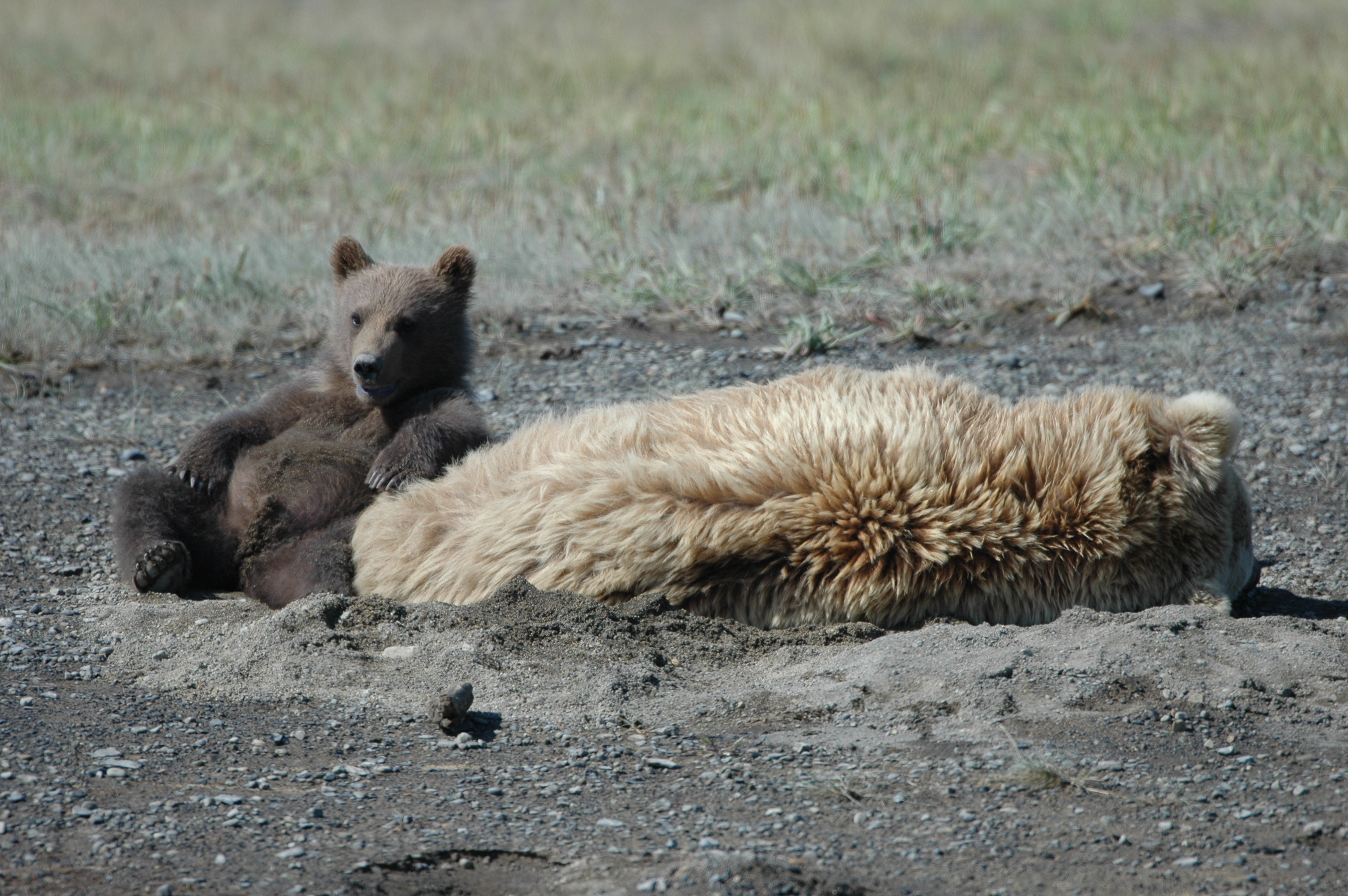
Photo of bears in the wild co Jim Robertson

Photo of bears in the wild co Jim Robertson