Exposing the Big Game

Forget Hunters' Feeble Rationalizations and Trust Your Gut Feelings: Making Sport of Killing Is Not Healthy Human Behavior

Exposing the Big Game

The outbreaks of both the Wuhan coronavirus and SARS started in Chinese wet markets. Photos show what the markets look like.

china wet marketchina wet market
Customers in a Chinese wet market on January 22, 2016. 
Edward Wong/South China Morning Post/Getty

The coronavirus spreading in China and the SARS outbreak of 2003 have two things in common: Both are from the coronavirus family, and both started in wet markets.

At such markets, outdoor stalls are squeezed together to form narrow lanes, where locals and visitors shop for cuts of meat and ripe produce. A stall selling hundreds of caged chickens may abut a butcher counter, where uncooked meat is chopped as nearby dogs watch hungrily. Vendors hock skinned hares, while seafood stalls display glistening fish and shrimp.

Wet markets put people and live and dead animals — dogs, chickens, pigs, snakes, civets, and more — in constant close contact. That makes it easy for a virus to jump from animal to human.

On Wednesday, authorities in Wuhan, China — where the current outbreak started — banned the trade of live animals at wet markets. The specific market where the outbreak is believed to have begun, the Huanan Seafood Market, was shuttered on January 1. The coronavirus that emerged there has so far killed 26 people and infected more than 900.

“Poorly regulated, live animal markets mixed with illegal wildlife trade offer a unique opportunity for viruses to spillover from wildlife hosts into the human population,” the Wildlife Conservation Society said in a statement.

Coronaviruses are zoonotic diseases, meaning they spread to people from animals. In the case of SARS, and likely this Wuhan coronavirus outbreak as well, bats were the original hosts. The bats then infected other animals, which transmitted the virus to humans.

Here’s what Chinese wet markets look like.

The Huanan Seafood Market in Wuhan closed on January 1 after it was found to be the most likely starting point for the outbreak of this coronavirus, also called 2019-nCov.

wuhan wet market
Huanan Seafood Market in Wuhan, China, on January 12, 2020. 
NOEL CELIS/AFP via Getty Images

A 61-year-old man was the first person to die from the virus. According to Bloomberg, he was a regular shopper at the Huanan wet market, which sold more than seafood.

Reports indicated that before the Huanan market closed, vendors there sold processed meats and live animals, including chickens, donkeys, sheep, pigs, foxes, badgers, bamboo rats, hedgehogs, and snakes.

wet market fish
A wet market in Beijing on July 3, 2007. 
Teh Eng Koon/AFP via Getty

Wet markets like Huanan are common around China. They’re called wet markets because vendors often slaughter animals in front of customers.

“That means there’s a lot of skinning of dead animals in front of shoppers and, as a result, aerosolizing of all sorts of things,” according to Emily Langdon, an infectious disease specialist at University of Chicago Medicine.

On Wednesday, Wuhan authorities banned the trade of live animals at wet markets.

china wet market
A wet market in Guilin, China, on June 19, 2014. 
David Wong/South China Morning Post/Getty

Police in Wuhan began conducting checks to enforce the rule among the city’s 11 million residents, the BBC reported, citing state media reports.

This type of intervention could help stop the spread of zoonotic viruses like the Wuhan coronavirus.

wet market china chicken
A wet market in Beijing on July 3, 2007. 
Teh Eng Koon/AFP/Getty

“Governments must recognize the global public health threats of zoonotic diseases,” Christian Walzer, executive director of the Wildlife Conservation Society’s health program, said in a statement. “It is time to close live animal markets that trade in wildlife, strengthen efforts to combat trafficking of wild animals, and work to change dangerous wildlife consumption behaviours, especially in cities.”

The close proximity of shoppers to stall vendors and live and dead animals in wet markets make them prime breeding grounds for zoonotic diseases.

china wet market
A Chinese wet market. 
Felix Wong/South China Morning Post/Getty

Between 2002 and 2003, SARS killed 774 people across 29 countries. It originated in wet markets in the province of Guangdong.

civet
An Asian palm civet. 
Oleksandr Rupeta/NurPhoto/Getty

But the civets weren’t the original hosts of the disease.


Researchers figured out that SARS originally came from a population of bats in China’s Yunnan province.

horseshoe bat
A greater horseshoe bat, a relative of the Rhinolophis sinicus species from China that was the source of the SARS virus. 
De Agostini/Getty

“Coronaviruses like SARS circulate in bats, and every so often they get introduced into the human population,” Vincent Munster, a virologist at the Rocky Mountain Laboratories, told Business Insider.

Bats can pass along viruses in their poop: If they drop feces onto a piece of fruit that a civet then eats, the civet can become a disease carrier.

Experts haven’t yet confirmed the animal species that enabled the Wuhan coronavirus to spread to people.

pig wet market
A worker with a slaughtered pig at a wet market in Manila, Philippines. 
Romeo Ranoco/Reuters

“There’s an indication that it’s a bat virus, spread in association with wet markets,” Munster said.

But according to a group of scientists who edit the Journal of Medical Virology, the culprit in this case could be the Chinese cobra.

chinese cobra
A Chinese cobra. 
Thomas Brown

Scientists in China have figured out the genetic code of the Wuhan coronavirus. When researchers compared it with other coronaviruses, they found it to be most similar to two bat coronavirus samples from China.

But further analysis showed that the genetic building blocks of the Wuhan coronavirus more closely resembled that of snakes. According to the researchers, the only way to be sure of where the virus came from is to take DNA samples from animals sold at the Huanan market and from wild snakes and bats in the area.

The H7N9 and H5N9 bird flus — also zoonotic viruses — were likely transmitted to humans in wet markets, too.

wet market ducks china
Ducks on top of chickens at a wet market in Shanghai. 
In Pictures Ltd./Corbis/Getty

According to the World Health Organization, people caught those bird flus via direct contact with infected poultry in China. The diseases killed 1,000 people globally.

Bats and birds are considered reservoir species for viruses with pandemic potential, according to Bart Haagmans, a virologist at the Erasmus Medical Center in Rotterdam, Netherlands.

wet market china chicken
A chicken vendor on top of chicken cages at a wet market in Kowloon City, China. 
Dickson Lee/South China Morning Post/Getty

“Because these viruses have not been circulating in humans before, specific immunity to these viruses is absent in humans,” Haagmans told Business Insider.

“There have been plenty of eminent epidemiologists predicting ‘pandemic X’ for a number of years now,” Adrian Hyzler, the chief medical officer at Healix International, told Business Insider.

wet market china chicken
Live chickens in a wet market in Guangzhou, China. 
K. Y. Cheng/South China Morning Post/Getty

These pandemics “are more likely to originate in the Far East because of the close contact with live animals [and] the density of the population,” Hyzler added. His firm offers risk-management solutions for global travelers.

The Wuhan coronavirus outbreak isn’t considered a pandemic, however.

wet market china
A seafood stall in a wet market in Hong Kong. 
Isaac Lawrence/AFP/Getty

Since December 31, more than 900 cases of the Wuhan coronavirus have been reported across 10 countries, including the US. Symptoms include sore throats, headaches, and fevers, as well as pneumonialike breathing difficulties.

Haagmans said one of the challenges in containing this outbreak was that a substantial portion of infected people show only mild symptoms.

These people “may go unnoticed in tracing the virus and fuel the outbreak,” he said. “It seems that this actually may be the case now.”

Aria Bendix contributed reporting to this story.


China-19 Academics and Scholars call for eradication of illegal consumption and trading of wild animals

Original article in Chinese

https://mp.weixin.qq.com/s/T81AxgAkHIvRwdslPQ574g

Nineteen academicians and scholars jointly called for the eradication of illegal consumption and trading of wild animals and the control of a major public health crisis Original Shanshui Nature Conservation Center fighting with you Yesterday

There were 639 confirmed diagnoses nationwide, 422 suspected and 17 deaths. We don’t know how much these numbers will turn into when we wake up, but apart from anxiety and fear, how much we want to do something.

Following the initiative 1.0 proposed by Professor Lu Zhi the day before yesterday (→ Lu Zhi | Raising the wildlife trade to public safety for management), Professor Lu Zhi took the lead in one day to complete and improve, and recruited nineteen national universities, Academicians and scholars of scientific research institutes jointly sign the initiative.
Again, we look forward to your support as you read this initiative. In addition, the “Specific Suggestions on Managing Wildlife Utilization from the Source” drafted by Professor Lu Zhi has also been completed.
You can read the QR code at the end of the article or check out the two articles of Shanshui Company today.

Here is the full text of the initiative

👇

The epidemic of the new coronavirus pneumonia that originated in Wuhan is a new round of public health crisis after SARS in 2003. Preliminary information from national disease control agencies and professional researchers have shown that the source of the new coronavirus this time points to the wildlife trade market just like SARS.

In fact, scientific research shows that new infectious diseases such as Hendra, Nipah virus, H7N9 avian influenza, Ebola, Middle East respiratory syndrome and so on, which have appeared in recent years all over the world, are related to animals. Statistics show that more than 70% of new infectious diseases originate from animals. These viruses originally exist in nature, and wildlife hosts do not necessarily cause disease and death. However, because humans eat wild animals or erode wildlife habitats, the contact surface between these viruses and humans has greatly increased, giving viruses from wild animals to humans.
Transmission creates conditions that endanger public health. Coupled with the convenience of transportation and the movement of population, the probability of an epidemic outbreak has greatly increased.

It can be seen that controlling or even eliminating wild animal food and related trade is not only necessary for ecological protection, but also of great significance for public health risk control. In view of this, we call on wildlife supervisors and law enforcement departments, as well as market supervision departments, to play a greater role in a timely manner, manage the illegal wildlife trade from the source, and completely eliminate illegal wildlife consumption.

Our recommendations are as follows:

1. As soon as possible across the country, the local wildlife authorities, market supervision departments and disease quarantine departments shall jointly enforce law, strictly inspect the status of wild animals and their products currently traded on the market, and ban and severely crack down on illegal wildlife markets and trade. As well as the illegal operation of restaurants and public release of relevant information, creating public and social pressure.

2. In the long run, it is necessary to consider and manage the risks posed by wildlife trade and consumption as public safety issues. The People’s Congress and the competent government departments should establish more comprehensive regulations and management mechanisms.
Consumers are educated on health, safety and ecological protection.
details as follows:

a) Establish a long-term mechanism for reviewing and supervising the operation of wild animal domestication, breeding, and production and operation license units by the competent wildlife department. Any illegal acts shall be banned, especially those named domestication and reproduction, which are illegal acquisitions and hunting. Anyone who catches wild animals for trade must be punished severely. This incident should be used as an opportunity to rectify the chaos in the wildlife domestication, breeding, production and operation industries, comprehensively clean up irregular and illegal production and operation activities, and strictly prohibit the use of the state’s key protection of wild animals and rare and endangered animals. The contents of the legal business license approved by the competent authority shall be made public and subject to public supervision at any time.

b) The National People’s Congress urgently revised the “Chinese Wildlife Protection Law” to include public health and safety content into the provisions on the use of wild animals. According to China’s “Wildlife Protection Law” and “Regulations on the Implementation of Terrestrial Wildlife Protection”, there are no direct regulations on the prohibition and restriction of eating wild animals. At present, there are loopholes in the procedures and management of the approval and approval of domestication and breeding of wild animals by the forestry department.
Often there are cases of protection, domestication or breeding, which are illegal purchases, sales and consumption of wild animals, and lay the ground for the trade and consumption of wild animals. Hidden danger.
The relevant legislation should be revised and improved as soon as possible, and the consumption of wild animals should be banned, the law enforcement department and its duties of market supervision related to wildlife management should be clarified, and the punishment for illegal use of wild animals should be increased, and illegal consumption should also be included in the scope of management and punishment.

c) Advocate to change the narrow concept of “Wildlife Protection Is For Utilization” in the whole society, strengthen publicity efforts to protect wild animals and their habitats, explain the relationship between human survival and ecosystem service functions, and protect nature protection The association with public safety risks and everyone makes the bad habits of wild animals that have become a luxury rather than a necessity gradually fade out of people’s living habits, makes wildlife protection deeply rooted in the hearts of the people, becomes the mainstream of society, and implements the concept of ecological civilization to everyone In action.

d) Value 2020 When the 15th Conference of the Parties to Biodiversity is convened in Kunming, the media should emphasize the protection of native wildlife populations and habitats, and the government strongly supports research in the wild.

We solemnly call for an end to the illegal trade and consumption of wild animals and control of major public health risks from the source. It is hoped that the competent government departments, academics and the general public will work together to transform the crisis into actions to protect ecology and public safety in a timely and effective manner!

Coronavirus outbreak: Chinese live animal markets a ‘recipe for disaster’

H e informed the Telegraph that virus in farmed pets were well kept an eye on – there have actually been numerous episodes of the extremely pathogenic H5N1 bird flu in fowl recently however none have actually infected the human populace since strenuous illness monitoring grabs the infection and also the pets are chosen.

“When you have this viral soup and you have a collection of pigs, poultry and bats as you had in that market in Wuhan it’s a perfect incubator of diseases,” he claimed.

Dr Michael Osterholm, supervisor of the Centre for Infectious Disease Research and also Policy at the University of Minnesota, claimed that live animal markets were a issue throughoutAsia

” I have actually remained in a market in Bangkok which was virtually a mile by a mile inside – you can locate virtually any kind of animal possible. I have a image where there are cages loaded with ferrets and also in addition to them are hens. From a flu viewpoint, birds and also pets with each other are bad,” he claimed.

Coronavirus: How worried should we be? Which animal?

  • 22 January 2020


Which animal?

Once the animal reservoir (where the virus normally camps out) is detected, then the problem becomes much easier to deal with.

The coronavirus cases have been linked to the South China Seafood Wholesale Market, in Wuhan.

But while some sea-going mammals can carry coronaviruses (such as the Beluga whale), the market also has live wild animals, including chickens, bats, rabbits, snakes,  [ALL BEING HELD CAPTIVE!], which are more likely to be the source.

WuhanImage copyrightGETTY IMAGES
Image captionThe outbreak occurred in the city of Wuhan, south of Beijing

A virus – previously unknown to science – is causing severe lung disease in China and has also been detected in other countries.

At least 17 people are known to have died from the virus, which appeared in the Chinese city of Wuhan in December.

There are already hundreds of confirmed cases, and experts expect the number will keep rising.

A new virus arriving on the scene, leaving patients with pneumonia, is always a worry and health officials around the world are on high alert.

But is this a brief here-today-gone-tomorrow outbreak or the first sign of something far more dangerous?

What is this virus?

Officials in China have confirmed the cases are caused by a coronavirus.

These are a broad family of viruses, but only six (the new one would make it seven) are known to infect people.

Severe acute respiratory syndrome (Sars), which is caused by a coronavirus, killed 774 of the 8,098 people infected in an outbreak that started in China in 2002.

“There is a strong memory of Sars, that’s where a lot of fear comes from, but we’re a lot more prepared to deal with those types of diseases,” says Dr Josie Golding, from the Wellcome Trust.

How severe are the symptoms?

It seems to start with a fever, followed by a dry cough and then, after a week, leads to shortness of breath and some patients needing hospital treatment.

But most of our knowledge is based on the severe cases that end up in hospital. It is unknown how many mild or even symptomless cases are out there.

The coronavirus family itself can cause symptoms ranging from a mild cold all the way through to death.

“When we see a new coronavirus, we want to know how severe are the symptoms. This is more than cold-like symptoms and that is a concern but it is not as severe as Sars,” says Prof Mark Woolhouse, from the University of Edinburgh.

The World Health Organization (WHO) is considering declaring an international public health emergency – as it did with swine flu and Ebola.

How deadly is it?

Seventeen people are known to have died from the virus – just over 3% of the known cases.

But the infection seems to take a while to kill, so more of those patients may yet die.

And it is unclear how many unreported cases there are.

Where has it come from?

New viruses are detected all the time.

They jump from one species, where they went unnoticed, into humans.

“If we think about outbreaks in the past, if it is a new coronavirus, it will have come from an animal reservoir,” says Prof Jonathan Ball, a virologist at the University of Nottingham.

Sars started off in bats and then infected the civet cat, which in turn passed it on to humans.

And Middle East respiratory syndrome (Mers), which has killed 858 out of the 2,494 recorded cases since it emerged in 2012, regularly makes the jump from the dromedary camel.

Which animal?

Once the animal reservoir (where the virus normally camps out) is detected, then the problem becomes much easier to deal with.

The coronavirus cases have been linked to the South China Seafood Wholesale Market, in Wuhan.

But while some sea-going mammals can carry coronaviruses (such as the Beluga whale), the market also has live wild animals, including chickens, bats, rabbits, snakes, which are more likely to be the source.

Why China?

Prof Woolhouse says it is because of the size and density of the population and close contact with animals harbouring viruses.

“No-one is surprised the next outbreak is in China or that part of the world,” he says.

How easily does it spread between people?

At the beginning of the outbreak, the Chinese authorities said the virus was not spreading between people – but now, such cases have been identified.

“It is crystal clear there is human-to-human transmission,” says Prof Peter Horby, from the University of Oxford.

“The critical question is how transmissible is it. Is this going to be sustainable?”

Sars spread between people but Mers finds it quite difficult and requires close contact.

The new virus infects the lungs, so coughs and sneezes are a likely route of transmission.

It will also be important to find out whether some people are more vulnerable to infection or likely to transmit the virus.

When the virus is infectious is also unknown.

Is it before symptoms appear, which is when flu spreads, or when they are most severe?

How fast is it spreading?

It might appear as though cases have soared, from 40 to more than 500 in less than a week. But this is misleading.

Most of the “new” cases were already out there but have only just been detected as China steps up its surveillance.

There is actually very little information on the “growth rate” of the outbreak.

But experts say the number of people becoming sick is likely to be far higher than the reported figures.

A report by the MRC Centre for Global Infectious Disease Analysis at Imperial College London said: “It is likely that the Wuhan outbreak of a novel coronavirus has caused substantially more cases of moderate or severe respiratory illness than currently reported.”

While the outbreak is centred on Wuhan, there have been cases reported in Thailand, Japan, South Korea and the US.

All but one of those cases had travelled from Wuhan – but one, in Thailand, was due to local spread there.

There are concerns that the virus could be spread by the hundreds of millions of people travelling for Chinese New Year later this month.

Could the virus mutate?

Yes, you would expect viruses to mutate and evolve all the time. But what this means is harder to tell.

The novel coronavirus has jumped from one species to another. It could mutate to become easier to spread from one person to another or to have more severe symptoms.

This is something scientists will be watching closely.

How can the virus be stopped?

There is no vaccine, so the only way of stopping the virus spreading is to diagnose people early and treat them in isolation.

Tracing and monitoring people who have come into contact with patients can help prevent further spread.

Further measures could include travel restrictions and banning mass gatherings.

How have Chinese authorities responded?

Public health checksImage copyrightGETTY IMAGES
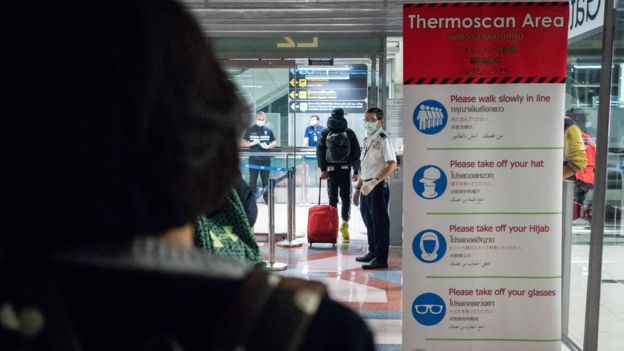
Image captionTemperature screening can help identify people who have been infected

China’s National Health Commission said travellers should avoid Wuhan and residents should not leave the city.

Infected people have been treated in isolation to minimise the risk of the bug spreading.

Extra checks such as temperature scans have been put in place to screen travellers.

And the seafood market was closed for cleaning and disinfection.

How is the world responding?

Most Asian countries have stepped up screenings of travellers from Wuhan and the WHO has warned hospitals worldwide a wider outbreak is possible.

Singapore and Hong Kong have been screening air passengers from Wuhan and authorities in the US and the UK have announced similar measures.

However, questions remain about the effectiveness of such measures.

If it takes five days for symptoms to appear, then someone could easily be halfway round the world and have passed through any screening checks before starting to feel ill.

How worried are the experts?

Dr Golding says: “At the moment, until we have more information, it’s really hard to know how worried we should be.

“Until we have confirmation of the source, that’s always going to make us uneasy.”

Prof Ball says: “We should be worried about any virus that explores humans for the first time, because it’s overcome the first major barrier.

“Once inside a [human] cell and replicating, it can start to generate mutations that could allow it to spread more efficiently and become more dangerous.

“You don’t want to give the virus the opportunity.”

Young elephants were taken from their mothers in Zimbabwe. Now they’re in cages in China

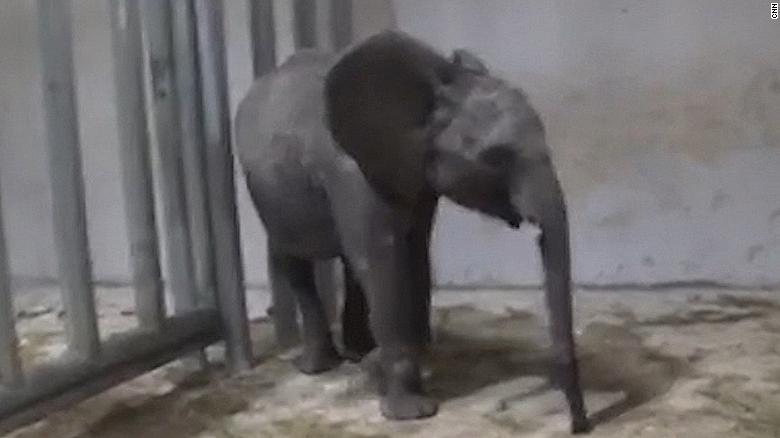
Hwange National Park, Zimbabwe (CNN)The cellphone footage reveals rows of steel cells stretching along a concrete floor. Behind each set of bars, a juvenile African elephant, their tusks just barely showing. One elephant presses its head into the corner of its prison-like confinement.

Zimbabwean officials legally captured these highly intelligent and social animals in Hwange National Park. Now, they will be broken and put on display for tourists in China.
By the end of this month, as more and more experts weigh in on the deep trauma suffered by captured elephants, a treaty governing international animal trade will halt the export of live elephants from Zimbabwe and other countries in Southern Africa.
Activists say they fear that the opaque trade could now move underground.
A screenshot taken from cellphone footage shows a caged young elephant in China.

Stuck in a holding pen

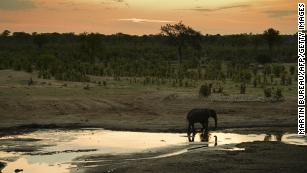
A vast park on Zimbabwe’s westernmost frontier, Hwange is one of the continent’s best spots for seeing giant elephant herds.
But few of the tourists entering the main gate are aware that just a few miles away to the southeast is a large boma compound, notorious among animal rights groups as the center of Zimbabwe’s efforts to sell elephants.
Armed with satellite coordinates provided by a source, we drove to the edge of the compound to try and see the elephants allegedly still inside.
“I have no idea about that,” a manager says, when asked about the elephant boma, a kind of holding pen before translocation.
We were quickly asked to leave, but Chrispen Chikadaya, a senior inspector with the Zimbabwe National Society for the Prevention of Cruelty to Animals (ZNSPCA), is one of the few people who has gotten inside.
Chikadaya began hearing the rumors late last year that park authorities were rounding up breeding herds and capturing juveniles for export.
Witnesses told him that wranglers were grabbing elephants old enough to survive without their mother’s milk, but small enough to squeeze into a freight box to China.
“They experience severe stress; they don’t have the freedom they have to move around like they do in the wild. If you put them in cages, you have now taken away the wild in them,” says Chikadaya.
Footage courtesy of Humane Society International released earlier this year.
Video released by Humane Society International shows the young mammals pacing back and forth, behavior often exhibited by stressed elephants. Predictably, the images sparked outrage.
“This is fiction. People act like we don’t love these animals, that we are abusing them. It is not true, because we are looking after our animals very well,” says Tinashe Farawo, a spokesman for Zimbabwe National Parks and Wildlife Management Authority (Zimparks).
He says that Zimbabwe has legally translocated animals to zoos, circuses and sanctuaries for decades without much fuss.
“We have moved animals to the US, the UK, Australia and New Zealand. This is not a new phenomenon in this country,” he says. “We think people should be scientific and ask what the facts are, not the emotions.”

Intelligent and sociable animals

Well-known elephant biologist Joyce Poole scoffs at the emotion-versus-science argument.
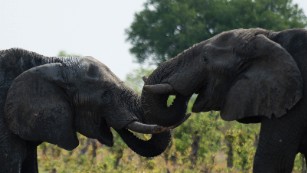
After studying elephants in the field for decades, she believes that they are uniquely intelligent and ill-suited for confinement.
“Some critics say we are ascribing human characteristics towards elephant, but we are not. These are elephant characteristics. They are capable of empathy, of self-awareness, understanding death and compassion. This is the kind of scientific evidence that Zimbabwe is ignoring,” Poole says.
She says, like us, elephants are highly social animals — confine them and they get bored, depressed, aggressive and sick.
“Through the course of evolution, they have developed these really close social bonds. If you take that away from an elephant, you destroy it,” says Poole.
On average, elephants die much younger in captivity, are less fertile, and suffer more from ailments like arthritis.
“Some animals are suitable and may even prosper in captive situations and zoos, because their biological needs are met. As for elephants, the needs are so beyond the scale of any zoo I have seen, that none of them are appropriate or suitable as a destination,” says Keith Lindsay, an elephant biologist who has studied zoo conditions.
As scientists learn more about elephants, public attitudes and policy have begun to change. In the US, the Ringling Bros. and Barnum & Bailey circuses stopped using elephants in 2016 — a year before the company shut its doors for good.

Stuck in limbo

In June, President Emmerson Mnangagwa said the country needed to sell wild elephants to fund its conservation efforts.
Back in May, the government revealed it had made $2.7 million from the sale of 90 elephants to Dubai and China.
In recent years, Zimbabwe has found ready buyers in China for their live elephant trade, but the ZNSPCA says the details of those deals and the conditions of the confined animals have been deliberately obscured.
Chikadaya says when he first inspected the elephants, in Hwange, slated for export back in 2018, inspectors were told by park officials that the elephants would be moved within a month, but they were kept in a boma for nearly a year.
In October, word got out that officials were preparing to ship the elephants, and the ZNSPCA team rushed back to Hwange. After the seven-hour drive, they were forcibly barred from the boma, despite their legal mandate to inspect captive animals. Zimpark officials say that they didn’t have the right paperwork, but their inspectors are, in fact, free to inspect whenever they want.
The ZNSPCA says that the following morning the elephants were crammed into crates and spirited out of the park as their inspection team slept.
“It all should be transparent,” says Chikadaya. “We should know that our animals are being translocated. And we need to know what benefit it has for conservation.”
Zimparks did eventually release basic information on where the elephants went and what they bought with the money — their spokesman says there is no issue of transparency, adding they bought everything from vehicles to uniforms with the proceeds.

A vast park without resources

With about a third of Zimbabweans surviving on food aid during the lean season, many would view the fate of about 30 elephants the equivalent of “first world problems.”
Ultimately, Hwange is expected to pay for itself. They do that with tourist dollars and, says Farawo, by selling elephants.
“We believe that elephants must pay for their upkeep. They must also pay for their protection,” he says, adding that Hwange has elephants to spare, with somewhere between 45,000 to 53,000 in the park — far more than the park’s environment can sustain.
Patrick Sibanda, a veteran ranger of the park, says each year the rains are coming later and later.
He says that around 200 elephants have died from thirst and hunger since October alone.
An elephant carcass in Hwange. A severe drought that has drained water sources in Zimbabwe's largest national park, resulting in a number of elephant deaths.

“It’s very bad. So many elephants have died this year,” says Sibanda, as he walks towards a carcass near a water hole.
“This young elephant came to drink, but I think it was exhausted,” he says. The elephant injured itself at the water trough, he says, and a pride of lions attacked it. On the other side of a dirt track, another elephant carcass lies under an acacia tree
The drought is one of the main arguments put forward for selling elephants to China by Zimparks. They say they need money to repair artificial water holes to save elephants.
“There is no water, there is no habitat, there is climate change. These things are real,” says Farawo
Biologists like Poole say they should instead gradually reduce elephant numbers by reducing the water points, not unnaturally prop up the numbers. But she concedes that there aren’t any easy options for Zimbabwe.

The end of the trade

In the next few days, Zimbabwe will no longer be allowed to sell its elephant to China or anywhere else where African elephants don’t naturally exist.
The decision was taken at a Convention on International Trade in Endangered Species of Wild Fauna and Flora (CITES) meeting in Geneva earlier this year, backed by a coalition of African nations and the European Union. Members of the international treaty governing the international sale of animal products approved the ban.
The move was lauded by conservation activists, but slammed in Zimbabwe, where they say they will lose a key revenue stream. Zimparks says they will abide by the treaty for now, but Zimbabwe’s President has already hinted in state media that they could withdraw from the agreement. Activists, meanwhile, worry that the sales will just move underground.
After the elephants left for China in October, there were rumors that several were left behind, too big to fit in the crates after the extended confinement.
Zimparks flatly denied that any were left in the boma.
But after winning a court battle, the ZNSPCA gained access just a few days ago. They found two emaciated young elephants struggling inside the translocation compound.
Chikadaya understands that the parks desperately need funds but says there has to be another way. He says the lack of transparency from the government and the trauma faced by the elephants, both here in Zimbabwe and thousands of miles away in zoos across the world, just can’t be worth it.
“Our wildlife belongs to Zimbabweans. It doesn’t belong to one person; it doesn’t belong to an organization. It belongs to our ancestors. It belongs to our children, to our parents, to our grandchildren,” he says.

Lion trade: The secret threat faced by SA’s tourism industry

TRAVEL NEWS / 17 SEPTEMBER 2019, 4:30PM / IOL SUPPLIED

A recent study has shown that nearly half of the captive lion facilities in SA are directly linked to tourism through offering one or more unethical activities. Picture: Supplied

Annually, thousands of tourists flock to South Africa to experience our unique wildlife. But behind this booming industry is an ugly truth, many wildlife encounters support the mistreatment of iconic species, such as lions.

Tourism plays a vital role in job creation and contributed over R130-billion to the economy in 2017, about 2.9% of the total gross domestic product (GDP).

However, exploitative wildlife interactions such as cub petting, walking with lions and the associated volun-tourism sectors are all closely linked to the captive predator breeding, canned hunting and lion bone trade in South Africa. All of which has the potential to drastically damage South Africa’s reputation as a tourist destination.

A recent study has shown that nearly half of the captive lion facilities in South Africa are directly linked to tourism through offering one or more of these unethical activities, explained Fiona Miles, country director of FOUR PAWS in South Africa, one of the largest national animal welfare organisations fighting for the protection of big cats.

Dragging down the South African name

RELATED ARTICLES

“Although global trends in responsible tourism are showing that tourism is moving away from such exploitative captive wildlife interactions, many tour operators at home and abroad continue to promote these activities to their clients,” said Miles.

“Local and international visitors carry on supporting hands-on captive wildlife facilities either through a lack of awareness or purely to get that perfect wildlife selfie.”

In addition, the captive lion trade has the potential to tarnish South Africa’s reputation as a conservation leader.

A recent Legacy Report of the Portfolio Committee on Tourism in the Fifth Parliament on the effects of wildlife interaction found the safari niche market has been marred by the growth of animal interactions and canned hunting, which have “damaged the country’s brand as a champion of wildlife conservation”.

According to a report by the South African Institute of International Affairs on the economics of captive predator breeding in South Africa, our tourism brand value could potentially be negatively affected by as much as R54 billion loss in revenue over the next decade, if the captive lion breeding industry is allowed to thrive.

Take a stand

ADVERTISING

But there is a way to prevent further damage to our image as a tourism destination, believes Miles, and this starts with ending the demand for these devastating activities.

“Collectively, we need to stop supporting any type of cub petting, walking with predators or associated volunteering options, whether this involves lions, tigers, or cheetahs, as none of these activities support conservation of the species in the wild, as many facilities would like you to believe,” added Miles.

“It is also time for all of the establishments offering these activities to put a stop to it.”

This is why FOUR PAWS is challenging both the tourism industry and the public to commit to their Lion Longevity Oath: A commitment to end all support of activities and interaction with captivate lions and raise awareness of lion trade and canned lion hunting.

Six major tour operator companies have already signed the oath in against visiting establishments where lion cub and other animal interactions take place.

The Ugly Side of Wildlife Tourism

https://thewire.in/the-arts/the-ugly-side-of-wildlife-tourism

Kirsten Luce’s photographs focus on the problems with ‘selfie tourism’.

With the growing popularity of Instagram and the “selfie” has come the search for the ultimate photo.

Now a growing industry offering access to animals in wildlife sanctuaries is emerging as the latest trend on social media.

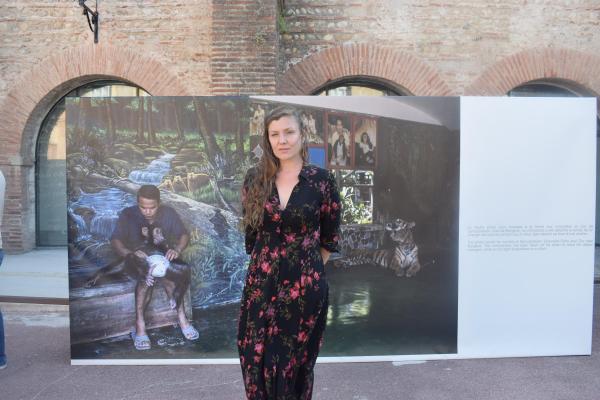
“Without a doubt, the demand for this type of photo, to sit down next to a wild animal and have your photo taken, has grown exponentially because of social media,” says Kirsten Luce, an American photographer whose work previously concentrated on Latin American migrants in the state of Texas.

Thailand and Russia

While working on a project in Brazil, Peru and Colombia on the rise of selfie tourism, Luce realised just how big a problem it was.

She felt more research was needed and decided, along with her reporter, to focus on Thailand and Russia.

Chinese tourists at a crocodile centre in Thailand, taken by Kirsen Luce. Photo: RFI/Anne-Marie Bissada

“We were looking at where native species were exploited for the entertainment of tourists,” Luce explains on the sidelines of her exhibition at the Visa pour l’image photojournalism festival in Perpignan, France.

“In Thailand, everybody goes looking for an experience with the Asian elephants. They also have a lot of tiger experiences, so that was an obvious choice.

“Since we had already looked at a lot of tropical places, we wanted something tonally and texturally different. In Russia we found that travelling marine mammals are exploited at a large number as are bears and even polar bears.”

Image of bears performing for the ice circus in Russia from Kirsten Luce’s exposition. Photo: RFI/Anne-Marie Bissada

It’s a topic that hits hard through its raw imagery.

Many people at the expo took the time to talk to Luce about what she saw and how they can help.

“With a project like wildlife tourism, I think because people have never really seen the topic tackled, they are universally responding by condemning it,” she says.

“I’ve never produced a body of work that has gotten such an emotional response from virtually everybody. Everybody wants to do something to stop it and I’ve even had people say to me, how are you able to sleep at night, it must be the hardest thing to witness?”

Images and access

Photo from Kirsten Luce’s photo exposition. Photo: RFI/Anne-Marie Bissada

But prior to visiting the sanctuaries, Luce and her reporter met former trainers, veterinarians and animal rights activists. They would explain how the animals were often mistreated or prepared before an audience to look healthy, especially if tourists were visiting an “ethical” venue such as those offering bathing with elephants.

“The animal rights activists and trainers that had turned away from the field would give us tips and clues as to what to look out for in behaviour, and also whether or not teeth or claws had been removed,” explains the photographer.

Image of a chained tiger seated on a platform in Kirsten Luce’s exposition. Photo: RFI/Anne-Marie Bissada

Impact

The beauty of photography is in capturing a moment in time – and how that moment can make an instantaneous connection with viewers.

In an elephant sanctuary in Thailand, one such photo brought about change.

“It was clear he needed vet care,” says Luce about the young elephant that was kept away from the public because he had a broken leg. “They claimed they were treating him.

Also read: The Story of How the Orphaned Tigress of Bandhavgarh Was Rehabilitated

“We had a fixer go back a couple of times to check on him – he would be in the exact same position. We knew that the elephant was not getting the care he needed.

“That photo got a lot of movement. There was a lot of pressure, and he was finally purchased and moved to a sanctuary,” Luce says, adding that it was a rare occurrence of a happy ending.

But the owner of the wildlife centre has many more elephants there, and the wider industry continues to thrive, catering for wildlife consumers.

Wildlife ‘likes’

In Russia, a burgeoning industry has kept photographer Olga Barantseva busy, fulfilling people’s desire to pose with a big bear.

Barantseva has nearly a hundred thousand followers on Instagram.

Stepan, the bear used in Barantseva’s photos, was a former circus bear, likely abused into submission, says Luce, which would explain his apparent docile nature that allows him to pose with humans.

Also read: What Happened to the Women in Photography?

Another phenomenon Luce experienced in Russia was the travelling dolphin shows.

“These marine mammals are living and performing in inflatable tents, almost like a circus would come to town for six weeks,” she says. “These belugas and dolphins would be living in tanks for six months.”

The travelling shows do not provide proper water filtering or medical attention, which almost certainly leads to premature death, and to keep up numbers, fresh stock is replaced illegally through poaching in the Black sea, according to Luce.

More than 80 tigers die after being removed from Thailand tourist trap

https://nypost.com/2019/09/16/more-than-80-tigers-die-after-being-removed-from-thailand-tourist-trap/

More then 80 tigers have died after they were rescued from a Thailand tourist attraction dubbed Tiger Temple, a report said.

A total of about 87 felines died from a virus they had contracted after being held at the The Wat Pha Luang Ta Bua Yanasampanno temple west of Bangkok, according to London’s Independent newspaper.

“When we took the tigers in, we noted that they had no immune system due to inbreeding,” said a senior official from Thailand’s department of national parks, wildlife and plant conservation.

The official said the animals were susceptible to the canine distemper virus.

While the tigers were living at the temple, monks charged admission for people to take photos with them and bottle feed their cubs.

But the tigers needed to be removed from amid allegations that they were being drugged and illegally bred.

Local media reports claim that as many as 87 of the 147 creatures taken from the temple have died.

During a raid of the temple, Thai officials found 40 dead tiger cubs in a freezer along with 20 glass jars containing baby tigers and tiger organs.

Also, a monk tried to flee with 700 vials of tiger skin and a suitcase full of tiger teeth.

Top international biologists and planners call for an end to elephants in captivity

By Don Pinnock• 10 September 2019

Photo: Unsplash/ Timothy K
16 Reactions
An international conference of elephant experts has condemned the capture and confinement of elephants and has called on zoos to release and reintegrate them into the wild or relocate them to sanctuaries where they can live a more normal life.

Holding elephants in captivity causes them enormous stress and constitutes cruelty. Capturing wild elephants and removing them from their families is unacceptable. Captivity is simply unsuitable for elephants.

This was the overall agreement at a conference in Hermanus on 6 September 2019 attended by elephant specialists from Kenya, Zimbabwe, the United States, Great Britain, the Netherlands and South Africa. They were seeking to work out a framework and policy guidelines for dealing with elephants in captivity.

The conference, Taking the Elephant out of the Room, was organised by the EMS Foundation and followed the historic ruling by the United Nations wildlife trade organisation, CITES, prohibiting wild-caught elephants from being held in captive facilities.

The conference was opened by Chief Steven Fritz of the Khoi Council.

“Elephants are sacred to the Khoisan First Nation people,” Fritz told delegates. “What you do to them you do to us. If you enslave elephants you enslave the Khoisan nation. Like us, they are First Nations. They’re our rainmakers and have been with us from before memory. For this reason my people have resolved to unite to protect them from cruelty and killing.”

For Kenyan elephant ethologist and conservation biologist Dr Joyce Poole, who has conducted groundbreaking elephant research in Amboseli National Park, confinement even in the best facility constituted extreme cruelty.

“In a single day, an elephant may socialise with hundreds of individuals. Relationships radiate out from a mother-offspring bond through families, clans, subpopulations. Independent males form long-term friendships.

“Elephants communicate through more than 300 gestures, complex speech and glandular secretions. They contemplate, negotiate, collaborate, plan and are aware of death. They care about their lives and are more like us than we realise.

“What happens when we remove all intellectual stimulation? In confinement, without companions, an elephant has no purpose. Captive elephants lack the very foundation of elephant life. It is utterly wrong to confine them.”

Biologist Dr Keith Lindsay, whose conservation work began in Amboseli in 1977, outlined the centrality of elephants in ecosystem health.

“They’re a keystone species, essential components in an ecosystem. If you take the keystone out of an arch it collapses. They’re ecological engineers upon which many other species depend. They bring down trees to browse level, they open paths in the forest, they find salt licks, they open space for grazers and disperse seeds. The wild is where they belong.”
Pictures of African elephants taken at Karachi Safari Park in Pakistan in January 2019. Photo: Ban Animal Trading

Advocate Jim Karani of WildlifeDirect in Kenya said the important question is not “can animals reason or talk, but can they suffer?”. Our confinement of elephants shows they can and do.

“There’s a body of research that proves there’s no conservation-education value to the use of elephants in zoos,” he said.
“They are miserable and tell us nothing. Their only use is to take a selfie and walk away.

“The law has a duty to protect all sentient beings and in zoos there are serious welfare concerns about the treatment of non-human persons. An animal has a right of protection against needless pain and suffering.

“Confining and isolating an elephant is not the way to treat a sentient being. They’re not merely property. They should be granted rights as legal non-human persons, as corporations are.”

Marion Garai of the Elephant Specialist Advisory Group provided the statistics. There are presently 1,770 elephants worldwide in captive facilities, of which 1,491 are in zoos. Most of these are in the United States, followed by China, Germany and Japan. Just under 100 facilities hold a single, lonely elephant.

Several speakers detailed the extreme stress caused to elephants by capture and confinement.

Audrey Delsink of Humane Society International-Africa said capturing baby elephants – as Zimbabwe continues to do – causes post-traumatic stress disorder (PTSD) that can last decades. This was confirmed by Dr Gay Bradshaw of the Kerulus Centre for Nonviolence in the United States, whose work has led to the field of trans-species psychology.
Pictures of African elephants taken at Karachi Safari Park in Pakistan in January 2019. Photo: Ban Animal Trading

“There is an epidemic of PTSD among elephants in captivity,” she said.
“Elephants share with humans the same brain, same consciousness and the same vulnerability to trauma. They can experience psychological and social breakdown. Trauma spreads from parent to child, neighbour to neighbour.

“If we ‘save’ elephants from extinction by confining them, they will be elephants in body only but psychologically extinct. We have to end killing and captivity and restore ancestral habitats. That holds true for all wildlife on every continent and in every ocean.”

Wildlife management specialist Dr Yolanda Pretorius explained the negative effect humans have on elephants, from fencing, manipulation and noise to capture, confinement and cruel training.

“All this causes trauma and impacts on their welfare. The less people have to do with elephants the better it is for elephants. But there’s almost no place left on Earth for this to happen.

“In captivity elephants are less aware, they move slowly, they seem to droop. If you’ve worked with elephants you can see their depression, their sadness. So we have to work out our future relationship with elephants very carefully.”

Lynn James of SPCA Zimbabwe and environmental lawyer Lenin Chisaira outlined the traumatic impact of the live capture of baby elephants in Zimbabwe. Adults are driven off by helicopter and the exhausted babies grabbed and bundled into trucks for export, mainly to Dubai and China.
They showed heartbreaking undercover footage of terrified youngsters being pushed and kicked to “move up” while loading into trucks.

Professor David Bilchitz of Animal Law Reform SA explored the legal perspective of South Africa’s engagement with elephants. He noted that the way sustainable use of wildlife was used in South Africa was to focus on the species as a whole and allow for the sacrifice of many individuals. This allows individuals to be objectified and exploited rather than respected and well stewarded.

An integrative approach, on the other hand, he said, would focus on the individual and the species: showing respect for both the individual and the survival of the species.

“Trophy hunters, for example, would say it works to the benefit of the whole by bringing in revenue to conserve the species. However, can we justify serious harm for the individual animal for the greater good?

“An integrative approach would reject the view that this advances conservation. It would argue that respect for individuals advances their conservation.

“I would adopt this position as this is the only approach that ensures the long-term goals of both positions. Only our respect for animals will ensure their long-term survival.”

Elephant researcher Antoinette van de Water has been working on the value of elephants in society and searching for the narratives needed to make them more important in order to change exploitative practices.

“We have to find goals that are good for both humans and elephants. What are the drivers of peaceful coexistence? In this, cultural values are important and we must work with affected communities whose problems get heard. Putting a price tag on elephants is not the way.”

Kahindi Lekalhaile of the African Network for Animal Welfare insisted that captivity of elephants was not a method of conservation. Captivity isn’t just about space, he said. It denies them social interaction and that is a great injustice.

“Because elephants in zoos do not live long, however, there is a constant demand for replacements from the wild. This is a threat to wild populations.

“Worldwide, most captive elephants are still wild-caught. We can look into artificial insemination,” he said. “But capturing young elephants for export to zoos should never happen. There should be no international movement of elephants.

“But what do we actually do about elephants who are already in captivity? We should think deeply about releasing them into the wild.
Where are these wilds? They are diminishing. And should we be releasing traumatised elephants? Let’s keep them in natural sanctuaries.”

Brett Mitchell of the Elephant Reintegration Trust outlined the steps necessary to integrate captive elephants into the wild, a process, he said, that can take many years. For a few deeply traumatised elephants it may not be possible. But he mentioned a group of elephants which were released from a holding boma into the wild that never went back, not once.

In concluding discussions it was unanimously agreed that no new elephants should be placed in captivity and that elephants currently in captivity should be placed in as free and natural environments as possible and not penned for human pleasure.

A policy framework will be developed from the conference inputs and discussion. DM

The conference was live-streamed and can be viewed here:

https://youtu.be/eKvD7DOPx2U

https://youtu.be/yvvHYzXOsMs

https://youtu.be/Wpq8J3gISv4

https://youtu.be/u7L-9BIiyVM

https://www.dailymaverick.co.za/article/2019-09-10-top-international-biologists-and-planners-call-for-an-end-to-elephants-in-captivity/

An Idaho resident illegally raised an elk in captivity: ‘A sad ending’


This elk was illegally raised by a Gem County resident, Fish and Game says. (Photo courtesy Brian Marek, IDFG)

A bull elk may spend the rest of its life in captivity after an Idaho resident illegally raised the elk in Gem County.

Idaho Fish and Game says a resident of Sweet illegally removed the elk when it was a calf in the spring of 2018. The elk ended up leaving the area during the winter, but it returned to Sweet this spring.

Officers were receiving calls about the 400-pound elk roaming around the small town and it was unafraid of people.

“With the fall rut approaching, things could only get worse,” Idaho Fish and Game said.

“With plenty of elk in the Bear Valley area, it was hoped that the young bull would integrate into one of the local herds,” Fish and Game said. “But after two weeks in the wild, the young bull appears uninterested in its own kind, instead approaching curiosity seekers who have driven to Bear Valley in the hopes of spotting the animal.”

The elk, recaptured on Sunday, was deemed to be too habituated toward humans and will now live out its days in captivity. Previous attempts of finding the elk a home at an accredited facility were unsuccessful.

“A sad ending for what should be a wild animal,” Fish and Game said.