Washington Gov. Jay Inslee has just signed into law the strongest protections for egg-laying hens ever passed in any state legislature. This historic win will benefit approximately eight million hens each year, freeing them from cage confinement by the end of 2023. The measure builds upon our previous work in states like California and Massachusetts where voters have passed transformational ballot measures against the cage confinement of farm animals in recent years.
Washington’s new law phases out the production and sale of eggs from caged hens, regardless of where the eggs were produced.
In a typical cage facility, each bird has less space than the dimensions of an iPad on which to live her entire life. While cage-free does not equal cruelty-free, this measure will significantly reduce the birds’ suffering. In addition to banning cages and requiring more space per bird, the law also mandates that hens be provided with vital enrichments, including scratch areas, perches, nesting and dust bathing areas.
The HSUS has spearheaded the passage of this law and others in a dozen states — from Florida to Ohio to Arizona — to eliminate extreme confinement. These successes bolster the work we have done with some of the largest food corporations in recent years, both in the United States and globally, to end cruel cage confinement practices by their suppliers. As a result, lawmakers and corporations are increasingly realizing that the future is cage-free.
In Washington, we partnered with Democratic and Republican legislators, key stakeholders in the agricultural sector, and other leading animal protection groups to ensure the bill’s success. It is a remarkable illustration of how good people in all walks of life can come together to create lasting and transformational change for animals. The HSUS will continue to work with lawmakers, non-government organizations, volunteers, donors and other members of the public to continue paving the way toward this more humane reality.
Let’s take a moment to celebrate today’s remarkable win for animals. But let’s also keep in mind that billions of farm animals around the world are still suffering in cruel cages. The laws in Washington, California and Massachusetts set a great precedent for other states and countries to follow, and further support corporate policy commitments reforming how farm animals are raised. Let’s keep the momentum going as we work toward the day when no farm animal is locked in a cage.
Two major Canadian tourist attractions are sending beluga whales outside the country as a new federal law looms that would ban exports on marine mammals, The Canadian Press has learned.
Fisheries and Oceans Canada said it has approved permits for Marineland to move two belugas from the Niagara Falls, Ont., facility to Oceanografic in Valencia, Spain. The Vancouver Aquarium says it owns the two marine mammals that are being cared for by Marineland, and operates the Spanish park where they’re being transferred.
“These two aquarium-born belugas will receive exceptional care at Oceanografic, where they will join a small social grouping of whales already in care there,” Vancouver Aquarium said in a statement, adding that the deal would not cost the Spanish facility any money.
Marineland has also applied to move five more belugas to the United States, but neither Fisheries nor Marineland would divulge where in the U.S. they’re headed if the permits are approved.
“Our Marine Mammal Welfare Committee, which includes independent, accredited experts, recently recommended that Marineland Canada re-home some of our beluga whales to accommodate belugas we expect to be born in 2019 and 2020,” Marineland said in a statement.
“Relocations to the United States are being undertaken to ensure that the best care possible is provided for our beluga whales.”
Neither facility would identify which belugas were being moved, nor how long the two facilities had this arrangement.
The moves come as a new bill banning whale and dolphin captivity is nearing law — its third reading in the House of Commons is set for debate next week.
“Our government agrees that the capture of cetaceans for the sole purpose of being kept for public display should be ended,” said Jocelyn Lubczuk, a spokeswoman for Fisheries Minister Jonathan Wilkinson.
The bill bans imports and exports of the mammals with exceptions only for scientific research or “if it is in the best interest” of the animal, with discretion left up to the minister, thereby clamping down on the marine mammal trade.
It will also change the Criminal Code, creating new animal cruelty offences related to the captivity of cetaceans. It also bans breeding.
The bill includes a grandfather clause for those animals already in facilities in Canada and permits legitimate research, as well as the rescue of animals in distress.
Both Marineland and Vancouver Aquarium said the anti-captivity bill had nothing to do with their decisions to move the whales.
“The decision to move them was made in their best interest, not because of politics,” the Vancouver Aquarium said.
The Vancouver Board of Parks and Recreation passed a bylaw amendment in 2017 banning cetaceans being brought to or kept in city parks after two beluga whales held at the aquarium died. The aquarium, which is located in Stanley Park, announced last year that it would phase out whale and dolphin display.
There are currently no whales at the Vancouver Aquarium.
“We do not believe that the passage of (the bill) will impact Marineland Canada’s ability to do what is right for our whales in the years to come,” Marineland said.
Marineland, which has more than 50 belugas, has taken issue with the breeding ban. The facility said in a letter to the fisheries minister that the park would be in contravention of the Criminal Code when the bill comes into force because some belugas are pregnant and set to give birth this summer after the bill becomes law.
“There is no easy or thoroughly effective birth control medication for beluga whales,” Marineland wrote in March. “In order to control breeding by Bill S-203, existing social family groups must be separated.”
The park wants more time to ensure it is in compliance with the law.
The United States is considering similar legislation and France has banned the captivity of all whales, dolphins and porpoises.
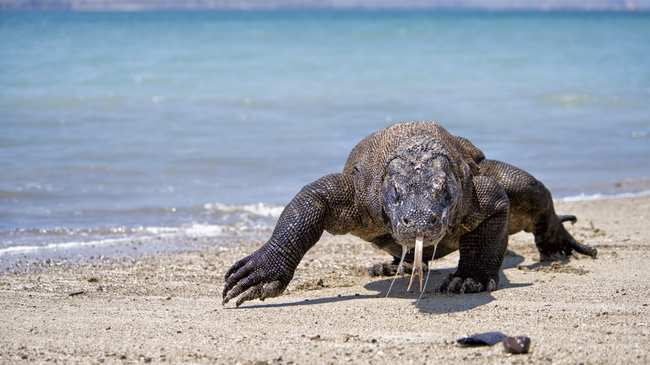
The Indonesian government has announced it will close the island of Komodo to tourists next year in a bid to prevent people from stealing its dragons. In a meeting with the Ministry of Environment and Forestry last week, East Nusa Tenggara provincial administration spokesman Marius Jelamud declared that “Komodo island will be shut down temporarily in January 2020,” Tempo reports, with the closure expected to stay in place for at least 12 months.
The decision comes just days after East Java Police busted a smuggling ring that took 41 komodo dragons and tried to sell them on the international black market for 500 million rupiah (about AU$50,000) a piece. Senior Commander Akhmad Yusep Gunawan, special crimes unit head of the East Java Police, said five baby komodos had also been rescued from the group of alleged animal traffickers. “The criminals intended to ship the animals to three countries in Southeast Asia through Singapore,” Yusep told reporters last week, according to The Jakarta Post.
Indonesian authorities further arrested five smugglers on Java for allegedly trafficking komodo dragons along with bearcats, cockatoos, and cassowaries. “The suspect sold the komodos online through Facebook,” East Java police spokesman Frans Barung Mangera said in a statement, while police commissioner Rofiq Ripto Himawan told Channel News Asiathat they were usually smuggled overseas to Asian buyers. “These animals are sold for traditional medicine,” said Rofiq. “Komodo dragons could be used to make an antibiotic.”
Considered to be the world’s largest lizard, komodo dragons are one of the most endangered species on the planet. The UNESCO World Heritage Komodo National Park, in East Nusa Tenggara, is the only place where the reptiles can be seen in their natural habitat—and while the remainder of the park will stay open to visitors throughout 2020, authorities are closing the gates on Komodo in the hope of launching a conservation program and bolstering the local dragon population. UNESCO figures state that there are currently about 5,700 komodos spread throughout the Park.
INDIANAPOLIS (WISH) — A six-year-old African elephant that was born and raised at the Indianapolis Zoo has died.
The zoo announced the death of Nyah on Tuesday afternoon.
Zoo officials said Nyah fought a brief illness. Veterinarians described her symptoms as typical of mild colic and that she had signs of abdominal discomfort.
Officials said her symptoms “progressed rapidly” before she died Tuesday morning.
A necropsy is underway to determine more about the cause of death.
Captured marine mammals seen from above in enclosures at a holding facility in Srednyaya Bay in the Far Eastern town of Nakhodka (AFP Photo/Sergei PETROV)
Nearly 100 killer and beluga whales were captured last summer for sale to oceanariums, especially the Chinese market (AFP Photo/Sergei PETROV)
Greenpeace activists and supporters rally in Moscow, demanding the release of the orcas and beluga whales back into the wild (AFP Photo/Alexander NEMENOV)
1 / 4
Captured marine mammals seen from above in enclosures at a holding facility in Srednyaya Bay in the Far Eastern town of Nakhodka Captured marine mammals seen from above in enclosures at a holding facility in Srednyaya Bay in the Far Eastern town of Nakhodka (AFP Photo/Sergei PETROV)
Dozens of orcas and beluga whales captured for sale to oceanariums have brought Russia’s murky trade into the spotlight, but efforts to free them have been blocked by government infighting.
Russia is the only country where orcas, or killer whales, and belugas can be caught in the ocean for the purpose of “education”. The legal loophole has been used to export them to satisfy demand in China’s growing network of ocean theme parks.
Photos of a total of 11 orcas and 87 belugas crammed into small enclosures at a secure facility in the Far Eastern town of Nakhodka sparked a global outcry, and the Kremlin on Friday stepped in, saying the fate of “suffering” animals must be resolved.
“There have never been that many animals caught in one season and kept in one facility before anywhere in the world,” said Dmitry Lisitsyn, head of the Sakhalin Environmental Watch group, who has emerged as a point person in the campaign to release the whales captured last summer back into the wild.
Russian investigators launched two probes into poaching and animal cruelty, while Russia’s environmental watchdog said it has refused to issue permits to export the whales.
But the investigations and any potential court case could drag on for months.
The Russian government is split between the environment ministry that says the animals must be released, and the fisheries agency that defends their capture as part of a legitimate industry.
President Vladimir Putin has ordered his ministers to “decide on the fate of the whales” by March 1, a decree said Friday.
“The animals are suffering” and may die, said Kremlin spokesman Dmitry Peskov, adding that they “are being kept in conditions that are inadequate for such young animals of these species.”
– 200 orcas left –
The captured killer whales belong to the rarer seal-eating population of the species, which does not interbreed or interact with fish-eating orcas.
The environment ministry has tried to list the seal-eating type as endangered, ministry representative Olga Krever said.
“This population has only 200 adult animals” in Russian waters, she said.
But the agriculture ministry, which controls the fisheries agency and oversees non-protected sea species, views orcas as competitors for Russia’s fish stocks and doesn’t believe they are under threat, Krever said, calling the dispute a “big problem.”
Marine mammal researchers say there are good chances of a successful release, but the fisheries agency told AFP that it “carries high risks of their mass death”.
“Neither orcas nor belugas are endangered,” and are simply a resource that can be used according to existing legislation, agency representative Sergei Golovinov said.
– ‘Stars of the shows’ –
Both the United States and Canada stopped catching wild orcas in the 1970s due to negative publicity, so China relies on Russian exports.
There are 74 operational ocean theme parks in mainland China featuring whales and dolphins, according to the China Cetacean Alliance, which monitors the industry. More are under construction.
“Orcas are like the cherry on the cake” for new Chinese venues, said Greenpeace Russia campaigner Oganes Targulyan at a recent protest against whale capture.
“They are the stars of the shows.”
All 17 killer whales that Russia has exported since 2013 — which officials value at up to $6 million each — have gone to China, according to CITES wildlife trade figures.
Though the animals in Nakhodka are unlikely to get green-lighted for export, their fate is unclear.
The urgency of the situation is clear however: one killer whale went missing from the Nakhodka facility this week, Sakhalin Watch said Thursday, suspecting it may be dead.
In the West, there is widespread opposition to keeping the highly intelligent marine mammals in parks like the US chain Sea World, but in Russia public opinion is not so certain.
Companies that caught the animals are not giving up. At the weekend, they launched a new Instagram account, praising the Nakhodka facility and defending the oceanarium industry.
– ‘Lobbyist muscle’ –
On Saturday, dozens of pro-industry supporters disrupted a rally to free the whales. They showed up with signs reading “Each orca is 10 jobs” for the crews hired to catch them, and only left when police arrived on the scene.
“We see that the capturing companies are putting up a fight,” Lisitsyn said. “They are using their lobbyist muscle.”
Researchers meanwhile are already starting to organise to prepare for a potential release of the animals.
“There has never been so many animals released in the past,” said Dmitry Glazov, a beluga whale researcher at the Severtsov Institute of Ecology and Evolution in Moscow.
He said a project of that scale would certainly require international expertise and funding. The whales, which have been fed dead fish, would need to go through an adaptation period to make sure they can rely on their natural food sources.
“For science, releasing this many animals would be invaluable,” he said.
“But there needs to be a decision first.”
“Immediately after Kai started showing signs of health decline two weeks ago our team made every effort to save his life, including bloodwork testing, ultrasounds, x-rays, and engaging external specialists and submitting diagnostic samples to outside university veterinary laboratories,” Christian Schaeffer, the general manager at Dolphinaris Arizona, said in a statement sent to media outlets. “Kai initially seemed to be responding, but his health suddenly declined last night around 11:30 p.m. After the veterinary team administrated hours of critical care, including providing him oxygen, medicine and x-ray testing, Kai’s condition continued to decline. We made the extremely difficult decision to humanely euthanize Kai ensuring he would pass peacefully.”
Kai’s death comes a month after Khloe, an 11-year-old female Atlantic bottlenose dolphin, died after battling what Dolphinaris Arizona officials described as a chronic illness.
In May 2018, Dolphinaris Arizona lost another female dolphin named Alia. She was 10 years old.
In September 2017, a dolphin named Bodie died of “a rare muscle disease.”
Bodie died just shy of Dolphinaris Arizona’s first anniversary.
Schaeffer said the facility has launched an investigation to review the dolphins’ death.
“We recognize losing four dolphins over the last year and a half is abnormal,” said Schaeffer. “Over the last several years we have worked with a team of external experts in the fields of animal behavior, water quality and veterinary care to ensure our dolphin family remains healthy. We will be taking proactive measures to increase our collaborative efforts to further ensure our dolphins’ wellbeing (sic) and high quality of life.”
Dolphinaris said it has already contacted a third-party pathologist to conduct a necropsy, which is an animal autopsy, to help determine the source of Kai’s health problems.
“With four out of eight dolphins dying inside of 16 months, the situation has reached critical mass. For the safety of the public and the remaining dolphins, all activities should cease at Dolphinaris Arizona until an independent investigation takes place,” said Lincoln O’Barry with the Dolphin Project.
On Friday, PETA released the following statement about the latest dolphin death:
“As the National Aquarium in Baltimore prepares to move dolphins to seaside sanctuaries, the Parliament of Canada considers a bill that would ban dolphin captivity, and two belugas will soon move to the first beluga sanctuary, Dolphinaris Arizona’s deadly dolphin prison is out of touch with public sentiment—and there’s no excuse for keeping it open. PETA urges Dolphinaris to send surviving dolphins to seaside sanctuaries, where they would never again be forced to haul tourists on their backs in the sweltering Arizona desert.”
PETA supporters will join Dolphin Free AZ in partnership with Ric O’Barry’s Dolphin Project in calling on Dolphinaris to send the dolphins to seaside sanctuaries at a memorial protest on Saturday, February 2, from 11 a.m. to 1 p.m., at the west corners of E. Via de Ventura and N. Pima Road in Scottsdale.
Sherriff Tobe Leazenby told WLFI one of two zebras on the Pittsburg property died as a result of the cold.
Leazenby said investigators checked the scene, and the property met standards for outside animals, making shelter, food and water available. Investigators said it appeared the zebra got stuck in the fence and couldn’t get free.
A woman who posted a photo of the zebras said the shelter was “a carport with open ends.” Her photo of the zebras showed them out in the cold without a blanket.
The property also has kangaroos, but Leazenby told WLFI that the kangaroos were inside a shelter.
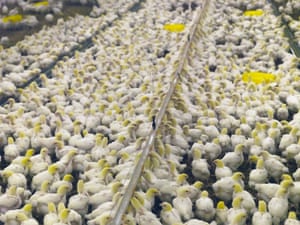
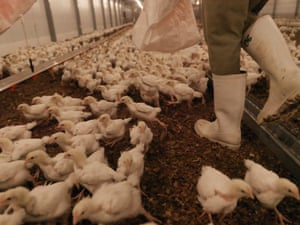
Young Cobb 500 chicks at Irvine’s farm in Kilimanjaro, which are ready to be sold to local chicken farms. All photographs by Peter Caton
A US mega-farm, a Christian backer and Africa’s oldest industrial chicken producer are bringing the world’s super birds to reform central Africa’s food market and feed the poor
On the evening of 7 August 2018, a KLM charter flight left Amsterdam, landing 11 hours later at Kilimanjaro airport in northern Tanzania. Its young occupants were nodded through immigration and driven 50 miles to their new home, close to some of Africa’s most famous game parks.
These were no tourists hoping to see lions in the nearby Serengeti. The 2,320 little cockerels and 17,208 hens on the plane were a flock of European-bred pedigree Cobb 500 chickens, the world’s most popular breed. Their destination: a remote 200-hectare mega-farm under construction in the windy foothills of snow-capped Mount Kilimanjaro.
Here, where wildlife and nomadic tribes have always roamed, Tyson, the world’s second-largest food company, has set up with Irvine’s, Africa’s oldest industrial chicken producer. With the backing of a devout Christian businessman, Donnie Smith, the three partners aim to revolutionise food production in central Africaand “save” people from hunger by growing chickens on an American scale. The little chicks and hens are the expeditionary force of an army of Cobb 500s to follow.
Irvine’s $20m (£15m) parent stock laying eggs on the high plains below Mount Kilimanjaro is just the start. In a year’s time they expect to be sending 500,000 fertilised eggs a week to a sister hatchery on the Tanzanian coast, where millions of one-day-old chicks will be sold to local farmers. In a few years they could be rearing and exporting 40m or even 50m broilers a year to neighbouring Kenya, Rwanda, the Democratic Republic of the Congo and other African countries.
No one knows if they will flood the market and undermine local producers, or if they will improve food security in countries where millions of people regularly go hungry.
But they should make money. There is an insatiable appetite for chicken meat in African cities, and only a handful of industrial farms across the continent competing with imports from the US, Europe or Brazil.
Tyson sees central Africa as a promising new market. The corporate behemoth, which turns over $38bn (£30bn) a year, says it is “faith-friendly” and rooted in Christian values. It processes and sells about 11bn chickens a year worldwide, according to Bloomberg.
And for Donnie Smith (below left), the genial former chief executive of Tyson, from Tennessee, the Kilimanjaro plant is “God’s plan”.
Smith, who spent 35 years with Tyson, says he feels impelled by his faith to feed the world’s poor. He has already set up a small chicken charity in Rwanda that offers loans to small farmers to buy a few hundred birds. His mission now is to bring chickens to Africa on a grand scale.
“I am a Christian. I feel a call to use my poultry background and put that to work. Poultry is the most efficient converter of feed to meat; no religions are against eating poultry. If you want an impact on the poor, providing them with high-quality, affordable protein from chicken is the best way.
“Why Africa? The need is tremendous. I have travelled in sub-Saharan Africa and in the largest population centres you see fairly rapid progress, but [not] in rural areas. All my experience tells me that God wants me to work in Africa,” he says.
Nature’s Arnie Schwarzeneggers
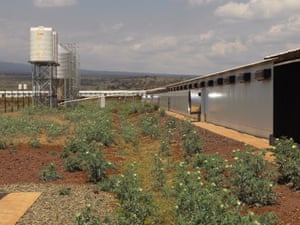
The farm looks like aliens have landed. Planet Cobb sees giraffes on their way between national parks pass many low, 120 metre-long, 12 metre-wide, shiny white structures; Maasai pastoralists in woven red shuka blankets drive their cattle over land dotted with steel masts, tanks and towers. The snows of Kilimanjaro glisten above the clouds.
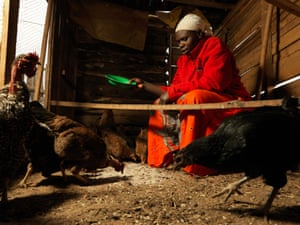
As happens all over Africa, many households in the few nearby villages keep chickens for eggs or to eat on occasional celebrations. But unlike the bright white Cobb 500s in their sealed sheds, these birds are scrawny, gaudy and all shapes and sizes. They look spectacular and taste strong.
In contrast, the Cobbs are nature’s Arnie Schwarzeneggers – all jutting chests, rippling thighs, big feet and bland flesh. These meat machines have been highly bred for 100 years to grow fast, bulk up their breasts and to eat only small quantities of cheap soya and maize.
Irvine’s $20m farm and hatchery in Dar es Salaam
Today, the Cobb 500 is an industrial marvel. A parent hen will lay on average 192 eggs in its short 15-month life, more than twice as many as any backyard bird; and a young Cobb 500 broiler can grow from a day-old chick to a 2kg bird ready for the pot in just 33 days.
The Cobb is now the chicken that ate the world, identically bred in 120 countries and the first choice of most of the world’s big poultry farmers and fast-food chains from McDonald’s to Wendy’s, KFC and Zaxby’s.
No one has counted, but there are probably far more Cobb 500s alive than there are humans. The UN’s Food and Agriculture organisation (FAO) estimated in 2011 that there were 19bn chickens across the globe. Of those bred for their meat, nearly half are thought to be Cobbs. In the next few years chicken is expected to overtake pork and beef to become the world’s most popular meat. Cobb flesh by then could be in the diet of billions of people.
The multinational company Cobb-Vantress, which has developed the bird and is owned by Tyson, declined to speak to the Guardian. But, says Hal Herzog, a US author and anthro-zoologist: “Once its feathers are plucked, its feet and head chopped off, its gut scraped out and its blood drained, 73% of a Cobb 500’s carcass will be eviscerated yield.
“A broiler chicken’s bones cannot keep up with the explosive growth of its body.” He says that unnaturally large breasts may torque a chicken’s legs, causing lameness, ruptured tendons and twisted legs.
But the Cobb 500 is the likely future of food. With scientists urging people to eat less meat to reduce greenhouse gas emissions, Cobb broilers are proving to have the best carbon footprint of all land-based animals. According to one calculation, kilo for kilo, a broiler emits five times less CO2 equivalent than lamb, and is environmentally better than cheese.
‘These birds live like kings and queens’
To get the best, soft white meat from a Cobb 500 you need more than genetics, says Enzo Faglioni, the young Brazilian vet who is Irvine’s breeder operation manager at the farm. “You must minutely control the birds’ environment. They must be as comfortable as possible at all times, and be treated like babies,” he says. “These birds live like kings and queens.”
He accepts that commercial poultry farms have made welfare mistakes in the past, but says the lessons have been learned. No antibiotics are used unless there is an outbreak of illness, and no hormones are pumped into their feed.
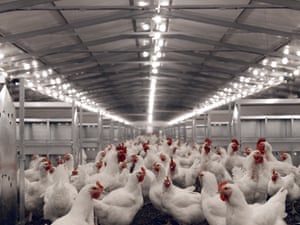
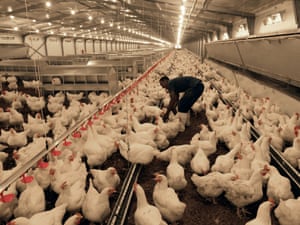
To go inside the sealed, dark, windowless Kilimanjaro chicken sheds you must shower twice, brush your teeth, wash your hair and wear special clothes. When the doors are opened, there are identical white chickens as far as the eye can see.
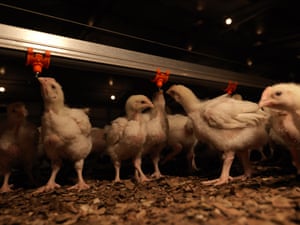
From top left: young Cobb chicks drink from a mechanical water dispenser; each room contains about 9,000 birds; herding chicks to keep them from crowding in groups; repairing the mechanical chicken feeder
There is a deep rumble of tens of thousands of clucks, interspersed with the crowing of many hundreds of cocks, and a whiff of ammonia. But random checks show no lameness, blisters or sores. The birds are not aggressive and look content. The mortality rate over their 15-month lifetime is said to be about 5%, far less than in the average European or American broiler house.
It is only when you get down on floor level that the large Cobb cocks attack. Feet out, wings flapping and beaks thrusting, they come at you hard. It hurts and all you can do is yell and run.
‘The need is great’
“This is how Africa can feed itself,” says Smith. The continent’s population is going to double to 2 billion people in the next 30 years and chicken is needed to provide the protein to avoid malnourishment and stunting, he says. “Chickens are good for the environment, too, because they need less land, less food and less water [than cattle and pigs] to produce the same amount of meat.
“We’re not there yet but we are making chicken more affordable. I don’t think that we will undermine other producers or traditional breeds. You will see two food systems running side by side.
“I believe that chicken will become the most affordable, complex protein on the African continent. We know what the future is going to look like and this is it. We want to access the future in Africa because the need is so great.”
Food security will be strengthened by improving the availability of broiler chicken products, confirms Anne Mottet, a livestock development officer for the FAO. But she emphasises the importance of small-scale operations. “Overall you want diversity of production sources. It’s more resilient than putting all your eggs in one basket. The more small-scale producers you have, the more resilient you are.”
Is sub-Saharan Africa ready for unchecked corporate concentration and the pollution and potential animal welfare problems that have plagued broiler-chicken production in Europe and the US?
Yes, says the Tanzanian government, which struggles to feed its fast-urbanising population and is a target for chicken imports from Europe and Brazil. Nearly a million people needed food aid in the country last year and Tanzania adds 1.6 million people a year. By 2035 its population will have grown by another 32 million.
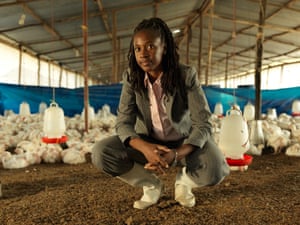
“Definitely we are ready,” says Rose Sweya (left), a young Dar es Salaam chicken farmer who is eager to buy thousands of Donnie’s day-old Cobbs to fatten up. She says she welcomes competition and that the demand for chicken is insatiable.
“People desperately need protein and chicken is the best way to get it. The population is growing fast so the demand is rocketing. Eating chicken was rare when I grew up. It was seen as the food of high-class people. We had it for celebrations, and on special occasions like Christmas. For most people it is still quite rare,” she says.
With British aid, her company, Kingchick, is investing heavily in four poultry farms and a processing plant. She expects to employ another 20 or more women and could be selling 2,000 Cobbs a week within a year.
“There was always this mentality that frozen supermarket chicken was not good and that village chicken was best. But this is changing. ”
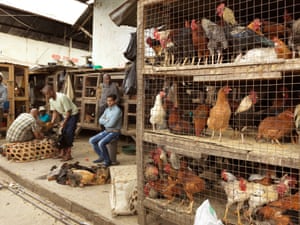
Locally grown chickens in a market in Arusha, Tanzania
Yet the arrival of the Cobbs is a mixed blessing for the villagers near the farm. It has provided well-paid work for some, but Maasai herders have complained that the farm’s high fences restrict their access to traditional pasture land. This, says Faglioni, has been resolved.
“Industrial-scale farming goes hand in hand with development,” he says. “We are changing the way that people eat and how they see the world. People here are proud that they are producing safe food for the country. They have money and can buy better food. We are offering a better way of life for both chickens and people.”
Over 100 captured whales are being held in small, crowded enclosures in a so-called ‘whale jail’ off the coast of Russia, where they await suspected sale to Chinese theme parks, according to local media reports.
The discovery of the marine containment facility near the city of Nakhodka in Russia’s south-east is being investigated by Russian prosecutors, who are examining whether the detainment is for illegal commercial purposes – in which case the captured animals would be worth a fortune on the black market.
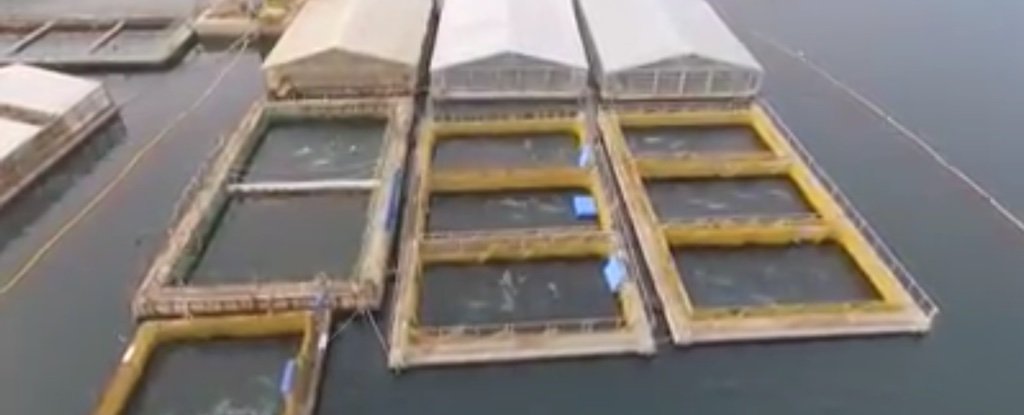
According to Russian news site VL.ru – which obtained a number of photos of the holding pens in Srednyaya Bay – the whale jail is monitored by armed men who walk around the perimeters of the facility, while the animals are held in underwater cages formed by nets.
(Masha Netrebenko/Facebook)
Independent Russian newspaper Novaya Gazeta reports the giant haul of captured animals – said to be 11 orca whales and 90 beluga whales – represents a record catch for the four companies responsible: LLC Oceanarium DV, LLC Afalina, LLC Bely Kit and LLC Sochi Dolphinarium.
The report claims the virtually unregulated activity of these four companies controls the market for capturing and exporting marine animals, with some of the whales having been kept in crowded confinement since July.
Under international law, whales can be captured for certain scientific, educational, and cultural purposes, but commercial export – in this case, allegedly for sales to Chinese aquariums and entertainment parks – is strictly outlawed.
According to The Telegraph, an individual orca whale can fetch US$6 million on the Chinese black market, and there’s ample demand for the specimens. While China already has some 60 marine parks, a dozen more are reportedly under construction.
“Catching them at this tempo, we risk losing our entire orca population,” Greenpeace Russia research coordinator Oganes Targulyan told The Telegraph.
“The capture quota now is 13 animals a year, but no one is taking into account that at least one orca is killed for every one that is caught.”
While the current allegations remain an open investigation, the new details have emerged in the wake of a previous whale trafficking scandal reported to involve the illegal export of 15 orcas from Russia to China between 2013 and 2017.
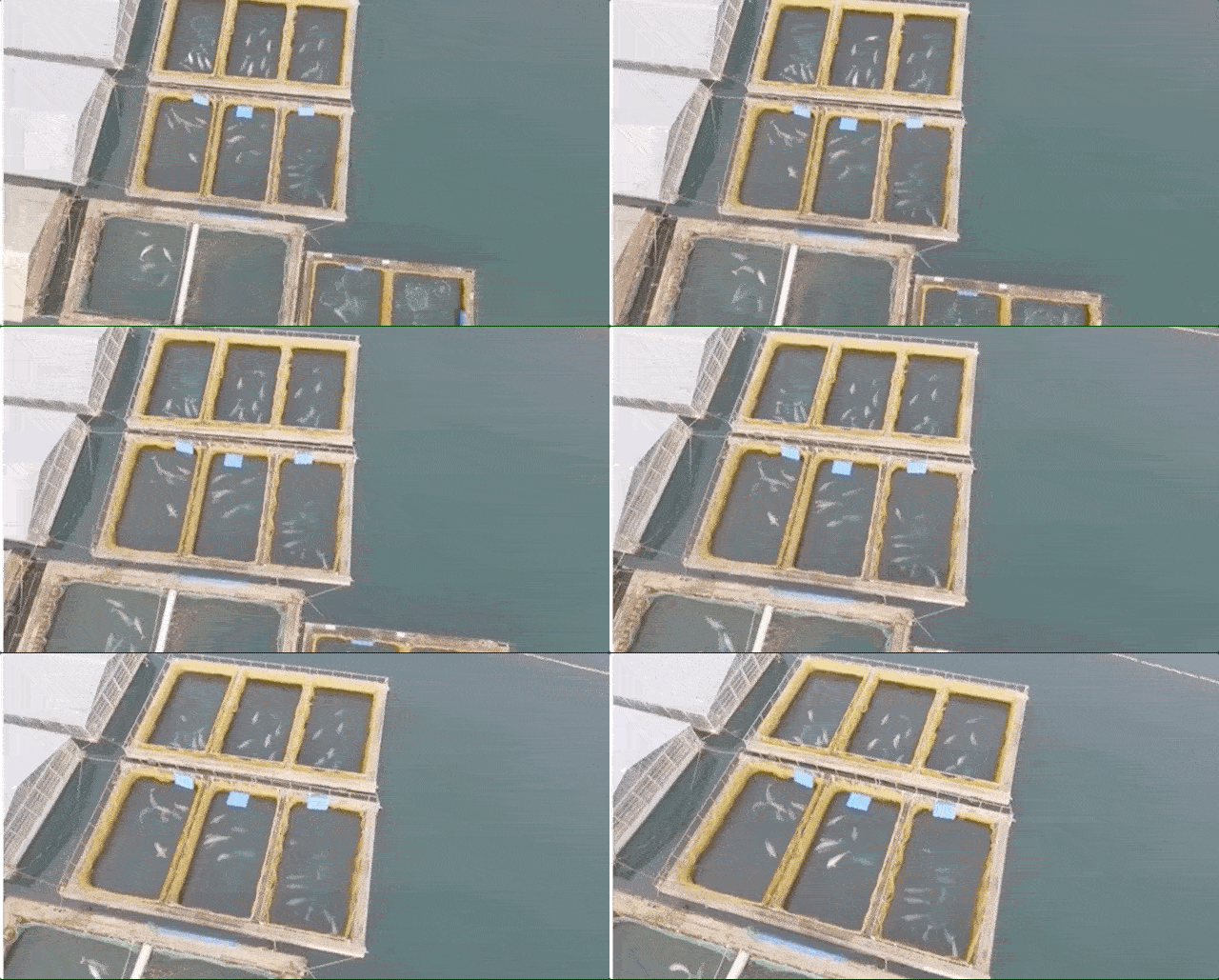
While prosecutors investigate, there are also concerns for the way the animals are being kept and transported. Video on YouTube shows whales being moved between tanks, while drone footage shot from overhead just how cramped these poor whales’ captive conditions are.
“Under the guise of enlightenment and culture, dirty business is conducted on rare orcas,” a Greenpeace representative told RIA News (translated).
“They were caught in 2018, allegedly for educational and cultural purposes, but in fact it is about commerce with fabulous profits.”




 (Masha Netrebenko/Facebook)
 Exposing the Big Game