Exposing the Big Game

Forget Hunters' Feeble Rationalizations and Trust Your Gut Feelings: Making Sport of Killing Is Not Healthy Human Behavior

Exposing the Big Game

INCREASING FREQUENCY OF DROUGHT IS CHANGING THE AMAZON FROM CARBON SINK TO SOURCE

New research finds just one season of drought can reduce the carbon dioxide absorption ability of the world’s biggest rainforest—the Amazon—for years to come.
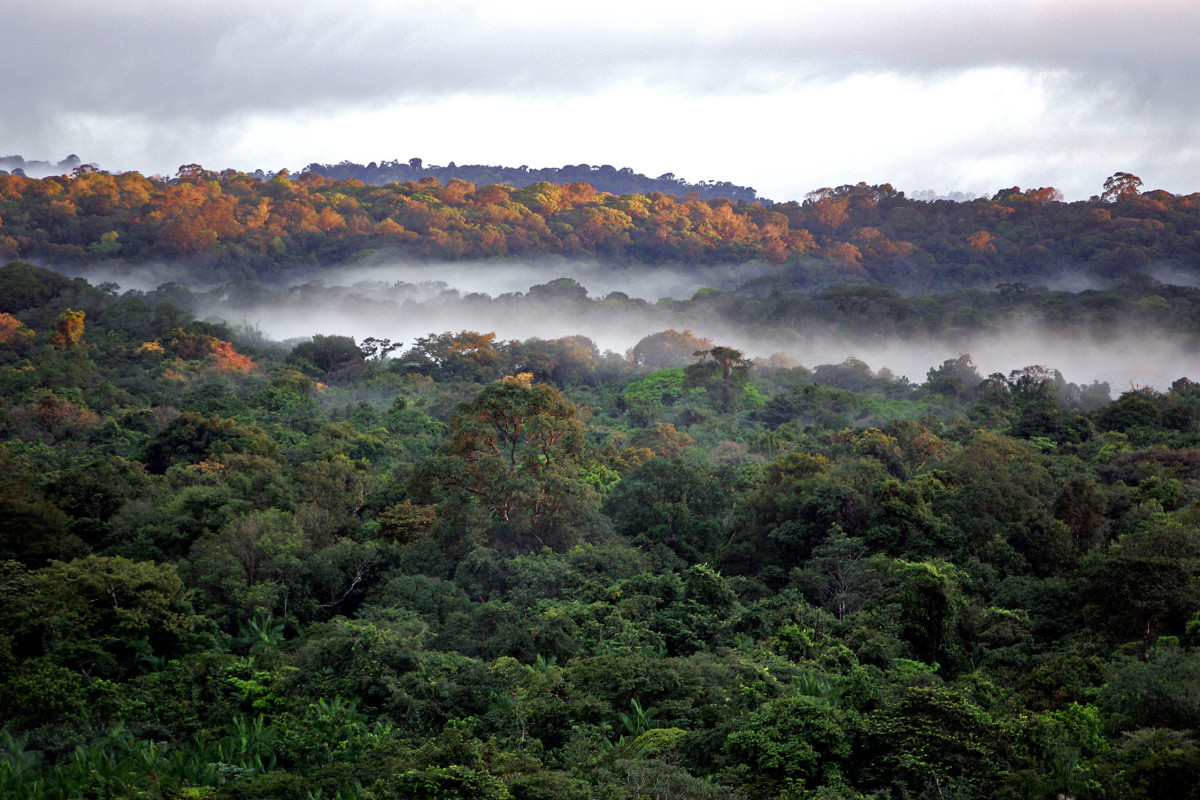
GettyImages-874928338 (1)

(Photo: Jody Amiet/AFP/Getty Images)

Because they take vast amounts of carbon dioxide out of the atmosphere, rainforests are an important part of the planet’s carbon cycle and their conservation is playing front and center in major international efforts to combat global warming. But new research finds just one season of drought can reduce the carbon dioxide absorption ability of the world’s biggest rainforest—the Amazon—for years to come.

And as droughts seem to be occurring more frequently in rainforests, scientists worry that these important carbon sinks may instead become carbon sources.

In a study published recently in Nature, scientists at NASA’s Jet Propulsion Laboratory used lidar data captured by satellites to map changes in forest canopy in the Amazon following a particularly severe drought in 2005. Lidar, which stands for “Light Detection and Ranging” uses lasers to measure distances and create three-dimensional representations of surface features like canyons, craters, and, in this case, trees.

By mapping the Amazon’s tree cover using lidar, the NASA researchers were able to find and quantify gaps in tree cover caused by drought-induced leaf loss and tree death. They discovered that, on average, the most affected parts of the rainforest lost around 35 inches in the years following the 2005 drought.

This is because, when a rainforest tree is stressed by drought, one of its first responses is to shed its leaves. If the drought continues too long, the tree will die. Taller trees tend to die first in a drought because, simply put, they need more water and it’s harder to pump that water up, say, 50 feet than it is to get it up five.

When these tall trees die, they bring down the overall height of the forest around them. Big trees also sequester a disproportionate amount of carbon dioxide, so their loss means a forest is not able to store as much carbon as it once did. And as the big trees decompose, their stored carbon is released back into the atmosphere, tilting a forest’s carbon budget from sink toward source.

The researchers found that, added up, drought-caused forest changes in the Amazon between 2005 and 2008 (the last year for which data was available) translate to 270 million metric tons of lost carbon annually.

Rainforests not only react to climate—they also create it. Last year, scientists discovered that much of the rain that falls in a rainforest comes from water vapor that trees release through their leaves. But if a drought makes trees lose their leaves, then this water doesn’t get added back to the atmosphere, making it likelier that another drought will happen.

“The pervasive drought legacies in these ecosystems may have long-term effects on the tropical carbon sink and the overall terrestrial carbon budget, leading to an accelerated positive feedback to regional and global climate,” the researchers write in their study.

The study only looked at the years following the 2005 drought, which was so severe that it would normally be a once-in-a-century event. But with two other similarly severe droughts following closely in 2010 and 2015, this seems to no longer be the case.

The researchers write that if this is indeed the new normal for the Amazon rainforest, then the consequences could be dire both for the Amazon and for a world that depends on it to regulate the global climate: “Our results clearly indicate that the Amazon forests may lose their role as a robust sink of atmospheric carbon in the face of repeated severe droughts.”

This story originally appeared at the website of global conservation news service Mongabay.com. Get updates on their stories delivered to your inbox, or follow @Mongabay on Facebook, Instagram, or Twitter.

Saving the world with carbon dioxide removal

 January 8 at 12:29 PM

Steam billows from the chimney of a coal-fired Merrimack Station in Bow, N.H. Jan. 20, 2015. (Jim Cole/AP)

Peter Wadhams is professor of ocean physics in the Department of Applied Mathematics and Theoretical Physics at the University of Cambridge, U.K.

CAMBRIDGE — Limiting global warming to 2 degrees Celsius above preindustrial levels, as the countries of the world committed themselves to do under the Paris climate accord, is impossible without removing carbon dioxide from the atmosphere. Even the Intergovernmental Panel on Climate Change, which set the Paris goals, concedes this. But the panel has neglected to suggest how to do it.

If we want to survive climate change, we must double down in research manpower and dollars to find and improve technology to remove carbon dioxide — or at least reduce its effects on the climate. We now emit 41 billion tons of carbon dioxide per year. The current level of carbon dioxide in the atmosphere is already high enough to bring about a warming of more than 2 degrees after it has worked its way through the climate system, so if we want to save the Paris accord, we must either reduce our emissions to zero, which is not yet possible, or combine a significant emissions reduction with the physical removal of about 20 billion tons of carbon dioxide from the atmosphere per year indefinitely.

As I outline in my book, “A Farewell to Ice,” this is because we have a carbon dioxide “stock-flow” problem: temperature rise is closely associated with the level of the gas in the atmosphere (the stock), but we are only able to control the rate at which new gas is emitted or removed (the flow). Carbon dioxide, unlike methane, persists in the atmosphere for hundreds of years, so even if we reduce our emission rate, the level of the gas will keep going up. At the moment, measurements show that this carbon level increase is exponential — it is accelerating.

Currently, the best way to save our future is to remove carbon dioxide through direct air capture, a process that involves pumping air through a system that removes carbon dioxide and either liquefies it and stores it or chemically turns it into a substance either inert or useful. Enterprising researchers have already developed systems that work by passing air through anion-exchange resinsthat contain hydroxide or carbonate groups that when dry, absorb carbon dioxide and release it when moist. The extracted carbon dioxide can then be compressed, stored in liquid form and deposited underground using carbon capture and storage technologies.

The challenge here is to bring the cost of this process to below $40 per ton of carbon removed, since this is the estimated cost to the planet of our emissions. At the moment, most methods cost more than $100 per ton, but there are dramatic developments which promise great improvement. Three companies have opened pilot plants — Global Thermostat (United States), Carbon Engineering (Canada) and Climeworks (Switzerland).

Climeworks is the trendsetter. After building a small plant which fed absorbed carbon dioxide into a greenhouse, they have opened a small-scale commercial plant in Iceland. This is aimed to remove 1,000 tons of carbon dioxide from the air per year and pump the carbon dioxide, with water, down into basalt rocks underground, using Iceland’s abundant geothermal power as a source of energy. Here the carbon dioxide is literally turned to stone — it mineralizes rapidly because of the type of rock and the pressure. The carbon dioxide, turned to stone, is out of the planet’s energy system for millions of years. This is an enormous breakthrough.

Even in Houston, the home of the oil industry, climate innovation is taking place. In October, using an approach called the Allam cycle, a company called NET Power opened a plant that burns natural gas to produce power, but it captures all the carbon dioxide produced because the carbon dioxide is itself the working fluid — a new concept. This is not carbon drawdown but is a totally renewable energy source based on a fossil fuel.

In theory, cooling air so as to liquefy its carbon dioxide content could also be used to remove it. This could involve setting up plants on high polar plateaus such as Antarctica or Greenland but has yet to be investigated.

A compelling criticism of carbon removal is that it discourages us from even trying to reduce our carbon dioxide emission levels and instead shifts our focus to unproven “emit now, remove later” strategies. It doesn’t help that the unfortunate reality is that as a global population, especially in the West, we are reluctant to give up the comforts and conveniences of a fossil fuel world. Climate change will not wait for us to become more enlightened.

Effective and impactful carbon dioxide removal operations will need to be in place by around 2020. To keep global temperature rise within acceptable limits, we’ll need to remove half the current human emissions, which means extracting about 20 billion tons of carbon dioxide each year, indefinitely. If we can manage this, we can save our society and our children’s futures. After all, if carbon dioxide is the chief cause of climate change, its removal would be our salvation.

This is an exciting time. The Iceland and Houston plants show us that man’s ingenuity, when turned loose on the problem of getting carbon dioxide out of the atmosphere, can achieve success and maybe save the world from the plight into which our misapplied technology of the past has cast us. We just need to spend more — a lot more — on helping this process along. If we don’t, then in 20 or 30 years, the world will be a different and much nastier place than it is now.

This was produced by The WorldPost, a partnership of the Berggruen Institute and The Washington Post.