


An 18-year-old hunter from Deckerville has entered a plea in Sanilac County Circuit Court in connection with the shooting of a domesticated cat last October.
Jeffrey Stone is charged with killing-torturing animals, a felony, and malicious destruction of property over $200, a misdemeanor.
The charges stemmed from an incident on Oct. 21 when the 18-yearold allegedly shot a cat with an arrow while hunting in the area of North Sandusky and Downington roads.
According to Sanilac County Undersheriff Brad Roff, the cat was shot after bothering Stone several times while he was hunting deer. The wounded animal was able to return to its home. The owners took the cat to a veterinarian where it was euthanized, according to Roff.
During last week’s final pretrial hearing in circuit court, Stone agreed to plead guilty to the felony and the misdemeanor. In accordance with the plea bargain agreement with the prosecutor’s office, the acceptance of the guilty plea to the felony was deferred by the court pending successful completion of probation. If he completes the terms of probation the felony will be dismissed.
Stone will be sentenced on the misdemeanor March 20.
Follow KDKA-TV: Facebook | Twitter
PITTSBURGH (KDKA) – A family pet in Brookline is dead after police say someone shot it through the chest with an arrow. The Orr family is now demanding answers and asking police to investigate.
Nathan Orr said he heard his cat, Ollie, meowing very loudly and in pain on Saturday night.
“I thought my cat was fighting with another cat and I looked out of the window and saw he had an arrow through his back and out of his chest,” said Orr. “And unfortunately my kids also witnessed that.”

(Photo Courtesy: Orr Family)
Orr said his two sons, ages 6 and 3, are devastated after this tragedy. The family lives on Elmbank Street, a dead-end street lined with single-family homes.
“It’s not a good first brush with a loved one passing on [for the boys],” said Orr. “It was a cat, but it was part of our family. Ollie was a part of our family.”
Orr thinks that someone targeted his cat.
“It looked deliberate,” said Orr. “Due to the fact that it was a target practice arrow leads me to believe it wasn’t a hunting accident.”
There is a wooded area behind Orr’s home, but not one that allows hunting.

(Photo Courtesy: Orr Family)
Orr said he rushed Ollie to an emergency vet in Castle Shannon, but it was too late. The arrow had punctured the cat’s lungs. He said he will now focus on comforting his fiancé, two sons and wait for police to investigate.
“They took it hard, they took it very hard,” said Orr. “Especially when we told my 3-year-old that he had to say goodbye.”
Pittsburgh Police’s Humane Officer Christine Luffey said she plans to knock on every door along Elmbank Street to investigate this incident.
Orr said that Ollie was an indoor cat, but every once in a while he would make a break for the backyard. He said he always stayed in the yard near the bushes. Orr thinks that’s where he was when he was struck with the arrow.
Officer Luffey told KDKA she wants to remind all cat owners to keep their cats inside because they face too many dangers outside: including being hit by vehicles, contracting diseases, being hurt by other animals, and human cruelty.
Anyone with information is asked to contact Pittsburgh Police.
If you’d like to donate to help cover the Orr family’s veterinarian bills, click here https://www.gofundme.com/JusticeForOllie

Tags: cat, hunting, Jessamine county animal care and control, Trap, Williamsburg Drive
NICHOLASVILLE, Ky. (WTVQ) – Jessamine County Animal Care and Control say a cat has been released from a hunting trap after the animal was found on Williamsburg Drive dragging the trap behind it.
Officers were able to catch the cat and bring it to a local veterinarian who removed the trap. The cat then underwent surgery, losing two toes because of the damage the trap had caused.
The veterinarian says the trap was probably on the cat for somewhere between 24 and 48 hours.
The Kentucky Department of Fish and Wildlife is stressing that using a trap life the one that the cat was caught in is not a legal method to capture free roaming or feral cats.

(Lori Fusaro/Best Friends Animal Society)
Christopher Walken likes to watch.
If that gives you the willies, you’re probably thinking of the Oscar-winning actor’s more unsettling roles—he’s played sadists, murderers, madmen, mobsters, mercenaries, psychopaths, evil masterminds and extremely messed-up Vietnam vets in the course of a career that began in the early 1950s.
“I have played a lot of villains,” he admits.
But what Walken likes to watch is just outside the windows of his home in rural Connecticut, on the cusp of a nature preserve, where he’s lived with his wife, Georgianne, a Hollywood casting director, for nearly 40 years.
“There were four deer in the driveway this morning,” he says. “There were turkeys here yesterday. My wife saw a snake in the driveway the other day. Hummingbirds come every day almost to the minute. They come right up the window and stare at me. It’s almost as though they know I’m there.
“I was born in the city and grew up in Manhattan. But when I got the chance, I moved out to a nice, quiet, green place.”
Now, that doesn’t sound so chilling and creepy, does it?
His Nine Lives
“My background is really in musical theater,” Walken says. “I did a lot of musicals when I was young. I got a job in a play, and then I got a movie, kind of accidentally, and my first parts where I got noticed were things like The Deer Hunter and Annie Hall, where I played troubled people, suicidal sometimes. I think I kind of got something going on there.”


Text and Photography ©Jim Robertson
Earlier this month, my wife and I tried out a job as caretakers of a river front lodge in the heart of the Oregon Coast Range. It sounded idyllic, but on closer examination we found that the whole place was overrun by rats and mice. They had made themselves at home in the “trophy lodge’s” basement, attic, and furnace room and even throughout the heat ducting system (which—judging by the smell—they must have considered their own private out house).
Had the lodge owner even hinted at the “rodent situation” (as he later put it) ahead of time, we would never have moved our cats and dog in without first asking if there had been any poisons used around there. Well, it turns out there had—someone put fresh d-CON in all the heating vents, and who knows where else around the “estate.”
Among the sinister side effects of d-CON is that it kills slowly and stays in the victim’s body, allowing them to wander far from the source before a predator or scavenger consumes them, spreading the poison to an entire food chain. Needless to say, we gathered up our companion animals and got the hell out of there.
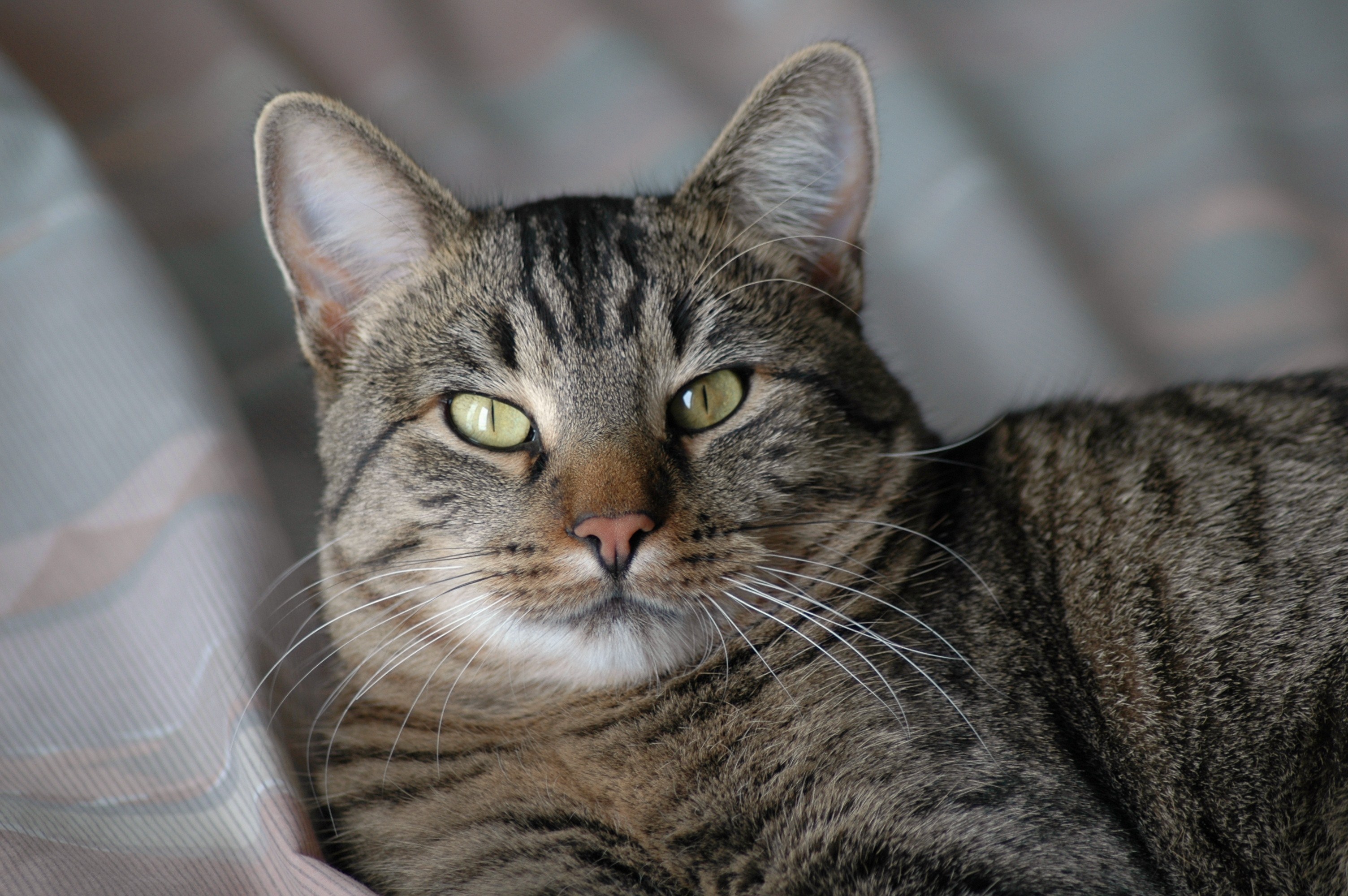
But about a week after we got back home, our worst fears were realized. One of our adopted cats, Caine, a gray tabby in the prime of his life with a black belt in the art of mousing, started showing the tell-tale symptoms of d-CON poisoning. He refused to eat or drink and slept round the clock. His lethargy grew more pronounced until he eventually tuned everyone else out, as though preparing to pass on. If we hadn’t rushed him to the vet, where he received IV fluids and an emergency injection of vitamin K to counter-act the lethal anti-coagulant agent in the poison, he would have died like so many other wild and domestic animals (including people) before him.
The problem is so extensive that the manufacturers of d-CON recently agreed to stop production of this particular rodenticide. Though it’s now banned in California, stockpiles still exist in stores throughout the rest of the country. And this insidious gold-standard—this household name in “pest control”—has surely found its way to all corners of the globe by now and will keep doing its damage for years to come. How many cats, bobcats and cougars, dogs, coyotes, mink, ermine, opossum, raccoons, owls, hawks and eagles will suffer a drawn-out death from this pervasive poison before the sale of d-CON is completely discontinued?
In a way, Caine was one of the lucky few. Most rodent-eaters don’t have companion humans who care about them enough to nurse them back to health.

 Exposing the Big Game