


Florida factories are using their expertise and equipment to help the health care industry; Phil Keating reports.
Heads up, cat lovers: Your feline friend may be susceptible to the novel coronavirus after all.
A new study conducted by researchers in China found that SARS-CoV-2, the virus that causes a COVID-19 infection, does not appear to infect dogs, pigs, chickens, and ducks, but can infect ferrets and cats. And not unlike humans, cats can likely catch the virus via respiratory droplets.
POSSIBLE CORONAVIRUS TREATMENT LEAVES LUPUS PATIENTS WITH NEW CHALLENGES: ‘THERE ARE BACKORDERS’
For the study — which was aimed at finding animals susceptible to the virus so they can be used in testing potential coronavirus vaccines, according to Reuters — researchers infected dogs, pigs, chickens, ducks, ferrets and cats with a high dose of SARS-CoV-2.
In cats, the virus was detected in the felines’ noses, mouths and small intestines. The researchers also tested kittens, concluding that they, too, are susceptible to the virus, discovering what they described as “massive lesions” in their noses, throats and lungs.
“These results indicate that SARS-CoV-2 can replicate efficiently in cats, with younger cats being more permissive and, perhaps more importantly, the virus can transmit between cats via respiratory droplets,” they wrote.
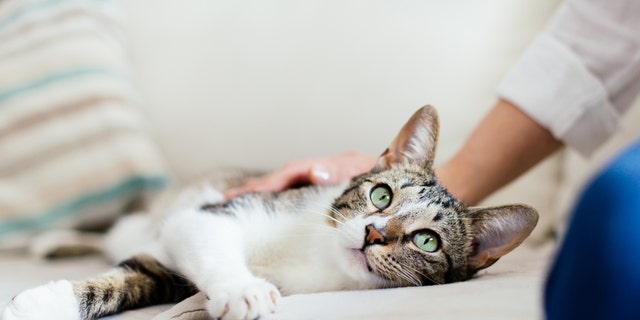
Cats can be infected with the novel virus, the researchers found. (iStock)
In ferrets, the researchers detected the virus in the animals’ nasal passageways, soft palate, and tonsils, but did not detect the virus in any other organs, indicating that the virus “can replicate in the upper respiratory tract of ferrets, but its replication in other organs is undetectable,” the researchers said.
SARS-CoV-2, which first emerged in Wuhan, China, in December, likely originated in bats before spreading to humans, though a study from March suggests that bats may have spread the virus to another animal, possibly a pangolin, which then transmitted it to humans.
As of now, there is limited evidence that suggests pets can spread the virus to humans. But the results from the study prompted the World Health Organization (WHO) and its partners to “look more closely at the role of pets in the health crisis,” Reuters reported.
MICHIGAN NURSE DEMONSTRATES CORONAVIRUS SPREAD USING GLOVES IN VIRAL VIDEO
“We don’t believe that they are playing a role in transmission but we think that they may be able to be infected from an infected person,” WHO epidemiologist Maria Van Kerkhove said during a Wednesday news conference, as per the outlet.
The news comes after a tiger at the Bronx Zoo, in New York City, tested positive for the coronavirus after likely being exposed to it by an infected worker. And earlier this week, the British Veterinary Association, expressing concerns that the virus could be found on cats’ fur, encouraged pet owners to keep their felines indoors, if possible, in an effort to stop the spread of the novel virus.
https://www.foxnews.com/health/coronavirus-can-infect-cats-study-finds
(CNN)Cat owners who are self-isolating or have Covid-19 symptoms should consider keeping their pets indoors to stop them carrying the virus on their fur, a veterinary body has advised.


by Jethro Tull’s singer/songwriter/flautest/guitarist Ian Anderson
Tis the time of the season for new kittens, born in the later months of the year to be ready to leave home and join their new owners. Here, below, is the advisory material which I sent out recently with some orphaned kittens which we had been rearing.
Your new kitten was found under a garden logpile by Lucinda in Buckinghamshire, just over two weeks ago. Perhaps their mother had abandoned them or was killed in a road accident. Or, perhaps, some misguided human hand was involved in dumping the kitties, hoping that they could fend for themselves.
They couldn’t.
They were barely five weeks old and just beginning to walk about. They could lap liquids and eat solid food, suggesting that they had come from a household environment and were at least partly weaned, but wouldn’t have survived long without Lucinda’s intervention. They were nervous, hissed and spat a bit but seemed to have had some prior human contact. Definitely not feral (“wild”) farm cats. We have reared several litters of feral kittens over the years and we needed stout leather gloves to pick them up for the first few days – whereas this little band of brother and sisters were happy enough to be handled and after two or three days of special care, would soon come when called and be quite relaxed around adults, children, other cats and even respectful dogs.
But, as a rule, kittens should be ideally kept together to learn playing and social skills for 8 – 10 weeks before going off to their new homes. Pedigree kittens don’t go until they are 12 weeks of age after they have been wormed, received the second of their injections, and matured enough to be able to adjust to a new human family.
Your kitten was probably born around the 15th of November, 2002 and is now still only about 7 weeks of age. The litter contained four females and one male. He/she has had an attentive human surrogate mum and dad here in Wiltshire for two weeks and will cuddle, purr and do all the things which kittens are supposed to do – including tearing around the place and climbing on furniture.
But, still being a little on the young side to venture forth without its brothers or sisters, your kitten will need extra attention to help settle down in its new environment. She/he will be best kept in one room for a few days but will be adventurous enough to soon visit other parts of the house under supervision. Existing pets should be gradually introduced to their new pal (stroke, praise and re-assure both equally) but they should not be left alone together until you are absolutely sure of their reliable behaviour to each other.
The kitten is already (dare I say completely?) reliable in the use of a cat litter tray and anyway far too young to let outdoors yet. The best cat litter trays are those with a roof over – rather like a cat carrying basket. With this type the kitten, as it gets older, is less likely to kick cat litter around the room when covering its pees and poos. We have already given her/him three days of worming treatment following a preliminary veterinary visit for a general inspection to confirm sex and basic good health. A second worming treatment (the second of many to come) should be carried out two weeks after the first. At this stage we are talking about round worms. Palatable wormers can be mixed with food. Tapeworm treatment will probably be necessary as the cat gets older and hunts wild prey.
The diet has been Whiskas Kitten food three times a day with high-protein dry pelleted kitten food (Hills Kitten Science Diet) available for “snacking”. A powdered mother’s milk substitute (Cimicat, available from your vet) mixed with water has been fed as liquid. No regular cow’s milk should be given to kittens (or cats) since it contains far too much lactose and is harmful to them. These specially formulated feeds are available from veterinary practices and good pet stores. Whiskas Kitten food should be found at all large supermarkets. We are supplying a “starter pack” of Cimicat and Hills diet, and a tin of Kitten Whiskas to get you over the first day. (The kitten will be ravenous when it arrives home with you.)
All of our grown-up cats are fed regular adult Hills Science Diet and this is their staple food with occasional treats of fish (frozen coley fillets are quite cheap and much appreciated), Whiskas or similar moist canned foods. IAMs solid foods are also good. The dried food at supermarkets is not such a good bet. Semi-moist pelleted foods are OK but Hills and IAMs are the best. They keep longer, can be left out for snacking on demand, and probably work out cheaper in the long run. Decanting the bag into a container with a lid is best. The food keeps longer that way. Household scraps are no substitute for balanced cat diets. Your kitten/cat may enjoy raw chicken or turkey (mince or pieces) as it gets older but only as an occasional treat. Reliance on such luxuries could be seriously damaging to your bank balance and not much good as a balanced diet.
Young kittens should stick mainly to one food type plus milk substitute until they have settled down. If you vary the diet too much their tummies have difficulty coping and diarrhoea will result. One of the little guys seems to have a sensitive tummy and needs extra care in feeding. If your kitten has persistent diarrhoea for two or more days, a vet visit is necessary. After a few weeks, the kitten can progress to weaker solutions of milk substitute and then to water alone. At six months of age, “big boys” foods are fine – no need to have the slight extra cost of high protein kitten diets.
Injections for potentially lethal cat diseases are necessary at eight and twelve weeks of age. Call your vet next week to arrange. Worming and de-flea-ing are an ongoing reality for kittens and cats once they are out and about in the outdoor world. Any fights with other cats resulting in a puncture wound (not always easily visible) can turn quickly septic, requiring antibiotics.
A modern each-way lockable cat-flap is a big help to owner and cat alike. They are available at pet stores and quite easy to fit in most doors.
Picking kittens (or cats) by the scruff of the neck may seem to some like the traditional way to handle your pet. This is really not a good idea. They hate it! Kittens (and cats) prefer to be picked up with a hand under their chests and with the other hand under their back feet so they can “sit” upright and stable. These kittens have all been held that way during the last two weeks and are relaxed and comfortable being held. We have not encouraged them to sit on our shoulders or to climb our legs but they do try!
When your kitten ventures out for the first time in the Spring some supervision is necessary. Ponds or other water features in your garden could be lethal if the kitten should fall in. The kitten will swim like a fish if need be but has to be able to scramble out. A steep sided pond should have some wire or plastic netting at the edge, held down by bricks or stones, trailing into the water so the kitten can climb out.
At around 6 – 8 months of age you should seriously consider neutering your cat. Un-neutered males will spray, wander and be a nuisance to neighbours. Females will become pregnant with maybe two litters per year from the age of 11 months onwards. According to some national statistics, 40% of cats die on our roads before they are two years of age. Neutering will help to discourage them from wandering. No guarantee, but better done than not. It is rarely practical to keep your cat indoors permanently but you may wish to consider that option if you live close to a road, unsympathetic neighbours or have no enclosed garden.
It is kinder to cats, and to you, if you have them neutered sooner than later. It will prove less traumatic for the younger cat and it will probably be home the same afternoon, have forgiven you by the next day and forgotten about it completely the day after. Especially if you have been the bringer of Waitrose Frozen Coley.
Pet insurance is really worth considering. It is relatively cheap – especially for young “moggies” – given that cat fights, road accidents or illness can cost hundreds or even thousands of pounds in vet’s bills. But your new pal will likely cost you £8 – £12 per week for life in food, health care and new furniture. Scratching posts and cat toys are a good investment.
Sorry to sound bossy on all these topics, but if you haven’t had a young kitten before, or just forgotten how to be mum, a visit to the bookshop would be in order to pick up a copy of any decent book on caring for your cat. Some of the writers are even more bossy than me – but you see we all are a bit nuts about cats, and can’t help but want to give them the best start in life.
Your new kitten will hopefully be with you for the next fifteen years, or so, and be a loyal and loving companion. When we had to say goodbye to our old and ill black cat three weeks ago, it reminded us of the value of such relationships and we appreciate all the more the enjoyment of having played a part in the bringing up of these young kittens. We have kept one to live here at home with her two new older buddies TJ and Bhajee.
If you have any problems or questions regarding your new kitten settling in, don’t hesitate to call Ian or Shona Anderson on *************** – in fact, please call us anyway. Having been temporary mum and dad to these little guys over the Christmas period, we – like any proud ex-guardians – would like to know how they are getting on in their new homes.
If the worst should happen and you change your mind or don’t feel up to looking after your new charge after a week or two, we can help re-home it or maybe find it a home here. Understandably, it is harder to find homes for adult cats.
Kind regards and good luck with the new addition,
Ian Anderson.
Scottish wildcats were bred at a special facility in Devon over the summer.
It is believed they became extinct in England when one was shot in the North in 1849.
They last record of wildcats in southern England was in the 16th Century, said the Devon Wildlife Trust.
If the breeding project continues successfully they could be returned to the English countryside.

 Exposing the Big Game