Obama: Western wildfires have a lot “to do with climate change”

james1

While I’m generally no hardline presidential apologist, I do have to praise Obama for acknowledging that the record-setting Carlton Complex wildfire, along with other ongoing western blazes, can be attributed to climate change.

“A lot of it has to do with drought, a lot of it has to do with changing precipitation patterns, and a lot of that has to do with climate change,” the USA Today quoted the president as saying during a recent visit to Seattle.

Unfortunately since then, the media has been silent about the president’s statement, omitting it in any subsequent article about President Barack Obama signing a federal emergency declaration for the areas affected by the wildfires. The declaration authorizes the Federal Emergency Management Agency and the Department of Homeland Security to coordinate disaster relief and help state and local agencies with equipment and resources.

That’s good news for this particular weather event, but it hardly trumps the fact that the planet is sure to experience this scale of catastrophic wildfire again and again in the future.

Perhaps the reason we’re not hearing about the climate change connection has to with the results of a recent survey revealing that Americans are more skeptical of climate change than others polled across the globe.

According to an ABC News article, when asked if they agreed with the statement, “The climate change we are currently seeing is largely the result of human activity,” just 54 percent of Americans surveyed said yes. Although this number indicates a majority, the United States still ranked last among 20 countries in the poll.

Meanwhile, China topped the list, with 93 percent of its citizens agreeing that human activity is causing climate change. Large majorities also agreed in France (80 percent), Brazil (79 percent), Germany (72 percent) and other countries.

Similarly, 91 percent of those from China agreed with the statement, “We are heading for environmental disaster unless we change our habits quickly.” Only 57 percent of Americans thought so — again, last among 20 nations surveyed.

‘Mother Nature is winning here’: Wildfire destroys about 100 homes in central Washington

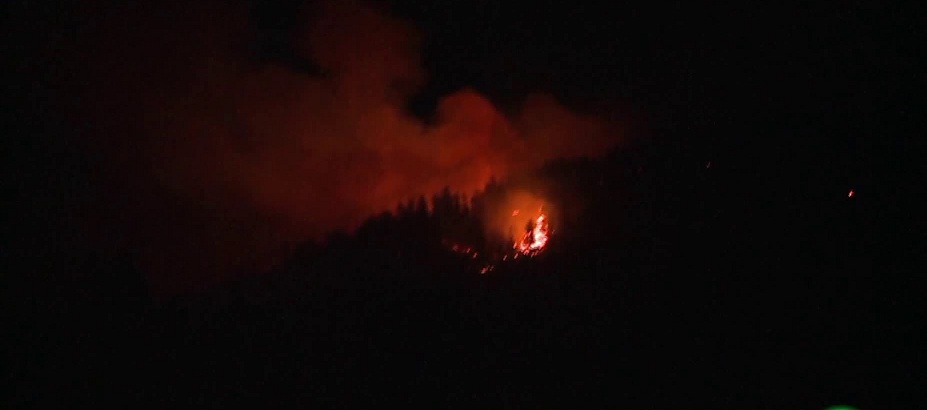
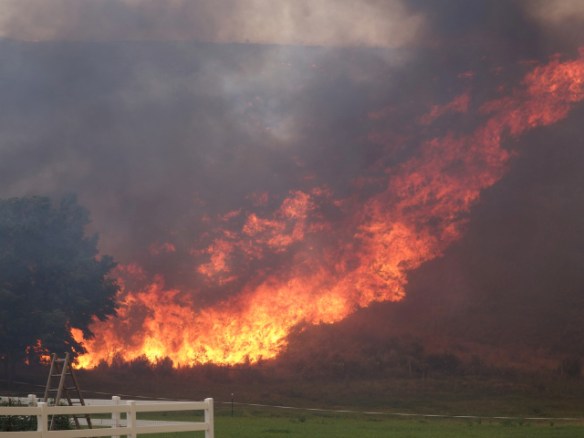
As  you’ve probably heard by now, Washington’s scenic Methow Valley, up in the North central portion of the state, is on fire. Big time. The title of the attached U.S. News article, “Mother Nature is Winning Here,” hit the nail on the head. What started out two days ago as 4 small fires covering 18,000 acres has mushroomed almost overnight to a monstrous 240,000 acre inferno, capable of gobbling up any town that tries to stand in its way.
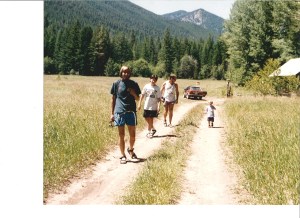
photo Copyright Jim Robertson

photo Copyright Jim Robertson

I lived in the  Methow for 20 some years, in a cabin in the heart of the Lake Chelan Sawtooth range, nestled on the eastern edge of the North Cascades mountains. My wife grew up in the valley; my brother and his wife still live there.

It was there that I learned to really respect the power of wildfires. I was working on a trail crew for the U.S. Forest Service. When we were sent on “controlled” burn on the Gold Creek Ridge near the now infamous town of Carlton I saw just how quickly an out of control fire can spread.

Being a “controlled” burn, it was planned for the spring when conditions aren’t nearly as dry as they are this time of year. We were using drip torches to set off slash piles. One big pile was next to the edge of a flagged “unit,” next to an unlogged slope. The guy working on that pile got carried away, so a couple of us went over to help keep his fire from spreading. We started frantically pulling slash off the unburned slope and tossing it out of reach of the flames. But the effort was too late; one worker who stopped to take a break saw the flames reach across the flag line behind us. He yelled, “Get out of there, you guys.” We turned to see the fire move over our fire line and into the brush and trees outside the unit. Luckily we hurried out of the fire’s path. Within seconds, the flames reached the crowns of the trees and the fire shot uphill and blackened the entire slope before we could even think about trying to get ahead of it and slow its progress…
fire3

‘MOTHER NATURE IS WINNING HERE’: Wildfire destroys about 100 homes in central Washington

By NICHOLAS K. GERANIOS and GENE JOHNSON, Associated Press

PATEROS, Wash. (AP) — A fire racing through rural north-central Washington destroyed about 100 homes, leaving behind smoldering rubble, solitary brick chimneys and burned-out automobiles as it blackened hundreds of square miles in the scenic Methow Valley.

Friday’s dawn revealed dramatic devastation, with the Okanagan County town of Pateros, home to 650 people, hit especially hard. Most residents evacuated in advance of the flames, and some returned Friday to see what, if anything, was left of their houses. There were no reports of injuries, officials said.

A wall of fire wiped out a block of homes on Dawson Street. David Brownlee, 75, said he drove away Thursday evening just as the fire reached the front of his home, which erupted like a box of matches.

“It was just a funnel of fire,” Brownlee said. “All you could do was watch her go.”

Next door, the Pateros Community Church appeared largely undamaged.

The pavement of U.S. Highway 97 stopped the advance of some of the flames, protecting parts of Pateros.

Firefighters poured water over the remnants of homes Friday morning, raising clouds of smoke, steam and dust. Two big water towers perched just above the town were singed black by the flames. The fire consumed utility poles from two major power lines, one feeding Pateros and the other feeding the towns of Winthrop and Twisp to the north.

Gov. Jay Inslee said about 50 fires were burning in Washington, which has been wracked by hot, dry weather and lightning. Some 2,000 firefighters were working in the eastern part of the state, with about a dozen helicopters from the Department of Natural Resources and the National Guard, along with a Washington State Patrol spotter plane.

Inslee said that the state was rapidly training about 1,000 additional National Guard troops and active duty military could be called in as well.

“This, unfortunately, is not going to be a one-day or one-week event,” he said.

The Methow Valley, about 180 miles northeast of Seattle, is a popular area for hiking and fishing. Sections of several highways were closed.

“There’s a lot of misplaced people, living in parking lots and stuff right now,” said Rod Griffin, a fly-fishing guide who lives near Twisp. “The whole valley’s in disarray.”

He described long lines for gasoline, with at least one gas station out of fuel, and said cellphone towers must have been damaged as well because there was very little service.

In Brewster, 6 miles to the south, a hospital was evacuated as a precaution. The smoke was so thick there Friday it nearly obscured the Columbia River from adjacent highways. The smoke extended all the way to Spokane, 150 miles to the east.

Jacob McCann, a spokesman for the fire known as the Carlton Complex, said it “ran quite a bit” Thursday and officials were also able to get a better handle on its size. It blackened 260 square miles by Friday morning, up dramatically from the prior estimate of 28 square miles.

“Mother Nature is winning here,” Don Waller, chief of Okanogan County Fire District 6, told The Wenatchee World newspaper.

The county sheriff, Frank Rogers, said his team counted 30 houses and trailers destroyed in Pateros, another 40 in a community just outside the town at Alta Lake, and about 25 homes destroyed elsewhere in the county of about 40,000 people.

More: http://www.usnews.com/news/us/articles/2014/07/18/growing-wildfire-empties-washington-town

In Case You Haven’t Noticed Yet, Global Warming Is Real

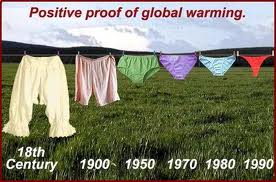
If you’re one of the lucky few who live somewhere as yet relatively unaffected by climateunderwear change, or you spend all your time indoors listening to Rush Limbaugh and watching Donald Trump on Fox News, I’m here to tell you, global warming is real.

It may be hard to accept that the Earth’s overall temperature is rapidly warming up if your state has just experienced a polar vortex, but if you live in California or the Pacific Northwest you know all too well the drastic effect climate change is having on winter weather—especially if you’re a skier like me.

As an avid powder skier I’ve been closely following the snow reports for the mountains in the western United States and I’m seeing a depressing trend toward shallower snow packs and away from our normal winter wonderland.

Why is this happening? As the San Jose Mercury News reported it, “Meteorologists have fixed their attention on the scientific phenomenon they say is to blame for the emerging drought: a vast zone of high pressure in the atmosphere off the West Coast, nearly four miles high and 2,000 miles long, so stubborn that one researcher [Swain] has dubbed it the ‘Ridiculously Resilient Ridge.’ Like a brick wall, the mass of high pressure air has been blocking Pacific winter storms from coming ashore in California, deflecting them up into Alaska and British Columbia, even delivering rain and cold weather to the East Coast.” Much to the dismay of skiers, this stubborn high pressure ridge is pushing the jet stream, and our winter moisture, along a much more northerly track.

Ok, but what does this, and the lack of winter storms (for us here in the West) have to do with global warming? In an article in ThinkProgress.org, “Leading Scientists Explain How Climate Change Is Worsening California’s Epic Drought,” we learn that “Beyond the expansion and drying of the subtropics predicted by climate models, some climatologists have found in their research evidence that the stunning decline in Arctic sea ice would also drive western drought — by shifting storm tracks…Scientists say this anomaly looks very much like what the models predicted as sea ice declined. The storm track response also looks very similar with correspondingly similar impacts on precipitation (reduced rainfall in CA, increased precipitation in SE Alaska).”

In addition to California’s record-breaking drought and water rationing, you probably heard on the national news about their destructive January brush fires. But even more shocking than those unseasonable fires are a recent pair of 300 acre wildfires on the normally soggy North Oregon Coast, which burned nearly to the beach. January fires in the Pacific Northwest rain forest are almost unheard of, as anyone who has tried to light a campfire in winter there will attest. In an article about the forest fires, The Daily Astorian (North Oregon Coast ’s local paper) reported that the National Weather Service in Portland issued a “red flag” warning in response to conditions (strong dry east winds and humidity as low as 25%) that can contribute to wildfires burning out of control. Instead of the 25% humidity, coastal Oregon humidity on a winter’s day should be more like 125%.

Whether you choose to “believe in” global warming or not, I urge any of you enjoying this mild, dry winter weather to please think snow!

DSC_0098

Back to the Bucket Brigade

Last night western Washington State experienced a major thunderstorm. Power was knocked out in several areas and at least one house “blew up” after taking  a direct hit from a lightning bolt. Both residents of the house, a 57 year old man and his dog, were sent sailing across the room. As is so often the case, the dog saved his companion’s life by warning him to get out of the house before smoke inhalation did them in.

Thunderstorms are common this time of year in arid, eastern Washington where summer temperatures are usually at least 20 degrees higher. But on the cool, damp, coastal side of the Cascade Mountains a summer lightning storm is almost unheard of. As usual, the media downplayed the event as not such a rarity, “it’s something that happens once in a while.” Like President Bush’s comforting statement after 911, the central message is, don’t panic—just “go shopping.” Above all, don’t let something like a major oil spill in the fragile Gulf of Mexico or record-breaking storms wrought by a changing climate effect the stock market. We’ve got to keep this locomotive of progress barreling down the tracks like there’s no tomorrow.

While the term “global warming” may not sound that menacing, the ongoing increase in the Earth’s overall annual temperature is responsible for a shift in weather patterns, leading to widespread historic events which are growing more intense by the day. Meanwhile, despite what those fracking sons of bitches running the oil industry try to tell us, the impending adversities resulting from reaching peak oil production are not something we can wish away.

Vast areas of drought-stricken forests are ready to burn and though immense fires rage more frequently every summer, the only thing keeping millions of other acres from burning off is a fire suppression action plan that calls for first strike helicopters and converted B-52 bombers to drop chemical fire retardant on every spark they can get to.  But it won’t be long before there just isn’t enough oil to keep up with that kind of aerial assault.

The looming question is who’s going to be left to shovel the last bits of the coal into the engine of this speeding locomotive when everyone is busy on the bucket brigade, trying to put out the latest catastrophic wildfire by hand?

Wildlife Photography Copyright Jim Robertson