Exposing the Big Game

Forget Hunters' Feeble Rationalizations and Trust Your Gut Feelings: Making Sport of Killing Is Not Healthy Human Behavior

Exposing the Big Game

HSUS’s Chimpanzee Debacle

APRIL 6, 2021 BY DONNY MOSS — LEAVE A COMMENThttps://www.facebook.com/plugins/share_button.php?href=https%3A%2F%2Ftheirturn.net%2F2021%2F04%2F06%2Fhumane-society-fails-project-chimps%2F&layout=button&size=small&appId=560935960731324&width=67&height=21https://platform.twitter.com/widgets/tweet_button.e16c6ecf9d86005b77fc7c17beced5d8.en.html#dnt=false&id=twitter-widget-0&lang=en&original_referer=https%3A%2F%2Ftheirturn.net%2F2021%2F04%2F06%2Fhumane-society-fails-project-chimps%2F&size=m&text=HSUS%27s%20Chimpanzee%20Debacle%20-%20Their%20Turn&time=1617824164287&type=share&url=https%3A%2F%2Ftheirturn.net%2F2021%2F04%2F06%2Fhumane-society-fails-project-chimps%2FShare on TumblrSave

The News

In June 2020, I posted an article entitled “Why I’m Blowing the Whistle on HSUS” in order to raise awareness of the plight of chimpanzees at two sanctuaries run by the Humane Society of the United States (HSUS) – Project Chimps in Georgia and Second Chance Chimpanzee Refuge in Liberia. Both are plagued by substandard facilities, deficient veterinary care and unqualified management. At Project Chimps, the residents are held in concrete rooms for all but about 10 hours a week because HSUS has not created enough enclosed yards on its “236-acre wooded habitat” to be able to provide the 77 chimps with daily access to the outdoors. Instead of acknowledging and fixing these serious, systemic problems, HSUS has used its PR machine to minimize them or deny that they exist. It has also used its lawyers to silence and intimidate those who speak out.

Precious, a chimpanzee at Project Chimps

In May 2020, HSUS inadvertently shined a national spotlight on Project Chimps by suing two women who came forward with credible and extensive evidence of animal neglect. Appalled that HSUS would sue whistleblowers (an intimidation tactic typically associated with big animal ag), animal advocates around the country, including several with expertise in captive primate care, stepped in to support the whistleblowers and amplify their calls for reform at Project Chimps.

Project Chimps, an HSUS sanctuary, sued former employees Crystal Alba and Linsday Vanderhoogt after they came forward publicly with evidence of animal cruelty

Despite not having visited Project Chimps, I believed the whistleblowers – not only because of the evidence they provided, but also because I saw the same problems during my two visits to HSUS’s chimp “sanctuary” in Liberia. There, HSUS is overseeing the care of over 60 ex-lab chimpanzees who the New York Blood Center (NYBC) moved to islands on a river when they no longer needed the chimps for experiments. Despite having received a $6 million check from NYBC in 2017 and hundreds of thousands of dollars in large and small donations from the public since 2015, HSUS has not built any desperately needed infrastructure on the islands.

National Geographic published an in-depth story that corroborated their allegations.

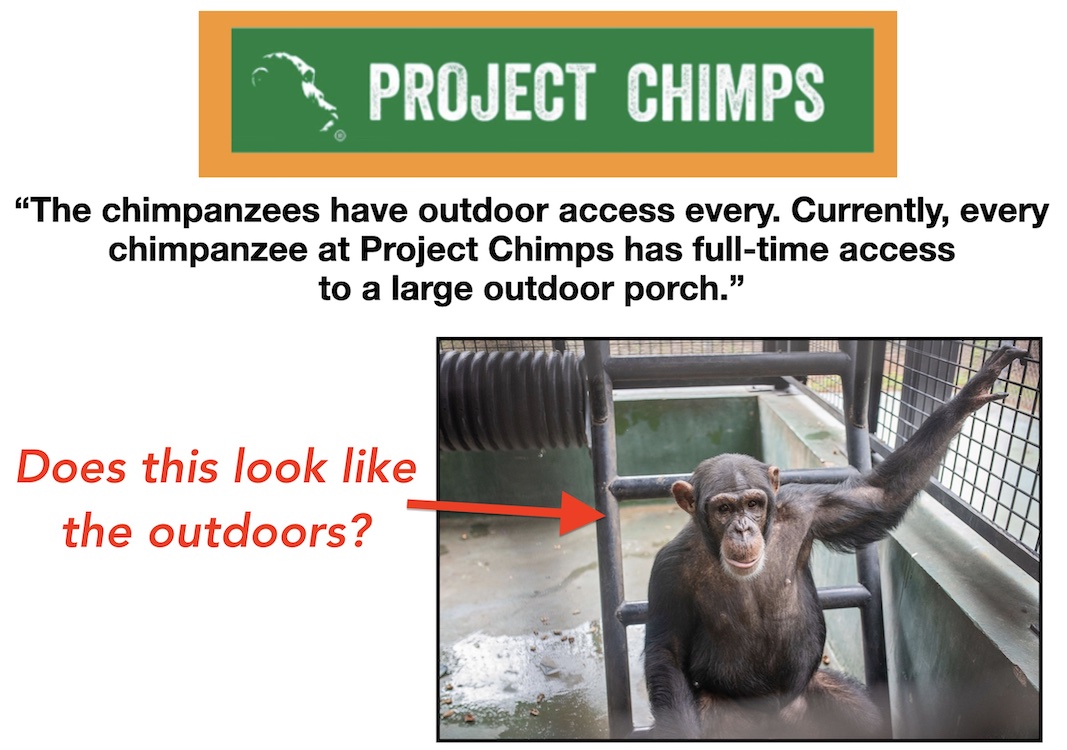
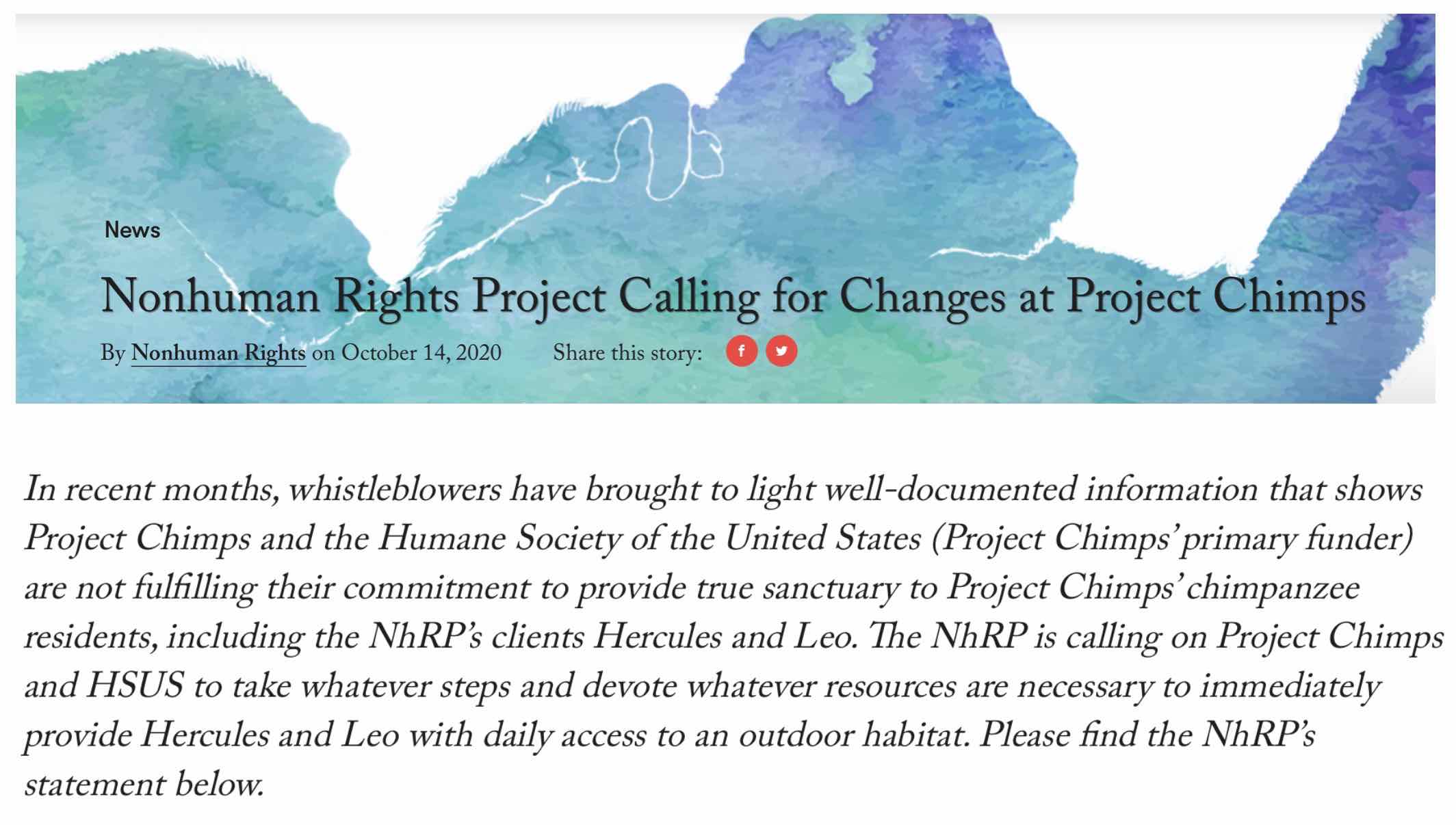
In October 2020, The Nonhuman Rights Project (NhRP), an organization of animal rights lawyers who represent captive chimpanzees and elephants, took the unusual step of issuing a public statement calling on HSUS to improve animal welfare at Project Chimps. NhRP was particularly distressed by the fact that Hercules and Leo, chimpanzees who they freed from a laboratory, did not have daily access to the outdoor habitat. HSUS dismissed their concerns, arguing that the concrete porches where they spend their days are outdoors.

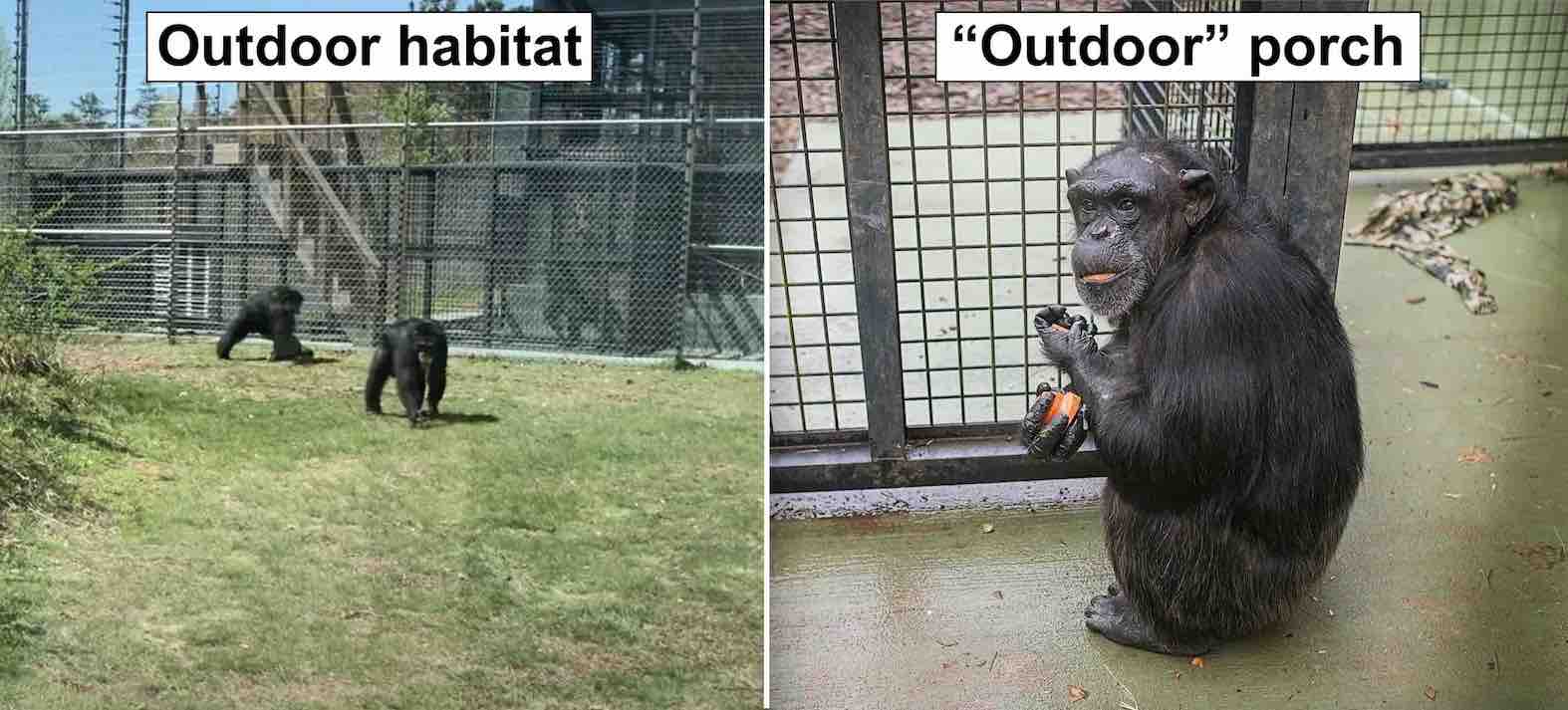
HSUS claims that the 77 residents of Project Chimps have daily access to the outdoors, but advocates believe this is misleading because the “porches” are enclosed concrete rooms

The Nonhuman Rights Project issued a public statement demanding that Project Chimps provide its clients, Hercules and Leo, with daily access to the outdoors

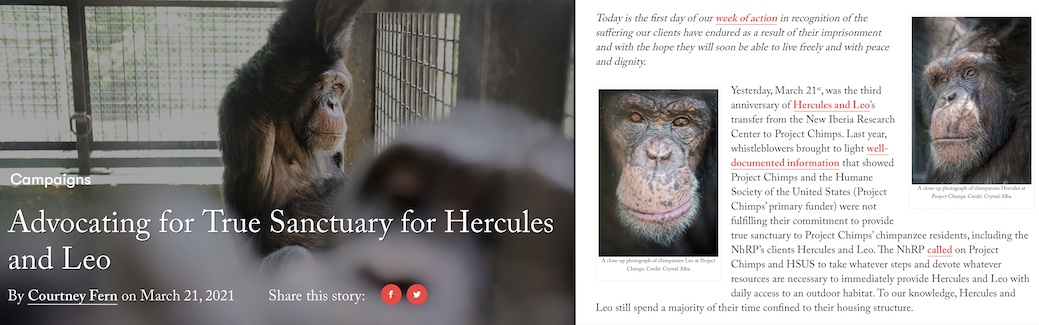
On March 21st, NhRP marked the three year anniversary of Hercules’ and Leo’s arrival at Project Chimps by issuing another public statement, this time asking its global network of supporters to call on HSUS CEO Kitty Block to provide Hercules and Leo with daily access to the outdoors. NhRP and PETA, which also issued a statement, must have agonized about publicly criticizing another animal advocacy group, but, by repeatedly dismissing the concerns they raised in private, HSUS left them with no choice.

The Nonhuman Rights Project is asking its supporters to call on HSUS CEO Kitty Block to give the chimpanzees the choice to spend their days in the forested habitat

Primate community stakeholders (sanctuary directors, primatologists and veterinarians) are aware of the systemic failures at Project Chimps, but they have not spoken out publicly. That can be attributed to a desire to avoid infighting or, more likely, to a fear of retaliation. HSUS is well known in the animal advocacy community for using its resources to intimidate and silence its critics. It used its lawyers at Seyfarth Shaw LLP, a global law firm with 12 offices in the U.S., to represent Project Chimps in its lawsuit against the whistleblowers. (HSUS ultimately dropped the suit, but not before the whistleblowers spent $30,000 on legal fees, a very large sum for young people earning a modest sanctuary salary.)

Fear of retaliation also helps to explain why former Project Chimps employees, who bonded with the chimpanzees, have been silent for the last year. Their fear of violating their termination agreements, however, could be outweighed by their desire to help the chimps.

The Nonhuman Rights Project is calling on The Humane Society of the United States (HSUS) to provide its clients, Hercules and Leo, with daily access to an outdoor yard.

A conflict of interest could also explain why stakeholders in the primate sanctuary community have been silent. Many receive monetary and/or non-monetary support from HSUS that they cannot afford to turn down.

Since writing my first article about the plight of the chimps in HSUS’s care, advocates have asked me why HSUS, an organization whose mission is to protect animals, is failing the animals in their own care. I can only surmise, based on my experience at its chimpanzee sanctuary in Liberia, that HSUS doesn’t want to spend the money to transform Project Chimps into a real sanctuary. This frugality is inexcusable not only because of HSUS’s considerable wealth, but also because the organization has raised millions of dollars off of the plight of captive chimps.

The 77 chimpanzees at Project Chimps have access to an outdoor habitat for approximately 10 hours per week. They spend the remainder of their days in concrete porches that HSUS and Project Chimps describe as “outdoors”

Over the past several months, outside inspections that revealed serious deficiencies have left HSUS with no choice but to publicly acknowledge problems at Project Chimps in Georgia, but the organization has downplays the problems as minor. If HSUS were to acknowledge the seriousness of the problems, then it would be forced to make the necessary investments and to acknowledge that the whistleblowers who they sued were right all along.
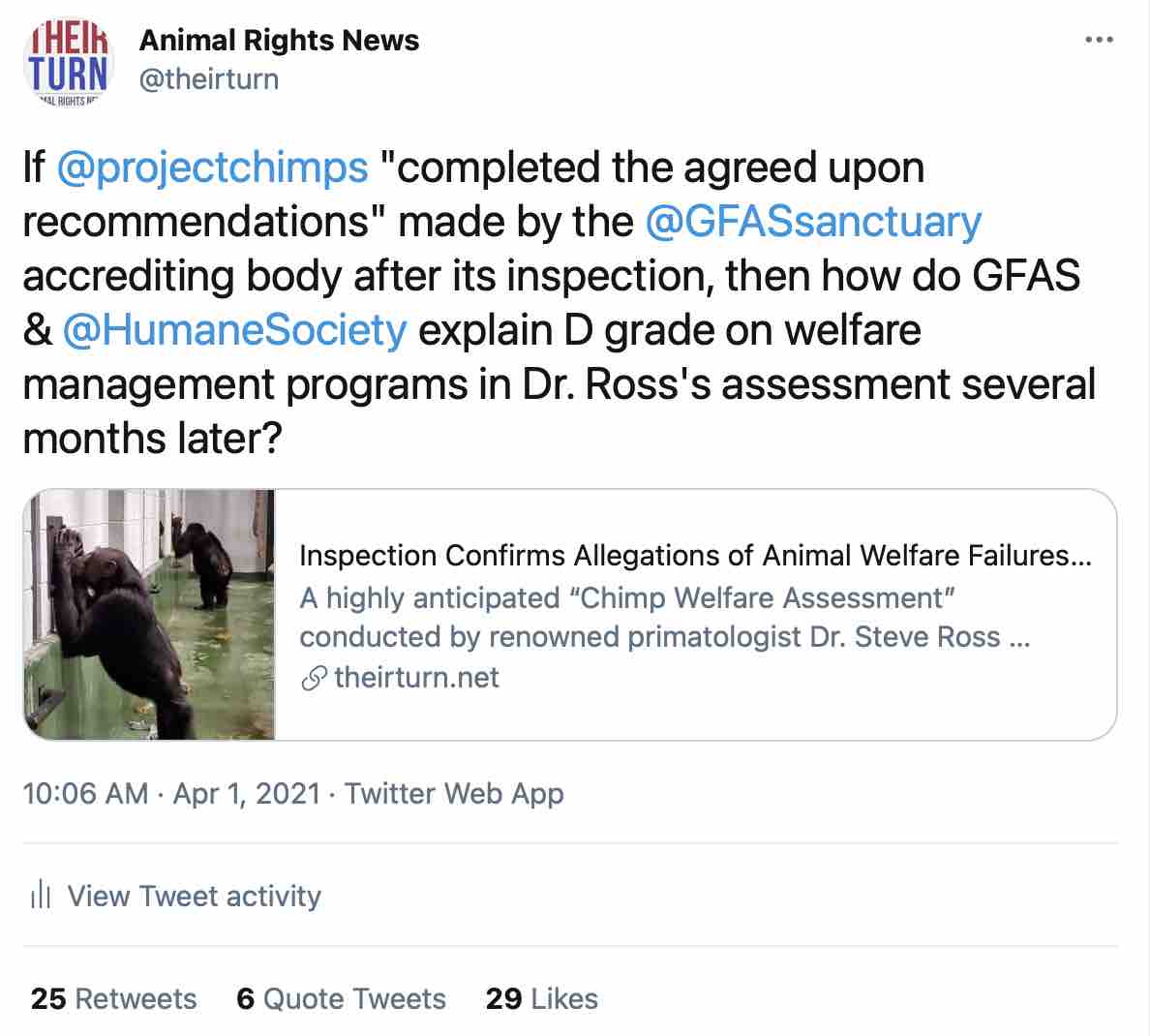
Continued public pressure will ultimately compel HSUS to fix the systemic failures at Project Chimps, but shouldn’t HSUS have wanted to live up to its promise to provide a “great home for retired chimpanzees” in the first place?

Progress For Science, a Los Angeles-based animal rights group,  protests at the Santa Monica home The Humane Society of the United States board member Steven White over the mistreatment of animals at its Project Chimps sanctuary
Pushy bonobo mothers help sons find sexual partners, scientists find

 This article is more than 2 months old

High-ranking mothers lead sons to groups of females and keep guard while they mate

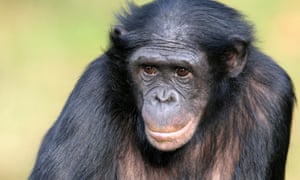
Female bonobo with crossed arms
 Male bonobos living with their mothers are three times more likely to father offspring, research suggests. Photograph: Getty Images/iStockphoto

Their mothers are so keen for them to father children that they usher them in front of promising partners, shield them from violent competitors and dash the chances of other males by charging them while they are at it.

For a bonobo mother, it is all part of the parenting day, and analysis finds the hard work pays off. Males of the species that live with their mothers are three times more likely to father offspring than those whose mothers are absent.

Martin Surbeck, a primatologist at the Max Planck Institute for Evolutionary Anthropology in Leipzig, said: “We wanted to see if the mothers’ behaviour changes the odds of their sons’ success, and it does. The mothers have a strong influence on the number of grandchildren they get.”

Bonobo mothers seize every opportunity to give their sons a leg-up. In bonobo society, the lower ranks tend to be gender balanced, but females dominate the top ranks. Many mothers have social clout and chaperone their sons to huddles with fertile females, ensuring them better chances to mate. “The mothers tend to be a social passport for their sons,” said Surbeck.

But in the free-for-all that underpins bonobo sex, vigilance is the watchword. When their sons are finally copulating, bonobo mothers keep a wary eye on nearby males. Should any make a move to rush the busy couple – a tactic that is well-known – she can bound in and block the attack.

Such dirty tricks abound. When mothers spot other males on the job, they have been known to detach the hapless apes with a well-timed charge. On rare occasions, the mothers literally drag unrelated males off their sexual partners. “Once I saw a mother pulling a male away by the leg,” said Surbeck. “It doesn’t necessarily increase their son’s mating success, but it shows that they really get involved in the whole business.”

To assess the impact of mothers’ interventions, Surbeck and his colleagues observed several wild bonobo populations in the Democratic Republic of the Congo and wild chimpanzees in Tanzania, Uganda and Ivory Coast. Mothers from both species, which share the title of our closest living relative, helped their sons in fights, but only the bonobos boosted their sons’ mating success. In chimpanzee society, males are dominant, so the mothers have less influence.

With a high-ranking mother on hand, the odds were particularly stacked in the male bonobos’ favour. For example, the young male of a high-ranking female might be allowed to lunch in the best feeding tree rather than being kicked out with the rest. “You see a lot of copulation while they go into these trees,” noted Surbeck. A report on the work appears in Current Biology.

In contrast to bonobo mothers, chimpanzee mothers had little impact on their sons’ reproductive success. If anything, based on the mating records the scientists analysed, chimp mothers had a slight negative impact on the chances of their sons having offspring.

While bonobo mothers looked out for their sons, the researchers found no evidence they helped their daughters in the mating game or in raising their offspring. But unlike the males, who hang around, the females usually leave the group to have their own families elsewhere.

Surbeck suspects bonobo mothers have hit on a winning strategy. In going the extra mile to get their sons mating, the mothers get to spread their genes without having to have more children themselves.

Donald Trump: World-renowned primatologist Jane Goodall likens US President to a chimpanzee

‘To impress rivals, males seeking to rise in the dominance hierarchy perform spectacular displays: Stamping, slapping the ground, dragging branches, throwing rocks,’ says prominent conservationist

Primatologist Jane Goodall has since been echoed by prominent psychologist Professor Dan P McAdams

Primatologist Jane Goodall has since been echoed by prominent psychologist Professor Dan P McAdams ( EPA )

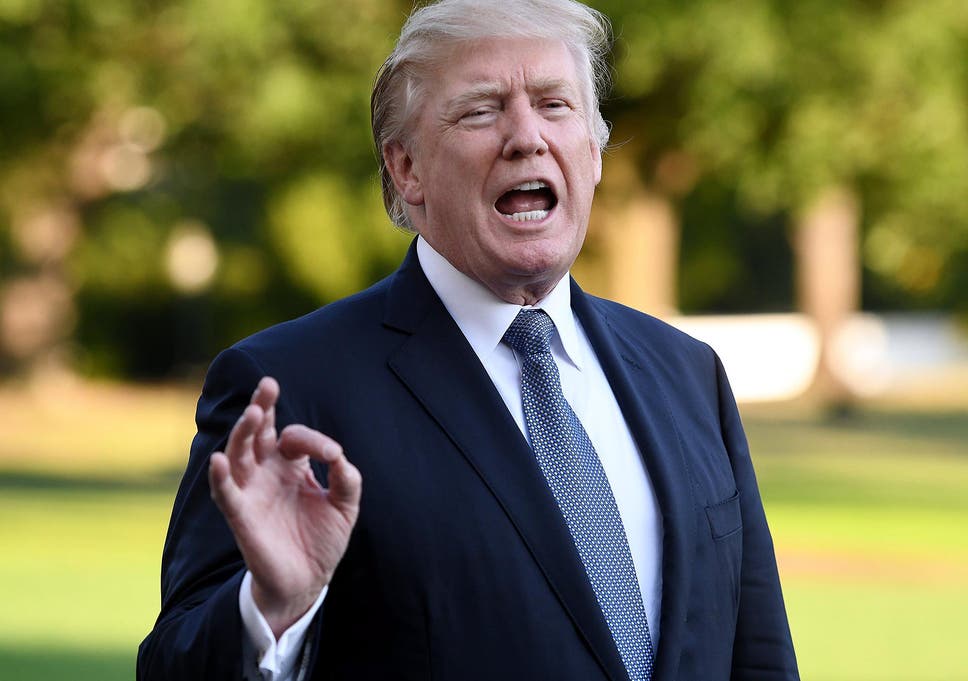
World-renowned primatologist Dame Jane Goodall has likened Donald Trump‘s behaviour to that of a chimpanzee.

The British conservationist first gained international recognition for studying chimps in what is now Tanzania and has studied the primates for more than 50 years.

“In many ways the performances of Donald Trump remind me of male chimpanzeesand their dominance rituals,” she told The Atlantic during the 2016 presidential election.

“In order to impress rivals, males seeking to rise in the dominance hierarchy perform spectacular displays: Stamping, slapping the ground, dragging branches, throwing rocks.”

A more aggressive display was likely to lead the male to higher positions in the hierarchy and allow it to maintain its status for longer, she said.

Mr Trump’s election campaign was littered with bombastic statements and since becoming President, he has issued increasingly aggressive threats towards North Korea.

In his first address to the UN General Assembly, he said the US may have no choice but to “totally destroy” North Korea.

Dame Jane’s analysis of Mr Trump’s behaviour has since been echoed by prominent psychologist Professor Dan P McAdams.

Describing what he called a male chimpanzee’s “charging display” in an article in The Guardian, Professor Adams, of Northwestern University, said: “The top male essentially goes berserk and starts screaming, hooting, and gesticulating wildly as he charges toward other males nearby.”

He added: “Trump’s incendiary tweets are the human equivalent of a charging display: Designed to intimidate his foes and rally his submissive base, these verbal outbursts reinforce the President’s dominance by reminding everybody of his wrath and his force.”

Dame Goodall has previously condemned the Republican President’s plans to scrap key US climate change policies as “extremely depressing”.

Mr Trump resolved to take America out of the Paris climate change agreement, although in recent months has appeared to soften on the issue.

“There’s no way we can say climate change isn’t happening: it’s happened,” Dame Jane said in March during her first trip to the US since the election.

“There is definitely a feeling of gloom and doom among all the people I know.

“If we allow this feeling of doom and gloom to continue then it will be very, very bad, but my job is to give people hope, and I think one of the main hopes is the fact that people have woken up: people who were apathetic before or didn’t seem to care.”

Ivanka Trump quoted Jane Goodall, who responded with a plea: ‘Stand with us’

  https://www.washingtonpost.com/news/morning-mix/wp/2017/05/03/ivanka-trump-quoted-jane-goodall-who-responded-with-a-plea-stand-with-us/?utm_term=.2c6c5ce82b8f
May 3 at 5:36 AM

In Ivanka Trump’s new book, “Women Who Work,” released Tuesday, the president’s daughter includes a quote from Jane Goodall, the renowned chimp researcher and crusader for conservation.

“What you do makes a difference,” the quote reads, “and you have to decide what kind of difference you want to make.”

It was one of several quotes in Trump’s book attributed to people who have criticized President Trump or voiced support for presidential nominee Hillary Clinton. The reference to Goodall, 83, was also particularly timely, considering the book dropped less than a week after scores marched in Washington to push for action on climate change, a movement Goodall has ardently supported.

So, as the conservationist has done before, Goodall took the opportunity to make a statement. And give the president’s daughter a bit of advice.

“I understand that Ms. Trump has used one of my quotes in her forthcoming book,” Goodall said in a statement provided to The Washington Post. “I was not aware of this, and have not spoken with her, but I sincerely hope she will take the full import of my words to heart.”

Goodall said legislation passed by previous governments to protect wildlife — such as the Endangered Species Act, efforts to create national monuments and other clean air and water legislation — “have all been jeopardized by this administration.”

“She is in a position to do much good or terrible harm,” Goodall said. “I hope that Ms. Trump will stand with us to value and cherish our natural world and protect this planet for future generations.”

Jane Goodall reflects on how young people inspire hope

Play Video0:58
At an event for youth in a school in Northern Virginia, Dr. Jane Goodall reflects on how young people inspire hope. (Daron Taylor/The Washington Post)

In a statement to CNNMoney on Tuesday, representatives for Ivanka Trump said “Women Who Work” is “not a political book,” and its manuscript was submitted months before the election.

“Ivanka has always believed that no one person or party has a monopoly on good ideas,” the statement said. “When she was writing this book, she included quotes from many different thought leaders who’ve inspired Ivanka and helped inform her viewpoints over the years.”

This is not the first time Goodall, a native of England, has spoken out critically about the Trump administration since the election.

Shortly after Trump won the presidency, Goodall wrote a lengthy post on her website called “Post Election 2016: What’s Next?”

“Will Donald Trump, the President of the United States, be a different person from Donald Trump, the presidential candidate? ” Goodall wrote. “We can only hope for the best, hope for a change of heart as he contemplates his tremendous power for helping to save our planet for the future — his youngest child is only 10 years old — and his equally tremendous power to inflict untold damage.”

In late March, after the president signed a sweeping executive order dismantling key rules curbing U.S. carbon emissions, Goodall told reporters she found the order “immensely depressing.”

“There’s no way we can say climate change isn’t happening: it’s happened,” Goodall said ahead of a speech at American University in Washington.

“There is definitely a feeling of gloom and doom among all the people I know,” she added in her first trip to the U.S. since the election. “If we allow this feeling of doom and gloom to continue then it will be very, very bad, but my job is to give people hope, and I think one of the main hopes is the fact that people have woken up: people who were apathetic before or didn’t seem to care.”

Goodall participated in the 2014 Peoples Climate March in NYC, and frequently voiced her support of Saturday’s march on social media. An artist included Goodall as one of several massive cardboard cutout signs of notable figures for the People’s Climate March in Washington on Saturday.

More than half a century ago, at the age of 26, Goodall immersed herself among wild chimpanzees is what is now Tanzania. Her observations that chimps had emotions and personalities, and could make and use tools, would revolutionize the way we think about animals and redefine what it means to be human.

Goodall now travels 300 days a year to share stories and lessons with audiences around the world. She frequently speaks about threats facing chimpanzees and environmental crises, urging people to take action to conserve wildlife.

Shortly before Trump won the Republican nomination for president, she told the Atlantic that in many ways, “the performances of Donald Trump remind me of male chimpanzees and their dominance rituals.”

“In order to impress rivals, males seeking to rise in the dominance hierarchy perform spectacular displays: stamping, slapping the ground, dragging branches, throwing rocks,” Goodall said. “The more vigorous and imaginative the display, the faster the individual is likely to rise in the hierarchy, and the longer he is likely to maintain that position.”

Chimpanzees are animals. But are they ‘persons’?

March 16

The appellate division of the New York Supreme Court will hear arguments Thursday on behalf of two captive plaintiffs — both of them chimpanzees.

Their self-appointed attorney, the crusading animal-rights lawyer Steven Wise, will once again be making the case that U.S. law should not consider the apes things, but rather “legal persons” that have a right to bodily liberty.

It’s an argument that, if successful, could lead to revolutionary changes in legal status for animals. But it’s one that has so far failed to convince judges.

The chimps in question at this week’s hearing are Tommy and Kiko, both of which are held by private owners in New York, according to Wise’s group, the Nonhuman Rights Project. In a bid to persuade courts to recognize the animals as “legal persons,” the group has filed writs of habeas corpus, which would allow the chimps to challenge the legality of their detention in court. Any court that granted such a writ would be acknowledging the ape’s legal “personhood” — and right to be free.

Courts have already granted personhood to other non-humans, which is not the same as declaring them people, Wise often notes. Corporations can be legal persons, as can ships. On Wednesday, New Zealand’s parliament officially recognized the Whanganui River as a legal person. And so far, courts have been willing to at least listen to Wise’s arguments on behalf of chimps, if not rule in their favor.

Despite the defeats, Wise said he was encouraged by a 2015 state Supreme Court ruling that rejected his group’s arguments but called the quest “understandable” and acknowledged that the definition of legal personhood has evolved over time. But the judge in that case said she was bound by a higher court’s previous ruling that chimpanzees could not be granted legal rights because they’re unable to bear “legal responsibilities and societal duties.”

Wise says that’s wrong for a couple of reasons that he plans to present on Thursday. First, he said, he’ll argue that legal personhood does not require the ability to assume duties or responsibilities — children cannot do so, for example, nor can some Alzheimer’s patients.

“No other court has said you have to have the capacity to assume duties and responsibilities in order to be a legal person and have rights,” Wise said. “In fact, millions of people in the state of New York can’t assume duties and responsibilities. But I assure you they aren’t legal things.”

If that argument doesn’t work, Wise says he has a backup: Sixty pages of affidavits from six experts on the behavior and cognition of chimpanzees, including the famous primatologist Jane Goodall. They present evidence that these highly intelligent animals can — and do — assume duties and responsibilities in their own societies and in chimp-human “societies” created for research purposes.

CONTENT FROM THE CLEVELAND CLINIC
What “patient-first” care really looks like
Empathy is the guiding principle behind the entire patient experience at Cleveland Clinic’s new Cancer Center. Take a tour.


“They just give example after example,” Wise said of the affidavits. “For example, when a chimpanzee band crosses a road, a male will go to the front and another male will go to the back and allow others to cross. And when they engage in hunts, they each have separate duties. They each have to do their job.”

But, unlike most humans, chimps clearly can’t be held accountable for not doing their societal duties, which is one reason some legal scholars reject Wise’s argument. Critics also warn of a slippery slope that could theoretically lead to the prohibition of all pet-keeping.

Wise said the goal at this point is to get Tommy and Kiko sent to a sanctuary — an outcome that, so far, New York courts have not come close to letting happen. (It did happen recently in Argentina, where a judge ruled that a chimpanzee named Cecilia had “non-human rights” and must be transferred from the zoo where she lived to a sanctuary.)

But the Nonhuman Rights Project has plans to see if other American states’ courts might be more open to the idea. Wise said the group is preparing a case on behalf of an elephant in a state that is not New York, eyeing the case of some chimpanzees in California and “looking very closely” at orcas owned by SeaWorld.

Read more:

These chimps helped save human lives. Then they were abandoned.

DNA evidence helps free a service dog from death row

A proposal to bring back grizzlies just got a funny boost

Trump’s Behavior Similar To Male Chimpanzee, Says Jane Goodall

IAN WALDIE VIA GETTY IMAGES
A Chimpanzee jumps at a glass screen as primatologist Dr. Jane Goodall holds a press conference at Taronga Zoo July 14, 2006 in Sydney, Australia.

http://www.huffingtonpost.com/entry/trump-chimpanzee-behavior_us_57ddb84fe4b04a1497b4e512?

Donald Trump’s antics remind famed anthropologist Jane Goodall of the primates she spent decades studying in the wild.

“In many ways the performances of Donald Trump remind me of male chimpanzees and their dominance rituals,” Goodall told The Atlantic. “In order to impress rivals, males seeking to rise in the dominance hierarchy perform spectacular displays: stamping, slapping the ground, dragging branches, throwing rocks.”

Goodall added, “the more vigorous and imaginative the display, the faster the individual is likely to rise in the hierarchy, and the longer he is likely to maintain that position.”

To date, we’ve not seen Trump drag branches or throw rocks, although anything is possible. Instead of physical displays, the Republican presidential nominee has stuck to verbal ones ― bragging about his penis, launching personal attacks and resorting to racist and sexist insults.

BLOOMBERG VIA GETTY IMAGES

Trump is set to debate his Democratic opponent, Hillary Clinton, on Sept. 26. When it happens, Goodall told The Atlantic she’ll be thinking of “Mike,” a chimpanzee she studied that displayed dominance by kicking kerosene cans, creating a racket that sent would-be challengers fleeing.

Unsurprisingly, Trump has already boasted that he will come out on top, telling The New York Times “I know how to handle Hillary.”

Whether his strategy includes childish tidbits has yet to be seen. Tony Schwartz, co-author of Trump’s book The Art of the Deal, however, bets it will.

“Trump has severe attention problems and simply cannot take in complex information — he will be unable to practice for these debates,” Schwartz told the Times. “Trump will bring nothing but his bluster to the debates. He’ll use sixth-grade language, he will repeat himself many times, he won’t complete sentences, and he won’t say anything of substance.”

Editor’s note: Donald Trump regularly incites political violence and is a serial liar,

Unfortunately Chimpanzee Jailbreak From Zoo Only Temporary

It took carrots, celery, lettuce — and finally malted milk balls — to lure seven escaped chimpanzees back into their Kansas City Zoo enclosure on Thursday.

Three members of the group climbed over the wall into an area that’s accessible only to zoo staff.

At no time was the public in danger, Wisthoff said.

As a precaution, however, employees ushered all zoo visitors into buildings that were locked.

Time to Reinvent the Species Again

by Jim Robertson

Love ‘em or hate ‘em, there’s one thing about Homo sapiens that can’t be denied: the species has come a long way from its primate origins—but that’s not necessarily a good thing. From a peaceful plant-eating past, hominids have clawed their way to the top of the food chain, and now the planet’s atmosphere, climate and web of life are all suffering for it.

We’ve evolved so far from the common ancestor we share with chimpanzees and gorillas, that now they’re just a curiosity—side show freaks—to be gawked at between bars or in tiny “habitats” at the neighborhood zoo.

They’re just animals, why should we respect them as our kin? Did they rise from their simple roots, eating from the bottom of the food chain, to become the most successful big-game hunter of all time? Do they carry out wars on a global scale that threaten the very existence of life on Earth? Have they changed the climate for the worse and caused the current extinction spasm? No, only humankind can claim all those achievements.

HumanWeapons_170And we owe it all to eating meat. The transformation from peaceful plant eater to weapon-wielding predator may have made us top dog, but, as they say, it’s lonely at the top. Not only is meat-eating hard on human health, but the carnivorous ways of such a rapidly growing population of conscious-less killers are taking the planet down with them.

We re-invented ourselves once as a species when we climbed down out of the trees and set out across the savannas, spear in hand, in search of “game.” Now it’s time to re-invent ourselves again, for the good of all. It’s not written in stone that humans have to destroy the Earth and all its inhabitants. Reinvention is aspota1 simple laying down our weapons and returning to a more sustainable place lower on the food chain. Trading in our collective ego trip and symbolically returning to the trees may go against human nature, but it’s preferable to self-imposed extinction.