Exposing the Big Game

Forget Hunters' Feeble Rationalizations and Trust Your Gut Feelings: Making Sport of Killing Is Not Healthy Human Behavior

Exposing the Big Game

Coronavirus: Space images reveal drastic fall in pollution over China as factories closed

‘This is the first time I have seen such a dramatic drop-off over such a wide area for a specific event,’ says Nasa scientist

Satellite images show a dramatic drop in pollution over China after the coronavirus outbreak shut down swathes of the country’s industry and travel.

US space agency Nasa said the change was at least partly related to the economic slowdown caused by efforts to contain the virus.

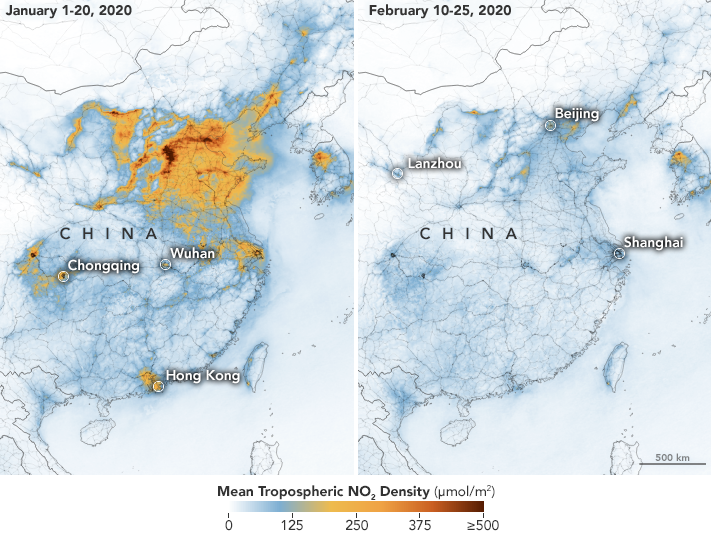
Nasa maps show how levels of nitrogen dioxide, a toxic gas from vehicles, power plants and factories, plummeted after the mass quarantine, compared with before.

Scientists have previously found the coronavirus wiped out at least a quarter of China’s emissions of damaging greenhouse gases in just two weeks in mid-February.

Closing industrial plants and asking people to stop at home has led to sharp drops in the burning of fossil fuels — a key cause of the climate crisis — in the world’s largest greenhouse gas producer.

Pollution levels in January contrast with those in February (Nasa)

China, where the outbreak began, has nearly 80,000 cases of coronavirus, by far the largest number of any country, with nearly 2,900 deaths.

Nasa’s maps compare pollution levels between the first three weeks of the year and 10-25 February.

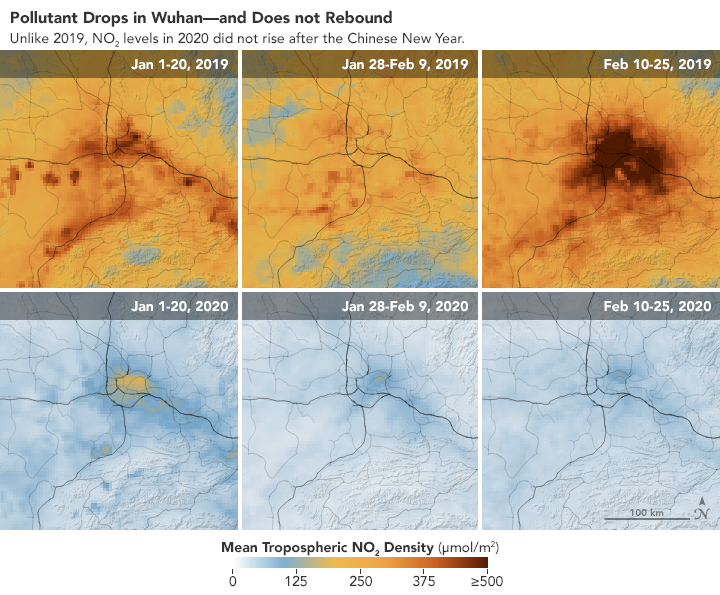
The space agency’s scientists said the fall in pollution was first apparent near Wuhan, the source of the outbreak, but eventually spread across the country.

“This is the first time I have seen such a dramatic drop-off over such a wide area for a specific event,” said Fei Liu, an air quality researcher at Nasa’s Goddard Space Flight Centre.

She said she had seen a decline in nitrogen dioxide levels during the economic recession of 2008 but said that decrease was more gradual.

This year, pollution levels did not rise again after Chinese new year, unlike last year (Nasa)


Coronavirus outbreak may spur Southeast Asian action on wildlife trafficking

by Imelda Abano on 4 March 2020

Illegal wildlife trafficking remains a perennial problem in Southeast Asia, but with the ongoing spread of the new coronavirus, there’s added impetus for governments in the region to clamp down on the illicit trade.
The coronavirus disease, or COVID-19, has infected more than 90,000 people worldwide and killed more than 3,000, according to the World Health Organization.
Initial findings, though not conclusive, have linked the virus to pangolins, the most trafficked mammal on Earth and one of the mainstays of the illegal wildlife trade in Southeast Asia that feeds the Chinese market.
Despite having a regional cooperation framework designed to curb wildlife trafficking, Southeast Asian governments have yet to agree on and finance a sustainability plan to strengthen efforts against the illegal trade.

MANILA — Governments across Southeast Asia have vowed to strengthen cooperation in curbing the illegal wildlife trade, suspected to have sparked the novel coronavirus epidemic. The issue will be at the top of the agenda at the Biodiversity Conference in Kuala Lumpur later this month.

“What needs to be enhanced is more collaboration to address wildlife trafficking at a multi-country or at the regional level,” said Theresa Mundita-Lim of the ASEAN Centre for Biodiversity (ACB), an institute under the auspices of the Association of Southeast Asian Nations. “The region is ready to step up efforts to curb illegal wildlife trade.”

As of March 3, there were 90,893 reported cases of the coronavirus disease, or COVID-19, around the world, with 3,110 deaths, according to the World Health Organization. Cases have been reported in 80 countries, but the majority are in China. The virus is believed to have originated from a market in the central Chinese city of Wuhan that sold exotic live mammals, including bats and civets — previously linked to the spread of a similar disease, SARS, in 2002.

In the less than three months since the first case was detected last December, the WHO has raised the epidemic’s global risk assessment to “very high.” Various countries have declared public health emergencies, imposed travel bans, and implemented strict quarantine stations in efforts to contain the virus. Disruptions to tourism, aviation, manufacturing and other economic activity are expected to throttle back global economic growth from a projected 2.9% this year to 2.4%, according to the Organisation for Economic Co-operation and Development.

With China’s recent move to ban the wildlife trade and consumption, officials say it’s about time ASEAN unify against wildlife trafficking, especially as reports point to a sophisticated network of illegal wildlife trade routes from Southeast Asia to China’s wildlife markets.

As early as 2003, the region started exploring solutions to wildlife trafficking after Thailand admitted to being a wildlife trade hub, open source data fusion center Analytical Center of Excellence on Trafficking
(ACET) says in its latest report. With China entering the crackdown a decade later, Southeast Asia has seen an increase in reported cases, and thousands of seizures, arrests and prosecutions.
A sunda pangolin (Manis javanensis) is a species native to Southeast Asia. Image by Dan Challender/Save Vietnam’s Wildlife

This, however, has not been enough for the region to support a sustainability plan against wildlife trafficking, which involves each member state committing $15,000 a year. The stalemate is due in part to the bloc’s consensus voting rule. “As ASEAN is based on consensus, it only takes one out of ten members to veto a motion,” the report says.
“For nine years, Malaysia cast that vote of opposition. When Malaysia finally agreed to join the majority to support a sustainability plan, a new and surprising vote of opposition appeared: Thailand.”

But as the COVID-19 epidemic spreads, it might tip the scales and prompt ASEAN governments to support the sustainability plan and implement stringent policies to protect native species. This would also be in line with stronger measures that governments are expected to take after the lapse of the 2020 Aichi Biodiversity Targets, including the creation of heritage parks and protected areas.

“Actions on transboundary cooperation and promoting sustainable livelihoods in and around ASEAN heritage parks and natural habitats will help stop the reliance of local communities to poaching, overharvesting and illegal trading of wildlife and their by-products as means to earn income,” Mundita-Lim said.

Among the animals that need to be protected are the little-known pangolins, the most trafficked mammal in the world and which have been identified as a possible vector of the coronavirus. Recent studies have found high genomic similarities between the novel coronavirus and a virus found in pangolins, but these studies remain inconclusive. Being linked to the epidemic, however, increases the threats to these docile species as people might kill them en masse — similar to what happened to civets after the SARS outbreak, Nature reports.

Populations of these scaly mammals in the region have dwindled drastically due to heavy poaching activities in the past two decades, according to the international wildlife trade monitoring group TRAFFIC.
A TRAFFIC report released last month estimated that around 895,000 pangolins were smuggled in Southeast Asia from 2000 to 2019.
Range of the four Asia pangolin species: the Chinese, Indian, Sunda and Philippine pangolins. A mix of colors within the maps indicates an overlap in the different species’ distributions. The species’ ranges are based on the IUCN Red List assessments (IUCN 2014). Note: The distribution maps are currently being updated by the IUCN Pangolin Specialist Group. Image courtesy of University of Adelaide/TRAFFIC.
Image courtesy of University of Adelaide/TRAFFIC

There are eight pangolin species in the world, four native to Africa and four to Asia. All the Asian species are declared critically endangered by the IUCN, including the two species native to Southeast Asia: the Sunda pangolin (Manis javanica) and the Philippine pangolin (Manis culionensis).

Populations of both the Sunda and the Philippine pangolins remain unknown but are assumed to be decreasing rapidly. In Palawan province, the only place where the Philippine pangolin occurs, only 17 individuals were spotted in a 2019 survey that covered 2,400 hectares (5,930 acres) of the 165,000-hectare (407,700-acre) Victoria-Anepahan mountain range in the town of Rizal. The survey, part of USAID’s Protect Wildlife project, noted the decline in pangolin sightings in the province.

“Pangolin poaching and trafficking continue as long as there is a demand from active buyers, both foreign and local,” the report says, adding that limited information on pangolins “hampers the ability of conservationists and local authorities to establish proper baselines for protecting the remaining pangolin strongholds in the wild.”

Reports of rampant trafficking prompted international wildlife trade regulator CITES to bump pangolins into the highest bracket of protection in 2016 by banning all international trade in the species. In spite of this, however, trafficking of pangolins and pangolin parts (scales, meat and blood) continue; the biggest and most recent seizure was of 9 tons of pangolin scales, taken from approximately 14,000 pangolins from Africa, and intercepted in Hong Kong in early 2019.

Prior to the ban, pangolins were openly shipped in the region, often smuggled alongside parts from tigers and hawksbill sea turtles, both threatened species. “Pangolins were sourced and openly shipped from Indonesia, with smaller loads gathered in Cambodia, Thailand, Myanmar, Malaysia and the Philippines,” ACET’s latest report states. “Since prices in pangolins were modest, the volume of trade was also relatively low and seemingly sustainable.”

The trafficking ring in the region follows an intricate maze, ACET’s report says, with animals sourced from Indonesia and Malaysia transiting through Cambodia, Thailand, Laos and Vietnam until it enters China.
“Live animals and body parts were sent to Yunnan and Guangdong by road, ship and eventually by air to Kunming, Guangzhou and Hong Kong,” the report says.
A pangolin, meaning the “one who rolls up” in Malay, balls up in its characteristic defensive posture. Image courtesy of Priyan Perera

The illicit trade has since been intertwined with that of illegal drugs and other contraband, making it challenging for security forces to crack down on shipments. Indonesian authorities described the region’s illegal wildlife trade as being as sophisticated as the drug trade, according to the Global Environmental Reporting Collective’s The Pangolin Reports.

In the Philippines, the Palawan Center for Sustainable Development
(PCSD) has identified a transnational route that starts at the port of Balabac in southern Palawan and heads north to the island of Mindoro and across to the port of Batangas before exiting the archipelago.

While crackdowns on illegal wildlife trafficking continue on a top-down model, groups on the ground have also initiated efforts to engage communities against poaching not just of pangolins but other trafficked mammals in the region.

“Communities can be front-liners in the fight against poaching of pangolins and wildlife by organizing community-based efforts to protect their forests, support enforcers on the ground, and advocate for and spread the word about the importance of protecting wildlife and their habitats,” said Rebecca Paz, chief of party for USAID’s Protect Wildlife project. “We also need to look into boosting opportunities for viable and sustainable livelihoods in these communities to dissuade them from engaging in illegal practices that are harming wildlife and other natural resources.”

https://news.mongabay.com/2020/03/coronavirus-outbreak-may-spur-southeast-asian-action-on-wildlife-trafficking/

The Two Dark Sides of COVID-19

  , 

Historically, tragedies such as the ongoing COVID-19 epidemic have sometimes led to important changes. The probable source of the new coronavirus – so-called wet markets, at which live animals are sold and slaughtered before customers’ eyes – should be banned not only in China, but worldwide.

PRINCETON – The apocalyptic images of the locked-down Chinese city of Wuhan have reached us all. The world is holding its breath over the spread of the new coronavirus, COVID-19, and governments are taking or preparing drastic measures that will necessarily sacrifice individual rights and freedoms for the general good.

Some focus their anger on China’s initial lack of transparency about the outbreak. The philosopher Slavoj Žižek has spoken of “the racist paranoia” at work in the obsession with COVID-19 when there are many worse infectious diseases from which thousands die every day. Those prone to conspiracy theories believe that the virus is a biological weapon aimed at China’s economy. Few mention, let alone confront, the underlying cause of the epidemic.

Both the 2003 SARS (Severe Acute Respiratory Syndrome) epidemic and the current one can be traced to China’s “wet markets” – open-air markets where animals are bought live and then slaughtered on the spot for the customers. Until late December 2019, everyone affected by the virus had some link to Wuhan’s Huanan Market.

At China’s wet markets, many different animals are sold and killed to be eaten: wolf cubs, snakes, turtles, guinea pigs, rats, otters, badgers, and civets. Similar markets exist in many Asian countries, including Japan, Vietnam, and the Philippines.

In tropical and subtropical areas of the planet, wet markets sell live mammals, poultry, fish, and reptiles, crammed together and sharing their breath, their blood, and their excrement. As US National Public Radio journalist Jason Beaubien recently reported: “Live fish in open tubs splash water all over the floor. The countertops of the stalls are red with blood as fish are gutted and filleted right in front of the customers’ eyes. Live turtles and crustaceans climb over each other in boxes. Melting ice adds to the slush on the floor. There’s lots of water, blood, fish scales, and chicken guts.” Wet markets, indeed.

Scientists tell us that keeping different animals in close, prolonged proximity with one another and with people creates an unhealthy environment that is the probable source of the mutation that enabled COVID-19 to infect humans. More precisely, in such an environment, a coronavirus long present in some animals underwent rapid mutation as it changed from nonhuman host to nonhuman host, and ultimately gained the ability to bind to human cell receptors, thus adapting to the human host.

Bundle2020_web

SUBSCRIBE NOW

Subscribe today and get unlimited access to OnPoint, the Big Picture, the PS archive of more than 14,000 commentaries, and our annual magazine, for less than $2 a week.

SUBSCRIBE

This evidence prompted China, on January 26, to impose a temporary ban on wildlife animal trade. It is not the first time that such a measure has been introduced in response to an epidemic. Following the SARS outbreak China prohibited the breeding, transport, and sale of civets and other wild animals, but the ban was lifted six months later.

Today, many voices are calling for a permanent shutdown of “wildlife markets.” Zhou Jinfeng, head of China’s Biodiversity Conservation and Green Development Foundation, has urged that “illegal wildlife trafficking” be banned indefinitely and has indicated that the National People’s Congress is discussing a bill to outlaw trade in protected species. Focusing on protected species, however, is a ploy to divert public attention away from the appalling circumstances in which animals in wet markets are forced to live and die. What the world really needs is a permanent ban on wet markets.

For the animals, wet markets are hell on earth. Thousands of sentient, palpitating beings endure hours of suffering and anguish before being brutally butchered. This is just one small part of the suffering that humans systematically inflict on animals in every country – in factory farms, laboratories, and the entertainment industry.

If we stop to reflect on what we are doing – and mostly we do not – we are prone to justify it by appealing to the alleged superiority of our species, in much the same way that white people used to appeal to the alleged superiority of their race to justify their subjection of “inferior” humans. But at this moment, when vital human interests so clearly run parallel to the interests of nonhuman animals, this small part of the suffering we inflict on animals offers us the opportunity for a change of attitudes toward members of non-human species.

To achieve a ban on wet markets, we will have to overcome some specific cultural preferences, as well as resistance linked to the fact that a ban would cause economic hardship to those who make their living from the markets. But, even without giving nonhuman animals the moral consideration they deserve, these localized concerns are decisively outweighed by the calamitous impact that ever more frequent global epidemics (and perhaps pandemics) will have.

Martin Williams, a Hong Kong-based writer specializing in conservation and the environment, puts it well: “As long as such markets exist, the likelihood of other new diseases emerging will remain. Surely, it is time for China to close down these markets. In one fell swoop, it would be making progress on animal rights and nature conservation, while reducing the risk of a ‘made in China’ disease harming people worldwide.”

But we would go further. Historically, tragedies have sometimes led to important changes. Markets at which live animals are sold and slaughtered should be banned not only in China, but all over the world.

China reports bird flu outbreak near epicenter of coronavirus

China has detected an outbreak of the bird flu near the epicenter of the lethal coronavirus, in line with a report.

The bird flu outbreak was reported Saturday in Hunan, which borders the province of Hubei the place the coronavirus broke out final month, in line with the South China Morning Submit.

“The outbreak occurred in a farm within the Shuangqing district of Shaoyang metropolis,” officers mentioned. “The farm has 7,850 chickens, and 4,500 of the chickens have died from the contagion.”

The deadly sickness — referred to as H5N1 virus — causes “a extremely infectious, extreme respiratory illness in birds,” in line with the World Well being Group.

The flu could be transmitted to people, however there have been no reports of anybody with the sickness, the outlet mentioned.

The outbreak comes as Chinese language authorities work to comprise the brand new coronavirus pressure, which has killed greater than 300 individuals.

Chinese government approves decision to ban consumption of wild animals

 February 24, 2020

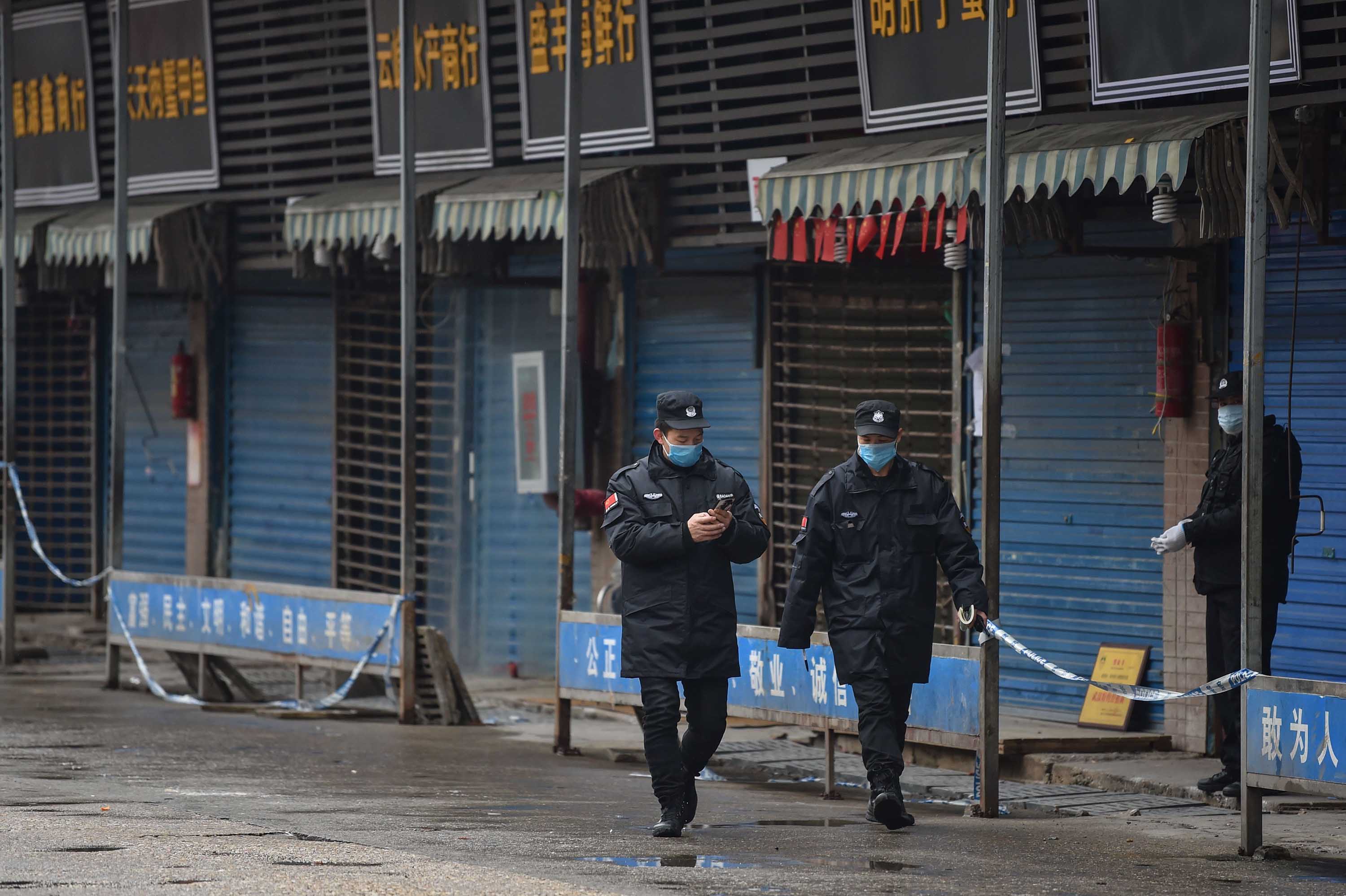
Guards patrol on January 24 outside the Huanan Seafood Wholesale Market in Wuhan, believed to be the source of the virus.
Guards patrol on January 24 outside the Huanan Seafood Wholesale Market in Wuhan, believed to be the source of the virus. Credit: Hector Retamal/AFP/Getty Images

https://www.cnn.com/asia/live-news/coronavirus-outbreak-02-24-20-hnk-intl/h_e9e7718ef4bebc5ffe32d35e32c4469f

China’s top political body approved the decision on Monday to ban the consumption and the illegal trade of wild animals, which some experts believe to be the source of the virus.

The National People’s Congress Standing Committee approved the ban on Monday in a bid to help “safeguard public health and ecological security,” according to Chinese state media.

The move aims to “completely ban the eating of wild animals” while also “cracking down on illegal trade of wildlife,” state media reports.

The use of wild animals for scientific research, medicine and exhibition will now need to go through “strict examination and approval” by the supervising department in accordance with relevant regulations.

This comes after Chinese authorities suspended the trade of wild animals on January 26th in an attempt to stop the spread of the virus.

Also see: https://vegnews.com/2020/2/china-permanently-bans-consumption-of-wild-animals?fbclid=IwAR3noVYTbMnI6IaIkhjREWQSrrA6CW1x95E39D9cZlSdRAIKokPVMFQAD1E

Chinese community officers ‘beat stray dogs to death to prevent them from spreading coronavirus’ 

A group of Chinese community officers have been accused of beating stray dogs to death in broad daylight in the name of preventing the spread of the novel coronavirus which has killed 1,018 people.

In a video supplied to MailOnline by animal lovers, one worker can be seen repeatedly hitting a pooch with a huge wooden club.

The horrifying incident took place this morning at a residential complex in the city of Nanchong in Sichuan Province, according to activists.

Two stray dogs were killed at around 9am near Wenfeng Road, Nanchong Stray Animal Rescue said.

MailOnline has decided not to show the footage of the attack due to its graphic nature.

A separate clip shows workers taking away the dogs’ dead bodies after killing them.

The group told MailOnline that residents of the complex, Guibi Garden, were informed yesterday by the community officers that no pet dogs would be allowed outside.

‘As long as [we]see a dog in the complex, no matter if it is on the lead or not, we will beat it to death,’ the officers were quoted saying.

The group condemned the officers’ ‘atrocious’ act.

‘At the crucial point of fighting the epidemic, the management office and community officers should have disinfected the neighbourhood, recorded information of visitors, supervised suspected patients under quarantine, or even given care to the psychological stress and trauma residents got from the epidemic.

‘But instead, [they]ignored citizens’s love and appeal for animals and killed lives at will without giving notice or seeking permission.’

Nanchong Stray Animal Rescue demanded relevant officers halt their act immediately.

‘Before the matter escalates, please stop the atrocity of harming animals,’ it wrote on its official account on Weibo, the Chinese equivalent to Twitter.

One volunteer from the group told MailOnline that it was hard for him and other animal lovers to get to the scene in a timely fashion because the residential complex would not let outsiders enter easily during the outbreak.

He said the two dogs had been healthy and obedient, and that kind residents had fed them an hour before the incident.

The volunteer also showed MailOnline a notice issued by local authorities in response to the matter.

Officials of Nanhu Committee, which supervised the complex, denied online allegations.

They claimed that the video showed the workers culling a stray dog which had bitten some residents and caused panic in the community.

The statement thanked netizens’ understanding and said the workers in question had been reprimanded for killing the animal. It stated that the dog should have been taken to a shelter instead.

The news comes after communities around the country allegedly ordered citizens to get rid of their pets – or risk having them culled – amid fears that animals could also pick up the deadly disease.

World Health Organization (WHO), however, says that it has not seen any evidence of the virus being passed onto cats or dogs.

The widespread fears were sparked by comments made by one of China’s top experts for infectious diseases.

Prof. Li Lanjuan, a member of the senior expert team from China’s National Health Commission, last month warned that pets would also need to be quarantined should they be exposed to coronavirus patients.

Authorities in China are now trying desperately to stop people from throwing away their pets.

Animal welfare organisation Humane Society International (HSI) condemned the Chinese workers’ behaviour.

HSI’s spokesperson Wendy Higgins said: ‘Any evidence of animals being beaten to death in the street is extremely distressing, no matter what the circumstances.

‘If these videos do indeed show dogs being brutally killed in China out of an unwarranted fear of spreading coronavirus, then it is doubly upsetting.

‘Community officers should be charged with disseminating accurate and scientifically supported information to the public at this time, not in carrying out cruel and pointless culls of dogs.

‘The advice by the World Health Organisation that there is no evidence dogs and cats can be infected with the virus, needs to be heard throughout China.’

Apart from the coronavirus, the city of Nanchong is also fighting bird flu.

China’s Ministry of Agriculture and Rural Affairs on Sunday reported that 1,840 out of the 2,497 domesticated birds on a farm in Xichong County were killed by the H5N6 strain of avian influenza.

Local authorities culled 2,261 birds as a result and safely disposed their carcasses – as well as those of the birds killed by the influenza – according to the notice.

The Ministry did not specify on which day the outbreak happened.

The coronavirus epidemic has so far claimed more than 1,018 lives and infected more than 43,130 people in 28 countries and territories around the world – but nearly 99 per cent of infections have been in China.

A total of 103 people died in a single day in China’s Hubei province on Monday – the highest toll recorded in any one 24-hour period since the outbreak began in December.

It comes the same day as WHO experts and scientists have finally arrived in China to help officials there contain and study the outbreak which has now struck at least 42,729 people worldwide.

https://infosurhoy.com/health/chinese-community-officers-beat-stray-dogs-to-death-to-prevent-them-from-spreading-coronavirus/

The coronavirus is already hurting the world economy. Here’s why it could get really scary

London (CNN Business)Nearly two decades have passed since a coronavirus known as SARS emerged in China, killing hundreds of people and sparking panic that sent a chill through the global economy. The virus now rampaging across China could be much more damaging.

China has become an indispensable part of global business since the 2003 SARS outbreak. It’s grown into the world’s factory, churning out products such as the iPhone and driving demand for commodities like oil and copper. The country also boasts hundreds of millions of wealthy consumers who spend big on luxury productstourism and cars. China’s economy accounted for roughly 4% of world GDP in 2003; it now makes up 16% of global output.
SARS sickened 8,098 people and killed 774 before it was contained. The new coronavirus, which originated in the central Chinese city of Wuhan, has already killed more than 700 people and infected over 34,400 across 25 countries and territories. Chinese officials have locked down Wuhan and several other cities, but the virus continues to spread.
“The outbreak has the potential to cause severe economic and market dislocation. But the scale of the impact will ultimately be determined by how the virus spreads and evolves, which is almost impossible to predict, as well as how governments respond,” said Neil Shearing, group chief economist at Capital Economics.
Compounding the risk is the fact that the world outside China has also changed since 2003.
Globalization has encouraged companies to build supply chains that cut across national borders, making economies much more interconnected. The major central banks have used up much of the ammunition they would typically deploy to fight economic downturns since the 2008 financial crisis, and global debt levels have never been higher. Rising nationalism may make it harder to coordinate a worldwide response, if that’s required.
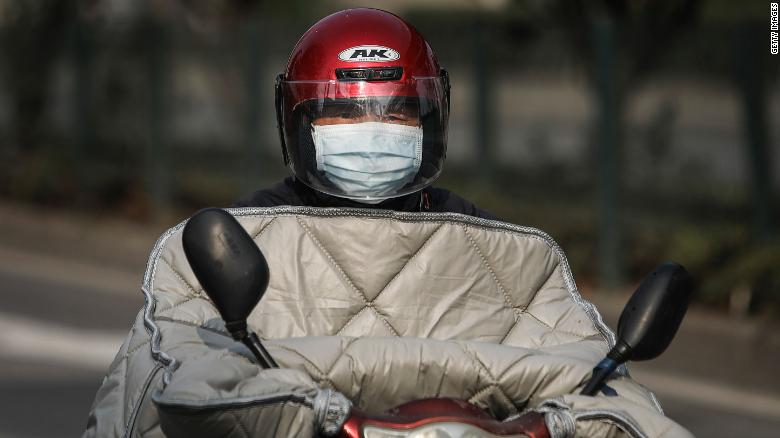
A resident wears a protective mask while riding a scooter on February 5, 2020, in Wuhan.

The virus is snarling supply chains and disrupting companies.
Car plants across China have been ordered to remain closed following the Lunar New Year holiday, preventing global automakers Volkswagen (VLKAF), Toyota (TM), Daimler (DDAIF), General Motors (GM), Renault (RNLSY), Honda (HMC) and Hyundai (HYMTF) from resuming operations in the world’s largest car market. According to S&P Global Ratings, the outbreak will force carmakers in China to slash production by about 15% in the first quarter. Toyota said on Friday it would keep its factories shut at least until February 17.
Luxury goods makers, which rely on Chinese consumers who spend big at home and while on vacation, have also been hit. British brand Burberry (BBRYF) has closed 24 of its 64 stores in mainland China, and its chief executive warned Friday that the virus is causing a “material negative effect on luxury demand.” Dozens of global airlines have curtailed flights to and from China.
Even more troubling is the threat to global supply chains. Qualcomm (QCOM), the world’s biggest maker of smartphone chips, warned that the outbreak was causing “significant” uncertainty around demand for smartphones, and the supplies needed to produce them. Already, auto parts shortages have forced Hyundai (HYMTF) to close plants in South Korea and caused Fiat Chrysler (FCAU) to make contingency plans to avoid the same result at one of its plants in Europe.
Economists say the current level of disruption is manageable. If the number of new coronavirus cases begins to slow, and China’s factories reopen soon, the result will be a fleeting hit to the Chinese economy in the first quarter and a dent in global growth. If the virus continues to spread, however, the economic damage will increase rapidly.
An employee works on an assembly line at Dongfeng Honda in Wuhan.

Mohamed El-Erian, chief economic adviser to Allianz (ALIZF), told CNN Business that he was most worried about the potential cascading economic effects.
“They first paralyze the region of the virus outbreak,” he said. “Then they gradually spread domestically, undermining internal trade, consumption, production and the movement of people. If the virus is still not contained, the process spreads further, including regionally and internationally by disrupting trade, supply chains and travel.”

Epidemic risk

Economists have a hard time working out the potential costs of epidemics because of their unique characteristics.
Yet diseases can be far more damaging than natural disasters such as hurricanes or a tsunami, or other unpredictable events known as “black swans.” According to a study by the World Bank, a severe pandemic could cause economic losses equal to nearly 5% of global GDP, or more than $3 trillion. Losses from a weaker flu pandemic, such as the 2009 H1N1 virus, can still wipe 0.5% off global GDP.
“A severe pandemic would resemble a global war in its sudden, profound, and widespread impact,” the World Bank assessed in a report on pandemics from 2013. (The Wuhan coronavirus has not been declared a pandemic by the World Health Organization.)
The virus is not the driving factor behind those losses, however. Instead, it’s the way consumers, businesses and governments respond to an outbreak that matters most.
People are more likely to stay home during an outbreak to avoid getting sick, preventing them from traveling, shopping and working. Doing so limits demand for consumer goods and energy. Decisions by companies and governments to close shops and idle factories, meanwhile, curtail production.
“This is continuing to grow in scope and magnitude. It could end being really, really big, and really, really serious. We can’t project that now,” said William Reinsch, a senior adviser at the Center for Strategic and International Studies who spent 15 years as president of the National Foreign Trade Council.
According to Shearing, past epidemics show that China’s economy is likely to take a significant hit in the first quarter. But that will quickly fade from memory if the virus is contained.
“As long as factory closures don’t lead to job losses, by this time next year the level of GDP is unlikely to be very different from what it would have been without the virus,” he said.

What can be done?

China’s government has moved quickly to counter the economic fallout from the coronavirus and the measures taken to contain it.
The People’s Bank of China cut a key interest rate this week and injected huge amounts of cash into markets in order to help take the pressure off banks and borrowers. Officials have also announced new tax breaks and subsidies designed to help consumers.
Yet China is also more vulnerable to a crisis than it was 17 years ago when SARS broke out.
“It has much higher debt, trade tensions with a major trading partner and its growth has been steadily slowing down for a number of years, which gives a weak starting point to face such a crisis,” said Raphie Hayat, a senior economist at Dutch bank ING.
Analysts at Capital Economics expect the government to announce additional measures in the coming days. If the virus keeps spreading, they believe that Beijing will have to abandon its long-running efforts to get its debt under control and pump money directly into the economy.
Chinese President Xi Jinping attends a meeting in Beijing.

Central banks in neighboring countries including Sri Lanka, Malaysia, Thailand and the Philippines have cut interest rates in recent weeks. South Korea and Taiwan could be next.
But the big powers of the financial world are exhausted from a decade fighting anemic growth since the global financial crisis. The European Central Bank introduced negative interest rates in 2014 and hasn’t been able to increase them since, while the Bank of Japan is in a similar position. The US Federal Reserve already cut interest rates three times last year; Chair Jerome Powell has said he’s carefully monitoring the situation.
Meanwhile, debt levels have soared in the United States, Japan and key European countries including Italy, limiting the scope for a big fiscal stimulus if the world economy goes into another tailspin. Global debt, including borrowing by households, governments and companies, has jumped to more than three times the size of the global economy, the highest ratio on record, according to the Institute of International Finance.
Also critical is whether governments are able to coordinate their response to the outbreak, ideally with help from multinational institutions. This is especially true because, according to the World Bank, preparedness for a potential pandemic is low. But coordination may prove difficult in a increasingly fractured world where nationalism is often prized over cooperation.
“It’s quite clear that multinational institutions are under more pressure, and have less teeth on day to day issues than 10 years ago,” Shearing said. “But the optimist in me would like to think that in the face of a global pandemic, global institutions are still in a position to respond.”

Pangolins may have spread coronavirus to humans: What to know about the Wuhan virus

USA TODAY

A Chinese university says scientists identified the heavily trafficked pangolin as a possible intermediary host of the new coronavirus.

The coronavirus from China is believed to have originated in bats and transferred to humans through some other animal, health officials say. The pangolin may be that key link, researchers at South China Agricultural University said Friday.

“This latest discovery will be of great significance for the prevention and control of the origin of the new coronavirus,” South China Agricultural University said in a translated statement.

The research team tested more than 1,000 samples from wild animals and a found a 99% match between the genome sequences of viruses found in pangolins and those in human patients, the AFP reported, citing Chinese state media.

Coronavirus, explained:Everything you need to know about coronavirus, the deadly illness alarming the world

James Wood, a veterinary medicine professor at the University of Cambridge, told the French news agency that more data is needed and showing similarity between the genome sequences alone is “not sufficient.”

“You can only draw more definitive conclusions if you compare prevalence (of the coronavirus) between different species based on representative samples, which these almost certainly are not,” Dirk Pfeiffer, professor of veterinary medicine at Hong Kong’s City University, told Reuters.

Pangolins, the world’s only scaly mammal, have long been valued for their meat, viewed as a delicacy in some Asian countries, and scales, used for traditional medicine, according to the World Wildlife Fund.

Recent conservation efforts have worked to protect the eight pangolin species found in Asia and Africa and threatened by illegal international trade. More than 100,000 pangolins are poached every year, according to WildAid, a nonprofit that works on illegal animal trade.

Inside quarantined coronavirus cruise:61 cases onboard; room service, TV and spotty WiFi

New coronavirus cases decline

News of the possible pangolin link to the coronavirus outbreak comes as the World Health Organization cautioned Friday against too much optimism after a decline in new cases over recent days.

“The numbers could go up again … but the last two days were showing a declining trend,” said WHO’s director-general Tedros Adhanom Ghebreyesus.

China reported 31,161 cases in mainland China in its update Friday. The rise of 3,143 was the lowest daily increase since at least Tuesday.

According to data collected by Johns Hopkins University as of Friday, 31,523 people have been infected and 638 killed from the outbreak that first appeared late last year.

The outbreak may have emerged from a market selling seafood and meat in Wuhan. Researchers theorize that someone bought contaminated meat at the market, ate it, got sick and infected others, creating a ripple effect around the world.

However, research in the British medical journal The Lancet suggests the outbreak started earlier than December and casts doubt on the market connection.

While the majority of cases and deaths have been in China, the virus has spread across continents, prompting the WHO to declare a “public health emergency of international concern.”

In the United States, 12 people have been infected, per Johns Hopkins. Federal health officials confirmed last week the first U.S. case of person-to-person spread of the virus.

Trump, President Xi talk coronavirus

President Donald Trump tweeted Friday he “had a long and very good conversation by phone with President Xi of China” on the country’s response to the coronavirus.

“He will be successful, especially as the weather starts to warm & the virus hopefully becomes weaker, and then gone,” Trump tweeted.

China’s state media said President Xi Jinping urged the U.S. to “respond reasonably” to the virus outbreak in a phone call with President Donald Trump.

“A people’s war against the virus has been launched,” Xi was quoted as saying by broadcaster CCTV, using timeworn communist terminology, according to the Associated Press. “We hope the U.S. side can assess the epidemic in a calm manner and adopt and adjust its response measures in a reasonable way.”

Beijing has complained that the U.S. was flying its citizens out of Wuhan but not providing any assistance to China.

Chinese Officials Announce “Highly Pathogenic” Strain Of Bird Flu That Can Spread To Humans

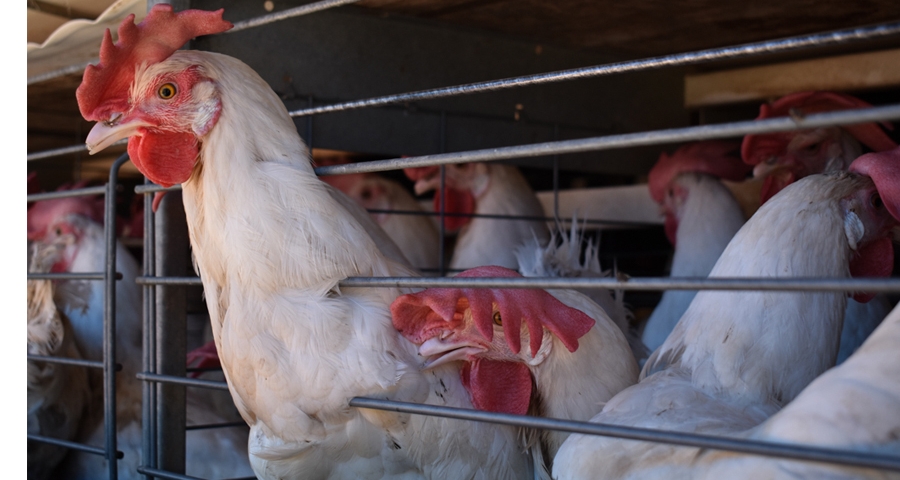
After the deadly coronavirus, China is now reporting an outbreak of a dangerous strain of H5N1 bird flu. The outbreak was reported at Shaoyang city in Hunan province and has already killed 4000+ chickens. And, in the wake of the outbreak, Chinese authorities have culled over 17,000 chickens.

People can get infected by coming in to close contact with infected live or dead chickens or through H5N1-contaminated environments and the rate of mortality is about 60%, according to the WHO. They also added that spread of the virus from person to person is unusual.

The farm that saw the outbreak is just south of Wuhan, the epicentre of the coronavirus which has now claimed hundreds of lives and spread to other countries, including India, Thailand, South Korea, Japan, Singapore, France, the United States and Canada. Experts say that meat from wildlife trade may be where the virus originated and a temporary ban has been placed on wild animal trade.

The epidemics also highlight the root of the problem: industrialized animal agriculture. Chickens, cows, pigs and other animals are bred in close quarters with little or no ventilation, living in their own filth, all to cater to our appetite for meat. Now, more than ever, governments and citizens need to take note of how and what we eat is affecting the planet in more ways than one. By simply choosing to go plant-based, one can help reduce the demand for farmed meat worldwide.

*Feature image courtesy Moving Animals Archive

Like this?

Read: What Is Animal Farming And How Does It Affect Us?

Read more: Watch The End Of Meat – A Hard-Hitting Documentary That Reveals The Real Impact Of Meat Consumption

Live Animal Markets Worldwide Can Spawn Diseases, Experts Say

FILE - A man looks at caged civet cats in a wildlife market in Guangzhou, capital of south China's Guangdong Province, China, Jan. 5, 2204.
FILE – A man looks at caged civet cats in a wildlife market in Guangzhou, capital of south China’s Guangdong Province, China, Jan. 5, 2004.

WASHINGTON – The virus that has caused dozens of deaths and hundreds of illnesses worldwide emerged from a market in Wuhan, China, that sold live food animals, including some animals caught in the wild, according to Chinese authorities.

One study suggested a snake may have brought the virus to the market,  but other experts were skeptical. The search for a definitive source continued.

A price list circulated on Chinese social media showed snakes, hedgehogs, peacocks, civet cats, scorpions, centipedes and more for sale at the market.

It’s not the first time these markets have bred a new disease, and experts said it probably won’t be the last. Severe acute respiratory syndrome, better known as SARS, originated at a similar market in China in 2002. It ultimately claimed nearly 800 lives.

A Chinese man looks over cages of dogs and rabbits at a live-animal market in Guangzhou, Southern China, Tuesday, Jan 6, 2004…
FILE – A Chinese man looks over cages of dogs and rabbits at a live-animal market in Guangzhou, Southern China, Jan 6, 2004.

Bird flu spread in these markets in the late 1990s and early 2000s. The H5N1 strain of influenza has killed 455 people since 2003.

Without proper sanitation and animal handling, health officials said, these markets can be spawning grounds for diseases.

Live animal markets are found across the developing world, especially in Asia and Africa.

Most animals sold there are healthy. But in the crowded conditions at these markets, one sick animal can infect many more, experts said.

Wild cards

Wild animals introduce a dangerous wild card.

For example, civet cats carried the virus that caused SARS. But scientists think the virus originated in bats.

“In the normal world, these species would never meet,” said veterinarian Tony Goldberg, associate director for research at the University of Wisconsin Global Health Institute.

“But in these live animal markets, they brought those two species together,” he said. “And when you do that in these tight, crowded, stressful conditions, you create every opportunity for these viruses to jump host species.”

The virus could spread when a vendor butchers an animal. Or a sick animal could spread it through its saliva, urine, feces or other secretions.

Humans and domesticated animals have been exposed to each other’s diseases for millennia. We’ve developed some defenses. That’s not the case with a new virus coming from a wild animal, Goldberg said.

A Chinese man carries sacks containing geese at a live-animal market in Guangzhou, Southern China, in this photo taken Jan 6,…
FILE – A Chinese man carries sacks containing geese at a live-animal market in Guangzhou, Southern China, Jan. 6, 2004.

The virus lottery

Given how common these markets are around the world, it’s almost surprising that new outbreaks don’t happen more often, veterinarian William Karesh, executive vice president for health and policy at EcoHealth Alliance, said.

“I’ve gone to a market in Southeast Asia and they’re selling maybe 5,000 or 6,000 bats every week,” he said. “And that’s just one market. As you drive around, there’s 20 or 30 of those markets within a few hours’ drive. So now we’re talking about tens of thousands of bats for sale, and tens of thousands of rats (and other species). And that’s going on throughout much of the world.

“So we’re talking, really, about millions of animals for sale on a daily basis and tens of millions of people shopping there,” Karesh said.

For a virus looking for a different species to infect, he said, it’s like playing the lottery.

“Your chances of winning are pretty high when you’ve got exposure to 10 or 15 or 20 million people every day,” Karesh said.

Traditions

People often don’t shop at these markets by choice, he said. When refrigeration is not available, the best way to get fresh meat is to buy it when it’s still alive. And customers can see if the animal is healthy before they buy it.

Also, many wild-caught foods are “deeply cherished in many cultures around the world,” not just in Africa and Asia, Goldberg said, even if they may carry diseases.

In the United States, rabbits carry tularemia, a bacterial disease that can be fatal. It’s on the list of potential bioterror weapons.

“You’ll see human cases pop up every now and then when rabbit hunters cut themselves when butchering a rabbit,” Goldberg said, adding he knows a rabbit hunter who got tularemia twice.

Packs of Canadian pork are displayed for sale at a supermarket in Beijing, June 18, 2019.
FILE – Packs of Canadian pork are displayed for sale at a supermarket in Beijing, June 18, 2019.

Market shift

The Chinese government closed live animal markets after SARS. But the markets have slowly reopened in the years since.

The government could close them again. But what may ultimately solve the problem is not a government mandate but a cultural shift.

Around the world, Karesh said, more young people are shopping at supermarkets.

“The grocery store is selling chilled refrigerated chicken, and it’s cheaper,” he said. “And people are busy. They’re going to work. They don’t really have time to go to that live animal market anymore.”

Plus, he added, attitudes are changing. Older people may see wild animals as a delicacy. The younger generation? Not so much.

“I don’t think they’re so interested in going to the live animal markets anymore to watch a bat be slaughtered or have a chicken have its throat cut,” he said.

“Twenty years ago, there weren’t many people in China who had pet dogs,” he said. Now, “there’s a new generation of people that when they see a dog, they’re not thinking about food. They’re thinking about, ‘Oh, wow, what a wonderful opportunity to have a pet.’”