The outbreaks of both the Wuhan coronavirus and SARS started in Chinese wet markets. Photos show what the markets look like.

china wet marketchina wet market
Customers in a Chinese wet market on January 22, 2016. 
Edward Wong/South China Morning Post/Getty

The coronavirus spreading in China and the SARS outbreak of 2003 have two things in common: Both are from the coronavirus family, and both started in wet markets.

At such markets, outdoor stalls are squeezed together to form narrow lanes, where locals and visitors shop for cuts of meat and ripe produce. A stall selling hundreds of caged chickens may abut a butcher counter, where uncooked meat is chopped as nearby dogs watch hungrily. Vendors hock skinned hares, while seafood stalls display glistening fish and shrimp.

Wet markets put people and live and dead animals — dogs, chickens, pigs, snakes, civets, and more — in constant close contact. That makes it easy for a virus to jump from animal to human.

On Wednesday, authorities in Wuhan, China — where the current outbreak started — banned the trade of live animals at wet markets. The specific market where the outbreak is believed to have begun, the Huanan Seafood Market, was shuttered on January 1. The coronavirus that emerged there has so far killed 26 people and infected more than 900.

“Poorly regulated, live animal markets mixed with illegal wildlife trade offer a unique opportunity for viruses to spillover from wildlife hosts into the human population,” the Wildlife Conservation Society said in a statement.

Coronaviruses are zoonotic diseases, meaning they spread to people from animals. In the case of SARS, and likely this Wuhan coronavirus outbreak as well, bats were the original hosts. The bats then infected other animals, which transmitted the virus to humans.

Here’s what Chinese wet markets look like.

The Huanan Seafood Market in Wuhan closed on January 1 after it was found to be the most likely starting point for the outbreak of this coronavirus, also called 2019-nCov.

wuhan wet market
Huanan Seafood Market in Wuhan, China, on January 12, 2020. 
NOEL CELIS/AFP via Getty Images

A 61-year-old man was the first person to die from the virus. According to Bloomberg, he was a regular shopper at the Huanan wet market, which sold more than seafood.

Reports indicated that before the Huanan market closed, vendors there sold processed meats and live animals, including chickens, donkeys, sheep, pigs, foxes, badgers, bamboo rats, hedgehogs, and snakes.

wet market fish
A wet market in Beijing on July 3, 2007. 
Teh Eng Koon/AFP via Getty

Wet markets like Huanan are common around China. They’re called wet markets because vendors often slaughter animals in front of customers.

“That means there’s a lot of skinning of dead animals in front of shoppers and, as a result, aerosolizing of all sorts of things,” according to Emily Langdon, an infectious disease specialist at University of Chicago Medicine.

On Wednesday, Wuhan authorities banned the trade of live animals at wet markets.

china wet market
A wet market in Guilin, China, on June 19, 2014. 
David Wong/South China Morning Post/Getty

Police in Wuhan began conducting checks to enforce the rule among the city’s 11 million residents, the BBC reported, citing state media reports.

This type of intervention could help stop the spread of zoonotic viruses like the Wuhan coronavirus.

wet market china chicken
A wet market in Beijing on July 3, 2007. 
Teh Eng Koon/AFP/Getty

“Governments must recognize the global public health threats of zoonotic diseases,” Christian Walzer, executive director of the Wildlife Conservation Society’s health program, said in a statement. “It is time to close live animal markets that trade in wildlife, strengthen efforts to combat trafficking of wild animals, and work to change dangerous wildlife consumption behaviours, especially in cities.”

The close proximity of shoppers to stall vendors and live and dead animals in wet markets make them prime breeding grounds for zoonotic diseases.

china wet market
A Chinese wet market. 
Felix Wong/South China Morning Post/Getty

Between 2002 and 2003, SARS killed 774 people across 29 countries. It originated in wet markets in the province of Guangdong.

civet
An Asian palm civet. 
Oleksandr Rupeta/NurPhoto/Getty

But the civets weren’t the original hosts of the disease.


Researchers figured out that SARS originally came from a population of bats in China’s Yunnan province.

horseshoe bat
A greater horseshoe bat, a relative of the Rhinolophis sinicus species from China that was the source of the SARS virus. 
De Agostini/Getty

“Coronaviruses like SARS circulate in bats, and every so often they get introduced into the human population,” Vincent Munster, a virologist at the Rocky Mountain Laboratories, told Business Insider.

Bats can pass along viruses in their poop: If they drop feces onto a piece of fruit that a civet then eats, the civet can become a disease carrier.

Experts haven’t yet confirmed the animal species that enabled the Wuhan coronavirus to spread to people.

pig wet market
A worker with a slaughtered pig at a wet market in Manila, Philippines. 
Romeo Ranoco/Reuters

“There’s an indication that it’s a bat virus, spread in association with wet markets,” Munster said.

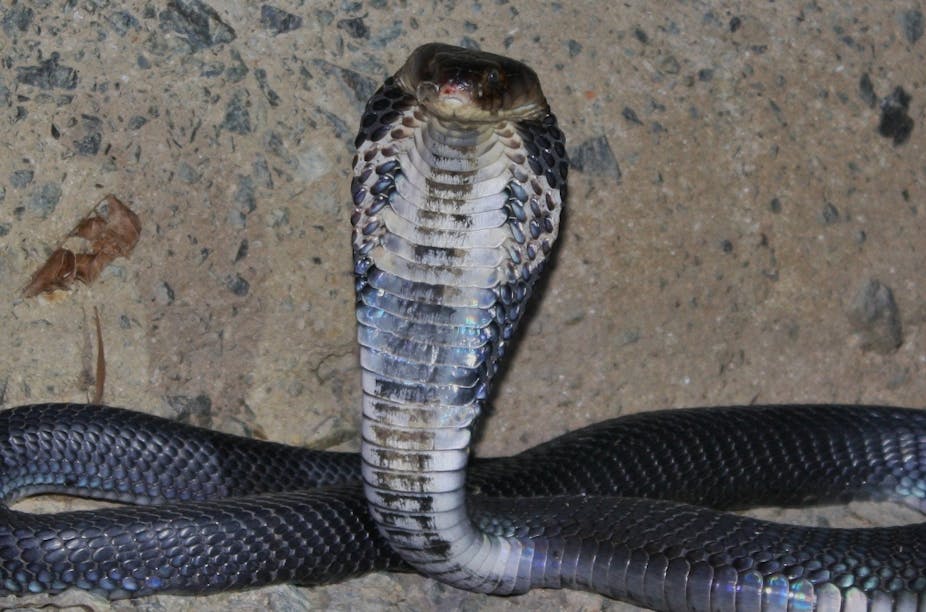
But according to a group of scientists who edit the Journal of Medical Virology, the culprit in this case could be the Chinese cobra.

chinese cobra
A Chinese cobra. 
Thomas Brown

Scientists in China have figured out the genetic code of the Wuhan coronavirus. When researchers compared it with other coronaviruses, they found it to be most similar to two bat coronavirus samples from China.

But further analysis showed that the genetic building blocks of the Wuhan coronavirus more closely resembled that of snakes. According to the researchers, the only way to be sure of where the virus came from is to take DNA samples from animals sold at the Huanan market and from wild snakes and bats in the area.

The H7N9 and H5N9 bird flus — also zoonotic viruses — were likely transmitted to humans in wet markets, too.

wet market ducks china
Ducks on top of chickens at a wet market in Shanghai. 
In Pictures Ltd./Corbis/Getty

According to the World Health Organization, people caught those bird flus via direct contact with infected poultry in China. The diseases killed 1,000 people globally.

Bats and birds are considered reservoir species for viruses with pandemic potential, according to Bart Haagmans, a virologist at the Erasmus Medical Center in Rotterdam, Netherlands.

wet market china chicken
A chicken vendor on top of chicken cages at a wet market in Kowloon City, China. 
Dickson Lee/South China Morning Post/Getty

“Because these viruses have not been circulating in humans before, specific immunity to these viruses is absent in humans,” Haagmans told Business Insider.

“There have been plenty of eminent epidemiologists predicting ‘pandemic X’ for a number of years now,” Adrian Hyzler, the chief medical officer at Healix International, told Business Insider.

wet market china chicken
Live chickens in a wet market in Guangzhou, China. 
K. Y. Cheng/South China Morning Post/Getty

These pandemics “are more likely to originate in the Far East because of the close contact with live animals [and] the density of the population,” Hyzler added. His firm offers risk-management solutions for global travelers.

The Wuhan coronavirus outbreak isn’t considered a pandemic, however.

wet market china
A seafood stall in a wet market in Hong Kong. 
Isaac Lawrence/AFP/Getty

Since December 31, more than 900 cases of the Wuhan coronavirus have been reported across 10 countries, including the US. Symptoms include sore throats, headaches, and fevers, as well as pneumonialike breathing difficulties.

Haagmans said one of the challenges in containing this outbreak was that a substantial portion of infected people show only mild symptoms.

These people “may go unnoticed in tracing the virus and fuel the outbreak,” he said. “It seems that this actually may be the case now.”

Aria Bendix contributed reporting to this story.


Snohomish County man with Wuhan coronavirus is being treated largely by a robot

Data pix.

43 people being monitored for possible exposure to coronavirus

v

EVERETT — The first person diagnosed with the Wuhan coronavirus in the United States is being treated by a few medical workers and a robot.

The robot, equipped with a stethoscope, is helping doctors take the man’s vitals and communicate with him through a large screen, said Dr. George Diaz, chief of the infectious disease division at the Providence Regional Medical Center in Everett.

Image of the robot caring for a Snohomish County man with coronavirus (CNN photo)


The man, who is in his 30s, was diagnosed with the virus on Monday. He initially went to an urgent care clinic on January 19 and told the staff that he was concerned about possibly having symptoms of the novel coronavirus because he recently traveled to Wuhan, China, Diaz said.

He arrived at Seattle-Tacoma International Airport on January 15, before any health screenings began at US airports, the US Centers for Disease Control and Prevention has said.

The Snohomish County resident was in stable condition Thursday and remains in isolation, Diaz said.

Washington state health officials confirmed Thursday that they have reached out to 43 people considered “close contacts” of the 30-year-old man, who identified the people he had interacted with since returning from Wuhan, China. Those contacts will be called daily and actively monitored for signs of any illness.

He arrived at the hospital in a special isolated gurney called an ISOPOD and has been treated in a two-bed isolated area away from busy sections of the hospital, the doctor said.

The gurney that brought in the Snohomish County man who has Wuhan coronavirus (CNN photo)

“The nursing staff in the room move the robot around so we can see the patient in the screen, talk to him,” Diaz said, adding the use of the robot minimizes exposure of medical staff to the infected man.

It’s unclear when the patient will be released because the CDC, which is set to provide the discharge details, has recommended additional testing.

“They’re looking for ongoing presence of the virus,” Diaz told CNN on Thursday. “They’re looking to see when the patient is no longer contagious.”

About two weeks ago, the hospital tested its protocol for treating patients with highly contagious diseases such as MERS and Ebola. The hospital made changes after the Ebola outbreak.

“That’s why we set up protocols that will allow us to treat patients with infectious diseases in a way that we can isolate them without spreading the virus to anyone,” Diaz told CNN en Español.

Washington state health officials confirmed Thursday they have been reaching out to 43 people considered to be “close contacts” of the patient.

The department defined “close contacts” as anyone who interacted with the patient and came within 3 to 6 feet of the infected person, for a prolonged period of time while infectious or had direct contact with his secretions.

The virus has killed at least 25 people in China, seven of whom did not have preexisting conditions before they contracted the illness, and sickened more than 800, as far afield as the US.

The true extent of the Wuhan coronavirus is unclear, however, and official figures may be an underestimation as mild symptoms and delayed onset mean cases are likely to have been undetected, a team of scientists have said.

The World Health Organization’s (WHO) emergency committee has said it’s too early to declare the outbreak an international public health emergency.

Coronavirus: How worried should we be? Which animal?

  • 22 January 2020


Which animal?

Once the animal reservoir (where the virus normally camps out) is detected, then the problem becomes much easier to deal with.

The coronavirus cases have been linked to the South China Seafood Wholesale Market, in Wuhan.

But while some sea-going mammals can carry coronaviruses (such as the Beluga whale), the market also has live wild animals, including chickens, bats, rabbits, snakes,  [ALL BEING HELD CAPTIVE!], which are more likely to be the source.

WuhanImage copyrightGETTY IMAGES
Image captionThe outbreak occurred in the city of Wuhan, south of Beijing

A virus – previously unknown to science – is causing severe lung disease in China and has also been detected in other countries.

At least 17 people are known to have died from the virus, which appeared in the Chinese city of Wuhan in December.

There are already hundreds of confirmed cases, and experts expect the number will keep rising.

A new virus arriving on the scene, leaving patients with pneumonia, is always a worry and health officials around the world are on high alert.

But is this a brief here-today-gone-tomorrow outbreak or the first sign of something far more dangerous?

What is this virus?

Officials in China have confirmed the cases are caused by a coronavirus.

These are a broad family of viruses, but only six (the new one would make it seven) are known to infect people.

Severe acute respiratory syndrome (Sars), which is caused by a coronavirus, killed 774 of the 8,098 people infected in an outbreak that started in China in 2002.

“There is a strong memory of Sars, that’s where a lot of fear comes from, but we’re a lot more prepared to deal with those types of diseases,” says Dr Josie Golding, from the Wellcome Trust.

How severe are the symptoms?

It seems to start with a fever, followed by a dry cough and then, after a week, leads to shortness of breath and some patients needing hospital treatment.

But most of our knowledge is based on the severe cases that end up in hospital. It is unknown how many mild or even symptomless cases are out there.

The coronavirus family itself can cause symptoms ranging from a mild cold all the way through to death.

“When we see a new coronavirus, we want to know how severe are the symptoms. This is more than cold-like symptoms and that is a concern but it is not as severe as Sars,” says Prof Mark Woolhouse, from the University of Edinburgh.

The World Health Organization (WHO) is considering declaring an international public health emergency – as it did with swine flu and Ebola.

How deadly is it?

Seventeen people are known to have died from the virus – just over 3% of the known cases.

But the infection seems to take a while to kill, so more of those patients may yet die.

And it is unclear how many unreported cases there are.

Where has it come from?

New viruses are detected all the time.

They jump from one species, where they went unnoticed, into humans.

“If we think about outbreaks in the past, if it is a new coronavirus, it will have come from an animal reservoir,” says Prof Jonathan Ball, a virologist at the University of Nottingham.

Sars started off in bats and then infected the civet cat, which in turn passed it on to humans.

And Middle East respiratory syndrome (Mers), which has killed 858 out of the 2,494 recorded cases since it emerged in 2012, regularly makes the jump from the dromedary camel.

Which animal?

Once the animal reservoir (where the virus normally camps out) is detected, then the problem becomes much easier to deal with.

The coronavirus cases have been linked to the South China Seafood Wholesale Market, in Wuhan.

But while some sea-going mammals can carry coronaviruses (such as the Beluga whale), the market also has live wild animals, including chickens, bats, rabbits, snakes, which are more likely to be the source.

Why China?

Prof Woolhouse says it is because of the size and density of the population and close contact with animals harbouring viruses.

“No-one is surprised the next outbreak is in China or that part of the world,” he says.

How easily does it spread between people?

At the beginning of the outbreak, the Chinese authorities said the virus was not spreading between people – but now, such cases have been identified.

“It is crystal clear there is human-to-human transmission,” says Prof Peter Horby, from the University of Oxford.

“The critical question is how transmissible is it. Is this going to be sustainable?”

Sars spread between people but Mers finds it quite difficult and requires close contact.

The new virus infects the lungs, so coughs and sneezes are a likely route of transmission.

It will also be important to find out whether some people are more vulnerable to infection or likely to transmit the virus.

When the virus is infectious is also unknown.

Is it before symptoms appear, which is when flu spreads, or when they are most severe?

How fast is it spreading?

It might appear as though cases have soared, from 40 to more than 500 in less than a week. But this is misleading.

Most of the “new” cases were already out there but have only just been detected as China steps up its surveillance.

There is actually very little information on the “growth rate” of the outbreak.

But experts say the number of people becoming sick is likely to be far higher than the reported figures.

A report by the MRC Centre for Global Infectious Disease Analysis at Imperial College London said: “It is likely that the Wuhan outbreak of a novel coronavirus has caused substantially more cases of moderate or severe respiratory illness than currently reported.”

While the outbreak is centred on Wuhan, there have been cases reported in Thailand, Japan, South Korea and the US.

All but one of those cases had travelled from Wuhan – but one, in Thailand, was due to local spread there.

There are concerns that the virus could be spread by the hundreds of millions of people travelling for Chinese New Year later this month.

Could the virus mutate?

Yes, you would expect viruses to mutate and evolve all the time. But what this means is harder to tell.

The novel coronavirus has jumped from one species to another. It could mutate to become easier to spread from one person to another or to have more severe symptoms.

This is something scientists will be watching closely.

How can the virus be stopped?

There is no vaccine, so the only way of stopping the virus spreading is to diagnose people early and treat them in isolation.

Tracing and monitoring people who have come into contact with patients can help prevent further spread.

Further measures could include travel restrictions and banning mass gatherings.

How have Chinese authorities responded?

Public health checksImage copyrightGETTY IMAGES
Image captionTemperature screening can help identify people who have been infected

China’s National Health Commission said travellers should avoid Wuhan and residents should not leave the city.

Infected people have been treated in isolation to minimise the risk of the bug spreading.

Extra checks such as temperature scans have been put in place to screen travellers.

And the seafood market was closed for cleaning and disinfection.

How is the world responding?

Most Asian countries have stepped up screenings of travellers from Wuhan and the WHO has warned hospitals worldwide a wider outbreak is possible.

Singapore and Hong Kong have been screening air passengers from Wuhan and authorities in the US and the UK have announced similar measures.

However, questions remain about the effectiveness of such measures.

If it takes five days for symptoms to appear, then someone could easily be halfway round the world and have passed through any screening checks before starting to feel ill.

How worried are the experts?

Dr Golding says: “At the moment, until we have more information, it’s really hard to know how worried we should be.

“Until we have confirmation of the source, that’s always going to make us uneasy.”

Prof Ball says: “We should be worried about any virus that explores humans for the first time, because it’s overcome the first major barrier.

“Once inside a [human] cell and replicating, it can start to generate mutations that could allow it to spread more efficiently and become more dangerous.

“You don’t want to give the virus the opportunity.”

Snakes could be the original source of the new coronavirus outbreak in China


Chinese cobra (Naja atra) with hood spread. Briston/WikimediaCC BY-SA

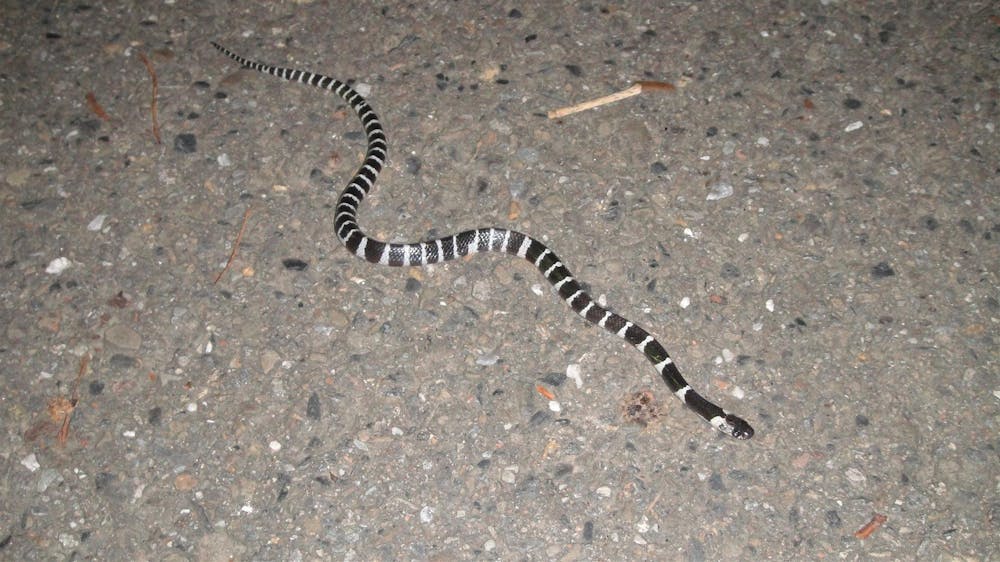
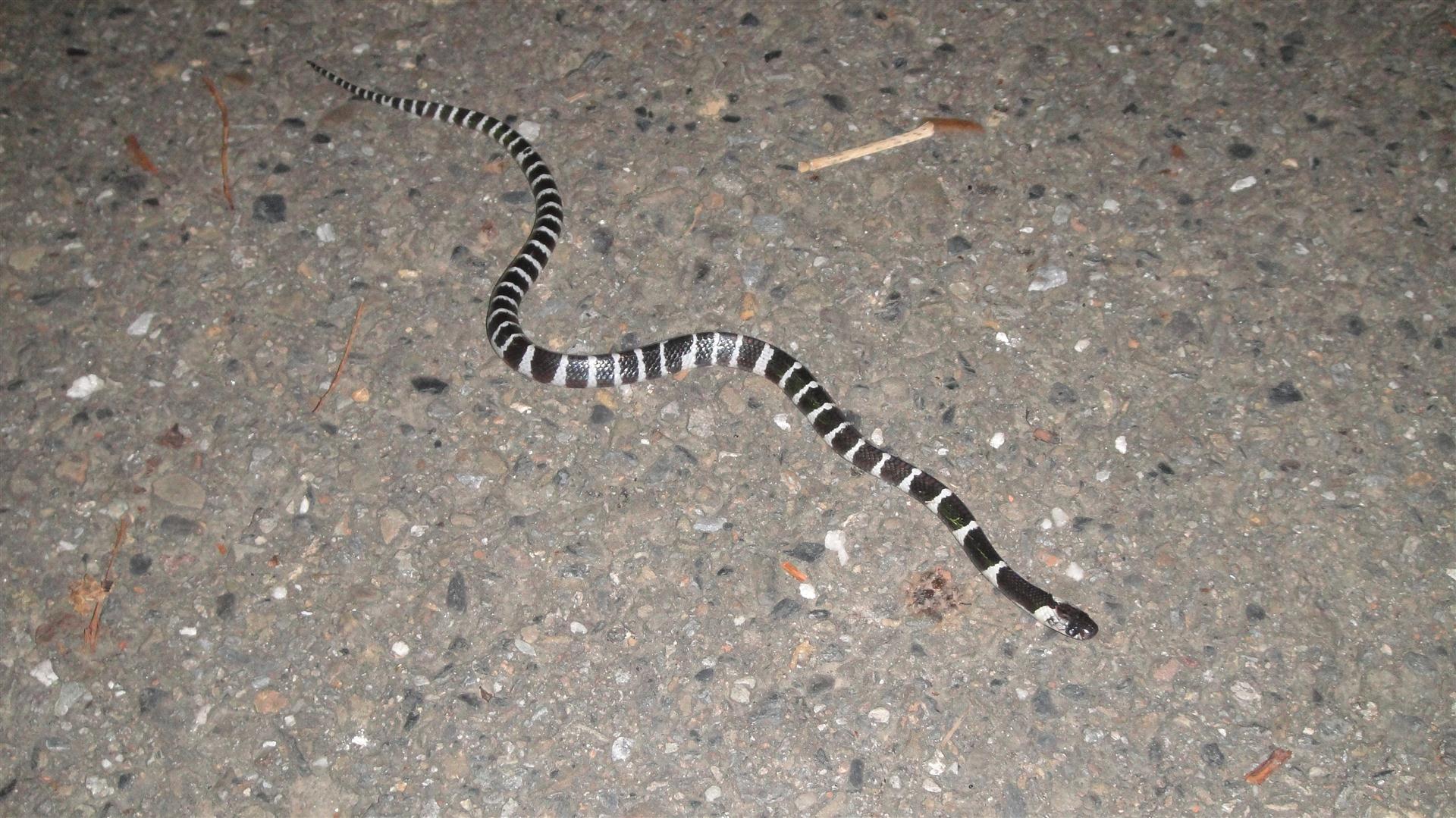
Snakes – the Chinese krait and the Chinese cobra – may be the original source of the newly discovered coronavirus that has triggered an outbreak of a deadly infectious respiratory illness in China this winter.

The many-banded krait (Bungarus multicinctus), also known as the Taiwanese krait or the Chinese krait, is a highly venomous species of elapid snake found in much of central and southern China and Southeast Asia. Briston/WikimediaCC BY-SA

The illness was first reported in late December 2019 in Wuhan, a major city in central China, and has been rapidly spreading. Since then, sick travelers from Wuhan have infected people in China and other countries, including the United States.

Using samples of the virus isolated from patients, scientists in China have determined the genetic code of the virus and used microscopes to photograph it. The pathogen responsible for this pandemic is a new coronavirus. It’s in the same family of viruses as the well-known severe acute respiratory syndrome coronavirus (SARS-CoV) and Middle East respiratory syndrome coronavirus (MERS-CoV), which have killed hundreds of people in the past 17 years. The World Health Organization (WHO) has named the new coronavirus 2019-nCoV.

We are virologists and journal editors and are closely following this outbreak because there are many questions that need to be answered to curb the spread of this public health threat.

What is a coronavirus?

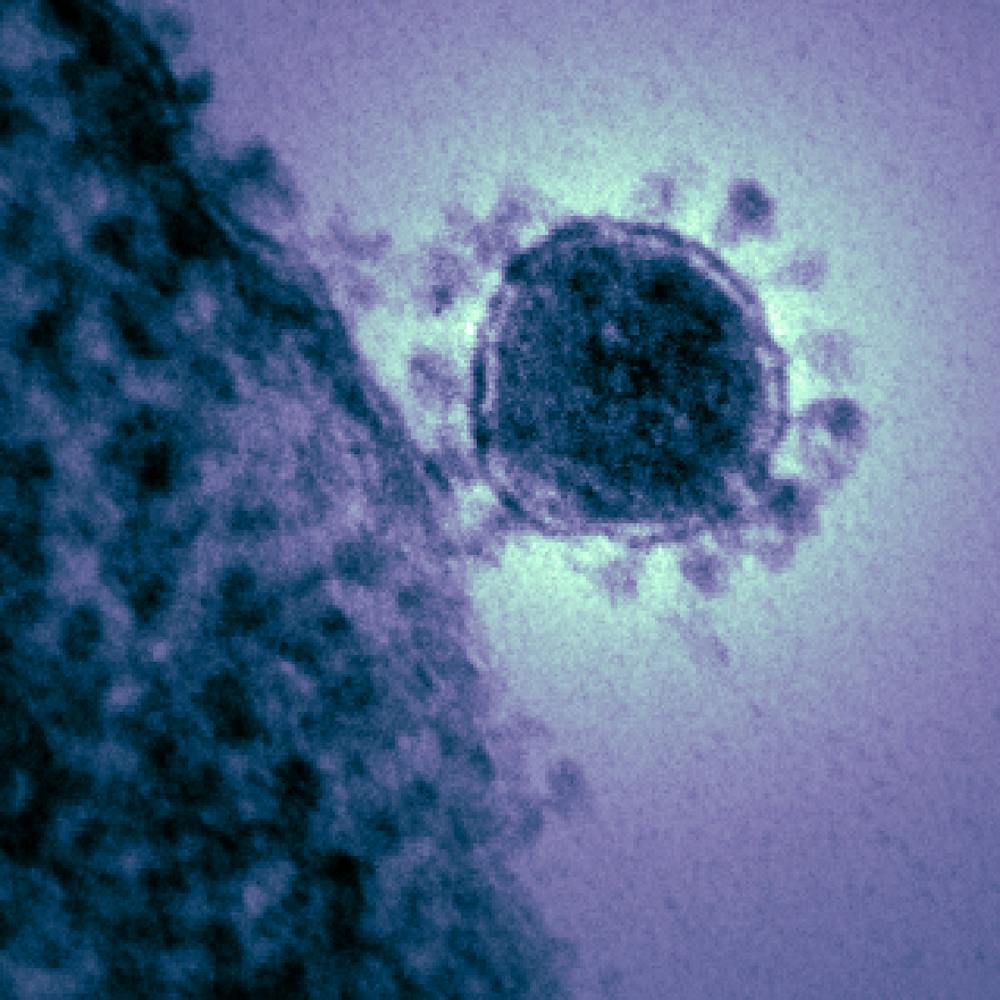
The name of coronavirus comes from its shape, which resembles a crown or solar corona when imaged using an electron microscope.

The electron microscopic image, reveals the crown shape structural details for which the coronavirus was named. This image is of the Middle East respiratory syndrome coronavirus (MERS-CoV). National Institute of Allergy and Infectious Diseases (NIAID)

Coronavirus is transmitted through the air and primarily infects the upper respiratory and gastrointestinal tract of mammals and birds. Though most of the members of the coronavirus family only cause mild flu-like symptoms during infection, SARS-CoV and MERS-CoV can infect both upper and lower airways and cause severe respiratory illness and other complications in humans.

This new 2019-nCoV causes similar symptoms to SARS-CoV and MERS-CoV. People infected with these coronaviruses suffer a severe inflammatory response.

Unfortunately, there is no approved vaccine or antiviral treatment available for coronavirus infection. A better understanding of the life cycle of 2019-nCoV, including the source of the virus, how it is transmitted and how it replicates are needed to both prevent and treat the disease.

Zoonotic transmission

Both SARS and MERS are classified as zoonotic viral diseases, meaning the first patients who were infected acquired these viruses directly from animals. This was possible because while in the animal host, the virus had acquired a series of genetic mutations that allowed it to infect and multiply inside humans.

Now these viruses can be transmitted from person to person. Field studies have revealed that the original source of SARS-CoV and MERS-CoV is the bat, and that the masked palm civets (a mammal native to Asia and Africa) and camels, respectively, served as intermediate hosts between bats and humans.

In the case of this 2019 coronavirus outbreak, reports state that most of the first group of patients hospitalized were workers or customers at a local seafood wholesale market which also sold processed meats and live consumable animals including poultry, donkeys, sheep, pigs, camels, foxes, badgers, bamboo rats, hedgehogs and reptiles. However, since no one has ever reported finding a coronavirus infecting aquatic animals, it is plausible that the coronavirus may have originated from other animals sold in that market.

The hypothesis that the 2019-nCoV jumped from an animal at the market is strongly supported by a new publication in the Journal of Medical Virology. The scientists conducted an analysis and compared the genetic sequences of 2019-nCoV and all other known coronaviruses.

The study of the genetic code of 2019-nCoV reveals that the new virus is most closely related to two bat SARS-like coronavirus samples from China, initially suggesting that, like SARS and MERS, the bat might also be the origin of 2019-nCoV. The authors further found that the viral RNA coding sequence of 2019-nCoV spike protein, which forms the “crown” of the virus particle that recognizes the receptor on a host cell, indicates that the bat virus might have mutated before infecting people.

But when the researchers performed a more detailed bioinformatics analysis of the sequence of 2019-nCoV, it suggests that this coronavirus might come from snakes.

The Wuhan Huanan Wholesale Seafood Market, where the coronavirus outbreak is believed to have started, is now closed. AP Photo/Dake Kang

From bats to snakes

The researchers used an analysis of the protein codes favored by the new coronavirus and compared it to the protein codes from coronaviruses found in different animal hosts, like birds, snakes, marmots, hedgehogs, manis, bats and humans. Surprisingly, they found that the protein codes in the 2019-nCoV are most similar to those used in snakes.

Snakes often hunt for bats in wild. Reports indicate that snakes were sold in the local seafood market in Wuhan, raising the possibility that the 2019-nCoV might have jumped from the host species – bats – to snakes and then to humans at the beginning of this coronavirus outbreak. However, how the virus could adapt to both the cold-blooded and warm-blooded hosts remains a mystery.

The authors of the report and other researchers must verify the origin of the virus through laboratory experiments. Searching for the 2019-nCoV sequence in snakes would be the first thing to do. However, since the outbreak, the seafood market has been disinfected and shut down, which makes it challenging to trace the new virus’ source animal.

Sampling viral RNA from animals sold at the market and from wild snakes and bats is needed to confirm the origin of the virus. Nonetheless, the reported findings will also provide insights for developing prevention and treatment protocols.

The 2019-nCoV outbreak is another reminder that people should limit the consumption of wild animals to prevent zoonotic infections.

Giant Chinese paddlefish declared extinct after surviving 150 million years

Beijing — Scientists say a giant fish species that managed to survive at least 150 million years has been completely wiped out by human activity. Research published in the Science of The Total Environment this week says the giant Chinese paddlefish, also known as the Chinese swordfish, is officially extinct.

The monster fish, one of the largest freshwater species in the world with lengths up to 23 feet, was once common in China’s Yangtze River. Due to its speed it was commonly referred to in China as the “water tiger.”

giant-chinese-paddlefish.jpg
A model of a giant Chinese paddlefish is seen on display in Chongqing, China.CCTV/REUTERS

Study leader Qiwei Wei of the Chinese Academy of Fishery Sciences called it “a reprehensible and an irreparable loss.”

Zeb Hogan, a fish expert at the University of Nevada, Reno, told National Geographic that it was “very sad” to see the “definitive loss of a very unique and extraordinary animal, with no hope of recovery.”

According to the researchers, no giant paddlefish have been sighted in the Yangtze since 2003, and there are none in captivity. They estimate that the last of the fish likely died between 2005 and 2010.

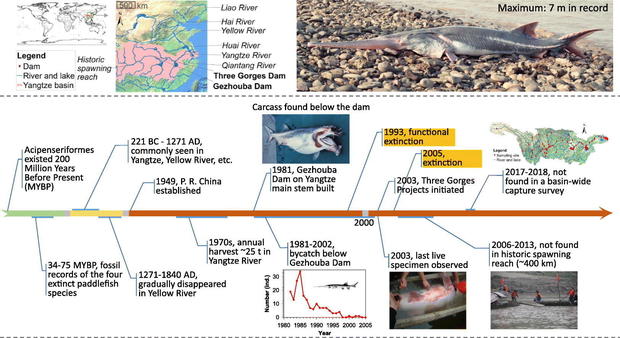
paddlefish-china-graphic.jpg
A graphic provided by the Science of The Total Environment report in January 2020 shows a timeline depicting the depletion of the giant Chinese paddlefish species in the Yangtze River.SCIENCE OF THE TOTAL ENVIRONMENT

The species had been deemed “functionally extinct,” or unable to reproduce enough to maintain itself, since 1993.

The main causes of the ancient species’ demise have been listed as over-fishing and the construction of a major dam in 1981 that split the Yangtze, and the Chinese paddlefish population along with it, in two.

The 3,900 mile Yangtze River ecosystem has seen half of the 175 species unique to its waters go extinct, according to Chinese media.

Two other species native to the river have also been declared functionally extinct: the reeves shad and the Yangtze dolphin.

Last week China announced a 10-year fishing ban on some areas of the Yangtze in a bid to protect its beleaguered biodiversity.

Russian Watchdog Warns Six Walrus Calves From ‘Whale Jail’ May Be Smuggled To China

Zeeshan Aziz (@imziishan) 13 minutes ago Thu 05th December 2019 | 05:29 PM Russian Watchdog Warns Six Walrus Calves From ‘Whale Jail’ May Be Smuggled to China A Russian environmental watchdog has questioned the legitimacy of an appeal by the Akvatoriya company in Vladivostok to sell to China six baby walruses that were captured in 2018 in Chukotka by two companies implicated in the recent “whale jail” scandal, the watchdog’s press service told Sputnik on Thursday

MOSCOW/VLADIVOSTOK (UrduPoint News / Sputnik – 05th December, 2019) A Russian environmental watchdog has questioned the legitimacy of an appeal by the Akvatoriya company in Vladivostok to sell to China six baby walruses that were captured in 2018 in Chukotka by two companies implicated in the recent “whale jail” scandal, the watchdog’s press service told Sputnik on Thursday.

According to the Federal Agency for Supervision of Natural Resources (Rosprirodnadzor), on November 25, 2019, Akvatoriya lodged a request to issue a permit under the Convention on International Trade in Endangered Species of Wild Fauna and Flora to export six baby walruses from Russia to China. The documents provided by the company, however, raised questions on the origin of the animals.

“Thus, taking into account that the date of birth indicated in the animals’ passports is 2018, the age of the animals at the time of capture could not exceed 10 months. There is no information about the address and conditions of keeping the walruses in the exporter’s request. As part of the review procedure, we sent a request to the Russian Federal Fisheries Agency on the legitimacy of catching the given walruses,” the press service stated.

According to the Russian legislation, capturing walruses that young is illegal. On Tuesday, the Russian Environment Ministry ordered head of Rosprirodnadzor Svetlana Radionova to check Srednyaya Bay, where the baby walruses were held in captivity. In addition, in March, one of the workers of the “whale jail” confirmed that there were walruses among the animals stranded in captivity.

The scandal involving the “whale jail” erupted last year when environmentalists found that a large group of marine mammals was held in captivity in Srednyaya Bay of the Primorsky Region. The stranded animals were being prepared to be smuggled to China. As a result of a probe into the illegal fishing of aquatic animals and animal abuse, the companies responsible for the violation were fined a total of 150 million rubles
($2.4 million). The trapped orcas and belugas were steadily released in groups from June to November.

https://www.urdupoint.com/en/world/russian-watchdog-warns-six-walrus-calves-from-779542.html

Young elephants were taken from their mothers in Zimbabwe. Now they’re in cages in China

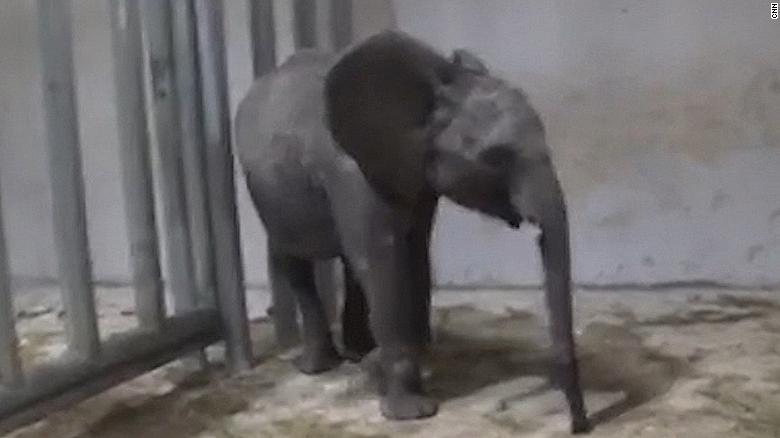
Hwange National Park, Zimbabwe (CNN)The cellphone footage reveals rows of steel cells stretching along a concrete floor. Behind each set of bars, a juvenile African elephant, their tusks just barely showing. One elephant presses its head into the corner of its prison-like confinement.

Zimbabwean officials legally captured these highly intelligent and social animals in Hwange National Park. Now, they will be broken and put on display for tourists in China.
By the end of this month, as more and more experts weigh in on the deep trauma suffered by captured elephants, a treaty governing international animal trade will halt the export of live elephants from Zimbabwe and other countries in Southern Africa.
Activists say they fear that the opaque trade could now move underground.
A screenshot taken from cellphone footage shows a caged young elephant in China.

Stuck in a holding pen

A vast park on Zimbabwe’s westernmost frontier, Hwange is one of the continent’s best spots for seeing giant elephant herds.
But few of the tourists entering the main gate are aware that just a few miles away to the southeast is a large boma compound, notorious among animal rights groups as the center of Zimbabwe’s efforts to sell elephants.
Armed with satellite coordinates provided by a source, we drove to the edge of the compound to try and see the elephants allegedly still inside.
“I have no idea about that,” a manager says, when asked about the elephant boma, a kind of holding pen before translocation.
We were quickly asked to leave, but Chrispen Chikadaya, a senior inspector with the Zimbabwe National Society for the Prevention of Cruelty to Animals (ZNSPCA), is one of the few people who has gotten inside.
Chikadaya began hearing the rumors late last year that park authorities were rounding up breeding herds and capturing juveniles for export.
Witnesses told him that wranglers were grabbing elephants old enough to survive without their mother’s milk, but small enough to squeeze into a freight box to China.
“They experience severe stress; they don’t have the freedom they have to move around like they do in the wild. If you put them in cages, you have now taken away the wild in them,” says Chikadaya.
Footage courtesy of Humane Society International released earlier this year.
Video released by Humane Society International shows the young mammals pacing back and forth, behavior often exhibited by stressed elephants. Predictably, the images sparked outrage.
“This is fiction. People act like we don’t love these animals, that we are abusing them. It is not true, because we are looking after our animals very well,” says Tinashe Farawo, a spokesman for Zimbabwe National Parks and Wildlife Management Authority (Zimparks).
He says that Zimbabwe has legally translocated animals to zoos, circuses and sanctuaries for decades without much fuss.
“We have moved animals to the US, the UK, Australia and New Zealand. This is not a new phenomenon in this country,” he says. “We think people should be scientific and ask what the facts are, not the emotions.”

Intelligent and sociable animals

Well-known elephant biologist Joyce Poole scoffs at the emotion-versus-science argument.
After studying elephants in the field for decades, she believes that they are uniquely intelligent and ill-suited for confinement.
“Some critics say we are ascribing human characteristics towards elephant, but we are not. These are elephant characteristics. They are capable of empathy, of self-awareness, understanding death and compassion. This is the kind of scientific evidence that Zimbabwe is ignoring,” Poole says.
She says, like us, elephants are highly social animals — confine them and they get bored, depressed, aggressive and sick.
“Through the course of evolution, they have developed these really close social bonds. If you take that away from an elephant, you destroy it,” says Poole.
On average, elephants die much younger in captivity, are less fertile, and suffer more from ailments like arthritis.
“Some animals are suitable and may even prosper in captive situations and zoos, because their biological needs are met. As for elephants, the needs are so beyond the scale of any zoo I have seen, that none of them are appropriate or suitable as a destination,” says Keith Lindsay, an elephant biologist who has studied zoo conditions.
As scientists learn more about elephants, public attitudes and policy have begun to change. In the US, the Ringling Bros. and Barnum & Bailey circuses stopped using elephants in 2016 — a year before the company shut its doors for good.

Stuck in limbo

In June, President Emmerson Mnangagwa said the country needed to sell wild elephants to fund its conservation efforts.
Back in May, the government revealed it had made $2.7 million from the sale of 90 elephants to Dubai and China.
In recent years, Zimbabwe has found ready buyers in China for their live elephant trade, but the ZNSPCA says the details of those deals and the conditions of the confined animals have been deliberately obscured.
Chikadaya says when he first inspected the elephants, in Hwange, slated for export back in 2018, inspectors were told by park officials that the elephants would be moved within a month, but they were kept in a boma for nearly a year.
In October, word got out that officials were preparing to ship the elephants, and the ZNSPCA team rushed back to Hwange. After the seven-hour drive, they were forcibly barred from the boma, despite their legal mandate to inspect captive animals. Zimpark officials say that they didn’t have the right paperwork, but their inspectors are, in fact, free to inspect whenever they want.
The ZNSPCA says that the following morning the elephants were crammed into crates and spirited out of the park as their inspection team slept.
“It all should be transparent,” says Chikadaya. “We should know that our animals are being translocated. And we need to know what benefit it has for conservation.”
Zimparks did eventually release basic information on where the elephants went and what they bought with the money — their spokesman says there is no issue of transparency, adding they bought everything from vehicles to uniforms with the proceeds.

A vast park without resources

With about a third of Zimbabweans surviving on food aid during the lean season, many would view the fate of about 30 elephants the equivalent of “first world problems.”
Ultimately, Hwange is expected to pay for itself. They do that with tourist dollars and, says Farawo, by selling elephants.
“We believe that elephants must pay for their upkeep. They must also pay for their protection,” he says, adding that Hwange has elephants to spare, with somewhere between 45,000 to 53,000 in the park — far more than the park’s environment can sustain.
Patrick Sibanda, a veteran ranger of the park, says each year the rains are coming later and later.
He says that around 200 elephants have died from thirst and hunger since October alone.
An elephant carcass in Hwange. A severe drought that has drained water sources in Zimbabwe's largest national park, resulting in a number of elephant deaths.

“It’s very bad. So many elephants have died this year,” says Sibanda, as he walks towards a carcass near a water hole.
“This young elephant came to drink, but I think it was exhausted,” he says. The elephant injured itself at the water trough, he says, and a pride of lions attacked it. On the other side of a dirt track, another elephant carcass lies under an acacia tree
The drought is one of the main arguments put forward for selling elephants to China by Zimparks. They say they need money to repair artificial water holes to save elephants.
“There is no water, there is no habitat, there is climate change. These things are real,” says Farawo
Biologists like Poole say they should instead gradually reduce elephant numbers by reducing the water points, not unnaturally prop up the numbers. But she concedes that there aren’t any easy options for Zimbabwe.

The end of the trade

In the next few days, Zimbabwe will no longer be allowed to sell its elephant to China or anywhere else where African elephants don’t naturally exist.
The decision was taken at a Convention on International Trade in Endangered Species of Wild Fauna and Flora (CITES) meeting in Geneva earlier this year, backed by a coalition of African nations and the European Union. Members of the international treaty governing the international sale of animal products approved the ban.
The move was lauded by conservation activists, but slammed in Zimbabwe, where they say they will lose a key revenue stream. Zimparks says they will abide by the treaty for now, but Zimbabwe’s President has already hinted in state media that they could withdraw from the agreement. Activists, meanwhile, worry that the sales will just move underground.
After the elephants left for China in October, there were rumors that several were left behind, too big to fit in the crates after the extended confinement.
Zimparks flatly denied that any were left in the boma.
But after winning a court battle, the ZNSPCA gained access just a few days ago. They found two emaciated young elephants struggling inside the translocation compound.
Chikadaya understands that the parks desperately need funds but says there has to be another way. He says the lack of transparency from the government and the trauma faced by the elephants, both here in Zimbabwe and thousands of miles away in zoos across the world, just can’t be worth it.
“Our wildlife belongs to Zimbabweans. It doesn’t belong to one person; it doesn’t belong to an organization. It belongs to our ancestors. It belongs to our children, to our parents, to our grandchildren,” he says.

A hunter ate a wild rabbit and caught black plague

A hunter ate a wild rabbit and caught black plague

CREDIT: National Institue of Allergy Infectious Diseases

Twenty-eight people are in quarantine in China’s northern Inner Mongolia province after a hunter was diagnosed with bubonic plague Saturday, the local health commission said.

According to state-run news agency Xinhua, the unidentified patient was believed to have become infected with the plague after catching and eating a wild rabbit in Inner Mongolia’s Huade county.

Bubonic plague is the more common version of the disease and is rarely transmitted between humans.

The case comes after the Chinese government announced on November 12 that two people were being treated for the pneumonic plague in the capital of Beijing — the same strand that caused the Black Death, one of the deadliest pandemics in human history.

Pneumonic plague is the most virulent and deadly strain of the disease. It originates in the lungs and any person who is infected can spread it to another person by sneezing or coughing near them. It can be cured with antibiotics, but is always fatal if left untreated, according to the WHO.

In comparison, bubonic plague can only be spread by infected fleas or by handling an infected animal’s tissue.

State media Xinhua said Saturday that there had been no evidence of the plague spreading further in Beijing and there was no connection to the latest case. But it was the second time the disease had been detected in the region in the past year.

In May, a Mongolian couple died from bubonic plague after eating the raw kidney of a marmot, a local folk health remedy.

Although plague is inextricably linked to the Black Death pandemic of the 14th century that killed around 50 million people in Europe, it remains a relatively common disease.

At least 1,000 people a year catch the plague, according to the World Health Organization (WHO), which they acknowledge is probably a modest estimate given the number of unreported cases.

The three most endemic countries are the Democratic Republic of the Congo, Madagascar, and Peru.

An average of seven Americans get the plague every year, according to the Centers for Disease Control and Prevention. In 2015, two people in Colorado died from the plague, and the year before there were eight reported cases in the state.


________________________________________________________________

Note to fans of C.A.S.H. reports:

Hunting Accidents might just happen, but sharing  news reports of them costs us time and money. Please consider donating to our efforts to one day see an end to this mindless madness. You can help C.A.S.H. with a donation: http://abolishsporthunting.org/donate/

Please visit us at www.abolishsporthunting to read our latest newsletter:  http://abolishsporthunting.org/wp-content/uploads/2019/10/C.A.S.H.-Courier_Summer-Fall-2019.pdf .and also feel free to participate on our exciting Blog and FB page: https://www.facebook.com/Committee-to-Abolish-Sport-Hunting-CASH


Grisly cargo of 240 bear paws which were ‘destined for China to be turned into food and traditional medicine’ is seized by Russian security agents

A stash of bear paws was intercepted by the FSB at a border post with China
The Russian agents later found tiger paws and mammoth tusks in a garage
It is likely the bear paws were obtained after illegal slaughter of
60 animals

By Will Stewart for MailOnline

Published: 15:15 GMT, 12 November 2019 | Updated: 15:16 GMT, 12 November
2019

A grisly cargo of 240 bear paws which were allegedly on their way to China has been seized by Russian security services.

Two paws of an endangered Amur tiger and a pair of extinct woolly mammoth tusks were also found in the illegal cache.

The gruesome goods are believed to have been destined for China to be used in traditional medicines and food delicacies.

The bear paws intercepted at the Chinese border are from Himalayan – or black – bears endemic to the far east of Russia and it is likely they were obtained after the illegal slaughter of 60 animals.
Seized: A cargo of bear paws from 60 illegally slaughtered animals is seen after it was intercepted by Russian security agents
+5

Seized: A cargo of bear paws from 60 illegally slaughtered animals is seen after it was intercepted by Russian security agents
Illegal: Two of the paws which were seized by Russia’s FSB security agency at a border post between Russia and China
+5

Illegal: Two of the paws which were seized by Russia’s FSB security agency at a border post between Russia and China

‘Two Russian nationals and two foreigners have been detained,’ said a statement from the FSB security agency.

They face up to seven years in jail for smuggling tiger and bear parts as well as ivory out of Russia, said the security service.

A total of 44 bear paws and two Amur – or Siberian – tiger paws were seized from two ‘foreigners’ at the Kraskino border post which links China and the Primorsky region of Russia.

Later, 198 bear paws and two mammoth tusks were found in a garage at a house linked to the alleged smuggling ring.

Four sacks of unidentified animal body parts were also seized and will now be analysed.

Sergey Aramilev, director general of Amur Tiger Centre, said the tiger paws were from an animal that died earlier than this year.

The tigers are among the most threatened big cats on the planet.

‘This is clearly a crime,’ he said.
One of the paws in the collection of 240 bear paws, two paws of an endangered Amur tiger and a pair of extinct woolly mammoth tusks which were intercepted at the Chinese border

One of the paws in the collection of 240 bear paws, two paws of an endangered Amur tiger and a pair of extinct woolly mammoth tusks which were intercepted at the Chinese border The bear paws are from Himalayan – or black – bears endemic to the far east of Russia and it is likely they were obtained after the illegal slaughter of 60 animals

The bear paws are from Himalayan – or black – bears endemic to the far east of Russia and it is likely they were obtained after the illegal slaughter of 60 animals A stash of 198 bear paws and two mammoth tusks were found in a garage at a house linked to the alleged smuggling ring

A stash of 198 bear paws and two mammoth tusks were found in a garage at a house linked to the alleged smuggling ring

‘All the circumstances of the crime and all the chains in the criminal ring will be established during the investigation.

‘It is most important to establish where are the remaining parts of the tiger.’

He warned that only a ‘small part’ of a large trafficking operation of wild animal parts is curtailed by the authorities.

He also praised the FSB for the successful operation in busting one smuggling route.

Delicacies made with bear paws – such as soups and stews – can command prices of up to £750, it has been reported.

Bear as well as tiger paws are also turned into traditional medicines to supposedly strengthen the spleen and stomach.

They can be used to counter rheumatism, it is claimed.

Mammoth tusks are ground into powder and can be used for traditional medicines and cosmetics.

https://www.dailymail.co.uk/news/article-7676875/Grisly-cargo-240-bear-paws-60-illegally-slaughtered-animals-seized.html

China’s Pig Crisis Is Pushing Up Bacon Prices Worldwide

  • African swine fever will wipe out hundreds of millions of pigs
  • Global pig-meat index is headed for steepest jump in 15 years
RF - Closeup Pile of Hot Sizzling Bacon
Photographer: adogslifephoto/iStockphoto

Bringing home the bacon will cost more. Blame African swine fever.

The deadly pig disease is wiping out hundreds of millions of hogs, mostly in China, driving a global surge in pork and bacon prices from Auckland to Vancouver. In Europe, swine carcasses have soared 31% and piglets 56% in the past year. Pig-meat is poised for the steepest jump since mad cow disease and bird flu outbreaks in 2004 led consumers to eat more pork, according to an index compiled by the Food and Agriculture Organization of the United Nations in Rome.

Run on Pigs

Pork is heading for the steepest annual increase in 15 years

Source: Food & Agriculture Organization of the United Nations

“It doesn’t matter where you are in the world at the moment, pork prices are up,” said Justin Sherrard, Rabobank’s Utrecht-based global animal-protein strategist, in a telephone interview. “China is the market to focus on. Firstly, because it’s big and, secondly, because this is really the first place that African swine fever started to hit.”

Read More: The Deadly Virus That’s Killing Off Millions of Pigs

Prices will remain high for at least the next three months in the lead up to the Lunar New Year on Jan. 25, a peak time for pork consumption in China, Vietnam and other countries that celebrate the festival. Retailers will have “no choice” but to pass on at least some of the extra cost to consumers, Sherrard said.

Bacon Around The World

A snapshot of what shoppers are paying for 500 grams (18oz) bacon

Source: Online retail data

By the end of 2020, China’s swine herd will slump to 275 million head, down almost 40% since the beginning of 2018, before the world’s largest animal disease outbreak began, according to the U.S. Department of Agriculture. That will pull down global pork production by 10% in 2020.

Hog Apocalypse

China’s annual pig production has been savaged by African swine fever

Source: U.S. Department of Agriculture

2019 & 2020 are forecasts

“African swine fever has had a significant impact on the production of pork in China and increasingly in Vietnam and other Southeast Asian countries,” said Tim Foulds, Euromonitor International’s head of research for Australasia. “Government attempts to control the crisis, including the large-scale culling of animals, resulted in pork production dropping dramatically in 2019.”

Peak Pork

Prices in China have surged 120% since deadly pig outbreak reported

Source: China Ministry of Commerce

Reduced domestic supplies will boost China’s demand for foreign pork, resulting in record prices and imports. However, Chinese consumers will “feel the pinch,” with a 32% slump in per-capita pork consumption over two years, the USDA said in an Oct. 10 report.

Bloomberg TicToc

@tictoc

Swine fever is causing pork prices to go up in China

Embedded video

See Bloomberg TicToc’s other Tweets

African swine fever, which kills most pigs in a week but isn’t known to harm humans, has had a greater impact in China than in any country or previous outbreak, and the disease there is now considered endemic, or generally present, according to the USDA.

Boss Hog

China’s $118 billion market dominates global pork sales

Source: Euromonitor International

UP NEXT