https://www.sacbee.com/news/california/water-and-drought/article251298968.html
BY DALE KASLERMAY 10, 2021 01:46 PM, UPDATED MAY 10, 2021 06:35 PM
Play VideoDuration 5:13Gov. Gavin Newsom announces proposal of $5.1 billion drought planCalifornia Gov. Gavin Newsom announces a proposal of a $5.1 billion investment for drought preparedness, infrastructure and response to ensure a more climate resilient system, in Merced County, Calif, on Monday, May 10, 2021. BY ANDREW KUHN
Gov. Gavin Newsom expanded his drought emergency declaration to 39 more counties Monday, underscoring the rapid deterioration of California’s water supply in recent weeks.
The governor broadened his earlier drought order, which was limited to two counties on the Russian River, to cover most of parched California, which is plunging into its second major drought in less than a decade.
The new order covers the Sacramento and San Joaquin river watersheds, the Tulare Lake basin region and the Klamath region in far Northern California. About 30% of the state’s population is now covered by the declarations, including the greater Sacramento area and Fresno, Merced and Stanislaus counties in the San Joaquin Valley.TOP ARTICLEShttps://imasdk.googleapis.com/js/core/bridge3.457.0_en.html#goog_297238308https://imasdk.googleapis.com/js/core/bridge3.457.0_en.html#goog_1646510280https://imasdk.googleapis.com/js/core/bridge3.457.0_en.html#goog_1021849365javascript:falseSKIP ADSacramento police officer accused of filing false report appears in court via Zoom
Newsom didn’t issue any mandatory drought conservation measures, as his predecessor Jerry Brown did during the last drought.
But such mandatory orders, which could force urban Californians to cut back on outdoor usage, “are on the table” if the state has another dry winter, said Natural Resources Secretary Wade Crowfoot.
Get unlimited digital access
Subscribe now for only $1CLAIM OFFERhttps://31a7dc8a3438f8d42d9f3d2765763198.safeframe.googlesyndication.com/safeframe/1-0-38/html/container.html
Newsom issued the declaration shortly before arriving at San Luis Reservoir on the west side of Merced County, where he announced a proposal for a plethora of short- and long-term drought-assistance measures totaling $5.1 billion.
If approved by the Legislature, his “drought and water resilience package” would be part of a $100 billion economic stimulus plan he announced earlier in the day in Oakland.
Some Newsom critics say he has been reluctant to declare a statewide drought for fear of angering voters with a recall election coming this fall. But hydrology is forcing the issue.
Since he issued a regional drought emergency last month for Sonoma and Mendocino counties, warm spring temperatures have melted and evaporated most of the Sierra Nevada snowpack, which was well below average to begin with. Relatively little snowmelt — normally a big piece of the state’s summer and fall supply — reached California’s reservoirs.
The Sierra is producing “far less inflow into the reservoirs than any modeling would have predicted,” Crowfoot told The Sacramento Bee. “Much of the snowpack has melted into the ground.” Many of the major reservoirs, such as Folsom Lake and Lake Oroville, are just half as full as they normally are this time of year.
Today’s top headlines
Sign up for the Daily Afternoon Bulletin and get a quick summary of the day’s news.SIGN UP
This site is protected by reCAPTCHA and the Google Privacy Policy and Terms of Service apply.https://31a7dc8a3438f8d42d9f3d2765763198.safeframe.googlesyndication.com/safeframe/1-0-38/html/container.html
Crowfoot said the state has lost 500,000 acre-feet of water in the past few weeks, enough to supply as many as 1 million homes for a year.https://datawrapper.dwcdn.net/9rGYt/3/
While Newsom stopped short of declaring a statewide emergency, he acknowledged that the pain from the drought is spreading throughout much of the state at a rapid clip.
“We looked at the issue of hydrology, we looked at the issue of snowmelt,” Newsom said as he stood in front of San Luis Reservoir, where much of the shoreline was exposed because of low water levels. He bemoaned “this climate-induced drought, which obviously is extreme and self evident.”
Newsom said he doesn’t think California needs orders requiring mandatory cutbacks in water consumption, saying Californians have already reduced their usage by 16% since the last drought. “We have changed our habits,” Newsom said.https://31a7dc8a3438f8d42d9f3d2765763198.safeframe.googlesyndication.com/safeframe/1-0-38/html/container.html
Still, he urged Californians to take voluntary steps, like keeping showers to five minutes, fixing leaks and switching to drought-tolerant landscaping.
Crowfoot said the emergency declaration could lead to orders from the state water board that would curtail farmers and others from pulling water from rivers that feed into the Sacramento-San Joaquin Delta, the hub of the California water delivery network. That will leave more water flowing through the system, which is necessary to flush salinity out of the Delta and into the ocean.
The emergency order could also speed up the installation of temporary rock barriers in the Delta, like the state used in the last drought, to prevent salt from getting into the estuary.
The order in the the Tulare basin would enhance the state’s ability to truck emergency supplies to communities that ran out of drinking water in the last drought and could become vulnerable again, he said.
Newsom’s $5.1 billion water resiliency proposal represents a huge increase on the $745 million he proposed spending in January. Crowfoot said Newsom is now proposing spending hundreds of millions of dollars to help at-risk rural communities improve the reliability of their water supplies, and funding to enhance environmental monitoring on California’s rivers to safeguard endangered steelhead and salmon during the drought.https://31a7dc8a3438f8d42d9f3d2765763198.safeframe.googlesyndication.com/safeframe/1-0-38/html/container.html
In addition, Newsom is proposing spending for long-term projects, including $500 million to help communities that will have to permanently retire farmland because of the state’s groundwater-management law; and $200 million to help repair major San Joaquin Valley canals that have buckled because of subsidence — the phenomenon that occurs when so much groundwater is pumped that the valley floor sinks. That includes the California Aqueduct, the Delta-Mendota Canal and the Friant-Kern Canal.
Elected officials who accompanied Newsom to the reservoir applauded his plans for improving the state’s water infrastructure. “We can stop the boom-and-bust cycle of drought and no water, and a wet year,” said state Sen. Anna Caballero, D-Salinas, whose district includes parts of Merced County.

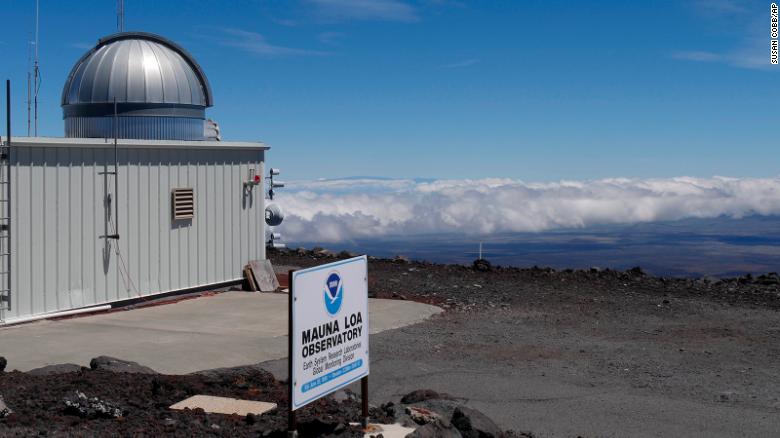 A 2019 photo by National Oceanic and Atmospheric Administration of the Mauna Loa Atmospheric Baseline Observatory in Hawaii.






 Exposing the Big Game