Exposing the Big Game

Forget Hunters' Feeble Rationalizations and Trust Your Gut Feelings: Making Sport of Killing Is Not Healthy Human Behavior

Exposing the Big Game

After Rampant Overhunting, Sea Otters Still Dying

Death of two endangered sea otters at Long Beach sparks inquiry

By Matt WintersThe Daily Astorian

June 4, 2015 7:35AM

NATALIE ST. JOHN — EO Media Group
A deceased sea otter washed ashore near Cranberry beach approach May 27. The marine mammals remain very rare in the vicinity of the mouth of the Columbia River after rampant overhunting between the late 1700s and early 1900s. This otter and another found earlier in May could have been delivered here by ocean currents, a federal biologist believes.

Buy this photo

A deceased sea otter washed ashore near Cranberry beach approach May 27. The marine mammals remain very rare in the vicinity of the mouth of the Columbia River after rampant overhunting between the late 1700s and early 1900s. This otter and another found earlier in May could have been delivered here by ocean currents, a federal biologist believes.
LONG BEACH, Wash. — Two dead northern sea otters have washed up on Long Beach in recent weeks, a surprise since the marine mammals — which are classified as endangered in Washington state — are not known to live here.

Biologists with the U.S. Fish and Wildlife Service, the lead agency looking into the deaths, believe the otters likely picked up a deadly protozoa and may not have died here at all.

A mature female sea otter found on May 27 by a home-school group just north of Cranberry beach approach is frozen and now on its way to Madison, Wis., where it will be examined at the National Wildlife Health Center lab run by U.S. Geological Survey. They will test the organs and look for lesions on the brain.

It could be months before people here know exactly how or why the otter died.

Another otter washed ashore about a week or 10 days earlier closer to downtown Long Beach and was too decayed for scientific analysis.

“They very well could have floated from anywhere up north,” said Fish and Wildlife Services Biologist Deanna Lynch.

Though some people suspected recent high levels of a marine toxin called domoic acid off the Long Beach Peninsula could have contributed to the otters’ deaths, Lynch says it is far more likely to be protozoal encephalitis, a disease otters can pick up through their food.

Historical context

Most of the world’s sea otters live in coastal Alaska, according to the U.S. Fish and Wildlife Service. They have only recently started making a comeback in Washington state.

Here they eat sea urchins, clams, crabs and mussels. They must consume 25 percent of their body weight in food each day to maintain their high metabolism.

Sea otter pelts were once considered a pillar of the Lower Columbia River economy. Between 1700 and 1911, an estimated 1 million sea otters were trapped and killed for their fur along North America’s Pacific coast.

After being absent from the state for decades, 59 sea otters from Alaska were introduced to the Washington coast in 1969 and 1970. The sea otter was listed as a state endangered species in 1981, and has grown at an annual average rate of 8.2 percent from 1989 to 2004, according to WDFW surveys.

By 2010, they were believed to number about 1,000.

A survey from 2012 found the state’s largest concentration of otters was 562 around Destruction Island off the northern Olympia Peninsula. WDFW recovery plans predict that sea otters could be found once again in their historical southern habitat such as Grays Harbor and Willapa Bay.

The first modern Columbia sighting was on March 12, 2009, at North Head. Later in the same week, a sea otter was spotted at Cape Disappointment State Park. No official sightings were reported between then and the recent discoveries of deceased otters, though occasional appearances have been rumored.

The animals are protected by the federal Marine Mammal Protection Act, with steep fines and imprisonment for anyone convicted of harming or harassing them.

Because sea otters are so rare, confirmed sightings and strandings are important to report. If you see a sea otter, gather as much detail about the sighting as possible — its color, what it was doing, and where it was — then call 1-87-SEAOTTER to report your sighting.

If you encounter a stranded sea otter, do not approach it. It is illegal to handle sea otters and other marine mammals.

“The best advice we can give is stay clear and observe, don’t get near it no matter what,” Lynch said. “They can move faster than you think they can.”

‘Sea’ versus ‘river’

Many “sea otter” sightings in modern times are really just river otters taking dips in the ocean. Both species are members of the weasel family, a group that includes everything from minks to wolverines. But they are very different from each other. Several characteristics can help you identify which type of otter you are seeing:

• Adult sea otters are much bigger, reaching close to 5 or 6 feet long.

• They are stout animals with a thick multi-layered coat of fur.

• The fur on their bodies is usually dark brown while the fur on their heads can sometimes be lighter tan color.

• Both river and sea otters have webbed feet, but while river otters have distinct paws with claws and webbing, sea otters possess two flipper-like back feet in addition to their clawed and webbed forepaws.

• Sea otters rarely come to shore. They eat, sleep, mate and give birth in the ocean. They may drape themselves in kelp to keep from drifting while they sleep or gang up with other sea otters to float in large “rafts” on the ocean.

• They rarely come to land unless they are sick or the waves are simply too rough for them.

Endangered Species Aren’t the Only Ones Who Matter

Text and Wildlife Photography ©Jim Robertson, 2015. All Rights Reserved

Text and Wildlife Photography ©Jim Robertson, 2015. All Rights Reserved

I’m getting kind of tired of hearing people talk about endangered species, as though they’re the only non-human animals they care about: ‘How dare some species do well or even begin to recover—it must be their fault that my favorite species is endangered.’

And if the endangered are a species people like to eat (such as salmon), then forget that humans sent them down the road to extinction by building dams along the rivers and heating up the planet so the spawning streams dry up or are too warm for fish eggs: ‘If some other non-human occasionally eats said endangered species, let’s wipe them out too.’

Scapegoating is happening to sea lions, to cormorants and to barred owls. Most people understand so little about the workings of nature that they forget they (all 7.3 billion of them) are a part of it.

It seems, unless they want to eat it, the only species they care about these days are the ones considered endangered.

Some people resent coyotes because they survive and even thrive where wolves sometimes didn’t. Sea lions are one of the most lovable creatures (and were nearly killed off once themselves during the fur trade), but it’s beyond appalling how many people hate them for eating fish, whether endangered or not.

I care about the fate of all individual animals, and don’t want to see any species extinctified. But this new policy of species favoritism has to go. I hate to break it to people, but we’re all endangered in today’s world of rapid climate change.

Whichever species makes it through the next century should be allowed to do so.

Now is really not the time for humans to think they can manage other species’ populations. They’ve done a pretty crappy job up of it so far. If anything, humans should be concentrating on their own kind.

1451324_650954518277931_1616731734_n

We Are Breeding Ourselves to Extinction

 Mar 8, 2009

AP photo / Andy Wong
China has long imposed a limit of one child per family in an effort to reduce population growth.

By Chris Hedges

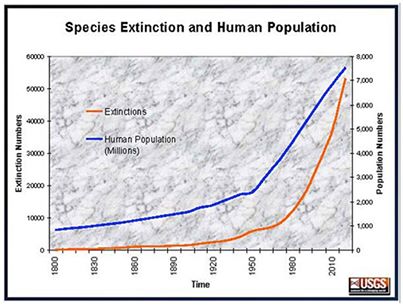
All measures to thwart the degradation and destruction of our ecosystem will be useless if we do not cut population growth. By 2050, if we continue to reproduce at the current rate, the planet will have between 8 billion and 10 billion people, according to a recent U.N. forecast. This is a 50 percent increase. And yet government-commissioned reviews, such as the Stern report in Britain, do not mention the word population. Books and documentaries that deal with the climate crisis, including Al Gore’s “An Inconvenient Truth,” fail to discuss the danger of population growth. This omission is odd, given that a doubling in population, even if we cut back on the use of fossil fuels, shut down all our coal-burning power plants and build seas of wind turbines, will plunge us into an age of extinction and desolation unseen since the end of the Mesozoic era, 65 million years ago, when the dinosaurs disappeared.

We are experiencing an accelerated obliteration of the planet’s life-forms—an estimated 8,760 species die off per year—because, simply put, there are too many people. Most of these extinctions are the direct result of the expanding need for energy, housing, food and other resources. The Yangtze River dolphin, Atlantic gray whale, West African black rhino, Merriam’s elk, California grizzly bear, silver trout, blue pike and dusky seaside sparrow are all victims of human overpopulation. Population growth, as E.O. Wilson says, is “the monster on the land.” Species are vanishing at a rate of a hundred to a thousand times faster than they did before the arrival of humans. If the current rate of extinction continues, Homo sapiens will be one of the few life-forms left on the planet, its members scrambling violently among themselves for water, food, fossil fuels and perhaps air until they too disappear. Humanity, Wilson says, is leaving the Cenozoic, the age of mammals, and entering the Eremozoic—the era of solitude. As long as the Earth is viewed as the personal property of the human race, a belief embraced by everyone from born-again Christians to Marxists to free-market economists, we are destined to soon inhabit a biological wasteland.

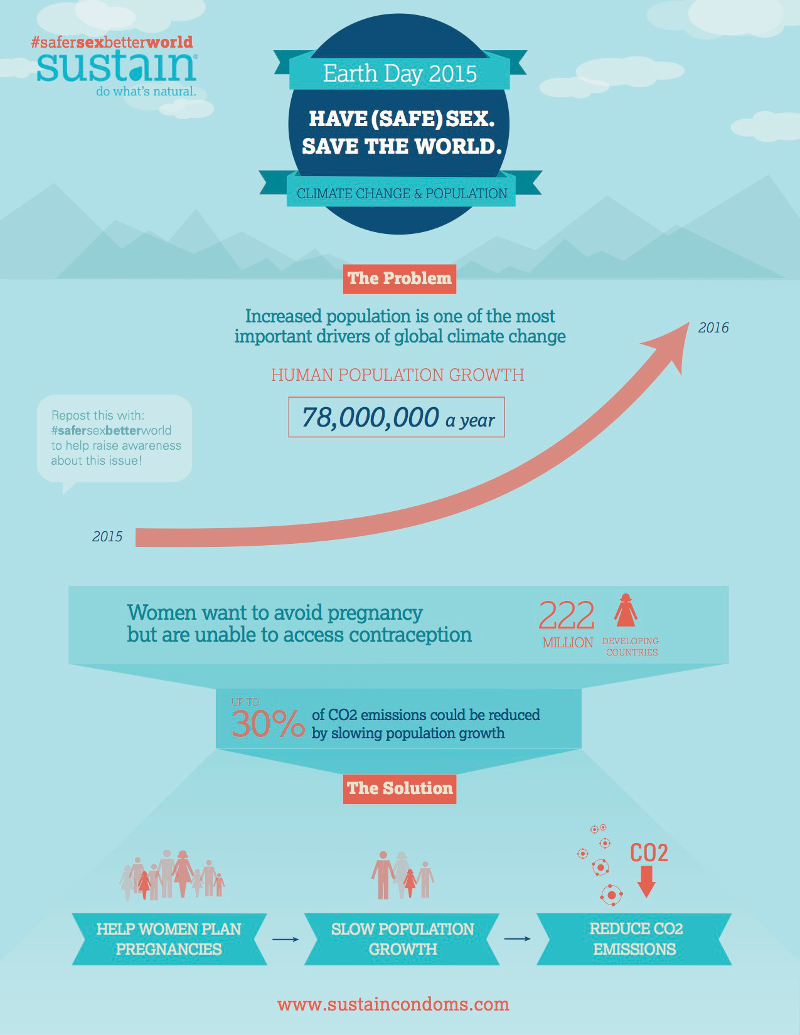
The populations in industrialized nations maintain their lifestyles because they have the military and economic power to consume a disproportionate share of the world’s resources. The United States alone gobbles up about 25 percent of the oil produced in the world each year. These nations view their stable or even zero growth birthrates as sufficient. It has been left to developing countries to cope with the emergent population crisis. India, Egypt, South Africa, Iran, Indonesia, Cuba and China, whose one-child policy has prevented the addition of 400 million people, have all tried to institute population control measures. But on most of the planet, population growth is exploding. The U.N. estimates that 200 million women worldwide do not have access to contraception. The population of the Persian Gulf states, along with the Israeli-occupied territories, will double in two decades, a rise that will ominously coincide with precipitous peak oil declines.

The overpopulated regions of the globe will ravage their local environments, cutting down rainforests and the few remaining wilderness areas, in a desperate bid to grow food. And the depletion and destruction of resources will eventually create an overpopulation problem in industrialized nations as well. The resources that industrialized nations consider their birthright will become harder and more expensive to obtain. Rising water levels on coastlines, which may submerge coastal nations such as Bangladesh, will disrupt agriculture and displace millions, who will attempt to flee to areas on the planet where life is still possible. The rising temperatures and droughts have already begun to destroy crop lands in Africa, Australia, Texas and California. The effects of this devastation will first be felt in places like Bangladesh, but will soon spread within our borders. Footprint data suggests that, based on current lifestyles, the sustainable population of the United Kingdom—the number of people the country could feed, fuel and support from its own biological capacity—is about 18 million. This means that in an age of extreme scarcity, some 43 million people in Great Britain would not be able to survive. Overpopulation will become a serious threat to the viability of many industrialized states the instant the cheap consumption of the world’s resources can no longer be maintained. This moment may be closer than we think.

A world where 8 billion to 10 billion people are competing for diminishing resources will not be peaceful. The industrialized nations will, as we have done in Iraq, turn to their militaries to ensure a steady supply of fossil fuels, minerals and other nonrenewable resources in the vain effort to sustain a lifestyle that will, in the end, be unsustainable. The collapse of industrial farming, which is made possible only with cheap oil, will lead to an increase in famine, disease and starvation. And the reaction of those on the bottom will be the low-tech tactic of terrorism and war. Perhaps the chaos and bloodshed will be so massive that overpopulation will be solved through violence, but this is hardly a comfort.

North American Moose dying in droves as climate warming fuels disease, pests

North American moose are dying by the thousands as they struggle with soaring temperatures and health problems linked to disease and parasites that thrive in the heat, scientists are finding.

In north east Minnesota alone, moose numbered about 8,000 a decade ago. Today, the population is down to 3,500. The story is similar throughout Canada, New Hampshire and Maine.

“All across the southern edge of the range, from Nova Scotia, New Brunswick, Minnesota, Michigan, all across the southern fringe of their range, moose numbers are in a significant decline,” Eric Orff, biologist with the National Wildlife Federation, told PBS.

Biologist Seth Moore has been taking samples of the Minnesota population since 2009. Of the 80 percent of collared moose that have died, 40 percent died from an infection known as brain worm, 20 percent died from a heavy winter tick load that sucks the blood from the animals, and the rest died from a combination of both, reports Motherboard. Both scourges are linked to warmer temperatures.

Minnesota has had unusually warm winters for the last few years. Warmer temperatures also overheat the shaggy, cold-loving animals.

In addition, calves appear to be far weaker now, or abandoned, leaving them more vulnerable to predators.

The population of moose in New Hampshire has fallen from 7,600 in 1996 to 4,000 last year. But the tick population and calf deaths seem to be down this season. But the Kristine Rines, the state’s moose biologist, believes the moose will be in danger as long as climate change is a factor.

“There’s no mystery at all as far as I’m concerned,” said Rines, who believes climate change is clearly to blame for plunging moose populations.  “It’s as clear cut as you can get in examining the natural world.”

A study earlier this year predicts that up to 97% of birds and mammals living in the vast region of northwest Alaska will experience major habitat affects from climate change. The northern climes tend to show more radical changes that serve as a blueprint for what’s eventually ahead for other regions, scientists believe.

Petition for a California Water “Meat, Dairy and Eggs Tax”

264431_455824994498980_1177070538_n

http://petitions.moveon.org/sign/california-water-meat.fb51?source=s.icn.fb&r_by=13178783

California Water “Meat, Dairy and Eggs Tax” (fee)

To be delivered to The California State House, The California State Senate, and Governor Jerry Brown

Petition Statement

Due to the California Water Crisis it is time for a California Water “Meat, Dairy and Eggs Tax” (fee) to be established at time of purchase.

There are currently 304 signatures. NEW goal – We need 400 signatures!

Petition Background

This is a proposal for a ‘Water Consumption Tax’ when purchasing meat, dairy and eggs. A person consuming meat, dairy and eggs is responsible for massive amounts of water usage for the production of the animal products, far more than a person living a plant based lifestyle. In some cities, households are limited to only 50 gallons of water usage per person a day and fined if they exceed that amount. The same should apply to omnivores who eat animal products without consequence for the water crisis. The standard diet of a person in the United States requires 4,200 gallons of water per day (for animals’ drinking water, irrigation of crops, processing, washing, cooking, etc.). A person on a vegan diet requires only 300 gallons a day. It takes approximately 660 gallons of water to produce one quarter pound hamburger patty. At those numbers, it takes 2640 gallons of water to produce one pound of beef. Using that estimate it would take 6,600,000 gallons of water to produce one ton of beef; which would be equivalent to filling a 40 gallon bathtub 165,000 times. It is time for people who are consuming animal products to pull their own weight and to start being responsible for their impact to California’s water crisis.

Petition: http://petitions.moveon.org/sign/california-water-meat.fb51?source=s.icn.fb&r_by=13178783

A Seattle high school is taking birth control access to the next level

sustainEDinfographic800

This is part 2 of our first-hand look at reproductive health access for teen girls in our home state of Washington. Read our introduction to the series here.

Chief Sealth International is a Seattle public school in the diverse neighborhood of Delridge, on the southwest end of the city. It’s a modern building, airy and light-filled, and the surprisingly buoyant mood set by gleefully yelling teenagers almost makes you forget how awful high school actually is. Unassumingly perched over the atrium is the school-based health center, where the students can get treatment for sore throats (both feigned and not), bandages for sprained ankles, and IUDs.

At the end of 2009, the American College of Obstetricians and Gynecologists formally recommended long-acting reversible contraceptives (LARCs) — IUDs and hormonal implants — as the most effective ways for teen girls to avoid unintended pregnancy, and Seattle’s public health department quickly decided that they should be available in school-based clinics. (These clinics, which have also provided other forms of birth control to students since the mid 1990s, are funded by a city-wide Families and Education Levy, which voters have supported since 1991.)

Neighborcare Health, which runs nonprofit medical and dental clinics in Seattle for low-income and uninsured families and individuals, was the first organization to step up to the plate and provide LARC placement services in certain Seattle public high schools and middle schools, where it sponsors the school-based health centers — and within just a few months of the ACOG recommendation, the first Seattle public school student got a Nexplanon hormonal implant through the program.

LARCs, because they’re meant to last for so long, are the most expensive forms of birth control available. But free, in-school LARC placement is made possible in part by Take Charge, a Washington State Medicaid program that’s specifically targeted toward minors seeking contraceptive services. Because of Take Charge, girls under 19 who don’t want to use their parents’ private insurance to get birth control have a way to get contraception in school at no cost.

Now, it’s as easy for a Chief Sealth student to get an IUD as it is to get a Coke – actually, easier, because pop is banned in Seattle schools.

More: http://grist.org/living/a-seattle-high-school-is-taking-birth-control-access-to-the-next-level/?utm_source=newsletter&utm_medium=email&utm_term=EDIT%20Weekly&utm_campaign=weekly

The Science of Global Warming

Six Things Michael Mann Wants You to Know About the Science of Global Warming

Media Coverage of California Water Shortage Omits Biggest Culprit — Animal Agriculture

http://theirturn.net/2015/04/07/animal-agriculture-water-shortage

April 7, 2015 by

In its extensive coverage of the California drought, the New York Times has consistently focused on the cultivation of crops without so much as mentioning animal agriculture, which is far more water intensive.

The glaring omission has sent readers the message that fruits, vegetables and nuts  – not beef and dairy – are responsible for the state’s grave water shortage. Following are excerpts from the NY Times over the past three days.

April 6th: “Even as the worst drought in decades ravages California, . . . millions of pounds of thirsty crops like oranges, tomatoes and almonds continue to stream out of the state and onto the nation’s grocery shelves.”

April 5th: “The expansion of almonds, walnuts and other water-guzzling tree and vine crops has come under sharp criticism from some urban Californians.”

April 4th: ”There is likely to be increased pressure on the farms to move away from certain water-intensive crops — like almonds.”

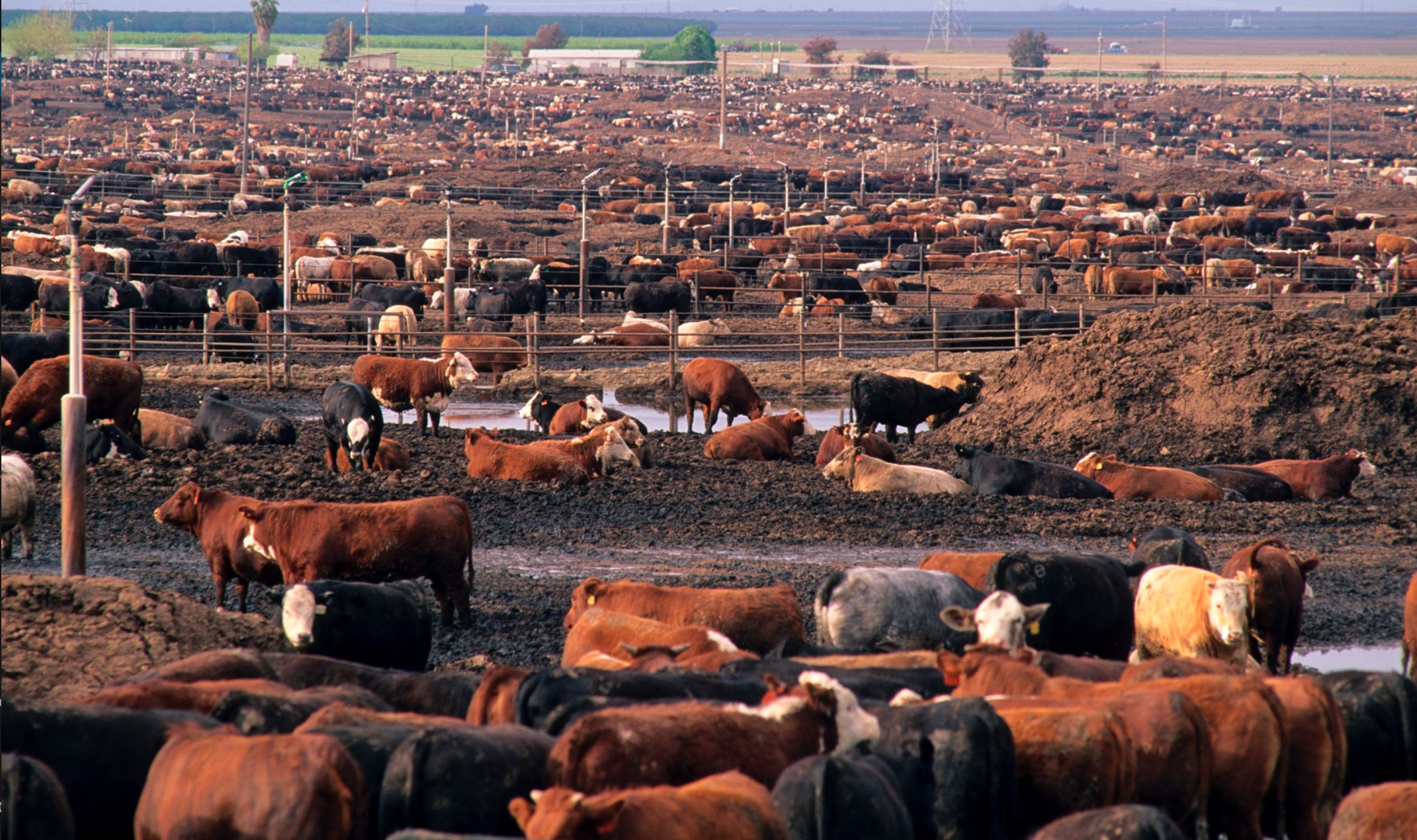
Cultivating crops might be be water intensive, but it uses a fraction of the water consumed in animal agriculture. On California’s factory farms, which house tens of millions of chickens, pigs and cows, water is used not only to hydrate these animals but also to grow their feed and clean the facilities and slaughterhouses where they are raised and killed.

Cows in a California feedlot

Eliminating animal agriculture, which inefficiently uses of a scarce resource and is altogether unnecessary, would undoubtedly help to curb California’s water shortage.

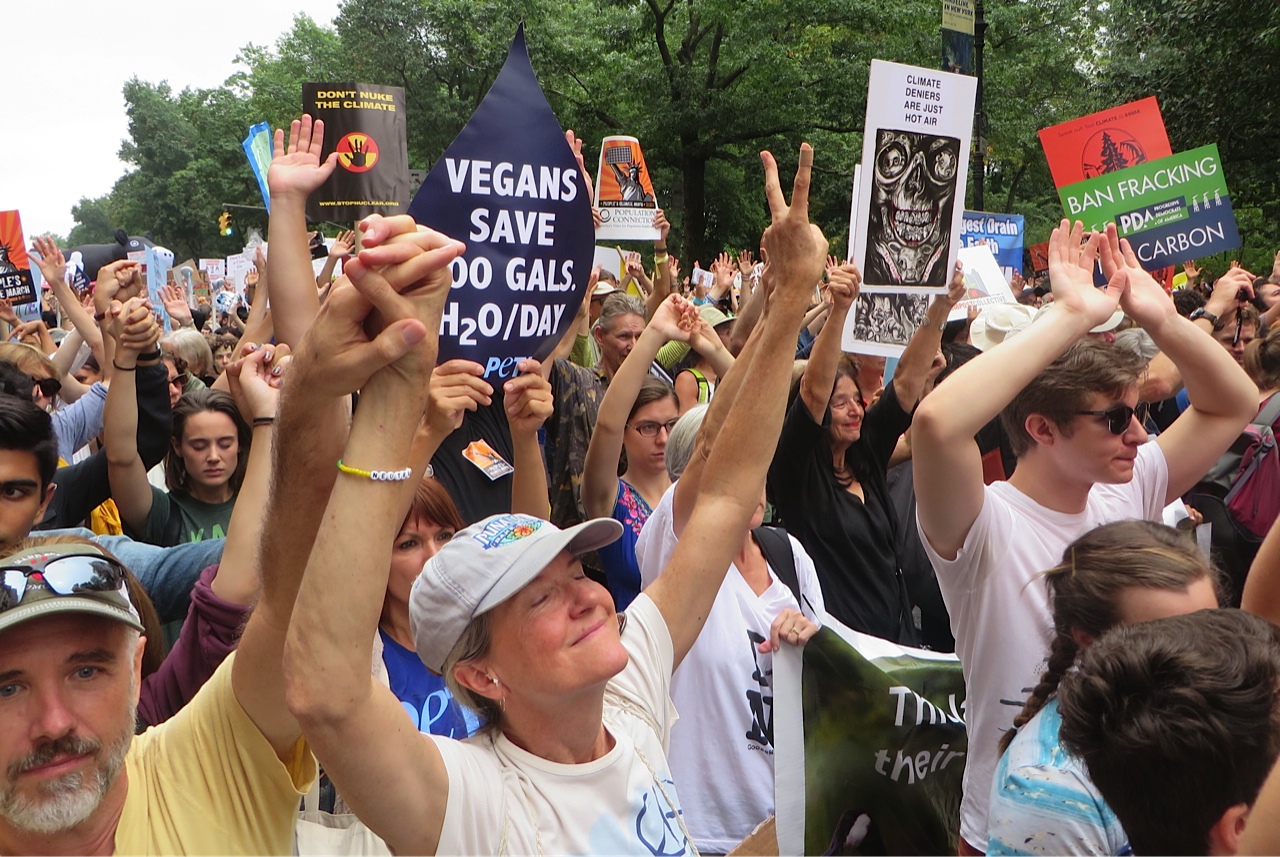
2014 Climate March participants highlighted impact of animal agriculture on water supply

Following are just a few statistics that demonstrate the impact of animal agriculture on the water supply:

  • 2,500 gallons of water are used to produce one pound of beef compared to 100 gallons for a pound of wheat.
  • Vegetables use about 11,300 gallons of blue* water per ton. Pork, beef and butter use 121,000, 145,000 and 122,800 gallons per ton respectively. (*Blue water is water stored in lakes, rivers and aquifers.)
  • Each day, cows consume 23 gallons of water; humans drink less than one.
  • The amount of water needed to produce a gallon of milk is equivalent to one month of showers.
  • 132 gallons of water are used every time an animal is slaughtered.

One year ago (March, 2014), the NY Times published an op-ed, Meat Makes the Planet Thirsty, that included statistics comparing the amount of water used for crops and animals. So why is it omitting this vital information in its current coverage of the drought? Could it be a mere oversight? Or is it something more sinister?

2014 Climate March participants highlighted the the amount of water used in animal agriculture.

2 Scientists Drown Measuring Artic Sea Ice–Mother Jones

These Scientists Just Lost Their Lives in the Arctic. They Were Heroes.

These Scientists Just Lost Their Lives in the Arctic. They Were Heroes.

| Thu May 7, 2015
Philip de Roo (left) and Marc Cornelissen.

Early last month, veteran polar explorers and scientists Marc Cornelissen and Philip de Roo set out on skis from Resolute Bay, a remote outpost in the patchwork of islands between Canada and Greenland. Their destination was Bathurst Island, a treacherous 70-mile trek to the northwest across the frozen sea, where they planned to document thinning Arctic sea ice just a few months after NASA reported that the winter ice cover was the lowest on record.

It wasn’t hard to find what they were looking for, according to a dispatch Cornelissen uploaded to Soundcloud on April 28.

“We’re nearing into the coast of Bathurst,” he said. “We think we see thin ice in front of us…Within 15 minutes of skiing it became really warm. In the end it was me skiing in my underwear…I don’t think it looked very nice, and it didn’t feel sexy either, but it was the only way to deal with the heat.”

His next message, a day later, was an emergency distress signal picked up by the Royal Canadian Mounted Police. According to the Guardian, a pilot flying over the spot reported seeing open water, scattered equipment, and a lone sled dog sitting on the broken ice. By last Friday, rescuers had called off the search. The pair are presumed to have drowned, victims of the same thin ice they had come to study. Cornelissen was 46; de Roo had just turned 30.

Yesterday, Cold Facts, the nonprofit with whom the pair was working at the time, dispatched a snowmobile expedition to attempt to recover their belongings. You can follow their progress on Twitter here. The dog, Kimnik, was found a few days ago and is doing fine, the group said.

In a blog post on the website of the European Space Agency, Cornelissen was remembered by former colleagues as “an inspirational character, an explorer and a romantic. He had fallen in love with the spellbinding beauty of the poles and had made it a personal mission to highlight the magnitude of the human fingerprint on this last wilderness.”

It’s not clear whether the ice conditions the pair encountered were directly attributable to climate change, according to E&E News:

That the region had thin ice is evident. Perhaps the ice had been thinned by ocean currents that deliver warm water from below, or by the wind, which could generate open water areas. It is difficult to know. Climate change may have played a role, or it may not have…the impacts of the warming on ice thickness regionally can be unpredictable, [ESA scientist Mark] Drinkwater said.

Still, the Arctic is warming twice as fast as anywhere else on Earth. We rely on the work of scientists like these to know exactly what is happening there and how it will affect those of us who choose to stay safe in warmer, drier places. Their deaths are a testament to the dedication and fearlessness required to stand on the front lines of climate change.

Rest in peace, guys.

Mounting Evidence Has Republican Climate Change Deniers on Thin Ice for 2016

http://therealnews.com/t2/index.php?option=com_content&task=view&id=31&Itemid=74&jumival=13541

Transcript

Mounting Evidence Has Republican Climate Change Deniers on Thin Ice for 2016SHARMINI PERIES, EXEC. PRODUCER, TRNN: Welcome to The Real News Network. I’m Sharmini Peries, coming to you from Baltimore. Political posturing among climate-change deniers in the Republican Party is heating up, leading up to the 2016 presidential elections. The Republicans are all repeating the same position. They’re saying that our climate is changing; yes, we can see that. In fact, the climate is always changing, says Mark Rubio, senator from Florida. But they say that humans have little to do with it. Any effort to link the two is seen as an effort to destroy the economy. The new Republican Senate in January passed a climate-change resolution for the first time in eight years on this topic. They voted 98 to 1 to approve a resolution stating that climate change is real and not a hoax. If that sounds good, it is. But then the Senate rejected a second amendment that stated climate change is real and it is significantly caused by humans. Jeb Bush, who is seen as a frontrunner, according to The New York Times, is on record saying, what I get a little tired of is that on the left, this idea that somehow science has decided all this is so, so you can’t have an opinion. That is according to the Washington Post article by Paul Waldman. Further, Ted Cruz, who recently announced his candidacy for president in the 2016 election, is on record at CNN saying, in the “last 15 years, there has been no recorded warming.”Well, science tells us otherwise. It has recorded 2014 as the warmest year in recorded history. Now joining me to discuss what is really going on here among the Republicans is Michael E. Mann and Subhanker Banerjee. Subhanker Banerjee is coming to us from Port Towsend, Washington. And Subhankar is an environmental and humanities scholar and activist. He founded ClimateStorytellers.org and is editor of the anthology Arctic Voices: Resistance at the Tipping Point. We’re also joined by Michael E. Mann, joining us from State College, Pennsylvania. Dr. Michael E. Mann is a distinguished professor and director of the Earth System Science Center at Penn State University and author of the book The Hockey Stick and the Climate Wars. Thank you both for joining us. So I’m going to begin with you, Michael, here. Michael, recently we’ve seen some very dramatic reports in terms of the degree at which the ice caps are melting. How do we know that? How do we measure it? How do we know the ice caps are melting to the degree that it is?DR. MICHAEL E. MANN, DIR. OF EARTH SYSTEM SCIENCE CENTER, PENN STATE UNIV.: Yeah. So we have a variety of measurements that we make. We use satellites primarily. We can use those satellites to measure the amount of mass that is actually contained within the ice sheets. So we can detect fairly small changes in how large the Greenland ice sheet and the Antarctic ice sheet are through these satellite measurements. They’re basically measuring the gravity, the disturbance of the gravity field by these very large masses of ice. In addition, we can monitor changes in the ice cover of the Arctic Ocean. We use satellite measurements. We can look at the surface and we can determine if it’s ice or if it’s open water. So we have very accurate assessments, for several decades now, of how much sea ice there is in the Arctic. We know that we are on a trajectory right now where we will see potentially ice-free conditions at the end of the summer in the Arctic Ocean, perhaps in just a matter of a few decades, far in advance of what the climate models had predicted just a few years ago. So here’s an example of where climate change is unfolding, and in a way that’s faster and has a greater magnitude than what the climate models actually have predicted. Well, it turns out that when you change the amount of sea ice in the Arctic, you change the amount of heat that escapes from the Arctic Ocean into that very cold Arctic atmosphere. And more than a decade ago, scientists began to speculate that as we saw a decrease in that sea ice in the Arctic, we would actually see a large enough change in the amount of heat that escapes from the ocean into the atmosphere in the late fall and the early winter that we would actually change the behavior of the jet stream. And not only would we change the behavior of the jet stream, but we would do it in a fairly specific way, in a way that causes the jet stream to swing way northward in the winter over the West Coast of the U.S., so that all of that moisture that normally comes to California in the winter instead goes northward. And it also takes all that warmth much farther the northward. So you get unusually warm winters in Alaska, in western North America, like we’ve seen this year in particular. You see very dry winters in California. California also had its hottest year on record last year. So you’ve got decreased precipitation, you’ve got increased warmth, which means increased evaporation, which means increased loss of water from the soils, and you get a perfect storm of consequences for drought. And that is why California has now experienced what we think is the worst drought in 1,200 years, in at least 1,200 years. There is almost certainly a human fingerprint in that drought. And my colleague Peter Gleick of the Pacific Institute in Oakland, California, and I had a commentary a week ago in the proceedings of the National Academy of Sciences where we explained how there is now mounting evidence that this historic drought that we’re seeing in California had a human fingerprint in it, the fingerprint of human-caused climate change. But it doesn’t stop there. You change the pattern of the jet stream in a way that may, ironically, give us more of those very powerful nor’easters that have pounded the Northeastern U.S. this winter, giving Boston record snow, producing fairly cold conditions in parts of the Northeastern U.S. So, that entire change in the behavior of the northern hemisphere jetstream and the very strange weather that we’re seeing around North America and around much of the rest of the world, climate change is now starting to play a role in that very unusual–in some measure, unprecedented–extreme weather that we’re seeing.PERIES: Michael, what is your take on the recent report we saw in terms of California having one year of water supply left?MANN: That’s right. It was a very distinguished colleague of mine, Jay Famiglietti, from the University of California, Irvine, who published an op-ed in the L.A. Times where he outlined why it is that California may be just one year away from water rationing. And when you think about it, right now California has record low snowpack, the lowest snowpack ever on record. So that means they’re not going to be getting that meltwater in the spring that provides them with some of the fresh water that they need. They haven’t been getting the rainfall they need. And you have certain special interests, like the natural gas industry, through fracking, using up a fair amount of water for energy. And so you have all these factors coming together in a way that could spell a disaster for California. If you ask Californians if climate change is real, not only is it real; it is impacting them in their daily lives now. And that’s true over an increasingly large part of the world.PERIES: And Subhankar, you’re a scholar of the Arctic and you’ve been monitoring and looking at the implications of the melting ice caps for quite a bit, for quite a long time. Tell us what your observations are.SUBHANKAR BANERJEE, EDITOR, ARCTIC VOICES: RESISTANCE AT THE TIPPING POINT: Yeah, absolutely. You know, I mean, I started my work in the Alaskan Arctic in 2001. And just to briefly summarize what Michael just talked about is why it is so significant, because when I started the work, we were beginning to see the impact of climate change on the Arctic ecology and human communities way back then. And I’ll give couple of quick examples. But what we’re seeing now: that what happens in the Arctic is impacting not only the Arctic but really kind of the northern hemisphere at large, and possibly many parts of the globe as well. So that’s why Michael’s comments were that these were all connected, what’s happening in the Arctic, to what’s happening in California, in the Northeast, and so on. Now, back to the–kind of in my earlier–one of the things that with the melting of the Arctic sea ice–and what we–because you mentioned Arctic ice cap, which is the Greenland ice sheet, and then we have the sea ice, which has hit a record winter maximum low. Usually the summer low is more significant, but the winter maximum is also low. Well, all that means is that the Arctic sea ice is on a death spiral. And that’s having significant impact on both the Arctic ecology and the human communities. And it is widely known that the polar bears are suffering. The–40 percent of the polar bear population in the southern Beaufort Sea in Arctic Alaska and Arctic Canada declined between 2001 and 2010. The walrus populations in the Chukchi Sea is really suffering. Six out of the last eight years, tens of thousands of walruses hauled out onto the barrier islands and the tundra because there was no sea ice for them to rest on. And there are many other impacts of the local ecology, the marine ecology. But what is not understood is that what’s happening in the Arctic Ocean is also impacting the land animals. And, in fact, I’ll give you one really kind of a sad example of that. In 2001, I had photographed 13 muskox, these kind of woolie, prehistoric animals from the Pleistocene era, and they’re in the Arctic National Wildlife Refuge with a newborn calf in April. Today there is no muskox in the refuge. And one of the impact is this icing on the tundra in the winter because of increased precipitation and warmer weather. Instead of snow, you’re getting rain, and that becomes ice. And that then impacts the animals’ access to food sources. And that’s impacted the muskox in part. So climate change kind of took a toll on the Arctic refuge muskox. And then, right now, in the Norwegian Arctic, in the Svalbard Archipelago, in the reporting of this winter lowest record on the winter maximum sea ice extent, the Guardian journalist did a wonderful connection between the open water in the Arctic seas, but ice on the tundra of the Svalbard, which is impacting the same way the reindeer population did, that really struck me, because when it’s ice, they cannot break the ice through their hooves. And then you have the human communities. What’s happening–and I know this from first-hand experience from Arctic Alaska, that many human communities, indigenous communities, are now being forced to relocate. One example is, of course, Kivalina. Because of the reduced sea ice extent, you have more open water, more coastal erosion, combined with storms, as well as melting of the permafrost. These are all connected, happening. But let me just wrap this up by saying that what the melting, this rapid vanishing of the Arctic sea ice has opened up in my mind is perhaps the most significant contradiction of our time. And the contradiction is this. On one hand, the Arctic sea ice is melting rapidly, causing local, regional, as well as global impacts for human communities, as well as animal communities. At the same time, there is an incredible push to industrially exploit the Arctic seas for oil and gas. In fact, right now this month, the Obama administration is poised to give shale the kind of–one of the permits, and this will continue all through April, and Shell might, if they get all the permits from the Obama administration, will likely drill there. So it’s really–I see that as the greatest contradiction of our time. On one hand, the very thing that is destroying us, not only up there but all over, we are further destroying it by sending Shell and other oil companies to drill in the Arctic Ocean.PERIES: I want to thank you, gentlemen, for joining us today.MANN: Thank you. It was a pleasure.BANERJEE: Thanks so much, Sharmini.PERIES: And thank you for joining us on The Real News Network.

End