Just Keep ’em Stupid: No More ‘Bird Flu’

Gag Rule Against saying “Bird Flu” or “Climate Change”

11 May 2015

 http://www.thepoultrysite.com/poultrynews/35021/whats-in-a-name-no-more-bird-flu/

GLOBAL – The World Health Organization (WHO) has issued new guidelines for naming new human infectious diseases, which include the use of names such as ‘bird flu’ and ‘swine flu’, which have unintended negative impacts by stigmatising certain communities or economic sectors.

The WHO has called on scientists, national authorities and the media to follow best practices in naming new human infectious diseases to minimize unnecessary negative effects on nations, economies and people.

Dr Keiji Fukuda, Assistant Director-General for Health Security at the WHO said: “In recent years, several new human infectious diseases have emerged. The use of names such as ‘swine flu’ and ‘Middle East Respiratory Syndrome’ has had unintended negative impacts by stigmatizing certain communities or economic sectors.

“This may seem like a trivial issue to some, but disease names really do matter to the people who are directly affected. We’ve seen certain disease names provoke a backlash against members of particular religious or ethnic communities, create unjustified barriers to travel, commerce and trade, and trigger needless slaughtering of food animals. This can have serious consequences for peoples’ lives and livelihoods.”

Diseases are often given common names by people outside of the scientific community. Once disease names are established in common usage through the Internet and social media, they are difficult to change, even if an inappropriate name is being used. Therefore, it is important that whoever first reports on a newly identified human disease uses an appropriate name that is scientifically sound and socially acceptable.

The best practices apply to new infections, syndromes, and diseases that have never been recognised or reported before in humans, that have potential public health impact, and for which there is no disease name in common usage. They do not apply to disease names that are already established.

The best practices state that a disease name should consist of generic descriptive terms, based on the symptoms that the disease causes (e.g. respiratory disease, neurologic syndrome, watery diarrhoea) and more specific descriptive terms when robust information is available on how the disease manifests, who it affects, its severity or seasonality (e.g. progressive, juvenile, severe, winter). If the pathogen that causes the disease is known, it should be part of the disease name (e.g. coronavirus, influenza virus, salmonella).

Terms that should be avoided in disease names include geographic locations (e.g. Middle East Respiratory Syndrome, Spanish Flu, Rift Valley fever), people’s names (e.g. Creutzfeldt-Jakob disease, Chagas disease), species of animal or food (e.g. swine flu, bird flu, monkey pox), cultural, population, industry or occupational references (e.g. legionnaires), and terms that incite undue fear (e.g. unknown, fatal, epidemic).

WHO developed the best practices for naming new human infectious diseases in close collaboration with the World Organisation for Animal Health (OIE) and the Food and Agriculture Organization of the United Nations (FAO), and in consultation with experts leading the International Classification of Diseases (ICD).

The new best practices do not replace the existing ICD system, but rather provide an interim solution prior to the assignment of a final ICD disease name. As these best practices only apply to disease names for common usage, they also do not affect the work of existing international authoritative bodies responsible for scientific taxonomy and nomenclature of microorganisms.
Ntl. Geo. Pictures: Billions of Blue Jellyfish Wash Up on American Beaches

Billions of “By the Wind Sailors” (Velella Velella) or a giant colony (depending on how you look at it) are washed up on Washington’s Long Beach peninsula. It’s at least 5 times as many as anyone has ever seen there at one time. Although no one in the media is yet attributing this to climate change, Velella thrive in warm water and the U.S. West coast has been plagued by a blob of warm water that is effecting everything from sea life to weather patterns. This 1,000 mile wide X 100s of feet deep”blob” and recent ocean acidification are undeniably part of global warming.

Now, the shorebirds seem to be having a hard time finding their food with so many of these jellyfish at the tide line.

We’ve all heard that Florida has an unwritten law forbidding government “scientists” and the media from mentioning climate change/global warming–the same must be true on the West coast. After an extensive search, I finally found someone who dared to risk uttering the words “climate change” in association with these jellyfish.

https://www.youtube.com/watch?v=egEy4fSfkIo

It would not surprise me to learn that climate change-related Velella Velella blooms are responsible for the collapse of entire marine food chains. Sardines (which young California sea lions depend on) have nearly disappeared. Sardines likely depend on the plankton the jellyfish are eating.

Oceans filled with nothing but jellyfish is a depressing vision of the future as anthropogenic climate change and mass extinction scenarios play themselves out…

10999110_1609525825948983_7501551319274198003_n

Wild animals dying for a drink in drought-stricken West

By Darryl Fears
The Washington Post | Posted: Thursday, May 7, 2015 7:00 pm

For the giant kangaroo rat, death by nature is normally swift and dramatic: a hopeless dash for safety followed by a blood-curdling squeak as their bellies are torn open by eagles, foxes, bobcats and owls.

They’re not supposed to die the way they are today — emaciated and starved, their once abundant population dwindling to near nothing on California’s sprawling Carrizo Plain about 100 miles northwest of Los Angeles, where the drought is turning hundreds of thousands of acres of grassland into desert.

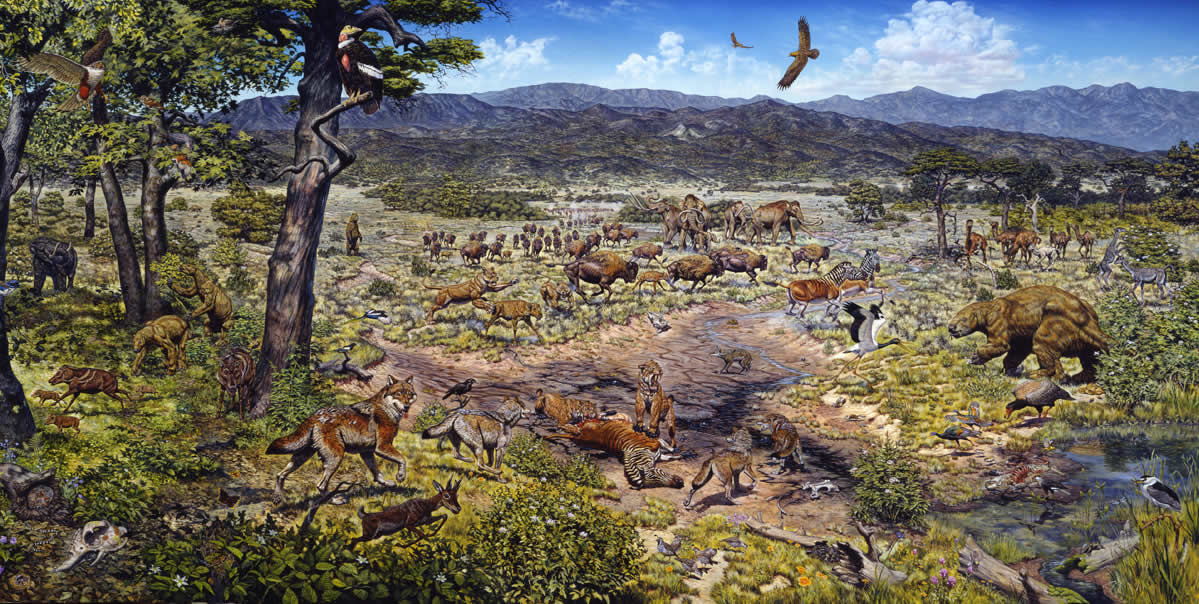
Without grass, long-legged kangaroo rats can’t eat. And as they go, so go a variety of threatened animals that depend on the keystone species to live. “That whole ecosystem changes without the giant kangaroo rat,” said Justin Brasheres, an associate professor of wildlife ecology and conservation at the University of California at Berkeley.

Endangered kangaroo rats are just one falling tile in the drought’s domino effect on wildlife in the lower Western states. Large fish kills are happening in several states as waters heated by higher temperatures drain and lose oxygen. In Northern California, salmon eggs have virtually disappeared as water levels fall. Thousands of migrating birds are crowding into wetland shrunk by drought, risking the spread of disease that can cause massive die-offs.

As the baking Western landscape becomes hotter and drier, land animals are being forced to seek water and food far outside their normal range. Herbivores such as deer and rabbits searching for a meal in urban gardens in Reno are sometimes pursued by hawks, bobcats and mountain lions. In Arizona, rattlesnakes have come to Flagstaff, joining bears and other animals in search of food that no longer exists in their habitat.

“You think about it. In our urban environments we have artificial water. We’re not relying on creeks,” said David Catalano, a supervisory biologist for the Nevada Department of Wildlife. “We have sprinkling systems. We water bushes with fruit and water gardens. That’s just a magnet for everything.

“We’ve seen an increase in coyote calls, bear calls, mountain lion calls — all the way to mice and deer,” Catalano said of residents placing distress calls to his department. “At your house everything is green and growing and flowering and they’re being drawn to it.”

The state wildlife agency said it’s preparing for a deluge of calls reporting bear sightings from Lake Tahoe this summer when berries and other foods they eat disappear for lack of rain.

About 4,000 mule deer have disappeared from a mountain range near Reno between late last year and now, likely because of drought. “Our level of concern is very high,” Catalano said. Nevada has placed low fiberglass pools called guzzlers that hold up to 3,600 gallons of water at more than a thousand wilderness areas across the state to provide water for wildlife.

The Arizona Game and Fish Department sent a message for a second year to residents in Flagstaff near Grand Canyon National Park: “Don’t be surprised if you see more wild animals around town in the next few months. Drought conditions may cause creatures like elk, deer, bobcats, foxes, coyotes and even bears to wander further into town than normal, as they seek sources of food and water.”

Don’t feed them, the department warned. Remove pet food, water bowls, garbage and other items that attract wild animals. It does more harm than good.

In California, where mandatory water restrictions were passed by the state water board on Tuesday, humans are already coming into contact with desperate wildlife from the 250,000-acre Carrizo Plain National Monument in California’s Central Valley, near Bakersfield.

“Just today, 20 minutes ago, four coyote cubs arrived” from the Bakersfield’s outskirts, said Don Richardson, curator of animals for the California Living Museum, which has an animal shelter in the city.

“We actually get everything from reptiles to mammals,” Richardson said. “We have 13 San Joaquin kit fox, an endangered species. They were abandoned, orphaned. The kit foxes health was impacted by the struggle to make it with reduced resources. Then of course we see a lot of birds of prey — owls and golden eagles.”

The animals are already suffering from the fragmentation of their habitat because of ranching and urban development. “It’s looking to be a very, very difficult year for wildlife,” Richardson said.

Endangered San Joaquin kit fox, coyotes and birds in the wildlands outside Bakersfield all rely on the giant kangaroo rat to survive. But those rodents are struggling themselves.

“We fear that a semi-arid grassland is becoming a desert,” said Brasheres. “The giant kangaroo rat can’t survive in desert.”

A study by the university recorded a 95 percent population loss since 2010.

Before the drought, 60 percent of their habitat was covered in grasses they eat and seeds they store for hard times in a network of underground burrows, Brasheres said. Four years of little rain has reduced the cover to 18 percent.

“They simply lack food so they starve,” Brasheres said. As the state wildfire season approaches, the remaining grasses could be wiped out.

For a study, biologist caught a few kangaroo rats this year to probe their condition. “They were skinny,” Brasheres said. “We looked at females to see whether they had young, whether they were lactating.” They weren’t.

In this reality where food is scarce and births are few, kangaroo rats are still a top prey item, further shrinking their numbers.

The demise of this species would be unthinkable, Brasheres said. There’s no overstating how important the rodent is in the ecosystem. Few others are around to feed snakes, badgers weasels and animals already mentioned. Even the soil kangaroo rats dig for burrows creates moist habitat for insects.

A worse situation is hard to imagine, said Stafford Lehr, chief of fisheries for the California Department of Fish and Wildlife. But there is one.

Chinook salmon are in great danger, he said. For two years, only 5 percent of their eggs have survived winter and spring migrations because the cold water their eggs need to survive drains from rivers and reservoirs.

“If you draw down a reservoir, cold water at the bottom drains first,” Lehr said.

To save them, wildlife officials tried to replenish cold water that drained from Shasta Lake north of Sacramento last year. “It didn’t work,” Lehr said.

“Ninety-five percent of eggs and juvenile brood in 2014 were killed,” Lehr said. “Those would be expected to return three years later. We also had heavy mortality in 2013, expected back in 2016. The 2015 fish are spawning right now. We’re trying everything in our power to have enough cold water in Shasta so we don’t have what we had last year.”

Salmon are only part of the problem. Smelt are at the lowest number ever recorded in the state. They are a major forage fish, feeding other fish and birds in the marine ecosystem.

“It’s part of the heritage resource in the state of California. It’s our responsibility to ensure they are protected,” Lehr said. “Every time you lose something it puts pressure on the environment.

“You lose it, and something else will replace it but it will be lost. They’re part of the ecosystem. Millions of dollars have been invested in their survival.”

Wildlife Photography ©Jim Robertson

Wildlife Photography ©Jim Robertson

Blissful, Willful Ignorance

Ignorant people are lucky. It must be nice to skate through life choosing to be clueless of the unfairness and injustice going on around you; that you are a part of; that you’re causing; that you benefit from. But then again, you’d have to go through your life harboring a lot of hatred for the messenger; for the competition; for the things you can’t control, no matter how hard you try.

No, maybe willful ignorance wouldn’t be so blissful after all. How can a person be ready when the shit inevitably comes down, or make peace with their part in it? Are they going to stand around scratching their heads, asking themselves, “Wha’ happened?” Or, “Where did all this human evil come from?”

The world may seem like a relatively nice, peaceful place right now, but that’s only because non-human nature has been taking the brunt of human avarice.  While some of us carry the weight of the world on our shoulders, most people just float through life. And though there’s no doubt about their willful ignorance, the blissful part may be getting ever more elusive.

10540558_375401285918411_2665274623410467579_n


Nature Plays for Keeps

00-intro

Humans are going to extinctify themselves in the near future; that much is a fact, not a speculation. It isn’t a matter of if, but when. The only question is whether they take every other life form with them on their one-way train to extinction.

That nature has been willing to part with a great many incredible species of animals over the years leaves me no doubt that Homo sapiens will eventually join the long list of beings we bring down with us.

But people need to take a good, hard look in the mirror before we call other species “invasive”—all humans are invasive to this hemisphere, including those said to be “indigenous.” And there’s nothing noble about setting fires and driving herds off cliffs. That’s a part of our past which we’d understandably want to forget. (It was the beginning of the sixth mass extinction event—man’s greatest achievement, and now his legacy.) Yet to acknowledge human nature is to understand why the Earth has grown tired of us as a species.

The thought that, thanks to anthropogenic climate change, our planet may become uninhabitable for humanity within our lifetimes may seem unfair unless you stop to think how humans have taken advantage of and mistreated Mother Earth when she’s so generous.

In the end, whether she will forgive us or resent us for all time is perhaps debatable. 

Morrissey’s open letter to Al Gore and Live Earth

http://www.gigwise.com/news/100119/read-morrisseys-open-letter-to-al-gore-and-live-earth

He demands that no meat be served at this year’s Live Earth festival

29th April 2015 by Rebecca Schiller

Morrissey has written an open letter to Al Gore and Live Earth co-founder Kevin Wall, demanding that they do not serve meat at this year’s Live Earth event.

“Serving meat and dairy products at an event to combat climate change is like selling pistols at a gun-control rally,” he wrote in the letter, which was published via Rolling Stone. “Your responsibility is to alert people to a crisis, not sell out to the vendors responsible for it.”

“Since you can’t miss the fact that meat consumption is killing the planet-your own sponsor organization, the United Nations, states this-and since venues can and will cater vegan food for events, if you choose to serve animal flesh at Live Earth, you’ll be making a mockery of the very concept of the event, in which case it should be renamed ‘Dead Earth: We Contributed!’”, he continued.

Morrissey is no stranger to voicing his contempt for venues that serve meat. Most recently, he canceled a show in Iceland because the venue refused to go vegetarian for the evening. He was meant to perform at Harpa Concert Hall in Reykjavik, but said of the cancellation: “I love Iceland and I have waited a long time to return, but I shall leave the Harpa Concert Hall to their cannibalistic flesh-eating bloodlust … ”

You can read Morrissey’s full letter to Al Gore and Kevin Wall below:

Dear Mr. Gore and Mr. Wall,

I am writing to ask you to do the one thing that will do the most good for the planet and the majority of its inhabitants: not serve meat or dairy products at Live Earth 2015. I don’t mean offering a vegan option-I mean not serving animal products at all. Otherwise, the event will make no sense-it’ll be “greenwashing.” Serving meat and dairy products at an event to combat climate change is like selling pistols at a gun-control rally. Your responsibility is to alert people to a crisis, not sell out to the vendors responsible for it.

Not only is it possible for venues to provide a 100 percent meat-free menu-as is done now at every concert venue in which I perform, including Madison Square Garden, where I have a show at the end of June-it’s also a moral duty.

We already know that raising animals for food is a leading cause of climate change and that moving toward a vegan diet is necessary to combat climate change’s worst effects. Animal agriculture severely affects the world’s freshwater supply and is a major contributor to global greenhouse-gas emissions, deforestation, loss of biodiversity, and air and water pollution, among many other harmful effects.

Since you can’t miss the fact that meat consumption is killing the planet-your own sponsor organization, the United Nations, states this-and since venues can and will cater vegan food for events, if you choose to serve animal flesh at Live Earth, you’ll be making a mockery of the very concept of the event, in which case it should be renamed “Dead Earth: We Contributed!”

Don’t be a denier of the causes of climate change. You know the facts. Make the right choice.

Sincerely, Morrissey

Morrissey wrote the above letter on behalf of PETA, who have previously requested that Gore and Wall serve only vegan food at Live Earth. “Live Earth can’t be a leader in fighting climate change if it betrays its own values by failing to offer only vegan food at everything associated with this event,” PETA President Ingrid E. Newkirk said in a statement. “Animal agriculture is as toxic to the soil, water, and air as it is to animals’ and humans’ health. PETA is encouraging organizers to practice what Live Earth preaches by leaving animals off their menu.”

Rolling Stone reports that Live Earth representatives did not immediately respond for a request for comment regarding the open letter.

10405311_308608659330466_3235603653435958062_n

Endangered Perspective: The Alarming Case of the Atlantic Puffin

http://www.alternativesjournal.ca/community/blogs/wild-side/endangered-perspective-alarming-case-atlantic-puffin

Puffins by Brian Gratwicke via Flickr

Puffins by Brian Gratwicke \ CC BY 2.0 via Flickr

There’s perhaps no seabird more iconic to the Maritimes than the Atlantic puffin, a bird as modest and beautiful as the region itself.

At first glance this seabird resembles the penguins of Antarctica, with a black back and white underbelly, but what sets the Atlantic puffin apart is the spectacular colouration of its bill and face, which blossom with sharps reds, yellows and blues during mating season. When the season ends, however, this rainbow beak sheds much of its bulk and becomes a dull, uniform grey. This transformation is so dramatic it was originally thought the Atlantic puffin was two separate species.

The Atlantic puffin is a poor flier, beating its wings 300-400 times a minute just to stay airborne. They’re even prone to crash landings. But what they lack in flight, they make up for at sea. The puffin spends the majority of its life in water, either floating on the waves or diving to extreme depths in pursuit of its fishy food. Its wings are used as powerful flippers and it can snatch several dozen fish with each dive.

The exploitation of these adorable mariners began in the 1600s and took the usual forms.

The exploitation of these adorable mariners began in the 1600s and took the usual forms. We hunted them for their meat, fat and feathers; we destroyed their breeding groups and robbed their burrows of eggs; we introduced invasive pests like feral cats and rats to their remote island colonies; we even caught scores of them with our fishing gear, first by accident and later on purpose.

It’s nearly impossible to tell how abundant puffins used to be on the east coast, but they certainly numbered in the millions. 365,000 breeding pairs is the best modern estimate I could find, encompassing colonies from northern Maine to the Canadian Arctic. Approximately 60 per cent of those 365,000 pairs are found on three islands in Witless Bay, Newfoundland, about half an hour south of St. John’s.

There are smaller colonies dotting the east coast, ranging from the 10,000 puffins nesting on Machias Seal Island in New Brunswick to the few hundred living across the entire province of Nova Scotia, mainly on Cape Breton and on Pearl Island in Lunenburg County.

We don’t hunt them anymore. We don’t touch their eggs or fish irresponsibly in their waters, but there’s still something very insidious taking place in the aforementioned island reserves, something which is claiming the lives of thousands of puffin babies and putting the species at risk.

They’re starving to death.

The stomachs of recently deceased babies were filled with gravel and dirt, a sure sign of starvation.

This phenomena was first observed in the 1960s in Norway, with its coastal islands home to one of the largest colonies of Atlantic puffin in the world. Fewer and fewer babies were surviving each year, culminating in a 99.9 per cent mortality rate by 1977. The stomachs of recently deceased babies were filled with gravel and dirt, a sure sign of starvation.

This tragedy was linked to the collapse of fish stocks, namely herring, due to overfishing in the region. Similar drops in survival rates were observed in the 1980s in Witless Bay following the collapse of capelin stocks. Now with climate change warming the oceans and remaining fish stocks migrating to cooler waters, puffin parents are left with no fish small enough to feed their children.

Only in the last couple years, starvation has been observed among puffins in both Maine and New Brunswick, a terrifying testament to the state of our coast.

For the sake of this seabird, Atlantic Canada must do its part to encourage sustainable fishing practices and to combat climate change. Either that or, heaven forbid, we stop using the Atlantic puffin in our tourism ads.

In Defense of Our Misanthropy

There’s a difference between hate and disdain. It may be subtle, but not imperceptible. The word “hate” conjures up images of one wanting to see someone or something die a slow, painful death; but you can disdain something and simply want it to go away and leave others alone.

After learning of the works of the late natural history author John A. Livingston through a comment from reader Rosemary Lowe to my 2013 blog post entitled, “The Roots of My Misanthropy,” I finally found a used copy of the out of print book, One Cosmic Instant: Man’s Fleeting Supremacy.

From the opening pages, I was taken aback by how much Livingston’s attitude towards mankind reflected my own. Here’s a quote from one of his chapters on evolution:

“To regard the present condition—a monoculture of one dominant species of large mammal—as the inevitable result of a ‘master plan’ is to reveal ignorance and insensitivity. Like other hyper-specializations, the arrogant human brain will eventually be dealt with.”

In some circles, Livingston might be regarded as a touch misanthropic (or worse), but it’s clear to me that his disdain for humanity stems from a deep love for non-human nature. The problem with people pigeonholing essential words like misanthropy is they tend to oversimplify it as an unfounded hate, rather than a justifiable disdain.

In my earlier post, “The Roots of My Misanthropy,” (one of several on the subject) I stated:

“My misanthropy is not aimed at individuals per se, but at an entire misguided species of animal with an arrogance so all-consuming that it views itself as separate—and above—the rest of the animal kingdom.”

(While at the same time destroying habitats, sparking a mass extinction and changing the very climate that once made this a wondrous planet—ultimately to render it uninhabitable.)

“It’s not like humans can’t afford a little resentment once in a while, there are entire religions built specifically on the worship of mankind and its father figure—the maker made in the image of man. But sometimes someone needs to step back and see this species in perspective…

“Ever since hominids first climbed down out of the trees and started clubbing their fellow animals, humanoids have been on a mission to claim the planet as their own. No other species could ever live up to man’s over-inflated self-image; therefore they became meat. Or, if not meat, a servant or slave in one way or another.  If their flesh isn’t considered tasty, they’re put to use as beasts of burden, held captive for amusement, or as literal guinea pigs to test drugs and torturous procedures for the perpetual prolongation of human life. Those who don’t prove themselves useful are deemed ‘pests’ and slated for eradication.”

And on this same topic, guest-blogger for “Those Vegan Hedonists: A Veganism, Spirituality, and Philosophy Blog,” Kimberly Steele wrote, “If there is an afterlife for me, it will be the ecstasy for a brief second before my brain dies of never having to come back to our doomed planet or our stupid race; an instant of knowing I loved my fellow animals and lived every day like I meant it.”

To further prove that I’m not just a hateful curmudgeon, here’s what I blogged on August 14, 2014 in a post entitled,  “Save the Earth, Pray for a Pandemic”:

“I don’t mean to sound like some hateful misanthrope who wants to see humanity suffer for all its crimes against the environment. Rather, my misanthropy stems from a profound love of nature and a will to save non-humans from the cruelty and exploitation they’re routinely subjected to by the one species fully capable of causing a mass extinction. Indeed, the species Homo sapiens is currently in the process of putting an end to the most biologically diverse period the Earth has ever known—the Age of Mammals, a class which the human race must reluctantly finds itself included in.

“Being nothing more than mere mammals themselves, humans are ultimately at the mercy of Mother Nature’s self-preserving tactics. And what better way to reign in an errant child than with a major global pandemic that takes down only humans? Let’s face it; humans are never going to reverse the ill-effects of climate change willingly. Oh, world leaders sometimes give it lip service, but they almost never mention the parallel scourge of overpopulation. It seems it’s hard to be “green” and keep 7,185,322,300 (as of this writing) people fed, clothed, sheltered and transported in the manner they’re currently accustomed to.

“If people want to come out of this alive, they’re going to have to make some serious lifestyle changes. That means no more oil-dependent cars, trains, jet airplanes, no more Walmarts full of plastic trinkets built with coal power in Chinese factories, then sent overseas in gargantuan container ships. No offshore oil wells, no fracking, no tar sands pipelines; no freeways, no commuter traffic, no immensely-popular sporting events selling factory-farmed hot dogs by the billions. No people by the billions, for that matter. No more breeding until humans have figured out how to live alongside the rest of the Earth’s inhabitants without wiping them out or making slaves out of them.

“No more! Starting right now! No false-starts or baby steps. Time to change or be changed!

“It’s not just the politicians who lack the will to do what it will take to soften the blow of climate change. But while humans debate their role in causing relatively dependable weather systems to go topsy-turvy worldwide, Nature is poised to unleash a pandemic or two from her bag of tricks and take care of the human problem herself. I’m not talking about Ebola, that’s too slow and nasty.

“When Nature gets serious, I’m hoping it’ll be quick and painless for all.  By the time humans know what hit ‘em, there’ll be no one left to test the experimental vaccine on the animals, who’ll be too busy inheriting the Earth anyway.”

Hate or disdain, who but an optimist could see the upside of a major pandemic after all?

00-intro

Jane Goodall: “We’re Destroying the Planet”

Jane Goodall: “We’re Destroying the Planet”

April 21, 2015 by

On the topic of our planet’s future, Jane Goodall, the legendary chimpanzee researcher, does not mince words: “How is it possible that the most intellectual creature that has ever walked on planet earth is destroying its only home?” Dr. Goodall, who is 81, spends 300 days year traveling the world in an effort to save it. The biggest problem, she says, is climate change. And the biggest culprit? Animal agriculture.

Jane-Goodall

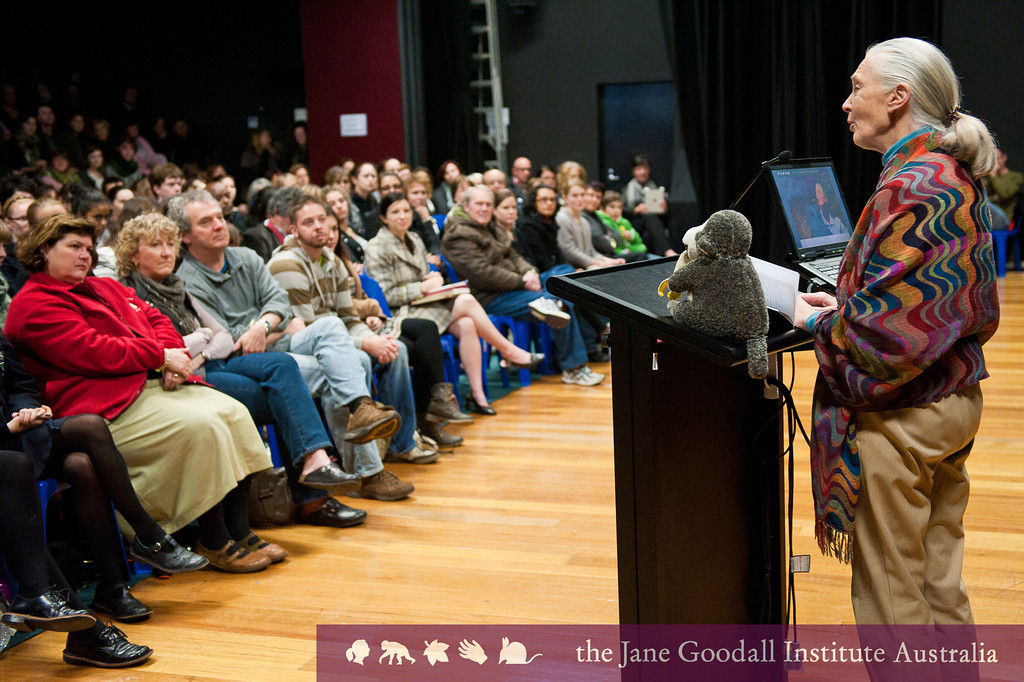
In a lecture to hundreds of fans in NYC on April 15th, Dr. Goodall explained that agribusinesses are clearing rainforests in the Amazon to graze cattle and grow crops to feed them. Without rainforests – the “lungs of the earth” – the planet’s ability to convert carbon dioxide (CO2), a greenhouse gas, into oxygen is compromised.

Clearing Amazon rainforest for cattle grazing (photo: Universal Images Group/Getty Images)

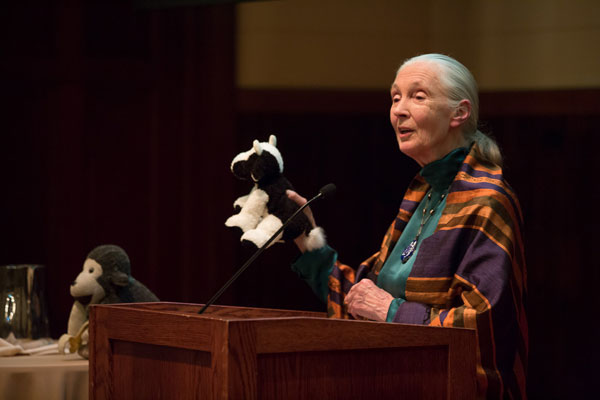
Even more harmful than CO2, Goodall said, is the methane gas emitted in cow farts. As developing countries adopt Western diets heavy in animal protein, more methane and CO2 are released into the atmosphere, further warming the planet and jeopardizing our ability to inhabit it.

Jane Goodall uses a stuffed cow to point out that methane gas is emitted in cow farts.

During her talk, Dr. Goodall described some of the other destructive effects of animal agriculture, including land and water pollution, antibiotic resistance, depletion of fresh water resources and animal cruelty, which is was motivated her to go veg. In a recent interview with the Toronto Globe & Mail, she said, “I became a vegetarian because of the horrendous suffering on factory farms and in abattoirs.”

Jane Goodall paints a grim picture of the state of the planet, but she is hopeful that humans will work together to save ourselves from ourselves. And she offers some advice that each of us can put into action today:

  • Go vegetarian.
  • Consume less. The more we buy, she argues, the more natural resources we extract from the planet. How much stuff do we really need?
  • Improve the environment in our own communities. Goodall’s Roots & Shoots program, which has chapters in 130 countries, is helping people plant trees, clean rivers and perform other community services in their own backyards.

Roots & Shoots has chapters in 130 countries

At the end of her presentation, Dr. Goodall showed a video of a newly-released captive chimpanzee hugging her when she emerged from her crate and realized she was home in the jungle. Goodall uses this remarkable event to point out that, as intelligent as chimps are, their brains are far less powerful than those of humans. And she left the audience with a challenge — to harness the brainpower that we’ve used to damage the planet to save it.

Drought Jeopardizes Western Birds

from Audubon.com

An unprecedented 15-year drought is drying out the Colorado River Basin, threatening the birds and people that live there. The Colorado River provides drinking water for millions of people, world-class recreation, irrigation on working lands, and life-sustaining habitat for hundreds of species of migrating, nesting, and wintering birds. With less water in the Basin, birds will be in trouble as habitat simply begins to fade away. We are calling on people across the country to contact their U.S. Senators, urging them to address this critical situation.

Email your Senators today and ask them to help save water and restore habitat in the Colorado River Basin and across the West.

In the water-scarce West, birds rely on ribbons of rivers and streams, essential wetlands, and the vegetation they nourish. Many nesting species are already in serious trouble due to the loss of habitat from the drought. The Western Yellow-billed Cuckoo and Southwestern Willow Flycatcher have been pushed to the brink and were recently listed under the Endangered Species Act.

The health of the Colorado River is vital to the well-being of the West and the nation. It provides drinking water for more than 36 million people, irrigates 15 percent of US crops, and sustains hundreds of species of birds and other wildlife. Numerous federal programs can help provide short-term and long-term solutions, such as WaterSMART, which supports locally-driven efforts to save water across the West, and the Multi-Species Conservation Program, which helps restore thousands of acres of vital habitat for birds and other wildlife in the Colorado River Basin.

Write to your Senators today and urge them to support water conservation and habitat restoration programs like these in order to secure a sustainable future for the people and birds of the West.

55026060ac29d.preview-300