A World that Never Was

730_306907729449712_225651386_n

Revisionist history may seem like harmless, feel good child’s play, but the threat it poses (to all other animals at least) is that without hearing the real story, people will never learn from the past.

It’s tempting to want to believe that all that has gone wrong with the human race is the result of being led astray by our technology, and if we could just get back to our caveman roots, everything would be happy and harmonious like it surely was back then. But contrary to contemporary popular belief, that’s a world that never was.

Even the earliest human hunters drove countless species to extinction and exhausted their carrying capacities time and again, ever since plant-eating primates first climbed down from the trees and decided to take up big-game hunting.10418292_778659628825562_4081410081902108848_n

The notion of the peaceful savage has long since been disproven, but people want to cling to it rather than accept the truth about human nature. Just look at the dead-animal adornments any warrior or tribal chief wore, and it’s easy to see the roots of trophy hunting.

The thought that any spear-wielding species who took advantage of fire to herd animals toward a cliff or into a box canyon had an innate sense of ecological fairness goes against all that made us human—envy, lust, greed, gluttony, a lack of empathy and an over-blown ego are the kinds of things that ultimately define a hunter, whether the motive for their behavior is sport or subsistence.

Richard Wrangham and Dale Peterson summed up the chapter, “Paradise Imagined,” of their book, Demonic Males: Apes and the Origins of Human Violence, thusly, “There is no such thing as paradise, not in the South Seas, not in southern Greece, not anywhere. There never has been. To find a better world we must look not to a romanticized and dishonest dream forever receding into the primitive past, but to a future that rests on a proper understanding of ourselves.”

Humans have achieved an awful lot of success as a species over the years, but judging by our planet-crushing prowess, we may have finally breached our collective britches.

1173835_594069293967592_2141908188_n

Tuesday Is Soylent Green Day Again

Last night I watched the timeless 1973 movie, Soylent Green, again and was again impressed (unfavorably) by how much the futuristic world that it depicted mirrored the world we’re headed for now. The temperature of the overcrowded New York of the future was a constant 90 degrees; the oceans were dying (presumably from overfishing and pollution, they hadn’t heard of acidification at the time); and the world was running out of food..

Spoiler Alert:

Set in 2022, the film opens with a slide show of earlier eras, back when the Earth was covered with forests and open fields, and there were only a few scattered settlements of people who travelled in horse-drawn wagons.

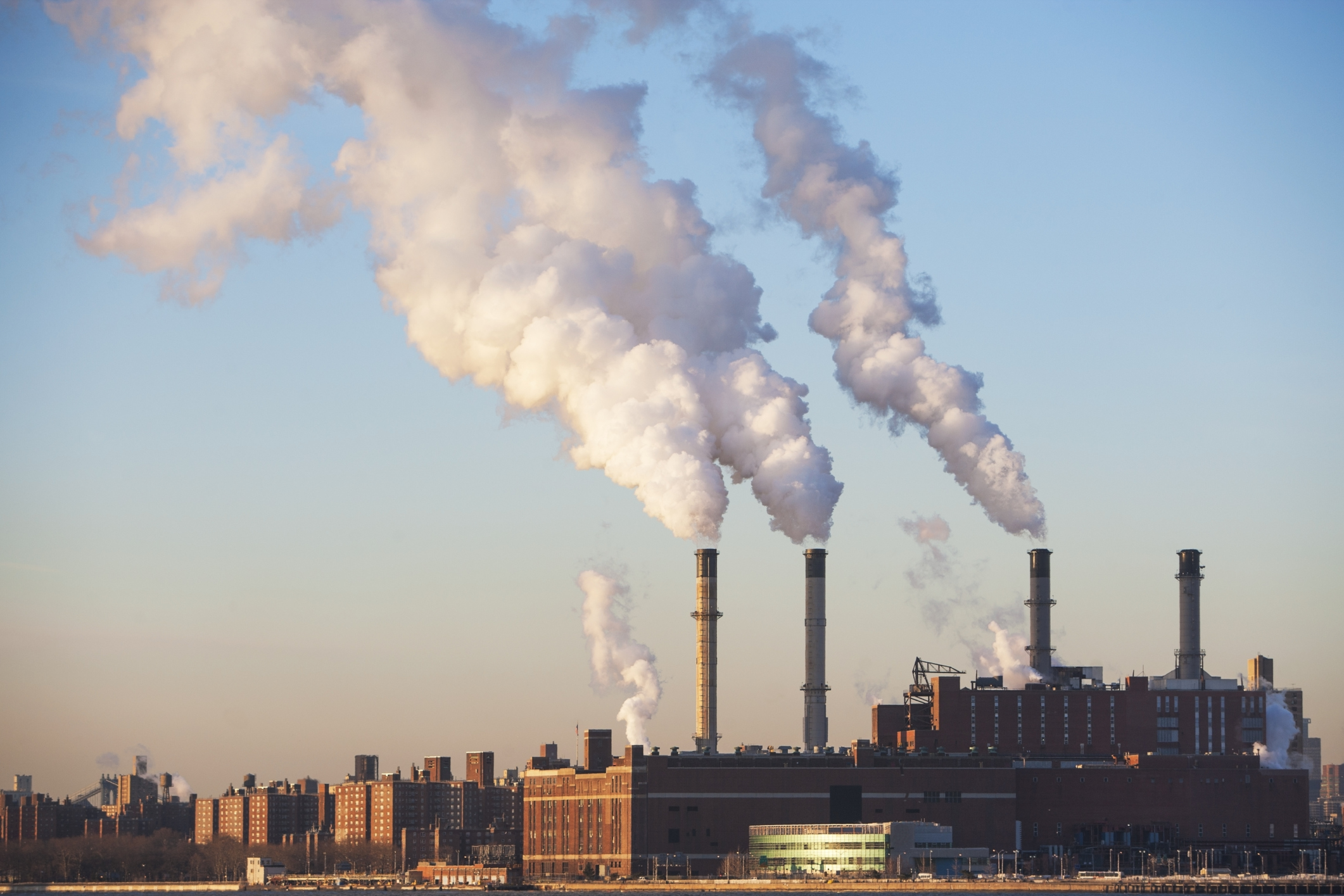
As the images pass quickly by, we see the first automobiles (tail pipes spewing toxic climate-changing carbon gases), followed by a massive blacktop parking lot jam packed with Model Ts. The pictures begin to flash almost more rapidly than we can focus, but we catch glimpses of factories with smokestacks billowing and crowds of people barely able to

move without trampling one another. (Come to think of it, what we are witnessing looks a lot like the inside of an average modern-day poultry barn, where chickens and turkeys are forced to live out their lives in intense confinement.)

The first scene of action takes place in a cramped little New York City apartment, the dwelling of the film’s two main characters, Thorn, a semi-corrupt detective, and his elderly room-mate and research partner, Sol, who is constantly going on about the good old days—a world that Thorn can’t possibly envision or relate to.

They are among the lucky few; most people sleep on the stairways or in the hallways or anywhere they can find shelter from the oppressive heat caused by an out of control greenhouse effect. We overhear a program on their worn out old TV which is an interview with the governor of New York, touting a new food product called “Soylent Green,” ostensibly made from the ocean’s plankton. (Everyone in that day and age knows that the land is used up, but they’re told the oceans can still provide for them).

Food in this depressing, human-ravaged world comes in the form of color-coded wafers, distributed under strict government supervision. Hordes of people stand in line for their ration of Soylent yellow or blue made from soy, or other high protein plants grown behind the fortress-walls of heavily guarded farms.

Signs remind the throng that “Tuesday is Soylent Green day.”

The multitudes are exceptionally unruly on Tuesday. Brimming with anticipation, they can’t wait to obtain a ration of the special new product. When the food distributors run out of soylent green, people start rioting and things get out of hand. “Scoops” (garbage trucks fitted with backhoe-like buckets on the front) are called in to scrape up the angry masses and haul them off…

By the end of the film, Thorn learns that the oceans are dead and the actual ingredients of Soylent Green are something a bit harder to stomach than plankton. In the final scene, a mortally-wounded Thorn is carried away on a stretcher as he desperately tries to tell bewildered onlookers, “Soylent Green is People!” “They’re making our food out of people. Next thing, they’ll be breeding us like cattle for food!”

Could it ever happen? Could the human race ever stoop so low? If the scenario seems too hard to swallow­, consider this: the conditions animals are forced to endure on today’s factory farms would have seemed unimaginable to people living a hundred years ago.

Are Humans Going Extinct?

Monday, 01 December 2014 09:45
Written by 
Dahr Jamail By Dahr Jamail, Truthout | Interview

Some scientists, Guy McPherson included, fear that climate disruption is so serious, with so many self-reinforcing feedback loops already in play, that humans are in the process of causing our own extinction.

August, September and October were each the hottest months ever recorded, respectively. Including this year, which is on track to become the hottest year ever recorded, 13 of the hottest years on record have all occurred in the last 16 years.

To see more stories like this, visit “Planet or Profit?”

Coal will likely overtake oil as the dominant energy source by 2017, and without a major shift away from coal, average global temperatures could rise by 6 degrees Celsius by 2050, leading to devastating climate change.

“Across two decades and thousands of pages of reports, the world’s most authoritative voice on climate science has consistently understated the rate and intensity of climate change and the danger those impacts represent.”

This is dramatically worse than even the most dire predictions from the Intergovernmental Panel on Climate Change (IPCC), which predicts at least a 5-degree Celsius increase by 2100 as its worst-case scenario, if business continues as usual with no major mitigation efforts.

Yet things continue growing worse faster than even the IPCC can keep up with.

Scientific American has said of the IPCC: “Across two decades and thousands of pages of reports, the world’s most authoritative voice on climate science has consistently understated the rate and intensity of climate change and the danger those impacts represent.”

And there is nothing to indicate, in the political or corporate world, that there will be anything like a major shift in policy aimed at dramatically mitigating runaway anthropogenic climate disruption (ACD).

Guy McPherson is a professor emeritus of natural resources, and ecology and evolutionary biology, with the University of Arizona, who has been studying ACD for nearly 30 years.

Near-term human extinction could eventually result from losing the Arctic sea ice, which is one of the 40 self-reinforcing feedback loops of ACD.

His blog Nature Bats Last has developed a large readership that continues to grow, and for six years McPherson has been traveling around the world giving lectures about a topic that, even for the initiated, is both shocking and controversial: the possibility of near-term human extinction due to runaway ACD.

As McPherson has told Truthout: “We’ve never been here as a species, and the implications are truly dire and profound for our species and the rest of the living planet.” He told Truthout that he believes that near-term human extinction could eventually result from losing the Arctic sea ice, which is one of the 40 self-reinforcing feedback loops of ACD. “A world without Arctic ice will be completely new to humans,” he said.

At the time of our interview less than one year ago, McPherson had identified 24 self-reinforcing positive feedback loops. Today that number has grown to 40.

A self-reinforcing feedback loop can also be thought of as a vicious circle, in that it accelerates the impacts of ACD. An example would be methane releases in the Arctic. Massive amounts of methane are currently locked in the permafrost, which is now melting rapidly. As the permafrost melts, methane, a greenhouse gas 100 times more potent than carbon dioxide on a short timescale, is released into the atmosphere, warming it, which in turn causes more permafrost to melt, and so on.

In the near term, earth’s climate will change 10 times faster than during any other moment in the last 65 million years.

While McPherson’s perspective might sound way-out and like the stuff of science fiction, similar things have happened on this planet in the past. Fifty-five million years ago, a 5-degree Celsius rise in average global temperatures seems to have occurred in just 13 years, according to a study published in the October 2013 issue of the Proceedings of the National Academy of Sciences. A report in the August 2013 issue of Science revealed that in the near term, earth’s climate will change 10 times faster than during any other moment in the last 65 million years.

Prior to that, the Permian mass extinction that occurred 250 million years ago, also known as “The Great Dying,” was triggered by a massive lava flow in an area of Siberia that led to an increase in global temperatures of 6 degrees Celsius. That, in turn, caused the melting of frozen methane deposits under the seas. Released into the atmosphere, those gases caused temperatures to skyrocket further. All of this occurred over a period of approximately 80,000 years. The change in climate is thought to be the key to what caused the extinction of most species on the planet. In that extinction episode, it is estimated that 95 percent of all species were wiped out.

Today’s current scientific and observable evidence strongly suggests we are in the midst of the same process – only this time it is anthropogenic, and happening exponentially faster than the Permian mass extinction did.

We are likely to begin seeing periods of an ice-free Arctic by as soon as this coming summer, or the summer of 2016 at the latest.

Once the summer ice begins melting, methane releases will worsen dramatically.

Our current extinction event is already greatly exceeding the speed, and might eventually even exceed the intensity, of the Permian mass extinction event.

We are currently in the midst of what most scientists consider the sixth mass extinction in planetary history, with between 150 and 200 species going extinct daily – a pace 1,000 times greater than the “natural” or “background” extinction rate. Our current extinction event is already greatly exceeding the speed, and might eventually even exceed the intensity, of the Permian mass extinction event. The difference is that ours is human caused, isn’t going to take 80,000 years, has so far lasted just a few centuries and is now gaining speed in a nonlinear fashion.

Is it possible that, on top of the vast quantities of carbon dioxide from fossil fuels that continue to enter the atmosphere in record amounts yearly, an increased release of methane could signal the beginning of the sort of process that led to the Great Dying? Some scientists, McPherson included, fear that the situation is already so serious and so many self-reinforcing feedback loops are already in play that we are in the process of causing our own extinction. Worse yet, some are convinced that it could happen far more quickly than generally believed possible – even in the course of just the next few decades.

Truthout caught up with McPherson at the Earth at Risk conference in San Francisco recently to ask him about his prediction of human extinction, and what that means for our lives today.

Dahr Jamail: What are some of the current signs and reports you’re seeing that are disconcerting, and really give you pause?

Guy McPherson: I’ve been traveling, so I’m out of date for the last 10 days. But starting with the snowstorm in Buffalo, New York, that was the biggest snowstorm ever recorded in Buffalo, at 6 feet 4 inches in 24 hours. It’s the largest one ever recorded in the United States.

Australia, meanwhile, is on fire. I just came back from New Zealand, and spring had just turned there because it’s the Southern Hemisphere. The whole time I was there people were commenting on how hot it was, and “how far into summer we already are,” and it was early to mid-spring when I was there.

So there’s all kinds of observational evidence.

“It’s hard for me to imagine we make it into the 2030s as a species.”

We triggered another self-reinforcing feedback loop, number 40, just about two weeks ago; then just a week ago there was a [scientific] paper that came out indicating that for every 1-degree temperature rise, there is 7 percent more lightning strikes. So that contributes to a previously existing self-reinforcing feedback loop, that of fires, especially in the Northern Hemisphere, and especially in the boreal forests. So, as it gets warmer and drier, there are more and bigger fires, and that kicks more carbon into the atmosphere, which of course contributes to ongoing, accelerating climate disruption.

So lightning is yet another piece of that. As there is more moisture in the atmosphere and more heat going into the atmosphere and warming the planet, we have more lightning. The whole atmosphere becomes more dynamic. So, those are things that come to mind.

From your analysis, how long do you think humanity has before extinction occurs?

That’s such a hard question, and we are such a clever species. It’s clear that abrupt climate change is underway. Methane has gone exponential in the atmosphere. Paul Beckwith, climate scientist at University of Ottawa, indicates we could experience a 6-degree Celsius temperature rise in the span of a decade. He thinks we’ll survive that. I can’t imagine how that could be. He’s a laser physicist and engineer, so I think he doesn’t understand biology and requisite habitat that we need to survive.

So it’s difficult for me to imagine a scenario where we’ll survive even a 4-degree Celsius [above pre-industrial baseline] temperature rise, and we’ll be there in the very near future, like by 2030, plus or minus. So it’s hard for me to imagine we make it into the 2030s as a species.

But when I deliver public presentations I try not to focus on any particular date; I just try to remind people that they are mortal. That birth is lethal, and that we don’t have long on this planet even if we live to be 100, so we might want to pursue what we love, instead of pursuing the next dollar.

A more micro-look from that question – what do you see happening in the US, if Beckwith and other scientists who are predicting that rapid a rise of temperatures in such a short time frame are correct?

The interior of continents heats at least twice as fast as the global average. So a 6-degree Celsius rise in the global average means at least 12 degrees Celsius in the interior of continents – that means no question there is no habitat for humans in the interior. So you would have to be in a maritime environment.

“It’s difficult for me to imagine a situation in which plants, even land plants survive, because they can’t get up and move.”

I think even before we get to 6 degrees Celsius above baseline, we lose all habitats. We lose all or nearly all the phytoplankton in the oceans, which are in serious decline already as the result of an increasingly acidified ocean environment. It’s difficult for me to imagine a situation in which plants, even land plants survive, because they can’t get up and move. So without plants there is no habitat.

At a 6-degree Celsius temperature rise in the span of decades, there’s no way for evolution by natural selection to keep up with that. Already, climate change – which at this point has been pretty slow and what we would call linear change – already climate change is outpacing evolution by natural selection by at least a factor of 10,000, so I don’t see any way the planet is going to keep up.

More:

http://www.truth-out.org/news/item/27714-are-humans-going-extinct

Also read:  The Methane Monster Roars

http://www.globalresearch.ca/the-methane-monster-roars/5426116

1795497_611414028914288_1804650880_n


Half of the members of the US Senate don’t believe humans cause climate change

1795497_611414028914288_1804650880_n

The votes are in, and … half of the members of the US Senate don’t believe humans cause climate change.

This is a national embarrassment. Differences of opinion are one thing, but it’s far more troubling when half of the members of our most distinguished legislative body simply ignore facts supported by overwhelming scientific consensus.

Let’s take the Senate to school. Sign the climate science petition — when we get 50,000 signatures, Avaaz will run a poll quizzing schoolchildren on climate, then launch ads in the biggest papers showing that the US Senate is failing science class compared to middle schoolers. Sign now:

https://secure.avaaz.org/en/schooling_the_senate_on_climate_science_re/?bVYyJab&v=52978

Things are bad in Washington. The first real legislation the new Senate passed this year? To build the climate-wrecking Keystone XL pipeline. The new chair of the Senate’s environmental committee is James Inhofe, the Senate’s climate denier-in-chief who quotes the Bible to claim humans can’t change the planet. But the climate science report from the National Academies of Science — commissioned by Congress itself — says the exact opposite!

The report’s #1 finding was that “Climate change is occurring, is very likely caused primarily by human activities, and poses significant risks to humans and the environment.” Going against this is like asking mathematicians for a number line, then saying that 1 is smaller than zero.

Deep down, most of the Senators who voted against scientific fact must know they’re full of it. The American people do — a new report just found that a majority want Congress to do more on climate. And our best shot at changing the game is to publicly embarrass them.  Sign on now, and help teach Congress a lesson that even 8th graders know:

https://secure.avaaz.org/en/schooling_the_senate_on_climate_science_re/?bVYyJab&v=52978

Human-caused climate change is no joke. That so many of our supposed leaders are so out of step with basic science, settled years ago, means that the people are going to have to lead on this one. That’s a role the Avaaz community knows how to fill — we did it in New York in September with the People’s Climate March, and we can do it again now.

With hope,

Terra, David, John, Nataliya, Fatima, Ricken, and the Avaaz team

SOURCES
National Academy of Sciences “Climate Choices” Report summary
http://dels.nas.edu/Report/America-Climate-Choices-2011/12781

So Much Senate Climate Change Trolling (Think Progress)
http://thinkprogress.org/climate/2015/01/21/3614028/so-much-senate-climate-change-trolling/

US Senate refuses to accept humanity’s role in global climate change, again (The Guardian)
http://www.theguardian.com/environment/2015/jan/22/us-senate-man-climate-change-global-warming-hoax

Most Americans support government action on climate change (NY Times)
http://www.nytimes.com/2015/01/31/us/politics/most-americans-support-government-action-on-climate-change-poll-finds.html

Abrupt Climate Change, Already?


http://www.ukprogressive.co.uk/abrupt-climate-change-already/article35431.html

by Robert Hunziker

There are some serious scientists who believe it is already here. If their analysis is correct, the world could turn nearly uninhabitable within current lifetimes.

In that regard, the American public is overly, dangerously casual about the prospects/risks of abrupt climate change. This is found in numerous studies and polls, e.g. according to a Pew Research Global Attitudes Project, in an international survey of 39 countries, Americans were among the least concerned about climate change threatening the country. Global warming also ranked near the bottom of Americans’ priorities.

As it goes, the American public may be caught off guard, unprepared, and ill equipped to press its political establishment for appropriate action because abrupt climate change has a history of happening very, very quickly, within decades, not over hundreds of years.

Assuming these scientists are correct, by the time the U.S. Congress gets serious about climate change, they’ll be wearing waders.

As for the risks associated with abrupt climate change, according to Paul Beckwith, Laboratory for Paleoclimatology and Climatology, University of Ottawa, in the past: “The temperature of the planet has increased by 5C or 6C within one decade or two decades… not within a hundred years but within one or two decades… during the ice age period between 70,000 and 40,000 years ago, the temperature rose over Greenland 5-6C in a decade or two… and 55 million years ago… the temperature rose globally by 5C in 13 years, as shown in sediment samples.” (Source: COP20: Global Arctic Methane Emergency https://www.youtube.com/watch?v=QQkNxuQ0DoI

Based upon historic records, once abrupt climate change commences, and when viewed on a geological-time basis, it has the potential to take off like a house on fire. According to Paul Beckwith, unfortunately: “We’re undergoing the early stages of abrupt climate change,” already, right now!  As such, a rapid self-fulfilling temperature rise of 5C or 6C would be devastating for life, as we know it.

This risk of further rapid abrupt climate change, as for example, temperatures zooming Featured Image -- 8189upwards, depends upon the integrity of the ice of the Arctic, among other considerations. As emphasized by Beckwith, when analyzing the climate system, it is important to understand that metrics can be misleading.  For example, the consensus opinion talks about 2C as a cap for rising temperatures; however, in point of fact, “What is important is the temperature distribution on the planet on a latitudinal basis.”

Beckwith: “The Arctic is absorbing a lot more solar energy, and by itself at a much greater rate, than anywhere else on the planet. In fact, on average, in the last number of decades, the Arctic temperature has risen 1.0C per decade whereas the global average temperature rise has been about 0.15C per decade. So that ratio is 6 or 7 times more.”

Therefore, the most immediate risk of further abrupt climate change hinges on how well the Arctic withstands global warming. As the Arctic loses ice mass, it releases more, and more, methane (CH4), which is much more powerful at entrapping heat than is carbon dioxide (CO2), and because massive quantities of CH4 are embedded within the ice, only a small fraction may cause the planet to heat up rapidly, going into deadly overdrive, resulting in numerous outgrowths negatively impacting life. As for example, rapid increase in sea levels, flooding coastal cities, embedded droughts, diminishing agricultural production, severe storm activity, and horrific heat throughout the mid latitudes, resulting in panic, illness, and sudden death. It is likely the world turns chaotic.

Scientists are radically divided on the issue of abrupt climate change and few predict an upsurge any time soon. Nevertheless, it’s the scientists who base their opinion on first hand knowledge, “boots on the ground,” who are screaming the loudest. They do not let the “ computer models” override what they personally experience. In contrast, they see and feel the reality “in the field.”  They are like scientific pioneers in the field, in the marsh, below and above the ice, on expeditions into the wilderness where nobody cares to tread. It’s hard work.

Those scientific pioneers, like John Nissen, Chairman of the Arctic Methane Emergency Group (“AMEG”), are deeply concerned about the rate of melt of the Arctic, and the attendant enormous plumes of methane, already observed in the Arctic seas, especially in the East Siberian Ice Shelf where waters are shallow and easily warmed, threatening to release gigatons of methane.  Expeditions above, below, and on the surface have convinced these scientists that we’ve got a huge problem coming up, maybe soon, maybe too soon.

According to John Nissen: “Sea ice could disappear at the end of summer as soon as next September. At that point, further warming of the Arctic, sea level rise, methane release, in that time bomb, and abrupt climate change, could become unstoppable. The fuse will have been lit and will be going off very quickly. We consider it an absolute scandal that IPCC [Intergovernmental Panel on Climate Change] says nothing about the greatest threat to humanity since civilization began.”

In turn, these pioneering scientists listen to other scientists who also favor “boots on the ground” analysis over scientific modeling, people like Dr. Natalia Shakhova, who leads the Russia-U.S. Methane Study at the International Arctic Research Center, at the University Alaska Fairbanks and the Pacific Oceanological Institute, Far Eastern Branch of Russian Academy of Sciences. Dr. Shakhova’s expeditions to the Arctic convince her that only a tiny percentage of the vast amounts of methane buried in Arctic ice is necessary to double current atmospheric CH4. Worse yet, she suspects an outburst of 50 gigatons could happen at any time. In many respects, this would be a disaster beyond repair.

In an interview, Shakhova says, “We do not like what we see… absolutely do not like it.”

In the end, too much carbon dioxide emitted by burning too much gas, oil & coal, blankets the atmosphere enough to heat up the Arctic far above and way beyond past centuries, causing torrential weather patterns throughout the Northern Hemisphere, and shaking lose too much methane for human comfort.

Could civilization withstand a 50-gigaton release? Professor Wadhams’ response is: “No, I don’t think it can.”

Is there a solution?

Yes, there may be solutions but according to these scientists, a sense of urgency matters more than anything at this late hour.

Paul Beckwith is one of the scientific pioneers, an advocate, a researcher, and member of AMEG, co-founded by Peter Wadhams, professor of Ocean Physics, University of Cambridge.

Beckwith: “We have to slash emissions there’s no question, slash the CO2 emissions and quickly, but that’s not sufficient. We also have to cool the Arctic, and we also have to try to remove CO2 from the atmosphere.”

The technology is there, solar radiation management, reflecting incoming solar, and sea salt spraying, as well as employing concerted efforts to increase vegetation to absorb CO2, and carbon capture, and biochar.

However, there’s risk because nobody has proven these geoengineering techniques effective on a planetary scale. On that basis, they are experimental. There is no consensus in the world community to test geoengineering, which is very provocative subject matter amongst scientists, some favor, some oppose. And, those opposed adamantly oppose because of potential harmful feedback loops. It may be a risky venture.

But, what if these early-warning scientists are wrong? What if they are absolutely correct about the outcome of global warming/climate change but too optimistic about the timing? This, therefore, is all the more reason for governments to initiate conversions now from fossil fuels to renewables, hopefully rescuing future generations from the potential of a global warming nightmare.

If we lose the ice caps, civilization starves and the world’s coastal cities drown. It’s really as simple, and complex, as that. Already, CO2 levels are at an historic high.

Throughout geological history, “Every time we have hit high CO2, we’ve lost the ice caps,” Peter Ward, professor, Dept. of Earth & Space Sciences, University of Washington, Our Future in a World without Ice Caps, 2013 lecture series.

1795497_611414028914288_1804650880_n

Unusually High Number of Sea Lions Stranded in Calif.

http://www.accuweather.com/en/features/trend/unusually_high_number_of_sea_l/41362576

<!–

–>

January 31, 2015; 8:00 AM ET

A record number of starved sea lion pups are washing ashore along the California coast.

Wildlife Photography ©Jim Robertson. All Rights Reserved

Wildlife Photography ©Jim Robertson. All Rights Reserved

Officials said on average 250 stranded pups need rescuing between January and April. Since Jan. 1, marine mammal rescue centers have taken in 150 animals.

Scientists believe warmer waters caused by El Niño might shift the sea lions’ food supply and force pups to leave their malnourished mothers sooner than usual.

The high numbers of stranded sea lions have forced rescue centers to prepare for a high number of incoming animals.

“All of the [rescue and rehabilitation] facilities are preparing for the worst and hoping for the best,” said Justin Viezbicke with the National Marine Fisheries Service and coordinator of the California Stranding Network. “They’re getting staffing ready, looking at transferring animals if facilities are full, sharing staffing and resources, and getting everybody ready to respond.”

Rescuers said many of the pups arrive weighing just more than their birth weight of 18 to 22 pounds. Many have parasites, respiratory infections, digestive issues or a strain of pox, said Todd Schmitt, SeaWorld’s senior veterinarian (Deborah Sullivan Brennan, San Diego Union-Tribune, Jan. 27).

Reprinted from ClimateWire

Humans: Overall, Not Favorably Impressive So Far

The human species is surely impressed with itself. Even the name they chose to classify themselves—Homo sapiens (Latin for “wise man”)—suggests it. Undoubtedly, there must have been some thought involved in the process of mushrooming from a simple tree-dwelling leaf eater in one small corner of the planet, to becoming the scariest big game hunter to rule the Earth.

 UGH

(Carrying a torch)

                               “I’ll use this fire stick to chase that group of peacefully grazing, gregarious gazelles toward that cliff over there, and you guys try to spear as many as you can”

THAG

(Carrying a spear)

                                           “Good thinking, Ugh.”

Scenes like this played themselves out over and over as the species spread out and burgeoned to 7.2 billion. Now the technology of the killingest of creatures has advanced to the point that a single hunter, dressed in camouflage and drenched in another animal’s urine to con his victim as much as possible, can bring down the mightiest moose or tallest giraffe with the slightest squeeze of a trigger.

And still the species grows exponentially and continues to claim every last habitat.

It was impressive when man built the first rocket and took a walk on the moon. However, the rockets they build to blow their enemies sky-high (while irradiating the land and sea) more clearly typify the species’ overall achievements to date. But lately it seems that nuclear annihilation won’t get to see its day; anthropogenic climate change and a man-made extinction spasm are now higher on the agenda.

Perhaps the human, the only creature capable of destroying the Earth, should have been named Homo horribilus mactabilis (Latin for “horrible, dreadful, fearful; deadly, lethal man”).

What would really be impressive is if people were to drop their steak knives (and other weapons of mass destruction) en masse and make peace with this amazing planet and all of its inhabitants. The potential is there, but do they still have the will to learn?

1527138_271312873037188_1829199472_n

Pope Schitzo on Population Control/Climate Change

Pope on climate change: Man has ‘slapped nature in the face’

Pope Francis said Thursday he is convinced that global warming is “mostly” man-made and that he hopes his upcoming encyclical on the environment will encourage negotiators at a climate change meeting in Paris to make “courageous” decisions to protect God’s creation.

Francis has spoken out frequently about the “culture of waste” that has imperiled the environment and he elaborated en route to the Philippines. While there, Francis will meet with survivors of the 2013 Typhoon Haiyan, which the government has said was an example of the extreme weather conditions that global warming has wrought.

“I don’t know if it (human activity) is the only cause, but mostly, in great part, it is man who has slapped nature in the face,” he said. “We have in a sense taken over nature.”

“I think we have exploited nature too much,” Francis said, citing deforestation and monoculture. “Thanks be to God that today there are voices, so many people who are speaking out about it.”

Francis, who pledged on the day of his installation as pope to make the environment a priority, said he expected his encyclical on ecology to be released by June or July. He said he wanted it out in plenty of time to be read and absorbed before the next round of climate change negotiations opens in Paris in November after the last round in Lima, Peru, failed to reach an agreement.

“The meetings in Peru were nothing much, I was disappointed,” he said. “There was a lack of courage. They stopped at a certain point. We hope that in Paris the representatives will be more courageous going forward.”

The ultimate goal of U.N. climate negotiations is to stabilize greenhouse gases at a level that keeps global warming below 2 degrees C (3.6 F), compared with pre-industrial times. Negotiations culminating in the Nov. 30-Dec. 11 meeting will rise or fall on two key points: How to divide responsibility for global warming and how to pay to fight it. The developed world used fossil fuels to build roads, cities and houses, and emerging economies want to have the same chances to grow as quickly as possible. Island nations and low-lying countries, meanwhile, fear rising sea levels will swamp them and need funds to adjust.

Environmentalists are hopeful that Francis’ encyclical will jump-start the talks, and note that the pope is due to speak at the United Nations in New York in September where he may use the global stage to make some points before negotiations get under way.

“Drawing attention to the impact a changing climate is having on poor communities in the Philippines couldn’t be better timed, given the crucial decisions world leaders must take this year to tackle the issue,” Neil Thorns, director of advocacy at CAFOD, the aid agency of the Catholic Church in England and Wales, said in a statement. “Vulnerable communities like those in the Philippines — and indeed all of us — need political leaders to rise to that challenge and go further than they did in Lima.”

Those who reject scientific findings that climate change is man-made, however, have condemned the pope in harsh terms for taking up the issue at all. Their criticisms are based on previous comments by Francis and recent remarks by some of his top aides that there is clear-cut scientific evidence that climate change is driven by human activity.

Pope strongly defends church teaching against contraception

Associated Press

…He then deviated from his prepared remarks to praise Pope Paul VI for having “courageously” resisted calls for an opening in church teaching on sexuality in the 1960s. Paul penned the 1968 encyclical “Humanae Vitae” which enshrined the church’s opposition to artificial birth control.

Francis noted that Paul was aware that some families would find it difficult to uphold the teaching and “he asked confessors to be particularly compassionate and understandable for particular cases.”

But he nevertheless said Paul was prescient in resisting the trends of the times.

“He looked beyond. He looked to the peoples of the Earth and saw the destruction of the family because of the lack of children,” Francis said. “Paul VI was courageous. He was a good pastor. He warned his sheep about the wolves that were approaching,…”

………………………….

Yet another derogatory statement about wolves? Apparently the Pope didn’t read the May 7, 2007 news release from the U.K.s’ http://www.optimumpopulation.org “Combat Climate Change With Fewer Babies”: The most effective personal climate change strategy is limiting the number of children one has. The most effective national and global climate change strategy is limiting the size of the population.

59 Billion Farmed Animals Serve an Insatiable Human World

524958_3325028303604_654533903_n

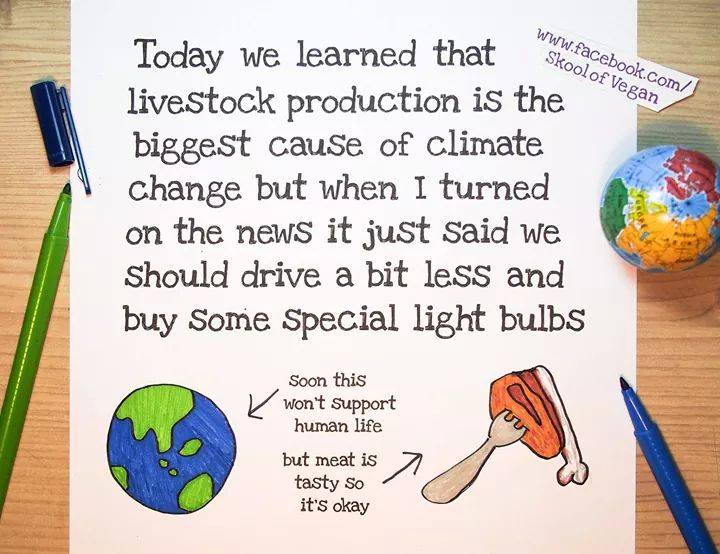
There are 59 billion animals alive at any one time, farmed for their meat. The world’s domestic cattle weigh 16 times as much as all the wild animals on the planet put together. 60% of the globe’s agricultural land is used for beef production, from growing grain to raising cows. Since the early-20th century, industrial farming and global capitalism have worked hand-in-hand to provide meat at an ever cheaper price. And our appetites, so tempted, have led us to consume more and more animals. In the US, each citizen eats on average 120kg of meat per year. And that’s not even the number one spot. Our insatiable desire for meat has defined how we use our planet. But cheap meat comes at a price. Planet Carnivore gets under the skin of the health problems that over-consumption brings; of modern farming’s destructive use of resources; and of the stretched and strained farms and abattoirs that lead to horsemeat in beef burgers and challenging moral questions about our relationship with our food. Alex Renton’s brilliantly researched, utterly compelling Guardian Short serves up the grisly stories, and also looks at how we are beginning to try and pay the cheap meat bill, from innovative twists on current techniques to cutting edge scientific breakthroughs. – See more at: http://guardianshorts.co.uk/planetcarnivore/#sthash.oURzZciG.dpuf