Large carnivore decline puts humans at risk

http://www.nbcnews.com/science/cry-wolf-large-carnivore-decline-puts-humans-risk-study-says-2D11880999

copyrighted Hayden wolf walking

by John Roach

A few years after wolves were reintroduced to the Northern Rockies in 1995, fifth-generation Montana rancher Rick Jarrett gave up on the parcel of federal land near Yellowstone National Park that he grazed for 20 years. The carnivores harassed his cattle so much that they stopped gaining weight. Skinny cattle don’t sell.

“It wasn’t worth being there anymore,” he told NBC News. To turn a profit, he now confines his livestock to several thousand acres on and around his ranch in Big Timber, where his cattle and sheep are free to pack on the pounds — for now. The wolves, he said, will eventually get there, too.

While Jarrett is bitter about having to live with wolves, such coexistence is increasingly necessary if the world hopes to reverse a downward spiral of its largest carnivores such as wolves as well as lions, tigers, and bears, according to a review study published Thursday in the journal Science.

As the carnivores decline, ecosystems and food chains that humans depend on for survival are unraveling and, in many cases, adding to the economic woes of everyone from farmers to ecotourism companies.

“We should be thinking of ourselves in the end because if enough important species go extinct and we lose enough ecosystem services and economic services, then humanity will suffer,” William Ripple, an ecologist at Oregon State University in Corvallis and the study’s lead author, told NBC News.

What to do? Ripple and 13 colleagues from around the world found that more than three quarters of Earth’s largest carnivores are in population declines. Most occupy only a fraction of their historic ranges and more than half are threatened with extinction.

 The paper’s main finding is familiar to wildlife conservationists — large carnivores are in trouble — but pays scant attention to the most important problem: “What are we going to do about it?” Craig Packer, an ecologist at the University of Minnesota who was not involved with the study, told NBC News.”I think that is a huge challenge.”

Finding solutions is complicated, Ripple noted. The study, he said, is meant to illustrate the plight of carnivores and what humans stand to lose if the creatures go extinct — information that could steer policy via, for example, a global committee focused on carnivore conservation.

In the paper, the researchers argue that humans are ethically obligated to conserve large carnivores — the animals have an intrinsic right to exist on planet Earth. They then back the argument with examples of the way the role carnivores play in the ecosystem help humans.

In Africa, for example, loss of leopards and lions has translated to an increase in baboon populations, which in turn are raiding farmers’ livestock and crops for food. “In extreme cases, the farm family needs to keep their children home to guard the crops instead of go to school,” Ripple said.

Other benefits of carnivores noted in the study include control of deer, elk, and moose populations, which in turn keep forest plants healthy for other critters, limit erosion, and enhance water quality. Parks full of wolves and bears also attract tourists, whose dollars boost local economies.

Wolf-specific tourism in Yellowstone National Park, the paper notes, brings in $22 to $48 million per year.

What’s more, the scientists add, regions where carnivores keep other animal populations in check are full of plants that soak up carbon from the atmosphere, helping to slow global climate change. Jarrett, the Montana rancher, doubted such arguments would foster better feelings toward wolves.

“Granted carbon sequestration is important,” he said, “but the benefit we are going to get from wolves … is so insignificant it isn’t even funny.”

Legitimate fears The reality, noted Packer, who is an expert on human-carnivore interactions and deeply involved in African lion conservation, is that humans naturally fear these animals, often for good reason.

“You cannot expect somebody living in rural Africa or rural Asia to risk being eaten by a lion or a tiger so that your moral sense is gratified back in California or Texas or New York,” he said. “Conservationists need to recognize that there are legitimate reasons why people want to get rid of these animals.”

To reduce human predation on lions, Packer advocates the controversial use of patrolled and maintained fences that serve as a physical barrier between people and wildlife.

Ultimately, he said, the conflict among humans about our relationship with carnivores comes down to emotion versus intellect. While arguments such as carnivores’ ability to buffer ecosystems against climate change are “interesting,” in the end, he said, emotion usually wins.

“You have to find ways that people feel safe and that people benefit economically.”

John Roach is a contributing writer for NBC News.

Reducing Gas Emissions from Livestock Key to Curbing Climate Change: Study

By James A. Foley

Jan 03, 2014

A study published recently in the journal Nature Climate Change highlights both the need for policy changes and greater emphasis on livestock management in order to curb climate change.

Although it’s well known that significant quantities of methane are produced by the burps and excrement of the world’s livestock, the study authors contend that inadequate attention is being paid to to the greenhouse gasses associated with ruminant animals such as cows, sheep, goats and buffalo.

“Because the Earth’s climate may be near a tipping point to major climate change, multiple approaches are needed for mitigation,” study leader William Ripple, a professor in the College of Forestry at Oregon State University. said in a statement. “We clearly need to reduce the burning of fossil fuels to cut CO2 emissions. But that addresses only part of the problem. We also need to reduce non-CO2 greenhouse gases to lessen the likelihood of us crossing this climatic threshold.”

Ripple and his colleagues suggest that an effective way to mitigate the effects these greenhouse gasses have on the environment is to reduce global populations of ruminant livestock.

At approximately 3.6 billion heads, the world population of ruminant livestock is about half the global human population. Moreover, about 25 percent of the Earth’s land area is dedicated to livestock grazing, and a third of all arable land is used to grow feed crops for livestock, the researchers write.

On the basis of pounds of food produced, cattle and sheep generate between 19 and 48 times more greenhouse gasses than protein-rich plant foods such as beans, grains, or soy products, the researchers found.

More: http://www.natureworldnews.com/articles/5514/20140103/reducing-gas-emissions-livestock-key-curbing-climate-change-study.htm#

15242-333e1363ed3eb6b53508d726e22a5fecb3cbcb4a168d4cea6cce61d8_w_240_px

Stop the Global Climatic Train Wreck, I Want Off

Here’s a timely article on climate change that ran in a local paper, followed by my response letter…

All aboard for the global train wreck

By Solveig Torvik

It blew right by you, didn’t it? The biggest news of the month, I mean. Arguably the biggest news in millions of years.

But you surely can’t be held responsible for missing it. It was gone from the news cycle in the blink of an eye. Really, it was no contest, what with the riveting disclosure that President Obama had the audacity to ask his U.S. Marine guard to hold an umbrella over him and Turkey’s visiting Prime Minister Recept Tayyip Erdogan during a rain-soaked press conference.

Still, on May 10 came startling though briefly noted news confirming that heat-trapping carbon dioxide (CO2) in the Earth’s atmosphere has reached a level that hasn’t existed in 3 million years – before humans came on the scene. Just as those nagging scientists long have foretold.

The recent readings of more than 400 parts per million CO2 came from Hawaii’s Mauna Loa observatory, where rising CO2 levels have been tracked for nearly 50 years. The Hawaii measurement matched levels first recorded in the Arctic in 2012.

There’s general agreement by the polluting nations that 450 ppm is the maximum level of CO2 damage the Earth as we know it can withstand. Yet there’s precious little discernible preventive action by these most guilty of parties in this tiresome, disheartening saga. China et al continue to spew CO2 while President Obama shilly-shallies on fossil fuels and other miscreants such as Norway’s rapacious latter-day Vikings relentlessly sink their drill bits into every curved corner of the globe. Oil rules.

The time is soon coming, scientists warn, when no measurement of ambient air anywhere on Earth in any season will register below 400 ppm. “Unless things slow down, we’ll probably get there in well under 25 years,” said Dr. Ralph Keeling of the Scripps Institution of Oceanography of the dreaded 450 ppm.

The unpleasant news about CO2 buildup followed hard on the heels of the sobering March announcement by Oregon State University researchers in the journal Science that annual average global temperatures are higher than they’ve been in 4,000 years.

Wobbles in the Earth’s orbit increased the amount of sunlight reaching the planet about 12,000 years ago, causing the ice sheets to melt, according to the researchers, who reconstructed temperature shifts over the last 11,300 years using evidence from sensitive ocean creatures and other environmental indicators.

By 8,000 years ago, a stabilized warmer climate was allowing human civilizations to develop. If natural forces still controlled the amount of sunlight reaching Earth, eventually we’d be wobbling back to another ice age, scientists say. But the huge send-up of greenhouse gases produced by 200 years of industrialization will prevent that, according to climate experts.

So what’s wrong with that? Who needs another ice age, for pity’s sake? Hello?

It’s the speed of increase in CO2 buildup that should stand your hair on end. It’s unprecedented, say climate scientists. “We and other living things can adapt to slower changes,” said Michael E. Mann, a researcher at Pennsylvania State University. “It’s the unprecedented speed with which we’re changing the climate that’s so worrisome.”

We are conducting a huge, uncontrolled experiment on the systems that regulate life on Earth. For instance: Arctic seas have absorbed half of the CO2 emissions we’ve spewed out since the Industrial Age began, and they’re 30 percent more acidic than 200 years ago.

But now, rapidly melting ice sheets are pumping ever more fresh water into Arctic seas, making them less able to neutralize the acid attack. By 2100, those seas will be at least 50 percent more acidic, Arctic scientists say. And then what? They don’t know yet. But they do know this:

“We have already passed critical thresholds. Even if emissions stop now, acidification will last tens of thousands of years. It is a big experiment,” says Richard Bellerby, who chaired the Arctic Monitoring and Assessment Programme’s recent Arctic waters study.

So, people, here’s where we are: Our nibbling at the edges of this problem over the last 30 years hasn’t worked. It’s glaringly obvious that there’s an utter absence of appetite for major, meaningful reductions in production of heat-trapping gases by those who can make it happen.

What’s urgently needed, apparently, is to admit defeat and shift our focus to adaptive strategies for sustaining human life on a fossil fuel-fed planet that’s radically, and rapidly, changing.

Unless unforeseen events intrude on our population growth trajectory, when the sand really hits the fan around 2050, nine billion humans – equivalent to two more Chinas – will be demanding water and food.

The Environmental Protection Agency has looked into what all this means for the Pacific Northwest. Over the last century, our average annual temperature already has risen by 1.5 degrees Fahrenheit and as much as 4 degrees in some places. By the end of this century, it will be 3 to 10 degrees warmer hereabouts.

We’ll have more rain, less snow, the EPA reports. The Cascade snowpack will be diminished by 40 percent by the 2040s and will melt 20 to 40 days sooner. This means more drought, less irrigation water and stress on hydropower supplies from our dams, which supply 70 percent of our electricity. Expect more insect attacks in apple orchards and forests. More forest fires. And happily, some higher crop yields – if temperature extremes don’t kill them. Salmon will lose one-third of their habitat by 2100. And so on.

All manner of species will move northward in our direction; dozens of ocean fish stocks worldwide already have moved to cooler waters. These creatures, at least, have a response strategy to cope with our onrushing global train wreck.

But not us, the apex instigator species, lords of the planet.

_______________

Dear Editor,

I was shocked and appalled that last week’s Methow Valley News devoted so much ink to a boring subject like the fact that anthropogenic heat-trapping carbon dioxide in the Earth’s atmosphere has reached 400 parts per million the for first time since humans were created.

When I sit down to read a paper I expect to be entertained. Whether or not our species can adapt to the unprecedented rate of climate change hardly seems newsworthy to me. I mean, the paper didn’t print a word about whether or not Geraldo Rivera will be tapped for the New Jersey senate, if JLO’s outfit was too revealing, or how Michael Douglas thinks he acquired throat cancer.

Seriously though, “All aboard for the global train wreck” (May 29, 2013) was a great article, thanks for printing it.

Jim Robertson

nov2012cartoon-large

Finding the Christmas Miracle

This is the time of year when people like to find the silver lining in things. The phenomenon is especially obvious during mainstream media newscasts, as the networks are keenly aware that their viewers might abandon them and move on to a different channel if they stick too close to the reality of a given situation on this, the holiest of nights.

So, in the spirit of silver linings, I’m going to try to be positive and find the “Christmas miracle” in everything (at least until December 26th anyway). Okay, here we go…

-Although the Earth’s climate is changing faster than scientists originally predicted—due to the ongoing, rampant, anthropogenic burning of fossil fuels like coal, oil and natural gas, resulting in worsening droughts, more intense hurricane and fire seasons and a record melt-down of the Arctic ice cap—at least we survived the Mayan Apocalypse.

-Even if Ted Nugent personally poached and otherwise killed an inestimable, undisclosed number of bear, deer, elk and other undeserving victims this year, at least his silly T.V. show was cancelled.

-Though there was an increase in the number of noble, majestic elk who were senselessly yet legally “harvested” (read: murdered) by sportsmen in Montana this year, the numbers are in from hunter check stations for the final weekend of the general big game season across the state and overall it looks like 2012 saw fewer hunters taking fewer animals….(That one was easy; I just put a positive spin on the original end of the year report by the Montana game department that read, “The numbers are in from hunter check stations for the final weekend of the general big game season across Montana and overall it looks like 2011 saw fewer hunters taking fewer animals. One bright spot seemed to be a small increase in the elk harvest in several areas.”)

-Despite widespread trapping of mink, marten, otter, raccoon, beaver, muskrat, bobcat, fox and about every other “furbearer” in the state of Montana, the wolverine are off the hit-list there…for now.

-While gun sales set a record on Black Friday and spiked even higher since the Sandy Hook school massacre, at least some of this year’s crazed gunmen did the world a favor and eventually turned their weapons on themselves.

-Although 115 wolves have been sadistically slaughtered in Wisconsin (in addition to hundreds of others shot and trapped in the Lower 48 so far this year), that state has reached its “quota,” so no more wolves there can be legally killed by hunters…at least until the next hunting season (hunters there are calling for an unlimited quota next time).

-Despite the fact that we’re in the midst of the sixth mass extinction event in the planet’s history with so many species going extinct per year that no one can possibly keep track, remote cameras recently photographed both an ocelot and a jaguar in southern Arizona.

-And on a personal note: although, due to his failing health, my 87 year old father was spaced out and barely able to whisper a word or acknowledge anything the entire day yesterday, he suddenly started smiling and became animated and engaged when he found himself winning nearly every hand at poker last night (by the end of the game, he had amassed an enormous pile of chips and the rest of us were bankrupt).

Seasons Greetings and always keep an eye out for that elusive silver lining!

Text and Wildlife Photography ©Jim Robertson

Text and Wildlife Photography ©Jim Robertson

The People Have Spoken: Global Warming, Real—Magic Underpants, Not

Well, the votes are in and counted; a decision has been made. The people have spoken: global warming is real—magic underpants are not. And bowhunters are not fit to hold higher office, much to the disappointment of Paul Ryan and his role model, Ted Nugent. By shunning the diehard deer hunter, the voters have made it clear that the animals of the Earth are not mere playthings for the rich and famous, the powerful and perverse.

Perhaps now that the election is over we can forget about magic underpants and begin to focus our attention on the real issue that affects all our lives—namely, how human actions are changing the planet’s climate.

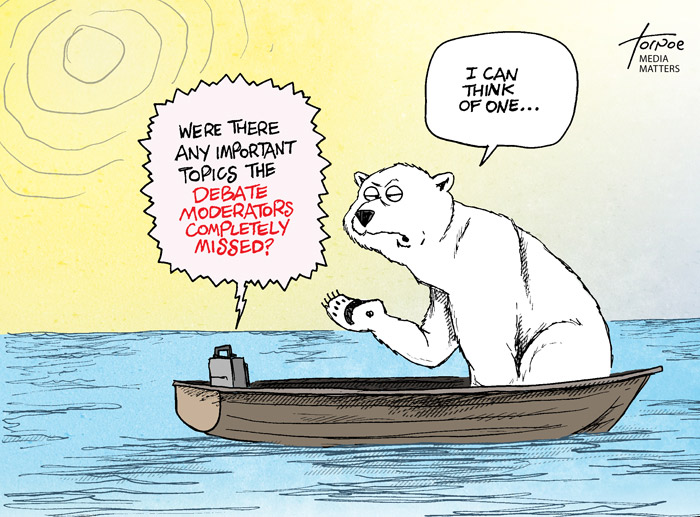
According to Kevin Knobloch, with the Union of Concerned Scientists, “President Obama has won another four years in office. In the wake of destruction left by Hurricane Sandy, the country may have experienced its first election disrupted by global warming. What makes this even more troubling is that the urgent crisis of climate change was never meaningfully discussed in the debates or on the campaign trail. After a year of punishing droughts in our nation’s breadbasket, extreme heat across most of the country, and wildfires that devastated our forests and property, it is now time to turn up the heat on our political leaders. Even with the continued polarization in Washington D.C., there is much President Obama can do to adopt science-based solutions that permanently drive down our carbon emissions and more effectively prepare for the climate-related disasters that will continue to threaten our lives and livelihoods.”

The trick will be making sure our lives and livelihoods don’t compound the problems of global warming. For example, shipping freighter-loads of coal across the ocean to be burned in Chinese power plants might provide a few jobs here for some, but is it worth the trade-off of carbon emissions produced?  Is the hedonism of the Western diet worth the continued suffering of billions of animals and the methane they produce? “Real change” will take real commitment and real innovation, rather than business as usual.

Cartoon © Rob Tornoe, 2012. All Rights Reserved

It’s Not Rocket Science, Warmer Oceans = Stronger Hurricanes

Meteorologists have for the most part been ducking the topic of global warming in relation to Hurricane Sandy in the same way that biologists try to steer clear of the subject of animal sentience or the AMA avoids any mention of the link between the consumption of animal products and the increased rate of heart disease, diabetes and cancers in this country.

History’s greatest scientists have all been free-thinkers, unafraid of pushing the limits of human understanding. But it seems most out there today are content in their mediocrity—let’s not have anything groundbreaking or earthshattering interfere with business as usual, interrupt the flow of funding or threaten a precious reputation.

Yet, a few scientists are beginning to tip-toe gingerly into the fray by tentatively linking “Superstorm” Sandy to the effects of the unprecedented anthropogenic increase of carbon in the atmosphere and the subsequent weather extremes we’ve been seeing in recent decades.

According to an October 30th blog post in Scientific American, “Scientists have long taken a cautious stance, but more are starting to drop the caveat and link climate change directly to intense storms and other extreme weather events, such as the warm 2012 winter in the eastern U.S. and the frigid one in Europe at the same time. They are emboldened because researchers have gotten very good in the past decade at determining what affects the variables that create big storms.”

In answer to just how Hurricane Sandy was intensified by global warming, Scientific American explains: “Climate change amps up other basic factors that contribute to big storms. For example, the oceans have warmed, providing more energy for storms. And the Earth’s atmosphere has warmed, so it retains more moisture, which is drawn into storms and is then dumped on us.”

Additionally, climate scientists, such as Charles Greene at Cornell University, have recently shown that as more Arctic sea ice melts in the summer—because of global warming—the Jet Stream is more likely to take the kind of big southward dip in the U.S., Canada and the Atlantic that occurred during hurricane Sandy.

The term, “global warming,” adds to the confusion of naysayers who point to wintertime cold temperatures and freak blizzards as “proof” that the Earth is not really getting warmer. A clearer name for the contentious phenomenon would be “atmospheric warming” or “ocean warming,” since that’s what’s really happening and because that’s scientifically indisputable. Warming ocean temperatures are responsible for the climate changes affecting us all on the land, but of course, one overly-successful species, who shall remain nameless (okay, it’s Homo sapiens), is ultimately responsible for heating up the atmosphere and the oceans to begin with.

Humans can no longer plead ignorance. Back in 2007 a Scientific American article by Kevin Trenberth, a senior scientist at the National Center for Atmospheric Research, wrote an article titled, “Warmer Oceans, Stronger Hurricanes.” He concluded that although the number of Atlantic hurricanes each year might not rise, the strength of them would. And according to Munich Re, one of the world’s largest insurance firms, “Climate change particularly affects formation of heat-waves, droughts, intense precipitation events, and in the long run most probably also tropical cyclone intensity.”

Oliver Stone, the acclaimed writer/director of pioneering films such as Platoon, JFK, Nixon, and W, called Sandy “punishment for Obama and Romney ignoring climate change.” In an interview with HuffPost Live on Tuesday, the filmmaker expressed dismay that neither presidential candidate has been willing to talk about global warming, either before or after the superstorm that ravaged the entire East Coast and beyond. Stone hopes the storm’s silver lining is that President Barack Obama and his Republican challenger, Mitt Romney, pull a U-turn on climate change.

“I was a little disappointed at the third debate when neither of them talked about climate control and the nature of the situation on earth,” Stone said. “I think there’s a kind of a weird statement coming right after it. This is a punishment. Mother Nature cannot be ignored.”