Noam Chomsky and Robert Pollin: Green New Deal Is Essential for Human Survival

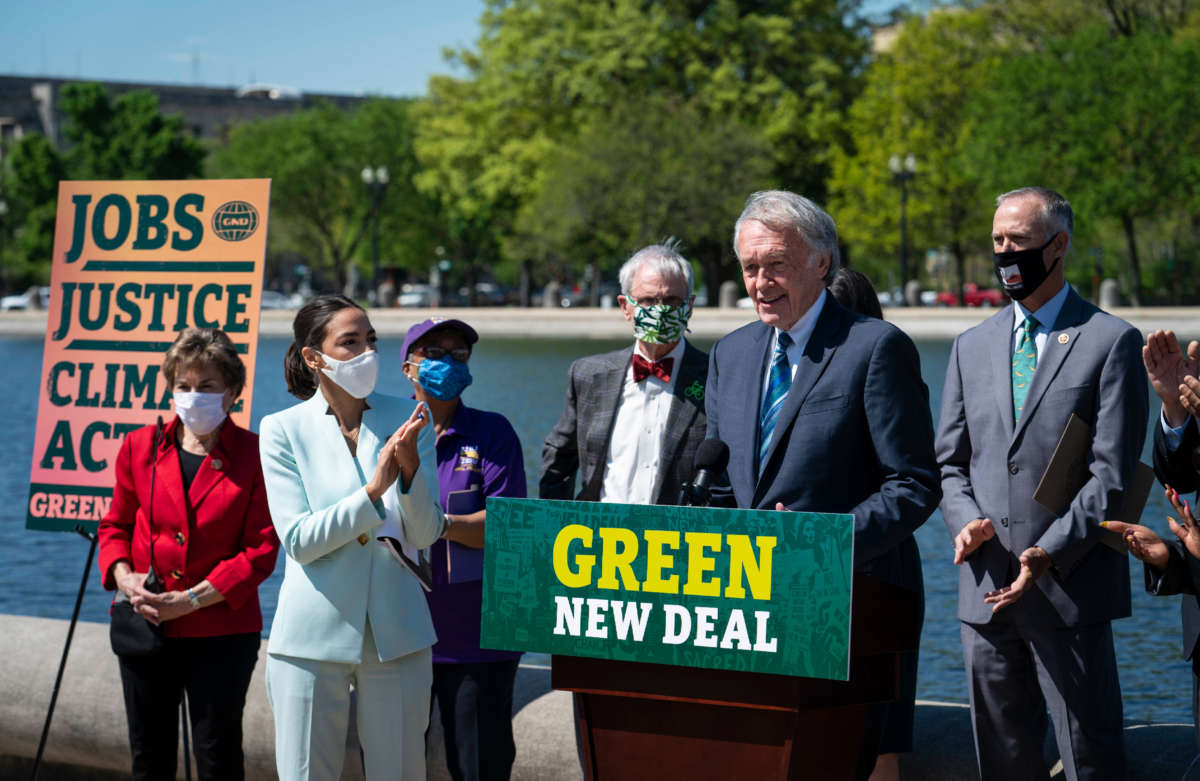
Sen. Ed Markey speaks during a news conference held to re-introduce the Green New Deal at the West Front of the U.S. Capitol on April 20, 2021, in Washington, D.C.
Sen. Ed Markey speaks during a news conference held to reintroduce the Green New Deal at the West Front of the U.S. Capitol on April 20, 2021, in Washington, D.C.

BYC.J. PolychroniouTruthoutPUBLISHEDApril 22, 2021SHAREShare via FacebookShare via TwitterShare via Email

A white lower-case t on a black background

READING LISTECONOMY & LABORWhat If 401(k)s Could Fund the Green New Deal Instead of Wall Street?RACIAL JUSTICEThe ZIP Codes of the Trump Loyalists Who Attacked the Capitol May Surprise YouPRISONS & POLICINGWe Are Fighting for a World Where Ma’Khia Bryant Would Have LivedENVIRONMENT & HEALTHNoam Chomsky and Robert Pollin: Green New Deal Is Essential for Human SurvivalPOLITICS & ELECTIONSOklahoma Governor Signs Law Granting Immunity for Drivers Who Kill ProtestersECONOMY & LABORUnions and Pro-Worker Groups Pressure Manchin to Back Infrastructure Bill

Covering Climate Now Logo

PART OF THE SERIES

Covering Climate Now

This story is part of Covering Climate Now, a global journalism collaboration strengthening coverage of the climate story.

Earth Day has been celebrated since 1970, an era which marks the beginning of the modern environmental movement, with concerns built primarily around air and water pollution. Of course, the state of the environment has shifted dramatically since then, and while environmental policy has changed a lot in the United States over the past 50 years, biodiversity is in great danger and the climate crisis threatens to make the planet uninhabitable.

On the 51st anniversary of Earth Day, world-renowned scholar and public intellectual Noam Chomsky, institute professor emeritus at Massachusetts Institute of Technology, laureate professor of linguistics and also the Agnese Nelms Haury chair in the Agnese Nelms Haury Program in Environment and Social Justice at the University of Arizona; and leading progressive economist Robert Pollin, distinguished professor of economics and co-director of the Political Economy Research Institute at the University of Massachusetts at Amherst, share their thoughts on the state of planet Earth in this exclusive interview for Truthout.

C.J. Polychroniou: The theme of Earth Day 2021, which first took place in 1970 with the emergence of environmental consciousness in the U.S. during the late 1960s, is “Restore Our Earth.” Noam, how would you assess the rate of progress to save the environment since the first Earth Day?

Stay in the loop

Never miss the news and analysis you care about.

  • Email

Noam Chomsky: There is some progress, but by no means enough, almost anywhere. Evidence unfortunately abounds. The drift toward disaster proceeds on its inexorable course, more rapidly than rise in general awareness of the severity of the crisis.

To pick an example of the drift toward disaster almost at random from the scientific literature, a study that appeared a few days ago reports that, “Marine life is fleeing the equator to cooler waters — this could trigger a mass extinction event,” an eventuality with potentially horrendous consequences.

It’s all too easy to document the lack of awareness. One striking illustration, too little noticed, is the dog that didn’t bark. There is no end to the denunciations of Trump’s misdeeds, but virtual silence about the worst crime in human history: his dedicated race to the abyss of environmental catastrophe, with his party in tow.

They couldn’t refrain from administering a last blow just before being driven from office (barely, and perhaps not for long). The final act in August 2020 was to roll back the last of the far-too-limited Obama-era regulations to have escaped the wrecking ball, “effectively freeing oil and gas companies from the need to detect and repair methane leaks — even as new research shows that far more of the potent greenhouse gas is seeping into the atmosphere than previously known … a gift to many beleaguered oil and gas companies.” It is imperative to serve the prime constituency, great wealth and corporate power, damn the consequences.

Indications are that with the rise of oil prices, fracking is reviving, adhering to Trump’s deregulation so as to improve profit margins, while again placing a foot on the accelerator to drive humanity over the cliff. An instructive contribution to impending crisis, minor in context.

Even though we know what must and can be done, the gap between willingness to undertake the task and severity of the crisis ahead is large, and there is not much time to remedy this deep malady of contemporary intellectual and moral culture.

Like the other urgent problems we face today, heating the planet knows no boundaries. The phrase “internationalism or extinction” is not hyperbole. There have been international initiatives, notably the 2015 Paris agreement and its successors. The announced goals have not been met. They are also insufficient and toothless. The goal in Paris was to reach a treaty. That was impossible for the usual reason: the Republican Party. It would never agree to a treaty, even if it had not become a party of rigid deniers.

Accordingly, there was only a voluntary agreement. So it has remained. Worse still, in pursuit of his goal of wrecking everything in reach, the hallmark of his administration, Trump withdrew from the agreement. Without U.S. participation, in fact leadership, nothing is going to happen. President Joe Biden has rejoined. What that means will depend on popular efforts.

I said “had not become” for a reason. The Republican Party was not always dedicated rigidly to destruction of organized human life on Earth; apologies for telling the truth, and not mincing words. In 2008, John McCain ran for president on a ticket that included some concern for destruction of the environment, and congressional Republicans were considering similar ideas. The huge Koch brothers energy consortium had been laboring for years to prevent any such heresy, and moved quickly to cut it off at the past. Under the leadership of the late David Koch, they launched a juggernaut to keep the party on course. It quickly succumbed, and since then has tolerated only rare deviation.

The capitulation, of course, has a major effect on legislative options, but also on the voting base, amplified by the media echo-chamber to which most limit themselves. “Climate change” — the euphemism for destruction of organized human life on Earth — ranks low in concern among Republicans, frighteningly low in fact. In the most recent Pew poll, just days ago, respondents were asked to rank 15 major problems. Among Republicans, climate change was ranked last, alongside of sexism, far below the front-runners, the federal deficit and illegal immigration. Fourteen percent of Republicans think that the most severe threat in human history is a major problem (though concerns seem to be somewhat higher among younger ones, an encouraging sign). This must change.

Turning elsewhere, the picture varies but is not very bright anywhere. China is a mixed story. Though far below the U.S., Australia and Canada in per capita emissions — the relevant figure — it nevertheless is poisoning the planet at much too high a level and is still building coal plants. China is far ahead of the rest of the world in renewable energy, both in scale and quality, and has pledged to reach net-zero emissions by 2060 — difficult to imagine at the present pace, but China has had a good record in reaching announced goals. In Canada, the parties have just released their current plans: some commitment but nowhere near enough. That’s aside from the terrible record of Canadian mining companies throughout the world. Europe is a mixed story.

The Global South cannot deal with the crisis on its own. To provide substantial assistance is an obligation for the rich, not simply out of concern for their own survival but also a moral obligation, considering an ugly history that we need not review.

Can the wealthy and privileged rise to that moral level? Can they even rise to the level of concern for self-preservation if it means some minor sacrifice now? The fate of human society — and much of the rest of life on Earth — depends on the answer to that question. An answer that will come soon, or not at all.

Bob, in hosting the Earth Day 2021 summit, Biden hopes to persuade the largest emitters to step up their pledges to combat the climate crisis. However, the truth of the matter is that most countries are not hitting the Paris climate targets and the decline in emissions in 2020 was mostly driven by the COVID-19 lockdowns and the ensuing economic recession. So, how do we move from rhetoric to accelerated action, and, in your own view, what are the priority actions that the Biden administration should focus on in order to initiate a clean energy revolution?

Robert Pollin: In terms of moving from rhetoric to accelerated action, it will be useful to be clear about what was accomplished with the 2015 Paris climate agreement. Noam described the Paris agreement and its successors as “insufficient and toothless.” Just how insufficient and toothless becomes evident in considering the energy consumption and CO2 emissions projections generated by the International Energy Agency (IEA), whose global energy and emissions model is the most detailed and widely cited work of its kind. In the most recent 2020 edition of its World Energy Outlook, the IEA estimates that, if all signatory countries to the Paris agreement fulfilled all of their “Nationally Determined Contributions” set out at Paris, global CO2 emissions will not fall at all as of 2040.

It’s true that, according to the IEA’s model, emissions level will not increase any further from now until 2040. But this should be cold comfort, given that, according to the Intergovernmental Panel on Climate Change (IPCC), CO2 emissions need to fall by 45 percent as of 2030 and hit net-zero emissions by 2050 in order for there to be at least a decent chance of stabilizing the global average temperature at 1.5 degrees Celsius above pre-industrial levels. In other words, soaring rhetoric and photo opportunities aside, the Paris agreement accomplishes next to nothing if we are serious about hitting the IPCC emissions reduction targets.

The “American Jobs Plan” that the Biden administration introduced at the end of March does give serious attention to many of the main areas in which immediate dramatic action needs to occur. It sets out a range of measures to move the U.S. economy onto a climate stabilization path, including large-scale investments in energy efficiency measures, such as retrofitting buildings and expanding public transportation, along with investments to dramatically expand the supply of clean energy sources to supplant our current fossil fuel-dominant energy system. Burning oil, coal and natural gas to produce energy is now responsible for about 70 percent of all CO2 emissions globally.

The Biden proposal also emphasizes the opportunity to create good job opportunities and expand union organizing through these investments in energy efficiency and clean energy. It also recognizes the need for just transition for workers and communities that are now dependent on the fossil fuel industry. These are important positive steps. They resulted because of years of dedicated and effective organizing by many labor and environmental groups, such as the Green New Deal Network and the Labor Network for Sustainability.

I also have serious concerns about the Biden proposal. The first is that the scale of spending is too small. This is despite the constant barrage of press stories claiming that the spending levels are astronomical. During the presidential campaign, Biden’s “Build Back Better” proposal was budgeted at $2 trillion over four years, i.e., $500 billion per year. His current proposal is at $2.3 trillion over eight years, i.e., somewhat less than $300 billion per year. So, on a year-by-year basis, Biden’s current proposal is already 40 percent less than what he had proposed as a candidate.

This overall program also includes lots of investment areas other than those dealing with the climate crisis, such as traditional infrastructure spending on roads, bridges and water systems; expanding broadband access; and supporting the care economy, including child and elder care. Many of these other measures are highly worthy. But we need to recognize that they will not contribute to driving down emissions. I would say a generous assessment of the Biden plan is that 30 percent of the spending will contribute to driving down emissions. We now are at a total annual budget of perhaps $100 billion. That is equal to 0.5 percent of current U.S. GDP.

It is conceivable that this level of federal spending could be in the range of barely adequate. But that would be only if state and local governments, and even more so, private investors — including small-scale cooperatives and community-owned enterprises — commit major resources to clean energy investments. By my own estimates, the U.S. will need to spend in the range of $600 billion per year in total through 2050 to create a zero-emissions economy. That will be equal to nearly 3 percent of U.S. GDP per year.

But the private sector will not come up with the additional $400-$500 billion per year unless they are forced to do so. That will entail, for example, stringent regulations requiring the phase out of fossil fuels as energy sources. As one case in point, utilities could be required to reduce their consumption of coal, natural gas and oil by, say, 5 percent per year. Their CEOs would then be [held responsible] if they fail to meet that requirement.

At the same time, the Federal Reserve can easily leverage federal spending programs by establishing Green Bond purchasing programs at scale, such as in the range of $300 billion per year to finance clean energy investments by both state and local governments as well as private investors. Right now, a significant number of Green Bond programs do already exist at state and local government levels, including through Green Banks. These are all worthy, but are operating at too small a scale relative to the need.

Beyond all this, those of us living in high-income countries need to commit to paying for most of the clean energy transformations in low-income countries. This needs to be recognized as a minimal ethical requirement, since high-income countries are almost entirely responsible for having created the climate crisis in the first place. In addition, even if we don’t care about such ethical matters, it is simply a fact that, unless the low-income countries also undergo clean energy transformations, there will be no way to achieve a zero-emissions global economy, and therefore no solution to the climate crisis, in the U.S., Europe or anyplace else. The Biden proposal to date includes nothing about supporting climate programs in developing economies. This must change.

Noam, when surveying reactions to whatever environmental gains have been made over the past 50 years, one observes a rather unsurprising pattern, which is, namely, that the right assigns virtually all credit to businessmen and to capitalism, while the left to environmental activists, and contends that the only hope for a greener tomorrow mandates the rejection of capitalist logic. Is capitalism saving or killing the planet?

Chomsky: It’s close to a truism that, “capitalist logic will kill the planet.” That’s one of the many reasons why business has always rejected the suicidal doctrines that are piously preached. Rather, the business world demands that a powerful state, under its control, intervene constantly to protect private power from the ravages of an unconstrained market and to sustain the system of public subsidy, private profit that has been a cornerstone of the economy from the early days of industrial state capitalism….

The only way to answer the question posed is to look at examples. Let’s pick a central one: a Green New Deal. In one or another form, such a program is essential for survival. A few years ago the idea was ignored or ridiculed. Now it is at least on the legislative agenda. How did the transition occur? Overwhelmingly, thanks to wide-ranging activism taking many forms, culminating in the occupation of congressional offices by activists of Sunrise Movement. They received support from representatives swept into office on the Sanders wave of popular activism, notably Rep. Alexandria Ocasio-Cortez, joined by senior Sen. Ed Markey, who had long been concerned with environmental issues.

There’s a long way to go from legislative agenda to implementation, but we can be confident that steady and dedicated activism will be a prime factor in carrying the project forward; to be concrete, in pressing Biden’s program, itself a product of sustained activism, toward the kinds of policies that are necessary to reach such goals as net-zero emissions by mid-century. The example breaks no new ground. It is, in fact, the norm.

The protestations of the right are, however, not without merit. Given the right structure of benefits and threats, private capital, driven by profit and market share, can be enlisted in pursuing the goal of species survival. That covers contingencies ranging from incentives to invest in solar power to imposing what the private sector calls “reputational risks,” the polite term for the fear that the peasants are coming with the pitchforks.

There is an impact. We see it in the current rage for ESG investment (environmental and social factors in corporate government) — all, of course, in service of the bottom line. We also see it in the solemn pledges of corporate executives and business groups to reverse their self-serving course of recent years and to become responsible citizens dedicated to the common good — to become what used to be called “soulful corporations” in an earlier phase of this recurrent performance — which may, on occasion, have an element of sincerity, though always subject to institutional constraints.

Such impacts of popular activism should not be dismissed — while always regarded with due caution. They may induce the search for private gain to veer in a constructive direction — though far too slowly, and only in limited ways. Like it or not, there is no alternative now to large-scale governmental projects. The reference to the New Deal is not out of place.

Whatever the source, the outcome should be welcomed. It’s of no slight importance when “More than 300 corporate leaders are asking the Biden administration to nearly double the emission reduction targets set by the Obama administration,” including big boys like Google, McDonalds, Walmart.

The choice is not popular activism or managerial decisions, but both. However, a little reflection on time scales, and on the urgency of the crisis, suffices to show that the critical problems must be addressed within the general framework of existing state capitalist institutions. These can and should be radically changed. At the very least, serious moves should be made to escape the grip of predatory financial capital and the rentier economy that impedes the right mixture of growth/de-growth: growth in what is needed, like renewable energy, efficient mass transportation, education, health, research and development, and much more; de-growth where imperative, as in fossil fuel production. But overall, substantial social change, however important for decent survival, is a long-term project.

Bob, certain studies seem to indicate that the climate crisis won’t be stopped even if we reduced greenhouse gas emissions to zero. I am compelled therefore to ask you this: Is the climate crisis a race we can actually win?

Pollin: I am not a climate scientist, so I am not qualified to answer the question at the first, most critical level of climate science itself. But I can at least comment on some related points.

First, we do know what the IPCC has said about what is needed to have a reasonable chance at climate stabilization — that is, first of all, to cut global CO2 emissions by 45 percent as of 2030 and to reach net-zero emissions by 2050 in order to stabilize the global average temperature at 1.5 degrees Celsius above pre-industrial levels. How are we doing in terms of meeting those goals? The only fair assessment is that, to date, the record is dismal.

I would add here one additional set of observations beyond what we have already described. That is, climate scientists have known about the phenomenon of global warming since the late 19th century. But, as a steady pattern, the average global temperature only began rising above the pre-industrial level in the late 1970s. By the mid-1990s, the average temperature was 0.5 degrees Celsius above the pre-industrial level. As of 2020, we are nearly at 1 degree above the pre-industrial level. If we follow the pattern of the past 20 years, we will therefore breach the 1.5 degrees threshold by roughly 2040.

What happens if we do breach the 1.5 degrees threshold? I claim no expertise on this, and I think it is fair to say that nobody knows for certain. But we do at least know that the patterns we are already seeing at our current level of warming will only intensify. Thus, the World Meteorological Organizations’ provisional 2020 report, “State of the Global Climate” finds that,

“Heavy rain and extensive flooding occurred over large parts of Africa and Asia in 2020. Heavy rain and flooding affected much of the Sahel, the Greater Horn of Africa, the India subcontinent and neighboring areas, China, Korea and Japan, and parts of southeast Asia at various times of the year. Severe drought affected many parts of interior South America in 2020, with the worst-affected areas being northern Argentina, Paraguay and western border areas of Brazil…. Climate and weather events have triggered significant population movements and have severely affected vulnerable people on the move, including in the Pacific region and Central America.”

We also know that poor people and poor countries have already borne the greatest costs of the climate crisis, and that this pattern will continue as global average temperatures increase. As the economist James Boyce has written, poor people “are less able to invest in air conditioners, sea walls and other adaptations. They live closer to the edge … and the places that climate models show will be hit hardest by global warming — including drought-prone regions of sub-Saharan Africa and typhoon-vulnerable South and South East Asia — are home to some of the world’s poorest people.”

It therefore seems clear that we are obligated to act now on the premise that the climate crisis is a race that we can still win, even if we don’t know for certain whether that is true. But in addition, it is important to also recognize that advancing a global Green New Deal is fundamentally a no-lose proposition, as long as it includes generous transition support for fossil fuel-dependent workers and communities. This is because, first, the global clean energy transformation will be a major source of job creation in all regions of the world as well as creating a viable path to building a zero-emissions global economy. It will also significantly improve public health by reducing air pollution, lower energy costs across the board, and create opportunities to deliver electricity to rural areas of low-income countries for the first time.

All of these impacts will also help break the grip that neoliberalism has maintained over the global economy over the past 40 years. If we do end up building a viable clean energy system through a global Green New Deal, we will therefore also succeed in advancing democracy and egalitarianism.

This interview has been lightly edited for length and clarity.
Reject Greenwashing. At This Point, Only an Ecological Revolution Will Do.

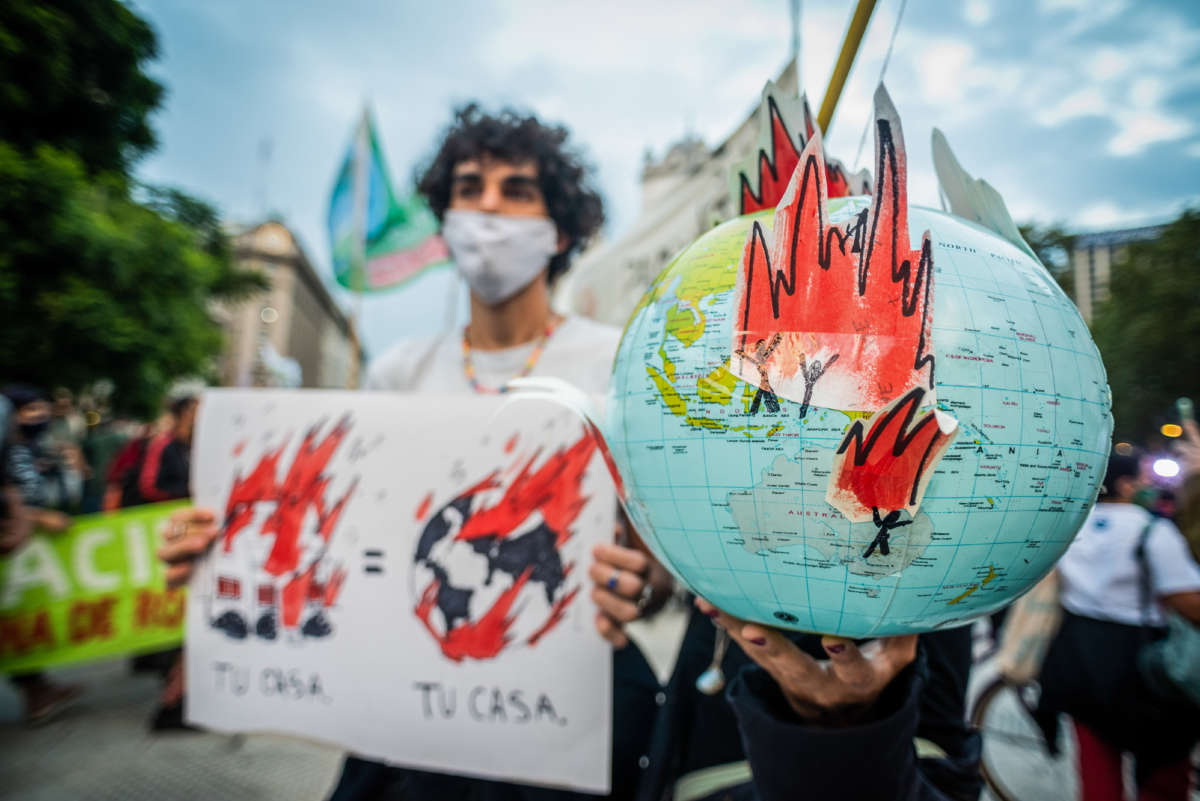
Protesters rally to raise awareness about climate change on March 22, 2021, in Buenos Aires, Argentina.

BYWilliam Rivers PittTruthoutPUBLISHEDApril 22, 2021SHAREShare via FacebookShare via TwitterShare via Email

A white lower-case t on a black background

READING LISTECONOMY & LABORWhat If 401(k)s Could Fund the Green New Deal Instead of Wall Street?RACIAL JUSTICEThe ZIP Codes of the Trump Loyalists Who Attacked the Capitol May Surprise YouPRISONS & POLICINGWe Are Fighting for a World Where Ma’Khia Bryant Would Have LivedENVIRONMENT & HEALTHNoam Chomsky and Robert Pollin: Green New Deal Is Essential for Human SurvivalPOLITICS & ELECTIONSOklahoma Governor Signs Law Granting Immunity for Drivers Who Kill ProtestersECONOMY & LABORUnions and Pro-Worker Groups Pressure Manchin to Back Infrastructure Bill

Covering Climate Now Logo

PART OF THE SERIES

Covering Climate Now

This story is part of Covering Climate Now, a global journalism collaboration strengthening coverage of the climate story.

It’s a bleak sort of Earth Day today. All the major newspapers are carrying headlines about President Biden’s global eco-summit, about his pledge to cut greenhouse emissions in half by 2030, but so far as I have seen, none use the words “Earth Day” to mark the moment. This environmental holiday was created in 1970. I was created in 1971. We’re both 50-ish now, and feeling the mileage.

There has never been an Earth Day like this. As a kid, I remember huge gatherings on Boston Common to plead for politicians and industry leaders to find their conscience and realize there is no profit in a dead world. All too often, these pleas were met by the likes of James G. Watt, Ronald Reagan’s notoriously anti-environmental Interior Secretary, who never met a mine he didn’t love or a tree he didn’t hate.

As a member of Generation X, it has been my special fate to bear witness to the long and ever more visible arc of environmental dissolution that has led us to this moment. From acid rain to the ozone layer, my youth was suffused with a daily drumbeat of looming ecological doom. “What do you say, for instance, about a generation that has been taught that rain is poison?” asked Hunter S. Thompson in 1988. I read that when it came out, realized he was talking about me, and had to agree: There really was nothing to say.

Don’t miss a beat

Get the latest news and thought-provoking analysis from Truthout.

  • Email

That arc brought us here, and boy howdy, here really sucks. More than a year into a lethal pandemic that is nothing more or less than a global environmental calamity itself, some 3 million people have died worldwide. Somewhere around 315,000 people in India were diagnosed with COVID-19 just yesterday, a record likely to be broken either today or tomorrow. In the U.S., the death toll lurks close to 600,000 souls, with millions more infected. There were almost 65,000 new cases diagnosed here on Wednesday.

How, then, do we look on Earth Day in this grim context? For me, COVID is a microcosm of the larger issues that have made defending the environment such a frustrating and often futile endeavor. As with the environment, the people in power knew the dangers represented by COVID, but chose not to act in order to protect and defend capitalism. A segment of the population believed the lies being peddled by those in power, and now stand as an immotile barrier to progress. The roof is on fire, but they would rather burn than be convinced that the flames are real. The money is just too good.

As with the environment, it did not have to be this way. We had ample means to stifle the COVID crisis, but failed or actively chose not to time and again. Even today, with new infections exploding, governors are dropping their states’ mask mandates, because conservative peer pressure deems it time to do so. It’s as if we made a bizarre sort of suicide pact with people who don’t know what death is, even as they march resolutely into its maw.

Still, at long last, efforts are being taken to undo the catastrophe of the prior presidential administration, which spent its four critical years obliterating environmental protections while opening national parks to the strip miners and the pipeline layers. In its final year, the Trump administration almost completely ignored COVID, and now, most of the horses have left the barn.Rouse yourself in defense of this precious thing, for it is not all gone, not yet, and that which can be saved must be saved by us.

Because of that, because of the failure to thwart circumstances that give rise to viral variants, many of the things we are required to do today are permanent fixtures. COVID may always be with us in some form, much the way radioactive fallout from nuclear tests is now part of our DNA. That’s all of us, every single one.

The same can be said for the state of the environment: The damage that has been done is only now beginning to reveal itself in deadly storm seasons, endless droughts and terrifying infernos. Any actions we take will be on the level of mitigation only; the damage is baked in and inexorably coming no matter what we do.

The environment and COVID: They knew, they failed to act, and now the damage not only appears to be permanent, but we live under the ever-present threat of severe outbreaks capable of harming or killing untold numbers.

While it can be argued that we are within sight of bringing COVID under some semblance of control, the same is not true of the ongoing and worsening phenomenon of climate disruption. The climate crisis is, truly, only just beginning.

Several years ago, Truthout’s invaluable environmental reporter Dahr Jamail embarked upon a journey to the various environmental graveyards of the world. He sought out the places where climate disruption is not just happening, but where it has been visibly happening for a long time.

Jamail put his hand into the melted tears of a dying glacier and touched the corpse of the Great Barrier Reef. He smelled smoke in the rainforest, heard the ticking of methane bombs beneath the melting tundra, and watched the ocean as it slowly devoured a fishing village that had stood safely by the shore for generations.

Upon his return, Jamail wrote:

“Writing this book is my attempt to bear witness to what we have done to the Earth. I want to make my own amends to the Earth in the precious time we have left, however long that might be. I go into my work wholeheartedly, knowing it is unlikely to turn anything around. And when the tide does not turn, my heart breaks, over and over again as the reports of each succeeding loss continue to come in. The grief for the planet does not get easier. Returning to this again and again is, I think, the greatest service I can offer in these times. I am committed in my bones to being with the Earth, no matter what, to the end.

Please take this Earth Day and do likewise. Be with the green and the blue, the astonishment of life we have been gifted to witness and be part of, for we are inseparable from that which created us on this small space-borne rock. Rouse yourself in defense of this precious thing, for it is not all gone, not yet, and that which can be saved must be saved by us.

The world came together to join the Montreal Protocol, and today the damage to the ozone layer is visibly diminished. The world came together to act on acid rain, and it was eradicated so thoroughly that some climate denialists argue it never existed. It did, and now it is all but gone, because of us. It can be done, because it has been done.

Knowing this, it’s time to reject greenwashing and false promises from the powerful when they are proffered. After 51 Earth Days, only a revolution of the mind, body and spirit can save what we have left.

Why are so many gray whales dying in the Pacific?

Kate Linthicum  5 hrs ago


An Indonesian submarine has been missing for days – here’s what makes it so…North Korea Displays New Submarine-Launched Ballistic Missile at Paradea body of water: January 31, 2021 - An adult female gray whale, whose new calf swims below the surface, spy hops in the glassy waters of the Bahía Magdalena. According to the guides who work out of Puerto Adolfo Lopez Mateos, this whale’s calf is less than a week old and the spy-hopping is a form of vigilance for the mother trying to make sure her calf is in no danger. Image by Meghan Dhaliwal© Photograph by Meghan Dhaliwal January 31, 2021 – An adult female gray whale, whose new calf swims below the surface, spy hops in the glassy waters of the Bahía Magdalena. According to the guides who work out of Puerto Adolfo Lopez Mateos, this whale’s calf is less than a week old and the spy-hopping is a form of vigilance for the mother trying to make sure her calf is in no danger. Image by Meghan Dhaliwal

As early morning fog lifts off the Baja California coastline, Alushe Camacho steers a small fishing boat through a mangrove-lined estuary, his eyes fixed on the horizon. During most of the year, Camacho hunts grouper, sole, and hammerhead sharks. Today he’s in search of gray whales.https://products.gobankingrates.com/r/e48f149e71a19f66115d5f5c8edaefd8?subid=

After several minutes Camacho spies his target: a heart-shaped cloud of ocean spray erupting from the water. Suddenly an adult whale thrusts its tapered head straight through the surface, pausing for five long seconds before disappearing under the waves.

Encounters like these have for decades drawn tourists to this marshy stretch of Mexico, where each winter thousands of Eastern Pacific gray whales arrive from Alaska’s Arctic. Here the adults mate, and females give birth and rear their young in a network of tranquil lagoons.

Over the dozen years he’s been guiding, Camacho, 33, has devised nicknames for whales that return each season. Lucrecio splashes boats with his tail; Olivia nudges her calves to be caressed by starry-eyed tourists.a fish swimming under water: February 6, 2021 - An adult grey whale swims in the calm waters just outside of the “Boca de Soledad,” the mouth where the Pacific ocean meets the series of bays known as the Bahía Magdalena. Grey whales migrate for six months a year—three months to travel down from their feeding grounds in Alaska to Baja Sur, Mexico, three months to calve in Baja Sur, three months to travel back north and three months of feeding in Alaska waters. Grey whales are baleen whales, meaning that they survive by eating tons of fat-rich microorganisms. Grey whales have been dying along their migration route at unexplainable rates (the NOAA is calling their deaths a UME, or an Unexplained Mortality Event) but scientists are beginning to theorize that warming seas are killing off the whale’s main food source in the north, leaving them malnourished on their migration. Image by Meghan Dhaliwal© Photograph by Meghan Dhaliwal February 6, 2021 – An adult grey whale swims in the calm waters just outside of the “Boca de Soledad,” the mouth where the Pacific ocean meets the series of bays known as the Bahía Magdalena. Grey whales migrate for six months a year—three months to travel down from their feeding grounds in Alaska to Baja Sur, Mexico, three months to calve in Baja Sur, three months to travel back north and three months of feeding in Alaska waters. Grey whales are baleen whales, meaning that they survive by eating tons of fat-rich microorganisms. Grey whales have been dying along their migration route at unexplainable rates (the NOAA is calling their deaths a UME, or an Unexplained Mortality Event) but scientists are beginning to theorize that warming seas are killing off the whale’s main food source in the north, leaving them malnourished on their migration. Image by Meghan Dhaliwal

But over the last three years, Camacho and others have noticed ominous changes. The whales are arriving in the estuary later in the year, and many appear malnourished, the jagged outline of vertebrae visible on their typically fatty backs. More whales than usual have been washing up dead along the shore.

Perhaps most concerning is the dramatic drop in births. On a normal early February morning like this one, Camacho would expect to see several pairs of mothers and calves. Today he spies only adults.

The changes observed in Mexico are evidence of a more widespread phenomenon, one brought to public attention in 2019 and 2020, when strandings of gray whales along the Pacific coast of North America surged dramatically. The National Oceanic and Atmospheric Administration (NOAA) declared an “unusual mortality event” and launched an investigation into the causes.

Between 2016 and 2020, the estimated population of eastern North Pacific gray whales plummeted by nearly a quarter, from almost 27,000 individuals to around 20,500. The origins of the decline are so far a mystery. Much of the early research points to climate change, which is rapidly warming the Arctic Ocean and may be reducing the quantity or quality of whales’ food supply. But scientists can’t rule out other factors, including the possibility that the whale population grew too large and is simply correcting itself.

Experts up and down the coast are urgently investigating because these mammals, with their 12,000-mile migrations, are critical barometers of ocean health. Gray whales are known for being a robust, adaptable species. Trouble for them could indicate much bigger problems—including along their feeding grounds on the sea floor, a crucial part of the marine food web and an area that scientists know relatively little about because it’s so logistically difficult to study.a group of people standing in front of a building: January 30 2021 - Tourists gather around a statue of a grey whale mother and calf pair in the center of the plaza just outside the whale watching docks of the “Sanctuario de la Ballena Gris” or Grey Whale Sanctuary in Puerto Adolfo Lopez Mateos. The town is a home to approximately 2100 people and for three months each year, a popular touristic space for people looking to see grey whales, which migrate to these waters from Alaska each year, staying from approximately January to March. Image by Meghan Dhaliwal© None January 30 2021 – Tourists gather around a statue of a grey whale mother and calf pair in the center of the plaza just outside the whale watching docks of the “Sanctuario de la Ballena Gris” or Grey Whale Sanctuary in Puerto Adolfo Lopez Mateos. The town is a home to approximately 2100 people and for three months each year, a popular touristic space for people looking to see grey whales, which migrate to these waters from Alaska each year, staying from approximately January to March. Image by Meghan Dhaliwal

“They’re sentinels for what’s going on in the North Pacific ecosystem writ large,” says Sue Moore, a research scientist at the University of Washington who is helping lead NOAA’s probe.

The question has taken on a special urgency in Mexico, where a string of villages on the Baja peninsula have come to rely economically on the annual arrival of the whales.

“Something is happening, and we don’t know what it is,” says Camacho. “If the whales don’t return, what will we do?”

An intimate connection

a group of people walking in front of a building: February 6, 2021 -The Camacho family and two visiting friends sit outside a home the family is constructing in Puerto Adolfo Lopez Mateos. The Camacho family runs whale tours through their company Pirata Tours out of Puerto Adolfo Lopez Mateos. The family is tight knit, running their business together and spending most of their time not working together as well. Image by Meghan Dhaliwal Contact for Alushe: +52 613 113 5159 Contact for Juan Manuel Camacho +52 613 137 3081 Contact for Jimmy +52 613 114 0761© Photograph by Meghan Dhaliwal February 6, 2021 -The Camacho family and two visiting friends sit outside a home the family is constructing in Puerto Adolfo Lopez Mateos. The Camacho family runs whale tours through their company Pirata Tours out of Puerto Adolfo Lopez Mateos. The family is tight knit, running their business together and spending most of their time not working together as well. Image by Meghan Dhaliwal Contact for Alushe: +52 613 113 5159 Contact for Juan Manuel Camacho +52 613 137 3081 Contact for Jimmy +52 613 114 0761

Camacho has spent his entire life in Puerto Adolfo López Mateos, a dusty town of 2,000 five hours north of Cabo San Lucas. Living alongside a shallow lagoon that is home to dolphins, egrets, and pelicans, residents are closely connected to nature. Ospreys nest atop telephone poles, and coyotes slink down dirt streets, waiting for fishermen to dock with their daily catch.

But residents regard the whales with special reverence. A gray whale sculpture stands in front of the Catholic church, and whale murals adorn restaurants and the elementary school. Locals say that because they are born here, gray whales are Mexican. Each winter, the village celebrates their homecoming with a three-day festival, including concerts and a beauty pageant.

It wasn’t always this way.

In the 1800s and early 1900s, foreign whalers crowded these lagoons in search of blubber for producing lamp oil. Whalers had already, in the 1700s, hunted to extinction a separate stock of gray whales in the Atlantic Ocean. But with the rise of petroleum as lamp fuel, the establishment of the International Whaling Commission in the 1940s, and passage of the Marine Mammal Protection Act in 1972, the eastern North Pacific gray was able to bounce back.

By the 1970s, foreigners were again descending on the Baja coast not to hunt whales but to admire them. Eventually the Mexican government, setting a standard for sustainable eco-tourism worldwide, stipulated that tours must be conducted by local guides, which brought new job opportunities to a region formerly dependent on commercial fishing. The whales responded with unusual friendliness, often seeking out boats on their own and prodding tourists to stroke their heads or massage their baleen.February 9, 2021 - The backbone of a grey whale skeleton that hangs in front of the Guaymex factory in Puerto Adolfo Lopez Mateos in Baja California Sur, Mexico. Image by Meghan Dhaliwal© Photograph by Meghan Dhaliwal February 9, 2021 – The backbone of a grey whale skeleton that hangs in front of the Guaymex factory in Puerto Adolfo Lopez Mateos in Baja California Sur, Mexico. Image by Meghan Dhaliwal


While working as a fisherman April through December, Camacho brings in on average $170 a week. When the whales arrive, he can earn six times as much guiding for Pirata Tours, the company founded by his grandfather four decades ago.

Gallery: The most terrifying creatures in the sea (Espresso)

a fish swimming under water: Our planet’s beautiful oceans are home to many strange creatures, from the most magnificent to the most terrifying. Here are some of the scariest fish hiding in the depths of the sea. Nightmares guaranteed!

Over a dinner of red snapper that his brother, who is also a whale guide, had caught the day before, Camacho gestures around the property he recently purchased, which is lined with rustling palm trees and features a new building he hopes to turn into a fish-fileting business. “Everything is thanks to the whales,” he says.February 8, 2021 - A group of three grey whales, two males and one female, mate near the Boca de Soledad where the Pacific Ocean meets the Bahía Magdalena. Grey whales will often mate as a group, a female mating with multiple males at a time to increase her chance of fertilization. The dance is, at times, chaotic and otherwise almost appears as if the whales are executing some kind of choreography. From sea level, all that can be seen are the slapping of fins, tales and occasionally a head peeking out of the sea. Image by Meghan Dhaliwal© Photograph by Meghan Dhaliwal February 8, 2021 – A group of three grey whales, two males and one female, mate near the Boca de Soledad where the Pacific Ocean meets the Bahía Magdalena. Grey whales will often mate as a group, a female mating with multiple males at a time to increase her chance of fertilization. The dance is, at times, chaotic and otherwise almost appears as if the whales are executing some kind of choreography. From sea level, all that can be seen are the slapping of fins, tales and occasionally a head peeking out of the sea. Image by Meghan Dhaliwal

Unraveling a coastal mystery

Omar García Castañeda is braced on the bow of a bumping motorboat, binoculars pressed to his face and a safety rope looped around his waist. It’s a blustery day to be out on the water, but time is precious: The gray whales inhabit their breeding grounds for about three months each year, and García and his colleagues must count and photograph as many of them as possible.

The marine biologists are part of the Laguna San Ignacio Ecosystem Science Program, a binational research group that has been monitoring whales along the Baja coast since 2007. Each year the group compiles photo catalogues of whales that allow them to track the movements of individuals, identified by their distinctive patterns of barnacles and scars. Crucially, in recent years the photographs have also been used to evaluate whale health.

The cetaceans are so huge—a healthy gray is 90,000 pounds and up to 50 feet long—that it can be difficult to determine from a boat deck whether they are malnourished. But photographs can reveal nuances: Do the whales have thick, rounded backs or a depression behind their heads? Are their scapulae protruding?

During the program’s first decade, the proportion of single adult whales deemed to be in poor body condition had remained steady, at around 6 percent. But that number began to rise in 2018. By 2020, it had hit 30 percent.

Drone photography confirmed the trend: between 2017 and 2020, a growing percentage of whales were much leaner than they should be.

All along their migration route, whales were stranding in record numbers. In 2019, 214 gray whales were found dead, including 122 in the United States—four times the nation’s annual average over the previous 18 years. Scientists believe that for each whale found on land, another five die at sea.

“We saw this coming, but there was nothing we could do about it,” says Steven Swartz, co-director of the Laguna San Ignacio program. 

Necropsies—post-mortem exams on animals—are particularly difficult to conduct on whales because they often wash up on remote beaches, and they decompose rapidly. In a typical year, researchers at the Marine Mammal Center, in Sausalito, might necropsy between one and three gray whales, which don’t typically enter San Francisco Bay while migrating. But in 2019, the center examined 13.

Pádraig Duignan, the center’s chief pathologist, speculates that whales veered off their usual route and entered the bay because they were hungry and looking for food. Necropsies revealed around half the whales were malnourished, with very low stores of fat around their hearts and other organs. Their entry into the bay made them particularly susceptible to boat traffic: Most of the other whales examined had succumbed to ship and ferry strikes.

In 2020, 174 gray whales washed up along the migration route. But Covid-19 restrictions limited researchers’ ability to perform necropsies. The Marine Mammal Center completed just one. 

Duignan didn’t know if whales were dying because of food shortages, disease, or possibly pollution, their bodies contaminated by the ingestion of microplastics. But it was clear, he said, that they were leaving the Arctic in a poor nutritional state. “They are not migrating with enough food ‘on board.’”

The starvation hypothesis has shifted investigators’ focus to Alaska’s Chukchi and Bering Seas, where whales binge during the summer and fall on bottom-dwelling shrimp-like amphipods, packing on stores of blubber for their eventual migration back south.

The Arctic seas, though, are changing. A warming climate means less sea ice, which disrupts the production of algae, which in turn feed amphipods. Could a shrinking ice cap be reducing the whales’ food supply?

That would be the simplest answer, but it is complicated by the fact that the gray whale population suffered another dramatic die-off in 1999 and 2000, a period when Arctic ice was far more abundant. Then, just like today, gray whales stranded up and down the coast, and scientists reported a 23 percent drop—from 21,000 whales in 1997 to 16,000 in 2000.

The whale population didn’t just recover after that event, it boomed, reaching 27,000 individuals in 2016.

Frances Gulland, who helped lead the NOAA team investigating the first die-off, doesn’t believe that climate change alone can explain two mass-casualty events two decades apart.

“Why was there 20 years between these die-off events when we know the changes in the Arctic have been continual?” the marine mammal veterinarian says. “It’s common sense that there must be problems with their feeding, and we also know that there are massive changes in the Arctic. But how those changes are connected is difficult to say.”

Others suggest that the gray whale population simply hit some sort of carrying capacity, then corrected itself—a process that may now be repeating.

Many believe it may be a combination of factors.

“I think we’re seeing an interaction of events,” says John Calambokidis, a biologist with the Cascadia Research Collective and with NOAA’s Unusual Mortality Event working group. An expanding population of whales would mean more competition for food. Paired with some other factor that may have triggered a decline in available prey—such as dramatic changes in the Arctic environment—starvation and death could follow.

In recent years, more gray whales have been veering a hundred miles off their migratory path and into Washington’s Puget Sound, where Calambokidis works, in search of food. It’s a sign that the whales are hungry, the researcher says, but it’s also a sign of their resilience. Whales can pack on serious weight in just a few weeks—not by eating amphipods on the ocean floor but by feasting in ghost shrimp beds in shallow parts of the sound.

Calambokidis is hopeful that the gray whale population will recover, just as it did after commercial whaling and after the die-offs of 1999 and 2000. “Maybe gray whales are this adaptive because they’ve had to be,” he said.

A glimpse of the future?

The COVID-19 pandemic, which brought tourism in López Mateos to a near standstill, has given the community a sense of what life would be like without whales. Guides at the town’s impressive modern pier spend much of their time these days listening to cumbia music and cracking jokes as they wait for customers. This year’s Gray Whale Festival was canceled.

Fernando Rojas Rodriguez, 56, came here in 1990 in search of work. The whale business helped him put his four children through school. Now he worries—about the future of tourism during a global pandemic and about the health of the whales.

It is too early to say how strandings in 2021 will compare to the previous two years. Early reports from scientists working in Baja this season showed high rates of skinny whales and low numbers of mothers and calves. 

But on a recent morning, Rojas gets lucky. A woman and her daughter, tourists from Arizona, pull up in their rental car and ask to go out on the water.

As Rojas steers them slowly across the lagoon in his turquoise fishing boat, pods of dolphins arc in the distance, and pelicans cut through the moist air. And then he sees it: a cloud of mist erupting from a blowhole. Then another smaller spray shoots up next to the first.

Rojas cuts the engine. “It’s a mother and her calf,” he says excitedly. 

The baby, which he estimates is about a week old, is already the length of a large sedan. It darts toward the boat with a toddler-like curiosity, gliding along the bobbing vessel before diving down and emerging on the other side. Rojas tells the tourists to splash their hands in the water. The calf comes closer, and for a brief moment the daughter caresses its smooth, slate-gray skin.

A few minutes later, the mother and calf peel off. The baby has feeding to do, and the mother, crucial weeks of child-rearing. Within a month or so they’ll set out on their daunting journey north. Rojas hopes they will make it, and that later in the year they will find their way back.

Continue Reading: Why are so many gray whales dying in the Pacific? (msn.com)

Biden pledges to slash greenhouse gas emissions in half by 2030

https://www.cnbc.com/2021/04/22/biden-pledges-to-slash-greenhouse-gas-emissions-in-half-by-2030.html

PUBLISHED THU, APR 22 20216:00 AM EDTUPDATED AN HOUR AGOEmma Newburger@EMMA_NEWBURGERSHAREShare Article via FacebookShare Article via TwitterShare Article via LinkedInShare Article via EmailKEY POINTS

  • President Biden is pledging to reduce U.S. greenhouse gas emissions by at least 50% by 2030, in the latest push by the administration to aggressively combat climate change.
  • The target more than doubles the country’s prior commitment under the 2015 Paris climate agreement.
  • The announcement comes before the president hosts a closely watched climate summit on Thursday’s Earth Day, with world leaders from countries like China and India.

President Joe Biden is pledging to reduce U.S. greenhouse gas emissions by 50% to 52% by 2030, in the latest push by the administration to aggressively combat climate change.

The target, announced Thursday, more than doubles the country’s prior commitment under the 2015 Paris climate agreement, when the Obama administration set out to cut emissions 26% to 28% below 2005 levels by 2025. The U.S. is currently not yet halfway to meeting that goal.

Biden’s pledge on Earth Day is in line with what environmental groups and hundreds of executives at major companies have pushed for. The president announce the target at the closely watched global leaders’ climate summit on Thursday, during which he hopes to urge global cooperation to address the climate crisis.

“This is the decisive decade,” Biden said at the summit on Thursday morning. “This is the decade that we must make decisions to avoid the worst consequences of the climate crisis.”

“This is a moral imperative. An economic imperative. A moment of peril, but also a moment of extraordinary possibilities,” the president said.

World leaders appear on screen during a virtual Climate Summit, seen from the East Room at the White House in Washington, U.S., April 22, 2021.

World leaders appear on screen during a virtual Climate Summit, seen from the East Room at the White House in Washington, U.S., April 22, 2021.Tom Brenner | Reuters

All 40 world leaders the president invited to the virtual summit will be attending, including those from China and India, and are anticipated to make new commitments. The U.K. and European Union have committed to slash emissions by 68% and 55%, respectively, by 2030. China, the world’s biggest emitter, has vowed to reach peak emissions by 2030 and be carbon neutral by 2060.

During the summit, Chinese President Xi Jinping repeated the country’s previous commitments and emphasized green development and multilateralism to reduce global emissions.

Indian Prime Minister Narendra Modi called for concrete action on climate change and announced an India-U.S. Climate and Clean Energy Agenda Partnership for 2030. He also re-confirmed the nation’s vow to install 450 gigawatts of renewable energy by 2030.

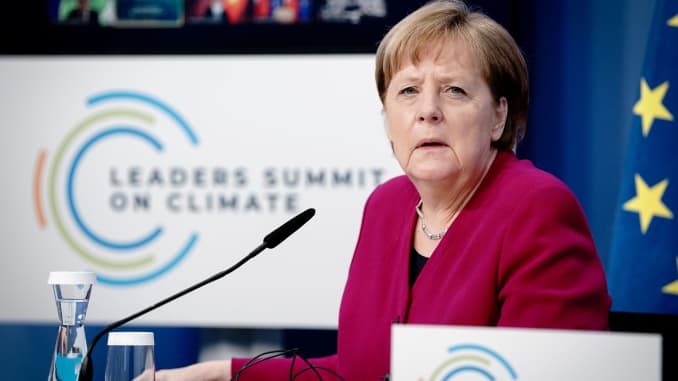
German Chancellor Angela Merkel attends a virtual Climate Summit with world leaders in Berlin, Germany, April 22, 2021.

German Chancellor Angela Merkel attends a virtual Climate Summit with world leaders in Berlin, Germany, April 22, 2021.Kay Nietfeld | Reuters

Japan’s prime minister Yoshihide Suga announced a stricter emissions target of 46% reduction by 2030. Canada also updated its target and vowed to reduce 2005 emission levels by 40-45% by 2030.

The summit is a chance for the U.S. to rejoin global efforts on climate after then-President Donald Trump pulled out of the Paris accord, halted all federal efforts to reduce domestic emissions and rolled back more than 100 environmental regulations to favor fossil fuel production.

“I’m delighted to see that the United States is back, is back to work together with us in climate politics,” German Chancellor Angela Merkel said during the summit.

President Joe Biden delivers remarks during a virtual Leaders Summit on Climate with 40 world leaders at the East Room of the White House on April 22, 2021.

President Joe Biden delivers remarks during a virtual Leaders Summit on Climate with 40 world leaders at the East Room of the White House on April 22, 2021.Al Drago | Getty Images

British Prime Minister Boris Johnson, who this week announced that Britain would slash emissions by 78% by 2035, praised Biden “for returning the United States to the front rank of the fight against climate change.”

“It’s vital for all of us to show that this is not all about some expensive politically correct, green act of bunny hugging,” Johnson said. “This is about growth and jobs.”

Biden’s pledge also moves forward his campaign promise to decarbonize the country’s energy sector by 2030 and put the country on a path to net-zero emissions by midcentury.WATCH NOWVIDEO01:25Biden commits to 50% greenhouse gas reduction levels by 2030

Biden so far has proposed a $2 trillion infrastructure package that would aid a transition away from fossil fuels and toward clean energy, while promising to create green jobs. If passed, the legislation would be one of the largest federal efforts ever to reduce emissions.

“A strong national emissions reduction target is just what we need to catalyze a net-zero emissions future and build back a more equitable and inclusive economy,” Anne Kelly, vice president of government relations at sustainability nonprofit Ceres, said in a statement.

In order to achieve a net-zero economy by 2050, the U.S. must curb emissions by 57% to 63% in the next decade, according to an analysis by Climate Action Tracker, an independent group that analyzes various government climate pledges.

This week’s summit also comes ahead of a major U.N. climate conference in Glasgow, Scotland, in November, during which nations in the Paris agreement will unveil updated emissions targets for the next decade.

Author of ‘The Sixth Extinction’ says Earth is on verge of new mass extinction as big as dinosaur wipe-out

https://thehill.com/changing-america/enrichment/arts-culture/549013-author-of-the-sixth-extinction-says-earth-is-on

Will humans go extinct?ByAnagha Srikanth | April 19, 2021https://imasdk.googleapis.com/js/core/bridge3.452.0_en.html#goog_1817015465Volume 20%Loading ad 

Story at a glance

  • Climate change has threatened the existence of several living species, including humankind itself.
  • One author predicts that on the current course, climate change will lead to a mass extinction on Earth.
  • Still, there are people fighting to change course.

In the more than 4 billion year history of the Earth, there have been just five mass extinctions, most scientists agree. One science journalist is predicting the next one is already here — and all there is to do is slow it down. 

“We are on the verge of another major mass extinction, unless we change course dramatically,” Elizabeth Kolbert, author of the Pulitzer-prize winning “The Sixth Extinction,” told CBS. “The question of how much we’re responsible for it is pretty much 100%. We have no reason to believe we would be seeing these elevated extinction rates were it not for all the ways we are changing the planet faster than other species can evolve to adapt to.”


America is changing faster than ever! Add Changing America to your Facebook or Twitter feed to stay on top of the news.


While her last book predicted that climate change would lead to mass extinction, Kolbert’s newest book, “Under a White Sky,” offers hope that humankind can change course. The book examines climate change efforts worldwide while also examining both the pros and cons of relying on technology to be the solution. Still, the New Yorker writer argues that something is better than nothing in this case. 

“We have to realize that there’s a lot of damage that’s been done that’s kind of baked into this system,” Kolbert said. “We can leave a serious problem for our kids or we can leave a disastrous problem for our kids.”


WHAT YOU NEED TO KNOW ABOUT CLIMATE CHANGE RIGHT NOW

SCIENTISTS SAY ‘UNIMAGINABLE AMOUNTS’ OF WATER WILL POUR INTO OCEANS IF ICE SHELVES COLLAPSE AMID GLOBAL HEATING

NEW STUDY SAYS THE EARTH COULD SEE SIX MONTH-LONG SUMMERS

SURPRISING STUDY FINDS SHARKS ARE KEY TO RESTORING DAMAGED HABITATS, FIGHTING CLIMATE CHANGE

SCIENTISTS BLOW UP DECADES OF THINKING ON WHY HURRICANES ARE BECOMING MORE DEADLY

SURPRISING REPORT FINDS US CAN REACH NET-ZERO EMISSIONS BY 2050 FOR JUST $1 PER PERSON PER DAY

Clothes dryer vs the car [vs having babies]: carbon footprint misconceptions

https://www.ft.com/content/c5e0cdf2-aaef-4812-9d8e-f47dbcded55c

Landmark survey of 21,000 people in almost 30 countries shows perception gap on climate impact of personal actions Air drying clothes saves just 0.2 tonnes of carbon emissions a year per person © Reuters Share on Twitter (opens new window) Share on Facebook (opens new window) Share on LinkedIn (opens new window) Save Chelsea Bruce-Lockhart 12 HOURS AGO 222 Print this page The majority of people are unable to identify which lifestyle decisions are the most effective at limiting their carbon footprint, according to an international survey of more than 21,000 people across almost 30 countries. Yet, an overwhelming number claim they know which personal actions they must take to play their part in tackling climate change, according to the Ipsos Mori survey exclusive to the Financial Times. Across all countries, the average person who took part in the survey almost consistently ranked an avoidance of tumble dryers and a switch to low-energy lightbulbs as more effective ways to reduce individual emissions — rather than not owning a car or choosing a plant-based diet. In reality, an individual using less carbon-intensive forms of travel, instead of driving a car, could prevent an average of 2.4 tonnes of carbon dioxide equivalent from being released into the atmosphere each year in a developed country. Air drying clothes would save just 0.2 tonnes of carbon emissions a year per person. By comparison, total annual greenhouse gas emissions, including carbon dioxide, are about 10.4 tonnes per person in high-income countries, compared with 12 tonnes in 2000.  The reality is . . . the actions that need to be taken require significantly bigger sacrifices Ipsos Mori Entire global annual greenhouse gas emissions, including carbon dioxide, are about 51bn tonnes. This is more than 40 per cent higher than emissions in 1990, which were around 35bn tonnes. “Our research shows that the issue of the environmental crisis is familiar to people around the world,” said Kelly Beaver, managing director of public affairs at Ipsos Mori. “But people remain confused about what actions are most likely to have a significant effect on their carbon footprint.” “The public seem to have got the message when it comes to the importance of recycling, but the reality is . . . the actions that need to be taken require significantly bigger sacrifices,” Beaver added.  Recycling was the action most commonly selected as an effective means to limit an individual’s greenhouse gas emissions. Yet, the environmental impact of recycling has less to do with limiting emissions, and more to do with reducing personal waste and eliminating plastic pollution. Annual emissions savings for an individual who is recycling as much as possible are estimated to be around 0.2 tonnes of CO2 equivalent. Recommended Climate change Climate change quiz

One of the options most ignored by respondents, as a possible way to reduce personal impact on the environment, was choosing to have fewer children. A commonly quoted estimate for annual emissions saved from having one less child dwarfs that of other actions, at 58.6 tonnes of CO2-equivalent emission, as featured in Environment Research Letters in 2017. Although some academics argue this is an overestimate, the Ipsos Mori survey responses suggest there is a lack of awareness around the potential impact having smaller families can have on the climate.

A generational knowledge divide was also highlighted in some of the results. Younger people were more aware of the environmental impact of having fewer children as well as the benefits of a plant-based diet, the results showed, while older populations placed more value in recycling. One of the most unexpected findings in the survey, considering the misperceptions, was that nearly 70 per cent of respondents believed they knew how to lessen their impact on the environment. People in Japan were least confident about how to lessen their carbon footprint, followed by Russia and also Saudi Arabia and South Korea, all countries with a relatively high dependence on fossil fuels. Chart has been updated to correct two countries’ responses. Follow @ftclimate on Instagram Climate Capital Where climate change meets business, markets and politics. Explore the FT’s coverage here 

Rainforests Could Turn Into Savannas as Climate Warms, New Study Warns

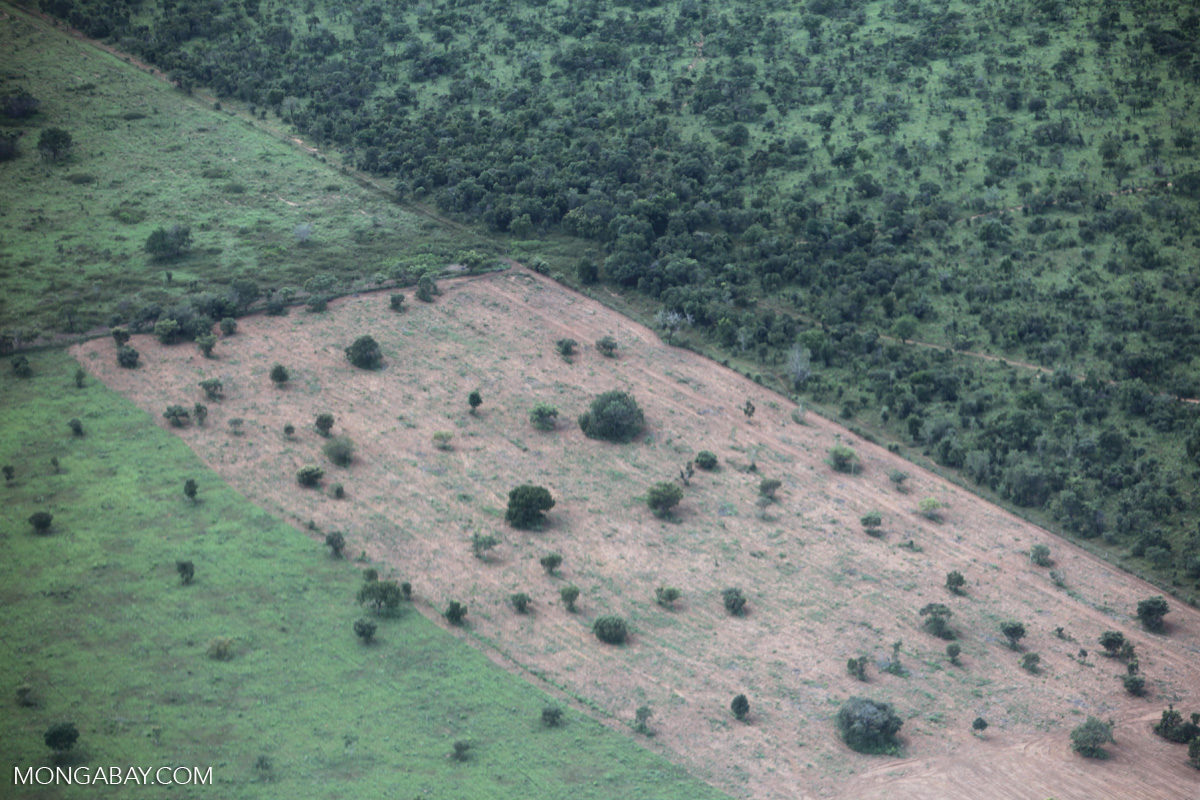
Ranchland in the Cerrado tropical savanna of Brazil.

BYMalavika VyawahareMongabayPUBLISHEDApril 12, 2021SHAREShare via FacebookShare via TwitterShare via Email

A white lower-case t on a black background

READING LISTPOLITICS & ELECTIONSManchin’s Objection to Infrastructure Bill May Be Motivated by Corporate DonorsECONOMY & LABORBiden’s Domestic Spending Plan Is Welcome, But More Military Spending Isn’tENVIRONMENT & HEALTHWhy I Cut Ties With Insurance Giant Liberty MutualPRISONS & POLICINGResidents of Minneapolis Suburb Rise Up Against Police Killing of Daunte WrightECONOMY & LABORPentagon and Tax Cheats Already Cost Taxpayers Far More Than Biden’s Job PlanECONOMY & LABORNew Zealand Law Granting Paid Leave for Miscarriage Sparks Organizing in US

Covering Climate Now Logo

PART OF THE SERIES

Covering Climate Now

This story originally appeared in Mongabay and is republished here as part of Covering Climate Now, a global journalism collaboration strengthening coverage of the climate story.

As the planet warms, it isn’t just humans who are feeling the heat — trees are too. Rising temperatures are disrupting a primary engine of life on Earth: photosynthesis.

A recent study from Brazil adds to fears that climate change is altering the face of the planet. Literally. Tropical forests could look more and more like deciduous forests or savannas in the future, according to the research based in Brazil’s Cerrado biome. This ecoregion abjacent to the Amazon Rainforest is where savanna, grasslands and forests mingle.

The paper, published in Environmental Research Letters in March, focused on four trees species found in both the Amazonian tropical forests and savanna land: Qualea parviflora, known as pauterra in Portuguese; Pseudobombax longiflorum, or the Brazilian shaving-brush tree; Hymenaea stigonocarpa (jatobá do Cerrado); and Vatairea macrocarpa, also known as angelim.

Never miss another story

Get the news you want, delivered to your inbox every day.

  • Email

“The article extends present knowledge of heat tolerance to tropical species in particularly hot regions, testing species not tested before,” said Gotthard Heinrich Krause, professor of plant physiology at Heinrich Heine University Düsseldorf, Germany.

Krause, who was not involved with the study, noted that the paper underlines how “increased number of extreme heatwaves, often combined with drought stress,” compound the heat stress faced by trees.

The maximum temperatures in the Cerrado region and neighboring forests can reach 45° Celsius (113° Fahrenheit). The area has warmed perceptibly in recent decades, and heat waves that regularly sweep the region are becoming hotter and dryer.

How much a leaf warms depends on how much solar radiation it absorbs and what it loses through conduction and as long-wave radiation. Leaves facing the harsh tropical sun heat up faster than the ambient air around them.

Igor Araújo installing thermal boxes on trees to measure the temperature of leaves.

Prolonged exposure to heat can induce damage to leaf tissue, compromising photosynthetic efficiency and, consequently, trees’ fitness,” said Igor Araújo, first author of the new paper and an ecologist at the Mato Grosso State University, Brazil.

The disproportionate warming in the Cerrado belt is driven not just by global temperature rise, but also by local deforestation and fragmentation of wooded areas. As pastureland and cropland have eaten away into forests, their cooling effect is becoming muted.

Trees cool themselves and areas around them by transpiring water through the stomata dotting their leaf surfaces. This process, along with evaporation, is also why forested areas induce rainfall. “One single adult tree in the Amazon can transpire up to 1000 L [264 gallons] of water per day, functioning as a natural air conditioner of the environment. This process is called biotic pump, which is reduced by deforestation,” Araújo said.

When faced with scorching heat and dry spells, the pores on leaves clamp shut to conserve water. “This will reduce or prevent transpirational cooling of leaves, causing substantial increases of leaf temperature above air temperature,” Krause said.

The study estimated, for the first time, what temperatures leaves can tolerate. To do this, the authors calculated the temperature at which a critical component of the photosystem breaks down and the temperatures that leaves are experiencing. The difference between the two levels is called the thermal safety margin (Tsm).

Krause said he expected that the temperature at which scientists observe permanent damage to leaf tissue to be higher than what the researchers estimate. This would mean a wider safety net, but it still would not be enough to protect most species considered in the research, given the current pace of warming.

Such a hostile environment is dangerous for leaves and trees. The tree is not shedding leaves as part of a seasonal cycle but rather because they are not performing their function of harnessing energy.

The authors found that in some species, the maximum leaf temperatures are already exceeding this threshold. But if average temperatures rise by even 2.5°C (4.5°F), this will be true for most tree species, they estimate. With a 5°C (9°F) rise, all tree species studied will suffer from leaf burn.

It’s not just tree health that declines; other scientists have shown that heat stress also affects carbon dioxide uptake by trees. According to Krause, there is a reduction in the CO2 absorbed by plants even at temperatures lower than those that short-circuit photosynthesis. “Such reduction will contribute to the reduction in carbon sink of the tropical forest,” he said.

At the moment, savanna species adapted to higher temperatures are doing better than the rainforest species. “Our results thus indicate expected shifts in deciduousness in the future and thus a trend towards savanna vegetation replacing forests in the regions in Southern Amazonia characterized by large patches of deforestation,” the authors write.

What is happening at the Amazon-Cerrado boundary may be a precursor for feverish tropical forests across the world. Unlike humans, these forests won’t have air conditioners or sunscreens to protect them.

Citations:

Araújo, I., Marimon, B. S., Scalon, M. C., Fauset, S., Marimon Junior, B. H., Tiwari, R., … Gloor, M. U. (2021). Trees at the Amazonia-Cerrado transition are approaching high temperature thresholds. Environmental Research Letters, 16(3), 034047. doi:10.1088/1748-9326/abe3b9

Tiwari, R., Gloor, E., Cruz, W. J., Schwantes Marimon, B., Marimon‐Junior, B. H., Reis, S. M., . . . Galbraith, D. (2020). Photosynthetic quantum efficiency in south‐eastern Amazonian trees may be already affected by climate change. Plant, Cell & Environment. doi:10.1111/pce.13770

Western U.S. may be entering its most severe drought in modern history

https://www.cbsnews.com/news/drought-western-united-states-modern-history/

BY JEFF BERARDELLI

APRIL 12, 2021 / 6:46 AM / CBS NEWS

Extreme drought across the Western U.S. has become as reliable as a summer afternoon thunderstorm in Florida. And news headlines about drought in the West can seem a bit like a broken record, with some scientists saying the region is on the precipice of permanent drought.

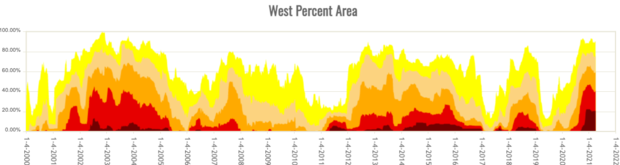
That’s because in 2000, the Western U.S. entered the beginning of what scientists call a megadrought — the second worst in 1,200 years — triggered by a combination of a natural dry cycle and human-caused climate change.

In the past 20 years, the two worst stretches of drought came in 2003 and 2013 — but what is happening right now appears to be the beginning stages of something even more severe. And as we head into the summer dry season, the stage is set for an escalation of extreme dry conditions, with widespread water restrictions expected and yet another dangerous fire season ahead.

drought-time-series-west.png
NOAA

The above image is a time series of drought in the western states from 2000 to 2021. This latest 2020-2021 spike (on the right) is every bit as impressive as the others, but with one notable difference — this time around, the area of “exceptional drought” is far larger than any other spike, with an aerial coverage of over 20%. As we enter the dry season, there is very little chance conditions will get better — in fact it will likely only get drier. https://www.cbsnews.com/newsletters/widget/e879?v=27c2db22c86bece439a19414820ef4a4&view=compact#tVNNb9swDP0rgs5RIit2%2FHHr0AHbZSjQ7bQMhSzRiVbZMiQ5RlD0v49KnLbYccBu1uPjI%2FlIv1A3RuOGQJsXCsppoA2Fqqzpip4MzPhSrh%2BligiMLphERvAuBIjkk9Nn%2Brqi0Uv1bIZDEjHh8yBbC5o20U%2BwotJHoyzcTfHo%2FFeEf1Ih9FbyqmAKyozlAhSrBeQMVJbXmm%2B1qgT99VfqN9lDSv4NXUda8NJrsNZ84CVxWvAdVHrbMplXOct12TG55SXj%2BbbqdnUhpErDLSkPU3svYxpacJEhiWWC8KwpeJPxd9p3E20izRAi%2BIFM67AmvTxjHwQGhHB4YmIgvQuRBDiBB6K9mw7HSMyAsE5pRxOi8%2BcPuucRLhajxhCfFhTjylkLKpl9dYzvJN%2FxXctAFAXL66xgsstaJqAUtaq2ne665MR73s0uZU2PExJ1lMMBEkfDyahbaQ3hOboRS5pwD6dkRNq0PNwIA8zhyUToEcb1wxcDPulOIWkl5PFaELmIXaEl10MY8bbMCcgMLcawklGXNXUl11DhmloBHcsyELimjjMu6iyr8qwqi%2FqWcB3lqj4F8Iu6HLDoiuJ8JtImfzP10U1eXWxtA0ntI6n1ctAPVsbO%2Bf7SAAYvo6V2n95dSM%2Bl3sJIXYC0ZurTeY%2FedcZ%2BCKcEpMCQvMOoTj%2BESr0ZJe0PbxE%2BxjiGZr%2FZb%2BZ5Xi%2BJa%2Fyx9pv0td8sp8KW%2B2LTgKqahYibC%2Bx6PWy5nv1mWdD%2F1F4s%2BEeN19c%2F

With this in mind, there is little doubt that the drought in the West, especially the Southwest, this summer and fall will be the most intense in recent memory. The only real question: Will it last as long as the last extended period of drought from 2012 to 2017? Only time will tell.

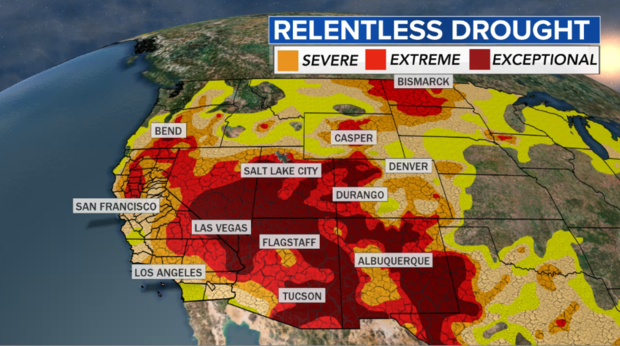
Right now, the U.S. Drought Monitor places 60% of the Western states under severe, extreme or exceptional drought. The reason for the extensive drought is two-fold; long term drying fueled by human-caused climate change and, in the short term, a La Niña event in which cool Equatorial Pacific waters failed to fuel an ample fetch of moisture.

drought.png
CBS NEWS

Consequently, this past winter’s wet season was not very wet at all. In fact, it just added insult to injury, with only 25 to 50% of normal rainfall falling across much of the Southwest and California. This followed one of the driest and hottest summers in modern times, with two historic heat waves, a summer monsoon cycle that simply did not even show up and the worst fire season in modern times.

A Mass Extinction Event Is on The Horizon if Marine Life Keeps Fleeing The Equator

(vlad61/iStock/Getty Images)NATURE

https://www.sciencealert.com/we-may-be-heading-for-a-mass-extinction-event-if-marine-life-continues-to-flee-the-equator

ANTHONY RICHARDSON ET AL., THE CONVERSATION10 APRIL 2021

The tropical water at the equator is renowned for having the richest diversity of marine life on Earth, with vibrant coral reefs and large aggregations of tunas, sea turtles, manta rays, and whale sharks. The number of marine species naturally tapers off as you head towards the poles.

Ecologists have assumed this global pattern has remained stable over recent centuries – until now. Our recent study found the ocean around the equator has already become too hot for many species to survive, and that global warming is responsible.

In other words, the global pattern is rapidly changing. And as species flee to cooler water towards the poles, it’s likely to have profound implications for marine ecosystems and human livelihoods. When the same thing happened 252 million years ago, 90 percent of all marine species died.

The bell curve is warping dangerously

This global pattern – where the number of species starts lower at the poles and peaks at the equator – results in a bell-shaped gradient of species richness. We looked at distribution records for nearly 50,000 marine species collected since 1955 and found a growing dip over time in this bell shape.

So, as our oceans warm, species have tracked their preferred temperatures by moving towards the poles. Although the warming at the equator of 0.6℃ over the past 50 years is relatively modest compared with warming at higher latitudes, tropical species have to move further to remain in their thermal niche compared with species elsewhere.

As ocean warming has accelerated over recent decades due to climate change, the dip around at the equator has deepened.

We predicted such a change five years ago using a modeling approach, and now we have observational evidence.

For each of the 10 major groups of species we studied (including pelagic fish, reef fish, and mollusks) that live in the water or on the seafloor, their richness either plateaued or declined slightly at latitudes with mean annual sea-surface temperatures above 20℃.

Today, species richness is greatest in the northern hemisphere in latitudes around 30°N (off southern China and Mexico) and in the south around 20°S (off northern Australia and southern Brazil).

This has happened before

We shouldn’t be surprised global biodiversity has responded so rapidly to global warming. This has happened before, and with dramatic consequences.

252 million years ago…

At the end of the Permian geological period about 252 million years ago, global temperatures warmed by 10℃ over 30,000-60,000 years as a result of greenhouse gas emissions from volcano eruptions in Siberia.

A 2020 study of the fossils from that time shows the pronounced peak in biodiversity at the equator flattened and spread. During this mammoth rearranging of global biodiversity, 90 percent of all marine species were killed.

125,000 years ago…

A 2012 study showed that more recently, during the rapid warming around 125,000 years ago, there was a similar swift movement of reef corals away from the tropics, as documented in the fossil record. The result was a pattern similar to the one we describe, although there was no associated mass extinction.

Authors of the study suggested their results might foreshadow the effects of our current global warming, ominously warning there could be mass extinctions in the near future as species move into the subtropics, where they might struggle to compete and adapt.

Today…

During the last ice age, which ended around 15,000 years ago, the richness of forams (a type of hard-shelled, single-celled plankton) peaked at the equator and has been dropping there ever since. This is significant as plankton is a keystone species in the food web.

Our study shows that decline has accelerated in recent decades due to human-driven climate change.

The profound implications

Losing species in tropical ecosystems means ecological resilience to environmental changes is reduced, potentially compromising ecosystem persistence.

In subtropical ecosystems, species richness is increasing. This means there’ll be species invaders, novel predator-prey interactions, and new competitive relationships. For example, tropical fish moving into Sydney Harbor compete with temperate species for food and habitat.

This could result in ecosystem collapse – as was seen at the boundary between the Permian and Triassic periods – in which species go extinct and ecosystem services (such as food supplies) are permanently altered.

The changes we describe will also have profound implications for human livelihoods. For example, many tropical island nations depend on the revenue from tuna fishing fleets through the selling of licenses in their territorial waters. Highly mobile tuna species are likely to move rapidly toward the subtropics, potentially beyond sovereign waters of island nations.

Similarly, many reef species important for artisanal fishers – and highly mobile megafauna such as whale sharks, manta rays, and sea turtles that support tourism – are also likely to move toward the subtropics.

The movement of commercial and artisanal fish and marine megafauna could compromise the ability of tropical nations to meet the Sustainable Development Goals concerning zero hunger and marine life.

Is there anything we can do?

One pathway is laid out in the Paris Climate Accords and involves aggressively reducing our emissions. Other opportunities are also emerging that could help safeguard biodiversity and hopefully minimize the worst impacts of it shifting away from the equator.

Currently, 2.7 percent of the ocean is conserved in fully or highly protected reserves. This is well short of the 10 percent target by 2020 under the UN Convention on Biological Diversity.

But a group of 41 nations is pushing to set a new target of protecting 30 percent of the ocean by 2030.

This “30 by 30” target could ban seafloor mining and remove fishing in reserves that can destroy habitats and release as much carbon dioxide as global aviation. These measures would remove pressures on biodiversity and promote ecological resilience.

Designing climate-smart reserves could further protect biodiversity from future changes. For example, reserves for marine life could be placed in refugia where the climate will be stable over the foreseeable future.

We now have evidence that climate change is impacting the best-known and strongest global pattern in ecology. We should not delay actions to try to mitigate this.

This story is part of Oceans 21
Our series on the global ocean opened with five in-depth profiles. Look out for new articles on the state of our oceans in the lead-up to the UN’s next climate conference, COP26. The series is brought to you by The Conversation’s international network. 

Anthony Richardson, Professor, The University of QueenslandChhaya ChaudharyUniversity of AucklandDavid Schoeman, Professor of Global-Change Ecology, University of the Sunshine Coast; and Mark John Costello, Professor, University of Auckland.

This article is republished from The Conversation under a Creative Commons license. Read the original article.

Earth’s most beloved creatures headed toward extinction under current emissions, study shows

BY SOPHIE LEWIS

https://www.cbsnews.com/news/animals-plants-biodiversity-extinction-climate-change-greenhouse-gas-emissions/

APRIL 9, 2021 / 12:08 PM / CBS NEWShttps://www.cbsnews.com/embed/video/?v=487142191b8e2904b325f1615da5a7ae#xVZZa%2BRGEP4rQi%2BBMD1q3dJACPY6JJtdNsbHS6xl6KOk6VhX1NIcLP7vqZY0M7YTWDbgBDO4u1Vd1fVV1Vf1xWZD37QlO9irvhtgYW%2BVhMZefbFVD5W2Vw9f7P7Qgr2yt420F7aSuJSMxtQNU5L7sSQBl0A4C3zi%2BhEFkQAkeYCyVbu%2Fgfy9uaGuw5tf39E%2FN%2B1N%2BvsHKfVF99vd3c%2BKNt1Ar9J7lNblUKCkZltVF4SrRqotdFr1B6JbEAo0gX2vatETjbu6V7rXeK9XfWnedzsJWbOQamptMSGghI7hSbGwdD%2FIg7VjXa2XyyVelfCIF3GRD2V51HOnKrC6oa7xjtUMvdU3Fj4KrOdPspi25ldZRXO0ubBKYNLcO78Q7x7QgmB1UyvByrs3NdOjVt2zqrVXGB8%2F9j2XRpRS9HUwMDS1vQpofN5%2BZBxKfA6NVkGMCsppXyMgGOyKFaBNNmgTxE3ft3qVOZkjuK5hp90lLtA6ahJL0VSZsxl45qjM6TLHox7NHBrjz88c8LkIeegSyANOAnAFSYAlJBd%2ByH0fAhnIzOk3Q8VrpsrMiQK6x3TKnDRlKaeeGzJfhkkYMhGncR6n1E1y8HIxvYbkg0Z3yLelDzkZJCFN4ighs9nlH22BaGz%2B0W3%2FDd12vYTuY6PCTWI%2FdWXuRrkQkvl%2BDpHwRR6GeJWy%2BO38flrYbQdbBbv7rnwBgG5LJWDJqrJYqiZzWItObz38GdpACL5S5pkzK84c%2B8Q1z%2FS3XSOXSDTjl%2BUM9wTxvEFTCPKm1C%2BQxhe4cZgmNAgSPwkQ%2BNGtaD0KVkz30C0rf0iOVr3%2F3GzedBXr0SxrDYhj8WXOnlQtFPc3H1FieAX2brd7%2BZYZ5G8L9Yi00u%2BrtjHPsVc5KzUSPdK%2BEiPRmxxPmB%2BLKOREcBkgowtOOJURyTkFJrw4dePkzNHmVaY6FFJrJzbYPB6ms8%2BYOaxDy3dG%2BydWGaZ7d3n76bn05WH68DB9%2BYzpBq3SjcQzF20A04ambNcYhKJCddOHocXs0frkAivLCyR4rS%2FLRjyeSEvfa%2BhuB65FpzjIk7husSU03VFuA%2FuLK8jZUJqo0AX%2B2ePp5fnUTxdBuAhTw6wdE4%2BIu4EMo6FF08G4xlTyKcXAR8jywezvHDND%2FBEefW9M4qbWa92vC4OKCet0wto1M%2F5%2BypyLk4ww5rfCdU8nun%2Bl%2BwmBq4b9dde00PWHD4BxsL0gBsnCyHdj6YZBGqSu5%2FvMj%2BwnDE4FPRvpHL3poTiYNZ5tGjklJtRyVDvHOQfWDx1IIky3ANP%2F52EA7SOaJjLnBoxL5ANcnDJ1v8GiEU1ZgpjS%2FXQtc17rzpwflV6XTVGAXKv6B2po6DnoSv9UM16agE6jCuuQf0u4GPD9nZkyHmyfRkiVoSShHwgShDElnMecpEi3VIgUROqZJH1x9ZiNumkxR7G37pR%2BJjTOL5KLPEg8j7iUYX24nJE0xSLxXBFFPudpHHv26cr1wK%2FQJxMObFyEBoSmlhutaLIKk7PYcRQA3G%2B%2B01aFFWph%2B222IC3RTQBpa4PNHg%2F6BicX%2BWy8sYZaQmchfqbiLKiUNq1AHwcdvWnGFDtaO0au7lF8PZ%2BaDD0FaAKRRgxnhogT8MKQYAKFhOUu%2Bgqxl4rEz2WeG3zO944IihInhh4ssWE1JvlnM2FtsWHMpiXoR6SdkY%2BuYGvgsQ1hFEcBUxNrM3iaysf%2FvyhDWBgZw2ZiVGiObyerZlicP0znsxbEzFQ6cqO1A27PVDeGMcZKNTMR4Z6bomsBDq45wzk2dtMk91IehuHxwsxeZxPonMIaDE6I3jZDJ2DiQ2uuZ96xWl6XrDd8P9qcKXxtXrg%2BQ2C2s4lZwhgGVqqhMumOPSlX5bPP5gKKQG2AMx3LFMhprHzdqf%2FWPKYuxmqMUKkJjvw1jgEvesg5s8gcSDIFkhQdQL1pBo1Lhk3mmGljb6lAKnbdoAo8mkNg5tM5tP%2Ffw4z1GeE3tDJS3Ved%2FLet%2B%2BnpLw%3D%3D

Snow leopards in the Himalayas, lemurs in Madagascar and elephants in central Africa: Some of Earth’s most beloved creatures are on a path to extinction, a new study shows, thanks to current greenhouse gas emissions. Unless humans stop pumping carbon dioxide and methane into the atmosphere, researchers say the planet’s biodiversity will suffer devastating consequences. 

In a study published Friday in the journal Biological Conservation, scientists warn that some of the richest concentrations of plants and animals on Earth will be “irreversibly ravaged” by global warming unless countries make a real effort toward their goals made under the 2015 Paris climate treatyThey report a high danger for extinction in almost 300 biodiversity “hot spots” if temperatures rise three degrees Celsius above preindustrial levels. 

Under the Paris agreement, nations promised to keep warming “well below” two degrees Celsius. Even if these commitments are honored, temperatures are still expected to exceed three degrees Celsius before the end of the century. https://www.cbsnews.com/newsletters/widget/e879?v=487142191b8e2904b325f1615da5a7ae&view=compact#xVNNb9swDP0rgi67RI3t2HGcW4cO2C5DgW6nZSj0QcdCZcmQ5HjF0P8%2BynGaYPdhN%2BnxkY98lH5TN0TtbKD73xSkU0D3FHZ1Q1f0pGHCm3T9wGVEYHBBJzKC9yFAJB%2BdeqVvKxo9ly%2FaHlMRHT5ZLgwouo9%2BhBXlPmpp4H6MnfNfEP5BN9lWKl4pVm1KycqqzpgQtWCN3FSZlA3IpqA%2F%2F0r9yntIycENnQZiYNLhhpQqUyVkW%2B6KguUZL1mZC86aRgpW5HK73QjR1HVB31MeR%2FHAY5q4yIqcZSXLGpJv99luX%2B2utG86mtkWvHcfAuldiESAcSdQRHrgcfQQSAdcIRDdxL0i8CtqK5NbZLQKPJGj92AjgV6HkBxfkRBH9UpC56Zwo%2FY6wOy6jUh%2FXlCMS2cMzBXPJmZbnm2zrWBQVBUrm7xivM1xVqiLRu42rWrb5M817%2BKgNLrHuYnsuD1C4ig4aXmRVhBeohtQUocHOCV70vL58UKwMIVnHaFHGF8EfNbg581IDVbOBRP8dFbFhEvgjC9V0LMBbdAnIBMIjKGmlvMa602W1RtciSjyBkcrgYmWN6yt82bXFo2oquqScB7qRmIM4BcJblF%2BRXFcHem%2BfPf4yY1ezi6LQNI0SBKeW%2FVoeGyd7%2BcuMDhPmnp%2BvpqSrovowkitADd67NMHGLxrtbkJpwSkgE1WYlSlLyNTb1py890bhLsYh7A%2FrA%2FraZrulsQ7%2FHqHdTod1tzizkxgg%2BE2Bia0U%2Bicx9qv7PrW2LJadl4tO3oA2zm0hB15YO9v77BeNvp%2F1Rcb%2F5nK29sf

So, which species will be hit hardest? Scientists point to endemic species: Plants and animals found exclusively in specific locations, like one country or one island — animals like snow leopards and forest elephants. 

socalledende.jpg
So-called endemic species — plants and animals found only in certain zones — will be hit hardest in a warming world. BIOLOGICAL CONSERVATION

They found that endemic land species, specifically in biodiverse hot spots, are nearly three times as likely to suffer losses due to climate change than species that are more widespread, and 10 times more likely than invasive species

“Climate change threatens areas overflowing with species that cannot be found anywhere else in the world,” lead author Stella Manes said in a statement. “The risk for such species to be lost forever increases more than 10-fold if we miss the goals of the Paris Agreement.”

Climate Change 

Not all species face the same threat. In mountain regions, 84% of endemic species face extinction if Earth warms another two degrees, while that number rises to 100% on islands. 

Overall, more than 90% of land-based endemic species and 95% of marine ones will be adversely affected. Mediterranean marine species are particularly vulnerable because they are trapped in an enclosed sea. 

inmountainre.jpg
In mountain regions, 84% of endemic animals and plants face extinction in a 3C world, while on islands — already devastated by invasive species — the figure rises to 100%. BIOLOGICAL CONSERVATION

“By nature, these species cannot easily move to more favorable environments,” explains co-author Mark Costello.

Two out of three species in the tropics could perish due to climate change alone. And safe havens in biodiversity hot spots, which conservationists have worked to establish for years to protect these species, may prove useless in the face of climate change. 

“Unfortunately, our study shows that those biodiversity rich-spots will not be able to act as species refugia from climate change,” said co-author Mariana Vale. 

Scientists say every tenth of a degree matters to avoid the devastating consequences of a mass extinction event. But carbon dioxide and methane levels in the atmosphere continued to rise in 2020, with CO2 level reaching their highest point in 3.6 million years. 

“The 2020 increase is likely to remain one of the largest in the entire record.” the the National Oceanic and Atmospheric Administration said.

First published on April 9, 2021 / 12:08 PM

© 2021 CBS Interactive Inc. All Rights Reserved.Sophie Lewis