In a recent interview with Technology Review, Gates discussed his new book “How to Avoid a Climate Disaster,” and emphasized the benefits rich nations could produce by moving to “100% synthetic beef.”
“I do think all rich countries should move to 100% synthetic beef,” Gates said when asked about how countries can help to reduce methane emissions when it comes to food production. “You can get used to the taste difference, and the claim is they’re going to make it taste even better over time.”
The philanthropist and Microsoft-cofounder explained to the outlet that he is hopeful that a turn to plant-based proteins will help combat methane emissions produced by livestock.
“Impossible and Beyond have a road map, a quality road map and a cost road map, that makes them totally competitive,” Gates said, referring to popular plant-based meat companies. “As for scale today, they don’t represent 1% of the meat in the world, but they’re on their way.”
Gates told Technology Review that he acknowledges the alternative argument that getting rid of cows is viewed as an unpopular approach, but he said that the benefits of plant protein are worth a shift for some countries.
“Eventually, that green premium is modest enough that you can sort of change the [behavior of] people or use regulation to totally shift the demand,” Gates said. “So for meat in the middle-income-and-above countries, I do think it’s possible.”
image captionScenes such as this one – in Odessa, Texas – are unusual for the state
Texas is known for its sprawling deserts and excruciating heatwaves – but right now, it’s blanketed in a thick layer of ice.
The state is seeing some of its coldest temperatures in more than 30 years, with some areas breaking records that are more than a century old.
Parts of Texas hit 0F (-18C) on Sunday, and weather warnings are going to stay in place through the week.
So why is this normally boiling state suddenly freezing over?
According to the US National Weather Service (NWS), this is down to an “Arctic outbreak” that originated just above the US-Canada border, bringing a winter snow storm as well as plummeting temperatures.
Cold air outbreaks such as these are normally kept in the Arctic by a series of low-pressure systems, the NWS said. However, this one moved through Canada and spilled out into the US last week.
Temperatures in the city of Dallas for example will reach a high of 14F (-10C) on Monday when it should be more like 59F (15C) at this time of year.
For the first time in the US state, all 254 counties are under a winter storm warning, US media report. The temperature in Dallas is already colder than in Anchorage, Alaska, CBS News reports.
Rotating power outages have been initiated by the state’s power grid operator, the Electric Reliability Council of Texas (Ercot), early on Monday, to reduce demand on the electricity system.
Hundreds of flights in and out of the state have also been cancelled.
The weather has already proved deadly. On Thursday, icy roads led to a massive crash involving more than 100 vehicles in Fort Worth, killing six people and leaving dozens more needing hospital treatment.https://emp.bbc.com/emp/SMPj/2.39.18/iframe.htmlmedia captionHow a deadly crash with over 100 cars began on an icy Texas highway
“The expansive dome of sub-freezing temperatures across the northern tier of the country has laid the foundation for winter storms to wreak havoc from coast to coast, not only going into this weekend, but also into next week,” the NWS said in a statement released on Friday.
Weather warnings for severe winter conditions are going to remain in place until at least Tuesday, when the weather system will begin to move north.
Amarillo will see a high temperature of just 2F (-17C), breaking the city’s previous record of 12F (-11C) that was set in 1895, a forecaster from the service’s Weather Prediction Centre, Marc Chenard, told Reuters news agency.
image captionThese are some of the state’s coldest temperatures for more than 30 years
Similarly, Lubbock will only reach a high of 9F (-13C). These temperatures are “40 to 50 degrees [Fahrenheit] below average”, Mr Chenard said.
Parts of Oklahoma and the Texas panhandle are predicted to see as much as a foot of snow this week, while Dallas will have four inches.
Mr Chenard warns of more dangerous road conditions in Houston, caused by sleet and freezing rain.
The question is, why aren’t we hearing about it in the media?
I’ve been posting a lot of articles lately on the record-breaking cold we’re getting in the Lower 48 thanks to the Polar Vortex. Fatal 100 car pileups on icy highways in Texas aren’t the norm for states that far South. But while reporting the facts of newsworthy fatalities, our nations news sources have been remiss in making any mention of a climate change connection.
It’s almost like a conspiracy to make our new president look better than the last one, so we won’t risk adding a line about the climate connection while there’s an impeachment to cover. Besides, people would like to think that the climate crisis was solved the minute they voted Biden in and Trump out.
It really wouldn’t have taken much time or ink to inform folks about the climate change link to our current Polar Vortex temperatures. I simply googled Climate Change + Polar Vortex and came up with:
“How climate change is affecting the polar vortex?
How Is the Polar Vortex Affected by Climate Change? … The change is warming higher latitudes and reducing the temperature difference between the warmer mid-latitude and polar regions. This weakens and destabilizes the polar jet stream, causing it to dip into lower latitudes, bringing polar air farther south.”
31.01.2019 | 4:56pmEXTREME WEATHERQ&A: How is Arctic warming linked to the ‘polar vortex’ and other extreme weather?
The past week has seen some brutal weather hitting the US and Canada. With cold Arctic air plunging south down to the US midwest, six states have seen temperatures lower than the south pole and at least eight people have died due to the extreme cold.
The UK, too, is braced for snow this week, but nothing close to the scale seen in the US.
The very cold weather prompted President Trump to tweet: “What the hell is going on with Global Waming? [sic].” This followed an earlier tweet that it “wouldn’t be bad to have a little of that good old fashioned Global Warming right now!”
The cold, snowy weather has also been accompanied by a flurry of stories about the “polar vortex” and how it can bring extreme weather to the northern hemisphere mid-latitude regions of North America, Europe and Asia. But that is not the only way that the Arctic can affect conditions further south.
Over the past decade or so, a growing body of research has proposed ways in which rapid Arctic warming can lead to harsh winters, summer heatwaves and even floods and droughts across the mid-latitudes.
Some scientists say that climate change and Arctic sea ice loss are the root cause of these events, but others are more circumspect.
In this detailed Q&A, Carbon Brief speaks to scientists about the potential connections between Arctic warming and extreme weather across the mid-latitudes, what those theories look like, and how the evidence measures up.
The Arctic is warming more than twice as quickly than the global surface average. This phenomenon is known as “Arctic amplification”. In part, this stems from the rapid loss of sea ice cover in the region. As Arctic sea ice diminishes, energy from the sun that would have been reflected away by the bright white ice is instead absorbed by the ocean, causing further warming. (Declining snow cover over Arctic land areas has the same effect.)
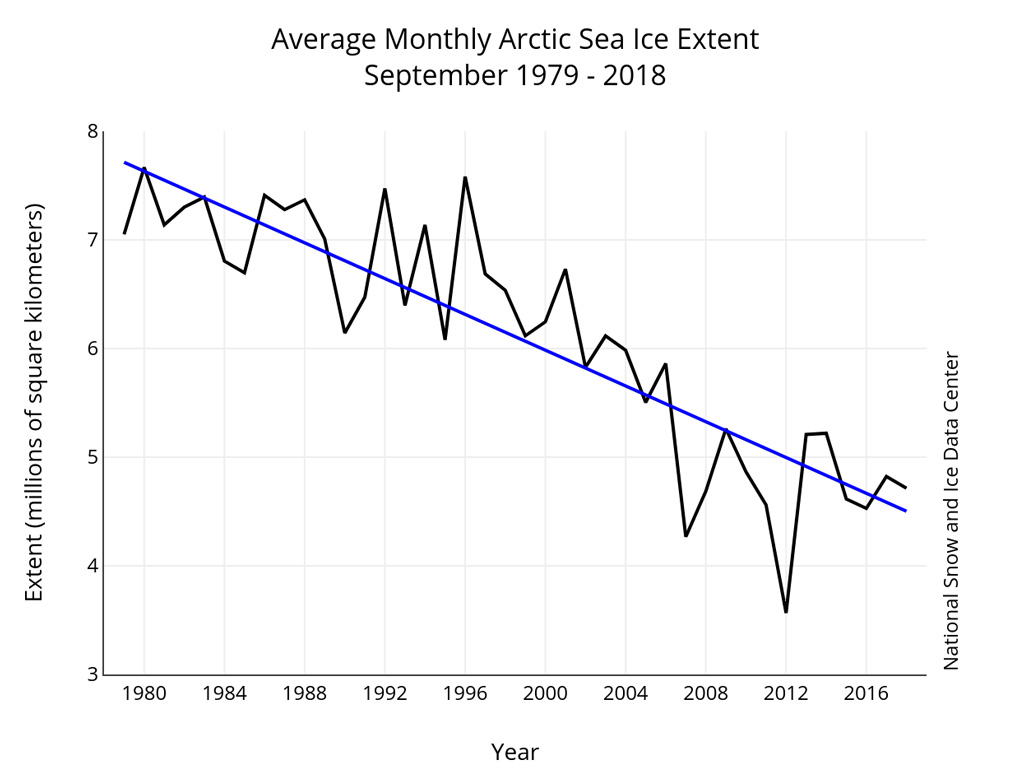
Late summer and early autumn have seen the largest declines in Arctic sea ice cover. Average September sea ice extent, for example, has decreased by around 13% per decade since 1979.
Average September Arctic sea ice extent from 1979 to 2018. Black line shows monthly average for each year; blue line shows the trend. Source: NSIDC
Arctic amplification is also caused by temperature feedbacks. As the Earth’s surface warms, it emits more energy back to space. But less energy is radiated back from the Arctic compared with lower latitudes, meaning the region warms more quickly.
Recent research has suggested that these rapid changes in the Arctic could be having knock-on impacts further south. While a warmer Arctic Ocean further inhibits sea ice growth, it also generates warmer and more moist air masses over the Arctic and nearby continents. A warming Arctic also reduces the temperature difference with the mid-latitudes, which has consequences for circulation patterns in the atmosphere (more on this later).
The theory goes that these changes contribute to an increase in unusual and extreme weather across the North America, Europe and Asia.
Side-by-side comparisons of the images show how dramatically the outlet glaciers of the Vatnajökull ice cap have receded.
Then: vast reaches of ice and snow. Now: bare rock.
“On surface appearances, the extent of the climate crisis often remains largely invisible,” said Kieran Baxter from the University of Dundee, who documented the glaciers in 2020. “But here we can clearly see the gravity of the situation that is affecting the whole globe.”https://platform.twitter.com/embed/index.html?dnt=true&embedId=twitter-widget-0&frame=false&hideCard=false&hideThread=false&id=1356256106289508352&lang=en&origin=https%3A%2F%2Fwww.aljazeera.com%2Ffeatures%2F2021%2F2%2F5%2Fmelting-glaciers-rising-seas-climate-tipping-points&theme=light&widgetsVersion=ed20a2b%3A1601588405575&width=550px
Elemental power
I spent a week filming in Iceland for Planet SOS in 2019, perpetually awed by a landscape forged by the supercharged geology, shaped and reshaped by the effects of the elemental power of natural forces.
Basalt rock pinnacles hewn out by erosion stood sentinel on the shore with craggy mountains towering in the distance. Glaciers swept over active volcanoes, ash from previous eruptions carpeting the ice.
Through the millennia the glaciers have advanced and retreated but never has the withdrawal been as drastic as it is now. And it is happening to nearly all the world’s glaciers – from the Alps to the Andes, from Greenland to Antarctica.
I spoke to geologist Oddur Sigurðsson who has been charting glacier loss for decades and is well aware of the global implications.
“Glaciers will melt,” he told me. “The meltwater runs into the ocean and the ocean surface rises. I told my friends in the United States, that the refugees would not only be coming from Mexico and Central America but also from Florida and the Atlantic coast.”
The first global ice-loss survey released recently found that melting of the ice sheets accelerated so much during the past 30 years that it is now in line with the worst-case scenarios outlined by scientists.
There was a stunning exchange on the recent Outrage and Optimism podcast which rendered host Christiana Figueres, one of the architects of the Paris Agreement, speechless.
She was told by leading climate scientist Johan Rockström, the director of the Potsdam Institute for Climate Impact Research, that we have already gone beyond some key tipping points. Losing the resilience of the planet was the nightmare that is keeping scientists awake at night, Rockström said.
“The number one is the canary in the coalmine – the Arctic summer sea ice. We have passed the point of no return, affecting weather systems in the Northern Hemisphere with heatwaves and drought and forest fires. It is impacting the Gulf Stream and causing warm surface temperatures that are accelerating the melting of the west Antarctic ice shelf.”
Rockström went on to say that a number of glaciers in west Antarctica are starting to irrevocably slide into the ocean, crossing another tipping point. “This would likely commit ourselves to one or two metres of sea-level rise.”
Land becomes sea
What does that physically mean? That by the century’s end, a huge proportion of our coastal populations would have had to move. Hundreds of millions of people would be going inland. And what is now perhaps an efficient subway transport system would become the domain of fish and sea squirts. Cities deluged, land becomes sea.
A recent report by Climate Risk Management says that 100 of the world’s airports could be below mean sea level by 2100. Of those, 20 airports handled more than 800 million passengers in 2018, approaching a fifth of the world’s passenger traffic that year.
Like we have said before, you think this pandemic bad? We ain’t seen nothing yet.
Careful caretakers
“It is a last warning system from science,” Rockström said. “Science is saying we have learned so much, here are the red flags. We can deviate away but that requires cutting emissions by half every decade and reaching a net-zero world economy in 30 years time.”
“We need to become very, very careful caretakers of oceans and all the natural ecosystems on land. Then we can still avoid the most catastrophic outcomes.”
These are warnings we hear time and time again, only they’re becoming louder and more urgent as science reveals reality, just as surely as the glaciers reveal bare rock.
Your environment round-up
1. UK PM risks ‘humiliation’ over coal mine: A leading climate scientist has urged Boris Johnson to halt production at a new coal mine in Cumbria. “You have a chance to change the course of our climate trajectory … Or you can stick with business-almost-as-usual and be vilified around the world,” James Hansen, the former top global warming researcher at NASA, wrote in a letter.
2. Meat and politics between Tibet and China: Tibetan Buddhist monks are urging former nomadic yak herders to embrace vegetarianism, while local authorities hope to bolster the industrial production of yak meat for a Chinese public that is consuming more meat than ever before.
3. Our unnatural disasters: Thanks to climate change, the world is seeing more wildfires, storms, and new viruses than it did in the recent past. Although we name them “natural” disasters, some say we should call them out for the man-made catastrophes they really are.
4. A freshwater Arctic Ocean?: During the Ice Ages, the Arctic basin was isolated from the world ocean, and may have swung between being filled with salt water and fresh water at different times, according to a recent geochemical study of marine sediments.
The final word
Tipping points are so dangerous because if you pass them, the climate is out of humanity’s control: if an ice sheet disintegrates and starts to slide into the ocean there’s nothing we can do about that.
A new guide to living through climate change. Robinson Meyer brings you the biggest ideas and most vital information to help you flourish on a changing planet.
Photo Illustrations by Brendan Pattengale | Maps by La Tigre
Images above: Glaciers from the Vatnajökull ice cap, in Iceland
Brendan Pattengale is a photographer who explores how color can convey emotions in an image. In his photo illustrations throughout this article, the colors of the original photos have been adjusted, but the images are otherwise unaltered.
This article was published online on February 3, 2021.
We live on a wild planet, a wobbly, erupting, ocean-sloshed orb that careens around a giant thermonuclear explosion in the void. Big rocks whiz by overhead, and here on the Earth’s surface, whole continents crash together, rip apart, and occasionally turn inside out, killing nearly everything. Our planet is fickle. When the unseen tug of celestial bodies points Earth toward a new North Star, for instance, the shift in sunlight can dry up the Sahara, or fill it with hippopotamuses. Of more immediate interest today, a variation in the composition of the Earth’s atmosphere of as little as 0.1 percent has meant the difference between sweltering Arctic rainforests and a half mile of ice atop Boston. That negligible wisp of the air is carbon dioxide.
Since about the time of the American Civil War, CO2’s crucial role in warming the planet has been well understood. And not just based on mathematical models: The planet has run many experiments with different levels of atmospheric CO2. At some points in the Earth’s history, lots of CO2 has vented from the crust and leaped from the seas, and the planet has gotten warm. At others, lots of CO2 has been hidden away in the rocks and in the ocean’s depths, and the planet has gotten cold. The sea level, meanwhile, has tried to keep up—rising and falling over the ages, with coastlines racing out across the continental shelf, only to be drawn back in again. During the entire half-billion-year Phanerozoic eon of animal life, CO2 has been the primary driver of the Earth’s climate. And sometimes, when the planet has issued a truly titanic slug of CO2 into the atmosphere, things have gone horribly wrong.
Today, humans are injecting CO2 into the atmosphere at one of the fastest rates ever over this entire, near-eternal span. When hucksters tell you that the climate is always changing, they’re right, but that’s not the good news they think it is. “The climate system is an angry beast,” the late Columbia climate scientist Wally Broecker was fond of saying, “and we are poking it with sticks.”
The beast has only just begun to snarl. All of recorded human history—at only a few thousand years, a mere eyeblink in geologic time—has played out in perhaps the most stable climate window of the past 650,000 years. We have been shielded from the climate’s violence by our short civilizational memory, and our remarkably good fortune. But humanity’s ongoing chemistry experiment on our planet could push the climate well beyond those slim historical parameters, into a state it hasn’t seen in tens of millions of years, a world for which Homo sapiens did not evolve.
When there’s been as much carbon dioxide in the air as there already is today—not to mention how much there’s likely to be in 50 or 100 years—the world has been much, much warmer, with seas 70 feet higher than they are today. Why? The planet today is not yet in equilibrium with the warped atmosphere that industrial civilization has so recently created. If CO2 stays at its current levels, much less steadily increases, it will take centuries—even millennia—for the planet to fully find its new footing. The transition will be punishing in the near term and the long term, and when it’s over, Earth will look far different from the one that nursed humanity. This is the grim lesson of paleoclimatology: The planet seems to respond far more aggressively to small provocations than it’s been projected to by many of our models.
To truly appreciate the coming changes to our planet, we need to plumb the history of climate change. So let us take a trip back into deep time, a journey that will begin with the familiar climate of recorded history and end in the feverish, high-CO2 greenhouse of the early age of mammals, 50 million years ago. It is a sobering journey, one that warns of catastrophic surprises that may be in store.
The first couple of steps back in time won’t take us to a warmer world—but they will illuminate just what sort of ill-tempered planet we’re dealing with. As we pull back even slightly from the span of recorded history—our tiny sliver of geologic time—we’ll notice almost at once that the entire record of human civilization is perched at the edge of a climate cliff. Below is a punishing ice age. As it turns out, we live on an ice-age planet, one marked by the swelling and disintegration of massive polar ice sheets in response to tiny changes in sunlight and CO2 levels. Our current warmer period is merely one peak in a mountain range, with each summit an interglacial springtime like today, and each valley floor a deep freeze. It takes some doing to escape this cycle, but with CO2 as it is now, we won’t be returning to an ice age for the foreseeable future. And to reach analogues for the kind of warming we’ll likely see in the coming decades and centuries, we will need to move beyond the past 3 million years of ice ages entirely, and make drastic jumps back into the alien Earths of tens of millions of years ago. Our future may come to resemble these strange lost worlds.
Before we move more dramatically backwards in time, let us briefly pause over the history of civilization, and then some. Ten thousand years ago, the big mammals had just vanished, at human hands, in Eurasia and the Americas. Steppes once filled with mammoths and camels and wetlands stocked with giant beavers were suddenly, stunningly vacant.
The coastlines that civilization presumes to be eternal were still far beyond today’s horizon. But the seas were rising. The doomed vestiges of mile-thick ice sheets that had cloaked a third of North American land were retreating to the far corners of Canada, chased there by tundra and taiga. The roughly 13 quintillion gallons of meltwater these ice sheets would hemorrhage, in a matter of millennia, raised the sea level hundreds of feet, leaving coral reefs that had been bathed in sunlight under shallow waves now drowned in the deep.
By 9,000 years ago, humans in the Fertile Crescent, China, Mexico, and the Andes had independently developed agriculture and—after 200,000 years of wandering—had begun to stay put. Sedentary settlements blossomed. Humans, with a surfeit of calories, began to divide their labor, and artisans plied new arts. The Earth’s oldest cities, such as Jericho, were bustling.By 5,000 years ago, sunlight had waned in the Northern summer, and rains drifted south toward the equator again. The green Sahara began to die, as it had many times before.
It’s easy to forget that the Earth—cozy, pastoral, familiar—is nevertheless a celestial body, and astronomy still has a vote in earthly affairs. Every 20,000 years or so the planet swivels about its axis, and 10,000 years ago, at civilization’s first light, the Earth’s top half was aimed toward the sun during the closest part of its orbit—an arrangement today enjoyed by the Southern Hemisphere. The resulting Northern-summer warmth turned the Sahara green. Lakes, hosting hippos, crocodiles, turtles, and buffalo, speckled North Africa, Arabia, and everywhere in between. Lake Chad, which today finds itself overtaxed and shrinking toward oblivion, was “Mega-Chad,” a 115,000-square-mile freshwater sea that sprawled across the continent. Beneath the Mediterranean today, hundreds of dark mud layers alternate with whiter muck, a barcode that marks the Sahara’s rhythmic switching from lush green to continent-spanning desert.
Imprinted on top of this cycle were the last gasps of an ice age that had gripped the planet for the previous 100,000 years. The Earth was still thawing, and amid the final approach of the rising tides, enormous plains and forests like Doggerland—a lowland that had joined mainland Europe to the British Isles—were abandoned by nomadic humans and offered to the surging seas. Vast islands like Georges Bank, 75 miles off Massachusetts—which once held mastodons and giant ground sloths—saw their menagerie overtaken. Scallop draggers still pull up their tusks and teeth today, far offshore.
By 5,000 years ago, as humanity was emerging from its unlettered millennia, the ice had stopped melting and oceans that had been surging for 15,000 years finally settled on modern shorelines. Sunlight had waned in the Northern summer, and rains drifted south toward the equator again. The green Sahara began to die, as it had many times before. Hunter-fisher-gatherers who for thousands of years had littered the verdant interior of North Africa with fishhooks and harpoon points abandoned the now-arid wastelands, and gathered along the Nile. The age of pharaohs began.
By geologic standards, the climate has been remarkably stable ever since, until the sudden warming of the past few decades. That’s unsettling, because history tells us that even local, trivial climate misadventures during this otherwise peaceful span can help bring societies to ruin. In fact, 3,200 years ago, an entire network of civilizations—a veritable globalized economy—fell apart when minor climate chaos struck.
“There is famine in [our] house; we will all die of hunger. If you do not quickly arrive here, we ourselves will die of hunger. You will not see a living soul from your land.” This letter was sent between associates at a commercial firm in Syria with outposts spread across the region, as cities from the Levant to the Euphrates fell. Across the Mediterranean and Mesopotamia, dynasties that had ruled for centuries were all collapsing. The mortuary-temple walls of Ramses III—the last great pharaoh of Egypt’s New Kingdom period—speak of waves of mass migration, over land and sea, and warfare with mysterious invaders from afar. Within decades the entire Bronze Age world had collapsed.
Historians have advanced many culprits for the breakdown, including earthquakes and rebellions. But like our own teetering world—one strained by souring trade relations, with fractious populaces led by unsteady, unscrupulous leaders and now stricken by plague—the eastern Mediterranean and the Aegean were ill-prepared to accommodate the deteriorating climate. While one must resist environmental determinism, it is nevertheless telling that when the region mildly cooled and a centuries-long drought struck around 1200 B.C., this network of ancient civilizations fell to pieces. Even Megiddo, the biblical site of Armageddon, was destroyed.
This same story is told elsewhere, over and over, throughout the extremely mild stretch of time that is written history. The Roman empire’s imperial power was vouchsafed by centuries of warm weather, but its end saw a return to an arid cold—perhaps conjured by distant pressure systems over Iceland and the Azores. In A.D. 536, known as the worst year to be alive, one of Iceland’s volcanoes exploded, and darkness descended over the Northern Hemisphere, bringing summer snow to China and starvation to Ireland. In Central America several centuries later, when the reliable band of tropical rainfall that rings the Earth left the Mayan lowlands and headed south, the megalithic civilization above it withered. In North America, a megadrought about 800 years ago made ancestral Puebloans abandon cliffside villages like Mesa Verde, as Nebraska was swept by giant sand dunes and California burned. In the 15th century, a 30-year drought bookended by equally unhelpful deluges brought the Khmer at Angkor low. The “hydraulic empire” had been fed and maintained by an elaborate irrigation system of canals and reservoirs. But when these canals ran dry for decades, then clogged with rains, invaders easily toppled the empire in 1431, and the Khmer forfeited their temples to the jungle.
Hopscotching through these human disasters to the present day, we pass perhaps the most familiar historical climate event of all: the Little Ice Age. Lasting roughly from 1500 to 1850, the chill made ice rinks of Dutch canals, and swelled up Swiss mountain glaciers. Tent cities sprung up on a frozen Thames, and George Washington endured his winter of cold and privation at Valley Forge in 1777 (which wasn’t even particularly harsh for the times). The Little Ice Age might have been a regional event, perhaps the product of an exceptional run of sunlight-dimming volcanism. In 1816, its annus horribilis, the so-called year without a summer—which brought snows to New England in August—global temperatures dropped perhaps a mere half a degree Celsius. While it is perennially plumbed by historians for insights into future climate change, it is not even remotely on the same scale of disruption as that which might lie in our future.
As Europe emerged from its chill, coal from 300-million-year-old jungles was being fed into English furnaces. Although the Earth was now in the same configuration that, in the previous few million years, had invited a return to deep, unthinkable ice ages, for some reason the next ice age never took. Instead the planet embarked on an almost unprecedented global chemistry experiment. Halfway through the 20th century, the climate began behaving very strangely.
So this is the climate of written history, a seemingly eventful stretch that has really been the random noise and variability of a climate essentially at peace. Indeed, if you were to find yourself in an industrial civilization somewhere else in the universe, you would almost certainly notice such similarly strange and improbably pleasant millennia behind you. This kind of climate stability seems to be a prerequisite for organized society. It is, in other words, as good as it gets.
As we jump back 20,000 years—to yesterday, geologically—the world ceases being recognizable. Whereas all of recorded history played out in a climate hovering well within a band of 1 degree Celsius, we now see what a difference 5 to 6 degrees can make—a scale of change similar to the one that humans may engineer in only the next century or so, though in this case, the world is 5 to 6 degrees colder, not warmer.
An Antarctica’s worth of ice now rests atop North America. Similar sheets smother northern Europe, and as a result, the sea level is now 400 feet lower. The midwestern United States is carpeted in stands of stunted spruce of the sort that would today look at home in northern Quebec. The Rockies are carved up, not by wildflower-dappled mountain valleys, but by overflowing rivers of ice and rock. California is a land of dire wolves. Where the Pacific Northwest edges up against the American Antarctica, it is a harsh and treeless place. Nevada and Utah fill up with cold rains.
During World War II, at Topaz, the desolate Japanese American internment camp in Utah, prisoners combed the flats of the Sevier Desert for unlikely seashells, fashioning miraculous little brooches from tiny mussel and snail shells to while away their exile. The desert seashells were roughly 20,000 years old, from the vanished depths of the giant Pleistocene-era Lake Bonneville—the product of a jet stream diverted south by the ice sheet. This was once a Utahan Lake Superior, more than 1,000 feet deep in places. It was joined by endless other verdant lakes scattered across today’s bleak Basin and Range region.
Elsewhere, the retreat of the seas made most of Indonesia a peninsula of mainland Asia. Vast savannas and swamps linked Australia and New Guinea, and of course Russia shared a tundra handshake with Alaska. There were reindeer in Spain, and glaciers in Morocco. And everywhere loess, loess, and more loess. This was the age of dust.
Ice is a rock that flows. Send it in massive sterilizing slabs across the continents, and it will quarry mountainsides, pulverize bedrock, and obliterate everything in its path. At the height of the last ice age, along the crumbling margins of the continental ice sheets, the rocky, dusty spoils of all this destruction spilled out onto the tundra. Dry winds carried this silt around the world in enormous dust storms, piling it up in seas of loess that buried the central U.S., China, and Eastern Europe under featureless drifts. In Austria, not far from the site of the voluptuous Venus of Willendorf figurine, carved some 30,000 years ago, are the remains of a campground of the same age—tents, hearths, burnt garbage pits, hoards of ivory jewelry—all abandoned in the face of these violent, smothering haboobs. Ice cores from both Antarctica and Greenland record a local environment that was 10 times dustier than today. All of this dust seeded the seas with iron, a vital nutrient for carbon-hogging plankton, which bloomed around Antarctica and pulled gigatons of CO2 out of the air and deep into the ocean, freezing the planet further.
This parched Pleistocene world would have appeared duller from space, hosting as it did a quarter less plant life. CO2 in the atmosphere registered only a paltry 180 ppm, less than half of what it is today. In fact, CO2 was so low, it might have been unable to drop any further. Photosynthesis starts to shut down at such trifling levels, a negative-feedback effect that might have left more CO2—unused by plants—in the air above, acting as a brake on the deep freeze.
This was the strange world of the Ice Age, one that, geologically speaking, is still remarkably recent. It’s so recent, in fact, that today, most of Canada and Scandinavia is still bouncing back up from the now-vanished ice sheets that had weighed those lands down.The floods carried 30-foot boulders on biblical waves, through what were suddenly the world’s wildest rapids.
In 2021, we find ourselves in an unusual situation: We live on a world with massive ice sheets, one of which covers one of the seven continents and is more than a mile deep. For most of the planet’s past, it has had virtually no ice whatsoever. The periods of extreme cold—like the ultra-ancient, phantasmagoric nightmares of Snowball Earth, when the oceans might have been smothered by ice sheets all the way to the tropics—are outliers. There were a few other surprising pulses of frost here and there, but they merely punctuate the balmy stretches of the fossil record. For almost all of the Earth’s history, the planet was a much warmer place than it is today, with much higher CO2 levels. This is not a climate-denying talking point; it’s a physical fact, and acknowledging it does nothing to take away from the potential catastrophe of future warming. After all, we humans, along with everything else alive today, evolved to live in our familiar low-CO2 world—a process that took a long time.
How long, exactly? Fifty million years ago, as our tiny mammalian ancestors were still sweating through the jungly, high-CO2 greenhouse climate they had inherited from the dinosaurs, India was nearing the end of an extended journey. Long estranged from Africa and the august, bygone supercontinent of Gondwana, the subcontinent raced northeast across the proto–Indian Ocean and smashed into Asia in slow motion. The collision not only quieted CO2-spewing volcanoes along Asian subduction zones; it also thrust the Himalayas and the Tibetan Plateau toward the stars, to be continually weathered and eroded away.
As it turns out, weathering rocks—that is, breaking them down with CO2-rich rainwater—is one of the planet’s most effective long-term mechanisms for removing carbon dioxide from the atmosphere, one that modern geoengineers are frantically trying to reproduce in a lab, for obvious reasons.
Adding to this colossal Himalayan CO2 sink, the more recent buckling, tectonic mess that lifted Indonesia and its neighbors from the sea over the past 20 million years or so also exhumed vast tracts of highly weatherable ocean crust, exposing it all to the withering assault of tropical rainstorms. Today this corroding rock accounts for roughly 10 percent of the planet’s carbon sink. Over tens of millions of years, then, the stately march of plate tectonics—the balance of volcanic CO2 and rock weathering—seems to have driven long-term climate change, in our case toward a colder, lower-CO2 world. As we’ll see, humans now threaten to undo this entire epic, geologic-scale climate evolution of the Cenozoic era—and in only a few decades.
When Earth’s blanket of CO2 was finally thin enough, the planet’s regular wobbles were at long last sufficient to trigger deep glaciations. The ice ages began. But the climate was not stable during this period. The ice advanced and retreated, and while the descent into the wild episodes of the Pleistocene epoch could be leisurely—the depths of planetary winter taking tens of thousands of years to arrive—the leap out of the cold tended to be sudden and violent. This is where positive feedback loops come in: When the last ice age ended, it ended fast.
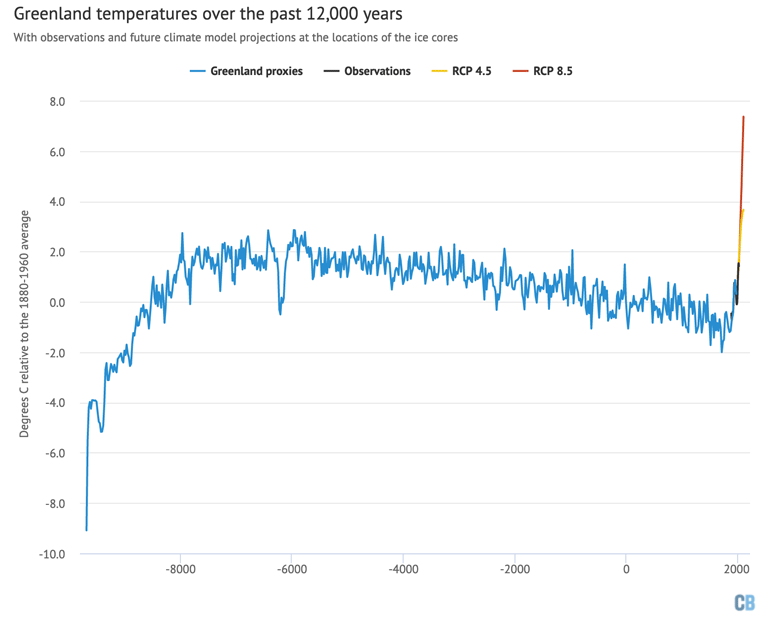
Coral reefs marking the ancient sea level—but today lying deep off the coasts of Tahiti and Indonesia—reveal that about 14,500 years ago, the seas suddenly jumped 50 feet or so in only a few centuries, as meltwater from the late, great North American ice sheet raged down the Mississippi. When a 300-foot-deep lake of glacial meltwater spanning at least 80,000 square miles of central Canada catastrophically drained into the ocean, it shut down the churn of the North Atlantic and arrested the seaborne flow of heat northward. As a result, tundra advanced to retake much of Europe for 1,000 years. But when ocean circulation kicked back into gear, and the dense, salty seawater began to sink again, the system rebooted, and currents carried the equator’s heat toward the Arctic once more. Temperatures in Greenland suddenly leaped 10 degrees Celsius in perhaps a decade, fires spread, and revanchist forests reclaimed Europe for good.
In Idaho, ice dams that had held back giant lakes of glacial meltwater about six times the volume of Lake Erie collapsed as the world warmed, and each released 10 times the flow of all the rivers on Earth into eastern Washington. The floods carried 30-foot boulders on biblical waves, through what were suddenly the world’s wildest rapids. They left behind a labyrinth of bedrock-scoured canyons that still covers the entire southeastern corner of the state like a scar. When the Earth’s climate changes, this is what it can look like on the ground.
As the ice sheets of the Northern Hemisphere finally lost their grip, darker land around the melting margins became exposed to the sun for the first time in 100,000 years, accelerating the ice’s retreat. Permafrost melted, and methane bubbled up from thawing bogs. Colder, more CO2-soluble oceans warmed, and gave up the carbon they’d stolen in the Ice Age, warming the Earth even more. Relieved of their glacial burden, volcanoes in Iceland, Europe, and California awoke, adding even more CO2 to the atmosphere.
Soon the Sahara would green again, Jericho would be born, and humans would start writing things down. They would do so with the assumption that the world they saw was the way it had always been. “We were born only yesterday and know nothing,” one of them would write. “And our days on earth are but a shadow.”
As we leap back in time again, we emerge before the final Pleistocene glaciation. We’ve gone tremendously far back, 129,000 years, though in some ways we’ve only returned to our own world. This was the most recent interglacial period, the last of many breaks between the ice ages, and the last time the planet was roughly as warm as it is today. Once more, the seas have risen hundreds of feet, but something is awry.
As the Earth’s wobble and orbit conspired to melt more ice than the poles have shed so far today, the planet absorbed more sunlight. As a result, global temperatures were little more than 1 degree warmer than today’s Anthropocene chart-toppers—or maybe even the same. But sea level was 20 to 30 feet higher than it is now. (A full third of Florida was sunk beneath the waves.) This is “sobering,” as one paper put it.
Modelers have tried and mostly failed to square how a world about as warm as today’s could produce seas so strangely high. Provisional, if nightmarish, explanations like the runaway, catastrophic collapse of monstrous ice cliffs more than 300 feet tall in Antarctica, which may or may not be set into motion in our own time, are fiercely debated in conference halls and geoscience departments.
Very soon, we may well have warmed the planet enough to trigger similarly dramatic sea-level rise, even if it takes centuries to play out. This is what the Exxon scientist James Black meant in 1977 when he warned higher-ups of the coming “super-interglacial” that would be brought about—as a matter of simple atmospheric physics—from burning fossil fuels. But our trajectory as a civilization is headed well beyond the warmth of the last interglacial, or any other interglacial period of the Pleistocene, for that matter. So it’s time to keep moving. We must take our first truly heroic leap into geologic time, millions of years into the past.
We’re more than 3 million years in the past now, and carbon dioxide in the atmosphere is at 400 parts per million, a level the planet will not again see until September 2016. This world is 3 to 4 degrees Celsius warmer than ours, and the sea level is up to 80 feet higher. Stunted beech trees and bogs line the foothills of the Transantarctic Mountains not far from the South Pole—the last members of a venerable line of once-majestic forests that had existed since long before the age of the dinosaurs.
What we’ve glossed over in our journey back to this ancient present: the entire evolutionary history of Homo sapiens, three Yellowstone super-eruptions, thousands of megafloods, the last of the giant terror birds, a mass extinction of whales, and the glacial creation and destruction of innumerable islands and moraines. As we make our way backwards in time to the Pliocene, the glaciations get briefer, and the ice sheets themselves become thinner and more temperamental. About 2.6 million years ago they all but disappear in North America, as CO2 levels continue their slow climb.
When we arrive in the middle of the Pliocene, just over 3 million years ago, CO2 levels are high enough that we’ve escaped the cycle of ice ages and warm interglacials altogether. Lucy the Australopithecus roams a heavily forested East Africa. We are now outside the evolutionary envelope of our modern world, sculpted as it was by the temperamental northern ice sheets and deep freezes of the Pleistocene. But as to atmospheric carbon dioxide, 3 million years is how far back we have to go to arrive at an analogue for 2021.
Despite the similarities between our world and that of the Pliocene, the differences are notable. In the Canadian High Arctic—where today tundra spreads to the horizon—evergreen forests come right to the edge of an ice-free Arctic Ocean. Though the world as a whole is only a few degrees warmer, the Arctic, as always, gets the brunt of the extra heat. This is called “polar amplification,” and it’s why maps of modern warming are crowned by a disturbing fog of maroon. Models struggle to reproduce the extreme level of warming in the Pliocene Arctic. It’s a full 10 to 15 degrees Celsius warmer in the long twilight of northern Canada, and the pine and birch woodlands of these Arctic shores are filled with gigantic forest-dwelling camels. Occasionally this boreal world erupts in wildfire, a phenomenon echoed by the blazes that today sweep ever farther north. Elsewhere, West Antarctica’s ice sheet may have disappeared entirely, and Greenland’s, if it exists at all, is shriveled and pathetic.
A common projection for our own warming world is that, while the wet places will get wetter, the dry places will get drier. But the Pliocene seems to defy this saw for reasons not yet fully understood. It’s a strangely wet world, especially the subtropics, where—in the Sahara, the Outback, the Atacama, the American Southwest, and Namibia—lakes, savannas, and woodlands replace deserts. This ancient wetness might come down to inadequacies in how we model clouds, which are under no obligation to behave in physical reality as they do in simplified lines of computer code. Hurricanes were almost certainly more consistently punishing 3 million years ago, just as our storms of the future will be. And a more sluggish circulation of the atmosphere might have lulled the trade winds, turning El Niño into “El Padre.” Perhaps this is what brought rains—and lakes—to the Mojave at this time.
Our modern coastlines would have been so far underwater that you’d have to take great pains to avoid getting the bends if you tried scuba diving down to them. Today, traveling east through Virginia, or North or South Carolina, or Georgia, midway through your drive you’ll pass over a gentle 100-foot drop. This is the Orangeburg Scarp, a bluff—hundreds of miles long—that divides the broad, flat coastal plain of the American Southeast. It comprises the eroded and smoothed-out rumors of once-magnificent sea cliffs. Here, waves of the Pliocene high seas chewed away at the middle of the Carolinas—an East Coast Big Sur. This ancient shoreline is visible from space by the change in soil color that divides the states, and is visible on much closer inspection as well: To the east of this strange drop-off, giant megalodon-shark teeth and whale bones litter the Carolina Low Country. Though warped over the ages by the secret workings of the mantle far below, these subtle banks 90 miles inland nevertheless mark the highest shoreline of the Pliocene, when the seas were dozens of feet higher than they are today. But even within this warm Pliocene period, the sea level leaped and fell by as much as 60 feet every 20,000 years, to the rhythm of the Earth’s sway in space. This is because, under this higher-CO2 regime, the unstable ice sheet in Antarctica took on the volatile temperament that, 1 million years later, would come to characterize North America’s ice sheet, toying with the ancient coastline as if it were a marionette.
So this is the Pliocene, the world of the distant present. While today’s projections of future warming tend to end in 2100, the Pliocene illuminates just what sort of long-term changes might inevitably be set in motion by the atmosphere we’ve already engineered. As the great ice sheets melt, the permafrost awakens, and darker forested land encroaches on the world’s tundra, positive feedbacks may eventually launch our planet into a different state altogether, one that might resemble this bygone world. Nevertheless, human civilization is unlikely to keep atmospheric CO2 at a Pliocene level—so more ancient and extreme analogues must be retrieved.
We’re now deeper in the past, and the planet appears truly exotic. The Amazon is running backwards, and gathers in great pools at the foot of the Andes. A seaway stretches from Western Europe to Kazakhstan and spills into the Indian Ocean. California’s Central Valley is open ocean.
What today is the northwestern U.S. is especially unrecognizable. Today the airy, columnated canyons of the Columbia River in Oregon swarm with tiny kiteboarders zipping through gorges of basalt. But 16 million years ago, this was a black, unbreathable place, flowing with rivers of incandescent rock. The Columbia River basalts—old lava flows that spread across Washington, Oregon, and Idaho, in some places more than two miles thick—were the creation of a class of extremely rare and world-changing volcanic eruptions known as large igneous provinces, or LIPs.
Some LIPs in Earth’s history span millions of square miles, erupt for millions of years, inject tens of thousands of gigatons of CO2 into the air, and are responsible for most of the worst mass extinctions in the history of the planet. They live up to their name—they are large. But these mid-Miocene eruptions were still rather small as far as LIPs go, and so the planet was spared mass death. Nevertheless, the billowing volcanoes raised atmospheric CO2 up to about 500 ppm, a level that today represents something close to the most ambitious and optimistic scenario possible for limiting our future carbon emissions.
In the Miocene, this volcanic CO2 warmed up the world to at least 4 degrees Celsius and perhaps as much as 8 degrees above modern temperatures. As a result, there were turtles and parrots in Siberia. Canada’s Devon Island, in the high Arctic, is today a desolate wasteland, the largest uninhabited island in the world—and one used by NASA to simulate life on Mars. In the Miocene, its flora resembled Lower Michigan’s.
The sweeping grasslands distinctive to our cooler, drier, low-CO2 world had yet to take over the planet, and so forests were everywhere—in the middle of Australia and Central Asia and Patagonia. All of this vegetation was one of the reasons it was so warm. Forests and shrubs made this planet darker than our own world—one still painted pallid hues in many places by bare land and ice—and allowed it to absorb more heat. This change in the planet’s color is just one of the many long-term feedback loops awaiting us after the ice melts. Long after our initial pulse of CO2, they will make our future world warmer and more alien still.
As for fauna, we’re now so distantly marooned in time from our own world that most of the creatures that inhabited this leafy planet range from the flatly unfamiliar to the uncannily so. There were big cats that weren’t cats, and rhino-size “hell pigs” that weren’t pigs. There were sloths that lived in the ocean and walruses that weren’t related to today’s walruses. Earth’s largest-ever meat-eating land mammals, African juggernauts like Megistotherium and Simbakubwa, not closely related to any living mammals today, tore early elephants apart with bladed mouths.
And with CO2 at 500ppm, the sea level was about 150 feet higher than today. Approaching Antarctica in the middle Miocene by sea, the waters would be warmer than today, and virtually unvisited by ice. To get to the ice sheet, you’d have to hike far past lakes and forests of conifers that lined the coast. Trudging past the trees and finally over endless tundra, you would come at last to the edge of a much smaller ice sheet whose best days were still ahead of it. An axiom about this land-based Antarctic ice sheet in paleoclimatology is that it’s incredibly stubborn. That is, once you have an ice sheet atop the heart of Antarctica, feedback loops kick in to make it exceedingly hard to get rid of. Barring true climatic madness, a land-based Antarctic ice sheet is essentially there to stay.
But in the middle Miocene this young Antarctic ice sheet seemed to have a temper. It might have been “surprisingly dynamic,” as one paper cheerfully puts it. As CO2 increased from just below today’s levels up to about 500ppm, Miocene Antarctica shed what today would amount to 30 to 80 percent of the modern ice sheet. In the Miocene, Antarctica seemed exquisitely tuned to small changes in atmospheric CO2, in ways that we don’t fully understand and that we’re not incorporating into our models of the future. There will undoubtedly be surprises awaiting us in our high-CO2 future, just as there were for life that existed in the Miocene. In fact, the Antarctic ice sheet may be more vulnerable today to rapid retreat and disintegration than at any time in its entire 34-million-year history.
In the 16 million years since this mid-Miocene heat, the volcanic hot spot responsible for the Columbia River basalts has wandered under Yellowstone. Today it powers a much tamer kind of volcano. It could cover a few states in a few inches of ash and disrupt global agriculture for years, but it couldn’t launch the planet into a new climate for hundreds of thousands of years, or kill most life on the surface. Unfortunately, there is such a supervolcano active on Earth today: industrial civilization. With CO2 likely to soar past 500ppm from future emissions, even the sweat-soaked, Siberian-parrot-populated world of the middle Miocene might not tell us everything we need to know about our future climate. It’s time to go back to a global greenhouse climate that ranks among the warmest climate regimes complex life has ever endured. In our final leap backwards, CO2 at last reaches levels that humans might reproduce in the next 100 years or so. What follows is something like a worst-case scenario for future carbon emissions. But these worst-case projections have continued to prove stubbornly accurate in the 21st century so far, and they remain a possible path for our future.
We’re now about to take our largest leap, by far, into the geologic past. We hurdle over 40 million years of history, past volcanic eruptions thousands of times bigger than that of Mount St. Helens, past an asteroid impact that punched out a gigantic crater where the Chesapeake Bay sits today. The Himalayas slump; India unhitches from Asia; and the further back we go, the higher the CO2 level rises and the warmer the Earth gets. The Antarctic ice sheet, in its death throes, vanishes altogether, and the polar continent instead gives way to monkey puzzle trees and marsupials. We have arrived, finally at the end of our journey, in the greenhouse world of the early age of mammals.
Today the last dry land one steps on in Canada before setting out across the ice-choked seas for the North Pole is Ellesmere Island, at the top of the world. But once upon a time there was a rainforest here. We know this because tree stumps still erode out of the barren hillsides, and they’re more than 50 million years old. They’re all that’s left of an ancient polar jungle now whipped by indifferent Arctic winds. But once upon a time, this island was a swampy cathedral of redwoods, whose canopy naves were filled with flying lemurs, giant salamanders, and hippolike beasts that pierced the waters. At this polar latitude, on some late-fall evening of the early Eocene, the sun tried and failed to lift itself from the horizon. A pink twilight reached deep into the jungle, but soon the sun would set entirely here for more than four months. In this unending Arctic dark, the stillness would be broken by the orphaned calls of tiny early primates, who hopped fearlessly over stilled alligators that would start moving again when the sun returned from beyond the horizon. In this unending night, tapirs hunted for mushrooms and munched on leaf litter that was left over from sunny days past and that in the far future would become coal.Humans now threaten to undo the entire climate evolution of the Cenozoic era—and in only a few decades.
We have no modern analogue for a swampy rainforest teeming with reptiles that nevertheless endures months of Arctic twilight and polar night. But for each degree Celsius the planet warms, the atmosphere holds about 6 percent more water vapor, and given that global temperatures at the beginning of the age of mammals were roughly 13 degrees warmer than today, it’s difficult to imagine how uncomfortable this planet would be for Ice Age creatures like ourselves. In fact, much of the planet would be rendered off-limits to us, far too hot and humid for human physiology.
Not only was this a sweltering age, but it was also one cruelly punctuated by some of the most profound and sudden CO2-driven global-warming events in geologic history—on top of this already feverish baseline. Deep under the North Atlantic, the Eocene epoch kicked off in style 56 million years ago with massive sheets of magma that spread sideways through the crust, igniting vast, diffuse deposits of fossil fuels at the bottom of the ocean. This ignition of the underworld injected something like the carbon equivalent of all currently known fossil-fuel reserves into the seas and atmosphere in less than 20,000 years, warming the planet by another 5 to 9 degrees Celsius. Evidence abounds of violent storms and megafloods during this ancient spasm of climate change—episodic waves of torrential rains unlike any on Earth today. In some places, such storms would have been routine, separated by merciless droughts and long, brutal, cloudless heat waves. Seas near the equator may have been almost as hot as a Jacuzzi—too hot for most complex life. As for the rest of the planet, all of this excess CO2 acidified the oceans, and the world’s coral reefs collapsed. Ocean chemistry took 200,000 years to recover.
The most jarring thing about the early age of mammals, though, isn’t merely the extreme heat. It’s the testimony of the plants. In higher-CO2 conditions, plants reduce the number of pores on their leaves, and fossil leaves from the jungles of the early Eocene have tellingly fewer pores than today’s. By some estimates, CO2 50 million years ago was about 600 ppm. Other proxies point to higher CO2, just over 1,000 ppm, but even that amount has long bedeviled our computer models of climate change. For years, in fact, models have told us that to reproduce this feverish world, we’d need to ramp up CO2 to more than 4,000 ppm.
This ancient planet is far more extreme than anything being predicted for the end of the century by the United Nations or anyone else. After all, the world that hosted the rainforests of Ellesmere Island was 13 degrees Celsius warmer than our own, while the current global ambition, enshrined in the Paris Agreement, is to limit warming to less than 2, or even 1.5, degrees. Part of what explains this glaring disparity is that most climate projections end at the end of the century. Feedbacks that might get you to Eocene- or Miocene-level warmth play out over much longer timescales than a century. But the other, much scarier insight that Earth’s history is very starkly telling us is that we have been missing something crucial in the models we use to predict the future.
Some of the models are starting to catch up. In 2019, one of the most computationally demanding climate models ever run, by researchers at the California Institute of Technology, simulated global temperatures suddenly leaping 12 degrees Celsius by the next century if atmospheric CO2 reached 1,200ppm—a very bad, but not impossible, emissions pathway. And later that year, scientists from the University of Michigan and the University of Arizona were similarly able to reproduce the warmth of the Eocene by using a more sophisticated model of how water behaves at the smallest scales.
The paleoclimatologist Jessica Tierney thinks the key may be the clouds. Today, the San Francisco fog reliably rolls in, stranding bridge towers high above the marine layer like birthday candles. These clouds are a mainstay of west coasts around the world, reflecting sunlight back to space from coastal California and Peru and Namibia. But under higher-CO2 conditions and higher temperatures, water droplets in incipient clouds could get bigger and rain down faster. In the Eocene, this might have caused these clouds to fall apart and disappear—inviting more solar energy to reach, and warm, the oceans. That might be why the Eocene was so outrageously hot.
This sauna of our early mammalian ancestors represents something close to the worst possible scenario for future warming (although some studies claim that humans, under truly nihilistic emissions scenarios, could make the planet even warmer). The good news is the inertia of the Earth’s climate system is such that we still have time to rapidly reverse course, heading off an encore of this world, or that of the Miocene, or even the Pliocene, in the coming decades. All it will require is instantaneously halting the super-eruption of CO2 disgorged into the atmosphere that began with the Industrial Revolution.
We know how to do this, and we cannot underplay the urgency. The fact is that none of these ancient periods is actually an apt analogue for the future if things go wrong. It took millions of years to produce the climates of the Miocene or the Eocene, and the rate of change right now is almost unprecedented in the history of animal life.
Humans are currently injecting CO2 into the air 10 times faster than even during the most extreme periods within the age of mammals. And you don’t need the planet to get as hot as it was in the early Eocene to catastrophically acidify the oceans. Acidification is all about the rate of CO2 emissions, and we are off the charts. Ocean acidification could reach the same level it did 56 million years ago by later this century, and then keep going.
When he coined the term mass extinction in a 1963 paper, “Crises in the History of Life,” the American paleontologist Norman Newell posited that this was what happened when the environment changed faster than evolution could accommodate. Life has speed limits. And in fact, life today is still trying to catch up with the thaw-out of the last ice age, about 12,000 years ago. Meanwhile, our familiar seasons are growing ever more strange: Flycatchers arrive weeks after their caterpillar prey hatches; orchids bloom when there are no bees willing to pollinate them. The early melting of sea ice has driven polar bears ashore, shifting their diet from seals to goose eggs. And that’s after just 1 degree of warming.
Subtropical life may have been happy in a warmer Eocene Arctic, but there’s no reason to think such an intimately adapted ecosystem, evolved on a greenhouse planet over millions of years, could be reestablished in a few centuries or millennia. Drown the Florida Everglades, and its crocodilians wouldn’t have an easy time moving north into their old Miocene stomping grounds in New Jersey, much less migrating all the way to the unspoiled Arctic bayous if humans re-create the world of the Eocene. They will run into the levees and fortifications of drowning Florida exurbs. We are imposing a rate of change on the planet that has almost never happened before in geologic history, while largely preventing life on Earth from adjusting to that change.
Taking in the whole sweep of Earth’s history, now we see how unnatural, nightmarish, and profound our current experiment on the planet really is. A small population of our particular species of primate has, in only a few decades, unlocked a massive reservoir of old carbon slumbering in the Earth, gathering since the dawn of life, and set off on a global immolation of Earth’s history to power the modern world. As a result, up to half of the tropical coral reefs on Earth have died, 10 trillion tons of ice have melted, the ocean has grown 30 percent more acidic, and global temperatures have spiked. If we keep going down this path for a geologic nanosecond longer, who knows what will happen? The next few fleeting moments are ours, but they will echo for hundreds of thousands, even millions, of years. This is one of the most important times to be alive in the history of life.
Shortly after getting settled in the Oval Office on his first day on the job, President Joe Biden delivered on his commitment to re-join the Paris Agreement, the 2015 pact adopted by almost every country in the world to curb climate change in an attempt to effectively stave off a sixth mass extinction. The signature was his third in a stack of 17 executive orders. Now the Biden-Harris administration will send a letter to the United Nations announcing the decision, and the U.S. will officially be a party to the agreement again in 30 days.
Climate scientists and scholars, who watched with horror as the U.S. officially pulled out of the agreement on November 4, 2020, say Biden’s move is more than merely symbolic, but it is only a starting point. “Every other diplomatic channel at our disposal is necessary to support climate action,” director of climate at Ocean Conservancy, Sarah Cooley, told Truthout. “We also need to see climate considerations re-emphasized in all parts of the government. We need to tackle this crisis from all sides and that means taking action through all of the federal agencies, legislation and executive powers,” she said.
The Paris Agreement established a 2 degrees Celsius upper limit of warming in an attempt to stave off the most calamitous impacts of climate change, like temperatures too high to sustain human life and sea level rise that envelops whole cities. Members of island nations made the case that a more ambitious limit, “1.5 to stay alive,” was the only benchmark that gave countries on the frontlines of the climate crisis a fighting chance. Climate activists who protested outside of the Paris summit called the agreement a “death sentence” for people in many parts of the world due to its inadequacy.
Get our free emails
Email
The global average temperature is already dangerously close to both limits, at almost 1 degree Celsius above pre-industrial temperatures. We are currently on track to burn 120 percent more fossil fuels by 2030 than what would enable warming to be limited to 1.5°C, according to a 2020 UN special report.
Since former President Trump filed notice that the U.S. would ditch the Paris Agreement in late 2019, we’ve lived through the second-hottest year ever recorded. In 2020, flames engulfed the globe. “Zombie fires” smoldered below ground in Siberia and the number of fires tripled in the world’s largest tropical wetlands, the Brazilian Pantanal. Heavy rains pushing at the banks of the Tittabawassee River breached two dams in central Michigan, prompting thousands of people to evacuate. Locusts descended on Kenya again, causing many farmers to lose a whole season’s harvest in 24 hours.
Nicaragua and Honduras were hit with back-to-back record-breaking hurricanes, which killed over 100 people and impacted an estimated 4.7 million, according to the Red Cross. Weeks later, a caravan of asylum seekers were met by Guatemalan police who attempted to prevent them from traveling through the country using riot shields and tear gas. “We have no work. We can’t go back,” a member of the caravan told The Guardian. “Back home we’re dying of hunger.”
With the U.S. remaining on the sidelines of the global climate agreement, other countries have continued to develop increasingly detailed plans mapping out how each government will adhere to domestic policies in line with each country’s emissions goals that theoretically stack up to a global net-zero emissions outcome by 2050. The individualized blueprints are known as “nationally determined contributions” (NDCs) under the Paris Agreement. All parties to Paris submitted initial plans shortly after the agreement was signed. Updated versions are due ahead of the next global climate convening, COP26, in Glasgow.
The Biden-Harris administration needs to not only meet but exceed its previous commitments, professor of global governance at UMass Boston, Maria Ivanova, told Truthout. “The global community is looking to the United States and assessing its trustworthiness,” she said. The U.S., which is responsible for the largest cumulative share of greenhouse gas emissions to date since 1750 — submitted its first and only NDC plan to the United Nations in February 2016. The document stated a goal of reducing greenhouse gas emissions, including carbon dioxide, methane and nitrous oxide 26 to 28 percent below 2005 levels by 2025. The five-page plan includes a short list of domestic laws, regulations and measures that suggest how it might achieve this goal, mentioning that the Environmental Protection Agency “is developing standards to address methane emissions from landfills and the oil and gas sector.”
In reality, the Trump administration weakened rules requiring oil and gas companies to find and plug methane leaks, which Scientific American reported could result in an additional 4.5 million metric tons of methane annually, or the equivalent of bringing 100 coal-fired power plants online each year.
By comparison, Bangladesh, which is responsible for .22 percent of carbon dioxide emissions, committed to reducing its greenhouse gasses 15 percent by 2030 from “business as usual.” Its 2016 NDC plan is accompanied by a detailed list of domestic policy prescriptions, like laws that require a shift toward the use of organic rather than synthetic fertilizers and move waste from landfills to composting systems.
Along with 44other parties , Bangladeshi officials submitted an updated plan in December 2020, which details its plan to “ratchet up” policies to deliver on its reductions goals, and includes a national solar energy roadmap spanning 2021-2041 and a program to roll out clean cooking stoves to reduce emissions from burning biomass. The U.S. never updated the UN’s registry with any such roadmap of domestic policies that would reasonably result in a 25 percent emissions reduction by 2025.
“Ultimately, the ability of the U.S. to step up on the international front will depend on what the Biden Administration is able to deliver on an ambitious domestic climate agenda,” policy director with the Climate and Energy program at the Union of Concerned Scientists, Rachel Cleetus, recently wrote on the organization’s blog. “If Congress and the Biden Administration step up, the U.S. can deliver economy wide emission reductions on the order of at least 50 percent below 2005 levels by 2030, and it can at least double its initial $3 billion commitment to the Green Climate Fund over the next four years,” she wrote.
The Green Climate Fund is the largest existing fund to aid developing countries in addressing climate change, which was established by the United Nations Framework Convention on Climate Change in 2010. The U.S. failed to meet its initial commitment to the fund, only one third of which was disbursed under the Obama administration.
According to Ivanova, establishing resilience offices in every city will be a critical first step to delivering on domestic policy, as well as the rollout of innovative transportation systems that do not assume individuals investing in a Tesla or a Prius. “[Everyone] should have the option to take zero emissions, high efficiency flying trains to work,” she said.
To prevent the creation of new environmental and human rights catastrophes in the shift to building full-city fleets of electric vehicles, burgeoning solar fields, offshore wind farms and distributed battery sites, the Biden-Harris administration must also commit to fair-trade agreements with countries home to deposits of raw materials like cobalt, nickel and lithium that are key to building these new technologies, Thea Riofrancos told the HuffPost. “When you go to the extractive frontier, you see the hyper exploitation of labor, contamination of ecosystems and violations of Indigenous rights,” Riofrancos said. Scholars have also pointed to the importance of improving recycling capacities for those materials to limit the need for extraction — in other words, developing a robust circular economy.
Among climate activist circles, the decision to re-join the agreement has been praised, but with reserve. Cancelling the Keystone XL pipeline without also shutting down Dakota Access and Line 3 would prove signing the Paris Agreement an empty gesture, some say. Youth climate activists from outside the U.S. have called on President Biden to “be brave,” to hold polluters accountable and to ramp up support for COVID relief packages that decarbonize the economy faster than the Paris Agreement calls for.
Edgar McGregor, a 20-year-old climate activist who carries out weekly trash cleanups in Los Angeles, likened Biden’s rejoining the Paris Agreement to children promising to do their homework. “It is great, but what lies ahead of us is tons of work, and we need to get started on it,” he said. “We did not elect Joe Biden to make promises, we elected him to make the right things happen. I’ll be expecting much, much more climate action from his administration.” Activists with the Sunrise Movement are holding protests across the U.S. today, demanding the Biden-Harris administration pass a sweeping jobs bill that addresses the climate crisis head-on.
In the first tweet from his official new account, Special Presidential Envoy for Climate John Kerry indicated he sees the need for deeper change, calling the Paris Agreement “a floor, not a ceiling,” for U.S. climate leadership. “Working together, the world must and will raise ambition,” Kerry wrote. “It’s time to get to work — the road to Glasgow begins here.”
By Sophie Yeo19th January 2021The world’s largest animals are unusually good at taking carbon dioxide out of the atmosphere.S
Seeing a whale stranded on a beach often provokes a strong reaction. It can make people curious – beached whales can do strange things, like explode. It can also be upsetting to witness a creature so magnificent in water reduced to lifeless blubber on land. What rarely registers, however, is the lost opportunity for carbon sequestration.
Whales, particularly baleen and sperm whales, are among the largest creatures on Earth. Their bodies are enormous stores of carbon, and their presence in the ocean shapes the ecosystems around them.
From the depths of the ocean, these creatures are also helping to determine the temperature of the planet – and it’s something that we’ve only recently started to appreciate.
“On land, humans directly influence the carbon stored in terrestrial ecosystems through logging and the burning of forests and grasslands,” according to a 2010 scientific paper. “In the open ocean, the carbon cycle is assumed to be free of direct human influences.”
But that assumption neglects the surprising impact of whaling.
Whales are not only valuable in death. The tides of excrement that these mammals produce are also surprisingly relevant to the climate
Humans have killed whales for centuries, their bodies providing us with everything from meat to oil to whalebone. The earliest record of commercial whaling was in 1000 CE. Since then, tens of millions of whales have been killed, and experts believe that populations may have declined from anywhere between 66% and 90%.
The bodies of whales, among the largest creatures on Earth, are huge stores of carbon (Credit: Alamy)
When whales die, they sink to the ocean floor – and all the carbon that is stored in their enormous bodies is transferred from surface waters to the deep sea, where it remains for centuries or more.
In the 2010 study, scientists found that before industrial whaling, populations of whales (excluding sperm whales) would have sunk between 190,000 to 1.9 million tonnes of carbon per year to the bottom of the ocean – that’s the equivalent of taking between 40,000 and 410,000 cars off the road each year. But when the carcass is prevented from sinking to the seabed – instead, the whale is killed and processed – that carbon is released into the atmosphere.
Andrew Pershing, a marine scientist at the University of Maine and an author of that study, estimates that over the course of the 20th Century whaling added about 70 million tonnes of carbon dioxide into the atmosphere. “This is a lot, but 15 million cars do this in a single year. The US currently has 236 million cars,” he says.
But whales are not only valuable in death. The tides of excrement that these mammals produce are also surprisingly relevant to the climate.
Whales feed in the deep ocean, then return to the surface to breathe and poo. Their iron-rich faeces creates the perfect growing conditions for phytoplankton. These creatures may be microscopic, but, taken together, phytoplankton have an enormous influence on the planet’s atmosphere, capturing an estimated 40% of all CO2 produced – four times the amount captured by the Amazon rainforest.
“We need to think of whaling as being a tragedy that has removed a huge organic carbon pump from the ocean that would have been having a much larger multiplying effect on phytoplankton productivity and the ocean’s ability to absorb carbon,” says Vicki James, policy manager at Whale and Dolphin Conservation (WDC).
Whale poo is a powerful fertiliser for the ocean’s phytoplankton, which have a large potential to capture carbon (Credit: Alamy)
The ocean’s missing whales have had some unexpected impacts, too.
For instance, as whale populations declined, the orcas that predated them turned to smaller marine mammals like sea otters. The otters subsequently declined, leading to the spread of sea urchins, which munched away the kelp forests around the North Atlantic – with a knock-on effect on marine carbon sequestration.
The beauty of restoring whale populations is that there is plenty of space in the ocean – space once filled with whales
What this means is that restoring whale populations to their pre-whaling numbers could be an important tool in tackling climate change, sequestering carbon both directly and indirectly, and thus helping to make a small dent in the enormous volume of CO2 emitted by fossil fuels every year.
There have been various other proposals for how to achieve this reduction, including tree-planting and stimulating phytoplankton blooms by adding iron to the ocean, a form of geoengineering known as iron fertilisation. But tree-planting requires a scarce resource: terrestrial land, which may already be in use as another valuable habitat or farmland. The beauty of restoring whale populations is that there is plenty of space in the ocean – space once filled with whales.
The resulting plumes of whale poo would also vastly outstrip the potential of ocean iron fertilisation. It would take 200 successful blooms per year to match the potential of a fully restored whale population, according to Pershing’s study.
Marine phytoplankton capture carbon dioxide through photosynthesis, acting as a carbon sink (Credit: Alamy)
And, unlike with risky geoengineering techniques, the benefits would not just accrue to the climate, but to the whole ecosystem.
“Whale carcasses provide a unique habitat for deep sea species, many of which are only found on these ‘whale falls’. Research has shown that a single skeleton can provide food and habitat for up to 200 species during the final stages of decay,” says WDC’s James.
This study found that, when you add up the value of the carbon sequestered by a whale during its lifetime, alongside other benefits like better fisheries and ecotourism, the average great whale is worth more than $2m (£1.48m), with the entire global stock amounting to over $1tn (£740bn).
The economists behind this study are now working on a project to transform this price tag from theory into reality, through a mechanism known as carbon offsetting. The idea is to persuade carbon emitters to pay a certain amount of money to protect whale populations, rather than invest in reducing their own emissions, helping them to achieve a neutral carbon footprint.
“What you’re doing is valuing the service from the whales, because they’re sequestering carbon dioxide,” says Thomas Cosimano, one of the economists who co-authored the IMF paper. “It doesn’t mean that whales aren’t doing other things. This is just a benchmark we can use to establish a lower bound on what the value of the whale would be.”
With the carbon-capturing potential of whales quantified, economists are devising an offsetting scheme centred on whales (Credit: Alamy)
It’s a complicated scheme, but it’s not beyond the realms of possibility: the team has been working on a similar carbon-market-based approach for protecting elephants from poachers in the central tropical forests of Africa, which is expected to be in place by the end of the year.
Already, a Chilean charity called the Fundación MERI is figuring out the foundations for a whale-based carbon market, installing early-warning acoustic buoys that will monitor the locations of whales and generate alternative routes for ships. It is believed to be the world’s first project to protect whales because of the carbon storage that they provide.
The IMF study concludes that whale protection must now become a top priority in the global effort to tackle climate change.
“Since the role of whales is irreplaceable in mitigating and building resilience to climate change, their survival should be integrated into the objectives of the 190 countries that in 2015 signed the Paris Agreement for combating climate risk,” the authors write.
Later this year, the UN climate conference will take place in Scotland, a country whose coasts regularly host species like minke and humpback whales. With a carbon market for whales now a real possibility, perhaps it’s time to put these creatures on the agenda.
(CNN)For four years, President Donald Trump has careened from one crisis to the next, many of his own making.Still, through the Mueller investigation, two impeachments, the deadliest pandemic in a century, and even a failed and dangerous attempt to overturn his own election defeat, Trump and his administration remained steadfast in at least one quest: to weaken many of the country’s bedrock climate and environmental guardrails.Considered in the course of humanity — or the 4.5-billion-year history of this planet — a single presidential term is barely a blink of an eye.TRUMP WHITE HOUSE
But in just four years, Trump has cemented a legacy — particularly on climate change — that will be felt by generations to come.”It’s pretty much been an unequivocal disaster,” said Christine Todd Whitman, the former Republican governor of New Jersey who was EPA administrator under President George W. Bush. “To just roll back [regulations] whole cloth because they came from a previous administration has made no sense, and really what’s happening is that they’re putting the health of Americans and the health of our environment in jeopardy.”The mission [of the EPA] is to protect human health and the environment — pretty simple and pretty straightforward,” Todd Whitman added. “It seems to me they’ve totally ignored the mission.”Then-Republican presidential nominee Donald Trump holds a sign supporting coal during a rally in Pennsylvania on October 10, 2016. President Trump’s moves to gut greenhouse gas regulations were applauded by many in the fossil fuel industry, but coal jobs continued to decline on his watch.Much of the environmental protections that Trump dismantled can be rebuilt by the incoming Biden administration, experts say.close dialog
Sign up for CNN What Matters NewsletterEvery day we summarize What Matters and deliver it straight to your inbox.Sign Me UpNo ThanksBy subscribing you agree to ourprivacy policy.However, doing so will take time. And in the case of global warming, the hour has grown late to stop the worst effects.The most lasting part of Trump’s climate legacy — and one that cannot be undone — may be the time the administration wasted in the face of a worsening climate crisis, some scientists and experts say.”I’m kind of hopeful that many of the worst and most damaging climate policies are capable of being reversed,” said Kim Cobb, a professor and climate scientist at Georgia Tech’s School of Earth and Atmospheric Sciences. “But the lost years in terms of progress on emissions reductions we can’t ever take back, and that is something that will have a finite impact on coming climate change impacts.”
In the face of a mounting climate crisis, Trump doubled down on fossil fuels
Trump’s deregulatory crusade began with his first EPA administrator, Scott Pruitt, a former Oklahoma attorney general who had sued the agency a dozen times over environmental protections before being tabbed to lead it.After he resigned in the face of multiple ethics scandals, Trump picked a former coal lobbyist, Andrew Wheeler, to take his place.Pruitt and Wheeler — in parallel with the Interior Department and the Department of Energy — have worked to complete dozens of industry rollbacks, gutting regulations on everything from greenhouse gas emissions from power plants to showerhead water efficiency.EPA Administrator Andrew Wheeler testifies at a Senate hearing on May 20, 2020. Wheeler and former EPA administrator Scott Pruitt executed a massive rollback of climate and environmental regulations during Trump’s four years in office.Along the way, fossil fuel interests have applauded Trump’s moves, even if he didn’t revive America’s coal industry as he had promised.”They took industry’s wish lists and translated them into agency orders or regulations,” said Michael Gerrard, the director of the Sabin Center for Climate Change Law at Columbia Law School. “They were only partially successful because they were so sloppy in following the necessary procedures that they were often slapped down by the courts.”In an interview this week with the Washington Post, Wheeler defended his legacy, saying that on his watch the EPA has “proven that you can reduce pollution and have cost-effective regulations.”
2020 was tied for the hottest year ever recorded — but the disasters fueled by climate change set it apartBut critics see a willful and costly ignorance of science, one that has colored the administration’s response to the world’s biggest crises, from the Covid-19 pandemic to climate change.”I think their [policies] are dangerous. That’s the bottom line,” Cobb said. “I think it’s even worse than anti-science.”The Trump administration’s pullbacks on climate regulations came at a time when the science has never been clearer on the urgent need for the planet’s biggest polluters to make big cuts to their greenhouse gas emissions.Preliminary estimates by the private data analytics firm the Rhodium Group show US emissions did plummet by 10% last year, the largest drop since World War II. But experts attribute most of the reduction to the pandemic, which kept many Americans out of their cars and off planes, and expect emissions to rebound as the effects of Covid-19 wane.Before the pandemic, US emissions rose in 2018 and then fell by a slim 2.1% in 2019.In 2019, the UN warned that to hold global warming below the 1.5 degree Celsius threshold, global emissions would need to fall by 7.6% each year from 2020 to 2030.Trump’s moves also coincided with a seemingly unending rash of extreme weather events, which brought the destruction fueled by global warming to the doorsteps of millions of Americans.The Glass Fire burns in Calistoga, California on September 28, 2020. An unprecedented fire season in the American West in 2020 was just one of an onslaught of climate-related disasters that have swept the country in recent years.In Trump’s first year in office in 2017, he announced that he planned to pull the US out of the Paris Agreement on climate. That same year, Hurricanes Maria, Harvey and Irma left behind a wake of death and destruction from Puerto Rico to Texas, a year that saw all disasters in the US cause a record $321 billion in damages.In 2020, a record-breaking 22 separate billion-dollar weather and climate disasters — including unprecedented wildfires in the American West — caused a total of $95 billion in damages across the country.Many of those disasters bore the fingerprints of climate change.
Why the Trump presidency could influence global warming for years
During Trump’s presidency, global average temperatures have also continued to climb. The last six years have been the hottest six years ever recorded, with 2020 tying 2016 as the hottest year.Atmospheric carbon dioxide concentrations also climbed to a new high in 2020, reaching levels unseen in millions of years.And because of how long greenhouse gases stay in the atmosphere, the Trump presidency could influence global warming for years to come.Global temperature data shows that 2020 was tied for the hottest year on record, according to the Copernicus Climate Service and other monitors.When humans burn fossil fuels, it sends heat-trapping carbon dioxide into the air, where it accumulates in the atmosphere like a blanket, and can stay to heat the Earth for hundreds of years.Some studies have tried to quantify how much of a contribution Trump’s regulatory rollbacks will make over time to accelerating global warming.One estimate published last year by the Rhodium Group found that the administration’s moves to weaken greenhouse gas regulations could add the equivalent of 1.8 gigatons of CO2 to the atmosphere by 2035, equaling nearly one-third of all US emissions in 2019.However, there was a bit of good news hidden in the massive Covid-19 relief package that passed last December and which Trump signed.Buried in the $900 billion stimulus package were some significant climate legislation which calls for phasing out the use of hydrofluorocarbons — a class of super heat-trapping gases used in refrigerators and air conditioners — and an extension of a carbon capture technology tax credit for industry.
How Trump’s most consequential policies have changed AmericaOver time, analysts say those line items could go a long way toward negating the emissions impact of Trump’s rollbacks.”We estimate that this is one of the single biggest climate actions the U.S. has taken in at least in a decade,” said Kate Larsen, the director of the Rhodium Group’s international energy and climate research team. “When you look at the remaining policy rollbacks that Trump implemented and that will remain standing, these are largely equivalent to making up the damage that the Trump administration has done in terms of regulatory rollbacks.”
Repairing America’s credibility on climate will take time … and more than just words
Still, the long-term impact of Trump’s other major climate moves is harder to quantify.Chief among those is the US’ exit from the Paris Agreement on climate, which was completed last November.Leaving Paris marked the second time the US has bailed on an international climate agreement after it led the negotiations. The first exit was from the Kyoto Protocol, a previous climate pact which the US signed during the Clinton administration, only to drop out during George W. Bush’s presidency.President-elect Joe Biden has pledged to rejoin the Paris Agreement on Day One of his presidency, but experts say repairing the damage to the country’s international standing that was done by Trump abandoning the accord will not be easy.President Trump announced his decision to pull the US out of the Paris Climate Agreement on June 1, 2017, but the exit was not finalized until November 2020.”In one sense, it’s easy for President Biden to announce on the first day he’s in office that the US will rejoin,” said Jody Freeman, a Harvard law professor who served as counselor for energy and climate change in the White House under President Barack Obama. “The hard part is to put together an ambitious, credible pledge for what the US is prepared to do to meet their Paris Agreement commitments.”Trump’s interior department also cleared the way for new fossil fuel extraction on federal lands, including in Alaska’s Arctic National Wildlife Refuge (ANWR), one of the country’s largest remaining pristine wildlife areas.Though there was ultimately little interest in the rights to drill in ANWR from bidders, experts say it could be difficult for the Biden administration and environmental groups to challenge those leases.”Once the lease has been sold, it creates a property right,” Gerrard said. “There will be litigation about whether the leases were validly issued, but if any of them are upheld in court, it becomes more difficult to revoke them.”
Biden faces a bumpy road to erasing Trump’s climate legacy
Throughout the campaign and the transition period, Biden has made it clear that he intends to try and make a complete 180-degree turn on federal climate policy.He appointed former Secretary of State John Kerry to a new Cabinet-level position as special climate envoy, where he will have a seat on the National Security Council, and has tapped other Obama administration alums to join his climate team.During the presidential campaign, he unveiled a $2 trillion climate plan that calls for the US to reach 100% clean electricity generation by 2035, and make huge investments in green infrastructure, from expanding wind and solar to power generation to building a nationwide electric car-charging network.Experts say there is plenty of opportunity for his administration to push through parts of his plan to reduce US greenhouse gas emissions and to inspire action internationally.”Trump took a wrecking ball to the nation’s environmental regulations,” Gerrard said. “Fortunately, it’s not Humpty Dumpty, and most of it can be put back together again.”President-elect Joe Biden speaks during an event to introduce key members of his climate team in Wilmington, Delaware on December 19, 2020. Biden’s climate plan calls for the US to generate 100% of its electricity from clean energy sources by 2035.But the need to reverse moves finalized by his predecessor and the political realities of a razor-thin Democratic Senate majority could hamper Biden’s more ambitious climate proposals.Some of Trump’s rollbacks can be undone with the stroke of a pen or overturned by a simple majority in both houses of Congress through the Congressional Review Act, Gerrard said.Others like reinstating or tightening the Obama-era standards on car and truck emissions can be accomplished through EPA rulemaking, but the process takes time — anywhere from a few months to a year, Gerrard said.
US carbon emissions fell 10% in 2020, because of the pandemic. Biden’s policies will determine what happens nextYouth-led climate action organizations like the Sunrise Movement have indicated that they intend to hold the new administration accountable for delivering on Biden’s climate promises.And a newly-minted Democratic Senate majority will open the door to some legislative opportunities that wouldn’t have been possible in a chamber controlled by Senate Majority Leader Mitch McConnell.Still, climate policy experts say that the narrow Senate majority will force Biden to find measures that can garner bipartisan support — like spending on green infrastructure — in the vein of the climate legislation that passed in the end-of-year Covid-19 stimulus package.”When the Senate is sort of evenly split, the type of progress we’re going to make on climate is not going to look like comprehensive climate legislation,” Larsen said. “It’s going to be these targeted wins on things that can largely get bipartisan support.”But whatever progress Biden’s administration is able to make on halting climate change over the next four years, some say the lost time of the last four years will still loom large.”The primary effect is that the new administration will be occupied for its first couple of years with reversing all the damage rather than continuing to make progress,” said Ted Lamm, a senior research fellow at the Center for Law, Energy and the Environment at the University of California-Berkeley. “Particularly in the case of climate change, where we are facing a ticking clock, that lost time is potentially disastrous and harmful.”
Polar vortex set to unleash Arctic air after a two-year hiatus
Frigid temperatures already sending gas prices to record highs
Lake Michigan as the Polar Vortex sent temperatures well below zero in Chicago on Jan. 7, 2014. Photographer: Raymond Boyd/Getty Images
High in the atmosphere above the North Pole, a spike in temperatures may soon send bone-rattling chills spilling down through the Northern Hemisphere.
The icy blasts threatening to sweep across North America, Europe and Asia starting in late January are from the same weather pattern that triggered the 2014 cold snap known as the polar vortex, which plunged temperatures in Chicago to minus 16 degrees Fahrenheit (minus 27 Celsius).
It’s common during winter for frigid air to roar down from the Arctic. But the cold mostly stayed bottled up around the North Pole in the season of 2019-2020. Now, after a nearly two-year hiatus, winter is threatening to return at last.
To be clear, forecasters aren’t expecting the cold to be as brutal as during the 2014 polar vortex, which was an extreme example of Arctic weather marauding south. But it will feel unmistakably like winter.
The cold has already descended upon Western Europe and China, sending prices for gas in Spain, and liquefied natural gas in Asia, to record highs. Paris has been 3.5 degrees below normal and Madrid 6.9 degrees cooler, while Beijing temperatures fell to a record low of minus 9 Thursday, said Tyler Roys, a meteorologist at AccuWeather Inc.
A satellite image shows the entry of a large area of low pressure, from the Polar Vortex, into the Northern U.S., on Jan. 6, 2014.Photographer: NOAA/Getty Images
The vortex of seven years ago kept shoppers indoors, grounded flights and made it harder for shippers to fill product orders. This year, the pandemic has already hobbled travel and in-store shopping. Snowstorms, however, could be a nightmare for delivery services.
Technically, the polar vortex refers to a band of winds that encircle the Arctic and keep the cold locked far to the North. But with that temperature spike, known as sudden stratospheric warming, the band can buckle, allowing frigid air to head south. Gas traders used to call it the “polar pig.”
That could mean chills anywhere in the Northern Hemisphere, though this year it’s likely to end up in the U.S. according to Ryan Truchelut, president of Weather Tiger LCC. A wave of deep cold could give the Great Lakes and East Coast their first real blast of frigid winter weather, along with a storm pattern that delivers snow storms as well.
It will be a big shift for the U.S., where winter has been a bit lackluster so far. In New York, January readings have been 5.1 degrees above normal through Thursday, and Chicago has been 7.2 degrees warmer for the month.
Still, there’s no guarantee it will happen. While a sudden stratospheric warming usually leads to a burst of frigid weather, sometimes the clockwork of gears in the atmosphere doesn’t deliver.
“Many times in the past, the forecast for a cold weather event across the country resulted in a false alarm,” said Jim Rouiller, lead meteorologist with the Energy Weather Group LLC.
Date:December 14, 2020Source:UiT The Arctic University of NorwaySummary:The moon controls one of the most formidable forces in nature – the tides that shape our coastlines. Tides, in turn, significantly affect the intensity of methane emissions from the Arctic Ocean seafloor. High tides may even counter the potential threat of submarine methane release from the warming Arctic.Share: FULL STORY
It may not be very well known, but the Arctic Ocean leaks enormous amounts of the potent greenhouse gas methane. These leaks have been ongoing for thousands of years but could be intensified by a future warmer ocean. The potential for this gas to escape the ocean, and contribute to the greenhouse gas budget in the atmosphere, is an important mystery that scientists are trying to solve.
The total amount of methane in the atmosphere has increased immensely over the past decades, and while some of the increase can be ascribed to human activity, other sources are not very well constrained.
A recent paper in Nature Communications even implies that the moon has a role to play.
Small pressure changes affect methane release
The moon controls one of the most formidable forces in nature — the tides that shape our coastlines. Tides, in turn, significantly affect the intensity of methane emissions from the Arctic Ocean seafloor.
“We noticed that gas accumulations, which are in the sediments within a meter from the seafloor, are vulnerable to even slight pressure changes in the water column. Low tide means less of such hydrostatic pressure and higher intensity of methane release. High tide equals high pressure and lower intensity of the release” says co-author of the paper Andreia Plaza Faverola.
“It is the first time that this observation has been made in the Arctic Ocean. It means that slight pressure changes can release significant amounts of methane. This is a game-changer and the highest impact of the study.” Says another co-author, Jochen Knies.
New methods reveal unknown release sites
Plaza Faverola points out that the observations were made by placing a tool called a piezometer in the sediments and leaving it there for four days.
It measured the pressure and temperature of the water inside the pores of the sediment. Hourly changes in the measured pressure and temperature revealed the presence of gas close to the seafloor that ascends and descends as the tides change. The measurements were made in an area of the Arctic Ocean where no methane release has previously been observed but where massive gas hydrate concentrations have been sampled.
“This tells us that gas release from the seafloor is more widespread than we can see using traditional sonar surveys. We saw no bubbles or columns of gas in the water. Gas burps that have a periodicity of several hours won’t be identified unless there is a permanent monitoring tool in place, such as the piezometer.” Says Plaza Faverola
These observations imply that the quantification of present-day gas emissions in the Arctic may be underestimated. High tides, however, seem to influence gas emissions by reducing their height and volume.
“What we found was unexpected and the implications are big. This is a deep-water site. Small changes in pressure can increase the gas emissions but the methane will still stay in the ocean due to the water depth. But what happens in shallower sites? This approach needs to be done in shallow Arctic waters as well, over a longer period. In shallow water, the possibility that methane will reach the atmosphere is greater.” Says Knies.
May counteract the temperature effects
High sea-level seems thus to influence gas emissions by potentially reducing their height and volume. The question remains whether sea-level rise due to global warming might partially counterbalance the effect of temperature on submarine methane emissions.
“Earth systems are interconnected in ways that we are still deciphering, and our study reveals one of such interconnections in the Arctic: The moon causes tidal forces, the tides generate pressure changes, and bottom currents that in turn shape the seafloor and impact submarine methane emissions. Fascinating!” says Andreia Plaza Faverola
The paper is the result of a collaboration between CAGE, Centre for Arctic Gas Hydrate, Environment and Climate at UiT The Arctic University of Norway, and Ifremer under the project SEAMSTRESS — Tectonic Stress Effects on Arctic Methane Seepage


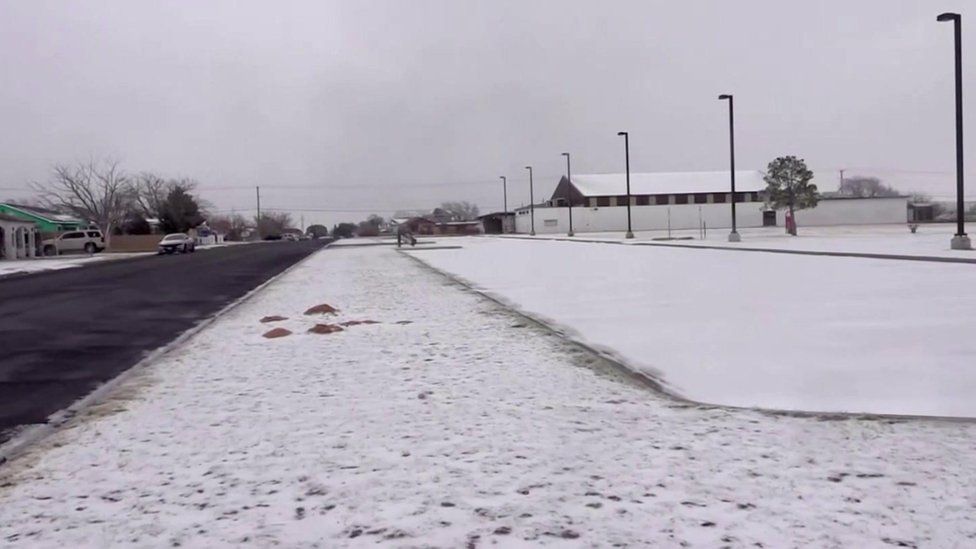
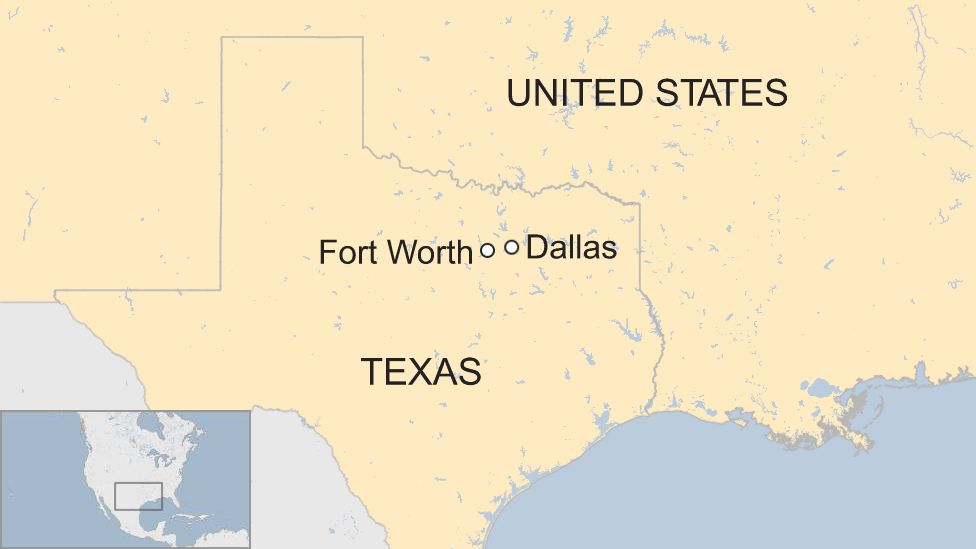
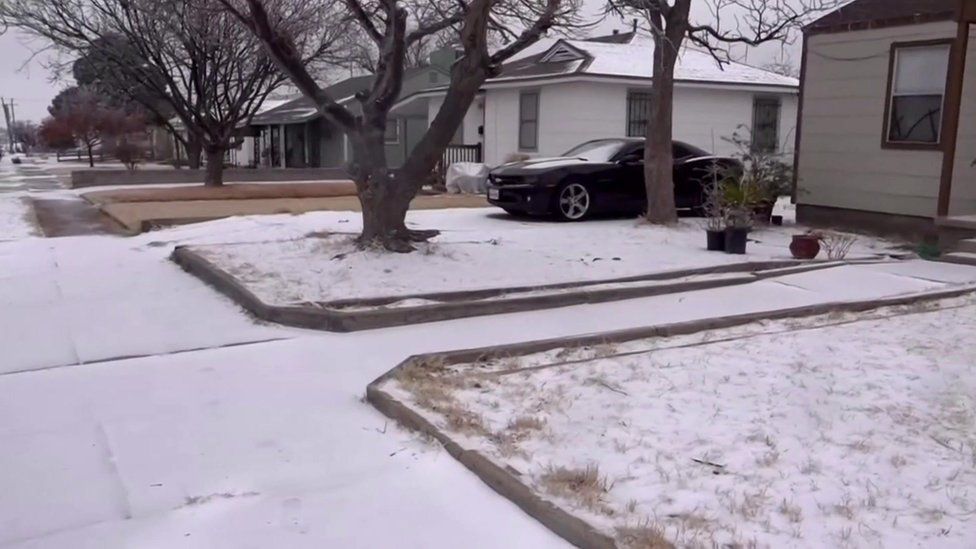

![[Osama Al Saadi/Al Jazeera]](https://www.aljazeera.com/wp-content/uploads/2021/02/Green-Read-Iceland.png?resize=770%2C513)
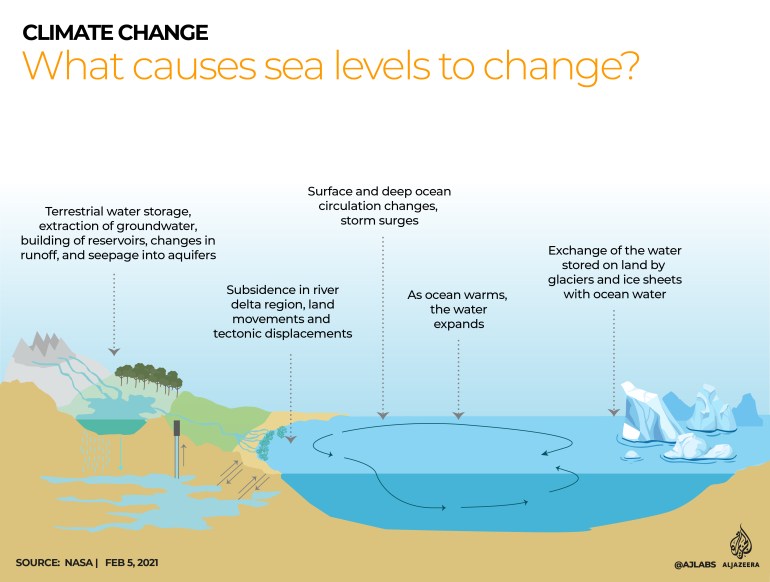

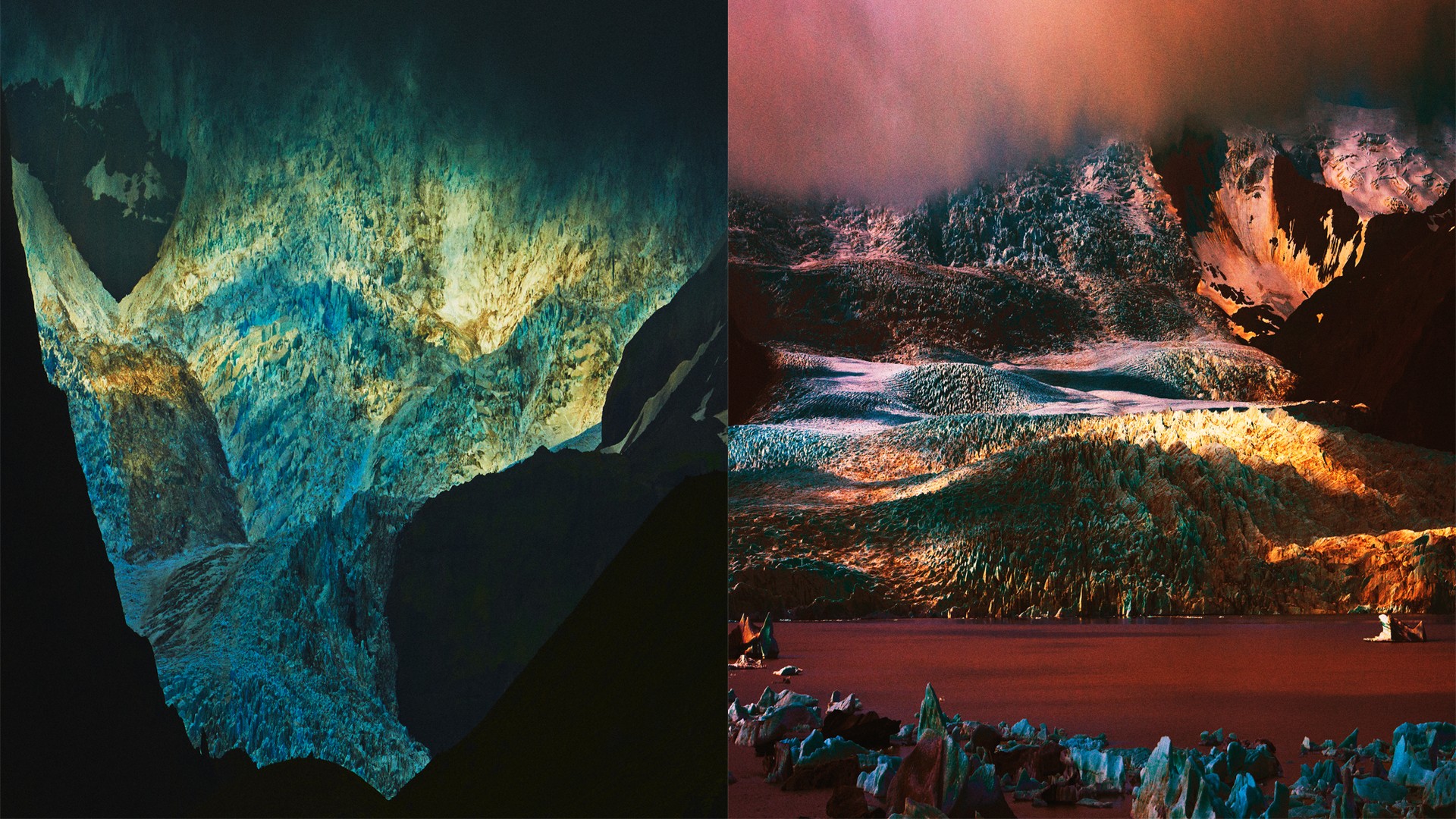

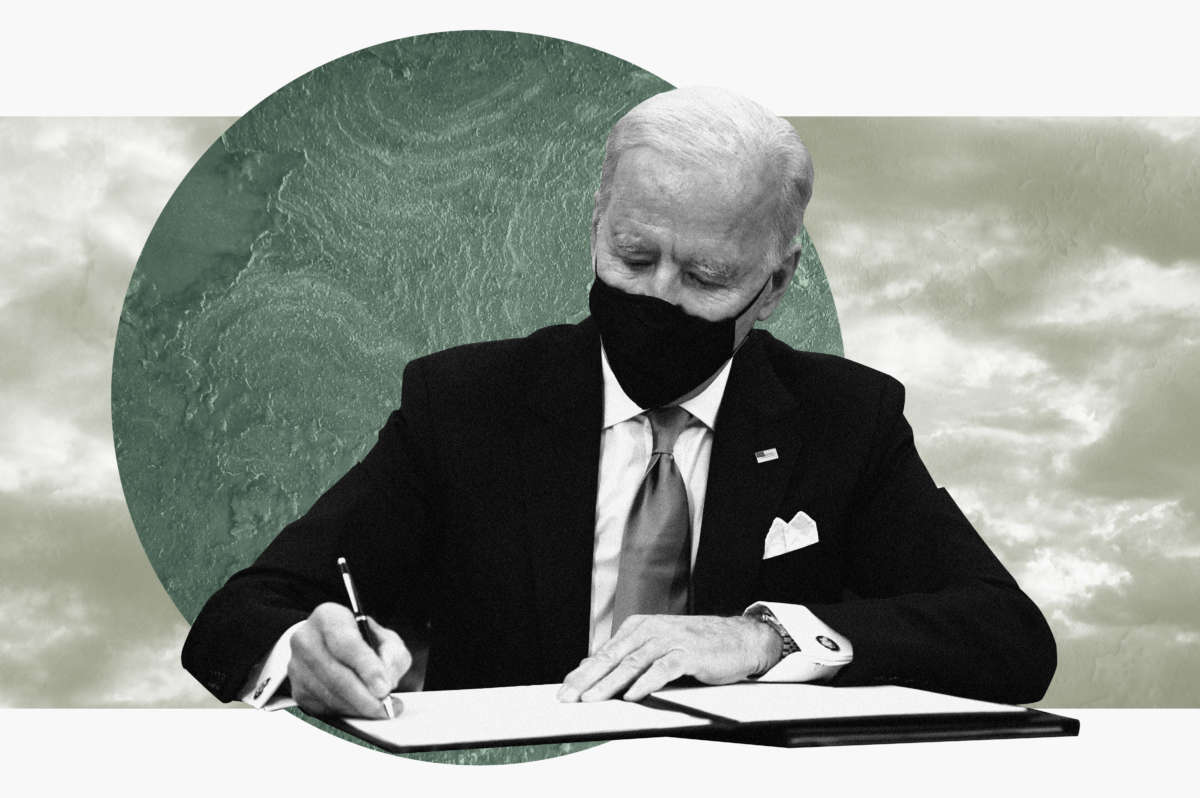
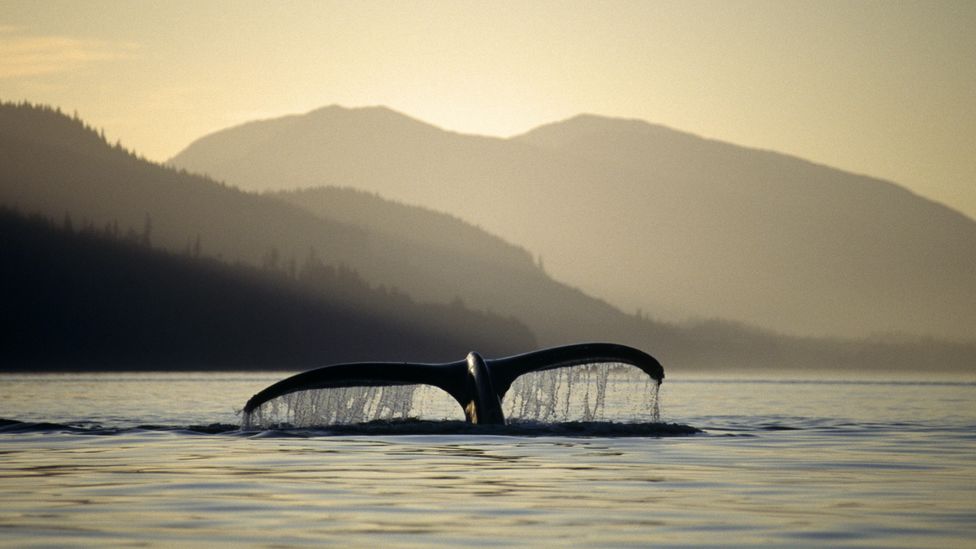
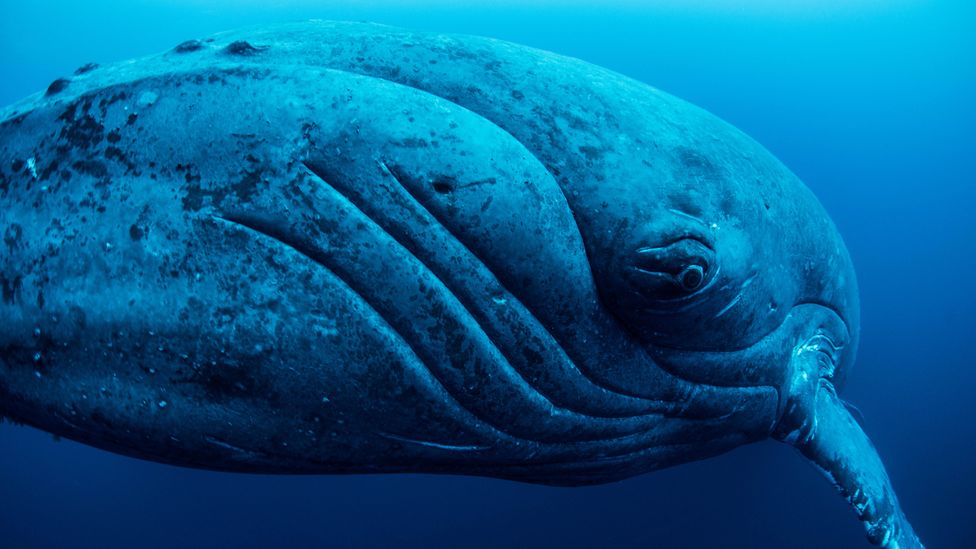
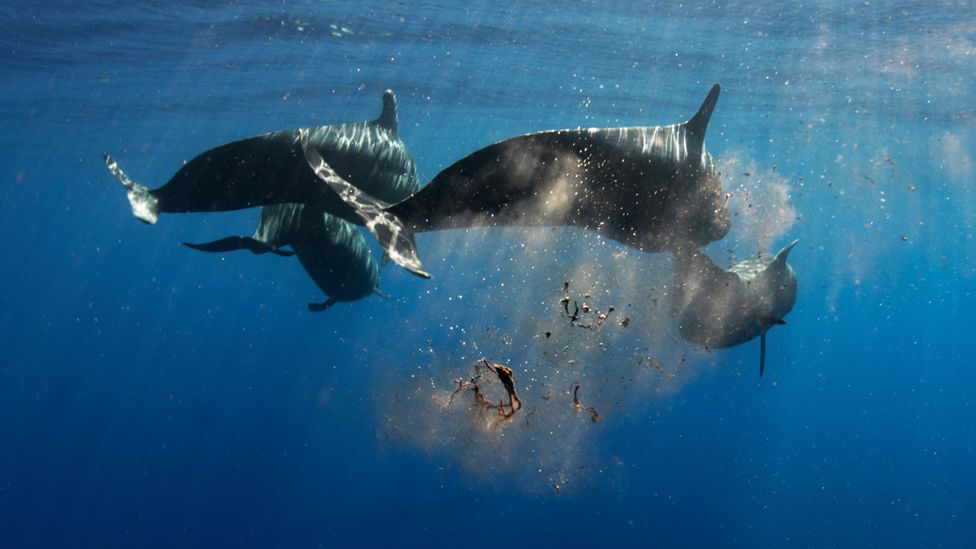
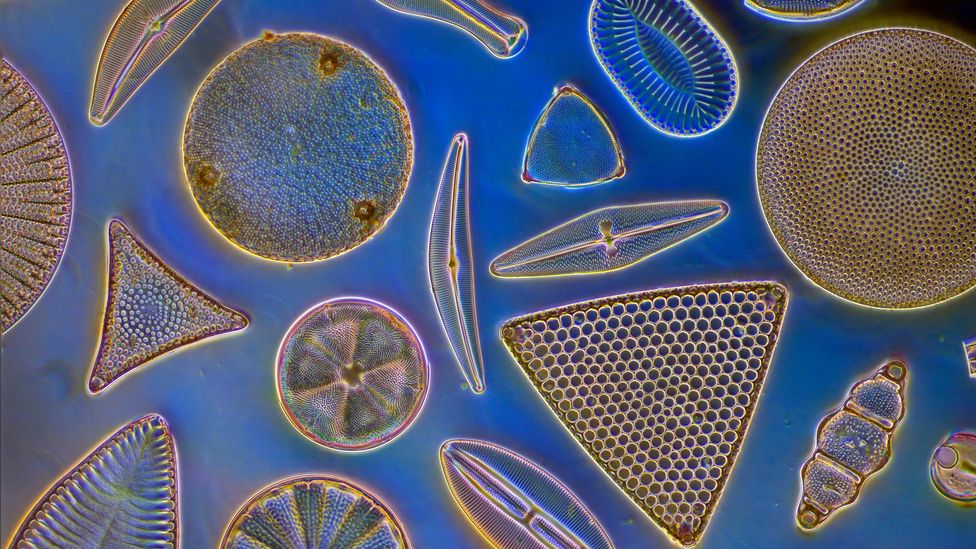
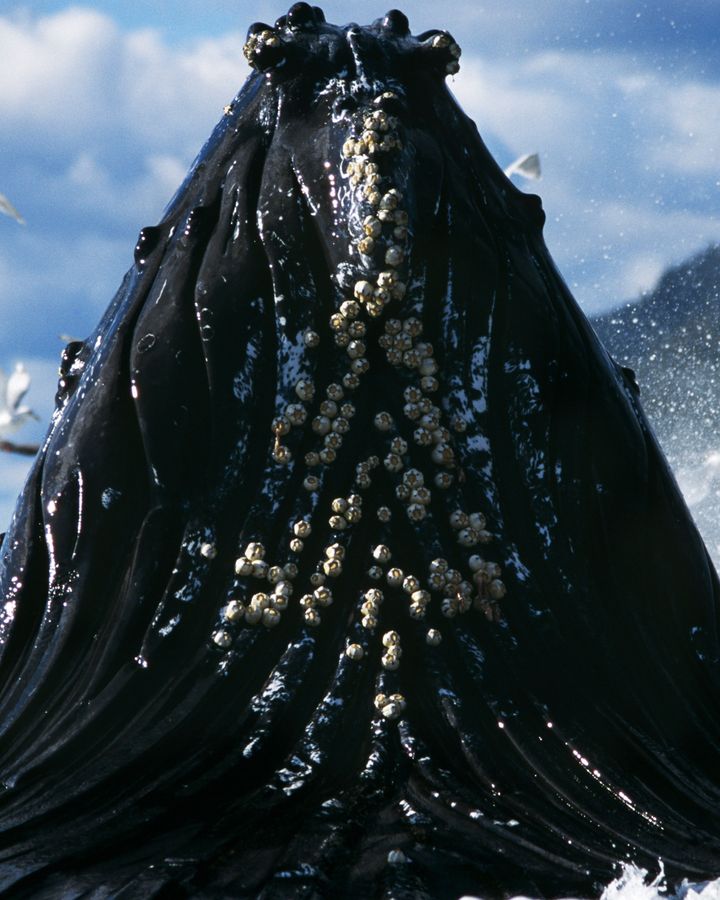
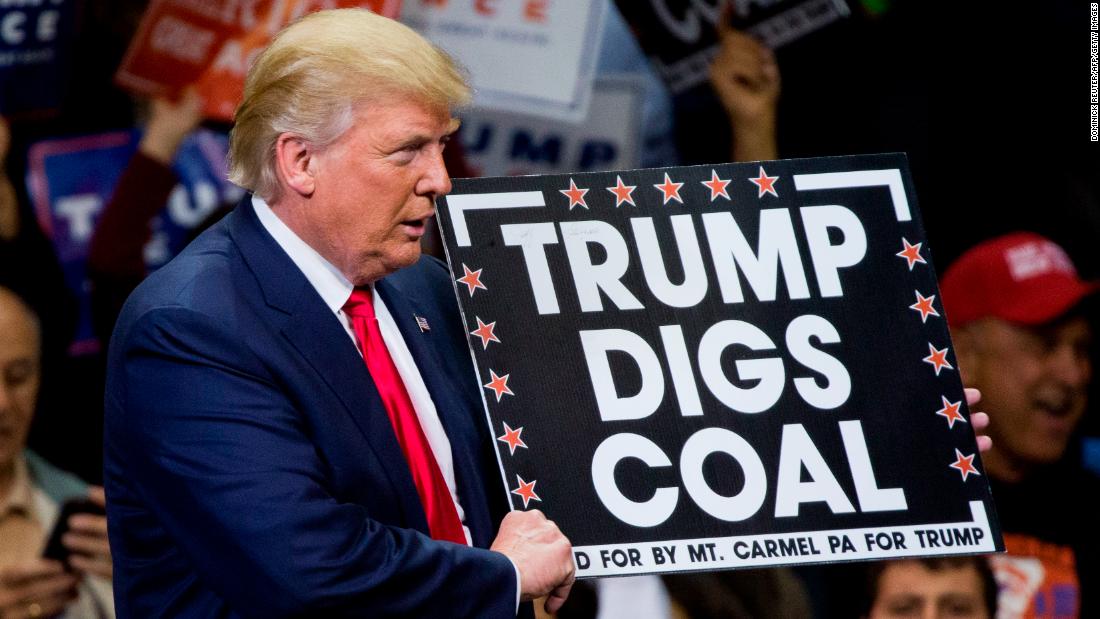 Then-Republican presidential nominee Donald Trump holds a sign supporting coal during a rally in Pennsylvania on October 10, 2016. President Trump’s moves to gut greenhouse gas regulations were applauded by many in the fossil fuel industry, but coal jobs continued to decline on his watch.Much of the environmental protections that Trump dismantled can be rebuilt by the incoming Biden administration, experts say.
 EPA Administrator Andrew Wheeler testifies at a Senate hearing on May 20, 2020. Wheeler and former EPA administrator Scott Pruitt executed a massive rollback of climate and environmental regulations during Trump’s four years in office.Along the way, fossil fuel interests have applauded Trump’s moves, even if he
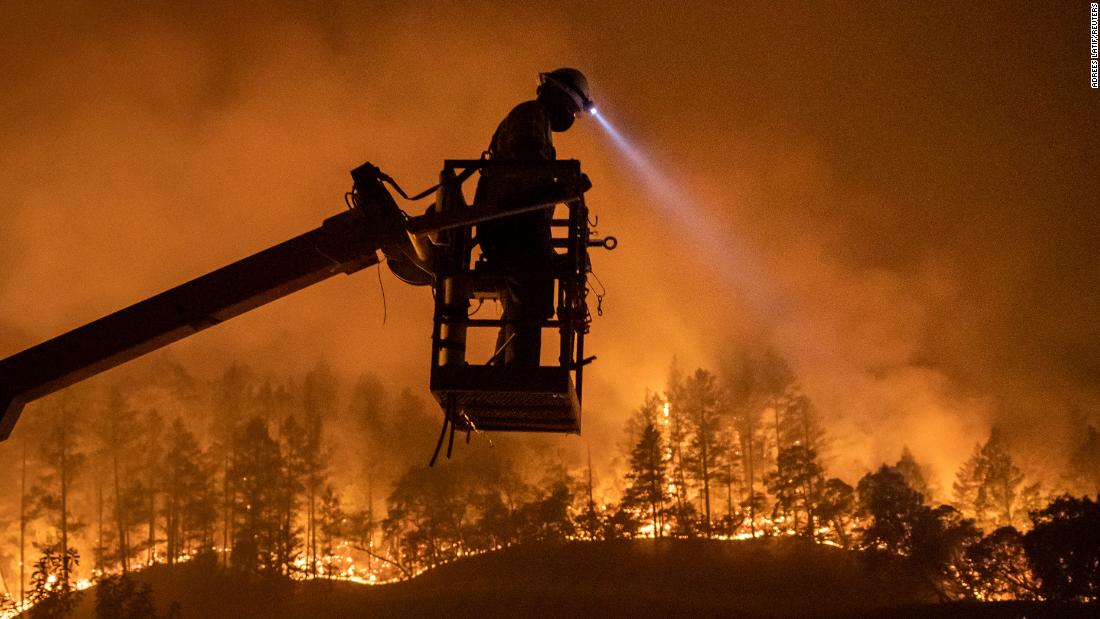 The Glass Fire burns in Calistoga, California on September 28, 2020. An unprecedented fire season in the American West in 2020 was just one of an onslaught of climate-related disasters that have swept the country in recent years.In Trump’s first year in office in 2017, he announced that he planned to pull the US out of the Paris Agreement on climate. That same year, Hurricanes Maria, Harvey and Irma left behind a wake of death and destruction from Puerto Rico to Texas, a year that saw all disasters in the US
 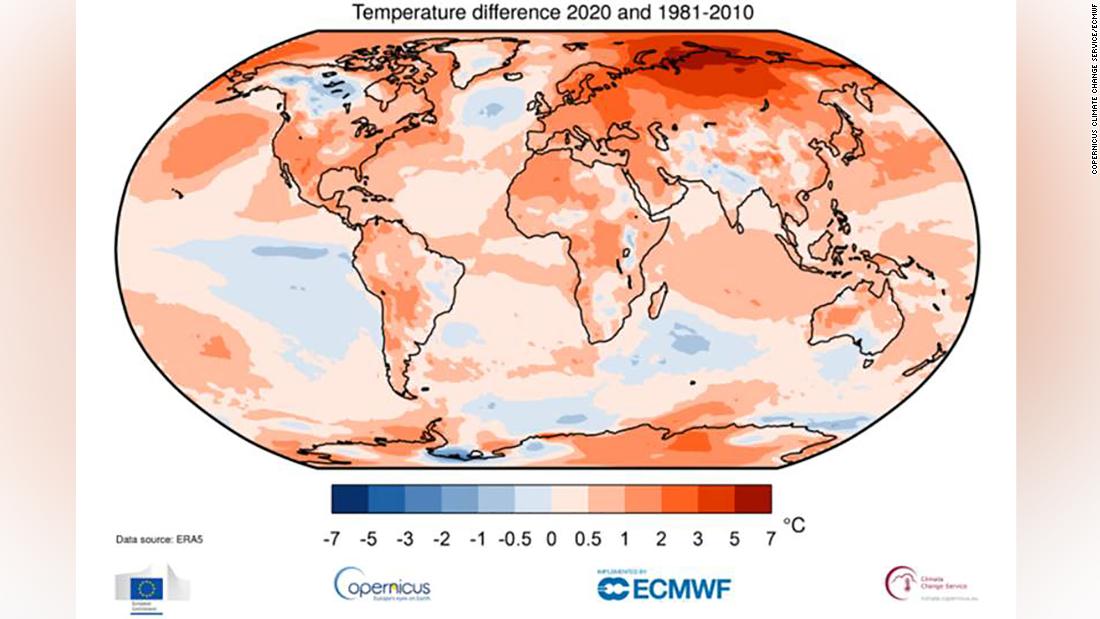 Global temperature data shows that 2020 was tied for the hottest year on record, according to the Copernicus Climate Service and other monitors.When humans burn fossil fuels, it sends heat-trapping carbon dioxide into the air, where it accumulates in the atmosphere like a blanket, and can stay to heat the Earth for hundreds of years.Some studies have tried to quantify how much of a contribution Trump’s regulatory rollbacks will make over time to accelerating global warming.One estimate published last year by the Rhodium Group found that the administration’s moves to weaken greenhouse gas regulations
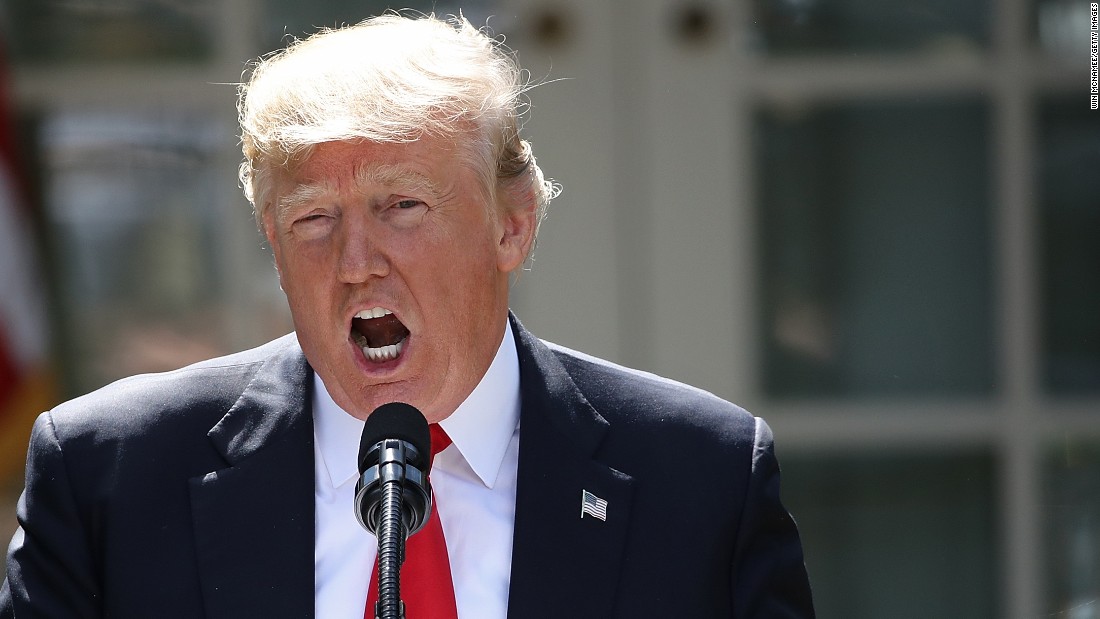 President Trump announced his decision to pull the US out of the Paris Climate Agreement on June 1, 2017, but the exit was not finalized until November 2020.”In one sense, it’s easy for President Biden to announce on the first day he’s in office that the US will rejoin,” said Jody Freeman, a Harvard law professor who served as counselor for energy and climate change in the White House under President Barack Obama. “The hard part is to put together an ambitious, credible pledge for what the US is prepared to do to meet their Paris Agreement commitments.”Trump’s interior department also cleared the way for new fossil fuel extraction on federal lands, including in Alaska’s Arctic National Wildlife Refuge (ANWR),
 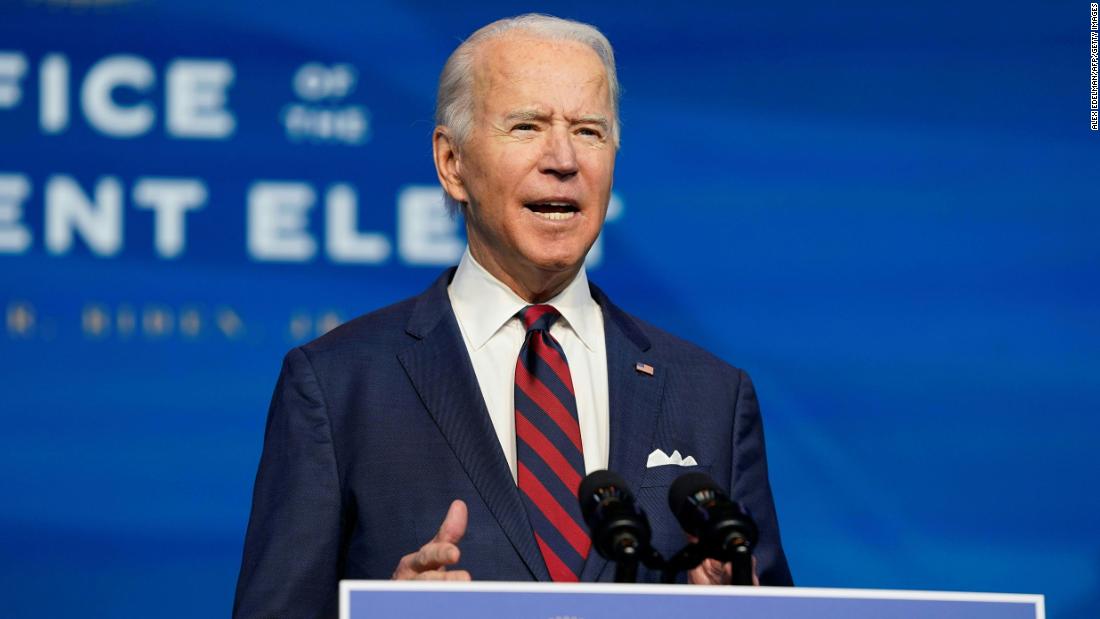 President-elect Joe Biden speaks during an event to introduce key members of his climate team in Wilmington, Delaware on December 19, 2020. Biden’s climate plan calls for the US to generate 100% of its electricity from clean energy sources by 2035.But the need to reverse moves finalized by his predecessor and the political realities of a razor-thin Democratic Senate majority could hamper Biden’s more ambitious climate proposals.Some of Trump’s rollbacks can be undone with the stroke of a pen or overturned by a simple majority in both houses of Congress through the Congressional Review Act, Gerrard said.Others like reinstating or tightening the Obama-era standards on car and truck emissions can be accomplished through EPA rulemaking, but the process takes time — anywhere from a few months to a year, Gerrard said.
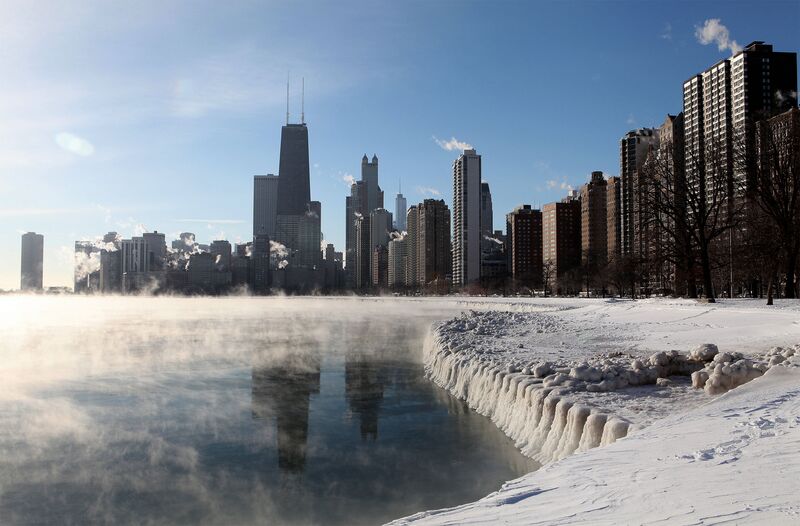
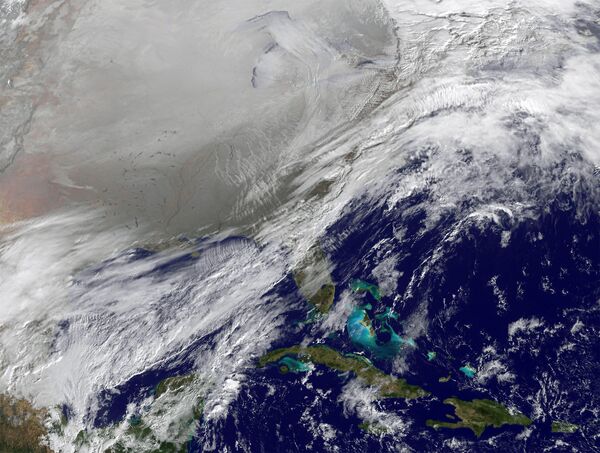
 Exposing the Big Game