With election season in full swing, last week I tackled one of the biggest issues Colorado voters face: Proposition 131. The takeaway? It’s a tough call, and many readers agreed.
But 131 is hardly the only contentious or complex issue on this year’s ballot. So this week let’s turn our attention to three more big Colorado topics: hunting, guns and schools.
Hunting of Colorado’s big cats
Proposition 127 feels complicated, but it’s not. It simply boils down to whether or not you believe the main reason hunters pay upwards of tens of thousands of dollars to specialized canine outfitters to kill Colorado’s Big Cats is for only the meat.
On a matter of common sense, I find this claim patently absurd. But even if the mountain lion meat is a delicacy, as some anti-127 proponents claim, paying outfitters outlandish fees to obtain such meat as an aside to seeking animal fur is still, by definition, trophy hunting. This is why I support 127 to end trophy hunting of Colorado’s Big Cats.
If you aren’t convinced, it’s worth addressing a few common claims by those against the measure. For starters, they claim hunters regulate lion populations, despite copious evidence Big Cats are self-regulating. They claim “ballot box biology” is unfair, an argument that not only implies voter values don’t matter, but also one that somehow gets lost for many of the very same voters when it comes to a woman’s biology — a contradiction of the highest order.
Then there are claims of economic loss, despite being a drop in the bucket of Colorado’s overall economy. Besides, highlighting how much money Colorado hunting organizations bring in to lure out-of-state hunters to kill Big Cats screams trophy hunting, not “I’m a local here to conserve wildlife.”
Long story short, I support Proposition 127, and I hope you will, too.
Gun taxes
Proposition KK is about taxes, but it’s also about values: Should gun owners be required to contribute in the form of firearm purchase taxes to aid victims of gun violence and improve public safety as related to shootings?
The answer is fundamentally and unequivocally yes. Securing funds for gun victims and safety is one more tool in our toolbox to reduce the impact of gun violence, an issue that is top of mind for many Colorado voters due to ongoing high rates. And who better to help pay a little extra for those public services than those who insist on owning deadly weapons in the first place? I certainly can’t think of anyone. Can you?
Amendment 80 is devious. At first glance, it sounds like an easy, happy choice for parents. It’s not.
Coloradans are already guaranteed free public education, and Amendment 80 is a sneaky attempt to dupe voters into diverting taxpayer funds away from public schools toward private ones, including religious institutions.
There are already several examples of religious charter schools in the state, as well as schools that refuse to meet basic scientific and education criteria per state guidelines. There are also already legal questions about the initiative, so do voters really think mandating taxpayer dollars for private schools is a good idea? I certainly hope not.
This means that even for those who support school choice, it is imperative to vote no on Amendment 80 to avoid the improper dispensing of public tax dollars. This is especially true for preventing public funds from going toward religious private schools with flimsy oversight.
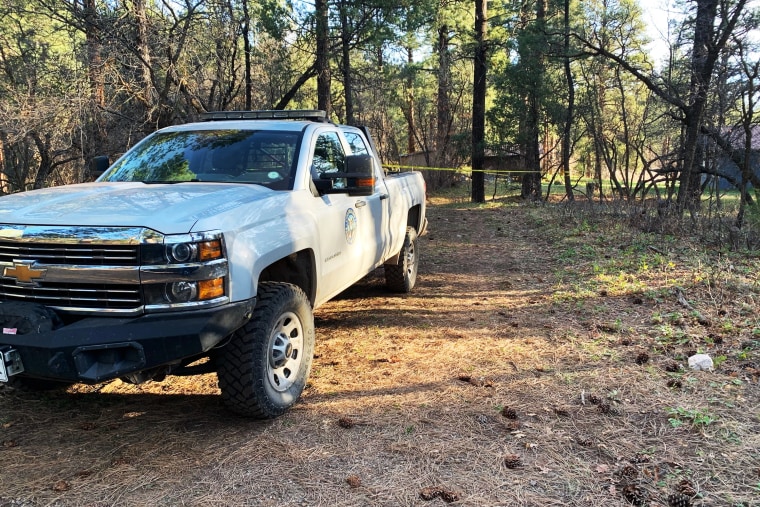
Wildlife officers said they found “signs of consumption on the body and an abundance of bear scat and hair at the scene.”
A 39-year-old woman was found dead north of Durango, Colo., after what officials believe was a bear attack on Friday April 30, 2021.via Colorado Parks and WildlifeMay 1, 2021, 1:37 PM PDTBy Dennis Romero
A 39-year-old Colorado woman was killed in an apparent bear attack while walking her two dogs, authorities said Saturday.
Her boyfriend told officials he returned home around 8:30 p.m. MT Friday, according to state parks officials. He discovered the dogs outside the residence near Trimble, Colorado, but the woman was missing.
He found her body an hour later and called 911, Colorado Parks and Wildlife said in a statement.
Wildlife officers said they found “signs of consumption on the body and an abundance of bear scat and hair at the scene.”
A dog team from the U.S. Department of Agriculture Wildlife Services subsequently found a female black bear with two yearlings nearby.
The bears were euthanized. The mother bear’s teeth indicate she was bout 10-years-old, parks officials said.
“Bear attacks are extremely rare,” Cory Chick, southwest region manager for Colorado Parks and Wildlife, said in the statement. “This is a tragic event and a sad reminder that bears are wild and potentially dangerous.”
The woman’s name was expected to be released by a local coroner, who is expected to perform an autopsy early next week.
Not-so-jolly ranchers in Colorado are up in arms after the state’s governor Jared Polis dared to declare an official flesh-free holiday to encourage people to go plant-based for just one day. Why so threatened? Let’s discuss.
What a difference a day makes – that’s what cow farmers in the US state of Colorado are saying this week following the news that state governor Jared Polis officially declared March 20 as #MeatOut Day, as reported by Plant Based News.
Considering we’re bombarded with meat propaganda the other 364 days of the year, one would think that animal farmers would be able to chill a bit and let arable farmers have their day in the spotlight. After all, it’s not as if that $1 in every $365 wouldn’t be going to any food producers.https://www.youtube.com/embed/uu3mdWsM0Dk?wmode=opaque&enablejsapi=1
But let’s not feign naivety as MeatOut Day was started almost 40 years ago by Farm Animal Rights Movement (FARM) to promote “conversation questioning the consumption of animal products around the world” and “remind us of animal agriculture’s devastating impact to the animals, our health, and the environment” according to their website.
The vegan agenda is pretty clear so it is little wonder that animal farmers are on the offensive when their elected state commander-in-chief officially legitimises everything we’ve been saying. By signing up to MeatOut Day, Colorado has effectively declared its agreement with the following points made in the MeatOut proclamation:
Removing animal products from our diets reduces the risk of various ailments, including heart disease, high blood pressure, stroke, various cancers, and diabetes;
A plant-based diet helps protect the environment by reducing our carbon footprint, preserving forests, grasslands and wildlife habitats, and reduces pollution of waterways;
A growing number of people are reducing their meat consumption to help prevent animal cruelty;
Since MeatOut was launched in 1985, more than 35 million Americans have explored a plant-based diet and reduced their consumption of meat, dairy, and eggs; and major food manufacturers and national franchises are marketing more vegan options in response to this growing demand.
“The world is changing, dying even, and animal agriculture is a leading cause of that. You may have lost your chill, but others are losing their lives.”
As for the environmental impact of animal farming, and cow farming in particular, leading think tank Chatham House recently released a report to its many NGO, corporate and governmental members in which it states that “global dietary patterns need to converge around diets based more on plants, owing to the disproportionate impact of animal farming on biodiversity, land use and the environment”.
Polis has been branded a betrayer of cattle ranchers, with Plant Based News also reporting that the Colorado Cattlemen’s Association is fighting back by asking people to join in with ‘Meat In Day’ on the same day. Nevermind that meat is in every other day of the year thanks to the status quo.
Meat In or MeatOut? Either way, not very jolly at all
The Association said that the goal of Meat In Day was to promote the “benefits of meat consumption” and also “patronize our local businesses, and restaurants, that’ve (sic) been deeply affected by the economic struggles of COVID-19”.
We sympathise and don’t doubt that local businesses are struggling as a result of Covid-19 – which emerged as a result of humans eating non-humans – but just imagine how they’ll fare when the next, more deadly pandemic strikes. H5N8 is just the latest strain of bird flu to jump from animals to humans as a result of farming, which creates the perfect conditions for the emergence of new zoonotic diseases, and we’re only a few mutations away from another 1918 flu pandemic.
There are few if any benefits of eating animals other than fueling an industry that generates profits from promoting devastating illnesses, environmental destruction and the exploitation of sentient beings. As for local businesses and restaurants, MeatOut Day is if anything an opportunity to showcase a variety of options and versatility in adapting to a changing world.
The same goes for any cattle ranchers reading this. The world is changing, dying even, and animal agriculture is a leading cause of that. You may have lost your chill, but others are losing their lives.
Andrew Gough is Media and Investigations Manager at Surge.
As of today, Denver Parks & Recreation (DPR) have said there will be no more killing of the Canada geese in 2020 and that killing will be unnecessary in 2021. — Marc Bekoff, PhD
This family of Canada geese lived peacefully together until they were captured and killed by government agents. (Photo: Karen Trenchard; Garland Park, Denver, Colorado, June 2020)
Peaceful Canada geese – up to 4,000 – are being brutally rounded up for slaughter again this year, according to Canada Geese Protection Colorado, in an alert posted July 7 by Marc Bekoff.
This nightmare is headed up by Denver Parks and Recreation’s executive director, Scott Gilmore. He calls it a “rodeo” and blames the geese for damaging the environment.
Please read this clear summary of the situation by Canada Geese Protection Colorado, and then take action:
“For the second year in a row, Denver Parks and Recreation is attempting to rely on killing geese as a method of addressing the perceived nuisance of Canada geese resident in Denver parks. In 2019, without any substantive, transparent, or meaningful public engagement or notification, and in direct violation of its own policies, Denver Parks and Recreation hatched and executed a misguided, lazy plan to capture and slaughter Denver’s resident Canada geese because they do not regard them as sentient beings with a right to their own existence, are too lazy to clean our parks of goose feces, listened to an elite group calling for lethal population control, and were impatient, looking for a quick fix to a problem they created. Numerous humane alternatives to control the population and impact of Canada geese exist, such as habitat modification, hazing, egg oiling, public education, cleaning, and more.”
Cognitive ethologist and Colorado resident Dr. Marc Bekoff writes:
“This is not euthanasia, or mercy-killing, as they often claim to sanitize what they’re doing, but outright slaughter/murder. Geese are highly sentient and emotional beings who can mate for life. This slaughter is a bloodbath – an act of pure, shameful, unnecessary cruelty.”
*What Can I Do?*
Please call and/or write to Scott Gilmore, executive director of Denver Parks and Recreation. Politely urge the employment of peaceful, compassionate alternatives to the brutal killing of these innocent birds.
As mountain lion sightings in the region increase, there has been talk about allowing more hunting to thin their numbers. Your take?
To say I’m an avid user of open space is like saying that Boulder leans left. I’m running, climbing or cycling in the hills above Boulder at least five days a week, frequently every day of the week. I’ve been doing it for more than a quarter of a century, on every day of the year.
I’ve seen deer that are so used to humans that I’ve run within six feet of them, almost close enough to pat them on the back. On Green Mountain, in the darkness of a very early morning, I once followed a bear up the Amphitheater Trail until it eventually detoured off the trail.
In all that time, I’ve still never seen a mountain lion. How cool would it be to see a lion? A lion! People travel to Africa to see lions, yet we have them right here. One of the greatest benefits of living where we do is being close to so much wildlife.
Mountain lions and bears are large, powerful, and very dangerous if they attack, but they very rarely attack humans. There have been three Colorado fatalities from mountain lions in more than 100 years of record keeping. Lions seem to instinctively know that humans aren’t prey.
We already have to hunt elk and deer to help control their populations, mainly because we’ve driven away their predators. Hunting lions would just exacerbate the problem and we’d then have to kill more deer. Killing will just lead to more killing.
While hunters are generally quite safe, with fewer than 1,000 shooting accidents per year in the U.S. and fewer than 75 deaths, those 75 deaths per year are seven times the number of U.S. deaths by mountain lions in the last 50 years combined. It is 350 times more likely that someone will be killed by a hunting accident than a cougar.
Possibly the overall risk to humans would increase if we had hunters in our open space. Hunting lions would be a mistake.
Bill Wright, billwright510@gmail.com
I admit I know little about hunting. I do know that we humans chose to settle in mountain lion territory and not the other way around, though, so I’m inclined to err on the side of minimal human intervention in mountain lion populations, if possible.
One of the only predators that can naturally thin the mountain lion population is the wolf, which humans eradicated from Colorado in the 1940s. When wolves were reintroduced into Yellowstone, the overall health of the ecosystem improved because wolves go after the weaker, sicklier animals.
Human hunters tend to look for the healthier specimens, meaning that while recreational hunting may help with overpopulation, it doesn’t necessarily improve the health of the population. This fall, there will be a statewide ballot initiative to reintroduce gray wolves into Colorado by 2023. It will be the first time in the United States that voters will be able to decide on wolf reintroduction.
I don’t know how effective wolf reintroduction will be at stemming mountain lion excursions into Front Range communities, but making efforts to restore the natural predator-prey relationships that existed long before we came to this land feels right and just. Simply issuing more mountain lion hunting licenses seems unlikely to stem the problem of mountain lions coming into populated areas.
My understanding is that some mountain lions develop the habit of coming into populated areas because they’ve learned that they can find food more easily in those areas, but presumably we’re not talking about allowing mountain lion hunting within city limits, so how do we know that the hunters will be killing the problem lions?
Hunting is a blunt instrument for dealing with a minor problem. There have been just 27 fatal mountain lion attacks on humans in the entire United States in the last 100 years. We have bigger problems to deal with right now.
Jane Hummer, janehummer@gmail.com
I have had only one encounter with a mountain lion in my life. It was here in Boulder on Mount Sanitas. One day a week, usually on Tuesdays, I hike Sanitas Trail around 5 a.m. It is a great workout, and I do it year round.
One July morning a few years back, I arrived at the trail head and started my trek. It was still dark and my headlamp was blazing the way. As I approached the saddle in the west ridge just before the first false summit, I saw them.
Two gigantic eyes, smack in the middle of the trail, staring back at me about 20 feet away. It took me a minute to realize what I was looking at, but then, with the help of my head lamp, I could make out the lion’s face, the ridge of his back, and its tail. I froze, then cursed, and then remembered back to my mountain lion training; which fully consisted of one four-minute song from Boulder’s own Jeff and Paige. Thanks Boulder Open Space and Mountain Parks for that training!
All right, so after freezing and cursing, I took off my pack and made myself look big. To my surprise, the mountain lion didn’t move. It just stood there staring at me.
Honestly, I was surprised because I thought that as soon as this big guy caught wind of me, off, he would go. But no! We were locked in a staring contest. “Damn it!” I thought. I really wanted to get a workout in and this dude is standing in my way. What to do next?
Since my presence alone wasn’t enough to budge this lion, I had to do something else. Yelling and harassing him was next move. I start yelling and banging my hands together. “Yes! that worked! He moved!” I thought. But, my joy was short lived because he had just moved onto the ridge about 10 feet above me. Now he had the high ground. I was doubly screwed.
After about five minutes of playing this game, another hiker (a tourist) came up behind me. What’s going on?” he asked. “There is a mountain lion right above the trail. Can’t you see it?” I said.
“No” said the tourist (he was not wearing a headlamp and it was still dark). “Is it safe to go?” he said. “I think,” I said, “You go first.”
So, off we went, me and the tourist, directly under the mountain lion. The tourist placed strategically between me and the lion and the mountain lion’s big, glowing eyes staring down at us. Having made the trek often and in better shape, as soon as I cleared to a safe area, I was gone. I never heard a scream, so I assume the tourist returned unscathed.
My take: Lion populations fluctuate with the availability of prey. Let them be; it’s their habitat. As for me, I am always looking for early morning hiking partners, preferably slightly slower than me.
My email is below, feel free to reach out to me if you are up for it.
Editor’s note: Contact7 seeks out audience tips and feedback to help people in need, resolve problems and hold the powerful accountable. If you know of a community need our call center could address, or have a story idea for our investigative team to pursue, please email us at contact7@thedenverchannel.comor call (720) 462-7777. Find more Contact7 stories here.
LAKEWOOD, Colo. — A Lakewood woman said the laws need to be changed after her condominium has been trapping and killing squirrels.
“I don’t think this is a humane way to deal with this at all,” Klaudia Sekulska said.
The traps are placed on the roof outside her window.
She said someone in the building complained the squirrels were getting into the attic, and a local pest control company was called.
“There are different ways to go about it. You don’t have to let an animal freeze to death overnight and then put it in a black garbage bag. That’s not dignified for anyone,” she said.
Colorado law allows pest control companies to operate under the same rules as homeowners. It’s legal to trap and, in some cases, poison squirrels that are damaging property.
Sekulska said the laws should change.
“It’s a permit to kill, and that’s what’s happening here. We’re proud of our animals and our wildlife, and it was National Squirrel Day yesterday,” Sekulska said.
Sekulska brought her concerns to animal control, property managers and her HOA.
She said they haven’t done enough to patch the holes in the roof or bring in proper trash bins before resorting to killing the animals.
Denver7 reached out to the HOA for comment but did not hear back.
Colorado Parks and Wildlife recommends removing pet food and trash that may be attracting squirrels, create barriers, and use ammonia as a deterrent.
If you believe any animal is being abused or is being treated inhumanely, you can file a complaint with Colorado Parks and Wildlife or your local animal control.
Eyewitness account plus scavenged elk carcass indicates likely presence of multiple wolves in northwest Colorado
MOFFAT COUNTY, Colo. – Colorado Parks and Wildlife officials say an eyewitness report of six large canids traveling together in the far northwest corner of the state last October, in conjunction with last week’s discovery of a thoroughly scavenged elk carcass near Irish Canyon – a few miles from the location of the sighting – strongly suggests a pack of gray wolves may now be residing in Colorado.
“The sighting marks the first time in recent history CPW has received a report of multiple wolves traveling together,” said CPW Northwest Regional Manager JT Romatzke. “In addition, in the days prior, the eyewitness says he heard distinct howls coming from different animals. In my opinion, this is a very credible report.”
After learning about the scavenged elk carcass, CPW initiated an investigation which is still ongoing. At the site, the officers observed several large canid tracks from multiple animals surrounding the carcass. According to CPW wildlife managers, the tracks are consistent with those made by wolves. In addition, the condition of the carcass is consistent with known wolf predation. (Photos below)
“The latest sightings add to other credible reports of wolf activity in Colorado over the past several years,” said Romatzke. “In addition to tracks, howls, photos and videos, the presence of one wolf was confirmed by DNA testing a few years ago, and in a recent case, we have photos and continue to track a wolf with a collar from Wyoming’s Snake River pack.
Romatzke says from the evidence, there is only one logical conclusion CPW officials can make.
“It is inevitable, based on known wolf behavior, that they would travel here from states where their populations are well-established,” he said. “We have no doubt that they are here, and the most recent sighting of what appears to be wolves traveling together in what can be best described as a pack is further evidence of the presence of wolves in Colorado.”
Romatzke adds CPW will continue to operate under the agency’s current management direction.
“We will not take direct action and we want to remind the public that wolves are federally endangered species and fall under the jurisdiction of the US Fish and Wildlife Service. As wolves move into the state on their own, we will work with our federal partners to manage the species,” he said.
The public is urged to contact CPW immediately if they see or hear wolves or find evidence of any wolf activity. The Wolf Sighting Form can be found on the CPW website.
With wolf pack supporters planning on Tuesday to submit more than 208,000 signatures supporting a November 2020 ballot measure calling for the reintroduction of wolves to Colorado, voters could soon hear a pitched howling over wolves for most of next year.
“This is our last opportunity to do it right and to restore the balance,” said Rob Edward, whose Rocky Mountain Wolf Action Fund has been collecting signatures since June for a 2020 ballot measure — now called Initiative 107 — that directs the Colorado Parks and Wildlife Commission to craft a plan to restore and manage gray wolves in Colorado by the end of 2023.
The group needs about 124,000 valid signatures to qualify for the 2020 ballot. Their deadline to collect them is Friday.
As the group transitions from harvesting signatures to swaying voters, opponents of wolf reintroduction are girding for battle. And it’s a new type of fight for opponents of wolf reintroduction, who in other states across the West and Great Lakes region have lobbied wildlife commissioners — not voters — to oppose reintroduction. The Colorado Stop the Wolf Coalition is strategizing a first-ever public campaign, seeking to educate voters on potential negative impacts of introducing the wolf to the state.
“There are a lot of people who don’t want wolves brought into Colorado. We just can’t sustain another predator in this state,” said Denny Behrens, co-chair of the Stop the Wolf Coalition.
The coalition has gathered resolutions from 10 counties opposing reintroduction of wolves in the state. It has found high-profile supporters like Greg Walcher, the former head of the Colorado Department of Natural Resources.
In a statement announcing his support for the coalition and its fight against Initiative 107, Walcher said seeded wolves in Colorado could “decimate other important wildlife, and their impact on rural areas could be devastating.”
Colorado is the last battleground for restoring wolf populations after more than 40 years of federal and state efforts to introduce wolves in the Southwest, Northern Rockies and Great Lakes regions.
In Montana, Wyoming, Idaho, New Mexico, Arizona and around the Great Lakes, wolf reintroduction was directed by wildlife officials following the federal Endangered Species Act that has protected gray wolves since 1983. A ballot measure in Colorado — the missing link connecting wolf populations between Mexico and Canada — would mark the first time that voters, not federal laws, directed state wildlife officials to restore wolves.
“Conservationists and biologists have been working with the Fish and Wildlife Service and different agencies for years, trying to convince them to do this in Colorado, and we keep running up against a brick wall,” said Edward of the direct-to-voters appeal for wolves.
There are about 5,500 wolves spread across nine U.S. states right now, according to the U.S. Fish and Wildlife Service. The Department of the Interior in March proposed removing the gray wolf from protection, citing its growing population.
The proposal has drawn the ire of wolf advocates who fear delisting could lead to more wolf hunting and trapping in some areas. Advocates submitted more than a million comments opposing the suggested removal of endangered species protection for wolves.
This 1924 photo from Routt County shows one of the last wolves shot and killed in Routt County. (Provided by Jay Fetcher)
Wolves last roamed Colorado in the 1940s, but they have wandered into Colorado from neighboring states, even as recently as last July.
Opponents don’t care about wandering wolves. They do not like the wolf advocates’ plan to introduce at least 20 to 30 predators to Colorado, which could grow to a population of 250 or more wolves over the course of a decade. Behrens said the idea that wolves would remain on the West Slope “is pretty absurd.”
“They will travel great distances. You will have wolves in Woodland Park and Estes Park. You are going to have wolves all over the place in a matter of years,” he said. “Why would you take a wolf from Canada where it roams free and bring it down to Colorado and turn it loose with almost 6 million people and think there’s not going to be any conflict? There will be conflict from day one, and it’s not fair to the wolf to do that.”
A photo of a possible wolf sighted in northern Colorado in July. (Provided by Colorado Parks and Wildlife)
Edward, with the wolf fund, points to growing wolf populations in places like Yellowstone National Park, where millions of annual visitors have not had conflicts with wolves since reintroduction there in the 1990s.
“This is just not an issue. Western Colorado is 70% public land, so it’s not going to be developed and full of people,” Edward said.
Opponents of the wolf reintroduction plan say the flow of out-of-state money into the wolf reintroduction effort shows “this is not a Colorado campaign,” Behrens said.
California’s Tides Center — which supports progressive causes — has given the wolf campaign about $264,000. The Colorado Sierra Club gave more than $10,000, according to reports the campaign filed with the Colorado Secretary of State. Between July and October this year the Rocky Mountain Wolf Action Fund reported $625,000 in contributions and about $653,000 in expenses, most of that going toward Landslide Political, a Utah-based signature gathering firm.
“Less than 1% of the money they’ve raised has come from Coloradans. That’s pretty telling,” Behrens said.
Edward said since most of western Colorado is federal land, it’s not surprising that people from all over the country support efforts to restore wolf populations on public lands.
“It is perfectly appropriate for people from across the country to donate to this campaign,” said Edward, who served on a wolf advisory group in 2005 that ultimately recommended that the state’s wildlife commission oppose reintroducing wolves.
Colorado Parks and Wildlife has not voiced support or opposition to the ballot proposal, but in 2016 the Colorado Parks and Wildlife Commission adopted a resolution affirming the wolf advisory group’s recommendation opposing the intentional release of any wolves in Colorado.
A fiscal note from Colorado Parks and Wildlife — obtained via an open records request by the Stop the Wolf Coalition — shows that after planning costs, implementation of the wolf reintroduction plan would cost $4.1 million, including new wildlife biologists and payments to ranchers who lose livestock to wolves. The cost for the first eight years of the reintroduction effort, which CPW estimated would involve 45 released wolves over a five-year span, would be $5.7 million.
With what could be the country’s final battle over wolves now shifting toward Colorado voters, both sides say they have the support to win.
“As far back as 1993 and 1994, we have polling showing that people on the Western Slope support recovery by a majority margin,” Edward said.
Once “a full-blown education campaign” reaches voters, Behrens said, “we will see a huge input of funding from Coloradans who don’t want this.”
On Wednesday, Oct. 23, 2019, biologist Mike Phillips presented “Wildness Restored: The Wolf’s Return to Colorado” at the University of Colorado Denver, the latest lecture in the Chancellor’s Distinguished Lecture Series. He comes to Colorado at a pivotal moment — as state residents consider a proposed 2020 ballot measure to initiate a wolf restoration plan.
Wolf biologist and Montana state Senator Mike Phillips
Phillips is currently a Montana State Senator and Director of the Turner Endangered Species Fund. A biologist who previously worked on both the Red Wolf Recovery Program and the Wolf Restoration project at Yellowstone National Park, Phillips has conducted extensive wildlife research, though he specializes in large carnivores. Besides many articles in both peer-reviewed journals and popular magazines, Phillips is the author of “The Wolves of Yellowstone.” In other words, he is a well-recognized wolf expert.
As such, Phillips has to contend with our country’s troubled history with wolves. Europeans settlers virtually eradicated wolves, first through independent hunting and trapping, and later through government-sanctioned wolf extirpation programs (involving mass poisoning, among other inhumane killing methods) that left the species almost extinct. Why? “Manifest destiny,” Phillips explains, “which demanded a zealous embrace of the determination to tame the land and its wild inhabitants.”
But the large-scale destruction of wild animals, including bison, grizzlies, wolves, and elk, eventually prompted a call to action. “The entire science of wildlife management grew out of a need for things to shoot because the great game herds had been destroyed,” Phillips said. Once the U.S. realized it needed to reverse the trend toward species extinction, it passed the Endangered Species Act, which protected threatened and endangered plants and animals and their habitats. This ushered in a new era of conservation — and the wolf once again became a central metaphor for how we view wildness.
The real wolf vs. the mythic wolf
In addition to history, Phillips has to contend with popular culture, which has largely depicted the wolf as a vicious predator. In this regard, the United States is not alone. For centuries, and across continents, the wolf has been at the center of stories and fables, serving as a convenient symbol. And many wolf myths are aimed at children, which prompted the Rocky Mountain Wolf Project (RMWP) to produce a video titled “Meet the Real Wolf” (see above).
Phillips is forced to discuss the wolf in this context, acknowledging the mythic wolf while providing information about the real wolf: “The real wolf has been studied exhaustively over many decades. The real wolf is one of the most studied large mammals in the world. The real wolf is not even a shadow of the mythical wolf — it’s the mythical wolf that gets in the way of restoration,” Phillips said.
It’s important to change the narrative about the real wolf, especially in regards to social structure and survival. For wolves, family is of paramount importance, as explained in the RMWP video. Another misconception is that wolves are supreme killers, which is incorrect: “The real wolf — oh, my heavens. Life is a daily struggle. Starvation is a common cause of death. Puppies suffer the most of all. Most efforts to hunt end up with gray wolves coming up empty-pawed,” Phillips said.
“There are very good, successful models from the northern Rocky Mountains,” said Mike Phillips. “Reintroducing gray wolves is a certain affair.”
Initiative 107: restoration of gray wolves
Currently, the Rocky Mountain Wolf Action Fund (RMWAF) is collecting signatures for a proposed 2020 ballot measure that would restore the gray wolf to Colorado. Rob Edward, president of RMWAF, summarized the petition: “Initiative 107 directs the Colorado Department of Wildlife & Parks to initiate a science-based wolf restoration plan, to include public input into the process, and to ultimately begin reintroducing wolves to designated lands west of the Continental Divide in Colorado no later than 2023.”
The final written version of Initiative 107 is available at the Colorado Secretary of State website. The measure does not establish its own plan for wolf reintroduction but rather asks the Colorado Parks and Wildlife Commission to “Develop a plan to restore and manage gray wolves in Colorado, using the best scientific data available.”
That is one of the strengths of the initiative, according to Phillips. “Initiative 107 does not aim to be a strong statement of wildlife management. 107 acknowledges the expertise of Colorado state and of wildlife biologists; it acknowledges the expertise of the state assembly. It is specifically written to take advantage of that expertise and those authorities,” he said.
Edward and the RMWAF team are in the process of collecting the required number of signatures for Initiative 107 to appear on the 2020 ballot (approximately 124,500 by Dec. 13, 2019). He hopes to gather at least 200,000 signatures. That may be the hardest part in the campaign to reintroduce wolves to Colorado, particularly since the state requires signatures to be collected in person. If Initiative 107 gets on the ballot, Edward said he is confident Colorado voters will approve the measure: “We have over two decades of polling data showing support for wolf restoration standing at over 70% statewide and 65% on the Western Slope.”
According to the Wolf Conservation Center, Gray Wolves (Canis lupus) were once among the most widely distributed wild mammals. They inhabited most of the available land in the northern hemisphere. Due to the destruction of their habitat and persecution by humans, they now occupy only about 10 percent of their historic range in the continental 48 United States.
Colorado is critical link in wolf range
According to Phillips, “Western Colorado represents the last great wolf restoration campaign.” This is because of Colorado’s geographic location —in between two wild wolf habitats. To Colorado’s north, wolf populations inhabit the northern Rocky Mountains and Pacific Northwest. To Colorado’s south, wolves inhabit the Southwest.
Renowned wolf expert L. David Mech, PhD, biologist and senior research scientist for the U.S. Department of the Interior, has been studying wolves since 1958. He writes: “Re-establishing wolves in western Colorado could connect the entire North American wolf population from Minnesota, Wisconsin and Michigan through Canada and Alaska, down the Rocky Mountains into Mexico. It would be difficult to overestimate the biological and conservation value of this achievement.”
The state of Wyoming, however, poses a threat to a continuous Rocky Mountain wolf habitat since it delisted wolves from the Endangered Species list on April 25, 2017. Wolf management is now in the hands of the Wyoming Game and Fish Commission, which defined wolves as predatory animals in a large majority of the state. Wyoming’s policy will negatively influence wolf movement. “But with a population in Colorado, at least there will be animals that can move both from the south to the north and from the north to the south. With more animals involved, the prospect of connectivity improves,” Phillips said.
Map of Wolf Management Area from the Wyoming Game and Fish Department.
And connectivity is important because wolves, like other large predators, help maintain healthy ecosystems. This is one of the important arguments for wolf reintroduction to the state. In a 2001 article titled “The Importance of Large Carnivores to Healthy Ecosystems,” Phillips and his co-authors write, “The impacts of carnivores thus extends past the objects of their predation. Because herbivores eat seeds and plants, predation on that group influences the structure of the plant community. The plant community, in turn, influences distribution, abundance, and competitive interaction within groups of birds, mammals, and insects.”
When asked to put this concept into everyday language, Phillips said: “Let’s assume that life is a most powerful force in the universe. If that’s true, then death has to be equally important … Life matters and death matters. Prey matters and predators matter … Gray wolves just happen to be good at moving life in the direction of adaptation—good at shaping life because they’re good at picking out those that are predisposed to die.” He explained what decades of wolf research has established: wolves prey on the weak.
Wolves could potentially mitigate chronic wasting disease
According to a Colorado Parks and Wildlife (CPW) report from Dec. 2018, chronic wasting disease (CWD), a neurological illness similar to mad cow disease, is a growing concern: “As of July 2018, at least 31 of Colorado’s 54 deer herds (57%), 16 of 43 elk herds (37%), and two of nine moose herds (22%) are known to be infected with CWD.” And the incidence of CWD is growing quickly: the same report cites “greater than a tenfold increase in CWD prevalence” in some mule deer herds since the early 2000s.
People cannot easily detect animals with CWD. For example, CPR News recounted the experience of Eric Washburn, an experienced hunter who shot and killed a mule buck in Northern Colorado. The animal had a “thick coat and massive rack of antlers,” but mandatory testing found it had CWD. Washburn, who was forced to throw away “all of that beautiful meat” instead of using it to feed his family, learned an important lesson: “It just showed me you can’t tell by looks which deer are diseased and which are not.”
This incident turned Washburn into an unlikely ally for the pro-wolf-reintroduction movement, as a hunter working for the RMWAF in the hopes that wolves would help curb CWD. Biologist Gary Wolfe, a former Montana Fish, Wildlife and Parks commissioner, points out that wolves target diseased animals. While there is no direct evidence that wolves mitigate CWD — only past studies related to wolves hunting animals with other diseases and a study on mountain lions preying on CWD-infected mule deer— Wolfe cites the inverse relationship between wolf population distribution and CWD-infected herds in the Mountain West. “That’s circumstantial evidence, but to me that’s a piece of circumstantial evidence that says that wolf predation can help slow the spread of the disease,” he states.
Opposition to wolves in Colorado
Other hunters, as well as ranchers and concerned citizens, strongly oppose Initiative 107. Some of them believe that wolves might increase the CWD problem by spreading it throughout prey herds. But there is no evidence that wolves increase the occurrence of CWD.
Stop the Wolf, an organization firmly against wolf reintroduction, has published a fact sheet titled “Wolves & Chronic Wasting Disease” that counters: “Wolves … act as an agent of dispersion and displace big game herds from their traditional habitat.” While their fact sheet does include accurate data concerning CWD from the Centers for Disease Control, the organization also disseminates misinformation and promotes fear. For example, another fact sheet titled “Wolves & Human Safety” claims “Now environmentalists teach children that it is safe to pet a wild wolf.”
There are more reasonable arguments that could be made against wolf reintroduction to Colorado, including the following: wolves will kill cattle and other livestock, wolves will kill prey animals like deer and elk, hunters could kill wolves, and wolves could harm humans. In response to many of these arguments, it’s fair to state that wolves are predators: Their presence or absence needs to be considered within the context of ecosystems and within the context of competing species, including humans.
Phillips addressed three of the counter-arguments in his lecture at CU Denver, anticipating the concerns of ranchers, hunters, and fearful citizens. Under Initiative 107, ranchers would be paid for any livestock killed by wolves. He also reviewed the current estimated elk and deer herd populations in Colorado and used figures from Montana, Wyoming, and Idaho to illustrate that wolves would make only a minor impact on Colorado’s hunting seasons. “Coexisting requires only a modicum of accommodation,” he concluded.
Elk population and harvest data across the northern Rocky Mountain states in years before and after wolf reintroduction. Data from state game departments, courtesy of Mike Phillips.
History of human–wolf interactions
The last point—that wolves might kill humans—might be the most important argument to address, given the complex history between humans and wolves in the United States (and elsewhere). European settlers and their descendants took a very common species and virtually exterminated it. Phillips said, “The gray wolf was destroyed relentlessly … killed for no great reason.”
Fear, of course, was at least part of the reason humans killed wolves. A report titled “The Fear of Wolves: A Review of Wolf Attacks on Humans,” published by Norway’s Ministry of the Environment in 2002, examined literature and first-hand accounts of wolf attacks on people from Scandinavia, continental Europe, Asia, and North America, including written documents from as far back as the fifteenth century. The report lists 18 authors and more than 90 contributors from more than 30 countries. Have there been wolf attacks on humans? Yes. But they dramatically decreased in the 20th century and the majority of attacks involved rabid wolves. The report concludes: “Unprovoked attacks by non-rabid wolves on people are very rare, and the vast majority of wolves do not regard people as being prey.”
Norman A. Bishop, who worked for the National Park Service for 36 years, addressed the issue of human safety closer to home. In an email, he wrote: “I served as a park ranger in Yellowstone from 1980 to 1997, and I led hundreds of people afield to view and study wolves between 1999 and 2005. I never saw anything that gave me a hint of concern about my safety or that of my companions.”
Bishop also provided data from Yellowstone. “From 1995 to 2018, Yellowstone hosted 101,070,722 visitors, none of whom was injured by a wolf.” For people who argue that it’s the backcountry campers who might be in greatest danger, Bishop cited 2.7 million tent campers in Yellowstone from 1995 to 2018—and “no camper was injured by a wolf.”
Mike Phillips explains that with a good wolf reintroduction plan, “Within a decade, you could easily imagine 100 gray wolves or more free-ranging across the woodlands of Colorado.”
Direct democracy and wolf restoration
During a Q&A after his lecture, Phillips addressed concerns raised by two opponents to wolf restoration. Ultimately, he returned to the exact language that begins Initiative 107: “Be it enacted by the people of the state of Colorado.”
This echoes what he said in an earlier interview with CU Denver. “It’s left to Coloradans to decide, based on the nature of their heart.”



![items.[0].image.alt](https://ewscripps.brightspotcdn.com/dims4/default/e2faff1/2147483647/strip/true/crop/1264x711+4+0/resize/1280x720!/quality/90/?url=https%3A%2F%2Fewscripps.brightspotcdn.com%2F64%2Fee%2F8410c2824dd480e0c06d6e53ad81%2Fsquirrel-traps1.jpg)




 Exposing the Big Game