
You Don’t Have to be a Genius to Know This:
Image
8

Christmas has always been my favorite time of year (you’ll notice I didn’t call it Xmas, or “the holidays”). It’s the season of chilly nights, snowy days

Text and Photography ©Jim Robertson
and cozy mornings by the crackling fire, that I long for during the dry summer months. The Solstice —with its leafless trees, longer days and promise of spring—adds its magic to the spell. To this devout unbeliever—this compassionate atheist—the arrival of winter has always been known as Christmastime.
Make no mistake; I don’t believe in virgin births, any more than I believe in Santa Claus or the Easter bunny or the talking walnut. It’s all a bunch of anthropocentric hooey. But I think it’s sad that Americans aren’t supposed to say “Merry Christmas” any more.
I wouldn’t expect store clerks to assume their customers are all church-going Christians. I for one am not and never have been—my church is the 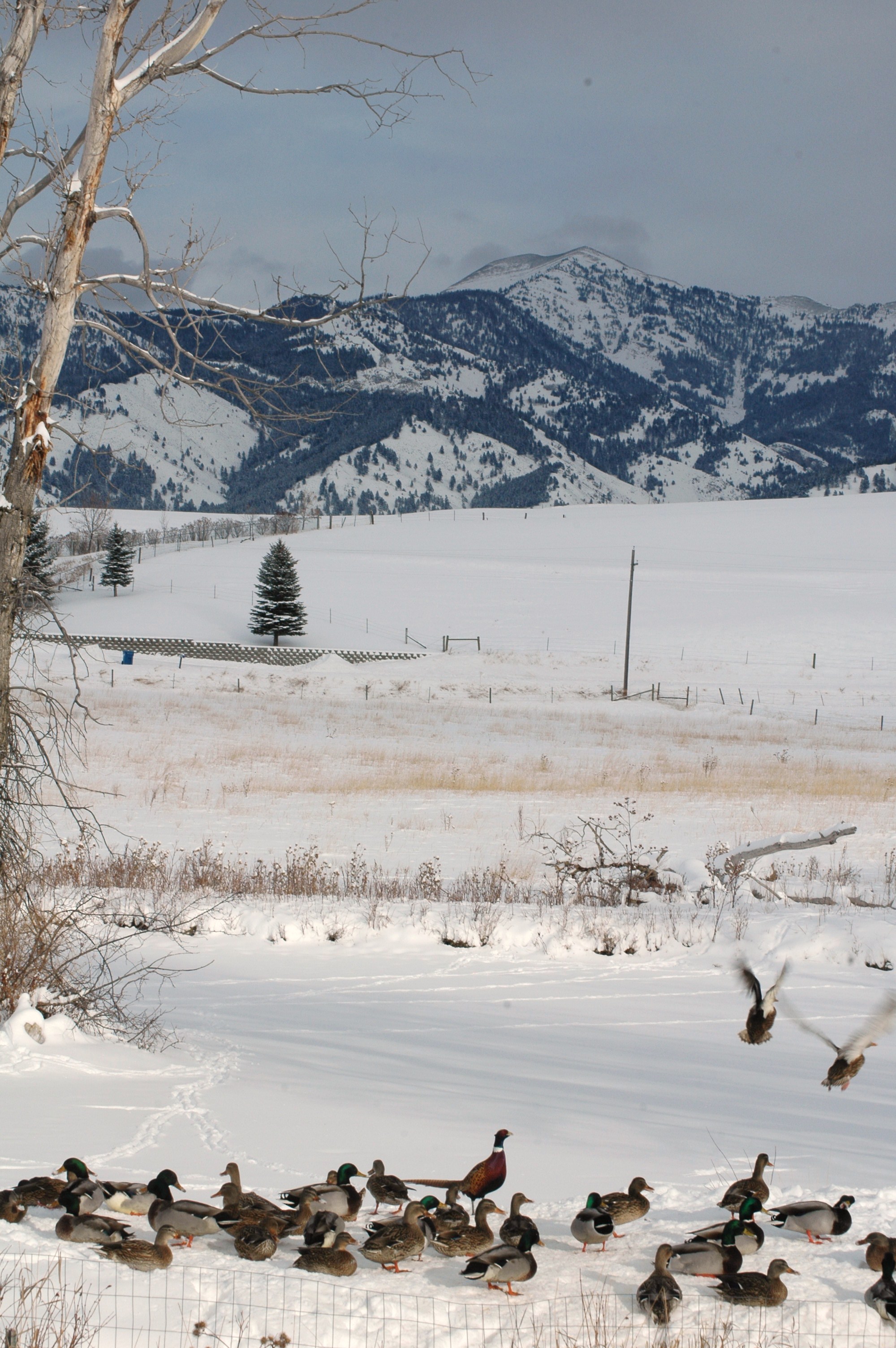 wild forest, mountains, rivers and oceans. Yet I still think of the giving season simply as Christmas. When I’m out shopping for Christmas presents, I’d rather hear a hearty “Merry Christmas” than a sheepish “happy holidays.” Instead of spreading good cheer, the latter comes across as an embarrassed, “the capitalist corporation I work for will fire me if I’m caught wishing you a Merry Christmas.”
I enjoy all kinds of Christmas music—as long as it’s joyous—and all sorts of Christmas decorations, particularly those that celebrate trees and greenery. I’m not offended by manger scenes, especially the ones that include lots of animals bedded down on nice dry straw. But the religious slant can definitely be taken too far. I get irritated when someone includes a cross in their Christmas display.
To me a cross is a symbol of cruelty, suffering and death, not peace, love and generosity. It doesn’t belong anywhere near Christmas. I’ve never believed in needing savior to achieve redemption. And I’m already painfully aware of man’s inhumanity to his fellow man (not to mention, to the pigs and turkeys, as well as the ducks and geese I hear being shot at out there as I write this—all in the spirit of holiday feasting).
Not that I think anyone’s ever coming back from anywhere, but I can identify with this memorable line in the Woody Allen film, Hannah and her Sisters, when Max Von Sydow’s character, Frederick, laments about the garbage on TV: “You see the whole culture. Nazis, deodorant salesmen, wrestlers, beauty contests, a talk show. Can you imagine the level of a mind that watches wrestling? But the worst are the fundamentalist preachers. Third grade con men telling the poor suckers that watch them that they speak with Jesus, and to please send in money. Money, money, money! If Jesus came back and saw what’s going on in his name, he’d never stop throwing up.”
I’ve never thought of December 25th as the birthday of any god-incarnate or the day that reindeer can fly or when Santa visits every house in one night. But I’ll always call it Christmas—the name for a season that ought to last all year long. It’s not just a holiday—the spirit of selfless giving should be a year-round sentiment.
Oh, and if anyone up there really is listening, all I want for Christmas is world peace for all beings— and enough freaking snow to ski on.

Nearly 7 in 10 Californians support giving terminally ill, mentally competent patients the option to access life ending drugs – yet it remains illegal.
To deny that right is to force people to suffer right up until their end, and deny them the right to choose a good death.
Add your name and tell your California lawmakers: Pass the California Death with Dignity Act and give terminally ill patients the right to compassionate aid in dying.

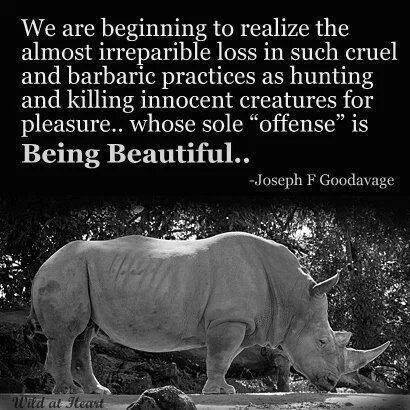
June 2014 by Marc Bekoff and Daniel Ramp
Killing and harming animals in the name of conservation is not just unethical, it is counterproductive
EARLIER this year, a hunter based in Texas paid $350,000 for the dubious privilege of being allowed to kill a male black rhino in Namibia. The rhino, Ronnie, was past reproductive age and deemed to be a danger to other wild rhinos. Profits from the hunting permit are supposed to be ploughed back into conservation in the country.
A few weeks later, keepers at Copenhagen Zoo in Denmark killed Marius, a healthy young male giraffe, publicly dissected him and fed his remains to the zoo’s carnivores because he didn’t fit into their breeding programme. Several offers to rehouse him were declined on the grounds that the facilities were unsuitable.
The same zoo later killed four healthy lions because a male lion they wanted to introduce to a female may have attacked them. Then Dählhölzli zoo in Bern, Switzerland, killed a bear cub over fears his father would kill him.
These cases made headlines and caused global outrage. But they are just the tip of the iceberg. Zoos often kill healthy animals considered surplus to their needs: around 5000 a year in Europe alone. This isn’t euthanasia, or mercy killing, but “zoothanasia”.
The killing of “surplus” animals is just one example of people making life-and-death decisions on behalf of captive and wild animals. These are difficult decisions and various criteria are used, but almost without exception human interests trump those of the non-human animals.
Often, for example, animals are harmed or killed “in the name of conservation”, or for the “good of their own (or other) species”. The result is unnecessary suffering and, commonly, a failure to achieve sustainable and morally acceptable outcomes.
Increasingly, scientists and non-scientists are looking for more compassionate solutions. Compassionate conservation, a rapidly growing movement with a guiding principle of “first do no harm”, is just such an approach. It is driven by a desire to eliminate unnecessary suffering and to prioritise animals as individuals, not just as species. It is also a route to better conservation.
Although one of us, Marc Bekoff, has been writing about the importance of individual animals in conservation for more than two decades, it took an international meeting at the University of Oxford in September 2010 for compassionate conservation to get a big push. There have since been three more meetings. NGOs are becoming interested and a Centre for Compassionate Conservation has been established at the University of Technology, Sydney, Australia.
One sign that the influence of compassionate conservation is growing is that conservationists are questioning the ethics of producing captive pandas as ambassadors for their species. These animals have no chance of living in the wild and their existence is increasingly seen as indefensible.
Biologists are also re-evaluating the merits of reintroduction projects. The reintroduction of wolves into Yellowstone National Park, for example, resulted in numerous wolves dying or being killed “for the good of other wolves”. The surviving wolves also lack protection, especially when they leave the park. As a result, scientists are concerned that the project is failing.
Other reintroduction projects are being similarly reappraised. A team at the University of Oxford assessed 199 such programmes and found potential welfare issues in two-thirds of them, the most common being mortality, disease and conflict with humans.
Urban animals also get into the mix. Marc was recently asked to apply the principles of compassionate conservation to a project in Bloomington, Indiana, which proposed to kill numerous deer even when no one knew if they were causing a problem. In Cape Peninsula, South Africa, non-lethal paintball guns are being used to reduce conflicts between baboons and humans.
Compassionate conservation is also offering solutions to previously intractable conflicts. Innumerable wolves, coyotes, dogs, foxes and dingoes are killed by livestock farmers, often by trapping or poisoning. A recent study showed that poisoning dingoes by dropping tainted meat from aeroplanes changes the dynamics of the ecosystem and reduces biodiversity.
Management of this problem is being revolutionised by the use of guard animals such as Maremma sheepdogs, donkeys and llamas. These guardians bond with the livestock and protect them, not only reducing losses but also costing considerably less than shooting programmes. Even colonies of little penguins in Australia are now protected from foxes by Maremma sheepdogs.
Compassionate conservation is also changing the way researchers tag animals. This is an integral part of conservation as it enables scientists to identify individuals and estimate population sizes. But it is often harmful or painful and can reduce the animals’ fitness, which compromises the usefulness of the data collected. More researchers are now using methods that don’t stress animals or alter their behaviour, such as unobtrusive tags or remote camera traps.
There is often conflict between those interested in animal welfare and those interested in conservation, with the latter viewing concern for the well-being of individuals as misplaced sentimentalism. It is not.
Compassion for animals isn’t incompatible with preserving biodiversity and doing the best science possible. In fact, it is a must. Mistreatment of animals often produces poor conservation outcomes and bad science. It is also immoral. Only through compassion can we advance global conservation.
This article appeared in print under the headline “Cruel to be kind?”
Marc Bekoff is professor emeritus of ecology and evolutionary biology at the University of Colorado, Boulder. He edited Ignoring Nature No More: The case for compassionate conservation (University of Chicago Press). Daniel Ramp is director of the Centre for Compassionate Conservation at the University of Technology, Sydney
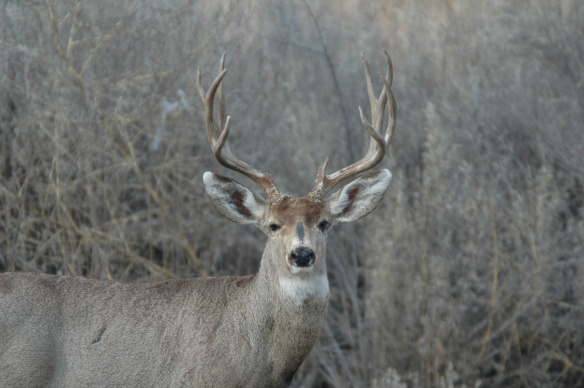
Photo Copyright Jim Robertson
What Sayeth The Wise Hunter To The Young Boy?
By Gary Yourofsky
An Animal Rights Poem from All-Creatures.org
All of God’s creatures have rights, a fact that most people don’t seem to recognize. This includes both human and non-human animals, but not all of them can speak for themselves.
What Sayeth The Wise Hunter To The Young Boy?
By Gary Yourofsky
Animals Deserve Absolute Protection Today and Tomorrow (ADAPTT)
Boy: O Wise Hunter, how can I learn to respect animals and to respect life?
Hunter: Buy a rifle and get a hunting license. Then hunt the animals down and kill them.
Boy: And that will help me attain a respect for animals and for life?
Hunter: Yes, of course it will, boy. Plus, if you go hunting with your father or your grandfather, then you can really bond with them.
Boy: But couldn’t I bond with them at a baseball game or at an amusement park?
Hunter: I guess so. But then you couldn’t kill anything.
Boy: O Wise Hunter, what happens to some of the deer during the winter?
Hunter: Well, some of the weak ones starve to death. And that’s a very cruel way to die. So – instead – hunters shoot some deer, cut off their heads for trophies, dismember their bodies and eat their flesh in order to save them from the cruelties.
Boy: But, uh, uh, how come hunters never shoot starving deer – only big, healthy ones?
Hunter: Uh, uh, uh, boy. Now you just keep quiet about that.
Boy: And another thing, Wise One, if hunters were really concerned about starving animals, wouldn’t they feed them?
Hunter: Let me get this right, boy. You’re saying that we should be feeding starving deer – instead of killing them? But…
Boy: Is it true, Wise Hunter, that deer-car accidents have more than tripled over the past 30 years?
Hunter: Well, uh, yeah.
Boy: But I thought hunters killed deer in order to reduce the herd so deer-car accidents would decrease.
Hunter: Well, uh, you sure ask a lot of questions, boy.
Boy: O Wise Hunter, how come the Department of Natural Resources always promotes the killing of animals?
Hunter: Well, just between you and me, the hunting community and the DNR are allies. You know, real good buddies.
Boy: You mean most of the people who work for the DNR – hunt?
Hunter: Yes, of course, boy. And those fees from the hunting licenses – around 90 percent of that money goes toward the hiring of DNR officers and the marketing of programs to recruit young people, like yourself, into the hunting community.
Boy: What about the commission that oversees the DNR in Michigan?
Hunter: You mean, the Natural Resources Commission?
Boy: Yes, Wise Hunter.
Hunter: Well, uh, eight of the nine commissioners ‘live to hunt and hunt to live!’
Boy: Ohhh. You mean, people who hunt make decisions about the fate of wild animals?
Hunter: Now, now, boy. You just keep that bit of information to yourself.
Boy: Would hunters ever try to conserve some of the land if they couldn’t hunt on it?
Hunter: Let me get this right, boy. You mean, we should just conserve some of the land and some of the animals that live on that land for the heck of it – with no killing. Uh, that would be a pretty kind gesture of humanity.
Boy: I know, Wise Hunter, I know.
Hunter: Well, uhhh…
Boy: O Wise Hunter, how can I help advance the, uh, sport of hunting?
Hunter: Tell people to have compassion for hunters.
Boy: You mean, tell people to have compassion for those who have no compassion?
Hunter: Yes, boy.
Boy: But, uh, Wise Hunter, these things you say make no sense.
Hunter: I know, boy, I know. But if we say these things enough, the public will eventually believe us and then they will make sense.
Boy: Ohhh!
Watch The Best Speech You Will Ever Hear – An extraordinary presentation on veganism by Gary Yourofsky
“[After almost being pressured by other boys to sling rocks at birds.] From that day onward I took courage to emancipate myself from the fear of men, and whenever my inner convictions were at stake I let other people’s opinions weigh less with me than they had done previously. I tried also to unlearn my former dread of being laughed at by my school-fellows. This early influence upon me of the commandment not to kill or to torture other creatures is the great experience of my youth. By the side of that all others are insignificant.” ~ Dr. Albert Schweitzer
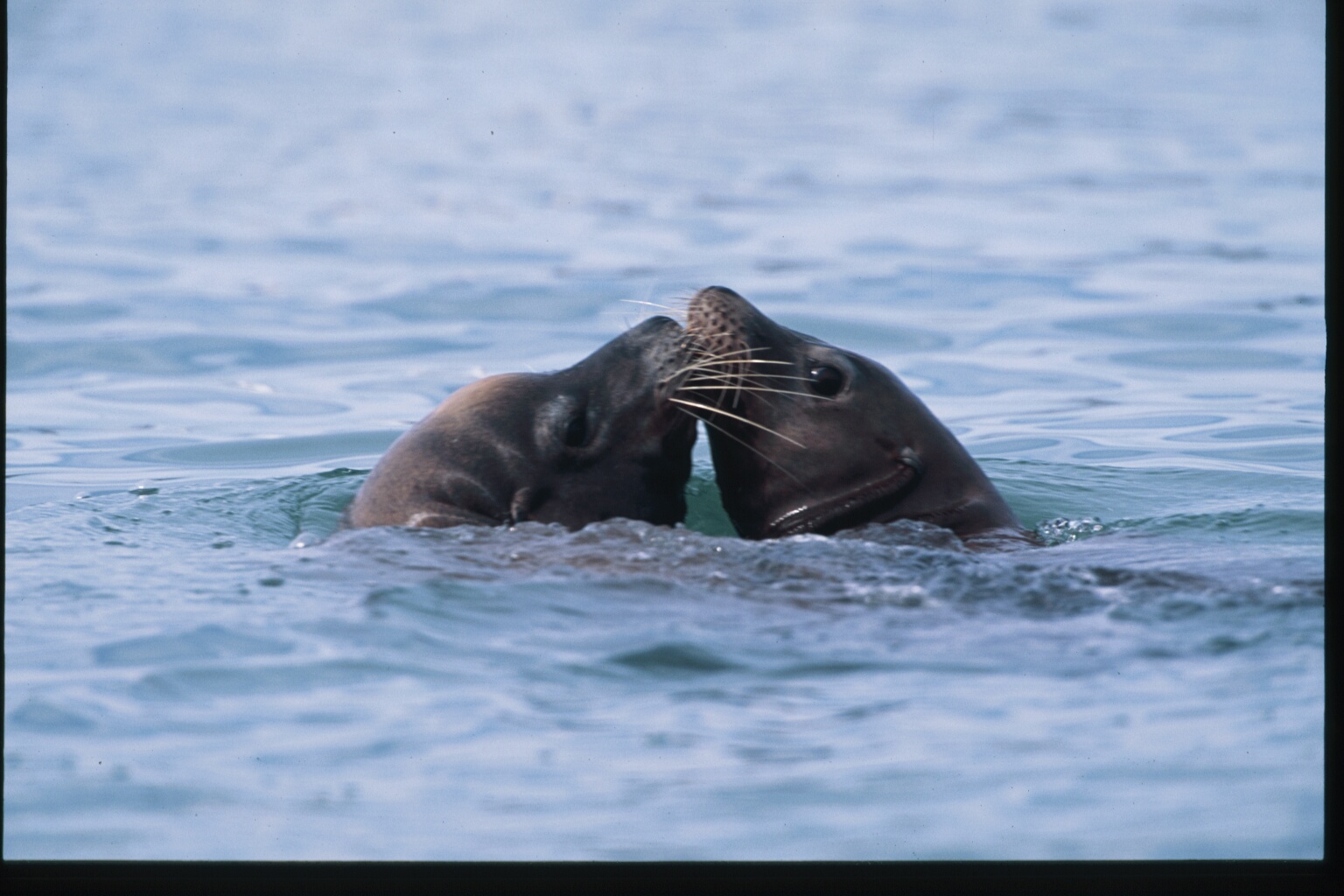
Photo Copyright Jim Robertson
http://www.wired.com/wiredscience/2014/02/mute-swan-controversy/all/

In the menagerie of human mythology, mute swans occupy a special place. Across millennia they’ve symbolized transformation and devotion, light and beauty. Now a plan to eradicate the birds from New York has made them symbols of something else: a bitter and very modern environmental controversy.
The debate swirls around a host of prickly questions. Are mute swans rapacious destroyers of wetlands, or unfairly demonized because they’re not native to this area? Are some species in a given place more valuable than others, and why? Which deserves more protection, the animals that inhabit our landscapes, or the ones that might thrive in their absence? The answers depend on whom you ask.
“Mute swans always attract controversy, and tend to polarize people. And, as with most things, the truth probably lies somewhere in the middle,” said waterfowl researcher Chris Elphick of the University of Connecticut. “The real issue is that there are no simple answers.”
Mute swans are not native to North America. New York’s population descended from escapees imported for ornamental gardens in the late 1800s. Weighing up to 40 pounds apiece, they can eat 10 pounds of aquatic vegetation daily. In their absence, that food might be eaten by native wildlife. Mute swans are also aggressive during nesting season, and have been blamed for attacking ducks and pushing out other waterfowl.
Late in January, New York’s Department of Environmental Conservation issued a draft of a plan to reduce New York’s wild mute swan population to zero by 2025. Nests and eggs would be destroyed; a few adults might be sterilized or permitted to live on in captivity, but the rest would be killed.
“They are large, destructive feeding birds, and as much as they are beautiful, they can wreak havoc on the underwater habitat that a lot of other fish and wildlife depend on,” said Bryan Swift, a DEC waterfowl specialist and lead author of the plan. “We have an obligation to sustain native species. The question then is, ‘At what level?’ But in the case of introduced species, I don’t think we have that same obligation.”
That’s one way of looking at it. “We have so little opportunity to experience wildlife in New York City,” said David Karopkin, director of animal advocacy group GooseWatch NYC, “and now they’re targeting the most beautiful animals that we do have. The fact of the matter is, they’re part of our community.”
Were mute swans not so beautiful, the plan might not have caused much outcry. But unlike other animals tagged as invasive and pestilential — like Burmese pythons, feral hogs, and snakehead fish — mute swans are widely beloved. For people who live near wetlands around Long Island and the Hudson Valley, where most of New York’s mute swans live, they’re also a part of everyday life.
To their defenders, the fact that mute swans are non-native carries little weight. As one Queens resident told the New York Times, “If they were born here, they should be considered native by now.” And some think the swans’ heritage is being held arbitrarily against them.
“If Mute Swans were native to North America, they would not be viewed negatively by state wildlife agencies,” said ornithologist Don Heintzelman, an author of bird-watching field guides who is working with Friends of Animals, a New York-based animal advocacy group, to oppose the plan. Complaints that that mute swans harm other wildlife “are greatly overblown,” he said.
Over the last few years, some scientists have argued that non-native species are unfairly persecuted, their negative effects too frequently assumed rather than conclusively demonstrated. In fact, the evidence for ecological harm by mute swans is somewhat mixed.
In a review of mute swan impacts on wetlands published this month, French ecologists said the swans sometimes attacked other birds — but sometimes they did not. Likewise, their feeding habits sometimes damaged aquatic plant communities, but not always.
“The consequences of mute swan presence may strongly differ from an ecological context to another, so that no simple rule of thumb can be provided,” wrote the researchers. They did, however, say that the risk of mute swans reproducing prolifically and out-competing other species could justify their eradication from North America “as a safety measure.”
Swan defenders say the need for a safety measure is far from clear. In Maryland’s Chesapeake Bay, where a controversial mute swan eradication program was enacted in 2003 to help restore aquatic vegetation, the U.S. Fish and Wildlife Service previously said that swans had likely done little harm to seagrass beds.
“That’s a good example of how the science on this is incomplete,” said Brian Shapiro, New York state director of the Humane Society of the United States. Whatever effects New York’s 2,200 swans may have, he said, is a drop in the bucket compared to human-generated pollution and habitat destruction.
But scientists argue that the effects would be much more severe if mute swan populations grow as anticipated, and more difficult to control. “The dilemma wildlife managers face is that if they wait until there is no doubt that native species are being adversely affected, it will be much, much harder to do anything about it,” said Elphick. And although human impacts on habitat and native wildlife are undoubtedly greater, mute swans could consume a disproportionate amount of resources.
“Introduced species are a major cause of extinction and biodiversity loss, and the concern is that if they’re not controlled then we will see the world’s biota become much more homogenous,” Elphick said. “Mute swans are just one example of many.”
Mute swans’ lives are not the only ones that matter, said Michael Schummer, a waterfowl ecologist at the State University of New York at Oswego. People care so deeply about mute swans because they’re aware of them — but if they paid more attention to birds they impact, they might care about those as well.
Migratory tundra swans, said Schummer, which fly every year between the Arctic and southeastern United States, rely on those same wetlands. If they land after a 1,000-mile flight and can’t find a meal, it’s a disaster. “But maybe people don’t recognize that, or even realize that there’s a native swan that migrates,” Schummer said.
Swift noted that two dozen other duck species share the mute swans’ habitat, yet people are frequently unaware of them. And unlike migratory birds, mute swans stay in the same locale year-round, feeding through the growing season. “It’s like pulling up corn every time it sprouts,” Swift said. “It has a much more lasting and damaging effect.”
“I value the long-term stability of the ecosystem for the individuals that live within it,” said Schummer, who supports the DEC plan. “When that is threatened by one species, and the well-being of the collective is at risk, then something needs to be done.”
Given these competing and deeply-entrenched views, a compromise seems unlikely. Yet there may yet be a middle ground, says behavioral ecologist Marc Bekoff, a pioneer of an emerging discipline called “compassionate conservation,” which tries to balance species- and population-level considerations with the well-being of individual animals.
“The take of compassionate conservation is that individuals count. Our motto is, ‘Do no harm.’ In this case, it would be worth pursuing every single possible non-lethal alternative,” said Bekoff. Rather than killing mute swans outright, as is happening in Maryland, wildlife managers could try to prevent eggs from hatching by shaking them or spraying them with oil. Swans might also be sterilized.
These are just possibilities, said Bekoff. What matters is that people try to find alternatives to killing. In the end, non-lethal measures may prove to be the only control palatable to a public that’s come to adore swans, whatever their impacts.
Of course, non-lethal methods tend to be more expensive than killing. Volunteer assistance from the public may be required. Shapiro said the Humane Society would be open to helping. “We want there to be a focus on non-lethal management,” he said, noting that Humane Society volunteers have helped to non-lethally control Canada geese by scaring them with dogs or shaking their eggs. “We’d like to have a dialogue on this.”
Swift said he’s open to such a discussion, and would welcome the help. “There’s definitely room to work on this issue,” he said. Following public outcry, he’s also considered treating New York’s mute swan populations differently. Those around Lake Ontario, which are growing by about 13 percent every year, might be eliminated, while Long Island’s swans could be managed to balance their impacts with public sentiment.
“I can’t speak for the whole agency,” Swift said, “but I’m certainly going to entertain that idea and discuss it with other people involved in management.”
New York’s DEC is accepting public comment on the plan until February 21st. If things go their way, those non-native swans might just become fully naturalized ecological citizens.

Yesterday a long-time friend and his wife stopped by for a visit on their way to a weekend at their family’s getaway cabin. I hadn’t seen him for years, so in catching up on what’s new I of course mentioned the release of Exposing the Big Game. I had previously sent him some excerpts so was caught off-guard when he asked, “What is the premise of your book?” Knowing that he is a fisherman (we fished together back in Boy Scouts before I recognized that fish are sentient and have the right to be left alone), that he dabbled in duck hunting and his father was an avid sport hunter, I geared my answer toward what I thought he would be equipped to comprehend, given his current position along the compassion continuum. I said frankly that the book is pro-wildlife, taking the animals’ side over their exploiters.
Since they were dinner guests (my wife served vegan Boca burgers, which they politely accepted—and eventually finished) I didn’t want to spoil the atmosphere of a friendly get-together, so I went a little easy on him and spared him the full-frontal assault he’ll be subjected to when he reads the book.
Here’s what I will say to the next person who asks, “What is the premise for your book?”
“Forget hunters’ feeble rationalizations and trust your gut feelings: making sport of killing is not healthy human behavior.”


 Exposing the Big Game