[Keep those barf bags handy]

How science-based hunting is protecting Utah wildlife

By Emily LeFevre

October 24, 2024

2021-03-24-buck-deer.jpeg
A Utah buck deer in the wild. The Utah Division of Wildlife Resources uses GPS tracking to monitor deer populations throughout the year. (Utah Division of Wildlife Resources)

As deer hunting season draws to a close, the Utah Division of Wildlife Services is optimistic about the future of hunting — and its impact on Utah’s environment.

Since 2019, Utah’s struggling deer populations prompted state limitations on the number of issued hunting permits. This year, however, the state released an increase in permits for the first time in six years.

“When populations decline due to factors like a severe winter or prolonged drought — we adjust permit numbers to account for those impacts,” Dax Mangus, Big Game Coordinator for the Utah Division of Wildlife, said. “When populations are growing and the number of excess males in the population increases, we will recommend increased hunting permit numbers.”

While deer populations are mostly regulated by natural predators, many of Utah’s wildlife species are dependent on hunting to keep them in check, Mangus said. Doing so provides efficient, targeted relief to overpopulated habitats and over-foraged plants.

rifle.jpeg
A Utah hunter holds a rifle. The Utah Division of Wildlife Resources has partnered with Cabela’s, Bass Pro Shops and the International Cartridge Corporation to provide hunters vouchers with lead-free bullets. (Utah Division of Wildlife Resources)

“It’s a win-win in many regards as hunters are happy to pay for the chance to pursue big game animals with family and friends to harvest organic meat, while at the same time helping keep populations at a healthy level on the landscape,” Mangus said.

When done properly, hunting is a positive practice with few environmental detriments, Mangus said. Science-based practices, such as GPS systems and data analysis, help game wardens create management and preservation plans.

The Division of Wildlife Services also educates hunters about proper treatment and disposal of animal remains to avoid perpetuating disease.

This September, the division launched the Hunters Helping Condors program to incentivize and educate hunters across the state.

“Over the years, many of these enormous rare birds have been inadvertently sickened and killed by lead poisoning. Lead poisoning is, in fact, their leading cause of death,” the program website said. 

To encourage hunters to limit lead use, the Division of Wildlife Services partnered with the International Cartridge Corporation, Bass Pro Shops and Cabela’s to extend vouchers for lead-free bullets, according to the website.

While the Division of Wildlife Services encourages positive change, it also responds to harmful practices, Mangus said. Catching and prosecuting poachers, enforcing game laws, and educating the public are all part of this effort.

Additional measures, such as excise taxes on firearms through the Pittman-Robertson Wildlife Restoration Act and hunting-based conservation fundraisers throughout the state, support wildlife research and environment preservation projects, Mangus said. Several programs are designed for individuals.

2024-10-08-elk-rut-near-panguitch-lake.jpeg
An elk bull stands near Panguitch Lake, UT. Elk and deer hunting seasons overlap in the autumn. (Utah Division of Wildlife Resources)

“Hunters pay for wildlife disease management efforts, wildlife capture and transplant projects and contribute more money directly to habitat improvement projects than other natural resource user groups,” Mangus said.

Mangus believes these projects are an effort to not only preserve the environment but the future of hunting itself.

“For many hunters, their top priority is the sustainable management of wildlife so that they can continue to enjoy it the rest of their life and pass that enjoyment along to their posterity,” Mangus said. “The recruitment and retention of younger hunters is something that hunters regularly focus on and work towards.”

Deer season closes in November and overlaps with several other hunting sessions, including elk and bobcat. Mangus — and the Division of Wildlife Services as a whole— hope hunters will be sensitive advocates to the public and participate in ongoing education efforts both within and outside of the hunting community.

“We want to pass along our wildlife heritage to future generations,” the Division of Wildlife Services website said, “and we want it to be in better shape than when it was passed to us.”

Collapsing wildlife populations near ‘points of no return’, report warns

As average population falls reach 95% in some regions, experts call for urgent action but insist ‘nature can recover’

The age of extinction is supported by

theguardian.org

About this content

Patrick GreenfieldThu 10 Oct 2024 02.26 EDTShare

Global wildlife populations have plunged by an average of 73% in 50 years, a new scientific assessment has found, as humans continue to push ecosystems to the brink of collapse.

Latin America and the Caribbean recorded the steepest average declines in recorded wildlife populations, with a 95% fall, according to the WWF and the Zoological Society of London’s (ZSL) biennial Living Planet report. They were followed by Africa with 76%, and Asia and the Pacific at 60%. Europe and North America recorded comparatively lower falls of 35% and 39% respectively since 1970.

Scientists said this was explained by much larger declines in wildlife populations in Europe and North America before 1970 that were now being replicated in other parts of the world. They warned that the loss could quicken in future years as global heating accelerates, triggered by tipping points in the Amazon rainforest, Arctic and marine ecosystems, which could have catastrophic consequences for nature and human society.

symbol

00:00

03:12

Read More

Matthew Gould, ZSL’s chief executive, said the report’s message was clear: “We are dangerously close to tipping points for nature loss and climate change. But we know nature can recover, given the opportunity, and that we still have the chance to act.”https://interactive.guim.co.uk/uploader/embed/2024/10/archive-zip/giv-4559jCCOm61dRRFw/

The figures, known as the Living Planet Index, are made up of almost 35,000 population trends from 5,495 mammals, birds, fish, amphibians and reptiles species around the world, and have become one of the leading indicators of the global state of wildlife populations. In recent years, the metric has faced criticism for potentially overestimating wildlife declines.

The index is weighted in favour of data from Africa and Latin America, which have suffered larger declines but have far less reliable information about populations. This has had the effect of driving a dramatic top line of global collapse despite information from Europe and North America showing less dramatic falls.

Hannah Wauchope, an ecology lecturer at Edinburgh University, said: “The weighting of the Living Planet Index is imperfect, but until we have systematic sampling of biodiversity worldwide, some form of weighting will be necessary. What we do know is that as habitat destruction and other threats to biodiversity continue, there will continue to be declines.”

Critics question the mathematical soundness of the index’s approach, but acknowledge that other indicators also show major declines in the state of many wildlife populations around the world.

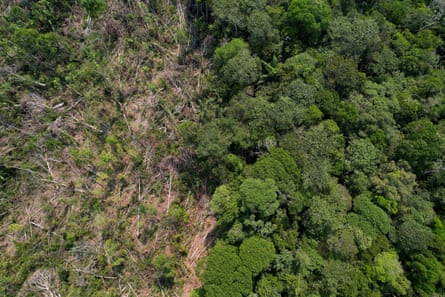
Aerial shot of he border of rainforest and clearcut land
Brazilian rainforest in Humaitá. The report identifies land-use change driven by agriculture as the most important cause of the fall in wildlife populations. Photograph: Adriano Machado/Reuters

In a critique of the index published by Springer Nature in June, scientists said it “suffers from several mathematical and statistical issues, leading to a bias towards an apparent decrease even for balanced populations”.

They continued: “This does not mean that in reality there is no overall decrease in vertebrate populations [but the] current phase of the Anthropocene [epoch] is characterised by more complex changes than … simple disappearance.”

The IUCN’s Red List, which has assessed the health of more than 160,000 plant and animal species, has found that almost a third are at risk of extinction. Of those assessed, 41% of amphibians, 26% of mammals and 34% of conifer trees are at risk of disappearing.

The index has been published days ahead of the Cop16 biodiversity summit in Cali, Colombia, where countries will meet for the first time since agreeing on a set of international targets to halt the freefall of life on Earth. Governments have never met a single biodiversity target in the history of UN agreements and scientists are urging world leaders to make sure this decade is different.

Susana Muhamad, Cop16 president and Colombia’s environment minister, said: “We must listen to science and take action to avoid collapse.

“Globally, we are reaching points of no return and irreversibly affecting the planet’s life-support systems. We are seeing the effects of deforestation and the transformation of natural ecosystems, intensive land use and climate change.

“The world is witnessing the mass bleaching of coral reefs, the loss of tropical forests, the collapse of polar ice caps and serious changes to the water cycle, the foundation of life on our planet,” she said.

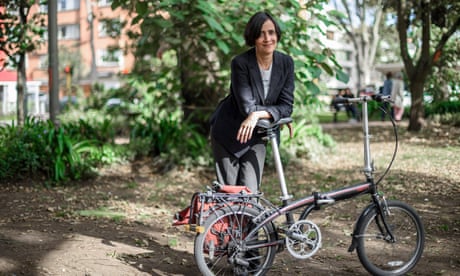
Susana Muhamad Rozo 001 in Bogota, Colombia, June 2022

Land-use change was the most important driver of the fall in wildlife populations as agricultural frontiers expanded, often at the expense of ecosystems such as tropical rainforests. Mike Barrett, director of science and conservation at WWF-UK, said countries such as the UK were driving the destruction by continuing to import food and livestock feed grown on previously wild ecosystems.

“The data that we’ve got shows that the loss was driven by a fragmentation of natural habitats. What we are seeing through the figures is an indicator of a more profound change that is going on in our natural ecosystems … they are losing their resilience to external shocks and change. We are now superimposing climate change on these already degraded habitats,” said Barrett.

“I have been involved in writing these reports for 10 years and, in writing this one, it was difficult. I was shocked,” he said.

SBA Police arrest three in connection with bird-trapping

Sba Bird Trapping

Relevant News

SBA Police arrest three in connection with bird-trapping

https://in-cyprus.philenews.com/local/sba-police-arrest-three-in-connection-with-bird-trapping/

Three men were arrested in the Dhekelia area on Monday morning after a Sovereign Base Area Police anti-bird trapping raid discovered them in an orchard using active mist nets.

During the raid, between the villages of Ormidhia and Xylophagou, the dedicated Bird Trapping Action Team working alongside the Committee Against Bird Slaughter, released 69 live Ambelopoulia (Black Caps) which had been snared in three mist nets.

The police have also confirmed that a bird imitating device used to attract migrating Ambelopoulia was seized, along with three loudspeakers, 100 metres of electric cabling, one car battery and a vehicle used by the men.

All three are from the Xylophagou area and police are now in the process of tracing the owner of the orchard used for the crime.

Sergeant Yiannis Louca, who ran the operation, said the men are now all facing prosecution for their crimes.

He explained: “Firstly, this is a really good result and sends out a very strong message that despite our success in heavily reducing this crime over the years, we remain committed.

“We are still investigating this crime but the men will face prosecution in the SBA Court as we operate a zero-tolerance policy on bird trapping.”

Inspector Fanos Christodoulou, who oversees the team, warned trappers his officers were now better resourced and more prepared than ever before.

He said: “We have assembled a team of 10, full of experience with officers that are keen to make a difference in tackling this crime.

“We will have the capacity to call on up to 10 members of the military to assist us in our operations when working on military land and on top of that, we will once again work very closely with Bird Life Cyprus and CABS to combat bird trapping.

“As always, we will continue to develop our technology, with drones, hidden cameras and any other modern means of detection.”

Bt1

Killing the myth of hunting as conservation

http://www.all-creatures.org/articles/ar-myth-hunting-conservation.html

by Fran Silverman, FOA Friends of Animals
March 2018

The Trump administration is making it easier for Americans to go to Africa, shoot elephants and lions and bring their body parts home as trophies to mount on walls – all in the name of conservation….

Hunter supporters use unscientific bear sightings to inflate numbers and livestock conflicts to scare the public to justify bear hunting.

elephant and calf
Image from Memories of Elephants

If it sounds ridiculous, it likely is. So say this out loud and tell me how it sounds.

Shooting endangered and threatened species will help save them.

Here’s another one.

Hunters are helping keep you safe by killing black bears.

In honor of National Wildlife Week, let’s parse these statements.

Supporters of black bear hunts assert that the bears are a nuisance at best and a safety hazard at their worst. They point to unscientific bear sightings to inflate numbers and livestock conflicts to scare the public. Killing them will solve this, they say. And the hunters then get to take home the bears to mount or use as rugs. Nice reward for saving all of us.

On a national level, the Trump administration is making it easier for Americans to go to Africa, shoot elephants and lions and bring their body parts home as trophies to mount on walls – all in the name of conservation.

The thing is, the science doesn’t back any of this up. This month a new study published in Science Advances found issues with the science cited in the “North American Model of Wildlife Conservation,” which guides hunting policies. The study found that what counts for science is rarely defined. In fact, a majority of the science in management plans surveyed — 60 percent — contained fewer than half of criteria for the fundamental hallmarks of science, which include measurable objectives, evidence, transparency and independent review. The report reviewed 62 U.S. state and Canadian provincial and territorial agencies across 667 species management systems.

“These results raise doubt about the purported scientific basis of hunt management across the U.S. and Canada,’’ it concluded.

The claims of hunting as conservation of endangered and threatened species also don’t stand up to scientific scrutiny. There aren’t any documented, peer-reviewed studies that show that lawful hunting does not overall disadvantage the species being hunted. Emerging studies, in fact, indicate that legal hunting can increase demand, promote black-market trade of sport-hunted animals and reduce the stigma associated with killing wildlife.

The African elephant population has plummeted by 30 percent in seven years, with just 350,000 left in the world where once there were millions. The population of lions has declined by 42 percent, with just about 20,000 left. Additionally, a new study by Duke University found that poaching and habitat loss have reduced forest elephant populations in Central Africa by 63 percent since 2001.

Yet, the U.S. Fish and Wildlife Service announced it was lifting a ban on trophies from several African nations and will allow them on a case-by-case basis. This action, coupled with the Department of Interior’s creation of an International Wildlife Conservation Council comprised of hunting industry representatives whose stated goal is to advise the agency on the benefits of international hunting, removing barriers to the importation of trophy-hunted animals, and reverse suspensions and bans on trade of wildlife, sends the message that the only way to save these majestic creatures is to make sure it’s easier to shoot them to death.

On a local level, here in my home state of Connecticut where FoA is headquartered, I listened intently as supporters of a bill to kill 5 percent of the black bear population in the lovely Litchfield County region insisted it was necessary to prevent bear-human conflict. Bears are killing livestock! Bears are getting into garbage cans! Knocking over bird feeders! Scaring hikers on trails! Lions and tigers and bears. Oh my!

I’m not making light of a bear encounter. They are formidable. But the science and the math for a shoot-first approach doesn’t add up. First, bears are shy and attacks are more associated with human behavior than the population of bears, studies show. To ward them off if you are a hiker, wear bear bells, carry bear spray. Worried about your backyard farm animals? Install an electric fence. Certainly, don’t feed bears, keep your doors shut and remove bird feeders in the spring.

The truth is black bear attacks are super rare. In the past 20 years, there’s been 12 fatal black bear attacks in the U.S, yet thousands of black bears have been slaughtered in legal hunts. More than 4,000 bears were killed in New Jersey alone since bear hunts were legalized there under Governor’s Christie’s reign before the new governor halted them. In New York, more than 1,000 black bears were killed in hunts last year.

Yet, along with that news in New York about the success of its 2017 bear hunt, there was this item buried in a press release from the N.Y. Department of Environmental Conservation: 19 humans were injured by hunters last year and one was fatality shot, a woman who was just walking her dogs in the woods by her house. In fact, between 2011-2017, there’s been 14 humans killed by hunters and 131 injured in New York. In Connecticut, hunters have killed one human and injured 13 between 2011-2016. The number of bear fatalities in both these states? Zero.

The more I dug into fatal black bear attacks verses fatal hunting incidents, the more alarmed I became. In just six states I reviewed where bear hunting is allowed or being considered, there have been 500 humans injured by hunters and 63 killed. The stories are sad. People who were fishing when they got shot by an errant hunter’s bullet. Hunters shooting each other and themselves. And there was Rosemary Billquist, a 43-year-old hospice volunteer who was the woman from upstate New York shot dead last fall by her neighbor.

When FoA testified against a black bear hunt in Connecticut, pointing out the hundreds of injuries and startling number of humans killed by hunters, dispelling the myth that bear sightings at all indicate bear populations and showing there is a weak correlation between the number of bears in a region and bear-human conflict, the majority of lawmakers on the state’s environment committee saw the light and voted down the hunt.

But black bear hunts are still legal in a majority of states. It’s estimated that 40,000-50,000 black bears have been killed in hunts. But the fact is the number of fatal black bear attacks are rare.

Human hunting related deaths and injuries – not so rare.

The number of U.S. residents who hunt is dwindling every year. Yet, the damage they are doing to wildlife and other humans is astounding.

Elephants are becoming rare. So are lions. Shooting them to hang on walls doesn’t conserve them.

The math is the math and the science is the science.


Friends of Animals’ Communications Director Fran Silverman oversees FoA’s public affairs and publications. Her previous experience includes editor of a national nonprofit consumer advocacy site, staff writer and editor positions and contributing writer for The New York Times.


Return to Animal Rights Articles

Camera-trap research paves the way for global monitoring networks

Hunter-Funded Wildlife Agency Quietly Announced Before BC Election

Steve Thomson, Former Minister of Forests, Lands and Natural Resource Operations announcing the new wildlife agency proposal on March 22, 2017.

By Judith Lavoie.  This article is from DeSmog Canada.

A plan to form a new, independent wildlife management agency in B.C., which would relieve the provincial government from managing contentious wildlife issues such as grizzly, wolf and caribou populations, is generating anxiety among some conservation groups who fear the structure of the new program could prioritize the interests of hunters over wildlife.

The proposal for the new agency, first announced in March, was scant on details, but Steve Thomson, then minister of Forests, Lands and Natural Resource Operations, set a fall start-up date and set aside $200,000 for consultations with conservation and hunting groups.

“Government is afraid to manage wolves, for example, or afraid to manage grizzly bears in some cases because of the politics of that,” then energy and mines minister Bill Bennett, an avid hunter and supporter of the controversial grizzly bear trophy hunt, told an East Kootenay radio station.

“Hopefully an agency that is separate from government can make decisions that are in the best long-term interest of wildlife and just forget about the politics and do what is best for the animals,” Bennett said.

According to Thomson, the agency would receive an initial government investment of $5 million and be further funded by hunting licence revenues to the tune of $9 to $10 million annually — money which currently goes into general revenue.

The plan was welcomed by hunters as a way to increase funding for cash-strapped conservation and management programs

The NDP previously tabled a bill calling for dedicated conservation funding, so, in the flurry of pre-election announcements, the plan didn’t get much attention, even though Thomson was flanked by representatives of pro-hunting groups as he made the announcement.

Then, days before the election, five of B.C.’s pro-hunting and trapping organizations — B.C. Wildlife Federation, Guide Outfitters Association of B.C, Wild Sheep Society of B.C, Wildlife Stewardship Council and the B.C. Trappers Association — announced they had signed a memorandum of understanding to work together.

“The collaborative efforts of our five organizations will help ensure the province follows through on its commitment to enhance wildlife management,” Jim Glaicair, president of the 50,000-member B.C. Wildlife Federation, said in a news release.

The organizations emphasized that the MOU was sparked by concern about the ongoing decline of wildlife.

“This is a great opportunity for our organizations to work together for the betterment of wildlife in the province,” said Michael Schneider, Guide Outfitters Association of B.C president.

Hunter-Funded Wildlife Management ‘Huge Step Backwards’

But to other groups and especially those waiting to see whether the new government will stop the grizzly hunt, the MOU appeared to indicate a pro-hunting team lining up to take over the new agency.

Alan Burger, president of B.C. Nature, which represents 53 clubs, with a total of more than 6,000 members, said in an interview that it is a major concern that the only people rooting for the new agency appear to be hunters and trappers.

“If they can dominate an agency like this it is going to be a huge step backwards,” Burger told DeSmog Canada.

“The last thing we need is greater emphasis on big game. We need to focus our attention on the ecosystem,” he said, questioning how the proposal could get so far without consultation.

“Hunting and fishing licences are an important source of revenue and B.C. Nature agrees that there should be a greater share contributed to wildlife management,” Burger said.

“But there is much greater input to the B.C. economy from the non-consumptive users of wildlife — the tourism and wildlife watching industry, people selling binoculars, camera gear, field guides, outdoor gear and, most importantly, the vast majority of British Columbians that spend money travelling and camping to simply enjoy seeing animals alive in the wild,” he said.

Valhalla Wilderness Society has come out swinging against the proposed agency, calling it a thinly disguised attempt by the B.C. government to privatize wildlife management and hand over responsibility to hunters, trappers and guide outfitters.

Funding for wildlife management should not be contingent on hunting licence revenue or special interest groups, a news release from Valhalla says.

“Notwithstanding the poor job the B.C. government has been doing in growing wildlife, wildlife should be managed by government,” it says. “The above-mentioned special interest groups lack the technical expertise to make wildlife decisions based on scientific evidence and are even unwilling to apply the precautionary principle, which, in the face of climate change, is needed more than ever.”

B.C.Wildlife Conservation Funds Desperately Needed

One lesson from the growing controversy is that conservation groups need to work together and find out whether a new model could provide desperately needed funds for conservation, said Val Murray of Justice for B.C. Grizzlies.

“We need to see animals as individuals within communities rather than numbers within a natural resource group,” she said.

“We need a cross-discipline panel of conservation biologists and scientists to bridge the values of consumptive and non-consumptive residents. There is no shortage of good science — what we lack is proper funding to implement what we know, plus good listening skills to apply the ideas.”

Letters asking for more information and setting out objections to the proposal have been sent to all three party leaders, but, until the outcome of the election is clarified, none are willing to jump into the fray.

A spokeswoman for the Forests, Lands and Natural Resource Operations Ministry said the previous government was looking at similar model to the agreement between the province and Freshwater Fisheries Society of B.C where revenue from fishing licences goes into research, conservation and education programs.

The intention is to hold public consultations before decisions are made, she said.

From DeSmog Canada, by way of the Rossland Telegraph.

http://rosslandtelegraph.com/news/hunter-funded-wildlife-agency-quietly-announced-bc-election-44589#.WVOD0jOZNmB

How do Trump and Clinton differ on conservation?

How will Trump act on conservation and public lands?

Presidential campaigns offer a sneak peek into natural resource policies.

While speaking at a media summit last week organized by the Theodore Roosevelt Conservation Partnership in Fort Collins, Colorado, Trump Jr., an avid hunter and angler, defended keeping federal lands managed by the government and open to the public. He also reiterated his father’s strong support for U.S. energy development, proposed some corporate sponsorships in national parks, questioned humans’ role in climate change, and criticized Hillary Clinton for “pandering” to hunters with “phoniness.” U.S. Rep. Mike Thompson, D-California, spoke for Clinton’s campaign at the summit a day later, and provided plenty of contrast between the presidential candidates.

Trump Jr. has served as an adviser to his father on natural-resources issues and has even joked with family that, should his father win, he’d like to be Secretary of the Interior, overseeing national parks and millions of acres of federal public lands. In Fort Collins, he said he’s not “the policy guy,” but repeated his frequent pledge to be a “loud voice” for preserving public lands access for sportsmen. Trump Jr. also mocked some gun-control measures, such as ammunition limits, boasting, “I have a thousand rounds of ammunition in my vehicle almost at all times because it’s called two bricks of .22 … You know, I’ll blow…through that with my kids on a weekend.”

img_8085-jpg
Donald Trump Jr. speaks with Field & Stream editor Mike Toth at the Theodore Roosevelt Conservation Partnership Western Media Summit, June 23, 2016.
Joshua Zaffos

Trump, the presumptive Republican candidate, partly distinguished himself among other GOP candidates during primary season—not that that was a problem for the New York real-estate developer—by balking at the transfer of federal public lands to states or counties. While Ted Cruz, Marco Rubio and others expressed support for public-land transfers, kowtowing to some Western conservatives, Trump rejected the idea. Speaking to Field & Stream in January, Trump said: “I don’t like the idea because I want to keep the lands great, and you don’t know what the state is going to do. I mean, are they going to sell if they get into a little bit of trouble? And I don’t think it’s something that should be sold. We have to be great stewards of this land. This is magnificent land.”

Trump Jr. reaffirmed that stance, but also supported more input for states as long as those efforts don’t jeopardize public access.

Trump, however, did attack the Bureau of Land Management and its “draconian rule,” writing in an op-ed in the Reno Gazette-Journal, also in January: “The BLM controls over 85 percent of the land in Nevada. In the rural areas, those who for decades have had access to public lands for ranching, mining, logging and energy development are forced to deal with arbitrary and capricious rules that are influenced by special interests that profit from the D.C. rule-making and who fill the campaign coffers of Washington politicians.”

Rep. Thompson called Trump’s somewhat muddled stance of federal land management a “dangerous position to take,” saying Clinton unequivocally opposes public-land transfers. As far as Clinton’s sporting cred, Thompson said the Democratic candidate doesn’t pretend to be a hook-and-bullet enthusiast, but “she gets it” when it comes to access issues.

In a campaign loud with proclamations yet nearly vacant of substantive policies, the most in-depth view into Trump’s resource agenda came during his May speechat a North Dakota petroleum conference. Trump pledged to “save the coal industry,” approve the Keystone XL gas pipeline, roll back federal controls limiting energy development on some public lands, and withdraw the U.S. from the Paris global climate agreement. A Republican National Committee spokesman recently said more details on Trump’s energy and environmental policies should be coming soon. His son reiterated the campaign’s “very pro-U.S. energy” position, although he did say agencies should have some role in regulating energy development on public lands, referring to the Bureau of Land Management’s proposed fracking rule that was recently rejected by a federal judge.

On climate change, Trump Jr. said U.S. and global policies shouldn’t penalize industries and, while acknowledging the strong scientific consensus on climate change and its causes, he added that humans’ and industries’ roles in global warming have “yet to be shown to me.”

Trump Jr. also offered mild support for the Endangered Species Act, saying it had achieved some successes, but argued the law has served as a “Trojan horse” to entirely prohibit development in some cases. He also suggested national-parks management and budgets could benefit from increased corporate partnerships. Trump’s son declared his own affinity for the backcountry and described national parks as being “a little bit too ‘tourist-ized’ for myself,” but he said, “I think there are ways you can do (corporate sponsorship) in a way that is beneficial” without installing flashing logos on natural features or commercializing the parks.

Clinton has shared several detailed policies on the environment and energy so far, including a white paper on land management and conservation that lays out support for a national park management fund and increased renewable energy development on public lands. Those proposals signal Clinton will “double down” on protecting public lands and preserving access, Thompson said.

Thompson also lauded Clinton for taking “a risky public position” on energy development—referring to her previous statement that she will put lots of coalmines “out of business”—but “she hasn’t backed away from it,” he said. “She understands there are better ways to generate the energy resources that we need.”

Joshua Zaffos is an HCN correspondent in Fort Collins, Colorado. Follow him@jzaffosHomepage image from Flickr user Gage Skidmore

Humans: Never Satisfied

Quoting John A. Livingston from his book, The Fallacy of Wildlife Conservation, in a chapter called “The Arguments: 243

“Before we go further, it will be useful to sum up those arguments for conservation that are based in individual and collective human self-interest, as put forward here. The most fundamental message is: if we can’t be good, at least we can be prudent. The message has been delivered historically and is delivered today in a number of ways: the ‘wise use’ arguments involve husbandry, stewardship, harvest, future resources…

“The guts of the self-interest family of arguments is that they are entirely and exclusively man-orientated, anthropocentric. Whether it is directed to individual, group, nation, or species, the appeal is to the human being and the human interest.

“Throughout we assume nature as ‘resource,’ whether for physical use or as a source of aesthetic enjoyment. In this sense, living sensate wildlife beings are no different from water, soils, and land forms, all of which were set in place by a beneficent nature expressly for human purposes. Whether man is good steward or renegade, whether answerable to God or to the bio-system or to the future human generations or not, there is no question about the locus of vested power and authority on Earth. This is illustrated best, I think, in the monumentally dull-witted arrogance of the concept of ‘harvest’ as applied to wildlife species.

“I no longer believe that there is, in practice, such a thing as a ‘renewable’ resource. Once a thing is perceived as having some utility–any utility–and is thus perceived as a ‘resource,’ its depletion is only a matter of time. I know of no wildlife that is being ‘renewed’ anywhere–not yellow birch or hemlock or anchovies or marlins or leopards or salmon or bowhead whales or anything else. ‘Renewable resource’ is self-contradictory in coherence, at least as applied to wildlife.

“If ‘resource’ continues to mean something that is put to human use, then no resource is renewable. Our demands have quite outstripped the capacity of those resources to satisfy them, and much less to satisfy them on a ‘sustainable’ basis. And we are, of course, never satisfied.”

Featured Image -- 9608


“The Sorrow and the Fury”

tiger_tween_alert

Back in 1980, the late Canadian naturalist, John A. Livingston, wrote the following on the loss of wildlife habitat………


There was behind my parents’ house a city ravine, with a little stream running through it. On one end, before the stream disappeared into a large pipe, there was a little marshy area where the water spilled shallowly to one side. There were toads and frogs and newts. If you lay very quiet in the grass at the water’s edge, you could observe them. The longer you looked, the more deeply you were mesmerized…possessed. There was no world whatever, outside that world…nothing beyond shimmering light on water, smooth clean muck, green plants, trickling sounds, flickering tadpoles, living, being. That was when the pain started.

The knife of separation is cruel. I not only remember in factual sense but I can feel to this day the anguished frustration, the knowledge that I could never—not ever—be more than a boy on the grass, excluded from that world wholly and eternally. But why? Why pick on me? I wished it no harm; I only wanted to be part, to join, to “plug in.” The denial was impersonal and cold and final. It had gnawed at me ever since—not all the time, mercifully—but much of it.

I wept over it, in a dogwood thicket. In the certainty that through no apparent fault of my own I was being unjustly denied something that was as fundamentally important as air, I felt much anguish at times. Unpredictably, of course, as it is with pre-adolescents, there would be unexpected moments of pure inexpressible joy and happiness when the “free flow” between nature and myself was unobstructed and open. Such moments always seemed to happen accidentally: why couldn’t I will them? Always there was a mix of sadness and pleasure. My early experience with nature was bittersweet; it still is. I rejoice in wildlife and I despair, in equal measure.

That is one side of it. Plans were revealed for the construction of a storm sewer through “my” ravine. Shock, dismay, and all the rest of it were mine early. The ten-year-old mind is not subtle: how can I warn the frogs and toads and newts? Can I get them out of there, take them away somewhere? They are defenseless; it is wrong to hurt them. What right do we have to hurt them when we cannot warn them? They don’t know what is happening, or why. There was much puzzlement here. All logic seemed to be backwards or upside down; nothing made sense. I could do nothing but watch, with sorrow and fury. But why the sorrow and the fury? What is compassion, after all, and where does it come from? And why do so many other people feel nothing at all? Those questions are as germane today as they were when I was ten. It seems clear now that, although there was no gainsaying the intensity of my emotion, my feeling for the wildlife beings involved, the sorrow and fury, were perhaps entirely on my own behalf, I was responding intensely because I was being impinged upon.

I think that through these moments of “free flow,” in the grass by the pond243beneath the dogwoods, the toads and the frogs and the newts and their hypnotic sunlight had been irreversibly incorporated into my world, literally into me. My world was being tampered with…Next spring I would have a piece missing, chewed out of me by the ditch diggers. The hurt was much more than resentment and sympathy. It was real, and I would feel it always.

…Despite repeated attempts, and despite even having heard and smelled him, and having photographed his fresh footprint, I have never seen a wild tiger. At this late date—meaning both my own chronology and the status of the tiger population—I probably never will. That is not as important now to me as it used to be, because the fortunes of the tiger are no less close to me for that. The tiger is already an integral part of me and his fate is mine. He entered me with the toads and frogs and newts.


An Elmer’s Code of Ethics

Fudd

If an animal lives,

kill it.

If it gets away,

hunt it down and kill it.

If it learns to adapt to humans,

hate it and kill it year ‘round.

If it becomes endangered,

kill its mother and put it in a zoo.


If an animal proves intelligent,

respect it then kill it.

If you think it dumb,

kill it and eat it.

If it simply is,

kill it because it’s there.

If anyone’s watching,

Just call it “conservation.”