Cooking vegan during the coronavirus pandemic is a way to protest the profit- and animal exploitation-driven systems that got us here.
Reading Time:5minutes
Rolling out dough on her laminate table, my grandma could make hundreds of perogies in an afternoon. She would freeze dozens of them, ready-made for visits from hungry grandchildren. (My appetite for them was such that she called me “perogy girl.”) I’ve always wanted to prepare perogies in bulk like my grandmother did—rolling out metres of dough, cutting out circles with a glass, filling them with mashed potatoes, folding them into dumplings—but my busy adult life never seemed to afford the time. Then the COVID-19 pandemic began, and finding myself suddenly and largely confined to home, I got to cooking—because I was hungry, and as a form of protest against our collective circumstances.
The modern industrial food system, by exploiting animals for profit, creates and maintains the conditions that cause pandemics like the current COVID-19 outbreak. COVID-19 likely originated at a wildlife market in China, but the next pandemic could easily stem from a concentrated animal feeding operation here at home. A strain of pathogenic bird flu, known as H5N8, that originated in backyard poultry farms in Germany, is currently spreading in Eastern Europe, the U.S., and South Africa. The 2009 H1N1 flu outbreak was likely caused by either shipping farmed pigs between continents or testing swine viruses in laboratories to develop flu vaccines for the animals; the 1918 Spanish flu arose in a similarly exploitative way. Farming is the practice that most commonly puts humans in close proximity to animals. Sixty percent of the animals currently alive on earth are controlled by humans raising them for food; of the remaining 40 percent, fully 36 percent are humans and only four percent are free-roaming wildlife. Zoonotic diseases, like COVID-19, are a natural result of humans’ ongoing exploitation of animals.
Profit motive—which drives humans to encroach upon wildlife habitats and confine animals for food—indirectly creates the conditions for pandemic disease. The globalized corporate food system in the past 60 years has consolidated and made more efficient the production and distribution of commodities like grain, potatoes, tomatoes, meat, and dairy. Consolidation, the process by which fewer and larger companies control ever-greater shares of the market, systematically puts corporate profits ahead of animal rights, human rights, and environmental concerns; for corporations, share price is—almost exclusively—what matters. Large and very large farms, whether ostensibly family-run or corporate-owned, operate similarly and control 60 percent of farming revenue in the United States. Though ninety-seven percent of farms are still technically considered family-run, they face enormous pressure to adopt corporate practices in order to compete with the largest farms’ economies of scale. The intense competition, while challenging for many farmers, is disastrous for farmed animals.
The stiff competitive pressure inherent to industrialized food production has massive costs for humans, animals, and the biosphere. Produce pickers routinely work in 100-degree heat without shade or water. Chickens on factory poultry farms are crammed into tiny crates, unable to spread their wings. The Amazon rainforest burns to make way for animal feed and cattle farms. The singular focus on profit causes human rights, animal rights, and environmental protection to become secondary concerns after increased operational efficiency and maximized production.
The industrialized food system creates health crises not only by occasionally causing pandemics but also by consistently making the least healthy foods the most readily accessible. In her book Meathooked, Marta Zaraska describes how ultra-powerful animal agriculture lobby groups pressure governments to continue subsidizing meat and dairy despite known health risks. Fast food outlets then market artificially cheap meat and milk to poor and oppressed populations. Marginalized peoples, particularly people of color, are disproportionately affected by the proliferation of high-fat, processed foods. That they are also the most impacted by this pandemic is no coincidence. The modern food system perpetuates colonial hierarchies at home and around the world.
Cooking—vegan and at home—is a way to protest against the profit- and animal exploitation-driven systems that got us here. Individuals may be ill-equipped to entirely opt-out of the modern food system, but that doesn’t mean that they are completely powerless. In the book Protest Kitchen, Carol J. Adams and Virginia Messina write, “Believing that you can do something”—and actually doing it—“to relieve the suffering of someone else helps you feel more compassionate.”
Taking action imparts power. That something could be boycotting animal products, chocolate from child slavery, or processed foods from conglomerates like Nestle and Kraft. It could mean ordering community-supported agriculture boxes for delivery, growing your own produce in containers, or perhaps simply cooking every meal at home, for the first time, during this pandemic.
Adams and Messina point out that vegan home cooking, necessitated by a pandemic or not, protests the status quo in several important ways. It enacts climate justice: animal-based foods use about four to 26 times more water and about six to 20 times more fossil fuels than plant-based foods. It fights for social justice: climate change and pollution, largely driven by animal agriculture, affect the people of the Global South significantly more than those living in industrialized nations. Cooking vegan at home fights gender stereotyping: opening vegan home cooking to everyone dispels the gendered ideas that the kitchen is a feminized place and that men need meat. And it fights animal cruelty: eating only plants does not cause animals to become humans’ food. Vegan cooking at home empowers each of us to take personal action, though it does not eliminate the need for broader systemic change.
Adams and Messina’s call to the kitchen is markedly different from some nostalgic, misguided longing to return to the 1950s. The straight white woman in the kitchen, happily serving her husband as an unpaid homemaker—regressive politicians use images such as these to stir up xenophobia and other social divisions. The authors of Protest Kitchen also do not call for a return to the idealized family animal farming of the twentieth century, but rather advocate for valuing animals as members of our sentient community—rather than subjecting their bodies to exploitation for profit.
The 1950s, Adams and Messina also note, were a time when compassion and caring, negatively associated with sentimentality, were strictly confined to the private sphere. A misogynistic binary developed: the home was viewed as the place to express love and compassion, while rugged individualism and masculinity ruled in the outside worlds of business, society, and politics. Openly caring for others, including animals, was considered as a sign of weakness.
Cooking is an act of resistance because it reasserts a sense of personal autonomy—we recognize that we can feed and provide for ourselves without the McDonald’s of the world. The act of cooking also re-establishes, with every meal, that caring for others is a sign of strength, not gendered weakness. Perhaps the desire to care for others in this time of crisis is a reason why so many of us have turned to cooking now. This “caremongering” trend is showing the strengths of our human communities, even with the many restrictions of physical isolation in effect. Right now, caring for other humans may mean buying groceries for seniors, leaving soup at your neighbor’s door, exchanging recipes online, or cooking with family members. Community is what cooking is all about, even in this age of social distancing.
Faceless, industrialized systems are what really need to change—private individuals desperately and urgently require an effective antidote to corporate greed and the politicians who profit from it. Vegan cooking at home is an action we each can take today, pandemic or otherwise.
My grandma knew cooking. For her Ukrainian-born family, Westernization following immigration to Canada meant an increase in the consumption of meat, dairy, and processed foods. Her diet, along with cigarette smoking, likely contributed to the heart disease and diabetes that she endured for her last two decades of life. I can only hope to cook as masterfully as my grandmother did, but regardless of my culinary talent, the way I cook today reframes the domestic space into a vegan one, a place of protest. The almost-literal call to our kitchens in the face of pandemic denotes a return, anew, to home and community. Practicing veganism is a powerful way to demonstrate compassion—for each other, for animals, and for the natural world—through the daily communal practice of cooking.
Washington (CNN)The Trump administration is formulating a long-term plan to punish China on multiple fronts for the coronavirus pandemic, injecting a rancorous new element into a critical relationship already on a steep downward slide.
The effort matches but goes far beyond an election campaign strategy of blaming Beijing to distract from President Donald Trump’s errors in predicting and handling the crisis, which has now killed more than 60,000 Americans.
Multiple sources inside the administration say that there is an appetite to use various tools, including sanctions, canceling US debt obligations and drawing up new trade policies, to make clear to China, and to everyone else, where they feel the responsibility lies.
“We have to get the economy going again, we have to be careful about how we do this,” said one administration official, speaking on condition of anonymity.
“But we will find ways to show the Chinese that their actions are completely reprehensible.”
close dialog
Sign up for CNN’s
MEANWHILE IN AMERICA
A daily analysis of US politics for global readers.
The intelligence community is meanwhile coming under enormous pressure from the administration, with senior officials pushing to find out whether the virus escaped into the public from a laboratory in Wuhan, China, two sources familiar with the frustrations said.
In an unprecedented move, the intelligence community issued a statement saying it was surging resources on the matter as it would in any crisis.
“The IC will continue to rigorously examine emerging information and intelligence to determine whether the outbreak began through contact with infected animals or if it was the result of an accident at a laboratory in Wuhan,” the statement said.
CNN reported earlier this month that the government was looking into the theory that the virus originated in the lab but hadn’t yet able to corroborate it. Earlier this month Gen. Mark Milley, the chairman of the Joint Chiefs of Staff, said the weight of evidence suggests the virus was of natural origin.
The New York Times reported Thursday that officials were pressuring intelligence analysts to find information supporting the idea.
“I think we will figure it out,” an administration official said, when asked if it was possible the origin of the virus would never be established.
The US-China clash is brewing amid growing suspicion inside the administration over China’s rising strategic challenge and fury that the virus destroyed an economy seen as Trump’s passport to a second term.
“I am very confident that the Chinese Communist Party will pay a price for what they did here, certainly from the United States,” Secretary of State Mike Pompeo said last week.
The building confrontation comes as both sides seek to exploit an already fragmented geopolitical environment already shaken by their rivalry that has been thoroughly fragmented by the pandemic.
In the long term, it threatens to cause uneasy choices for US Asian allies who are also keen not to antagonize the giant in their backyard. And the growing tension could have significant repercussions for the global economy as the US seeks to wean itself off supply chains dominated by China.
There are serious questions to be addressed about China’s transparency in the early days of the outbreak in Wuhan and whether its autocratic system fostered an attempt to cover it up. The United States is not the only nation that wants answers amid a pandemic that has devastated the global economy and cost hundreds of thousands of lives.
In response to building pressure, China has launched a propaganda effort to distract from its own culpability, including blaming US soldiers for importing the pathogen in remarks that infuriated Trump.
Administration sizes up options
Officials note that finding ways to punish China will be a sensitive business.
“We’ll get the timing right,” Pompeo said on Wednesday. In the extreme circumstances of the pandemic, China has the capacity to hit back at the United States making it “irresponsible” to drive too hard too early, officials say.
With the US afflicted by shortages of personal protective equipment, medical devices, biologic drugs and Chinese-made pharmaceuticals, it is vulnerable to short-term disruption in established supply chains amid a pandemic that has infected more than a million Americans.
Pompeo appeared to demonstrate this restraint last week when he was asked about new Chinese export controls that have prevented US medical supplies from getting to the US. In private, US officials are irate, but in public Pompeo used delicate language.
“The good news is we have seen China provide those resources. Sometimes they’re from US companies that are there in China, but we’ve had success,” Pompeo said.
“We are counting on China to continue to live up to its contractual obligations and international obligations to provide that assistance to us and to sell us those goods,” Pompeo said.
In the longer term, especially if Trump wins reelection, the US effort will likely treat offshore supply chains as national security priorities rather than as simply economic questions.
“If we fail to do that in the face of this crisis, we will have failed this country and all future generations of Americans. It is that clear,” Trump economic advisor Peter Navarro told CNN.
A tense turn in US-China relations
The toughened posture toward China is consistent with Trump’s rejection of the principles of Sino-US ties that date back to President Richard Nixon’s courting of the then-closed communist state in the early 1970s.
Trump says that the process of ushering Beijing into the world economy in an effort to avoid a clash between the dominant power, the US, and China, the rising one — known as the Thucydides Trap — has been a disaster.
He has argued that Washington has emboldened and enriched a foe with nearly three times its population and that has “raped” US industry in the flight of blue-collar jobs abroad.
It was a message that was electrified Trump supporters in the decaying US rustbelt in 2016 and is one on which he is relying to brand his presumptive Democratic opponent as a China-appeasing tool of the foreign policy elite in November.
“This is the natural way to go. It’s the only way to go. It is pretty much the main campaign theme,” said an official familiar with the campaign’s messaging efforts focused on China.
The administration’s national security strategy — which was laid out in 2017 — also casts China as a competitor and a revisionist power.
But as is often the case, the administration’s hard line is undermined or tempered by the President’s own unorthodox personality and approach to his job.
Trump’s over-personalized approach to world leaders and his fixation with preserving his friendship with Xi is also directly contradicting his political and diplomatic strategy.
“We are not happy with China,” Trump said Tuesday but his statements are undercut by the multiple times he praised Chinese President Xi Jinping for his handling of the pandemic earlier this year, apparently partly motivated by a desire to keep a US-China trade deal, one of the few limited wins of his administration, on track.
One disadvantage of Trump’s insistence on forging friendships with strongman leaders is that it leaves national relationships more susceptible to any fractures in personal ties.
Both Trump and Xi are the most aggressive, nationalistic leaders of their two nations in decades, who are keen to flex personal power in a way that can cause volatile foreign relations.
And the US President is not alone in facing domestic incentives to initiate confrontation. While China’s Communist Party leaders enjoy absolute power, they are susceptible to internal political pressures — especially as they try, like Trump, to deflect from their own virus missteps.
In its own disinformation offensive, Beijing has blamed US troops for bringing the novel coronavirus to China. On Tuesday, Foreign Ministry spokesman Geng Shuang accused “American politicians” of telling barefaced lies about the pandemic.
“They have only one objective: to try to shirk responsibility for their own epidemic and prevention and control measures and divert public attention,” Geng said.
The heated rhetoric over the virus threatens to unleash a chain reaction of mistrust and tension that worsens tensions between the US and China exacerbated by Trump’s trade war, territorial flashpoints including in the South China Sea and the global US campaign against the Huawei communications giant.
Former US Secretary of State Madeleine Albright warned on CNN last week that the building heat was dangerous.
“Frankly, it is each side pushing each other’s hyper nationalism buttons and we are getting nowhere,” she said.
The US/China freeze
Relations with China have plummeted in recent years, amid rising tensions over trade, Beijing’s territorial claims in the South China Sea and its rise to challenge the US strategically.
Trump’s decision to freeze funding for the World Health Organization, based on claims it was too solicitous from China, could also further undercut US influence, especially in Asia where the US withdrawal from the the Trans Pacific Partnership was a big win for Beijing.
China does have a record of overplaying its hand and driving regional powers back into the US orbit. The Obama administration exploited such a misstep with its Asia pivot.
Recent failures such as flawed personal protective equipment sent to Europe have tarnished Beijing’s coronavirus diplomacy. Racist treatment of Africans in the southern Chinese city of Guangzhou has had a similar effect. And despite its efforts to change the story, China may never escape the notoriety of being the incubator for the disease and claims its autocratic system was responsible for critical delays in tackling the virus.
WASHINGTON (Reuters) – The top U.S. spy agency said for the first time on Thursday the American intelligence community believes the COVID-19 virus that originated in China was not manmade or genetically modified.
FILE PHOTO: The ultrastructural morphology exhibited by the 2019 Novel Coronavirus (2019-nCoV), which was identified as the cause of an outbreak of respiratory illness first detected in Wuhan, China, is seen in an illustration released by the Centers for Disease Control and Prevention (CDC) in Atlanta, Georgia, U.S. January 29, 2020. Alissa Eckert, MS; Dan Higgins, MAM/CDC/Handout via REUTERS.
The Office of Director of National Intelligence statement contradicted conspiracy theories floated by anti-China activists and some supporters of President Donald Trump suggesting the new coronavirus was developed by Chinese scientists in a government biological weapons laboratory from which it then escaped.
It also echoed comments by the World Health Organization (WHO), which on April 21 said all available evidence suggests the coronavirus originated in animals in China late last year and was not manipulated or made in a laboratory.
“The Intelligence Community (IC) also concurs with the wide scientific consensus that the COVID-19 virus was not manmade or genetically modified,” the Office of Director of National Intelligence (ODNI) said in a statement.
“The IC will continue to rigorously examine emerging information and intelligence to determine whether the outbreak began through contact with infected animals or if it was the result of an accident at a laboratory in Wuhan,” it added.
U.S. officials familiar with intelligence reporting and analysis have said for weeks they do not believe conspiracy theories that Chinese scientists developed the coronavirus in a government biological weapons lab from which it then escaped.
Rather, they have said they believe it either was introduced naturally into a Wuhan meat market or could have escaped from one of two Wuhan government laboratories believed to be conducting civilian research into possible biological hazards.
Trump, who has heaped blame on China for the global pandemic, on Thursday said he believes China’s handling of the disease is proof that Beijing “will do anything they can” to make him lose his re-election bid in November.
More than 3.21 million people have been infected by the novel coronavirus globally, and 227,864 have died, according to a Reuters tally as of 10 a.m. EDT (1400 GMT) on Thursday.
In an Oval Office interview with Reuters on Wednesday, Trump talked tough on China and said he was looking at different options in terms of consequences for Beijing over the virus. “I can do a lot,” he said, without providing details.
Reporting By Mark Hosenball; writing by Arshad Mohammed; editing by Chizu Nomiyama and Jonathan Oatis
Raul A. Reyes is an attorney and a member of the USA Today board of contributors. Follow him on Twitter @RaulAReyes. The opinions expressed in this commentary are solely those of the author. View more opinions on CNN.
(CNN)Get back to work, says President Trump. He might as well add: even if it might kill you.
Raul A. Reyes
Tuesday, he used the Defense Production Act to order meat and poultry processing plants to stay open, despite the coronavirus pandemic. He declared them “critical infrastructure” in an executive order designed to avoid shortages of beef, pork and chicken.
“We’re working very hard,” Trump said, “to make sure our food supply chain is sound and plentiful.”
Given that meat processing plants are Covid-19 hotspots, this order is the height of irresponsibility and cruelty. It endangers the health of some of America’s most vulnerable workers, many of whom are Latino, African American and immigrants. It prioritizes corporate interests over workers’ lives.
Across the country, meatpacking plants have been closing as their employees have gotten sick. Smithfield Foods closed its pork processing plant in Sioux Falls, South Dakota, this month after more than 600 workers tested positive for coronavirus. Last week, Tyson Farms shut down its biggest pork processing plant in Waterloo, Iowa, after more than 180 workers tested positive.
Mayor: Closing Tyson plant was ‘best course of action’ to support workers04:13
The employees at such plants work under extremely difficult, hazardous conditions. They often work shoulder to shoulder, receiving and killing animals and butchering them for sale. It is grueling, repetitive work that many Americans would shudder at doing, especially given the risk of injury and the low pay.
In 2017, employees at meat plants earned on average about $15 an hour plus benefits, while employees at chicken plants earned on average about a dollar less per hour. The think tank New American Economy estimates that nearly half of this workforce is made up of immigrants, and many are people of color.
Trump’s order may well amount to a death sentence for workers in meatpacking plants, who have little choice but to continue to work to provide for their families. In Iowa, for example, citing Iowa state data, The Gazette reports that African Americans and Latinos have disproportionately high rates of coronavirus as a result of their work in meatpacking plants when compared with US Census Bureau figures on their relative representation in the state: While Latinos are 6% of Iowa’s population, they account for 17% of the state’s confirmed coronavirus cases. African Americans are 3% of the state’s population, yet they are 9% of the state’s coronavirus cases.
These are the people the President wants to continue working for the benefit of American consumers. How unsurprising that the President, who has shown unprecedented cruelty and disdain for immigrants and minorities, now expects them to risk their lives so we all can have an uninterrupted food supply.
Recall, for one example, that last year, Trump ordered massive sweeps of food processing plants in Mississippi, resulting in hundreds of arrests of undocumented workers, as well as devastated communities.
The way Trump rolled out this executive order is especially telling. He told reporters he was working with Tyson Foods — as opposed to health and workplace safety experts. The order was developed in consultation with corporate industry leaders.
“We’re going to sign an executive order today, I believe, and that’ll solve any liability problems,” Trump said on Tuesday.
How meat plant closures could impact consumers02:46
While his executive order states that employers will follow guidelines from the US Centers for Disease Control and Prevention and the Occupational Safety and Health Administration, his main concern seems to be for corporate bosses, not for employees or public health. And does anyone think that the President would be comfortable ordering white-collar professionals to stay at work, despite significant health risks of Covid-19 transmission?
That Trump was reluctant to invoke the Defense Production Act to expedite the production of personal protection equipment (PPE) for health care workers, and is now invoking the act in a manner that could truly harm meat plant workers, speaks volumes.
The president and CEO of the North American Meat Institute told the website Vox that meat processing plants are completely disinfected every night after the last shift, and that workers are required to wear masks and face shields when the plants can obtain them.
Separately, Dean Banks, the head of Tyson Foods, told CNN’s Erin Burnett that “we’re doing everything we can to make sure we take care of our team members.” Banks said that his company was “extremely early in providing as many protective measures as we could possibly imagine.”
Yet if conditions were safe, employees would not be staging walkouts and protesting at meat plants over working conditions.
There is no doubt that the meat processing sector is facing a serious threat from the coronavirus pandemic. The United Food and Commercial Workers international Union noted that plant closures have resulted in a 25% decline in pork slaughter capacity and a 10% reduction in beef slaughter capacity.
But the union also estimated that 20 meatpacking and food processing union workers have died from the virus so far, and that 6,500 union workers are sick or have been exposed to the virus. So safeguarding our food supply needs to begin with safeguarding workers on the food supply chain. A thoughtful response to this situation would be to prioritize worker safety, not corporate input.
Trump should be ordering the meat processing industry to comply with the highest standards of social distancing and safety, or else face fines and criminal liability. Instead he is protecting the industry at the expense of its workers.
Like so many other aspects of his administration’s coronavirus response, Trump’s latest executive order is profoundly misguided and negligent. Meat processing plant employees are not expendable — and should not be forced back into dangerous working conditions.
Dr. Richard Kock was on duty at London’s Royal Veterinary College in January 2017 when he received an urgent message from international health officials. He was needed for an emergency response mission in the Mongolian countryside, where a deadly viral outbreak was underway.
He packed his things, caught a flight to the capital city of Ulaanbaatar and drove for two days into the arid steppe. He found a disturbing scene: frozen corpses scattered on hillsides, burn pits stacked with bodies and residents addled with anxiety.
But this pandemic was not targeting humans. It was goat plague, a lethal and highly infectious virus that has killed goats, sheep and other small ruminants in huge numbers since it was first detected last century. There is a vaccine, but its application in Mongolia had been botched. The virus had spilled from domestic livestock into local populations of critically endangered saiga antelope, and it wiped out about 85% of the infected, Kock said.
“Nearly everything died across a huge landscape,” said Kock, who has worked for decades to stem infectious diseases around the world. There are only a few thousand saiga antelope left in Mongolia today, largely due to the goat plague.
The only comforting element of this tale is that the disease is not transmissible to humans. At least, not yet.
But Kock worries. Goat plague is a paramyxovirus, a virus in the same family as measles. Its case fatality rate can be as high as 90%, and some animals that contract it can infect eight to 12 others.
“They are nasty viruses,” Kock said, adding that they’re formidable in their spread and aggressiveness. It wouldn’t take a big tweak in the goat plague’s genome ― “just two amino acids, essentially” ― for it to become infectious to humans, he said. “In theory, it is very possible.”
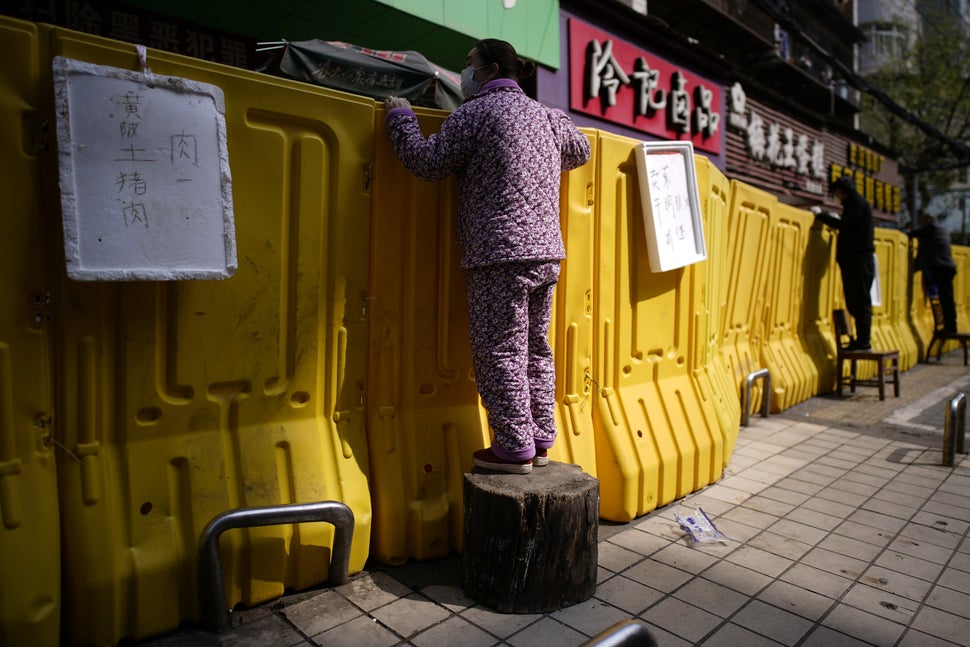
ALY SONG / REUTERS
Residents pay for groceries by standing on chairs to peer over barriers set up by a wet market on a street in Wuhan, the epicenter of China’s coronavirus outbreak, on April 1.
As the COVID-19 pandemic rages on, killing thousands and crushing the global economy, the potential threat of zoonotic spillover — when novel viruses and bacteria jump from animals to people — is becoming increasingly clear. The coronavirus that causes COVID-19 almost certainly originated in bats and is believed to have spilled into humans at a live animal market in Wuhan, China. Readily transmissible and far deadlier than the seasonal flu, COVID-19 is now one of the worst pandemics of animal origin that humans have faced in a century. But it won’t be the last.
There are millions of viruses and bacteria out there that reside in wild animals and can potentially infect humans, and these emerging diseases are on the rise everywhere as humans disrupt ecosystems and exploit animal habitat across the globe. We are living in an age of pandemics, and the next one — let’s call it “Disease X,” as scientists often do — could be even more devastating than COVID-19.
“On a scale of 1 to 100, we could place [the current outbreak] probably somewhere a little below midway,” said Dennis Carroll, the chair of the Global Virome Project and former director of the emerging threats division at the U.S. Agency for International Development (USAID).
Some known viruses circulating today have much higher mortality rates than the novel coronavirus but don’t spread easily among humans. If one of them mutated and became highly infectious in humans, Carroll said, Disease X could make this pandemic “look like a warmup.”
JOHN MINCHILLO/ASSOCIATED PRESS
Workers wearing personal protective equipment bury bodies in a trench on Hart Island, which is in the Bronx borough of New York City, earlier this month.
A Plague Rooted In Environmental Destruction
Political leaders are taking unprecedented measures to contain a virus that has infected at least 2.31 million people, killed at least 157,000 and forced national economies to their knees. Yet those unprecedented measures address only the symptoms of this crisis, an entirely reactionary response that has so far avoided addressing the root causes of novel disease emergence.
“COVID-19 is just the latest zoonotic disease to emerge that has its roots in the rampant habitat loss occurring around the world and the burgeoning wildlife trade,” a group of more than 100 conservation organizations wrote in a letter to the U.S. Congress last month, urging it to include in its stimulus bill new funding to combat the conditions that give rise to outbreaks like COVID-19. “Global pandemics will likely continue and even escalate if action isn’t taken.”
So far, though, Congress has failed to act on that threat, and the Trump administration is exacerbating the problem with its relentless campaign to roll back wildlife protections and cut environmental programs at home and abroad. All the while, the threat of zoonotic disease continues to intensify.
The virus that causes COVID-19 is just the latest infectious agent to jump from animals into people. HIV, Ebola, Marburg virus, SARS, MERS, Zika ― those, too, originated in animals and are part of the same perilous trend of novel diseases that have surfaced with increasing frequency as population growth, industrial agriculture, deforestation, wildlife exploitation, urban sprawl and other human activities bring our species into continuous contact with animal-borne pathogens.
“Emerging infectious diseases, the majority of which are zoonotic and have their origin in wildlife, have been increasing significantly — both numbers of outbreaks and diversity of diseases — over the past 50 years,” said Dr. Christian Walzer, chief global veterinarian at the New York City-based Wildlife Conservation Society.
The majority of emerging infectious diseases originate in animals, a 2017 study in the journal Nature Communications concluded, and “their emergence often involves dynamic interactions among populations of wildlife, livestock, and people within rapidly changing environments.” A 2015 study found that land use changes, such as urban expansion and deforestation, is the single most significant driver of many of the zoonotic outbreaks that have occurred since 1940.
“In the broadest sense, humans are the main drivers of zoonotic disease outbreaks,” said Catherine Machalaba, a policy adviser and research scientist at the EcoHealth Alliance.
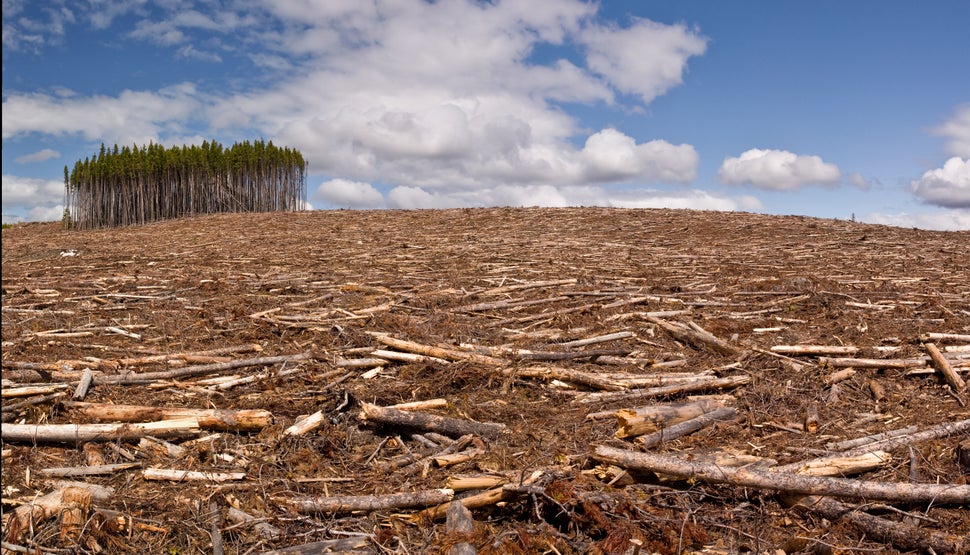
EPPICPHOTOGRAPHY VIA GETTY IMAGES
A small island of trees in a clear-cut pine forest. Dramatic changes in land use have contributed to the rise of zoonotic diseases.
The COVID-19 pandemic has brought global attention to live wild animal markets, which are common throughout Southeast Asia and Africa and which scientists say provide ideal conditions for new pandemics to spawn. The markets, which are often located in dense, urban areas, bring a wide variety of domestic and wild species, living and dead, into contact with humans. They are potential petri dishes for novel pathogens to evolve and spread.
It is at one such “wet market” in Wuhan, a city of 11 million, that the novel coronavirus, labeled SARS-CoV-2, is believed to have first spilled from its original host (thought to be a bat) into an intermediary host species or directly into humans. The crowded market featured dozens of live and dead animals for sale that rarely, if ever, come in contact in the wild, from fish and rats to monkeys and foxes. These markets are poorly regulated, and endangered species are known to end up in them.
This coronavirus crossed over to humans in China, but the spillover of such diseases is occurring all over the world, including in the United States. Walzer points, for instance, to the rise of Lyme disease in North America, where our suburban developments and shopping malls wiped out wild forests, killed native predators, amplified rodent and deer populations, and fueled outbreaks of the tick-borne illness.
“It’s the classic example of how biodiversity loss has increased the risk for spillover,” Walzer said.
Consider also Nipah, a paramyxovirus, like the goat plague, that first appeared in Malaysia in 1998. That virus — an inspiration for the 2011 film “Contagion” —has its origins in fruit bats, but it spilled over to pigs on a farm where livestock pens abutted mango trees that bats used as a food source.
“Bats were coming in in large numbers, feeding on mangos and, in the process of chewing on the mango, they would drop mangos laden with mucus and other body fluids into the pig pens,” said Jonathan Epstein, vice president for science and outreach at the EcoHealth Alliance, which works to study and prevent zoonotic disease spillover. “That is how it started.”
Nipah does not harm bats. But it sickened pigs and soon infected humans, too. First, it spread to workers on the farm. Then, as pigs were traded around the country, it infected other humans. By the end of the outbreak in 1999, 265 people had contracted the virus and more than 100 had died. Malaysian authorities, meanwhile, had slaughtered millions of pigs to stanch the infection’s spread.
But the story doesn’t end there. Nipah, scientists soon discovered, was also in Bangladesh. Since the early 2000s, the country has suffered from a series of recurrent outbreaks that have claimed scores of lives. In these cases, however, there were no pigs involved. The virus spread here happened via sap from date palm plants, which some in Bangladesh harvest and drink raw in the winter months. Fruit bats have learned to exploit this food source, too, and their saliva, urine and droppings sometimes fall into the pots that people use to collect the palm sap. In this way, scientists say, Nipah has spread from bats to Bangladeshis.
“Nipah is a scary virus because it is super deadly,” said Epstein, who has studied the virus’s spread and notes that it has a case fatality rate in Bangladesh of about 75%.
But there’s another reason Nipah keeps disease experts up at night: Humans can spread the virus directly to each other, with no animal intermediary necessary.
“Nipah has shown human-to-human transmission consistently in Bangladesh, and that is why it is among the top listed infectious disease threats,” Epstein said. “It is only a matter of time before a version of Nipah virus gets into people, one that is both deadly and highly transmissible.”
In other words, there’s no need to speculate about the spillover of a scary disease like goat plague when Nipah is already on the scene.
Live animal markets and COVID-19. Degraded forests and Lyme disease. Agricultural production, disrupted bat habitat and a petrifying new paramyxovirus. These examples all tell the same story: Humanity’s effect on the natural world, and on wildlife especially, is causing novel pathogens to infect, harm and kill us. When we mine, drill, bulldoze and overdevelop, when we traffic in wild animals and invade intact habitat, when we make intimate contact with birds, bats, primates, rodents and more, we run an intensifying risk of contracting one of the estimated 1.6 million unknown viruses that reside in the bodies of other species.
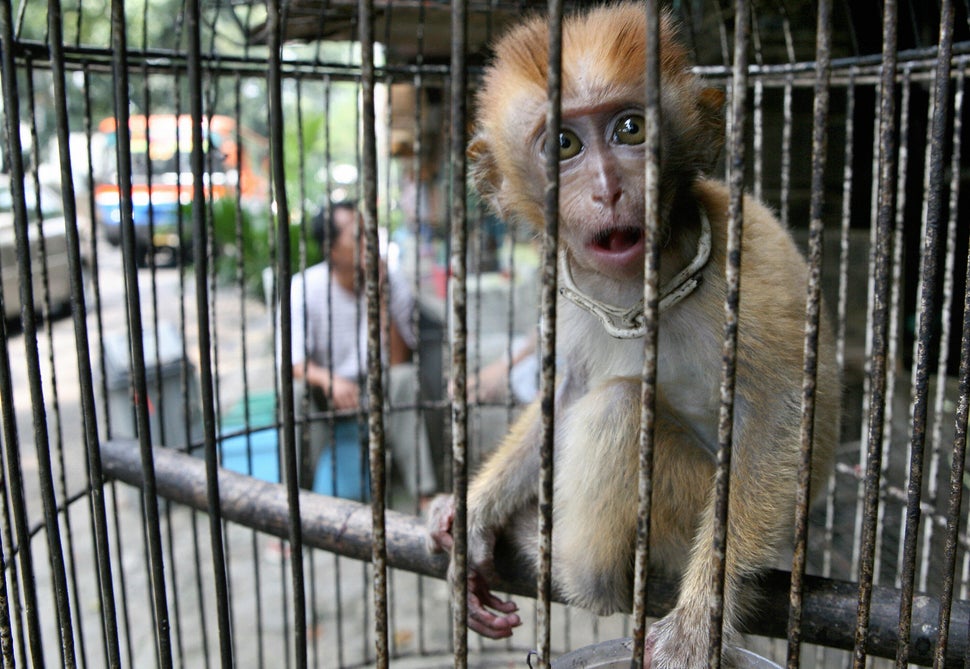
AFP VIA GETTY IMAGES
A monkey is kept in a cage for sale at an animal market in Jakarta, Indonesia, in May 2007.
This New World
The current capitalist system is broken. Get updates on our progress toward building a fairer world.
Far From An ‘Unforeseen Problem’
Throughout his presidency, Donald Trump has consistently undermined science as part of his pro-development, anti-environment agenda. And the administration’s response to COVID-19 has, unsurprisingly, been defined by similar denial.
Trump spent weeks downplaying the threat, only to suddenly change his tune and insist that no one could have possibly predicted or prepared for such a devastating pandemic. He described the outbreak as an “unforeseen problem,” “something that nobody expected.”
But a crisis of this magnitude was not only possible, it was all but inevitable. Many people, from business leaders to intelligence officials to infectious diseases experts, have been saying so for years.
“If anything kills over 10 million people in the next few decades, it’s most likely to be a highly infectious virus rather than a war,” billionaire Microsoft founder Bill Gates said in a 2015 Ted Talk, stressing that the U.S. and the world at large are wildly unprepared to respond.
Even Trump’s own appointees in the intelligence community had issued warnings.
“We assess that the United States and the world will remain vulnerable to the next flu pandemic or large scale outbreak of a contagious disease that could lead to massive rates of death and disability, severely affect the world economy, strain international resources, and increase calls on the United States for support,” says the 42-page Worldwide Threat Assessment that then-Director of National Intelligence Dan Coats presented to the Senate Intelligence Committee in January 2019.
The report highlights stalled progress in combating infectious diseases such as malaria and the measles, as well as the link between emerging pathogens and human encroachment.
“The growing proximity of humans and animals has increased the risk of disease transmission,” it says. “The number of outbreaks has increased in part because pathogens originally found in animals have spread to human populations.”
And yet the Trump administration was caught unprepared, confused and unable to craft a coherent strategy to tackle the threat. Indeed, even in mid-March, the president was still comparing COVID-19 to the seasonal flu.
Beyond their hapless response, Trump and his Cabinet have also promoted a slew of policies that actively exacerbate the potential for zoonotic spillover.
Since taking power in 2017, the Trump administration has been on an anti-environment bonanza, rolling back wildlife and land protections while also working to cut funding for key international conservation programs that help prevent the sort of activities that give rise to infectious disease emergence. In its proposed budget for fiscal year 2021, for instance, the administration seeks to cut more than $300 million from critical USAID and State Department programs that combat wildlife trafficking, conserve large landscapes and otherwise promote biodiversity and wildlife protection abroad.
“USAID is one of the largest global donors for biodiversity conservation,” said Kelly Keenan Aylward, director of the Wildlife Conservation Society’s Washington, D.C., office.
She pointed, for instance, to the agency’s Central Africa Regional Program for the Environment, a landscape-scale effort that focuses on combating wildlife trafficking and deforestation, two key drivers of biodiversity loss. USAID, Aylward said, also funds essential biodiversity programs in the Amazon and Southeast Asia, among other places.
GER BOSMA VIA GETTY IMAGES
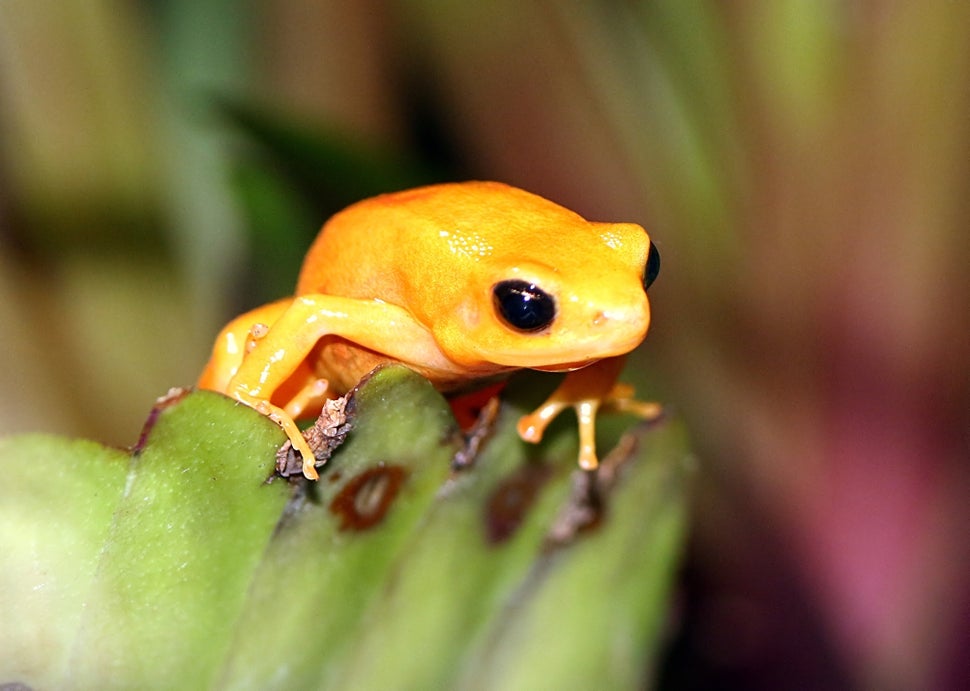
A poisonous, critically endangered golden mantella frog in the rainforest of Madagascar. Habitat loss from logging and agriculture has driven the species toward extinction. Trump administration policies have exacerbated the loss of biodiversity.
Trump and his small army of industry-linked political appointees are also going after the country’s key domestic wildlife agency, the U.S. Fish and Wildlife Service, which is responsible for enforcing the Endangered Species Act and fighting the illegal wildlife trade. In fiscal year 2021, they aim to slash the agency’s budget by roughly $80 million, including significant cuts to its law enforcement programs. They also want to whittle away at the agency’s Multinational Species Conservation Fund, which finances conservation programs for imperiled species abroad.
The administration also finalized regulations that significantlyweaken both the Endangered Species Act and the Migratory Bird Treaty Act, two bedrock conservation laws. It engineered the largest rollback of public lands protection in U.S. history and has presided over a steep decline in the number of new species listed under the ESA. It has withdrawn U.S. membership in UNESCO, a United Nations program that protects hundreds of natural sites around the world, and earlier this month Trump threatened to halt U.S. funding for the World Health Organization over its pandemic response, a clear effort to shift blame away from his administration. All this while advocating drastic cuts to U.S.-sponsored global health programs that fight infectious diseases.
Wildlife and land protection programs, advocates say, should be getting more support, not less — especially in light of a raging pandemic that has its origins in environmental destruction and disruption.
“Conservation and wildlife protection efforts must be prioritized in order to protect not only our precious resources,” said Kate Wall, the senior legislative manager at the International Fund for Animal Welfare, “but the stability of our global economy and, indeed, our very existence.”
‘It Should Be A Defining Movement’
Carroll, the former USAID official, said fighting emerging disease requires social engineering that invests not only in the capability to disrupt future spillover but also measures to manage outbreaks when they occur.
Carroll designed and directed Predict, a USAID disease surveillance program that identified more than 1,000 previously unknown wildlife viruses, including strains of Ebola and dozens of coronaviruses, over the last decade. The project proved that our existing technologies could pinpoint future viral threats. But operating on that scale, it would take centuries to catalog the estimated 1.6 million viruses out there ― what Carroll calls “unknown viral dark matter.”
In September, after $200 million and a decade of virus hunting, Trump’s USAID announced it would not renew the Predict program for another five-year cycle. Carroll left USAID around that time. And on March 31, as the coronavirus pandemic ravaged the U.S., the administration officially shuttered the program. USAID subsequently granted the program a six-month extension on April 1 to “provide emergency support” to other countries in their response to COVID-19, but the effective cancellation of Predict had already caused real damage — its field work came to a halt months earlier, and some of the organizations that worked on the program were forced to lay off staffers, according to an April report in the Los Angeles Times.
USAID is now in the process of developing a new project, called STOP Spillover, which is expected to be launched this fall and cost $50 million to $100 million over five years. An agency spokesperson told CNN the program will “build on the lessons learned and data gathered” during Predict and “focus on strengthening national capacity to develop, test and implement interventions to reduce the risk of the spillover.”
Carroll now leads the Global Virome Project, a nonprofit that is working to create what he describes as a “global atlas” of animal viruses that would help prepare for, and ideally prevent, pandemics. Mapping viruses by species and location would allow governments to target hot spots for increased surveillance and ecosystem protections.
Carroll also hopes it will make it possible for scientists to develop vaccines that protect humans from not just one virus but perhaps even whole viral families.
“The demise of Predict,” Carroll said, “will only be a tragedy if we don’t continue to invest in viral discovery.”
STR VIA GETTY IMAGES
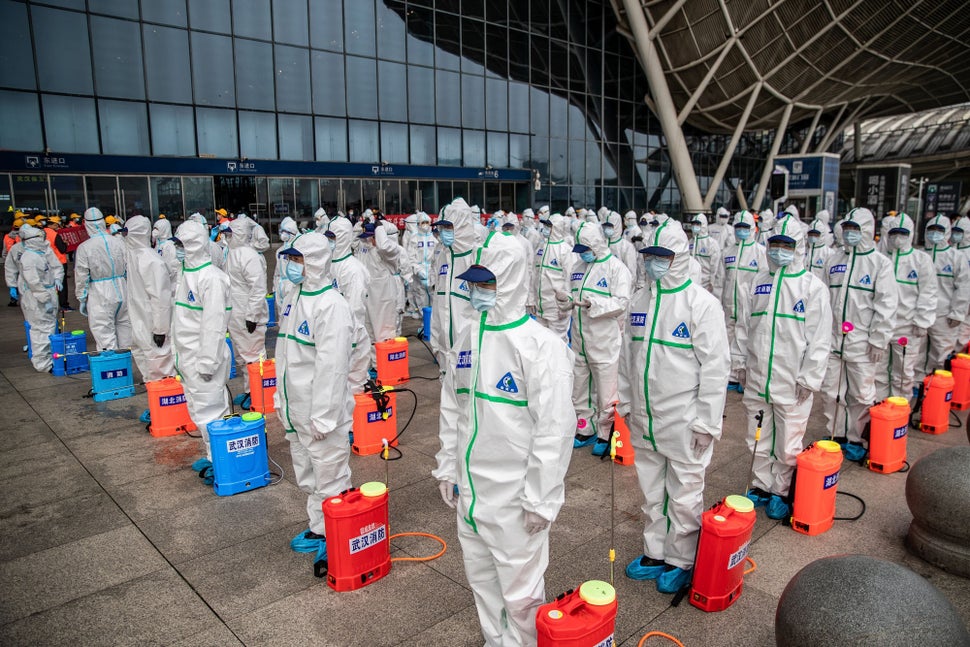
Workers prepare to spray disinfectant at the Wuhan Railway Station in Wuhan, China on March 24, 2020. The city in central China is where the coronavirus first emerged late last year.
Disease research and preparing for pandemics isn’t cheap. The Global Virome Project estimates it would cost $1.5 billion over a decade to identify 75% of the unknown viruses in mammals and birds. On the heels of the Ebola crisis in 2016, a commission of global health experts called for an annual global investment of $4.5 billion to help prevent and fight future pandemics, including $3.4 billion to upgrade public health systems across the globe and $1 million for the development of vaccines, diagnostics and therapeutics.
But those figures pale in comparison to the costs of a global pandemic, as highlighted by the untold trillions of dollars that COVID-19 is now costing the world economy.
Perhaps the frequency of deadly disease outbreaks ― SARS in 2003, swine flu in 2009, MERS in 2012, Ebola in 2014 and now COVID-19 ― will convince the world it is time for a different approach, Carroll hopes. But he fears that, as with previous outbreaks, resources will dry up once the coronavirus threat dissipates and “collective amnesia” sets in.
“We should not accept the idea that spillover from wildlife into people is inevitable,” he said. “It’s not. Viruses don’t move from animals to people. We facilitate that.”
But we can change our ways.
More than 240 environmental and animal advocacy groups signed an April 6 letter urging the World Health Organization to recommend that governments institute permanent bans on wildlife markets and the use of wildlife in traditional medicines.
To truly solve the underlying conditions that fuel zoonotic pandemics, experts and wildlife conservationists are also calling fora new paradigm that recognizes the interconnection of people, animals and ecosystems, which they call the “One Health” approach.
“It should be a defining movement,” Dr. Christine Kreuder Johnson, project director of the USAID’s Predict program and associate director of the One Health Institute at the University of California, Davis, said of One Health, which seeks to prevent infectious disease outbreaks by safeguarding wild animals and their habitat.
Other experts told HuffPost that the U.S. should establish a high-level One Health task force that brings together agencies like the Centers for Disease Control and Prevention, the Fish and Wildlife Service, USAID and the U.S. Department of Agriculture to chart a course forward for protecting wildlife habitat, strengthening disease surveillance and preventing pandemics.
Still others, like Dr. Richard Kock, say humans must drastically scale back livestock production, which brought the goat plague to Mongolia and fueled the Nipah virus outbreak in Malaysia.
“Pathogens can move incredibly quickly despite attempts to stop them and despite our technology and our medicines,” Kock said. “It is a wake-up call for humanity.”
A HuffPost Guide To Coronavirus
Stay up to date with our live blog as we cover the COVID-19 pandemic
Everyone deserves accurate information about COVID-19. Support journalism without a paywall — and keep it free for everyone — by becoming a HuffPost member today.
(CNN)Two million chickens on several farms in Delaware and Maryland will be “depopulated” — meaning humanely killed — due to a lack of employees at chicken processing plants, according to a statement from Delmarva Poultry Industry Inc.
The reduced employee attendance at the company’s plants is a result of “additional community cases of COVID-19, additional testing, and people practicing the ‘stay home if you’re sick’ social distancing guidance from public health officials,” the statement reads.
The chickens will be depopulated “using approved, humane methods” that are accepted by the American Veterinary Medical Association and all state and local guidelines, the company said.
CNN has reached out to the Delaware Department of Agriculture but has not yet received a response.
The Maryland Department of Agriculture says it learned of the company’s plans on April 9 and “continues to monitor for any developments.”
“MDA is only involved in depopulations when it is done in response to animal health concerns,” the department said in a statement. “This particular case was a private decision made by an individual business.”
close dialog
The day’s biggest stories in 10 minutes or less.
Delmarva says it made the “difficult but necessary” decision after exhausting “the study of other alternatives, including allowing another chicken company to transport and process the chickens and taking a partially processed product to rendering facilities to utilize for other animal feed.”
“If no action were taken, the birds would outgrow the capacity of the chicken house to hold them,” the company said, adding that they are not closing any processing plants and will continue to compensate the affected chicken growers.
Two house cats in New York State are the first in the U.S. to test positive for the coronavirus that causes COVID-19, the Centers for Disease Control and Prevention announced on April 22. The owner of one of the cats had been diagnosed with the disease, but no one in the household of the second cat had tested positive, so it’s not yet known how the cat contracted the virus. Both cats had mild respiratory symptoms and are expected to recover.
Experts say it’s important to know that cases of pet cats acquiring coronavirus are very rare: In the world, there are only three confirmed cases of domestic cats (and two confirmed cases of dogs) getting sick. The CDC says there is no evidence at this time that the disease could spread in the opposite direction—from pets to humans.
“This is almost exclusively a human-to-human transmitted disease,” Michael San Filippo, a spokesperson for the American Veterinary Medicine Association, told NBC affiliates. “The risk to pets is very low, with only a handful of cases of the virus appearing in companion animals, and no cases of people getting sick from their pets.” (Many other human illnesses, including the common cold, do not pose threats to pets because they’re caused by species-specific viruses that are unable to infect other animals.)
The hunt for the next potential coronavirus animal host
One recent study, from a veterinary diagnostic lab in Maine, tested thousands of samples from dogs and cats and found no cases of the disease. While an early version of a report on a small experiment testing whether the virus could spread between cats found that indeed it can, research does not suggest that cats are a vector in spreading disease among humans.
With more than 2.6 million cases of COVID-19 globally, experts say that if pets were a significant vector, we’d know by now.
Keeping pets healthy
Many pet owners are more worried about getting their animals sick than they are about contracting illness from their pets.
To keep your pets healthy, treat them as you would any family member: If someone in your house is sick, they should isolate themselves. Make sure your pet maintains social distancing; the CDC recommends that pets not interact with anyone outside your household. When walking a dog, stay six feet away from other people (and animals) and avoid dog parks. Experts recommend washing your hands before and after interacting with a pet, just as you would with a fellow human.
A champion chinchilla Persian rests near a stack of books “like a lordly little lion” in Bloomsberg, Pennsylvania.
PHOTOGRAPH BY WILLARD CULVER, NAT GEO IMAGE COLLECTION
A trio of Siamese kittens sleep on a sofa in Washington, D.C.
PHOTOGRAPH BY WILLARD CULVER, NAT GEO IMAGE COLLECTION
An owner lovingly strokes her Persian in New York City. The 1938 National Geographic article captioned this image as “Stately, kindly, lordly friend, condescend here to sit by me.”
PHOTOGRAPH BY WILLARD CULVER, NAT GEO IMAGE COLLECTION
A pair of blue Persian cats pose on a recliner in Bogota, New Jersey. At the time, in the 1930s, the blue Persian regularly won best-in-show cat competitions.
PHOTOGRAPH BY WILLARD CULVER, NAT GEO IMAGE COLLECTION
A trio of Persian cats—which Eddy described as “unusually affectionate”—recline on furniture in Silver Spring, Maryland.
PHOTOGRAPH BY WILLARD CULVER, NAT GEO IMAGE COLLECTION
“Wary Princess Pat, with silvery frill and hypnotic stare, seems poised for flight,” Frederick Eddy wrote in the November 1938 National Geographic. The smoke Persian lived in New York City.
PHOTOGRAPH BY WILLARD CULVER, NAT GEO IMAGE COLLECTION
A black domestic shorthair named Midnight sits in front of the fireplace in Washington, D.C. Culver notes that the cat “had to be dragged, snarling, from under the sofa for a split-second pose.”
PHOTOGRAPH BY WILLARD CULVER, NAT GEO IMAGE COLLECTION
A blue Persian stares intensely at a goldfish bowl in Washington, D.C.
PHOTOGRAPH BY WILLARD CULVER, NAT GEO IMAGE COLLECTION
A Burmese cat poses in Cambridge, Massachusetts. At the time, Elmer was one of the only Burmese cats in the eastern U.S.
PHOTOGRAPH BY WILLARD CULVER, NAT GEO IMAGE COLLECTION
Three tailless Manx cats play on furniture in Washington, D.C.
PHOTOGRAPH BY WILLARD CULVER, NAT GEO IMAGE COLLECTION
“You can throw me on the table, but just try to put me on the shelf!” Eddy captioned this image of a champion red Persian in the 1938 National Geographic magazine article.
PHOTOGRAPH BY WILLARD CULVER, NAT GEO IMAGE COLLECTION
A pair of Siamese cats huddle together for a photo in Newton, Massachusetts.
PHOTOGRAPH BY WILLARD CULVER, NAT GEO IMAGE COLLECTION
A tortoiseshell domestic shorthair, named Joseph for her “coat of many colors,” perches on a shelf in Washington, D.C. “Only on humiliating hands and knees may fond humans visit this scornful kitty in her own domain,” Eddy wrote in the magazine article.
Wild animal worries
On April 5, we learned that a Malayan tiger at the Bronx Zoo tested positive for the coronavirus; on April 22, we learned that six more tigers and a lion at the Bronx Zoo have it, as well. These are the first tigers and lions known to have the virus.
Both wild and domestic cats had been known to be susceptible to feline coronavirus, a different strain, but until recently it was unknown whether they could contract SARS-CoV-2, the coronavirus that causes COVID-19.
It’s believed that the SARS-CoV-2 strain of the virus developed from a closely related coronavirus in bats. Researchers theorize that the strain evolved and jumped to an intermediate host animal, and then evolved again to infect humans.
Scientists have been working quickly to determine what other species are susceptible to infection by SARS-CoV2. Initial studies are working to identify any animal that the coronavirus could infect, whether or not it causes illness in that species. Among the species scientists are studying are cats and ferrets, both of which appear to be at least somewhat vulnerable to infection in laboratory settings (other animals studied include dogs, bats, civets, and pigs). Pangolins can carry a closely related coronavirus, but they have not been found to carry SARS-CoV-2.
Virologists caution that although the pathogen can enter the cells of some species in a lab, such infection might not occur outside of a laboratory setting. They have also determined that animals infected in a lab might not become sick. Additional testing will be needed to develop a better understanding of how this develops in animals. (Read more about how these tests are done and what we can extrapolate from them.)
The bottom line: We know that humans can pass on the novel coronavirus to some animals, but there is no evidence at this time that animals can pass it on to humans. More research is needed. In the meantime, the best practice is to take the same precautions with your pets as you would with humans.
The U.S. passed 50,000 coronavirus deaths on Friday and is closing in on nearly 1 million infections as several states around the nation begin implementing plans for reopening businesses and easing social distancing.
On Friday the Johns Hopkins coronavirus database listed 51,017 U.S. deaths and more than 890,000 infections. Due to a lack of testing, the actual number of infections is likely to be much higher.
Despite warnings from national health leaders that the country could face a second wave of the virus in late 2020, states and cities are drafting or implementing plans to get people out of their homes and back into mainstream life.
“We will have coronavirus in the fall,” said Dr. Anthony Fauci, head of the White House’s Coronavirus Task force. “I am convinced of that because of the degree of transmissibility that it has, the global nature. What happens with that will depend on how we’re able to contain it when it occurs.”
Meanwhile the death toll continues to rise and drop at sporadic rates. On Thursday, for instance, the U.S. followed up four days of decreased death totals with one of its deadliest days yet, with over 3,000 deaths.
The latest milestone comes at an incongruous time when many states, under intense pressure from not only the White House but also their own citizens, announce plans to allow people back to work.
Governors of more than a dozen states in the past 10 days — including California, Florida, Alaska, Tennessee, Colorado and Georgia — have detailed their hope to slowly phase out lockdowns and restrictions on businesses.
Meanwhile the death toll continues to rise and drop at sporadic rates. On Thursday, for instance, the U.S. followed up four days of decreased death totals with one of its deadliest days yet, with over 3,000 deaths.
The latest milestone comes at an incongruous time when many states, under intense pressure from not only the White House but also their own citizens, announce plans to allow people back to work.
Governors of more than a dozen states in the past 10 days — including California, Florida, Alaska, Tennessee, Colorado and Georgia — have detailed their hope to slowly phase out lockdowns and restrictions on businesses.
Some are only allowing minor reopenings. Gov. Gavin Newsom said that California was not prepared “to open up large sectors of our society” but made the first modification to the state’s stay-at-home order with the resumption of “essential” surgeries.
“Tumors, heart valves, the need for people to get the kind of care they deserve,” Newsom said. “If it’s delayed, it becomes acute. This fundamentally is a health issue.”
Others are more aggressive. Georgia Gov. Brian Kemp said he was allowing certain businesses to reopen on April 24, including gyms, fitness centers, bowling alleys, barbers, cosmetologists and massage therapists. Georgia’s timetable is one of the most aggressive in the nation.
“Each of these entities will subject to specific restrictions, including adherence to the basic minimum operations, social distancing and regular sanitation,” Kemp said.
Unemployment in the U.S. is swelling to levels last seen during the Great Depression of the 1930s, with 1 in 6 American workers thrown out of a job by the coronavirus, according to new data released Thursday. In response to the deepening economic crisis, the House passed a nearly $500 billion spending package to help buckled businesses and hospitals.
More than 4.4 million laid-off Americans applied for unemployment benefits last week, the government reported. In all, roughly 26 million people — the population of the 10 biggest U.S. cities combined — have filed for jobless aid in five weeks, an epic collapse that has raised the stakes in the debate over how and when to ease the shutdowns of factories and other businesses.
Janet Simon, laid off as a waitress at a Miami IHOP restaurant, said she has just $200 and is getting panic attacks because of uncertainty over how she will care for her three children. Simon, 33, filed for unemployment a month ago, and her application is still listed as “pending.”
“I’m doing everything to keep my family safe, my children safe, but everything else around me is falling apart,” Simon said. “But they see it, no matter how much I try to hide my despair.”
In northern Colorado, a major meatpacking plant that closed because of an outbreak that claimed the lives of four workers was set to reopen Friday after a two-week disinfection, even as some questioned how employees can maintain social distancing inside the facility.
In the hardest-hit corner of the U.S., evidence emerged that perhaps 2.7 million New York state residents have been infected by the virus – 10 times the number confirmed by lab tests.
Abroad, there was mixed news about the epidemic. Some countries, including Greece, Bangladesh and Malaysia, announced extensions of their lockdowns. Vietnam, New Zealand and Croatia were among those moving to end or ease such measures.
In Africa, COVID-19 cases surged 43% in the past week to 26,000, according to John Nkengasong, director of the Africa Centers for Disease Control and Prevention. The figures underscored a recent warning from the World Health Organization that the virus could kill more than 300,000 people in Africa and push 30 million into desperate poverty.
Brazil’s health ministry confirmed 407 deaths due to the outbreak in the last 24 hours, a daily high for the country.
While the health crisis has eased in places like Italy, Spain and France, experts say it is far from over, and the threat of new outbreaks looms large.
“The question is not whether there will be a second wave,” said Dr. Hans Kluge, the head of the WHO’s Europe office. “The question is whether we will take into account the biggest lessons so far.”
Since the coronavirus pandemic went full swing in March, shoppers in the United States have seen empty grocery shelves and have read about farmers dumping their milk and destroying produce because of a dearth of buyers.
More than a week ago, Smithfield Foods, one of the largest pork processors in the U.S., shut down its Sioux Falls, South Dakota, plant after more than 230 employees tested positive for COVID-19 and two people died. (Smithfield’s plants in North Carolina, Wisconsin and Missouri also reported that employees had tested positive and have shut down.)
Many other meat processing plants — including Tyson, JBS and Cargill — have also temporarily shut down in cities across the U.S. and in Canada (some of Tyson’s plants have opted not to shut down despite having sick employees) and several more deaths have occurred. Reports surfaced that the shutdown, coupled with panic buying, will result in meat shortages.
So, will it actually be difficult for consumers to buy meat soon? Experts advise there’s no need to panic. Let’s take a look at how grocery store shelves may look in the near future.
Even if your grocery store is low on meat, there’s likely a surplus of meat at farms.
The real problem right now is that the U.S. has too much meat but nowhere to send it.
“I don’t see any shortage in meat,” Mike Phillips, co-owner and salumiere of Minneapolis’ Red Table Meat Co., told HuffPost. “In fact, it’s the other way around, especially for the farmers I work with. They can’t get rid of enough. They’re worried they’re going to go bankrupt. They have a lot of money [invested] in feeding animals and nowhere for them to go.”
With distribution channels including restaurants and schools severed, a surplus of animals remain on farms. “The model only works when the pigs are ready,” Phillips said. “When the animals are ready, they’re ready. It’s going to cost a lot more to keep feeding them. Is there a place where it can be processed? Are those people still working if you process it? Who buys it? If nobody is going to buy it, where is it stored? Who pays the processing fees while no one is buying any of it?”
Not only is there nowhere for the meat to go, but in many cases there’s also no mode of transportation to get it there.
Ron Joyce is president and CEO of the North Carolina-based family-owned Joyce Farms. He said the media has fueled a panic-buying mentality and that, in his experience, the real problem of grocery store shortages has to do with transportation issues.
ASSOCIATED PRESS
The Smithfield pork processing plant in Sioux Falls, South Dakota, was shut down when more than 230 employees tested positive for COVID-19.
“If a store normally receives a truckload of products per day and, through panic buying, consumers are buying four or five times their normal quantities, it is not possible to immediately get four to five trucks per day,” he said. (According to Joyce Farms’ chief ranching officer, Allen Williams, “Food has to travel more than 1,500 miles in the U.S. to get to its final destination of a grocery store or restaurant.)
“I think America has the ability to produce the meat we need overall, but there could be short-term and/or regional shortages due to logistics and plants being closed,” Joyce said.
How grocery stores are affected.
On the grocery side, many stores have been able to keep up with meat demand, for the most part. One such chain is Whole Foods.
“Since we work with a variety of local and regional suppliers all over the country, it allows us to be more flexible with supply source and safely move inventory as needed to combat possible shortages,” Theo Weening, Whole Foods’ vice president of meat and poultry, told HuffPost.
“Specific product availability and replenishment in-store varies across the country based on a number of factors, such as shopper habits and supplier outages,” Weening said. “However, both our local and regional supplier partnerships, which meet our rigorous quality standards, have provided us with opportunities to be flexible and bypass interruptions to supply chains where possible, getting product to stores as quickly as we can.”
Another fear is that meat prices will increase at grocery stores because of supply and demand. But there’s not too much cause for concern, according to the experts.
Currently, the price of retail beef has indeed increased, even though the price of cattle is down, due in part to the meat supply pivoting from restaurants to retail (restaurants aren’t ordering as many filet mignons, but consumers are buying ground beef to make burgers at home).
But Phillips says he and farmers like him pay a “fixed” price for their livestock and that the price is “steady.”
“The farmer knows what the pig costs to grow and process,” he said. “I don’t see much change in those prices even in a 10-year period.”
“The production of meat and poultry in America is very efficient and is sensitive to demand,” Joyce said. “If demand increases, pricing normally increases short term and the supply increases, bringing pricing back down. If demand decreases, the opposite happens. Competition normally keeps pricing in balance in the long term. However, different animals have different grow-out times, so production adjustments can vary. Chickens are the quickest and easiest to adjust to demand because of their short growth period. Pork takes a little longer and beef takes the longest.”
But ultimately prices are influenced by consumers.
“When the consumer votes with their dollars to demand cheap meat, then you’re going to get places like Smithfield that will rise to the demand and give it to people,” Phillips said. “But if people vote with their dollars differently, then for sure you could sure see the farmers who are struggling right now, they have plenty of pork to sell.”
Why a meat shortage at grocery stores is unlikely.
Despite what appears to be a temporary shortage in supply chains, consumer relief is on the way. “Producers and retailers typically plan for steady demand increases and were not prepared to deal with the rapid surge we saw with the onset of the crisis,” the U.S. Department of Agriculture wrote on its blog. “But over the next few weeks, as retailers restock their shelves and demand from overstocked consumers declines, we will see fewer empty shelves and prices should stabilize or even decline.”
Additionally, the USDA announced that “in both commercial and public storage, the U.S. has stockpiled 925 million pounds of frozen chicken, 491 million pounds of frozen beef and nearly 662 million pounds of frozen pork,” and the federal government announced that it plans to purchase some of the farmers’ surplus meat and give $16 billion in direct payment to farmers. So it seems like a shortage might be overblown.
How do we prevent a meat shortage in the future?
Once the pandemic tapers off, what will the future of agriculture look like, or what should it look like?
“I think there will be more emphasis on local or regional production of food,” Joyce said. “I would like to see more people engaged in how and where food is produced. Most are not aware that a lot of it travels across the country or even from other countries to get to them.”
Phillips offered a similar sentiment. “I’m hopeful that people are going to be interested in quality and local things and creating more food themselves and understanding the real costs and price of foods …. This isn’t the first virus that’s going to come down the pipeline. Things are probably going to have to change a bunch, I would imagine. I feel like it is a chance for people to reconnect with the wheres and whys and hows of their food, and examine the system and decide what’s actually healthy for us and what’s not.”
A HuffPost Guide To Coronavirus
Stay up to date with our live blog as we cover the COVID-19 pandemic
Everyone deserves accurate information about COVID-19. Support journalism without a paywall — and keep it free for everyone — by becoming a HuffPost member today.
Experts are still learning about the novel coronavirus. The information in this story is what was known or available as of press time, but it’s possible guidance around COVID-19 could change as scientists discover more about the virus. Please check the Centers for Disease Control and Prevention for the most updated recommendations.











 Exposing the Big Game