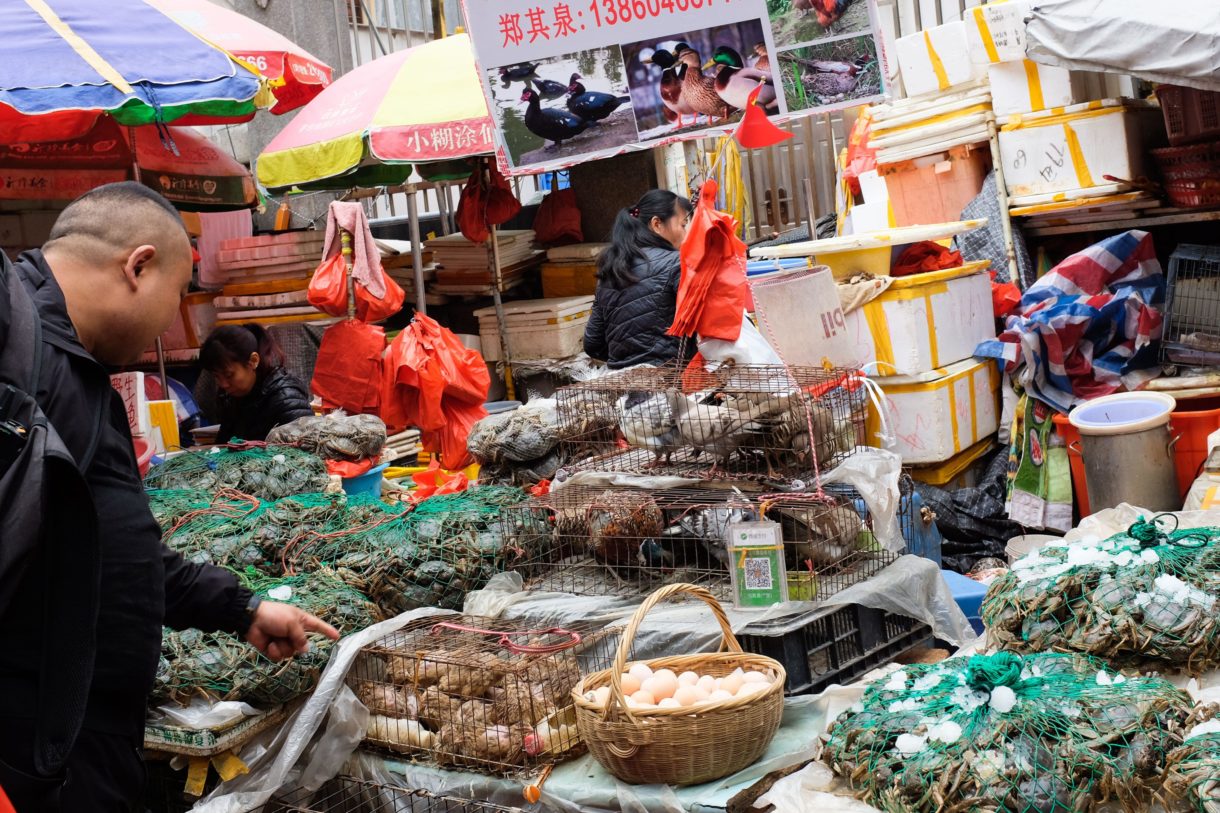
The COVID-19 crisis has shown us that we not only need to end wildlife markets all over the world, but we need a new conception of our relationship with the non-human, whether it is the animals with whom we share this world, or the natural habitat and wild spaces that sustain all life on the planet. Photo by Trevor Mogg/Alamy Stock Photo
I appeared today on MSNBC’s Morning Joe to speak about the COVID-19 crisis and wildlife markets with Humane Society International’s Peter Li and our colleague Gene Baur of Farm Sanctuary. Together, we made the case for an immediate end to wildlife markets all over the world, and described the filth, cruelty, lawlessness and pandemic risk that make these markets so wrong for the twenty-first century. Peter, a professor of political science at the University of Houston, grew up in China, and has seen these markets at first hand. And Gene, a pioneering figure in American farm animal protection work, reminded the audience that humanity’s massive factory farms represent a public health threat that is also deserving of our scrutiny in the current hour. While the COVID-19 pandemic resulted from a wildlife market and the global wildlife trade, the worldwide intensive confinement of farm animals—particularly chickens and pigs—has allowed viruses such as bird flu to multiply and mutate into contagious and deadly forms.
We’re in increasingly good company in our indictment of wildlife markets and other points of vulnerability. Last week, Anthony Fauci weighed in powerfully on the subject, while today, in an interview published in the Guardian, Elizabeth Maruma Mrema of the United Nations Environment Program, who is the active executive secretary of the UN Convention on Biological Diversity, supported the closure of such markets, too. I appreciated Mrema’s attempt to draw a big-picture perspective, one that resonates deeply with our work at the Humane Society of the United States and Humane Society International.
Like Mrema, Peter, Gene and I were trying to get across a simple but deeply urgent precept, that we need a new conception of our relationship with the non-human, whether it is the animals with whom we share this world, or the natural habitat and wild spaces that sustain all life on the planet.
In the current crisis, we’re doing all that we can to support those seeking to help animals. We’re making grants to local societies working under duress, thanks to the generosity of the Lewyt Foundation and other friends. We’re arranging for the purchase and shipment of needed pet food and supplies to remote communities like those in western Alaska and supporting direct care and services through our Pets for Life program and through Remote Animal Veterinary Services. We’re providing needed resources for keeping animals safe during the pandemic, both for the animal sheltering sector and for the general public. We’re supporting our own animal care facilities in their essential operations. We’re pressing for the inclusion of animals in the formulation and implementation of COVID-19 Response Orders. And we’re pushing hard on our public policy goals concerning live animal markets, wildlife trade and trafficking, and related issues.
If you are involved as a donor or friend of the HSUS and its affiliates in this critical time, you have a right to see us fully visible and engaged in the work of helping animals. And you will. We’re giving it everything we’ve got, and we’re doing so with the resources, the energy and the dedication to mission that your commitment and support make possible.
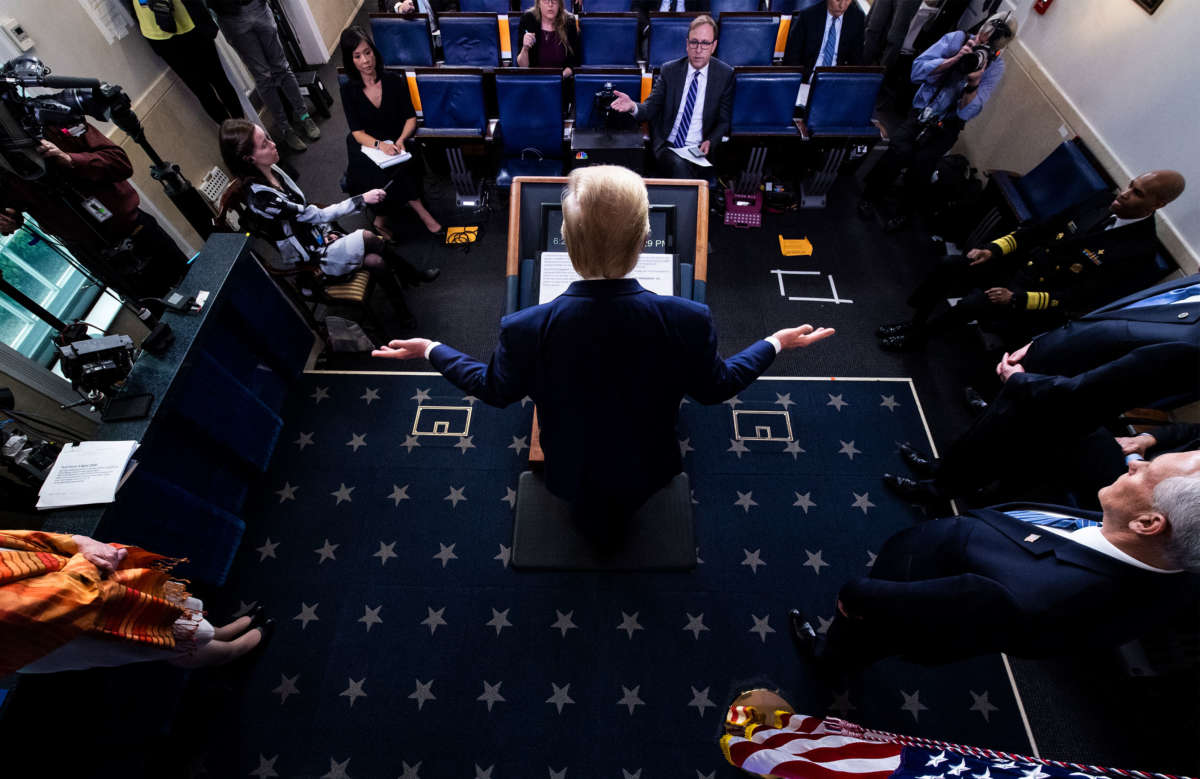
President Trump speaks with members of the coronavirus task force during a briefing in response to the COVID-19 pandemic in the James S. Brady Press Briefing Room at the White House on April 3, 2020, in Washington, D.C.JABIN BOTSFORD / THE WASHINGTON POST VIA GETTY IMAGES
g the fiddle that was labeled “My next piece is called: nothing can stop what’s coming.” It was clearly an homage to the Emperor Nero who so infamously made music while Rome burned. To it, the president added this comment: “Who knows what this means, but it sounds good to me!”
Whether Trump is fiddling these days or not, one thing is certain: in a Nero-like fashion, he continues to be irresponsibly unresponsive to the crisis caused by Covid-19. One reason may be that, however inadvertently, the arrival of the pandemic has helped green-light plans and projects he’s held dear to his heart and that had, before the crisis, repeatedly encountered opposition.
Here are six examples of how the coronavirus, like a malign magic wand, has helped cast a disempowering spell over that opposition and so furthered Trump’s long-term goals.
In his persistent determination to close the border and punish migrants and asylum seekers alike, Trump has long allied with the Department of Justice to clear a path for his policies. Attorney General William Barr’s department has, for instance, fought battle after battle to counter legal challenges to the prolonged detention of both migrants and asylum seekers, to prevent aid to sanctuary cities that offer protection to such migrants, to overrule Board of Immigration Appeals decisions, and to withhold bail from detained asylum seekers. Until the coronavirus pandemic hit, however, the courts had increasingly been blocking some of these policies or putting them on hold.
Now, although judges, lawyers, and legal organizations have urged that immigration courts be closed until the pandemic lifts, they have generally remained open even, in some cases, after people in them had tested positive for the virus. The danger, not to say inhumanity, of all this, should be undeniable, but it does reflect President Trump’s ongoing immigration urges.
In addition, the administration has doubled down on an existing policy of denying medical services to detained immigrants. This past winter, for instance, doctors were prevented from delivering flu vaccines to those in immigration detention camps. Now, with more than 37,000 men, women, and children confined, the dangers of the virus spreading among them are obvious and inevitable. As a former acting director of ICE puts it, the crowded conditions of detention, “which are designed to have people remain in close contact,” are “the opposite of the social distancing that is needed to save lives.”
2. The Census: The census has long been a source of contention for this president. He waged a campaign to exclude non-citizens from participating in it only to be stalled in his efforts by the justices of the Supreme Court who decided that they needed more information to make a final decision on the subject. The issue at hand is that census results are used to determine how many congressional seats (based on population) are to be given to each state. If immigrants, both legal and undocumented, are not counted — and estimates are that roughly 6.5 million people fall into those two categories — then fewer politicians and less federal funding will be distributed to areas with more sizeable populations of them.
Originally, Trump responded to the Supreme Court’s decision by advocating that the census simply be put off. Eventually, the administration backed down and the census was not delayed. Now, however, the sands have shifted. Covid-19 has turned the largely door-to-door gathering of census information into so many online, phone, and mail responses. The consequences of an inaccurate census could indeed prove dire. As National Public Radio’s Hansi Lo Wang reported, citing data collected by the Urban Institute, the 2020 census could result in “the worst undercount of black and Latino and Latina people in the U.S. since 1990.” According to one local San Francisco paper, “If the Census count is artificially low, the ramifications in this and every city will be real. It is estimated that each undercounted person costs his or her municipality $2,000 in federal resources.” Funding for public schools would reportedly be severely hit by such cuts in federal funding.
3. Global Conflicts: In his three years in office, Trump has escalated tensions with numerous powers, China and Iran in particular. In the period leading up to the global spread of the virus, China had already taken on special enemy status. In January, the president imposed yet more tariffs on that country’s products while sanctions on $370 billion worth of Chinese imports were left in place even though his administration claimed to have successfully concluded what he called “phase one” of a future trade deal.
Now, he’s labelled Covid-19 the “Chinese virus,” using that label to escalate tensions with China (and provoke a xenophobic backlash here at home). He recently mentioned a friendly hour-long conversation with that country’s president, Xi Jinping, about combatting the virus. But while reportedly preparing temporary relief when it comes to tariffs generally, Chinese imports are expected to be exempted from the proposed pause in payments.
So, too, the virus has been used to escalate tensions with Iran. Trump had already increased the drumbeat to war with that country by ordering the drone assassination of Iranian Major General Qasem Soleimani in Iraq, leading to retaliatory missile strikes on U.S. military bases in that country.
Congress then passed a law aimed at preventing the president from further attacks on Iran without its approval. Nevertheless, in the early days of the devastating spread of the pandemic in Iran, the Trump administration launched several attacks on pro-Iranian militias in Iraq and continued to uphold its economic sanctions on Iran itself. And there are reports of more to come from his administration.
4. Isolationism: Since the onset of his presidency, Trump has sought to separate the U.S. from allies and diminish its participation in international treaties and agreements of all sorts. He, for instance, withdrew from the nuclear agreement with Iran and announced his intention to pull the United States out of the Paris climate accord. As if to put a fine point on his disapproval of global engagement, there has also been a wholesale reduction in the size of the State Department in his years in office. A hiring freeze from the spring of 2017 to the spring of 2018 was reinforced by recommendations from Secretary of State Rex Tillerson and his successor, Mike Pompeo, which reduced the State Department’s operating budget by one-third, while many key ambassadorships went unfilled. Today, 13% of them remain vacant.
The spread of the coronavirus gave that urge new oomph. In the post-Covid world, the America First-style isolationism that Trump values has become even more emphatically the name of the game. The border with Canada is now closed. He’s banned travel from European countries. Visa offices are shut worldwide. Using the virus as its excuse, the State Department has even halted indefinitely the addition of a new class of 179 foreign-service officers to the diplomatic corps. During the Covid-19 outbreak, American disengagement from the world has taken another step forward.
5. Prosecutions: The coronavirus has also put on hold an array of investigations into the president’s personal and professional dealings. As of March 16th, the Supreme Court closed its doors to the public and postponed oral arguments in pending cases. It is now operating in remote capacity. This means a Supreme Court argument scheduled for this session about whether New York prosecutors and the House of Representatives can have access to the president’s financial records will not take place in the foreseeable future. In addition to their subpoenaing his financial records, New York prosecutors launched multiple investigations last spring into the president’s businesses, some of which continue to this day. Recently, Trump called upon Governor Andrew Cuomo and state District Attorney Letitia James to “stop” all of their state’s “unnecessary lawsuits & harassment.” Now, he may get his wish as the state courts, like the federal courts, are proceeding with reduced speed, staff, and activities.
Meanwhile, inquiries into Trump’s political misdeeds have also been put on hold due to the pandemic. Attorney General Barr, for instance, had been called to testify before the House Judiciary Committee at the end of March. It would have been his first appearance before that committee. Now, however, Congress has adjourned. As its chairman, Jerrold Nadler, explained as March ended, Barr was to have faced questioning about “the misuse of our criminal justice system for political purposes” — specifically, “a pattern of conduct in legal matters… that raises significant concerns,” including interference in the prosecutions of Trump Deputy Campaign Manager Rick Gates, former National Security Advisor Michael Flynn, and long-time associate Roger Stone. Bottom line, the investigations and proceedings against Trump, personal and presidential, are on hold for the foreseeable future.
6. Rigged Elections: Trump has long cast doubts on the viability of presidential elections. As the 2016 campaign played out, for instance, he was already expressing his fears of a “rigged election.” He accused the media of misreporting and twisting the preferences of voters in support of Hillary Clinton, while later claiming her campaign had meddled in the election process. The 2018 election only brought a further sense of distrust to the proceedings, as accusations of voter fraud, voting machine malfunctions, and voter suppression marred the process in states like Florida and Georgia. The result: the groundwork has been laid for ever greater distrust of such elections even though they are the sine qua non of a functioning democracy.
Now, the future of the November presidential election is uncertain owing to Covid-19. As numerous pundits and experts have reminded us, the social distancing necessary to halt the spread of the virus has called into question the logistics of normal voting and even the future viability of a full and fair election in November. Already primaries have been delayed, and expectations of turnout have diminished. Even in some of those that did take place in March, turnout was clearly diminished. Moreover, it was difficult to find people willing to staff polling places and sign in the thousands of voters who would ordinarily pass through on primary day. Solutions like balloting by mail have been proposed, but the ability of Trump and others to challenge the results have undeniably grown in the wake of the virus’s spread across the nation.
With some of his long-stymied plans now falling into place as the devastating pandemic hits, how telling of the president to tweet a picture of himself as Nero, as he delays or refuses to provide adequate amounts of medical supplies from reaching needy states. In unsettling ways, the crisis is working for him as previously untenable policy options are becoming essential to curtailing the coronavirus.
Whether it comes to air travel, the courts, the census, or the voting booth, keeping people apart and grounded makes perfect sense right now, but all of this is also providing dangerous opportunities for the president. Once past this crisis, it will be crucial for Americans to remind one another of the fundamentals of a secure democracy in which respect for immigrants, the desire for peace, election safeguards, and a respect for internationalism can be allowed to thrive even in times of turmoil. Otherwise, Covid-19 could usher in the ultimate success of Donald Trump’s destructive agenda.
Officials are advising all residents of Los Angeles County to stay home this week, which they are calling critical in the widespread efforts to curb the spread of COVID-19.
LOS ANGELES (KABC) — Officials are advising all residents of Los Angeles County to stay home this week, which they are calling critical in the widespread efforts to curb the spread of COVID-19.
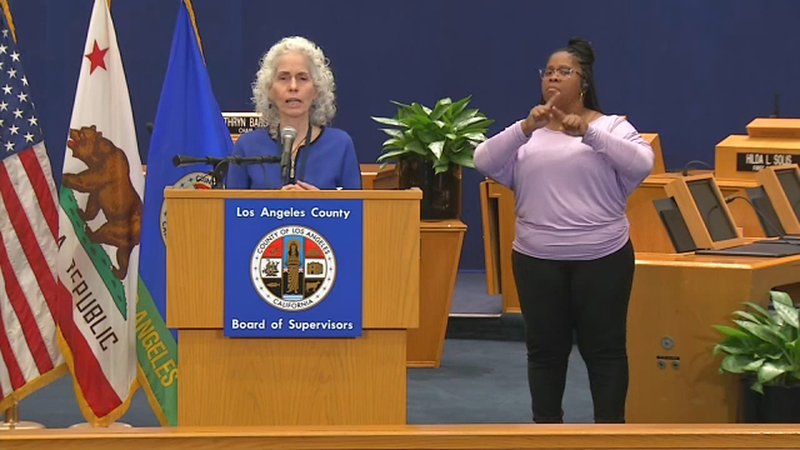
At a Monday afternoon press conference, county public health director Dr. Barbara Ferrer said people should try not leave their homes for groceries or medications, but should instead arrange for them to be delivered, if necessary.
“If you have enough supplies in your home, this would be the week to skip shopping altogether,” she said.
Officials are advising all residents of Los Angeles County to stay home this week, which they are calling critical in the widespread efforts to curb the spread of COVID-19.
Those venturing out to the stores will soon see some major changes to keep customers and employees safe.
Many stores are already enforcing physical distancing and limiting the number of people allowed in at a time.
Ralphs is limiting the amount of shoppers allowed inside to 50% capacity to allow for improved physical distancing.
One-way aisles are also being implemented by many chains, like Vons.
Walmart was the first to announce the new measure aimed at helping customers keep their distance. Vons says it is also joining the effort.
Shoppers are taking the opportunity to take one last trip to the store before hunkering down at home.
“We went back and forth, me and my sister, about whether to come out or not. We’re gonna stay in for two weeks, so we decided to make one last (trip.) We’re almost out of water,” Studio City resident Kina Cosper said. “We’re here and then we’re like done for two weeks.”
Ralphs, which is owned by Kroger, has installed plexiglass at checkout lines. The chain is also encouraging employees to wear face masks and gloves.
Globally, the number of people dying appeared to be slowing in New York City, Spain and Italy. The news was cautiously welcomed by leaders, who also noted that any gains could easily be reversed if people did not continue to adhere to strict lockdowns.
The U.S. is still awaiting the peak, and Surgeon General Jerome Adams offered a stark warning about the expected wave of virus deaths.
“This is going to be our Pearl Harbor moment, our 9/11 moment,” he told “Fox News Sunday.”
Animal rights groups have criticized the governments of Canada, Japan and Norway for continuing to allow commercial hunting of seals and/or whales as essential activities while their populations are subjected to lockdown measures amid the COVID-19 pandemic.
Humane Society International (HSI) and Norwegian organization NOAH said it is “outrageous” that such practices should be permitted at this time, particularly given that they are often supported by public funds.
“There is dwindling demand for the products of commercial whaling and sealing operations, and these inhumane industries are only viable because of tax-payers’ money, so it’s extremely difficult to see how these can in any way be considered ‘essential’ activities during lockdown,” Claire Bass, executive director of Humane Society International/U.K., said in a statement.
“It’s disturbing to think that while all over the world people are making extraordinary sacrifices to stop the spread of COVID-19, whalers and sealers are carrying on with their bloody business as usual, risking infection spread amongst crews and their families. We urge the Norwegian, Canadian and Japanese governments to call an immediate stop to these cruel and unnecessary hunts,” she said.
Ads by scrollerads.com
In Canada for example, the country’s annual commercial seal hunt will go ahead, a process that HSI describes as the “largest slaughter of marine mammals on the planet.”
During the yearly hunt, which occurs in two main areas, off the country’s east coast, hundreds of thousands of seals are killed using clubs and guns. Harp seals—already at risk from climate change—are the main target, and the vast majority of the animals killed are pups below the age of three months.
Seal hunting will also be allowed to continue in Norway after the government announced a quota to kill more than 18,000 of the animals last month. In response to the COVID-19, no animal welfare inspectors will be allowed on board—as is customary—to reduce the risk of infection. However, the animal rights groups have raised concerns over why such precautions have not been applied to protect the crew members who will take place on the hunts.
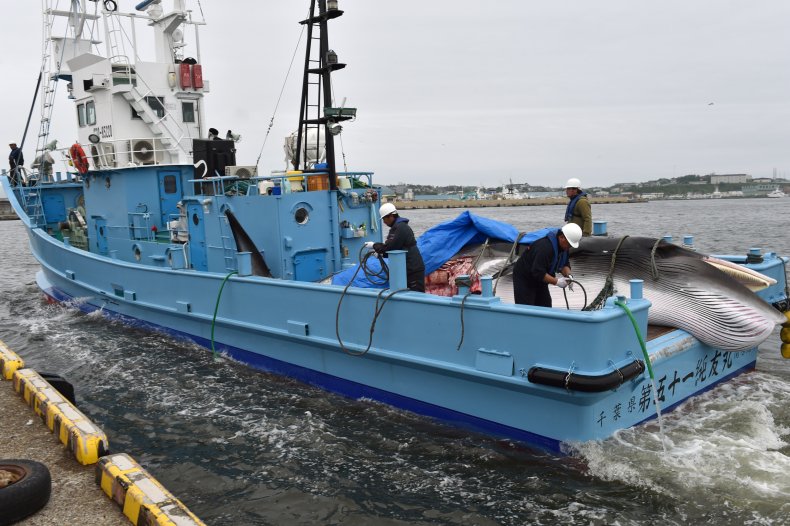
A captured Minke whale is carried by a whaling ship at a port in Kushiro, Hokkaido Prefecture on July 1, 2019.KAZUHIRO NOGI/AFP VIA GETTY IMAGES
Furthermore, both Norway and Japan will allow commercial whaling operations to continue during the pandemic. Japan—which drew widespread criticism for leaving the International Whaling Commission in 2018—has awarded itself a quota of nearly 200 whales. Meanwhile, hunters in Norway will be aiming to kill more than 1,200 over the next few months.
“These ongoing and cruel persecutions of marine mammals are increasingly out of step with modern scientific thinking, which shows that healthy marine mammal populations contribute to healthy marine ecosystems and the overall health of our planet. We need to look again very carefully at our relationships with these animals and appreciate their roles and not see them simply as commodities to be harvested,” Mark Simmonds, HSI’s senior marine scientist, said in the statement.
Centers for Disease Control and Prevention Advice on Using Face Coverings to Slow Spread of COVID-19
CDC recommends wearing a cloth face covering in public where social distancing measures are difficult to maintain.
A simple cloth face covering can help slow the spread of the virus by those infected and by those who do not exhibit symptoms.
Cloth face coverings should be washed regularly. A washing machine will suffice.
Practice safe removal of face coverings by not touching eyes, nose, and mouth, and wash hands immediately after removing the covering.
World Health Organization advice for avoiding spread of coronavirus disease (COVID-19)
Hygiene advice
Clean hands frequently with soap and water, or alcohol-based hand rub.
Wash hands after coughing or sneezing; when caring for the sick; before, during and after food preparation; before eating; after using the toilet; when hands are visibly dirty; and after handling animals or waste.
Maintain at least 1 meter (3 feet) distance from anyone who is coughing or sneezing.
Avoid touching your hands, nose and mouth. Do not spit in public.
Cover your mouth and nose with a tissue or bent elbow when coughing or sneezing. Discard the tissue immediately and clean your hands.
Medical advice
Avoid close contact with others if you have any symptoms.
Stay at home if you feel unwell, even with mild symptoms such as headache and runny nose, to avoid potential spread of the disease to medical facilities and other people.
If you develop serious symptoms (fever, cough, difficulty breathing) seek medical care early and contact local health authorities in advance.
Note any recent contact with others and travel details to provide to authorities who can trace and prevent spread of the disease.
Stay up to date on COVID-19 developments issued by health authorities and follow their guidance.
Mask and glove usage
Healthy individuals only need to wear a mask if taking care of a sick person.
Wear a mask if you are coughing or sneezing.
Masks are effective when used in combination with frequent hand cleaning.
Do not touch the mask while wearing it. Clean hands if you touch the mask.
Learn how to properly put on, remove and dispose of masks. Clean hands after disposing of the mask.
Do not reuse single-use masks.
Regularly washing bare hands is more effective against catching COVID-19 than wearing rubber gloves.
The COVID-19 virus can still be picked up on rubber gloves and transmitted by touching your face.
Why COVID-19 previews a larger crash. What we must do to save ourselves.
William E. ReesToday | TheTyee.caWilliam E. Rees is professor emeritus of human ecology and ecological economics at the University of British Columbia.
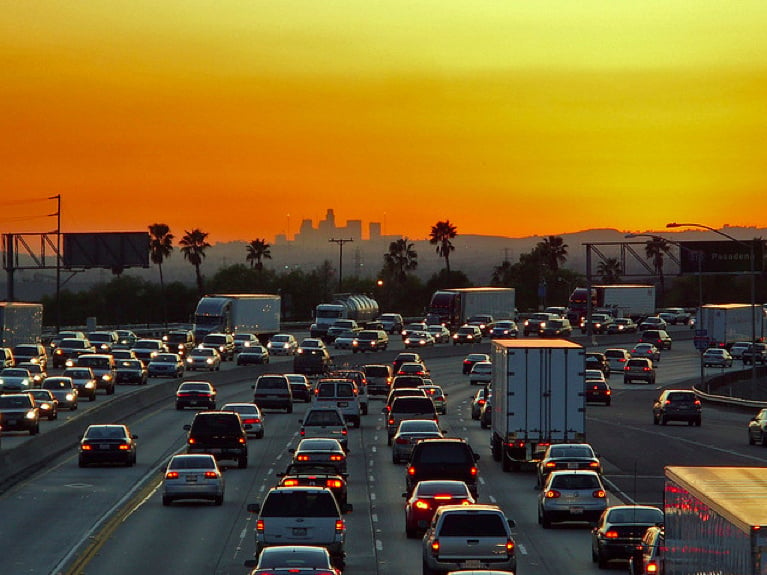
In two centuries, human population has spiked seven-fold and consumption by 100 times. ‘The Earth will have its revenge,’ warns noted UBC systems ecologist William Rees, co-inventor of the ecological footprint concept. Photo by Joseph Stevenson via Flickr/Creative Commons.
As the pandemic builds, most people, led by government officials and policy wonks, perceive the threat solely in terms of human health and its impact on the national economy. Consistent with the prevailing vision, mainstream media call almost exclusively on physicians and epidemiologists, financiers and economists to assess the consequences of the viral outbreak.
Fair enough — rampant disease and looming recession are genuine immediate concerns; society has to cope with them.
That said, we must see and respond to the more important reality.
However horrific the COVID-19 pandemic may seem, it is merely one symptom of gross human ecological dysfunction. The prospect of economic implosion is directly connected. The overarching reality is that the human enterprise is in a state of overshoot.
We are using nature’s goods and life-support services faster than ecosystems can regenerate. There are simply too many people consuming too much stuff. Even at current global average levels of consumption (about a third of the Canadian average) the human population far exceeds the long-term carrying capacity of Earth. We’d need almost five Earth-like planets to support just the present world population indefinitely at Canadian average material standards. Gaian theory tells us that life continuously creates the conditions necessary for life. Yet humanity has gone rogue, rapidly destroying those conditions.
When will the media call on systems ecologists to explain what’s really going on? If they did, we might learn the following:
That the current pandemic is an inevitable consequence of human populations everywhere expanding into the habitats of other species with which we have had little previous contact (H. sapiens is the most invasive of “invasive species”).
That the pandemic results from sometimes desperately impoverished people eating bushmeat, the flesh of wild species carrying potentially dangerous pathogens.
That contagious disease is readily propagated because of densification and urbanization — think Wuhan or New York — but particularly (as we may soon see) because of the severe overcrowding of vulnerable people in the burgeoning slums and barrios of the developing world.
That the coronavirus thrives because three billion people still lack basic hand-washing facilities and more than four billion lack adequate sanitation services.
A population ecologist might even dare explain that, even when it comes to human numbers, whatever goes up must come down.
None of this is visible through our current economic lens that assumes a perpetually growing, globalized market economy.
Prevailing myth notwithstanding, nothing in nature can grow forever.
When, under especially favourable conditions any species’ population balloons, it is always deflated by one or several forms of negative feedback — disease, inadequate habitat, self-pollution, food shortages, resource scarcity, conflict over what’s left (war), etc. All of these various countervailing forces are triggered by excess population itself.
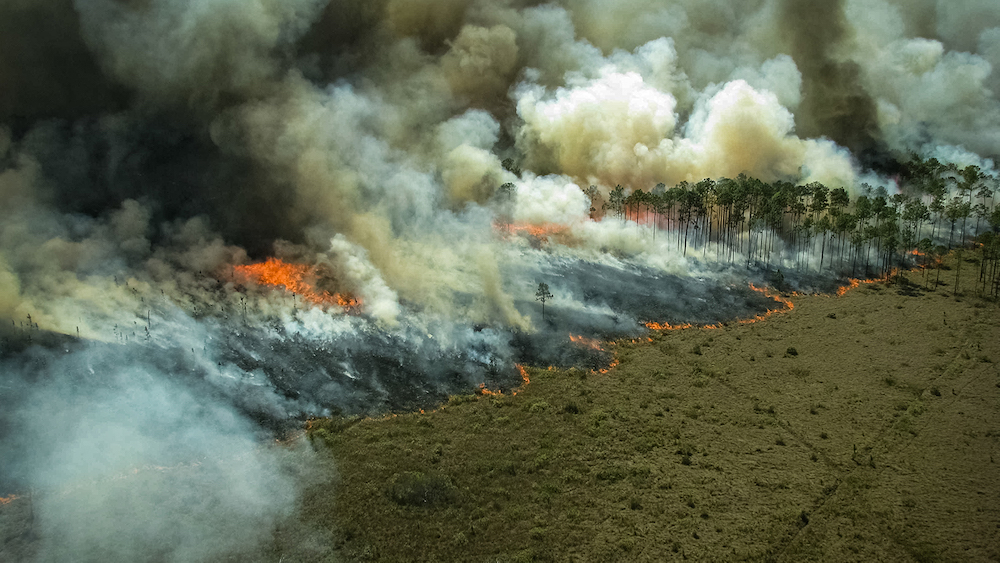
Human-set fires in the Amazon: The current pandemic is an inevitable consequence of human populations everywhere expanding into the habitats of other species with which we have had little previous contact. Photo: Pixabay Creative Commons.
True, in simple ecosystems certain consuming species may exhibit regular cycles of uncontrolled expansion. We sometimes refer to these outbreaks as “plagues” — think swarms of locusts or rodents.
However, the plague phase of the cycle invariably ends in collapse as negative feedback once again gains the upper hand.
Bottom line? There are no exceptions to the first law of plague dynamics: the unconstrained expansion of any species’ population invariably destroys the conditions that enabled the expansion, thus triggering collapse.
Now here’s the thing. H. sapiens has recently experienced a genuine population explosion. It took all of human evolutionary history, at least 200,000 years, for our population to reach its first billion early in the 19th Century. Then, in just 200 years, (less than one thousandth as much time) we blossomed to more than seven billion at the beginning of this century.
This unprecedented outbreak is attributable to H. sapiens’ technological ingenuity, e.g., modern medicine and especially the use of fossil fuels. (The latter enabled the continuous increases in food production and provided access to all the other resources needed to expand the human enterprise.)
The problem is that Earth is a finite planet, on which the seven-fold increase in human numbers, vastly augmented by a 100-fold increase in consumption, is systematically destroying prospects for continued civilized existence. Over-harvesting is depleting non-renewable resources; land degradation, pollution, and global warming are destroying entire ecosystems; biophysical life support functions are beginning to fail.
With increasing real scarcity, growing extraction costs, and burgeoning human demand, the prices for non-renewable metal and mineral resources have been rising for 20 years (from historic lows at the turn of the century). Meanwhile, petroleum may have peaked in 2018 signalling the pending implosion of the oil industry (abetted by falling demand and prices resulting from the COVID-19 recession).
These are all signs of resurgent negative feedback. The explosion of human consumption is beginning to resemble the plague phase of what may turn out to be a one-off human population cycle. If we don’t manage a controlled contraction, chaotic collapse is inevitable.
Which brings us back to society’s restricted focus on COVID-19 and the economy.
Listen to the news, to politicians and pundits in this time of crisis. You will hear virtually no reference to climate change (remember climate change?), wildfires, biodiversity loss, ocean pollution, sea level rise, tropical deforestation, land/soil degradation, or human expansion into wildlands.
Nor is there a hint of understanding that these trends are connected to each other and to the pandemic.
Discussion in the mainstream focusses doggedly on defeating COVID-19, facilitating recovery, restoring growth and otherwise getting back to normal. After all, as Gregory Bateson has written, “That is the paradigm: Treat the symptom to make the world safe for the pathology.”
Let that sink in: “Normal” is the pathology.
But returning to “normal” guarantees a repeat performance. There will be other pandemics, potentially worse than COVID-19. (Unless, of course, some other form of negative feedback gets to us first — as noted, there is no shortage of potential candidates.)
Consider the present pandemic as yellow flagging for what nature may yet have in store. Earth will have its revenge. Unless, to avoid full-on negative feedback, we stand back and re-focus. This means consciously overriding humans’ natural myopia, thinking generations ahead and abandoning our perpetual growth narrative.
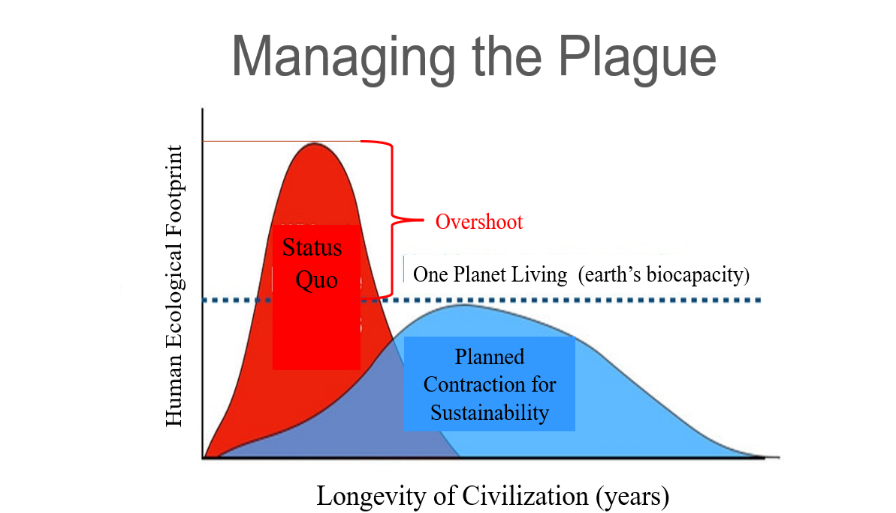
To save itself, society must adopt an eco-centric lens. This would enable us to see the human enterprise as a fully dependent subsystem of the ecosphere. We need to script a new cultural narrative consistent with this vision. We must reduce the human ecological footprint to eliminate overshoot — below is a curve that really needs flattening.
A different curve to flatten: Let’s start with a 50-per-cent reduction in energy and material throughput, as implicit in the 2015 Paris climate accord. Provided by William Rees.
Our cultural reset cannot end there. As medical supplies and equipment run out and supply chains stretch or break, people everywhere are becoming conscious of hazards associated with today’s increasingly unsustainable entanglement of nations.
We will have much to celebrate if community self-reliance, resilience and stability are once again valued more than interdependence, efficiency and growth. Specialization, globalization and just-in-time trade in vital commodities have gone too far. COVID-19 has shown that future security may well reside more in local economic diversity. For one thing, countries under stress may begin hoarding vital commodities for domestic use. (As if on cue, on April 3, Donald Trump, president of Canada’s biggest trading partner, requested 3M to suspend exports of badly-needed respirator face masks to Canada and Latin America.) Surely we need permanent policies for the re-localization of vital economic activities through a strategic approach to import displacement.
We might also build on the better side of human nature as ironically invigorated by our collective war on COVID-19. In many places, society’s fear of disease has been leavened by a revived sense of community, solidarity, compassion, and mutual aid. Recognition that disease strikes the impoverished hardest and that the pandemic threatens to widen the income gap has renewed calls for a return to more progressive taxation and implementation of a national minimum wage.
The emergency also draws attention to the importance of the informal care economy — child rearing and elder care are often voluntary and historically subsidize our paid economy. And what about renewed public investment worldwide in girls’ education, women’s health and family planning? Certainly individual actions are not enough. We are in a collective crisis that demands collective solutions.
To those still committed to the pre-COVID-19 perpetual-growth-through-technology paradigm, economic contraction equates to unmitigated catastrophe. We can give them no hope but to accept a new reality.
Like it or not, we are at the end of growth. The pandemic will certainly induce a recession and possibly a global depression, likely reducing Gross World Product by a quarter.
There are good reasons to think that there can be no “recovery” to pre-COVID “normal” even if we were foolish enough to try. Ours has been a debt-leveraged economy. Thousands of marginal firms will be bankrupted; some will be bought up by others with deeper pockets (further concentrating wealth) but most will disappear; millions of people will be left unemployed, possibly impoverished without ongoing public support.
The oil patch is particularly hard hit. Canada’s tar sands producers who need $40 dollars a barrel to survive are being offered one tenth that, less than the price of a mug of beer. Meanwhile, oil production may have peaked and older fields upon which the world still depends are declining at a rate of six per cent per year.
This heralds a future crisis: GWP and energy consumption have historically increased in lock-step; industrial economies depend utterly on abundant cheap energy. After the current short-term demand-drop surplus dries up, it will be years (if ever) before there is adequate new supply to replicate pre-pandemic levels of global economic activity — and there are no adequate”green’”substitutes. Much of the economy will have to be rebuilt to size in ways that reflect this emergent reality.
And herein lies the great opportunity to salvage global civilization.
Clearing skies and cleaner waters should inspire hopeful ingenuity. Indeed, if we wish to thrive on a finite planet, we have little choice but to see the COVID-19 pandemic as preview and our response as dress rehearsal for the bigger play. Again, the challenge is to engineer a safe, smooth, controlled contraction of the human enterprise. Surely it is within our collective imagination to socially construct a system of globally networked but self-reliant national economies that better serve the needs of a smaller human family.
The ultimate goal of economic planning everywhere must now turn to ensuring that humanity can thrive indefinitely and more equitably within the biophysical means of nature.
This is a very difficult and challenging time for us all. However, there is a silver lining to the coronavirus.
In mid March, just days before the event was to begin, we watched, waited and advocated for the cancellation of the largest wild fur auction house in North America.
Almost 500,000 animal pelts were in the preliminary listing for sale in Toronto at the Fur Harvester’s (FHA) March Auction.
On March 16, as TFMPL was preparing to step it up, Canada, in response to the coronavirus, responsibly closed their doors, basically to non-Canadians, thereby forcing the cancellation of the Fur Harvester’s March auction.
The major purchasers of fur from our North American wildlife are China and Russia. Italy, Greece and South Korea are also players in the fur trade.
Why is this so significant?
In the fall of 2019, the 350 year old North American Fur Auctions, (NAFA), with proclaimed roots to Hudson Bay company, recognized as the world’s largest producer of wild fur, announced they would no longer be selling wild fur. In a letter to trappers, NAFA said their banking partners had decided to get out of the fur business. The names of the banks were not provided. According to the NAFA CEO, “the entire industry is still facing an unprecedented market correction and no sector is immune, including the auction houses.”
The Fur Harvesters Auction claimed NAFA’s problems were due to ranch fur and had nothing to do with wild fur. The cost for the production of ranch fur is now about double the profit. The prediction has been that the demand for wild fur would rise as the ranch fur market decreases.
Fur Harvesters Auction were provided a virtual monopoly on wild fur sales. Trappers were assured they would still get their money at the Fur Harvester’s auction. Some in the fur business actually give monetary advances to trappers.
The Fur Harvester’s Auction states, “The global fur market is always set at the International Auctions.” They go on to advise trappers “as the last remaining wild fur action house on the continent, the market will not be set until the conclusion of our March 24th /26th 2020 auction”. Now that has been cancelled. Postponed.
An expert told us all these pelts over time go stale reducing their value.
Even though, we know trappers say the number one reason they trap is for fun, trapping is market driven. With the downturn of fur prices over the years, trapping has been on the downward trend, too! Some have said it simply isn’t worth it anymore or is becoming more cost prohibitive. Heaven forbid!
*Photo courtesty: Montana Trappers Association Western States Fur Auction Feb 2018
You may be surprised to know in the past, Montana Fish Wildlife and Parks responded to low bobcat prices by increasing their quota in order to spark interest again in trappers. Nowadays, bobcat remain one of the more lucrative animals to trap and kill. However, the days of recent highs of $1,000 for a bobcat pelt are a rarity. The bobcat average price has also dropped $200 to an average of $300 – $400.
Unfortunately, the popularity of coyote trim jackets, courtesy of Canada Goose, has caused coyote pelts to rise as well as the persecution on them. This is further exacerbated in places like Montana where coyotes can be trapped, killed by any means, year round, unlimited, no annual $28 trapping license required of residents and no reporting either. This, of course, is reinforced by the powerful livestock industry. There were 50,000 coyotes at this cancelled auction, alone. These were just the ones accepted for sale. Many, probably most, are not. Western coyotes are the favorites.
Locally, fur auctions in Montana and fundraisers to embrace trapping have been cancelled due to the coronavirus restrictions.
Saga Furs, owned by the Finnish fur industry, just attempted to sell millions of ranch fur online and failed miserably. They are now claiming they are laying all staff off for three months.
We can’t help but wonder with this pandemic and the upcoming widespread financial ramifications to come, who all will wind up buying furs? Add to that the growing fashion designers, stores, cities, and states ending the selling of fur.
Prior to this year’s auction, the trapper owned Fur Harvesters, wrote, “FHA remains deeply committed to the trappers of North America on all levels.” Well we know that but now we’ll see.
Not long ago the fur industry was still estimated at $15 billion! 50,000 animals on average are reported trapped annually in Montana but along with the price of fur, that number has been declining. Millions of wildlife nationally have been estimated trapped in the US each year.
There are so many wrongs with trapping that there are multiple ways to attack it! We need your help though!
In this scary and uncertain time, we can’t wait to see the bottom fall out of this blood money! It can’t happen soon enough, friends!
*Images are the courtesy of Fur Harvesters Auction unless otherwise noted.
Thank you Friends of Trap Free Montana Public Lands and Trap Free Montana
by JILL LAWLESS and FRANK JORDANS Associated Press
AA
(Photo: UN via MGN Online)
LONDON (AP) — This year’s United Nations global climate summit is being postponed because of the coronavirus pandemic, host country Britain said Wednesday,
The U.K. government said the meeting, due to take place in Glasgow, Scotland, in November, will now be held next year at a date still to be determined.
The government said in a statement that “in light of the ongoing, worldwide effects of COVID-19, holding an ambitious, inclusive COP26 in November 2020 is no longer possible.” The meeting is formally known as the 26th Conference of the Parties.
The decision was made by the United Nations Framework Convention on Climate Change, Britain and Italy, which had been due to host some preparatory events.
Scottish First Minister Nicola Sturgeon tweeted that it was a “disappointing decision, but absolutely the right one as we all focus on the fight against #coronavirus.”
Glasgow’s SEC Arena, which had been due to host the event, has been named as the site of a temporary hospital for COVID-19 patients.
Prime Minister Boris Johnson has made tackling climate change a priority, but Britain’s tenure at the helm of the conference got off to a bumpy start even before the coronavirus pandemic. In January, Johnson fired Claire O’Neill, a former British government minister appointed last year to head the event, and replaced her with Business Secretary Alok Sharma.
“We will continue working tirelessly with our partners to deliver the ambition needed to tackle the climate crisis and I look forward to agreeing a new date for the conference,” Sharma said Wednesday.
Patricia Espinosa, who heads the U.N. climate office, said the new coronavirus “is the most urgent threat facing humanity today, but we cannot forget that climate change is the biggest threat facing humanity over the long term.”
U.N. Secretary-General Antonio Guterres stresses that safeguarding lives “is our foremost priority” but countries must step up action on climate change especially as they recover from the COVID-19 pandemic, U.N. spokesman Stephane Dujarric said.
“Countries must work to protect the health of people, and the planet has never been more at risk,” the U.N. chief’s spokesman said. “Solidarity and greater ambition is needed now more than ever to transition to a sustainable, resilient low carbon economy that limits global warming to 1.5 degrees Celsius (2.7 degrees Fahrenheit).”
The meeting in Glasgow would have been held five years after the 2015 Paris climate accord was agreed. Countries that signed the landmark agreement are still expected to provide an update on their efforts to reduce greenhouse gas emissions driving global warming.
In the Paris Agreement, countries agreed to limit global warming to 2 degrees Celsius (3.6 degrees Fahrenheit) and do their best to keep it below 1.5 degrees C (2.7 degrees Fahrenheit) by the end of the century, compared with pre-industrial times.
President Donald Trump has triggered the United States’s withdrawal from the Paris accord, a move that formally comes into force in November. His Democratic rivals have said they would rejoin if elected.
Environmental campaigners said postponing this year’s U.N. talks was the right move.
“It doesn’t make sense to bring people from every country together in the middle of a pandemic,” said Mohamed Adow, a longtime participant at U.N. climate meetings who heads the think tank Power Shift Africa.
Adow said postponing the conference mustn’t stop countries from taking action to curb global warming, though, and suggested plans to revive economies after the pandemic ends should avoid propping up the kinds of industries that contribute to climate change.
“Economies in the rich north must not be kick-started with dirty investment that will lead to climate suffering in the global south,” he said.
Environment officials are planning to hold a lower-level meeting online at the end of April.
In an interview on Fox & Friends, Dr. Anthony Fauci ― the director of the National Institute of Allergy & Infectious Diseases & one of the top experts on the White House Coronavirus Task Force ― urged China to permanently close the “wet markets” that sell live & exotic animals and have been linked to outbreaks of severe viruses:
“I think they should shut down those things right away. It boggles my mind how, when we have so many diseases that emanate out of that unusual human-animal interface, that we don’t just shut it down. I don’t know what else has to happen to get us to appreciate that. I think there are certain countries in which this is very commonplace. I would like to see the rest of the world really lean with a lot of pressure on those countries that have that, because what we are going through right now is a direct result of that.”
What are “wet markets”?
“Wet markets” are marketplaces, sometimes open air, that sell fresh meat, fish, and other perishable goods. Some wet markets sell living animals, including wildlife & domesticated animals like dogs & cats, for food.
Their name comes from melting ice used to preserve food, as well as water used to clean blood & excrement on the floor from the animals, which may be stored & butchered on-site. Many wet markets are unsanitary and cramped, which creates conditions for the transmission of diseases from animals to humans through bacteria & viruses.
Wet markets are relatively common in some parts of the world, including China, Southeast Asia, and Africa ― although there may be substantial differences by region. For example, a 2014 study in China found only 5% of people in Beijing consumed wild animals in the prior year, whereas 83% of people in Guangzhou had.
China’s wet markets originated in the late 1970s after the failure of the Chinese Communist Party’s Cultural Revolution, which produced a famine that killed tens of millions of Chinese people. Because the CCP couldn’t invest in livestock production, it encouraged farmers to collect wild animals like bats, civets (cat-like animals), pangolins (endangered armadillo-like animals), rats, snakes, and others to breed for consumption & sale at local markets.
How are wet markets linked to viral outbreaks?
The 2002-2003 outbreak of severe acute respiratory syndrome (SARS) originated in a colony of horseshoe bats in a cave in China’s Yunnan Province, which passed the virus onto civets that in turn served as a vector to pass the virus to humans after they were sold as food at a wet market in China’s Guangdong Province. China’s government temporarily closed the wet markets during the SARS epidemic, which killed 774 people around the world, but lifted the ban six months after its conclusion.
Infectious disease experts haven’t yet definitively pinpointed how the coronavirus (COVID-19) outbreak began in Wuhan, China. A cluster of cases in people who went to a wet market known as the Huanan Seafood Wholesale Market have raised suspicion that that coronavirus was passed from animals to humans there. Studies have suggested that COVID-19 originated in bats, and that pangolins may have been the intermediate host that served as a vector in the virus’ transmission to humans.
Graham said in an interview on Fox & Friends the letter will warn China that, “If you don’t shut those wet markets down, our trading relationship is going to change.” He added:
“The source of this virus is the Chinese wet markets. But when you look — have doctors who come on and ask them, how many diseases have come from China through these wet markets where you intermingle all kinds of exotic animals, it’s just really a gross display of how you prepare food, that needs to stop.”
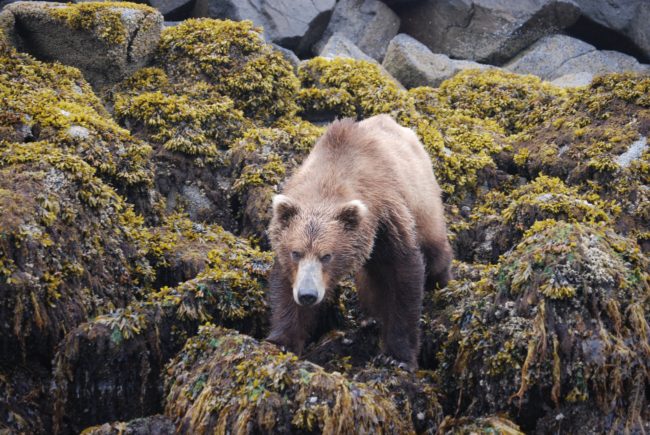
A brown bear in the Katmai area of the Alaska Peninsula, Nov. 18, 2010. (Creative Commons photo by Mandy Lindeberg/NOAA)
After announcing there would be no spring bear hunting in the state, the Alaska Department of Fish and Game has partially changed its mind. All non-resident brown and black bear hunts will remain closed through May 31. Spring bear hunting for Alaska residents remains open during that time.
“You know this was all about people moving around the state, specifically about hunters coming up from the lower 48, but also about people going from different communities in Alaska,” said Ryan Scott, assistant director of ADFG’s division of wildlife conservation.
“Right now we don’t have any concerns about bear populations. It remains to be seen how many people will take advantage of it, but it’s really good that resident hunters can get out there and take advantage of the bear opportunities.”
A Thursday letter from Fish and Game commissioner Doug Vincent-Lang reminds resident hunters to abide by health mandates, including social distancing and intrastate travel. That in-state travel between communities is prohibited except for supporting critical infrastructure or for critical personal needs.
Originally the Department closed non-resident and resident bear hunts until the end of May, via emergency order, in an effort to slow the spread of COVID-19 in Alaska. Even though Commissioner Vincent-Lang rescinded a portion of this closure, he emphasizes that general hunting has not been identified as a critical personal need, as defined by Governor Mike Dunleavy’s health mandates.
Scott said the department plans to work with the state’s Board of Game to accommodate hunters who’ve lost the opportunity.
“We recognize that there are lots of non-resident hunters planning to come to Alaska right now both for black bear hunts and brown bear hunts,” Scott said.
“We’re going to be looking for opportunities to move those permits around if we can to give those hunters the chance to come and do it again. We don’t know what it’s going to look like yet and it’s going to take some time to sort all that out. It’s important to recognize that we’ve issued drawing permits for next year already. So it’s going to take some finessing to distribute hunters across the landscape.”
Companies that accommodate out-of-state hunters can charge anywhere from a couple thousand dollars for a week-long self-guided black bear hunt to tens of thousands of dollars for a fully guided hunt from a wilderness lodge or tour boat. Brown bear hunts for non-residents are only allowed with a licensed guide or close relative who is a resident.
Eli Lucas owns Alaska Coastal Hunting, a guiding business based in Petersburg. He said the spring bear season is about half of his income for the year, but he understands the closure had to happen.
“We’ve offered refunds or switching dates but we really don’t know where to put people,” Lucas said. “We actually need more season if we’re going to put somebody to a full calendar because we don’t have room for the next years. And so, the other guides are in the same position. It’s a pretty complicated issue really.”
Outfitters, lodges, boat rentals and float plane companies will also lose business with the closure.
Fish and Game said they will announce further details in the coming days on how these spring bear hunts should be conducted by residents while complying with the Governor’s COVID-19 mandates.
Meanwhile, no closures are anticipated for other spring hunting seasons. And sport fishing remains open in Alaska with no current plans for closure.
Washington State has a temporary closure for its sport fishing along with the Columbia River in Oregon.
Grupo Modelo, the company that makes the beer, posted the announcement on Twitter, stating that it’s halting production and marketing of its beer because the Mexican government has shuttered non-essential businesses. The Anheuser-Busch Inbev-owned company also makes Modelo and Pacifico beers.
This week, the Mexican government announced the suspension of non-essential activities in the public and private sectors until April 30 in an effort to curb the spread of the virus. The country has more than 1,500 cases and 50 deaths, according to Johns Hopkins.
Grupo Modelo is ready to enact a plan to “guarantee the supply of beer” if the Mexican government decides to include breweries as essential, according to a statement.
Constellation Brands (STZ) handles the distribution and import of Grupo Modelo’s beers in the United States. CEO Bill Newlands said in an earnings call the brand has “ample supply to meet consumer demand” and doesn’t expect shortages in the near term.
close dialog
Corona’s coincidental name with the virus hasn’t dented sales. Constellation said sales of its beer brands grew 8.9% for the first three months of this year, with Modelo and Corona being its top sellers. Sales accelerated in the first three weeks of March, the company said, with its beers growing 24% compared to a year ago.
Corona Hard Seltzer, which launched in early March, is also off to a “strong start,” according to a company earnings release.
Beer and other alcohol are rising in sales this month as Americans are being forced to hunker down in light of the coronavirus. Sales numbers from Nielsen (NLSN) show beer sales rose 34% year-over-year for the week ending on March 21.

![[Tyee]](https://thetyee.ca/ui/img/ico_fishie.png)



 Exposing the Big Game
