Infectious Disease Expert Explains Why Next COVID-19 Wave In U.S. Is Inevitable

04/06/2021 06:08 am ET Updated 7 hours ago

https://www.huffpost.com/entry/michael-osterholm-inevitable-new-wave-coronavirus_n_606c1818c5b6c00165c52ac1

It’s likely too late to stop this upcoming surge, warned Michael Osterholm.

headshot

By Lee MoranContent loading…

Infectious disease expert Michael Osterholm on Monday warned of the inevitability of another wave of coronavirus infections in the United States.

“While vaccination is important, it is obviously a critical part of our long-term game plan, we’re not going to have enough vaccine, at the way we’re going, into the arms of enough Americans over the course of the next six to 10 weeks, with this surge, that we’re going to stop it,” Osterholm, the director of the Center for Infectious Disease Research and Policy at the University of Minnesota, told CNN’s Erin Burnett.

“It’s just simply not going to happen,” he added.

Osterholm noted that some states, even where vaccination uptake has been high, are now experiencing rising daily new infections.

As GOP-led states lift pandemic restrictions, new infections nationwide have plateaued at around 65,000. It’s a stubborn detail that has troubled public health experts.

Dr. Anthony Fauci, the director of the National Institute of Allergy and Infectious Diseases and top medical adviser of President Joe Biden, cautioned last week that now is “just not the time to pull back and declare premature victory.”https://action.publicgood.com/embed.html?partner_id=buzzfeed-huffpost&utm_source=buzzfeed-huffpost&title=Infectious%20Disease%20Expert%20Explains%20Why%20Next%20COVID-19%20Wave%20In%20U.S.%20Is%20Inevitable&url=https%3A%2F%2Fwww.huffpost.com%2Fentry%2Fmichael-osterholm-inevitable-new-wave-coronavirus_n_606c1818c5b6c00165c52ac1&utm_content=https%3A%2F%2Fwww.huffpost.com%2Fentry%2Fmichael-osterholm-inevitable-new-wave-coronavirus_n_606c1818c5b6c00165c52ac1&widget_type=card&action=Default&is_flex=true&match_type=ml&campaign_id=ea0fef93-4deb-4581-9ad2-0fae5b670347&parent_org=buzzfeed&target_id=ea0fef93-4deb-4581-9ad2-0fae5b670347&content_id=15908882&cid_match_type=post-filter%20guid%20name%20match&tag=public%20health%20~%20pfizer%20ml%20match&is_filter=true&url_id=29244908&target_name=Explore%20Breakthroughs&is_sponsored=true&sponsor_name=Pfizer%20Inc.

Osterholm on Sunday warned the forthcoming wave will more likely affect children, due to the prevalence of the more contagious B.1.1.7. variant.

“Unlike the previous strains of the virus, we didn’t see children under eighth grade get infected often, or they were not frequently very ill,” Osterholm said on NBC’s “Meet the Press.” “Kids are playing a huge role in the transmission of this,” he added on Fox News.

Coronavirus pandemic slowdown has made the oceans quieter, which has been good for whales

Not only has pandemic helped accelerate the end of commercial whale hunting, ambient noise in the world’s oceans is also way down.

https://www.nbcnews.com/news/world/coronavirus-pandemic-slowdown-has-made-oceans-quieter-which-has-been-n1262175?fbclid=IwAR3g4XjkrUxDG3LHB14f8U8m_ffssXXzpmaSLnH_iREuXoKgfV0kD8o75vc

March 28, 2021, 5:00 AM PDT / Updated March 28, 2021, 8:05 AM PDTBy Sarah Harman and Carlo Angerer

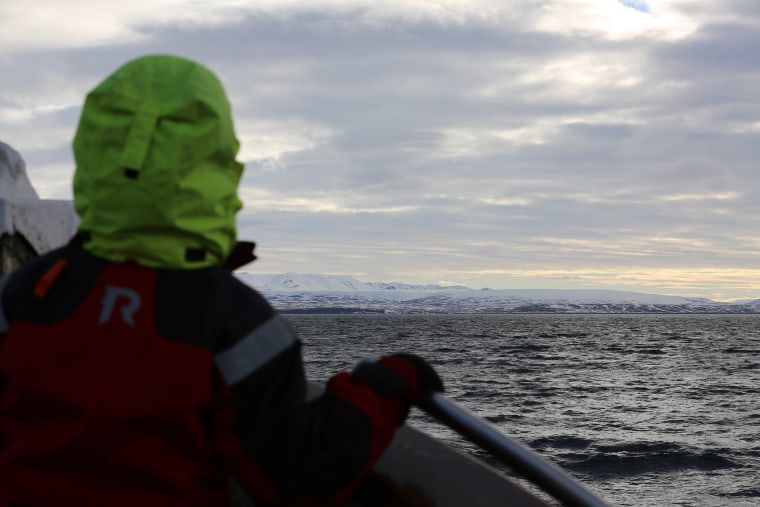
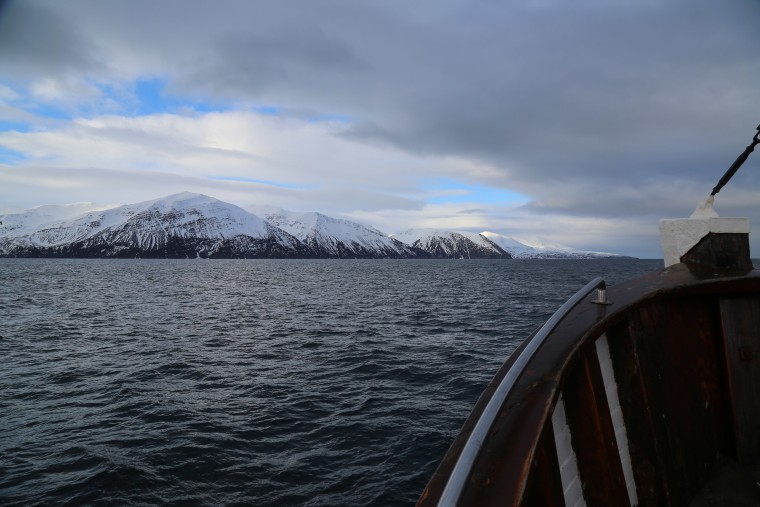
HÚSAVÍK, Iceland — Surrounded by snow-covered mountain ranges, this tiny town on Iceland’s north coast has become the “whale capital” of the country — whale watching is its lifeblood.

“It’s probably the most popular activity for visitors, foreign and domestic,” Heimir Hardarson, captain at North Sailing, said.

As one of the pioneers of whale watching in Iceland, Hardarson has taken people onto ocean waters for nearly 30 years to experience a close encounter with some of the largest animals in the world.

“Very mystical creatures,” he said, “floating around in their weightlessness.”

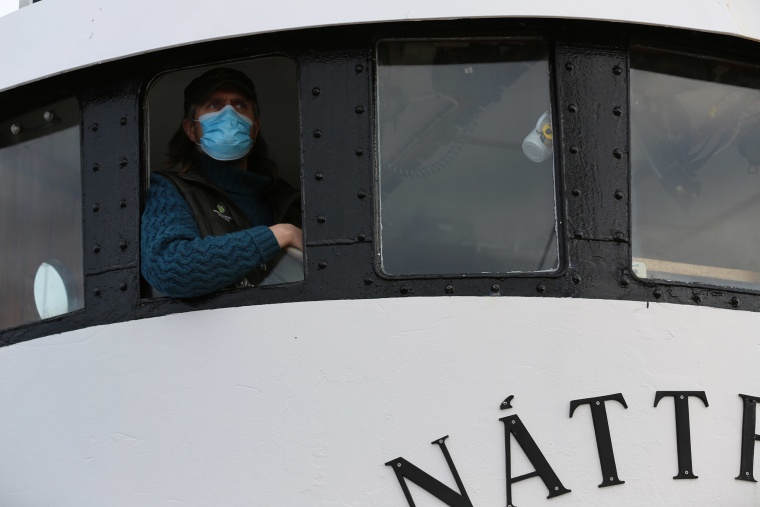
Image:: Captain Heimir Hardarson takes whale watchers out on his boat in Husavik, Iceland.
Captain Heimir Hardarson takes whale watchers out on his boat in Húsavík, Iceland.Carlo Angerer / NBC News

On a recent morning, Hardarson took a handful of visitors on his boat that usually holds 90 passengers to spot humpback and fin whales in Skjalfandi Bay.

Visitor numbers have been hit hard by the coronavirus pandemic. But the global slowdown has actually been good for the whales, as human interference has decreased. Ambient noise in the world’s oceans from cruise ships, sonar and construction is way down.

For more on this story watch TODAY this morning at 8 a.m. ET.

“I think, overall, the pandemic has largely been a positive for whales,” said Ari Friedlaender, a marine ecologist and biologist with the University of California at Santa Cruz.

He is studying how the quieter oceans have affected whales by measuring their stress levels through hormone samples. Friedlaender said animals use acoustics such as whale songs to communicate with one another and locate food. Noise in the environment can interfere with those communications and other critical life functions

“The thought is that as you decrease the amount of human activity and noisy environment, we’re going to see a decrease in the stress hormone levels of these animals,” he said.

Image: Husavik on Iceland's north coast has become the "whale capital" of the country.
Húsavík on Iceland’s north coast has become the “whale capital” of the country.VW Pics / Universal Images Group via Getty file

Friedlaender said stress affects whales similarly to how it has an impact on humans, changing their behavior and ability to perform physically and mentally. Stress can also lead to long-term changes affecting a whale’s overall health and its ability to reproduce.

“The animal may not reproduce as frequently as it would have otherwise,” he said. “If it doesn’t reproduce as frequently, the population doesn’t have the opportunity to grow as quickly, or to maintain its population growth.”

The pandemic has had an even more concrete impact on the whale population off Iceland’s coast: It has helped accelerate the end of commercial whale hunting.

Recommended

WORLDMafia fugitive was living a quiet island life. Then police found his YouTube cooking show.

LATINOIn Mexico, growing outrage over death of Salvadoran woman in police custody

Download the NBC News app for full coverage of the coronavirus outbreak

Iceland is one of only three countries in the world that still allow commercial whaling, the other two being Japan and Norway, and last year two Icelandic whaling companies halted hunting operations due to health restrictions. Operators told local media that social distancing regulations would make the usual processing onboard impossible.

“I’m never going to hunt whales again, I’m stopping for good,” Gunnar Bergmann Jonsson, managing director of the minke whaling company IP-Utgerd, told the news agency Agence France-Presse last year. And demand has continued to fall.

“There’s no need to hunt the whales anymore. There’s no need to eat them,” said Eva Björk Káradóttir, director of the Húsavík Whale Museum. “The young generation born after 2000 don’t really do it.”

Image: Captain Heimir Hardarson takes whale watchers out on his boat in Husavik, Iceland.
Captain Heimir Hardarson has taken people onto ocean waters for nearly 30 years to experience a close encounter with some of the largest animals in the world.Carlo Angerer / NBC News

In fact, much of the demand for whale meat within Iceland had been from tourists who wanted to try it during their visits, she said. Icelanders have re-examined their relationship to whales in recent decades.

“I think tourism started and we started to get just people from all over the world. We got a new perspective, and it’s just in that time that we realized really that our land is beautiful, our water is good and also that people were interested in whales,” she said.

Hardarson, the captain of the whale watching boat, said that people have stopped eating whale meat for several reasons, including realizing the senselessness of killing an animal that can live for almost a century. And he highlighted another simple reason, as well.

“They are worth way more alive than dead,” he said. “I think there’s going to be no commercial whaling, and in the future. I can see no reason why there should be.”

Image: Captain Heimir Hardarson, on his boat in Husavik, Iceland.
Captain Heimir Hardarson said he did not think commercial whaling would take place in the future. Carlo Angerer / NBC News

He acknowledged that animals are also affected by whale watching tours but said the experience helps motivate people to protect them.

“There are threats also connected to whale watching and something you have to keep in mind to try not to overstress or put too much pressure on the resource in this way,” he said. “We are very concerned about this, so we are trying to keep down speed and we are trying to minimize our carbon footprint.”

His hope now is that with tourism growing as Iceland allows vaccinated visitors to enter the country without having to quarantine, whale watching will once again be big business, helping to support the animals and the whole town.

Now vaccinated, older adults emerge from COVID hibernation

https://www.msn.com/en-us/news/us/now-vaccinated-older-adults-emerge-from-covid-hibernation/ar-BB1f1Iuq

Associated Press

By DAVID SHARP, Associated Press  1 day ago


Regina King, Issa Rae and More Stars Who Stunned in Jaw-Dropping Looks at…The idyllic New England town of Wellsbury from ‘Ginny & Georgia’ is closer…

PORTLAND, Maine (AP) — Bill Griffin waited more than a year for this moment: Newly vaccinated, he embraced his 3-year-old granddaughter for the first time since the pandemic began.

“She came running right over. I picked her up and gave her a hug. It was amazing,” the 70-year-old said after the reunion last weekend.

Spring has arrived with sunshine and warmer weather, and many older adults who have been vaccinated, like Griffin, are emerging from COVID-19-imposed hibernation.

From shopping in person or going to the gym to bigger milestones like visiting family, the people who were once most at risk from COVID-19 are beginning to move forward with getting their lives on track. More than 47% of Americans who are 65 and older are now fully vaccinated.

Visiting grandchildren is a top priority for many older adults. In Arizona, Gailen Krug has yet to hold her first grandchild, who was born a month into the pandemic in Minneapolis. Now fully vaccinated, Krug is making plans to travel for her granddaughter’s first birthday in April.

“I can’t wait,” said Krug, whose only interactions with the girl have been over Zoom and FaceTime. “It’s very strange to not have her in my life yet.”

The excitement she feels, however, is tempered with sadness. Her daughter-in-law’s mother, who she had been looking forward to sharing grandma duties with, died of COVID-19 just hours after the baby’s birth. She contracted it at a nursing home.

Isolated by the pandemic, older adults were hard hit by loneliness caused by restrictions intended to keep people safe. Many of them sat out summer reunions, canceled vacation plans and missed family holiday gatherings in November and December.

In states with older populations, like Maine, Arizona and Florida, health officials worried about the emotional and physical toll of loneliness, posing an additional health concern on top of the virus.

But that’s changing, and more older people are reappearing in public after they were among the first group to get vaccinated.

Those who are fully vaccinated are ready to get out of Dodge without worrying they were endangering themselves amid a pandemic that has claimed more than 540,000 lives in the United States.

“Now there’s an extra level of confidence. I am feeling good about moving forward,” said Ken Hughes, a 79-year-old Florida resident who is flying with his wife for a pandemic-delayed annual trip to Arizona in April.

Plenty of older adults are eager to hop on a jet to travel. Others are looking forward to the simpler things like eating at a restaurant, going to a movie theater or playing bingo.

Sally Adams, 74, was among several older people who showed up for “parking lot bingo” in Glendale, Arizona. She felt safe because she’d been vaccinated and because she was in her car at the first bingo event in more than year.

Once she fulfills the time to reach peak immunity, she plans to indulge in little things like eating out. Both her and her husband, who is also vaccinated, have only done takeout. Now, they feel like it will be OK to even eat indoors — as long as it’s not crowded.

“We’ll probably go in and take the farthest table from other people just to be on the safe side,” she said.

Indeed, many older adults are taking a cautious approach, especially when the U.S. Centers for Disease Control and Prevention declined to ease recommendations for travel.

Frequent traveler Cindy Charest was so excited about the prospect of jetting away for the first time in more than a year that she posted an airplane emoji with a photo of her being vaccinated on social media.

But she’s taking a wait-and-see attitude after the CDC recommended against nonessential air travel, for now.

“I think I got prematurely excited about it,” said Charest, 65, of Westbrook, Maine. But she’s ready to jump when the time comes. She’s watching for changing guidance.

Others are also cautious.

“We’re still in the thick of it,” said Claudette Greene, 68, of Portland, Maine. “We’ve made a lot of progress but we’re not done with this.”

Kathy Bubar said she and her husband are completely vaccinated but are in no hurry to push things. The 73-year-old Portland resident is planning to wait until fall before planning any major travel. She hopes to go on a safari in December.

“My goal in all of this is to not be the last person to die from COVID. I’m willing to be patient and take as long as it takes,” she said.

The Griffins were also cautious before they were reunited with their granddaughter.

Bill Griffin, of Waterboro, didn’t dare have close contact with family members until after being vaccinated because he has lung disease, heart disease, kidney disease and high blood pressure, all factors that pushed him into a high-risk category for COVID-19.

“Everybody wants to live for the moment, but the moment could have been very deadly. We listened to the scientists,” he said.

___

Associated Press writers Adriana Gomez Licon in Miami and Terry Tang in Phoenix contributed to this report.Continue Reading


Maine CDC reports 222 new cases of COVID-19 as 7-day average continues to rise

14 Shares

https://www.wmtw.com/article/maine-cdc-reports-222-new-cases-of-covid-19-as-7-day-average-continues-to-rise/35891743#

WMTWUpdated: 10:23 AM EDT Mar 20, 2021

coronaviruscoronavirus SOURCE: WMTW-TV

TRACKING THE COVID-19 VACCINE

Sign up for daily emails with local updates and other important news.SUBMITPrivacy NoticeAUGUSTA, Maine —

The Maine Center for Disease Control and Prevention is reporting 222 new COVID-19 cases on Saturday and no new deaths.

Maine’s seven-day average for new cases is now 206.6, up from 175.7 a week ago.https://41a124f1d8a9fc8c0e75bf3de20a6223.safeframe.googlesyndication.com/safeframe/1-0-37/html/container.htmlAdvertisement

The Maine CDC said 215,408 Mainers have received their final COVID-19 vaccine dose, which represents 16.02% of the population.

MAINE CORONAVIRUS DATA:

  • Deaths: 728
  • Total cases: 48,292
  • Confirmed cases: 37,310
  • Probable cases: 10,982
  • Cumulative positivity rate: 2.64%
  • 14-day positivity rate: 1.6%
  • Currently hospitalized: 80
  • Patients in intensive care: 20
  • Patients on ventilators: 10

Get more detailed COVID-19 data from the Maine CDC

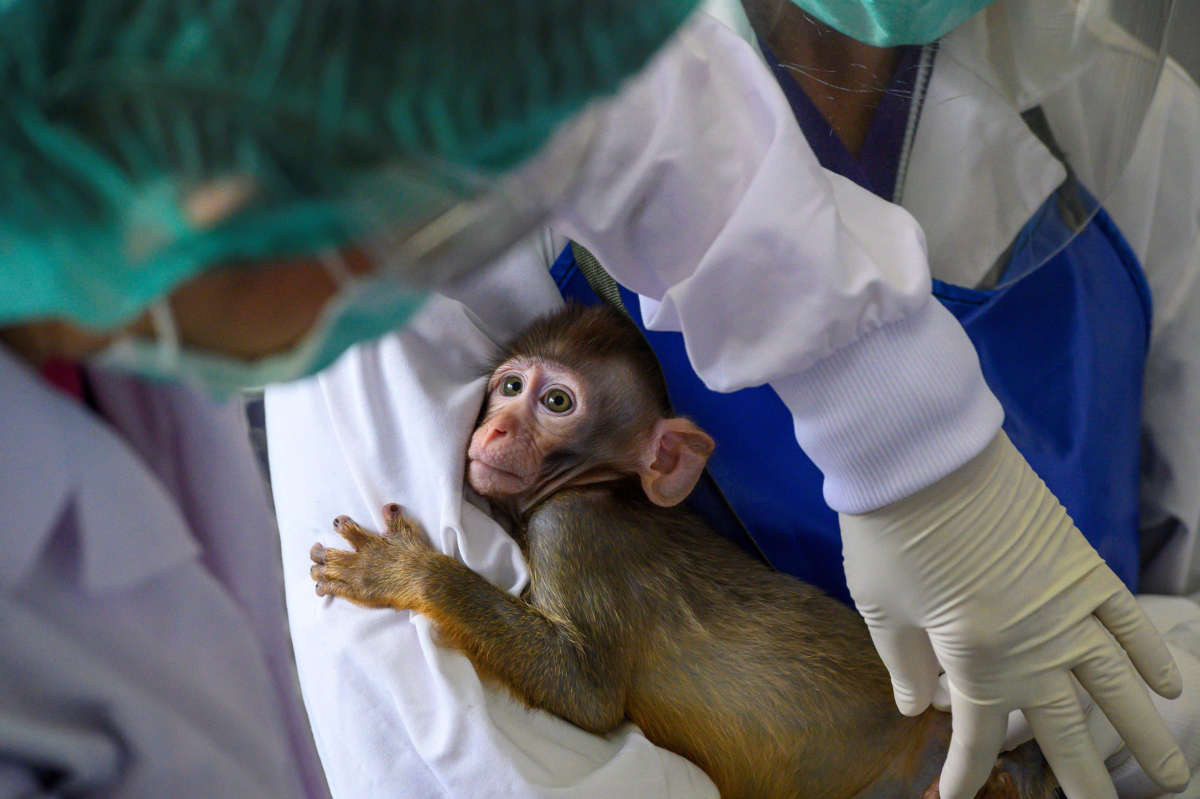
Animal Testing Is Useless for Determining COVID Vaccine Effectiveness in Humans

A baby monkey in a laboratory is examined by employees in the National Primate Research Center of Thailand at Chulalongkorn University in Saraburi, Thailand, on May 3, 2020. Scientists at the center tested potential vaccines for the novel coronavirus (COVID-19) on animals, including monkeys.

BYAysha AkhtarTruthoutPUBLISHEDMarch 20, 2021SHAREShare via FacebookShare via TwitterShare via Email

There have been concerted efforts on the part of primate researchers to convince the public and political leaders that more money and monkeys are needed for COVID-19 vaccine research. It’s not surprising that monkey researchers would attempt to exploit people’s fears about the pandemic to increase “supplies” and funding for their work.

What is surprising, however, is the complete lack of differing scientific views offered. The problem with the assertions made by pro-monkey research groups is their lack of supporting evidence.

Most findings in animals, including nonhuman primates (NHPs), do not predict human results — and, thus, far from being helpful, they are actually misleading.

More than 700 human trials of potential HIV/AIDS vaccines have been conducted, all of which gave encouraging results in animals including monkeys and chimpanzees — yet not one has worked in humans. In fact, some HIV vaccines actually increase the risk of HIV in humans. And as models of human diseases, NHPs have failed for Alzheimer’s and Parkinson’s diseases, neuroscience/brain research, stroke, cancer, hepatitis C, and many more.

More than 90 percent of drugs that appear to be safe and effective in animals fail in human trials. Vaccine development has an even higher failure rate. Only 6 percent of vaccines make it to the market. Can you imagine if you boarded a plane, and the pilot announced that you have a 6 percent chance of landing safely at your destination? You would demand an overhaul of the entire airline industry. Yet, when it comes to the safety and effectiveness of the vaccines and drugs we put into our bodies, monkey researchers want you to believe that clinging to the tools of old (i.e., monkeys) is a good idea. We don’t see anyone suggesting we should stick to the 8-track tape when we can stream music on our phones.

There is a valid reason why we need diverse representation in human clinical trials. No one human can accurately represent how a vaccine or drug will work in another human. How can we expect another species to effectively predict biological responses in humans?

Although COVID vaccines were tested in animals for regulatory reasons — tradition-based, rather than science-based — there is devil in the detail. Biologically, very different processes are occurring with the COVID-19 virus. Mice proved difficult to infect with the virus, even when genetically modified to make them more susceptible. If they did show symptoms, they were mild. Different species of monkeys also failed to replicate human symptoms, and where symptoms did appear, they too tended to be mild, reflecting different infectious processes.

Human trials of the Oxford/AstraZeneca vaccine proceeded despite prior monkey data that showed it did not prevent infection, and the Moderna vaccine was first encountered by humans without preceding animal trials. This would not have happened if the animal trials had been a crucial step in ensuring safety and efficacy.More than 90 percent of drugs that appear to be safe and effective in animals fail in human trials.

Expert opinion agrees: the chief medical officer at Moderna stated, “I don’t think proving this in an animal model is on the critical path to getting this to a clinical trial.” Operation Warp Speed’s chief scientific adviser said Human data is “100 times more significant” than NHP data, and Anthony Fauci stated that translating animal vaccine results to humans has been “one of the banes of our existence.” Pfizer and BioNTech recognized early on that mRNA vaccines work very differently in animals compared to humans.

Biomedical research is increasingly utilizing innovative techniques that are human-specific. These techniques include human mini-organs (organoids) and human organs-on-a-chip, where 3D cultures of human cells are housed on small chips, with circulatory systems and other means of mimicking real-life function and physiology of actual human organs and the human body.

These techniques are being used ever more widely in disease research and in drug discovery and development, and were used in pivotal stages of the COVID-19 vaccine development, alongside computational approaches to their design. Entire human immune systems can be cultured, as can lymph nodes (pivotal to immune function) specific to individual people to reflect interhuman variability, and reflective of both diseased and healthy states — all without the confounding issues of extrapolation between different species.

For the sake of human health, our tax dollars should be directed into the best science. Whichever way you look at it, future biomedical research, including vaccine development for pandemics like COVID-19, will be based on human biology and human-specific testing methods. These methods are quicker, cheaper, more humane and — most importantly — relevant.

Jane Goodall’s Advice on How to Lead a Full Life

The world-renowned scientist and conservationist has spent the pandemic living at her childhood home in England, watching “mindless television” with her sister at suppertime and working around the clock

PHOTO: MICHAEL CHRISTOPHER BROWN

By Lane FlorsheimMarch 15, 2021 8:32 am ET

  • PRINT
  • TEXT

In our series My Monday Morning, self-motivated people tell WSJ. how they start off the week.

For Dr. Jane Goodall, the pandemic has meant the end of almost all of her normal routines. “There are no weekends anymore,” she says. “Every single day is Zooms and Skypes and interviews and video messages all over the world. And writing, I have writing to do.” Goodall, 86, one of the most famous scientists and conservationists in the world, has been living away from her usual home in Tanzania at her childhood house in Bournemouth, England, with members of her family. The only part of her schedule that’s the same every day comes at 12:30 p.m., when she takes her dog out for a short walk and then eats lunch in the garden, sitting under the beech tree she used to climb when she was young. She often has company. “I’m usually joined by a robin redbreast and a blackbird,” she says. “I’m always out there, even if it’s pouring rain, because I don’t want to disappoint the birds.”

Goodall first began to fulfill her dream of living among African wildlife when, at 22, she voyaged to Nairobi by boat from London. There, she met paleontologist Louis Leakey, who hired her to work as his assistant and eventually sent her to Tanzania’s Gombe Stream National Park, where she began her work with chimpanzees. Goodall’s observations disproved major beliefs about human uniqueness, including that we’re the only species capable of using and making tools and that we’re the only ones who have personalities and emotions. Though she stopped doing fieldwork in 1986, she is at work every day for the Jane Goodall Institute, which she founded in 1977 to promote wildlife and environmental conservation. She’s been married twice, first to Dutch wildlife filmmaker Hugo van Lawick, with whom she has a son, named Hugo Eric Louis van Lawick, 54, and then to Derek Bryceson, who was a national parks director and assemblyman in Tanzania. Recently, Goodall launched an essential-oils collection sourced throughout Africa in partnership with Forest Remedies and started a podcast called the Jane Goodall Hopecast, which has featured guests like musician Dave Matthews and the teenage animal rights activist Genesis Butler.

Here, she tells WSJ. about her dream podcast guest and how she sees her legacy.

What time do you get up on Mondays, and what’s the first thing you do?

Full story: https://www.wsj.com/articles/jane-goodalls-advice-on-how-to-lead-a-full-life-11615811551

No evidence Covid leaked from a lab but probably emerged from wildlife trade, say WHO scientists

Pandemics threat must be treated with same seriousness as terrorism, warn experts

Jane Dalton@JournoJane1 day ago 5 comments

https://www.independent.co.uk/news/world/asia/covid-cause-lab-evidence-wildlife-trade-b1815915.html?fbclid=IwAR0wLd5AygEnM06vxA8m9GLeVig5zlyQ6ZrIWoDmIcHsKb5c-XpbozNZaCA

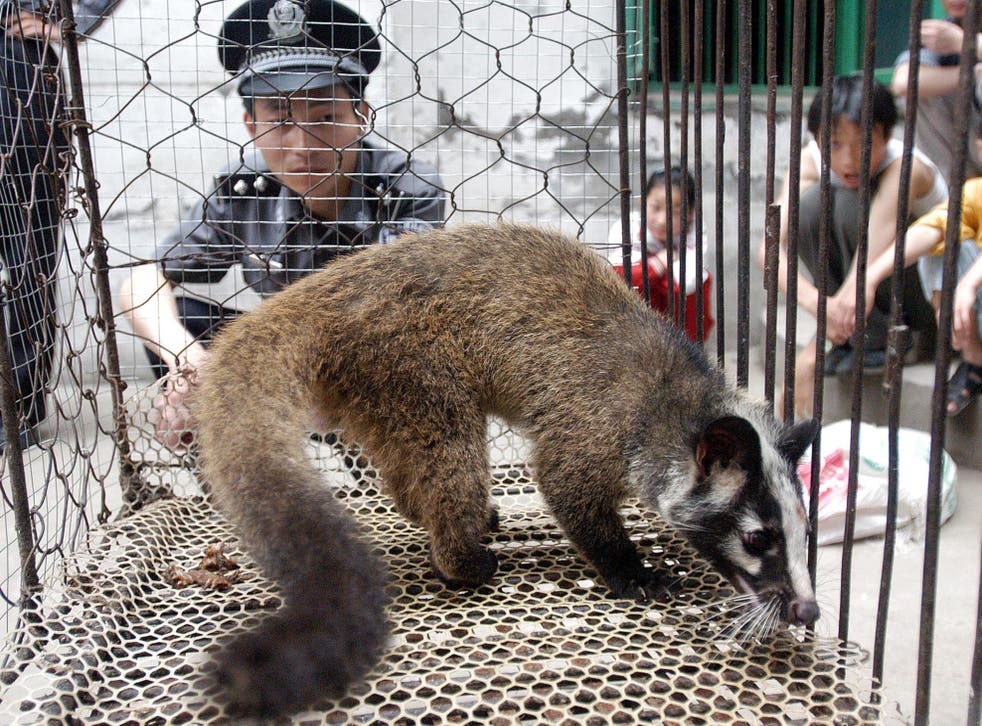
The experts believe the virus probably crossed from wildlife into farmed or domesticated animals in the Wuhan market, and from there to people
The experts believe the virus probably crossed from wildlife into farmed or domesticated animals in the Wuhan market, and from there to people (AFP via Getty Images)

https://buy.tinypass.com/checkout/template/show?displayMode=inline&containerSelector=.above-article-prompt-donations&templateId=OT5K0SE6GQ3U&offerId=fakeOfferId&showCloseButton=false&trackingId=%7Bjcx%7DH4sIAAAAAAAAAFWQy26DMBBF_8VrggDz3qEWtU0rkSopSrpzyATMwyBjA03Vf69BSavMbubcM4v7jQg9oRBt44vzECWHrzXSUEdySCmMLzOpGu_SMBMHtBldUWeKw9QBp8AyWBLxPt6vcfr2_BildzSeIJOCtmyJmb7hDRxLWa0MNZY0M3qWsgRxzMuyoGcOQXvnR9mf3BftuIOmq4mAz8BPsBcd4s3GdbEyCtLfGAoFl6Ahcd0XOdk5r8Y2dp_e8Qf6ZynhlDAxR5isaw1lpOkIzVl_Owy0pwtHw-raw7G0uT1ZY6Ue0U4RF-umbemW4enYVkfZA49yYEKx0zjXJUSNQtM1HQ_7OAh-fgGiOFSqdAEAAA&experienceId=EXEXJ3VLHDAV&widget=offer&tbc=%7Bjzx%7D0hRl93QRmnQWEMayU4HVECNTirPe62qePhDM8ZA03-tKIBO2aJ-CUudwgTb8BGWxDznyWfY0j_DZOiWsb9e3Xg&iframeId=offer-0-aIrrr&url=https%3A%2F%2Fwww.independent.co.uk%2Fnews%2Fworld%2Fasia%2Fcovid-cause-lab-evidence-wildlife-trade-b1815915.html%3Ffbclid%3DIwAR0wLd5AygEnM06vxA8m9GLeVig5zlyQ6ZrIWoDmIcHsKb5c-XpbozNZaCA&parentDualScreenLeft=0&parentDualScreenTop=0&parentWidth=1139&parentHeight=537&parentOuterHeight=607&aid=SEz5CAOYyJ&tags=article&contentSection=News&contentAuthor=Jane+Dalton&contentCreated=2021-03-12T00%3A22%3A03Z&pageViewId=km7zmn139imw6tlc&visitId=v-km7zmn1bj4r4x2wk&userProvider=publisher_user_ref&userToken=&customCookies=%7B%22_pc_show_register_prompt%22%3A%22true%22%7D&hasLoginRequiredCallback=true&width=624&_qh=182fb92b9c

World Health Organisation (WHO) scientists say they have found no evidence that Covid-19 leaked from a Chinese laboratory, and instead it was probably caused by the wildlife trade.

The four WHO experts who carried out a month-long investigation in China insisted there was nothing that proved the disease was deliberately developed.

And they called for the threat of pandemics to be treated with the same seriousness as terrorism after the 11 September 2001 attacks.

Read more

The scientists said in a Chatham House briefing that they found links between the live-animal market in Wuhan, where people first fell ill, and regions where bats had viruses.Apes At San Diego Zoo Receive COVID-19 Vaccinehttps://imasdk.googleapis.com/js/core/bridge3.446.1_en.html#goog_1418780697

Peter Daszak, a zoologist and president of EcoHealth Alliance, which works to prevent pandemics, said: “There was a conduit from Wuhan to the provinces in South China, where the closest relative viruses to [the coronavirus] are found in bats.”

Dr Daszak said the wildlife trade was the most likely explanation of how Covid-19 arrived in Wuhan.

The WHO scientists and their Chinese counterparts considered the most likely explanation was that the virus crossed into domesticated or farmed animals, he added.Please enter your email addressPlease enter a valid email addressPlease enter a valid email addressSIGN UPI would like to be emailed about offers, events and updates from The Independent.Read our privacy notice

The world will find out “fairly soon, within the next few years” what started the pandemic, he predicted. It typically takes many years to pinpoint the animal reservoir of outbreaks.

The team are due to release a report next week on the initial conclusions of their mission to Wuhan.

Read more

Marion Koopmans, head of viroscience at University Medical Centre Rotterdam, said they visited the three laboratories closest to the Huanan market in Wuhan, and scrutinised their protocols and research, among other issues.about:blankabout:blankhttps://bd45e420140dbb8b103b0796f2feb7dd.safeframe.googlesyndication.com/safeframe/1-0-37/html/container.htmlhttps://bd45e420140dbb8b103b0796f2feb7dd.safeframe.googlesyndication.com/safeframe/1-0-37/html/container.htmlSkip in 5about:blank✕Skip in 5about:blank

“We concluded that it’s extremely unlikely there was a lab incident,” she said.

China has faced claims that the Wuhan Institute of Virology could be the suspected source of the Covid-19 virus.

Dr Daszak called for the threat of pandemics to be treated with the same seriousness as terrorism after the 9/11 attacks. and working out where the next ones are going to come from and what it might be, whereas we do that with hurricanes and typhoons and all the rest of it,” hesaid.

He added: “After 9/11, we put in place a mechanism to track every single phone call into the US, and the minute there’s a rumour on the web or on these phone calls of an attack, the network is disrupted prior to the attack.

“That’s the kind of change or shift in thinking we need for pandemics, I believe.”

Dr Daszak said: “Let’s look at where wildlife are interacting with livestock and people, and see what is out there and try and find out what threats could emerge in future.”

Fauci says the plateau of COVID-19 cases in the US is unacceptable and warns against an ‘on and off’ reopening strategy

  • More content below

Marianne GuenotMon, March 8, 2021, 4:09 AM·2 min read

  • More content below
Fauci CBS March 7
Dr. Anthony Fauci spoke with CBS’ “Face the Nation” on Sunday. CBS
  • The US recently has averaged about 60,000 to 70,000 new coronavirus cases reported each day.
  • Dr. Anthony Fauci told CBS on Sunday that this was “not an acceptable level.”
  • Another surge in cases with levels already so high would be “risky,” he said.
  • Visit the Business section of Insider for more stories.

The US COVID-19 case count is plateauing at “not an acceptable level,” Dr. Anthony Fauci told CBS’ “Face the Nation” on Sunday, warning against public-health measures being turned “on and off.”

Fauci, the White House chief medical advisor, told CBS’ Margaret Brennan that having another surge when cases were already at “quite a high level” would be “risky.”

The US Centers for Disease Control and Prevention’s director warned last week that a fourth surge of cases could be coming in the US.

The number of coronavirus cases reported each day in the country had been sharply declining after peaking early this year. More recently, however, the country’s seven-day average of daily reported cases leveled off between 60,000 and 70,000.

US new cases March 8
The US has seen its coronavirus case numbers plateau recently, according to Our World in Data. Our World in Data

In his interview, Fauci said European countries could provide a template for the US because their patterns were “usually a couple of weeks ahead of us.”

Europe witnessed a 9% increase in cases in the past week after experiencing a plateau, Fauci said.

He also warned against coronavirus measures being switched “on and off,” saying “it really would be risky to have yet again another surge, which we do not want to happen because we’re plateauing at quite a high level.”

The White House and the CDC have been clear they did not support some states’ pulling back coronavirus restrictions in recent days without waiting for CDC recommendations.

Last week, Fauci called Texas’ and Mississippi’s decisions to lift their mask mandates “inexplicable,” and President Joe Biden said the decisions were the result of “Neanderthal thinking.”

Story continues: https://www.yahoo.com/news/fauci-said-current-plateau-covid-120931017.html

Zombie mink, infected escapees, and COVID outbreaks: How mink farms became a political flash point

Mink farms are notoriously oppressive, but COVID-19 outbreaks at facilities are putting them in the spotlight

https://www.salon.com/2021/03/03/zombie-mink-infected-escapees-covid-outbreaks-how-mink-farms-became-a-political-flash-point/

By MATTHEW ROZSA
MARCH 3, 2021 10:59PM (UTC)

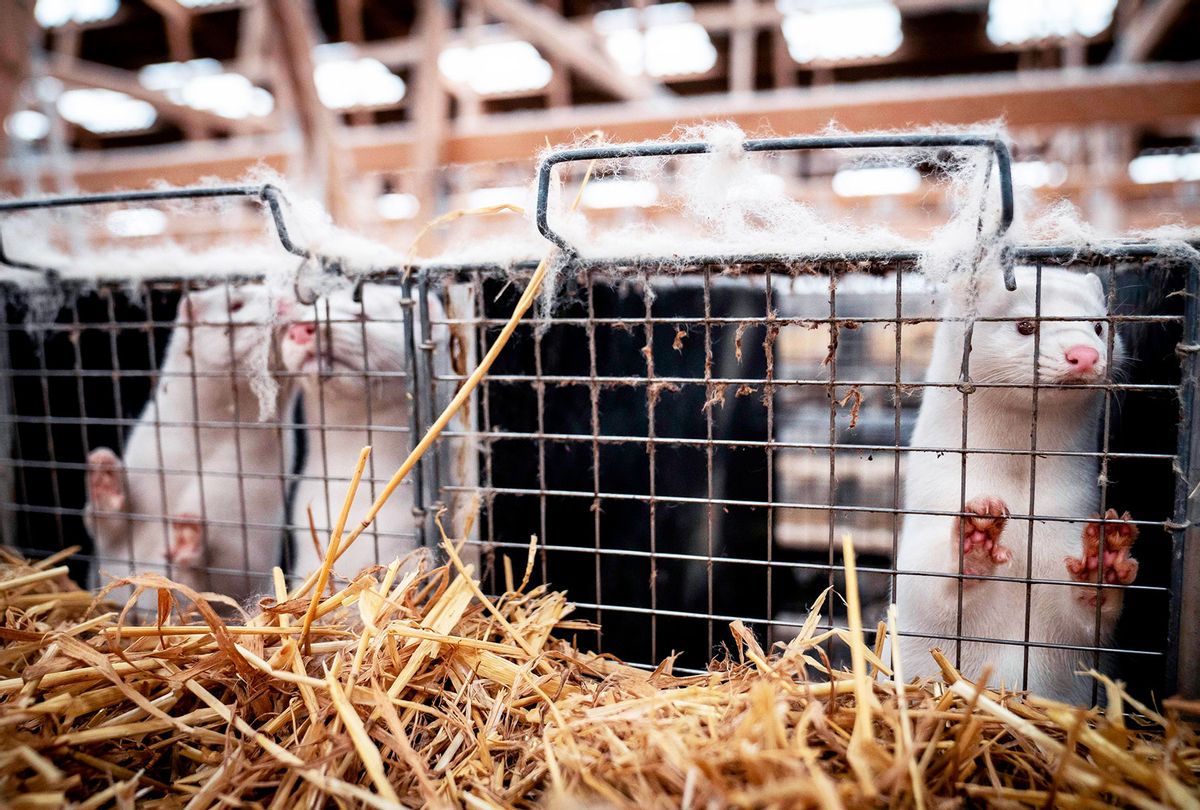
main article imageMink look out from their cage at the farm of Henrik Nordgaard Hansen and Ann-Mona Kulsoe Larsen as they have to kill off their herd, which consists of 3000 mother mink and their cubs on their farm near Naestved, Denmark, on November 6, 2020 (MADS CLAUS RASMUSSEN/Ritzau Scanpix/AFP via Getty Images)Facebook56TwitterRedditEmailcomments

Scott Beckstead remembers the mink that died from terror.

She was a beautiful female with a bluish shade to her coat — they’re known as “sapphires” in the mink industry — and he was at a mink farm owned by his grandfather. Beckstead describes his grandfather as a “kind, wonderful, generous man” who “sincerely tried to give his animals the best life he could.” That said, Beckstead recalled sadly, “there are some realities about mink farming that are just unavoidable.”Advertisement:https://fcbb08fbe086f07cd554333b80283d53.safeframe.googlesyndication.com/safeframe/1-0-37/html/container.html

This was one of them.

“The foreman pulled out this sapphire female, and she struggled and she screamed,” Beckstead told Salon, describing an incident occurred in one of the last year that he visited his grandfather’s southern Idaho mink farm. “Then she went limp. She literally died. There is no doubt that she was terrified. She had watched what was happening to the mink next to her. I think, honestly, the only explanation is that she died of sheer terror.”

His grandfather “cursed” when he saw that; “the sapphires are so fragile,” he rued. Beckstead was struck by the fact that his grandfather was genuinely upset at how that mink died. Though she was to be killed for her fur ultimately, he did not want her life to end in the way that it did.Advertisement:

Beckstead is now the director of campaigns for animal wellness action at the Center for a Humane Economy. The organization, a non-profit that tries to change how businesses behave in order to create a humane economic order, is supporting a recently-proposed bill that would ban mink farms in Oregon. There are many reasons to ban mink farms strictly from the perspective of animal rights, but a new reason has incentivize that movement: The COVID-19 pandemic.

For biological reasons, the novel coronavirus is particularly prevalent among mink, as mink and other mustelidae such as ferrets are notorious for unwittingly serving as virus mutation factories. Mink are so prone to developing COVID-19 infections that outbreaks have repeatedly disproportionately cropped up in areas with mink farms. The problem is extremely serious, to the point that last year Denmark ordered thousands of mink to be killed and buried in shallow graves to halt the spread of SARS-CoV-2. This led to the unappealing sight of bloated, decayed mink carcasses literally rising out of their graves as their corpses filled with gas.

Even when diseased minks aren’t threatening humans through zombie-like behavior, mink often put human beings at risk simply because they act like — well, like intelligent, wild animals.Advertisement:https://fcbb08fbe086f07cd554333b80283d53.safeframe.googlesyndication.com/safeframe/1-0-37/html/container.html

“When they’re put in confinement, they are in this very unnatural situation,” Lori Ann Burd, environmental health director at the Center for Biological Diversity, told Salon. Unlike pigs, cows, chickens and other animals that have spent generations being domesticated, mink don’t have that history; they still think and behave like wild animals. This is not to say that factory farms aren’t already vectors for disease and pollution (they are), or that mink won’t already be particularly prone to illness from living in such close quarters (they will).

In any case, minks strongly resist being held captive in small cages. And those wild instincts exacerbate matters.Advertisement:

“They’re extremely stressed in those situations,” Burd explained. “Because that confinement is so unnatural, mink are extraordinarily good escape artists.” There was already one instance where an Oregon farm had a COVID-19 outbreak and, despite being under quarantine, three of the mink managed to escape. Of those mink, two tested positive for COVID-19.

“We don’t have any exact numbers on the percent of mink that escape, but it’s obvious that escapes are common,” Burd explained. “They happen even when the facility is supposed to be under a strict quarantine.”

Not surprisingly, Oregon mink farmers are fighting against Senate Bill 832, which would ban mink farms in the state. Burd told Salon that to address this reality, the bill would offer assistance to people who would lose their jobs as a result of the ban. Yet many Oregon officials seem inclined to sweep the issue under the rug.Advertisement:

“They said, you know, ‘Don’t worry about it. We have everything under control,'” Burd recalled when describing how Oregon authorities reacted after her organization contacted them with concerns about mink farming and COVID-19 outbreaks. “That very day, the first outbreak at an Oregon farm was reported.” The Center for Biological Diversity reached out again to express concern that mink could spread the disease to wild animals, which subsequently happened.

Despite their concerns being validated, however, the facility ended its quarantine after testing a “minuscule” percentage of the mink and found them to be negative.

“Workers can come and go freely,” Burd told Salon. “Mink breeding is continuing and we’re very, very concerned because just because a few of the mink tested negative. [That] does not mean it’s not in this facility and COVID-19 in mink is unpredictable in its manifestations.”Advertisement:

Beckstead echoed Burd’s concerns, describing how the mink farming crisis has reached a new level of urgency because the conditions there make them ripe for COVID-19 outbreaks. He also spoke from the heart about how, when one understands the mind of a mink, it is easy to see how the farming practices are inherently cruel.

“This is an animal that has the instinct to be out roaming over vast territory,” Beckstead explained. “The animals are semi-aquatic, so they have a strong instinct to spend a lot of time in the water. To take a wild species and raise it on factory farm conditions is inherently cruel, which I think is why the animal welfare community has long wished that they would eventually become obsolete or extinct.”

He recalled another story from the days on his grandfather’s mink farm, the fact that he was not allowed to visit the mink yard when the females were having their babies because “the slightest disturbance would cause them to cannibalize their litters.”

“Those kinds of stories just speak to me of how unnatural of a setting these mink farms are,” Beckstead explained. “This is not a species that belongs on factory farms. I mean, no species belongs in factory farms, but to factory farm an inherently wild species, I think, adds an additional layer of suffering and misery.”

As US Mourns 500,000 Lives, Billionaires Gained $1.3 Trillion During Pandemic

As US Mourns 500,000 Lives, Billionaires Gained $1.3 Trillion During Pandemic

Jeff Bezos
Amazon CEO Jeff Bezos attends an event at Jawaharlal Nehru Stadium, in New Delhi, India, on January 16, 2020.

BYJake JohnsonCommon DreamsPUBLISHEDFebruary 24, 2021SHAREShare via FacebookShare via TwitterShare via Email

As the United States this week mourned the devastating milestone of 500,000 lives lost to the coronavirus, a report out Wednesday shows that the nation’s billionaires have seen their collective wealth grow by $1.3 trillion since the deadly pandemic began last year.

According to the new analysis by the Institute for Policy Studies (IPS) and Americans for Tax Fairness (ATF), America’s 664 billionaires now have a combined net worth of $4.2 trillion — a figure that stands in staggering contrast to the economic pain being felt by countless families across the U.S. as joblessness, uninsurance, and hunger remain sky-high.

“It is unseemly that billionaires have experienced such gains as we mark a half a million lives lost and millions more who have lost their health, wealth and jobs,” Chuck Collins, director of the Program on Inequality at IPS, said in a statement. “Taxing those who have experienced windfall wealth gains to pay for Covid relief and recovery is a matter of equity and justice.”

Don’t miss a beat

Get the latest news and thought-provoking analysis from Truthout.

  • Email

Amazon CEO Jeff Bezos — the richest man in the world — and SpaceX founder Elon Musk saw their wealth grow by $76.3 billion and $158 billion respectively between March 18, 2020 and February 19, 2021 — bigger gains than any other U.S. billionaire. Mark Zuckerberg, the CEO of Facebook, saw his net worth jump by $41 billion during that period.

“Even as congressional Republicans try to nickel-and-dime suffering Americans by opposing President Biden’s American Rescue Plan, including its $1,400 relief checks, American billionaires have reaped $1.3 trillion in pandemic profits,” said ATF executive director Frank Clemente. “The need for the kind of fair-share tax program Biden ran and won on becomes clearer every day, as billionaire wealth balloons while working-family hopes deflate.”https://platform.twitter.com/embed/Tweet.html?dnt=true&embedId=twitter-widget-0&frame=false&hideCard=false&hideThread=false&id=1364582878181527553&lang=en&origin=https%3A%2F%2Ftruthout.org%2Farticles%2Fas-us-mourns-500000-lives-billionaires-gained-1-3-trillion-during-pandemic%2F&siteScreenName=truthout&theme=light&widgetsVersion=889aa01%3A1612811843556&width=500px

The U.S., which has the highest coronavirus death toll in the world, reached 500,000 lives lost to Covid-19 on Monday. “About one in 670 Americans has died of Covid-19, which has become a leading cause of death in the country, along with heart disease and cancer, and has driven down life expectancy more sharply than in decades,” the New York Times noted.

While declining cases and an improving vaccine rollout have prompted some optimism, the grim milestone and still-rising death toll served as urgent reminders of how much work remains to be done to bring the catastrophic pandemic under control.

“We are still at about 100,000 cases a day. We are still at around 1,500 to 3,500 deaths per day. The cases are more than two-and-a-half-fold times what we saw over the summer,” Dr. Rochelle Walensky, director of the Centers for Disease Control and Prevention, told NBC earlier this month. “It’s encouraging to see these trends coming down, but they’re coming down from an extraordinarily high place.”