Exposing the Big Game

Forget Hunters' Feeble Rationalizations and Trust Your Gut Feelings: Making Sport of Killing Is Not Healthy Human Behavior

Exposing the Big Game

What Happens If Workers Cutting Up the Nation’s Meat Get Sick?

As meatpackers rush to meet demand, their employees are starting to get COVID-19. But some workers say they’re going to work ill because they don’t have paid sick days and can be penalized for staying home.

A Koch Foods plant in Morton, Mississippi. (Rory Doyle for ProPublica)

ProPublica is a nonprofit newsroom that investigates abuses of power. Sign up to receive our biggest stories as soon as they’re published.

Here’s what has happened in the meatpacking industry in the last week alone:

A federal food safety inspector in New York City, who oversaw meat processing plants, died from the illness caused by the novel coronavirus.

A poultry worker in Mississippi, employed by America’s third largest chicken company, tested positive for the virus, causing a half-dozen workers to self-quarantine. Another worker in South Dakota, employed by the world’s largest pork producer, also tested positive.

In Georgia, dozens of workers walked out of a Perdue Farms chicken plant, demanding that the company do more to protect them.

And Tyson Foods told ProPublica on Friday that “a limited number of team members” had tested positive for the disease.

As COVID-19 makes its way across the country, leading to panic grocery buying in state after state, the stresses on the nation’s food supply chain have ratcheted ever higher. But in industries like meatpacking, which rely on often grueling shoulder-to-shoulder work, so have the risks to workers’ health.

In interviews this week, meat and poultry workers, some in the country without authorization, noted with irony that they have recently been labeled “essential” by an administration now facing down a pandemic. Yet the rules of their workplaces — and the need to keep food moving — pressure them to work in close quarters, even when sick.

And it’s unclear how federal regulations that traditionally protect workers from harm in their workplaces will address a potentially deadly coronavirus.

“They are listening about social distancing on the TV and some of them try to practice it in their home, but when they go to work, they can’t do it,” said Father Roberto Mena, who ministers to many poultry workers at St. Michael Catholic Church in Forest, Mississippi.

Many of the nation’s meatpackers declined to respond to specific questions about how they’ve dealt with infected workers or what they’ve done to try to mitigate the spread of COVID-19 in their plants. Or they offered vague assurances that workers are being protected.

So far, only two meatpacking companies — Tyson Foods and Cargill — have announced companywide temperature checks to screen employees for signs of the virus. Two more say they have begun rolling them out.

But except for unionized plants, meat and poultry workers rarely get paid when they’re sick. At many companies, including Tyson, workers receive disciplinary points for calling in sick. Because points lead to termination, workers told ProPublica, they and some of their colleagues have continued to work even when sick, despite the coronavirus.

“We are all afraid,” said Maria, who works on the evisceration line at a Tyson plant in Arkansas and asked to be identified by her first name. “The problem is if people feel sick, they’re not going to say anything because they need the money. They don’t want the points.”
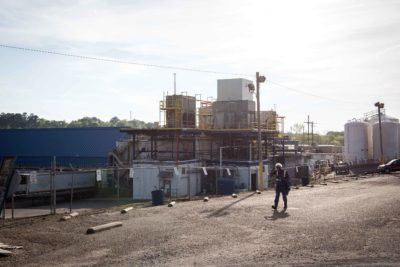
An employee returning to his vehicle in the Koch Foods parking lot. (Rory Doyle for ProPublica)

In an email, Tyson said it had recently altered its policies to allow workers who contract the coronavirus or exhibit symptoms to apply for short-term disability without a waiting period. “This is an evolving situation and we’re continuing to consider additional measures to support our team,” spokesman Worth Sparkman said. “We don’t want team members who feel sick to come to work.”

Tyson announced this month it was “eliminating any punitive effect for missing work due to illness.” But Maria said that at her plant, nothing had changed.

Despite the “essential” role meat and poultry workers play in the food chain, the sick-time bill signed by President Donald Trump last week doesn’t cover most meat and poultry workers because it exempts companies with more than 500 employees.

The uncertain economy, with millions of people filing jobless claims last week, is adding to the tension.

At Koch Foods in Mississippi, Ramirez, an undocumented Guatemalan immigrant who asked to go by his last name, said a woman who worked near him showed up for her shift last week with a heavy cough. But after she told her supervisor, he said, she was told she couldn’t come back. The message was clear, he said. So, when he started feeling sick a few days later, he simply kept quiet and continued working.

“People are worried,” Ramirez said, that if they say they are sick, “they’ll fire us.”

Going to the doctor is not an option, he said, because he doesn’t have health insurance and fears it could expose his immigration status.

Koch Foods didn’t respond to calls and emails asking about its policies for sick workers.

Even before the coronavirus, the meat industry had complained of a labor shortage as low pay and harsh conditions collided with a tight labor market, tighter borders and dramatic reductions by the Trump administration in the number of refugees, who make up the backbone of many plants’ workforce.

While there’s no evidence that the coronavirus can be transmitted through food, workers say they fear it could spread among them, even though they wear butcher coats and latex gloves, and the plants are sanitized every night.

If it does, it could take out a critical cog in the nation’s food supply chain just as it struggles to keep up with increased demand, workers and their advocates said. Grocery meat sales, excluding deli meat, surged a staggering 77% for the week ending March 15, according to one industry analysis.

To meet the demand, companies have been scrambling, adding additional weekend shifts and changing lines to produce whole birds and bigger cuts of beef. Under pressure from unions and wage increases at supermarkets and warehouses, some companies like Cargill and National Beef have announced temporary $2 per hour bonuses for the next several weeks to retain their workers and reward them for sticking through difficult times.

Company executives have said that the empty shelves aren’t a sign of a food shortage and that they’re capable of meeting the surge, aided in part by lower demand from restaurants that have been ordered to close.

“Our primary focus is to keep our plants running so that we can feed America,” Tyson’s president, Dean Banks, said on CNN. “We’re running the plants as hard as we can.”

And some analysts note that even if an outbreak of the virus forced a plant to close, the industry — with more than 500,000 employees at 4,000 slaughterhouses and processing plants across the country — is big enough to absorb the loss.

Tim Ramey, a retired food industry analyst, said “there could be significant disruptions” in a company’s output if an outbreak occurred. But supermarkets and restaurants buy meat from many suppliers, he said, and another plant could pick up the slack.

“There are plenty of ways you could have risk to the worker supply,” Ramey said. “I doubt that would be enough to disrupt the food supply.”

But no one knows what would happen if multiple plants suffered outbreaks.

The closest precedent may be immigration raids, which have temporarily shuttered meat and poultry plants periodically over the last 25 years. For months after, those plants struggled to find new workers and ramp up to speed. But the supply lines continued to feed America.

Some immigrant workers caught up in those raids now marvel that the country is leaning on them. Last summer, after finishing his shift pulling the guts out of thousands of chickens, Ramirez flipped on his TV and watched in shock as immigration agents descended on central Mississippi, rounding up hundreds of his coworkers in the Trump administration’s biggest immigration sting.

In the weeks that followed, Ramirez watched the three children of a friend who’d been detained and hunkered down at home, fearing he could be next. It was easy to feel disposable, he said, especially when Trump praised the raids as “a very good deterrent.”

Now, when Ramirez watches the news, Trump is calling workers like him “critical,” telling them, “you have a special responsibility to maintain your normal work schedule.”

“I don’t understand, if they have a big need for all of the workers,” Ramirez asked, “why aren’t they worried about us?”

The slaughtering of chickens, hogs and cattle has become increasingly automated in the last few decades. But several tasks on the disassembly line still have to be done by hand. In poultry plants, in an area known as “live hang,” workers in a small, black-lit room crowd around a trough grabbing live chickens by their feet and hanging them on shackles.

In another area known as “debone,” workers stand side by side cutting raw chicken into breasts and tenders, so close that they occasionally cut coworkers with their knives.

In pork plants, workers are so packed together that a little over a decade ago, two dozen workers at a Minnesota factory developed a neurological illness from inhaling aerosolized pig brains that drifted from a nearby station that was making an ingredient used in stir-fry thickeners.

So even as everyone from the president to Snoop Dogg are urging people to stay home and avoid groups of more than 10 people, meat and poultry workers are required to do the opposite.

ProPublica asked the nation’s largest meat companies what they were doing to try to achieve social distancing. Cargill, which produces billions of pounds of beef and turkey for supermarkets and restaurants each year, was the only company that said it was doing anything other than staggering start and break times. Daniel Sullivan, a spokesman for the Minnesota-based meatpacker, said it had increased spacing in its factory work areas and put up partitions in its cafeteria.

How the Meat Industry is Responding to the Coronavirus

Temperature Checks Extra Pay Paid Sick Time Disciplinary Points Social Distancing Other Measures
JBS/Pilgrim’s Pride Set up “triage stations” to screen workers for temperature and symptoms. But unclear if all workers are tested. $600 bonus for UFCW members No answer No answer Staggered start and break times
Tyson Yes No No, but can receive short-term disability if sick from COVID-19 or exhibiting symptoms Eliminating penalties for missing work due to illness Separating, sending home workers with respiratory symptoms Waived copays for doctor visits and 5-day waiting period for short-term disability
Cargill Yes $2 per hour increase + $500 bonus 14 days if sick from COVID-19 or can’t find child care. Others receive paid sick time based on seniority and union contracts. No penalties for missing work due to illness Increased spacing in factory, staggered break schedule, partitions in cafeteria
Smithfield No answer No answer During quarantine if test positive for COVID-19, unclear for others No answer No answer
Hormel No answer $300 bonus, $150 for part-time workers “Extended” but didn’t explain what that means No answer No answer Waived waiting periods for certain benefits
National Beef No answer $2 per hour increase 2 weeks if required to quarantine, unclear for others No answer No answer Waived copays for medical care related to the coronavirus
Perdue Farms Starting to roll out $1 per hour increase 2 weeks if required to quarantine, unclear for others No penalties for missing work due to quarantine No answer Providing employees with chicken products
Sanderson Farms No answer No answer 2 weeks if showing symptoms of COVID-19 or required to quarantine, unclear for others No answer No answer
Koch Foods No answer No answer No answer No answer No answer
Sources: ProPublica research, company websites and the United Food and Commercial Workers.

The evisceration line where Maria, the Tyson employee, works doesn’t have as many people as other parts of the factory because it is heavily automated. But she said that because workers can’t leave the line unless it’s an emergency, she regularly encounters large crowds as everyone rushes to the bathroom during breaks. The company has placed hand sanitizers at the entrance, she said, but inside the plant, the bathrooms don’t always have paper towels.

As COVID-19 cases at the plants become public, workers fear it’s only the beginning.

On Monday, Sanderson Farms, the nation’s third largest chicken company, said an employee at its McComb, Mississippi, plant had tested positive for the virus. Sanderson said the employee’s work area was contained to one small processing table. In response, the company notified its workers and sent six other employees in the work area home to self-quarantine with pay.

The company did not respond to calls or emails seeking additional information.

On Thursday, a worker at pork producer Smithfield Foods’ plant in Sioux Falls, South Dakota, tested positive. The company told the Argus Leader that the employee’s work area and all common areas were “thoroughly sanitized.” But it did not say anything about workers who might have come in contact with the employee.

There have been even fewer details about the federal food safety inspector who died. U.S. Agriculture Secretary Sonny Perdue said in a statement that he was “terribly saddened to hear” that one of the department’s employees had passed away due to the coronavirus and thanked “those working on the front lines of our food supply chain.” But the department did not specify which plants the inspector had worked in or what had been done to alert or quarantine others the inspector may have been in contact with.

Paula Schelling, a union representative for the nation’s food inspectors at the American Federation of Government Employees, said the USDA’s Food Safety and Inspection Service needs to do more to protect its front-line workers.

“FSIS is doing nothing to provide any protection for any employee who is out in the field,” she said. “They are just saying, ‘We are following the CDC guidelines.’ What does that mean to us?”
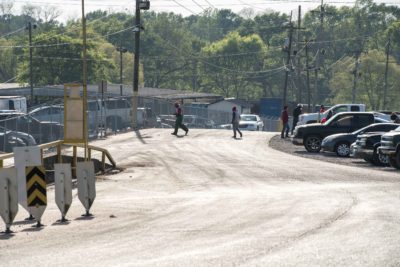
“People are worried,” a Koch Foods worker said. (Rory Doyle for ProPublica)

Concerns that meat companies aren’t being forthcoming have already led to increased anxiety at several plants. Workers who walked out of the Perdue plant in Georgia said the unrest started because supervisors dismissed concerns that some employees were continuing to work despite being in contact with people who had the coronavirus.

“We’re not getting nothing,” Kendilyn Granville told a TV news reporter outside the plant Monday night. “No type of compensation, no nothing, not even no cleanliness, no extra pay — no nothing. We’re up here risking our life for chicken.”

Perdue spokeswoman Diana Souder said that after speaking with managers, the majority of those who walked out returned to work.

“We know that many are feeling anxious during these uncertain times and we’re doing everything we can to take good care of our associates while continuing to produce safe and reliable food,” she said.

Typically, when workers feel unsafe, they can complain to the Occupational Safety and Health Administration. But it’s unclear how OSHA will respond to complaints related to the coronavirus. The agency, which has seen its ranks depleted under the Trump administration, has issued guidance for employers. But there is no specific standard related to the virus, and the agency has not said how it might interpret its general duty clause, which requires employers to keep their worksites free from recognized hazards that might cause death or “serious physical harm.”

Employers are only required to notify OSHA when an employee is hospitalized, suffers an amputation or is killed at work. But under a patchwork of rules, some employers might have to notify their state and local health departments.

As cases started to pop up this week, some employers began offering additional pay. Perdue said it would provide all hourly workers a $1-per-hour raise for the next several weeks. Hormel, the maker of Spam, said it would offer a $300 bonus for full-time workers and $150 for part-time associates.

On Thursday, the United Food and Commercial Workers, which represents 250,000 food processing workers, said it had negotiated additional pay and benefits increases, including a $600 bonus in May for its members at the nation’s second-largest meatpacker, JBS, which includes Pilgrim’s chicken. JBS spokesman Cameron Bruett did not answer whether the company would match that for nonunion employees.

Several large meat and poultry companies, including Tyson, Smithfield, Sanderson and Koch, have not announced raises or bonuses.

On Friday, Perdue told ProPublica it was starting to roll out temperature checks at its plants. And Bruett said JBS had set up “triage stations” outside plants to screen employees for temperature and symptoms. But it’s unclear if all employees will be tested or only those exhibiting symptoms.

Meanwhile, Venceremos, a group advocating for poultry workers in northwest Arkansas, has started a petition asking that Tyson and other processors provide paid sick leave for workers as the coronavirus begins to spread to rural America.

“Everyone is realizing that they are essential and have been essential to the country,” said Magaly Licolli, one of the group’s leaders. “And now it’s time that everybody should demand fair rights for them. That’s what we’ve been arguing all this time. They are the ones that provide for the country.”

Do you have access to information about how businesses are protecting — or not protecting — workers from the coronavirus that should be public? Email michael.grabell@propublica.org. Here’s how to send tips and documents to ProPublica securely.
Weathering The COVID-19 Crisis: Preparedness for Your Companion Animals

General Emergency Preparedness
for Companion Animals

Your emergency preparedness plan for your animal should include:

  • Remembering your pets when you are stocking your home pantry.
  • Making sure you have any appropriate medicine on hand, and that you are properly storing the medicine if there are requirements for ensuring the medicine will remain effective.
  • Making a pact with friends or family members for the care of your pets in the event you become sick, require quarantine, or are hospitalized.
  • Making sure your animals are always wearing proper identification. It is never a good idea to allow companion animals to roam freely, but especially during this crisis, make sure they are contained.

A Plan for The Future

In the long run, whether you are navigating a public health emergency or not, it is always wise to make provisions for your companion animals because of the possibility that they could outlive you. There are many resources available online to help you develop a plan. Here are some of the most frequently recommended steps to take:

  1. Realize that in the eyes of the law, your animals are considered “property.” As such, they will be treated like any other of your belongings if you haven’t specifically provided for them in your will.
  2. Include provisions for the care of your animals in your will or trust.
  3. Speak with family and friends now to determine who would be willing to provide a loving home for your animals.
  4. Some shelters will promise to find your animal a forever home if you leave a gift to the shelter.
  5. In addition to naming the caretaker for your animal, it’s often a good practice to leave a specific gift to the caretaker that is meant to cover veterinary, food, and other costs related to the animal’s care for the remainder of their life.

For detailed information, sample language for your will, and more, visit this resource on Petfinder.com.

For more information on disaster preparedness, including how to keep large animals safe, how to make an emergency kit for your animals, and more, visit our website.

Animal Protection of New Mexico
PO Box 11395
Albuquerque NM 87192
apnm.org
Donate
Animal Protection Voters
PO Box 11651
Albuquerque NM 87192
apvnm.org

Italy Has Its Worst Day Of The Coronavirus Pandemic With 919 Deaths Friday

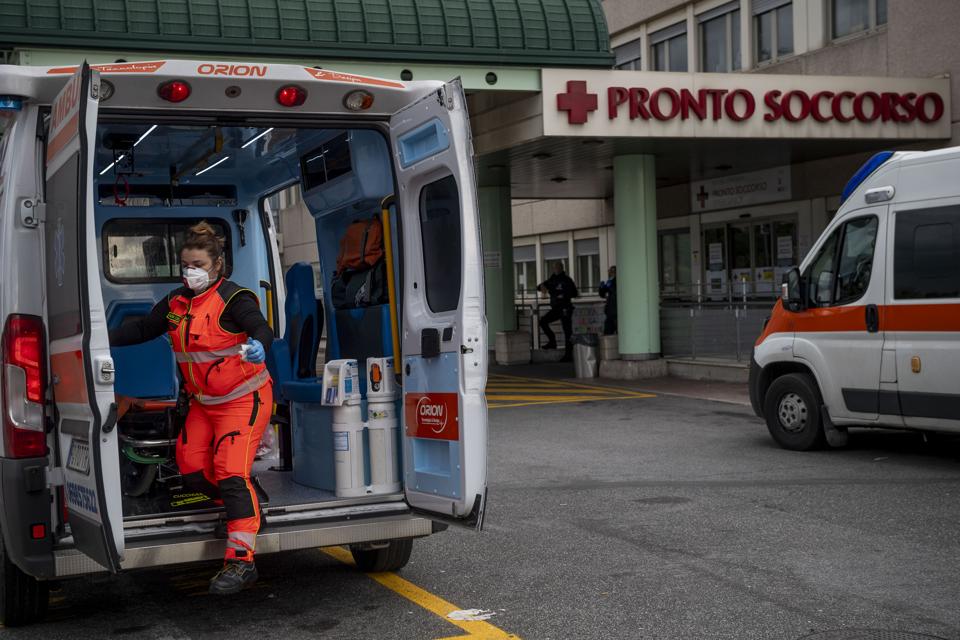
Topline: Italy continues to be the country hardest hit by the Covid-19 coronavirus pandemic. Its Civil Protection Agency shared Friday it had recorded 919 deaths in the past 24 hours, making it the worst day yet in the country, according to Reuters.

  • The 24-hour record follows a briefing with Silvio Brusaferro, head of Italy’s national health institute, in which he warned that the country has yet to reach the peak of infections, though he noted there were signs of slowdown in the number of people contracting the illness.
  • Italy has experienced the deadliest outbreak of the coronavirus with 9,134 total deaths, followed by another European country, Spain, which also recorded its worst day of the pandemic Friday with 769 deaths for a total of 4,934.
  • Italy’s confirmed cases of 86,498 surpassed China, where it’s believed the outbreak began. The Mediterranean country of 60 million is currently behind the United States’ 97,028, which surged past both yesterday to become the country with the most confirmed cases of the coronavirus.
  • After the previous peak on Saturday, there was a decrease in Italian fatalities on Sunday with 650 and Monday with 602, but the toll rose back up again Tuesday to 743.

Tangent: In some good news, a 101-year-old Italian man was released Thursday after recovering from the virus. The respiratory disease is particularly deadly for elderly people, and Italy has the second-oldest population in the world. In total, 10,950 people in Italy have beat the virus.

Key Background: Italians have been on lockdown since March 6. Its worst hit area is its most populous, the Lombardy region, accounting for 59% of the fatalities nationwide. Hospitals are expectedly packed and running short on supplies. A doctor died last Friday after having to work without protective gloves, according to the Washington PostAccording to Johns Hopkins University, there are 585,040 confirmed cases of the coronavirus worldwide and  26,819 deaths.

Follow me on Twitter. Send me a secure tip.

I’m the reporter for the Games section of Forbes.com. I previously served as a freelance writer for sites like IGN, Polygon, Red Bull eSports, Kill Screen, Playboy and PC…

 Read More 

Trafficked pangolins can carry coronaviruses closely related to pandemic strain

New research finds that Sunda pangolins, like the one pictured here in Vietnam’s Cuc Phuong National Park, could be possible hosts for future new coronaviruses.

PHOTOGRAPH BY SUZI ESZTERHAS, MINDEN PICTURES

Scientists and advocates say this new research is yet another reason to crack down on the illegal trade in these scaly mammals.

New research finds evidence that a small proportion of pangolins carry coronaviruses related to the strain responsible for the COVID-19 pandemic, according to a paper published March 26 in the journal Nature.

This makes pangolins the only mammals other than bats known to be infected by the closest relatives of the novel coronavirus. While the work neither proves nor disproves that pangolins are linked to the current pandemic, it does indicate that they could play a role in the emergence of new coronaviruses.

“If there is one clear message from this global crisis, it’s that the sale and consumption of pangolins in [live animal] markets should be strictly prohibited to avoid future pandemics,” says Paul Thomson, a conservation biologist who co-founded the nonprofit Save Pangolins.

Bats are the most likely reservoir of the novel coronavirus, SARS-CoV, according to the World Health Organization, but it likely jumped to another species before spilling over into humans.

Pangolins—endangered, scaly, ant-eating mammals found in Asia and Africa about the size of domestic cats—are known to carry coronaviruses, Dan Challender wrote in an email. Challender heads the pangolin specialist group of the International Union for the Conservation of Nature, which sets the conservation status of species. It’s not surprising, therefore, that they’ve become a focus in the search to understand where the novel coronavirus came from, he says.

These six Sunda pangolins were seized from a rental property in Guangzhou, China. Researchers say that the illegal trade in live pangolins and pangolin meat must be stopped to prevent the spread of disease.

PHOTOGRAPH BY XIAO CHIBAI, NATURE PICTURE LIBRARY/MINDEN PICTURES

Although international commercial trade of all eight species is strictly forbidden, pangolins are believed to be the most trafficked mammal in the world. The scales of thousands of pangolins are smuggled every year for use in traditional Chinese medicine, and their meat is considered a delicacy by some people in China, Vietnam, and elsewhere in Asia. Because coronaviruses can be transmitted by certain bodily fluids, feces, and meat, the trade in live pangolins for food is a greater concern for disease spread than contact with scales.

In China, it’s illegal to eat pangolin, but it can still be found on restaurant menus there. Pangolins were also regularly available for sale at live animal markets until January 26, when fear of the novel coronavirus spurred the government to order them all closed.

Genetic similarities

The new paper finds that the genetic sequences of several strains of coronavirus found in pangolins were between 88.5 percent and 92.4 percent similar to those of the novel coronavirus.

Starting with tissue samples from 18 Sunda pangolins seized in anti-smuggling operations in 2017 and 2018, researchers tested for the presence of coronaviruses. They found it in samples from five of the 18 pangolins. They repeated the process later with samples from other seized pangolins, finding coronaviruses in a portion of those individuals as well. They then sequenced the genomes of those viruses and compared them to SARS-CoV-2.

Cautious in their wording, the researchers note that the genomic similarities “are not sufficient to suggest” that pangolins are the intermediate host that passed SARS-CoV-2 from bats to humans. But they don’t rule it out, either. The paper concludes, however, that pangolins should be considered as possible hosts for future new coronaviruses.

“I welcome the study,” Challender wrote. “Further research is needed on these viruses in pangolins, but importantly on other species too, which may have played a critical role in the transmission of SARS-CoV-2 to humans.”

Closing Wet Markets Isn’t Enough

Mar 24, 2020 at 2:44 PM
Subject:
To:
While shutting down wet markets in China slowed the spread of COVID-19, it
is not enough to prevent future disease outbreaks.
<https://sentientmedia.us18.list-manage.com/track/click?u=1bbac603898e2a21fc6e8d07b&id=5802670d84&e=5a33979c9d>
<https://sentientmedia.us18.list-manage.com/track/click?u=1bbac603898e2a21fc6e8d07b&id=76277b9567&e=5a33979c9d>

Coronavirus Should Make You Reconsider Eating Meat
<https://sentientmedia.us18.list-manage.com/track/click?u=1bbac603898e2a21fc6e8d07b&id=6a10064b70&e=5a33979c9d>
Reading Time: 4 minutes

COVID-19 is not the first zoonotic pandemic humans have encountered, and if
we do not address the glaring issues within our global food system, it will
not be the last. Animal exploitation has been at the root of several major
pandemics throughout history. Until we address this threat, another deadly
outbreak is not only probable, it’s inevitable.

Though China’s wet markets have been the focal point of COVID-19
discussions, Americans’ demand for meat presents an unspoken risk. The
average American consumes twice as much
<https://sentientmedia.us18.list-manage.com/track/click?u=1bbac603898e2a21fc6e8d07b&id=b2abfca7d6&e=5a33979c9d>
meat
as the average Chinese person. With 99 percent of farmed animals
<https://sentientmedia.us18.list-manage.com/track/click?u=1bbac603898e2a21fc6e8d07b&id=3696cf5f4e&e=5a33979c9d>
in the United States living on factory farms, the odds of another zoonotic
outbreak are high.

Intensive farming conditions are breeding grounds for disease
<https://sentientmedia.us18.list-manage.com/track/click?u=1bbac603898e2a21fc6e8d07b&id=0aea07855b&e=5a33979c9d>.
Whether we are ready to admit it or not, there is no fundamental difference
between the risk industrial animal agriculture and the risk wildlife trade
pose to public health. Both lead to unsanitary conditions, untreated
diseases, and the transmission of diseases from animal to animal, or in the
case of COVID-19, from animals to humans.

Zoonotic diseases have been around for centuries. One of the most
destructive zoonotic outbreaks before COVID-19 was the Spanish Flu of 1918,
started by an H1N1 virus that is believed to have at least partially
evolved inside poultry farms
<https://sentientmedia.us18.list-manage.com/track/click?u=1bbac603898e2a21fc6e8d07b&id=d50304580b&e=5a33979c9d>.
The
Spanish Flu infected one-third of the world’s population
<https://sentientmedia.us18.list-manage.com/track/click?u=1bbac603898e2a21fc6e8d07b&id=115143fff2&e=5a33979c9d>
and killed at least 50 million people worldwide.
*A Short History of Zoonotic Disease*
<https://sentientmedia.us18.list-manage.com/track/click?u=1bbac603898e2a21fc6e8d07b&id=f45aa0f66d&e=5a33979c9d>

– *1989: *HIV, the virus that causes AIDS, was likely spread to humans
<https://sentientmedia.us18.list-manage.com/track/click?u=1bbac603898e2a21fc6e8d07b&id=0698a8a121&e=5a33979c9d>
through the hunting, butchering, and consumption of HIV-infected primates
in West Africa.

– *1998: *The Nipah virus was spread to humans through intensively
farmed pigs that were first infected by bats in Malaysia. While active,
Nipah killed over half of the humans infected with the virus.

– *2003:* A SARS outbreak infected over 8,000 people and cost the global
economy an estimated $40 billion. Civet cats at a wildlife market in
Guangdong, China were identified as the likely vector for transmission of
the SARS virus to humans.

– *2009:* The H1N1 swine flu epidemic, which killed upwards of 500,000
people, evolved from a strain of avian flu—or “bird flu”—that spread to
humans. Earlier this month, a subtype of the bird flu virus, H5N8,
was discovered
on a German poultry farm
<https://sentientmedia.us18.list-manage.com/track/click?u=1bbac603898e2a21fc6e8d07b&id=f6e45c18b1&e=5a33979c9d>
.

– *2014:* Ebola claimed the lives of over 13,000 humans. The virus has
been traced to fruit bats and primates butchered for food.

– *2019-present: *Coronavirus, which was likely passed from animals to
humans in a wildlife market in China, has infected more than 378,000 people
to date.

*Learn more about the history of zoonotic disease
<https://sentientmedia.us18.list-manage.com/track/click?u=1bbac603898e2a21fc6e8d07b&id=a784bf67a3&e=5a33979c9d>*
Today, zoonotic diseases infect about 2.5 billion people every year. Even
during unexceptional years, these pathogens kill approximately 2.4 million
individuals—*more than gun violence, car crashes, and drug abuse,
combined.* According
to the CDC, *3 out of every 4 new or emerging infectious diseases *found in
humans
<https://sentientmedia.us18.list-manage.com/track/click?u=1bbac603898e2a21fc6e8d07b&id=b43d9c1576&e=5a33979c9d>
come from animals.

The risk of contracting and spreading infectious diseases is not isolated
to wild animal food sources like bats, camels, and salamanders; these
diseases are found in cows, pigs, and chickens too. Scientists from the
European Society for Clinical Virology, the European Society for Veterinary
Virology, and the Society for General Microbiology warn that cattle could
be the source of the next devastating outbreak
<https://sentientmedia.us18.list-manage.com/track/click?u=1bbac603898e2a21fc6e8d07b&id=053955de88&e=5a33979c9d>
.

Since COVID-19 first made global headlines in late December, China has
taken some proactive steps to reduce the spread of disease, such as closing
the market in which the virus is believed to have originated and banning
the consumption of wild animals. But these preventative measures are not
enough.

Read the full story here
<https://sentientmedia.us18.list-manage.com/track/click?u=1bbac603898e2a21fc6e8d07b&id=540b205210&e=5a33979c9d>
*Covering COVID-19*
<https://sentientmedia.us18.list-manage.com/track/click?u=1bbac603898e2a21fc6e8d07b&id=a24b5a3f07&e=5a33979c9d>
With the *worst global pandemic we’ve seen in over a century*, it’s more
important than ever to *make sure the truth is reported in its entirety*,
not just what’s convenient.

*Help us share the facts* during these uncertain times and *make sure the
world knows our species cannot survive* if we continue our exploitation of
the planet and nonhuman animals.
<https://sentientmedia.us18.list-manage.com/track/click?u=1bbac603898e2a21fc6e8d07b&id=158dcd02c5&e=5a33979c9d>

*Correction: Friday’s edition of Sentient Today incorrectly stated that
farmed animals are pumped full of antibiotics to minimize viruses
spreading. The purpose of antibiotics is to minimize the spread of
bacteria, not viruses.*
[image: Facebook]
<https://sentientmedia.us18.list-manage.com/track/click?u=1bbac603898e2a21fc6e8d07b&id=38392a4afe&e=5a33979c9d>
[image: Twitter]
<https://sentientmedia.us18.list-manage.com/track/click?u=1bbac603898e2a21fc6e8d07b&id=7ef96bbcc0&e=5a33979c9d>
[image: Website]
<https://sentientmedia.us18.list-manage.com/track/click?u=1bbac603898e2a21fc6e8d07b&id=e12eb5861c&e=5a33979c9d>
[image: Instagram]
<https://sentientmedia.us18.list-manage.com/track/click?u=1bbac603898e2a21fc6e8d07b&id=8201e66114&e=5a33979c9d>
[image: LinkedIn]
<https://sentientmedia.us18.list-manage.com/track/click?u=1bbac603898e2a21fc6e8d07b&id=84887df842&e=5a33979c9d>

A grocery store threw out $35,000 in food that a woman intentionally coughed on, sparking coronavirus fears, police said

(CNN)A woman purposely coughed on $35,000 worth of food at a Pennsylvania grocery store, police said. She likely faces criminal charges for coughing, one of the primary ways the novel coronavirus spreads.

The unnamed woman entered small grocery chain Gerrity’s Supermarket in Hanover Township and started coughing on produce, bakery items, meat and other merchandise, chain co-owner Joe Fasula wrote on Facebook.
Staff quickly removed her from the store and called Hanover Township Police, who found her a few hours later and took her into custody, Police Chief Albert Walker told CNN.
Hanover Township police said the woman “intentionally contaminated” the food, and they plan to file criminal charges against her once her mental health treatment concludes.
Officials don’t believe she’s infected with coronavirus but “will make every effort to see that she is tested,” Fasula wrote.
Employees at Gerrity's Supermarket in Hanover Township disposed of $35,000 worth of produce that the woman had contact with and disinfected the areas where she coughed.

Despite considering what she did a “very twisted prank,” Fasula said the store threw out every item she came into contact with and worked with a local health inspector to identify and disinfect areas she entered.
Ultimately, he said, the store disposed of $35,000 worth of food.
“I am absolutely sick to my stomach about the loss of food,” Fasula said. “While it is always a shame when food is wasted, in these times when so many people are worried about the security of our food supply, it is even more disturbing.”
It’s not clear what charges the woman may face when she leaves mental health treatment.

People who threatened to spread the virus charged with terrorism

The Department of Justice affirmed Wednesday that people who intentionally spread the novel coronavirus could be charged with terrorism.
Officials across the states are taking threats of spreading coronavirus seriously. Earlier this week, a New Jersey man who police said purposely coughed on a grocery store employee and said he had coronavirus was charged with making “terroristic threats.” It was not clear whether the man had a lawyer, the state’s attorney general said.
And in Missouri, a 26-year-old man was charged this week with making a terrorist threat after he was filmed in early March licking sticks of deodorant at a Walmart, the St. Louis Post-Dispatch reported. In a video, the man asks, “Who’s scared of coronavirus?” the newspaper reported.
That man’s attorney called the action “immature … tasteless and impulsive” but said it happened before the World Health Organization declared the virus a pandemic, the Post-Dispatch reported. That declaration “should not work retroactively and convert a tasteless and impulsive act into a criminal terrorist threat,” the lawyer told the paper.
According to a Justice Department memo, the virus meets the criteria for a “biological agent,” and threatening to spread it or “use Covid-19 as a weapon against Americans” could constitute a terrorist threat.

Grocery stores brave the pandemic

Coronavirus is changing the way grocery stores operate. Stores like Gerrity’s are deemed “essential businesses” under states’ stay-at-home orders, so they’re one of the few public places residents of those states can visit during the pandemic.
But as customer visits to grocery stores spike and consumers continue to hoard supplies, industry groups fear that the US food supply will eventually dry up, too. A group that represents brands like PepsiCo and Clorox wrote to the State Department that panic buying coupled with countries cutting off exports to the US could exacerbate the public health crisis.
So stores like Gerrity’s are taking extra measures to ensure their stores are safe. Some chains have slashed hours to disinfect stores after closing and restock supplies that sell out quickly. Others have beefed up security and installed off-duty police officers or private guards to manage crowded aisles and jammed parking lots.
The incident with the unnamed woman at Gerrity’s showed employees why their strict safety measures are necessary, Fasula wrote on Facebook.
“The only silver lining to this travesty is that it gave us the unfortunate opportunity to test our protocols and demonstrate how seriously we take your safety,” he said.

Crackdown on wet markets and illegal wildlife trade could prevent the next pandemic

by Prerna Singh Bindra on 25 March 2020

Investigations show that meat of protected turtle species is sold across the fish and meat markets of Agartala, Tripura, with just one of several markets selling atleast 4,000 turtles each year.
Demand for meat is particularly high in Bengal, Tripura and Assam; and has emptied rivers and wetlands of soft-shell turtles to the brink in river stretches across the Gangetic and the Mahanadi basin, particularly in Bihar and Bengal.
Such ‘wet markets’ selling wild meat of different species present an acute health hazard and need to be looked into urgently in the face of the COVID-19 pandemic, writes Prerna Singh Bindra in this commentary.

Leaving his stall at the Golbazar Maharajganj Fish Market in Agartala, the vendor headed out toward another shop, a hovel really, tucked between the market’s boundary wall and a stack of Styrofoam boxes. He opened one, hauling out a mutilated carcass of a peacock marked softshelled turtle (Nilssonia hurum) and chopped it into pieces for a waiting customer. Money exchanged hands. It is not kosher to quote rates of wildlife as it encourages trade and though the prices are somewhat higher than, say goat meat, by putting a price on the priceless — a rare protected Schedule I species with the level of protection accorded to a tiger — he had sold the turtle cheap. Also visible were hollowed-out shells of the soft-shelled turtle, the Indian flapshell (Lissemys punctata), another Schedule I freshwater species. Information gleaned from the traders indicated that about 4,000 turtles are sold annually in Golbazar, and they assure that any quantity required can be made available.

The quantities could be higher in Battala, another fish market in the capital of the northeast Indian state of Tripura. Here, turtle meat is sold openly and business is brisk with a stream of customers. Carcasses, mainly of the peacock marked soft-shelled turtles are chopped and sold, while a few flap about haplessly in a bit of murky water in buckets and boxes — some 100 feet away from a forest department signboard extolling saving turtles and warning about the illegal sale of its meat.
Tracing illegal turtle trade in Agartala

An investigation into the illegal turtle trade in Agartala, in February 2020, carried out with the help of local informers and investigators, revealed that protected turtle species are being sold openly and blatantly.
Indian flapshell turtle seized. Photo by Arunima Singh/Turtle Survival Alliance.

The trade has persisted for years: as per reports in 2009, 2015 and in 2017, the Bangladesh-based Creative Conservation Alliance conducted a market survey and found turtle meat in Agartala, which is close to the Bangladesh border. Bloggers have written about its open sale in fish bazars and turtle meat curry being offered in small eateries in the city over the past decade. The turtles are smuggled in from Bangladesh into Agartala; equally, turtles are smuggled out to Bangladesh, a major hub for turtle meat trade, from India.

Turtles are sourced from the Indo-Gangetic plains, mainly from Uttar Pradesh, Bihar, Uttarakhand, West Bengal; and Odisha, Andhra Pradesh in the Mahanadi basin. The scale of poaching is huge: in just one seizure over 6,400 soft shell turtles, destined for the food markets of Kolkata, were intercepted in Uttar Pradesh in January 2017. This haul was part of
14000 turtles seized in Uttar Pradesh and West Bengal in the first two weeks of 2017. A 2019 study by TRAFFIC-India found that at least 110,000
(1.1 lakh) turtles and tortoises entered the illegal trade in the 10-year period between 2009-2019.

This is the proverbial tip of the iceberg; “with seizures representing only a fraction of the actual trade,” says Saket Badola, head, TRAFFIC India. Such huge off-take is driving the species to extinction.
Shailendra Singh, director of the Turtle Survival Alliance-India Programme says that stretches of the Ganga in Bihar and downstream of the Farakka Barrage in Bengal have virtually been emptied of soft-shell turtles. The northern river terrapin Batagur baska, historically found abundantly across Orissa and West Bengal in India through Bangladesh and Myanmar, is now possibly extinct in the wild. Surveys conducted by Singh along with other colleagues, for over 12 years, have yielded one juvenile in the Indian part of Sundarbans, and two toward the Bangladesh side. Along with alteration and destruction of riverine habitats, the key cause for this functional extinction is poaching for the pot.

Yet, the vanishing of turtles inspires little concern or action, even within the conservation community, or concerned government agencies.
Raids on suspect markets are sporadic, and the follow-up, lackadaisical.
For example, over the past decade, there have been no more than five raids in Agartala and no arrests so far. The trade temporarily goes undercover, or at best cools off for a while before it is back to business as usual. Turtles are not high-profile species and hence the illicit trade flourishes off the radar at scales leading to population collapses. Agartala is a classic example, where this brisk, blatant illegal trade continues. Enforcement agencies and experts confide that the sale of turtle meat in such wet markets is rampant across the country. India is a consumer of wild meat, not just a source of illegal wildlife trade, as is traditionally believed. “In several parts of India wild meat is consumed, and sold, driven mainly by the traditional practices of unscientific beliefs,” remarks Badola.
Meat of a softshelled turtle being sold at Golbazar market in Agartala.
An investigation into the illegal turtle trade in the city in February
2020 revealed that protected turtle species are being sold openly and blatantly.

West Bengal, in particular, is a major hub, where turtle meat is a delicacy, and in high demand more so during the festive season. It’s available–on and off the counter—in fish markets across Kolkata, Howrah and Puralia. Informed sources, who wish to remain anonymous, confide that about 150 kgs of turtle meat is sold daily in haats and fish markets across the east and west Midnapore districts. Other such markets, where turtle meat is reported to be available are Patna, Munger and Muzzafarpur in Bihar; Bokaro, Jamshedpur, Ranchi and Dhanbad in Jharkhand; Gorakhpur, Mugalsarai-and Varanasi—also home to the country’s only turtle sanctuary—in Uttar Pradesh.

This is not an exhaustive list, merely indicative, of the wet markets illicitly selling turtles and occasionally other wild meat and derivatives, from porcupine quills to lizard oil to manta rays, all protected species by law.

The scale of the seizures has lent a false sense of complacency, of there being an inexhaustible ‘supply’ of turtles; the lessons of the passenger pigeon, which crashed from billions to none in a matter of 50 years, are forgotten. Closer in time, and place, is the dramatic decline by 97 to 99.9 percent of vulture population between 1992 to 2007.
Wet markets a haven for zoonotic diseases

Worrying as the specter of extinction is; an urgent, and imminent concern is the health hazard that the rampant sale of wild meat presents in view of COVID-19, with over 375,498 confirmed cases reported and
16,362 deaths from 196 countries (as of March 25, according to the World Health Organisation). While conclusive proof is yet awaited on the coronavirus’ links to a Chinese seafood market and a source animal, what we do know is that wet markets such as Wuhan, and for that matter Agartala’s Golbazar or the thousands such that exist in Asia and Africa allow for easy transmission of viruses and other pathogens from animals to humans. Such wet, grimy markets are havens for what science writer David Quammen calls the ‘spillover’ of infectious diseases from animals to humans.

This spillover, Quammen argues, happens, “because humans, as hunters and consumers of meat have placed animals in close proximity to each other and to people, giving way to disease-sharing opportunities”. It increases the risk of diseases mutating and growing more virulent as they spread. Keeping mixed species in close proximity allows for their excreta, blood, saliva and other bodily fluids to mix, facilitating easy animal to human transmission.
Illegal wildlife trade a public health, economic and existential issue

The coronavirus family is the same group of viruses responsible for the SARS epidemic of 2002-03, killing nearly 10 percent, 774 people, of those infected, though its spread was contained. Other major epidemics in the recent past include the Middle East Respiratory Syndrome (MERS) and Ebola virus disease. All have emerged through close contact of humans with wild animals, majorly through hunting, consumption or trade.

Yet, there seems to be no letup in the illegal wildlife trade, the third-largest type of illegal trade, after drugs and arms, globally, and locally.

We cannot afford to ignore the Golbazars and the Battala bazars of the world, insignificant as they may seem. Each such unsanitary and unregulated market is a risk to public health, biosafety, economic, and global security.
Battala market in Agartala. Photo by Prerna Singh Bindra.

This is not being alarmist. Reality is, when — and if — the COVID-19 goes away, there are other pathogens circulating in wild animal populations, and we continue to create conditions to allow for their mutation and easy transmission, through the illegal wildlife trade and destruction of habitats. Three-quarters of new or emerging diseases that infect humans originate in animals, as per the U.S. Centers for Disease Control and Prevention (CDC).

We cannot afford to dismiss the illegal trade of wildlife as just a matter of loss of a few animals, best left to ‘tree-huggers’ or environmentalists. We cannot afford to think of the trade only in terms of conservation; as is evident it is a public health, economic indeed an existential issue.

There has to be an immediate, urgent crackdown on such markets and on the illegal trade of wildlife. And this has to be a collective effort of forest, health, food and bio-safety authorities aided by other enforcement agencies.

It is difficult to imagine any positives of the COVID-19 pandemic, but if it serves to provide the impetus to address, and eliminate, wet markets and the flourishing illegal wildlife trade; it may well prevent the next pandemic.

https://india.mongabay.com/2020/03/commentary-crackdown-on-wet-markets-and-illegal-wildlife-trade-could-prevent-the-next-pandemic/

Don’t go crying, “Where’s the justice?”

Don’t worry, I’m not going to get all it’s “karma” or “Divine justice” on you here, but this whole Coronavirus pandemic is just what humans deserve for the sick, domineering, heartless ways they’ve treated animals over the centuries. Somehow they’ve convinced themselves (or worse yet, maybe they’ve never really thought about it) that they’re entitled to acts of extreme abuse on their fellow sentient beings. How else did they justify digging pits for mammoths or running herds of bison off cliffs only to be butchered en masse later? Oh yeah, they were hungry. Well, so were the animals they destroyed but they never stooped to making humans their slaves for flesh.

Even given humans’ long history of animal abuse, it’s hard to fathom them coming up with intrinsically evil, karma-defying traditions like factory farming and “wet” markets, both of which involve intensive warehousing of animals as though their rights or well-being were of no consequence. And like a bunch of spoiled, self-centered serial killers, their wants and desires are all that matters.

Over time, after the hairless, fleshy mutant hominid serial-killers-of-other-animals had driven the largest herbivores off the planet or at least to the most extreme rugged corners, they decided to give “animal husbandry” a go. Nowadays, they’ve gone so postal with that misadventure, they must have convinced themselves (or never really thought about it) that animals somehow enjoy being their servants and meat and secretion providers: that cows enjoy giving up their babies’ milk to demonic little primates who rush them through the mechanical milking process like the spear-wielding jabber-walkies who herded their ancestors over cliffs; that birds enjoy being crammed into cages so small they can’t even raise their wings so their precious eggs can be squirreled away by some self-important deity-wanna-bes; that pigs enjoy living their lives out as nothing more than bacon-on the hoof or that pangolins like being dragged from the wild and stuffed into tiny cages and displayed in a crowded, noisy, open-slaughter market next to fruit bats, secretive snakes, fish or untold other beings forced to serve their self-appointed masters.

As much as we might feel sorry for the people who are subjected to this pandemic like victims of some undeserved plague wrought by a punishing divinity, perhaps when this is all over they should stop and think seriously about changing their hedonistic, carnivoristic ways. And I’m sure it’s a challenge to keep one’s social distance for a species that’s let their population surge to almost EIGHT BILLION (and forces their “food animals” into tiny, over-crowded cells for life), but if humans want to continue their reign over this wonderfully vibrant planet, it’s time to back off a bit—and don’t go crying “Where’s the justice?” to anyone out there who might be keeping score.

Social distancing won’t stop ‘accelerating’ coronavirus pandemic, WHO warns

 “It took 67 days from the first reported case to reach the first 100,000 cases, 11 days for the second 100,000 and just four days for the third 100,000.”

https://nypost.com/2020/03/23/social-distancing-wont-stop-accelerating-coronavirus-pandemic-who-warns/

The coronavirus pandemic is “accelerating” across the world — and physical distancing measures are not enough to stop the spread, the head of the World Health Organization warned Monday.

“Asking people to stay at home and other physical distancing measures are an important way to slow down the spread of the virus and buy time, but they are defensive measures that won’t help us to win,” Director-General Tedros Adhanom Ghebreyesus said at a press briefing.

Tedros said countries hit with the virus also need to implement tactics such as isolating and caring for every confirmed case, as well as tracing and quarantining all of the patient’s close contacts.

“To win, we need to attack the virus with aggressive and targeted tactics,” he told reporters.

Tedros acknowledged that the infectious disease has spread rapidly to more than 300,000 people in “almost every country in the world.”

“The pandemic is accelerating,” he said. “It took 67 days from the first reported case to reach the first 100,000 cases, 11 days for the second 100,000 and just four days for the third 100,000.”

But he insisted that it’s not too late to stop the spread of the dangerous bug, which first emerged in December.

“We are not prisoners to statistics,” he said. “We are not hopeless bystanders. We can change the trajectory of this pandemic.”