Exposing the Big Game

Forget Hunters' Feeble Rationalizations and Trust Your Gut Feelings: Making Sport of Killing Is Not Healthy Human Behavior

Exposing the Big Game

How the rapidly-spreading coronavirus evolved in the US

(CNN)Just a week ago on February 29, there was one confirmed death from coronavirus in the United States. Now the rapidly-spreading virus has killed 19 people and affected more than 30 states and the District of Columbia, turning into a health crisis.

Here’s how the disease quickly evolved in the US:

First case of the virus in the US

Federal health officials announced the first case of coronavirus in the US on January 20. The patient was in Washington state, and had just returned five days prior from Wuhan, China, where the outbreak started.

Biggest major outbreak outside China

The largest coronavirus outbreak outside of mainland China at the time was a cruise ship floating in Japanese waters. The Diamond Princess cruise ship announced a total of more than 700 passengers had coronavirus. Over 3,600 people, including 428 Americans, were stuck on the cruise ship that had been docked in Yokohama since February 4.

First major warning on likely spread

A top federal health official warned Americans on February 25 that coronavirus would spread in the United States. “It’s not so much a question of if this will happen anymore, but rather more a question of exactly when this will happen and how many people in this country will have severe illness,” said Dr. Nancy Messonnier, director of the CDC’s National Center for Immunization and Respiratory Diseases.

First coronavirus death in the US

A patient infected with coronavirus in Washington state died on February 29, marking the first fatality due to the virus in the United States. The man in his 50s had underlying health conditions, and there was no evidence he had close contact with an infected person or a relevant travel history that would have exposed him to the virus.
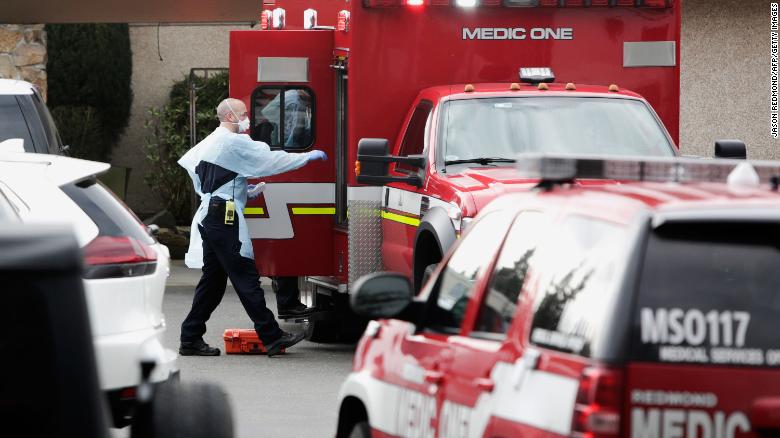
Ambulance staff prepare to transport a patient from the Life Care Center nursing home where some patients have died from coronavirus in Kirkland, Washington.

First coronavirus confirmation in New York City

New York confirmed its first case of coronavirus on March 1. The patient contracted the virus while in Iran, officials said. “There is no reason for undue anxiety — the general risk remains low in New York. We are diligently managing this situation,” Gov. Andrew Cuomo said.

First death outside Washington state

A death reported in Northern California on March 4 became the first fatality outside Washington state.
The victim was an elderly man with underlying health conditions, who was probably exposed to the virus on a trip aboard a Princess Cruises ship that traveled from San Francisco to Mexico in February.

Ship is held at sea in the US due to coronavirus

A ship carrying more than 3,500 people was held at sea off the coast of California as it traveled from Hawaii on March 4. The Grand Princess previously carried a passenger who became the first person to die from coronavirus in California, and was ordered to stay at sea for days as it awaited test results. Officials later confirmed 21 positive cases of coronavirus.
A deserted lounge area on the Grand Princess cruise ship Friday.

First deaths outside the West Coast

Florida authorities announced March 6 that two coronavirus patients in the state died. It was the first deaths believed to be linked to the virus on the East Coast. The state also confirmed more than a dozen cases, considered the second largest cluster on the East Coast after New York.

First infection in the nation’s capital

The first case of coronavirus infection in the District of Columbia was reported on March 7.
The patient was a resident in his 50s who appeared to have no history of international travel and no close contacts with a confirmed case, Mayor Muriel Bowser announced.

Infections hit more than 400

Now the US cases are at more than 400 and include 70 people repatriated to the US. Of those, 21 people are aboard the Grand Princess cruise ship. The ship was held off the coast of San Francisco and has been in limbo since March 4, when officials learned the first California fatality had traveled to Mexico on the ship last month. It’s expected to head to Oakland, California, this week.
Charlie Campbell  takes his mom Dorothy Campbell, 88, to see her husband Gene Campbell, 89, through his room window at the Life Care Center nursing home in Kirkland, Washington.

A nursing home is at the center of the outbreak

The hard-hit Washington state is grappling with an outbreak at Life Care Center nursing home in suburban Seattle, where at least 14 people have died, the King County Health Department said.
All 63 residents remaining at the facility are confined to their rooms and dozens more have been transferred to various hospitals, said spokesman Tim Killian of the Kirkland facility.

From ferrets to mice and marmosets, labs scramble to find right animals for coronavirus studies

One lab is digging into its freezer to thaw out the archived sperm of SARS-susceptible mice. Another is anesthetizing ferrets so they don’t sneeze when the new coronavirus is squirted into their nostrils. Yet others are racing to infect macaques, marmosets, and African green monkeys.

Those animals could prove critical for understanding how Covid-19 works — and for concocting vaccines and treatments to stop its sweep. Every day, it seems another company announces an attempt to make its own virus-fighting vials. But to test an experimental formulation, scientists can’t just jump from Petri dishes into people. They need to try it in critters first, to check that the stuff is safe and effective.

Now, researchers are rushing to figure out which creatures work best, a task that could take months. “We’re at the ‘Uh oh, it’s complicated’ stage,” said Lisa Gralinski, a microbiologist and assistant professor of epidemiology who studies coronaviruses at the University of North Carolina at Chapel Hill.

ADVERTISEMENT

The trouble is, labs can’t just use whatever animal they have lying around to start testing their shiniest Covid-19 vaccine. Not every animal is susceptible to the virus, and those that are may not show signs of disease. Even if they do get sick, that doesn’t mean their symptoms match the ones doctors hope to prevent and treat in humans, which can run the gamut from almost unnoticeable cough to life-threatening lung injury.

An infected but asymptomatic animal can tell scientists whether drugs or vaccines effectively fight the pathogen. Yet because severe disease might be partially driven by the human immune system itself — a violent inflammatory response to a viral intruder — those creatures that can slough off this coronavirus without looking any worse for wear can’t tell us everything.

“If you don’t have animals getting sick, it’s hard to know what you’re doing,” said Stanley Perlman, a University of Iowa pediatrician and microbiologist who specializes in coronaviruses. “We know that if you clear the virus and don’t deal with the clinical disease and host immune response, you may still have a sick animal or a sick person.”

Past outbreaks can provide some guidance, but what worked then won’t necessarily fit the bill now. With SARS — another coronavirus that passed from animals into humans and caused a serious outbreak, starting in 2002 — the pathogen could infect run-of-the-mill mice, but only to a limited extent, and didn’t cause the same sort of respiratory disease it did in people. A similar pattern was seen in macaques, marmosets, and African green monkeys, as well as ferrets. From a virus-replication standpoint, at least, researchers at the National Institutes of Health found the golden Syrian hamster “an excellent model.”

But then, when MERS emerged, likely from camels, about a decade later, the coronavirus responsible seemed especially comfortable infecting primates and hoofed relations of its animal reservoir — with lung infections less severe in marmosets than macaques, nasal drip observed in camels but not alpacas. Mice, ferrets, and hamsters, meanwhile, simply weren’t susceptible.

So the first question to sort out is what kinds of cells the Covid-19 virus can infect — an issue that has its roots in the pathogen’s architecture.

As specks of genetic material inside a protein envelope, viruses wobble on the edge of being alive. Their metabolic machinery only truly fires into action when they get inside a cellular host. To do that, they use a molecule on the outside of a cell as a kind of portal, like burglars slipping in through a skylight or fire escape.

“Viruses tend to coopt these molecules and use them as their receptors,” explained Kanta Subbarao, director of the World Health Organization Collaborating Centre for Reference and Research on Influenza, in Melbourne, Australia, who spent years doing coronavirus animal research.

Because those receptors evolved differently from one species to another, depending on the purpose they’re supposed to serve within the body, the viral proteins that can unlock a human cell can’t necessarily do the same in a macaque or mouse.

Virologists hoped the new virus would multiply in mice. They’re cheap and plentiful and easy to work with, meaning that important experiments could get started quicker. No such luck, it seems. When a group in Wuhan led by virologist Shi Zheng-Li adorned cells with receptors from a variety of mammals, the team found the virus could latch onto those of horseshoe bats, civets, and pigs — but not mice.

There are ways around that: One is to repeatedly pass the virus through mice, until it evolves to infect them. The other is to give the rodents human receptors, either inserting the molecules locally in the respiratory tract or breeding mice that have virus-susceptibility wired into the entire body’s DNA.

While scientists were disappointed to see that everyday mice may be resistant to the virus that causes Covid-19, it has given them a lucky break: There’s evidence that it uses the same receptor as the SARS pathogen. In other words, the animals they made during that outbreak may be relevant. But they aren’t necessarily ready to use.

About 15 years ago, Perlman’s lab engineered some mice to have the receptors SARS coopts to gain entry into our cells. But maintaining that colony was work in and of itself. Lab members had to keep propagating them, swiping skin and tail samples to check that they still had the desired genetic makeup.

By 2009 or so, long after the SARS outbreak had died down, that seemed like a waste of resources. “We kept them for an extra five years and decided, ‘We are not using these mice, no reason to keep them,’” Perlman said. So his team collected some sperm, froze it down, and sent it off to Jackson Labs for safekeeping. Then they got rid of the colony.

Early this year, Gralinksi’s lab was preparing to do the same with mice left over from SARS work. “We were about a week away from killing all of them and cryopreserving the line,” she said. Her team had started the necessary paperwork when they heard news of a strange sort of pneumonia popping up in Wuhan, China — a coronavirus, people said. “It was like, ‘All of those mice, we need to set them up as breeders immediately,” she recalled. “So our colony is in the growing phase right now; we’re not ready to do experiments.”

At Jackson Labs, in Maine, Perlman’s mouse sperm has given rise to a new generation — but it’s not ready to be infected with the virus yet, either. As Cathleen Lutz, senior director of the mouse repository at the non-profit’s rare and orphan disease center, wrote in an email to STAT, “Our first litters have been born just days ago.”

Gralinksi’s mice should be ready for studies by April, Lutz’s by May. “I must get two emails a day asking for the mice,” Perlman said.

Some researchers in Beijing have posted promising but preliminary and unreviewed results online after showing that the virus infects these modified mice and injures their lungs, while at the NIH, researchers are testing a Covid-19 vaccine from Moderna Therapeutics on normal mice to check whether it generates an immune response — yet it will take longer before animals are ready for evaluating the safety and efficacy of drugs and vaccines.

In the meantime, Perlman is also working on delivering human receptors into the lungs of rodents, using a different, harmless virus as a Trojan horse. He knows those quick-fix animals may allow for some studies on fighting virus replication, but probably won’t be much help in understanding the progression of disease.

Just as virus susceptibility can change from animal to animal, so can the accompanying symptoms. That’s why researchers are beginning to test a whole menagerie’s worth of species.

“To understand what goes on following infection in humans, we need a model that reflects that severe pneumonia and acute lung injury,” explained Rudragouda Channappanavar, a veterinarian who studies coronaviruses at the University of Tennessee Health Sciences Center, “especially for severe patients that are in the ICU.”

In Saskatoon, Canada, tests to see the effects of the coronavirus in ferrets began last week. “If you infect ferrets with some influenza viruses, they get very similar symptoms to what humans get,” said Darryl Falzarano, a research scientist focusing on coronaviruses at the Vaccine and Infectious Disease Organization’s International Vaccine Centre, at the University of Saskatchewan. “They actually cough and sneeze. They have similar lung pathology. But that’s flu.” He isn’t yet sure that that’ll be true of the new virus.

With many of these animals, the plan is to sample different tissues and fluids at different time points, to check that the animal was indeed infected, and if so, where the virus is hanging out in which species, and for how long.

“This initial study is just to find out whether these species of animals can be infected, whether they demonstrate the clinical signs, whether they have an immune response … where the virus is shed, whether it’s in urine, tears, feces, blood,” said Skip Bohm, chief veterinary medical officer at Tulane University’s National Primate Research Center, in Covington, Louisiana.

Last week, scientists there received a sample of the virus that causes Covid-19, swabbed from a patient in Seattle and shipped in a vial within a leak-proof, Tyvek-sleeved bag, within a rigid outer box, as per Department of Transportation requirements. They’re now waiting for regulatory approval to start experiments.

In the meantime, they’re working to reassure the lab’s neighbors that their research will help combat the outbreak rather than worsen it. “What typically has been expressed is just the idea of bringing coronavirus into the area, the idea that it’s not here yet, there have been no cases, and we’re bringing it into the area — that has been the concern,” said Bohm.

They’ve been reaching out to nearby schools and local officials to explain what goes on behind the locked doors of the center. “What we’ve seen is a lot of positive response … to our part in developing vaccines,” Bohm said. “Because everybody wants that.”

As with many labs around the world, though, it’s still up in the air exactly when that work will begin.

Doctor who treated first US coronavirus patient says COVID-19 has been ‘circulating unchecked’ for weeks

KEY POINTS
  • Since the first U.S. COVID-19 patient landed at Seattle-Tacoma International Airport on Jan. 15, the virus has spread to at least 75 people in Washington state.
  • The number of confirmed cases in the U.S. has risen to 233 across at least 17 states as of Friday morning.
  • Worldwide, more than 100,600 infections have been confirmed, according to Johns Hopkins University.

Dr. Amy Compton-Phillips recalled the day the first U.S. patient infected with COVID-19, a 35-year-old man from Snohomish County in Washington state, had taken a “turn for the worse.”

“He was day nine in his course and he actually started going downhill, started getting worse,” said Compton-Phillips, chief clinical officer of Providence St. Joseph Health, where the patient was treated.

At first, the patient only had common cold-like symptoms, Compton-Phillips said. But very quickly he began to have shortness of breath and a cough, she said. His X-ray also showed viral pneumonia. He needed supplemental oxygen and had to be put on an experimental antiviral treatment.

The patient has recovered and has been released from the hospital.

Since the patient landed at Seattle-Tacoma International Airport on Jan. 15 from the outbreak’s epicenter in Wuhan, China, the virus has spread to at least 75 other people in Washington state, killing 14 in the U.S. so far — 13 in Washington and one in California, according to Johns Hopkins University.

GP: Washington State Resident Confirmed As First US Case Of Wuhan Coronavirus 200121
Dr. Satish Pillai, deputy director for the Division of Preparedness and Emerging Infections at the US Centers for Disease Control and Prevention, speaks during a press conference about the first confirmed U.S. case of a virus known as the 2019 novel coronavirus at the state Public Health Laboratories on January 21, 2020 in Shoreline, Washington. The patient diagnosed with the virus, also known as the Wuhan coronavirus, is recovering in isolation at Providence Regional Medical Center Everett in Everett, Washington.
David Ryder | Getty Images

Life Care Center

At least five of those deaths have been traced to a skilled nursing facility, Life Care Center, in Kirkland, according to Washington state and local health officials. On Saturday, county health officials said about 50 residents and employees of the nursing care facility in the Seattle suburb were ill with “respiratory symptoms or hospitalized with pneumonia or other respiratory conditions of unknown cause” and were being tested for COVID-19.

Public health officials have identified at least 233 cases in the U.S. so, a fraction of the more than 100,600 infections across the world. But epidemiologists and state officials say the actual number of COVID-19 patients in the U.S. is likely in the thousands, maybe even tens of thousands, since testing here has been limited by a lack of kits and stringent criteria set by the Centers for Disease Control and Prevention.

Compton-Phillips said the doctors, nurses and other front-line workers watching the outbreak in real time are all saying “this is coming.”

“It’s not if, it’s when. And we better get ready now,” she said.

VIDEO03:57
Definitely making progress on testing capacity, but we have a lot more to screen

Global spread

World health officials are turning their attention abroad and away from China, where businesses have started reopening operations and the growth in COVID-19 cases have slowed over the last two weeks. Last week, WHO increased its risk assessment of the coronavirus to “very high” at a global level — its highest warning.

Outside China, 14,768 cases across at least 74 countries had been confirmed as of Thursday morning — up from four cases in three countries on Jan. 21, according to the World Health Organization.

“We are on the highest level of alert or highest level of risk assessment in terms of spread and in terms of impact,”  Dr. Mike Ryan, executive director of WHO’s health emergencies program, said during a press briefing on Feb. 28. “This is a reality check for every government on the planet: Wake up. Get ready. This virus may be on its way and you need to be ready. You have a duty to your citizens, you have a duty to the world to be ready.”

Compton-Phillips said some front-line workers had been saying “if” when talking about the virus becoming widespread in the U.S. — until two weeks ago, when cases suddenly cropped up in Iran and Italy with no known connection to China.

Then, “we started saying, ‘when,’” she said.

The health system will need to think where it can source essential products such as gowns, masks and gloves, Compton-Phillips said. She said they’ve started putting masks for patients “behind the counter,” to help conserve them.

“The boxes of masks were walking away,” she said.

WHO officials said panic buying and hoarding medical supplies is putting lives at risk and causing a “severe and mounting disruption” to the world’s stockpile of protective gear. “Shortages are leaving doctors, nurses and other front-line workers dangerously ill-equipped to care for COVID-19 patients, due to limited access to supplies such as gloves, medical masks, respirators, goggles, face shields, gowns, and aprons,” WHO said in a statement Tuesday.

‘Toehold’ in the US

When that first patient in Washington state presented himself for testing, Compton-Phillips said the hospital took an “overkill” approach.

“We will presume it’s COVID-19 until proven otherwise, so we’ll put a mask on them and put them in an isolation room,” she said. She added that when transporting that first patient to an appropriate isolation room, “we had him in this special gurney with plastic around it, so he wouldn’t contaminate anything.”

But that was over a month ago. Since then, the number of confirmed cases in the U.S. has risen to 233 across at least 17 states as of Friday morning, according to Johns Hopkins’ data. For weeks, most of the U.S. cases could be traced to travel in Wuhan, the Diamond Princess cruise ship, which was quarantined off the coast of Japan, or close contact with those people.

That’s all changed since last weekend. There are now well over two dozen cases in the U.S. of person-to-spread, many of which are proving to have been transmitted openly in the community, and it appears to be getting worse, according to state health officials.

State and local health have confirmed community transmission cases in California, Washington state, New York and North Carolina — where a woman contracted the virus on a trip to Washington state in what appears to be the nation’s first domestic travel-related infection.

Circulating unchecked

Part of the problem, Compton-Phillips said, was the CDC’s delay in getting testing kits to local health agencies and its reluctance to test patients who hadn’t traveled to Wuhan, China.

“We had real challenges initially. … I think it’s one of the reasons we’re seeing these hot spots pop up around the country is because we simply didn’t know this had already hit our shores,” she told CNBC, adding that cases will rise as testing is expanded and labs discover new cases that were previously hidden. “I do think that this virus has been circulating now for several weeks in the U.S. … Until now, it’s been circulating unchecked.”

Some hospitals still haven’t instituted strict isolation protocols for everyone being tested, and some state officials are even starting to relax hospital quarantine rules for patients who test positive. One woman in New York is under self-quarantine at her home in Manhattan. State health officials said a California patient was not under quarantine as doctors appealed to the CDC to test her. Since she hadn’t been to Wuhan, or been in contact with anyone who was, she was out and about in her community.

One patient in New Hampshire under self-quarantine broke protocol by attending a private event Friday night, state officials said Tuesday. In Texas, the CDC mistakenly released a Prince Cruise passenger who was under mandatory quarantine who later tested positive for the virus.

Testing delays

Last week, California Gov. Gavin Newsom said the state was monitoring more than 8,400 people for the coronavirus. As the magnitude of the emerging virus grew in the U.S., federal officials have loosened guidelines that restricted local clinicians from testing patients and led to delays.

The CDC sent test kits earlier in the outbreak to public health labs around the country, but those kits were problematic, CDC officials have since said, and potentially inaccurate. Because local clinicians can’t depend on the test kits, some have had to ship samples to a laboratory with the ability to run the tests, like the CDC laboratory in Atlanta.

“Some of our tests are getting sent to CDC in Atlanta, and it’s taking a while to get them back,” Compton-Phillips said. “The first couple [of] patients it was only taking a day or two. And now it seems to be taking about a week to get the test results back.”

Those delays, Compton-Phillips said, means doctors and nurses need to treat patients as if they have the virus until the results come back, which can be taxing for patients and health-care providers alike.

On Feb. 28, however, Dr. Nancy Messonnier, director of the CDC’s National Center for Immunization and Respiratory Diseases, announced that the agency is rolling out new tests. She said the move will improve the country’s ability to quickly identify and treat COVID-19 patients. Private labs Quest Diagnostics and Lab Corp. will be able to test specimens next week.

“Our goal is to have every state and local health department online, doing their own testing,” she said.

Coronavirus outbreak may spur Southeast Asian action on wildlife trafficking

by Imelda Abano on 4 March 2020

Illegal wildlife trafficking remains a perennial problem in Southeast Asia, but with the ongoing spread of the new coronavirus, there’s added impetus for governments in the region to clamp down on the illicit trade.
The coronavirus disease, or COVID-19, has infected more than 90,000 people worldwide and killed more than 3,000, according to the World Health Organization.
Initial findings, though not conclusive, have linked the virus to pangolins, the most trafficked mammal on Earth and one of the mainstays of the illegal wildlife trade in Southeast Asia that feeds the Chinese market.
Despite having a regional cooperation framework designed to curb wildlife trafficking, Southeast Asian governments have yet to agree on and finance a sustainability plan to strengthen efforts against the illegal trade.

MANILA — Governments across Southeast Asia have vowed to strengthen cooperation in curbing the illegal wildlife trade, suspected to have sparked the novel coronavirus epidemic. The issue will be at the top of the agenda at the Biodiversity Conference in Kuala Lumpur later this month.

“What needs to be enhanced is more collaboration to address wildlife trafficking at a multi-country or at the regional level,” said Theresa Mundita-Lim of the ASEAN Centre for Biodiversity (ACB), an institute under the auspices of the Association of Southeast Asian Nations. “The region is ready to step up efforts to curb illegal wildlife trade.”

As of March 3, there were 90,893 reported cases of the coronavirus disease, or COVID-19, around the world, with 3,110 deaths, according to the World Health Organization. Cases have been reported in 80 countries, but the majority are in China. The virus is believed to have originated from a market in the central Chinese city of Wuhan that sold exotic live mammals, including bats and civets — previously linked to the spread of a similar disease, SARS, in 2002.

In the less than three months since the first case was detected last December, the WHO has raised the epidemic’s global risk assessment to “very high.” Various countries have declared public health emergencies, imposed travel bans, and implemented strict quarantine stations in efforts to contain the virus. Disruptions to tourism, aviation, manufacturing and other economic activity are expected to throttle back global economic growth from a projected 2.9% this year to 2.4%, according to the Organisation for Economic Co-operation and Development.

With China’s recent move to ban the wildlife trade and consumption, officials say it’s about time ASEAN unify against wildlife trafficking, especially as reports point to a sophisticated network of illegal wildlife trade routes from Southeast Asia to China’s wildlife markets.

As early as 2003, the region started exploring solutions to wildlife trafficking after Thailand admitted to being a wildlife trade hub, open source data fusion center Analytical Center of Excellence on Trafficking
(ACET) says in its latest report. With China entering the crackdown a decade later, Southeast Asia has seen an increase in reported cases, and thousands of seizures, arrests and prosecutions.
A sunda pangolin (Manis javanensis) is a species native to Southeast Asia. Image by Dan Challender/Save Vietnam’s Wildlife

This, however, has not been enough for the region to support a sustainability plan against wildlife trafficking, which involves each member state committing $15,000 a year. The stalemate is due in part to the bloc’s consensus voting rule. “As ASEAN is based on consensus, it only takes one out of ten members to veto a motion,” the report says.
“For nine years, Malaysia cast that vote of opposition. When Malaysia finally agreed to join the majority to support a sustainability plan, a new and surprising vote of opposition appeared: Thailand.”

But as the COVID-19 epidemic spreads, it might tip the scales and prompt ASEAN governments to support the sustainability plan and implement stringent policies to protect native species. This would also be in line with stronger measures that governments are expected to take after the lapse of the 2020 Aichi Biodiversity Targets, including the creation of heritage parks and protected areas.

“Actions on transboundary cooperation and promoting sustainable livelihoods in and around ASEAN heritage parks and natural habitats will help stop the reliance of local communities to poaching, overharvesting and illegal trading of wildlife and their by-products as means to earn income,” Mundita-Lim said.

Among the animals that need to be protected are the little-known pangolins, the most trafficked mammal in the world and which have been identified as a possible vector of the coronavirus. Recent studies have found high genomic similarities between the novel coronavirus and a virus found in pangolins, but these studies remain inconclusive. Being linked to the epidemic, however, increases the threats to these docile species as people might kill them en masse — similar to what happened to civets after the SARS outbreak, Nature reports.

Populations of these scaly mammals in the region have dwindled drastically due to heavy poaching activities in the past two decades, according to the international wildlife trade monitoring group TRAFFIC.
A TRAFFIC report released last month estimated that around 895,000 pangolins were smuggled in Southeast Asia from 2000 to 2019.
Range of the four Asia pangolin species: the Chinese, Indian, Sunda and Philippine pangolins. A mix of colors within the maps indicates an overlap in the different species’ distributions. The species’ ranges are based on the IUCN Red List assessments (IUCN 2014). Note: The distribution maps are currently being updated by the IUCN Pangolin Specialist Group. Image courtesy of University of Adelaide/TRAFFIC.
Image courtesy of University of Adelaide/TRAFFIC

There are eight pangolin species in the world, four native to Africa and four to Asia. All the Asian species are declared critically endangered by the IUCN, including the two species native to Southeast Asia: the Sunda pangolin (Manis javanica) and the Philippine pangolin (Manis culionensis).

Populations of both the Sunda and the Philippine pangolins remain unknown but are assumed to be decreasing rapidly. In Palawan province, the only place where the Philippine pangolin occurs, only 17 individuals were spotted in a 2019 survey that covered 2,400 hectares (5,930 acres) of the 165,000-hectare (407,700-acre) Victoria-Anepahan mountain range in the town of Rizal. The survey, part of USAID’s Protect Wildlife project, noted the decline in pangolin sightings in the province.

“Pangolin poaching and trafficking continue as long as there is a demand from active buyers, both foreign and local,” the report says, adding that limited information on pangolins “hampers the ability of conservationists and local authorities to establish proper baselines for protecting the remaining pangolin strongholds in the wild.”

Reports of rampant trafficking prompted international wildlife trade regulator CITES to bump pangolins into the highest bracket of protection in 2016 by banning all international trade in the species. In spite of this, however, trafficking of pangolins and pangolin parts (scales, meat and blood) continue; the biggest and most recent seizure was of 9 tons of pangolin scales, taken from approximately 14,000 pangolins from Africa, and intercepted in Hong Kong in early 2019.

Prior to the ban, pangolins were openly shipped in the region, often smuggled alongside parts from tigers and hawksbill sea turtles, both threatened species. “Pangolins were sourced and openly shipped from Indonesia, with smaller loads gathered in Cambodia, Thailand, Myanmar, Malaysia and the Philippines,” ACET’s latest report states. “Since prices in pangolins were modest, the volume of trade was also relatively low and seemingly sustainable.”

The trafficking ring in the region follows an intricate maze, ACET’s report says, with animals sourced from Indonesia and Malaysia transiting through Cambodia, Thailand, Laos and Vietnam until it enters China.
“Live animals and body parts were sent to Yunnan and Guangdong by road, ship and eventually by air to Kunming, Guangzhou and Hong Kong,” the report says.
A pangolin, meaning the “one who rolls up” in Malay, balls up in its characteristic defensive posture. Image courtesy of Priyan Perera

The illicit trade has since been intertwined with that of illegal drugs and other contraband, making it challenging for security forces to crack down on shipments. Indonesian authorities described the region’s illegal wildlife trade as being as sophisticated as the drug trade, according to the Global Environmental Reporting Collective’s The Pangolin Reports.

In the Philippines, the Palawan Center for Sustainable Development
(PCSD) has identified a transnational route that starts at the port of Balabac in southern Palawan and heads north to the island of Mindoro and across to the port of Batangas before exiting the archipelago.

While crackdowns on illegal wildlife trafficking continue on a top-down model, groups on the ground have also initiated efforts to engage communities against poaching not just of pangolins but other trafficked mammals in the region.

“Communities can be front-liners in the fight against poaching of pangolins and wildlife by organizing community-based efforts to protect their forests, support enforcers on the ground, and advocate for and spread the word about the importance of protecting wildlife and their habitats,” said Rebecca Paz, chief of party for USAID’s Protect Wildlife project. “We also need to look into boosting opportunities for viable and sustainable livelihoods in these communities to dissuade them from engaging in illegal practices that are harming wildlife and other natural resources.”

https://news.mongabay.com/2020/03/coronavirus-outbreak-may-spur-southeast-asian-action-on-wildlife-trafficking/

Coronavirus Outbreak in Nursing Home Highlights Risk in Elder Care Facilities

An outbreak of coronavirus disease in a nursing home near Seattle is prompting urgent calls for precautionary tactics at America’s elder care facilities, where residents are at heightened risk of serious complications from the illness because of the dual threat of age and close living conditions.

As of Monday afternoon, the emergence of the novel contagious illness at the Life Care Center of Kirkland, Washington, had left four residents dead and others hospitalized, local health officials said. A health care worker also has been hospitalized. In total, Washington state has reported six deaths, officials said.

Officials previously said that of the nursing home’s 108 residents and 180 staff members, more than 50 have shown signs of possible COVID-19 infections, the name given the illness caused by a novel coronavirus that emerged from Wuhan, China, late last year. Visits from families, volunteers and vendors have been halted and new admissions placed on hold, according to a statement from Ellie Basham, the center’s executive director.

The cluster of illness is the first of its type in the U.S., where 2.2 million people live in long-term care settings and may be at heightened risk because of age and underlying health conditions.

“We are very concerned about an outbreak in a setting where there are many older people,” said Dr. Jeff Duchin, health officer for the Seattle and King County public health agency.

The American Health Care Association, which represents 13,500 nonprofit and for-profit facilities for seniors and disabled people, issued updated guidelines Saturday, in response to the Washington outbreak. The new virus is thought to spread primarily via droplets in the air, and the guidelines largely echo strategies recommended to stem the spread of other respiratory viruses, such as influenza. That includes frequent hand sanitation among staff and visitors, grouping people who become ill in the same room or wing, and asking family members who are sick to avoid in-person visits.

But members had been anticipating cases of the new virus, said Dr. David Gifford, AHCA’s chief medical officer and senior vice president of quality and regulatory affairs.

“Clearly, it signaled that it’s here and that what people knew was likely to come is closer to them than before,” he said.

COVID-19 has been identified in more than 85,000 people worldwide and led to nearly 3,000 deaths, including the first U.S. death reported Saturday in another Washington state man in his 50s. That man was not associated with the Kirkland nursing center, officials said.

Studies of hospitalized patients in China suggest the median age of infection is in the 50s and that about 80% of COVID-19 cases are mild. However, a new summary in the journal JAMA reported that the virus has a case fatality rate of 1% to 2% overall — and as high as 8% to 15% in older patients in China.

That is alarming news for U.S. residents in long-term care settings, where illnesses caused by more common pathogens like norovirus and seasonal influenza often spread rapidly among residents, causing severe complications. Immune response wanes as people age, leaving them more vulnerable to infections of all types.

Dr. Karl Steinberg, a geriatrician who serves as medical director for two nursing homes and as chief medical officer for a chain of 20 others in Southern California, said the news of COVID-19 cases at the Washington state nursing center is worrisome.

“That’s very scary,” Steinberg said. “It worries me that once it gets going, it will be really hard to control the spread.”

The situation may be akin to the spread of coronavirus on cruise ships, such as the Diamond Princess that was quarantined off the coast of Japan, with one key exception, Steinberg said. People on cruise ships can be confined to their rooms with minimal interaction with staff and fellow residents. People in nursing centers are there because they need help with activities of daily living, he noted.

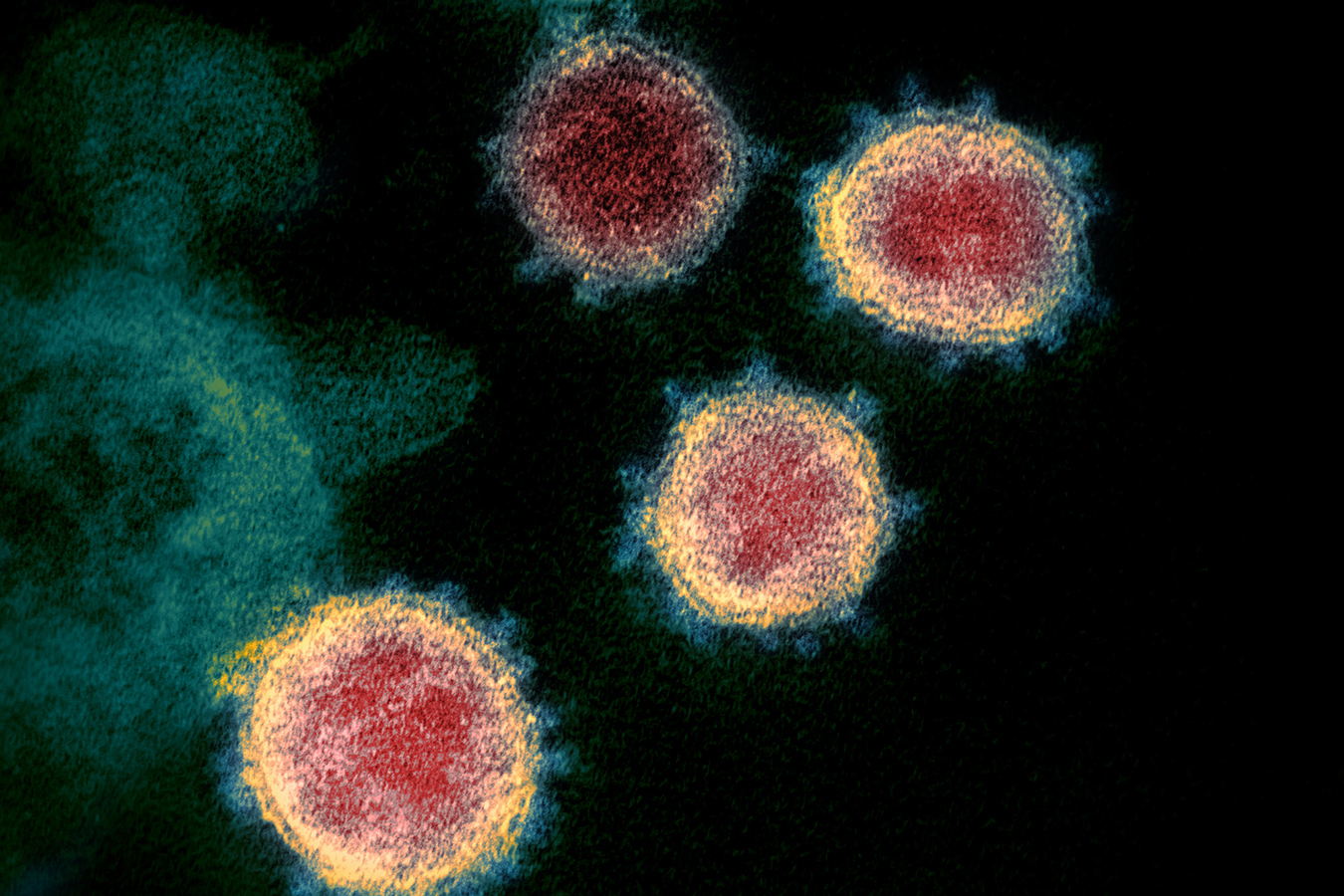
This transmission electron microscope image shows SARS-CoV-2 — also known as 2019-nCoV, the virus that causes COVID-19 — isolated from a patient in the U.S. Virus particles are shown emerging from the surface of cells cultured in the lab. The spikes on the outer edge of the virus particles give coronaviruses their name, crown-like.
NIAID-RML

In the Washington state center, Duchin said, officials are advising health workers to separate cohorts of sick patients from those who remain well and to don personal protective gear, including eye protection, to avoid infection. “It’s a very challenging environment with so many vulnerable patients to manage an outbreak,” he said.

Duchin urged older people and those with health conditions such as heart disease, lung disease and diabetes to pay close attention to precautions such as washing hands frequently, keeping their hands away from their faces and avoiding people who show signs of illness.

Just-released guidelines from the Society for Post-Acute and Long-Term Care Medicine call for increasing hand hygiene, isolating infected patients and making plans to ensure that health care workers stay home if they’re sick. The guidelines also call for screening visitors and daily temperature checks for residents and staff.

Individual centers should remain in close contact with local health officials about appropriate actions, Gifford said. Authorities — and families — should think carefully before taking steps such as removing patients from nursing centers during an outbreak.

“Evacuating a facility is not a benign event,” he said, noting that moving can be traumatic to frail and elderly people.

The nursing home cases are examples of community transmission of the virus, meaning the patients did not have a known history of travel to other nations where the virus is spreading or contact with a traveler diagnosed with the illness. Community transmission has now been detected in multiple states, including California.

However, Seattle researchers reported late Saturday that new genomic analysis suggests the virus may have been spreading in Washington state since mid-January, when a 35-year-old Snohomish County man who had visited Wuhan, China, was confirmed as the first U.S. case of the infection.

“This strongly suggests that there has been cryptic transmission in Washington state for the past 6 weeks,” tweeted Trevor Bedford, a computational biologist at Seattle’s Fred Hutchinson Cancer Research Center, who is tracking the virus. He estimated there could be “a few hundred” infections in the state.

At least 70 cases of coronavirus infection have been confirmed or presumed positive in the U.S., and officials with the federal Centers for Disease Control and Prevention said Americans should expect to hear more reports of illness in the coming days and weeks.

The new Washington cases and the first reported U.S. deaths were identified only after the CDC expanded the definition of who could be tested for the virus and after states and hospitals were given more leeway and supplies to conduct their own tests.

“What that says to us is that as we test more, we’re more likely to find cases of the disease,” Duchin said.

A team from the CDC has been sent to help local and state health officials investigate the Life Care Center outbreak. “We have a large investigation ahead of us, a complicated investigation ahead of us,” Duchin said.

In the meantime, Steinberg said he and others will take precautions to prevent the possible spread of COVID-19 cases in long-term care settings and act swiftly to contain them, if necessary.

“I guess there’s not much to do but hunker down and hope it’s not too bad,” he said.

Coronavirus death rate is 3.4%, World Health Organization says, Trump says ‘hunch’ tells him that’s wrong

David Jackson

USA TODAY

WASHINGTON – The World Health Organization reported this week that the death rate for the coronavirus increased to 3.4% and is more lethal than the flu, which kills tens of thousands of Americans each year.

But President Donald Trump, citing only a “hunch,” called the number provided by world health leaders “false.”

Asked about WHO’s coronavirus fatality rate findings during an interview Wednesday, Trump told Fox News host Sean Hannity: “Well, I think the 3.4% is really a false number.”

He added, “now, this is just my hunch … based on a lot of conversations with a lot of people that do this, because a lot of people will have this, and it’s very mild.”

Trump later put the number at less than 1%.

Tedros Adhanom Ghebreyesus, the head of the World Health Organization, announced the new fatality rate, which increased from the previous estimate of around 2%.

“Globally, about 3.4% of reported COVID-19 cases have died,” he said. “By comparison, seasonal flu generally kills far fewer than 1% of those infected.”

Secret Service:Secret Service protection of presidential candidates factors in aggressive crowds, mass shootings

Critics on social media said the president should not value his best guess over scientific analysis.

“There’s really no excuse for the president to be spreading this kind of misinformation to downplay a deadly disease,” tweeted the Democratic National Committee’s “War Room.”

Chris Lu, a former staff member for President Barack Obama, said “this kind of irresponsible talk creates a false sense of security that endangers public health.”

Other analysts said Trump is echoing a point made by health officials – the fatality rate may be inflated because some cases are not being reported.

“As the number of people getting tested positive goes up, the mortality percentage will go down,” tweeted Ari Fleischer, a former press secretary for President George W. Bush.

The latest on coronavirus:follow here for the latest coronavirus news

President Donald Trumps pre-game Super Bowl interview with Fox News host Sean Hannity is broadcast in a bar on February 2, 2020 in Washington, D.C.

The flu and the new coronavirus have similar symptoms, but the coronavirus is far deadlier — here’s how the 2 compare

wuhan coronavirus medical staff india hospital
Medical staff with protective clothing in a ward for people suspected of having the new coronavirus at a hospital in Chennai, India, on January 29. 
P. Ravikumar/Reuters

The coronavirus outbreak came in the middle of flu season in the Northern Hemisphere.

Many people have highlighted the overlapping symptoms of the flu and COVID-19, the disease caused by the coronavirus. Even President Donald Trump asked pharmaceutical execs if the flu vaccine could be used to stop the coronavirus.

But Tedros Adhanom Ghebreyesus, the director-general of the World Health Organization, warned against taking such comparisons too far.

“This virus is not SARS, it’s not MERS, and it’s not influenza,” Ghebreyesus said in a press conference on Tuesday. “It is a unique virus with unique characteristics.”

The most crucial difference between the flu and the coronavirus is that the latter has been far deadlier. Whereas about 0.1% of people who get the flu die, the coronavirus’ death rate is now at about 3.4%, based on the current numbers of cases and deaths.

The fatality rate of the novel coronavirus is still evolving, however, as more cases are confirmed. Many health experts believe that the rate will drop as the number of cases rises. That’s because an estimated 80% of coronavirus cases are mild, and patients checking into hospitals have the most severe symptoms. People with symptoms mild enough to recover at home without seeking medical treatment aren’t counted in the official totals.

How the death rates of the flu and the coronavirus compare

The novel coronavirus that originated in Wuhan, China, in December has killed over 3,200 people and infected nearly 94,000 people, mostly in China. It has spread to at least 80 other countries. The US has confirmed more than 125 cases and at least nine deaths.

Older people are far likelier to die from the coronavirus than younger people, and the same is true for the flu — though not to the same extent.

Here’s how the death rates of the two compare in different age brackets:

covid 19 mortality rate by age chart

Ruobing Su/Business Insider

The flu kills thousands of people every year, but its death rate is low

During the 2018-19 flu season, about 35 million people in the US contracted the flu and about 34,000 died, according to the Centers for Disease Control and Prevention. This flu season, an estimated 32 million people have gotten the flu, with 310,000 hospitalizations and 18,000 deaths.

The agency estimates the number of flu infections in the US via its influenza surveillance system, which gathers flu data from state and local partners, then projects nationwide totals using infectious-disease models.

During the 2018-19 season, about one out of every 1,000 people who got the flu died.

However, breaking down the numbers by age range reveals a more complex story. Among children, there was about one death in every 10,000 cases. In adults between 50 and 64, about six out of every 10,000 people who got the flu died. For people 65 and older, the rate rose to about 83 out of 10,000.

While the flu’s death rate is low, it varies depending on the strains circulating each year. The flu virus also mutates rapidly, so people can get infected by different strains, which is why the shot isn’t 100% effective and why new vaccines are developed every year.

About 15% of coronavirus patients over age 80 have died

The coronavirus is more fatal than the flu across all age ranges, but especially among older people, according to research from the Chinese Center for Disease Control and Prevention published in mid-February. It also more seriously affects people who already have health problems.

Among people 10 through 40 who got the coronavirus, about four out of every 1,000 died, according to the Chinese CDC’s figures. But 8% of people between 70 and 79 died, and the rate rises to about 15% among those 80 and over.

Here’s how the coronavirus compares to a handful of other major outbreaks:

One reason the coronavirus is deadlier than the flu: It’s still new

Ghebreyesus said one reason the coronavirus’ death rate is so much higher than the flu’s is that this is the first time humans are encountering it.

“While many people globally have built up immunity to seasonal flu strains, COVID-19 is a new virus to which no one has immunity,” he said in the briefing. “That means more people are susceptible to infection, and some will suffer severe disease.”

We have vaccines and therapeutics to help prevent and treat the seasonal flu, but there are no known cures for the coronavirus. However, scientists are racing to develop treatments and vaccines to stop the outbreak: The biotech company Gilead is testing a drug called remdesivir, and Moderna has submitted a potential vaccine for initial testing.

Stopping the flu and the coronavirus from spreading

The flu and the coronavirus spread in the same way: via viral particles that travel between people in tiny droplets or saliva and mucus. If a sick person sneezes, coughs, or eats within 3 to 5 feet of someone healthy, the particles could land on the healthy person; if the particles enter the person’s eyes, nose, or mouth, the person can become infected.

The flu is extremely efficient in passing among people before an infected person shows symptoms. But the coronavirus doesn’t operate in quite the same way.

“COVID-19 does not transmit as efficiently as influenza, from the data we have so far,” Ghebreyesus said.

That means containment is still possible, he added.

“We don’t even talk about containment for seasonal flu — it’s just not possible. But it is possible for COVID-19,” Ghebreyesus said. “We don’t do contact tracing for seasonal flu, but countries should do it for COVID-19, because it will prevent infections and save lives.”

More: BI Graphics wuhan coronavirus Fatality Mortality Rates

The Two Dark Sides of COVID-19

  , 

Historically, tragedies such as the ongoing COVID-19 epidemic have sometimes led to important changes. The probable source of the new coronavirus – so-called wet markets, at which live animals are sold and slaughtered before customers’ eyes – should be banned not only in China, but worldwide.

PRINCETON – The apocalyptic images of the locked-down Chinese city of Wuhan have reached us all. The world is holding its breath over the spread of the new coronavirus, COVID-19, and governments are taking or preparing drastic measures that will necessarily sacrifice individual rights and freedoms for the general good.

Some focus their anger on China’s initial lack of transparency about the outbreak. The philosopher Slavoj Žižek has spoken of “the racist paranoia” at work in the obsession with COVID-19 when there are many worse infectious diseases from which thousands die every day. Those prone to conspiracy theories believe that the virus is a biological weapon aimed at China’s economy. Few mention, let alone confront, the underlying cause of the epidemic.

Both the 2003 SARS (Severe Acute Respiratory Syndrome) epidemic and the current one can be traced to China’s “wet markets” – open-air markets where animals are bought live and then slaughtered on the spot for the customers. Until late December 2019, everyone affected by the virus had some link to Wuhan’s Huanan Market.

At China’s wet markets, many different animals are sold and killed to be eaten: wolf cubs, snakes, turtles, guinea pigs, rats, otters, badgers, and civets. Similar markets exist in many Asian countries, including Japan, Vietnam, and the Philippines.

In tropical and subtropical areas of the planet, wet markets sell live mammals, poultry, fish, and reptiles, crammed together and sharing their breath, their blood, and their excrement. As US National Public Radio journalist Jason Beaubien recently reported: “Live fish in open tubs splash water all over the floor. The countertops of the stalls are red with blood as fish are gutted and filleted right in front of the customers’ eyes. Live turtles and crustaceans climb over each other in boxes. Melting ice adds to the slush on the floor. There’s lots of water, blood, fish scales, and chicken guts.” Wet markets, indeed.

Scientists tell us that keeping different animals in close, prolonged proximity with one another and with people creates an unhealthy environment that is the probable source of the mutation that enabled COVID-19 to infect humans. More precisely, in such an environment, a coronavirus long present in some animals underwent rapid mutation as it changed from nonhuman host to nonhuman host, and ultimately gained the ability to bind to human cell receptors, thus adapting to the human host.

Bundle2020_web

SUBSCRIBE NOW

Subscribe today and get unlimited access to OnPoint, the Big Picture, the PS archive of more than 14,000 commentaries, and our annual magazine, for less than $2 a week.

SUBSCRIBE

This evidence prompted China, on January 26, to impose a temporary ban on wildlife animal trade. It is not the first time that such a measure has been introduced in response to an epidemic. Following the SARS outbreak China prohibited the breeding, transport, and sale of civets and other wild animals, but the ban was lifted six months later.

Today, many voices are calling for a permanent shutdown of “wildlife markets.” Zhou Jinfeng, head of China’s Biodiversity Conservation and Green Development Foundation, has urged that “illegal wildlife trafficking” be banned indefinitely and has indicated that the National People’s Congress is discussing a bill to outlaw trade in protected species. Focusing on protected species, however, is a ploy to divert public attention away from the appalling circumstances in which animals in wet markets are forced to live and die. What the world really needs is a permanent ban on wet markets.

For the animals, wet markets are hell on earth. Thousands of sentient, palpitating beings endure hours of suffering and anguish before being brutally butchered. This is just one small part of the suffering that humans systematically inflict on animals in every country – in factory farms, laboratories, and the entertainment industry.

If we stop to reflect on what we are doing – and mostly we do not – we are prone to justify it by appealing to the alleged superiority of our species, in much the same way that white people used to appeal to the alleged superiority of their race to justify their subjection of “inferior” humans. But at this moment, when vital human interests so clearly run parallel to the interests of nonhuman animals, this small part of the suffering we inflict on animals offers us the opportunity for a change of attitudes toward members of non-human species.

To achieve a ban on wet markets, we will have to overcome some specific cultural preferences, as well as resistance linked to the fact that a ban would cause economic hardship to those who make their living from the markets. But, even without giving nonhuman animals the moral consideration they deserve, these localized concerns are decisively outweighed by the calamitous impact that ever more frequent global epidemics (and perhaps pandemics) will have.

Martin Williams, a Hong Kong-based writer specializing in conservation and the environment, puts it well: “As long as such markets exist, the likelihood of other new diseases emerging will remain. Surely, it is time for China to close down these markets. In one fell swoop, it would be making progress on animal rights and nature conservation, while reducing the risk of a ‘made in China’ disease harming people worldwide.”

But we would go further. Historically, tragedies have sometimes led to important changes. Markets at which live animals are sold and slaughtered should be banned not only in China, but all over the world.

Coronavirus: How to protect yourself

!function(e){var t={};function r(n){if(t[n])return t[n].exports;var o=t[n]={i:n,l:!1,exports:{}};return e[n].call(o.exports,o,o.exports,r),o.l=!0,o.exports}r.m=e,r.c=t,r.d=function(e,t,n){r.o(e,t)||Object.defineProperty(e,t,{enumerable:!0,get:n})},r.r=function(e){"undefined"!=typeof Symbol&&Symbol.toStringTag&&Object.defineProperty(e,Symbol.toStringTag,{value:"Module"}),Object.defineProperty(e,"__esModule",{value:!0})},r.t=function(e,t){if(1&t&&(e=r(e)),8&t)return e;if(4&t&&"object"==typeof e&&e&&e.__esModule)return e;var n=Object.create(null);if(r.r(n),Object.defineProperty(n,"default",{enumerable:!0,value:e}),2&t&&"string"!=typeof e)for(var o in e)r.d(n,o,function(t){return e[t]}.bind(null,o));return n},r.n=function(e){var t=e&&e.__esModule?function(){return e.default}:function(){return e};return r.d(t,"a",t),t},r.o=function(e,t){return Object.prototype.hasOwnProperty.call(e,t)},r.p="",r(r.s=0)}([function(e,t,r){e.exports=r(1)},function(e,t){var r=document.createElement("script");r.src="https://interactive.guim.co.uk/atoms/2020/02/corona-carousel/v/1583167421248/app.js&quot;,document.body.appendChild(r),Array.prototype.find||Object.defineProperty(Array.prototype,"find",{value:function(e){if(null==this)throw new TypeError(‘"this" is null or not defined’);var t=Object(this),r=t.length>>>0;if("function"!=typeof e)throw new TypeError("predicate must be a function");for(var n=arguments[1],o=0;o<r;){var i=t[o];if(e.call(n,i,o,t))return i;o++}}}),setTimeout(function(){if(window.resize){var e=document.querySelector("html"),t=document.querySelector("body");e.style.overflow="hidden",e.style.margin="0px",e.style.padding="0px",t.style.overflow="hidden",t.style.margin="0px",t.style.padding="0px",window.resize()}},100)}]);
//# sourceMappingURL=main.js.map

function resize(){window.frameElement.height=document.body.offsetHeight}window.addEventListener("resize",resize);resize();

!function(e){var t={};function r(n){if(t[n])return t[n].exports;var o=t[n]={i:n,l:!1,exports:{}};return e[n].call(o.exports,o,o.exports,r),o.l=!0,o.exports}r.m=e,r.c=t,r.d=function(e,t,n){r.o(e,t)||Object.defineProperty(e,t,{enumerable:!0,get:n})},r.r=function(e){"undefined"!=typeof Symbol&&Symbol.toStringTag&&Object.defineProperty(e,Symbol.toStringTag,{value:"Module"}),Object.defineProperty(e,"__esModule",{value:!0})},r.t=function(e,t){if(1&t&&(e=r(e)),8&t)return e;if(4&t&&"object"==typeof e&&e&&e.__esModule)return e;var n=Object.create(null);if(r.r(n),Object.defineProperty(n,"default",{enumerable:!0,value:e}),2&t&&"string"!=typeof e)for(var o in e)r.d(n,o,function(t){return e[t]}.bind(null,o));return n},r.n=function(e){var t=e&&e.__esModule?function(){return e.default}:function(){return e};return r.d(t,"a",t),t},r.o=function(e,t){return Object.prototype.hasOwnProperty.call(e,t)},r.p="",r(r.s=0)}([function(e,t,r){e.exports=r(1)},function(e,t){var r=document.createElement("script");r.src="https://interactive.guim.co.uk/atoms/2020/02/corona-carousel/v/1583167421248/app.js&quot;,document.body.appendChild(r),Array.prototype.find||Object.defineProperty(Array.prototype,"find",{value:function(e){if(null==this)throw new TypeError(‘"this" is null or not defined’);var t=Object(this),r=t.length>>>0;if("function"!=typeof e)throw new TypeError("predicate must be a function");for(var n=arguments[1],o=0;o<r;){var i=t[o];if(e.call(n,i,o,t))return i;o++}}}),setTimeout(function(){if(window.resize){var e=document.querySelector("html"),t=document.querySelector("body");e.style.overflow="hidden",e.style.margin="0px",e.style.padding="0px",t.style.overflow="hidden",t.style.margin="0px",t.style.padding="0px",window.resize()}},100)}]);
//# sourceMappingURL=main.js.map

function resize(){window.frameElement.height=document.body.offsetHeight}window.addEventListener("resize",resize);resize();


China reports bird flu outbreak near epicenter of coronavirus

China has detected an outbreak of the bird flu near the epicenter of the lethal coronavirus, in line with a report.

The bird flu outbreak was reported Saturday in Hunan, which borders the province of Hubei the place the coronavirus broke out final month, in line with the South China Morning Submit.

“The outbreak occurred in a farm within the Shuangqing district of Shaoyang metropolis,” officers mentioned. “The farm has 7,850 chickens, and 4,500 of the chickens have died from the contagion.”

The deadly sickness — referred to as H5N1 virus — causes “a extremely infectious, extreme respiratory illness in birds,” in line with the World Well being Group.

The flu could be transmitted to people, however there have been no reports of anybody with the sickness, the outlet mentioned.

The outbreak comes as Chinese language authorities work to comprise the brand new coronavirus pressure, which has killed greater than 300 individuals.