PETA Will Praise Shoppers Who Save Animals and Protect Slaughterhouse Workers by Buying Vegan Foods
For Immediate Release: July 15, 2020
Contact: Brooke Rossi 202-483-7382
Seattle – Slaughterhouse Shame Month continues on Thursday with a PETA protest outside QFC, where the group’s supporters will stand with paper bags over their heads that read, “Meat Shame,” and shirts that say, “I Bought Meat and a Slaughterhouse Worker Died From COVID-19” or “I Bought Meat and an Animal Was Killed for It.”
When: Thursday, July 16, 12 noon
Where: QFC, 1401 Broadway, Seattle
Other PETA supporters will offer shoppers a choice of two bags: a nice tote sporting the words “I Care About Animals and Workers. I Buy Vegan Foods” or a paper bag that states, “I Don’t Care About Animals or Workers. I Buy Meat.” The group notes that confining and killing animals for food has been linked to SARS, swine flu, bird flu, and COVID-19—and a new strain of swine flu with “pandemic potential” is now spreading from pigs to humans in China.
“Anyone who is still supporting slaughterhouses, where animals’ throats are slit and more than 35,000 workers have tested positive for COVID-19, should be ashamed,” says PETA Executive Vice President Tracy Reiman. “PETA is urging everyone to practice compassion by choosing only delicious, healthy, and versatile vegan foods that never caused a pandemic.”
PETA—whose motto reads, in part, that “animals are not ours to eat”—opposes speciesism, which is a human-supremacist worldview. For more information, please visit PETA.org.
A small study of 31 women with COVID-19 in Italy found signs of the virus in samples of umbilical cord blood, the placenta and, in one case, breast milk.MARILYNN MARCHIONE
A small study strengthens evidence that a pregnant woman infected with the coronavirus might be able to spread it to her fetus.
Researchers from Italy said Thursday that they studied 31 women with COVID-19 who delivered babies in March and April. They found signs of the virus in several samples of umbilical cord blood, the placenta and, in one case, breast milk.
Women shouldn’t panic. This doesn’t mean there’s a viable virus in those places and “it’s too early to make guidelines” or to change care, said the study leader, Dr. Claudio Fenizia, an immunology specialist at the University of Milan.
But it does merit more study, especially of women who are infected earlier in their pregnancies than these women, said Fenizia, who discussed the results at a medical conference being held online because of the pandemic.
A pregnant woman wearing a face mask and gloves holds her belly as she waits in line for groceries at a food pantry in Waltham, Mass. A small study in Italy strengthens evidence that pregnant women infected with the coronavirus might be able to spread it to a fetus before birth.
Since the start of the pandemic, doctors have wondered whether in-the-womb infection could occur. HIV, Zika and some other viruses can infect a fetus this way. Several early reports from China suggested the coronavirus might, too, although doctors suspect those women may have spread the virus to their babies during or after birth.
The new study involved women at three hospitals during the height of the outbreak in northern Italy. The virus’s genetic material was found in one umbilical cord blood sample, two vaginal swabs and one breast milk sample. Researchers also found specific, anti-coronavirus antibodies in umbilical cord blood and in milk.
In one case, “there’s strong evidence suggesting that the newborn was born already positive because we found the virus in the umblilical cord blood and in the placenta,” Fenizia said.
In another case, a newborn had antibodies to the coronavirus that do not cross the placenta, so they did not come from the mother and were “due to direct exposure of the fetus to the virus,” Fenizia said.
In any case, the possibility of fetal infection seems relatively rare, he said. Only two of the newborns tested positive for the coronavirus at birth and neither became ill from it.
Dr. Ashley Roman, a pregnancy specialist at NYU Langone Health, said she and colleagues also detected viral particles on the fetal side of the placenta in several of the 11 cases they examined. The new report adds evidence that in-womb transmission is possible, but it seems rare and to not cause serious problems in the infants, she said.
“The most important thing that pregnant women need to know is it’s important to socially distance. It’s important to wear a mask, wash their hands,” Roman said. “Women don’t need to be cut off from society entirely, but they should be concerned about the impact of getting COVID on their own health during pregnancy.”
Dr. Anton Pozniak, a conference leader and virus expert at the Chelsea and Westminster Hospital in London, said the implications of the Italian research “have to be worked out.”
Children under age 3 rarely get seriously ill from coronavirus, and “I would suspect that even if there was transmission to babies, it was not harmful,” he said.
UNICEF, the United Nations’ children’s agency, recommends that new moms with COVID-19 wear a mask while breastfeeding, he added.
Try looking on cloud nine, just down the road from El Dorado, a few miles past the pot of gold at the end of the rainbow.
Odds are, they’re still there – in paradise. Why? Because a pro-plant-based hashtag was trending on Twitter. Trending – during COVID-19, police brutality, protesting and heartache, on a platform subjugated by a sniveling, angry man in the high castle: #theendofmeatishere.
It all started when the New York Times story – aptly headlined “The End of Meat Is Here” – was able to briefly capture the ADHD-ridden spotlight of modern social media, leading to a whirlwind of pro- and (mostly) anti-vegan sentiment.
It did what others before it were unable: It succinctly and methodically laid out all the benefits of a plant-based diet while simultaneously dismantling several myths. Such as that we need animal protein (we don’t), or that farmers would suffer most if we allowed the factory farming system to collapse (they wouldn’t).
The part that struck me most, though, was its assertion around meat’s role in COVID-19 – and how the pandemic might not exist without it. According to the Centers for Disease Control and Prevention, 3 of 4 new or emerging infectious diseases are zoonotic – meaning they spread from animal to human, the primary avenue being consumption.
Remember the 2002 SARS outbreak? The World Health Organization linked it to some sort of animal, though its origin is uncertain. How about the bird flu? Swine flu? A mystery their source is not.
What’s more, our broken relationship with animal consumption keeps finding its way into our other foods. In 2018, the Food and Drug Administration investigated factory-farmed cows as a source of a massive E. coli contamination of lettuce. E. coli is a bacterium that primarily lives in intestines.
According to a study of U.S. Department of Agriculture data on factory farms in Yuma County in Arizona by foodandwaterwatch.org, “Samples of nearby irrigation canal water tested positive for the same strain of E. coli that caused the outbreak. The canal is close to a CAFO that can hold more than 100,000 head of cattle at any one time.”
And while the industry has discovered clever workarounds for E. coli in the beef itself – mostly by washing the meat in ammonia before it’s shipped – we still deal with massive food recalls like clockwork.
Otherwise healthy people who thought they had recovered from coronavirus are reporting persistent and strange symptoms – including strokes
‘It’s important to keep in mind how little we truly know about this vastly complicated disease.’ Photograph: Yara Nardi/ReutersPublished onMon 6 Jul 2020 01.17 EDT
Conventional wisdom suggests that when a sickness is mild, it’s not too much to worry about. But if you’re taking comfort in World Health Organization reports that over 80% of global Covid-19 cases are mild or asymptomatic, think again. As virologists race to understand the biomechanics of Sars-CoV-2, one thing is becoming increasingly clear: even “mild” cases can be more complicated, dangerous and harder to shake than many first thought.
Throughout the pandemic, a notion has persevered that people who have “mild” cases of Covid-19 and do not require an ICU stay or the use of a ventilator are spared from serious health repercussions. Just last week, Mike Pence, the US vice-president, claimed it’s “a good thing” that nearly half of the new Covid-19 cases surging in 16 states are young Americans, who are at less risk of becoming severely ill than their older counterparts. This kind of rhetoric would lead you to believe that the ordeal of “mildly infected” patients ends within two weeks of becoming ill, at which point they recover and everything goes back to normal.Advertisement
While that may be the case for some people who get Covid-19, emerging medical research as well as anecdotal evidence from recovery support groups suggest that many survivors of “mild” Covid-19 are not so lucky. They experience lasting side-effects, and doctors are still trying to understand the ramifications.
Some of these side effects can be fatal. According to Dr Christopher Kellner, a professor of neurosurgery at Mount Sinai hospital in New York, “mild” cases of Covid-19 in which the patient was not hospitalized for the virus have been linked to blood clotting and severe strokes in people as young as 30. In May, Kellner told Healthline that Mount Sinai had implemented a plan to give anticoagulant drugs to people with Covid-19 to prevent the strokes they were seeing in “younger patients with no or mild symptoms”.
Doctors now know that Covid-19 not only affects the lungs and blood, but kidneys, liver and brain – the last potentially resulting in chronic fatigue and depression, among other symptoms. Although the virus is not yet old enough for long-term effects on those organs to be well understood, they may manifest regardless of whether a patient ever required hospitalization, hindering their recovery process.
Another troubling phenomenon now coming into focus is that of “long-haul” Covid-19 sufferers – people whose experience of the illness has lasted months. For a Dutch report published earlier this month (an excerpt is translated here) researchers surveyed 1,622 Covid-19 patients with an average age of 53, who reported a number of enduring symptoms, including intense fatigue (88%) persistent shortness of breath (75%) and chest pressure (45%). Ninety-one per cent of the patients weren’t hospitalized, suggesting they suffered these side-effects despite their cases of Covid-19 qualifying as “mild”. While 85% of the surveyed patients considered themselves generally healthy before having Covid-19, only 6% still did so one month or more after getting the virus.
After being diagnosed with Covid-19, 26-year-old Fiona Lowenstein experienced a long, difficult and nonlinear recovery first-hand. Lowenstein became sick on 17 March, and was briefly hospitalized for fever, cough and shortness of breath. Doctors advised she return to the hospital if those symptoms worsened – but something else happened instead. “I experienced this whole slew of new symptoms: sinus pain, sore throat, really severe gastrointestinal issues,” she told me. “I was having diarrhea every time I ate. I lost a lot of weight, which made me weak, a lot of fatigue, headaches, loss of sense of smell …”
By the time she felt mostly better, it was mid-May, although some of her symptoms still routinely re-emerge, she says.
“It’s almost like a blow to your ego to be in your 20s and healthy and active, and get hit with this thing and think you’re going to get better and you’re going to be OK. And then have it really not pan out that way,” says Lowenstein.
Unable to find information about what she was experiencing, and wondering if more people were going through a similarly prolonged recovery, Lowenstein created The Body Politic Slack-channel support group, a forum that now counts more than 5,600 members – most of whom were not hospitalized for their illness, yet have been feeling sick for months after their initial flu-like respiratory symptoms subsided. According to an internal survey within the group, members – the vast majority of whom are under 50 – have experienced symptoms including facial paralysis, seizures, hearing and vision loss, headaches, memory loss, diarrhea, serious weight loss and more.
“To me, and I think most people, the definition of ‘mild’, passed down from the WHO and other authorities, meant any case that didn’t require hospitalization at all, that anyone who wasn’t hospitalized was just going to have a small cold and could take care of it at home,” Hannah Davis, the author of a patient-led survey of Body Politic members, told me. “From my point of view, this has been a really harmful narrative and absolutely has misinformed the public. It both prohibits people from taking relevant information into account when deciding their personal risk levels, and it prevents the long-haulers from getting the help they need.”
At this stage, when medical professionals and the public alike are learning about Covid-19 as the pandemic unfolds, it’s important to keep in mind how little we truly know about this vastly complicated disease – and to listen to the experiences of survivors, especially those whose recoveries have been neither quick nor straightforward.
It may be reassuring to describe the majority of Covid-19 cases as “mild” – but perhaps that term isn’t as accurate as we hoped.
(CNN)Kimberly Guilfoyle — the girlfriend of Donald Trump Jr. and a top fundraiser for the Trump campaign — has tested positive for coronavirus, according to a top official for the committee she leads.”After testing positive, Kimberly was immediately isolated to limit any exposure,” said Sergio Gor, chief of staff for the Trump Victory Finance Committee. “She’s doing well, and will be retested to ensure the diagnosis is correct since she’s asymptomatic but as a precaution will cancel all upcoming events. Donald Trump Jr was tested negative, but as a precaution is also self isolating and is canceling all public events.”Guilfoyle tested positive in South Dakota before she was set to attend the President’s event at Mount Rushmore, a person familiar with the matter and a campaign source familiar with the matter said.Guilfoyle was not with the President and Donald Trump Jr. has so far tested negative, the person familiar with the matter said. That source said Guilfoyle had not had recent contact with the President, but she was in Tulsa, Oklahoma, and was backstage for his rally there and, was also at his event in Phoenix.Guilfoyle’s positive test was first reported by The New York Times.A former Fox News personality, Guilfoyle assumed the role earlier this year of national chairwoman of the Trump Victory Finance Committee, where she is credited with expanding its ranks of fundraisers.Guilfoyle and Trump Jr. had been in the upper Plains region hosting high-dollar fundraisers for several days, people familiar with the matter said.Guilfoyle has “been with a lot of the campaign donors” in recent days, one source familiar with the matter said.Billed as a “Mountain West Ranch Retreat,” one event occurred in Gallatin Gateway, Montana, from Tuesday until Thursday, according to one of the people.Another event was billed as the “Rapid City Roundup Retreat” in Rapid City, South Dakota, from Thursday to Friday.The people said Guilfoyle was not seen wearing a mask during the events.She is not the first person close to the President to test positive for the virus. A member of the Navy who serves as one of Trump’s personal valets tested positive in May. Additionally, eight Trump advance team staffers who were in Tulsa tested positive for coronavirus.All of Trump’s campaign staffers who worked on the rally in Tulsa were quarantining last week after interacting with several colleagues who later tested positive for coronavirus, CNN reported at the time. Campaign aides are tested before events, per the Trump campaign’s safety protocols.The news of Guilfoyle’s test comes not long after Trump Jr. posted images that falsely suggested that masks and face coverings don’t help prevent the spread of the highly contagious virus.Experts say wearing a mask or other face covering could reduce the transmission of Covid-19 by as much as 50%.Earlier this week, Trump Jr. posted an image on Facebook of a lab where scientists were working in certain hazmat suits known as positive pressure suits. Text on the image says, “This is what virologist wear to protect themselves from a virus. Don’t worry, though. Your bandana probably works too.”The image is from 2017 and was taken at the Wuhan Institute of Virology in Wuhan in central China’s Hubei province.In posting the image, Trump Jr. wrote, “Solid point.” The post has received more than 40,000 shares and over 69,000 reactions on Facebook.This story has been updated with additional details.
CNN’s Fredreka Schouten, Maeve Reston, Ryan Nobles, Donald Judd and Kate Sullivan contributed to this report.
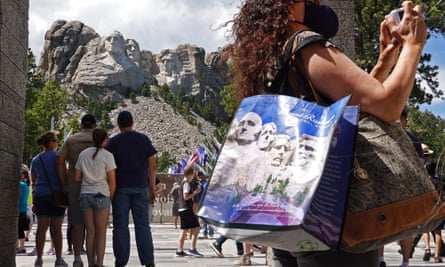
Donald Trump is due to attend a fireworks display at Mount Rushmore in South Dakota on Friday night. Photograph: Scott Olson/Getty ImagesAdam Gabbatt in New York@adamgabbattPublished onFri 3 Jul 2020 13.28 EDT
228
The Fourth of July is traditionally for barbecues, fireworks, boisterous partying and various hijinks to celebrate Independence Day. But this year, with coronavirus cases soaring to all-time highs, medical experts warn that the normal US holiday exuberance could instead create infection “superspreader” events.‘It’s very troubling’: alarm grows over Covid-19 spike among young AmericansRead more
Across the country, thousands of official public celebrations have been canceled in an effort to prevent mass gatherings. Two notable exceptions are the fireworks planned by the Trump administration in the center of Washington, and an event on Friday night at Mount Rushmore in South Dakota where the president will attend a fireworks display.
This event has managed simultaneously to upset Native American leaders who consider the location stolen tribal land; irritate those worried about wildfires in the parched landscape, where fireworks have been banned in recent drought years; and further divide views on health precautions, with the Republican governor of South Dakota saying social distancing will not be enforced and anyone who doesn’t like that idea can “stay home”.Advertisementhttps://355a7bd648d7d5585dd18118c232a4c6.safeframe.googlesyndication.com/safeframe/1-0-37/html/container.html
Most municipal celebrations will not happen. But large groups are still expected in backyards, homes and streets, as Americans strain to celebrate their liberation from British rule.
And with the country reporting record highs of new coronavirus cases, officials say the impact of Fourth of July events could be catastrophic.
“It’s set up a perfect storm,” Joshua Barocas, an infectious disease physician at Boston Medical Center, said during a briefing by the Infectious Diseases Society of America.
“The combination of travel, the combination of reopening – perhaps in some cases too early – and the combination of people not necessarily following some of these preventive guidelines.”
The US recorded 52,000 new cases on Wednesday, according to Johns Hopkins University figures, a new all-time daily high for the US in the outbreak. It was the fifth daily high in the last eight days.
On Thursday morning, infections were rising in up to 40 states, and 14 states reported record daily highs.
About 40% of the US is now changing course on reopening in an attempt to quell the unprecedented surge, and states are pleading with people not to engage in group revelry.
The mayor of Florida’s most populous county, which includes Miami, on Friday ordered indefinite overnight curfews from 10pm to 6am.
“This curfew is meant to stop people from venturing out and hanging out with friends in groups, which has shown to be spreading the virus rapidly,” Carlos Gimenez said in a statement, citing staffing shortages at hospitals.
In Austin, Texas, that warning took the form of an emergency alert to people’s phones, which urged them to celebrate Independence Day responsibly.
“Coronavirus is spreading rapidly in Austin-Travis county,” read the alert, which buzzed up on screens across the city.
“Stay home. Avoid non-household gatherings. Keep six feet apart from there. Wear a face covering. Wash your hands frequently.”
Texas is among the states worst affected by the recent surge. The state, which was one of the first to reopen bars, restaurants and hair salons in May, recorded its highest ever number of daily coronavirus cases this week, and several hospitals in Houston are at or near full capacity.
Trump at a ‘Spirit of America Showcase’, at the White House on Wednesday. Photograph: Michael Reynolds/EPA
In Alabama, a group of students held “Covid parties” this week, according to Tuscaloosa city councilor Sonya McKinstry, where students wagered over who would become infected.
“They put money in a pot, and they try to get Covid. Whoever gets Covid first gets the pot. It makes no sense,” McKinstry told ABC News. “They’re intentionally doing it.”
The parties fly in the face of advice from the Alabama department of public health, which has asked people to maintain a 6ft distance, and explained the concept of superspreader events in guidance sent out to local governmental officials.
“Asymptomatic spread of Covid-19 is a major risk factor. These ‘superspreaders’ do not know they are carrying the disease,” the health department said.
“It is estimated one in four infected people are ‘superspreaders’. For this reason, we strongly recommend wearing masks in public gatherings.”
California, which had been making progress on getting infections down, is now the new US’s worst hotspot. The Riverside county public health officer, Cameron Kaiser, warned that the effect of people gathering to toast Memorial Day, a public holiday in May, was stark.
The California, governor ordered the closure of all recently reopened bars on Wednesday, banned indoor movie theater-going and dining at restaurants. Arizona’s governor, Doug Ducey, abruptly ordered bars, gyms, movie theaters and water parks to close.
Many beaches, a traditional Fourth of July rallying point, have been ordered to close. A majority of beaches in southern Florida will shut down from Friday, as will beaches in Texas and Los Angeles county.
Amid the warnings over the celebrations, Trump has remained defiant. He has insisted that the “Salute to America”, a huge firework-laden display of national pride which was started by the president last year, will go ahead in Washington, despite the city’s mayor urging against it.
Trump will speak at the event, which thousands attended last year, and the department of the interior said the display will be “a patriotic tribute to our men and women in uniform”.
Even those of us who have avoided falling ill are feeling the impact of the COVID-19 pandemic — social distancing, wearing masks, and staying home have come to define most aspects of our lives.Meanwhile, across the country, communities are grappling with how to slow the spread of the disease, care for the sick, and mitigate its severe impact on the economy. But, now that we have seen the destruction that can be wrought by a pandemic disease, we must also understand its cause and source. Because we have an opportunity to use that knowledge to prevent the next pandemic.Virtually all pandemics, and most infectious diseases, are zoonotic, meaning they originate in animals. COVID-19 likely originated in wildlife, as did AIDS, SARS, and Ebola. But other diseases, notably influenza, including the deadlier pandemic versions that have swept the world periodically, typically come from chickens, turkeys, and pigs. The common denominator is animal exploitation, confinement, and cruelty. Changing the way we treat animals is essential to preventing pandemics.The Animal Legal Defense Fund, as experts in animal law and policy, has published the first in a series of white papers providing background and recommendations to lawmakers to reduce our risk of zoonotic diseases. The paper — COVID-19 and Animals — documents the alarming rate of zoonotic disease produced by industrial animal agriculture in the U.S. Some of these diseases have already caused outbreaks in people, including the 1997 Bird Flu (H5N1) and the 2009 Swine Flu (H1N1). In April 2020, a highly pathogenic strain of Bird Flu (H7N3) — a strain which has caused illness in humans — was discovered in a turkey farm in South Carolina. Unless we bring an end to factory farming, it is simply a matter of time before another one of these diseases makes the jump to people, potentially with results far worse than COVID-19.COVID-19 and Animals identifies and quantifies the risks from specific industries. Further white papers, already in development, will offer in-depth legal analysis and policy recommendations for each industry. Ultimately, we will all need to lobby our elected officials to pass laws that prevent the conditions for animals that not only lead to horrific cruelty, but also put us all at unacceptable risk for pandemic diseases. Perhaps the most important lesson of COVID-19 is: An ounce of prevention is worth a pound of cure.You can read the full white paper here
Many U.S. meatpacking plants shut down this spring due to coronavirus outbreaks. Nationwide, more than 27,000 workers have become infected, and nearly 100 have died. But in late April, President Trump ordered the facilities to stay open, deeming them critical to preserving the nation’s meat supply. Special correspondent Fred de Sam Lazaro reports on the experiences of some of these workers.
Read the Full Transcript
Judy Woodruff:It has been nearly six weeks since production resumed in most meatpacking plants across the country. Many were shut down amid coronavirus outbreaks. More than 27,000 workers have become infected, and 99 have died.In late April, President Trump ordered plants to reopen or remain open, calling them critical infrastructure to preserve the nation’s meat supply.Special correspondent Fred de Sam Lazaro returns to one community in Minnesota where a pork processing plant is back online.
Fred de Sam Lazaro:Here in the Fabled Valley, the Jolly Green Giant stands tall and now even masked, but it’s actually pork, not peas, that reigns.The huge meat processing plants are now nearly back at full capacity. But things are not exactly jolly.
Woman (through translator):We’re still going to have to keep working in fear, but we know that we need to continue working. We have no option.
Fred de Sam Lazaro:In Worthington, Minnesota, population 13,000, the JBS factory was shuttered by a COVID outbreak that sickened hundreds of its 2,100 employees.The effect was felt across this region, mostly at first among hog farmers in late April. Hundreds of thousands of their animals had to be euthanized.
David Bullerman:It’s devastating. I’d like President Trump to invoke the Defense Production Act of 1950. We need to get these plants open today.
Fred de Sam Lazaro:Echoing farmer Dave Bullerman’s plea, industry executives warned, the nation’s meat supply was threatened, a claim some analysts now say was exaggerated, noting that, in April, there were record pork exports to China.
President Donald Trump:I should be signing that over the next hour or so.
Fred de Sam Lazaro:But, on April 28, President Trump did order meatpacking plants to reopen and remain open, declaring them critical infrastructure.
President Donald Trump:Taking the liability, which frees up the entire system.
Fred de Sam Lazaro:The president said his move shielded companies from liability if their workers got sick.Back in Worthington, community organizer Jessica Velasco says the plight of workers never seemed a priority.
Jessica Velasco:Folks started talking about the hog farms that were losing money. The bigger issue than was them euthanizing all those poor hogs.The conversation should have been, how can we support both the JBS employees and the hog producers?
Fred de Sam Lazaro:She says the employees, predominantly refugees and immigrants, remain largely invisible and fearful. She says many lost trust in the company because of the way it acted as more and more workers fell ill, leading the plant to shut down.Rafael, like all workers we spoke with, asked to remain ANONYMOUS.
Rafael (through translator):They told the workers not to worry, everything was OK. To be honest, they were not prepared at all. Nothing was OK. That’s where many became scared, and it was kind of you either work or you don’t eat situation.
Fred de Sam Lazaro:Rafael says he decided to quit because of a health condition that leaves them vulnerable to COVID. These three workers returned.
Man (through translator):Everyone feels scared. Everyone feels like we do here.
Fred de Sam Lazaro:JBS declined our request for an on-camera interview. It did send a video — parts of it time-lapsed — of improvements made at another plant in Greeley, Colorado, where several workers died.JBS has put some older COVID-vulnerable workers on paid furlough, and, among other steps, now requires employees to wear masks and face shields. And it installed barriers between workstations. Workers told us it feels safer, but not safe.
Steven:Personally, I think that they should make it mandatory for employees to get tested, so that we know who has it and who does not.
Fred de Sam Lazaro:The company says it tests employees who show symptoms and takes employees’ temperature when they arrive.That’s no comfort to Anna, who survived a painful COVID infection just before the plant closed.
Anna (through translator):They took mine, but it never showed a temperature. But I was already very sick. I didn’t show the symptoms.
Fred de Sam Lazaro:Most people like her have no choice but to return to work, she says.
Anna (through translator):We have family that we need to raise. We don’t have savings so we could just stay home.
Fred de Sam Lazaro:Meatpacking has long attracted new immigrants who have few options. It is an intensely tough environment, as even this JBS job posting seems to warn, standing 10 hours a day, doing repetitive tasks in very high temperatures or very low temperatures, with unpleasant odors.It’s something labor historian Peter Rachleff says most Americans avoid.
Peter Rachleff:The work force in meatpacking has almost always been people who are within one generation of having lived in agriculture, people who are able to work in that kind of blood and guts kind of environment.
Rev. James Callahan:If it was not for the immigrant community, this community would just fold up and die.
Fred de Sam Lazaro:Father James Callahan says immigrants sustain much of Worthington’s economy today, but he says this small town is not immune to the rancorous immigration debate, recalling comments he’s heard since the pandemic began.
Rev. James Callahan:Blaming the immigrant community for the spread of the virus, blaming people from the Asian communities for carrying it, I mean, a woman who said to me she was never going to eat in a Chinese restaurant again. I mean, how absurd is that?
Fred de Sam Lazaro:Are you finding a lot of that?
Rev. James Callahan:Not a lot, but enough where it becomes disturbing.
Fred de Sam Lazaro:He worries that meatpacking plants in Minnesota and elsewhere continue to see coronavirus spikes. So far, Father Callahan has presided over funerals in three-COVID related deaths of JBS workers, two of them since the plant reopened.For the “PBS NewsHour,” this is Fred de Sam Lazaro in Worthington, Minnesota.
Fred de Sam Lazaro is director of the Under-Told Stories Project at the University of St. Thomas in Minnesota, a program that combines international journalism and teaching. He has served with the PBS NewsHour since 1985 and is a regular contributor and substitute anchor for PBS’ Religion and Ethics Newsweekly.
Across the UK, hundreds of workers at meat-processing plants and abattoirs have tested positive for COVID-19.
One such place – a chicken-processing plant on Anglesey – has seen over 175 cases among workers.
The UK isn’t alone: there have been similar outbreaks across Europe and in the US. Germany’s coronavirus reproduction number (R rate) jumped to 2.88 after a COVID-19 outbreak in a meat-processing plant in North Rhine-Westphalia, which has led to 1,500 new cases.
Because of their frigid temperatures and cramped conditions, meat-processing plants around the globe have become COVID-19 hotspots.
Eating Meat Has Deadly Consequences
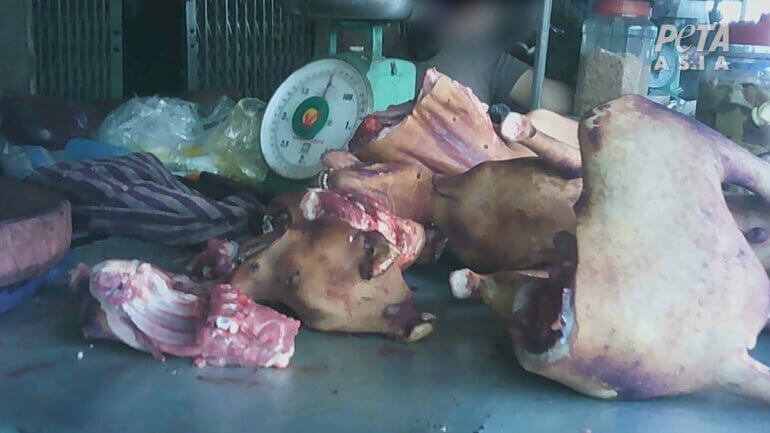
Experts say that the COVID-19 outbreak originated in a “wet market” in Wuhan, China, where humans had direct contact with live animals and dead animal flesh.
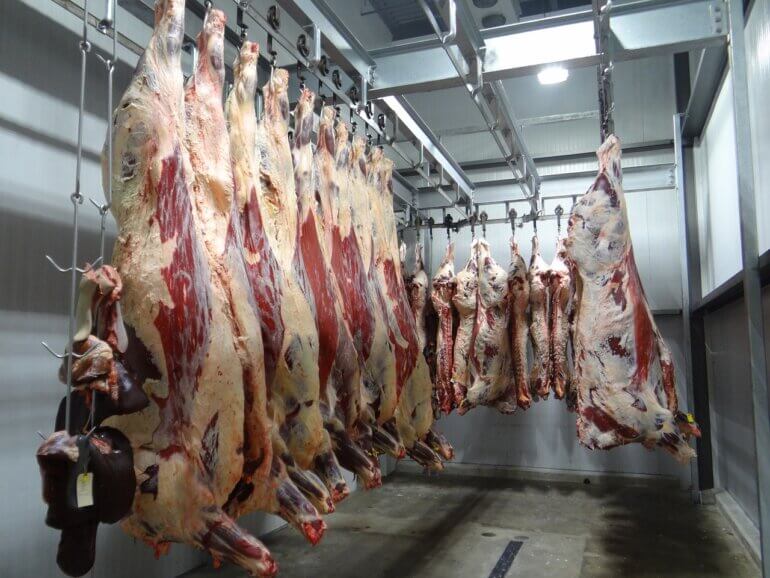
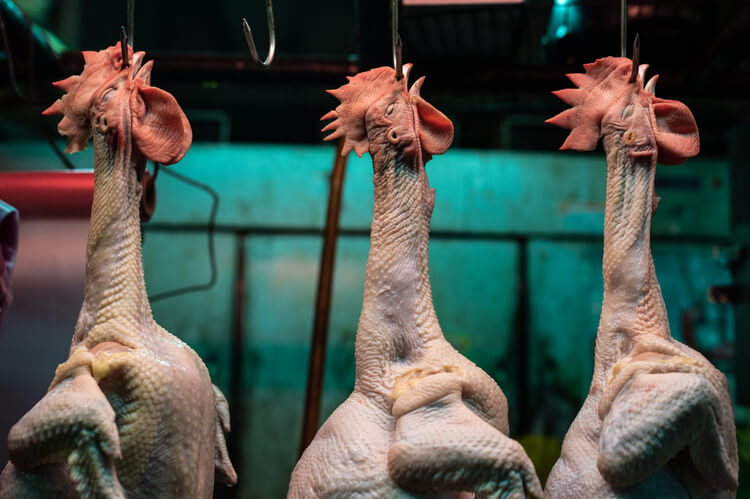
Now, this deadly disease is sweeping through blood-soaked, offal-strewn meat-processing plants and endangering workers, their families, and the whole community. And like wet markets, squalid abattoirs and meat factories are known to be hotbeds for disease.
According to Public Health England, “Many (60 to 80% [of]) emerging infections are derived from an animal source.” Filthy factory farms, abattoirs, and meat markets threaten the health of every human being on the planet by providing a breeding ground for deadly pathogens like the ones behind COVID-19, SARS, bird flu, and more.
As COVID-19 spreads like wildfire from worker to worker, PETA is calling for abattoirs and meat-processing plants to shut down and stay closed, for everyone’s protection.
What You Can Do
Not only is animal agriculture responsible for deadly pandemics and putting human lives at risk, it also causes other animals immense suffering and is destroying the planet.
Humans’ mistreatment of other animals is harming not only them but also us, and now is the time for each and every person to take responsibility for our part.
The link between outbreaks of diseases like COVID-19 and eating meat is undeniable – and the solution is clear: to prevent future pandemics, humans must stop abusing other animals and go vegan.

 MARILYNN MARCHIONE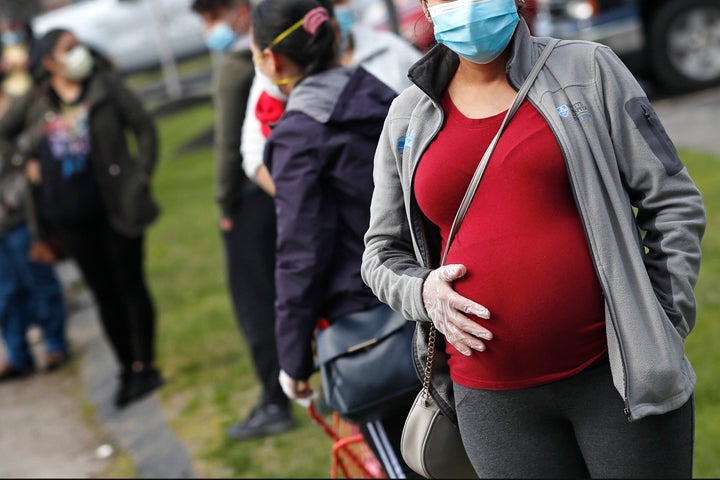




 Exposing the Big Game