NM Game Commission chairman resigns after illegal cougar killing

http://www.abqjournal.com/354451/news/breaking-nm-game-commission-chairman-resigns-after-hunting-incident.html

by John Robertson / Journal Staff Writer

Scott Bidegain, chairman of the New Mexico Game Commission, has resigned from from the commission, says a newssnrsslion release from the Department of Game and Fish.

Bidegain’s resignation letter over the weekend said: “I am honored to have served on the commission and as its chair. Unfortunately, I was present during a hunting incident earlier this month that will result in charges being filed shortly. I believe that it is in the best interest of the Commission and the Department that I step down at this time. I think you should be proud to know that throughout this incident, the officers at the Department acted honorably and professionally.”

The Game and Fish news release said department officers filed a misdemeanor charge against Bidegain in Quay County Magistrate Court on Monday, alleging he was was an accessory to the unlawful killing of a cougar.

Action Alert: Washington Cougar Hound Hunting Legislation

From the Mountain Lion Foundation: http://www.mountainlion.org/actionalerts/012814WAsb6287/012814WAsb6287.asp?utm_source=Cougar+Clippings+2%2F05%2F2014&utm_campaign=Clippings+02%2F05%2F2014&utm_medium=email


Washington state Senators Brian Dansel and Don Benton have authored a bill to force the Washington Department of Fish and Wildlife (WDFW) to allow trophy hunters to use hounds to kill cougars for fun.  Please help us stop this cruel and unnecessary bill!

February 4, 2014: SB 6287 Passes Resources Committee

This afternoon the Senate Natural Resources & Parks Committee passed the bill onward, despite demonstrated opposition at last week’s hearing.  The bill is moving toward the Senate floor where it will be voted upon sometime in the next two weeks (February 18th is the last day).

We are extremely short on time! Please contact your Senator NOW and urge him or her to vote against this terrible bill!  For tips on what to say, please scroll down below the video and see the bullet points.

January 20, 2014: Senate Bill 6287 Introduced

Washington state Senators Brian Dansel and Don Benton have coauthored a bill as part of the latest attempt to force the Washington Department of Fish and Wildlife (WDFW) to allow trophy hunters to use hounds to kill cougars for fun.  The bill states special “dangerous wildlife task teams must be developed in each county […] and a kill season with the aid of dogs must be established,” ultimately claiming they will hunt lions to protect the public and increase research on the species.  WDFW and the findings of numerous research projects have shown these hunting programs don’t work, and they can actually increase cougar-human conflicts.

Photo of lion in tree with snow covered pines in background.

The program is merely a feel-good title for a group of hunters who will use a pack of hounds to track and chase a cougar until it climbs a tree out of exhaustion, and then shoot the cat at close range off a tree branch.

Moreover, WDFW already has the authority to initiate special public safety hunts with the use of hounds, if needed (WAC 232-12-243).  But the agency has found instead, by utilizing the latest peer-reviewed science into management decisions, “Cougar conflicts have declined substantially in recent years as the Department continues to emphasize cougar awareness coupled with our agency kill authority of problem cougars at the time of an incident.”

Teaching the public about coexistence and only killing the individual cats causing problems has proven to be a more successful policy.

Allowing groups of hound hunters to kill random cougars in rural areas has not yielded any positive results.

Washington sport hunters (without dogs) currently shoot more than 100 lions each year, and WDFW has found this mortality level may already be too high.  The cougar population is declining and the excessive killing of adult lions has caused an age shift to younger cats which are more likely to come into conflict with people, pets, and livestock.

The agency has been using published research from Washington State University to revise and lower the state’s annual sport hunting quotas so that the cougar population may grow and mature.  The last thing we need is a new program to track and kill more cougars, especially cats that have never come into conflict with people.

Senate Bill 6287 is a redundant authorization of public safety hound hunts — WDFW already has this tool at its discretion anytime they determine it appropriate and necessary to use hounds to help kill cougars.

Senate Bill 6287 would also force WDFW to implement a wildlife killing program they know is unsuccessful and potentially dangerous.  The legislation is not backed by the Department, scientific research, or the majority of citizens in Washington.

In short: this is a BAD BILL.

Write a Letter to Your Legislators

If you live in Washington state you can help by writing a short letter to your legislative representatives telling them why you oppose Senate Bill 6287.  These letters will be used to demonstrate opposition to the bill and encourage the legislature to kill it.

A few minutes of your time could make a big difference and help Washington’s cougars.

If you live in Washington, please contact your legislators and urge them to oppose SB 6287.

Click here to look up your legislators’ contact information

Please also send MLF a copy of your letter and cc emails to info@mountainlion.org.  Thank you!

In your letter or telephone call, please point out:

  • Senate Bill 6287 is a redundant authorization of public safety hound hunts — WDFW already has this tool at its discretion anytime they determine it appropriate and necessary to use hounds to help kill cougars.
  • Senate Bill 6287 would also force the Department of Fish and Wildlife to implement a wildlife killing program they know is unsuccessful and potentially dangerous.  The legislation is not backed by the Department, scientific research, or the majority of citizens in Washington.
  • Washington residents have repeatedly shown we do not support the use of hounds to track, tree, and kill wildlife for fun.  It’s a cruel and outdated unsportsmanlike hobby that needs to remain illegal.
  • This bill would allow hound hunters to kill cougars that have posed no threat to people, which may actually increase the percentage of problem cougars in our state.

CThumbnail of Comment Form. Click here to open.

Personalized, hard-copy letters (snail mail) have a larger impact than emails or opinions submitted through online comment forms.

But every effort helps.

So if you only have a few minutes to help, please use this form to submit your thoughts on SB 6287:

Washington Legislature – SB 6287 Comment Form

Thank you so very much for taking the time to help protect Washington’s cougars!

Cougars on the prowl, not increase, officials say

[This is from my old stomping grounds, the Methow Valley, where I lived for over 20 years and saw 4 out of the 5 cougars I’ve seen so far in my relatively short life (geologically speaking).]

Cougars on the prowl, not increase, officials say

By Ann McCreary

The recent series of cougar attacks on domestic animals may have people wondering if there are more cougars than usual in the Methow Valley. Not so, says a wildlife researcher who has studied cougars here for more than a decade.

While there may be an unusual concentration of cougar incidents in recent weeks, the big cats are simply doing what comes naturally and taking advantage of opportunities for an easy meal courtesy of humans, according to Rich Beausoleil, cougar and bear specialist for the Washington Department of Fish and Wildlife (WDFW).

Wildlife officials killed another cougar last Friday (Jan. 10) — the fourth in five weeks — after the cat killed a sheep at a home off East Chewuch Road near Winthrop.

“The numbers of sightings has been really high this year,” said Cal Treser, wildlife officer for the WDFW. “Last week I had nine cougar calls.”

“Every now and then we’ll see a cycle like this where [incidents] are all clumped together,” said Beausoleil. “We’re never going to put it all together and explain why these things happen. We know January is the month where all this increases. I don’t want people to jump to this notion that the cougar population is up.”

Beausoleil has 11 years of research to back his statement about cougar populations.  Last year he published a scientific paper that found the cougar population controls itself naturally, because they are extremely territorial animals.

Researchers found that adult cougars, especially males, have a natural drive to establish and defend territory, and will kill any other cougar that enters it. This creates a stable density in cougar populations that researchers found applies to cougars everywhere.

The recent problems associated with cougars killing sheep, goats, chickens and dogs are predictable, and will continue unless people take steps to protect their animals, Beausoleil said.

“The chickens running around the enclosure — that’s just bon bons on the landscape. You might as well have an ‘Eat at Joe’s’ sign,” Beausoleil said.

“It’s all about prevention,” he said. “The word I like to get out is you need to look around your property and say, how do I prevent a problem from happening before it happens? Don’t go and blame those ‘nuisance animals.’ Stop and say, ‘Why did this happen?’”


‘Game of calories’

For large carnivores, survival “is a game of calories,” Beausoleil said. Taking down a deer is hard and dangerous work and cougars are often injured in the process. “It’s a tough life out there and when you see something like a goat that just sits there and looks at you … you take it while you’ve got it,” he said.

Putting animals inside a barn or in a secure enclosure at night is a key step in preventing problems, Beausoleil said. “Goats are the No. 1 at-risk animal, sheep are second, third are chickens,” he said.

“This is the Methow Valley,” said Beausoleil. “Your backyard turns into wilderness. You need to be a part of that landscape and take the steps to live harmoniously with the critters that are around.”

Skip Smith lost two goats in recent weeks to a cougar that entered a livestock enclosure at his ranch on Highway 20 outside Winthrop. The 74-pound female cougar that killed the goats was tracked and shot last week.

After the second attack, Smith said he created a more secure pen to hold his sheep and goats at night. He increased the height of the fence to 8 feet and added three strands of electric wire around the top.

“The electric fence might help. If they jump up and touch that, it’s pretty hot,” Smith said.

Suggestions on ways to live with wildlife are available on the WDFW website, the Mountain Lion Foundation website, and the Western Wildlife Outreach website, Beausoleil said.

“These precautions cost money, and I know it can be a burden on people. I guess it comes down to values and the value you put on the natural world,” he said. “Cougars are the personification of wilderness and an unbelievable carnivore.”

Killing cougars that attack domestic animals “is a temporary solution,” said Beausoleil. His research shows that when a cougar dies or is removed from his territory, other cougars will move in until one establishes it as its own.

“The gun is just a Band-aid. As soon as one territory opens there is another cougar right behind it,” Beausoleil said.


‘Needless kill’

Killing cougars that attack livestock that aren’t adequately protected “gets frustrating to me because … it’s a needless kill and such an easy thing to prevent,” Beausoleil said.

January and July — “the worst days of winter and worst days of summer” — are predictable periods of problems with carnivores, Beausoleil said. This winter of low snow may have an added dimension, because deer are more widely scattered, rather than confined to more traditional winter ranges, and cougars may be more widely dispersed as a result.

The cougar that attacked the sheep last week was a 130-pound male in good health. “He hadn’t missed a meal.” Treser said.

“The cougar was living on the edge of the Methow Wildlife Area with plenty of mule deer for food. There’s no reason he should have taken a sheep. Maybe [he did] because the kill was easy as the sheep were confined in a corral,” Treser said.

Trackers with dogs were brought in and followed the cougar for five hours, until he was treed near the Methow River and shot.

“He was a beautiful cat,” Treser said.

Once a cougar has attacked livestock or pets in winter, the policy is to kill it because the cougar is likely to repeat the attacks. In other seasons, Treser said, he will often capture a cougar following an attack on livestock and relocate it. But in winter, snow and weather make it too difficult to relocate cougars to remote areas, he said.

The relocating doesn’t always work, Treser said. Late last summer a cougar killed a goat near Buzzard Lake, on the Okanogan side of Loup Loup Pass. Treser captured the cat, placed an ear tag on it, and released it above Ross Lake on the east side of the North Cascades.

“Eighteen days later he came back and killed a goat in the same pasture,” Treser said.

Cougars that turn to livestock and pets as prey are often unhealthy or injured, Treser said. “As they’re taking down large animals they break teeth, injure their feet, break claws off. It gets more difficult to take down a deer,” so they look for easier prey, he said.

The four cougars killed this year because of predation on domestic animals have all been healthy, Treser said.

For more on cougars in the Methow this winter, see Another cougar attack adds to high number of incidents,  Cougar sightings, encounters continue to add up in the valley,  Coming to terms with cougars, and Human, pet encounters with cougars increase each winter.

snrsslion

Repeal hunting season

http://journalstar.com/news/opinion/mailbag/letter-repeal-hunting-season/article_dd8c92cc-71e8-5539-b564-200adf5ce5dd.html

Letter, 1/7: Repeal hunting season

I was saddened and sickened to read the article “Two mountain lions killed, ending first season” (Jan. 4) concerning the murder of two mountain lions in Nebraska by individuals selected by the Nebraska Game and Parks Commission through a lottery and auction.

All Nebraska citizens who honor life and appreciate the beauty and majesty of nature that includes the animals that share our environment must join Sen. Chambers in his bid to repeal the ability of Game and Parks to set hunting seasons on cougars. I urge people to contact their senator and urge them to support Sen. Chambers’ effort and do everything possible to hinder the Game and Parks Commission until this is repealed.

Game and Parks officials stated their objective for allowing cougar hunting in the Pine Ridge is to provide hunters with opportunities while allowing a slight to moderate reduction in the mountain lion population. Guess what? It’s also legal for the unlimited murdering of cougars roaming through the Prairie Unit, which covers about 85 percent of Nebraska.

After reading how the first two animals were murdered, I shudder at what other “opportunities’” Game and Parks will come up with: the use of high explosives, automated weapons, stealth drones, mortars and the assistance of the NSA to target and murder these beautiful animals?

There is no place in our modern society for such barbaric and inhumane treatment of such beautiful animals. The magnificence of such animals is better visualized with a live animal rather than a rug on someone’s floor.

I beg people to support the repeal of this horrific activity. This is not hunting; there is no “sport” involved but the extermination of one of God’s most beautiful creatures.

Robert D. Randall, Lincoln

Big Game Hunter Pays $13,500 to Kill Mountain Lion

[He won’t just donate the money without the chance to killsnrsslion something, of course.]

From Mountain Lion Foundation: Big Game Hunter Pays $13,500 to Participate in Nebraska’s First Ever Exclusive Lion Hunt

Spouting the standard propaganda about hunters being the biggest conservationists, Tom Ferry, of Ponca, Nebraska, paid $13,500 to become the winning bidder of one of the first two mountain lion permits issued by the Nebraska Game and Parks Commission.

Mr. Ferry, a Big Game Hunter, has killed animals for sport in Africa, Canada, New Zealand, Russia, and across the United States. He has approximately 150 trophy mounts commemorating his exploits at his home including those of mountain lions killed in Arizona and Utah.

“I just thought it would be nice to hunt mountain lions in Nebraska during the state’s first season,” Ferry said.

Ferry will be one of only two people permitted to hunt cougars during Nebraska’s first lion hunting season (January 1st through February 14th) in the Pine Ridge Hunting Unit. Last week, 15-year-old Holden Bruce of Franklin, Nebraska, was selected in a drawing for the other permit. Both hunters will be allowed to hunt with dogs.

The auction, held Wednesday night at a special Nebraska Big Game Society function, reflected the small participant turnout experienced in last week’s statewide lion hunting lottery with only 70 bidders.

Before the auction, Nebraska Game and Parks Director, Jim Douglas, also presented former State Senator LeRoy Louden, who shepherded Nebraska’s lion hunting bill through the Legislature, with an honorary mountain lion hunting permit so he can accompany the remaining 99 lottery winners when they commence their hunt during Nebraska’s second lion hunting season (February 15th through March 31st).

Game and Parks officials say the objective for allowing mountain lion hunting is to provide hunters opportunities while allowing a slight to moderate reduction in mountain lion population.

Mr. Ferry seemed to sum up the Department’s draconian position towards Nebraska’s wildlife. “They have a saying in Africa,” he said. “And it’s true here, too: If it doesn’t pay, it doesn’t stay.”

Predator management by state wildlife agency biologists questioned

This is all common sense stuff we already knew, but it’s good to hear it from the mouths of state wildlife agency biologists…

Predator management by state wildlife agency biologists questioned

By On June 28, 2013 

I recently had encounters with three state wildlife agency biologists. All of them were quite open with their criticisms of their agencies predator policies.  I can’t reveal their names and I will change a few details to hide their identities.

The first biologist told me there was no reason to kill predators. He said it only creates greater social chaos which in turn leads to more unnecessary killing.  He told me that increasing the kill of predators by hunters—whether cougars or wolves—seldom reduced conflicts. If it’s good habitat, the vacuum created by killing a cougar or a wolf pack will soon be filled by immigrants. So in the end livestock operators have to learn to discourage predation by practicing good animal husbandry.  Predator killing just doesn’t work.

Another reason predator control fails is that most hunters pursue animals that live on the larger blocks of public land, while most of the conflicts occur on the fringes of towns or on private ranch lands. In other words, the majority of cougars and wolves killed by hunters are animals that are not causing any conflicts.

He went on to say that hunting predators had no benefits. Period.

The second biologist told me that wolves were not harming elk and deer herds. Rather elk and deer populations have increased in the state since wolves were introduced. He pointed out that wolves were also not destroying the livestock industry though he did acknowledge that individual ranchers might be challenged by wolf depredations.

He also reiterated that hunting predators was indiscriminate. The specific predator killing a rancher’s livestock is often not the animal killed by hunters so arguing that killing predators will reduce conflicts is at best a half truth.

The third biologist told me that his agency missed the boat by not responding to the misinformation from the Rocky Mountain Elk Foundation and Toby Bridges of Lobo Watch. By not countering the distortions put forth by these organizations, fabrications and half-truths were widely distributed by the media.

He also acknowledged that wolves could not increase indefinitely. They expand their range into new territories but their densities are socially maintained.  In other words, you will not get more and more wolves living in the same basic area.  He said people have to learn to live with natural processes which include predation.

What these encounters demonstrate to me is that many biologists working for these state agencies are sympathetic to predator supporters.  They are muzzled by their agencies and unable to speak the truth. Still it is refreshing to know that supporters of predators have some friends within state agencies—biologists who are hoping that legal attempts to stop unnecessary and indiscriminate hunting and trapping will succeed.

This also means that citizens and those who support predators have to create the political space where these biologists can feel free to speak their minds. Keep up the pressure, there are some in these state wildlife agencies who know the score, and are as devoted to wildlife as anyone.

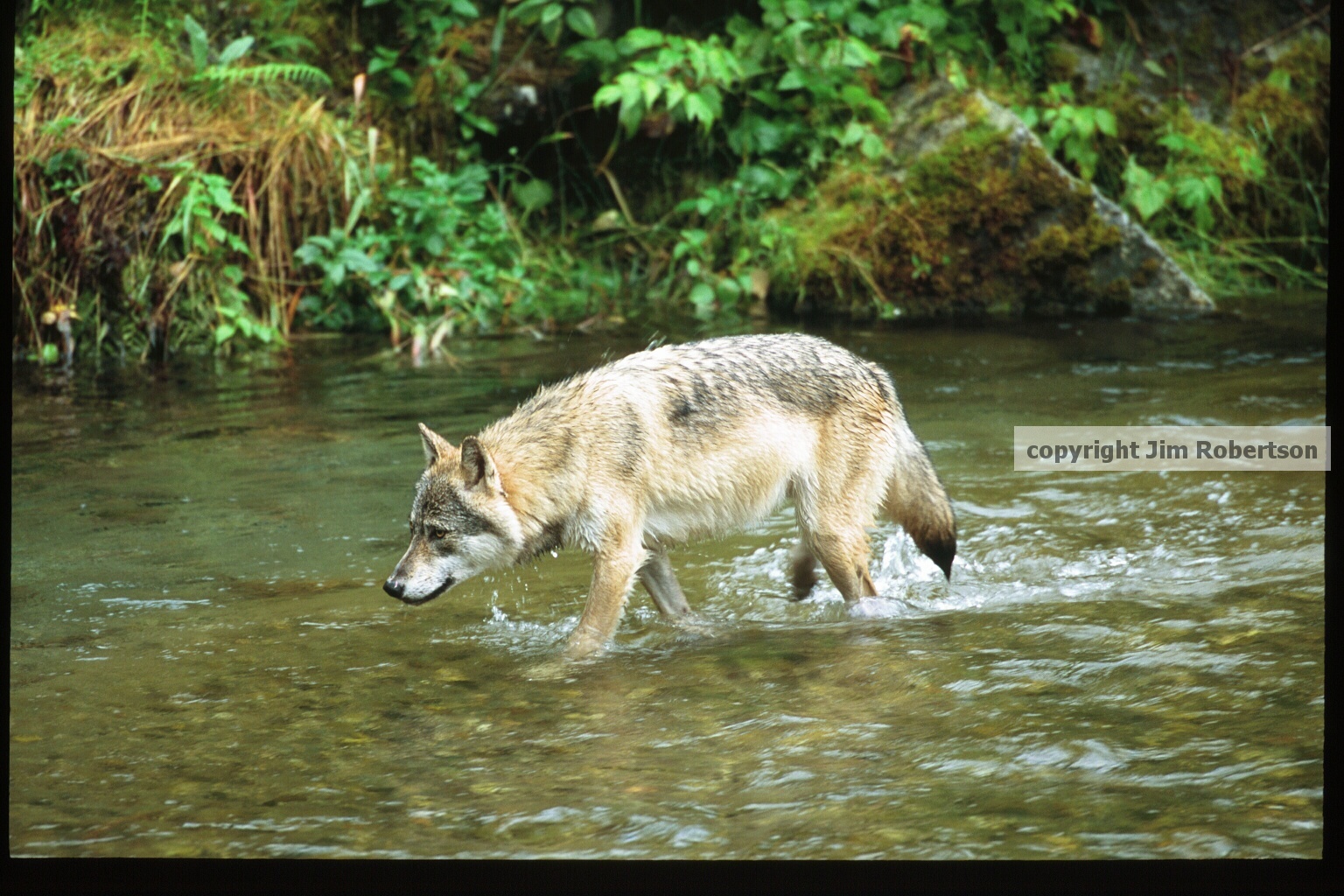
copyrighted wolf in water

Oregon Ranchers Want to Get into the Predator-Kill Game

Oregon Ranchers Want More Authority To Kill Wolves

AP | April 16, 2013 1:04 p.m. Salem, Oregon
by:AP
Part of Series:
Ecotrope
Eastern Oregon ranchers are asking the Oregon Legislature for more authority to kill wolves that threaten their livestock.

Gray Wolf
U.S. Fish and Wildlife Service

Gray Wolf

Ranchers told a House committee Tuesday that their existing authority to kill wolves caught in the act of killing livestock isn’t enough. Three Eastern Oregon legislators have proposed allowing ranchers to kill any gray wolf they reasonably believe has attacked or harassed their livestock.

Conservationists worry that wolf populations would dwindle.

Both sides are planning meetings to work on a compromise. The House Environment and Natural Resources Committee took no action on the bill Tuesday.

____At the same time, also from Oregon:

URGENT ALERT!

Cougar killing bills are moving to the Oregon house floor.

1. Please immediately contact your representatives and ask them to vote NO on bills that allow counties to overturn the Oregon state law prohibiting the unethical practice of setting packs of hounds on cougars to chase them up trees for easy targets by trophy hunters.

These bills set a terrible precedent by letting counties decide which state laws they chose to acknowledge.

You can find your representatives’ contact information here:
http://www.leg.state.or.us/findlegsltr/

2. Contact Governor Kitzhaber and ask him to VETO any bills that increase cougar mortality and/or overturn the ban on cougar hounding. Tell him you voted with the majority of Oregonians twice to keep unethical trophy hunting practices out of Oregon, not just out of your county.

Governor Kitzhaber
503-378-4582
http://www.oregon.gov/gov/Pages/ShareYourOpinion.aspx

For more information on cougars go to:

http://predatordefense.org/cougars.htm

copyrighted-wolf-argument-settled

Recreational Hunting Redux: Cougar Fund Opts For No Killing

Killing cougars doesn’t solve the “problems” at hand and should stop right now

Published on March 8, 2013 by Marc Bekoff, Ph.D. in Animal Emotions

Government organizations, hunters, and trappers are notorious for wantonly and inhumanely killing millions of nonhuman animals (animals) in their widely ineffective attempt to manage and control “problem” individuals and groups (for detailed discussions and data see and and). Just today I read that more than 550 wolves have been “taken” by hunters and trappers in the Rockies alone this season.

This article continues here:  http://www.psychologytoday.com/blog/animal-emotions/201303/recreational-hunting-redux-cougar-fund-opts-no-killing

Anti-Hunt Q and A

The following are my answers to interview questions posed by a journalism student who so was moved after reading my book, Exposing the Big Game: Living Targets of a Dying Sport, that she decided to undertake a project on the psychology of hunting…

1. Have you come into contact with anyone (especially hunters) who has stated that your book changed their view on the game of hunting and the mistreatment of animals?

Answer: Yes, I’ve heard from several non-hunters who have thanked me for exposing the truth about big game hunting. No longer ambivalent about the unnecessary cruelty of sport hunting, they are now active anti-hunters.

But I have yet to meet a hunter introspective enough to allow anything to change their inbred, imbedded views on killing wildlife.

2. Have you received any ‘backlash’ since publishing this book?

Answer: For what, for urging hunters and trappers to be more compassionate to our fellow beings? No, and they haven’t received any backlash from me for tormenting and killing my friends the animals (aside from my book and blog).

Deep down hunters and trappers know what they are doing is wrong; they just hope we’ll continue to let them get away with it.

3. Are you friends with anyone who avidly hunts? Do any of your family members hunt?

Answer: Unfortunately.

4. In the beginning of the book, it states that you have always been a man of compassion towards animals. Why do you think that spreading the word of being kind to animals is important?

Answer: I’m going to answer that question with another question, a couple of other questions, actually: Why did the emancipators think freeing the slaves was important? My grandmother and great aunts were suffragettes, why did they fight for women’s right to vote? Why did people push to ban kiddie porn or crush videos? Why? Because speaking out for innocent victims of exploitation is the right thing to do.

5. What do you say to those who hunt for food and not sport? Many hunters believe that it is more humane to hunt for food than it is to buy meat from a slaughter house.

Answer: First of all, most people who claim to hunt for food not sport are living far above the poverty level. They are not starving and they don’t need to kill animals to survive. They do it because they want to—it’s “fun.” In many cases they spend far more on the hunt than it would cost them to get their food from the markets where they buy their beer, tobacco and Twinkies. They can boast all they want about “using the meat”—hell, even wolf or cougar hunters will claim that they plan to eat what they kill—but they’re just trying to make their trophy hunt seem palatable to the unwary public.

And the claim that hunting is more humane than what cows go through is exaggerated at best. While there’s absolutely no denying that what cows at the slaughterhouse are forced to endure is appallingly cruel, hunters conveniently forget that the animals they stalk are stressed out from the time they hear the first gunshots fired by someone sighting in their rifles for hunting season.

The myth of that “good clean shot” is a grim fairytale in most every case. Hunters expect to have to track down and finish off an animal they’ve shot or impaled with an arrow. In reality, “game” animals probably suffer longer than those at the slaughterhouse (though this is in no way meant to condone factory farming).

When it comes right down to it, hunters don’t give a shit about being humane, or they’d quit eating meat and join the millions of people who are living proof that human beings can live longer, healthier lives if they swear off flesh foods and get their nutrients from the plant kingdom.

Text and Wildlife Photography ©Jim Robertson, 2013. All Rights Reserved

Text and Wildlife Photography ©Jim Robertson, 2013. All Rights Reserved

Impossible to Imagine

To those of us who care deeply about wildlife issues and the abuse of non-humans, it seems that no matter how many horrors you hear about, there’s always something else happening to animals somewhere we’re shocked to learn. Even after writing a book against hunting and trapping, I guess there are still places my mind doesn’t want to go.

That’s how I felt when I read the article, “Montana, Idaho trappers catching more than just wolves,” in the Ravalli Republic, which I mentioned in yesterday’s blog post, “Stop the Spread of Psychopathy—End Hunting and Trapping.”

Text and Wildlife Photography ©Jim Robertson, 2013. All Rights Reserved

Text and Wildlife Photography ©Jim Robertson, 2013. All Rights Reserved

For a few years my wife and I lived in a house surrounded by a small field on a forested hill above Washington’s Willapa River valley. The field was once an upper pasture of a now long-defunct dairy. We were happy to see it returning to nature. Sword ferns, wildflowers and Douglas fir trees were starting their advance across the expanse of grass, finding soil churned up by moles for their seeds to take root.

Common wildlife there included black-tailed deer, black bear, raccoons, coyotes, field mice and the red-tailed hawks attracted by the latter. Meanwhile, our feeders attracted everyone from squirrels and chipmunks to a varied assortment of birds—Steller’s jays, juncos and chestnut-backed chickadees, as well as flocks of band-tailed pigeons and American goldfinch, the Washington state bird.

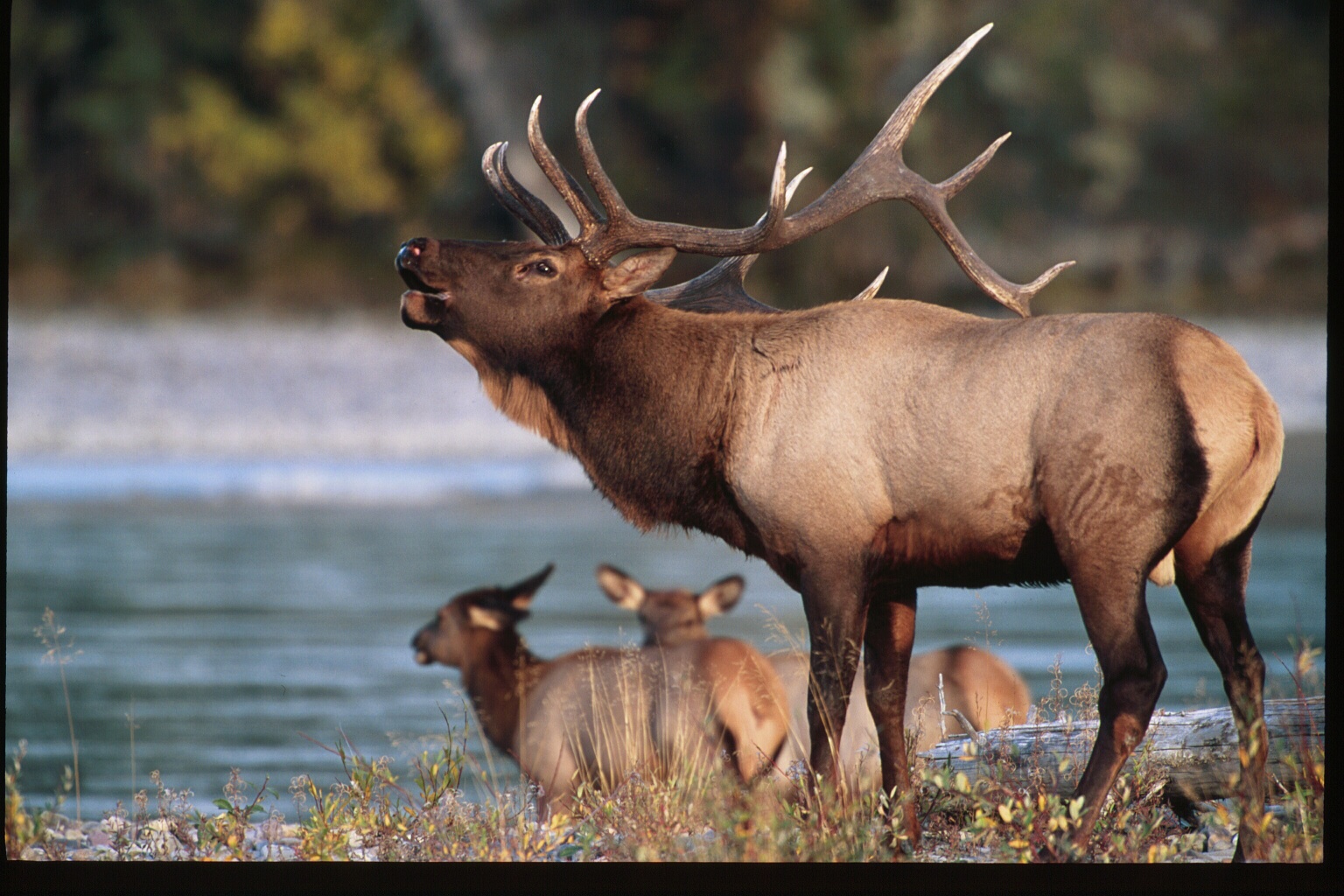
But it was always a special treat to wake up to the sight of the local elk herd bedded down in the upper corner of the field, less than 50 yards from the house.

People often panic at the thought of 20 or 30 large animals competing with their cows for pasture grass, but elk are anything but sedentary grazers—they’re always on the move. Sticking together as a group, they make a circuit around their range through forests and across rivers to find themselves in a new place every day for a week or two, before starting the circuit anew. It was always sad to see them move on from the protection of our posted private property, yet you could almost predict to the day when they’d show up again.

But there was one lone elk cow who seemed to shadow the herd, always a few days behind. We saw her far more often than the herd, and we soon figured out that she was staying nearby in the surrounding forest rather than migrating over the miles-long circuit like the rest of her kind. The reason became obvious—she had a pronounced limp as though barely able to use her right front leg.

When we got a good look through binoculars we saw that her foot was in fact missing! What the hell could have happened to cause that? My first thought was that she caught her leg in some overgrown barbed wire, a familiar threat since “livestock growers” almost never remove unnecessary fencing when they finally quit the business.

Asking around to the locals, their standard reaction was a snicker and a half-assed guess that someone must have shot it off during hunting season. Either scenario seemed remotely possible, but not necessarily all that probable, considering the horse-like size of the animal in question. One bullet or a strand of barbed wire shouldn’t do that much damage.

Twice over the years I’ve found dogs caught in steel-jawed foot-hold traps in other parts of the state (one of them had to have his lower leg amputated) and I started to wonder if the elk might have stepped into a trap set for coyotes (whom the locals hate with extreme prejudice).

I knew that smaller mammals, as well as hawks and eagles, were often unintended victims of trapping; but the thought of an animal as large as a deer or elk being caught in a trap was just too hard to get my mind around. It wasn’t until I read the following lines in “Montana, Idaho trappers catching more than just wolves,” and then saw a photo of a hunter-killed cougar who had earlier lost his toes in a trap, that I suddenly knew for sure—that’s how she lost her foot!: “Trappers reported capturing 45 deer. Twelve of those died. They also captured 18 elk and four moose. One of the elk died.”

The article goes on to quote the Idaho Department of Fish and Game’s state “game” manager, looking out for his cronies while objectifying the animals, “No one wants to catch a deer. It costs them a lot of time.” I don’t even want to try to imagine what an ungulate like that goes through to try to escape a trap—even before seeing an approaching trapper.

Traps are often compared to landmines set for any passing animal. But the difference is that while a landmine blows an appendage off instantly, a steel-jawed trap works its evil slowly—the more its victim struggles to escape, the more damage is done.

In the case of the elk, escape meant not only catching up with the rest of the herd, but also getting away from anyone who might happen by. If determined enough, an animal as powerful as that could eventually pull herself free of a trap’s steel jaws, but freedom would likely come at the expense of a foot.

Text and Wildlife Photography ©Jim Robertson, 2013. All Rights Reserved

Text and Wildlife Photography ©Jim Robertson, 2013. All Rights Reserved