Teen who shot friend on hunting trip will not spend time in prison

http://www.wfaa.com/news/local/Teen-who-shot-friend-on-hunting-trip-will-not-spend-time-in-prison-242318871.html

by TERESA WOODARD January 27, 2014

Bonnie Tatera sat in her home Monday evening, visibly shaken from the events of the day and of the last few months.

Near a raging fireplace sat a large picture of her son, Nate Maki, who died in August. He was 18 years old.

“Can you give me just a minute?” she asked as she put her face in her hands for a moment.

Tatera lost her son, and the boy who admits to killing him will spend five years on probation.

Michael Bryce Underwood was 17 at the time of the shooting on his grandfather’s property near Bowie, in Montague County. He pleaded guilty to criminally negligent homicide Monday. Underwood will spend no time in prison.

It is a plea deal Tatera doesn’t like, and she found the strength to talk about it.

“Honestly, I wish [Underwood] would’ve gotten some time, to actually sit and think about what he had done. Whether it was an accident or not,” she said. “I mean, since day one he’s been out. He’s gotten to be with his family. He hangs out with his friends.”

As terms of his probation, Underwood cannot drink alcohol and must finish high school.

“No, I didn’t agree to it,” Tatera said. “I had no say, actually.”

Underwood must also speak at a gun safety course, which is a condition Tatera did request.

Michael Underwood made a tearful call to 911 after shooting

Photo Copyright Jim Robertson

Photo Copyright Jim Robertson

Maki in August of 2013.

“We were hunting coyotes,” a tearful Underwood told the dispatcher. “I was calling them. I pulled my gun to the left and I accidentally pulled the trigger. The safety was off and it went off in his head. Nate, Nate please. Nate. Oh my God. Sir, I’m begging you. It’s my best friend.”

That 911 call is the only explanation Tatera has ever heard.

“I don’t know the whole story at all,” she said. “And I believe that’s why it hurts so much.”

She said Underwood didn’t look at her during Monday’s court proceeding.

“I feel that he maybe tried to avoid looking in our direction,” she said. “We didn’t have any eye contact. No words were spoken from him to us.”

Nate Maki was a standout football player at Denton Guyer High School. He was a member of the state champion teams and died as his senior year had just started.

His father, Harold Maki, lives in Wisconsin. He sent an e-mail to the Montague County District Attorney, hoping it would be read aloud during Monday’s hearing.

It wasn’t.

He shared that written statement with News 8’s Jim Douglas, saying communities from Texas to Wisconsin were mourning Nate’s loss.

“It hurts so bad!!!! We’ve heard so many stories of what happened the night of August 31, 2013. I believe Bryce has lied too many times [about] what happened that night. I don’t know if we will ever know the truth!”

The elder Maki also said probation was less than a slap on the wrist.

He and Tatera said every facet of their lives are different. They did not think their pain could get any worse, but both say the outcome of the court proceeding proved them wrong.

Because Underwood hasn’t shown remorse, or said he’s sorry, Tatera said she has not found forgiveness.

“And I can’t right now, I can’t find peace,” she said.

ACTION ALERT: Coyote Killing Contest ~ Jan. 18-19 Crane, OR


“A society that condones unlimited killing of wildlife for fun and prizes is morally bankrupt.”  ~ Dave Parsons, Project Coyote Science Advisory Board

Please join Project Coyote to take immediate action to stop a brutal coyote killing contest scheduled for January 18-19th in Crane, Oregon.  There is no place for a wildlife killing contest in our civilized society.
Contest participants, in teams of two, with no geographical restrictions will slaughter coyotes for thrills and compete for cheap prizes (including cash). Awards will be given for the most coyotes killed, the largest coyote, and other categories including a calcutta. This is not hunting but a gratuitous massacre that is legal in Oregon and across the country. Children under the age of 16 are encouraged to participate with free entry on Saturday.
Specific details:
What: Eighth Annual Coyote Killing Contest Where: Crane, Oregon                          When: Saturday, January 17th through Sunday January 19th, 2014

JMK_2014

Pl. share this image from the recent Salmon, ID coyote/wolf “derby” (95,360 views & 1,749 shares to date) & help spread the messageCoyote Wolf Holiday Killing Contest Salmon Idaho_copyright Project Coyote

“The non-specific, indiscriminate killing methods used in this commercial and unrestricted coyote killing contest are not about hunting or sound land management. These contests are about personal profit, animal cruelty…It is time to outlaw this highly destructive activity.” ~ Ray Powell, New Mexico Land Commissioner

Talking Points (please personalize your letter and if you recreate in Oregon please mention this):
1.  Wildlife killing contests are ethically indefensible events allowing participants to kill wildlife to win prizes. They are biologically and ecologically reckless, not only harming individual animals, but also altering predator-prey dynamics, disrupting the social dynamics of predatory species, and increasing threats to public safety, all for fun and prizes. They have no beneficial management purpose but, rather, promote gratuitous violence against wildlife. They demean the immense ecological and economic value of predators in an ecosystem while teaching children to hate and trivialize the lives of predators.
2.  Killing contests have nothing in common with fair chase, ethical hunting. Technology, baiting, and “calling” place wildlife at an even greater and unfair disadvantage. Killing predators, or any wild animal, as part of a ‘contest’ is ethically indefensible and ecologically reckless.    3.  Bloodsport contests are conducted for profit, entertainment, prizes and, simply, for the “fun” of killing. No evidence exists showing that predator killing contests control problem animals or serve any beneficial management function. Coyote populations that are not exploited (that is hunted, trapped, or controlled by other means), form stable “extended family” social structures that naturally limit overall coyote populations through defense of territory and the suppression of breeding by subordinate female members of the family group.
4. The importance of coyotes and other predators in maintaining order, stability, and productivity in ecosystems has been well documented in peer-reviewed scientific literature. Coyotes provide myriad ecosystem services that benefit humans including their control of smaller predators, rodents, and jack rabbits, which compete with domestic livestock for available forage.    5.  Wildlife killing contests perpetuate a culture of violence and send the message to children that life has little value and that an entire species of animals is disposable.   6.  Wildlife killing contests put non-target animals, companion animals, and people at risk. Domestic dogs are sometimes mistaken for coyotes and wolves.

Immediately contact the following to voice your firm but polite protest:

Oregon Department of Fish and Wildlife
4034 Fairview Industrial Drive SE
Salem, OR 97302
(503) 947-6000
odfw.comments@state.or.us

Oregon Governor John Kitzhaber
900 Court Street NE, 160, Salem, OR 97301
(503) 378-3111

Harney County Chamber of Commerce
Chelsea Harrison, Executive Director
484 North Broadway, Burns, OR 97720
(541) 573-2636
director@harneycounty.com

Please post polite comments on the Facebook pages of Travel Oregon and the Eastern Oregon Visitors Association:

Travel Oregon/Oregon Tourism Commission
Judiaann Woo, Director, Global Communications
1(800) 547-7842
info@traveloregon.com
https://www.facebook.com/TravelOregon

Eastern Oregon Visitors Association
Phone: 1 (800) 332-1843
eova@eoni.com
https://www.facebook.com/VisitEasternOregon

Documentary Spotlights Wildlife Services’ Lethal Mass Killings

Activist discovered an “agency running amok and totally out of control” with no authority to answer to.
By   |      January 6, 2014

(Photo/Tom Ryburn via Flickr)

(Photo/Tom Ryburn via Flickr)


 Since its inception in 1931, the U.S. Department of Agriculture’s Wildlife Services has taken its mission “to improve the coexistence of people and wildlife” to heart, killing an estimated 3 million animals per year, which often includes endangered species such as eagles and household pets.

Though the agency does kill some species that are overpopulated and prey on livestock such as wolves, coyotes, mountain lions, and other wild carnivores, a new documentary from the Oregon-based nonprofit Predator Defense spotlights a darker side of the agency, hoping to spark public-demanded reform.

Brooks Fahy is the executive director of Predator Defense, the group behind Exposed: USDA’s Secret War on Wildlife. He says he heard stories about Wildlife Services officials brutally killing thousands of animals each year with poisons and aerial guttings for years, but never thought the agency actually was capable of such behavior until he launched his own investigation.

Fahy says what he discovered was an “agency running amok and totally out of control” with no authority to answer to. He believes the American public needs to know how their tax dollars are being inhumanely spent.

Lethal killings

Dubbed “criter assassins” by those opposed to the agency’s work, makers of the expose hope the documentary brings animal rights activists, environmentalists, politicians and the public together in order to stop the agency from continuing to use steel traps, wire snares, poisons, and snipers to kill wild animals in mass, unnecessarily.

Although calls for the agency’s reform may have started out as a concern about changes in the ecosystem, Democratic Rep. Peter DeFazio of Oregon says “Wildlife Services is one of the most opaque and obstinate departments” he has ever dealt with, including the Pentagon, which is why he is pushing for the agency’s reform.

“We’re really not sure what they’re doing,” DeFazio said. “I’ve asked the agency to give me breakdowns on what lethal methods they’re using. They can’t or won’t do that. We’ve asked them to tell us what goes into their poisons. They won’t say.”

DeFazio and John Campbell, a Republican from California, have teamed up and have tried to press for Congressional hearings regarding the agency’s work, as well as for the Agriculture Department’s inspector general to investigate Wildlife Services, but so far their efforts have been largely unsuccessful thanks to Wildlife Services corporate agriculture allies.

In response to the video, Carol Bannerman, public affairs specialist for Wildlife Services, told MintPress that some of the information provided is outdated, as the agency has changed in the last 20 to 40 years. And while Bannerman acknowledges that the agency largely uses lethal means to remove predator species, she says that the agency also does a lot of good work that is being overlooked.

Talking to the Sacramento Bee, William Clay, deputy administrator of Wildlife Services, said the agency attempts to use non-lethal control methods first, but “The problem is, generally when we get a call, it’s because farmers and ranchers are having livestock killed immediately. They are being killed daily. Our first response is to try to stop the killing and then implement non-lethal methods.”

However, Carter Niemeyer, a former Wildlife Services district manager who worked for the agency for 26 years, told the Sacramento Bee much of the agency’s work is excessive, scientifically unsound, and a waste of tax dollars.

“If you read the brochures, go on their website, they play down the lethal control, which they are heavily involved in, and show you this benign side,” Niemeyer said. “It’s smoke and mirrors. It’s a killing business. And it ain’t pretty.

“If the public knows this and they don’t care, I’m not going to lose any sleep over it. But they are entitled to know.”

Nuclear wildlife management

Though many lawmakers and activists including Andrew Wetzler, director of the land and wildlife program at the Natural Resources Defense Council, recognizes the agency does good work as well, Wetzler says the agency needs to be held responsible for its inhumane actions.

“We asked them about data,” he said, “How much do they use poison, where. How much do they spend renting helicopters to gun down coyotes and wolves,” but “The consistent answer we’ve gotten back … is: ‘We don’t know.’ There’s a severe lack of transparency.”

In the Predator Defense documentary, Rex Shaddox, a former special investigator for the Wyoming Sting Operation and a former Wildlife Services Trapper, explained that the USDA sells illegal pesticides to state Agriculture Department’s, who in turn sell the poisons to farmers and ranchers to kill coyotes.

Shaddox said poisons he worked with were all banned in the 1970s, such as Compound 1080 and DDT, and were not supposed to be in existence any longer, but the government was selling the pesticides “like a big huge drug operation.”

Although Bannerman says Compound 1080 has been largely replaced by sodium cyanide M-44 containers, Fahy says it is absurd to use a device that kills anything that investigates it, including people, and called Wildlife Services’ killing techniques a “nuclear approach to wildlife management.”

News of Wildlife Services lethal work may be shocking to the public, and largely absent from the mainstream media, but calls for the agency’s reform date back to the early 1960s, when scientists reported that eradicating certain species of animals was not leading to a balanced ecosystem.

In 1971 President Richard Nixon signed an executive order banning the use of poison for federal predator control, saying the public needed to learn to coexist with wildlife, but President Gerald Ford later amended the order to allow for the use of sodium cyanide.

As Fahy and others in the documentary pointed out, it’s not that the agency needs to incorporate more rules and legislation that dictates what trappers can and can’t do, they have to actually follow those laws.

Failure to follow federal law

Gary Strader is a former wildlife services trapper who currently works as a private trapper. He shared that on one occasion two mountain lions were shot from the air, which is a felony. A retired law enforcement officer, Strader said that government employees are not supposed to be committing any sort of crime, especially on taxpayer dollars, so he went to his supervisor.

Strader says he didn’t want to get anyone in trouble, but he wanted abuse of the law to stop. But after talking to his supervisor, Strader says he was treated poorly and within a few months, his job was eliminated.

“I’m not an animal rights activist,” Strader said, but Wildlife Services should have to abide by state laws, including checking traps every 24-hours so animals don’t languish in pain. “If the American public saw this and understood the brutality of this,” Strader says the practice would be ended almost immediately.

“I learned the hard way they lie from the top to the bottom,” Strader said. Shaddox agreed and added that while there are about 26 restrictions regarding the use of M-44, including a complete ban on using the poison on domestic animals, he said his supervisor often tested the poisons on dogs at city dumps.

“Most of top supervisors have total disregard for their own policy,” he said, adding that the goal is to keep the customer — the farmers and ranchers — happy above anything else.

Though Bannerman says the agency has improved in recent years, Fahy says the documentary was made not because there is just one individual who has an axe to grind. He said these employees have done things and witnessed things that are hard for them to live with.

“It isn’t he said, she said,” Fahy said. “There’s a tremendous amount of information out there. We have evidence … Wildlife Services doesn’t dispute our cases.”

Congressmen question costs, mission of Wildlife Services agency

http://www.latimes.com/nation/la-me-wildlife-killing-20140105,0,2146578.story#axzz2pXmR2tyM

By Julie Cart
January 4, 2014, 7:41 p.m.la-me-wildlife-killing-g

The U.S. Department of Agriculture’s inspector general will investigate a federal agency whose mission is to exterminate birds, coyotes, mountain lions and other animals that threaten the livelihoods of farmers and ranchers.

The investigation of U.S. Wildlife Services is to determine, among other things, “whether wildlife damage management activities were justified and effective.” Biologists have questioned the agency’s effectiveness, arguing that indiscriminately killing more than 3 million birds and other wild animals every year is often counterproductive.

Reps. Peter A. DeFazio (D-Ore.) and John Campbell (R-Irvine) requested the review, calling for a complete audit of the culture within Wildlife Services. The agency has been accused of abuses, including animal cruelty and occasional accidental killing of endangered species, family pets and other animals that weren’t targeted.

DeFazio says the time has come to revisit the agency’s mission and determine whether it makes economic and biological sense for taxpayers to underwrite a service, however necessary, that he argues should be paid for by private businesses.

“Why should taxpayers, particularly in tough times, pay to subsidize private interests?” said DeFazio, ranking Democrat on the House Committee on Natural Resources. “I have come to the conclusion that this is an agency whose time has passed.”

Wildlife Services was created in 1931 as part of the USDA’s Animal and Plant Health Inspection Service. It has wide-ranging responsibilities, including rabies testing and bird control at airport runways. But the bulk of its work is exterminating nuisance wildlife by methods that include poisoning, gassing, trapping and aerial gunning.

The agency acts as a pest management service not only for agribusiness and ranches, but also for other federal agencies, counties and homeowners who might have such problems as raccoons in an attic. Other services include protecting endangered species and maintaining game herds for hunters.

The services are free or substantially subsidized, which many private predator- and pest-control companies say unfairly undercuts their business. States and counties complain that they are responsible for an increasing share of the costs.

DeFazio and Campbell are also calling for congressional oversight hearings. DeFazio says he has spent years asking for but not receiving information from Wildlife Services, which he calls “the least accountable federal agency” he has ever seen.

He said he had to learn from the Los Angeles Times about an internal audit the agency conducted last year. The audit found the agency’s accounting practices were “unreconcilable,” lacked transparency and violated state and federal laws. Further, the audit revealed that $12 million in a special account could not be found.

“The last time I tried to get more specific financial information, they just blew me off and said they couldn’t provide that,” DeFazio said in an interview. “Yet, at the same time, they were undertaking this audit. So, the managers were, at best, disingenuous, and at worst, undertaking a coverup.”

A Wildlife Services spokeswoman said the agency had already begun to carry out changes recommended in the audit.

In response to allegations of improper behavior by agents, the spokeswoman said the department does not condone animal cruelty and that employees are trained to strictly follow state and federal wildlife laws.

Information that DeFazio’s office says Wildlife Services has refused to disclose includes the identities of its clients. DeFazio’s office has determined that the agency acts as an exterminator for golf clubs and resorts, hunting clubs, homeowners associations, paving companies and timber giants International Paper and Weyerhaeuser.

The agency’s supporters argue that the cost is appropriately borne by consumers, who value local food production. In California, many ranchers and farmers would go broke if they had to pay private companies to do the work provided free of charge by Wildlife Service agents, said Noelle G. Cremers, a lobbyist for the California Farm Bureau.

Members of Congress have heard allegations for years of improper — and in some cases, illegal — practices within Wildlife Services. Attempts at congressional investigations have been stalled by what DeFazio calls the agency’s “powerful friends” in agriculture and ranching lobbies.

Among the allegations legislators want to review are those by Gary Strader, a Wildlife Services hunter in Nevada until 2009. He alleges he was fired for reporting to superiors that colleagues had killed five mountain lions from airplanes, which is a felony. He said his supervisor told him to “mind his own business.”

Strader said the same supervisor gave similar advice when the hunter discovered that a snare he set had unintentionally killed a golden eagle. Knowing that the bird was protected under federal law, Strader called his supervisor for guidance. “He said, ‘If you think no one saw it, take a shovel and bury it,'” Strader said.

Agents are required to maintain records of their kills, but critics say those records are opaque and probably inaccurate. The official count, for instance, does not include offspring that will die after adult mountain lions or bears are killed, or coyote pups inside a den that has been gassed.

“The numbers are absolutely manipulated — gravely underestimated,” said Brooks Fahy, executive director of Predator Defense, a wildlife conservation group.

Part of the difficulty of wildlife control work is making sure the lethal methods reach only the intended targets. Cyanide traps set for coyotes can kill other animals. Many domestic dogs — thousands, by the accounting of watchdog groups — have been inadvertently poisoned by capsules meant for coyotes.

Rex Shaddox, a former Wildlife Services agent in Wyoming, said agents “were told to doctor our reports — we were not allowed to show we killed household pets.” Shaddox said he knew a rancher who kept a grisly souvenir of the agency’s collateral damage: a 10-foot chain of interconnected dog collars.

Shaddox says the agency rarely handles federally controlled poisons legally. Agents are required to post signs where pesticides and poisons are placed and maintain detailed logs. But supervisors tell them not to, Shaddox and other former agents said.

Wildlife Services agents have also been accused of animal cruelty, particularly in the use of dogs to control and kill coyotes. Last year, a Wyoming-based trapper posted photographs to his Facebook page showing his dogs savaging a coyote caught in a leg-hold trap. Other pictures showed the agent’s animals mauling bobcats and raccoons.

The agency said it was investigating.

Wildlife biologists also criticize the agency’s work, which they say ignores science. Bradley J. Bergstrom, a conservation biologist at Valdosta State University in Georgia, and other biologists at the American Society of Mammalogists say they have been frustrated by the agency’s unwillingness to share scientific data tracking the effectiveness of its approach.

For instance, Bergstrom said, eradicating coyotes from a landscape creates unintended consequences. He said a Texas study found that killing coyotes that preyed on cattle led to an increase in rodents, which prey on crops. The pest problem shifted from those who raise cattle to farmers who grow crops.

“Preemptive lethal control … makes no sense,” Bergstrom said. “It’s known as the ‘mowing the lawn’ model — you just have to keep mowing them down.” .

http://www.latimes.com/nation/la-me-wildlife-killing-20140105,0,2146578.story#ixzz2pZziBW5a

Man Killed In Hunting Accident…make that, 2 men killed in hunting accidents

http://www.kktv.com/home/headlines/Man-Killed-In-Hunting-Accident-238774501.html

January 5, 2014

TELLURIDE, Colo. (AP) — Authorities say a 28-year-old man was accidentally shot to death by a fellow hunter during an outing near the tiny community of Egnar in southwestern Colorado.

The Telluride Daily Planet reports Trenten Tyler Sutherland was shot in the head while hunting coyotes with two companions the night of Dec. 27. The accident happened on Sutherland’s parents’ property, and investigators say the group was using an optical device known as an illuminator, which highlights animals’ eyes in darkness.

San Miguel County Sheriff Bill Masters says the group became separated and one of the hunters was using the device with a rifle when he apparently mistook Sutherland’s eyes for those of a coyote.

Egnar is an unincorporated community about 50 miles west of Telluride near the Utah-Colorado border.

______________________

http://blog.al.com/tuscaloosa/2014/01/birmingham_area_man_dies_in_su.html

By Kelsey Stein January 04, 2014

SUMTER COUNTY, Alabama – A man from the Birmingham area was fatally shot in a hunting accident early Saturday, a Mississippi news station has reported.

Sumter County Sheriff Tyrone Clark told WTOK that one man was shot on County Road 74 near Livingston.

The victim’s name is not being released pending notification of family, but officials said the man was from the Birmingham area. Sumter County authorities are investigating the shooting.

imagesD5ZT7PC1

Two-Day Holiday Killing ‘Derby’ in Idaho Targets Wolves and Coyotes

http://www.huffingtonpost.com/camilla-fox/twoday-holiday-killing-de_b_4471553.html

by Camilla Fox 12/23/2013

This holiday, a killing contest takes aim at two of the most persecuted predators in North America: wolves and coyotes. The contest, scheduled in the Salmon-Challis area and hosted by the anti-predator organization Idaho For Wildlife, is billed as fun and wholesome entertainment for the entire family. Children as young as 10 can participate in the kill-fest and entrants who bag the largest wolf and the most female coyotes will win trophies and cash prizes.

The “1st Annual 2 Day Coyote & Wolf Derby,” is scheduled to begin December 28 — ironically on the 40th anniversary of the passage of the Endangered Species Act (ESA), our nation’s safety net for wildlife, that brought wolves back from the brink of extinction. On this very day, teams of hunters will enter public lands to kill as many wolves and coyotes as they can. They will use bait, calling devices and high-tech rifles. Is this fair chase? Or is it wanton blood-sport?

Idaho is not alone in this carnage. More than 15 other predator-killing contests are scheduled throughout the country in January and February 2014. Species targeted include coyotes, foxes and bobcats. Many of these species are classified as “non-game” by state wildlife agencies; this means they can be killed 24-7 by almost any method imaginable. Moreover, the populations of the targeted species and the scheduled mass killings are often not even monitored by the state wildlife agencies.

Regarding the Idaho “Coyote and Wolf Derby,” Blaine County, Idaho, Commissioner Larry Shoen said, “Shooting contests conducted in the name of killing animals for fun, money and prizes is just not consistent with the values of most people in the modern world,” as reported in the Jackson Hole News & Guide.

Agreeing with Schoen’s position, Ted Chu, an Idaho Fish and Game supervisor, wrote on his Facebook page:

“I have hunted all of my adult life. Hunting is not a contest and it should never be a competitive activity about who can kill the most or the biggest animals. The supporters of these sorts of activities would no doubt claim to be great defenders of hunting, yet they go out of their way to publicly present the worst possible image of hunting. If we hunters don’t clean up our own act, someone else will do it for us and we won’t like the results, but when that time comes, and it surely will, these ‘hunters’ will have only themselves to blame.”

Let’s start with wolves. Economically, a killing contest strips money away from Idaho. A wolf tag can be purchased for as little as $11.75, permitting each hunter to shoot four to 10 wolves, depending on region. Wolf watching generates approximately $30 million annually to the towns around Yellowstone. This does not include the ecological benefits that accrue as wolves help restore balance and biodiversity to the to the ecosystem — services unaccounted for by state and federal wildlife agencies. What is the value of a wolf alive — over the course of his or her lifetime — compared to one shot dead for a $11.75 wolf-hunting license? The ethics of recreational killing of wolves aside, the economics does not justify this insanity.

Coyotes are the other target species included in this killing contest. Too often, the justification used for mass killing of coyotes is that their populations need to be reduced and controlled to help ranchers and game hunters. However, science has shown indiscriminate coyote killing is not effective at reducing their populations; they quickly rebound and fill any vacancies. Coyotes, like other predators, self-regulate their population based on the biological carrying capacity of an area. Unexploited, coyote family groups establish territories which they defend from transient coyotes seeking new territories and mates, and will thus keep the local population stable. Lethal coyote removal, including killing contests, disrupts this stable social structure, allowing for vacant territories to be filled by outside coyotes.

The importance of wolves, coyotes and other predators in maintaining stability and productivity in ecosystems has been well-documented in peer-reviewed scientific literature. Coyotes provide many ecosystem services that benefit people including their control of smaller predators, disease-carrying rodents and jackrabbits, which compete with domestic livestock for available forage. As apex predators, wolves increase biodiversity and ecological integrity.

Even the contest sponsors are unwilling to defend their contest. When contacted by Reuters, “organizer and Idaho big-game outfitter Shane McAfee said media inquiries were not welcome.” Reuters reports that the sponsor, Idaho for Wildlife, according to the group’s website is “a nonprofit whose aim is ‘to fight against all legal and legislative attempts by the animal rights and anti-gun organizations’ to impose restrictions on hunting or guns.” An examination into the charitable status of Idaho for Wildlife, Inc. found no listing of the organization as a tax-exempt entity with the IRS.

What are we teaching our children by allowing killing sprees like this — and inviting children to participate? Wildlife killing contests desensitize children, sending dangerous messages that killing for fun is acceptable, that an entire species is disposable, and that life is cheap.

And what about the public safety hazards for the many families and their dogs who will be out in the Salmon-Challis region during the two-day predator blitz? Earlier this month USA Today reported that a pet malamute was shot dead by a wolf hunter in Lolo National Forest’s Lee Creek campground in Montana. According to the report: “Spence said he looked up just as Little Dave’s hind leg was struck by a bullet… Spence said a man, dressed mostly in camouflage, was standing on the road approximately 30 yards ahead of him and was aiming a semiautomatic assault rifle in his direction.”

It is time we decide as a nation that gratuitously slaughtering wildlife as part of killing contests or “derbies” is not acceptable in the 21st century. “A society that condones unlimited killing of any species for fun and prizes is morally bankrupt,” stated Dave Parsons, a Project Coyote Science Advisory Board Member who led the U.S. Fish and Wildlife Service’s effort to reintroduce the endangered Mexican gray wolf to portions of its former range in Arizona and New Mexico.

Please help Project Coyote and allies stop this barbarity. Take action here and here.

Project Coyote is a national non-profit organization based in Larkspur, California that promotes compassionate conservation and coexistence between people and wildlife. More info. here.

Follow Camilla Fox on Twitter: http://www.twitter.com/projectcoyote

528624c939a88_preview-620

Santa Grants Dying Child’s One Wish, Sends Hunters to Hell

Jolly old Santa Claus used his in with the Man upstairs when he granted a terminally ill boy’s one Christmas wish. When the child told Santa all he wanted for Christmas was peace on earth, the kindly do-gooder intuitively knew where to begin to achieve this objective and asked, “How about if I get rid of all the sport hunters?” This pleased the1477971_417250565045005_342857083_n boy, so Santa (who has a soft spot for the innocents, like children and animals) put a finger to the side of his nose and sent the hunters straight to Hell.

So if the days seem quieter and the nights more peaceful now, be sure to thanks Santa Claus by setting out an extra glass of hemp milk and plenty of vegan cookies.

And any of you budding young “sportsmen” who got a new hunting rifle, Duck Dynasty tee shirt or entry into the Salmon, ID Youth Wolf and Coyote Derby for Christmas can thank your fathers when you catch up with them in Hell.

_______________

(This has been another installment in EtBG’s “Headlines We’d Like to See.”)

Idaho Wolf and Coyote Derby Hunters Shoot Themselves in the Collective Foot, Have it Amputated

Like me, you’re probably getting fed up with mainstream media’s coverage of wildlife issues lately. Although hunters make up a paltry 6% of the country’s overall population, every source, from the nightly news to Time magazine has been reporting on hunters’ atrocities against animals like a bunch of star-struck, goo-goo eyed fans, rather than impartial journalists.

Why else would news of a “contest” hunt for coyotes and wolves planned for December 28th in Salmon, ID, go unnoticed on the media’s radar screen?

You can bet if Justin Bieber (whoever the hell that is) stepped in dog crap, they’d be all over that shit.

But when an endangered species makes a bit of a comeback only to provide “recreational hunting opportunities” for psychopaths bent on their renewed extermination, they give it the coverage they would a company picnic.

That’s why Exposing the Big Game (ETBG) is starting a new series: “Headlines We’d Like to See” (based on Mad Magazine’s “Scenes We’d Like to See.”) Watch for installments over the coming weeks…

Anyway, getting back to my original point, adding wolves to the cast of potential derby victims should indeed shoot Idaho hunters in the collective foot—figuratively, if not literally.

Text and Wildlife Photography ©Jim Robertson, 2013. All Rights Reserved

Text and Wildlife Photography ©Jim Robertson, 2013. All Rights Reserved

“EXPOSED: USDA’s Secret War on Wildlife”

http://www.predatordefense.org/exposed/

In our newest film you’ll see three former federal agents and a Congressman blow the whistle on the USDA’s barbaric and wasteful Wildlife Services program and expose the government’s secret war on wildlife.

Dec. 1, 2013 – An agency within the USDA called Wildlife Services—a misnamed entity if there ever was one—has been having their way for almost a century, killing over 100,000 native predators and millions of birds each year, as well as maiming, poisoning, and brutalizing countless pets. They have also seriously harmed more than a few humans. And they apparently think they are going to continue getting away with it.

But in our new documentary, EXPOSED: USDA’s Secret War on Wildlife, whistle-blowers go on the record showing Wildlife Services for what it really is—an unaccountable, out-of-control, wildlife killing machine that acts at the bidding of corporate agriculture and the hunting lobby, all with taxpayer dollars.

Our call for reforming this rogue agency is getting serious attention. A teaser of EXPOSED was just featured on CNN Headline News and is slated for an upcoming special segment. We’re also working to get a CBS “60 Minutes” exposé.

In January 2014 we’ll kick off a nationwide film screening tour. Whistleblower Rex Shaddox will attend some of our screenings, including one planned for members of Congress at the Capital building in D.C. We hope to have other speakers tour with us if we can raise enough funds.

Watch EXPOSED online and donate here: http://www.predatordefense.org/exposed/

http://www.youtube.com/watch?feature=player_embedded&v=qSV8pRLkdKI

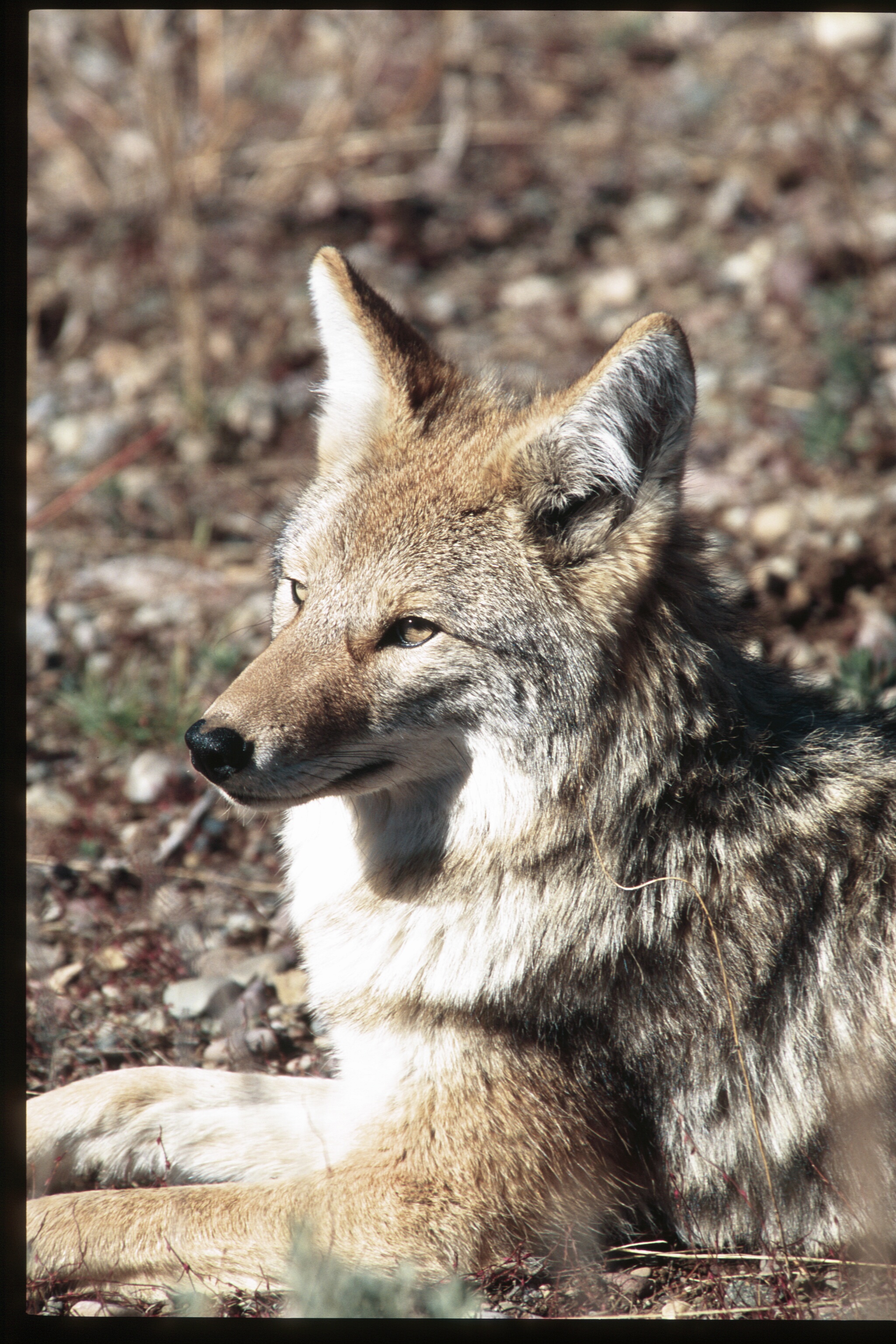
Coyote photo Copyright Jim Robertson

Coyote photo Copyright Jim Robertson

Red Wolves (and Coyotes) Under the Gun!

There are only about 100 left – and if drastic measures aren’t taken soon, the critically endangered red wolf could once again be pushed to extinction in the wild by coyote hunters in North Carolina.

Last week, Defenders of Wildlife and other conservation groups officially filed suit in federal court to halt uncontrolled hunting of coyotes in the red wolves’ North Carolina habitat. In the past year, hunters have killed at least 10 red wolves – that’s 10 percent of the remaining wild population of these remarkable creatures.

North Carolina’s red wolves are the last remaining wild population on earth. These animals were extinct in the wild as recently as 1980 due to intensive predator control and loss of habitat. A concerted reintroduction program has raised the wild population of these animals to roughly 100, all confined to a small area in the eastern part of the state.

Red wolves are almost indistinguishable from coyotes in daylight,Red-wolf-and-pups-240x300 and at night they are virtually impossible to tell apart. In spite of this, the state has authorized almost unlimited hunting for coyotes in red wolf habitat. Unless the hunting is stopped, red wolves are in serious danger of once again disappearing from the wild.

[Just thinking out loud here, but how about, while we’re at it, halting the uncontrolled hunting of coyotes throughout the country; Isn’t it time we all learn to live with them?]