Conservation Groups Sue Over NC Coyote Hunting

RALEIGH, N.C. — Conservation groups are suing North Carolina wildlife regulators, saying a rule that allows coyote hunting endangers the world’s only wild population of about 100 red wolves because hunters easily confuse the two animals.

An attorney with the Southern Environmental Law Center filed the lawsuit Thursday in federal court on behalf of three other groups.

The state Wildlife Resources Commission in July approved a permanent regulation allowing coyote hunting in the five-county area of eastern North Carolina that’s known as the Red Wolf Recovery Area. A state judge earlier blocked a temporary rule allowing the hunting in Dare, Tyrrell, Hyde, Washington and Beaufort counties.

The Southern Environmental Law Center says 20 red wolves have died from gunshots since 2008.

A wildlife commission spokesman declined comment until the agency receives the lawsuit.

Coyote photo Copyright Jim Robertson

Coyote photo Copyright Jim Robertson

Early snow–Not Wolves–kills thousands of cattle in S.D.

This sad story backs up what I wrote about the cruel treatment of cows in my recent post, Animal Industry = Animal Abuse.

It also highlights just one of the many ways that ranchers lose livestock which make the occasional wolf depredation pale in comparison. Because they can’t go out and trap or shoot a snowstorm, they shrug it off and accept their losses in stride. But if a wolf wanders through, it’s panic time. Scapegoating and killing a few wolves and coyotes must make them feel better about their powerlessness to stop a snowstorm.

Also, how many times do the deniers have to hear the word “record-breaking” before they take climate change seriously…

http://seattletimes.com/html/nationworld/2021983379_apusautumnstormsouthdakota.html

A record-breaking storm that dumped 4 feet of snow in parts of western South Dakota left ranchers dealing with heavy losses, in some cases perhaps up to half their herds, as they assess how many of their cattle died during the unseasonably early blizzard.

By CHET BROKAW Associated Press

Frozen cattle on Monday line Highway 34 east of Sturgis, S.D.

Enlarge this photoKRISTINA BARKER / AP

Frozen cattle on Monday line Highway 34 east of Sturgis, S.D.

PIERRE, S.D. —

A record-breaking storm that dumped 4 feet of snow in parts of western South Dakota left ranchers dealing with heavy losses, in some cases perhaps up to half their herds, as they assess how many of their cattle died during the unseasonably early blizzard.

Meanwhile, utility companies were working to restore power to tens of thousands of people still without electricity Monday after the weekend storm that was part of a powerful weather system that also buried parts of Wyoming and Colorado with snow and produced destructive tornadoes in Nebraska and Iowa. At least four deaths were attributed to the weather, including a South Dakota man who collapsed while cleaning snow off his roof.

Gary Cammack, who ranches on the prairie near Union Center about 40 miles northeast of the Black Hills, said he lost about 70 cows and some calves, about 15 percent of his herd. A calf would normally sell for $1,000, while a mature cow would bring $1,500 or more, he said.

“It’s bad. It’s really bad. I’m the eternal optimist and this is really bad,” Cammack said. “The livestock loss is just catastrophic. … It’s pretty unbelievable.”

Cammack said cattle were soaked by 12 hours of rain early in the storm, so many were unable to survive an additional 48 hours of snow and winds up to 60 mph.

“It’s the worst early season snowstorm I’ve seen in my lifetime,” said Cammack, 60.

Early estimates suggest western South Dakota lost at least 5 percent of its cattle, said Silvia Christen, executive director of the South Dakota Stockgrowers Association. Some individual ranchers reported losses of 20 percent to 50 percent of their livestock, Christen said. The storm killed calves that were due to be sold soon as well as cows that would produce next year’s calves in an area where livestock production is a big part of the economy, she said.

“This is, from an economic standpoint, something we’re going to feel for a couple of years,” Christen said.

Some ranchers still aren’t sure how many animals they lost, because they haven’t been able to track down all of their cattle. Snowdrifts covered fences, allowing cattle to leave their pastures and drift for miles.

“Some cattle might be flat buried in a snow bank someplace,” said Shane Kolb of Meadow, who lost only one cow.

State officials are tallying livestock losses, but the extent won’t be known for several days until ranchers locate their cattle, Jamie Crew of the state Agriculture Department said.

Ranchers and officials said the losses were aggravated by the fact that a government disaster program to help ranchers recover from livestock losses has expired. Ranchers won’t be able to get federal help until Congress passes a new farm bill, said Perry Plumart, a spokesman for Sen. Tim Johnson, D-S.D.

Meanwhile, more than 22,000 homes and businesses in western South Dakota remained without power Monday afternoon, according to utility companies. National Guard troops were helping utility crews pull equipment through the heavy, wet snow to install new electricity poles.

At least 1,600 poles were toppled in the northwest part of the state alone, and workers expect to find more, Grand River Electric Coop spokeswoman Tally Seim said.

“We’ve got guys flying over our territory, counting as they go. We’re finding more as we are able to access the roads. The roads have been pretty blocked on these rural country roads,” Seim said.

“One of our biggest challenges is getting access to areas that are still snowed in,” added Vance Crocker, vice president of operations for Black Hills Power, whose crews were being hampered by rugged terrain in the Black Hills region.

In Rapid City, where a record-breaking 23 inches of snow fell, travel was slowly getting back to normal.

The city’s airport and all major roadways in the region had reopened by Monday. The city’s streets also were being cleared, but residents were being asked to stay home so crews could clear downed power lines and tree branches, and snow from roadsides. Schools and many public offices were closed.

“It’s a pretty day outside. There’s a lot of debris, but we’re working to clear that debris,” said Calen Maningas, a Rapid City firefighter working in the Pennington County Emergency Operations Center.

Cleanup also continued after nine tornadoes hit northeast Nebraska and northwest Iowa on Friday, injuring at least 15 people and destroying several homes and businesses. Authorities also are blaming the weather for a car accident that killed three people along a slick, snow-covered road in Nebraska.

In South Dakota, the 19 inches of snow that fell in Rapid City on Friday broke the city’s 94-year-old one-day snowfall record for October by about 9 inches, according to the National Weather Service. The city also set a record for snowfall in October, with a total of 23.1 inches during the storm. The previous record was 15.1 inches in October 1919.

Public opinion differs on coyote hunting, trapping

Jim Robertson-wolf-copyright

State proposing 120-day hunting season, 100-day trapping period

By Nick Roth | Sep 06, 2013

Control is proposing a 120-day hunting and 100-day trapping season on coyotes.

The Department of Natural Resources and Environmental Control has presented its proposed regulations for hunting and trapping coyotes, and both supporters and opposition are making sure their voices are heard.

More than 50 people took the opportunity to express their opinions on coyotes and other proposed changes to the regulations at a public hearing Sept. 4 at the DNREC Building in Dover. Hunters are eager to legally kill what they consider an unwanted nuisance, while animal rights activists claim the non-native creature will not have a significant effect on Delaware’s ecosystem.

“Allowing the hunting and trapping of coyotes and the other animals is not only inhumane, it is irresponsible,” said Patricia Haddock, president of Delaware Votes for Animals. “This proposal could result in the unnecessary suffering and terrible deaths of adult animals and leave many young pups orphaned and unable to survive themselves.”

DNREC’s Division of Fish and Wildlife is proposing a hunting season of Nov. 1 through Feb. 28 and trapping season from Dec. 1 through March 10. Many hunters in attendance called the proposed regulations too conservative and lobbied officials to allow year-round hunting and trapping.

“I wholeheartedly recommend the elimination of coyotes,” said Dover resident Teddy Morwitz. “I am a dog person – I hunt with dogs – and I have had dogs killed and dragged off. Anything that can be done to reduce the population is wonderful.”

It is believed between 50 and 100 coyotes are present in Delaware, an estimation based partially on roadkill data that has found one to two coyotes are killed by automobiles annually. Comparatively, the Department of Transportation removes about 1,000 roadkill deer per year, said DNREC deer and furbearer biologist Joe Rogerson.

Rogerson said the presence of coyotes could have both positive and negative impacts on Delaware’s wildlife. The population of rodents, raccoons and red fox would likely decline, which could increase the population of the ground-nesting birds those animals prey upon, such as wild turkey.

“Predator/prey dynamics are very complex issues because we’re managing a very adaptive animal that has a very diverse diet, and landscape composition may be a factor,” he said.

Rogerson said he believes the deer population is productive enough to absorb the anticipated modest level of predation by coyotes.

Coyotes have also been known to feast on fruits, vegetables and livestock, which has many farmers also in support of the proposed regulations.

“Farming is important to my life and so is wildlife,” said farmer Ray Ellis. “These are fierce predators, and we do not need to let them establish. We need to do everything we can to eradicate them.”

DNREC is not trying to eliminate the animal from Delaware. Division of Fish and Wildlife Director David Saveikis said the regulations are meant to strike a balance among the various interests expressed.

“If these regulations are adopted or a modification thereof, there is always room to change them,” he said. “We intend, through the mandatory reporting, to track the coyote harvest, and if we find the regulations are not sufficient, we will change them.”

Many hunters strongly expressed their desire for more liberal hunting and trapping seasons, similar to those that exist in Maryland, Pennsylvania and Virginia. Some hunters also supported the idea of nighttime hunting of the animal.

Saveikis said nuisance coyotes could be addressed through a proposed secretary’s order that would authorize all private landowners to shoot coyotes that are considered a nuisance or depredating livestock or domestic animals. The order can be issued outside the regulations and is considered more responsive, Saveikis said. He said the department is waiting to see the final regulations before making a decision on the secretary’s order.

“I think it was important to realize that the combination of the secretary’s order and the proposed hunting and trapping seasons provide the tools for landowners to protect their property and effectively manage the coyote population,” he said.

Cathy Rash, vice president for Delaware Action for Animals, was strongly opposed to the hunting and trapping seasons because research suggests coyotes compensate for the loss of population by breeding at earlier ages and having larger litters.

“While we understand a few individual coyotes may be a nuisance to farmers, most are a valuable asset as having a natural predator helps keep smaller animals populations in check,” she said. “In the instance of nuisance coyotes, they should be dealt with on an individual basis instead of opening a trapping and hunting season on all coyotes.”

After listening to many animal welfare activists speak, Milton resident Ted Palmer described the cruel manner in which coyotes take down their prey.

“I hate the cruelty of animals [but] there is absolutely no comparison to what a coyote does to an animal,” Palmer said. “I’m tired of hearing about coyote puppies and how cute they are. They are cute, but they are a coyote and they need to be addressed as a coyote.”

Public comment will remain open until 4:30 p.m., Thursday, Sept. 19. Those wishing to submit comments may do so by emailing lisa.vest@state.de.us or sending comments to Lisa A. Vest, Public Hearing Officer, Office of the Secretary, 89 Kings Hwy., Dover DE 19901.

Breaking Down the Means of Stupidity

sarah-palin-lope-navo1

http://boldvisions.businesscatalyst.com/opinion.html

by Stephen Capra

Another weekend is about to pass in New Mexico, and another group enjoyed killing innocent animals. So goes it, in the modern, or perhaps throwback American West. South of Albuquerque, in Valencia County is a special place of hell for animals. It is known as Gun Hawk. It is a gun shop owned by people of greed, which make their money off the killing of innocent animals. Their method is to sponsor “killing contests” of coyotes, prairie dogs, and perhaps if they had their way, wolves.

This so-called company thrives on the negative publicity they receive, because like conservation groups, it allows them to become a cause, only they are a cause for fools. You see, if you use the words freedom enough, and talk about heritage, you will have an ample supply of cowboys, young guns, Tea Partiers and worse yet the media, which will quote everything you say without a moments fact checking.

So what this pathetic company is doing is creating a working model for others to emulate in the future. Their bravado is empowering to communities like Clovis, and allows them to take their stand despite science, compassion and simple reason. When George Bush was President many of us protested his war, his environmental policies, his views on abortion. We did it like Americans before us had. We made our case clear and went to the streets to make our case. We did not harm people with whom we disagreed. What has changed is how those on the other side approach dissent. They plant bombs and kill those that believe in a woman’s right to choose. They carry on very public killings of innocent animals, not just for fun, but because they know it is painful to us and they want us to see the carcasses of their personal rage.

To counter this opposition will require that the conservation movement, like Silicon Valley be open to new ways of engaging and fighting for our principles. We cannot speak to these people and try to reason. It is like a conversation with a sociopath, and they simply would not understand the language. I believe in organizing. I see it as essential, but the time has come where you must go from talk to action. Reason is not a guaranteed part of success.

Last week we were in Clovis, we spent time looking at the prairie dogs. Our supplemental feeding and some rain have brought them back to health. I watched as they played and as they stood guard over their territory and thought to myself, they have no idea what is occurring, no idea of the fight. Then another thought occurred, perhaps they do, perhaps they are preparing themselves for what may come. They are hoping for freedom, but resigned to death. Animals sense what is not spoken. They live with dignity and they die with even more.

So we are going to save them, which is not a goal; it is part of the center of our heart and part of our commitment to them. We spoke with the Mayor, the paper and listened to rage, and to phony religious ramblings. As they spoke I searched for their pulse. I looked deeply into their eyes trying to see their personal pain. Was it childhood, was it divorce, it matters not. We all have burdens to overcome, that is the essence of life. When they were done, I knew that our job was far from over.

The earth is heating up, this we know. Many continue to deny that climate change is real. I mention this because people are also heating up. Reason and civility are being lost as the planet continues to boil, as our artic ice melts. It would be easy to say, I want no part of this, I want a home in the country, or to move to Europe. Part of modern society, is a staunch reality that as humans we must be able to absorb more pain and visually see the result of our actions.

The challenge that we all face is how to get us on the right course. We have so many great alternatives, and it begins demanding that we share this planet with all animals-forever. Be it Clovis, be it Africa, or be it the bounty and beauty of our oceans. Stare into the eyes of an animal; you will experience one thing-love.

We can never rest while wolves are being slaughtered. While Coyotes and prairie dogs are killed for fun and laughter. However, we must change tactics, and we must be forceful in our message. People who kill for fun are cowards. What is occurring in simplification- humanity is being bullied. The way for change is to confront the bully, without fear. With this hot powered strength, the bully will yield.

We will soon begin airing our gorilla commercials to fight for the prairie dogs of Clovis and we have plans for a certain gun shop as well. Please help if you can, it’s time we all stare down the bully and share the land with our true kin, the lives that live it wild.

A very wise and learned man stated succinctly my feelings, “When you destroy nature you destroy one’s own nature as well. It kills the song.” Thank you Joseph Campbell

Top Ten New Names for Wildlife “Services”

The U.S. Department of Agriculture’s “Wildlife Services” department needs to be renamed…again.

That warped, wretched little wildlife-killing agency formally “Animal Damage Control” isn’t fooling anyone with their innocuous appellation: Wildlife “Services.” Even the New York Times recently ran an editorial entitled, “Agriculture’s Misnamed Agency,” declaring: “It is time the public got a clear picture of what Wildlife Services is up to, and time for the Department of Agriculture to bring the agency’s work into accord with sound biological practices.”

Marc Bekoff dubbed the agency, “Murder Incorporated”—others have given it a less wholesome label. Hoping we would go easy on them, USDA representatives asked the staff of Exposing the Big Game (me, myself, and my wife) to come up with another new name for their Wildlife “Services” department. Here’s what we came up with:

Top Ten New Names for Wildlife “Services”

10) Wildlife Termination Services
9) Government-issued Animal Abusers
8) Evil Anti-Wildlife Nazis
7) Seven Psychopaths
6) Biodiversity Busters
5) U.S. Department of Nimrods
4) A Bunch of Loathsome Cattle-Barron Butt-kissers
3) Chaos
2) The Animal Abolition Agency
1) Two words: Wildlife Disservices

__________________

A division of the:

USDA-Logo

Wolf or Coyote, Which Should You Shoot?

At the bottom of this post is a photo quiz to test your skill at species identification and/or differentiation to go along with this action alert from WildEarth Guardian…..

Poachers [hunters] are shooting Mexican wolves in cold blood and the government is doing almost nothing about it.

Why? Because the Department of Justice has a policy that basically allows the killers to make the excuse that they thought they were shooting at a coyote.

And so anti-wolf forces are just laughing it off.

Sound outrageous?  Well it is.  What’s worse is that it’s now happened dozens of times. With the body count mounting, we said enough is enough. So last week we filed a landmark lawsuit to stop the practice of letting killers get off scot free. Now we urgently need your help!

We need to raise $20,000 in the next 21 days to ensure we can defend wolves in court – thanks to a fellow outraged Guardian, the first 50 gifts will be matched dollar for dollar, up to $10,000! With less than 75 Mexican wolves in the wild we need to act urgently. Please contribute to our Mexican Wolf Protection Fund.

The Department of Justice has decided to simply walk away from enforcing the Endangered Species Act, which strictly prohibits killing of endangered species—no matter the excuse. As a result it’s not only killers of Mexican wolves that have not been prosecuted, but also killers of other endangered species, including Grizzly bears, whooping cranes and California Condors.

Because of its so-called “McKittrick Policy,” the Department of Justice is loathe to charge or prosecute individuals who kill “endangered” species if they claim that they mistook the identity of the animal as their defense.

Since 1998, at least 48 endangered Mexican wolves have been shot, but the government has only pursued two cases! WildEarth Guardians believes it’s time the wildlife poachers are brought to justice, but we need your financial support.

________________

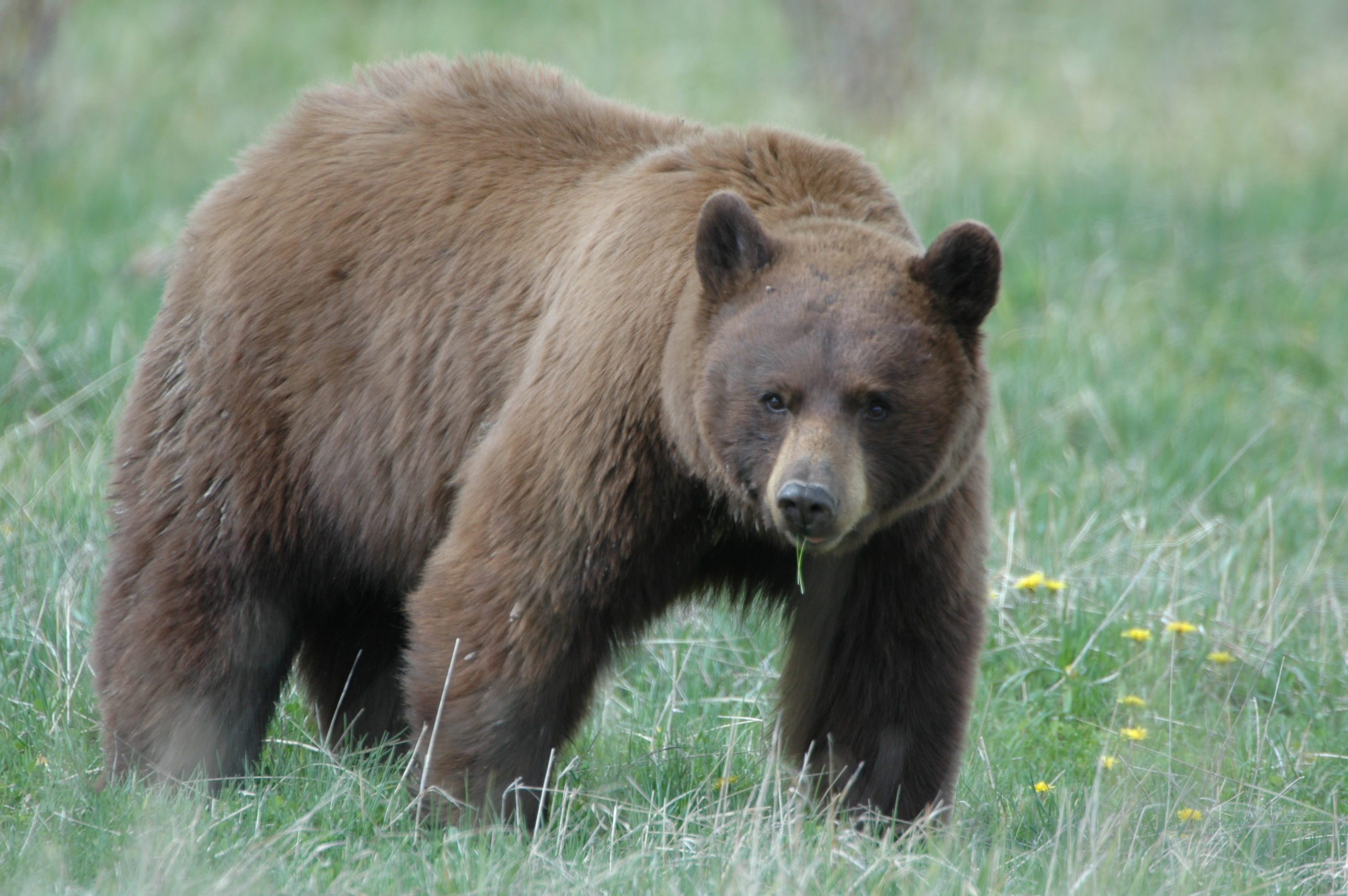
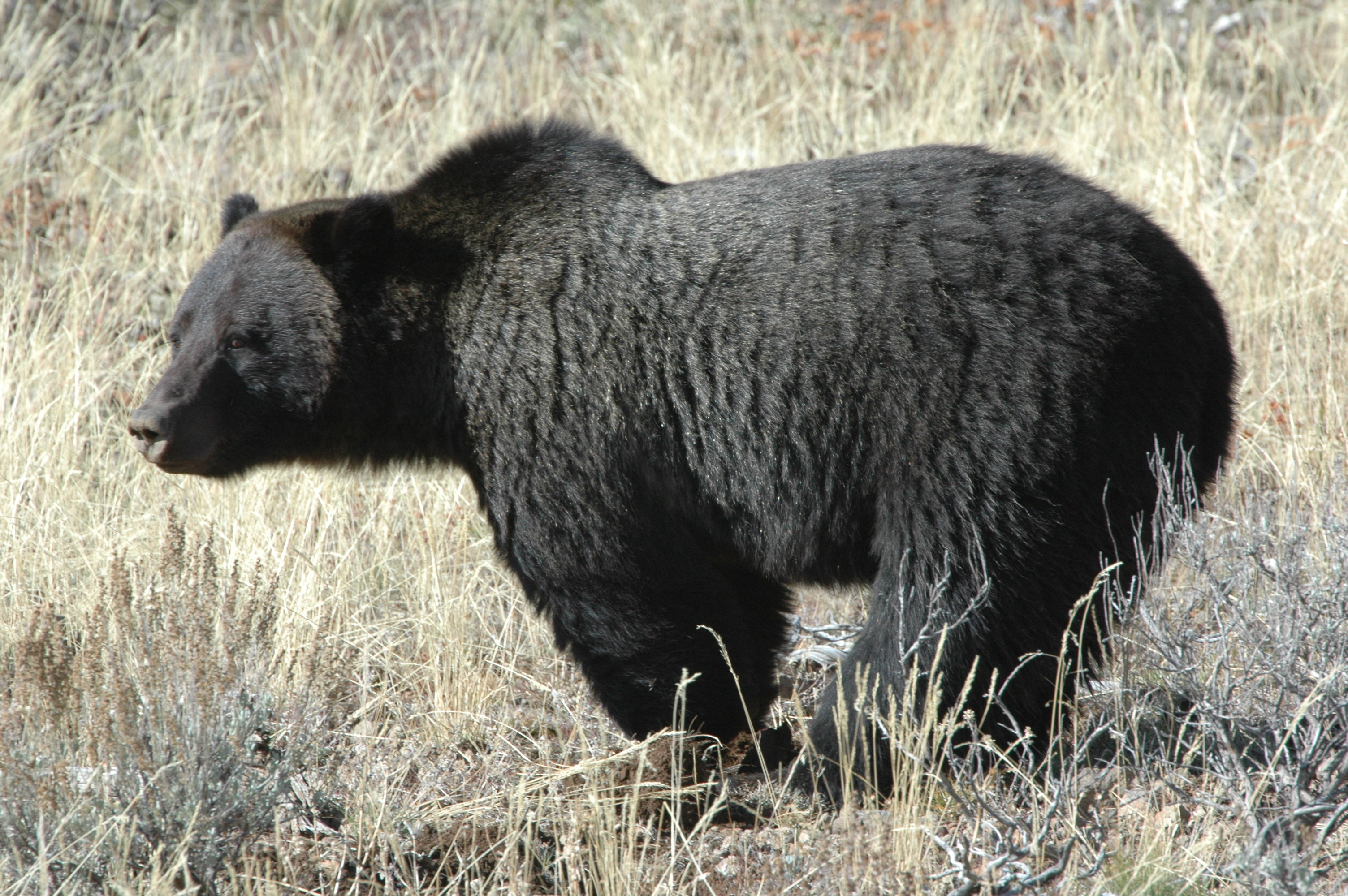
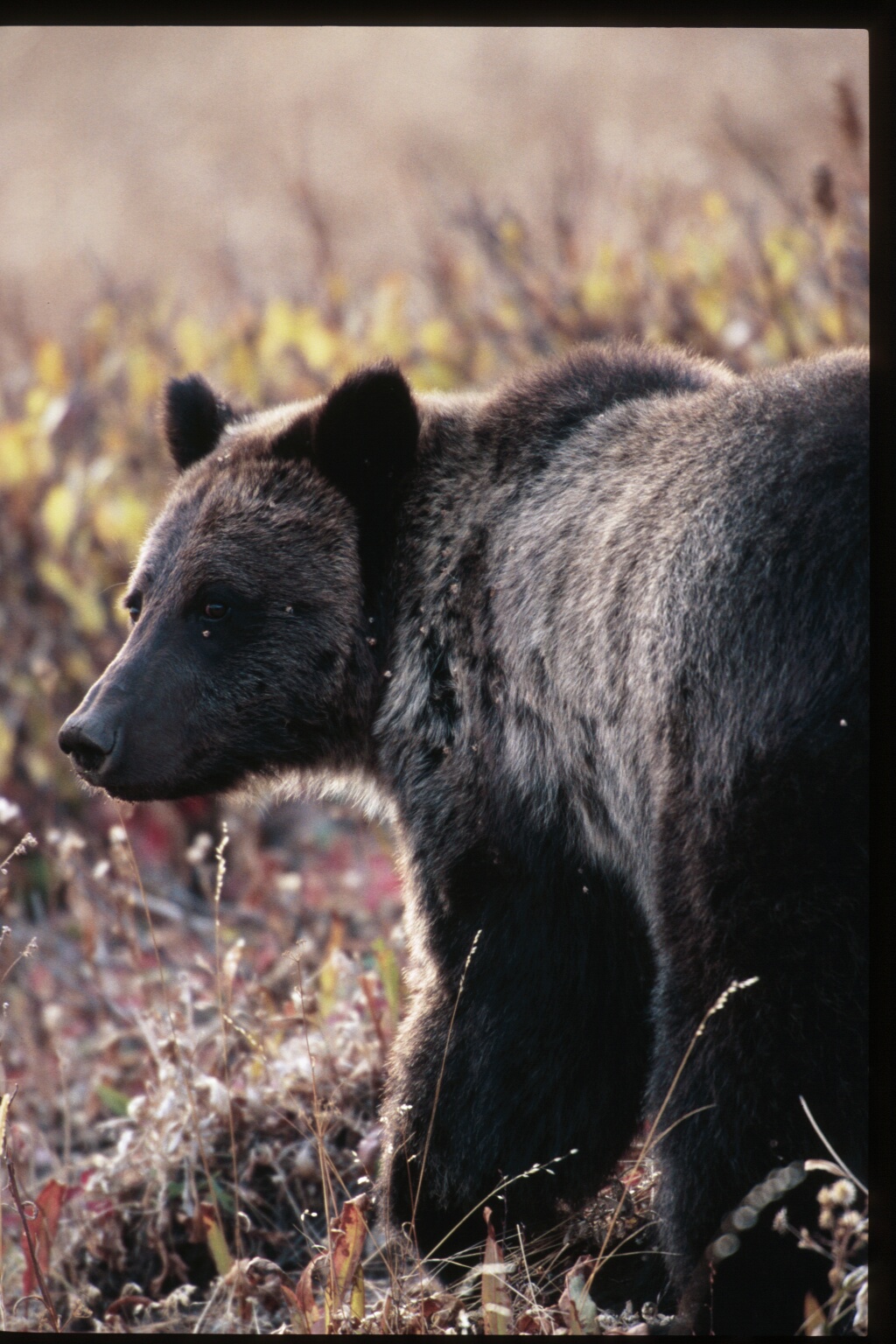
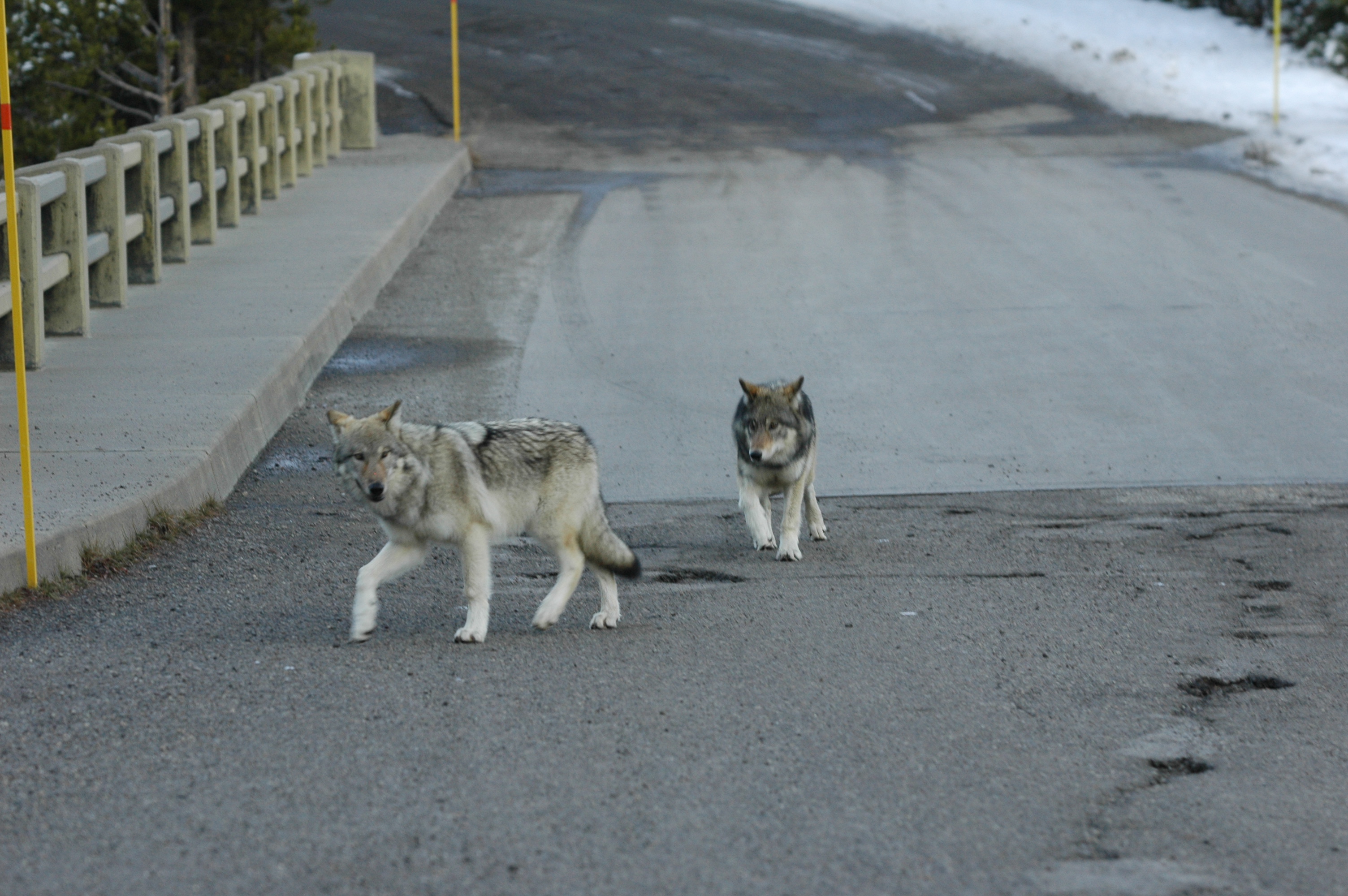
…So, just how hard is it to tell a wolf from a coyote? A black bear from a grizzly? Should hunters be trusted to make that call?

I’ve posted some of my photos below so you can decide for yourself whether coyote hunting should be legal in an area where only 75 individuals of a critically endangered subspecies of wolves exist; or if black bears should be hunted in a grizzly recovery zone.

(Answers at bottom of post.)

Let’s start with an easy one. Choose which is the grizzly bear from the following two photos:

1.

Wildlife Photography Copyright Jim Robertson

Wildlife Photography Copyright Jim Robertson

2.

DSC_0262

So how about these two; same question, (left or right)?

82236aa124e9099856c9b595bcea598c  blue eyed black bear

Now, which of these is the wolf?

DSC_0054

DSC_0298

Ok, this last one was a trick question; the two crossing the bridge are young wolves. But you get the point, it’s sometimes hard to tell.

Number 2. is the grizzly, as is the photo on the left below it.

Part of the credo of the alleged “ethical” hunter is, don’t pull the trigger unless you’re dead sure of your target. Better yet, don’t pull it at all; none of these animals deserve to die for your sporting pleasure.


Save the Wolves: Support the Rights of All Animals

Make no mistake, I love wolves as much as just about anyone; yet some people practically worship them, putting them above any other species except perhaps whales and dolphins. To be sure, wolves are sacred, but there are folks who think of them as hyper-sentient—the great Northern furred land-dolphin, if you will.

I’m not for a minute denying wolves’ intelligence or adherence to an almost human-like social caste system, but I can’t get behind campaign slogans such as “Real hunters don’t hunt wolves.” I call bullshit on that. Real hunters hunt wolves, coyotes, elk, deer, prairie dogs, pigeons, pronghorn, bears, cougars, raccoons— anything and everything that moves or has ever moved. Hell, they’d probably hunt whales and dolphins if it weren’t for the Federal Marine Mammal Protection Act. Most hunters just want a target and a trophy, they don’t really care what species it is.

Granted, some hunters are more sadistic than others, just as some serial killers revel in their victims’ suffering, while others dispatch their prey as quickly as possible—they’re only interest: harvesting a trophy corpse to have around, for whatever morbid reason. The most sadistic hunters are probably fueled by the fact that there are people out there who adore wolves while state laws still consider delisted wolves “property” like every other non-human animal.

Serial killers have been known to derive sick pleasure from taunting the families of their victims, calling them from prison to recount their murders. The same kind of thing likely goes on in the minds of sadistic wolf hunters who boast and post photos of their kills, knowing that some sentimental environmentalist or animal rightsists might come across one and be hurt or outraged by it. They’d love to know that one of us broke down, burned out or resorted to lethal action because of their post (as long as they weren’t on the receiving end of the action).

The wolf situation is unique among modern-day animal atrocities, in that it’s as yet perfectly “legal” for hunters and trappers to film themselves in action. In sharing them online, they’re banking on the fact that the general public is unmoved and apathetic. But I’d like to think that if factory farmers readily shared footage of their routine acts of animal abuse online, there would be a lot more vegans in this world.

For now, the only way anti-wolf sadists can be stopped is by eliminating them from the world of the living. But if you happen to reside in one of those backward states that have yet to implement a death penalty for wolf hunting, the best advice is to just ignore them like you would the taunts of any other bully. Meanwhile, keep petitioning Facebook and other social media outlets where their death porn appears. As long as animals, including wolves, are seen only as “property” by the powers that be, the people who run Facebook will feel entitled to allow anti-wolf evil to be spread throughout their pages and posts.

Eventually common decency will prevail and violent anti-wolf/anti-animal sites will come under serious scrutiny, just as misogynistic sites recently have. We need to step up the pressure on Facebook and let them know that freedom of speech does not give one the right to victimize. Be sure to sign this petition and pass it on: http://www.change.org/petitions/facebook-executives-ban-sadistic-pages-of-wildlife-torture

Meanwhile, let’s fight for the rights and personhood of all animals, not just a chosen few.

Text and Wildlife Photography ©Jim Robertson, 2013. All Rights Reserved

Text and Wildlife Photography ©Jim Robertson, 2013. All Rights Reserved

6,000 coyotes killed in Utah’s bounty program

“Can they demonstrate that the bounty hunt actually helped boost mule deer populations? I think they’d be hard pressed to show this.” –- Camilla Fox, executive director, Project Coyote

Take the poll: http://www.ksl.com/?sid=25052737&nid=148&fm=most_popular&s_cid=popular-4
Are coyote bounties a good thing for Utah?
Results so far:
1. Yes 67% (3218)
2. No 33% (1573)
Total Votes: 4791

6,000 coyotes killed in Utah’s bounty program
By Grant Olsen, ksl.com Contributor May 6th, 2013

SALT LAKE CITY — More than 6,000 dead coyotes have been redeemed by hunters since Utah’s Division of Wildlife Resources launched its coyote bounty program last September.

The DWR hopes its ambitious plan will eliminate a significant portion of the state’s coyote population, which in turn will benefit the deer herds on which they prey. Officially known as the Predator Control Program, the incentive-based program pays hunters $50 for every coyote they kill.

Other states have implemented bounty programs over the years, but rarely on this scale. Even the New York Times has taken note of Utah’s Predator Control Program, calling it “one of the nation’s largest hunter-based efforts to manage predatory wildlife.”

John Shivik, mammals coordinator for the Division of Wildlife Resources, is proud of how his team worked together to start the Predator Control Program from scratch and get it “up and running so quickly.”

While few can argue that the Predator Control Program enjoyed a smooth launch, the effect it has had on wildlife is debatable. Camilla Fox, executive director of Project Coyote, says that the Predator Control Program is “ecologically reckless, economically unjustifiable and ethically reprehensible.”

According to Fox, most government agencies acknowledge that coyote bounties are not only ineffective at reducing coyote populations, but are often counterproductive. She asserts that decades of research suggests that the systematic killing of coyotes increases reproduction, immigration and survival.

Dr. Robert Crabtree, founder of the Yellowstone Ecological Research Center, agrees with this perspective. “It cannot be over-emphasized how powerfully coyote populations compensate for population reductions,” he says.

Fox maintains that there is “no science that demonstrates that bounty programs are effective at reducing coyote populations over the long-term.” She questions the DWR’s methods and how it will measure the program’s success. “Can they demonstrate that the bounty hunt actually helped boost mule deer populations? I think they’d be hard pressed to show this.”

According to Shivik, the DWR has been “collecting what looks like it will be excellent data to help us evaluate how effective our efforts are.” He says it’s too early to assess the program’s impact and that the biggest challenge his team faces is identifying the deer populations that are most affected by coyotes, because the DWR is “trying to be as efficient and effective as possible with our resources.”

The topic of resources brings up another criticism that bounty programs often face — that they are susceptible to fraud. When all that is required for a payout is portions of a carcass (such as paws, jaws or ears), it’s difficult for authorities to be sure the coyotes weren’t killed in other parts of the country. The DWR attempts to address this by requiring hunters to document the date and location of each kill before paying a bounty, but critics point out that the information could easily be fabricated.

An example of this kind of fraud reportedly occurred in Canada when Saskatchewan offered a coyote bounty. To collect the $20 bounty, hunters were required to remove the paws from every coyote killed and give them to authorities. As a result, piles of dead coyotes were found in other parts of the country with their paws cut off. More than 70,000 coyotes were killed as part of Saskatchewan’s bounty program and it’s impossible to know how many were killed elsewhere and then illegally redeemed in the province.
Fox points to these past problems as proof that bounty programs are a waste of money. “These programs are very often fraught with illicit activity,” she says. “I would ask: How many of the coyote body parts turned in for the $50 bounty were actually killed in other states?”

Despite these lingering questions, Utah’s Predator Control Program has received enthusiastic support from many local hunters. You can learn more about the program and register for the bounty by visiting the official website at http://www.wildlife.utah.gov/predators.

Wildlife Photography ©Jim Robertson, 2013.

Wildlife Photography ©Jim Robertson, 2013.

Okay, Call Me an Anti

A while back I wrote a post called “Who’s the Real Anti?” wherein I pointed out that hunters are anti-wildlife, anti-wilderness, anti-nature and anti-competition, i.e., they’re anti-cougar, anti-coyote and unquestionably anti-wolf. (At the same time, they’re pro-killing, pro-death, and when it comes right down to it, pro-animal cruelty.)

But after watching the inexplicable rise in popularity of hunting (at least as far as the rapidly-growing number of stupid “reality” T.V. shows, like “Duck Dynasty,” “Swamp People,” “Chasing Tail” or God-only-knows what else, not to mention articles glorifying hunting in every paper or periodical across the country (even the New York Times), I’m ready to admit I’m an all-out anti.

Not only am I anti-hunting, anti-trapping, anti-whaling and anti-sealing, I’m anti any form of bullying that goes on against the innocents—including humans. I am not an apologist for the wanton inhumanity of hunting in the name of sport, pseudo-subsistence or conservation-by-killing. And I’m anti any so-called society that allows or encourages such atrocities.

But although I claim to be a misanthropist, I’m not really across the board anti-human per se. Actually, I’m anti-hate, as well as anti-greed, anti-ignorance, anti-apathy; I’m anti-objectification, anti-manipulation, anti-exploitation, anti-domination, anti- cruelty, anti-brutality; I’m anti-thoughtlessness, anti-selfishness, anti-unkindness, anti-egotism and anti those individuals who regularly exhibit any of these behaviors or embrace these traits.

Text and Wildlife Photography ©Jim Robertson, 2013. All Rights Reserved

Text and Wildlife Photography ©Jim Robertson, 2013. All Rights Reserved