How Many Wolves Died for Your Hamburger?

528624c939a88_preview-620

http://www.huffingtonpost.com/stephanie-feldstein/how-many-wolves-died-for-your-hamburger_b_5535494.html

by

Population and Sustainability Director, Center for Biological Diversity

06/27/2014

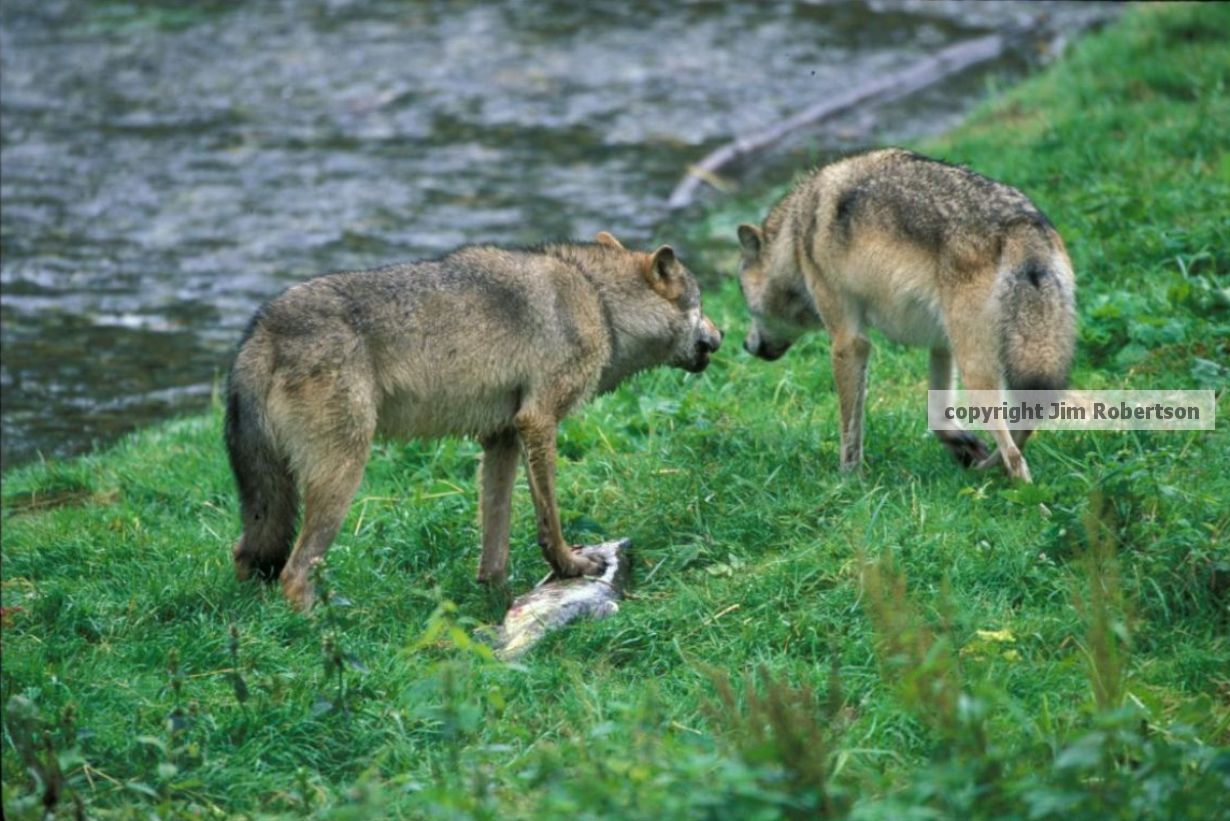
When you bite into a hamburger or steak, you already know the cost to the cow, but what about the wolves, coyotes, bears and other wildlife that were killed in getting that meat to your plate?

There are a lot of ways that meat production hurts wildlife, from habitat taken over by feed crops to rivers polluted by manure to climate change caused by methane emissions. But perhaps the most shocking is the number of wild animals, including endangered species and other non-target animals, killed by a secretive government agency for the livestock industry.

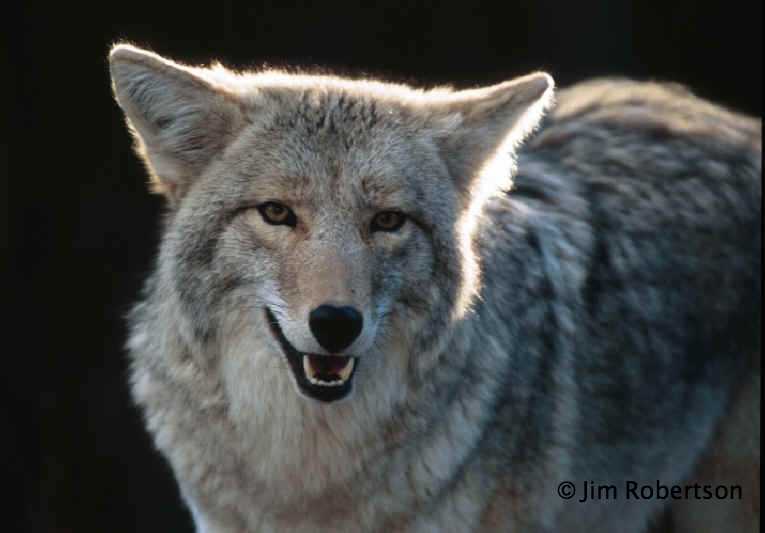
Last year Wildlife Services, an agency within the Department of Agriculture, killed more than 2 million native animals. While wolf-rancher conflicts are well known, the death toll provided by the agency also included 75,326 coyotes, 3,700 foxes and 419 black bears. Even prairie dogs aren’t safe: They’re considered pests, blamed for competing with livestock for feed and creating burrow systems that present hazards for grazing cattle. The agency killed 12,186 black-tailed prairie dogs and destroyed more than 30,000 of their dens.

The methods used to kill these animals are equally shocking: death by exploding poison caps, suffering in inhumane traps and gunned down by men in airplanes and helicopters.

How many of the 2 million native animals were killed to feed America’s meat habit? No one really knows. This is where the secrecy comes in: While we know that they frequently respond to requests from the agricultural community to deal with “nuisance animals,” Wildlife Services operates with few rules and little public oversight. That’s why the Center for Biological Diversity, where I work, has called on the Obama administration to reform this rogue agency to make it more transparent and more accountable. Despite the growing outcry from the public, scientists, non-governmental organizations and members of Congress, the federal agency shows no signs of slowing its killing streak.

There are two important ways that you can help rein in Wildlife Services. First, sign our online petition demanding that the Department of Agriculture create rules and public access to all of the agency’s activities. Second, start taking extinction off your plate. Our growing population will mean a growing demand for meat and for the agency’s deadly services, unless we take steps to reduce meat consumption across the country. By eating less or no meat, you can reduce your environmental footprint and help save wildlife.

D-CON: the Poison that Keeps on Killing

Text and Photography ©Jim Robertson

Text and Photography ©Jim Robertson

Earlier this month, my wife and I tried out a job as caretakers of a river front lodge in the heart of the Oregon Coast Range. It sounded idyllic, but on closer examination we found that the whole place was overrun by rats and mice. They had made themselves at home in the “trophy lodge’s” basement, attic, and furnace room and even throughout the heat ducting system (which—judging by the smell—they must have considered their own private out house).

Had the lodge owner even hinted at the “rodent situation” (as he later put it) ahead of time, we would never have moved our cats and dog in without first asking if there had been any poisons used around there. Well, it turns out there had—someone put fresh d-CON in all the heating vents, and who knows where else around the “estate.”

Among the sinister side effects of d-CON is that it kills slowly and stays in the victim’s body, allowing them to wander far from the source before a predator or scavenger consumes them, spreading the poison to an entire food chain. Needless to say, we gathered up our companion animals and got the hell out of there.

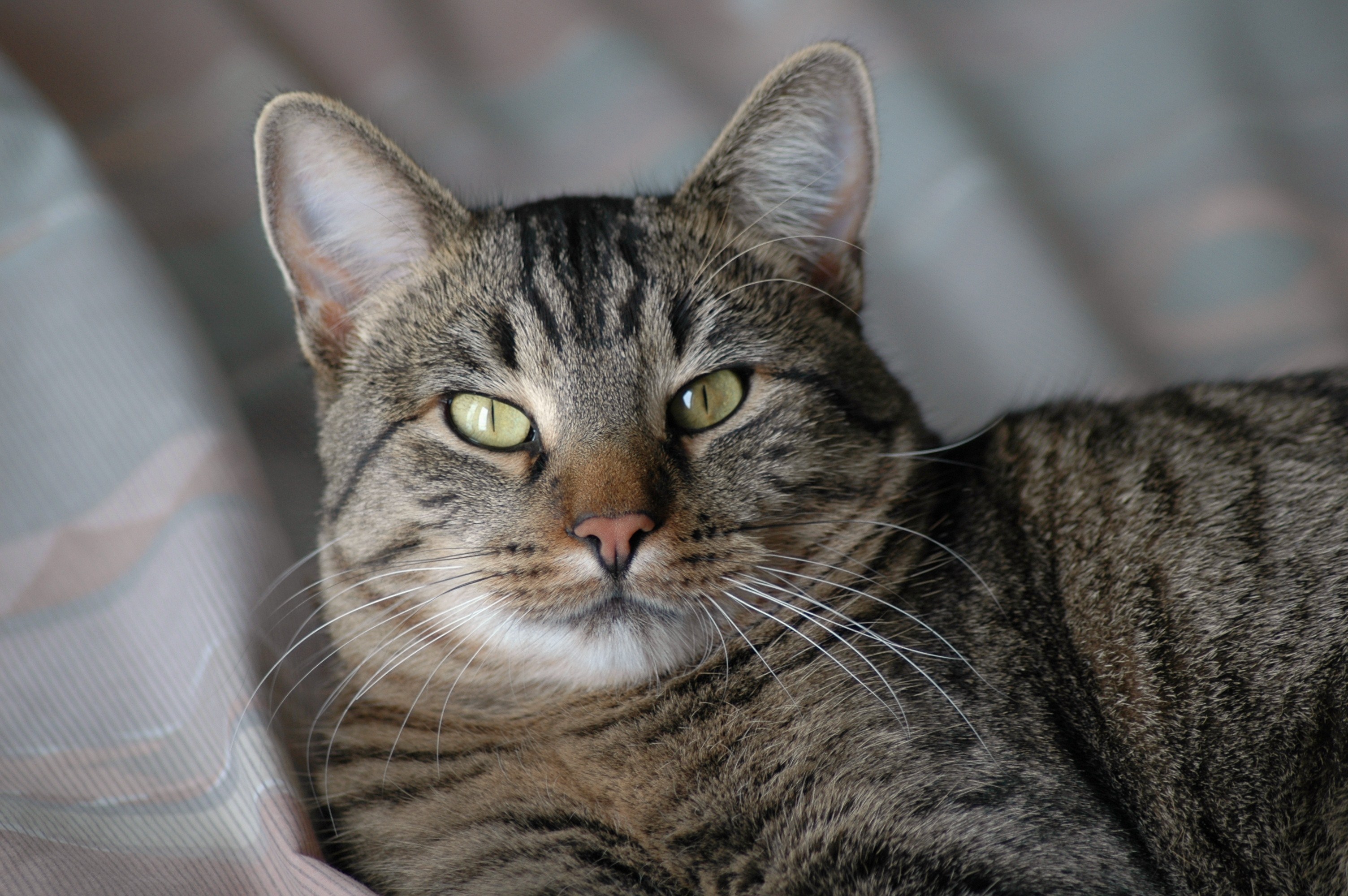
But about a week after we got back home, our worst fears were realized. One of our adopted cats, Caine, a gray tabby in the prime of his life with a black belt in the art of mousing, started showing the tell-tale symptoms of d-CON poisoning. He refused to eat or drink and slept round the clock. His lethargy grew more pronounced until he eventually tuned everyone else out, as though preparing to pass on. If we hadn’t rushed him to the vet, where he received IV fluids and an emergency injection of vitamin K to counter-act the lethal anti-coagulant agent in the poison, he would have died like so many other wild and domestic animals (including people) before him.

The problem is so extensive that the manufacturers of d-CON recently agreed to stop production of this particular rodenticide.  Though it’s now banned in California, stockpiles still exist in stores throughout the rest of the country. And this insidious gold-standard—this household name in “pest control”—has surely found its way to all corners of the globe by now and will keep doing its damage for years to come. How many cats, bobcats and cougars, dogs, coyotes, mink, ermine, opossum, raccoons, owls, hawks and eagles will suffer a drawn-out death from this pervasive poison before the sale of d-CON is completely discontinued?

In a way, Caine was one of the lucky few. Most rodent-eaters don’t have companion humans who care about them enough to nurse them back to health.

DSC_0037

Man shot while coyote hunting

Photo Copyright Jim Robertson

Photo Copyright Jim Robertson

http://www.desmoinesregister.com/story/news/crime-and-courts/2014/06/01/man-shot-coyote-hunting/9839329/

by Sharyn Jackson

An 18-year-old man was shot Saturday night in Black Hawk County while coyote hunting with three others, according to a release from the Black Hawk County Sheriff’s office.

Four individuals who were hunting coyotes returned to a residence southeast of Hudson. According to the release, “one of the subjects had pointed his shotgun in the direction of another subject and the gun discharged.”

Alex Lee Bratten, 18, of Jesup, was shot in his right shoulder. Bratten was transported to Covenant Medical Center in Waterloo with a serious injury and then transported to University of Iowa Hospitals in Iowa City. The injury is not life-threatening, police said.

The case remains under investigation.

Read or Share this story: http://www.desmoinesregister.com/story/news/crime-and-courts/2014/06/01/man-shot-coyote-hunting/9839329/

Who Should Read Exposing the Big Game?

Imagine you’re a hunter and you just bought a copy of Exposing the Big Game to add to your collection of books and magazines featuring photos of prize bull elk, beefy bison and scary bears (the kind of animals you objectify and fantasize about one day hanging in your trophy room full of severed heads). This one also includes pictures of “lesser” creatures like prairie dogs and coyotes you find plain ol’ fun to trap or shoot at.

You don’t normally read these books (you’re too busy drooling over the four-legged eye candy to be bothered), but for some reason this one’s burning a hole in your coffee table. So you take a deep breath and summon up the courage to contemplate the text and its meaning. Several of the words are big and beyond you, and you wish you had a dictionary, but eventually you begin to figure out that Exposing the Big Game is more than just a bunch of exposed film featuring the wild animals you think of as “game.”

This book actually has a message and the message is: hunting sucks!

You don’t want to believe it—the notion that animals are individuals rather than resources goes against everything you’ve ever accepted as truth. But reading on, you learn about the lives of those you’ve always conveniently depersonalized. Finally it starts to dawn on you that animals, such as those gazing up at you from these pages, are fellow earthlings with thoughts and feelings of their own. By the time you’ve finished the third chapter your mind is made up to value them for who they are, not what they are. Now your life is changed forever!

Suddenly you’re enlightened and, like the Grinch, your tiny heart grows three sizes that day. The war is over and you realize that the animals were never the enemy after all. You spring up from the sofa, march over to the gun cabinet and grab your rifles, shotguns, traps, bows and arrows. Hauling the whole cache out to the chopping block, you smash the armaments to bits with your splitting maul. Next, you gather up your ammo, orange vest and camouflage outfits and dump ‘em down the outhouse hole.

Returning to the book, you now face the animals with a clearer conscience, vowing never to harm them again. You’re determined to educate your hunter friends with your newfound revelations and rush out to buy them all copies of Exposing the Big Game for Christmas…

Or suppose you are a non-hunter, which, considering the national average and the fact that the percentage of hunters is dropping daily, is more than likely. Avid hunters comprise less than 5 percent of Americans, while you non-hunters make up approximately 90 percent, and altruistically avid anti-hunters represent an additional 5 percent of the population. For you, this book will shed new light on the evils of sport hunting, incite outrage and spark a firm resolve to help counter these atrocities.

And if you’re one of the magnanimous 5 percent—to whom this book is dedicated—who have devoted your very existence to advocating for justice by challenging society’s pervasive double standard regarding the value of human versus nonhuman life, the photos of animals at peace in the wild will provide a much needed break from the stress and sadness that living with your eyes open can sometimes bring on. As a special treat cooked up just for your enjoyment, a steaming cauldron of scalding satire ladled lavishly about will serve as chik’n soup for your anti-hunter’s soul.

So, who should read Exposing the Big Game? Any hunter who hasn’t smashed his weapons with a splitting maul…or any non-hunter who isn’t yet comfortable taking a stand as an anti-hunter. The rest of you can sit back and enjoy the pretty pictures.

______________________________________________________________

The preceding was an excerpt from the book, Exposing the Big Game: Living Targets of a Dying Sport.

front-cover-low-res6

Welcome to Hell, Coyote Hunters

1795706_473627576096881_1329203140_n

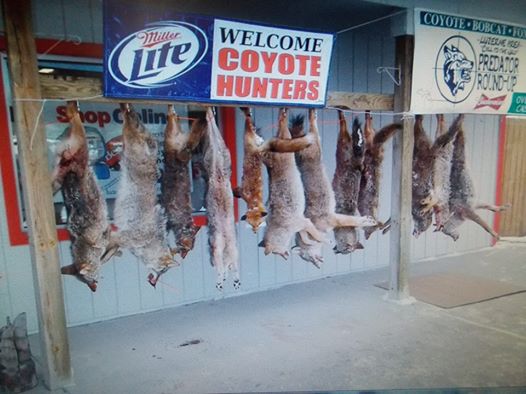
Hundreds of killing contests have taken place all over the USA…Here is a description of a killing contest that just happened in Michigan — This pic and the description are on a public forum.

What is a “tagged coyote”? A tagged coyote is one that was previously trapped, marked in some way and then released, and killed for a prize.

“Just a few weeks ago the “Call of the Wild” Predator Round Up was held near our cabin in Luzerne Michigan. The hunt began at 7:00 p.m. Friday night and ran till 12 noon Sunday. Seventy three (73) hunters signed up comprising 33 different teams. Several teams used coyote dogs and others worked various “sets” while calling. The hunters with the dogs had the advantage, but the first “yote” turned in was by a father and son team who called the 29.7 pound female within range of a flat shooting 223” …..
“Ma Deeters (local bar/restaurant) was the starting point of the hunt, and the Best Hardware store was where the successful hunters displayed their success. There were around $1700.00 dollars in prizes with anyone bringing in a tagged coyote receiving a $1000.00 dollar bonus. Knight and Hale (game calls) donated many of the prizes handed out. First coyote, biggest, (41 pounds) ugliest, and longest awards were all given out at the culmination of the hunt. Two of the dog teams garnered most of the awards.
On Sunday afternoon there were eleven (11) coyote and one fox hanging on the game pole at the hardware store. There was an additional prize to any team that brought in the “trifecta” of predator hunting (a coyote, fox, and bobcat.) No one collected that award this year, but one team came close.”

Interview With Project Coyote: Compassionate Coexistence with Predators

Compassionate Coexistence with Predators

March 3, 2014

Hosted by Eli Weiss

Camilla H. Fox
Dr. Robert Crabtree

Episode Description

Coexisting with America’s Song Dog, with Camilla Fox and Robert Crabtree America’s Song Dog, the Trickster, of mythological status to Native Americans; Clever and intelligent, they are critical players in ecosystem health, yet they are the most persecuted. Today I welcome guest experts from Project Coyote: Camilla Fox, Founder and Executive Director and Dr. Robert Crabtree, Scientific Advisory Board member. We learn from Fox and Crabtree why our model of predator management in the form of “coyote killing contests’ and extreme exploitation is not, and will not work- particularly for our Wile E Coyote. We continue hot on the heels unveiling the barbaric practices of our USDA’s secretive killing agency ‘Wildlife Services’, using our tax dollars, on public and private land, to indiscriminately and overkill our wildlife, especially the carnivores – coyotes, wolves, bobcats, and other animals under the mantel of managing human-carnivore conflict toward agricultural and livestock interests.

Listen here: http://www.voiceamerica.com/episode/76154/compassionate-coexistence-with-predators

How Wolves “Change Rivers”

You may have seen this already. I decided to go ahead and post this video, even though I don’t agree with everything it suggests. For instance, it states that wolves kill coyotes, implying that, as a result, there are now lots of rabbits in Yellowstone. I’ve seen many cases of wolves getting along famously with coyotes there, and yet I haven’t noticed any real increase in rabbits (which wolves would prey on themselves, if rabbits were becoming so numerous). In many ways this is an important and effective video; I’m just saying at times it’s kind of overstated .

http://newswatch.nationalgeographic.com/2014/02/16/this-will-shatter-your-view-of-apex-predators-how-wolves-change-rivers/

copyrighted-wolf-argument-settled

First the Good News: Wildlife Services’ Plane Crashes

…The bad news? The aerial coyote-killers on board survived.

[True to form, the anthropocentric media makes no mention that while “conducting aerial operations” the Wildlife “Services” agents were shooting coyotes from their plane.]

http://www.sheridancountyjournalstar.net/news/item/2259-crew-members-okay-after-plane-crash

Two crew members with the USDA-Wildlife Services escaped with only bumps and bruises Wednesday, February 12, when their plane, a government owned “Super Cub” crashed south of Gordon.

The pair were returning from western Box Butte County where they had been conducting aerial operations. Approximately nine miles out the plane’s engine started acting up and losing power. They coaxed the plane along until at five miles out the engine quit.

The pilot, Gregg Alan, from Ray, Colorado, was able to land the plane on the highway at which time it was hit with a gust of wind which caused the plane to skid off the road, hitting a power pole and two fence posts before coming to a stop.

Area rancher Paul Simmons saw the accident and gave the two a ride to town. Crew member Randy Benben, of Gordon, was treated at Gordon Memorial for back and hip pain. The plane sustained major damage and the accident is still being investigated by the Aviation Training and Operation Center (ATOC) of Cedar City Utah and the FAA.

Jim Robertson-wolf-copyright