End all use of dogs on wildlife.

Petition to The Wisconsin legislature and Natural Resources Board of Wisconsin: End all use of dogs on wildlife.

https://secure.avaaz.org/en/petition/The_Wisconsin_legislature_and_Natural_Resources_Board_of_Wisconsin_End_all_use_of_dogs_on_wildlife/?fbdm

Posted February 13, 2014

Why this is important

Wisconsin coyotes, wolves, bears, bobcats, raccoons, foxes and all wildlife are being run by packs of dogs and mobs of armed men for killing recreation year-round. Since coyotes can be killed without reporting, any time day or night, statewide, year-round, all wildlife is on the move, terrorized and killed randomly. Dogs used as weapons is cruel to the dogs, wildlife, and to children taught this is fun. Please help us get dogs out of hunting. They are set against trapped animals who cannot defend themselves. No one can defend themselves against armed men and dogs and traps in combination.

Sign the petition here:
https://secure.avaaz.org/en/petition/The_Wisconsin_legislature_and_Natural_Resources_Board_of_Wisconsin_End_all_use_of_dogs_on_wildlife/?fbdm

photo Jim Robertson

photo Jim Robertson

TRUE cost of the season’s must have fur-trimmed Canada Goose coat

‘Chilling cruelty, unspeakable suffering and corporate denial’:  the TRUE cost of the season’s must have fur-trimmed Canada Goose coat

http://www.dailymail.co.uk/news/article-2544075/Revealed-Chilling-cruelty-unspeakable-suffering-corporate-denial-Is-TRUE-cost-seasons-Canada-Goose-coat.html#ixzz2rYM0Ypqk

By Laura Collins  23 January 2014

They have made America their new frontier, forging into the US clothing market to become one of the season’s most recognisable brands with sales of Canada Goose outerwear expected to top $30million this year alone.

In a high profile year in the States, Kate Upton has appeared on the front of Sports Illustrated in one of their fur trimmed, down jackets and nothing much else.

It isn’t the only firm to market such coats, yet Canada Goose has rapidly established itself as the label of choice for the well-known and the well-heeled braving the frigid weather blown in on the polar vortex.

But today MailOnline can reveal that allegations of chilling cruelty and unspeakable animal suffering have been repeatedly levelled at this family business turned multimillion dollar concern.

Scroll down for video

The real cost of a $600 coat: Campaigners claim the coyotes that are trapped and skinned for their fur to trim the hoods of Canada Goose coats can be in pain for days. It is unclear whether these images are from Canada Goose trappers but the firm does use the same leg holds

+11

The real cost of a $600 coat: Campaigners claim the coyotes that are trapped and skinned for their fur to trim the hoods of Canada Goose coats can be in pain for days. It is unclear whether these images are from Canada Goose trappers but the firm does use the same leg holds


Exhausted, alone and all out of fight, this Coyote awaits its inevitable fate having been caught in a trap by its right hind leg

+11

Exhausted, alone and all out of fight, this Coyote awaits its inevitable fate having been caught in a trap by its right hind leg


According to animal rights activists, behind every fur trimmed hood and down stuffed coat is a brutal reality of Coyotes trapped and left to suffer in the wilderness.

Many of today’s ethically aware consumers would never dream of buying a full length fur. But in an  odd quirk of the current trend for this style of garment those same shoppers pull on a coyote trimmed coat without a moment’s concern for the origins of that little flurry of fur.

Lindsay Rajt, Director of Campaigns for People for the Ethical Treatment of Animals (PETA) said:  ‘Canada Goose uses exclusively Coyote fur on the trim of their coats and those animals are trapped in a way that is just inherently cruel.’

As a company founded and grown in Canada, Canada Goose makes much of their support of North Canadian communities in which, their publicity states, Coyote trapping has been ‘a way of life for hundreds of years.’

According to a spokesperson for the firm: ‘The trapping of fur-bearing animals is strictly regulated by the provincial and territorial wildlife departments in Canada.

‘We purchase coyote furs from certified Canadian trappers, never from fur farms or endangered animals.

Kate Upton going 'Polar Bare' on the cover of Sports Illustrated's 2013 Swimsuit edition, wearing a smile, a white Canada Goose parka and not much else

+11

Kate Upton going ‘Polar Bare’ on the cover of Sports Illustrated’s 2013 Swimsuit edition, wearing a smile, a white Canada Goose parka and not much else


But PETA has dismissed the standards as ‘window dressing.’

Mr Rajt said: ‘The company’s reference to  AIHTS standards is meaningless and a way of placating and  silencing people with valid concerns.

‘Leg hold traps are still legal in  Canada. Mother animals will chew off their limbs in order to get back to their young. The trapped animal might be there for days before the  trapper comes and finds them, they are frightened and starving and in  pain during that time. And then they’re bludgeoned or strangled to death or shot.’

WARNING GRAPHIC CONTENT: Coyotes trapped for their fur


A trapped Coyote howls in pain, its right forepaw held tight in the jaws of a leg hold trap - legal under the AIHTS but cruel according to PETA

+11

A trapped Coyote howls in pain, its right forepaw held tight in the jaws of a leg hold trap – legal under the AIHTS but cruel according to PETA


Trapped Coyotes can struggle to get free for days until the hunter returns to check his traps. Mother animals separated from their young attempt to chew off their own limbs in a bid for freedom

+11

Trapped Coyotes can struggle to get free for days until the hunter returns to check his traps. Mother animals separated from their young attempt to chew off their own limbs in a bid for freedom


Ms Rajt revealed that PETA is this week appealing to Canada Goose to abandon their use of fur in favour of synthetic alternatives and to dump their use of real down stuffing.

She said: ‘PETA is reaching out to Canada Goose to urge the company to switch to innovative, synthetic fur like their top competitor Helly Hansen, which has been fur-free for many years.

‘Additionally, we are asking that Canada Goose dump down and opt for revolutionary synthetic technology like the one recently developed by The North Face – Thermoball, which mimics down but offers superior versality.’

Ms Rajt claimed: ‘We have been trying to meet with this company, we’ve been trying to engage with them since 2006.

‘The CEO originally agreed to meet with us in 2008 to discuss trapping  policies and methods but just never confirmed that meeting and then  failed to make himself available to any of our follow ups.

‘It is a challenging company for us to work with.’

Meg Ryan pictured last month in New York's West Village. Canada Goose's concerted effort to win the US market has seen it become a celebrity brand of choice

+11

Meg Ryan pictured last month in New York’s West Village. Canada Goose’s concerted effort to win the US market has seen it become a celebrity brand of choice


Andrew Garfield and girlfriend Emma Stone in their Canada Goose parkas on a shopping trip in New York

+11

Andrew Garfield and girlfriend Emma Stone in their Canada Goose parkas on a shopping trip in New York


Actress Clare Danes wearing her Canada Goose parka with its distinctive Coyote trim while braving the New York chill

+11

Actress Clare Danes wearing her Canada Goose parka with its distinctive Coyote trim while braving the New York chill


But according to a spokesperson for the company: ‘We’ve corresponded with PETA on numerous occasions and it quickly became evident that they were not interested in a constructive conversation.’

Canada Goose was founded in 1957 and has enjoyed remarkable success and rapid growth across the past decade when it started marketing it’s ‘truly Canadian’ ethos to Europe.

 ‘We’ve been trying to engage with this company since 2006…It is a challenging company for us to work with,’
PETA Director of Campaigns, Lindsay Rajt, on Canada Goose’s refusal to meet

Today the company employs more than 1000 people and sells its products in more than 50 countries across the world.

It continues to manufacture its coats in Toronto and Winnipeg but recently opened its first US Headquarters in Denver, Colorado. Last year it became the official sponsor of the Sundance Film Festival and US Equity firm, Bain, recently bought a majority stake in the hitherto entirely Canadian enterprise.

Canada Goose defend their practices


Real fur real suffering: Canada Goose President Dani Reese flanked by his company's distinctive outerwear. He says the company uses Coyote fur 'because it works'

+11

Real fur real suffering: Canada Goose President Dani Reese flanked by his company’s distinctive outerwear. He says the company uses Coyote fur ‘because it works’


The extreme weather outerwear is manufactured in Toronto and Winnipeg though US Equity firm, Bain, now owns a majority stakehold

+11

The extreme weather outerwear is manufactured in Toronto and Winnipeg though US Equity firm, Bain, now owns a majority stakehold


Founded in 1957 the family company Canada Goose now employs more than 1000 people and sells its garments in more than 50 countries

+11

Founded in 1957 the family company Canada Goose now employs more than 1000 people and sells its garments in more than 50 countries


Canada Goose President Danni Reiss is very clear in his assessment of the importance of the US market to his brand. He said, ‘The States is a market with one of the greatest potentials in the world. The US is growing faster than the overall company.’

Speaking in a corporate video Mr Reiss explained: ‘We use Coyote fur for a number of reasons. Number one, Coyote fur works – it’s functional, it provides warmth around the face in a way no synthetic fabric can. It does that in the coldest places on earth and it is important to realise that sometimes urban centres and cities can feel like the coldest places on earth.’

Coyote fur doesn’t freeze, doesn’t hold moisture, retains heat and is biodegradable.

Ms Rajt dismissed the necessity of real fur saying: ‘They actually do have some faux fur trim products and there’s a market for that. There’s no reason why they couldn’t switch completely.’

A spokesperson for Canada Goose said: ‘We understand PETA’s concerns and we respect the right of people to choose not to wear fur, however, we know PETA does not respect our ethical, responsible use of fur so further conversation won’t be productive.’

But Ms Rajt insisted: ‘I just don’t believe that  half the people wearing these coats understand what’s really involved in the making of them. And I just don’t believe that they would make that  same choice if it was an informed one.
Read more: http://www.dailymail.co.uk/news/article-2544075/Revealed-Chilling-cruelty-unspeakable-suffering-corporate-denial-Is-TRUE-cost-seasons-Canada-Goose-coat.html#ixzz2rYL8KOiR Follow us: @MailOnline on Twitter | DailyMail on Facebook

Back to the Dark Ages: What’s Next, Bald Eagle Blasting?

The New York Times’ editorial, “Wolf Haters” (December 29, 2013), brought up two prime examples of how anti-wolf fanatics in states like Idaho are trying to drag us back to the dark ages of centuries past, when predators were hunted and trapped to extinction by ignorant people claiming all of nature’s bounty for themselves.

Most Americans nowadays understand natural processes well enough to know that apex species, like wolves, will find equilibrium with their prey if given a chance. Perhaps the only ones who won’t accept that fact are trophy hunters who still claim the elk in Idaho’s wilderness areas as a commodity exclusively for them. It goes beyond the absurd that the US Forest Service would permit a state game department to bring in a bounty hunter because the land is too rugged for the average wolf hunter. To me that seems like the perfect kind of place for predator and prey to return to some semblance of the order that existed before the spread of Manifest Destiny.

I’m sure the enlightened lawmakers who crafted the Endangered Species Act (exactly 40 years ago) never imagined recovering species would be used as targets for some hair-brained “hunters’ rights” groups’ “derby hunt,” as is going on in Salmon, Idaho. Yet this brand of disregard is not without precedence—endangered prairie dogs are routinely targeted by “shooting sports” enthusiasts across the West. What’s next—contest hunts on Yellowstone Bison reminiscent of Buffalo Bill’s reckless era? Or, perhaps a Sunday afternoon of blasting bald eagles?


Text and Wildlife Photography ©Jim Robertson, 2013. All Rights Reserved

Text and Wildlife Photography ©Jim Robertson, 2013. All Rights Reserved

Salmon residents receive death threats over wolf derby

http://www.localnews8.com/news/salmon-residents-receive-death-threats-over-wolfhunting-contest/-/308662/23616330/-/lin9re/-/index.html

SALMON, Idaho –

Ask any of the people in Salmon and they’ll tell you there’s nothing they like more than a good hunt.

“It is really a way of life,” said Salmon resident Billijo Beck.

But lately that way of life has come under scrutiny after a local outfitter announced a wolf derby in which hunters will be given cash prizes for killing wolves.

Several in the town of 3,000 say they’ve received threatening e-mails and Facebook messages from all over the world.

“There was one that they were gonna hang our entire family by a noose,” recalls Jen Larson, who says she began receiving threats after she and her husband’s diner, the Savage Grill, became a derby sponsor.

“Wanted to burn the business down with us in it. Make sure we were in it,” said Dave Larson.

“Some rock and a flaming arrow needs to fly through that sign,” reads one message, referring to the Savage Grill’s Native American logo.

Another reads, “Sick [expletives] like you need to be removed from the planet. I hope a pack of wolves eviscerates you and leaves your worthless carcass to die slowly, painfully and alone.”

We tracked down one of the people behind one of the threats—a man living in Canada who identified himself as a Native American elder but wouldn’t give his name.

He insists he didn’t cross any line by sending the messages.

“They’re beautiful and you can’t eat the meat. Why do they want to shoot them?” he asked.

But hunters say they’re doing nothing wrong.

“If you look up the definition of murder, it’s defined in human terms. Not in animal terms,” said Beck.

They say the wolf derby will continue despite the negative response.

“It’s mostly out-of-state people who don’t have a clue what we do here or how we live here,” said Dave Larson.

The Lemhi County Sheriff’s Office would not confirm whether they’re investigating the threats.

The wolf derby will take place Dec. 28 and Dec. 29 in Salmon.

Copyright 2013 NPG of Idaho.

copyrighted Hayden wolf in lodgepoles

Conservationists Sue to Stop Wolf and Coyote Killing Contest on Public Lands

copyrighted Hayden wolf walking

By Ken Cole On December 23, 2013 · 19 Comments · In Coyotes, Forest Service, Idaho, Idaho Wolves, Press Release, Public Lands, Western Watersheds Project, Wolf Hunt, Wolves
… .

For Immediate Release: December 23, 2013

Conservationists Sue to Stop Wolf and Coyote Killing Contest on Public Lands

Groups Challenge Federal Agency’s Failure to Regulate Highly Controversial Contest

Pocatello, ID – Today a coalition of conservation organizations sued the U.S. Forest Service for failure to require permits and environmental impacts analysis for the advertised “Coyote and Wolf Derby” in Salmon, Idaho, December 28 and 29. The lawsuit seeks an order requiring the agency inform the killing contest sponsors and participants that shooting wolves and coyotes on public lands as part of the contest is illegal without the required environmental analyses and permits.

“Killing contests that perpetuate false stereotypes about key species like wolves and coyotes that play essential roles in healthy ecosystems have no place on public lands.” Said Bethany Cotton, wildlife program director at WildEarth Guardians. “The Forest Service is abdicating its responsibilities as steward of our public lands. We are asking the agency to comply with the law: require a permit application and do the necessary environmental analysis, including providing a public comment process, to ensure our public lands and wildlife are protected.”

The killing contest is charging an entry fee, advertising prizes for the largest wolf and the most coyote carcasses, among other award categories, and specifically offering opportunities for children as young as 10 to kill for prizes. Commercial activities like the killing contest are prohibited on public lands without a special use permit. An application for a special use permit triggers application of the National Environmental Policy Act. Highly controversial activities are exempted from fast track permitting. In contrast to the Forest Service, the Bureau of Land Management (BLM) informed the killing contest sponsors that a special use permit is required. To date, BLM has not received an application. Hunting on BLM administered public lands as part of the killing contest is therefore illegal.

“Predator killing contests have no place in the 21st Century,” said Camilla Fox, founder and executive director of Project Coyote. “Killing coyotes and wolves for fun and prizes is ethically repugnant, morally bankrupt, and ecologically indefensible. Such contests demean the immense ecological and economic value of predators, perpetuating a culture of violence and sending a message to children that life has little value.”

Lynne Stone, director of the Boulder-White Clouds Council, who has lived and worked in central Idaho for over three decades, said, “killing contests like this have no place in a civilized society and are an embarrassment to our state. Shame on the agencies for allowing these events on our public lands. It’s no wonder so many people view Idaho as like something out of Deliverance.”

Since 2011 when Congress stripped Endangered Species Act protections from gray wolves in Idaho, the state has allowed nearly half of Idaho’s wolf population to be hunted and trapped each year. Since 2011, nearly 1,000 wolves have died at the hands of hunters and trappers. Science shows that wolves play a key role as apex carnivores, providing ecological benefits that cascade through an ecosystem. Wolves bring elk and deer populations into balance, allowing riparian vegetation to regrow, in turn creating habitat for songbirds and beavers and shade for fish.

“That the US Forest Service allows a commercial event that glorifies the killing of wildlife for killing’s sake without a special use permit on public lands is unconscionable.” Said Ken Cole, NEPA coordinator for the Western Watersheds Project.

Coyotes, like wolves, serve a valuable ecological function by helping to control rodent populations and to maintain ecological integrity and species diversity. Unlike wolves, coyotes quickly rebound when they are killed indiscriminately. Coyotes have no protection under Idaho state law.

“Such killing contests reveal a larger flaw in our nation’s wildlife management strategies where predators continue to be treated as vermin, including by those very state agencies responsible for their management,” explains DJ Schubert, wildlife biologist at the Animal Welfare Institute. “The scientific reality is that predators are immensely important members of any healthy ecosystem and their ecological role should be celebrated, not condemned.”

The organizations are represented by WildEarth Guardians Senior Attorney Sarah McMillan and the Law Office of Dana Johnson.

WildEarth Guardians envisions a world where wildlife and wild places are respected and valued and our world is sustainable for all beings. We work to protect and restore wildlife, wild places, and wild rivers in the American West. Visit http://www.wildearthguardians.org to learn more.

Project Coyote (ProjectCoyote.org) is a national non-profit organization promoting compassionate conservation and coexistence between people and wildlife through education, science, and advocacy. Join our community on Facebook and Twitter.

Boulder-White Clouds Council has worked for over two decades to protect and defend wild lands and wildlife in Idaho’s upper Salmon River Country. Our website has extensive information and rare photos of Idaho’s gray wolves: http://www.wildwhiteclouds.org.

Animal Welfare Institute is a national non-profit charitable organization founded in 1951 and dedicated to reducing animal suffering caused by people. AWI engages policymakers, scientists, industry, and the public to achieve better treatment of animals everywhere—in the laboratory, on the farm, in commerce, at home, and in the wild. For more information, visit http://www.awionline.org.

Western Watersheds Project is a regional non-profit conservation group that works to influence and improve public lands and wildlife management throughout the West with a primary focus on the negative impacts of livestock grazing on 250,000,000 acres of western public lands. http://www.westernwatersheds.org

Idaho group sponsors youth wolf, coyote hunt

http://mtstandard.com/news/local/idaho-group-sponsors-youth-wolf-coyote-hunt/article_5b51ce10-67f5-11e3-abfe-001a4bcf887a.html

A sportsmen’s group in Salmon, Idaho, is sponsoring a two-day coyote and wolf hunting “derby” geared toward kids, with two separate $1,000 prizes and trophies going to those who kill the largest wolf and the most coyotes. There will also be special awards for youth ages 10-11 and 12-14.

The rules for the Salmon Youth Predator Derby, which is sponsored by the Salmon chapter of Idaho for Wildlife, state that no trapping or spotlights are allowed in the contest and all Idaho Fish and Game rules apply. The derby will be held Dec. 28-29.

“It’s not a murder killing spree,” said Steve Alder, [Oh?] executive director of Idaho for Wildlife. “Hunting is a tool for us to go out and manage wildlife. [Is it a derby or a “tool,” make up your mind.] And what people don’t realize is if you don’t manage wolves, you won’t have any of them. What people don’t understand is they will take the prey base down so low that they’ll wink out. You have to manage them. And this is an opportunity for these kids who don’t get out a lot to learn how to hunt.” [That’s a bit unscientific, wouldn’t you say? Who managed wolves back before you people became the self-appointed rulers of the wildlife?]

The contest, which costs $20 to register as a two-person team, will also give out awards for largest male coyote, largest female coyote and most female coyotes killed. There will be fur buyers available after the hunt. [Fur buyers for a hunt?]

Alder said he doesn’t actually expect any wolves to be killed during the hunt. [Wait a minute, I thought you just said you thought there were too many wolves?]

“One of our outfitters had 40 hunters this year and only saw one wolf,” he said. “And he missed. So the chances of getting a wolf are very low. We basically have these events occasionally and it’s going to be a youth hunting opportunity. We’ll have youth mentors on hand showing them how to hunt. It’s a good opportunity in the winter, instead of big game animals, you have a coyote. It’s a good way to learn how to hunt. It’s also a disease awareness campaign, and we want to educate the public about safety measures in high wolf density areas and how to take precautions.”

The disease Alder was referring to is a tapeworm, echinococcus granulosus, which showed up in Idaho game in 2006. The adult is carried by dogs, wolves, foxes and coyotes. The larval form is usually found in the lungs or liver of a herbivore.

The tapeworm requires two different animal species, a canid and an ungulate like deer, sheep, cattle or elk, to complete its lifecycle, according to the Idaho Fish and Game website. During intensive surveillance between 2006 and 2010, 62 percent of wolves tested were determined to be infected in central Idaho.

Idaho for Wildlife’s website states that the group is “dedicated to the preservation of Idaho’s wildlife.” Their motto is: “To protect Idaho’s hunting and fishing heritage. To fight against all legal and legislative attempts by the animal rights and anti-gun organizations who are attempting to take away our rights and freedoms under the constitution of the United States of America. To hold all government and state agencies who are stewards of our wildlife accountable and ensure that science is used as the primary role for our wildlife management.” [?]

————-

Go here to stop this atrocity and attempt to take away their hunting “rights”:

http://www.all-creatures.org/alert/alert-20131216.html

1453351_1488724231352782_186999841_n

Lawsuit: Ban coyote hunting to stop red wolf shootings

[On a related note, we need to ban contest hunts on coyotes if we want to keep wolves safe from being targeted by that backwards, barbaric pastime…]


http://www.charlotteobserver.com/2013/12/16/4549879/lawsuit-ban-coyote-hunting-to.html#.UrCQSbCA1y0

Story by Bruce Henderson
bhenderson@charlotteobserver.comRed-wolf-and-pups-240x300

Monday, Dec. 16, 2013

Three conservation groups asked a federal court Monday to stop coyote hunting in five coastal N.C. counties, saying the practice is killing lookalike red wolves.

Five of the endangered wolves have been shot since mid-October, and only the cut-off radio collar of a sixth animal has been found. Rewards totaling $26,000 have been offered for information on the shootings.

The N.C. Wildlife Resources Commission allows an open hunting season on coyotes, which have spread across the state in recent decades. Young red wolves look very much like coyotes.

The motion filed Monday asks that a U.S. District Court judge stop coyote hunting in Dare, Tyrrell, Hyde, Washington and Beaufort counties. Those counties include the 1.7 million acres where about 100 red wolves run wild on the Albemarle Peninsula.

Filed on behalf of the Red Wolf Coalition, Defenders of Wildlife and the Animal Welfare Institute, it says the practice allows the illegal taking of endangered wolves that are protected by federal law.

The Wildlife Resources Commission had no immediate response, spokesman Geoff Cantrell said.

The commission said in a statement last month that its coyote hunting rules are “in the best interest of the public, the environment and the agricultural community.” It denied breaking federal law.

So far this year, 14 red wolves are known to have died. Eight gunshot deaths were confirmed and two more suspected. Killing red wolves is punishable by up to a year in prison and a $100,000 fine.

The Southern Environmental Law Center, which represents the conservation groups, argues that wolves mistakenly shot as coyotes are hurting the breeding success of the recovery program. Eleven breeding pairs of wolves are now down to eight, the U.S. Fish and Wildlife Service has said.

Five shooters in the past two years have said they mistakenly killed wolves they thought were coyotes, the law center said.

Research shows that breaking up established pairs increases the odds that succeeding litters will be wolf-coyote hybrids, pairings that federal biologists go to great lengths to prevent.

In 2012 the Wildlife Resources Commission expanded coyote hunting by allowing shooters to spotlight coyotes, blinding them, and shooting them at night.

With that, said the injunction motion, the problem of telling young wolves and coyotes apart “becomes virtually impossible at night.”

Read more here: http://www.charlotteobserver.com/2013/12/16/4549879/lawsuit-ban-coyote-hunting-to.html#storylink=cpy

Pennsilvania Considering a Bounty on Coyotes

[Talk about backsliding…]

Hunters could cash in on coyotes

By Brad Pedersen

Published: Saturday, Dec. 14, 2013, 1:01 a.m.

Pending legislation could make controlling the coyote population lucrative for hunters across Pennsylvania.

The State House approved a bill on Wednesday in a 111-78 vote, which would allow the Pennsylvania Game Commission to place a $25 bounty on coyotes. The bill proposes to use $700,000 for coyote control, meaning the state could pay bounties for up to 28,000 coyotes per year.

The bill needs to be approved by the State Senate before it becomes a law. The senate reconvenes on Jan. 7.

If it gets approval from the Senate, the Pennsylvania Game Commission plans to conduct a study on the state’s coyote population and complaints, to determine if a bounty is necessary, according to game commission press secretary Travis Lau.

“Right now, the Game Commission’s stance is we need to wait and see what happens in the Senate,” Lau said.

The game commission does not keep estimates on the coyote population in Pennsylvania, but loosely bases the number of animals on game surveys and harvest reports, Lau said.

According to a report from the Game Commission, the number of coyotes harvested across Pennsylvania quadrupled from 10,160 in 2000 to 40,109 in 2012.

Cliff Chestnut, a local hunter and hunter safety course instructor from North Buffalo, said although coyotes have taken residence in Armstrong County, the region is not overrun with them.

Although he has never gone hunting for coyotes specifically, Chestnut said he has encountered the animals in the wild.

“Most hunters, especially archers, see them out around October,” Chestnut said. “In certain areas, there are a lot of coyotes, but I don’t think Armstrong County has a problem with them.

“Even with a bounty, I don’t think you’ll ever eradicate the coyotes here. They have a foothold.”

The Game Commission’s last bounty program was in the 1950s, in an attempt to control the state’s red fox population, Lau said.

“Historically, bounties were used in Pennsylvania for wolves, cougars, the red fox and predators,” Lau said. “The bounties are meant to thin the population of predators, hunters blamed for killing too many game animals or that generated a safety concern or general fear for the public.”

Hunters can harvest coyotes all year, as long as they have a general hunting license, Lau said.

The Game Commission limits coyote hunting during the rifle deer hunting season, Lau said. Although it permits hunters to hunt coyote, they must also have a deer-hunting license, he said.

“We do it as a way to keep people from deer hunting without a license,” Lau said.

Today (Saturday) marks the final day of rifle deer hunting season, he added.

The Game Commission regulates coyote trapping by setting a statewide trapping season from Oct. 27 to Feb. 23, Lau said. Trappers using a cable restraint trap can begin coyote trapping on Dec. 26, he added.

“The harvest is high, so people are going out there to find and hunt coyotes,” Lau said. “Coyotes can be elusive and a true challenge to find and hunt because they do a lot of their moving at night, when they’re harder to see.”

Chestnut said a $700,000 per year allotment for coyote bounties may be too steep. Instead, he said the game commission could explore other ways to spend the money.

In addition, coyote pelts sell for $75 to $100 each, depending upon the fur market, which is more than the bounty program could offer, Chestnut said.

“Wherever you see deer populations, you’ll probably find coyotes,” Chestnut said. “It’s a beautiful animal, but I think around here, we have them under control, and they’re not a problem.”

Brad Pedersen is a staff writer for Trib Total Media. He can be reached at 724-543-1303 , ext. 1337.

Read more: http://triblive.com/news/armstrong/5250458-74/coyotes-coyote-game#ixzz2nZsvdA8i
Follow us: @triblive on Twitter | triblive on Facebook

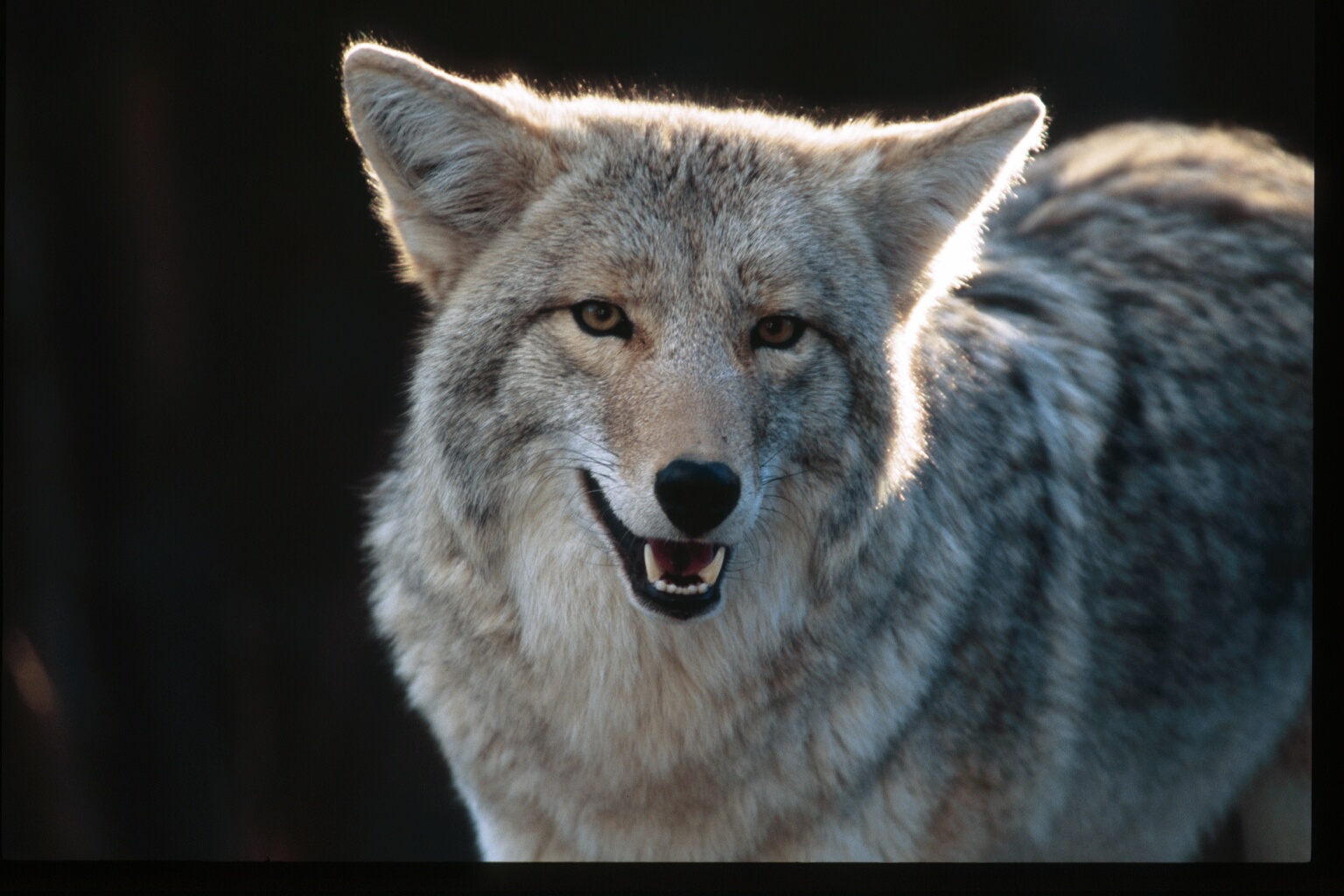
Coyote Photo Copyright Jim Robertson

Coyote Photo Copyright Jim Robertson

Wildlife activists outraged at TIME’s cover story this month Special

The cover of this month’s issue of TIME depicts a young female deer below the headline “America’s Pest Problem.” The wildlife activist community is in an uproar over the article many see as factually inaccurate and something more fit for an op-ed

The article does appear to be advancing an agenda, as the last line in the lead paragraph on the TIME website reads “Why wildlife in the U.S. needs stronger management.”  The article’s full title is “America’s Pest Problem: It’s time to cull the herd.”  Whether intentional or not, David Von Drehle’s article has sparked controversy.

Almost immediately, activists took to the internet expressing their outrage. The article’s dateline is Dec 9, 2013, but is available online now. A Facebook event page is already set up to encourage people to write physical letters to TIME. The event page has this in its description

Time Magazine is coming out with an article to the general public, supporting the slaughter of wildlife on a grand scale. This article is extremely dangerous and inaccurate. This article supports outright slaughter of our wildlife in all parts of the country stating that we are all being overrun with animals and that “experts” say it is necessary. Time Magazine has a responsibility to the public to be accurate and unbiased, and not promote an anti-environment extremist point of view.

Protecting Endangered Species, the Facebook page hosting the letter writing event had this to say in a statement

It is disturbing that Time Magazine has used it’s reputation as a legitimate news source to promote a very extreme and controversial opinion as fact. The consequences of promoting this type of intolerance of our wildlife are severe and promotes violence and cruelty towards our animals. Wildlife belongs to all of us as a nation, not to the special interests of oil, the livestock industry, and recreational hunters. The opinion expressed by Time is that of these special interest businesses and is in direct opposition to wildlife experts and the overwhelming number of voters in the states of concern. This is an opinion which could be freely expressed in an op-ed section, but to present it as fact, as a cover story, is highly unprofessional and exerts the power of Time magazine in an inappropriate manner.

The use of hunting today beyond the purpose of sustenance is a very important contributor to the destruction of our environment. The use of hunters to control populations or “manage” them IS THE PROBLEM. At the turn of the century the wolves and other predators were nearly exterminated out of fear and lack of knowledge of biology, contributing to over and under populations of other animals. We know more about biology than we did in 1900 and this needs to stop. No form of hunting is superior to Nature, and the motivations of special interests are based on human desires of consumption, they are not based on the best interest of the animals or the environment. Misinformation needs to be corrected before we destroy what we do have left. We have nonviolent and nonlethal means to correct problems and we need to use them.

One of the activists participating in the event, Mar Wargo, expressed her opinion as well

Americans seem to be learning and expressing a new ethic today. It seems to me it is not a well educated ethic and lacks moral grounds. In the 40 years of the Endangered Species Act, Wild Free Roaming Horse and Burro Act we have come full circle and now have this tremendous backlash towards the wild animals and wild lands. I believe much of this is corporate interests and this now encompasses hunters who had not been the enemy at one time. They had been the conservationists once. No longer. Killing is too popular and this is all weighed down in ignorance and greed. We have good laws that allowed us to participate in the process and stop actions against wild lands and wildlife. This is Not user friendly any longer, we have lost much of our own traction as a result. We need to regain sanity and science in this country. We need to respect this Earth which is now damaged beyond repair if we intend to survive. Killing the Earth is not the way to survival.

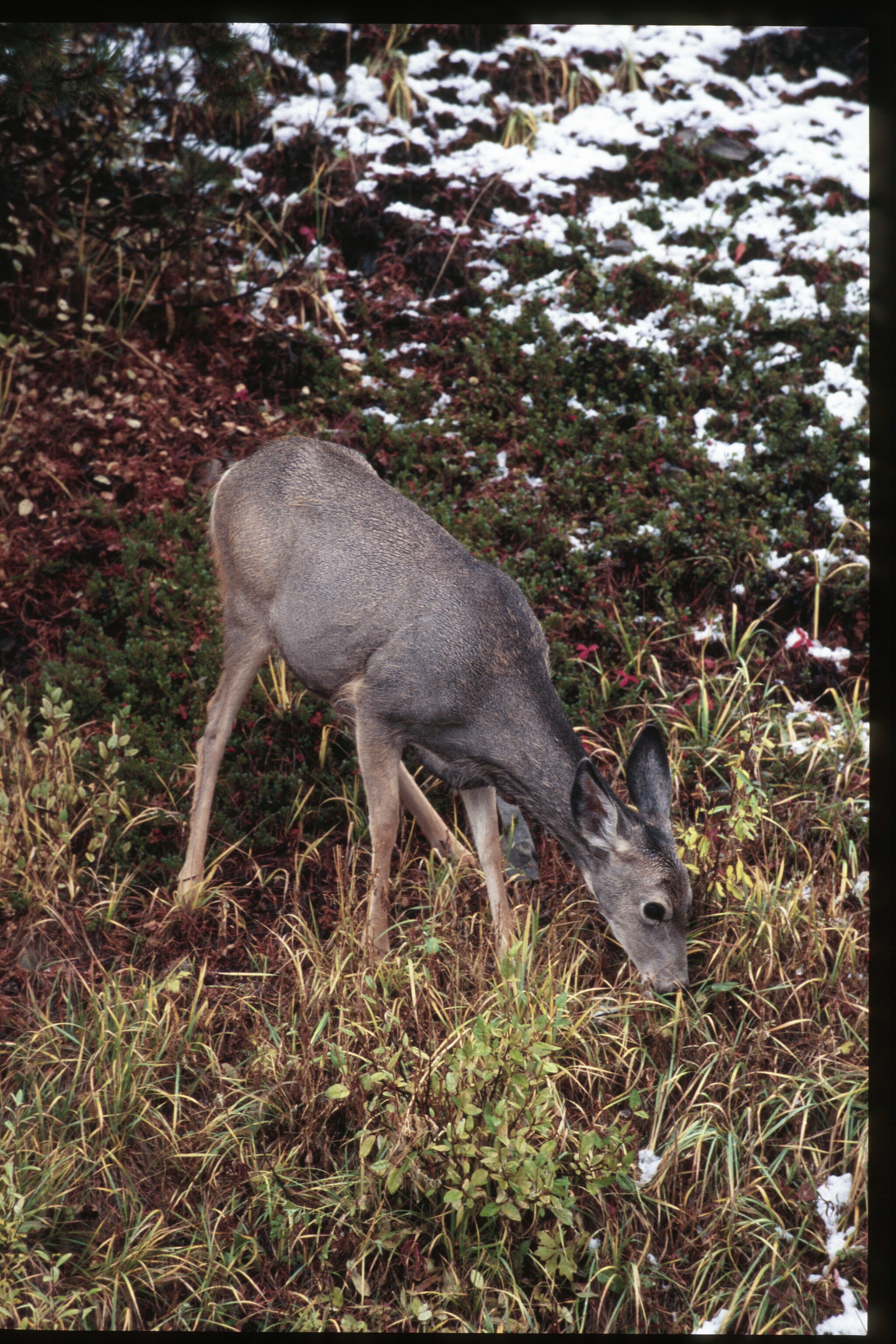
Photo Copyright Jim Robertson

Photo Copyright Jim Robertson