A Southeast Texas man must serve five years of federal probation for killing two endangered whooping cranes while hunting

BEAUMONT, Texas (AP) —

 Trey Joseph Frederick was sentenced Tuesday in Beaumont.

A magistrate also ordered the 19-year-old Beaumont man to pay nearly $26,000 in restitution, barred Frederick from owning or possession firearms or ammunition and prohibited him from hunting or fishing in the U.S.

Frederick, who in May pleaded guilty to violating the Migratory Bird Treaty Act, must also do 200 hours of community service.

A Texas game warden on Jan. 11 received calls about two whooping cranes shot. Officials say Frederick was hunting nearby.

The birds died about 115 miles west of Louisiana’s White Lake Wetlands Conservation Area, where dozens of whooping cranes have been released in efforts to create a self-sustaining flock.

Wisconsin Adds Crossbows to Their Quiver

Now the only question that remains is, what cruel kill method is NOT allowed in Wisconsin?

I can think of only a few offhand:

-Grenade launcher
-Flame thrower
-Nerve gas
-Chemical weapons

Hell, why doesn’t the state DNR just nuke itself every fall (starting with this one) and be done with it? That should take care of their deer, rabbit, squirrel, duck, geese, sandhill crane and wolf “problems” once and for all.

__________________

Assembly unanimously passes crossbow hunting bill

By Paul A. Smith of the Journal Sentinel

Nov. 9, 2013

In an era of deep political divisions, Wisconsin legislators can agree on at least one thing: increased crossbow hunting opportunities.

On Oct. 27, the Assembly unanimously passed an amended version of AB 194.

The bill would create a crossbow hunting license and a crossbow hunting season. Hunters of all legal ages could purchase the license.

Under current state law, only hunters with physical disabilities and those age 65 and over are allowed to hunt deer with crossbows.

The crossbow hunting season would run concurrent with the archery deer season.

The amended version creates a three-year trial period during which the Department of Natural Resources will monitor harvest rates by crossbow hunters. The Senate approved the bill in September.

The Assembly vote was 91 ayes, 0 no.

The bill now awaits the signature of Gov. Scott Walker. If the governor signs it as expected, the crossbow hunting season will take effect in September 2014.

Wolf season update: As of Friday, hunters and trappers had registered 201 wolves in the 2013-’14 Wisconsin wolf season, according to the DNR.

Harvest quotas were filled in five of the six wolf management zones.

Trappers have taken 82% of the wolves; the balance have been killed by hunters with firearms.

Zone 3 in north central and northwestern Wisconsin remains open. Nineteen wolves had been registered in Zone 3 as of Friday morning; the quota is 71.

The zone will be open to wolf hunting and trapping until the quota is filled or Feb. 28, whichever comes first.

Given the fast pace of wolf kills since the season opened Oct. 15, the season could be over before the Wisconsin gun deer hunt begins Nov. 23, as well as before wolf hunters could begin using dogs Dec. 2.

The DNR had sold 1,837 resident and 11 nonresident wolf hunting and trapping licenses as of Friday. It authorized the sale of 2,510 licenses through a lottery.

State wildlife managers set a kill goal of 251 wolves for the season.

Hunters and trappers are responsible to know the status of zone closures. Information is available at dnr.wi.gov and by phone at (888) 936-7463 .

Read more from Journal Sentinel: http://www.jsonline.com/sports/outdoors/assembly-unanimously-passes-crossbow-hunting-bill-b99137922z1-231303281.html#ixzz2kGrLqn3p
Follow us: @NewsHub on Twitter

90641_Varminter

For the Bragging Rights

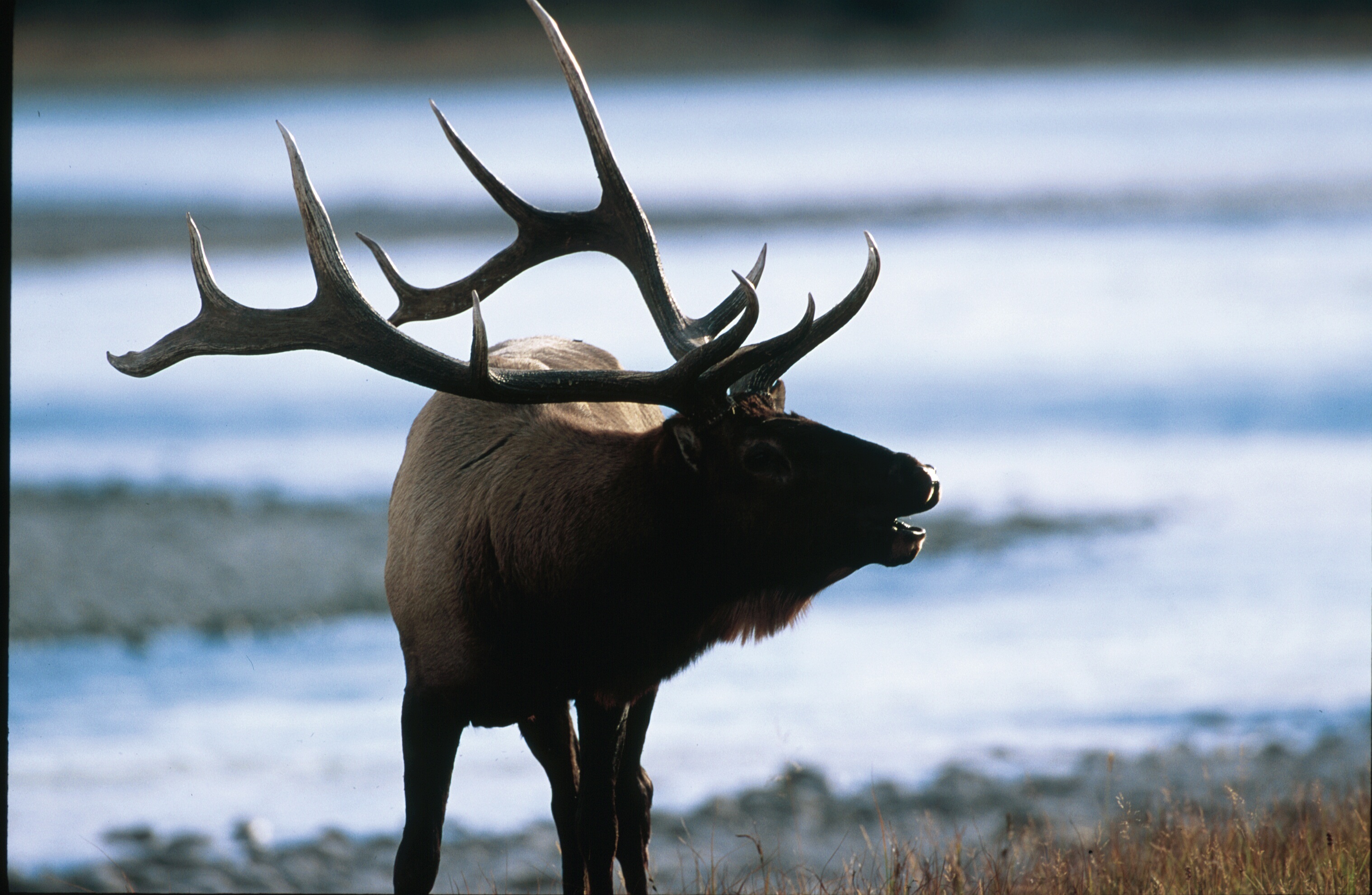
Autumn in elk country would not be complete without the stirring sound of solicitous bulls bugling-in the season of brightly colored leaves, shorter days and cooler nights. Nothing, save for the clamor of great flocks of Canada geese, trumpeter swans or sandhill cranes announcing their southward migration, is more symbolic of the time of year. And just as any pond or river along their flyway devoid of the distinctive din of wandering waterfowl seems exceedingly still and empty, any forest or field bereft of the bugling of bull elk feels sadly deserted and lifeless.

Yet there are broad expanses of the continent, once familiar with these essential sounds of autumn, where now only the blare of gunfire resounds. By the end of the nineteenth century, the great wave of humanity blowing westward with the force of a category five hurricane—leveling nearly everything in its destructive path—had cut down the vast elk herds, leaving only remnants of their population in its wake.

Nowadays, a different kind of rite rings-in the coming of autumn across much of the land. Following in the ignoble footsteps of their predecessors who hunted to extinction two subspecies, the Mirriam’s and the Eastern elk, nimrods by the thousands run rampant on the woodlands and inundate the countryside, hoping to relive the gory glory days of the 1800s.

On the way back from a trip early last evening I saw one such nimrod as I turned at the local mini-market on the final stretch home. I have no doubt in my mind that he was parked there just to show off his kill; the antlers of a once proud, now degraded and deceased bull elk were intentionally draped over the tailgate of the assassin’s truck—clearly on display.

I can’t say that I see just what the hunter was so proud of. It’s not like he personally brought down the mighty animal with his bare hands. Elk follow a pretty predictable path this time of year, and the bulls are distracted and preoccupied with escorting their harems around. Taking advantage of them during their mating season is about as loathsome as anything a human can come up with (and that’s saying a lot).

All a deceitful sportsman has to do is blow an imitation elk bugle to lure a competitive bull within range of their tree stand or wait in hiding above the herd’s traditional trail to the evening feeding grounds. When the procession passes by (right below the camouflaged killer’s perch), the most challenging thing for the sniper is deciding which individual animal to shoot or impale with an arrow.

The fact that they let groups of cows and young spike bulls pass by and wait for the largest, “trophy” bull is proof positive that they’re not hunting for food, but rather for sport—and for bragging rights.

____________________________

The first portion of this post was excerpted from the chapter, “The Fall of Autumn’s Envoy,” in the book, Exposing the Big Game: Living Targets of a Dying Sport

Text and Wildlife Photography ©Jim Robertson