Exposing the Big Game

Forget Hunters' Feeble Rationalizations and Trust Your Gut Feelings: Making Sport of Killing Is Not Healthy Human Behavior

Exposing the Big Game

Man-eating croc found dead in trap in Kelabakan


KOTA KINABALU: A 4m-long crocodile, believed to be responsible for the death of several people in Kalabakan, has been found dead on Saturday (July 18).

The reptile is believed to have died after taking the bait set up by wildlife officials following several deaths from crocodile attacks in the area.

Tawau Wildlife Department officer Sailun Aris said they set up the trap at the Kg Tanjung Sapi River on July 15 and found the crocodile trapped at about 1.30pm on Saturday.

“We believe this was the crocodile that attacked Sukrien Jesman Yusoff at the Kalabakan river on July 3 and Nur Hayati Talib, 50, on June 25, to name a few,” he said.

He said the trap at Kg Tanjung Sapi was one of several they set between July 5 and 15.

Sailun said families of crocodile attack victims were notified of the discovery, and they requested that the reptile be cut open.

“There were human hands (in its stomach), and they have been returned to the identified family. They will bury the remains,” he said.

The crocodile, which weighs 350kg, has been buried close to the area where it was caught.
Crocodiles living 200 million years ago were vegetarians, study finds

‘The most interesting thing we discovered was how frequently it seems extinct crocodyliforms ate plants,’ says study author Keegan Melstrom

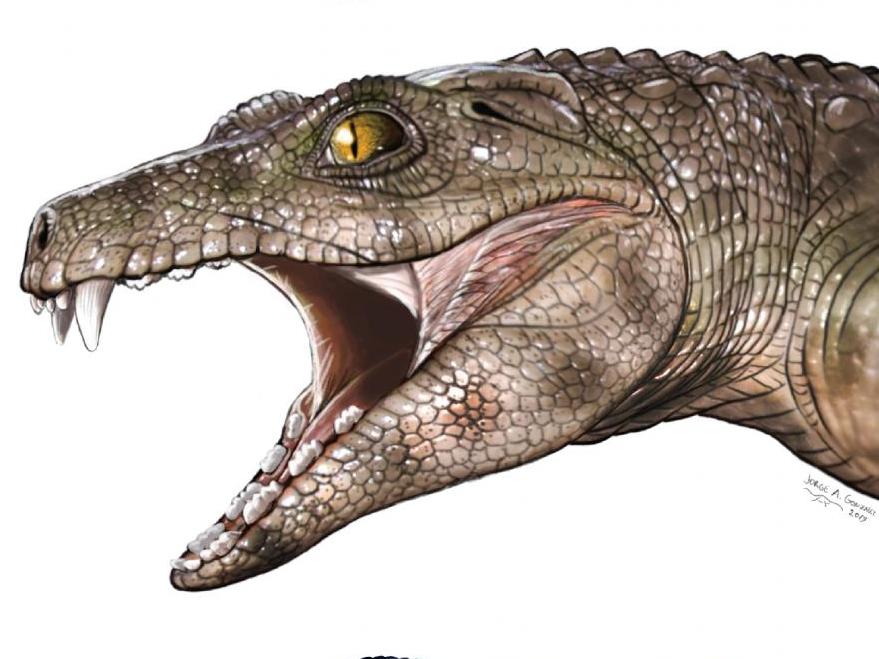
Tooth fossils revealed between three and six members of the ancient crocodile family had specialised teeth for chewing plants (artist's impression)

Tooth fossils revealed between three and six members of the ancient crocodile family had specialised teeth for chewing plants (artist’s impression) ( Jorge Gonzalez )

Long-lost crocodile species living 200 million years ago were vegetarians, a new study has found.

Tooth fossils revealed between three and six members of the ancient crocodile and alligator family evolved specialised teeth for chewing on plants.

Study author Keegan Melstrom, a doctoral student at the University of Utah, analysed 146 teeth from 16 crocodyliforms.

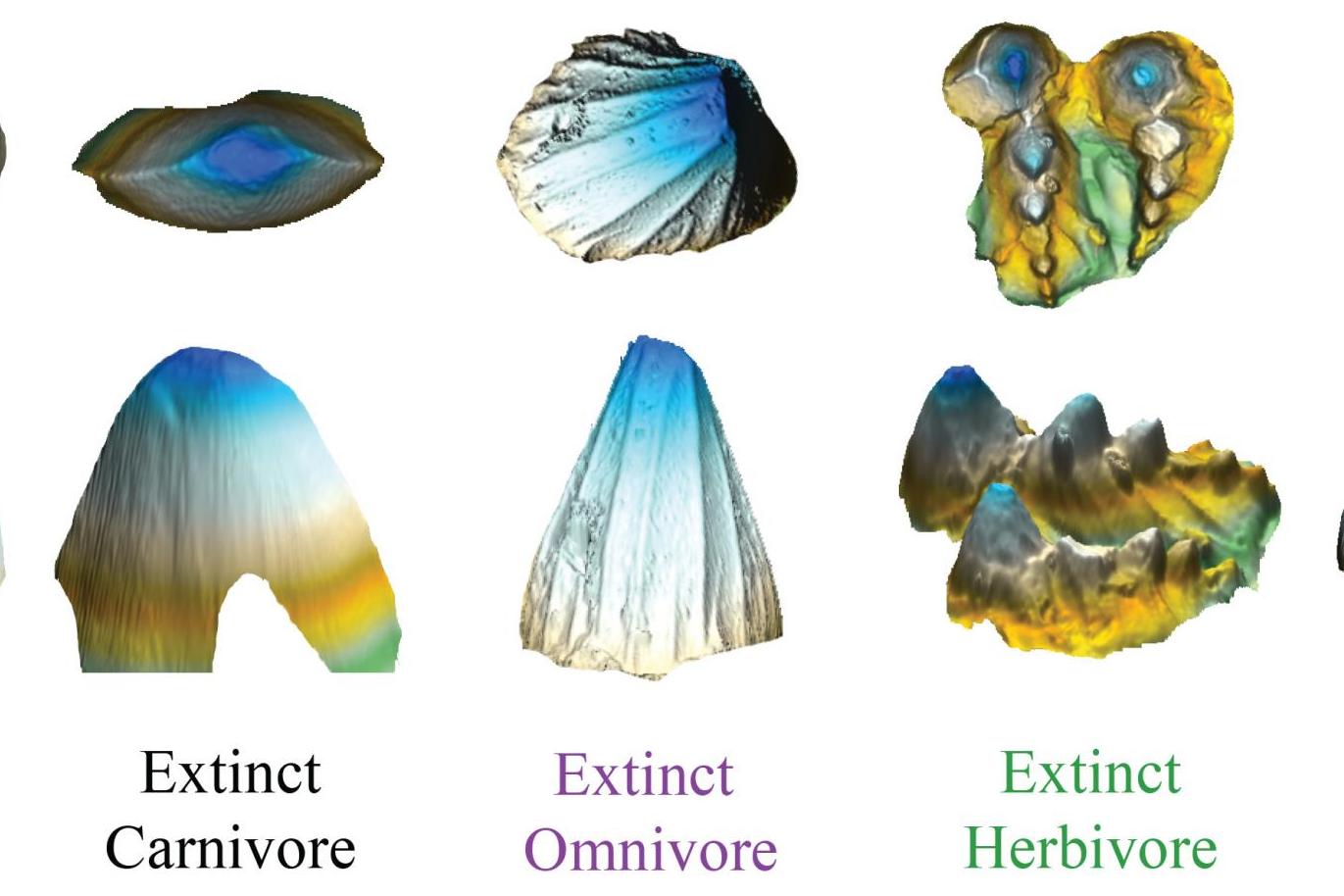
He said: “The most interesting thing we discovered was how frequently it seems extinct crocodyliforms ate plants. Carnivores possess simple teeth whereas herbivores have much more complex teeth.”

According to the study, published in Current Biology, this evolved separately in each of the species, suggesting it was a very successful adaptation.

The plant-eating creatures appeared early in the evolutionary history of the group shortly after the end-Triassic mass extinction 200 million years ago. They would have then been killed off 66 million years ago in the end-Cretaceous mass extinction that killed off all dinosaurs except birds.

All crocodiles alive today have a similar body shape with relatively simple, conical teeth ideal for ripping apart meat. However, the tooth fossils were clearly non-carnivorous and appeared to have specialised forms not seen in modern-day animals.

False color 3D images showing the range in shape of crocodyliform teeth. Carnivores (left) have simple teeth, whereas herbivores (right) have more complex teeth (Keegan Melstrom Nhmu)

To work out what they ate, researchers compared the size and shape of teeth in extinct crocodiles with those around today.

“Our work demonstrates that extinct crocodyliforms had an incredibly varied diet,” said Mr Melstrom.

“Some were similar to living crocodylians and were primarily carnivorous, others were omnivores and still others likely specialised in plants. The herbivores lived on different continents at different times, some alongside mammals and mammal relatives, and others did not.

“This suggests that an herbivorous crocodyliform was successful in a variety of environments.”

Scientists are now looking to reconstruct the diets of these extinct crocodiles, including in fossilised species that are missing teeth.

Mr Melstrom wants to find out why crocodiles diversified so radically after the end-Triassic mass extinction but not after the end-Cretaceous mass extinction, when the vegetarian crocodiles were wiped out.

Mob slaughters 300 crocodiles in Indonesia following death of local man

The mass killing was in retaliation after a villager was recently killed by crocodile.
by Associated Press /  / Updated 
Image: Local residents look at the carcasses of hundreds of crocodiles

A mob slaughtered nearly 300 crocodiles at a breeding ground in retaliation for the death of a local man, officials said Monday.Olha Mulalinda / Antara Foto via Reuters

JAKARTA, Indonesia — A mob slaughtered nearly 300 crocodiles at a breeding ground in Indonesia’s West Papua province in retaliation for the death of a local man, officials said Monday.

A total of 292 crocodiles were killed by hundreds of villagers on Saturday following the funeral of a 48-year-old man who was killed by crocodiles after entering the area around the breeding pond, said Basar Manullang, the head of the local Natural Resources and Conservation Agency.

The man was believed to have entered the sanctuary in the Klamalu neighborhood of Sorong district to cut grass for his cattle.

“Since killing the crocodiles is illegal, we are coordinating with the police for the investigation,” Manullang said.

The agency said in a statement that the villagers were armed with machetes, hammers, shovels and other sharp weapons. They killed two large crocodiles of up to 13 feet and many babies measuring 20-60 inches.

Recommended

Witnesses said about 40 policemen came to the scene but were too outnumbered to stop the mob.

Police said about five witnesses have been questioned but no suspects have been named.

Police are encouraging mediation between the victim’s family and Mitra Lestari Abadi, the company that operates the sanctuary.

Human Infestation Down One

http://www.theglobeandmail.com/news/world/body-of-australian-man-recovered-from-crocodile-infested-river/article13948311/

Body of Australian man recovered from crocodile-infested river

DARWIN, Australia — The Associated Press

Published Monday, Aug. 26

Police have recovered the body of a man who attempted to swim across a crocodile-infested river in the Australian Outback as well as the carcass of a crocodile that was shot by authorities, officials said Monday.

Sean Cole, 26, was snatched by a crocodile and dragged under the water Saturday as he and a friend were swimming in the Mary River during a birthday party.

[How dare they call this river “crocodile-infested”! Crocs have lived there for 50 million years; humans didn’t reach Australia and begin their infestation until 50 thousand years ago.]

Northern Territory wildlife ranger Tom Nichols said Cole’s body and that of a 4.7-metre-long crocodile floated to the river surface early Monday. The crocodile was one of four that rangers shot in the hours after the attack.

“We believe that croc was responsible,” Nichols said, though he noted that further tests to match the bite marks on Cole’s body would be conducted.

[How many non-humans have to die when one exalted Homo sapien foolishly decides to challenge a dangerous river, probably in a drunken bet. And what if the bite-marks don’t match? Will rangers kill 400 more ancient crocodiles before they find the culprit?]

The river is infested with crocodiles, and officials said that ascroc locals the men would have known that.

“They just did something silly,” Nichols said.

Crocodile expert Grahame Webb, a Darwin zoologist, said he would not give a swimmer an even chance of crossing the 80-metre-wide river.

“Someone swimming in an area with crocs like that … crocs are going to zero in on them almost every time,” Webb said.

Mary River Wilderness Retreat manager Erin Bayard said the resort has several signs prohibiting swimming. Guests are advised not to go within five metres of the water’s edge because of the risk of large crocodiles lunging from the river to drag people in.

[Typical–a human dies doing something silly and at least three innocent crocodiles are killed for it.]