|
|||||||||||||
|
|||||||||||||
|
Film screening from Project Coyote
Reply

|
|||||||||||||
|
|||||||||||||
|
A wet market, where animals are freshly slaughtered rather than chilled was identified as the source of the coronavirus outbreak. But experts have long warned of dangers

Each evening, under cover of darkness, hundreds of live pigs from farms across China are trucked through the rusting gates of a cluster of mildew-stained quarantine and inspection buildings in the Qingshuihe logistics zone in Shenzhen.
Overnight they are checked for illness, primarily the African swine fever (ASF) that is expected to kill off a quarter of the world’s pigs, and reloaded on to ventilated trucks with dual mainland China and Hong Kong licence plates.
Before sunrise the caravan makes its way five-and-a-half miles south to the border at Man Kam To, a small customs and immigration checkpoint, where the pigs go through further visual health checks before crossing into Hong Kong.
They are bound for Sheung Shui slaughterhouse, the largest of three abattoirs in the territory. Once there they will be checked again before being dispatched in less than 24 hours under new rules meant to prevent the spread of ASF.
It’s a lot of effort to get fresh meat from the 1,400 pigs that cross the border each day.

For various reasons, the Chinese prefer freshly slaughtered pig, chicken and beef over chilled or frozen meat that has been slaughtered before being shipped.
That desire is at the heart of why diseases such as avian flu in poultry and ASF have been so difficult to eradicate, with huge movements of live animals from all over the country – from farm to slaughterhouse to market – on a daily basis making controlling the spread of disease incredibly difficult.
A recent coronavirus outbreak in China has been linked to a wet market in Wuhan, eastern China. Like other respiratory illnesses, the disease was initially transmitted from animal to human, but is now being passed human to human.
But despite awareness of the issues, the markets are a huge part of Chinese life. On a busy morning at a so-called “wet market” in the Shajing area, the oldest inhabited and very Cantonese part of Shenzhen, hundreds of shoppers arrive soon after daybreak. Slabs of pork hang from the stalls and various cuts are piled on the counters amid lights with a reddish glare and the occasional buzzing of flies.
Just a few minutes away at the nearby Walmart, where there are also options for fresh, chilled and frozen meat, the customer flow at this time of day is only a trickle compared to the wet market. It has your average western supermarket vibe – white daylight lighting, sterile and clean.
Staff at the meat counter in Walmart and at the stalls in the wet market both say the meat comes in from the same slaughterhouse around 2am. So why the huge difference in foot traffic?
Molly Maj, a corporate communications representative for Walmart, says “the average customer in China still prefers fresh meat” over other options.
One reason for the demand for wet markets is that widespread refrigeration only came to China in recent years. While most urban homes now have refrigerators, many in rural areas and low income urban renters still do not own one, or only a mini-fridge if they do.

The habit of buying perishable food for daily use is still prevalent in many consumers, particularly older shoppers who grew up without refrigerators. They say they can tell the quality of fresh meat by its smell, colour and how it feels to the touch.
“When I’m talking with my students I say: ‘The term warm meat, fresh meat, sounds disgusting to me, I grew up [in Germany] with chilled meat, that’s all I know,” Dirk Pfeiffer, a professor of veterinary medicine at City University in Hong Kong and an expert on diseases related to animal husbandry, says.
If you or someone you know has expertise in this field, we would like to hear from you. You can get in touch by filling in the form below, anonymously if you wish. Only the Guardian can see your contributions and one of our journalists may contact you to discuss further.
“So I ask them why and they come up with all sorts of vague things like the soup tastes better or that it is a trust issue, knowing it is a live animal at the other end and not some diseased animal,” he says. “It’s all very subjective.”
Wet markets are central to the perception that fresh meat is better, says Pfeiffer. They evoke nostalgia among shoppers, many of whom come from rural areas where all they knew were wet markets and no refrigeration.
Where a wet market feels familiar a supermarket can seem alien and out of place.
“I actually believe that it is an important thing for the older generation to go to the wet market and chat,” says Pfeiffer. However, the way the animal trade operates in China is “an utter disaster”, for animal disease and welfare, he adds.

A year ago, before rising concerns about the spread of ASF, nearly 4,000 pigs crossed daily with less scrutiny. Pigs were held in dismal conditions for as long as five days before being slaughtered on the Hong Kong side, greatly enhancing the possibility of disease transmission, says Pfeiffer.
The recent shortages due to the ASF outbreak have doubled and tripled prices for fresh pork at wet markets across Hong Kong. Farms in Hong Kong itself can usually supply about 300 pigs a day. Land use and environmental restrictions prevent any increase in production. The result is further worries about Hong Kong’s reliance on mainland China beyond its water and energy dependence.
“Many years ago, we had imports from all over Asia of live animals, but eventually the entire supply was monopolised by mainland China,” said Helena Wong, a member of Hong Kong’s legislative council panel on food safety and environmental hygiene. “They killed all their competitors and monopolised the supply of live pig and chicken.”
More than 6,000 pigs at the Sheung Shui slaughterhouse were culled in May 2019 after ASF was found among animals brought in from China. Hong Kong’s legislative council is now trying to figure out how much it owes traders and farmers in compensation.
Massive culls of poultry due to avian flu in imported mainland chickens in the last decade also led to large compensation bills and, eventually, to ending live chicken imports in early 2016.

“We as taxpayers have to give that money,” said Wong. “So now we are in a big crisis because in the past few years we have experienced avian flu and now African swine fever.”
Disease outbreaks have raised wider questions about the sustainability of Chinese consumers’ appetite – both on the mainland and in Hong Kong – for what is often called “warm” meat.
For Deborah Cao, a professor at Griffith University in Australia and an expert on animal protection in China, a deeper issue driving the live animal trade is a cultural disconnect about animal welfare.
“The main problem is the indifference or perception of people who simply regard animals as food, tools, or as things that people can do anything they want to,” she said.
“In particular, there is no perception of farm animals as having feelings, or being capable of feeling pain or suffering.”
Hong Kong may find it difficult to switch to a different model. There is almost no chance of farm expansion to support larger scale production within Hong Kong and, although the government is looking at possibilities of live imports from other Asian countries, the ports do not have adequate facilities to cope with large numbers.
“To a large extent, if we insist on fresh food, we have to rely on China,” said Wong. “If we can change and make certain concessions, Hong Kong has always been an open market for importing food items from many parts of the world. It is only for the provision of live animals that we are monopolised by the mainland farms.”
Reporting assistance from Zhong Yunfan.
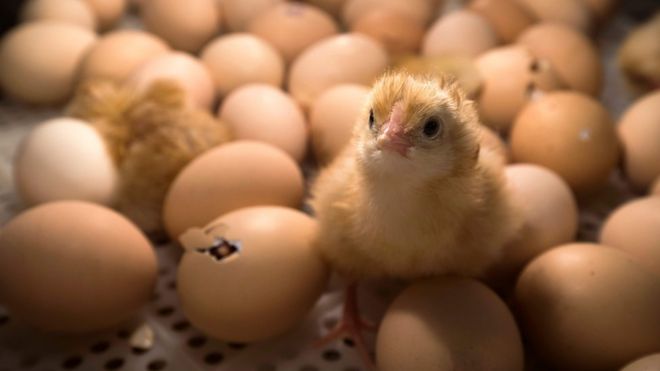 Image copyrightAFP
France has pledged to outlaw the practice of culling unwanted male chicks by the end of 2021, as part of animal welfare reforms.
About seven billion male chicks – not wanted for meat or eggs – are killed around the world each year, usually in shredding machines or by gas.
The government said new methods were emerging that would make it possible to test the sex of embryos inside the egg.
But some campaigners said the reforms did not go far enough.
French Agriculture Minister Didier Guillaume announced the reforms at a press conference in Paris on Tuesday.
“From the end of 2021, nothing will be like it was before,” he said.
Mr Guillaume said he hoped a method would soon be developed that would allow the gender of a chick to be determined before it had hatched.
Researchers have been working on the issue for years, but are yet to come up with a solution that works on an industrial scale.
The 2021 ban will make France one of the first countries to outlaw the practice of culling male chicks. A ban in Switzerland came into effect earlier this year, while a top court in Germany has ruled that the practice can continue on a temporary basis until an alternative can be found.
France and Germany last year said they would work together to put an end to mass chick culling.
Mr Guillaume also announced on Tuesday that the practice of castrating piglets without anaesthesia would be banned by the end of 2021.
Castration is performed to prevent “boar taint” – a potent smell or taste that can occur in the meat of non-neutered pigs. Several countries have already made the use of anaesthesia obligatory.
The mass-killing of male chicks shortly after birth is common practice in food production around the world.
For the billions of hens used in egg and poultry farming every year, a similar number of male chicks are killed shortly after birth.
Male chicks are viewed in the industry as commercially useless, because they grow more slowly than hens so are deemed unsuitable for meat production.
After sorting, the most common methods of killing involve asphyxiation by gassing or maceration in high-speed grinders.
Many animal rights activists welcomed the changes in France but said they did not go far enough.
They are “a step in the right direction, but still inadequate”, Anissa Putois of the campaigning group People for the Ethical Treatment of Animals (Peta) told AFP news agency.
French animal protection group L214 said the measures were “not ambitious” and “do not address the basic problems”.
“There is nothing on slaughter conditions, nor on how to exit from intensive animal farming,” it said, according to AFP.


WASHINGTON – The virus that has caused dozens of deaths and hundreds of illnesses worldwide emerged from a market in Wuhan, China, that sold live food animals, including some animals caught in the wild, according to Chinese authorities.
One study suggested a snake may have brought the virus to the market, but other experts were skeptical. The search for a definitive source continued.
A price list circulated on Chinese social media showed snakes, hedgehogs, peacocks, civet cats, scorpions, centipedes and more for sale at the market.
It’s not the first time these markets have bred a new disease, and experts said it probably won’t be the last. Severe acute respiratory syndrome, better known as SARS, originated at a similar market in China in 2002. It ultimately claimed nearly 800 lives.

Bird flu spread in these markets in the late 1990s and early 2000s. The H5N1 strain of influenza has killed 455 people since 2003.
Without proper sanitation and animal handling, health officials said, these markets can be spawning grounds for diseases.
Live animal markets are found across the developing world, especially in Asia and Africa.
Most animals sold there are healthy. But in the crowded conditions at these markets, one sick animal can infect many more, experts said.
Wild cards
Wild animals introduce a dangerous wild card.
For example, civet cats carried the virus that caused SARS. But scientists think the virus originated in bats.
“In the normal world, these species would never meet,” said veterinarian Tony Goldberg, associate director for research at the University of Wisconsin Global Health Institute.
“But in these live animal markets, they brought those two species together,” he said. “And when you do that in these tight, crowded, stressful conditions, you create every opportunity for these viruses to jump host species.”
The virus could spread when a vendor butchers an animal. Or a sick animal could spread it through its saliva, urine, feces or other secretions.
Humans and domesticated animals have been exposed to each other’s diseases for millennia. We’ve developed some defenses. That’s not the case with a new virus coming from a wild animal, Goldberg said.

The virus lottery
Given how common these markets are around the world, it’s almost surprising that new outbreaks don’t happen more often, veterinarian William Karesh, executive vice president for health and policy at EcoHealth Alliance, said.
“I’ve gone to a market in Southeast Asia and they’re selling maybe 5,000 or 6,000 bats every week,” he said. “And that’s just one market. As you drive around, there’s 20 or 30 of those markets within a few hours’ drive. So now we’re talking about tens of thousands of bats for sale, and tens of thousands of rats (and other species). And that’s going on throughout much of the world.
“So we’re talking, really, about millions of animals for sale on a daily basis and tens of millions of people shopping there,” Karesh said.
For a virus looking for a different species to infect, he said, it’s like playing the lottery.
“Your chances of winning are pretty high when you’ve got exposure to 10 or 15 or 20 million people every day,” Karesh said.
Traditions
People often don’t shop at these markets by choice, he said. When refrigeration is not available, the best way to get fresh meat is to buy it when it’s still alive. And customers can see if the animal is healthy before they buy it.
Also, many wild-caught foods are “deeply cherished in many cultures around the world,” not just in Africa and Asia, Goldberg said, even if they may carry diseases.
In the United States, rabbits carry tularemia, a bacterial disease that can be fatal. It’s on the list of potential bioterror weapons.
“You’ll see human cases pop up every now and then when rabbit hunters cut themselves when butchering a rabbit,” Goldberg said, adding he knows a rabbit hunter who got tularemia twice.

Market shift
The Chinese government closed live animal markets after SARS. But the markets have slowly reopened in the years since.
The government could close them again. But what may ultimately solve the problem is not a government mandate but a cultural shift.
Around the world, Karesh said, more young people are shopping at supermarkets.
“The grocery store is selling chilled refrigerated chicken, and it’s cheaper,” he said. “And people are busy. They’re going to work. They don’t really have time to go to that live animal market anymore.”
Plus, he added, attitudes are changing. Older people may see wild animals as a delicacy. The younger generation? Not so much.
“I don’t think they’re so interested in going to the live animal markets anymore to watch a bat be slaughtered or have a chicken have its throat cut,” he said.
“Twenty years ago, there weren’t many people in China who had pet dogs,” he said. Now, “there’s a new generation of people that when they see a dog, they’re not thinking about food. They’re thinking about, ‘Oh, wow, what a wonderful opportunity to have a pet.’”
Animal welfare put at risk on old and ‘inferior’ converted car carriers and cargo ships that are not built to transport livestock
The live export trade carrying millions of sheep and cattle across the seas each year is plagued by “old” and “inferior” ships that are a threat to animal welfare, claims a leading shipping company.
Livestock carriers are a key part of the multibillion dollar live export industry, dominated by Australia, South America and Europe. In 2017, almost 2 billion animals were exported in a trade worth $21bn (£15bn), with a significant proportion travelling by sea.
But most of the ships are old car carriers or other former cargo ships, rather than purpose-built vessels that can meet higher standards of animal welfare, said Wellard, one of the world’s largest livestock exporters, based in Australia.
A spokesperson for the company, which shipped nearly 400,000 cattle in 2019, said: “The old converted vessels bring the standard of the whole industry down. If you’re using a ship that was originally built for another purpose, you’re compromising on your animal services when you convert it to a livestock vessel.
“The biggest threat to the global live export industry is old ships. They have inferior standards and livestock services and they are more prone to accidents and breakdowns. Those ships give a bad name to a legitimate industry.”
More than half of the 129 livestock carriers listed as active with a working automated tracking system on at least one marine website were built before the 1980s. “The livestock carrier fleet is one of the oldest sectors in the globally trading fleet with an average vessel age of 38 years old,” said Adam Kent, managing director of market analysts Maritime Strategies International (MSI). In comparison, the average age of a container ship is 13.
“Only the Laker fleet, trading on the freshwater Great Lakes, has an older average age,” he said.
“Given that around 80% of all livestock carriers are converted vessels, which were originally designed for another cargo, the relative investment in the sector is significantly below other ship types,” he added. Most ships were converted from general cargo or “roll on roll off” (RoRo) vessels, meaning ships that have been designed to carry wheeled cargo.
The Dutch company Vroon, which owns the subsidiary Livestock Express, is known as the “world’s biggest independent seaborne livestock carrier”, with a fleet of 13 purpose-built vessels. Around half its ships have a gross tonnage of 10,241 and can carry more than 4,600 heads of cattle.
Livestock Express managing director Paul Pistorius warned that converting old vessels into livestock carriers means making “compromises”.
“When converting a vessel, you must live with the original hull and machinery and furthermore you always need to make compromises during the conversion phase. History has shown that these compromises may lead to poor animal welfare outcomes.
“There are indeed a lot of old conversions and also recent conversions of old hulls. Unfortunately, many of these vessels don’t always meet the standards to which we believe livestock carriers should adhere,” he said.
If you or someone you know has expertise in this field, we would like to hear from you. You can get in touch by filling in the form below, anonymously if you wish. Only the Guardian can see your contributions and one of our journalists may contact you to discuss further.
The practice of transporting thousands of live animals (some ships carry more than 10,000 animals) across the sea for weeks at a time means attention must be paid to the welfare of animals. Older ships were not built for this purpose, which raises concerns.
The most common health risks for animals on ships are fatigue, heat stress, overcrowding and related injuries, and the spread of disease. Lynn Simpson, a former veterinarian on livestock export ships, has been a vocal critic of the long-distance ship trade. She’s witnessed cattle forced to stand on hard floors for weeks on end, sick, injured animals left to die, and sheep literally cooking from the inside with their “fat melted and like a translucent jelly”.
“Some animals are held on decks for as long as 40 days, living on hard decking of concrete and metal. They [the animals] are not built to cope with these environments,” said Simpson. She points out that the long time spent at sea makes it even more critical for ships to be well-adapted for animals to protect their health and welfare. “A truck is transporting from A to B, but a ship is really a floating feedlot. They are at sea for up to six weeks so it’s not just a small period of time. They [the animals] have to eat, sleep, drink and recover.”
“The live animal trade is not one where great fortunes are made. The unsuitability of the ships has created a lot of issues for the welfare of the animals. There has been a lot of concern about converted ships, which have a checkered history of inspection failings,” said Andrew Linington, former editor for the maritime trade union, Nautilus International.
In November the Queen Hind, a 40-year-old vessel owned by Romanian company MGM Marine, was carrying more than 14,000 sheep when it capsized en route from Romania. The 22 crew members were rescued but just 180 sheep survived.
Campaign groups said at the time that a major problem was that often vessels were not built for the journey. “They are old vessels that are converted to transport animals,” Francesca Porta from Eurogroup for Animals in Brussels told the New York Times.
That incident prompted Nautilus International to call for an investigation into converted livestock carriers, saying the industry must “learn safety lessons for keeping seafarers safe and improving animal welfare”.
“There’s a risk that in these long-distance transport there are major problems with animals overheating in highly humid, dirty conditions … where a vessel has been converted it will be less able to control bad conditions,” said a spokesperson from Compassion in World Farming.
Mortality figures in the export of livestock are largely unavailable as the majority of countries, aside from Australia and New Zealand, do not require them to be publicly reported. The International Maritime Organization only requires an investigation of casualties at sea if they led to the death or serious injury of a person, or serious damage to the ship or the marine environment. In Australia the government reports on any shipments where the mortality rate exceeds 1%. In August 2017, around 2,400 sheep died from heat stress on a ship sent from Australia to the Middle East.
For Europe, the only available mortality figures are from media reports on major incidents. In 2015, Jordan rejected a shipment of 13,000 sheep from Romania because 40% of the animals were dead. A veterinary inspection at port found that it was not disease that caused the high mortality rate, but a failure to provide adequate food or water on the eight-day trip.
Simpson said the mortality rates were likely to be higher in other regions not reporting figures. “The ships I was on 10 years ago carried 10,000 cattle for 20-day voyages and if you lost 15 animals I would say that was average. When they were travelling out of South America, the crew told me the same ships would have 14,000 cattle and would lose 300–500 animals in a voyage.
“They don’t care about animal welfare. It is just about numbers, which would be fine if we were talking about cans of soup.”
A large number of livestock-carrying ships are also sailing under flags of convenience with poor reputations for ship safety. Out of the 129 ships listed as active, 52 are flying flags from countries currently blacklisted by the port inspection body the Paris MOU, which conducts more than 17,000 inspections on ships every year in ports around the world.
In addition, 10 of the companies that own or manage converted vessels built before 1975 are listed as “low or very low-performing” by the European Maritime Shipping Agency.
A 61-year-old man was the first person to die from the virus. According to Bloomberg, he was a regular shopper at the Huanan wet market, which sold more than seafood.
Wet markets like Huanan are common around China. They’re called wet markets because vendors often slaughter animals in front of customers.
“That means there’s a lot of skinning of dead animals in front of shoppers and, as a result, aerosolizing of all sorts of things,” according to Emily Langdon, an infectious disease specialist at University of Chicago Medicine.
Police in Wuhan began conducting checks to enforce the rule among the city’s 11 million residents, the BBC reported, citing state media reports.
“Governments must recognize the global public health threats of zoonotic diseases,” Christian Walzer, executive director of the Wildlife Conservation Society’s health program, said in a statement. “It is time to close live animal markets that trade in wildlife, strengthen efforts to combat trafficking of wild animals, and work to change dangerous wildlife consumption behaviours, especially in cities.”
Between 2002 and 2003, SARS killed 774 people across 29 countries. It originated in wet markets in the province of Guangdong.
But the civets weren’t the original hosts of the disease.
“Coronaviruses like SARS circulate in bats, and every so often they get introduced into the human population,” Vincent Munster, a virologist at the Rocky Mountain Laboratories, told Business Insider.
Bats can pass along viruses in their poop: If they drop feces onto a piece of fruit that a civet then eats, the civet can become a disease carrier.
“There’s an indication that it’s a bat virus, spread in association with wet markets,” Munster said.
Scientists in China have figured out the genetic code of the Wuhan coronavirus. When researchers compared it with other coronaviruses, they found it to be most similar to two bat coronavirus samples from China.
But further analysis showed that the genetic building blocks of the Wuhan coronavirus more closely resembled that of snakes. According to the researchers, the only way to be sure of where the virus came from is to take DNA samples from animals sold at the Huanan market and from wild snakes and bats in the area.
According to the World Health Organization, people caught those bird flus via direct contact with infected poultry in China. The diseases killed 1,000 people globally.
“Because these viruses have not been circulating in humans before, specific immunity to these viruses is absent in humans,” Haagmans told Business Insider.
These pandemics “are more likely to originate in the Far East because of the close contact with live animals [and] the density of the population,” Hyzler added. His firm offers risk-management solutions for global travelers.
Since December 31, more than 900 cases of the Wuhan coronavirus have been reported across 10 countries, including the US. Symptoms include sore throats, headaches, and fevers, as well as pneumonialike breathing difficulties.
Haagmans said one of the challenges in containing this outbreak was that a substantial portion of infected people show only mild symptoms.
These people “may go unnoticed in tracing the virus and fuel the outbreak,” he said. “It seems that this actually may be the case now.”
Aria Bendix contributed reporting to this story.
![items.[0].image.alt](https://ewscripps.brightspotcdn.com/dims4/default/e2faff1/2147483647/strip/true/crop/1264x711+4+0/resize/1280x720!/quality/90/?url=https%3A%2F%2Fewscripps.brightspotcdn.com%2F64%2Fee%2F8410c2824dd480e0c06d6e53ad81%2Fsquirrel-traps1.jpg)

Editor’s note: Contact7 seeks out audience tips and feedback to help people in need, resolve problems and hold the powerful accountable. If you know of a community need our call center could address, or have a story idea for our investigative team to pursue, please email us at contact7@thedenverchannel.com or call (720) 462-7777. Find more Contact7 stories here .
LAKEWOOD, Colo. — A Lakewood woman said the laws need to be changed after her condominium has been trapping and killing squirrels.
“I don’t think this is a humane way to deal with this at all,” Klaudia Sekulska said.
The traps are placed on the roof outside her window.
She said someone in the building complained the squirrels were getting into the attic, and a local pest control company was called.
“There are different ways to go about it. You don’t have to let an animal freeze to death overnight and then put it in a black garbage bag. That’s not dignified for anyone,” she said.
Colorado law allows pest control companies to operate under the same rules as homeowners. It’s legal to trap and, in some cases, poison squirrels that are damaging property.
Sekulska said the laws should change.
“It’s a permit to kill, and that’s what’s happening here. We’re proud of our animals and our wildlife, and it was National Squirrel Day yesterday,” Sekulska said.
Sekulska brought her concerns to animal control, property managers and her HOA.
She said they haven’t done enough to patch the holes in the roof or bring in proper trash bins before resorting to killing the animals.
Denver7 reached out to the HOA for comment but did not hear back.
Colorado Parks and Wildlife recommends removing pet food and trash that may be attracting squirrels, create barriers, and use ammonia as a deterrent.
If you believe any animal is being abused or is being treated inhumanely, you can file a complaint with Colorado Parks and Wildlife or your local animal control.
SILVER SPRING TOWNSHIP, Pa. (WHTM) — A Sunday stroll turned scary for a pup named Sully after a trap snapped on his paw while he was climbing back onto the banks of the Conodoguinet Creek during a walk with his owner in Hidden Creek Park.
“It’s a small, about hand-size trap. I’m not a trap expert, but it looks like it’s for a small animal,” said Silver Spring Township Police Chief Christopher Raubenstine said.
Luckily, Sully isn’t exactly small and didn’t break anything from the trap, but a trap at all triggers worry.
“Our concern, obviously, is for everyone’s safety, whether they’re four legs or two,” Raubenstine said.
The township spent the next couple days on paw patrol, sweeping the park and found no other traps — just more questions about how it got there.
“This could be anything from a simple mistake to what they think is legitimate, to somebody with malicious thought,” Raubenstine said.
Despite the why, trapping is still not legal on public property. Traps have to be registered, which would have led to the offender immediately but the evidence was washed away.
“A passerby helped the owner free the dog and out of anger, disgust — whatever — threw the trap out of the creek,” Raubenstine said.
Whether it was an honest mistake or demented deed, police are monitoring the situation.
“We just want to make sure it’s a one and done thing, and we don’t have to worry about it again,” Raubenstine said.
If you have any information about how the or why the trap was placed, you’re asked to call Silver Spring’s non-emergency line at (717) 697-0607.


Germany and France are teaming up to push for the end of male chick shredding in the European Union by the end of 2021.
Agriculture ministers Julia Klöckner of Germany and Didier Guillaume of France announced their plans to help press this issue further during a Monday meeting in Germany.
“It’s time to end the shredding of chicks. France and Germany should be the European motor to advance on this issue,” Guillaume said, according to France24.
Shredding refers to the act of killing male chicks shortly after they hatch. This practice occurs in many poultry businesses because male chicks don’t produce eggs and generate less meat than their female counterparts.
The two European countries hope to bring together industry groups, companies, researchers and campaign groups to “share scientific knowledge” and “implement alternative methods,” France24 reports.
“We welcome this scheme and the fact that non-governmental organizations are involved, but we expect clear regulatory commitments,” Agathe Gignoux of CIWF, a French NGO, said.
In 2009, the Associated Press reported U.S. egg producers euthanize 200 million male chicks per year. According to AP, Chicago-based animal rights organization Mercy for Animals videotaped male chicks being ground up alive while undercover in Iowa hatchery Hy-Line North America that same year.
The same practice appears to occur in Canada, too, though the Canadian government has announced recent changes in an effort to minimize this waste.
Jean-Michel Laurin, president and CEO of the Canadian Poultry and Egg Processors Council, told Global News that the industry has been working towards eliminating the euthanizing of male chicks.
READ MORE: ‘It’s a cold scary trip’: Tabby cat travels more than 80 km hiding in truck engine
“This requires a great deal of research, which has been occurring worldwide and includes Canadian-based research which has been active for about 10 years,” he said. “Currently, stakeholders in Canadian industry have made significant investments to bring us beyond the research trial phase.”
“Our industry is committed to continually improving practices. Farmers, hatcheries and others in the supply chain have demonstrated, over generations, their desire to improve and to respond to change.”
He added that the National Farm Animal Care Council’s (NFACC) Code of Practice for the Care and Handling of Chickens, Turkeys and Breeders lists several methods to euthanize day-old chicks and emphasizes that in all circumstances, the termination of life must be instantaneous.
Toronto Chick-fil-A launch draws customers and demonstrators
In 2018, then-Agriculture and Agri-Food Minister Lawrence MacAulay announced an $844,000 investment would go towards developing an electronic scan to determine a bird’s sex and fertility of eggs prior to hatching, Poultry World reported.
This would mean male eggs could be sold before hatching, which would increase capacity and efficiency of Canadian hatcheries and ultimately end male chick culling.
“This investment will help pilot a solution that will be welcomed in Canada and around the world and will keep the egg industry strong and growing.”
READ MORE: London animal rights activist ‘targeted’ by aggressive driver due to bumper stickers
The Canadian egg industry contributes over $1 billion a year to the national economy and employs more than 17,000 people.

(Beth Clifton collage)
On January 8, 2020, passenger flight 752, headed from the Iranian capital of Tehran to the Ukrainian capital of Kiev, was shot down by the Islamic Revolutionary Guard Corps of Iran, killing all 176 occupants, including 167 passengers. The jet continued flying for several minutes before turning back toward the airport.
Reported The New York Times, “The plane, which by then had stopped transmitting its signal, flew toward the airport ablaze before it exploded and crashed quickly.” (1)
One can only imagine being strapped in a plane that is about to crash, being, in the final moments before death, a conscious individual, helpless in a cage.

(Beth Clifton collage)
In considering such circumstances, is it impertinent to compare this experience with that of chickens (any animals) hanging face down on a slaughter line as they move toward a large rotating knife that will cut their throats?
Is the terror of the chickens any less palpable in those final moments than the terror of the airline passengers hurled helplessly toward their own deaths?
Even granting the terror the chickens must be feeling, there are those who are outraged by the very idea of comparing anything a chicken might feel with the feelings of a human being, for the simple reason that, no matter what, the feelings and nature of humans are considered “superior to” and vastly “more important than” those of any other sentient species – a view not shared by Sea Shepherd Conservation Society founder Paul Watson, as he made clear in a recent essay, nor by me. (2)

(Beth Clifton photo )
Probably, if questioned, few people, even those who grant that other animals can form lasting emotional relationships amongst themselves, would concede that their experiences could equal the range and depth of human social and familial experience.
In the following discussion, I address the question of “superior suffering” by focusing on an aircraft catastrophe that took place nearly twenty years ago in American skies. My suggestion at the time––that slaughterhouse chickens could suffer as much as human beings in situations involving the utmost pain and fear in the victims––evoked a controversy that continues to this day as to “who suffers more.” (3)

(Faye McBride photo)
For many Americans, the worst, most unjust suffering to befall anyone happened on September 11, 2001. Mark Slouka, in his essay “A Year Later,” in Harper’s Magazine, puzzled over “how it was possible for a man’s faith to sail over Auschwitz, say, only to founder on the World Trade Center.”
How was it that so many intelligent people he knew, who had lived through the 20th century and knew something about history, actually insisted “that everything is different now,” as a result of 9/11, as though, Slouka marveled, “only our sorrow would weigh in the record”? (3)
People who said they would never be the same again seldom said that about other people’s and other nations’ calamities.
In saying that the world as a result of the 9/11 attack was “different now,” they didn’t mean that “before the 9/11 attack I was blind, but now I see the suffering that is going on and that has been going on all around me, to which I might be a contributor, God forbid.” No, they meant that an incomparable and superior outrage had occurred. It happened to Americans. It happened to them.

(Beth Clifton collage)
Following the 9/11 attack, I published a letter in 2001 that raised consternation. Without seeking to diminish the horror of 9/11, I wrote that the nearly 3,000 people who died in the attack arguably did not suffer more terrible deaths than animals in slaughterhouses suffer every day. (4)
Using chickens as an example, I observed that in addition to the much larger number of chickens who were killed on 9/11, and the horrible deaths they endured in the slaughter plants that day, and every day, one had to account for the misery of their lives leading up to their deaths, including in the terror attack they suffered hours or days before they were killed, blandly described as “chicken catching.”

(Beth Clifton photo)
I compared all this to the relatively satisfying lives of the majority of human victims of 9/11 prior to the attack, adding that we humans have a plethora of palliatives, ranging from proclaiming ourselves heroes and plotting revenge against our enemies to the consolation of family and friends and the relief of painkilling drugs and alcoholic beverages.
Moreover, whereas people can make some sense of their own tragedy, being members of the species that inflicted it, chickens by contrast have no cognitive insulation, no compensation for their suffering, and thus no psychological relief.
The fact that they are forced to live in systems that reflect our dispositions, not theirs, and that these systems are inimical to their nature, as revealed by their behavior, physical breakdowns, and other indicators, shows that they are suffering in ways that equal and could even surpass anything we have known.

(Beth Clifton collage)
I wrote my rebuttal in response to comments by philosopher Peter Singer, who in a review of Joan Dunayer’s book, Animal Equality: Language and Liberation, challenged her contention that we should use equally strong words for human and nonhuman suffering or death. (6, 7)
Singer wrote: “Reading this suggestion just a few days after the killing of several thousand people at the World Trade Centre, I have to demur. It is not speciesist to think that this event was a greater tragedy than the killing of several million chickens, which no doubt also occurred on September 11, as it occurs on every working day in the United States.
“There are reasons,” Singer wrote, for thinking that “the deaths of beings with family ties as close as those between the people killed at the World Trade Center and their loved ones are more tragic than the deaths of beings without those ties; and there is more that could be said about the kind of loss that death is to beings who have a high degree of self-awareness, and a vivid sense of their own existence over time.”

(Beth Clifton collage)
There are reasons for contesting this statement of assumed superiority of the human suffering over that of the chickens in slaughterhouses, starting with the fact that it is not lofty “tragedy” that is at issue, but raw suffering.
Moreover, there is evidence that the highly social chicken, endowed with a “complex nervous system designed to form a multitude of memories and to make complex decisions,” as avian expert Lesley J. Rogers put it in her book The Development of Brain and Behaviour in the Chicken, has both self-awareness and a sense of personal existence over time.
Not only have we humans broken these birds’ ties with their own mothers, families, and the natural world, but who are we to say that chickens living together in the miserable chicken houses could not have formed ties?

(Beth Clifton photo)
The chickens at United Poultry Concerns (the sanctuary I run) form close personal attachments. Even chickens exploiters admit that they do.
Rogers, quoted above, pointed out that studies of birds, including chickens, “throw the fallacies of previous assumptions about the inferiority of avian cognition into sharp relief.”
It is reasonable to assume that animals in systems designed to exploit them suffer even more, in certain respects, than do humans who are similarly exploited, comparable to the way that a cognitively challenged person might experience dimensions of suffering in being rough-handled, imprisoned, and shouted at , that elude individuals capable of conceptualizing the experience.

(Beth Clifton collage)
Indeed, one who is capable of conceptualizing one’s own suffering may be unable to grasp what it feels like to suffer without being able to conceptualize it; of being in a condition that could add to, rather than reduce, the suffering.
It is in this quite different sense from what is usually meant, when we are told it is “meaningless” to compare the suffering of a chicken with that of a human being, that the claim resonates.
Biologist Marian Stamp Dawkins says that other animal species “may suffer in states that no human has ever dreamed of or experienced.”

Humpty Dumpty, Ronald McDonald, & United Poultry Concerns battery cage display. (Merritt Clifton collage)
But even if it could be proven that chickens and other nonhuman animals suffer less than humans condemned to similar situations, this would not mean that nonhuman animals do not suffer profoundly, nor does it provide justification for harming them.
Our cognitive distance from nonhuman animal suffering constitutes neither an argument nor evidence as to who suffers more under horrific circumstances, humans or nonhumans.
Even for animal advocates, words like “slaughter,” “cages,” “debeaking,” “forced molting” and the like can cause us to forget that what have become routine matters in our minds – like “the killing of several million chickens that occurs on every single working day in the United States,” in Peter Singer’s reality-blunting phrase––is a fresh experience for each bird who is forced to endure what these words signify.

(Beth Clifton collage)
That said, our cognitive distance can be reduced. Vicarious suffering is possible with respect to the members of not just one’s own species, but also to other animal species, to whom we are linked through evolution. .
Reams of data are not necessary. We need only enlist our basic human intelligence to imagine, for example, how a grazing land animal, such as a sheep, must feel in being forcibly herded onto a huge, ugly ship and freighted from Australia to Saudi Arabia or Iraq, jammed in a filthy pen while floating sea-sickeningly in the Persian Gulf on the way to being slaughtered.

John Woolman & friend.
John Woolman, a New Jersey Quaker, in the 18th century noted the despondency of chickens on a boat going from America to England and the poignancy of their hopeful response when they came close to land. Behind them lay centuries of domestication, preceded and paralleled by their vibrant, autonomous life in the tropical forests. Ahead lay a fate that premonition would have tried in vain to prevent from coming to pass.
There is no fate worse, no suffering worse, no injustice worse, than what has befallen chickens in their encounter with human beings.
For chickens, every torturing second of being alive in our grasp is as bad as it gets. I therefore submit that the continuous, unrelieved suffering of chickens and other intensively farmed animals compares in magnitude, intensity, and injustice with the suffering of human beings in horrific plane crashes and similar episodes of massive violence.


 Exposing the Big Game